
PARIS FASHION WEEK FALL/WINTER 2026: DAY 9
LOUIS VUITTON
review by ANOUK WOUDT
all images courtesy of LOUIS VUITTON
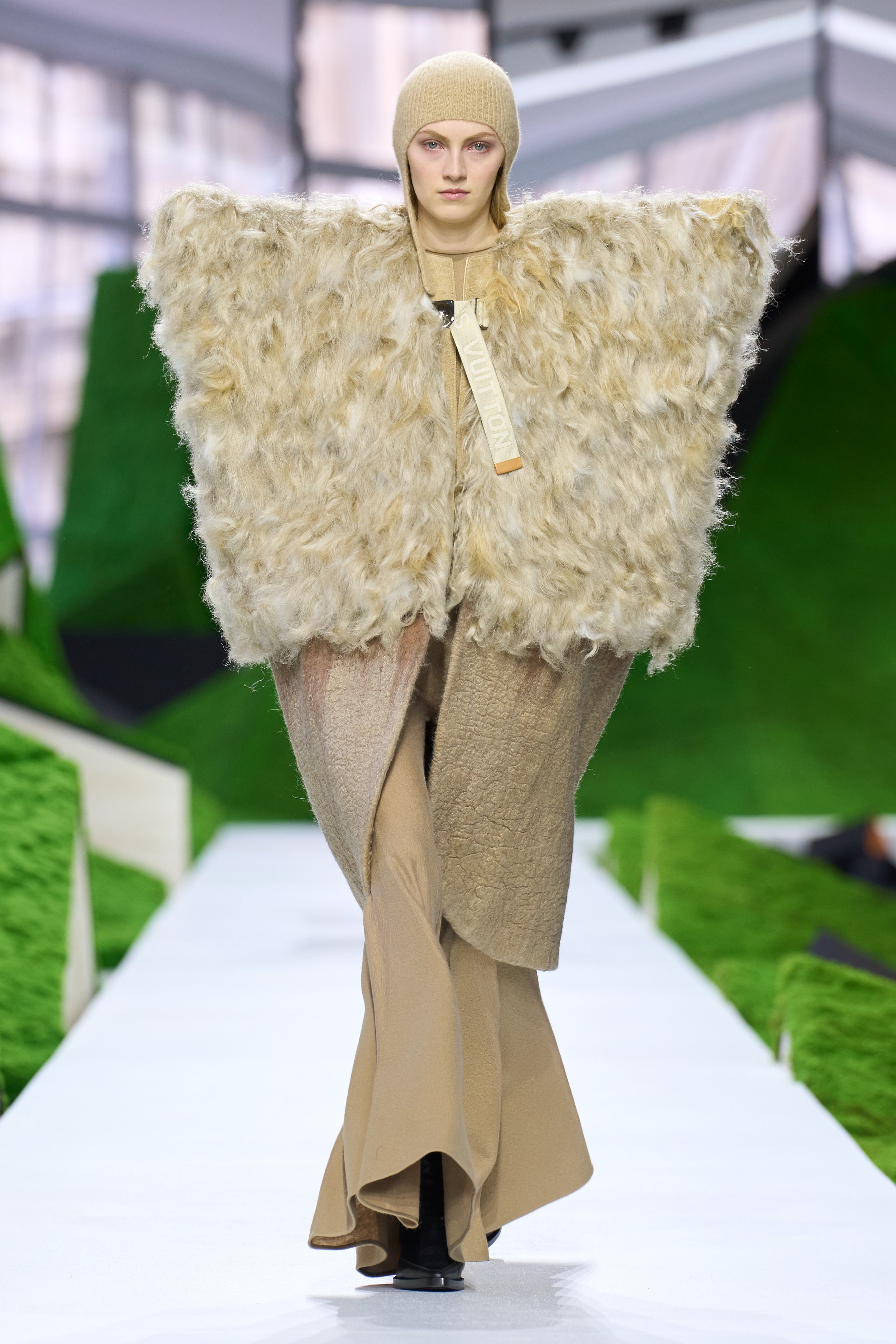
Transported into folkloric woodlands, we enter into Louis Vuitton’s fall 2026 collection as imagined by Nicolas Ghesquière. Set in an angular landscape, pasture becomes a central part of the collection’s imagery, in a delicate collaboration with still-life painter Nazar Strelyaev-Nazarko.
Opening with a range of jutting geometric silhouettes, the collection immediately feels different from what we have previously seen from Louis Vuitton. Especially for a ready-to-wear collection, it feels distinctly avant-garde, rejecting practicality in favor of excess. Sharp shoulders towered in, covered in tufts of woolen sheepskin or lined in structured leather, immediately feeding into the farmland fantasy that has been teased in promo. Following this dramatic entrance, theatrics peter down, giving way to patchwork puff-sleeved dresses that clash most harmoniously. Paired with studded metal collars, their take on a medieval maiden develops a harsh bite.
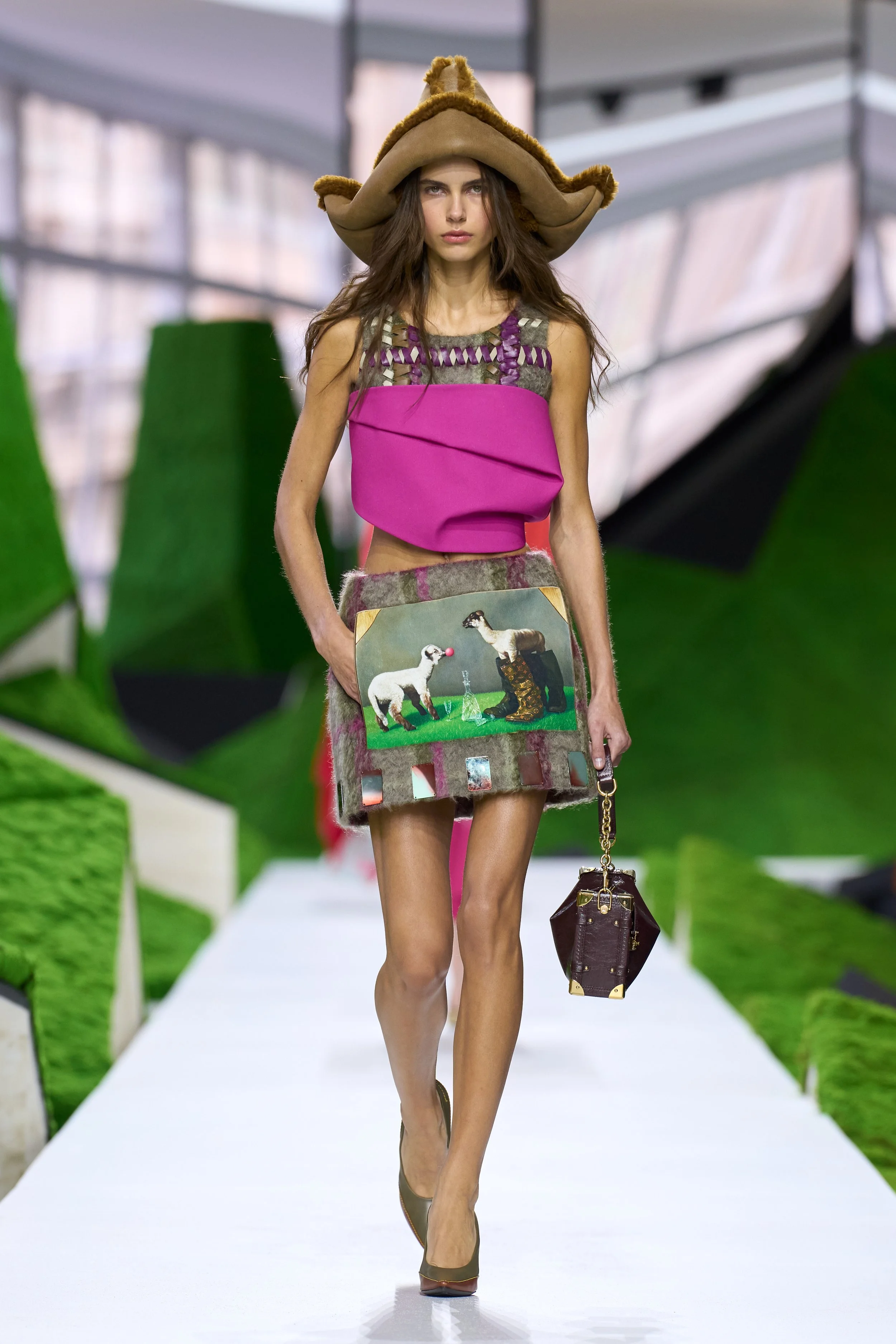
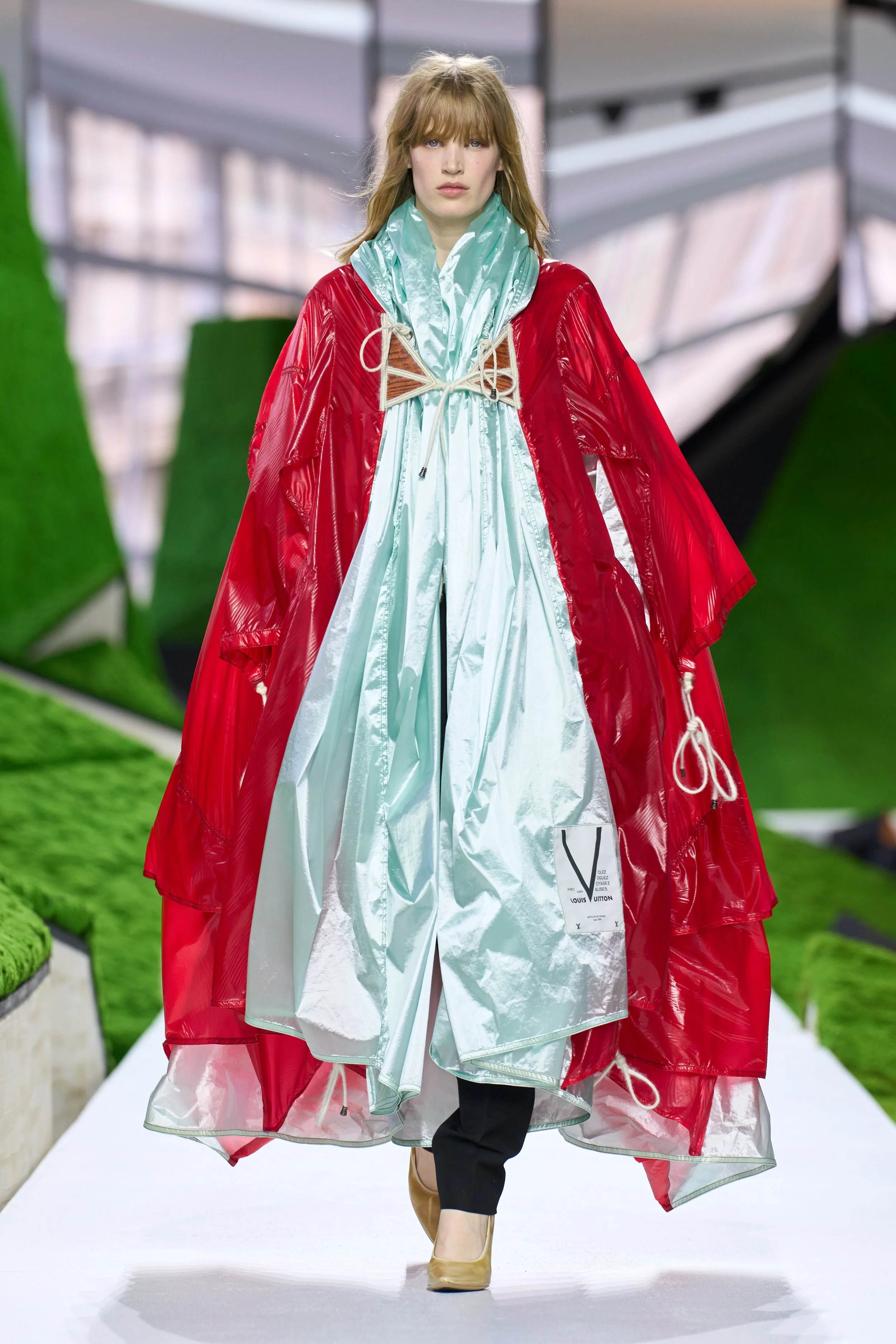
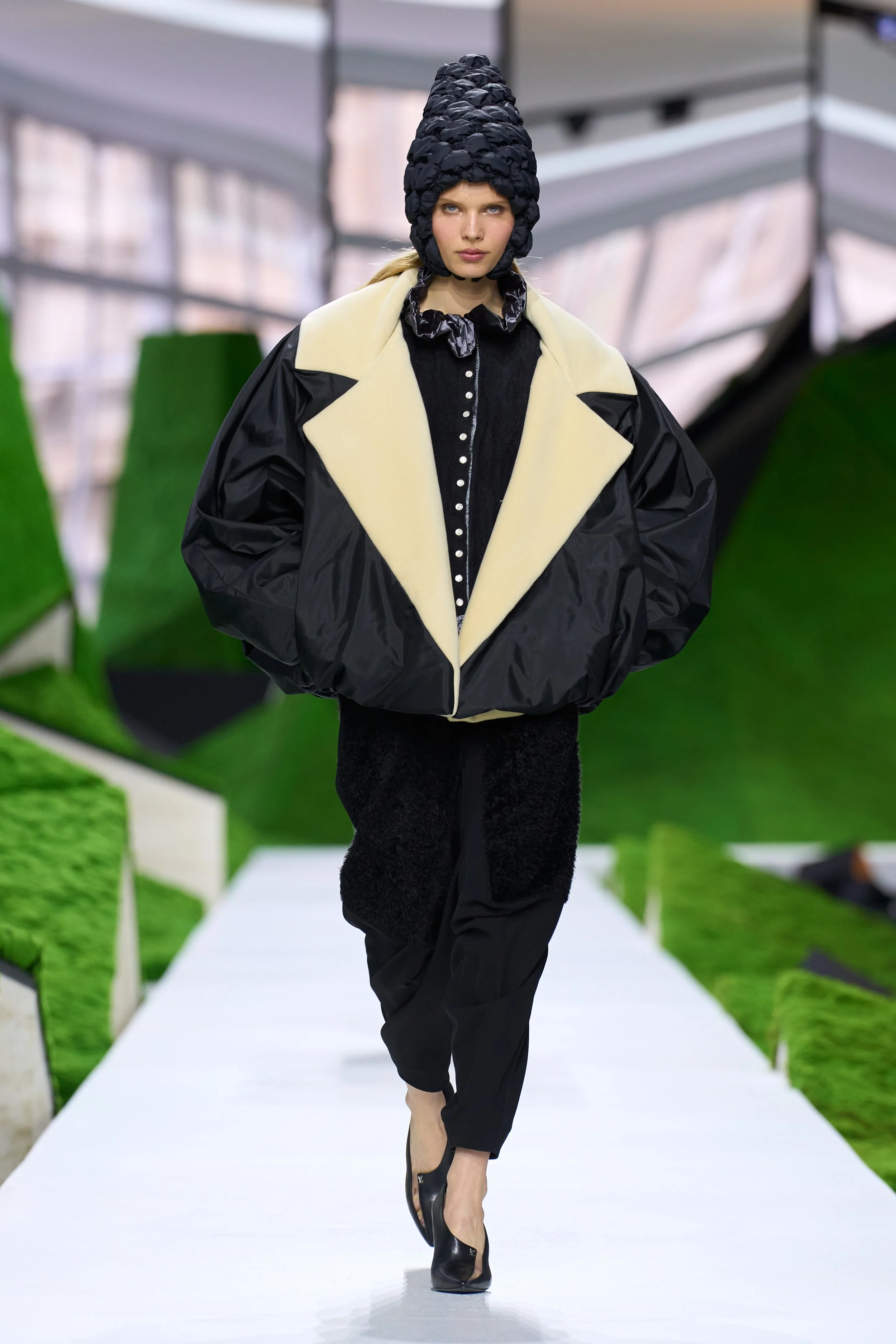
Following this, silhouettes return closer to everyday normalcy, though often topped with cartoonishly large sherpa hats that mimicked origami pirate hats. Furs, wools, and leathers appeared on nearly every look, bringing a primal instinct that hints at inspiration from pagan ritualistic garbs. The color palette has a healthy balance between earthly tones and bright, flashy colors that replicate that of a fairytale. This fairytale quality follows the bulk of the collection, adding dashes of a child-like whimsy— cone hats, sticks carrying bags, goggly glasses—that immerse you in this imaginary world.
Nazar Strelyaev-Nazarko’s artwork appears plastered on a few looks through a tender reworked image of two lambs, which was used as promotional imagery for the show. The graphic feels absolutely fitting to the entire show’s presence, merging classical imagery and imposing it with cheeky satirical details with bubblegum and LV boots.
MIU MIU
review by MAREK BARTEK
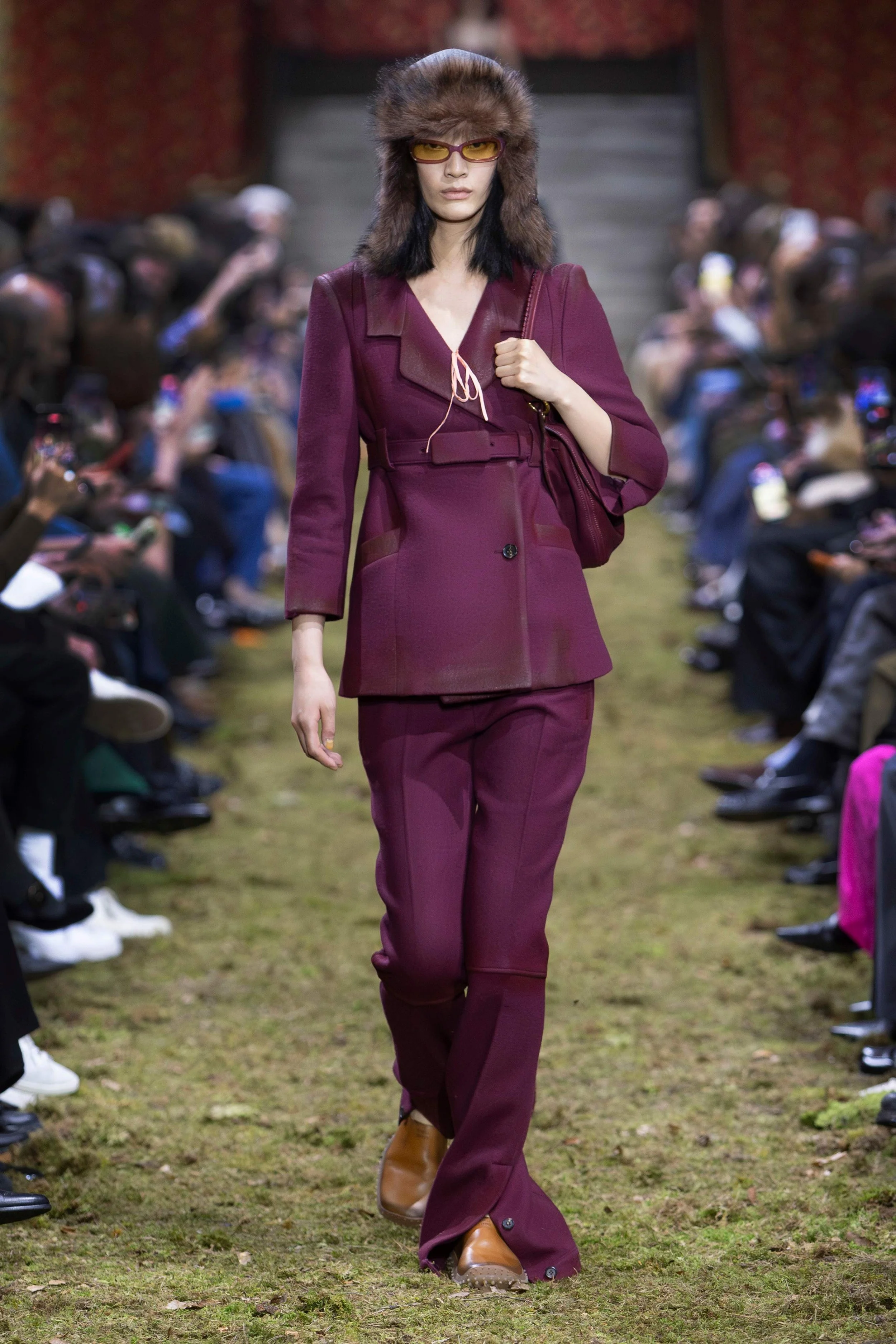
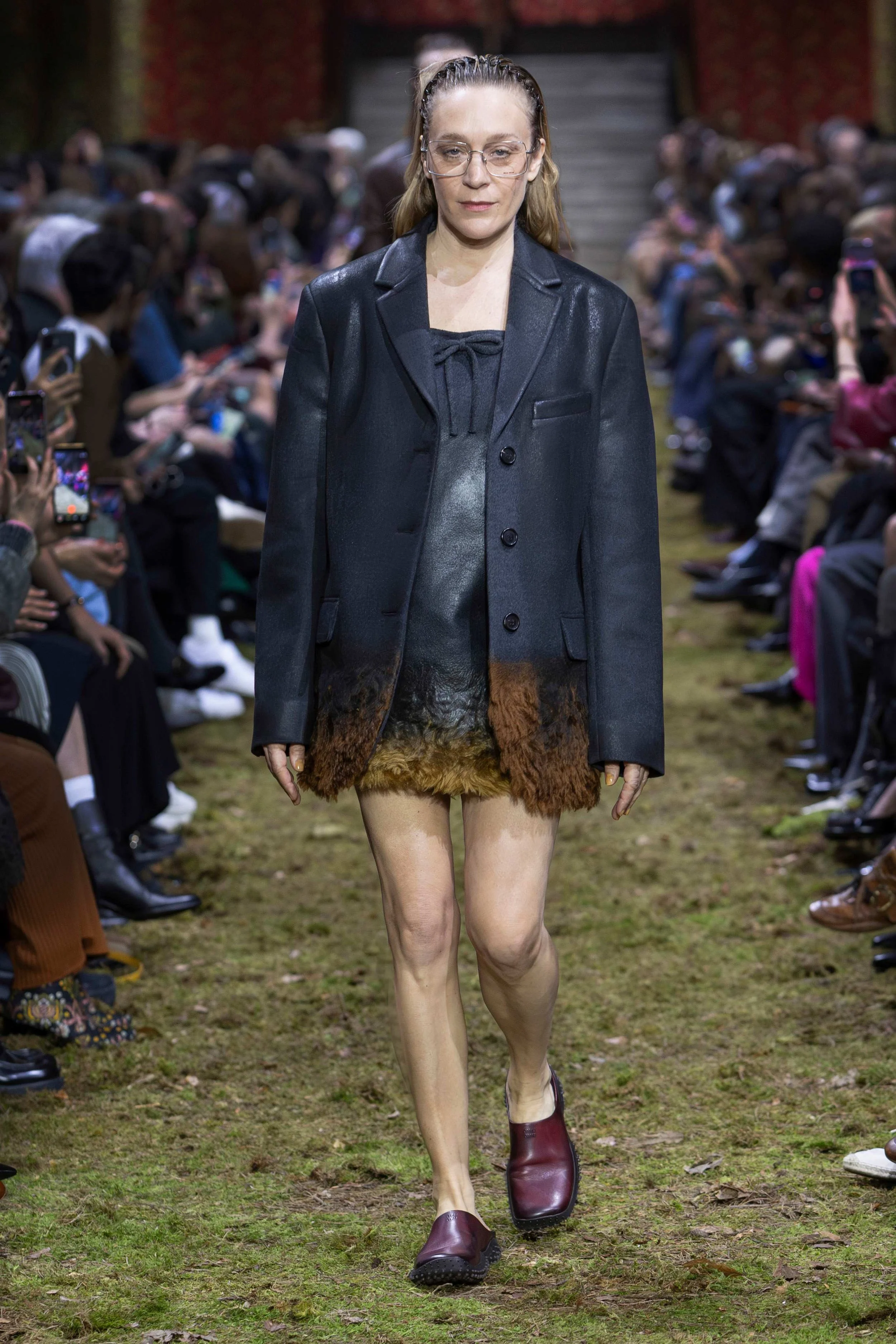

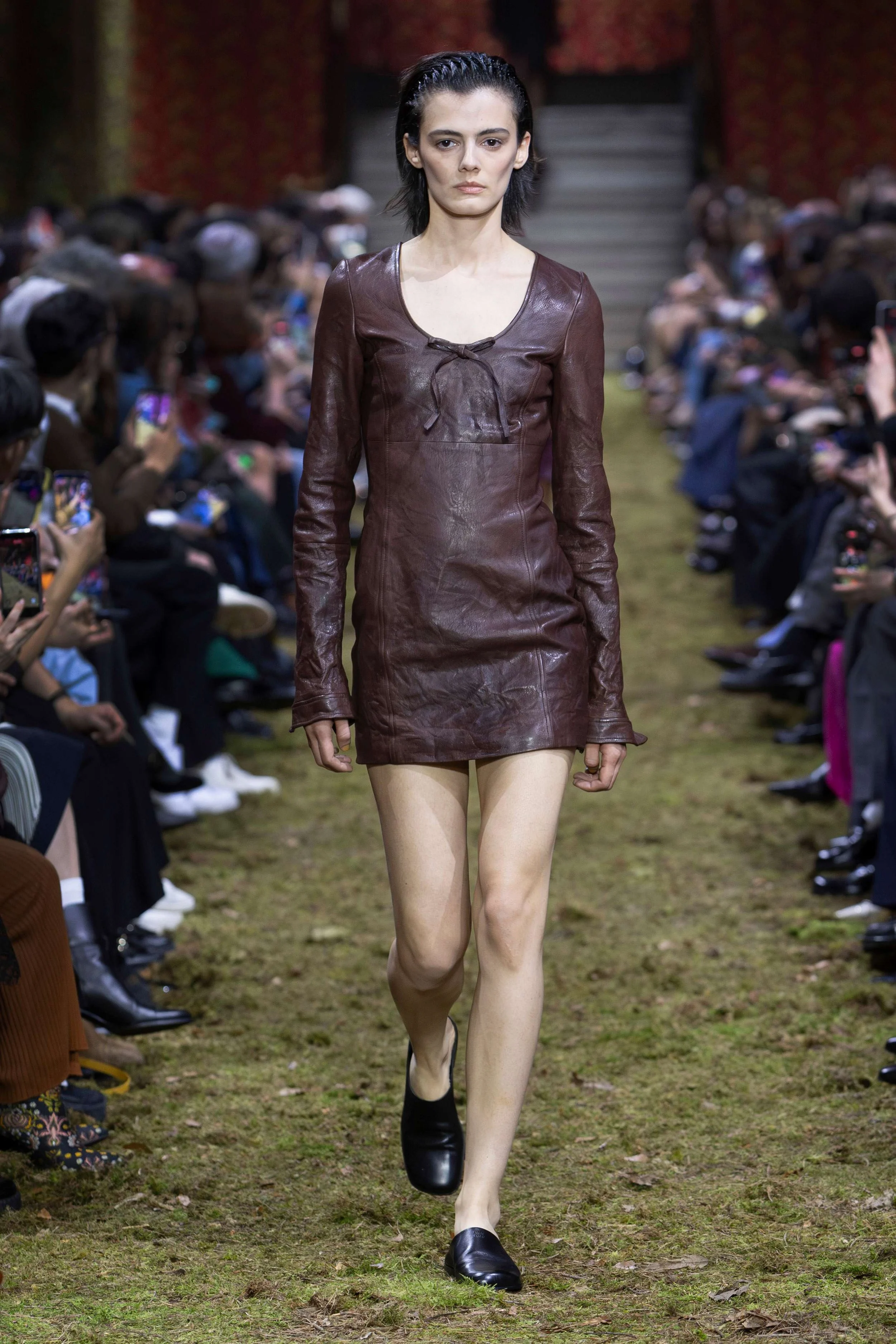
all images courtesy of MIU MIU
Miu Miu might’ve titled its latest collection Mindful Intimacy, but for me, Girls Just Want To Have Fun would be just as fitting.
Palais d’léna underwent a transformation, turning into both a girl’s bedroom and a forest. Red, floral wallpapers — reminiscent of the apron patterns from the previous outing — stood in juxtaposition to the uneven green, mossy forest floor introducing a prominent nature element and making it a somewhat challenging surface for models to walk on.
This season, Ms Prada positioned the human body at the centre of her collection, and looked at it from both outside and inside. She questioned the smallness of human body in the vastness of our world, adding backstage: “I wanted to create with humanity, with gentleness, with poetry, with romance. We are small in the world, but we are enough.”
These themes were translated into a collection holding the clothes close to the body and embracing it. An array of rather fitted silhouettes looked delicate and often antique, hinting at the poetic romance, the strength to walk alone, and existing within times, rather than vulnerability and simply passing of time. The 1970s inspirations were apparent on many tops cinched right under breasts with a belt, and trousers with slits, giving them all a subtle bell shape. Sweet, underwear-like bows on doll-esque A-line dresses explored the ownership of one’s body, nodding to a warm sensuality and sexuality one might experiment with. Other elements like cotton poplin, washed double cashmere, linen or embroidered tulle brought out a sense of purity and simplicity, standing in opposition to the rebellious leather looks — which we saw an abundance of.
Tension is what makes Miu Miu’s aesthetic so unique. Be that the clash of innocence and rebellious spirit, or — on a more technical level — the playfulness of the nylon activewear portion of the collection or the intricate tailoring. The innovative approach to materiality, creating a seamless transition from leather to fur, manifested itself on mini dresses, oversized blazers or knee-length coats. Elsewhere, the shearling lining peeked from underneath undone coats and jackets almost as if there was too much of it.
Ms Prada once famously pointed out: "Prada is what I am and Miu Miu is what I want to be.” And we can’t help but love the dreamed up forever young girl who lives inside her mind and heart.
CFCL
review by SONNY NGO
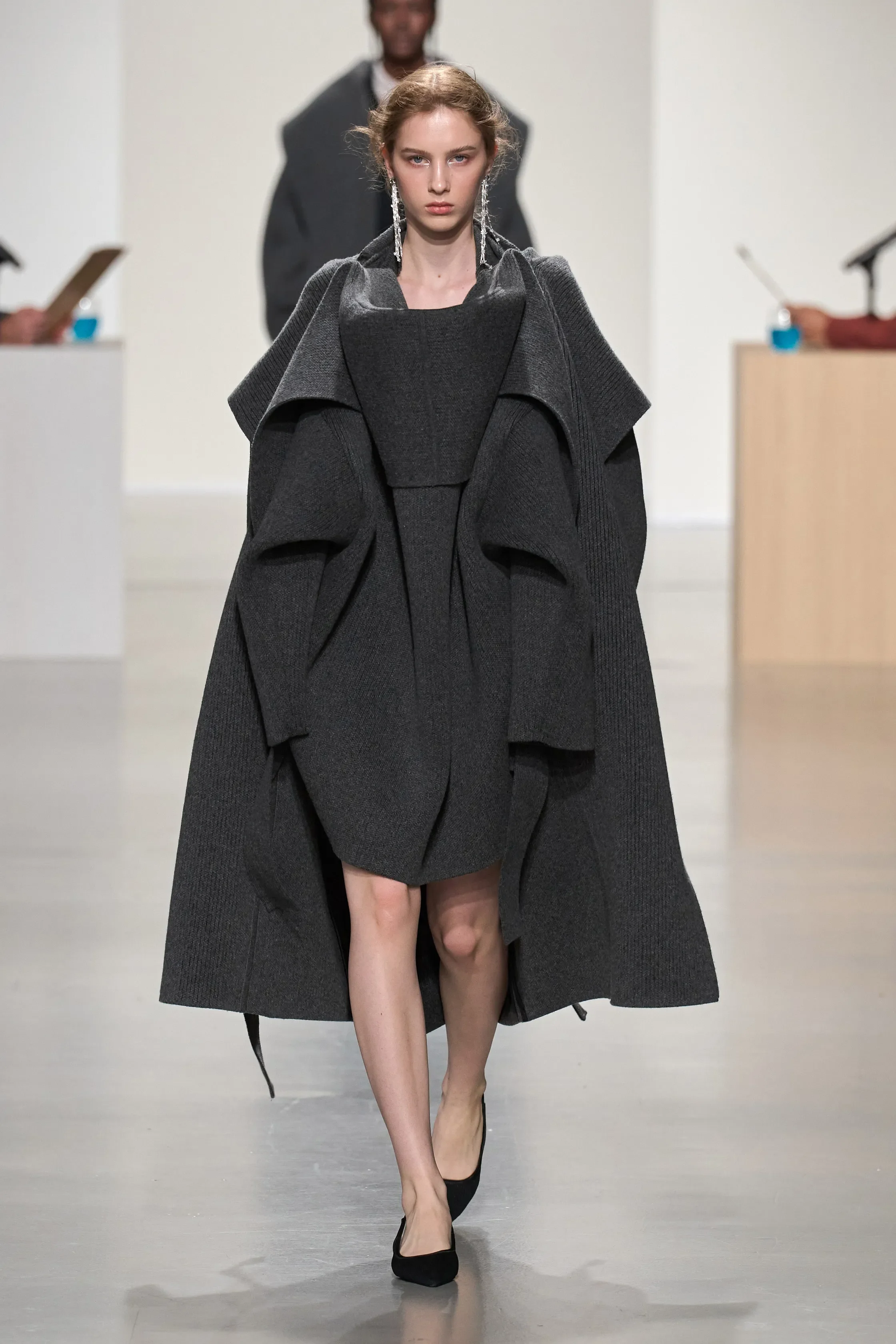
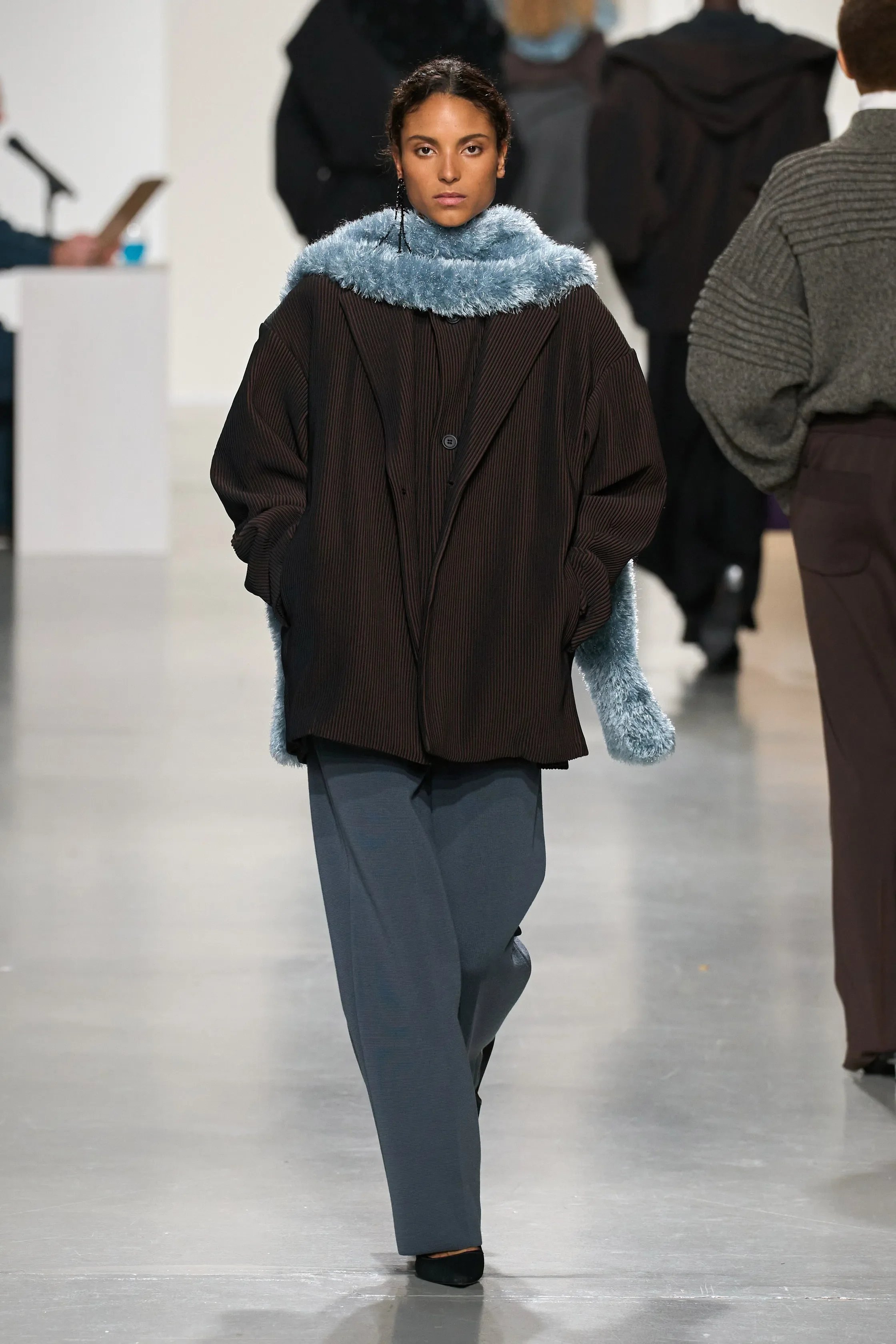
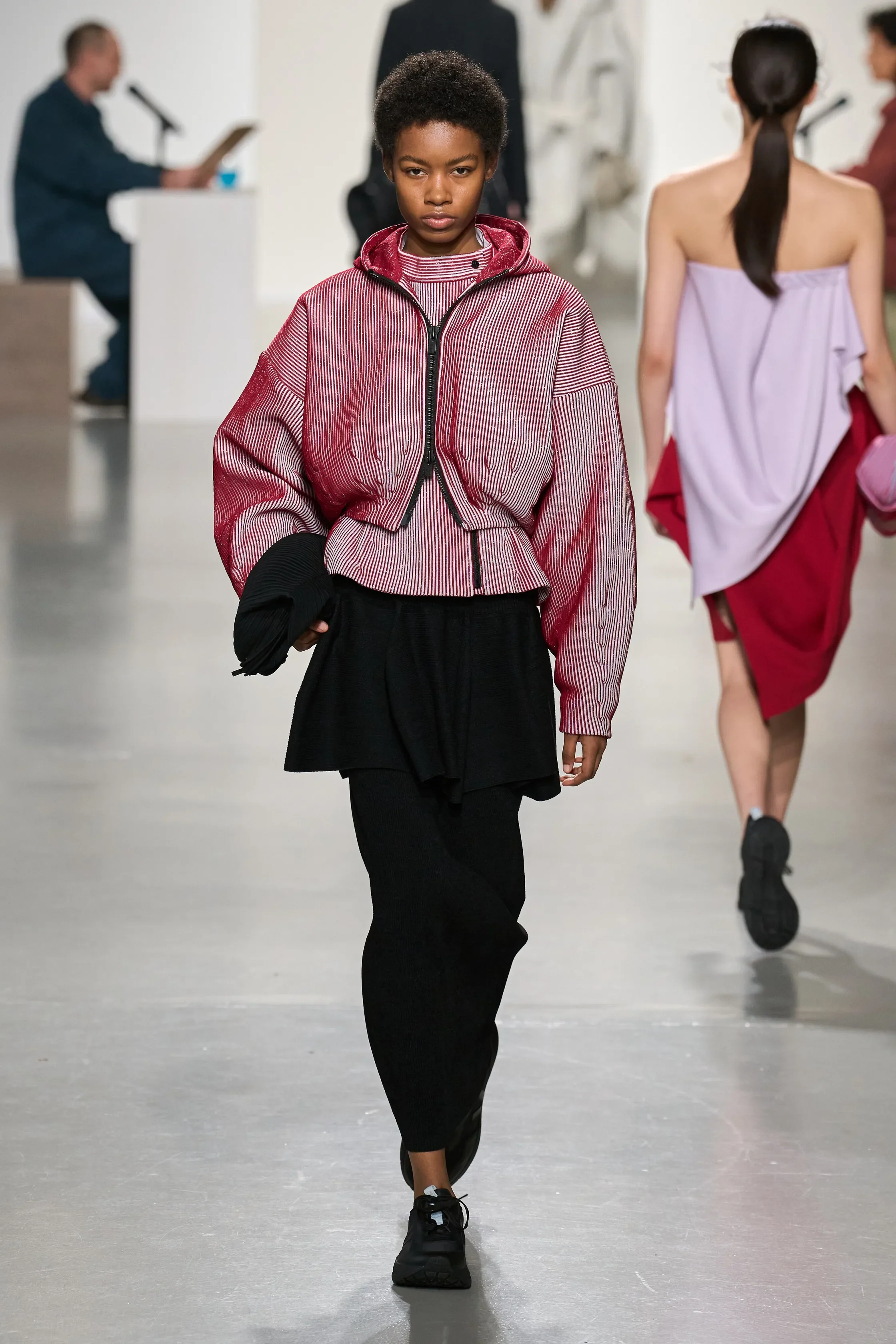
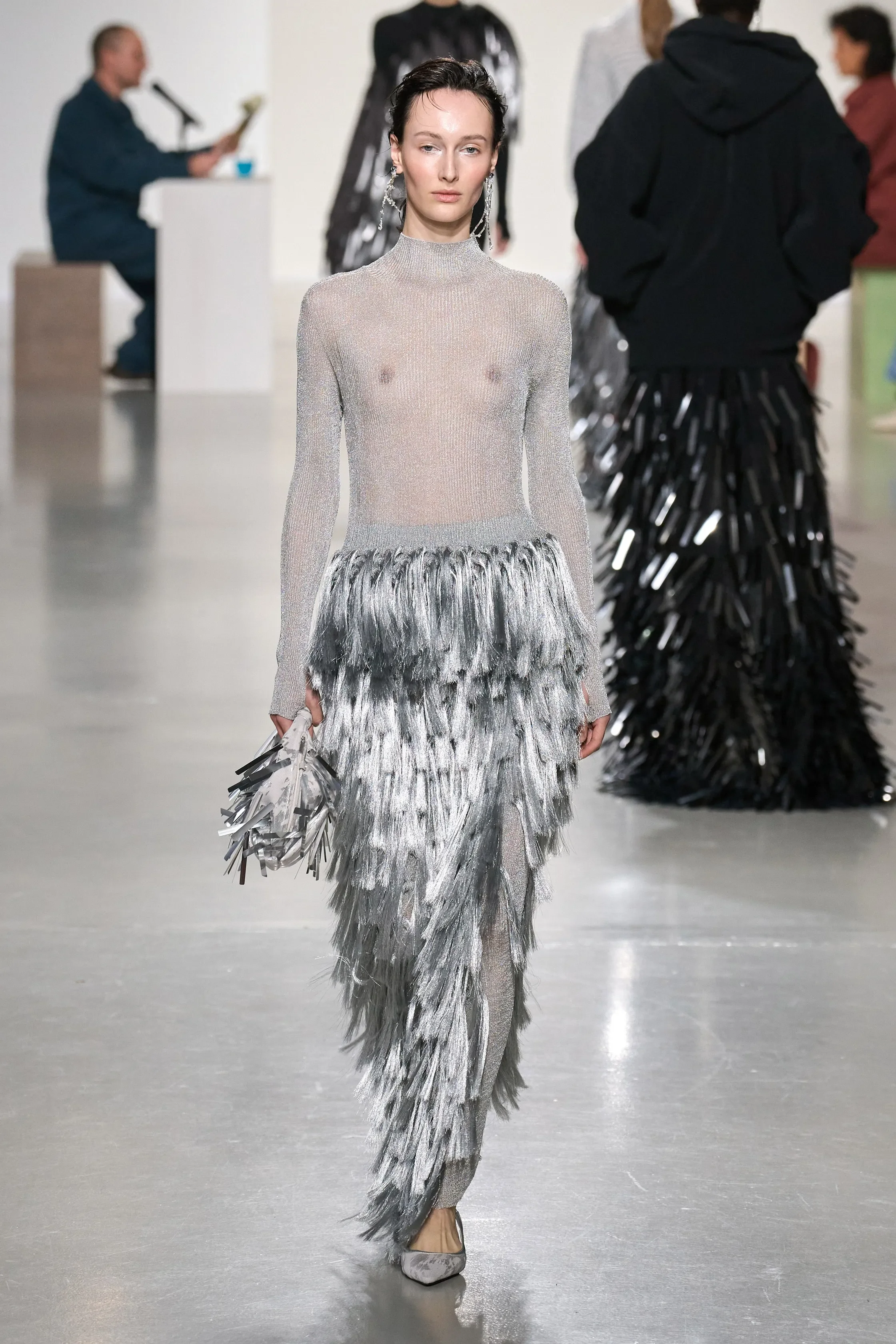
all images courtesy of CFCL
There are some artists who continue to inspire the world long after their passing. One such artist is the German Joseph Beuys, whose oeuvre served as this season’s point of departure for CFCL. A pioneer and idealist in many senses, his concept of social sculpture – the idea that art and life are one and the same, and shaped by everyone – formed the basis for the brand’s Fall/Winter 2026 collection. With its premise of creating clothes for contemporary life, CFCL continuously asks itself what current life demands and what that requires from the wardrobe. From the art theoretical lens of Beuys, CFCL approaches this season with the notion that fashion as a medium connects individuals to society; and that when embodied and in movement, it can contribute to social change.
Under a minimalist soundscape and a live performance of poetic spoken word by Ben Vida, the collection was showcased at the Palais de Tokyo. It featured a refined palette consisting mostly of greys, blacks, metallics, and the occasional hints of deep reds and shades of pink and purple. Silhouettes remained fluid throughout, while fringes gently swayed with each step, conveying a relaxed poise that is elegant without overwhelming the body. Drawing inspiration from Beuys’s felt suits, the collection featured casual drapes whilst maintaining the minimal expressions of single material compositions. In other places, the work of Beuys also shone through; primarily in the bark-inspired foil print on dresses – the first time the brand used a motif pattern – which paid homage to Beuys’s ambitious 7000 oaks project. Using CFCL’s signature computing techniques in combination with human craftsmanship, the bark texture appeared on a plethora of dresses and their fringes. Down below, the next chapter of the brand’s collaboration with Veja was revealed, which remained as minimal and refined as we know the footwear brand.
Forty years after Beuys’s passing there is still so much to learn and love about his practice: his care for materials, his ecological awareness, or even his brief stint with the Fluxus movement. From the planted oak trees, still growing into a future forest, to CFCL’s garment designs on the runway, Beuys’s belief that art and life are inseparable, and shaped by every hand it passes through, lives on. For Beuys, everyone can be – or by definition already is – an artist. This season, CFCL certainly revealed its own deep levels of artistry.