
PARIS FASHION WEEK MENSWEAR FALL/WINTER 2026: DAY 5
KIKO KOSTADINOV
review by VERONICA TLAPANCO SZABÓ
The new year is so often heralded by change, usually of the capillary kind. One can’t help but wonder if this collective urge materialised on the runway in the form of bangs (courtesy of Tomihiro Kono). Fringe, clips-ins, and overall hair interventions were everywhere this season, but at Kiko Kostadinov, a single bang simply would not suffice, instead, layers multiplied, becoming asymmetrical in both cut and colour, dense enough to fully obscure the models’ vision.
From hair to garment, the logic of layering cascaded into the clothes themselves, Kostadinov refers to these as “restricted variations,” loosely informed by the ideal ratio developed by Dom Hans van der Laan, the Dutch architect and Benedictine monk. This theoretical underpinning never dilutes Kostadinov’s own signature, a master pattern cutter, he leans heavily into that expertise, letting construction speak for itself. Take the gusset for example, traditionally tucked discreetly under the arm to offer structural support, at Kiko’s it is uplifted to the neckline. Coats and trousers hinge on panels and cinching origami style. These garments also feel paper-like in their precision, as they bear no surface treatments, no visible zips, not even a topstitch to interrupt the line.
This severity is elevated by the material choice, Loro Piana wool, virgin mohair, cashmere, to fill in order to fill the gap of decoration. Throughout the show a palette of cool mineral tones waltzes through the box light-like venue, before giving way to an unexpected burst of colour blocking. Red and mustard collide like a traffic light on the street, commanding to slow down, then stop.
MAGLIANO
review by MAREK BARTEK
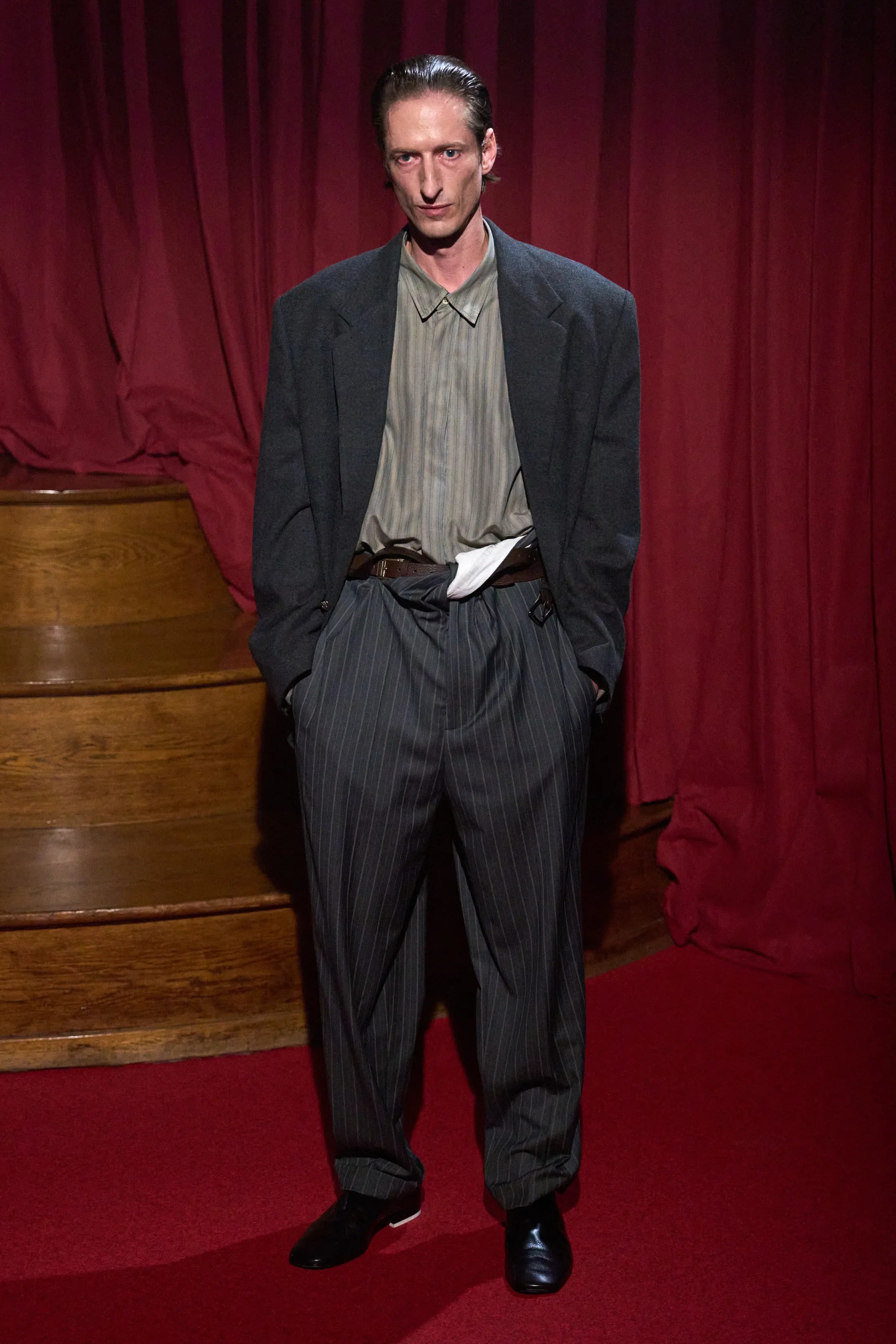
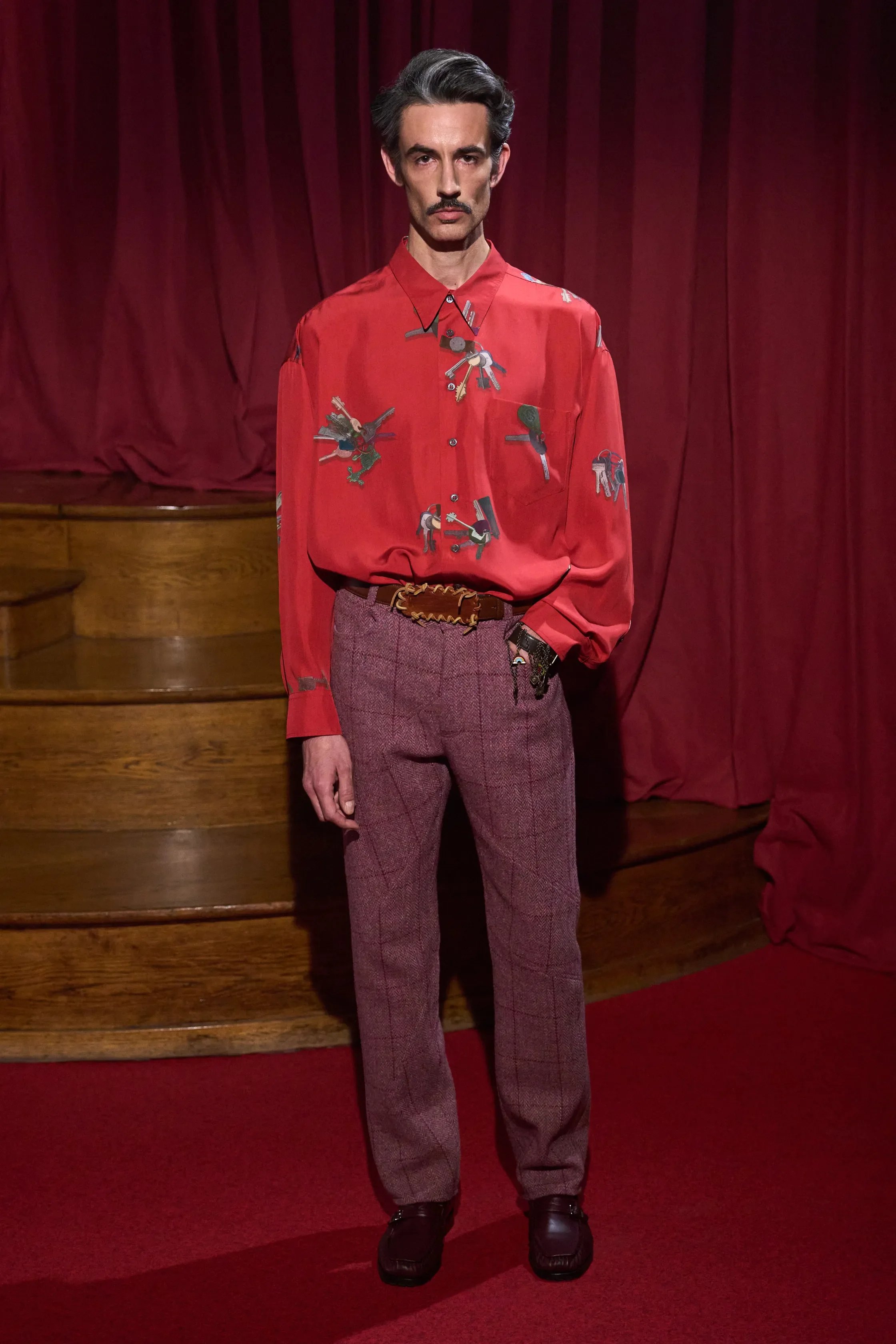
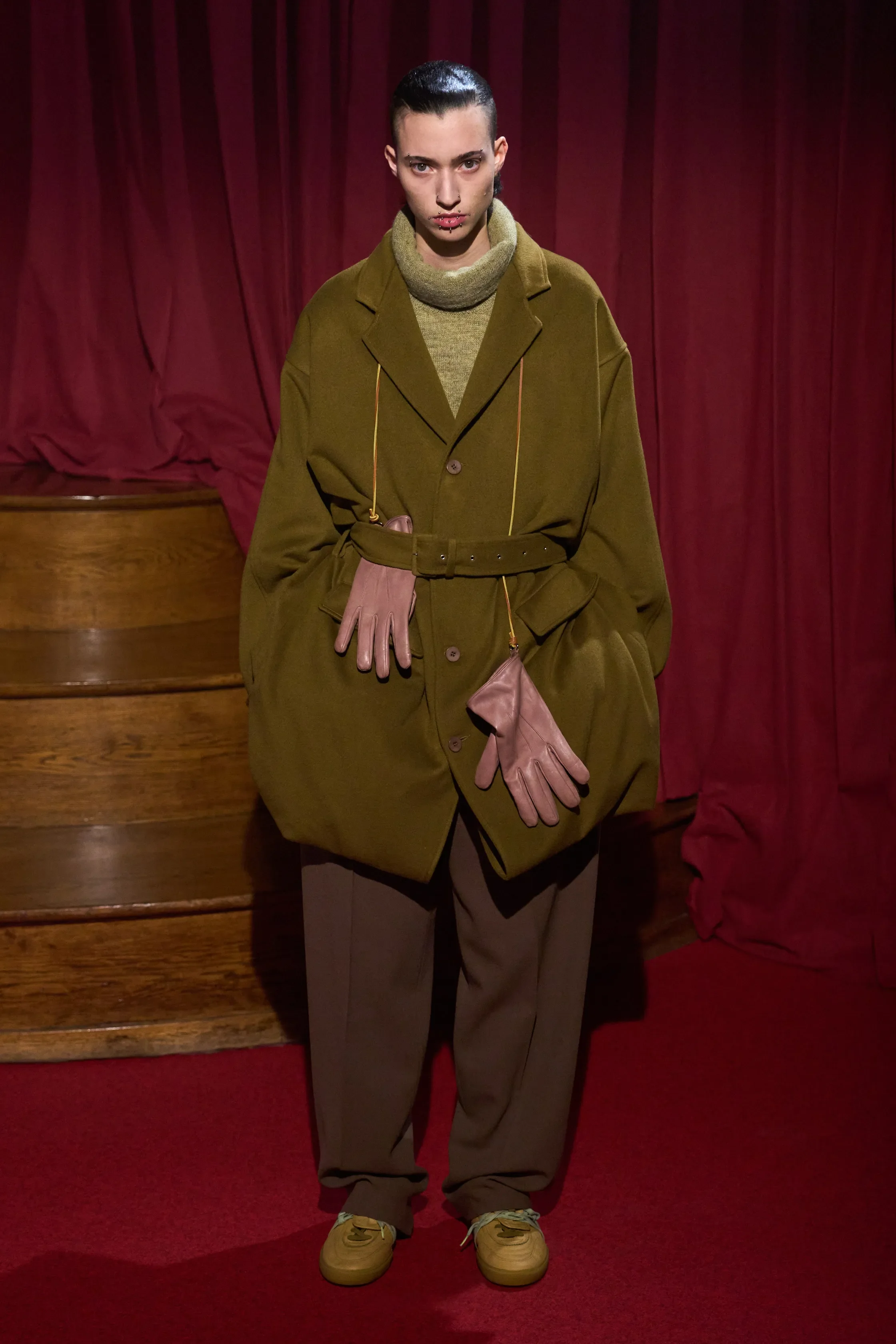
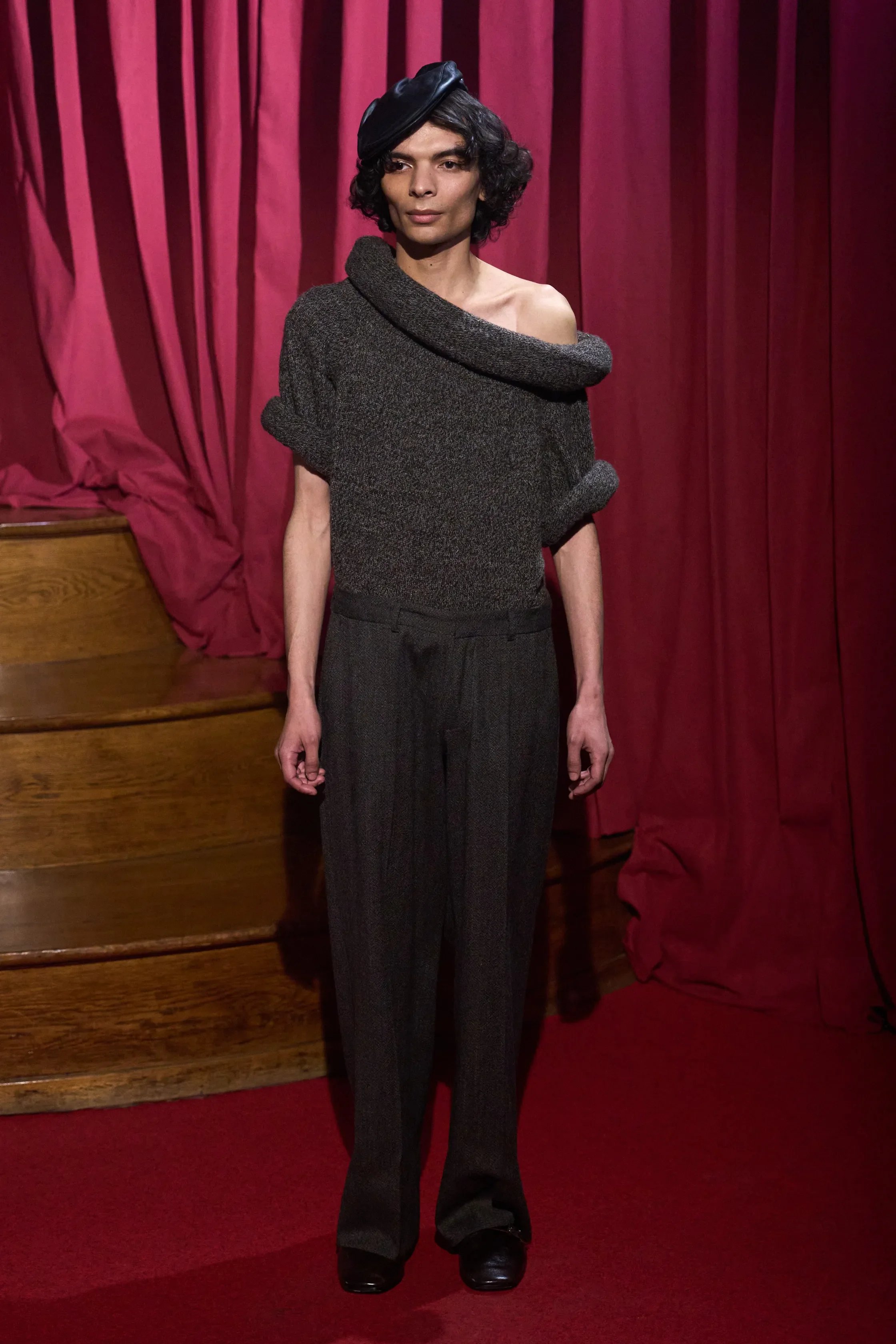
all images courtesy of MAGLIANO
Magliano presented its Fall/Winter collection in Paris for the first time, marking a deliberate shift away from Milan and into a new phase for the house. For Luca Magliano, the move signalled less a change of direction than a reset. A smaller setting, fewer distractions, and a clearer focus on what defines the brand.
The collection remained rooted in Magliano’s signature tailoring, but softened and destabilised through gesture and construction. Slouchy jackets, scarves integrated into collars, and organza inserts slicing across coats introduced movement directly into the garments, collapsing styling and function into one. Classic forms were reworked with a romantic tension, balancing precision with disorder and formality with fragility.
Presented in a red-velvet, music-led setting titled Unplugged, the show stripped back both staging and message. The palette stayed restrained, the silhouettes disciplined, and the mood introspective. Rather than a show, Magliano focused on clarity — reaffirming a vision of tailoring that makes space for emotion, ambiguity, and a subtly queer reading of elegance.
ZIGGY CHEN
review by MAREK BARTEK
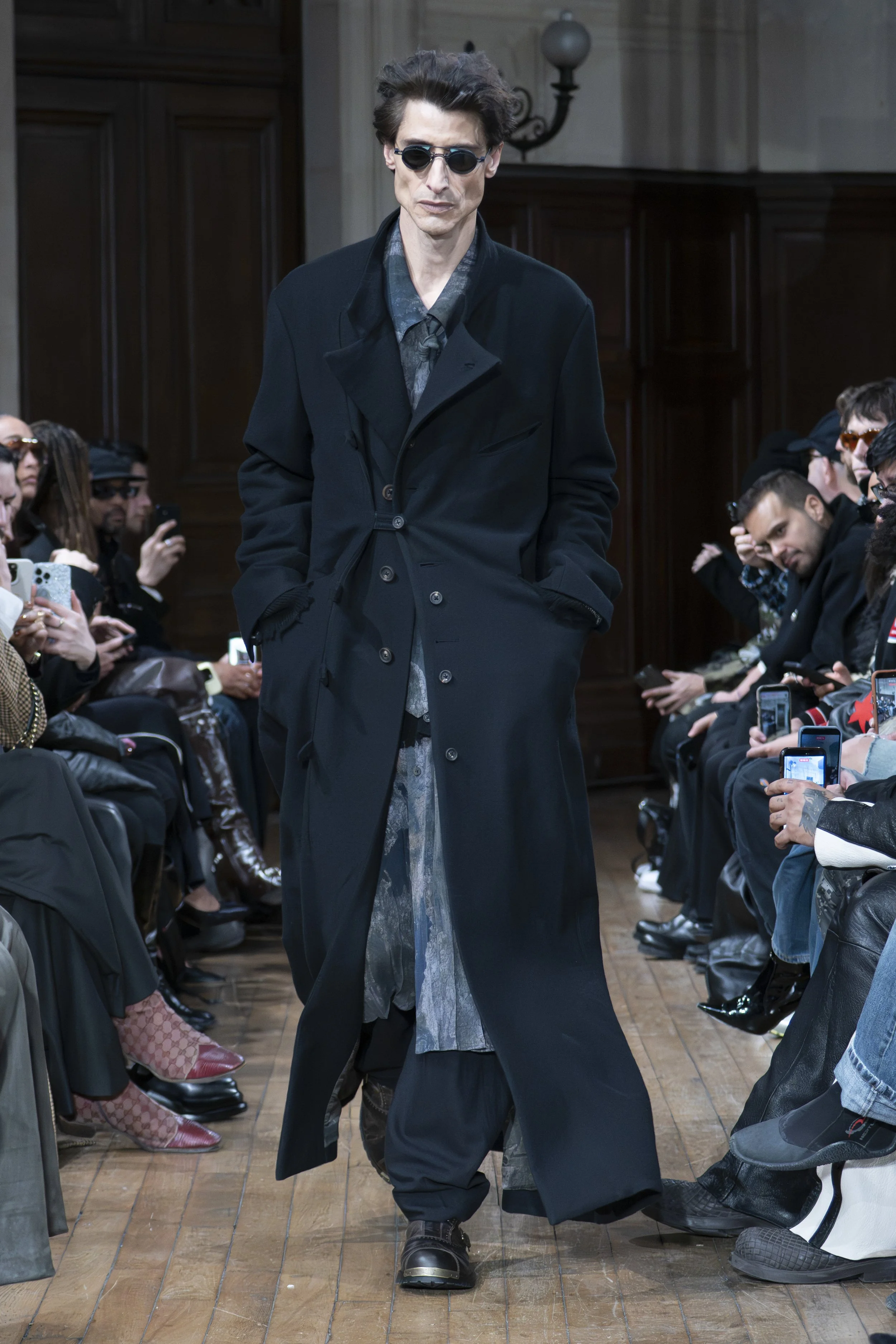
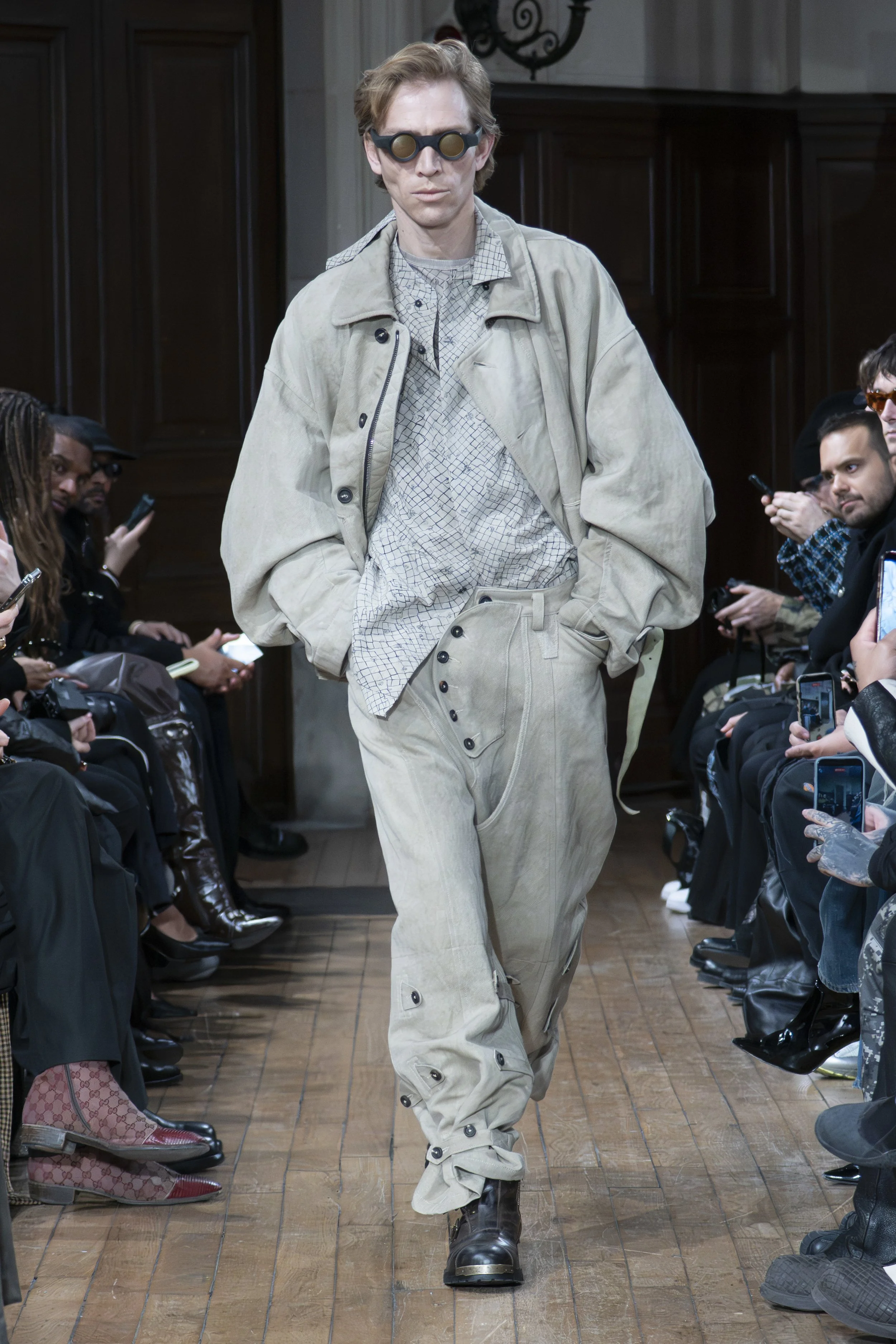
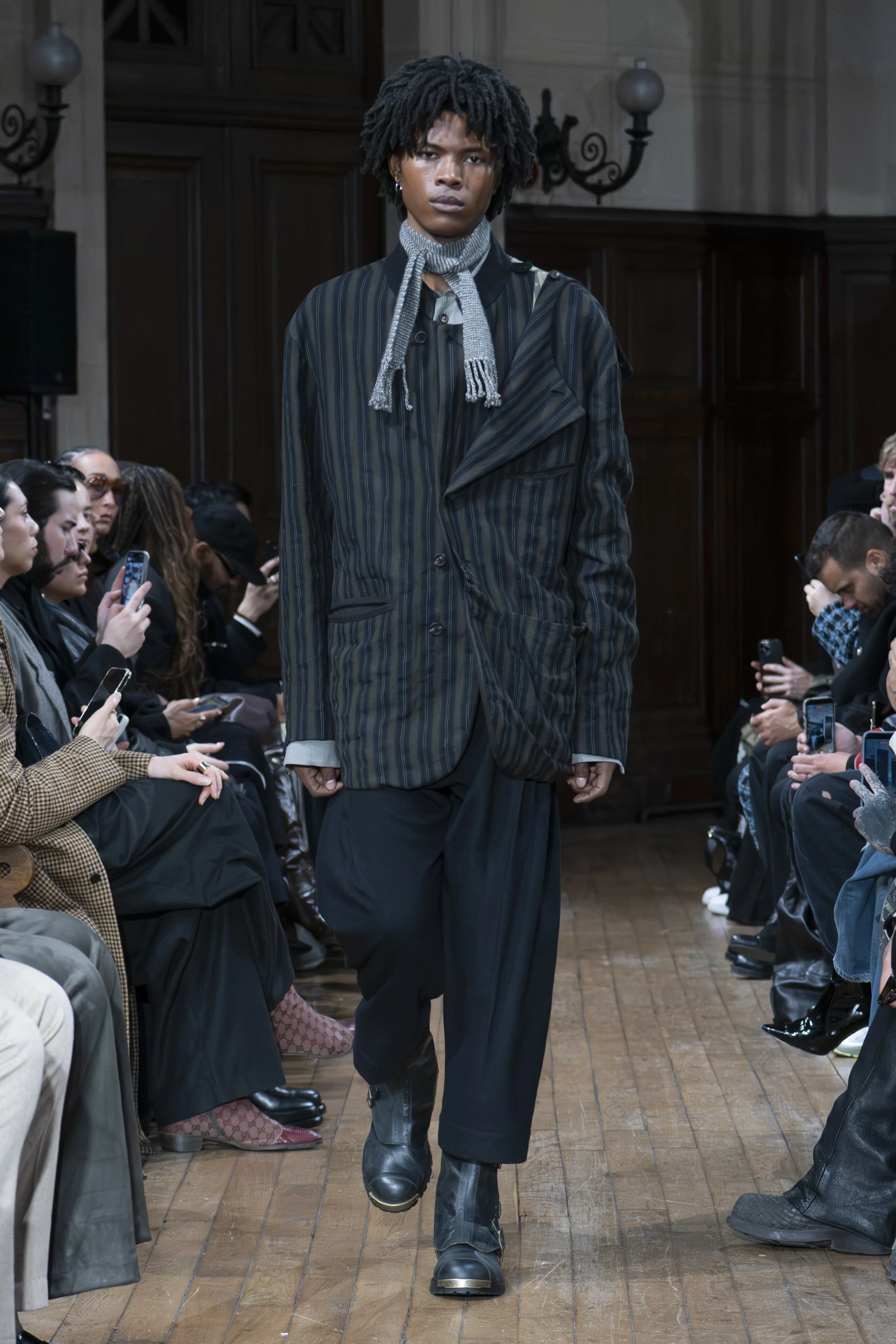
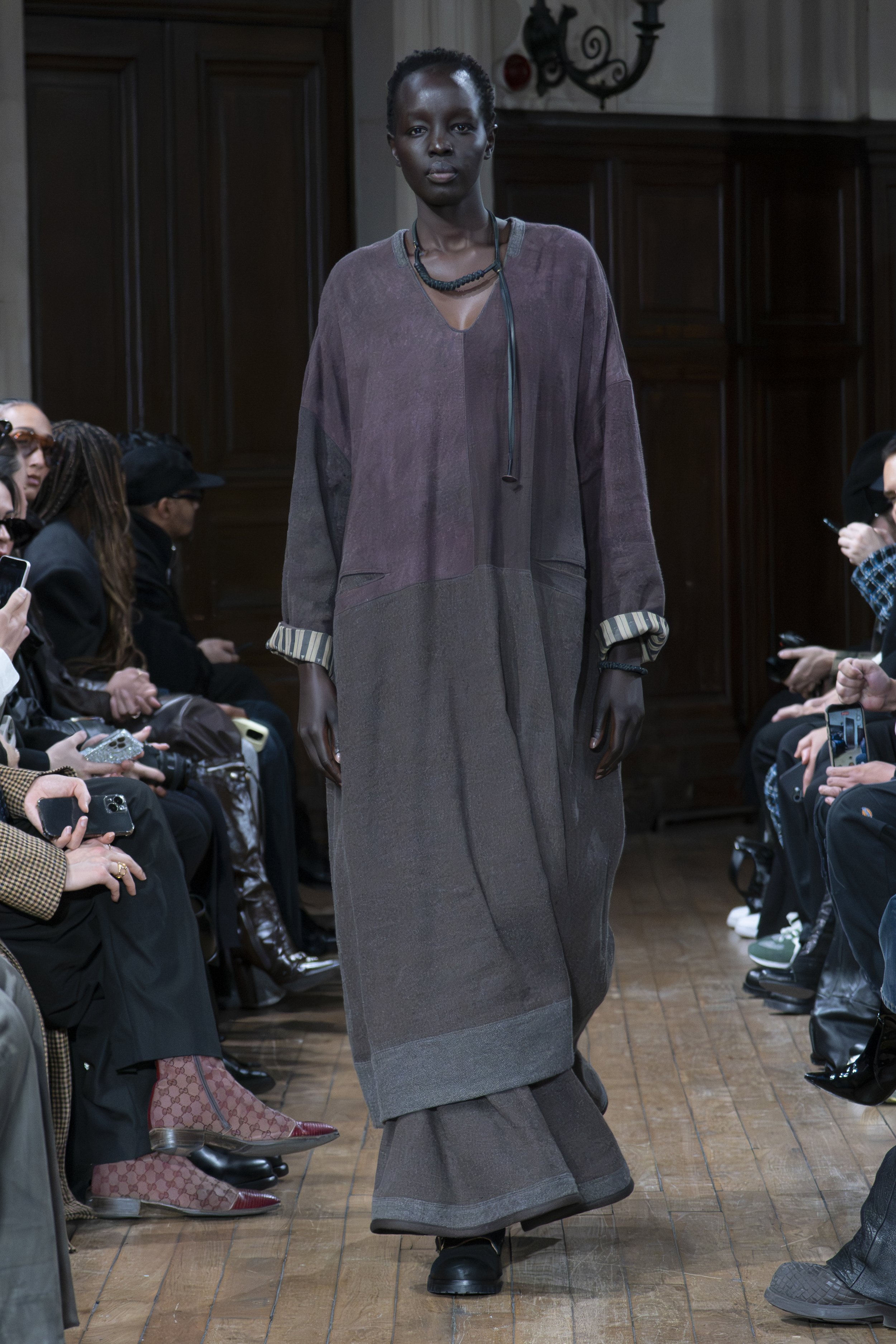
Ziggy Chen presented his Fall/Winter 2026 collection inside the Église Protestante Unie du Saint Esprit, where the setting reinforced the collection’s quiet, contemplative mood. Titled Dissparation, the collection explored dislocation, layering, and the idea of forms slowly separating and recomposing over time.
A muted palette of black, washed navy, softened greys and natural tones grounded the wardrobe, keeping attention on surface and texture. Silhouettes remained deliberately oversized and relaxed, with little emphasis on traditional tailoring. Brushed leather jackets with dropped shoulders, oversized parkas and slouchy wool coats created a sense of weight and ease, while visible pilling and surface irregularities treated imperfection as a design feature rather than a flaw.
Stripes ran across many looks in varying intensities, joined by abstract, hand-drawn patterns and monochromatic layering that extended even to accessories. Ultra-slim shawls, statement hats, round eyewear and leather bags with braided handles completed the silhouettes, while wallets worn on chains added a subtle utilitarian note. Abundant button detailing functioned as ornament rather than closure, reinforcing the Chen’s rather reserved approach to decorativeness.
HERMÈS
review by NIA TOPALOVA
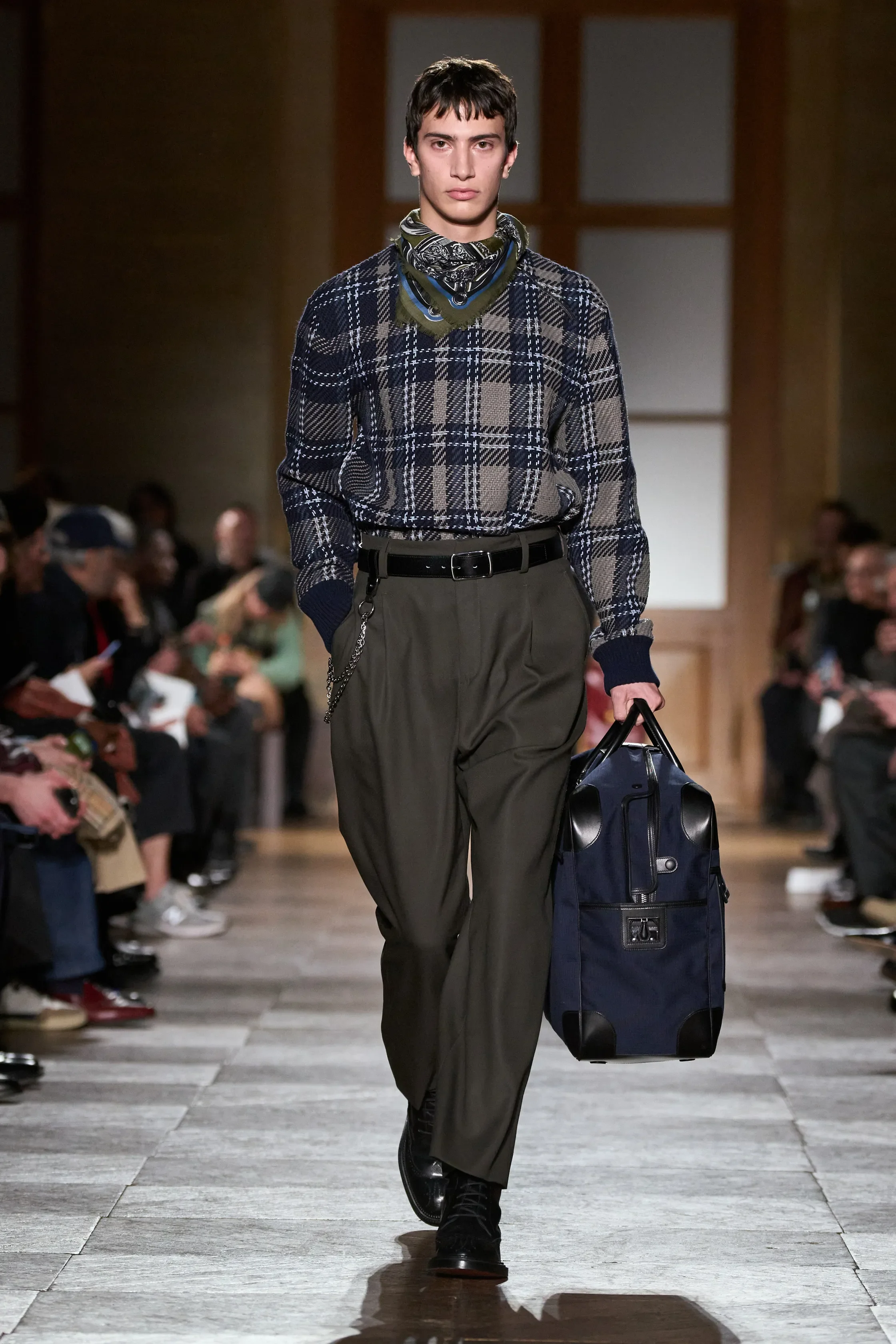
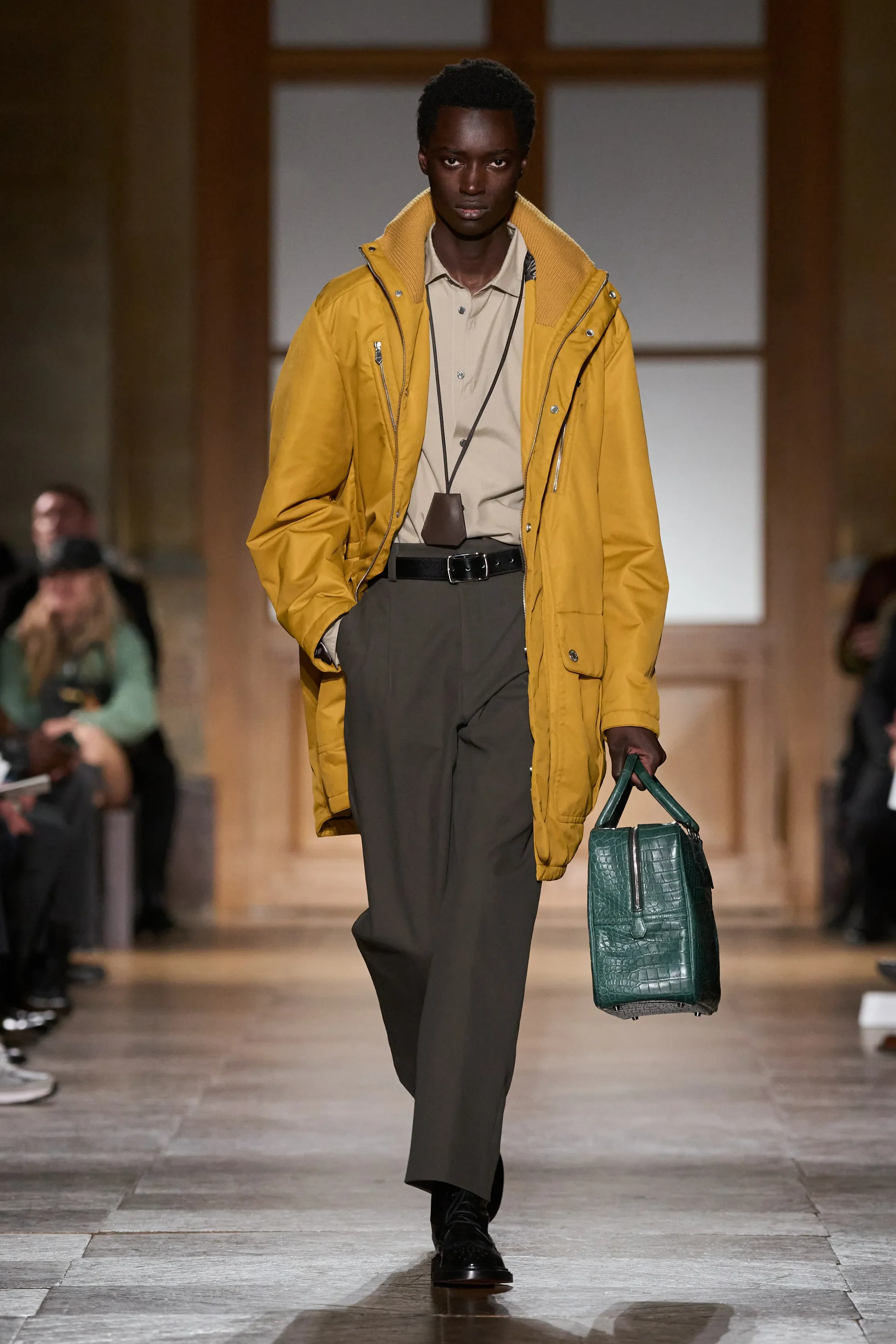

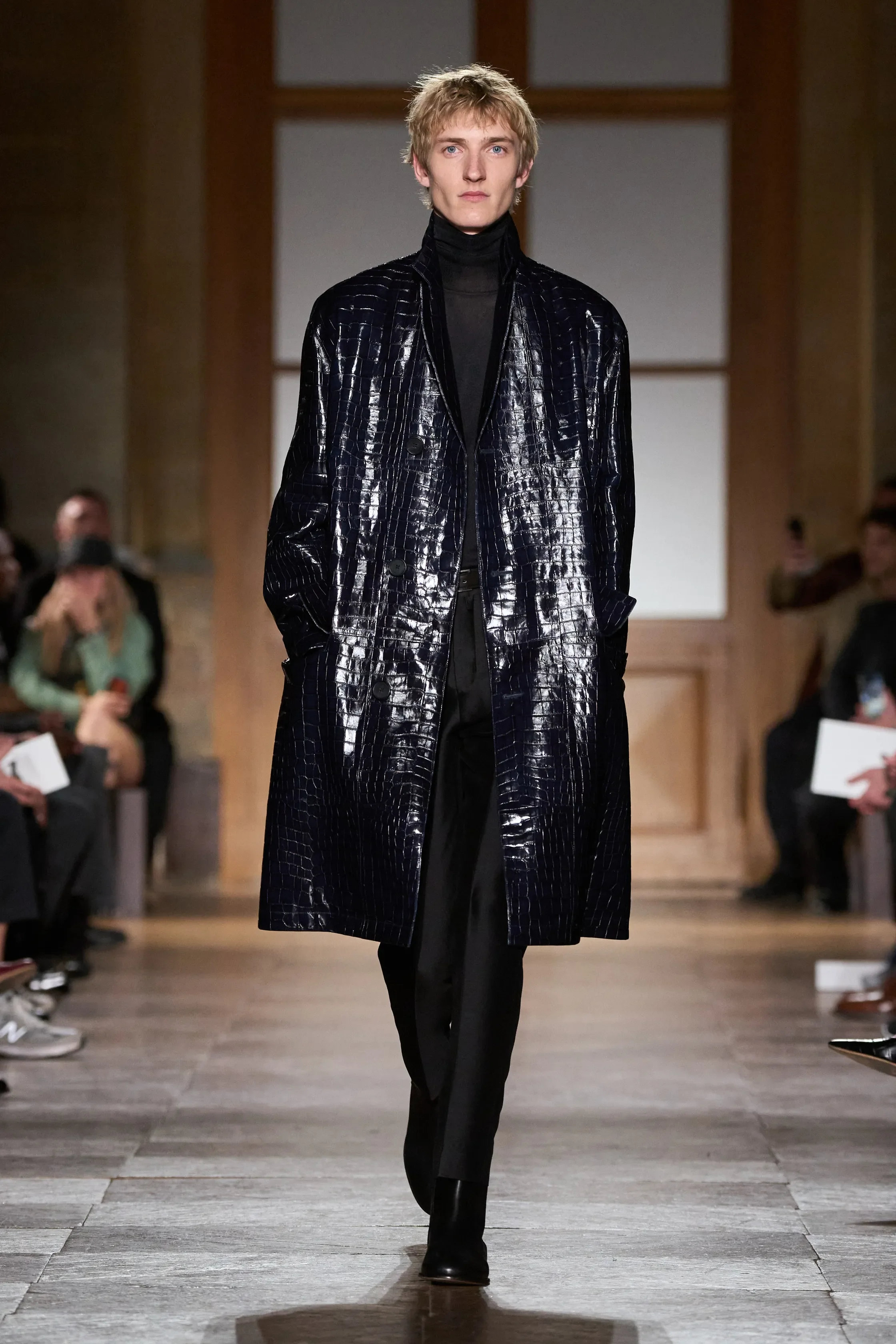
Adieu à Madame Véronique Nichanian after thirty-eight years at Hermès. She leaves a house formed by clarity, precision, and intelligence, with menswear timeless in its measure. For decades Nichanian has mastered proportion and material, producing garments meant to last. As Wales Bonner prepares to take over as creative director, with a first collection awaiting next year, Nichanian will remain overseeing Hermès’ men’s leather and silk.
Design choices for her final collection Autumn/Winter 2026 came from familiar ground, from the 1990s and early 2000s: a pinstripe leather suit, a collared biker jumpsuit, a sculpted boombox suitcase bag. These were accompanied by new classics: two coral-dyed shearling coats, embroidered overshirts, and orange-soled boots. Knitwear closed at the neck with zips; coats and jackets carried weight through draping. The final look? A navy crocodile coat over a black silk turtleneck.
Nichanian has shared that her decision to step back comes from the relentless pace of the industry, a pace that renders design choices predictable, and in lack of conceptual intent. She shared that it is time to slow down, and has encouraged us all to do the same. She saw this season’s work as mobile and alive, enduring through a season made for a lifetime.
KIDSUPER
review by MAREK BARTEK
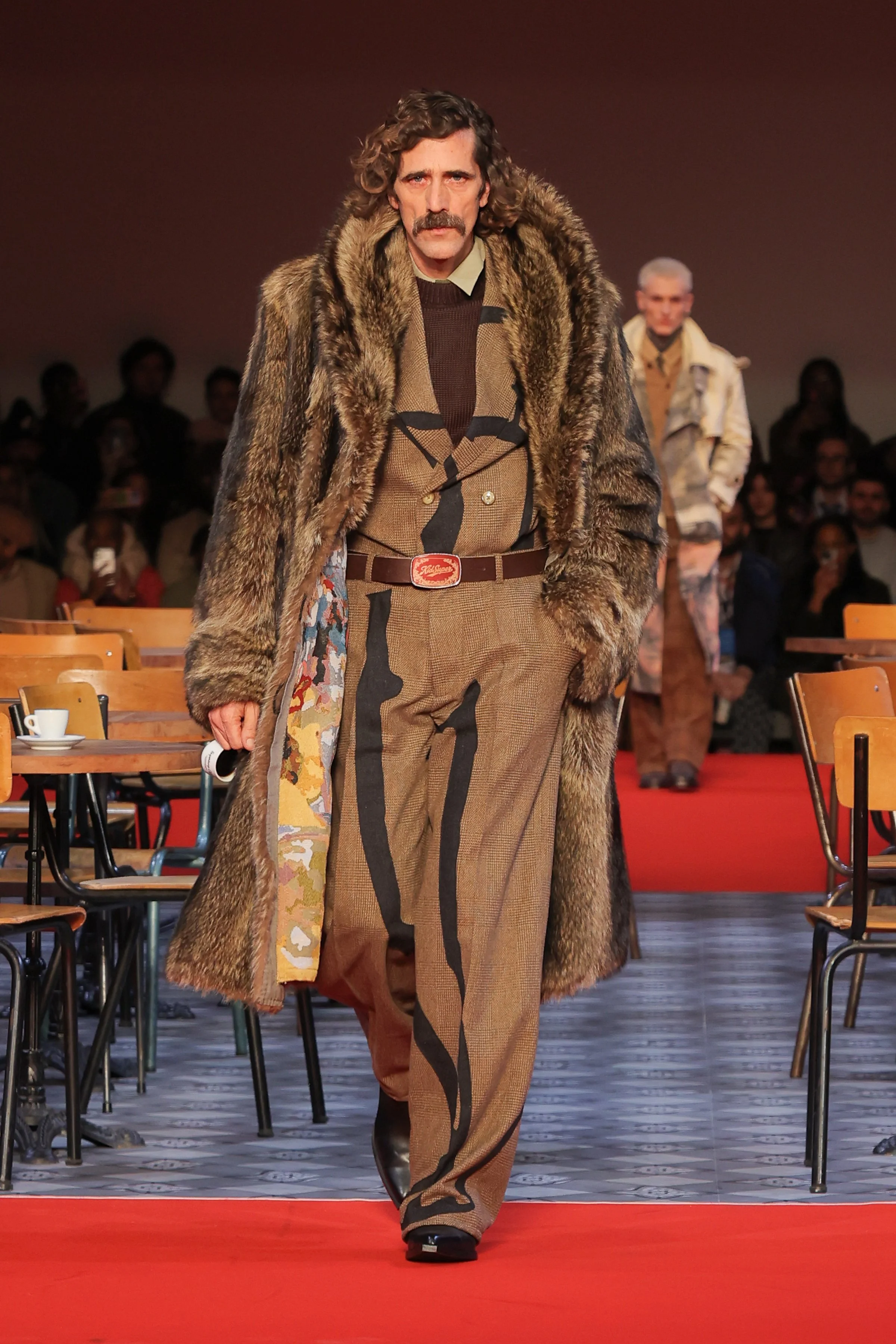
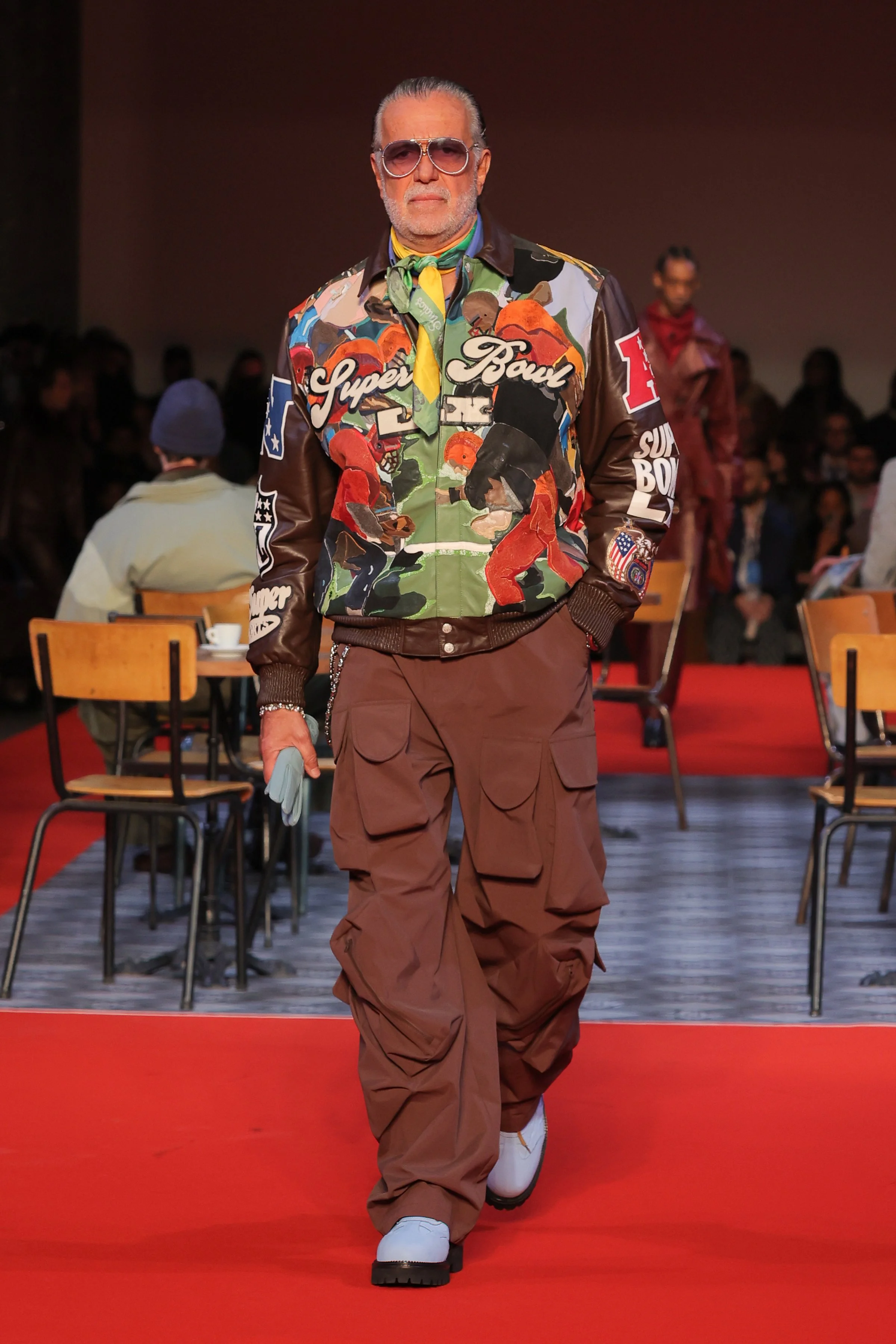
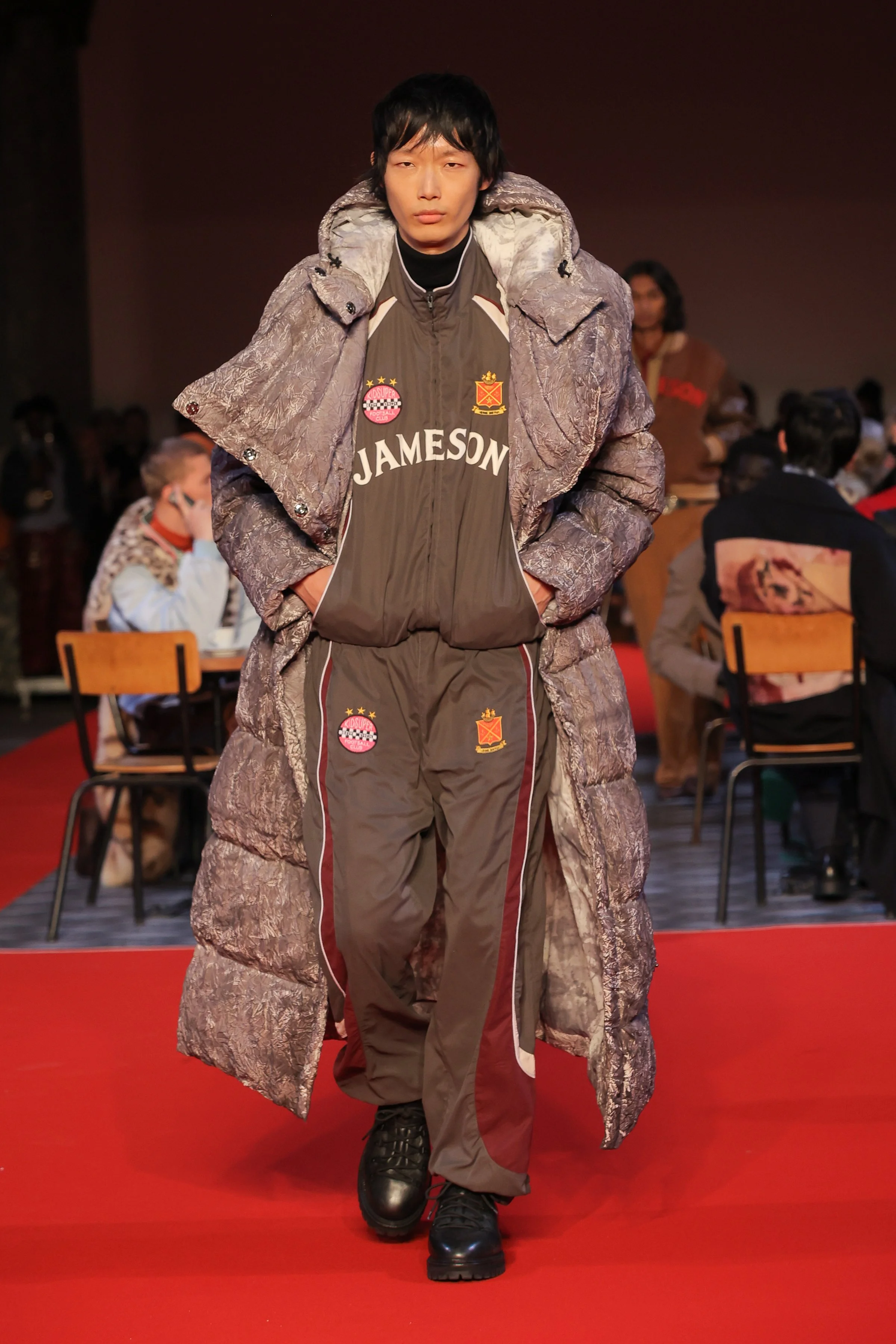
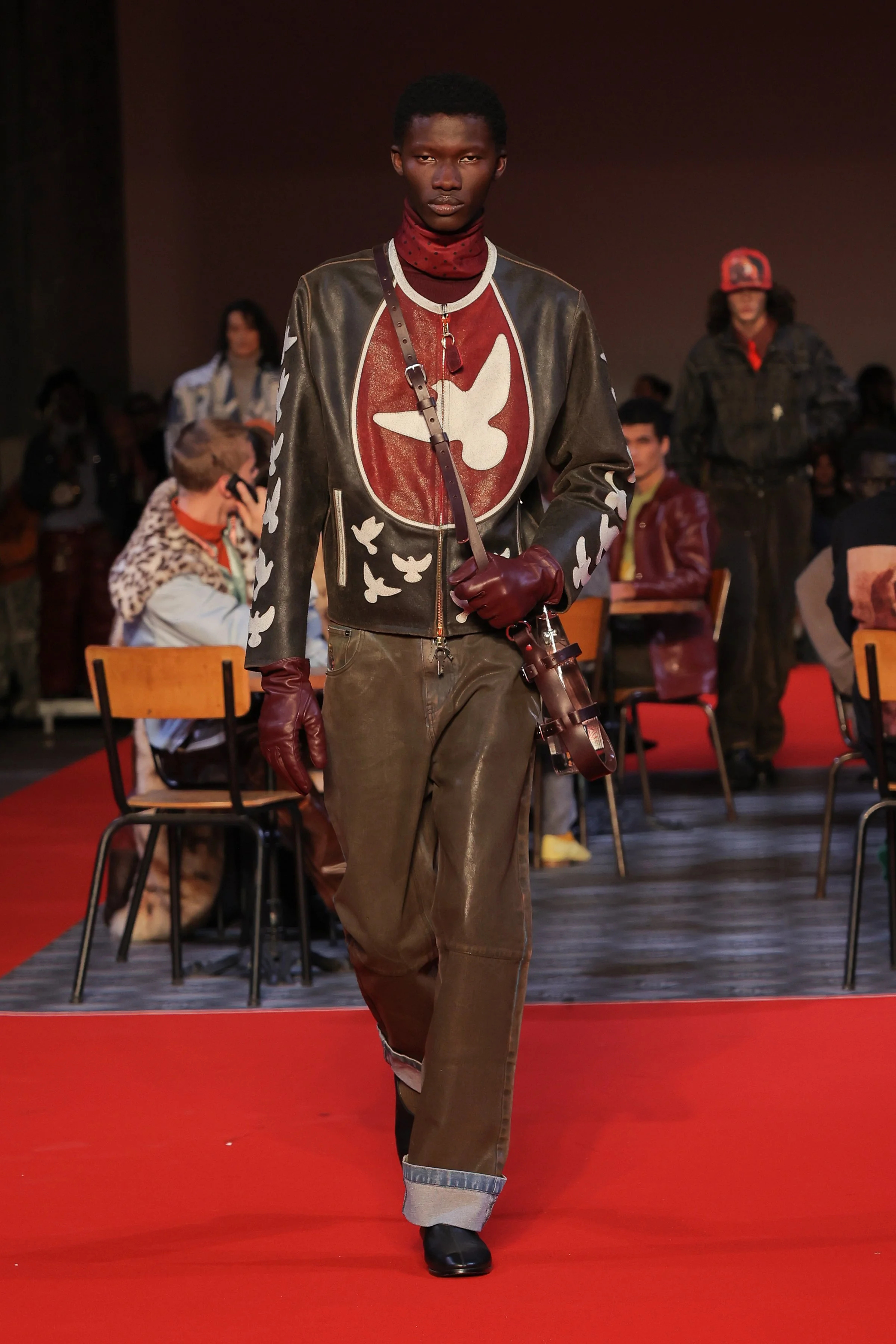
KidSuper’s Fall/Winter show unfolded as a hybrid between film, performance, and runway, staged on Rue Cambon and built around the idea of living inside a simulation. Directed by Colm Dillane, the presentation opened with a short film starring Vincent Cassel, before collapsing into live action as a model stepped out of the screen and onto the runway, blurring fiction and reality.
Casting leaned older than usual, referencing cinematic figures from imagined futures and troubled protagonists, while tailoring stayed deliberately worn and unstable. Trench coats, shirts and ties, black and burgundy leather, and fireman-style fastenings suggested uniforms for characters caught between worlds. Printed and woven artworks — Dillane’s own — ran across knits, outerwear and accessories, anchoring the clothes in his ongoing graphic language.
Collaborations with Jameson and early hints of a Havaianas project appeared without dominating the narrative. As the cast gathered around café tables to close the show, KidSuper framed fashion as storytelling — a collection about uncertainty, identity, and choosing how to live, even when reality feels questionable.