
PARIS FASHION WEEK MENSWEAR FALL/WINTER 2026: DAY 6
SSSTEIN
review by MAREK BARTEK
all images courtesy of SSSTEIN
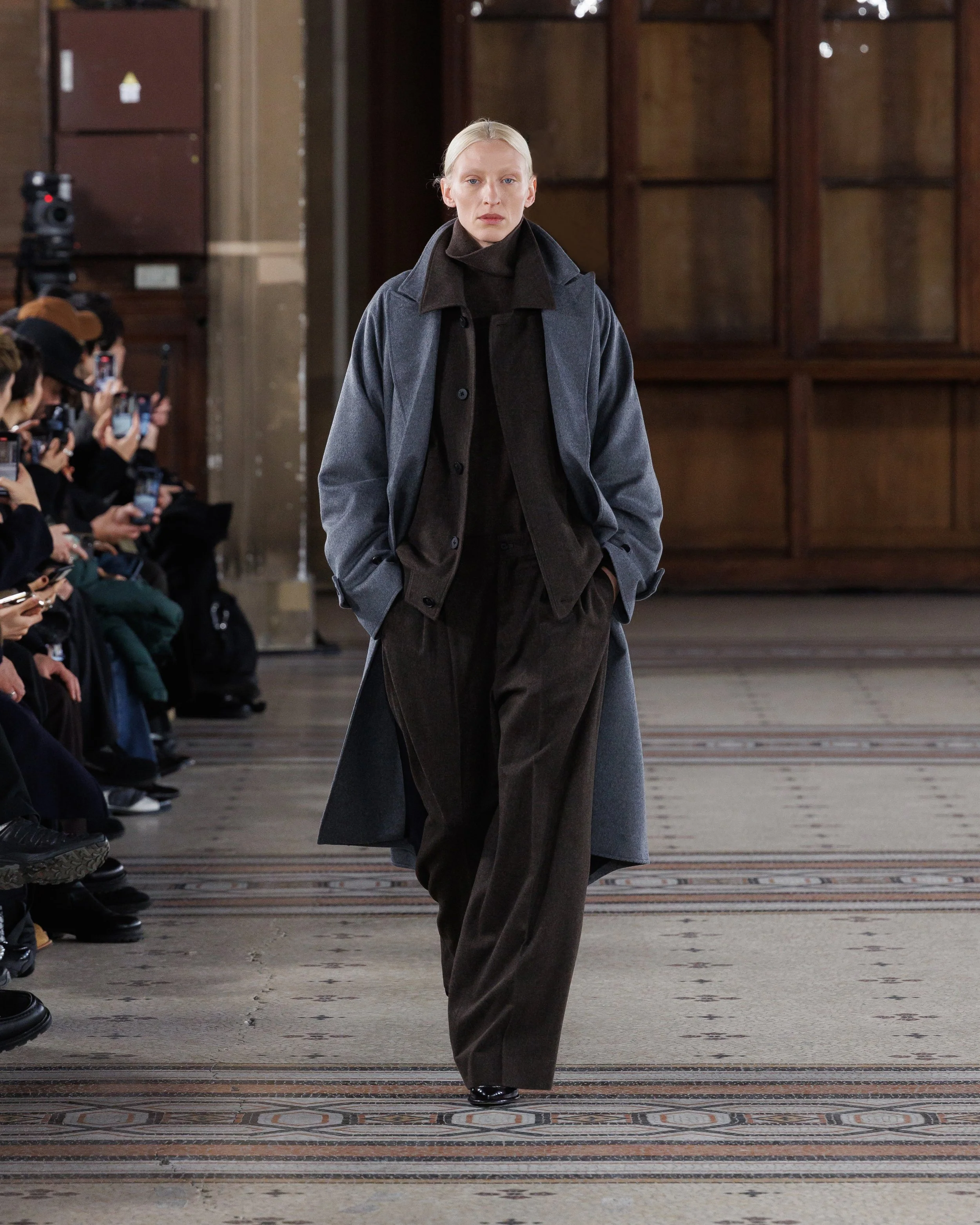
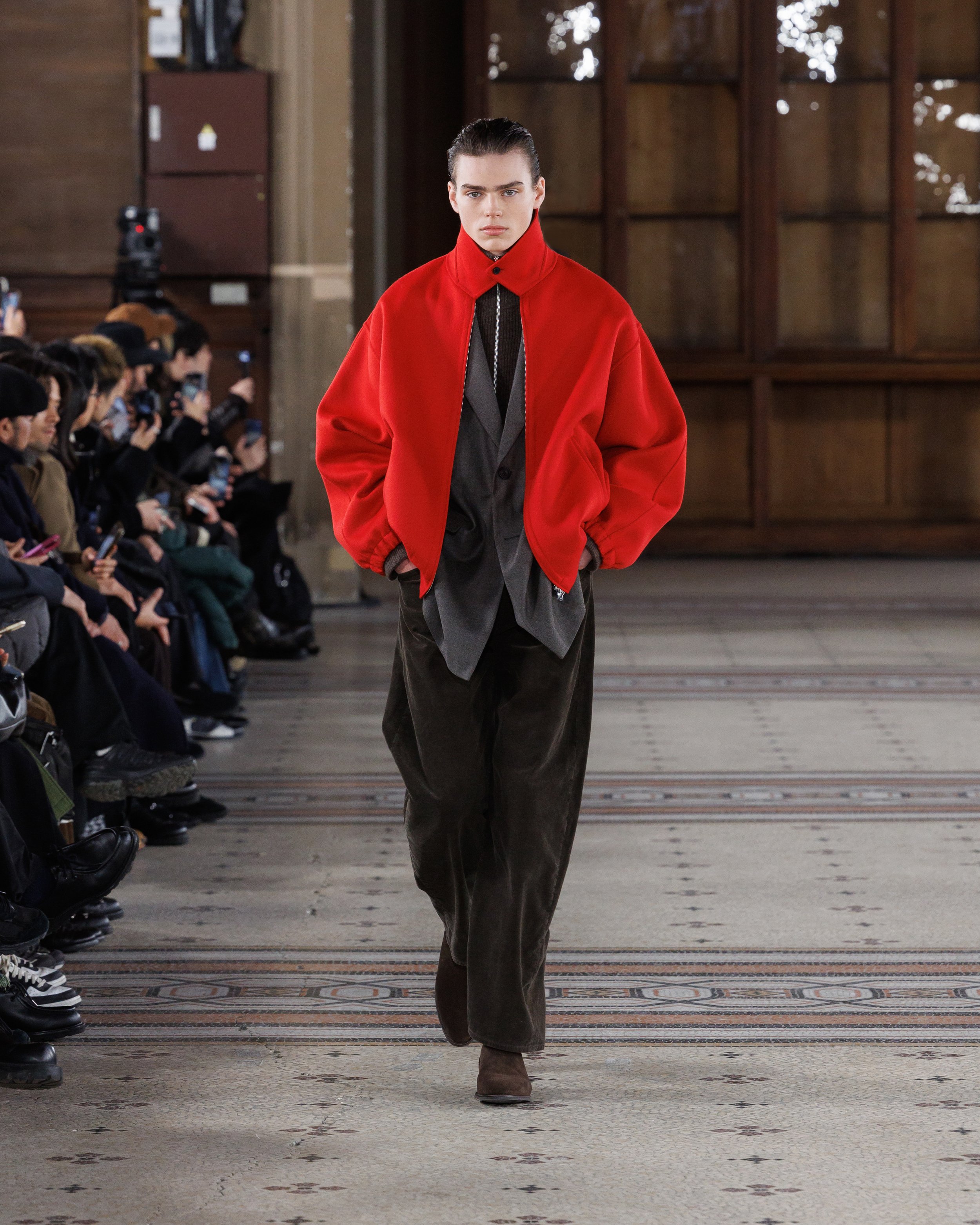
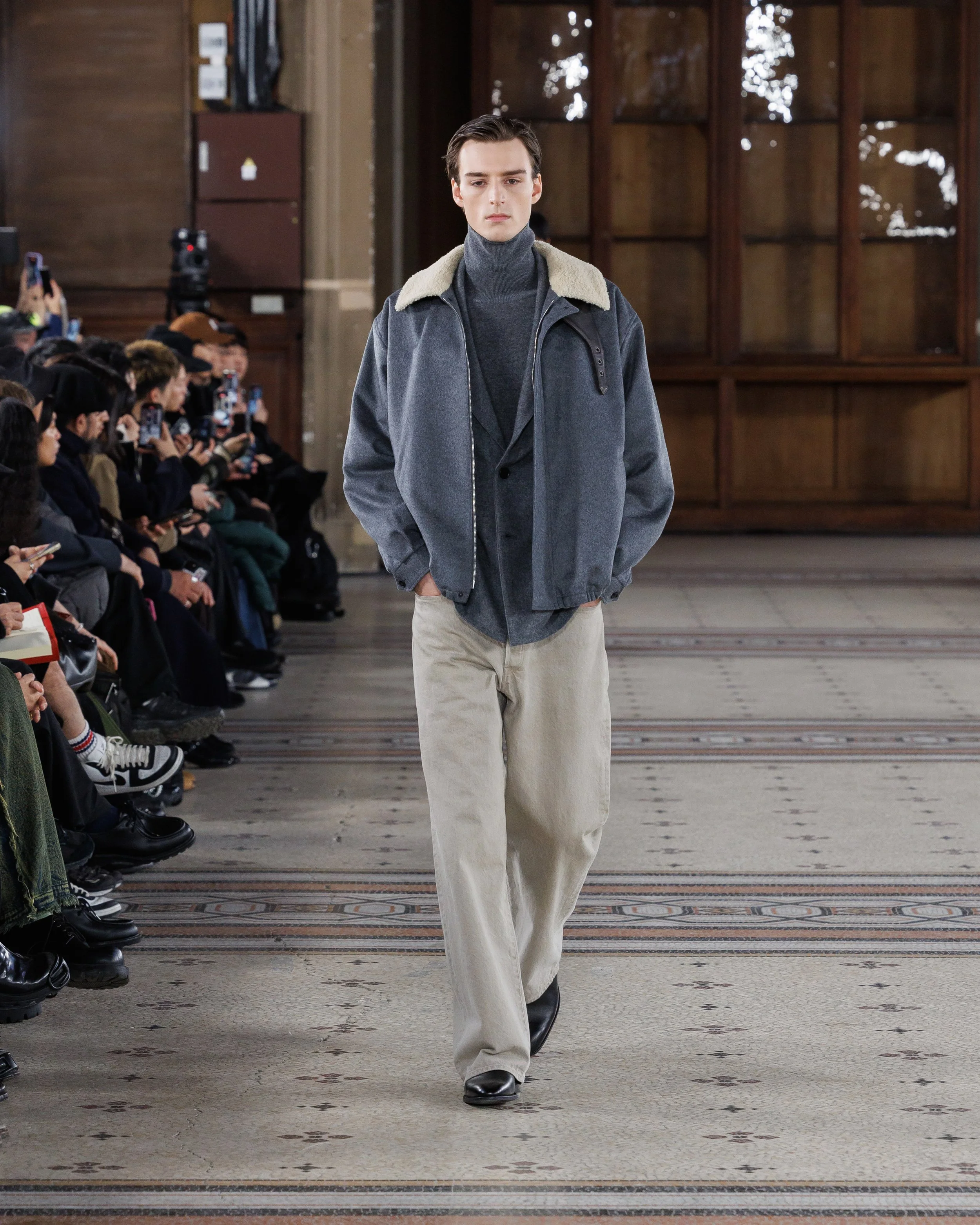
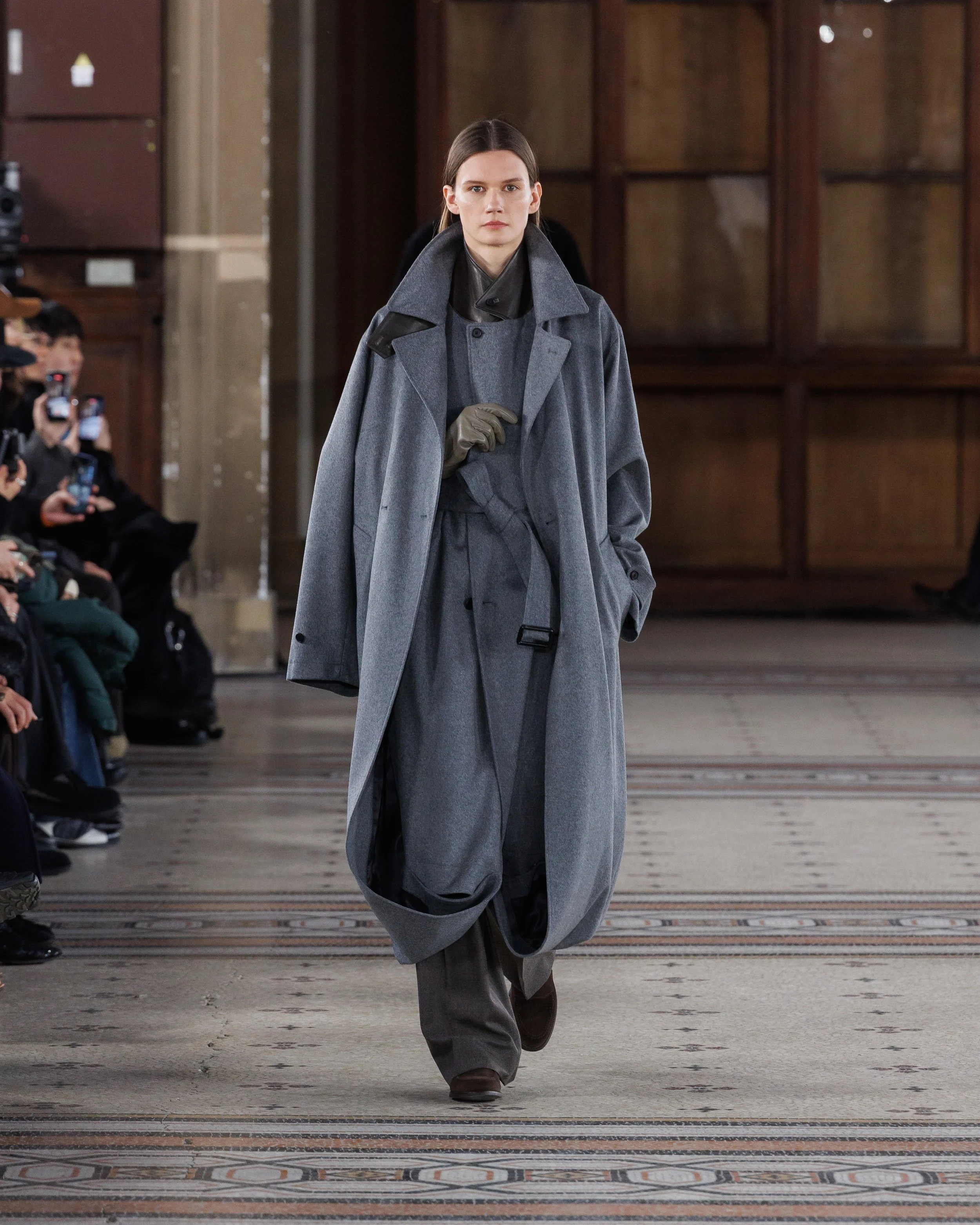
ssstein’s Fall/Winter 2026–27 collection was a meditation on everyday beauty, emotion and material memory. Drawing from ordinary scenes, Kiichiro Asakawa translated observation into texture, colour, and construction.
The palette remained soft and autumnal, with greens, reds and yellows echoing fallen leaves and nocturnal city light. Soft-loom tweeds, uneven corduroys sun-dried after dyeing, brushed argyles and fuzzy knits built a wardrobe that felt extremely tactile and timeless. Tailoring appeared relaxed: a deconstructed Chesterfield coat with an off-centre closure, doubled collars reinforced with suede, and balmacaan coats softened through lambswool tweed.
Sportier pieces concealed complex technique. Red blousons in double-cloth hid their stitching entirely, padded beaver jackets balanced lightness and structure, and track pants twisted their seams into tailored shapes. Denim introduced subtle colour through rope-dyed yarns, while knitwear relied on brushing and surface treatments.
SACAI
review by VERONICA TLAPANCO SZABÓ
all images courtesy of SACAI
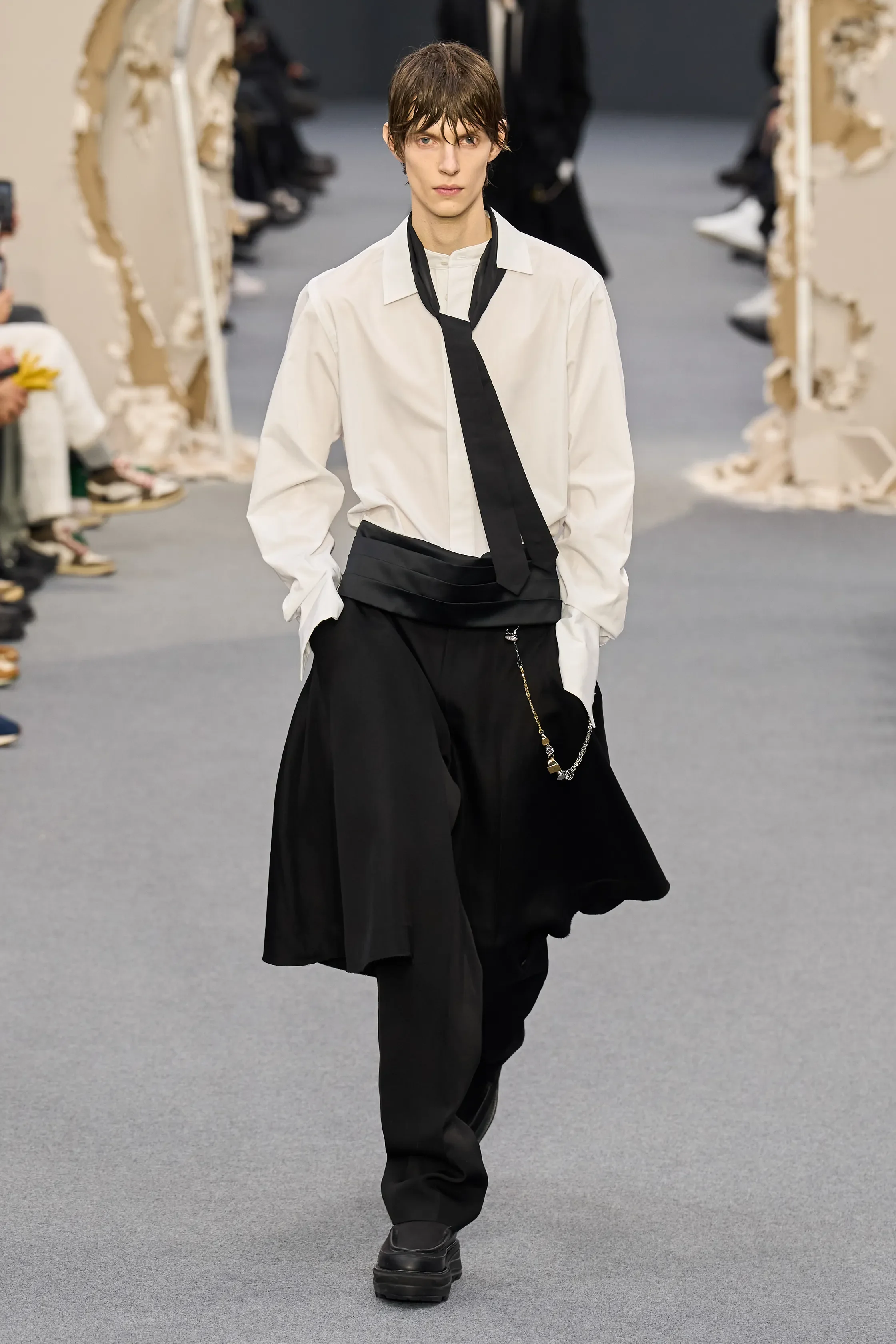
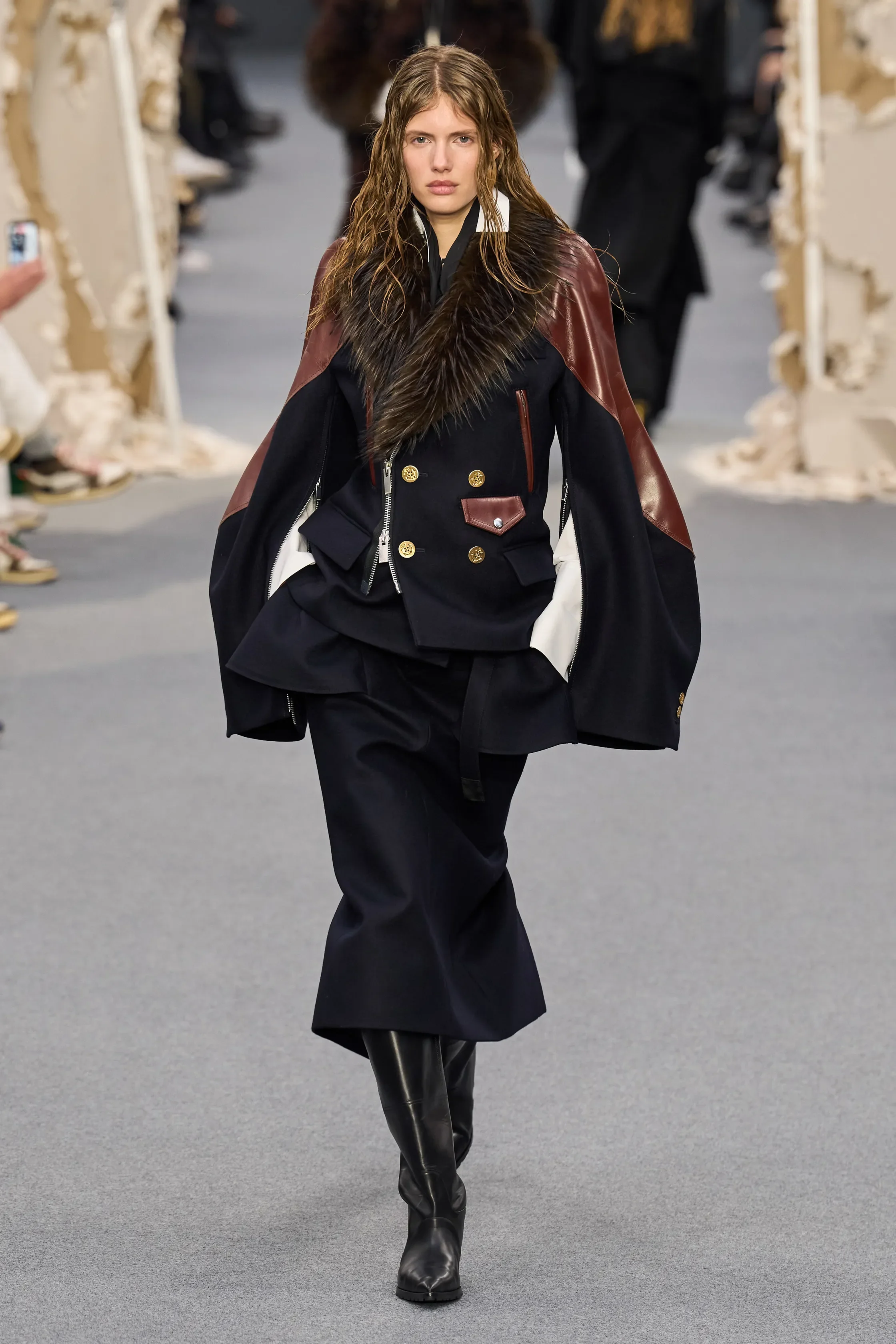
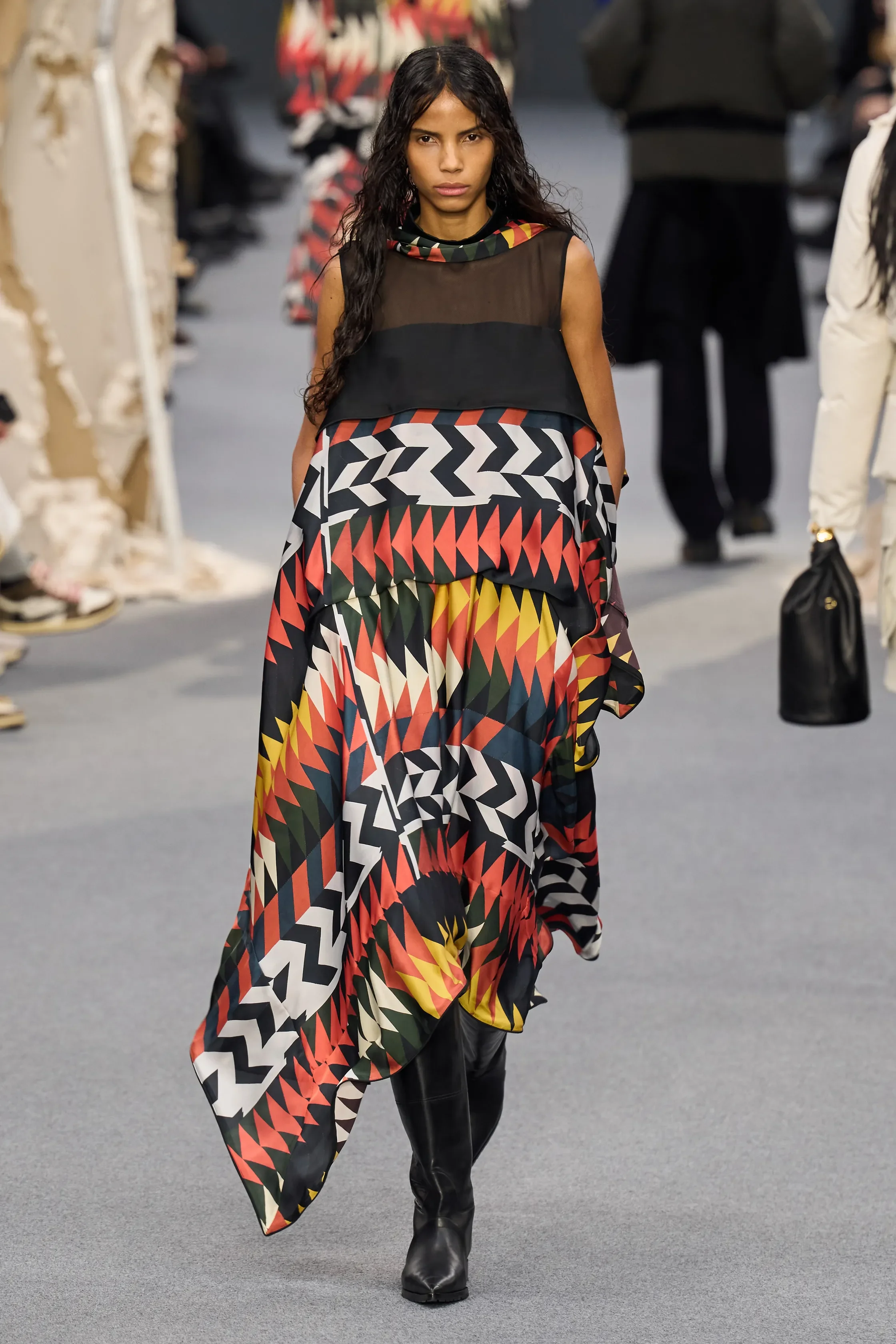
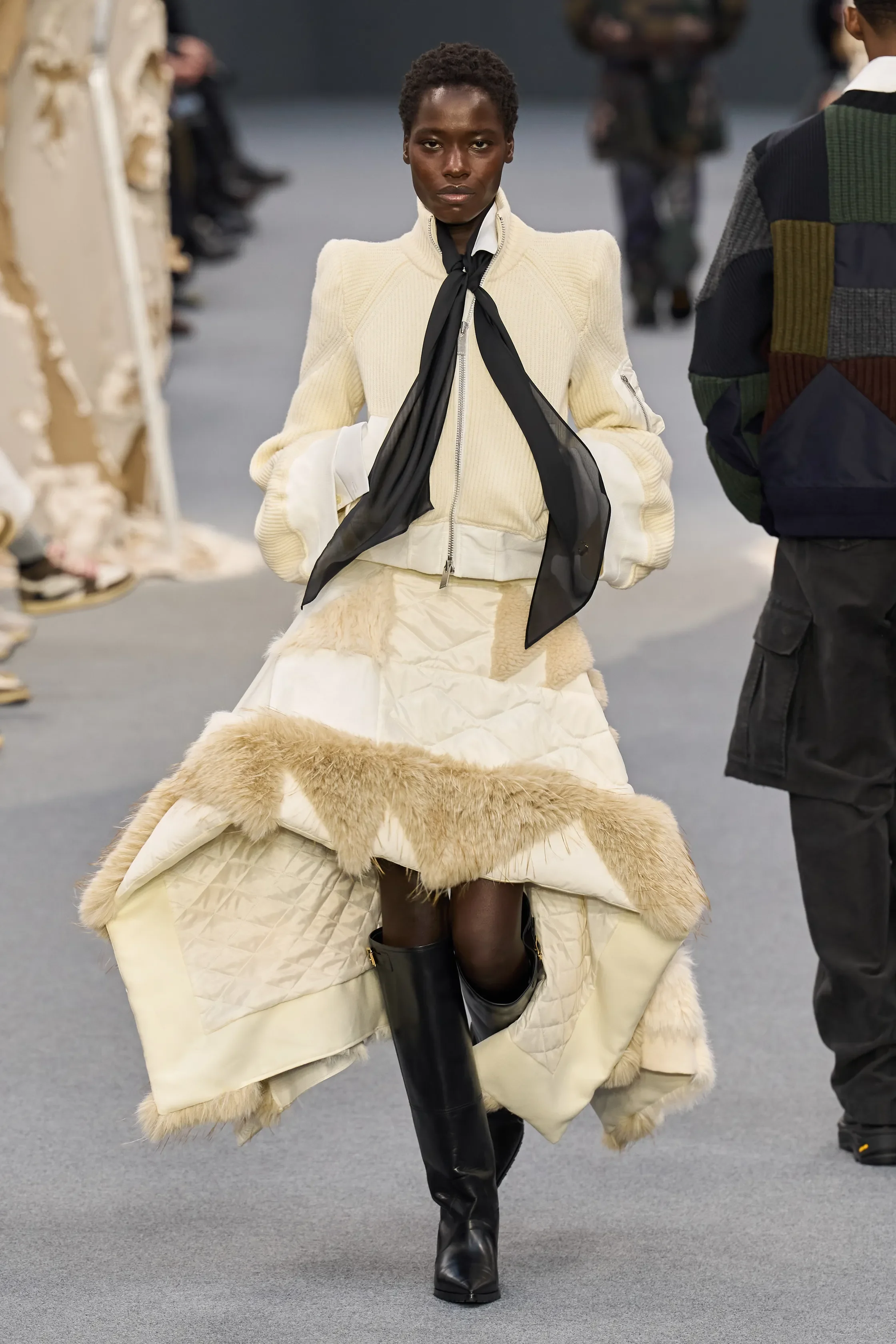
Queen’s I Want to Break Free punches through the speakers with such force it snaps the room to attention. The sonic blow reverberates all the way into the set design, where Chitose Abe sends her models through the rubble of a wall seemingly smashed from the inside out. A third punch lands on a graphic tee, bearing Thomas Hoepker’s iconic image of Muhammad Ali, stamped on the back with one of his quotable jabs: “What you’re thinking is what you’re becoming.”
Untied ties and silk scarves set the tone in the opening looks too, loosely bound by silver chain links, rounded shapes and decadent fur trims. There is a deliberate sense of looseness here, Abe, true to the soundtrack, wants to break free from the expectation that a collection must prioritise commercial logic above all else. Instead, she insists on keeping innovation and difference alive. Ironically, it is precisely this sincerity, so well executed, that ignited the desire in many to own this collection. The construction does much of the talking, leather stands firmly and chevron knits (to my personal delight). Other ties are elevated to near-couture objects, encrusted with sequins, pearls, chain fragments, jump rings, and safety pins. Skirt–trouser hybrids follow, alongside a surge of washed and indigo denim.
Hybridisation, as ever with Sacai, is the engine, cropped jackets arrive with their lower halves still attached. Those denim pieces emerge via a collaboration with Levi’s, while the patterned workwear was developed with A.P.C., its prints drawn from the quilts of Jessica Ogden. Footwear comes courtesy of J.M. Weston, the heritage shoemaker from Limoges. As the soundtrack dissolves into Tears For Fears “All for freedom and for pleasure… Everybody wants to rule the world” Abe delivers her final blow.
WOOYOUNGMI
review by NIA TOPALOVA

all images courtesy of WOOYOUNGMI
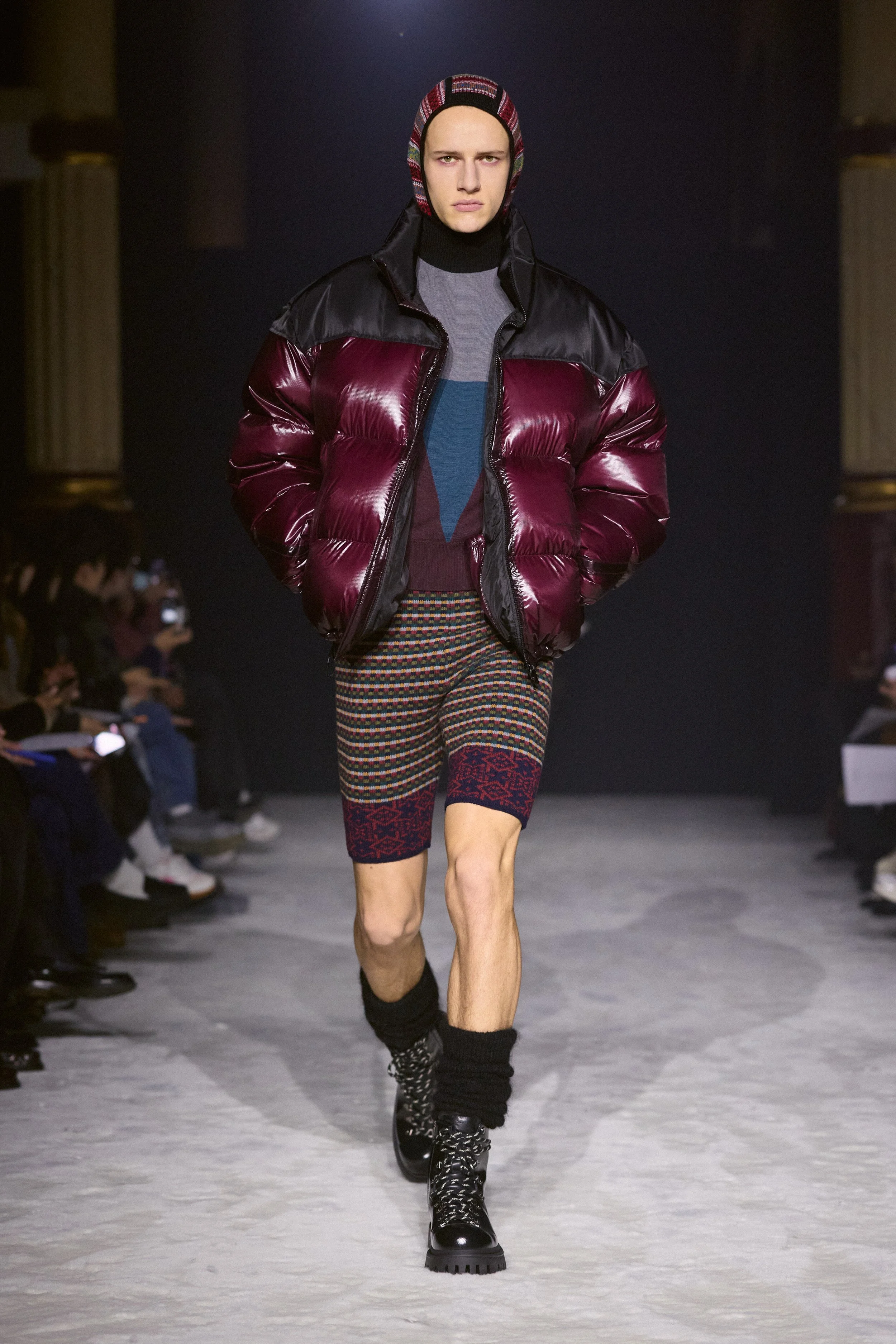
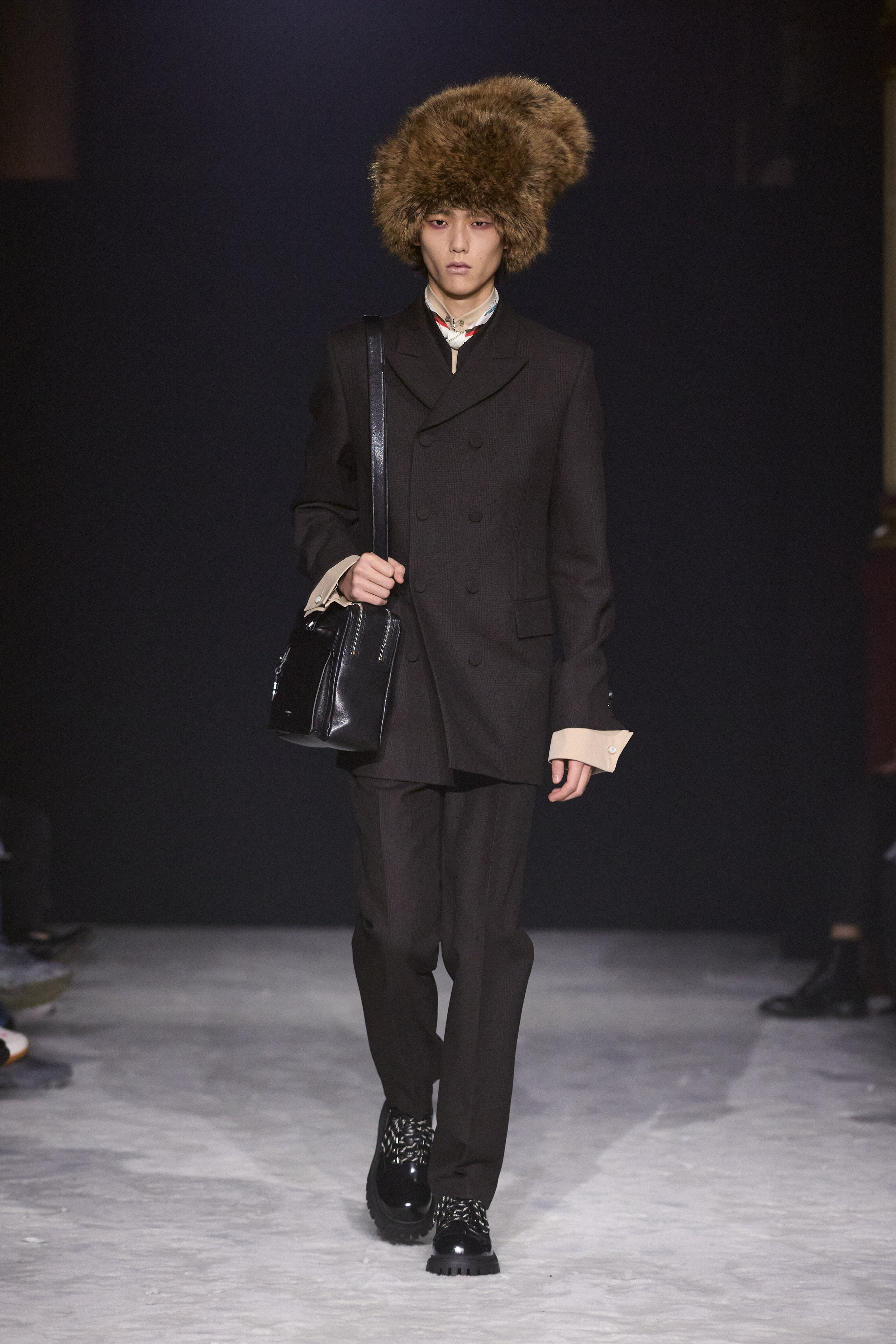
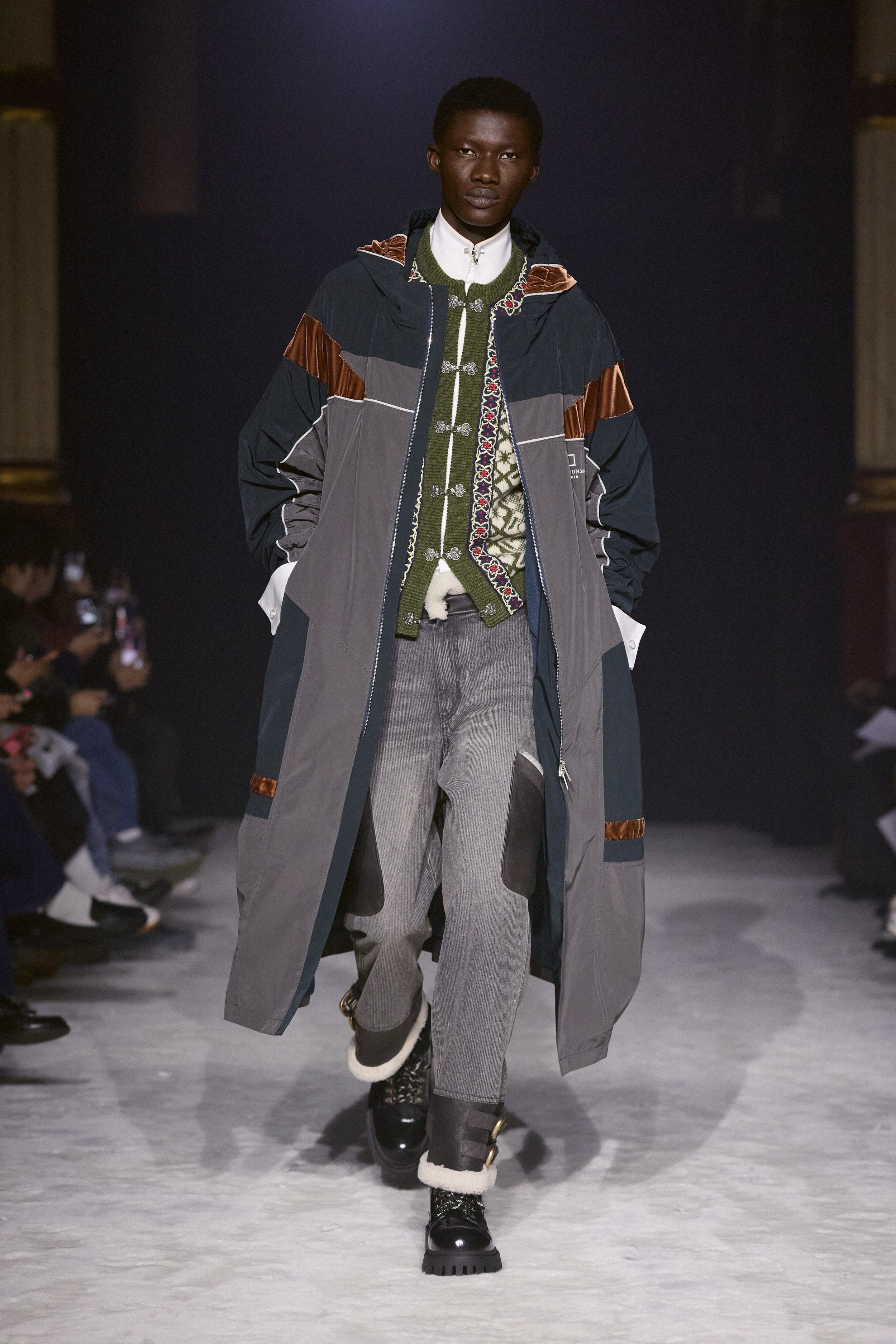
At the historic Salle Wagram, Wooyoungmi travelled back in time, more specifically to South Korea’s first railway, the Gyeongin line. For Fall/Winter 2026, Woo referenced the early 20th century and approached rail journeys as a ceremony.
Woven into the silhouettes were Korean cultural references: knitwear featured dancheong motifs inspired by traditional temple architecture, prints incorporated pagodas, landmark mountains, beoseon socks and gat hats. Velvet suits, faux fur jackets and woollen coats were finished with exaggerated chunky knitted beanies and hiking boots for comfort.
The soundtrack combined digitally generated Korean folk chants with the sounds of rain and steam engines, reinforcing the show’s references to early railway travel. Wooyoungmi brought together tailored pieces, technical outerwear and cultural motifs, framing winter dressing through historical reference.
DOUBLET
review by MAREK BARTEK
all images courtesy of DOUBLET
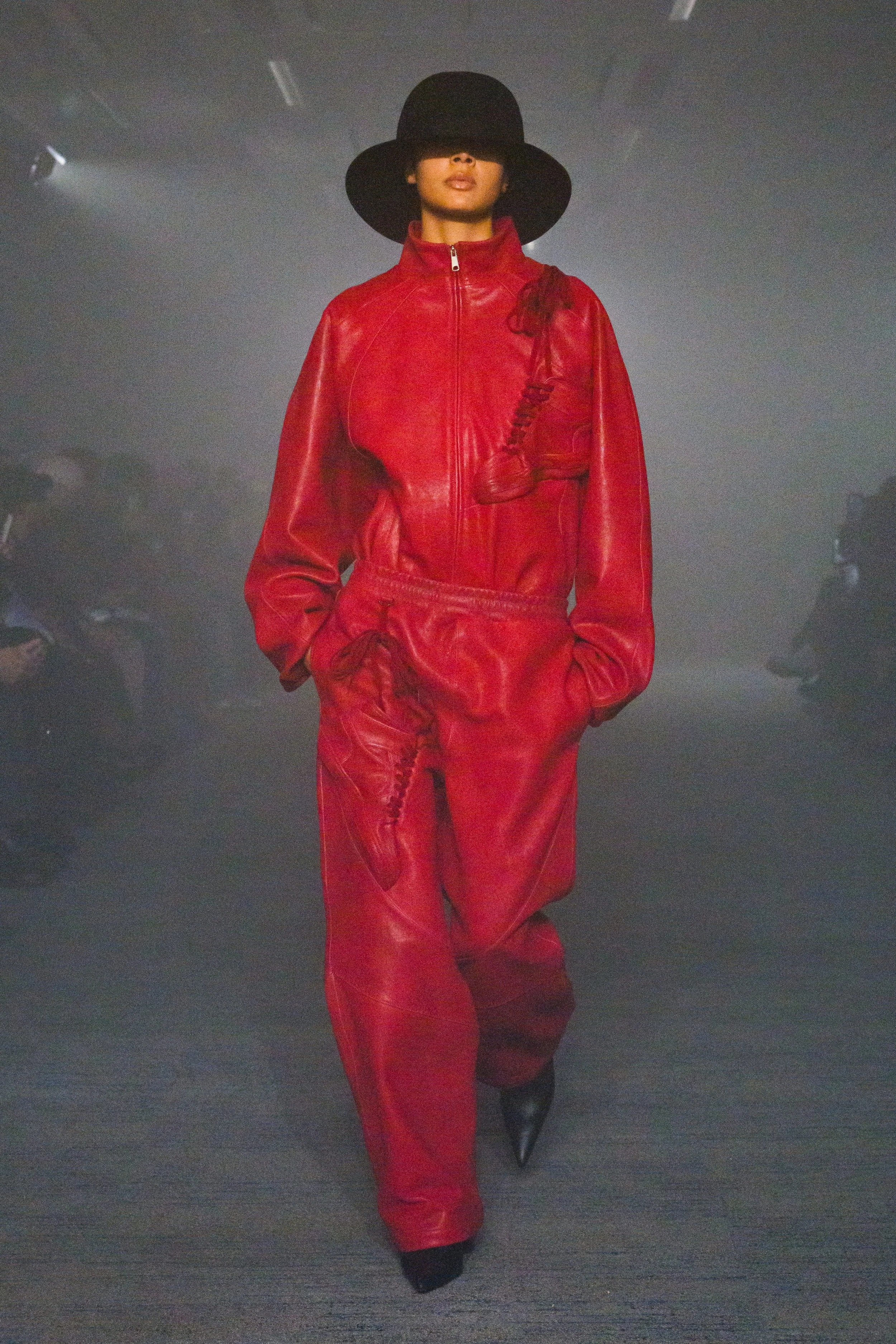
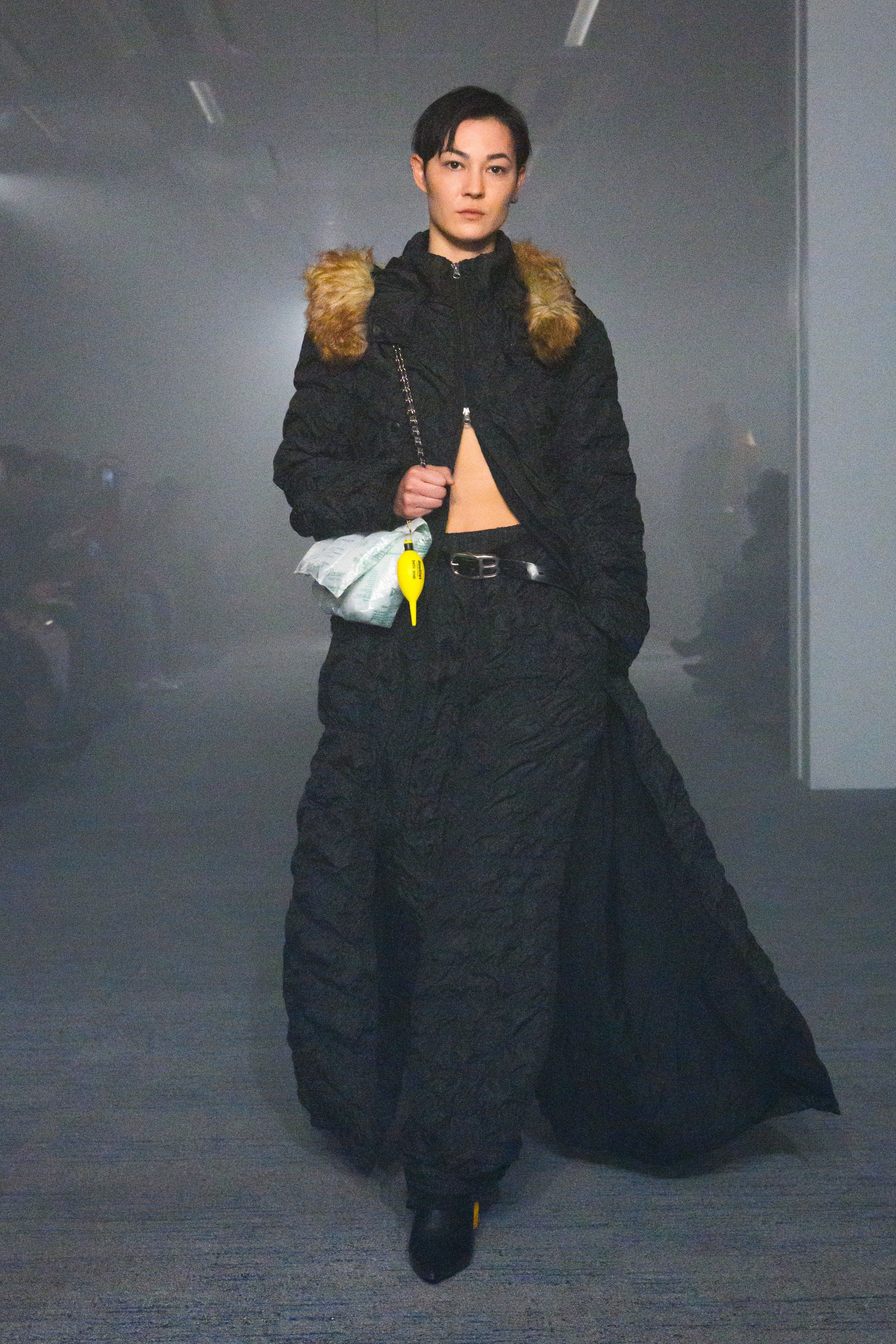
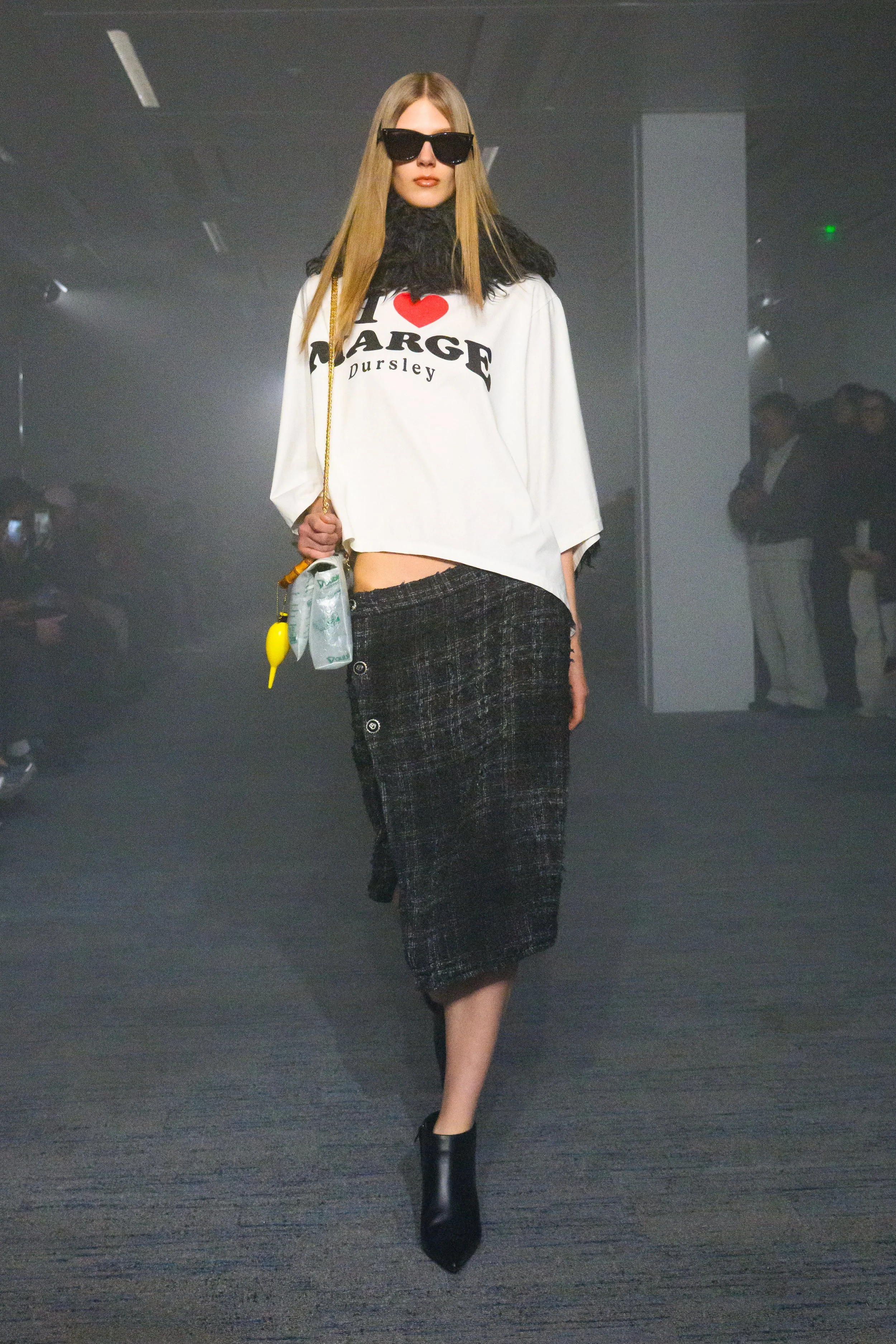
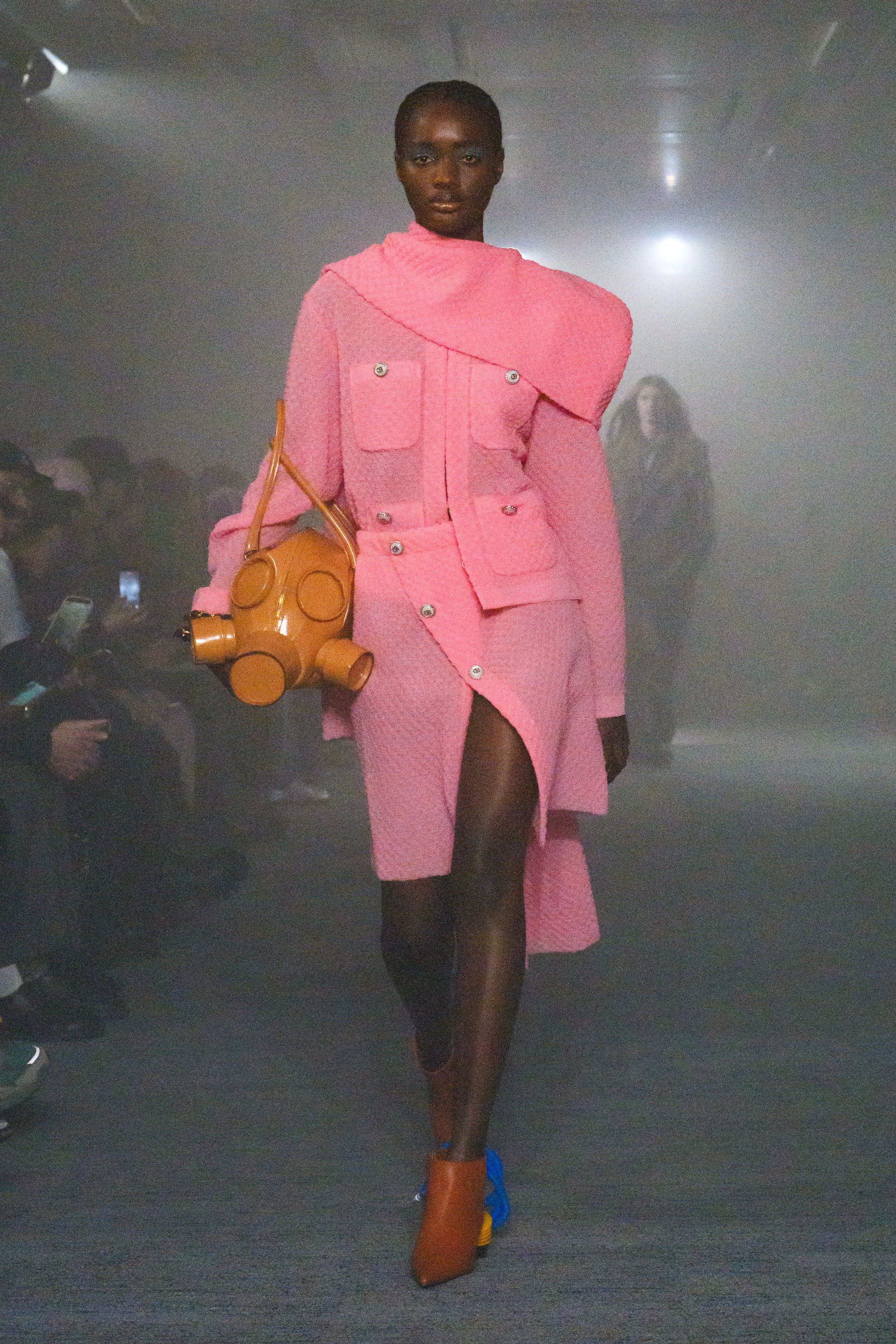
Doublet’s Fall/Winter 2026 show opened in a smoke-filled space, immediately setting the stage for a collection titled Air— a meditation on what surrounds us, yet often goes unseen. At the core of the season was material innovation: yarns derived from captured CO₂, bio-based resins developed by microorganisms, and inks made from exhaust carbon translated the idea of “invisible air” into something tangible.
The technical challenge shaped the clothes. Tailoring and streetwear appeared warped, distressed, and in motion, as if formed by pressure and atmosphere. Suits looked weathered by wind, tracksuits and skirts carried smog-like stains, and embroidery of leaves and tilted ties suggested garments caught mid-gust. Knitwear turned narrative — factories exhaling faux-fur smoke across sleeves — while gas-mask bags, balloon-animal scarves, and pop references kept Doublet’s humour intact.
But beyond just playfulness, there was a clear tribute to the process. The collection honoured the trial, error, and persistence behind innovation — clothing born not only from air, but from time, failure, and belief.
CAMIEL FORTGENS
review by MAREK BARTEK
all images courtesy of CAMIEL FORTGENS
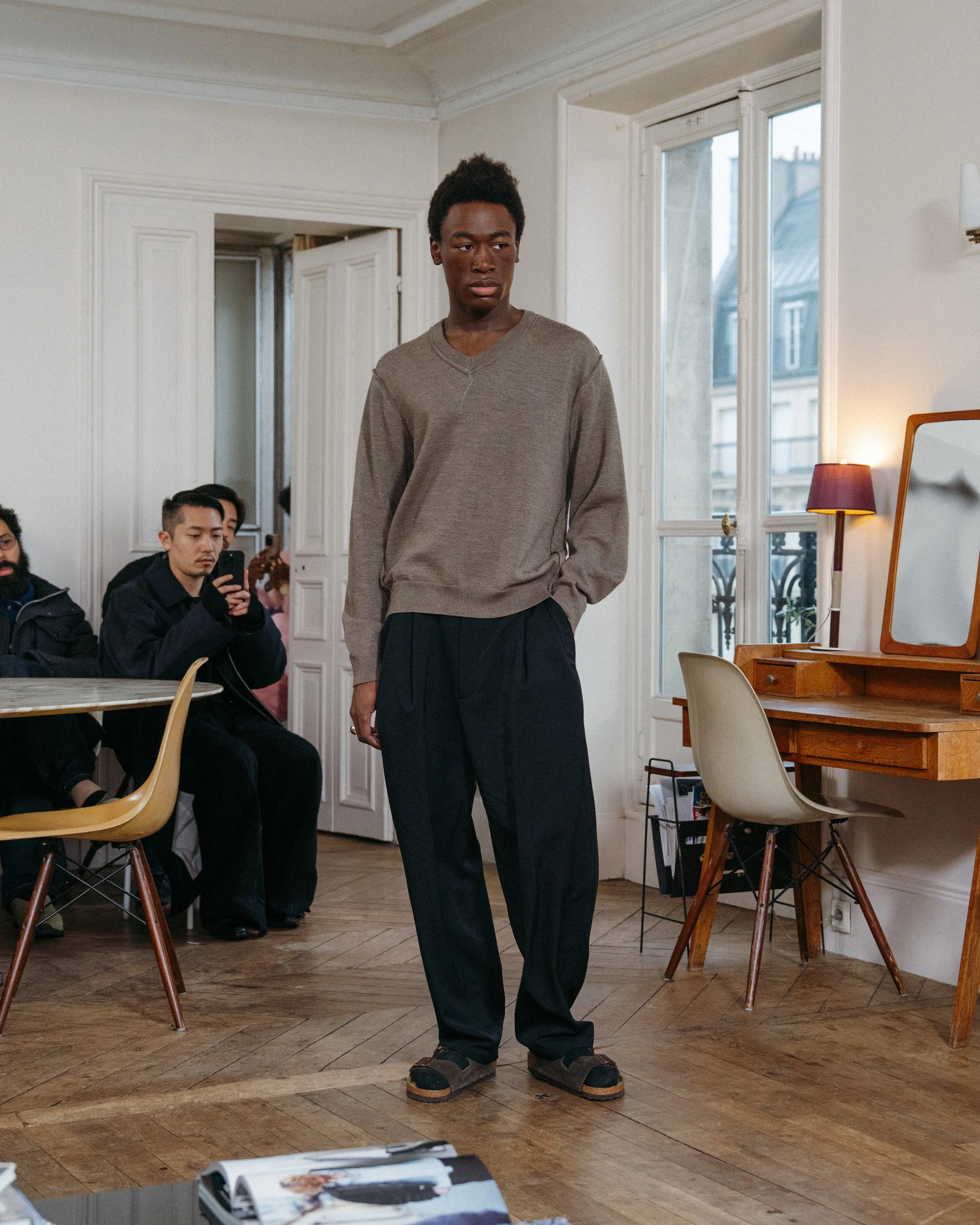
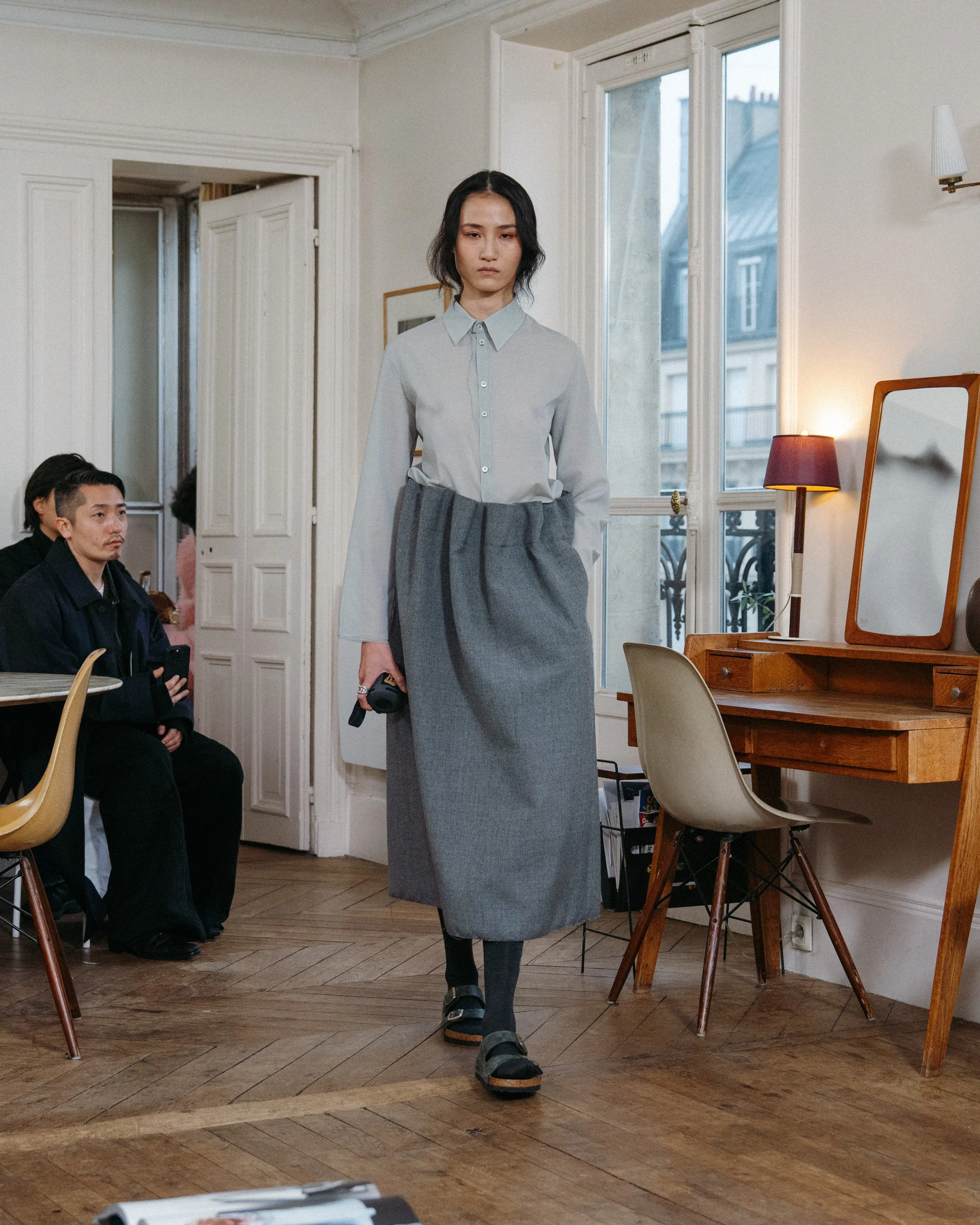
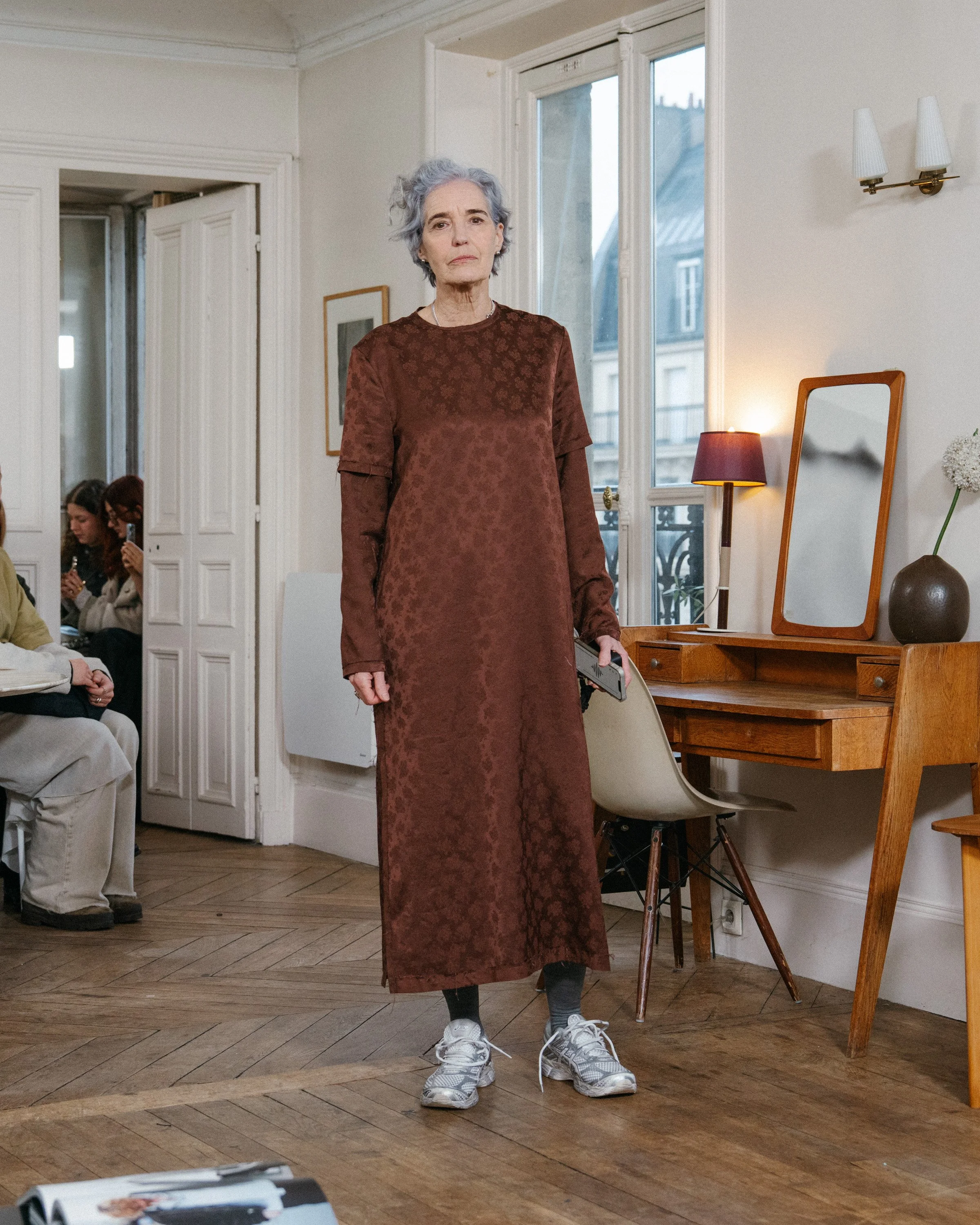
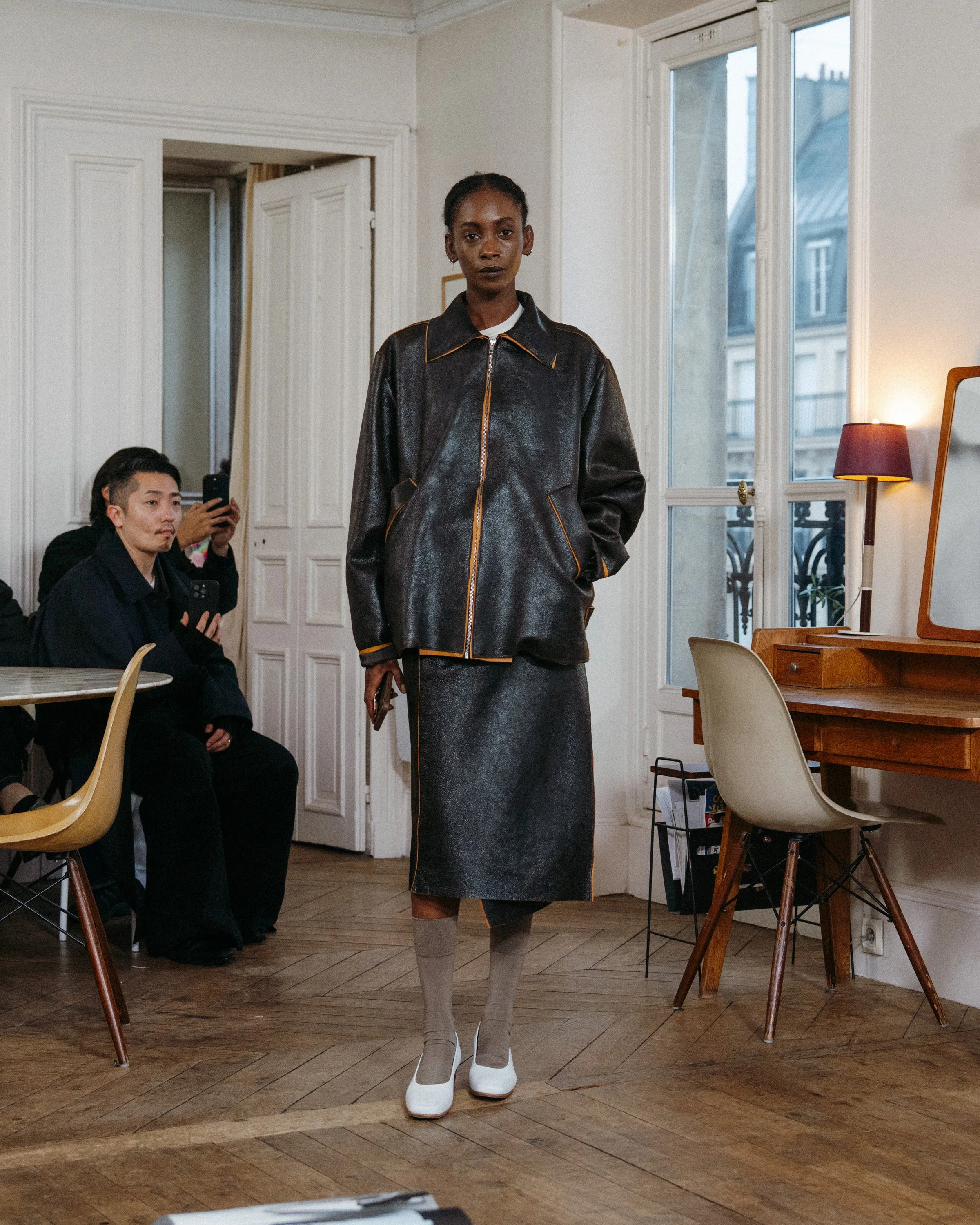
Camiel Fortgens unveiled his Fall/Winter 2026 collection inside an intimate Parisian apartment, creating a setting that mirrored the season’s focus on domestic space, function, and transformation. The collection looked to furniture and everyday objects as its starting point, continuing Fortgens’ long-standing fascination with signs of use and functional forms.
Textiles usually found in the home — arrow-char wool, jacquards, worn leathers — were reinterpreted for the body. Curtain-like pleats became skirts, couch leather inspired jackets, and faded cushions were reworked into bags. Upholstery references appeared throughout, often in unexpected ways, reinforcing the idea of clothing shaped by interior worlds.
The palette remained subdued, moving through muddy browns, washed greys and earthy greens. Key pieces included pleated skirts derived from curtain constructions, aged-furniture leather jackets, and layered elements designed to be worn together or separately. Archetypal yet experimental, the collection continued Fortgens’ exploration of wear, function, and imperfection.
JACQUEMUS
review by VERONICA TLAPANCO SZABÓ
all images courtesy of JACQUEMUS
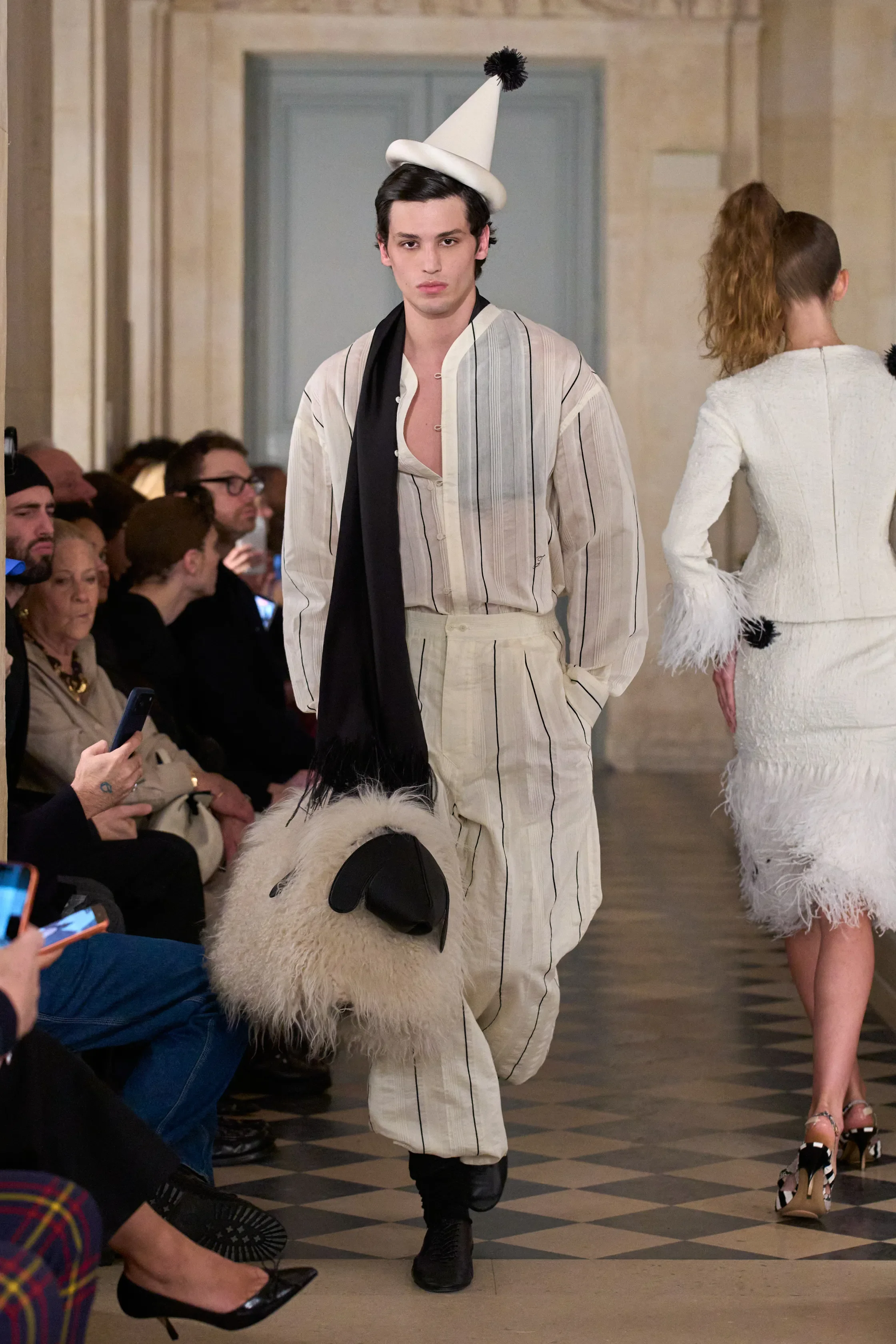
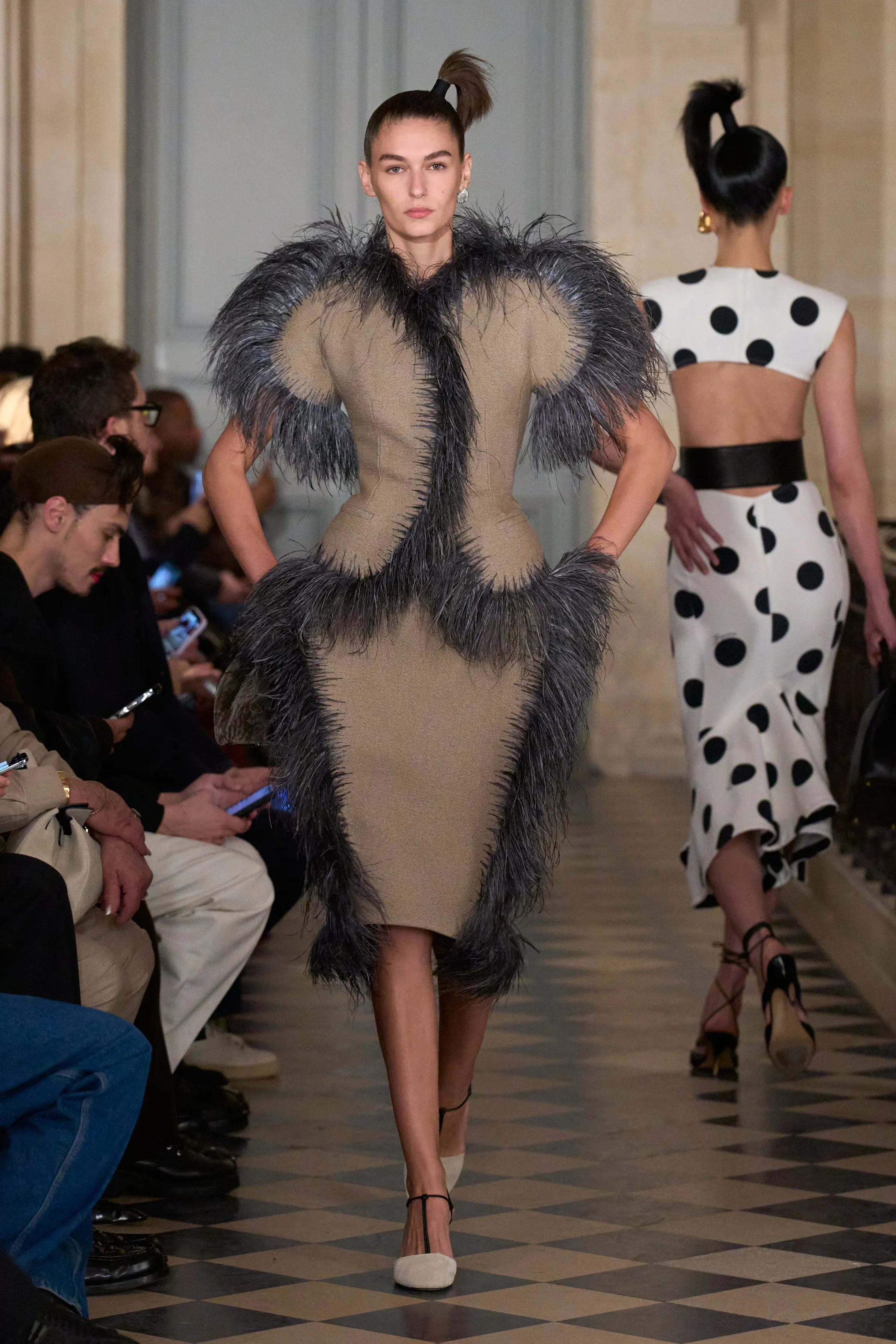
Le Palmier teased through five short choral comedies directed by and starring Valérie Donzelli. Donzelli infuses the project with a subtly burlesque humour that set the tone for the entire collection. They all channel a distinctly French visual language rooted in the television and cinema of the 1980s and 1990s, the very cultural landscape that Simon Porte Jacquemus recalls from his childhood. Threading through each vignette is “le palmier”, the term refers to the vertical, gravity-defying hairstyle of the 1980s, once considered a prerequisite for entry into Paris’s most coveted parties (new trend alert?). Nostalgia and heritage have always been worn openly by Jacquemus, so much so that his own grandmother became the brand’s first ever ambassador. Here, returning to the archives, the silhouettes lean into sculptural 1950s couture, their elegance deliberately offset by the aloof absurdity of the palmier hairstyle, worn by those with hair, or just enough...
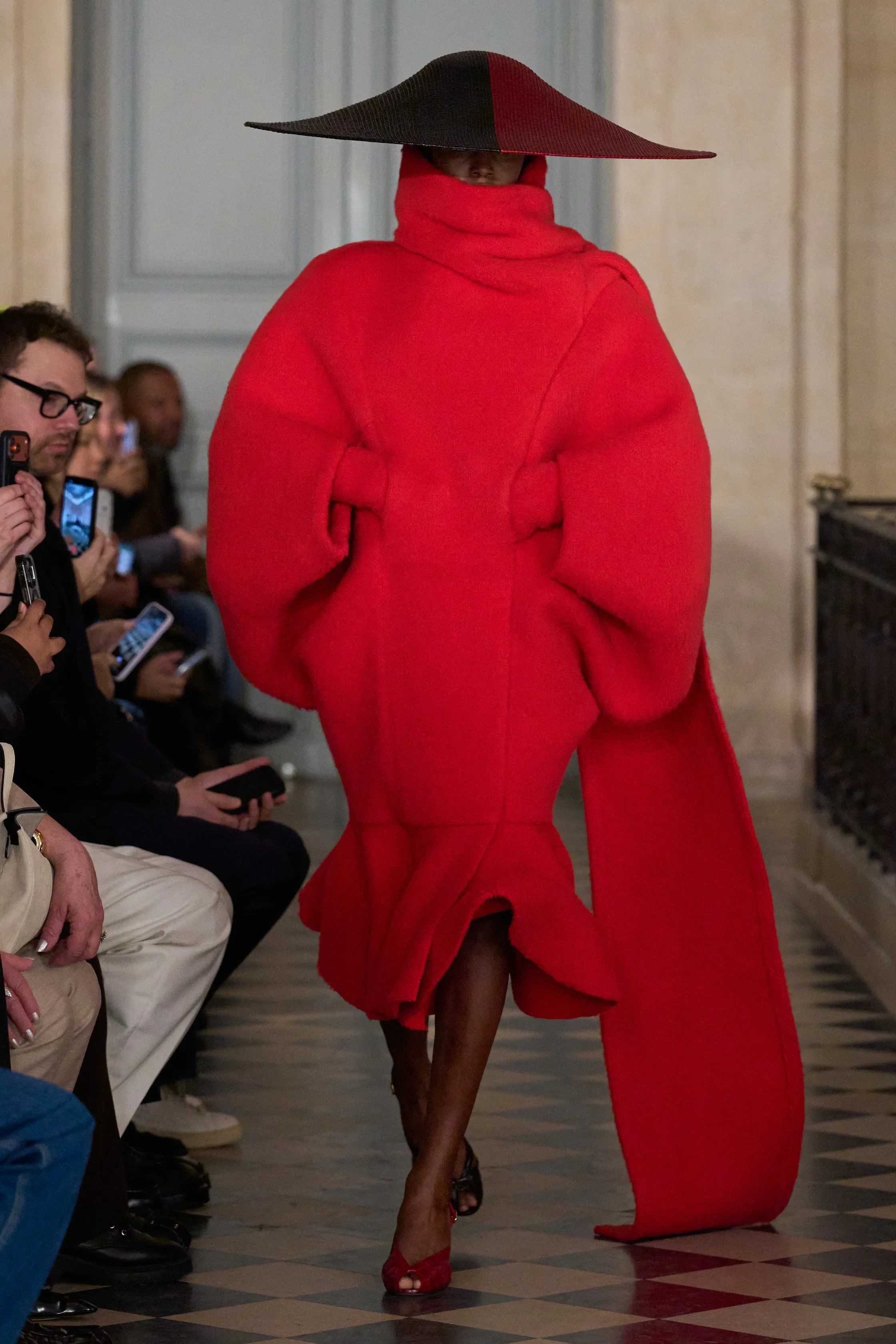
Repeating geometric motifs lend the collection a strong, almost cartoonish clarity. Circular hats, bias-cut skirts, and the structural “fish” and “calisson” forms sculpt coats into graphic volumes (the red one especially). Hourglass dresses appear in velvet fish intarsia, a knowing nod to 1980s fashion icon Jean-Charles de Castelbajac. Tropical exuberance follows, with pineapple-infused looks in butter yellow or black, finished with deep looped fringes at the hem. Jacquemus’s signature stripes and dots return once more, reimagined as pom pom and confetti-like motifs, tipping the show further into a gleefully clownesque register.
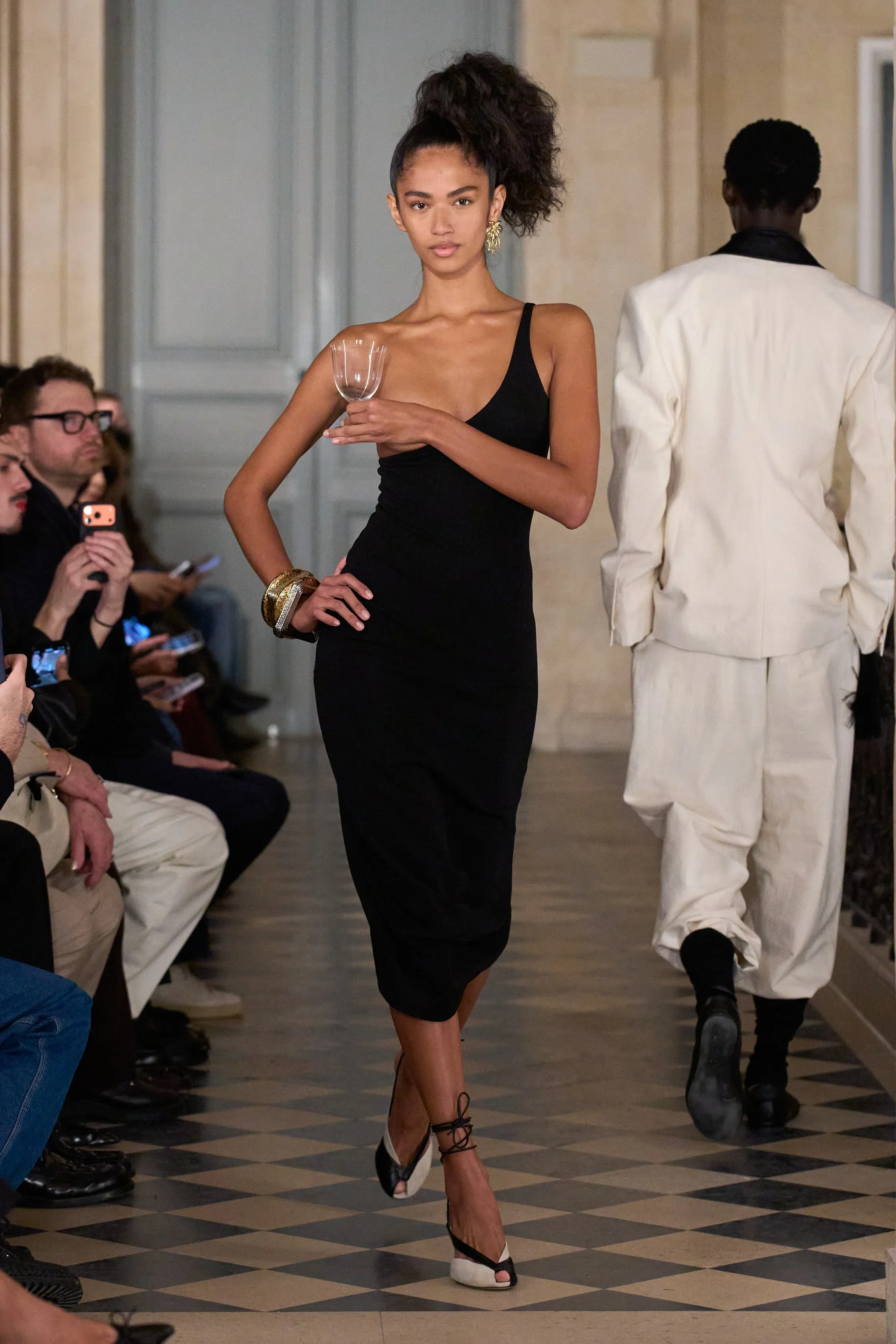
Presented at the Musée Picasso, the collection as a whole is imbued with a “silly chic” party energy that builds steadily toward the final look. It is a clear homage to Jacquemus’s enduring obsession with Paloma Picasso, more specifically Helmut Newton’s black-and-white photograph of the jewellery designer and daughter of Pablo, wearing a black dress with one strap slipped off her shoulder, her exposed breast obscured by a tall glass. Revived here, the image takes on a whole new life, destined to be rediscovered by a generation of Jacquemus followers encountering it for the first time.