
WHY WE LOVED JONATHAN ANDERSON’S LATEST DIOR MEN SHOW
editors ELIANA CASA and MAREK BARTEK
The sophomore collection of Jonathan Anderson for Dior Men was definitely one of the history books, sparking an industry-wide debate. Anderson might’ve warned us in a 2025 interview that his first five collections will all be very different – contradicting even – but that’s what it takes to “rebuild a house.”
No matter what side you’re on, here are a few reasons why we absolutely loved Jonathan Anderson’s Dior Men Winter 2026-2027 Collection.
DEFINITELY A SHOCKING COLLECTION
all images courtesy of DIOR MEN
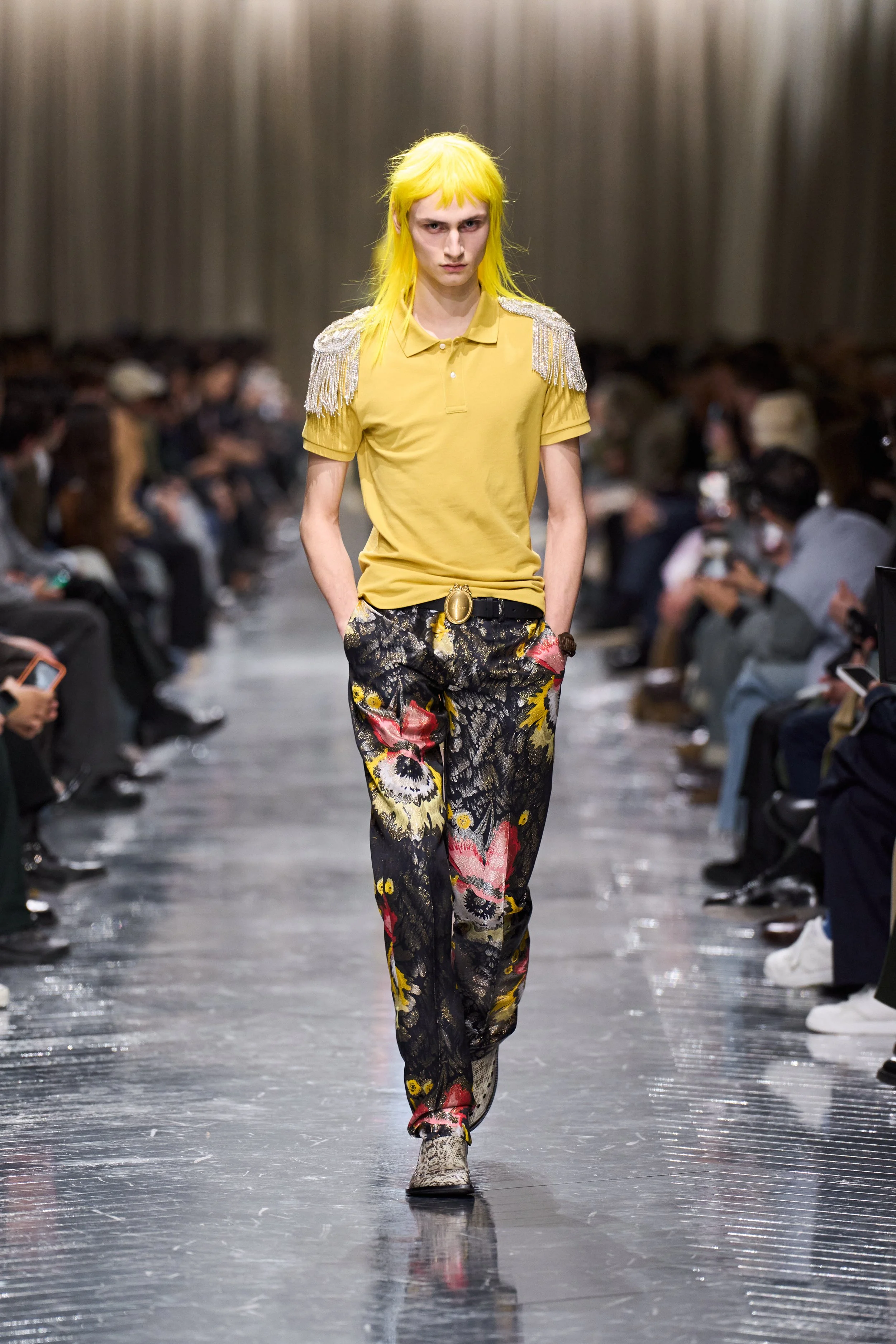
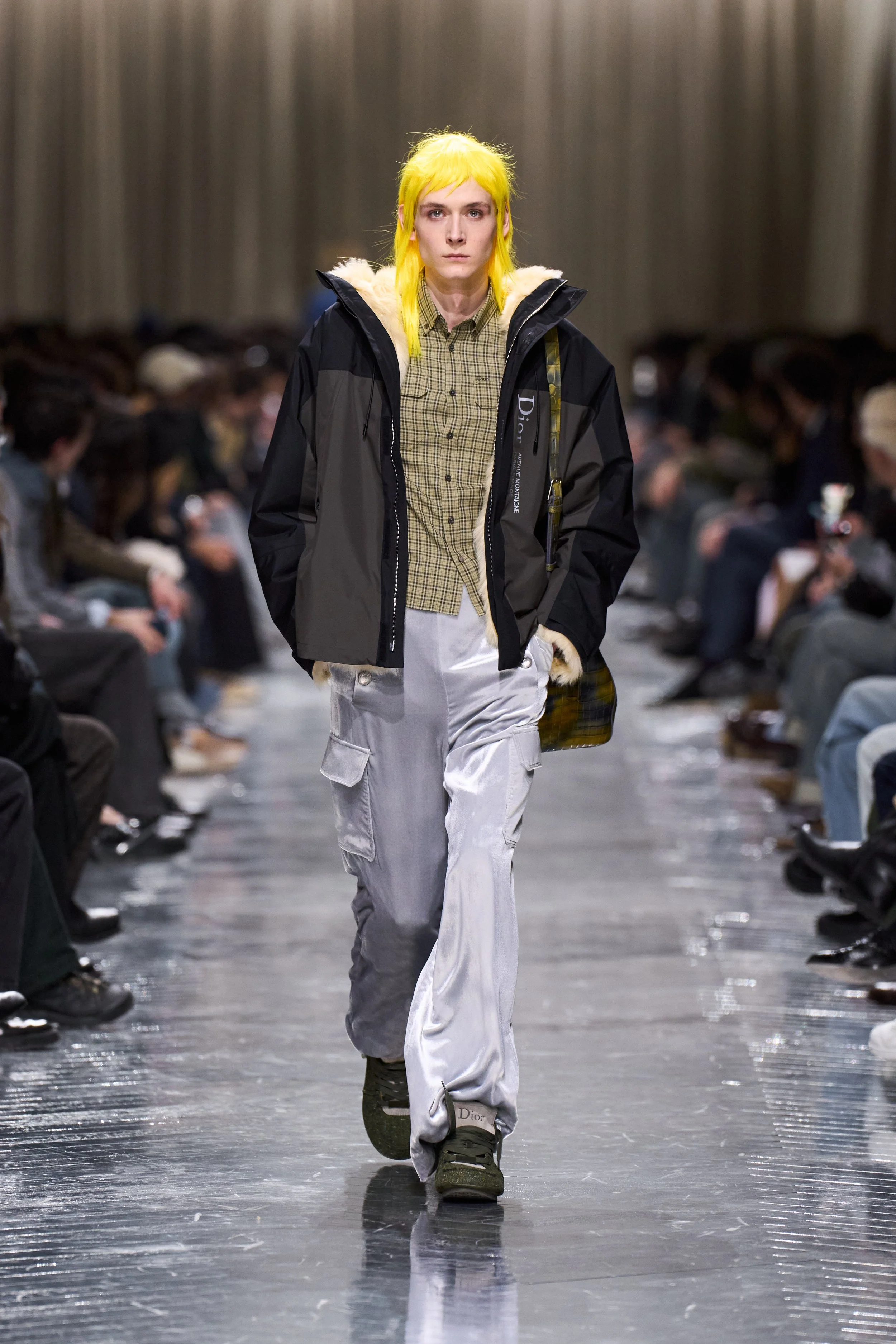
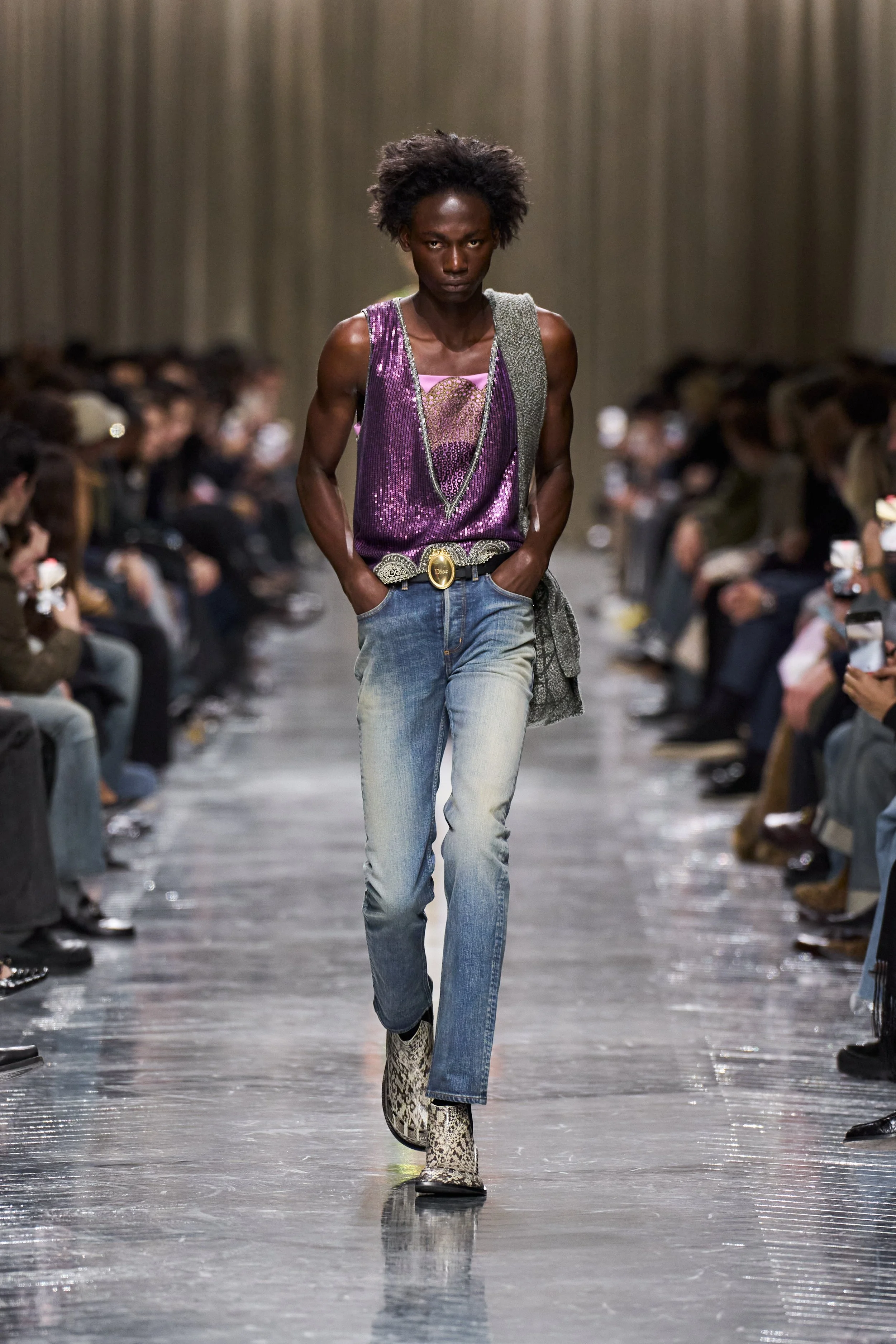
Whether you loved the latest collection or not, we can all agree that sparkling camisole tops, slim low-waisted jeans and Cuban-heel boots were not what anyone expected to see at Dior Men — ever. But beyond the shockwave this showing sent through the fashion industry, it arrived at a crucial moment.
At a time when we experience insecurity across the entire spectrum of human existence, when collective anxiety takes over, not only us but fashion, too, retreated into a sort of survival mode. Many brands made a rational choice of playing it safe, relying on their devoted customer minimising risk and maximising sales.
Anderson urges us not to be afraid to dream, to experiment, and to take risks. He pulls us, almost single-handedly, out of the darkness, delivers a life-saving shock, and for a moment reminds us why we fell in love with fashion in the first place.
PAUL POIRET HOMAGE
all images courtesy of DIOR MEN
The legacy of “King of Fashion” — as Poiret called himself — lives on. Christian Dior himself, though aesthetically opposed, was a vocal admirer of Poiret’s work, and long before Anderson’s many references to his oeuvre, Galliano’s Dior featured harem pants and turbans reminiscent of Poiret’s 1910s designs.
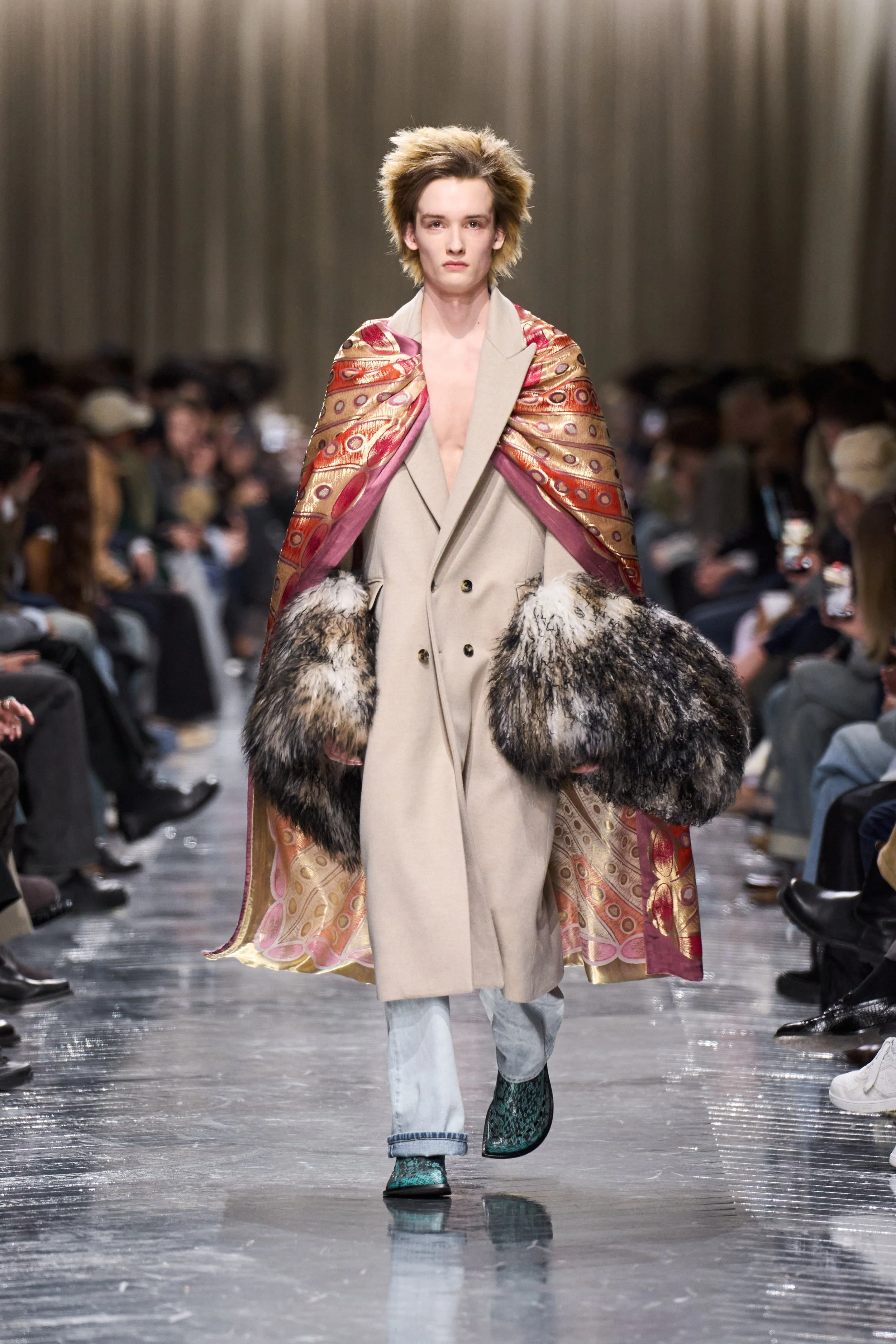
Anderson returns to this lineage of admiration. An encounter with a mosaic dedicated to Poiret outside Dior’s headquarters on Avenue Montaigne reportedly became the starting point for the collection, triggering a deeper exploration of Poiret’s radical fashion language. Known for abolishing the corset and liberating the body through fluid, uncorseted silhouettes, Poiret becomes here both reference and method. Sections of an original beaded Poiret gown were reimagined as sparkling camisole tops, Belle Époque opulence translated into slim jeans, bare chests and theatrical cape scarves styled over coats.
THE (NOT SO) NEW VISION OF MASCULINITY
all images courtesy of DIOR MEN
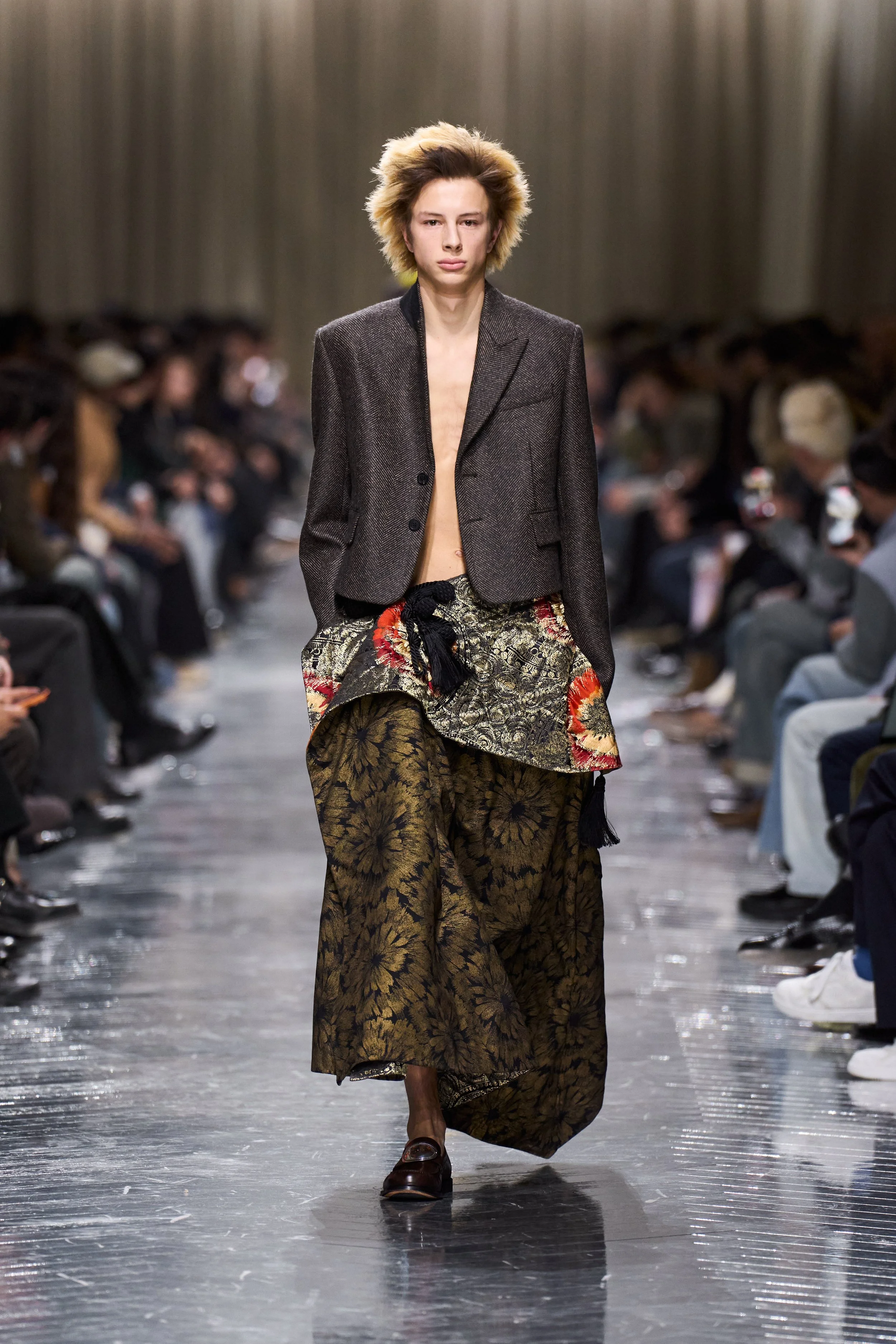
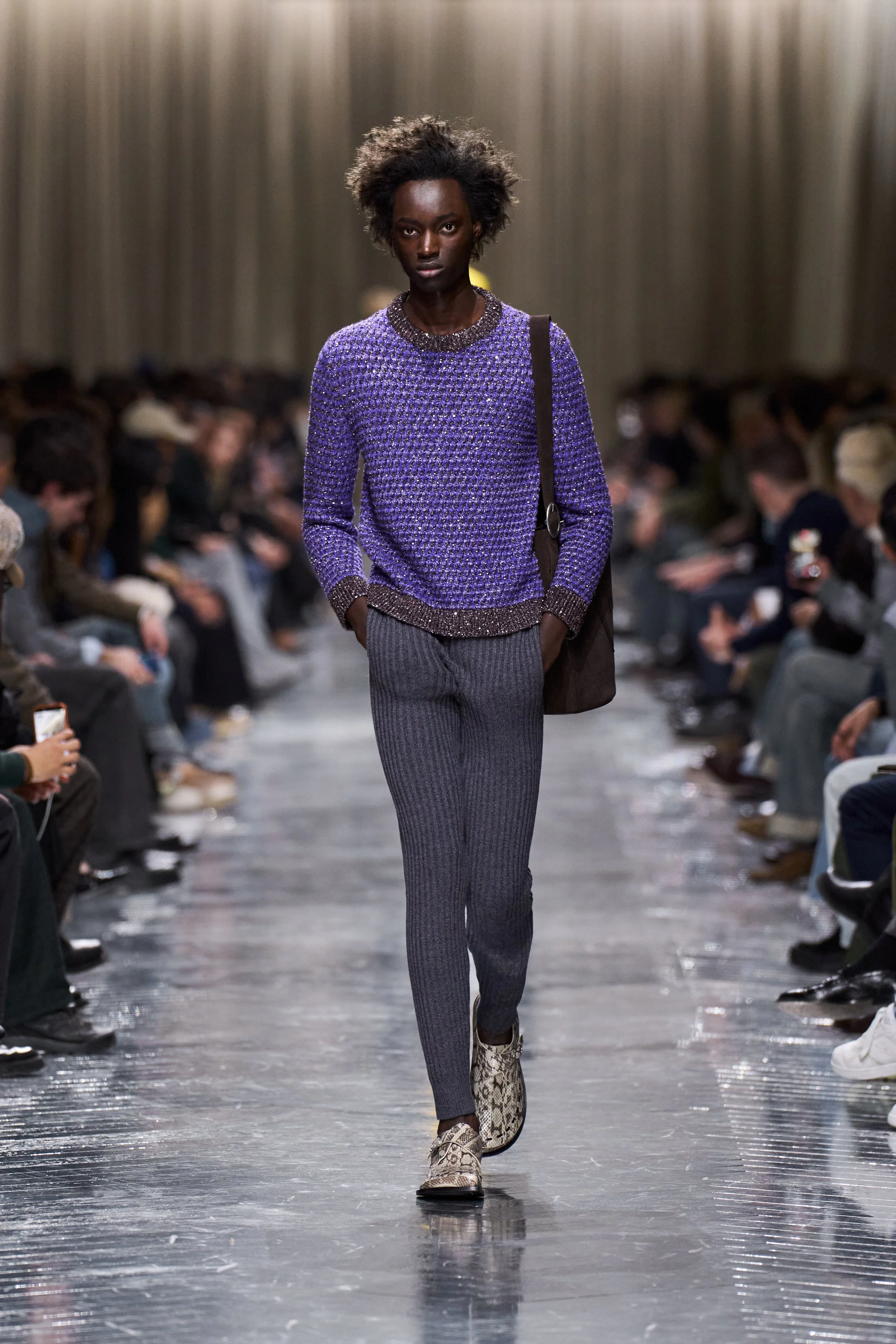
This isn’t the first time Anderson has incorporated dresses and skirts into his collections, but in the overall mood of this one, they push the balance between masculine and feminine even further. His approach reframes traditional menswear by merging sculpted Bar jackets with fluid forms and unexpected silhouettes — be it skirt-length sweaters, cropped tailoring that reveals slivers of bare torso, or jackets paired with figure-hugging trousers that defy conventional proportions.
Anderson often turns to historical codes — capes, tights, heels — considered feminine today, yet resolutely masculine centuries ago, and he collapses them into a contemporary vernacular that feels both playful and profound. In today’s context, he not only questions the idea of masculinity, but also dissolves the boundaries between Dior’s womenswear and menswear, inviting anyone to reimagine what elegance can look like anywhere on the spectrum.
THE BREADTH OF INSPIRATION
all images courtesy of DIOR MEN
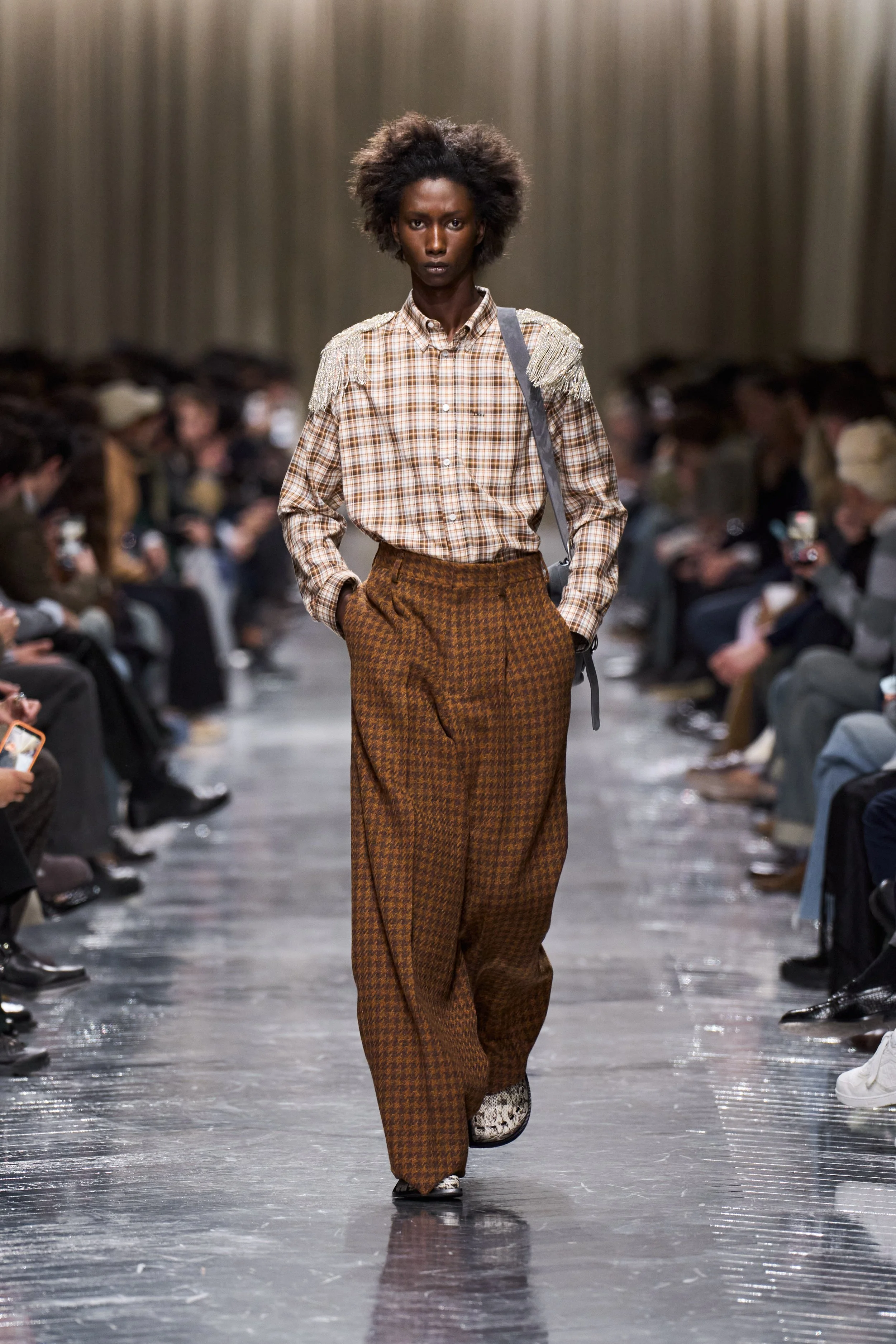
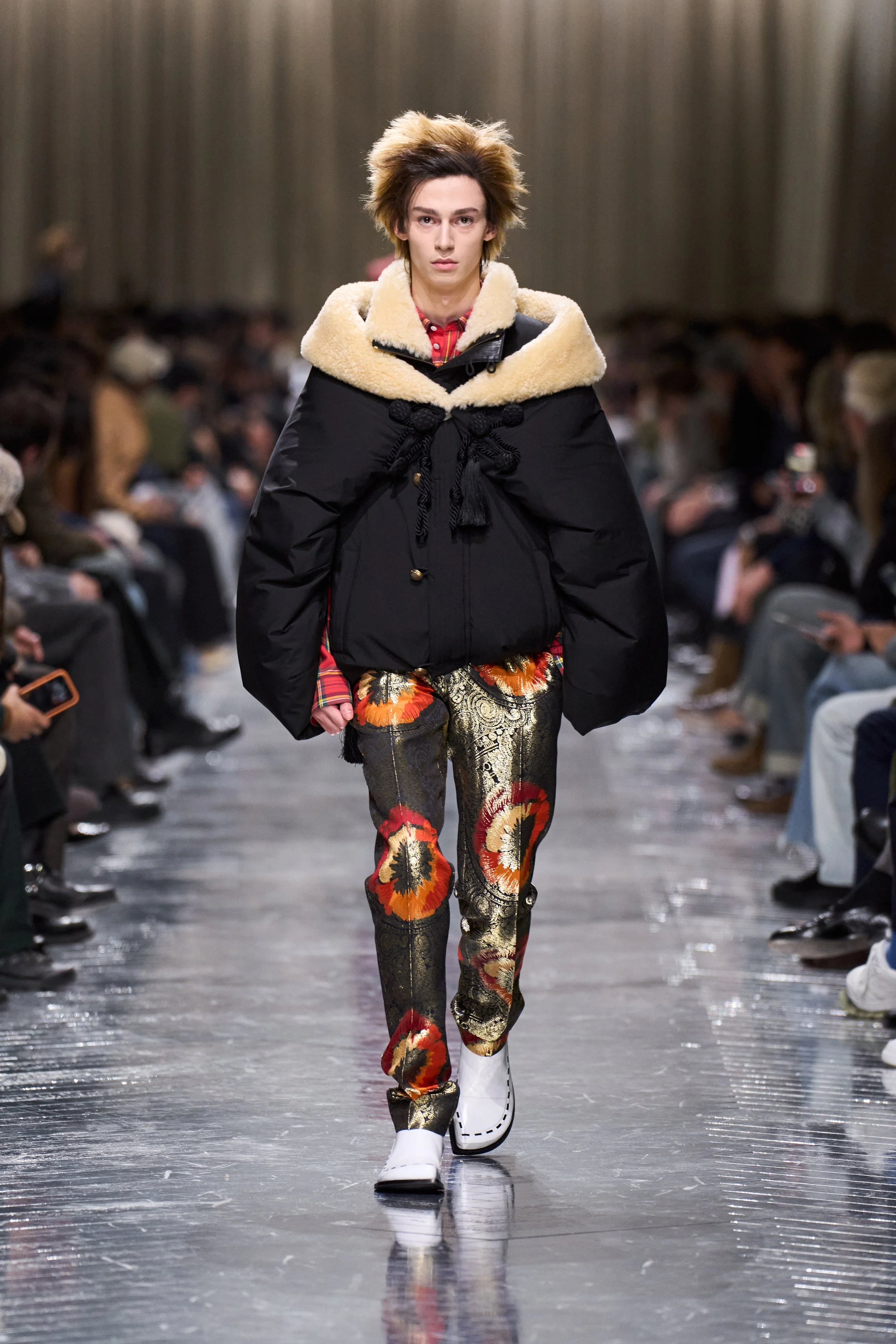
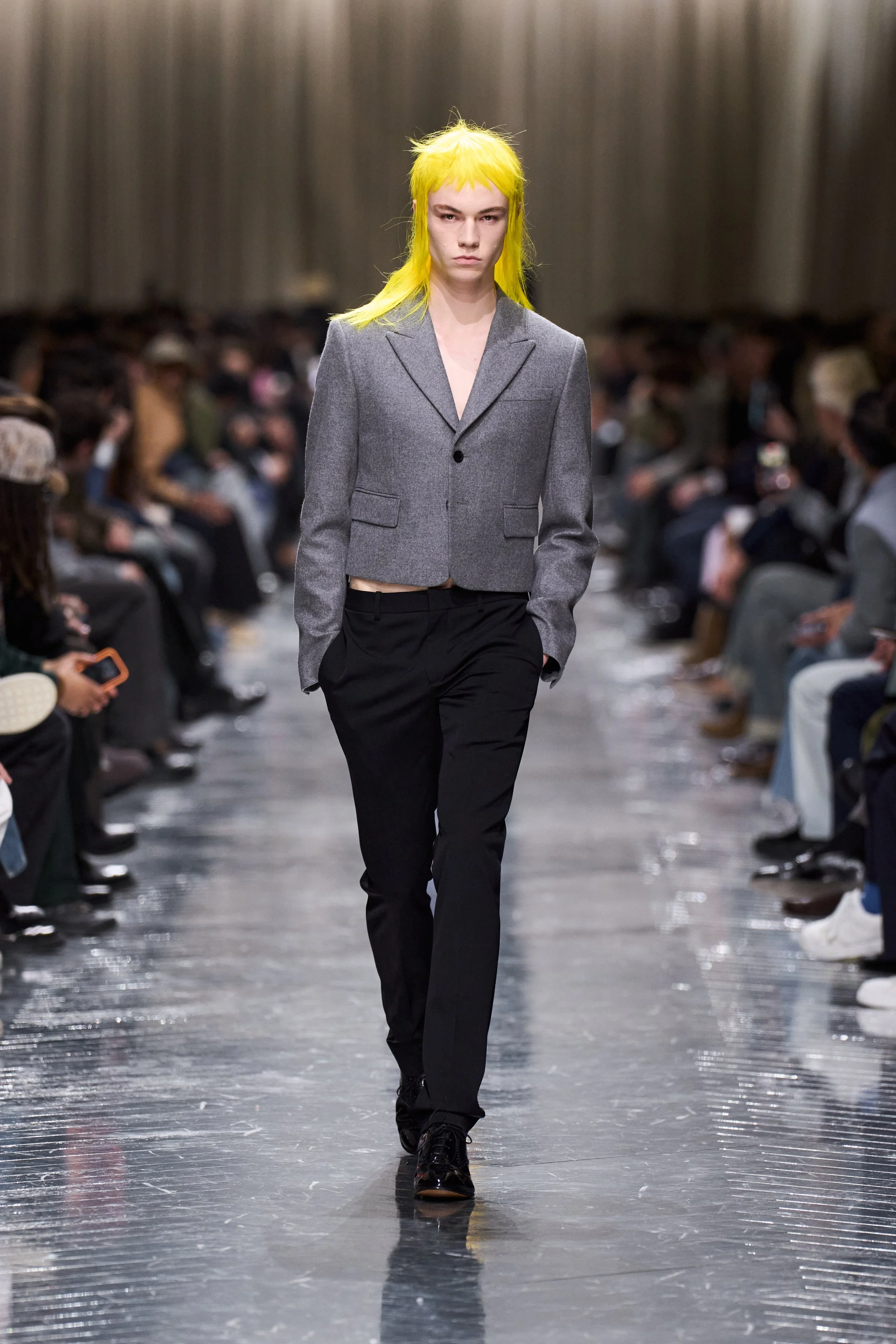
Jonathan Anderson is a nerd, in the best way possible. He loves diving into different worlds and drawing inspiration from all of them, moulding them together in a way that feels fun, fresh, and radical. This season was a masterclass in creative collage: models emerged with punk-inspired bright yellow wigs — a deliberate rejection of “normality,” as Anderson put it — alongside a riot of references that ranged from indie music icons to arthouse film sensibilities.
These days, rather than hierarchy, Anderson goes for accumulation — layering references until they form a language entirely his own. It is this fearless mixing that gives the collection its electricity, its sense of play, its refusal to sit neatly in one category. Who else could combine anime and punk wigs, aristocratic codes, and cult cinema of Withnail and I — and still make it work?
THE HUMAN “WRONGNESS” FACTOR
all images courtesy of DIOR MEN
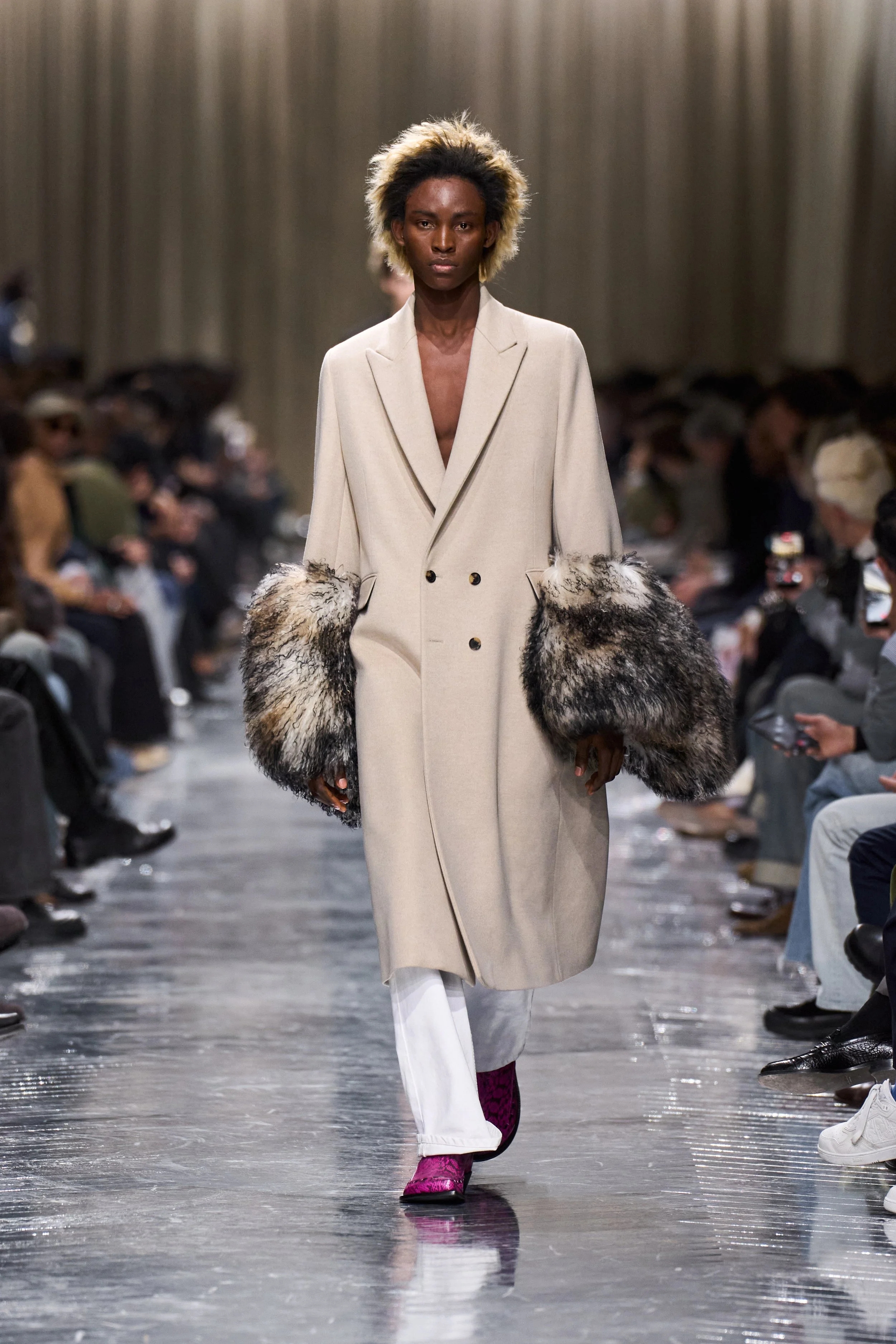
We are used to seeing pretty pictures, to the point that we almost need to be disturbed to start paying attention. In an era saturated with flawless images, perfection has become invisible, and beauty, oddly, forgettable. Anderson understands this, feeding us a collection where proportions and cuts are deliberately skewed — fur cuffs seem slightly too big, waists that sit a bit too low, and silhouettes hover just outside the expected.
This carefully constructed “wrongness” invites us to look closer, to slow down, to question what we have learned to call beautiful. In a moment when technology promises infinite optimisation — smoother skin, sharper lines, cleaner forms — Anderson insists on the value of imperfection. The awkwardness becomes the point. The misalignment becomes emotional. It is in these small ruptures that sheer, rigid humanity reappears, reminding us that what moves us most in fashion is often what cannot be perfected, predicted, or replicated.
THE BIGGER IDEA
all images courtesy of DIOR MEN
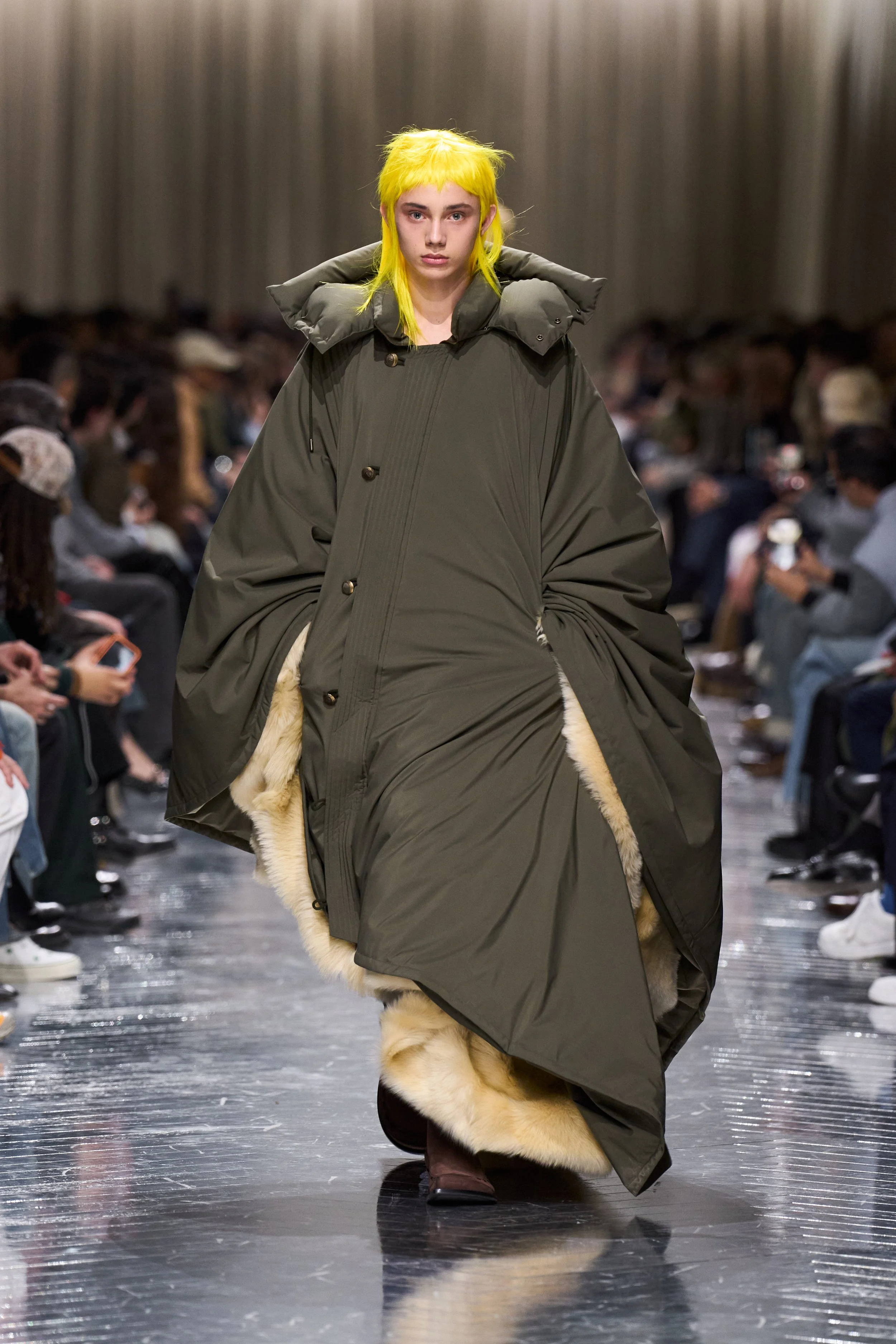
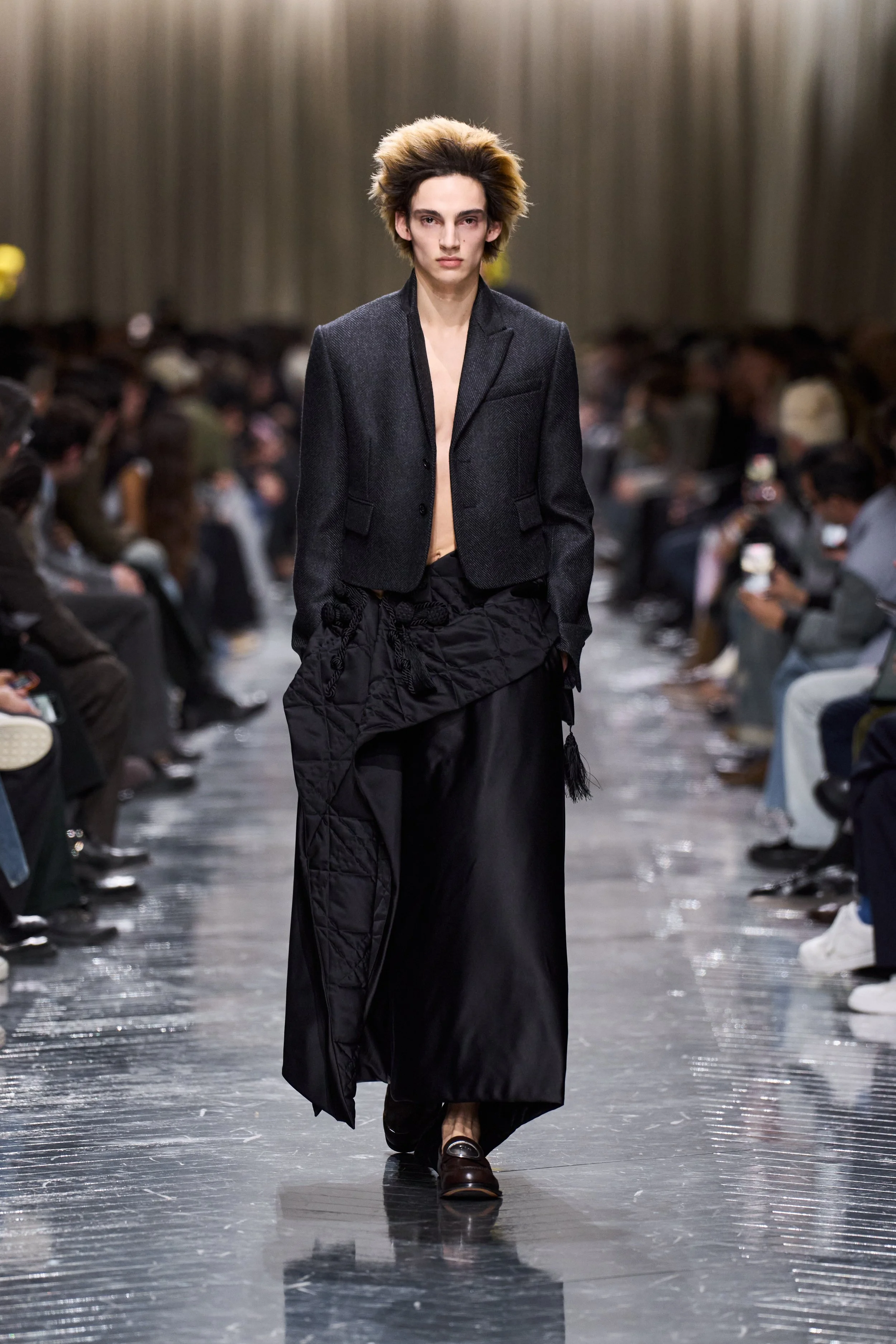
Jonathan Anderson’s Dior wants us to think. After all, as Anderson said himself, “fashion shows are about showing ideas.” Beyond clothing, the collection poses questions about who we are, who we could become, and what creativity means in the midst of yet another technological revolution. If you think you already have the answers, we urge you to think again.
Anderson’s fashion is a proposition. Each look functions less as an outfit than as a statement about identity, about history, about the fragile line between human instinct and artificial perfection. In a moment when innovation is increasingly automated and imagination increasingly outsourced, Anderson insists on the opposite. He wants us to take authorship, stay curious and even doubt ourselves.
Rather than offering solutions, the collection opens space for reflection. Because for Anderson, the future of fashion is not simply about what we wear — but about how, and why, we choose to think of fashion at all.