
PARIS FASHION WEEK SPRING/SUMMER 2027: DAY 2
ESTER MANAS
review by TIANA DE HASETH
all images courtesy of ESTER MANAS
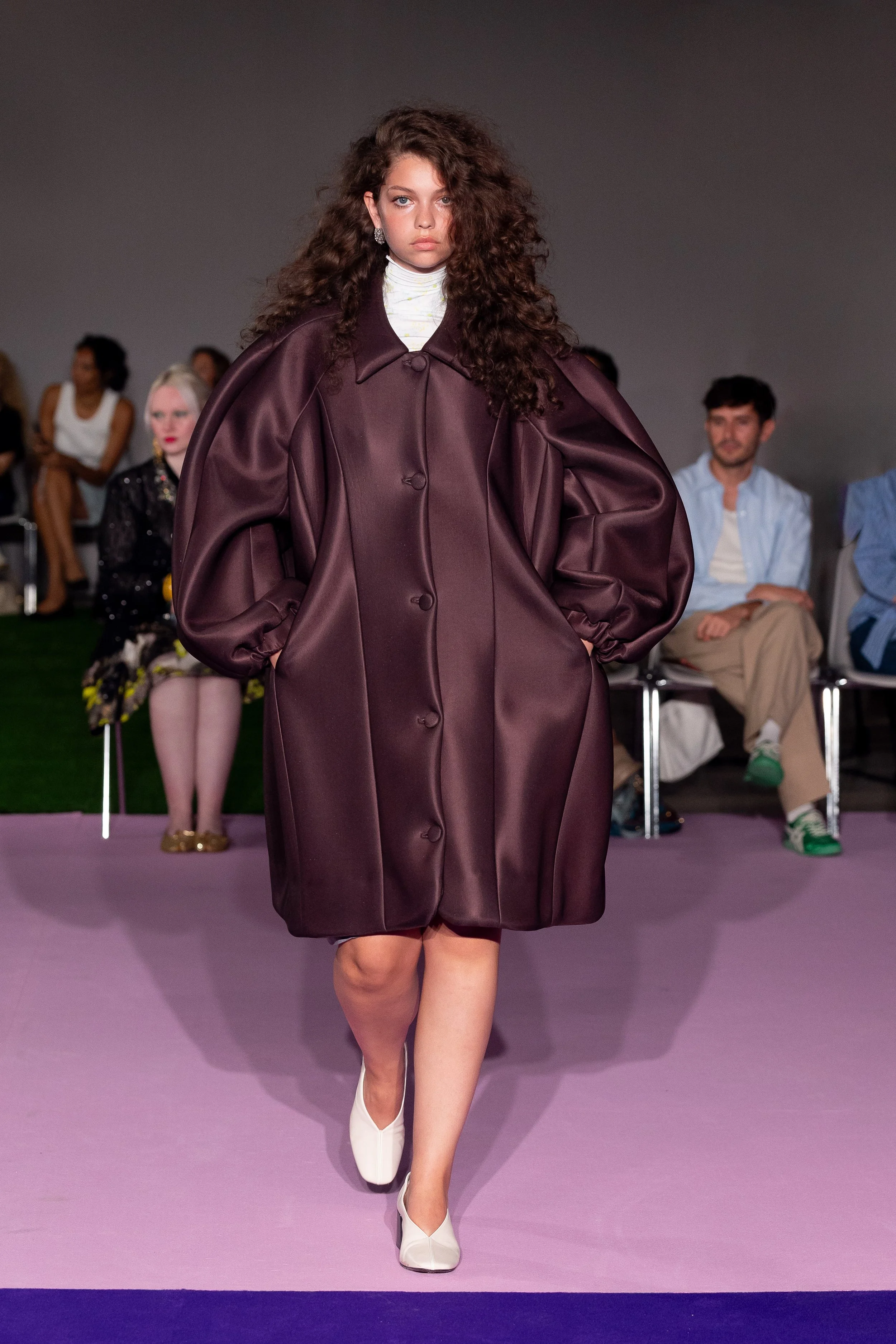
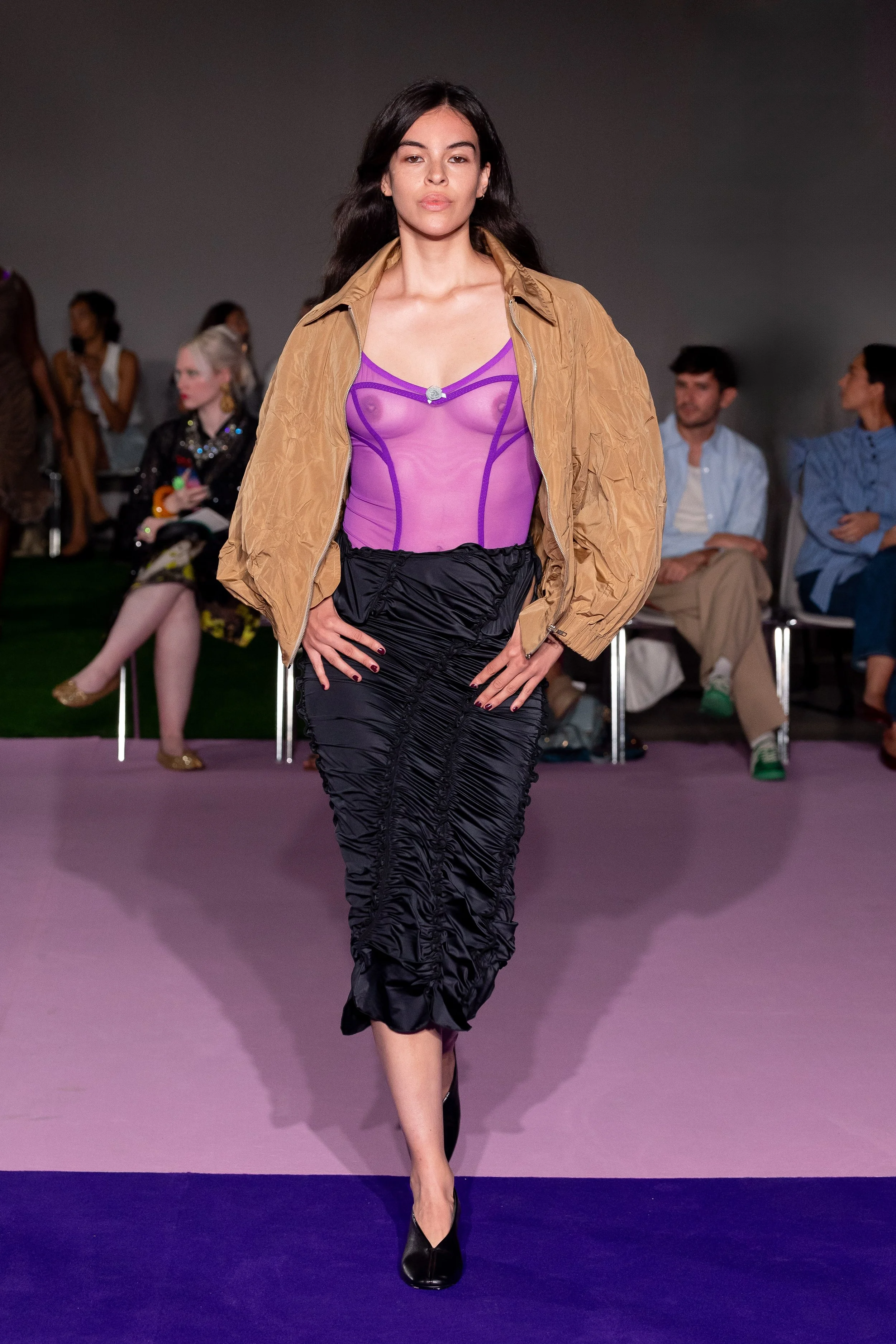
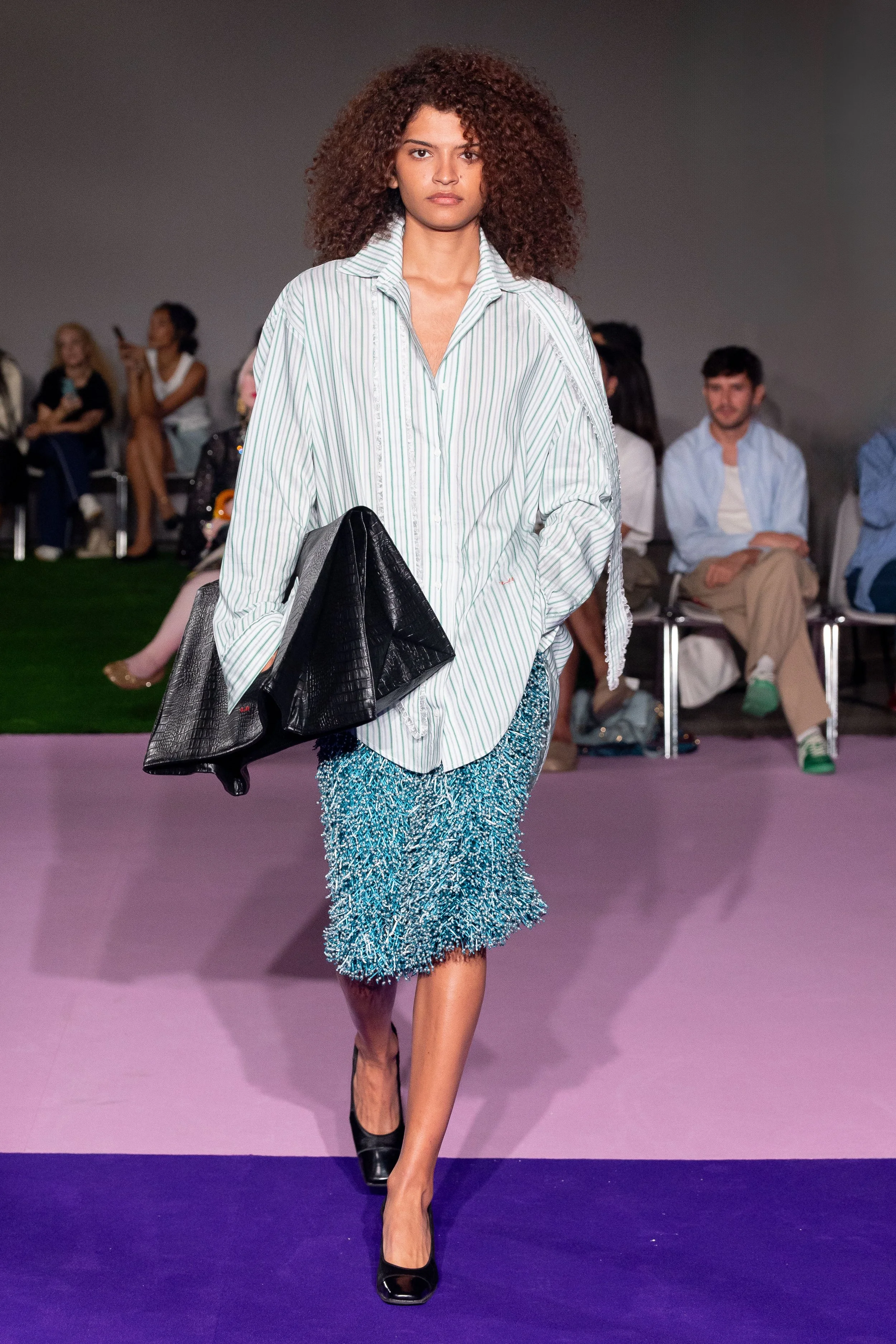
Ester Manas is back for the Spring Summer 2027 season after a two-year hiatus, and the runway was undeniably sultry. New parents and creative directors Ester Manas and Balthazar Delepierre named the collection "Somehow I’ll Manage," inspired by The Office character Michael Scott’s fictional book. The collection captures that relatable moment when you are running late and throw on whatever is closest: unironed clothes, loose pants, see-through shirts, and oversized boyfriend blouses. The brand clearly wanted to have fun with this concept.
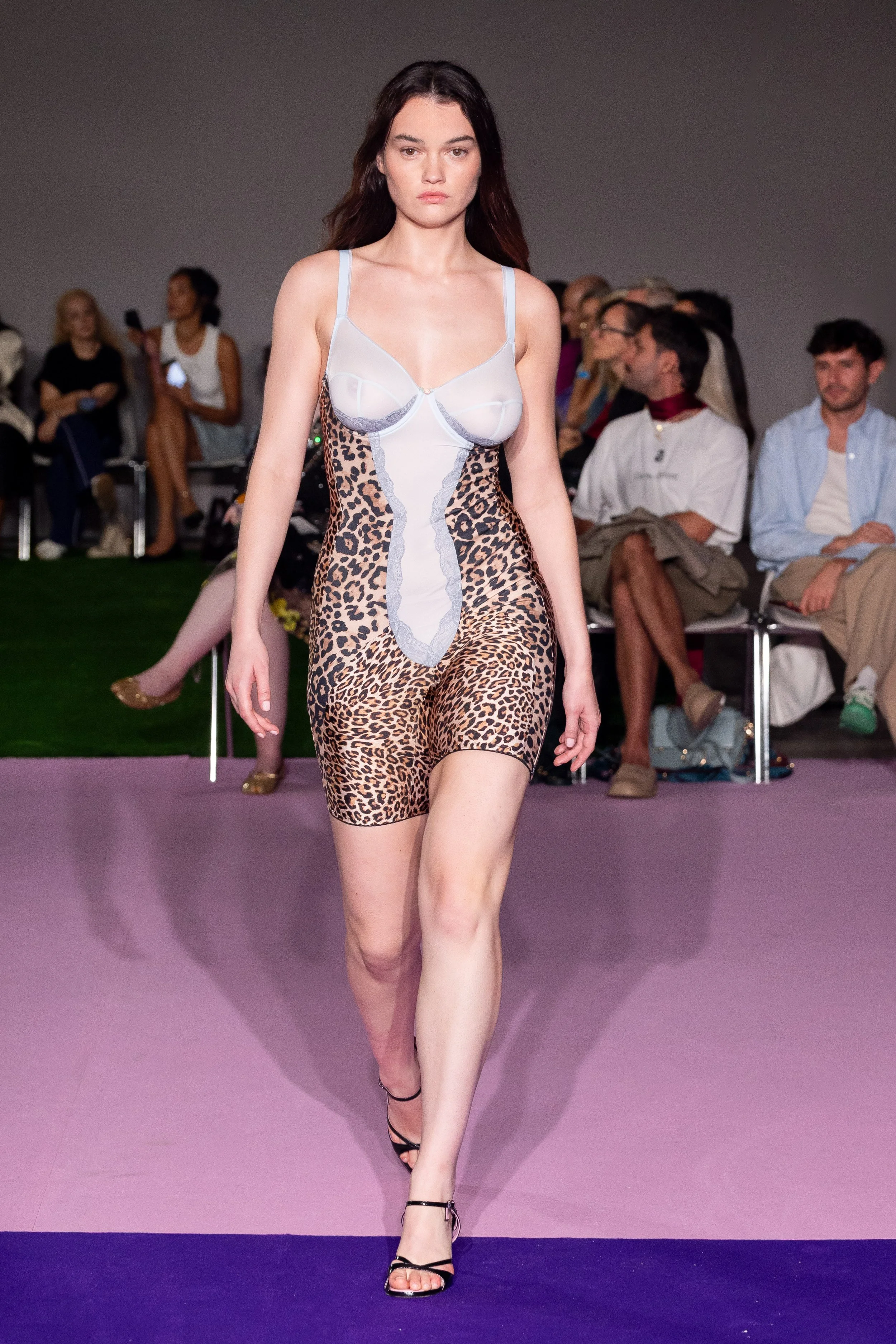
In a special collaboration, they teamed up with Belgian lingerie brand Primadonna, digging into their archives to rework classic pieces for the runway.
The lineup consisted of corsets, bustiers, bodysuits, bomber jackets, and dresses, featuring a color palette of pink, purple, brown, and blue alongside leopard prints, mesh, and lace to capture the vibe of the "late chaotic woman." With tight dresses layered over blouses and wrinkled skirts, the silhouettes were predominantly oversized.
And somehow the looks really did manage — proving to be chic, feminine, elegant, and surprisingly well-suited for workwear or dinner with your friends.
DIOR
review by MAREK BARTEK
all images courtesy of DIOR
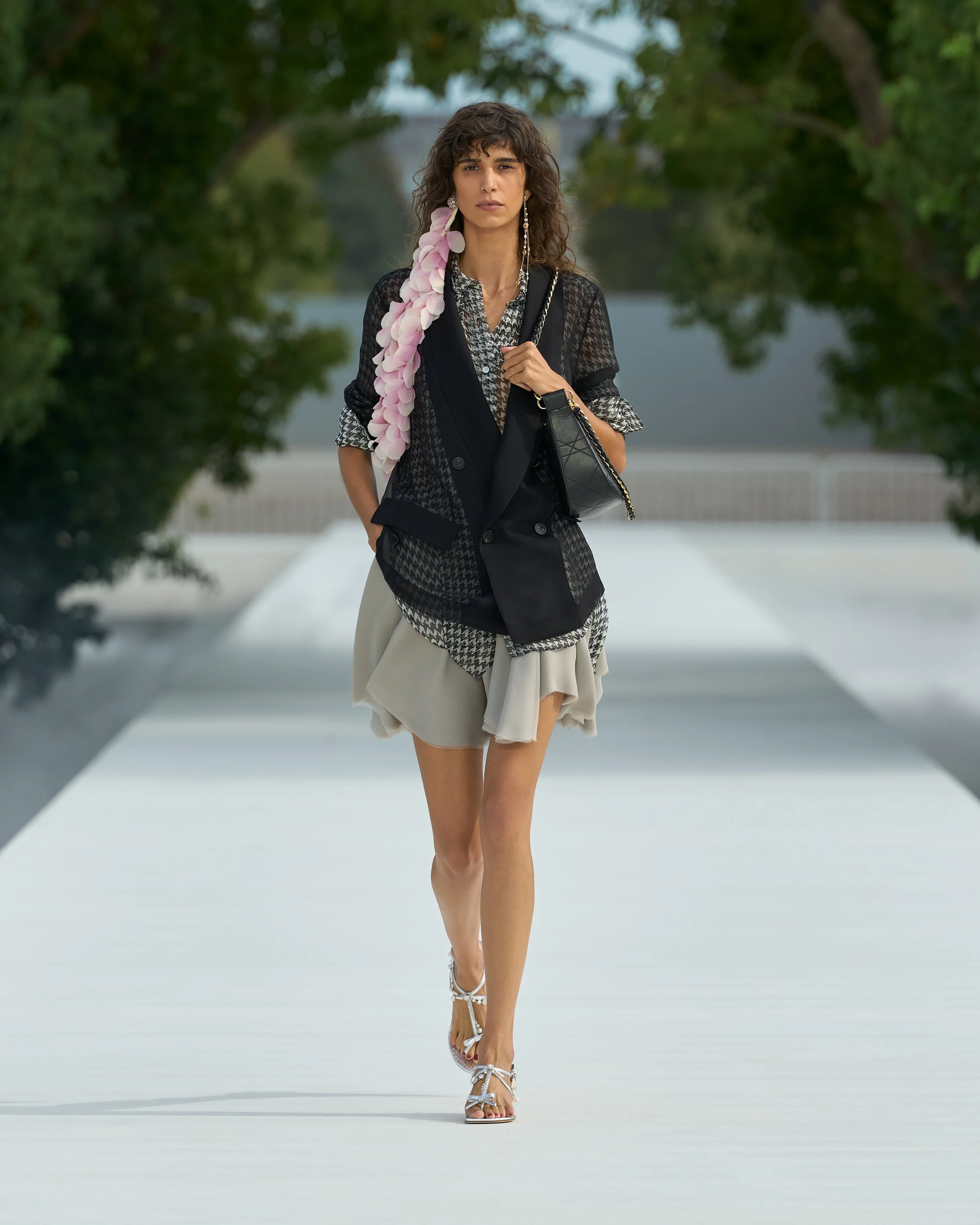
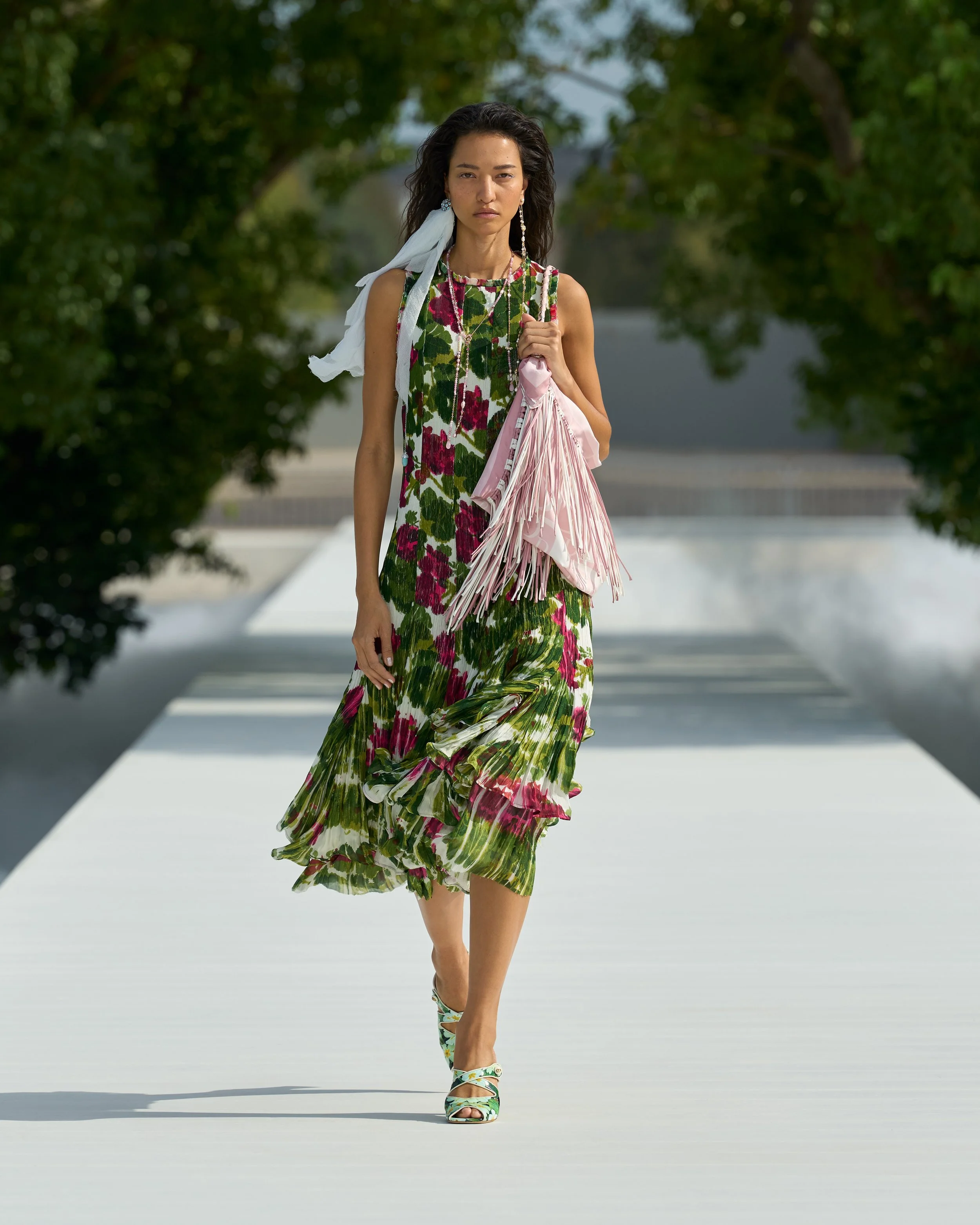
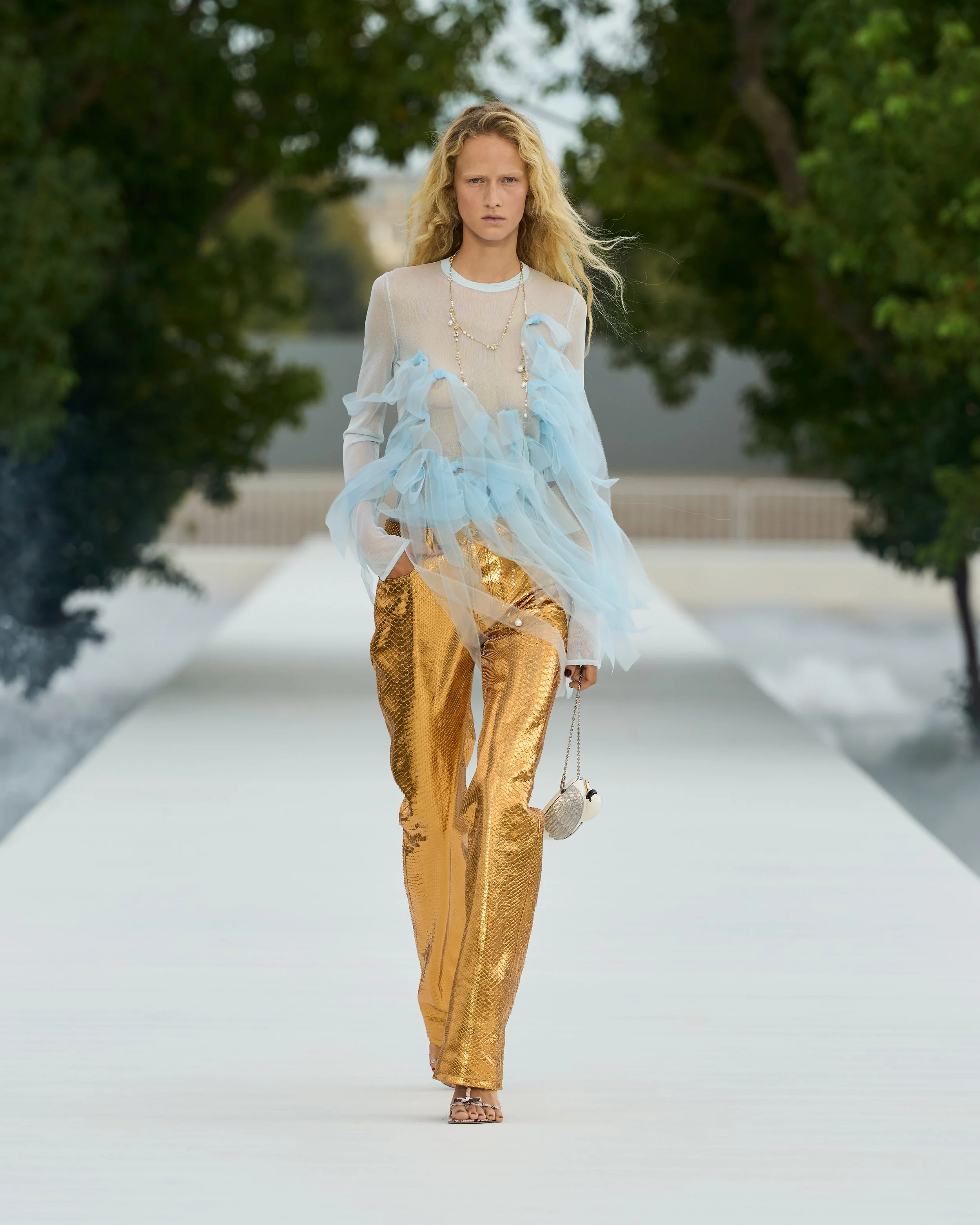
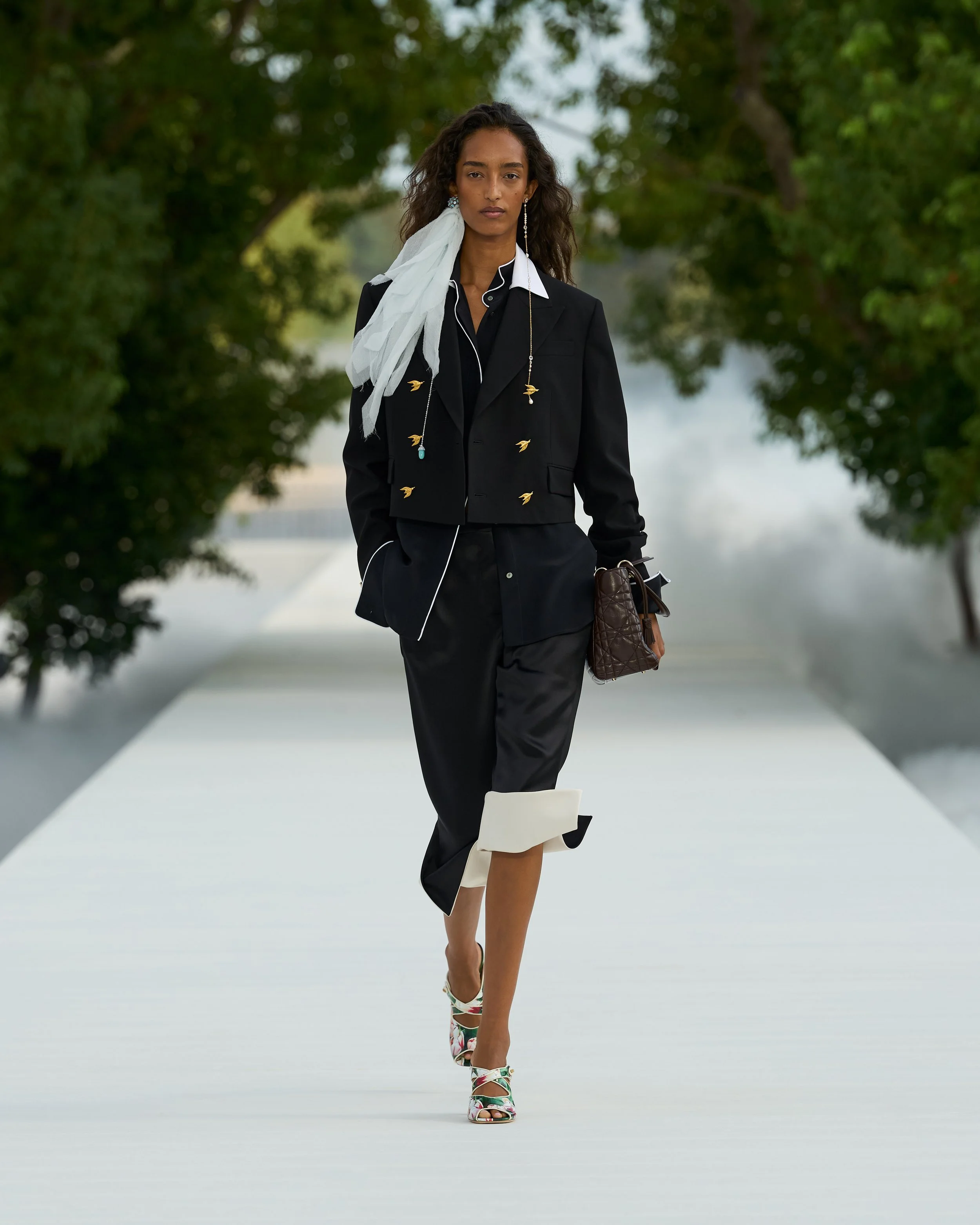
Across a pond in the Tuileries Gardens, models emerged through clouds of mist onto a long white runway surrounded by greenery. It was beautiful, like an early summer morning before the fog had lifted, and particularly fitting for a collection built around lightness. Anderson treated air almost as a material, transforming the structure of Dior’s tailoring through chiffon, organza, lace and silk mousseline, playing with both transparency and opacity.
The idea, certainly, was compelling. Early Dior silhouettes were stripped of their rigidity: the Bar jacket was soft, became sheer or appeared almost constructed from flyaway ribbons, and circle skirts were rendered in translucent layers. One early look, covered in small petal-like shapes, felt like an immediate reference to the iconic Junon dress, although reduced, fragmented and made more organic.
And while air-light and iridescent, a sense of familiarity became difficult to ignore. The show notes themselves described elements from Autumn/Winter 2026–27 returning in new guises, while ideas from the recent menswear collection were deliberately elaborated here. Continuity between the two makes sense, and the sheer tailoring and metallic five-pocket trousers are some of the collection’s strongest propositions. But beyond those crossovers, silhouettes and treatments from Anderson’s previous womenswear collections kept resurfacing too, and while they may technically be different, visually, they reminded us of fashion we had already been acquainted with in previous seasons over and over again.
There were plenty of details to appreciate. Cascading earrings weighted with gemstones beautifully extended the collection’s exploration of asymmetry, and the metallic trousers brought a welcome sharpness. Look 51, in particular, was a standout — there was something very Kylie Minogue about it. The preppier passages also worked surprisingly well, as did some of the more straightforward tailoring and knee-length shorts.
Where the collection struggled most was in its styling. Open blazers, bras and matching mini skirts should have felt effortless, yet some skirts landed at an awkward point around the waist that the proportions became unflattering. Elsewhere, frills, sheer layers, asymmetrical draping and deliberately mismatched pieces competed for attention rather than conversed. It wasn’t necessarily that the individual garments were unsuccessful; put separately on a rail, many would probably be desirable. Together, however, they made one another harder to understand.
There is technical skill here. There is thought behind the reworking of Dior’s history, and there are some good clothes. But new techniques and new iterations do not automatically produce a feeling of renewed artistic vision.
Jonathan Anderson has been giving and giving at Dior, and after this season, someone needs to send the man on holiday. Somewhere in Greece, preferably, with a cigarette and absolutely no sketchbook in sight. Fashion has a tendency to ask too much of its great talents, and perhaps this is a good moment not to repeat past mistakes. It might simply be time for Anderson to refill his creative well.
BURC AKYOL
review by MAREK BARTEK
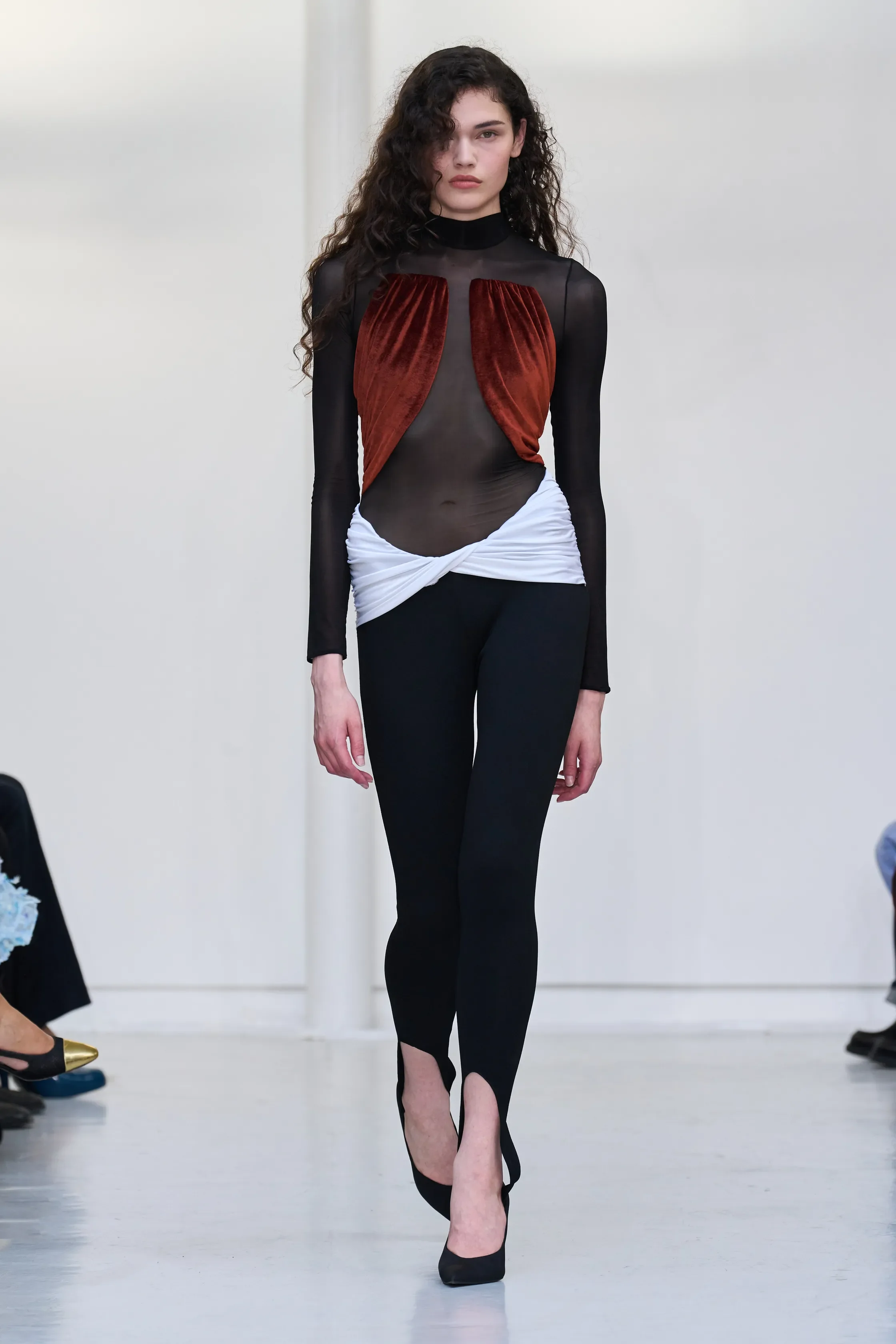
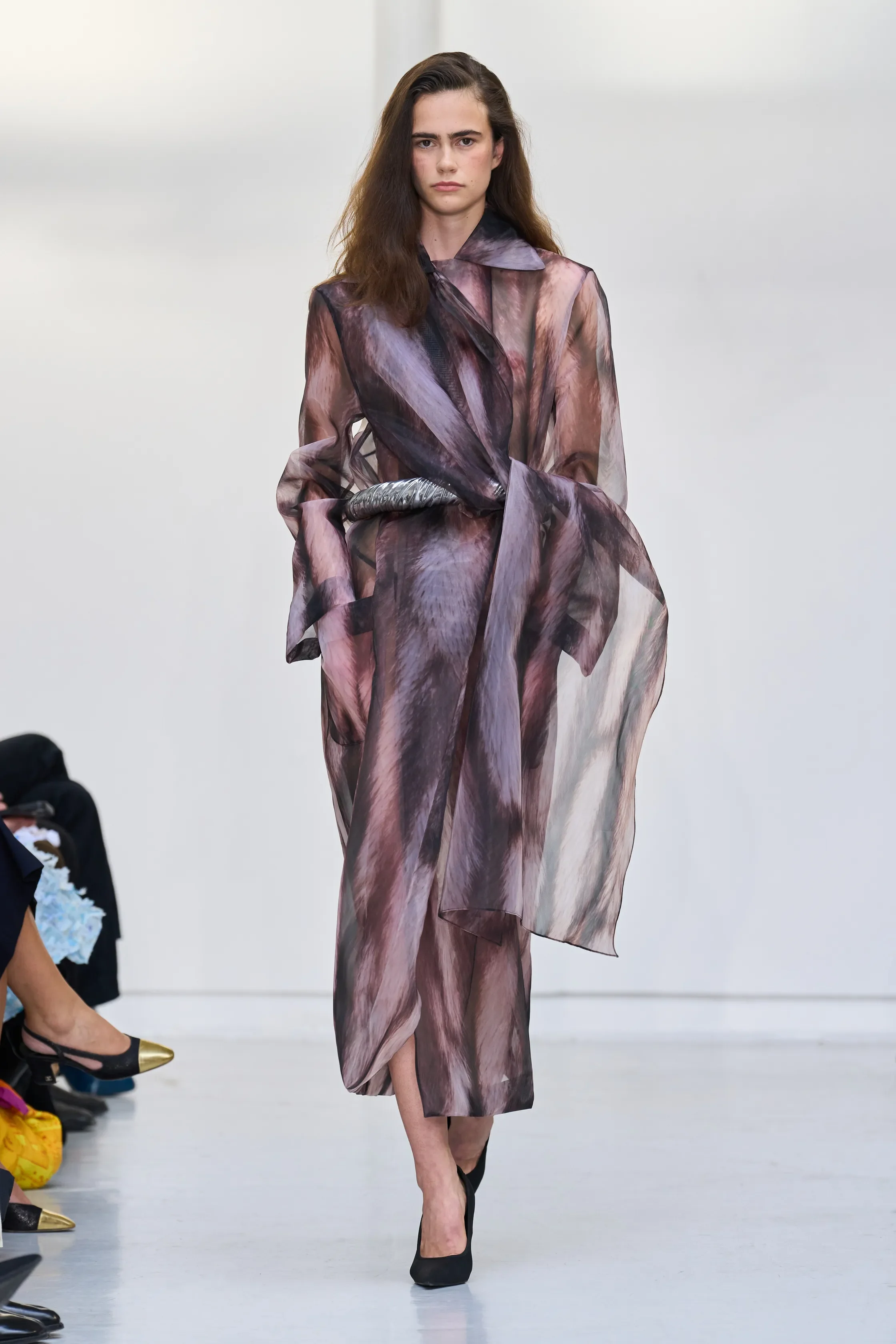
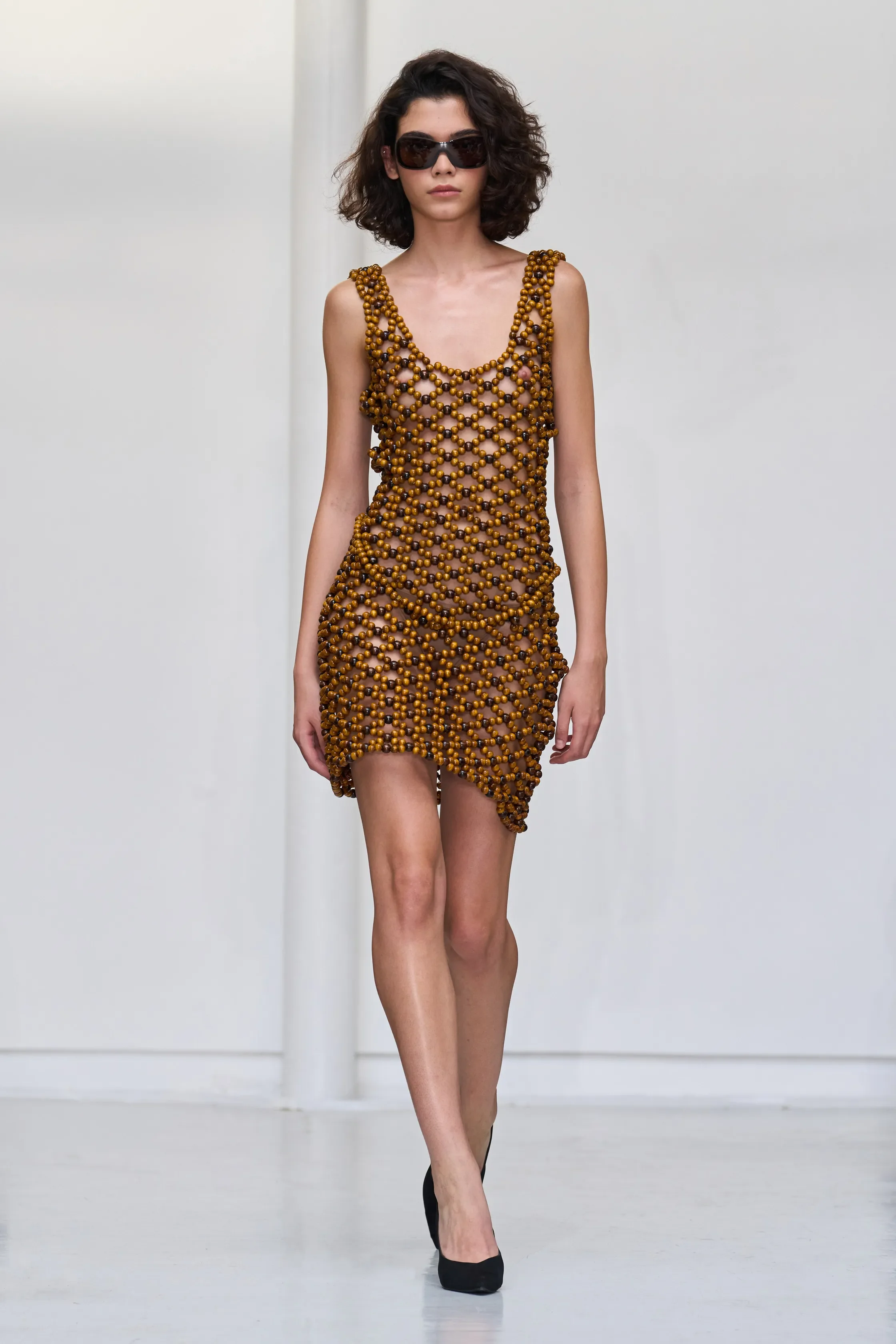
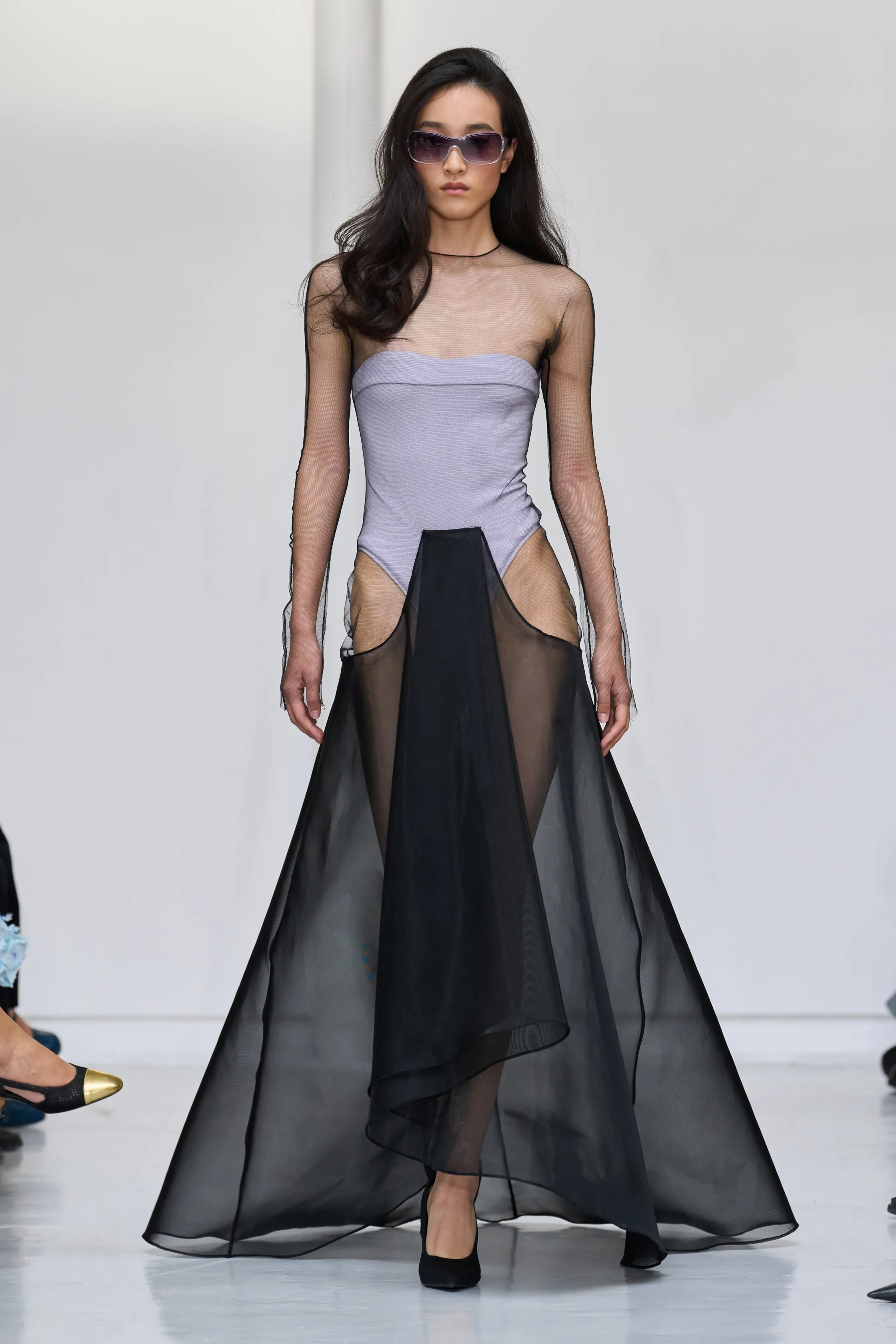
all images courtesy of BURC AKYOL
We’ve been watching Burc Akyol grow up in front of our eyes, so perhaps it was only a matter of time before he started thinking about growing up itself. Titled Milk and Wine, his Spring/Summer 2027 collection explores that strange space between innocence and adulthood, looking back at childhood, family and the person he has become along the way.
The result is noticeably more sober. Akyol’s familiar sensuality remained — sheer fabrics, exposed hips, plunging tailoring and clothes sitting incredibly close to the body — but this time it felt more controlled. A curved, twisted detail repeatedly framed the body, wrapping around hips and waists before appearing inverted beneath the bust, creating a subtle thread throughout the collection. Tailoring was precise, dresses fluid and the palette largely stripped back, interrupted by deep reds, purple and acid yellow.
It’s a beautiful collection, although at times perhaps a little too well-behaved. More wine for Burc Akyol? Particularly towards the second half, the minimalism occasionally diluted some of the subtle, sensual provocation that have made Akyol so exciting to watch. But maybe that’s the point. Growing up inevitably means leaving something behind. With Milk and Wine, Akyol leaves behind some of the recklessness of his younger self, without losing sight of who he was — and gives us a glimpse of who he might be becoming.
MAISON MARGIELA
review by MAREK BARTEK
all images courtesy of MAISON MARGIELA
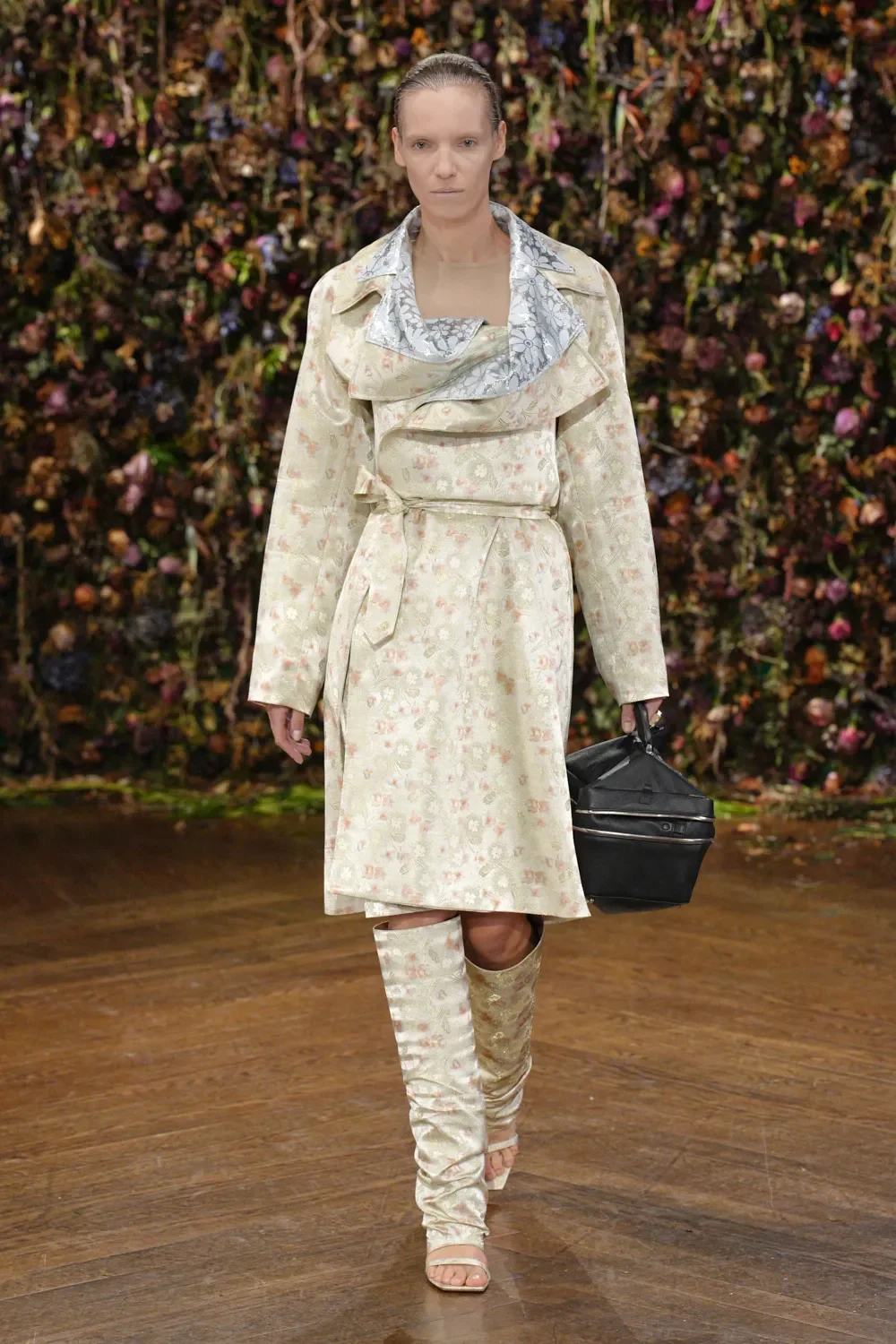
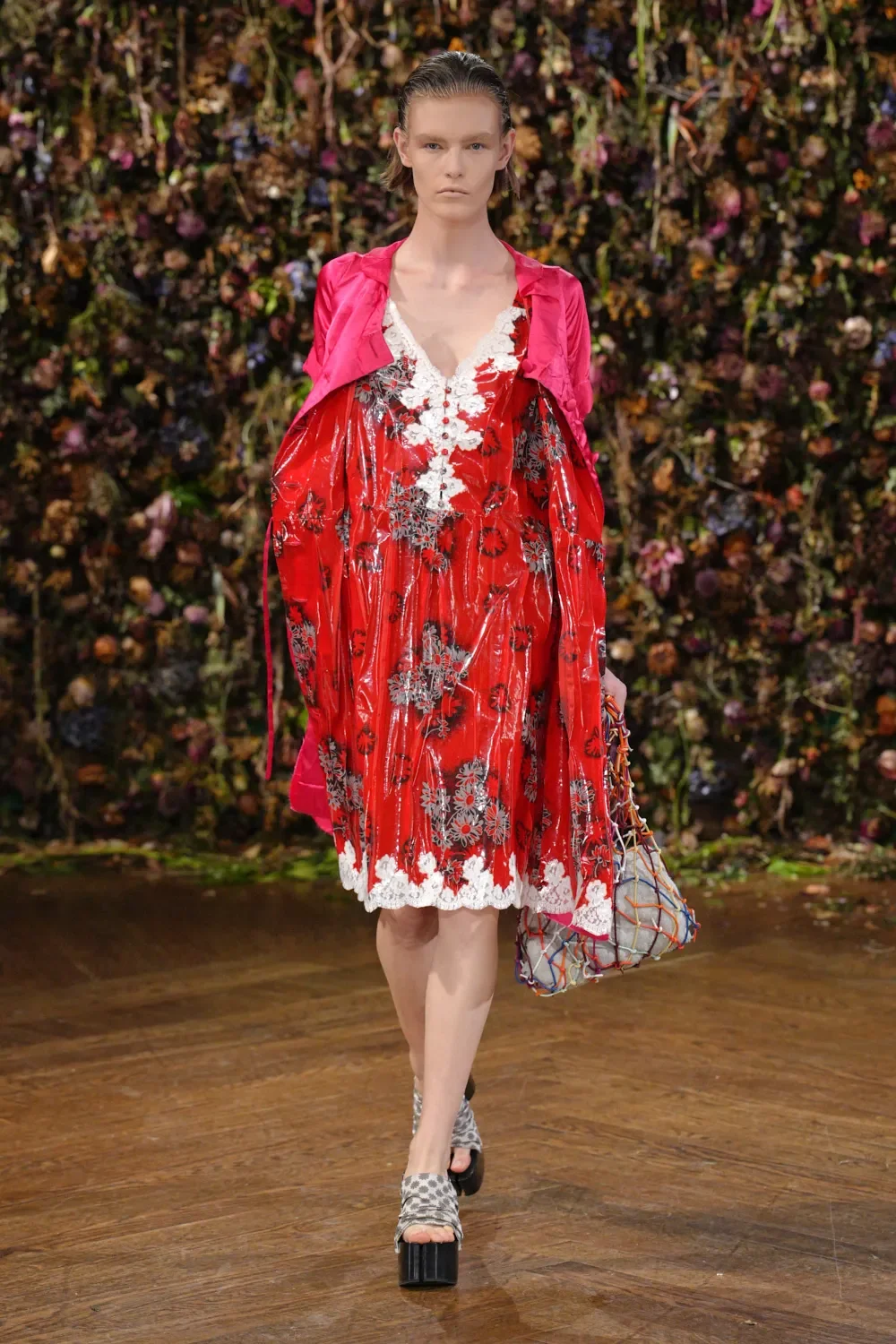
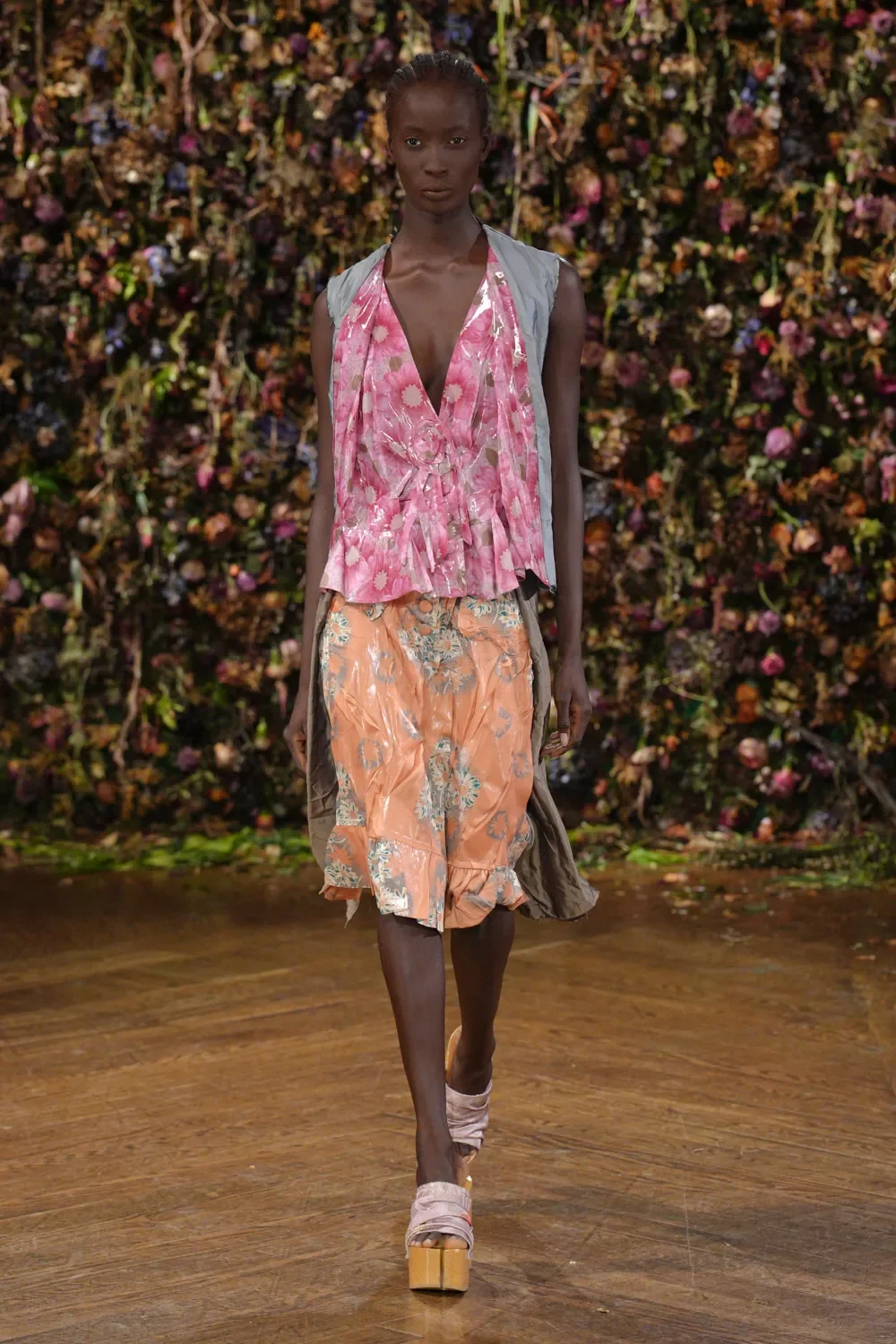
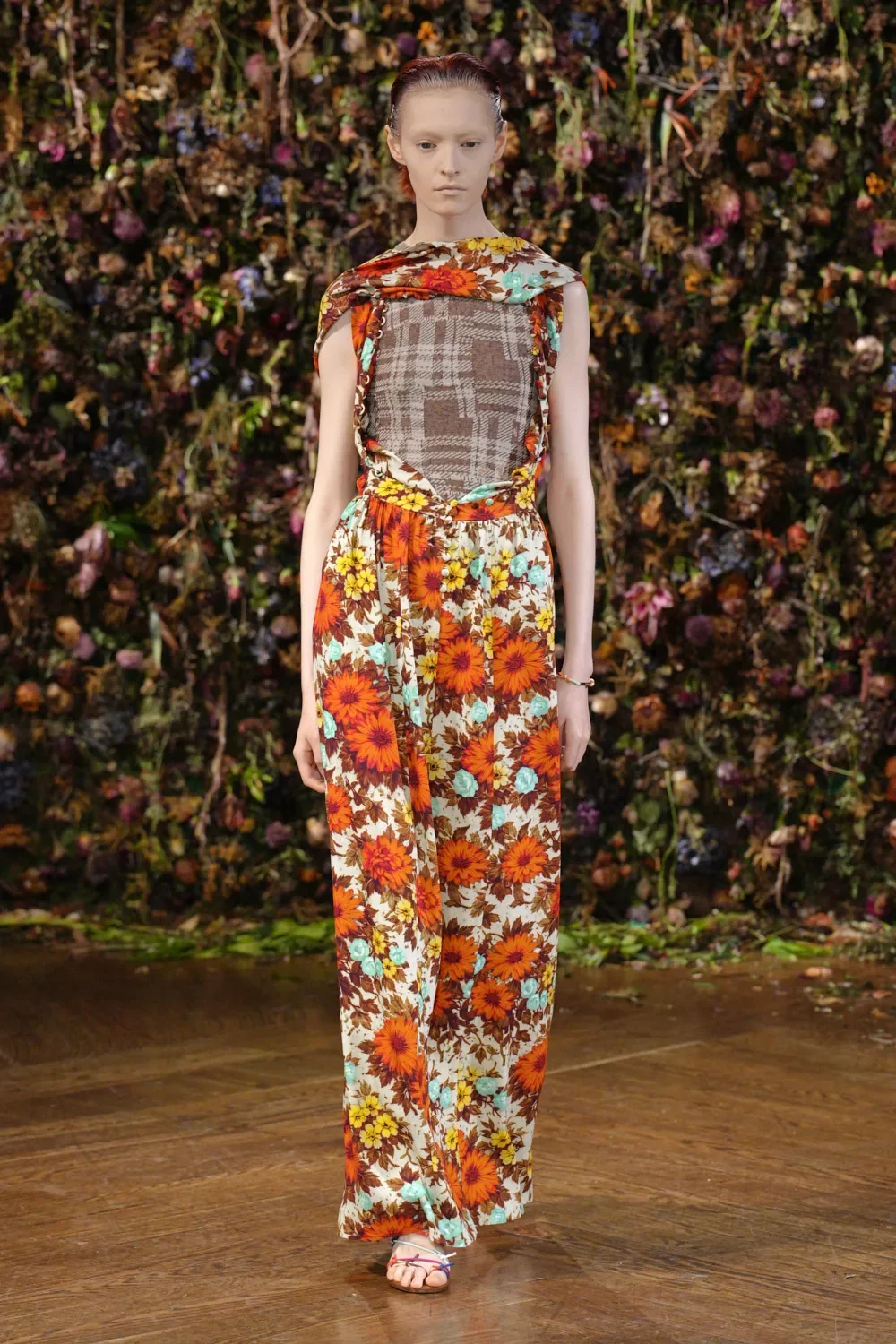
For his first Spring/Summer collection at Maison Margiela, Glenn Martens looked back to the house’s original “anti” spirit, exploring the friction between hard and soft. Fluid dresses met rigid inserts, tailoring folded in on itself and floral fabrics were plasticised until their surfaces fractured. Technically, there was plenty to admire, yet the question remained: did it feel like Margiela?
At times, absolutely. Skirts tied around the waist with cotton tape and displaced constructions played with the unfinished language of the house, while a white gown topped with a metallic breastplate immediately recalled Martin Margiela’s iconic porcelain waistcoat from 1989. Elsewhere, however, the subversion seemed lost beneath an almost excessive polish. Trench leather coats and perforated separates looked certainly luxurious, but rarely challenged our understanding of the garments themselves.
Martens has acknowledged the difficulty of taking Margiela’s conceptual language to a much broader clientele, admitting that it is harder to “go as hard on concepts.” And while, yes, the ability to sell the collection is viable for the label, isn’t that precisely what Maison Margiela is for? Martin Margiela’s work wasn’t radical simply because it looked strange; discarded objects, exposed construction, repurposing and unconventional proportions questioned what fashion — and luxury — could actually be.
Martens clearly understands the vocabulary. This season, though, it sometimes felt as if he was speaking it without quite capturing the power of Martin Margiela’s language.
ANREALAGE
review by MAGDALENA ROE
all images courtesy of ANREALAGE
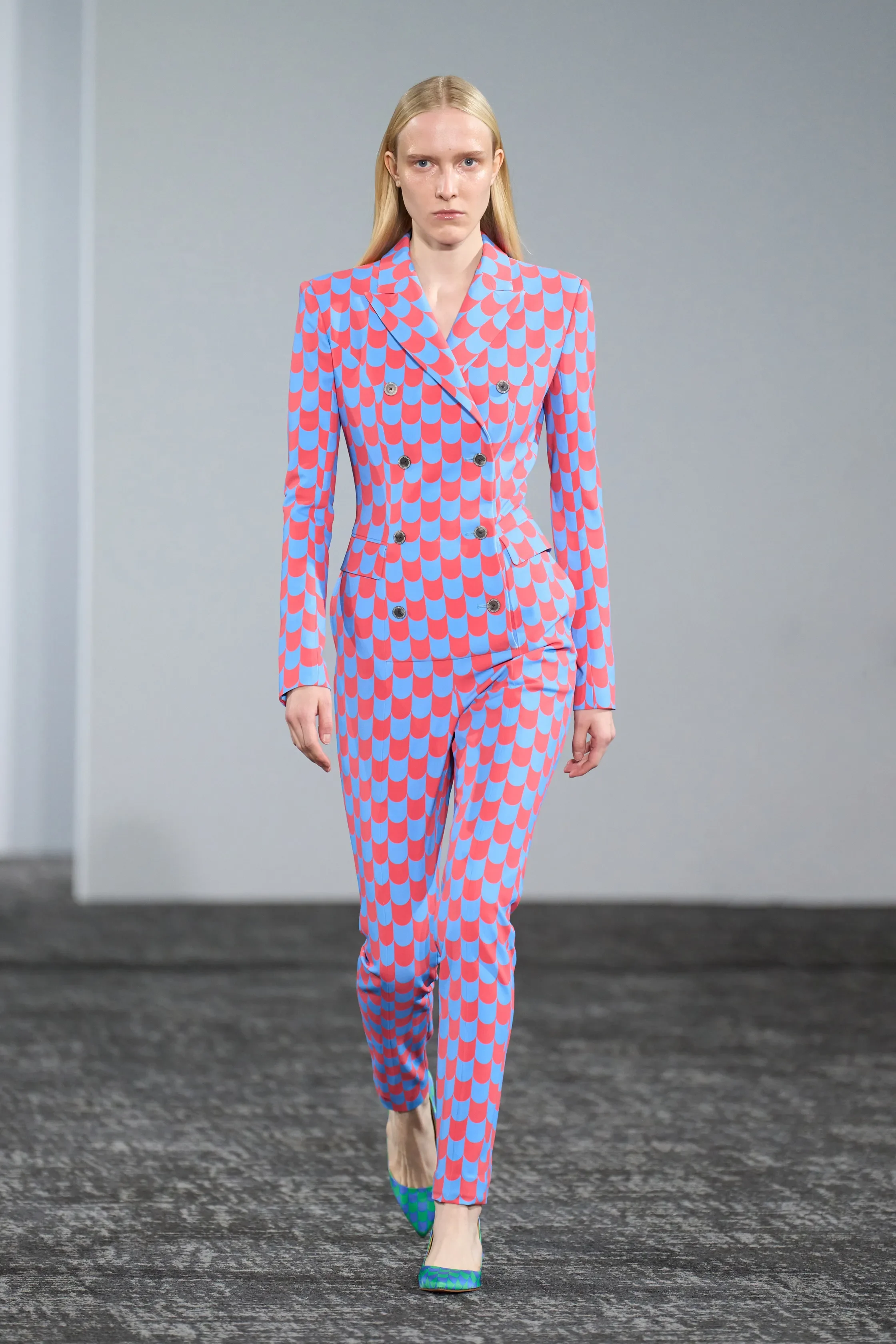
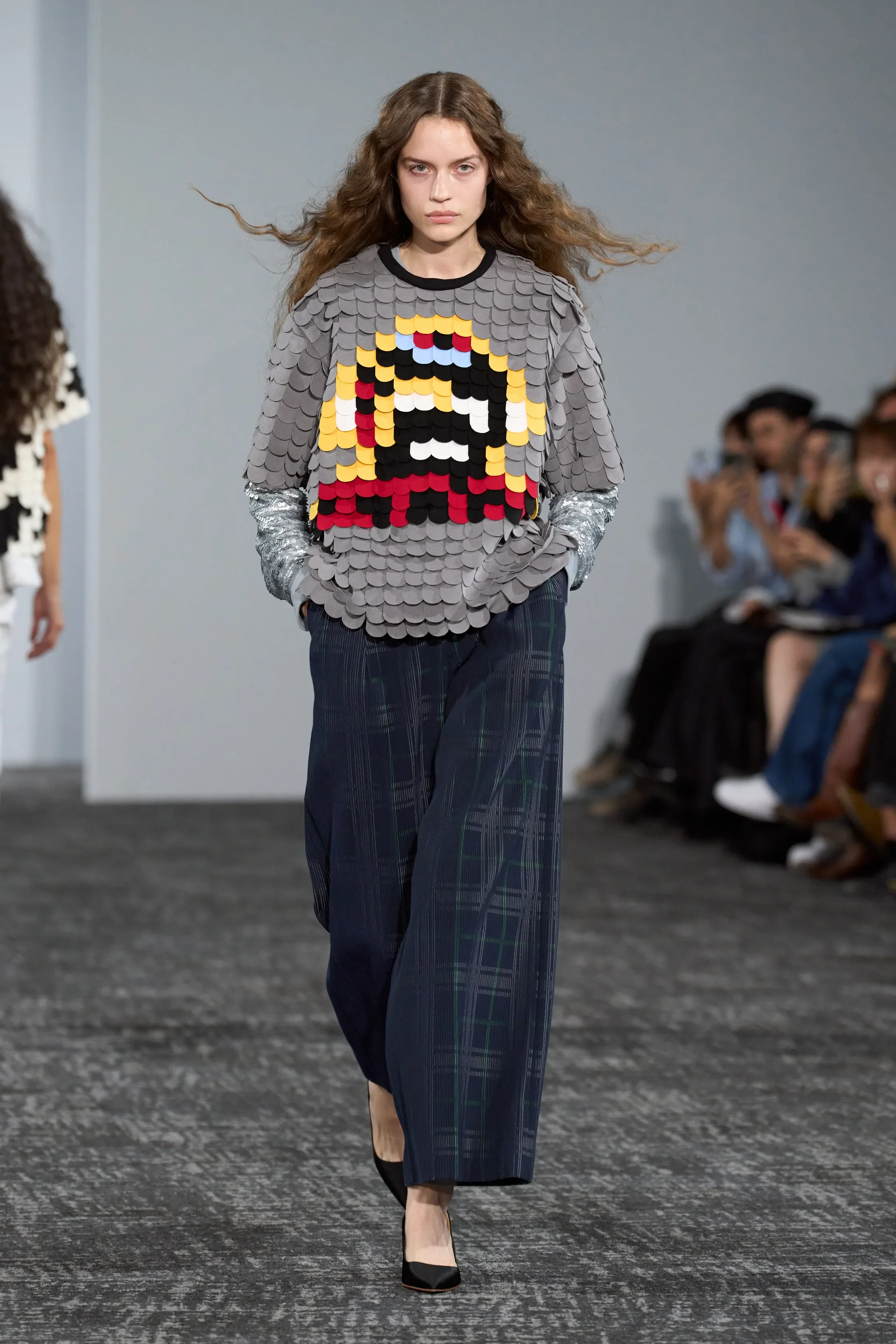
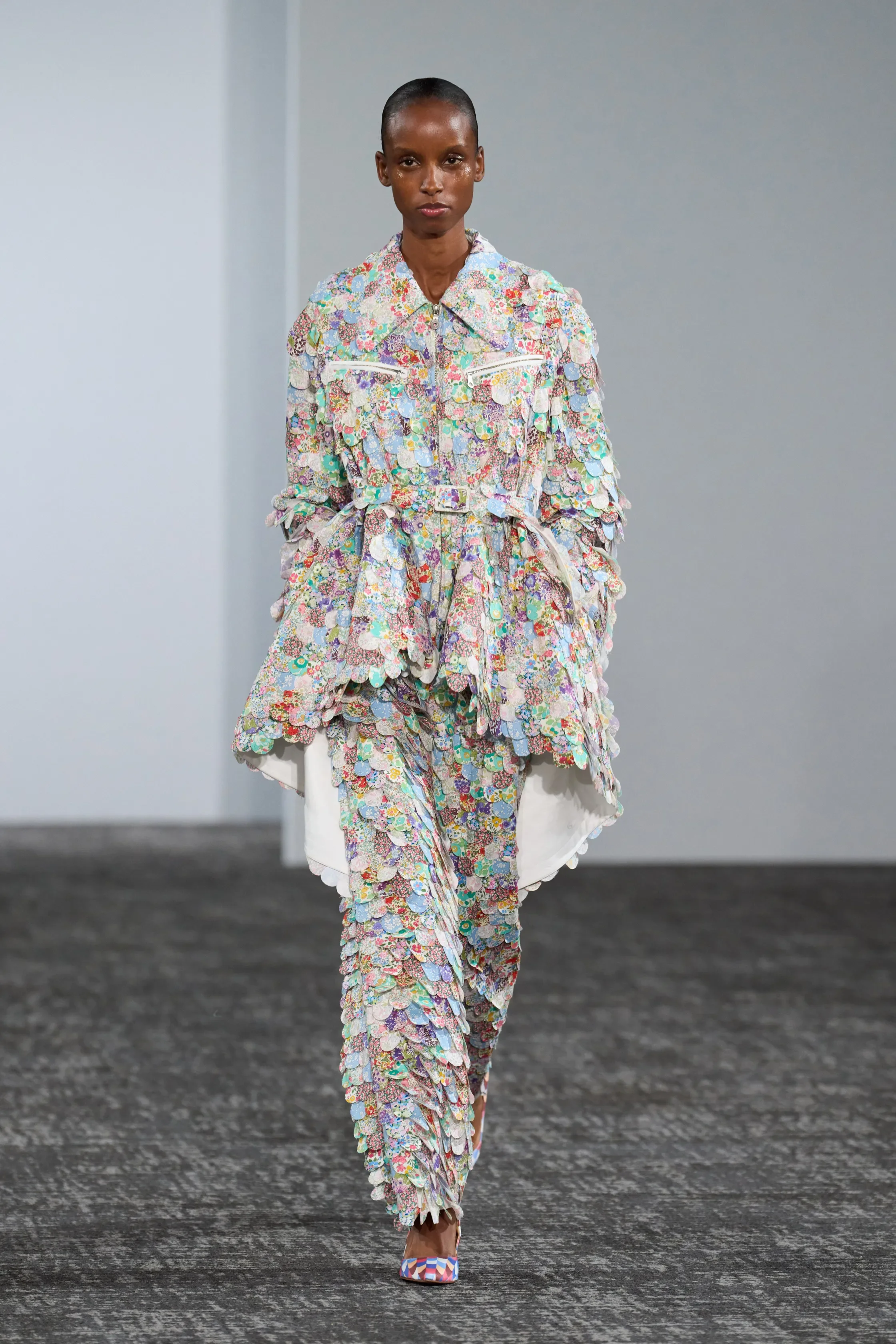
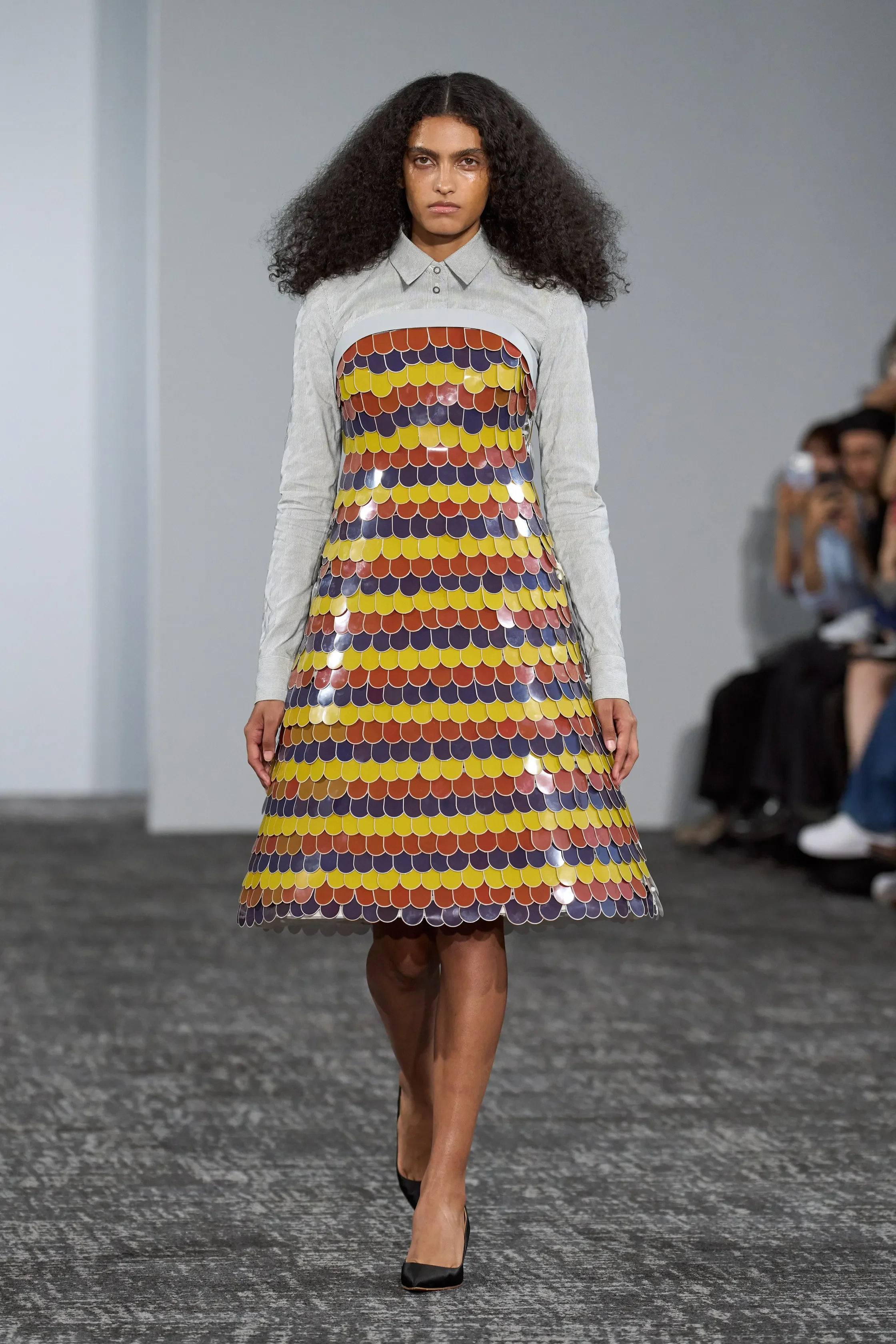
At ANREALAGE, reality began to glitch. For Spring/Summer 2027, Kunihiko Morinaga turned the runway into something that felt almost like stepping inside a video game, where skins could be switched, colours changed and clothes transformed before your eyes. Aptly titled SKIN, the collection marked the designer’s 25th presentation in Paris and imagined clothing as something no longer fixed, but constantly rewritten.
It started close to the body. Graphic bodysuits acted as a second skin before silhouettes grew increasingly exaggerated and engineered, moving from sleek foundations into sculptural volumes. Across them, scales became a recurring language, appearing through contrasting textures, translucent sequins, Japanese washi and colour-shifting 3D elements. Pixelated graphics and saturated colour only heightened the sense of moving somewhere between the physical and digital worlds.
Then came the real spectacle. Six armour-like dresses, each constructed with 1,000 to 2,000 individually controlled E Ink scales, changed directly on the body. Colours and patterns rippled across their surfaces, disappeared into grey and emerged again in entirely new formations. Technology became less an accessory to the clothes than the clothes themselves.
With Stravinsky’s The Firebird performed live in the background, the finale pushed the illusion further, bringing back ANREALAGE’s LED digital skin from last season in a play of light, colour and rebirth. Morinaga has long made technology part of his vocabulary, but here it felt especially alive. The garments became avatar, armour and second skin at once, and just for a few minutes, the runway felt like another reality.
SAINT LAURENT
review by NIA TOPALOVA
all images courtesy of SAINT LAURENT
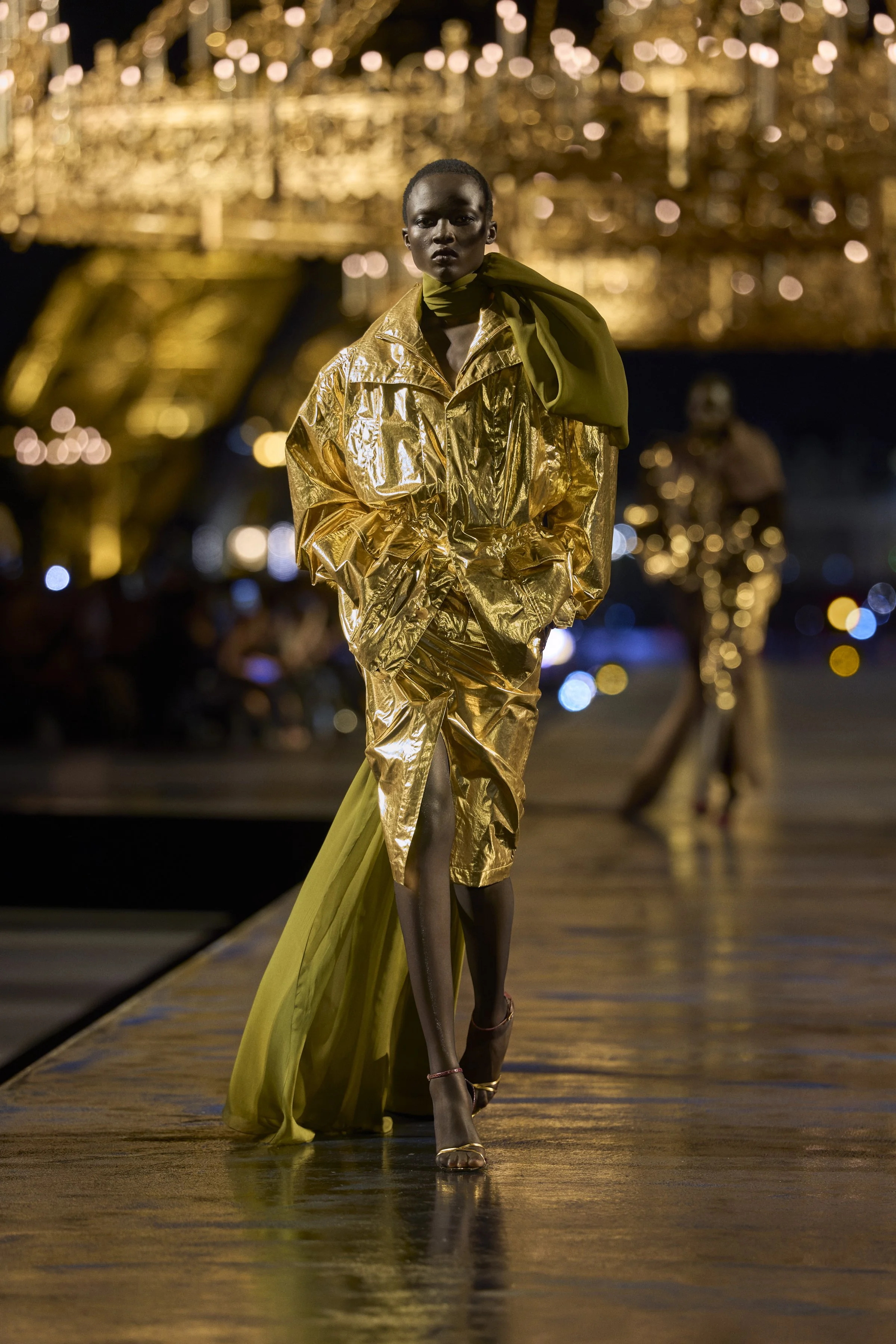
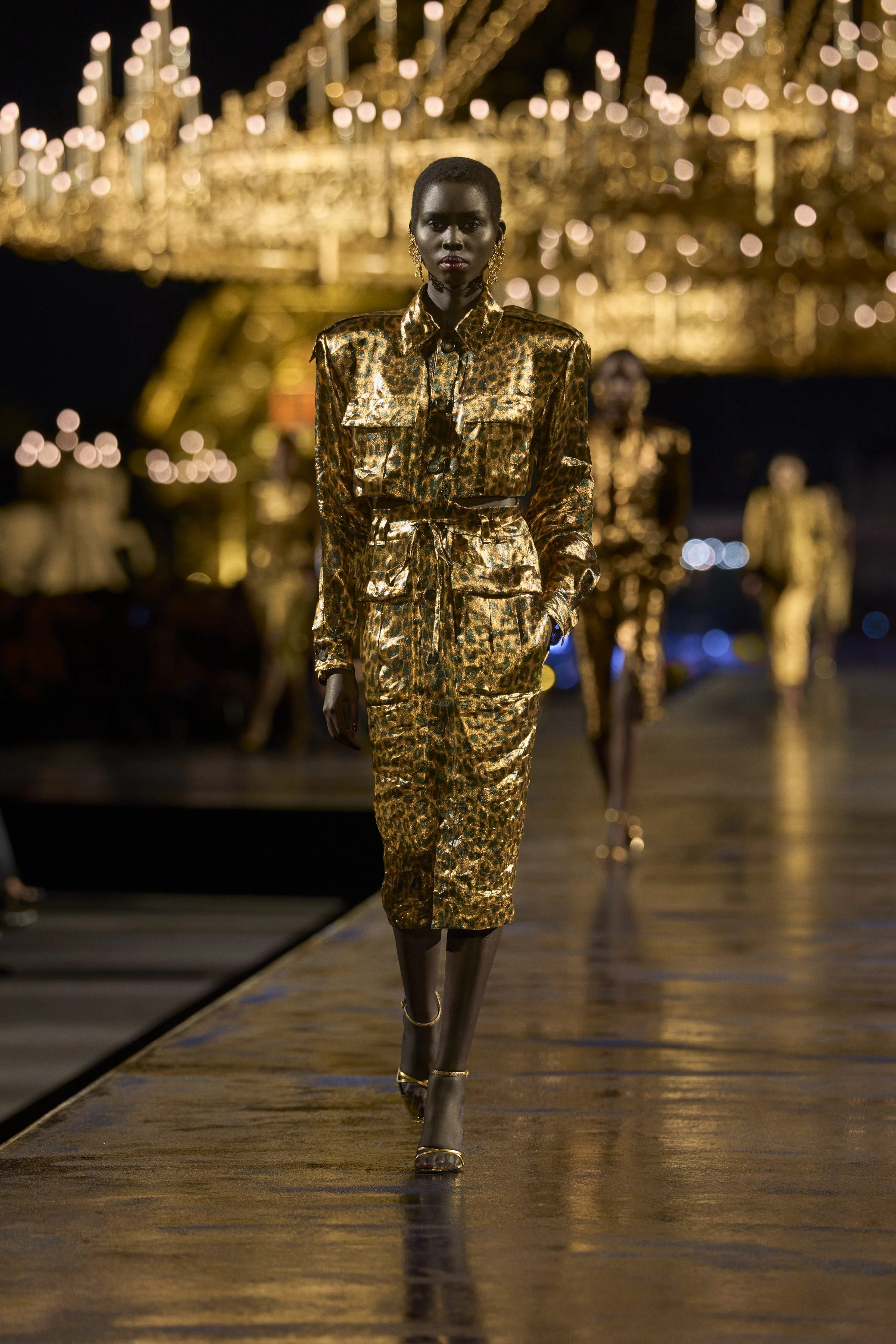
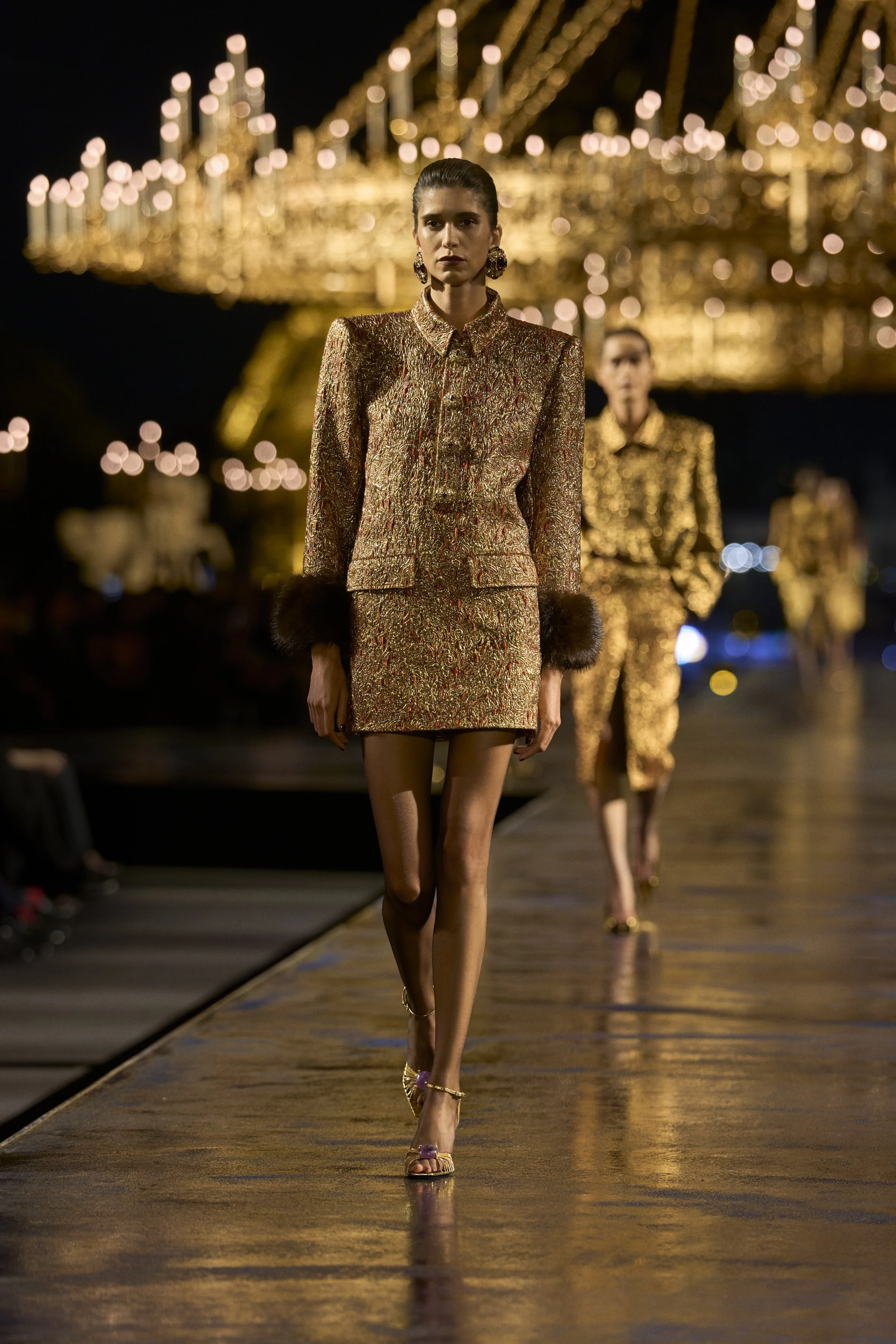
Under majestic candlelit chandeliers throwing shadows across the Eiffel Tower, reflecting the golden archetypes of the Saint Laurent wardrobe from over the decades: sahariennes, trenches, and wrap skirts, we witnessed what many of us have been suspecting for the past few weeks – Anthony Vaccarello’s brilliantly orchestrated potential farewell, sharing: “A light shines all the more brightly because we know it cannot be held. What passes sometimes leaves more light than what remains.”
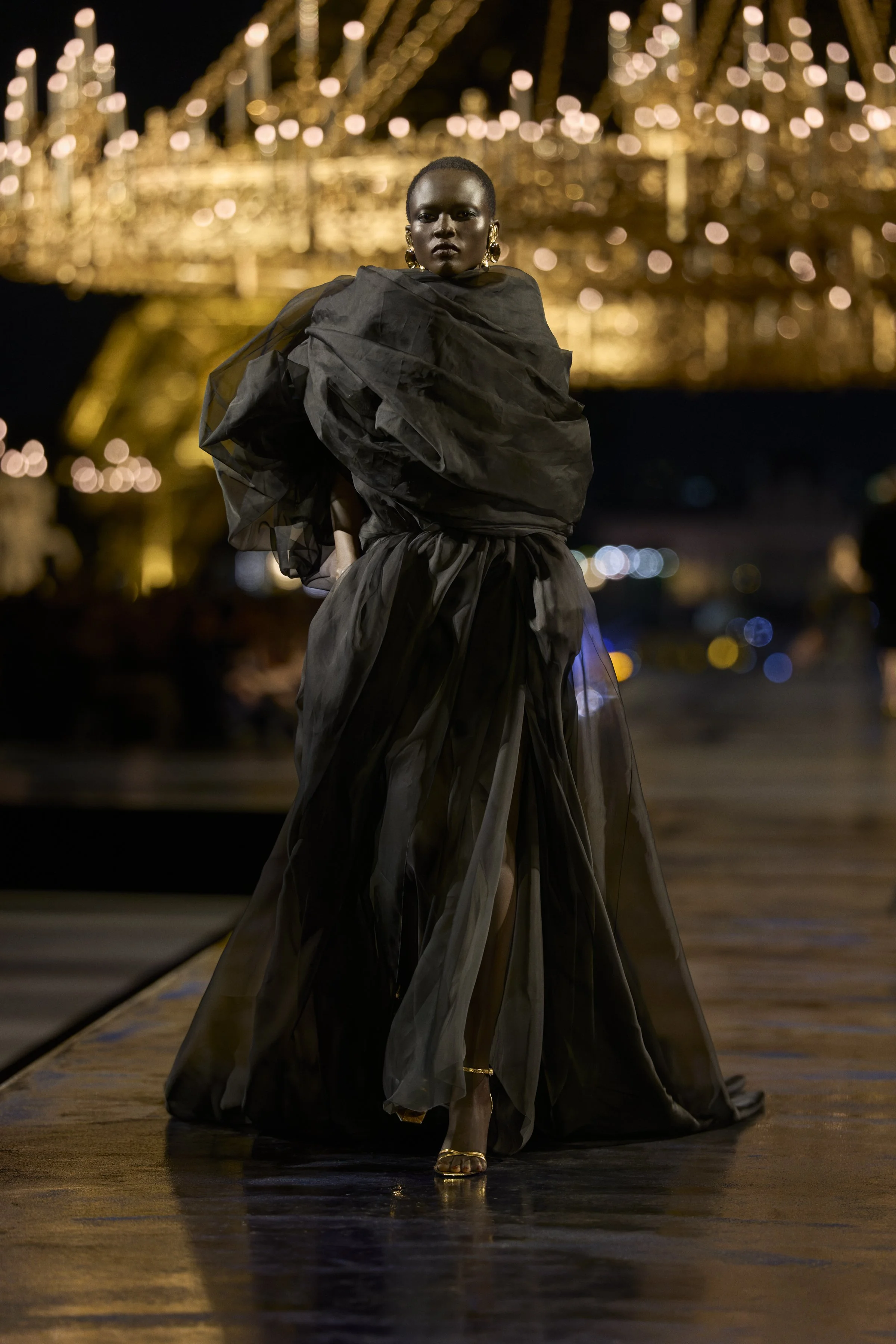
The show notes read that Vaccarello’s use of gold was “pervasive, hypnotic, almost obsessive”, and “isn’t merely about ornamentation, but purpose and emotion”; a colour so magical and mythical that can alchemically transform all that it touches. Together with the House’s classics, we saw Vaccarello in the rugged-shouldered coats, the voluminous blousons, and the short, precise suits edged with swathes of fur. Silhouettes in various shades of gold shone in jacquard, metallic cotton, latex coated in gold leaf, guipure lace, mousseline, with embroideries, jewelling, and several fabric manipulation techniques.
Eventually, the gold gave way to black, which absorbed the light in a velvet suit adorned with jewel buttons and a trio of nimbus cloud black evening dresses. The finale could be interpreted as a reversal of Yves Saint Laurent’s fall 1991 Rive Gauche collection, where the final silhouettes appeared entirely in gold.
The show began with Miles Davis’s music from Elevator to the Gallows and ended with a performance by Charlotte Gainsbourg as the chorus of the song repeated, “You are so much, Yves Saint Laurent.”