
PARIS FASHION WEEK SPRING/SUMMER 2027: DAY 4
ALAINPAUL
review by MAGDALENA ROE
all images courtesy of ALAINPAUL
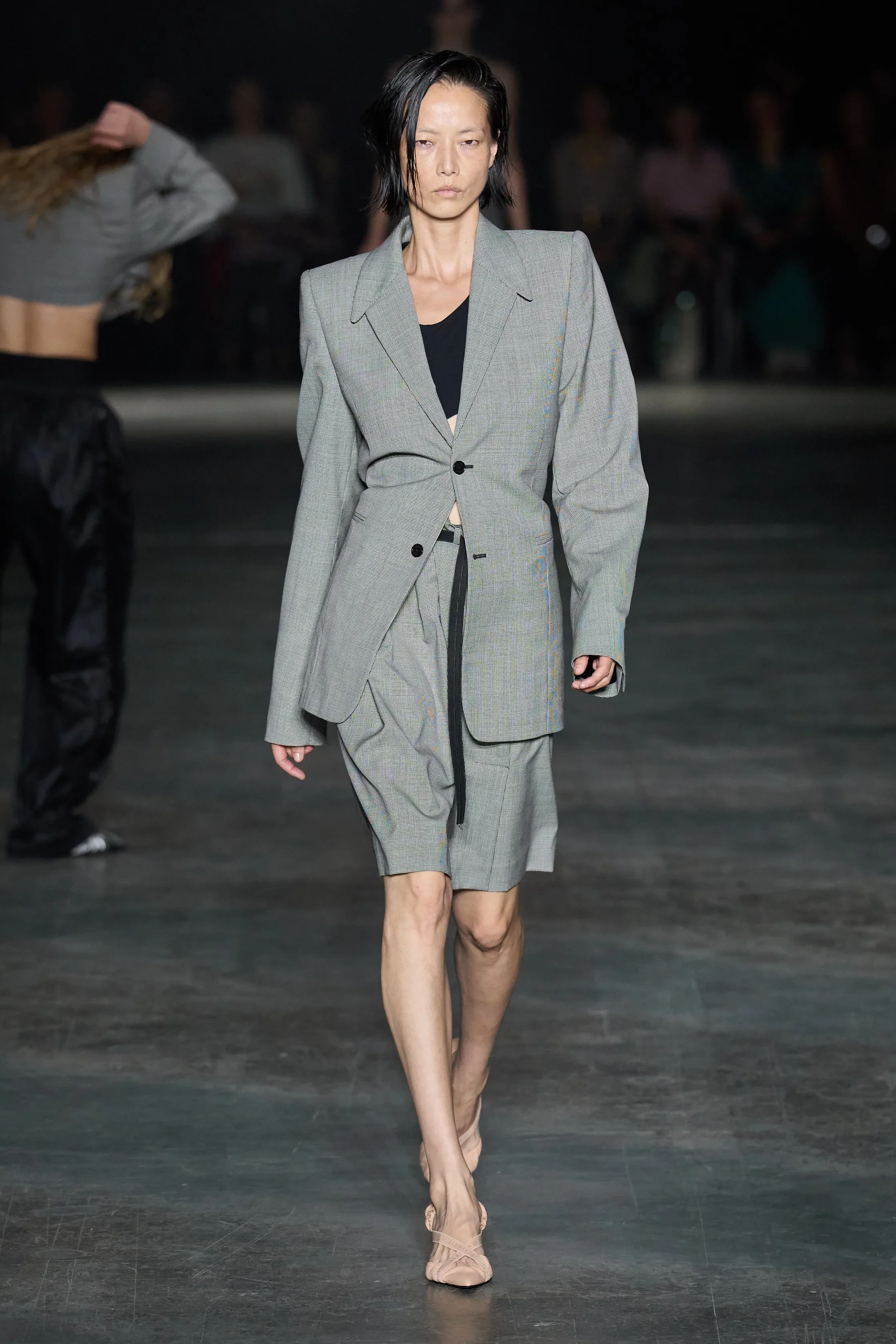
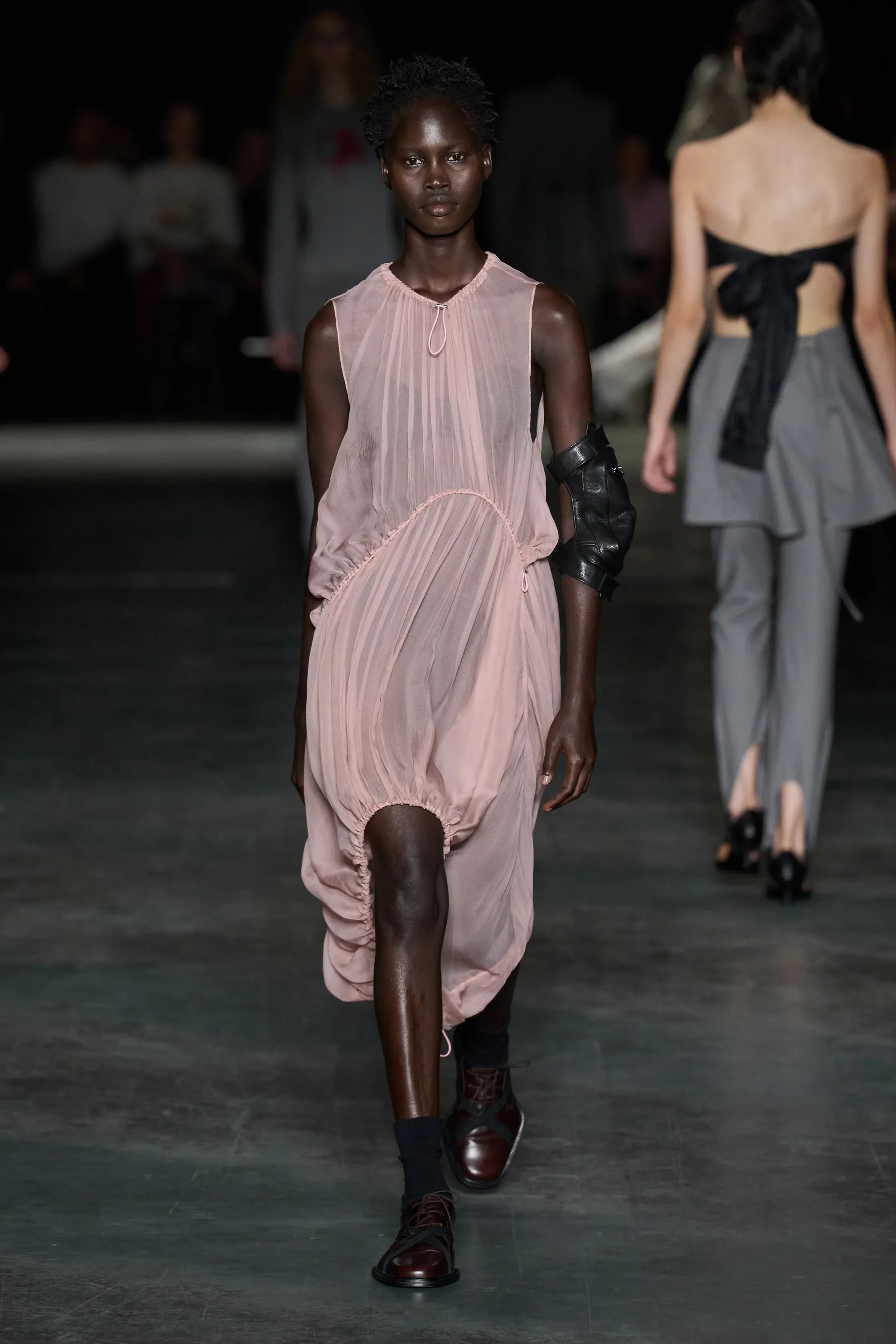
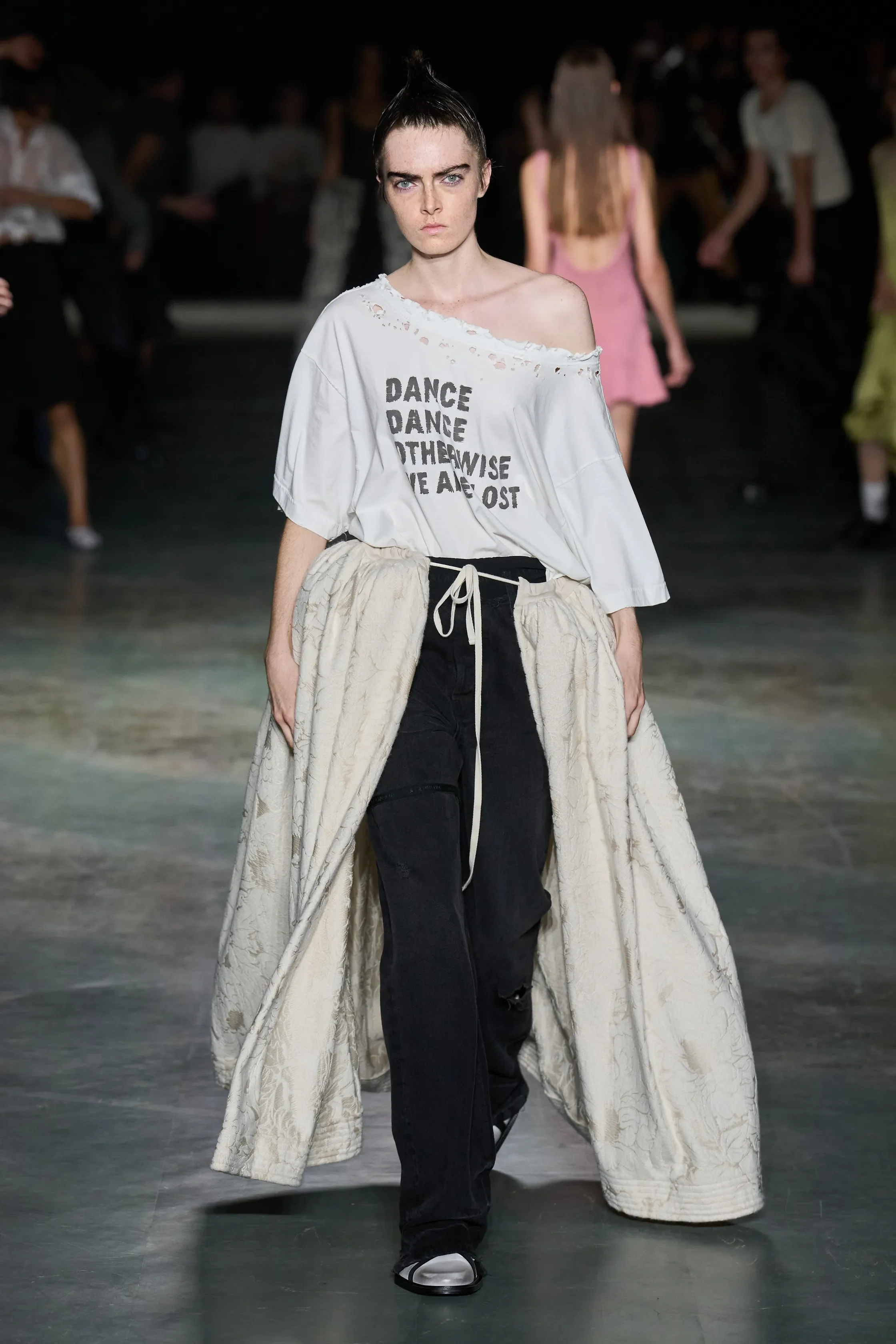
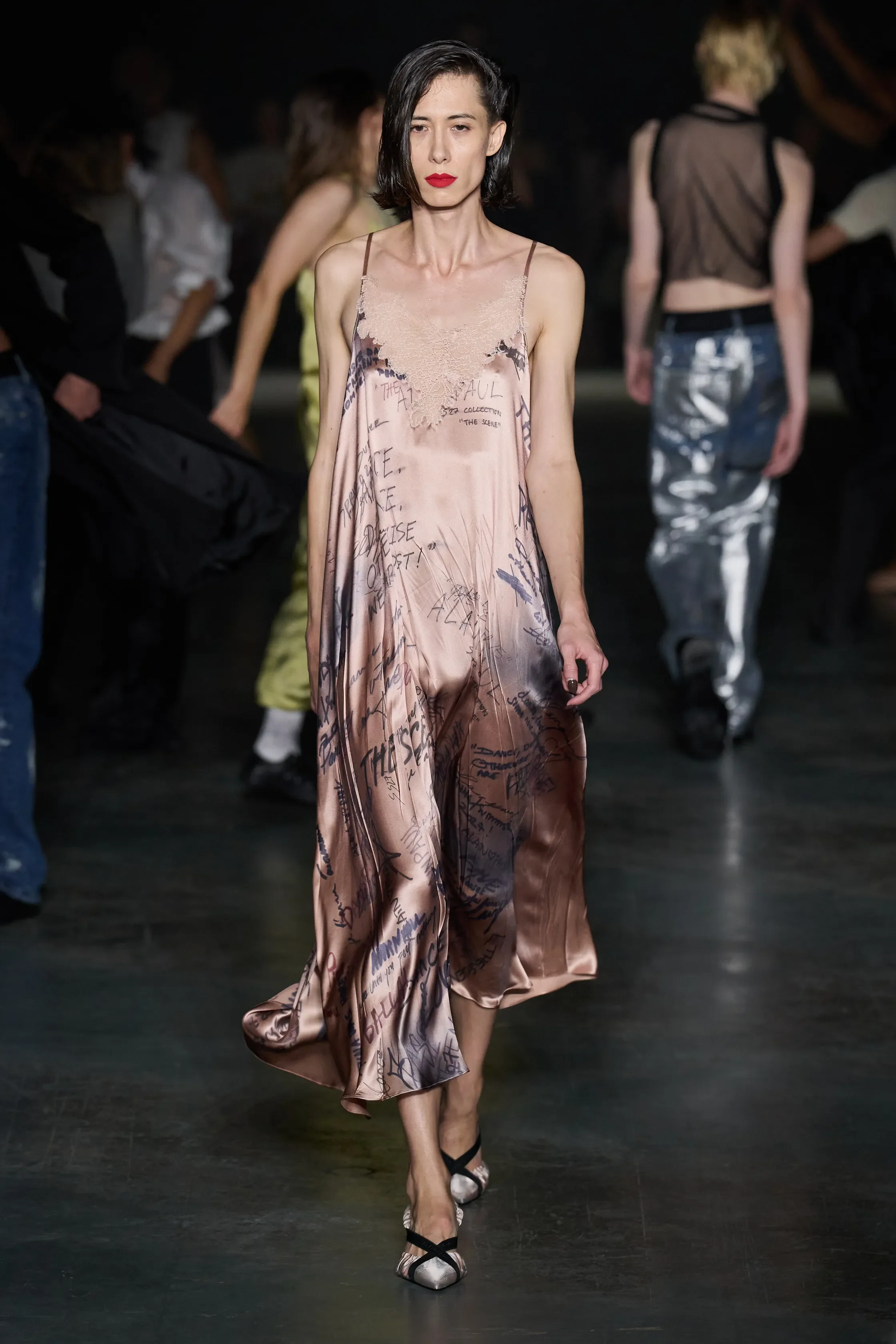
When the runway becomes a dance floor. For ALAINPAUL Spring/Summer 2027, models moved alongside dancers in a show charged with an almost club-like energy, blurring the lines between runway, performance and a night out. Titled The Scene, the collection looked beyond the stage itself to the world surrounding it: rehearsal, dressing rooms, movement and those moments before stepping into the light.
Dance codes ran throughout, but rarely in their most obvious form. Tights wrapped around torsos, trousers were pulled down and folded at the waist into skirts, while drawcords and elastic tightened and released silhouettes around the body. Tailoring was disrupted, and familiar garments appeared undone or deconstructed. The leather pieces brought a tougher sensuality to the collection and played against its more delicate elements.
That tension continued through ALAINPAUL’s collaboration with the Paris Opera. Historic stage costumes were taken apart and reworked into contemporary pieces, with traces of their former lives resurfacing through jacquards, epaulettes, pannier volumes and theatrical brooches. Rather than feeling nostalgic, these references were pulled firmly into the present.
By the end, the tutu itself had been stripped back and reconsidered, its construction transformed into a gown of a thousand ruffles. Dance was never simply decoration here, but a way of thinking about how clothes move, loosen and come alive on the body. And perhaps most importantly for summer, it made you want to wear them! There was heat, skin and an after-dark energy to the collection.. the kind of clothes that make you want to get dressed, feel sexy and dance until morning.
BALENCIAGA
review by DEBORAH DRENOFCI
all images courtesy of BALENCIAGA
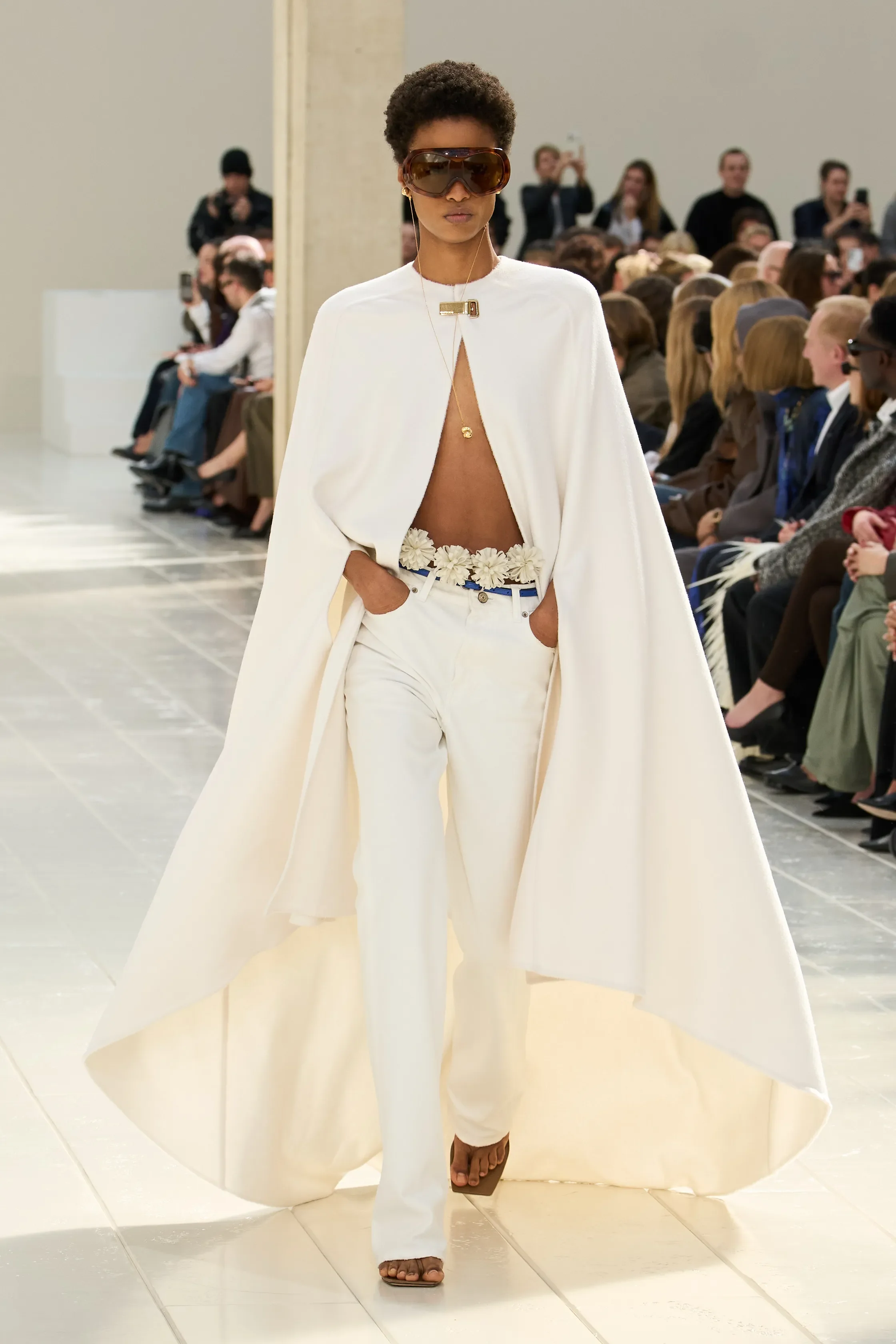
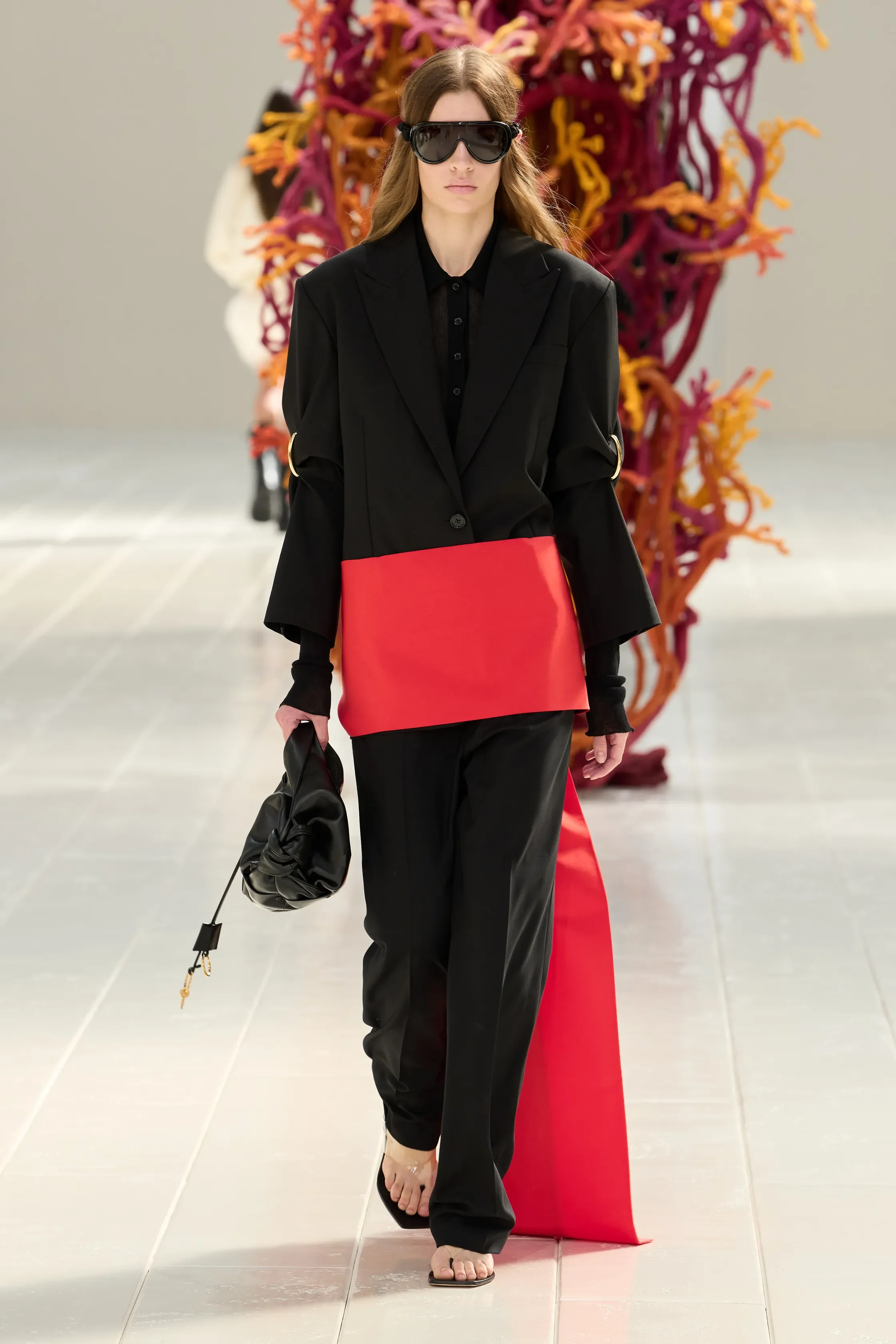
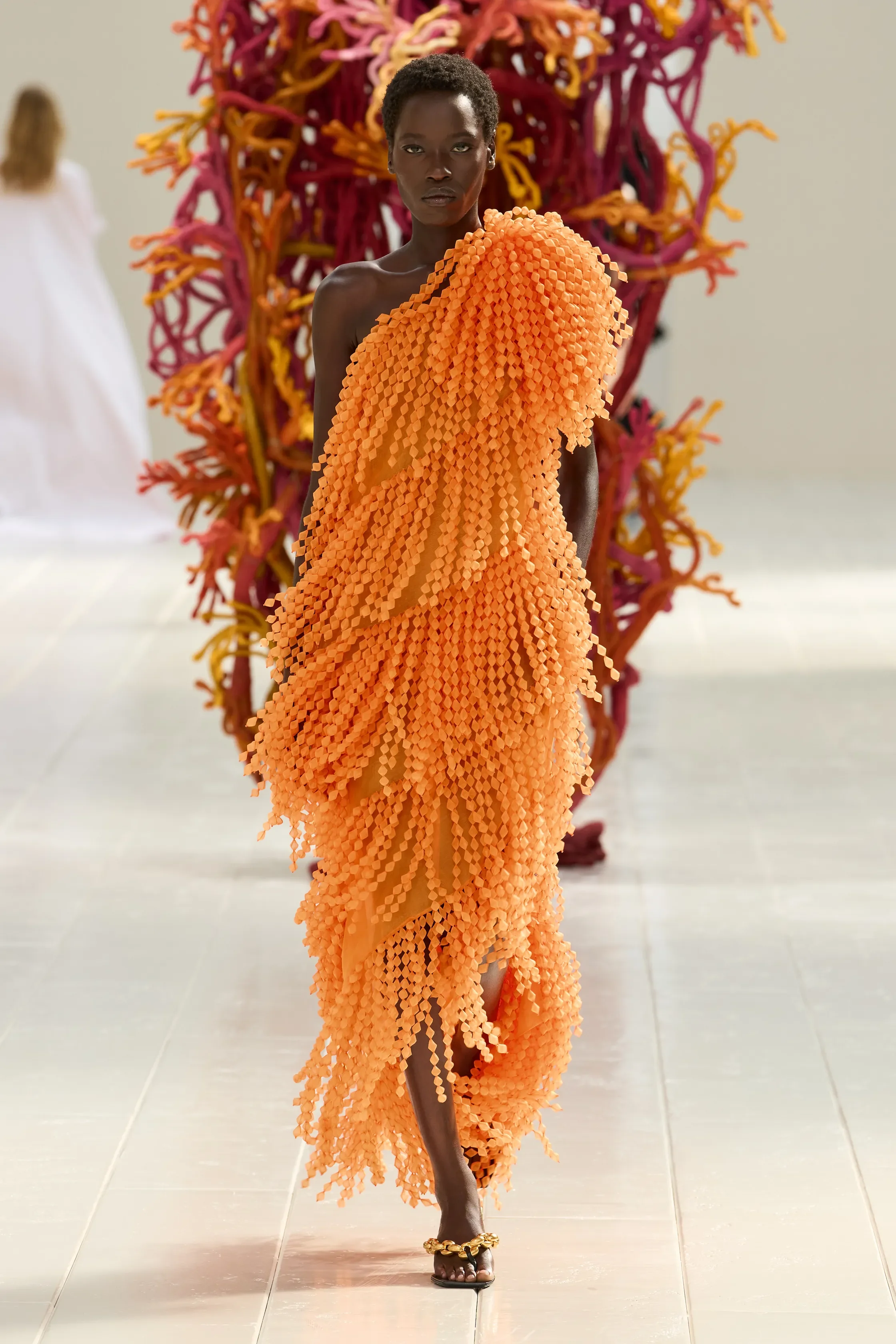
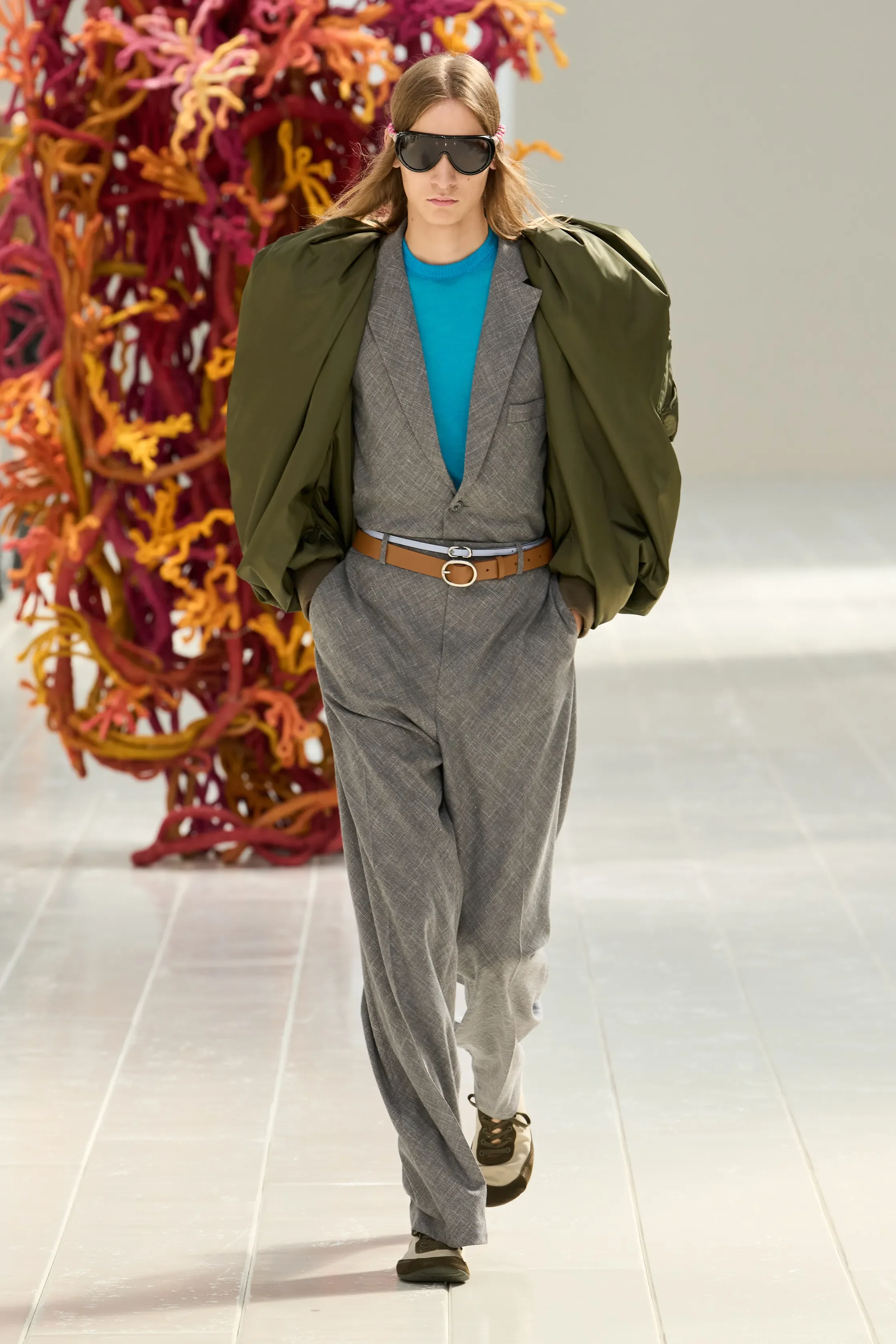
Les Coraux de la Liberté was the title of Pierpaolo Piccioli's ready-to-wear collection for Balenciaga. Its starting point was the linen coral sculptures of textile artist Aude Franjou. Its subject was freedom, a move away from the physical matter of a couture house and towards the immaterial spaces of an ecosystem as a whole. The show took place in a bright, open hall at the Tennis Club, with Franjou's sculptures rising across the room. The setting promised lightness. The garments kept the promise.
The liberté was also Piccioli's own. Facing the maison's lineage, from Cristóbal's couture to Demna's street-edged subversion, he is still defining where he stands. This collection read as a first answer. It showed what he carries in, what he leaves behind, and what he brings himself. He treated the legacy as material, not as a rulebook. The result felt refreshing.
Technique was the synthesis of the collection. Piccioli's stated aim was to bring Balenciaga couture into ready-to-wear, two worlds he sees as compatible rather than opposed. The couture showed in the stitching and the draping. Alongside it sat a renewable, bio-engineered alternative to spider silk. The real novelty, though, was the bias cut, a technique not associated with either Cristóbal Balenciaga or Demna. Dresses were cut on the diagonal. So were jeans, shirts and men's tailoring. On denim, it read as a quiet twist, giving workwear the fall of an evening gown.
The opening white shirt was cinched into a corseted peplum, and others carried row upon row of stitching. Structured blazers came wrapped in satin sashes of teal and red that trailed past the hem. Leather coats had sharp collars and an authoritative energy. Fringe ran across the hems. It was curled and inky on a black lace dress, and beaded and cascading on a one-shoulder look in coral orange, the closest the clothes came to becoming the set. Throughout the collection, organza flowers bloomed in three dimensions and cinched floral belts added polish. Accessories stayed considered, with gold chain sandals and collars, wraparound shield sunglasses and soft, oversized totes.
The palette shifted like a reef in changing light. It opened in ivory and pale neutrals, then warmed into the orange, plum, yellow and blue of the coral itself. You could see the couture. More interestingly, you could feel it. That almost somatic quality lives where couture meets the everyday, and it is where Piccioli seems most at home. Coral grows slowly, by living things, in open water. So, it seems, does Piccioli's Balenciaga.
UMA WANG
review by MAGDALENA ROE
all images courtesy of UMA WANG
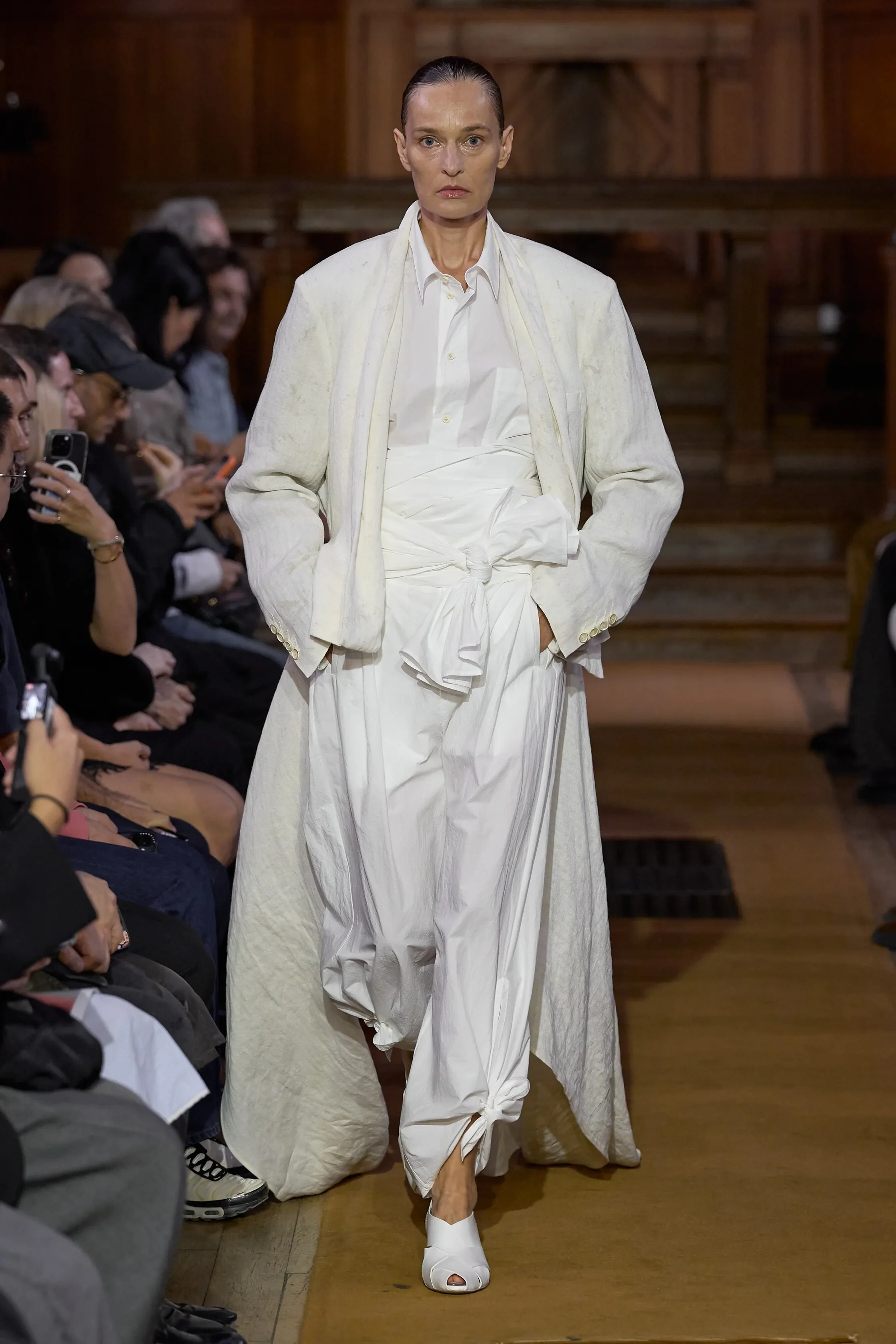
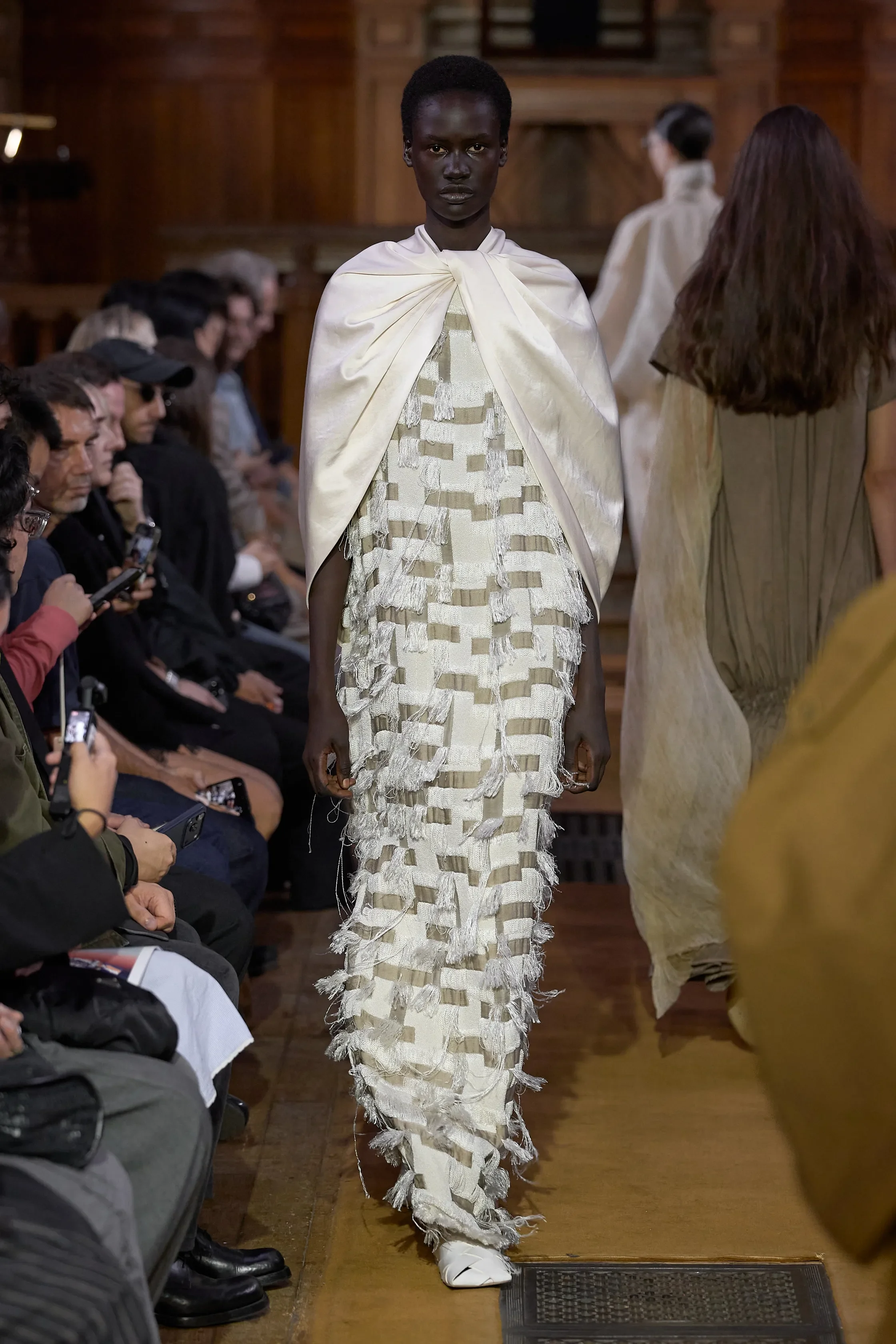
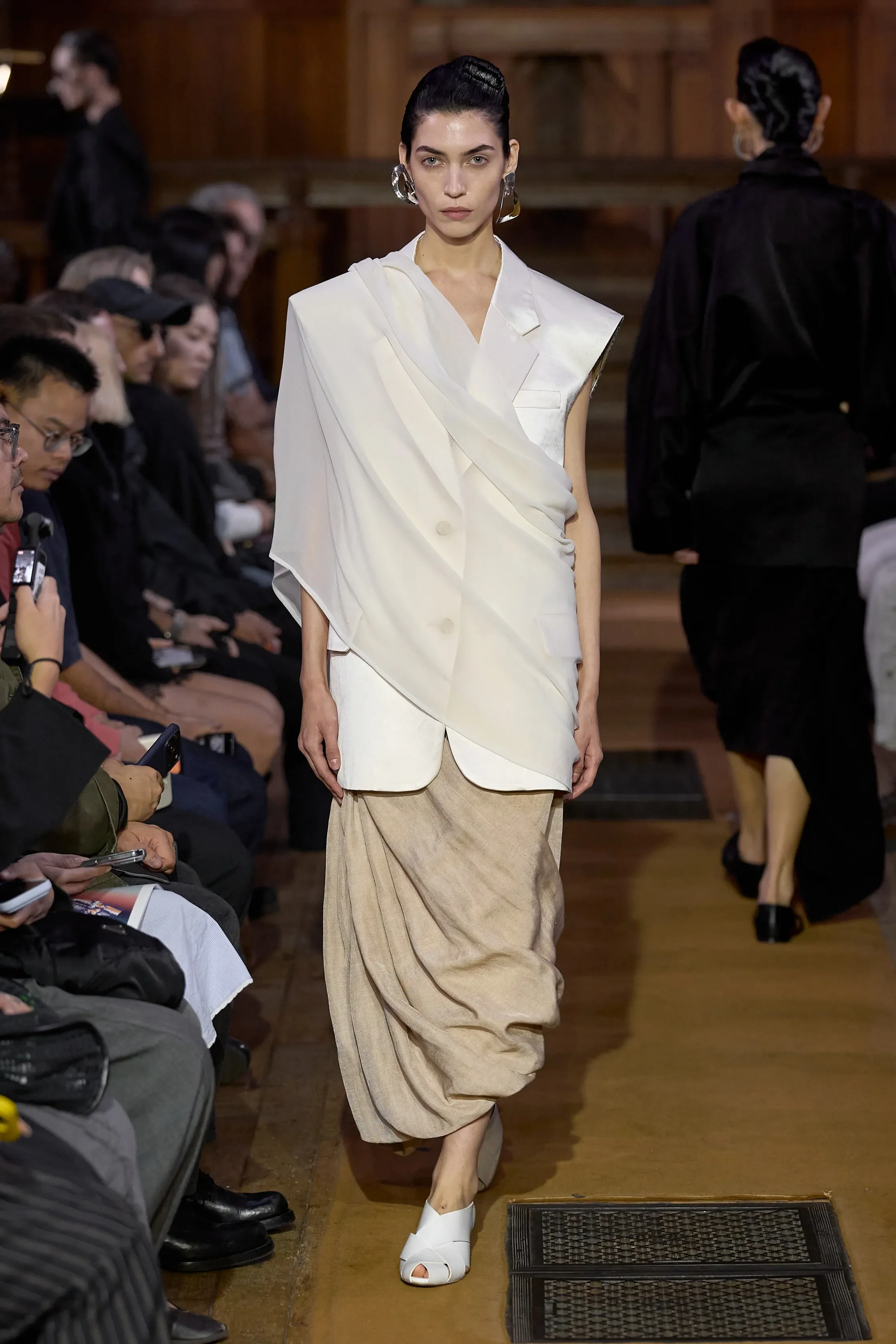
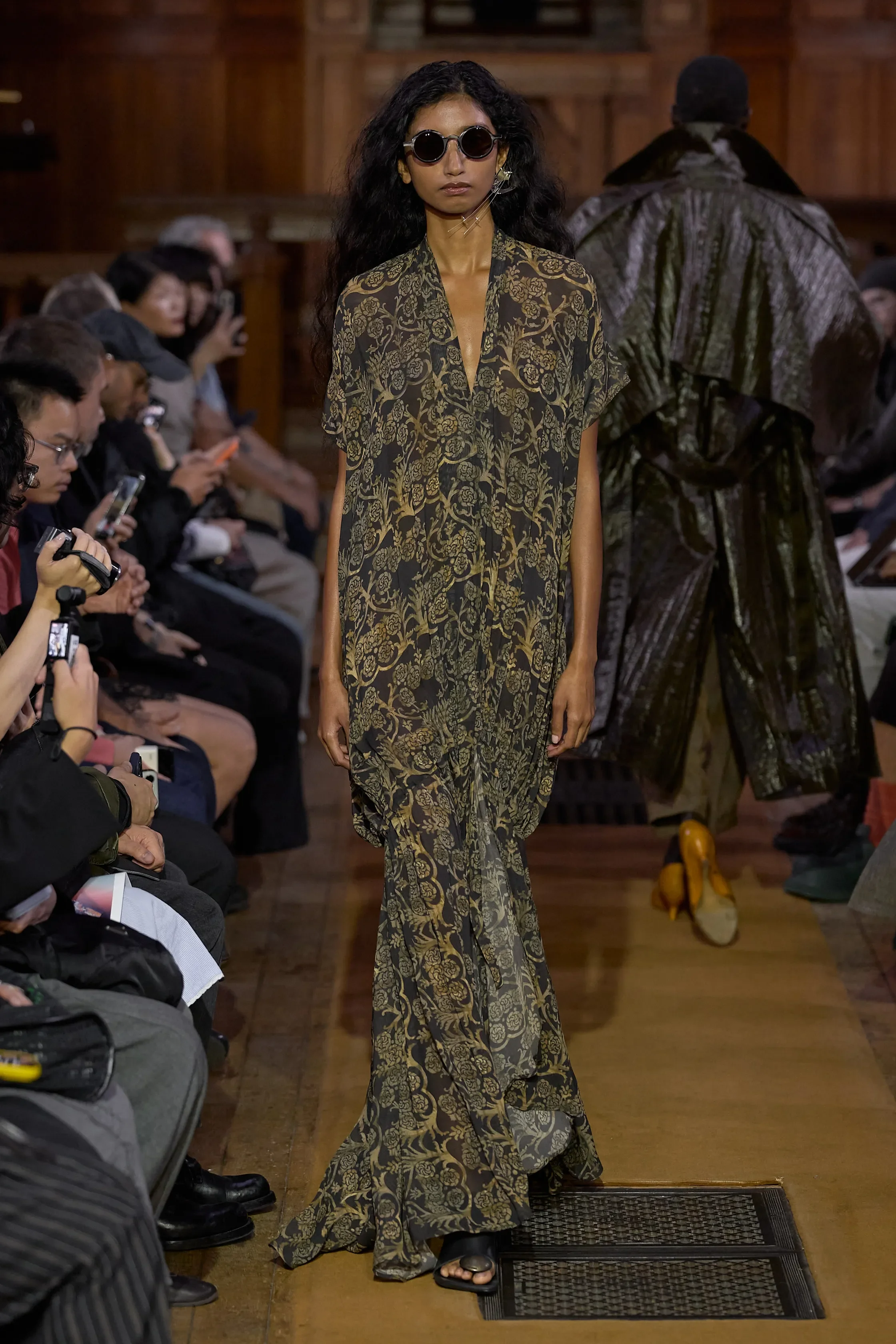
At Uma Wang Spring/Summer 2027, sharp tailoring and an almost traditional sense of elegance were loosened, wrapped and undone, creating a collection that moved between structure and spontaneity. Rendered in earthy browns and natural tones, there was something polished about it all, but never too heavy.
Sculpture provided the starting point. Taking cues from Alexander Calder, Wang played with weight and suspension, allowing substantial forms to appear unexpectedly light. A tailored jacket trailed a length of silk, skirts merged with trousers, while heavy draped cotton was placed against chiffon trenches that seemed to almost disappear around the body, creating a collection as much about touch as it was about silhouette.
Yet the precision of Wang’s tailoring was constantly interrupted. Trousers were knotted, fastened or deliberately left open; garments were tied, wrapped and shifted around the body. There was no single prescribed way of wearing them. Instead, styling became part of the construction.
The footwear deserves its own attention, from leather sandals accented with bronze details to cleverly conceived flats. Small details, but ones that made you look twice.
It was this balance that made the collection feel so effortless: precise, traditional yet undone, substantial yet light. Wang took the codes of a refined wardrobe and quietly disturbed them, proving that elegance becomes far more interesting when it is allowed to loosen up.
CECILIE BAHNSEN
review by TIANA DE HASETH
all images courtesy of CECILIE BAHNSEN
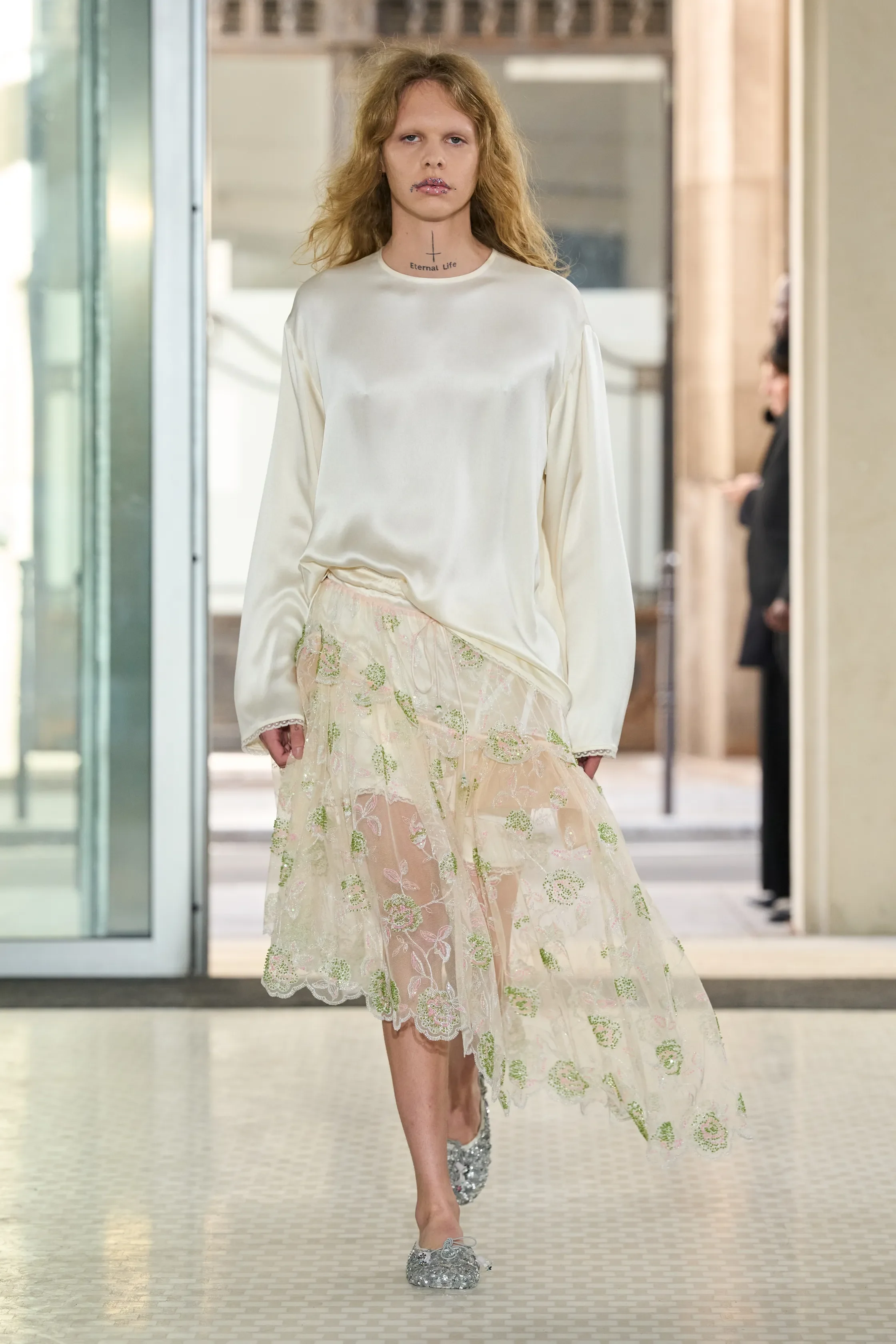
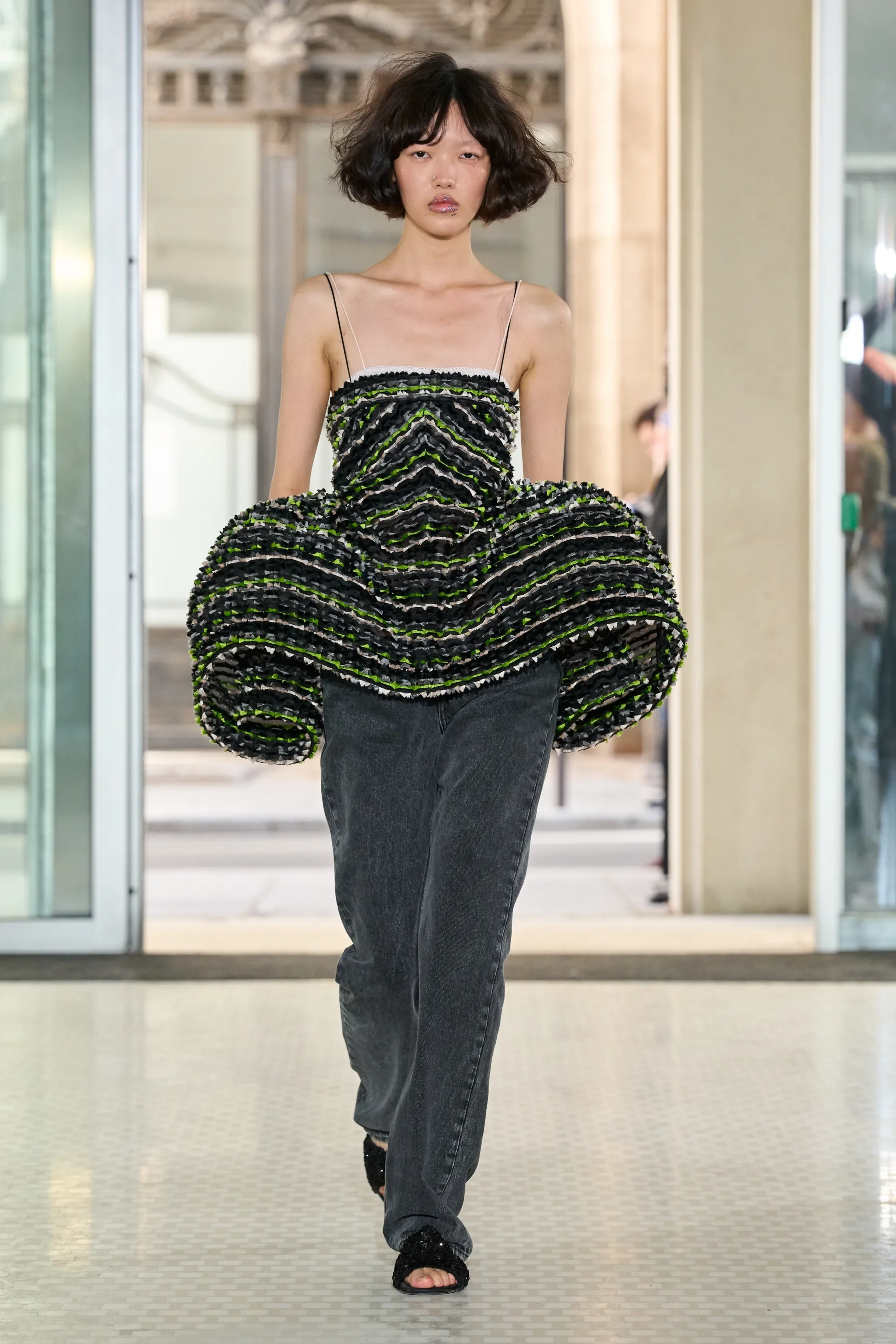
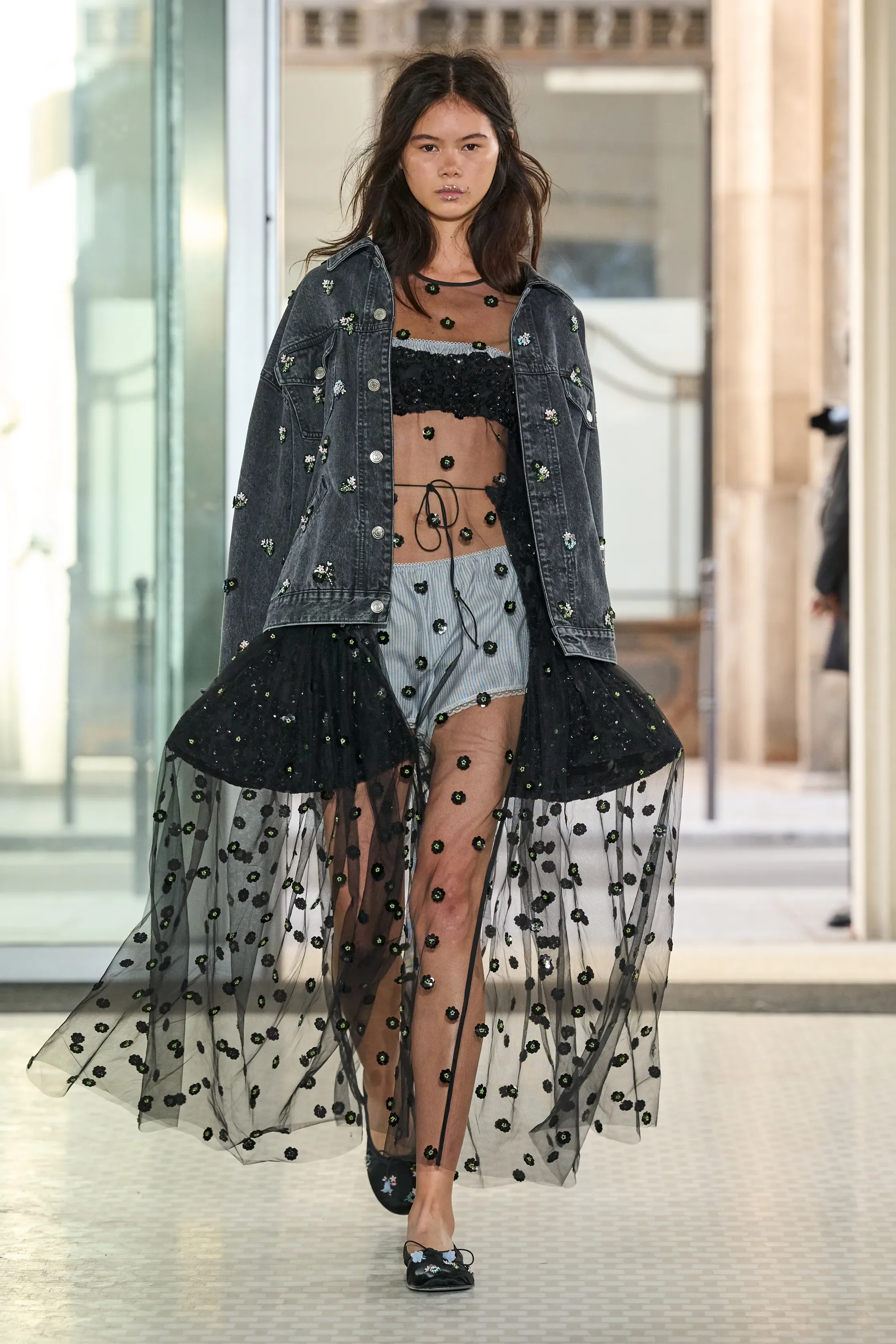
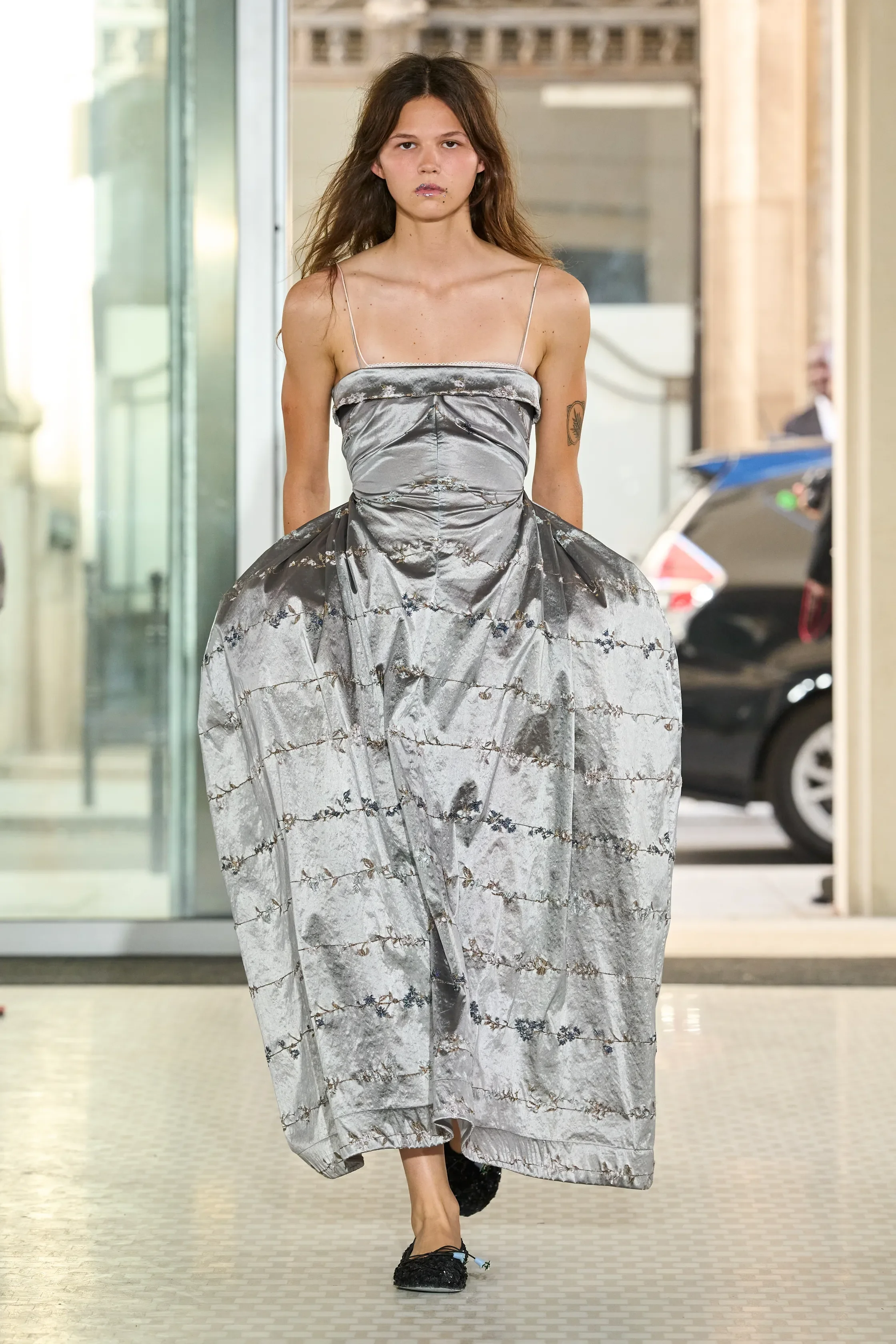
Cecilie Bahnsen doesn’t wait for a special occasion to wear specific clothing. The Spring Summer 2027 collection is made to leave the house in — effortless, but still with plenty of attitude. Coming from Copenhagen, Bahnsen combines French romanticism with minimalist Scandinavian design.
For this collection, titled Any Given Day, she creates 30 looks that each carry their own persona. Every woman brings something different to the collection, collectively creating a wardrobe to dress in rather than leave hanging. As Bahnsen herself explained to us, “It shouldn’t be something just hanging; you should live in it every day”— a wardrobe where time doesn't exist.
The silhouette varies from long to short, and tight to loose. A dress over denim, denim over a dress, workwear or nightwear. The garments never lose their utility, and the craft remains centered. Featuring embroidery, silk, and denim, the collection is soft, feminine, and romantic, with light colours dominating the pallete. The "Any Given Day" collection creates clothing that is not fixed to an occasion, but free to be worn on any given day by the women who own them.
SCHIAPARELLI
review by NIA TOPALOVA
all images courtesy of SCHIAPARELLI
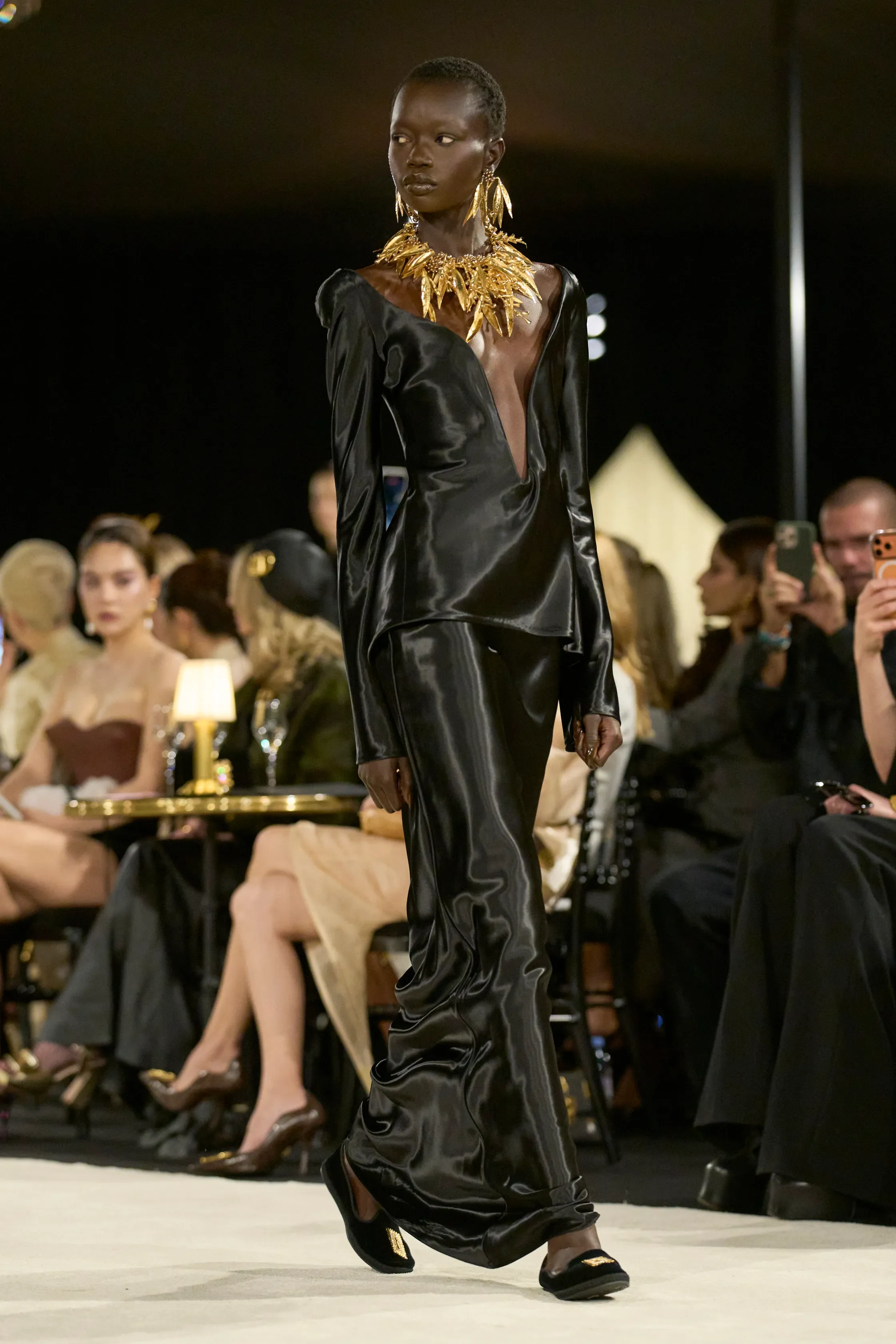
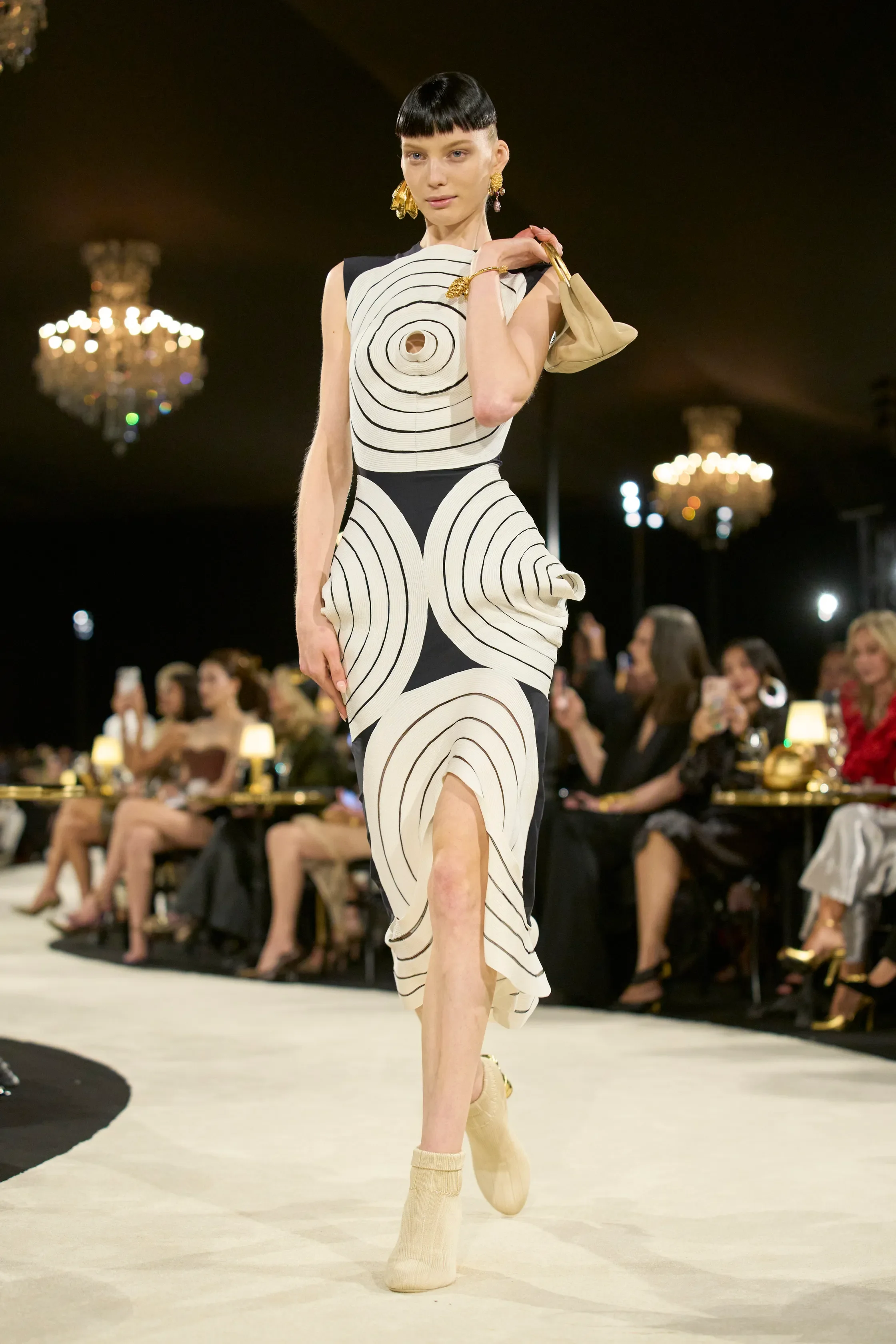
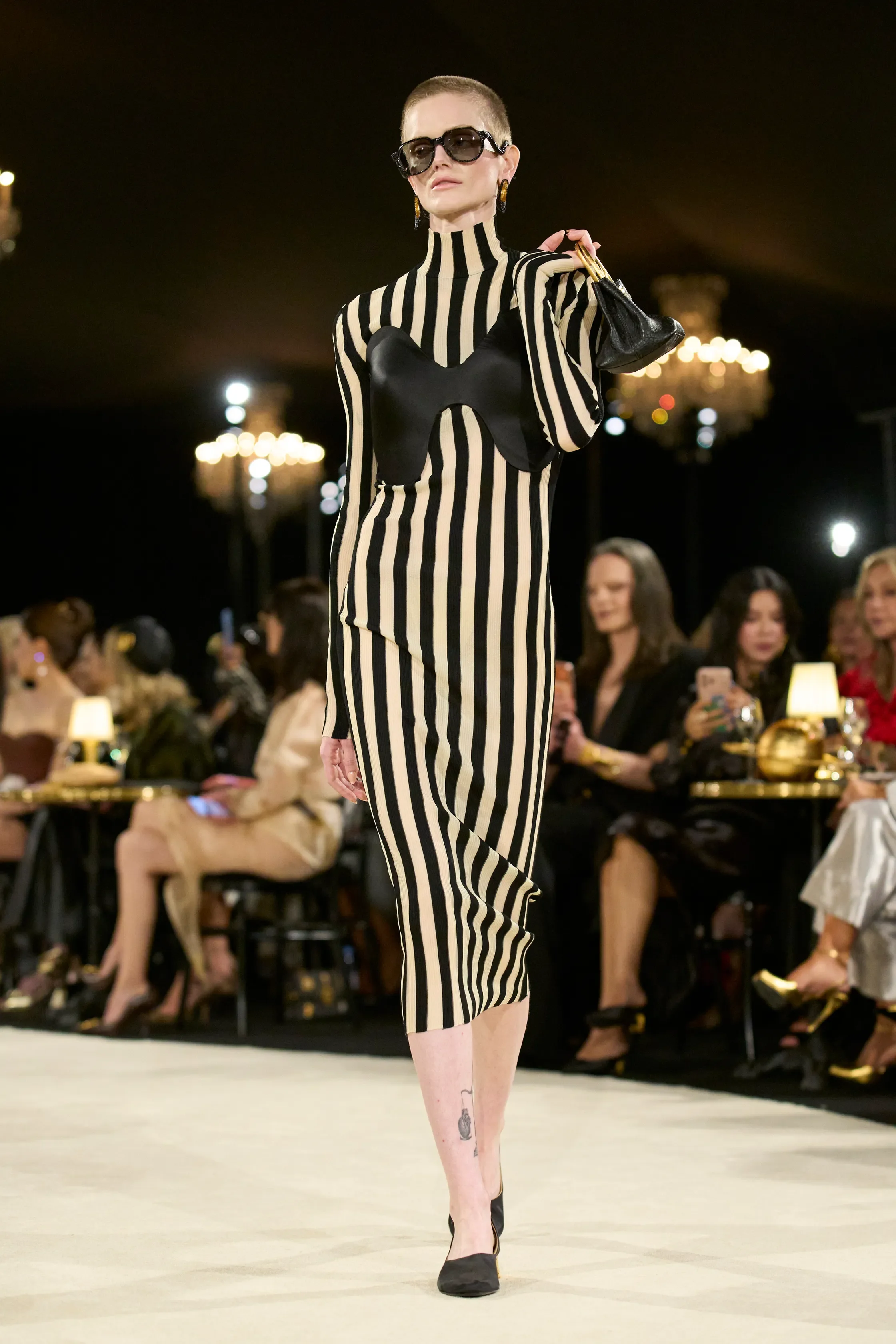
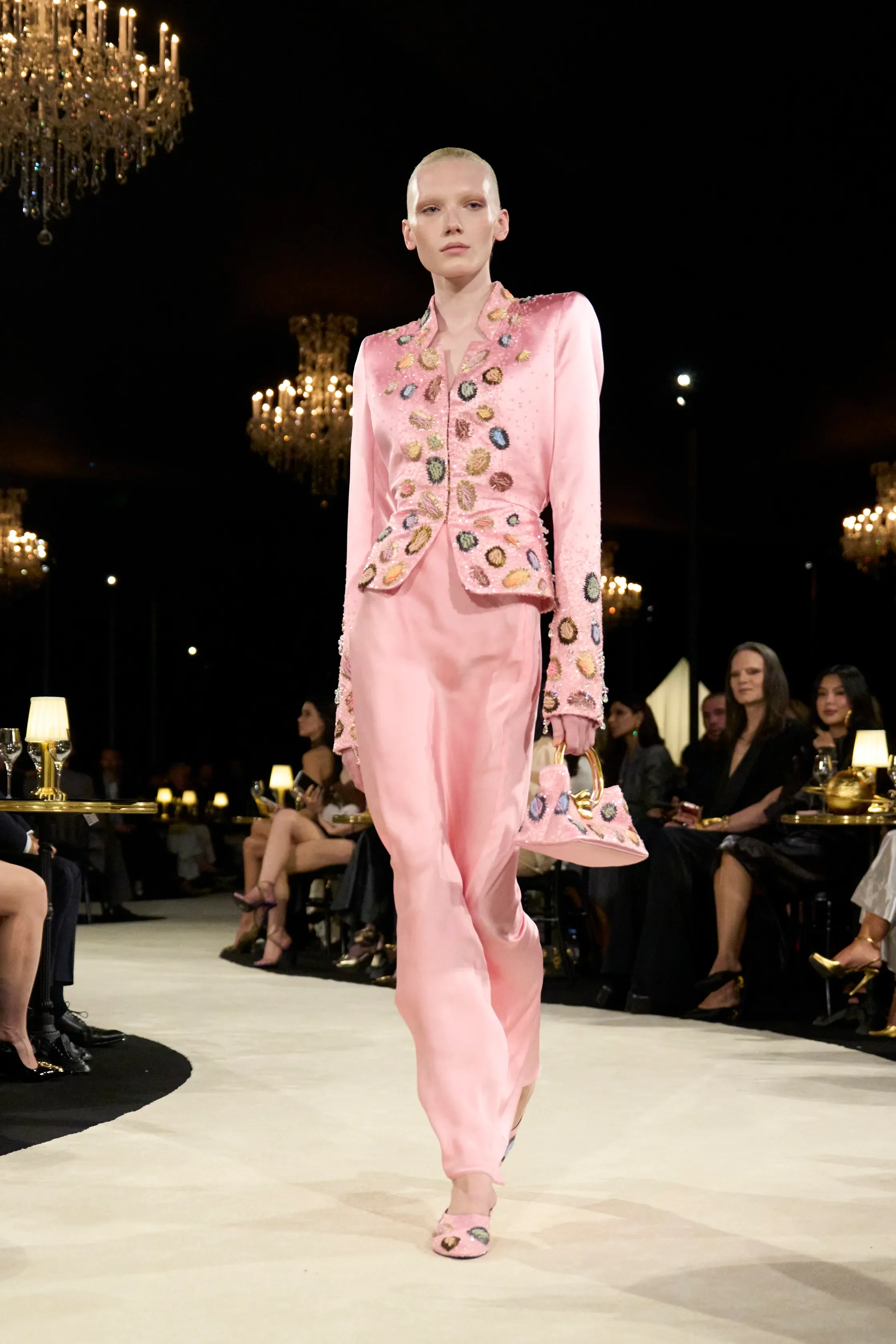
In the basement of the Louvre, Daniel Roseberry took Schiaparelli’s signature silhouettes, gowns, and necklines, transforming them into tops and bottoms. This season felt a bit softer: lettuce hems and asymmetrical openings, ruffles in leather and linen inspired by the original curtains that lined the second-floor windows of the Place Vendôme atelier during Elsa’s time. The palette was black, bone, and butter, with just a few pops of colour.
Roseberry honoured Elsa’s devotion to playfulness, through knitwear, which was the star of the collection, in sheer viscose tree-bark knit references, a fabric Elsa herself developed, and embroidery: vegetable and feather motifs appeared on sheer shirts, displacing embellishments from silks and velvets. The embroidery appeared on one of eight different versions of the classic Schap jacket, in a new palette of kingfisher blue, moss green, and salmon link, inspired from the archives.
In his show notes, Roseberry talked about the title of the collection Going Clear: “For me, it means stepping away from the fashion industry’s promise of status and approval—it means leaving gossip and social media behind. It means unsubscribing from the noise, so that what remains is a voice as clear as Barbra Streisand’s on opening night at the Bon Soir in 1962 singing “Cry Me a River.”
ISABEL MARANT
review by TIANA DE HASETH
all images courtesy of ISABEL MARANT
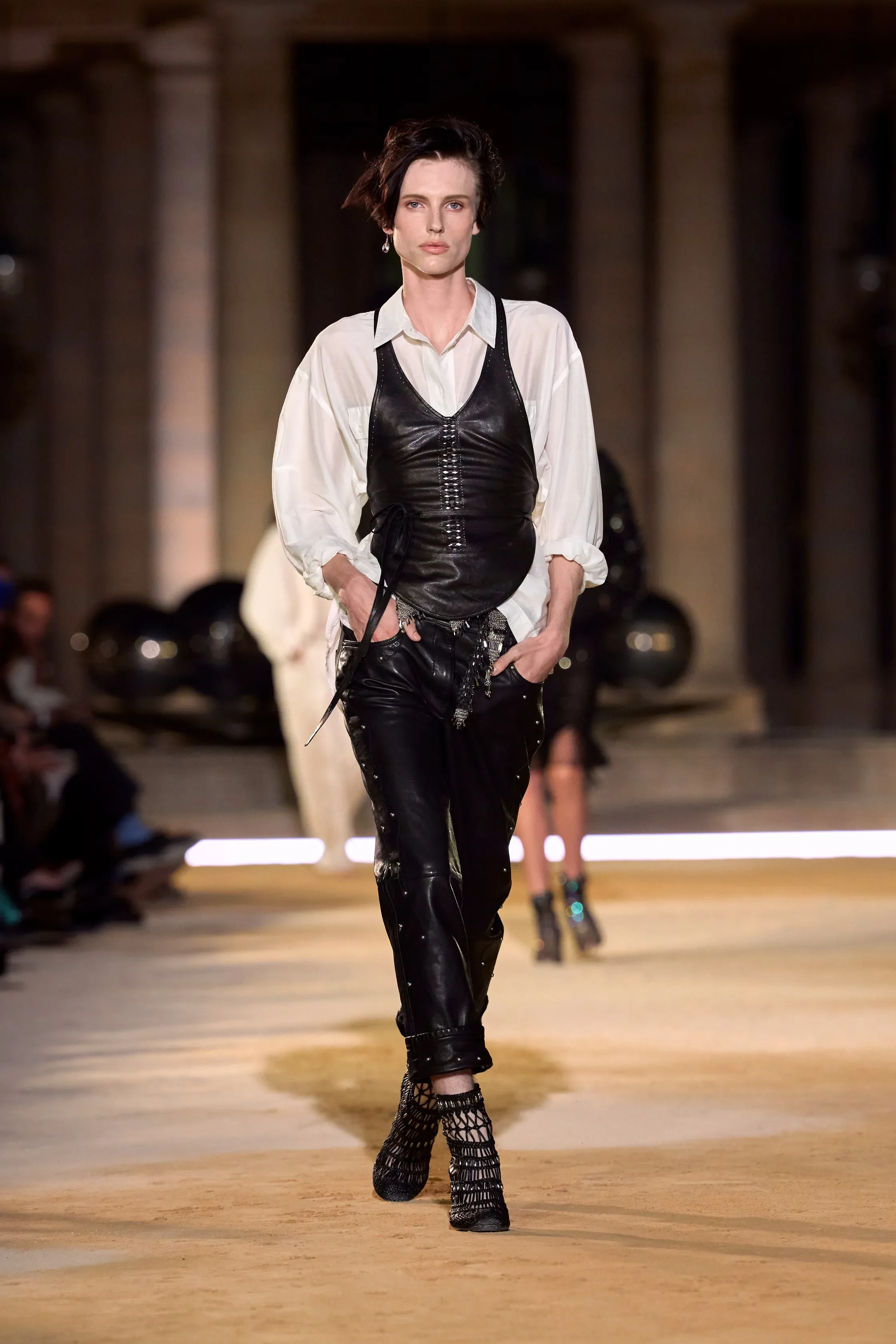
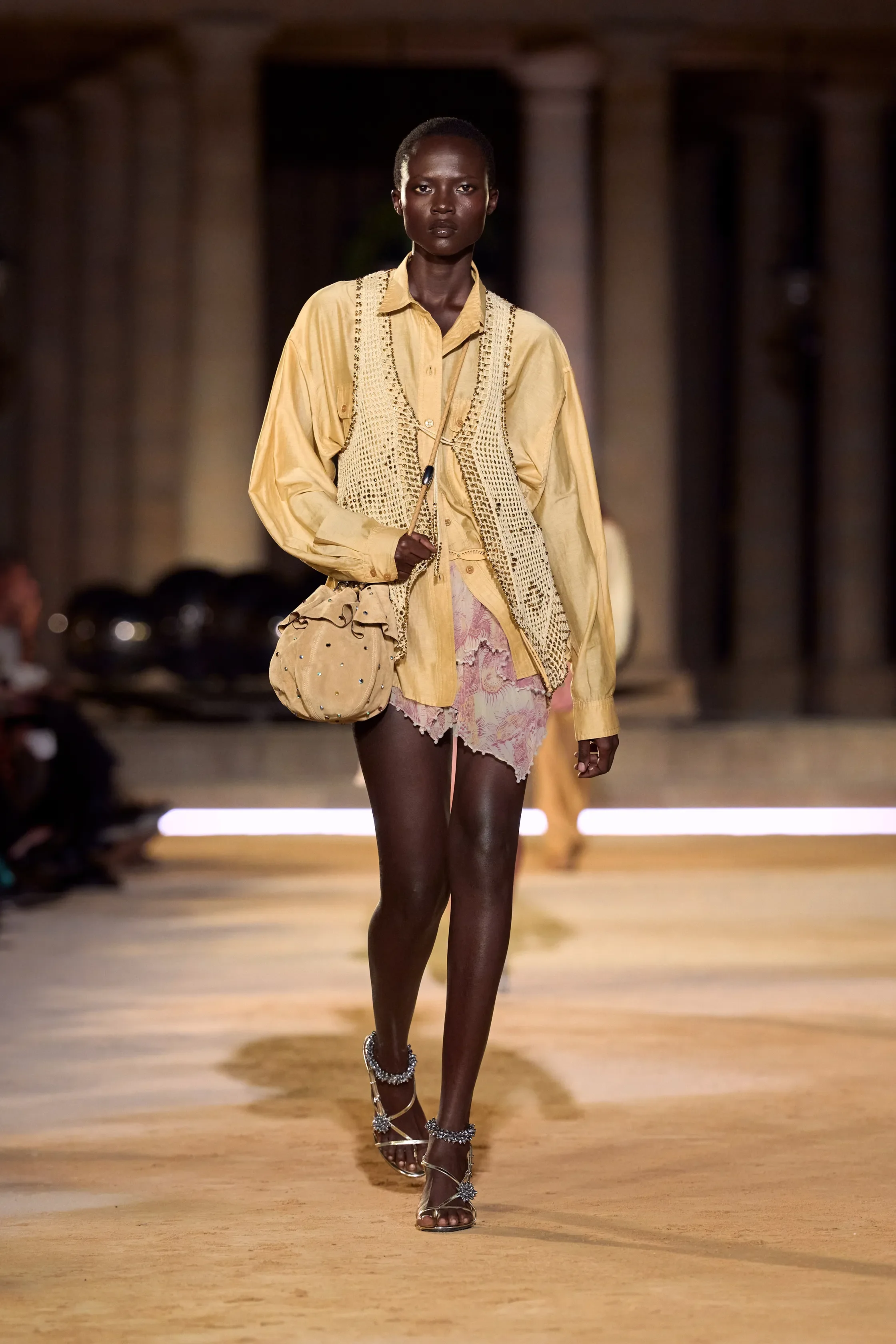
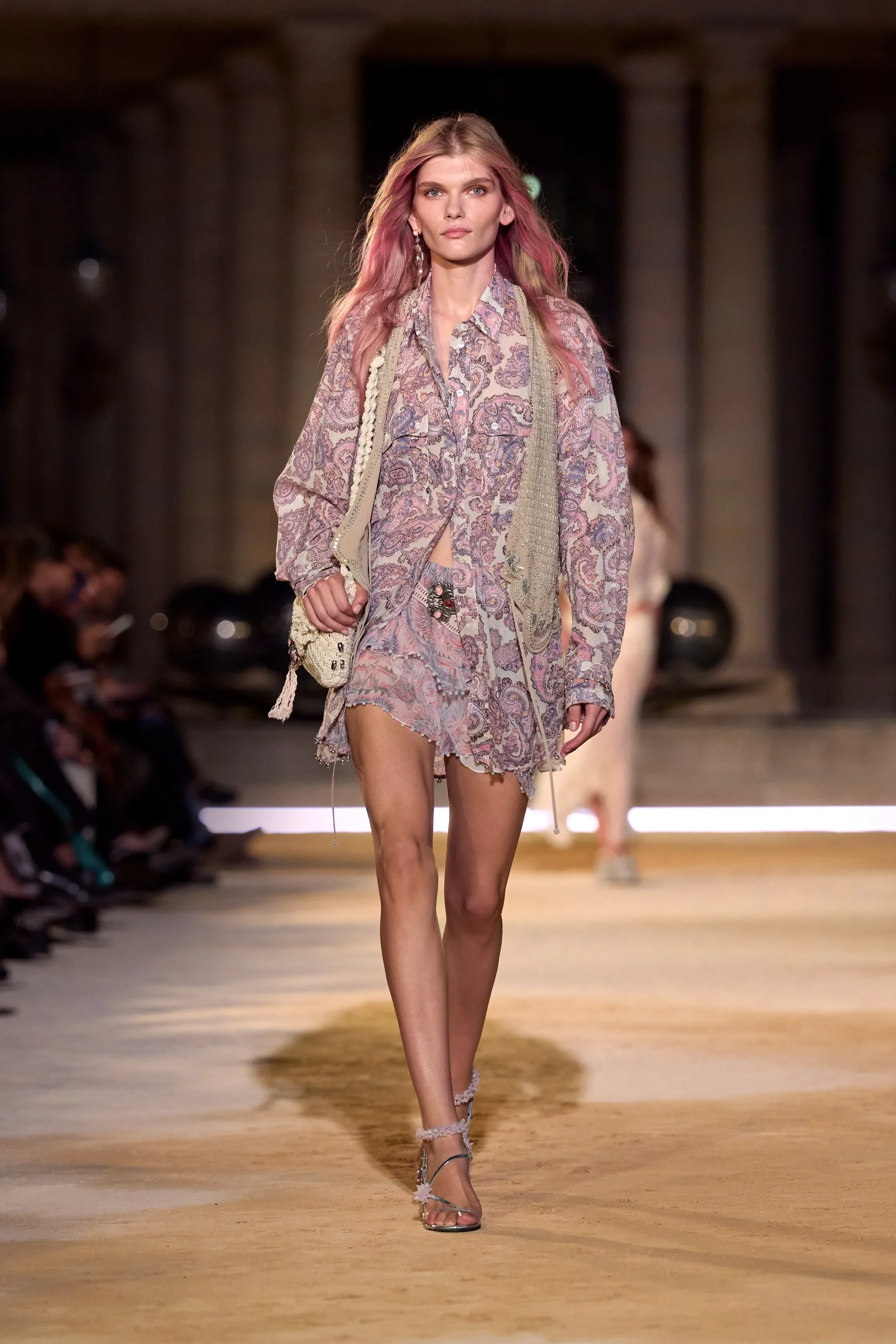
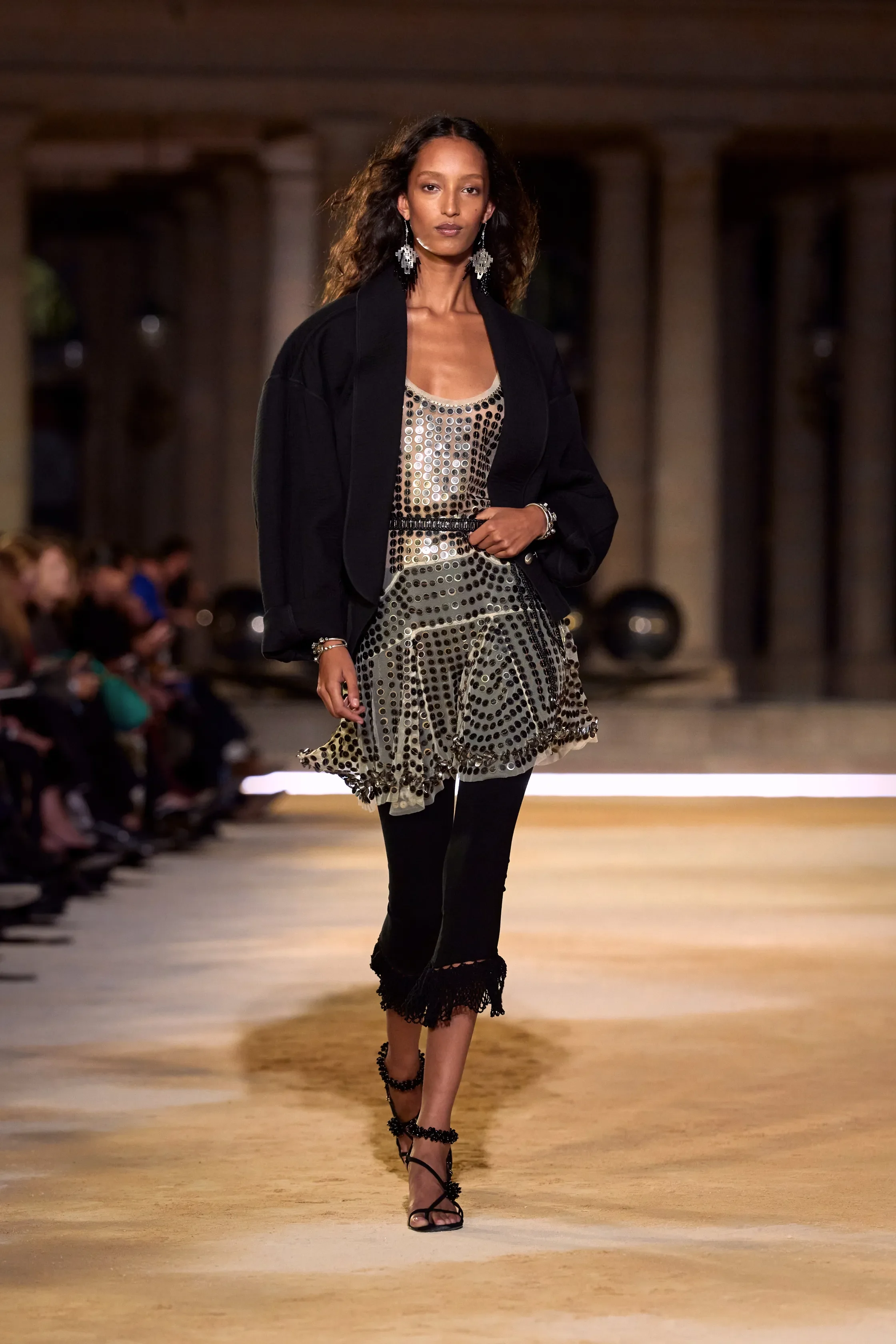
Creative director Kim Bekker is channeling Los Angeles summer vibes after she came across photographer Sam Haskins' photographs captured of women in the '60s. The pictures felt sensual yet easy, going from dressed to undressed. It was this contrast of light dressing in confident silhouettes that inspired Bekker for the Summer 2027 collection.
For this season, the looks put an emphasis on the details of artisan handcrafted techniques such as embroidery, rhinestones, and beads that contrast with light mesh and silk fabrics. A leather jacket layered over a mesh embroidered top gives that same contrast of adorned meets unadorned. Tablecloth linen shorts are paired with brooch-pinned swimsuits or macramé knit skirts. Layering is key for these looks, highlighting how different fabrics layer together like lace, chiffon, silk, and leather.
The color palette features white, black, pink, green, and coral green for the California summer heat. And what is Isabel Marant without accessories? Ankle boots, sparkly sandals with matching anklets, and jewelry made out of beach shells perfectly reflect the '60s Los Angeles beach atmosphere.
Whether the looks revealed some skin, was layered or covered, Bekker translated this contrast beautifully for this collection. The results came out of a wardrobe that was a modern interpretation of strength and sensuality.