
PARIS FASHION WEEK SPRING/SUMMER 2027: DAY 6
CELINE
review by MAREK BARTEK
all images courtesy of CELINE
It might be difficult to pin down about Michael Rider’s Celine but by no means should that be viewed as a negative thing. Just when you think you understand where a look is going, something throws it slightly off, be that a proportion, a fabric choice, a flash of colour, an accessory that really shouldn’t work but somehow does. And exactly seems to be the point.
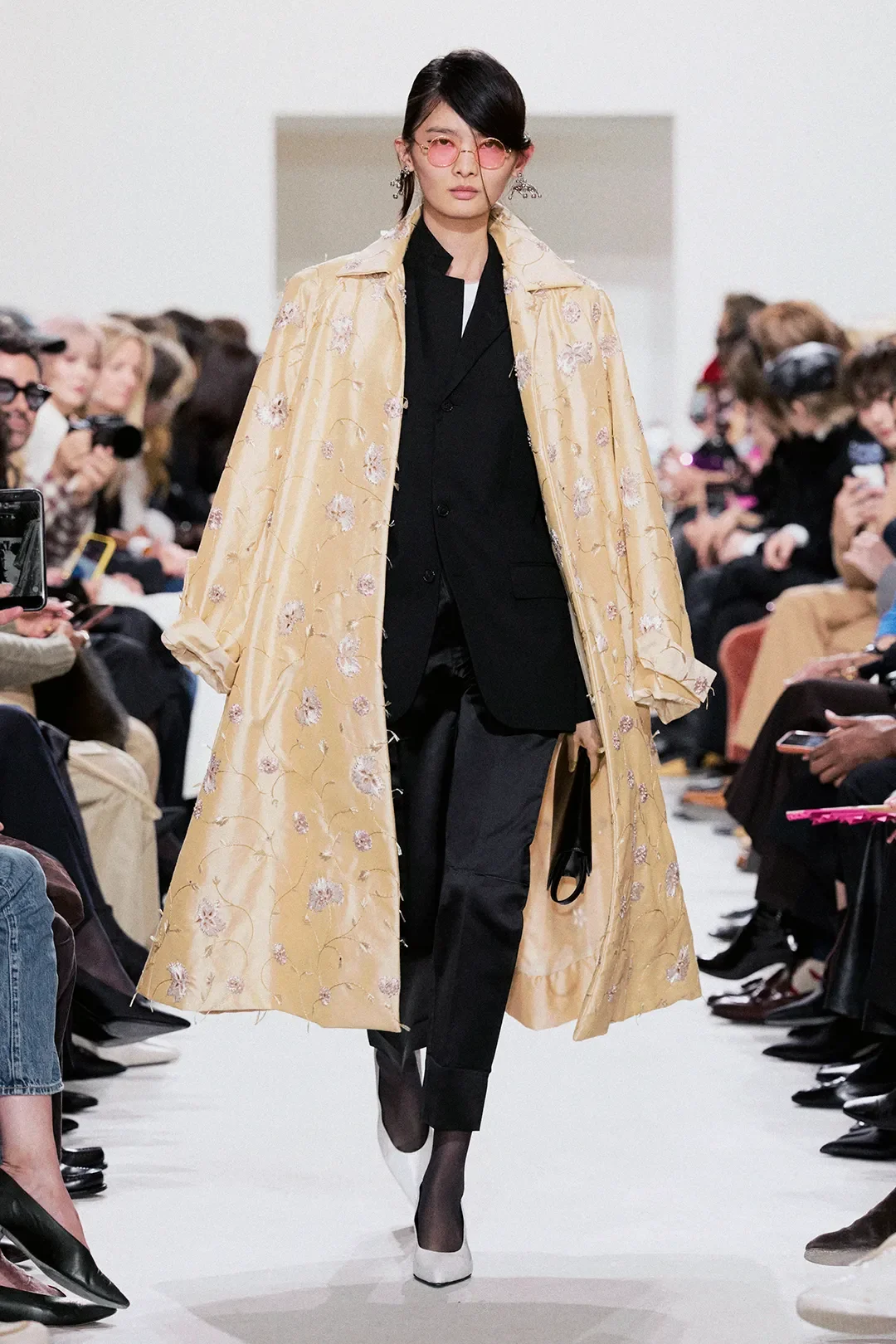
Spring/Summer 2027 opened rather calmly, with two black looks, before a high-shine butter-yellow coat embroidered with delicate flowers suddenly appeared. It was the first of many disruptions in a collection that pushed the fashion freely between minimalism, sensuality, tailoring and an almost childlike sense of play.
Proportions were particularly fun. Enormous belts with equally enormous buckles wrapped around otherwise simple dresses, trousers were cropped at deliberately awkward lengths and tailoring was all elongated, fluid or sharply cinched. Rider’s accessories played the same game: the hit oversized, oval sunglasses were reimagined rimless, tiny bags, oversized bags, headbands, and a thin leather tie held close to the body by a string belt.
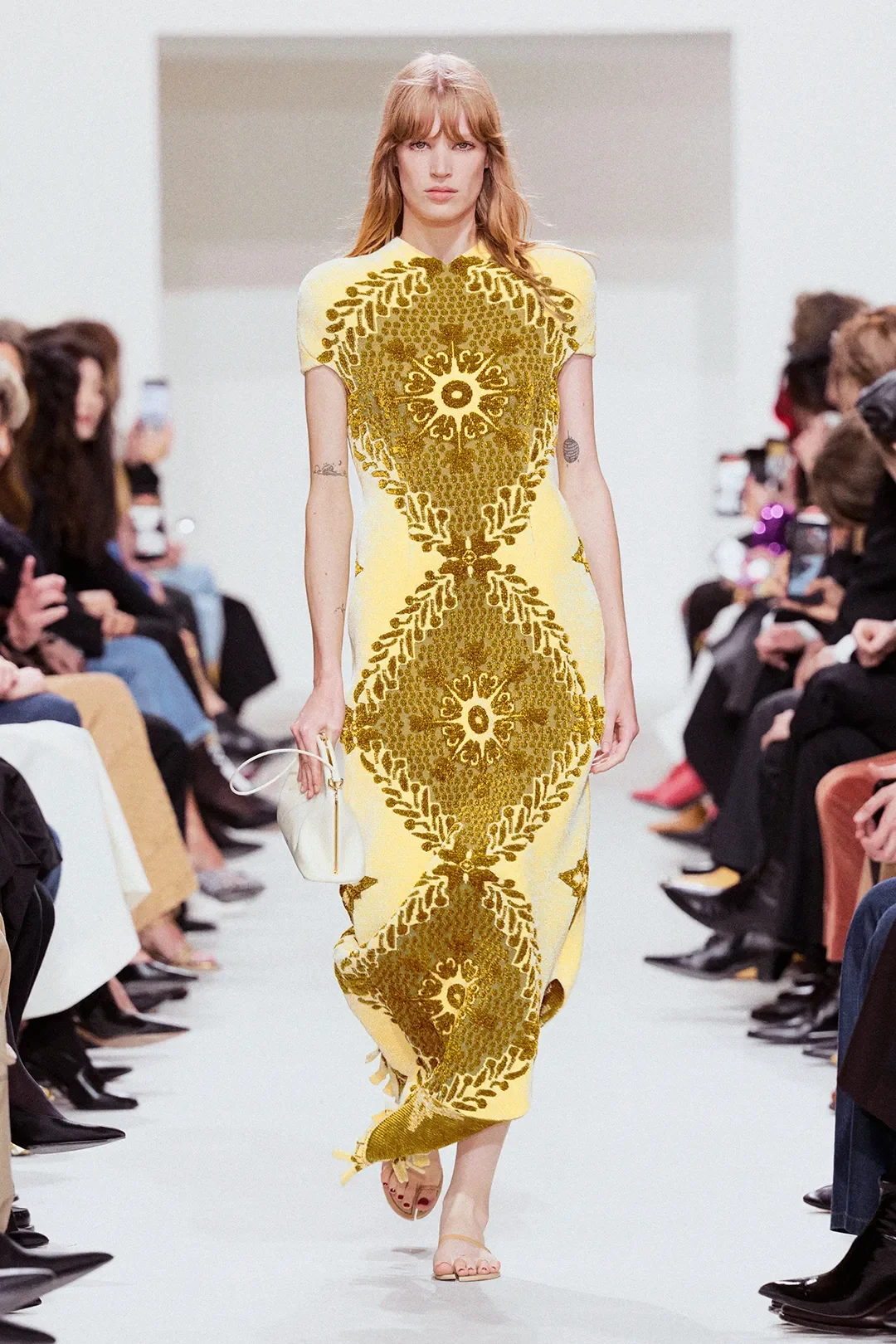
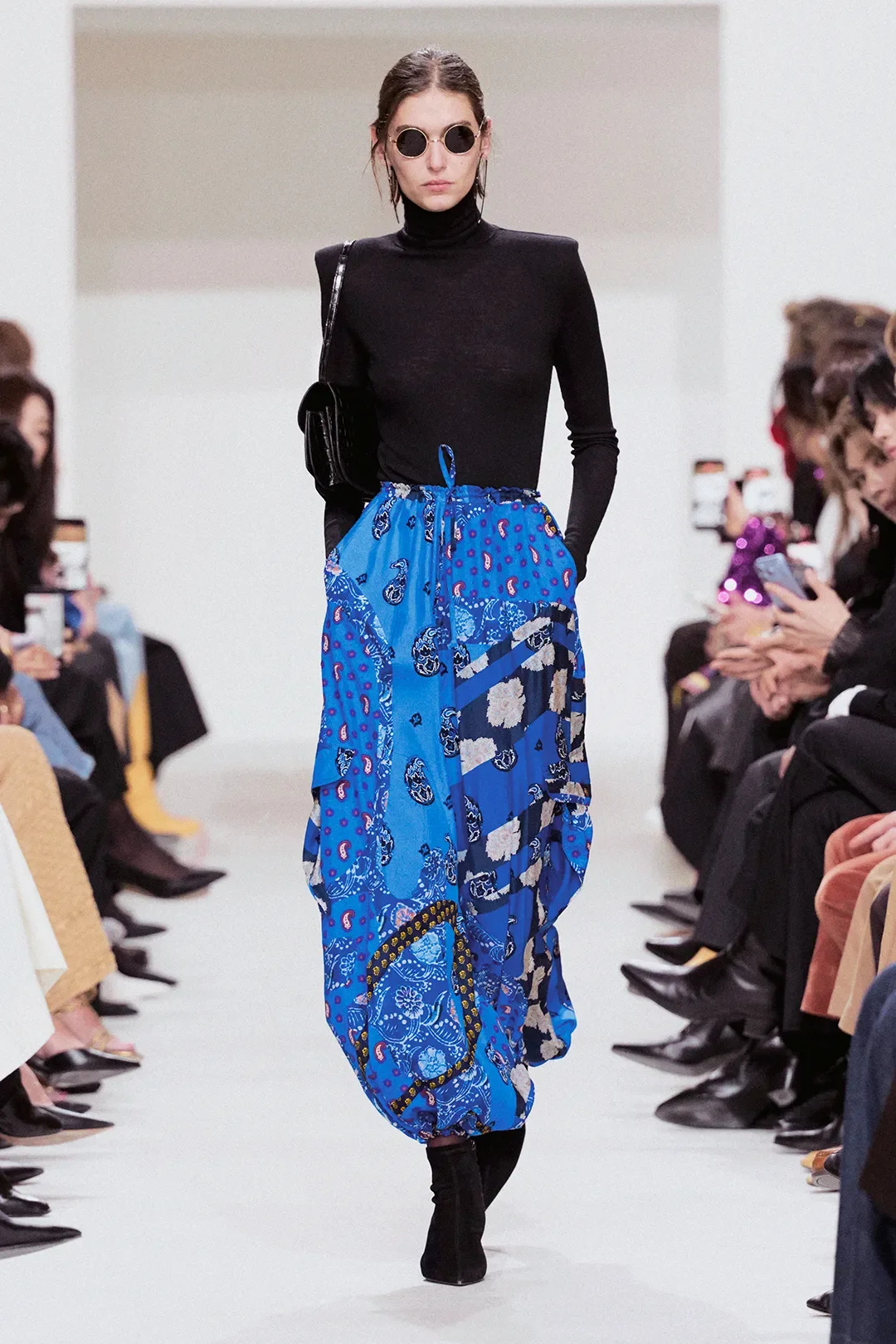
But it was the tactility that really made the collection. Satin gleamed, leather appeared incredibly soft, plissé rippled around the body and embroidery gave otherwise incredibly light pieces physical depth. A pale yellow dress covered in an ornate golden motif was particularly gorgeous, as was a sheer dress scattered with gold and worn over a bra and white trousers beneath an oversized blazer. Elsewhere, a little black dress appeared knitted from tiny beads, all while patchworked balloon trousers brought a completely different volume and feel into the mix.
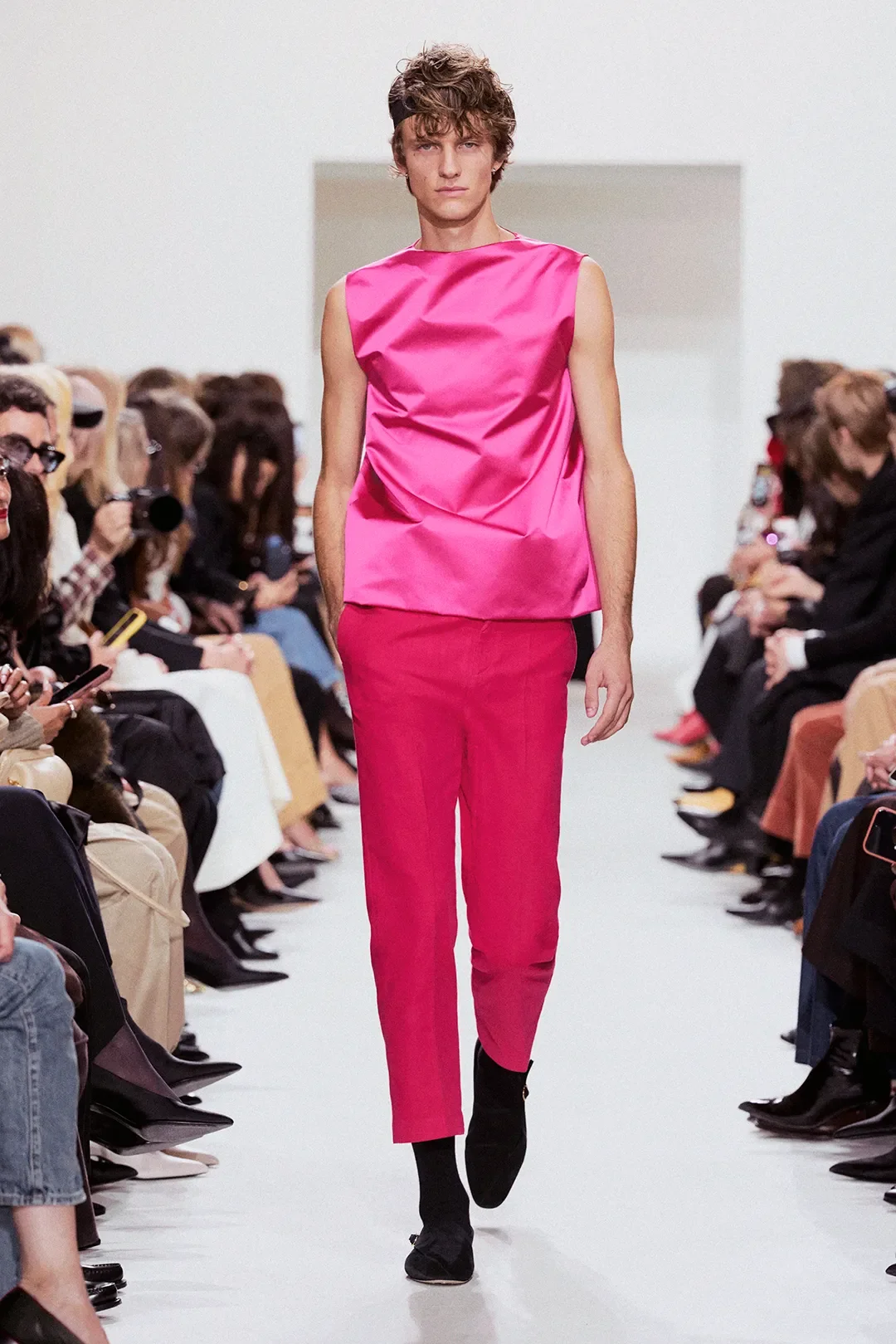
A hot-pink top and trousers could sit alongside severe black tailoring; a floral coat could be followed several looks later by some of the collection’s most pared-back black and white silhouettes. Even the plissé pieces — slightly Issey Miyake, perhaps — felt completely at home here. Rider described the collection as full of “big emotions,” “gesture & ease,” “fabulousness” and clothes simply being allowed to “do their job.”
There are 71 looks here, and remarkably, it doesn’t feels like too many. There isn’t one silhouette, one styling trick or even one Celine woman or man holding it all together. Somehow, Rider himself is becoming the common denominator. A year into the job, he has already built a language strong enough to let him wander, testing how far he can stretch the idea of Celine without losing sight of it altogether. A collection this varied feels so coherent because the consistency isn’t necessarily in the clothes, but in the attitude of the people who are meant to wear them.
VIVIENNE WESTWOOD
review by DEBORAH DRENOFCI
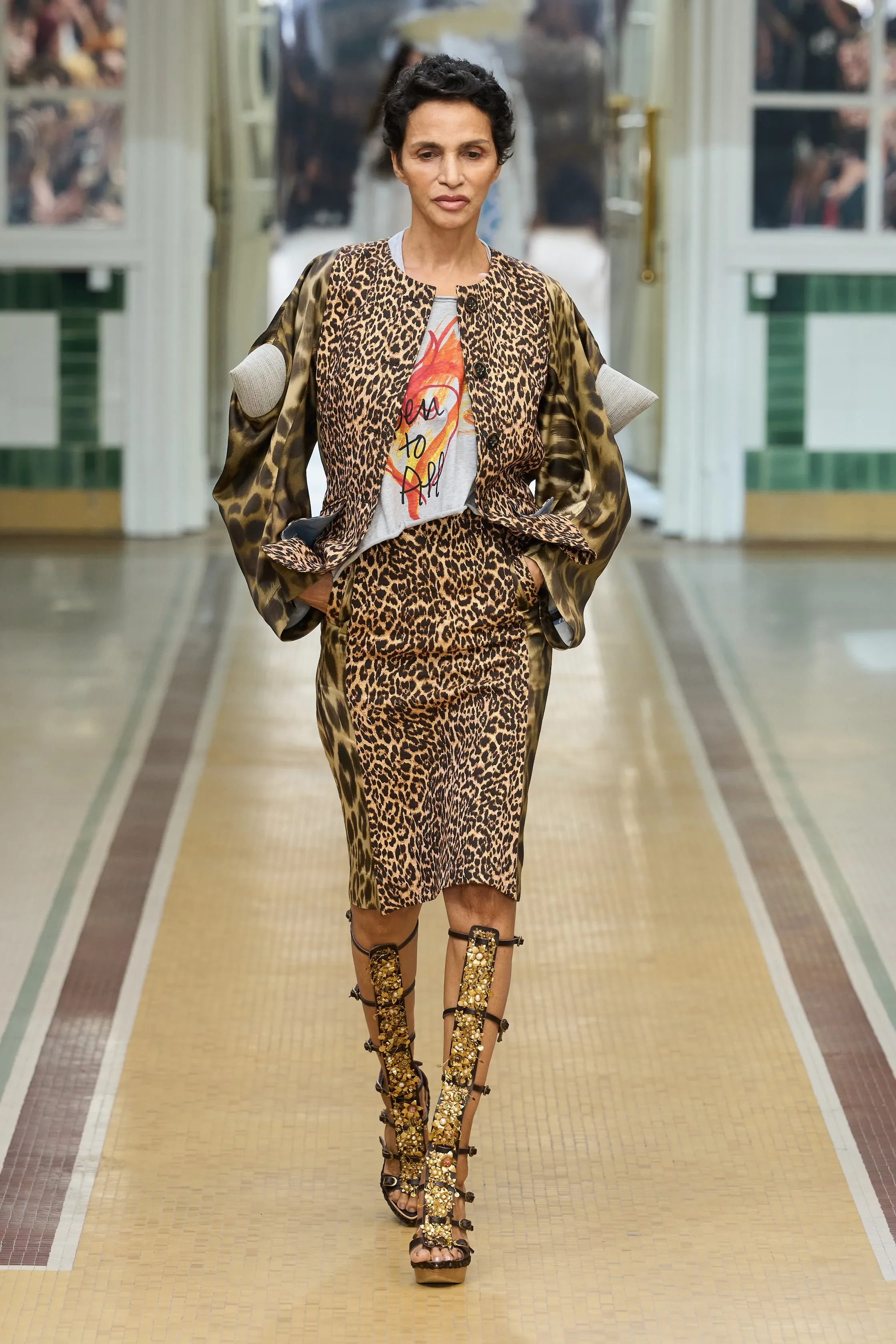
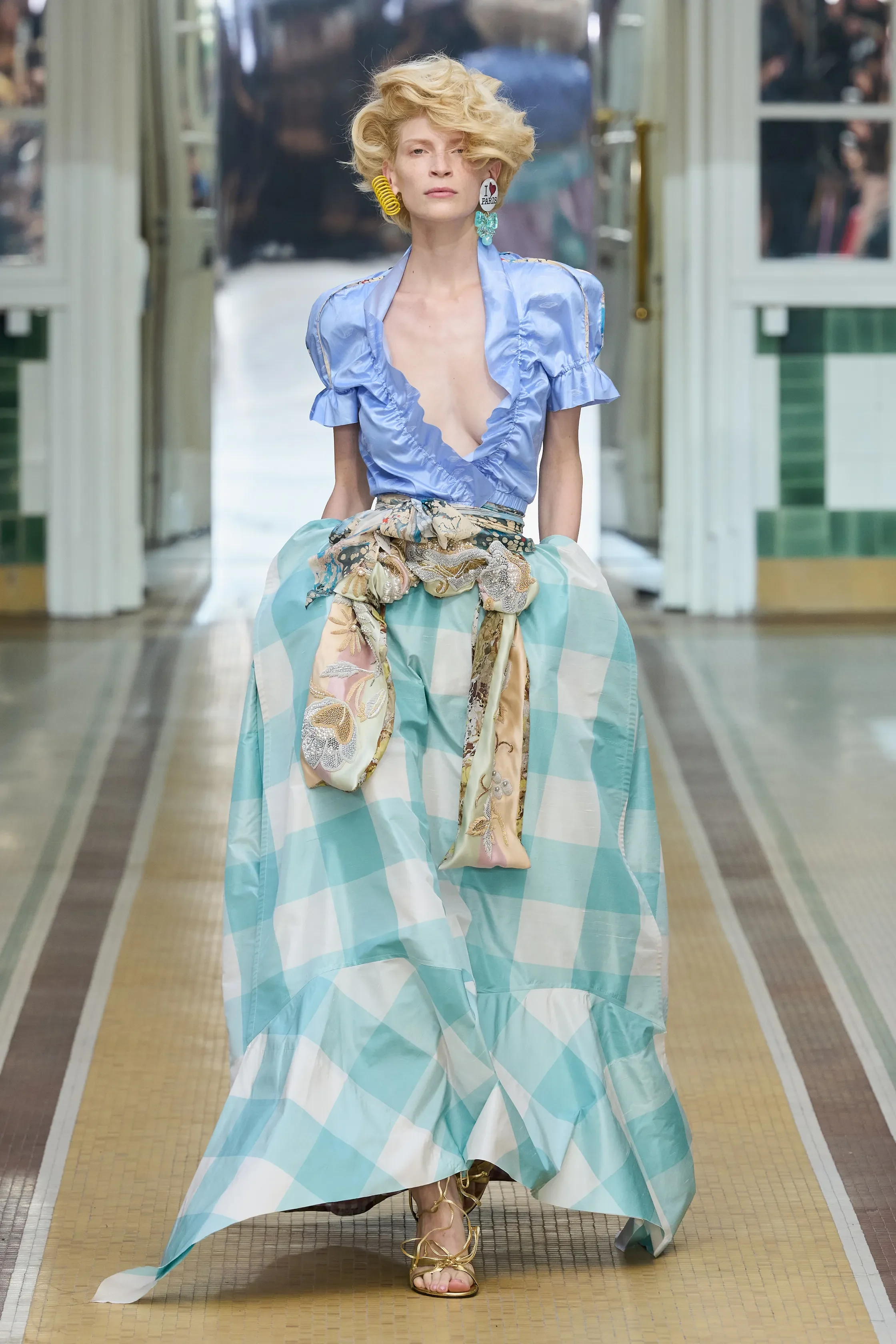
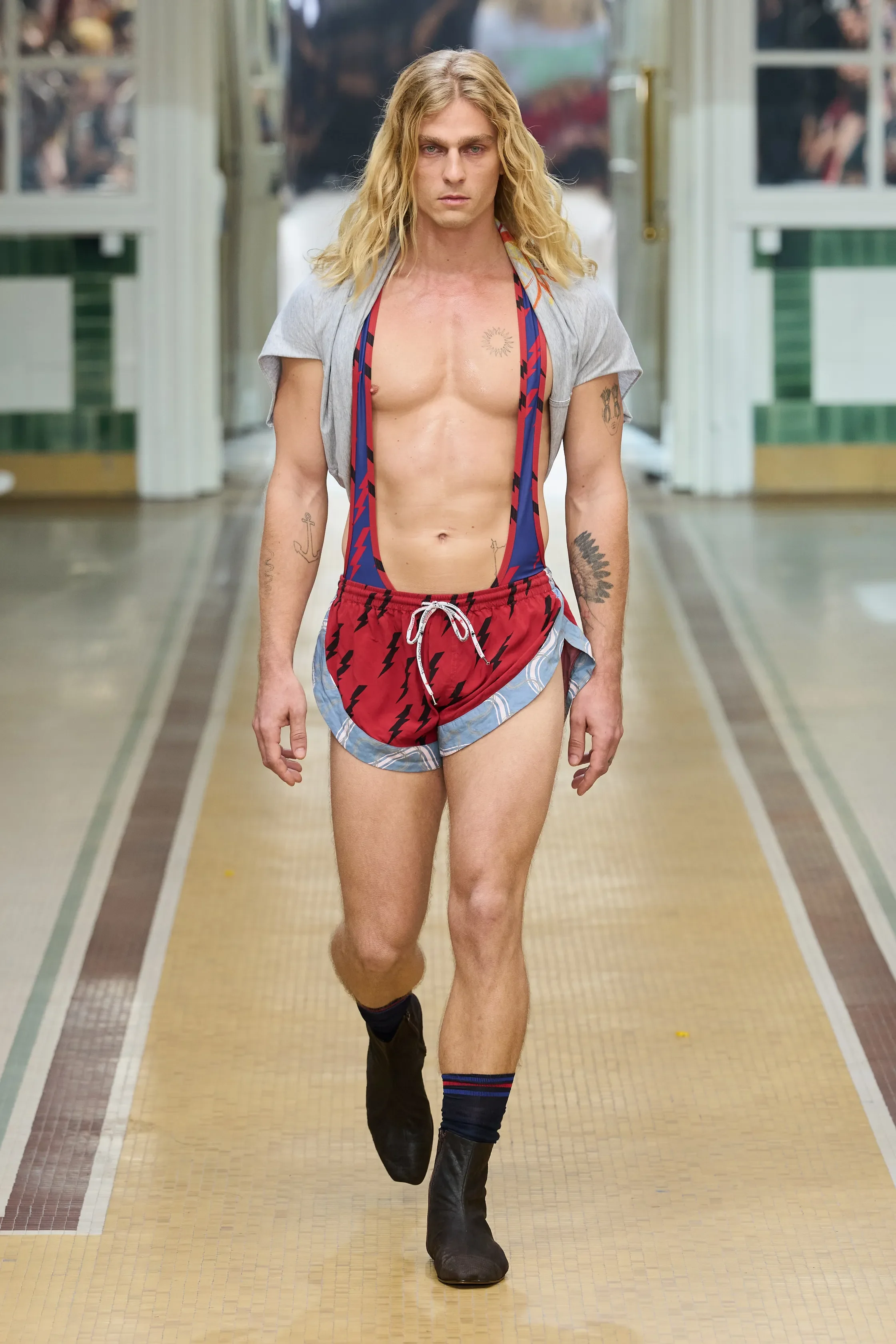
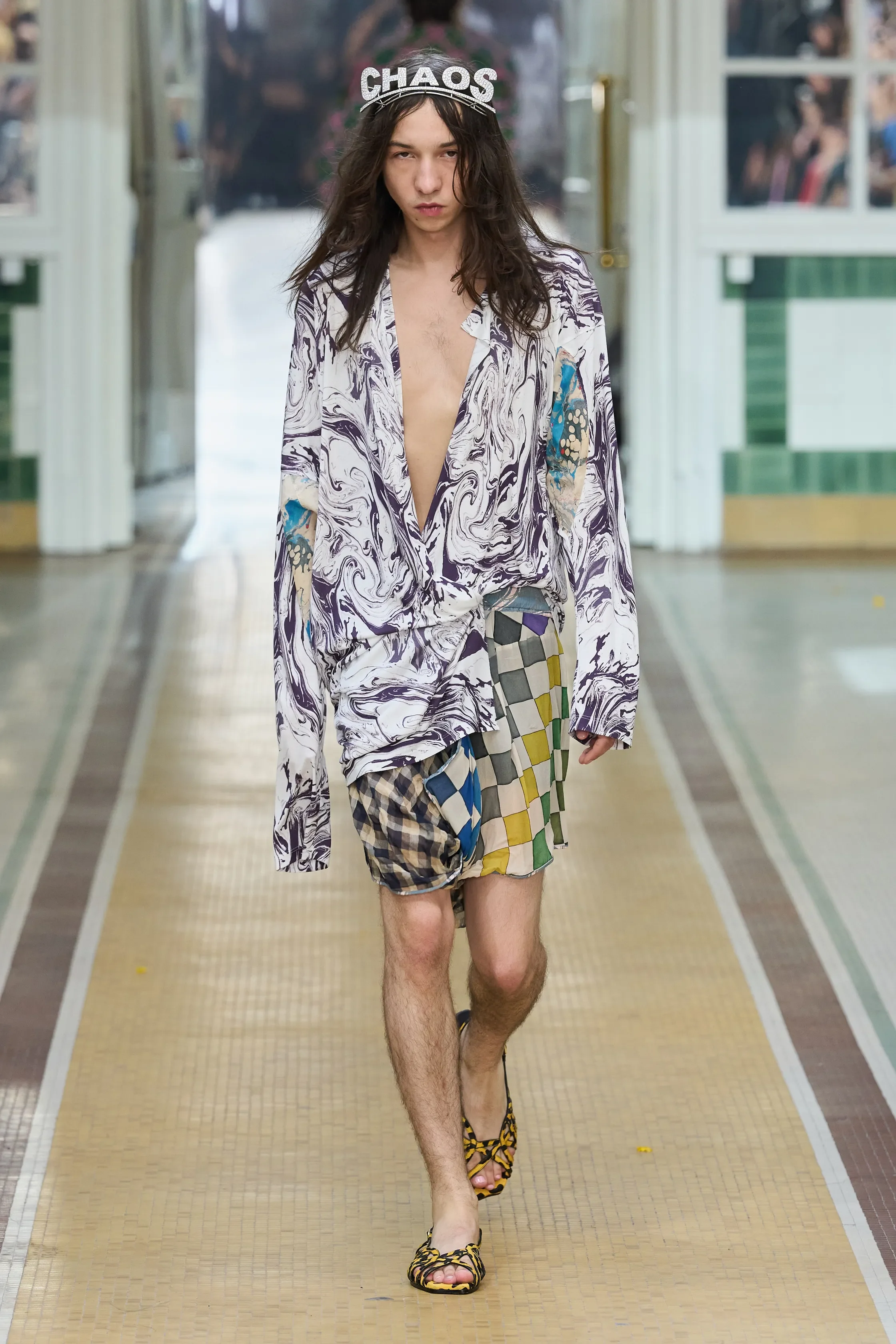
all images courtesy of VIVIENNE WESTWOOD
Andreas Kronthaler has made Vivienne Westwood his guiding muse, and there is something beautiful in watching it. The strongest kind of love lets you become fully yourself while keeping the other close. That love ran through this SS27 collection. "Vivienne comes to me as a robin, which I use as an icon throughout the collection," says Kronthaler.
On the surface, the collection began simply. On a hot summer day in Barbès, Kronthaler found West African Bazin fabrics, playful and vividly patterned. Through the searing heatwave, he lived in a nightshirt with nothing underneath, wearing it on his bicycle and around town. The collection carried that same freedom.
So much character lived in those cuts and patterns. Scale entered the playground. Leopard zoomed in, leopard zoomed out, and rhino horns jutted from below the shoulders of a jacket, all of it grounded by gold-armoured gladiators laced to the knee. Gingham met plaid met check, and all three met a sky-blue silk hat covered in flower appliqués and a layer of organza.
Bazin ran throughout the collection, but it drew the most attention on the late-17th-century "Cheat Jacket," which puts expensive fabric on the front and plainer cloth on the back. "Because in the back, we are all the same," says Kronthaler. House codes filled the runway at the Palais de la Femme: asymmetric draping at its finest, big puffed gowns and corsetry. Yasmin Wijnaldum closed the show in butter-yellow satin, corseted at the bodice and folded high at the shoulders, a queen in the Westwood manner.
The collection takes its name from Body & Soul, a charity working in long-term suicide prevention, and marks a renewed collaboration between the house and the organisation. Limited-edition graphic T-shirts were made in its support. For Kronthaler, it was a return to something essential. He said this was the first collection since Vivienne's passing in which he felt he had truly found his way into her habit of using fashion to carry a message.
Vivienne Westwood does punk attitude, sexy edge and mismatched softness better than anyone. What keeps the house grounded is that it always speaks up. Because guess what? There is always something to speak up for, and Westwood's activism has never gone quiet.
HERMÈS
review by MAGDALENA ROE
all images courtesy of HERMÈS
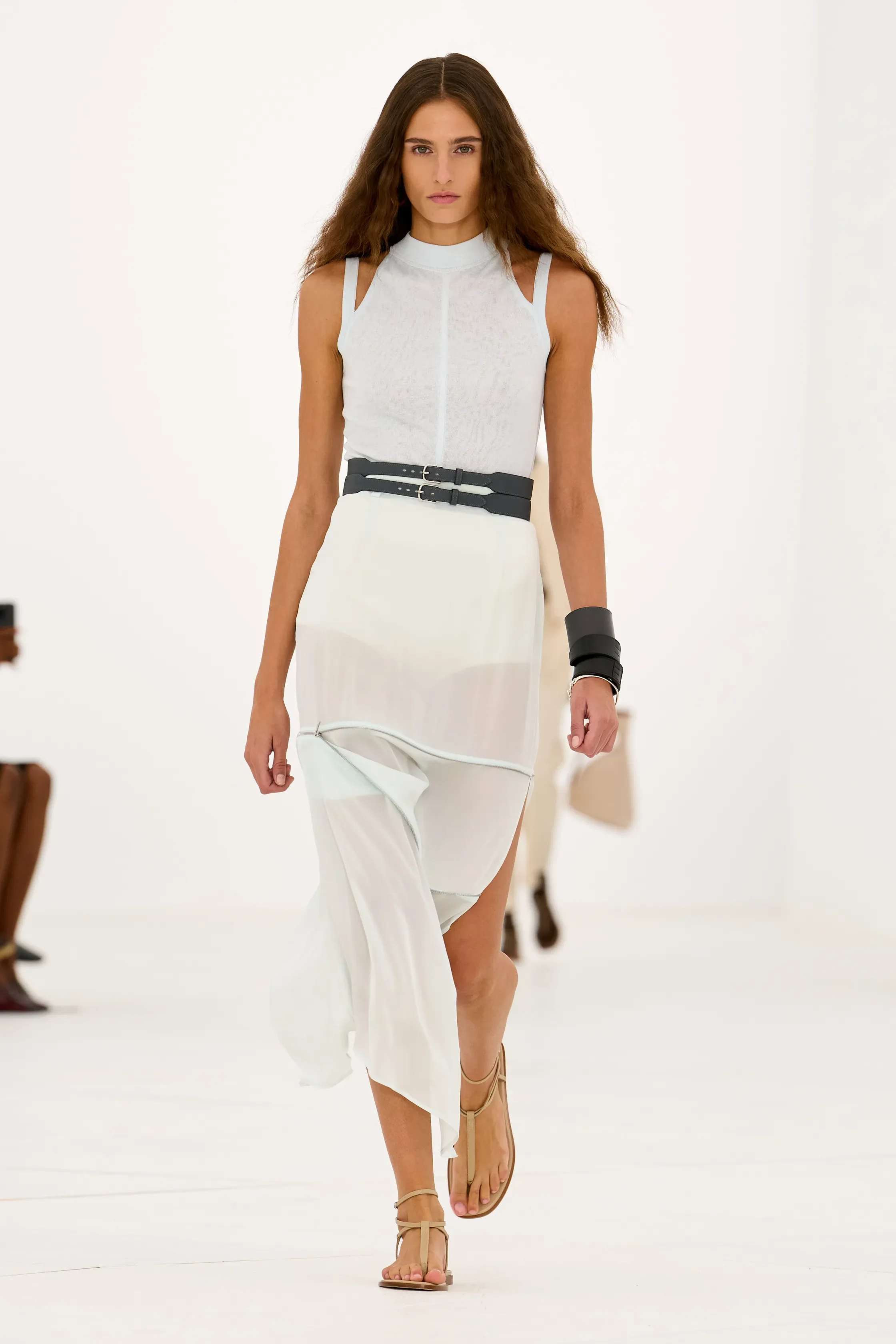
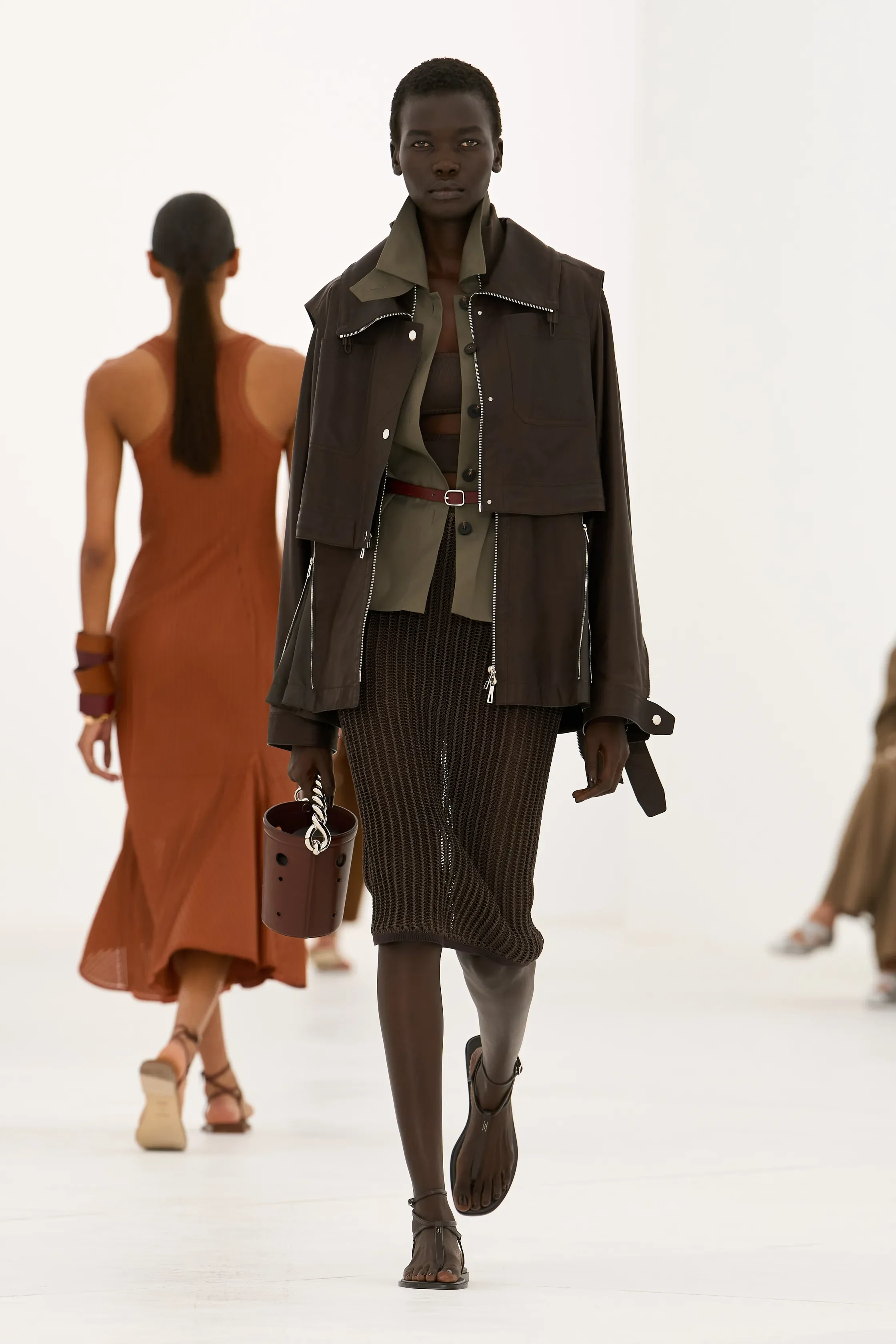
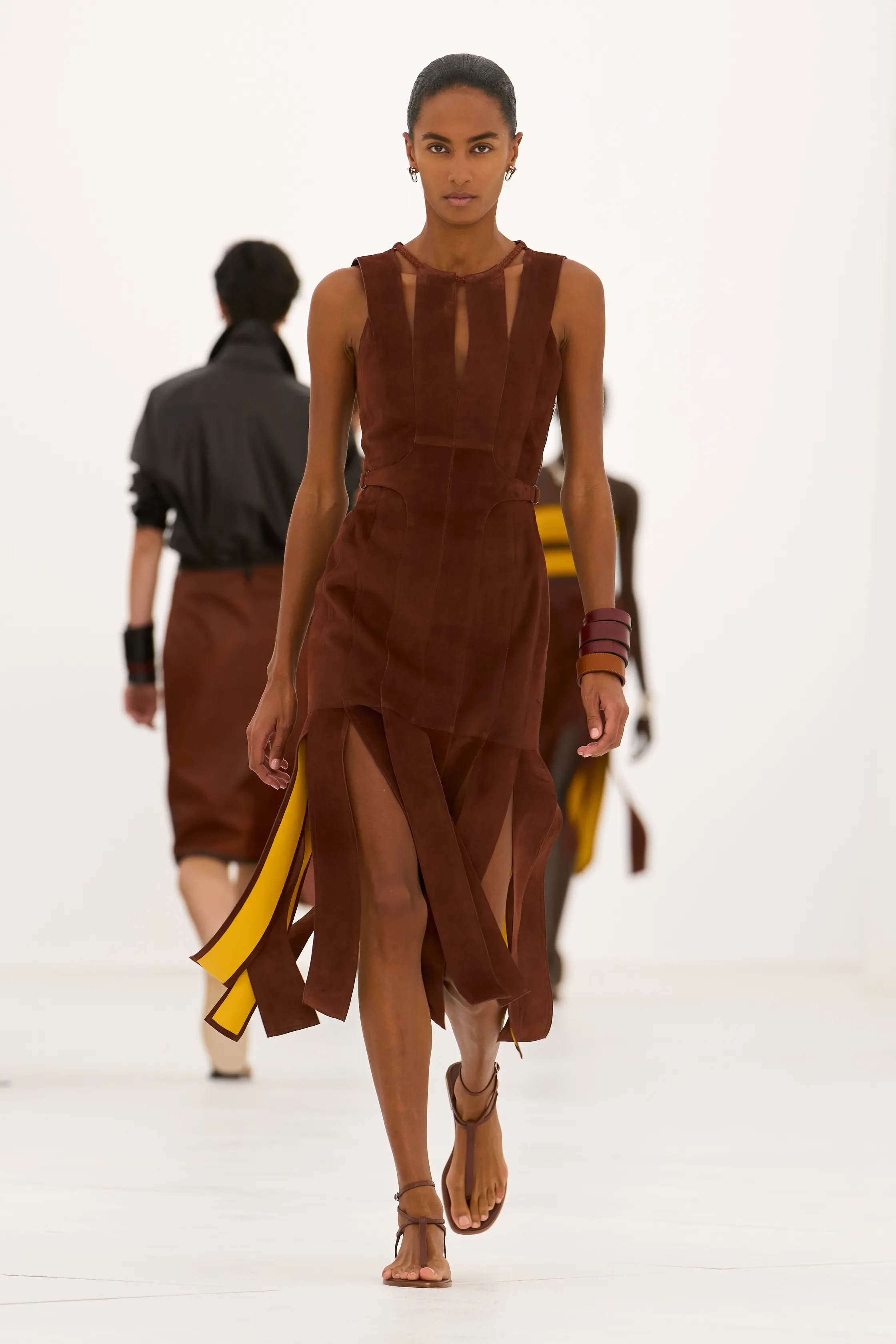
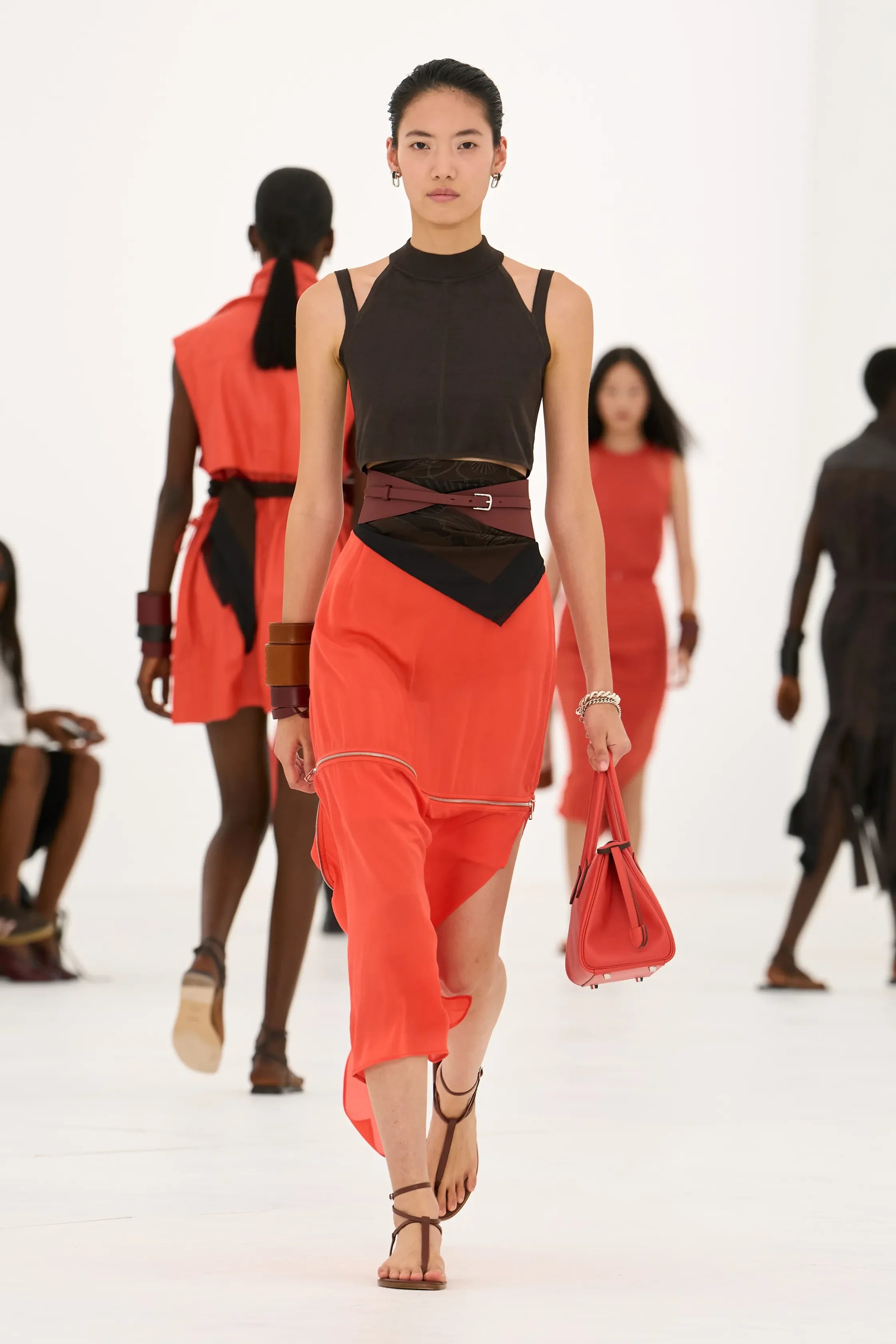
At Hermès, even leather learned to float. For Spring/Summer 2027, Nadège Vanhée explored The Shape of Air, bringing an unexpected lightness to the house’s most recognisable material. Silhouettes lifted away from the body, surfaces opened to reveal skin and garments seemed designed to catch the slightest movement around them. Yet for all that lightness, there was nothing fragile about the women wearing them.
Leather remained at the centre, but its usual weight was almost forgotten. Fine strips were embroidered onto mesh to form graphic lattices, while ultra-light calfskin coats and jackets settled against the body with an almost paper-like crispness. Gauzy openwork knits revealed flashes of skin underneath, and a silk pongée parka expanded into parachute-like volume. It was beautiful and sensual, but also strong, skin was exposed with confidence rather than delicacy.
Nothing felt entirely fixed. Cords and belts adjusted volume, wide trousers unzipped along the sides, and a column skirt in printed silk opened into sculptural draping. Even the palette seemed to move with the collection, shifting from misty blue and earthy neutrals into vivid orange and sunflower yellow, like the changing light of a summer day.
But it was the women themselves who gave all that air a sense of force. With their hair swept back and their walks strong and assured, the models carried the collection with an almost commanding sensuality. These were clothes for a woman who doesn't need softness to mean fragility, or sexiness to mean exposure. She can be light and powerful at once.
There was an ease to it all that made Hermès craftsmanship feel almost effortless. The technical complexity was there, but it never became the point. Vanhée gave lightness strength and strength sensuality. For a house so grounded in materiality, SS27 found its freedom in the air around it, and in the women moving through it.
COMME DES GARÇONS
review by DEBORAH DRENOFCI
all images courtesy of COMME DES GARÇONS
Rei Kawakubo sure knows how to make fashion feel uncomfortable, and by uncomfortable I mostly mean nonconformist, revolutionary and bold. Although we can all agree that the pieces from this SS27 collection cannot be worn for a typical night out with the girls - mainly because you would not be able to sit down and have a drink - they are definitely art pieces telling a story full of wit.
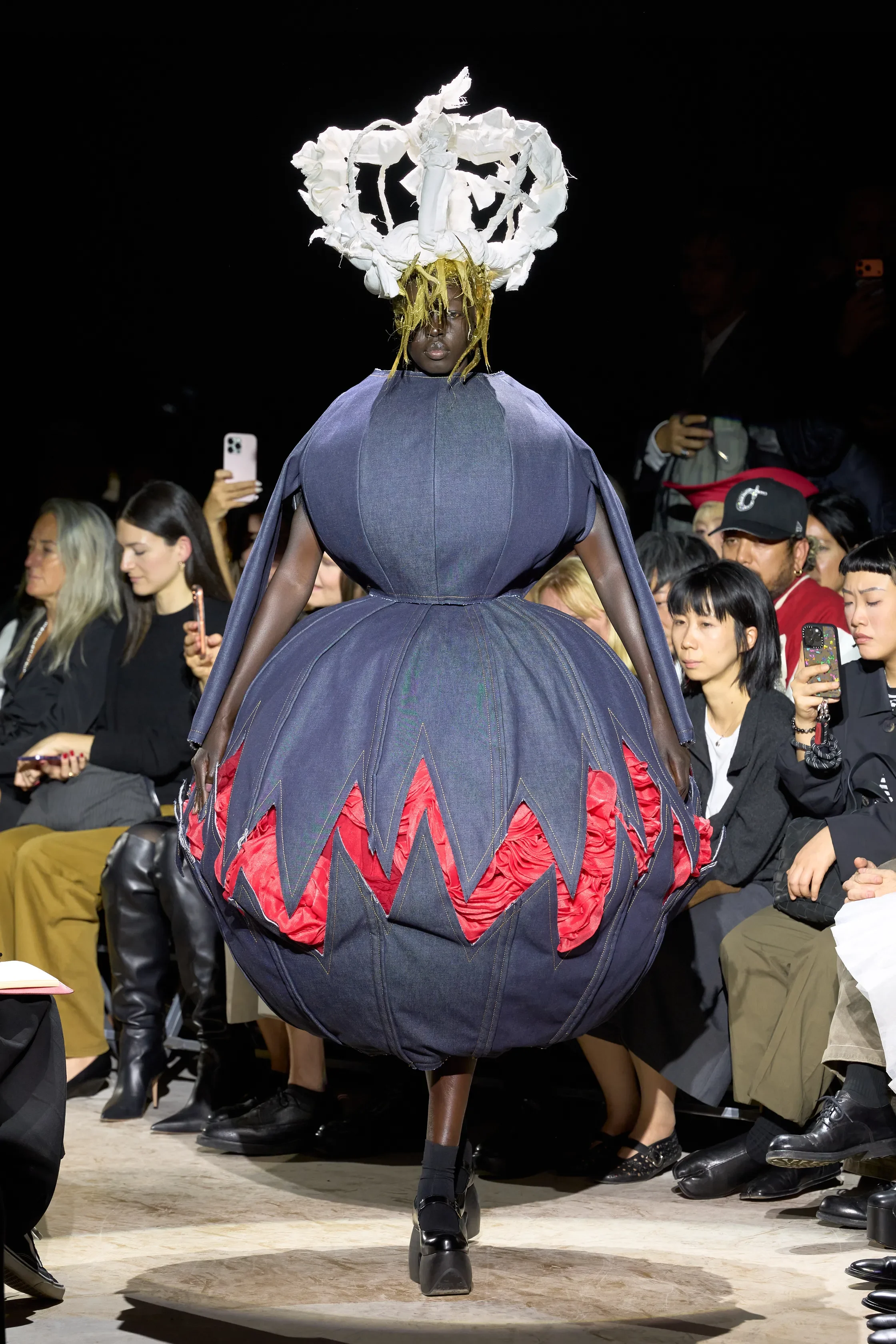
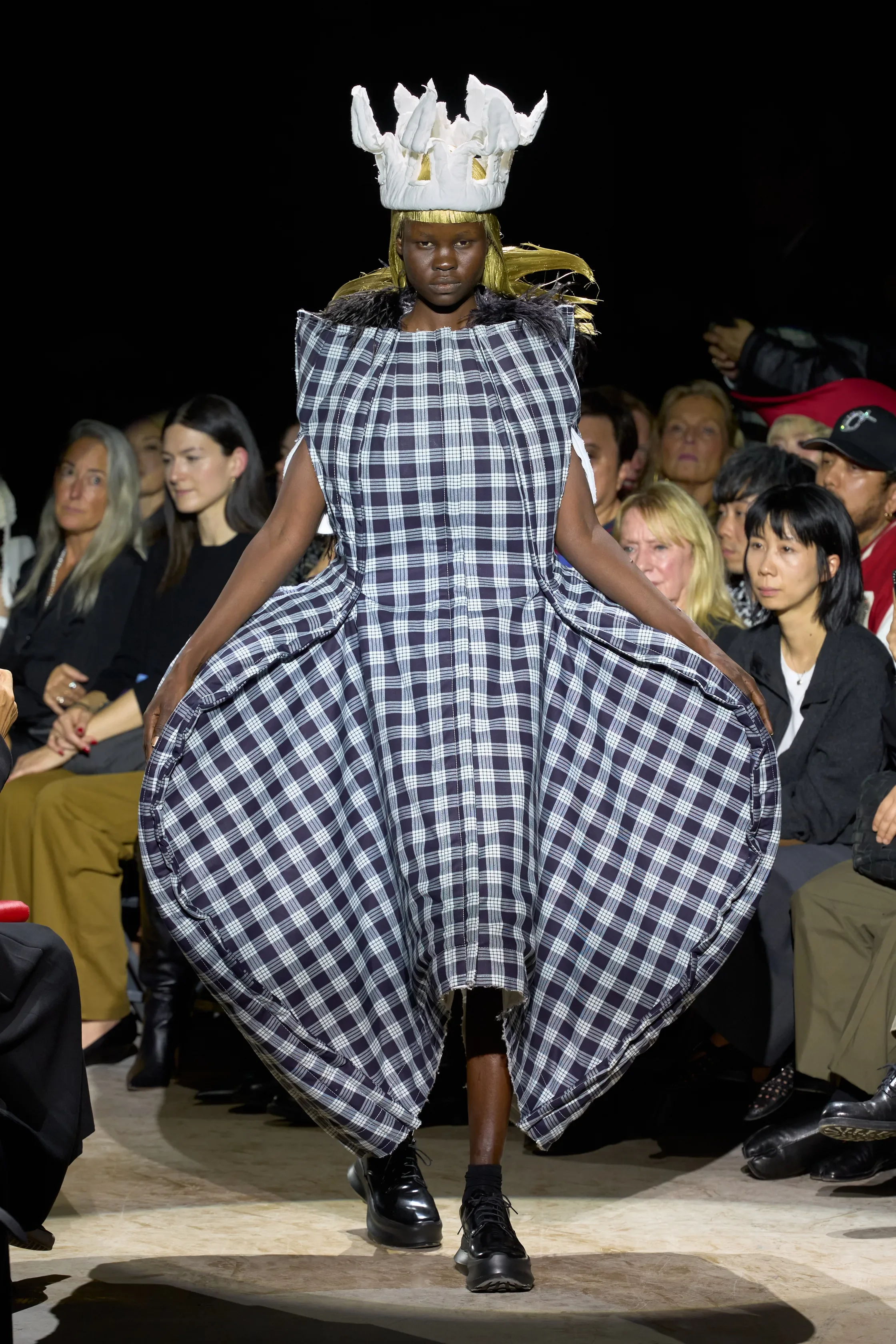
"When royal life and real life become one" was the one-line message Kawakubo served us, perhaps enough to deduce a plot, or one of the many plots, behind the collection. In the dramatic cocoon silhouettes, the sculptural 3D shapes and the asymmetric white crowns perched on brittle, fake golden hair, a sense of irony persisted. Moving away from her love for black, Kawakubo put forward vivid colours and patterns, red, blue, brown and green, accompanied by polka dots, stripes and checks, all without ever losing the volume.
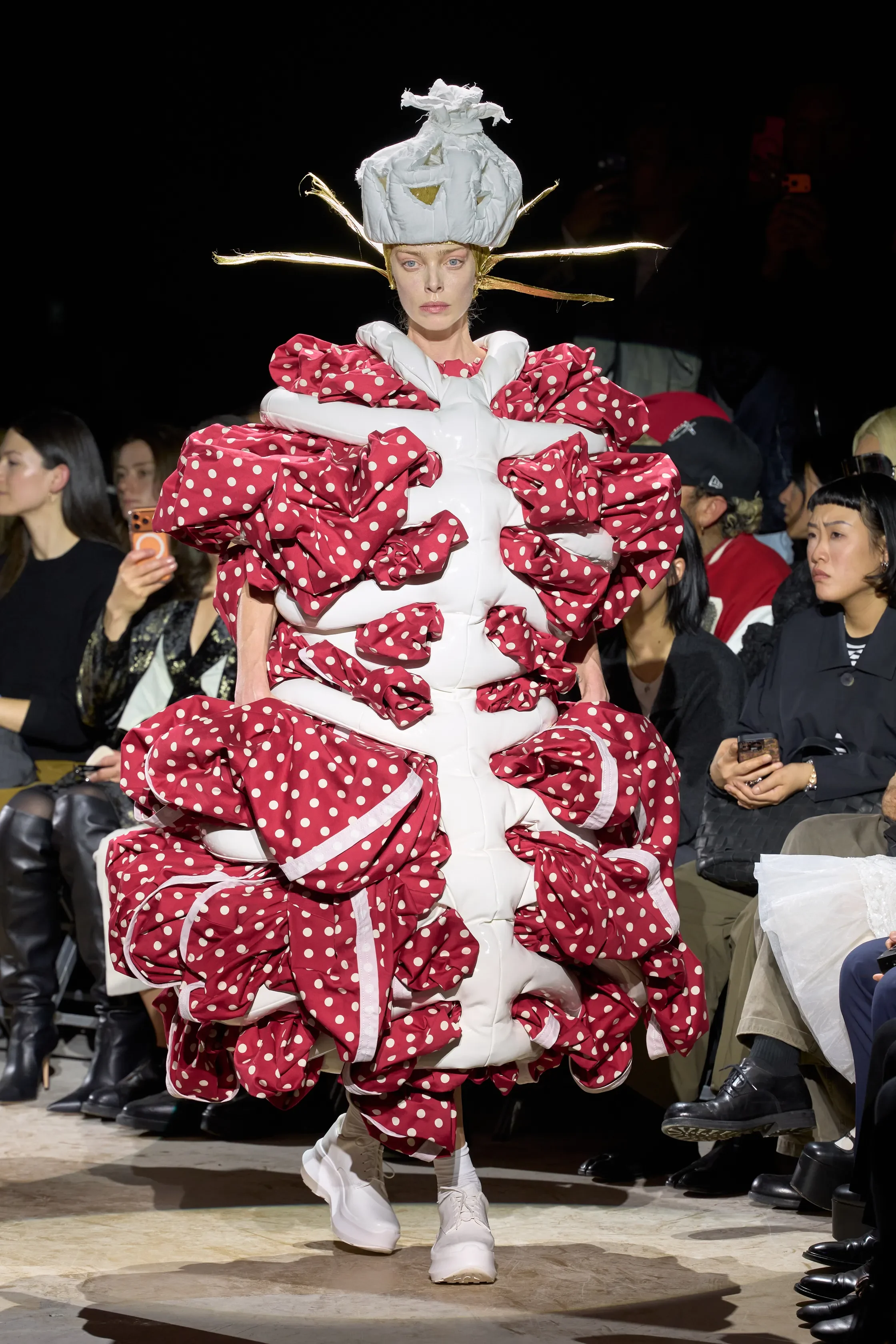
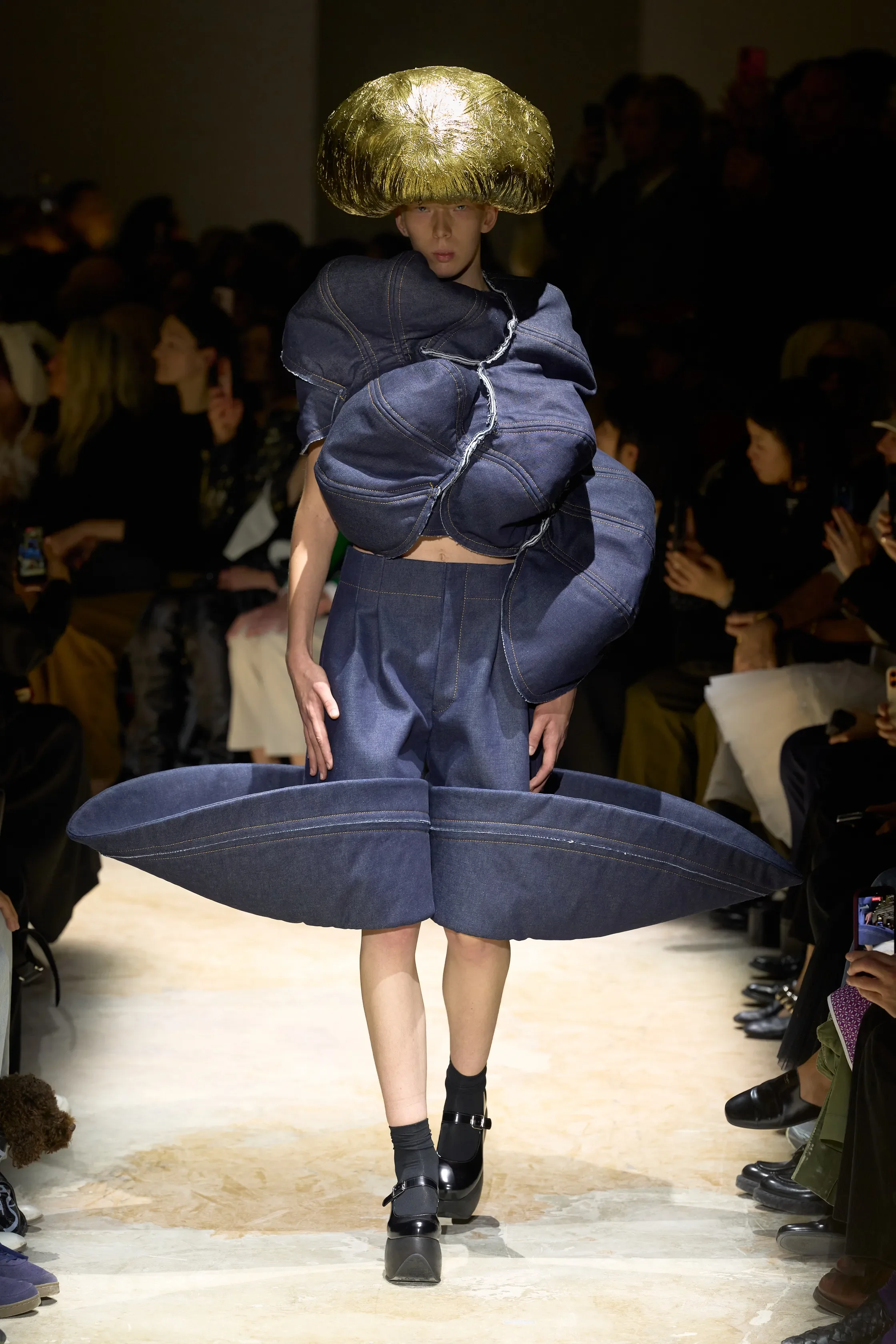
Denim was the main detail of the collection, quilted and padded until it swelled like a duvet. Skirts flared out into stiff discs, shoulders puffed into cushions, and gilded headpieces sat on top like crowns of inflated gold. Elsewhere, a white padded spine ran down the body, sprouting red polka-dot ruffles like rosettes. A blue quilted jacket was worn over a glossy red skirt finished in tulle, and brown polka dots came edged in gold fringe.
To conclude with a potential plot, was Kawakubo trying to portray the dark yet colourful life of royals, and of those who sit above the rest of us? There is a lot of volume, yet not so much ease. Every crown carries weight, every gown builds a wall around the body. The grandeur looks spectacular from the front and feels heavy from the inside. Royalty, it turns out, can't sit down either.
ALAÏA
review by MAREK BARTEK
all images courtesy of ALAÏA
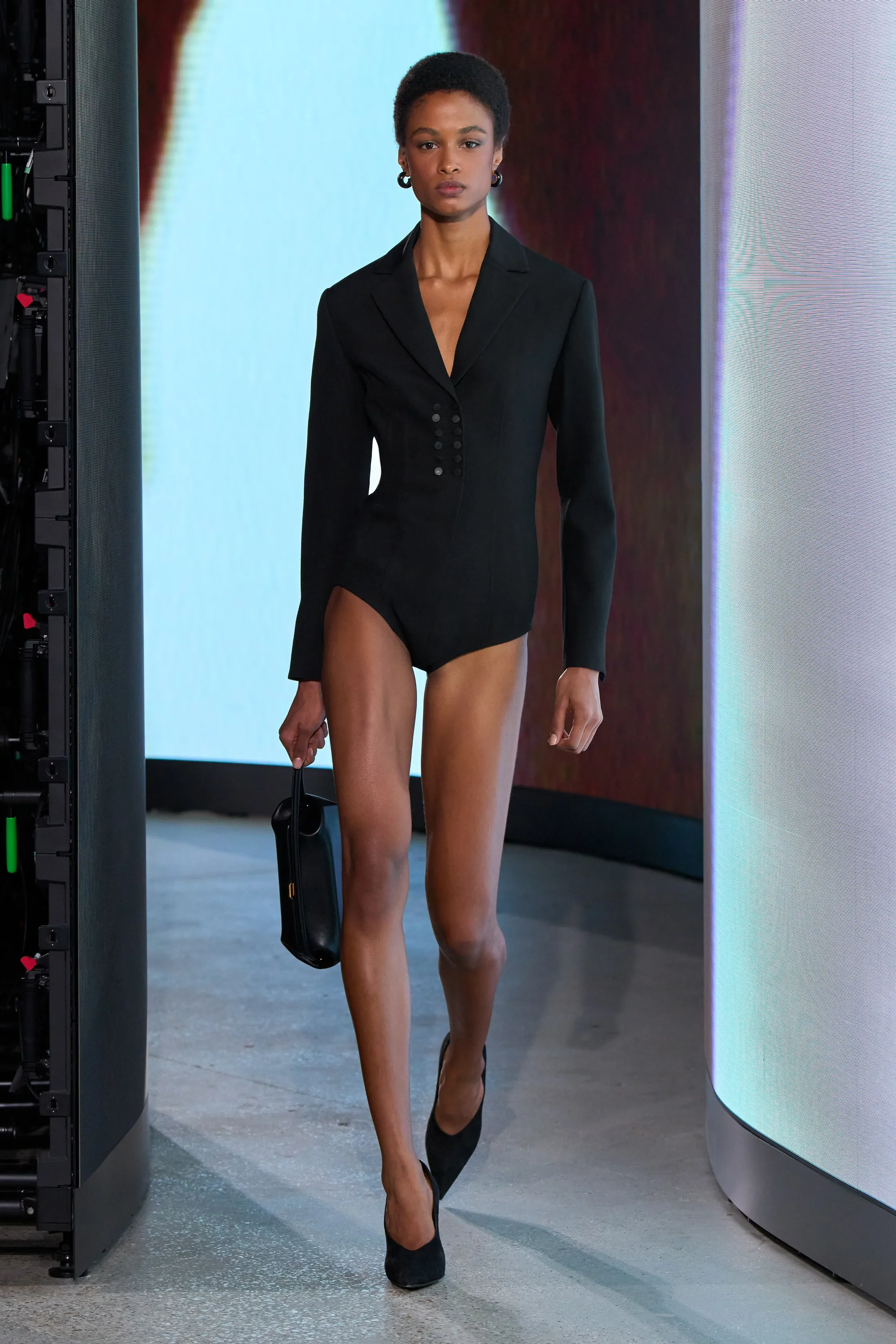
For a few minutes at Alaïa, everyone was equal. There were no front-row hierarchies to negotiate, because there were no rows at all. All guests stood inside the Fondation Cartier to see the first collection designed by the house’s team following Pieter Mulier’s departure. In an industry where your seat at the runway show can still say an awful lot about who you are, this sort of great equaliser felt refreshing — almost as a reminder that behind every great creative director, there’s a whole team of people standing.
The collection itself was similarly unfussed. It wasn’t groundbreaking, nor did it necessarily need to be. Instead, the team concentrated on craftsmanship that we’ve gone to expect from a house like Alaïa and that can keep the brand moving while nobody is officially steering it.
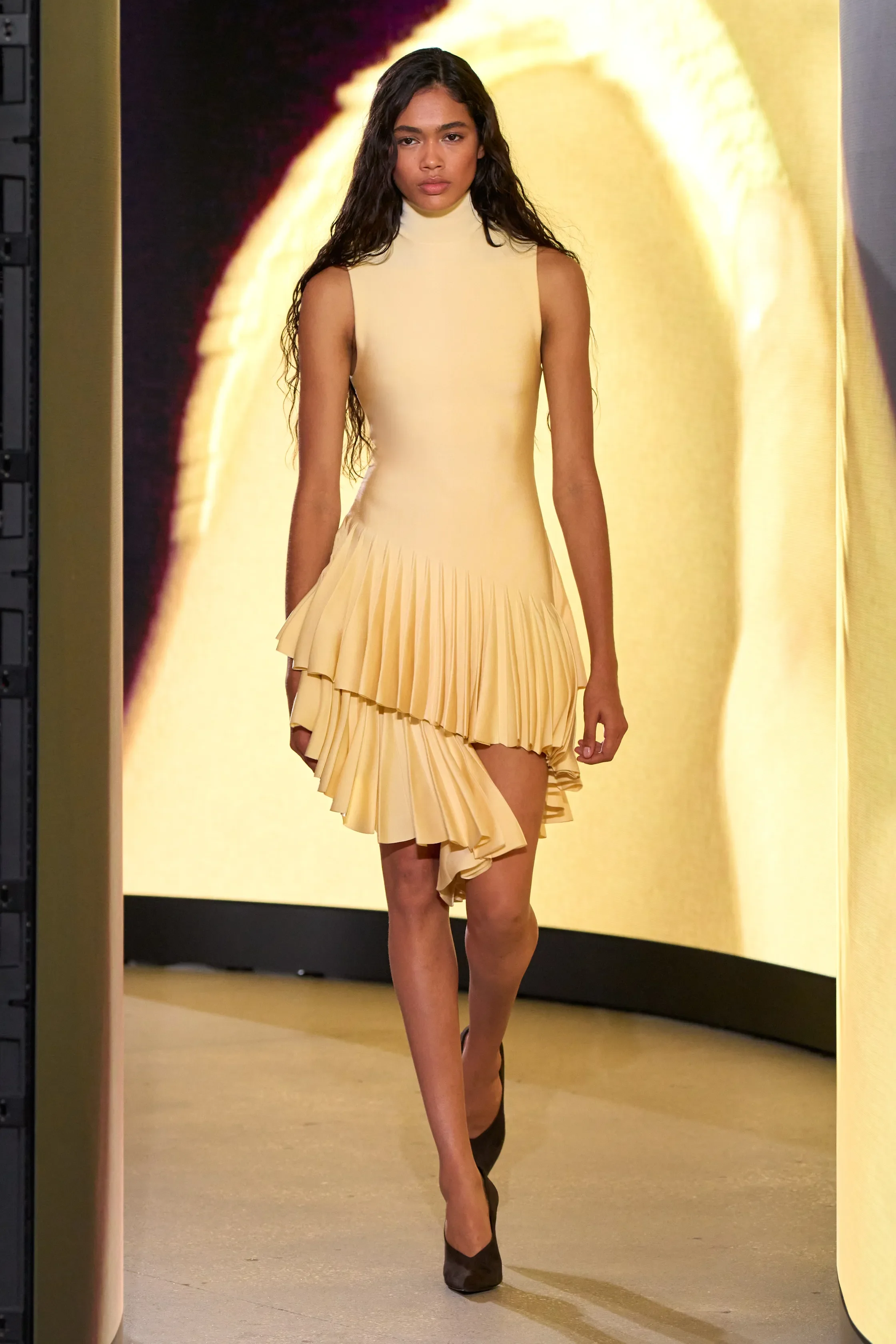
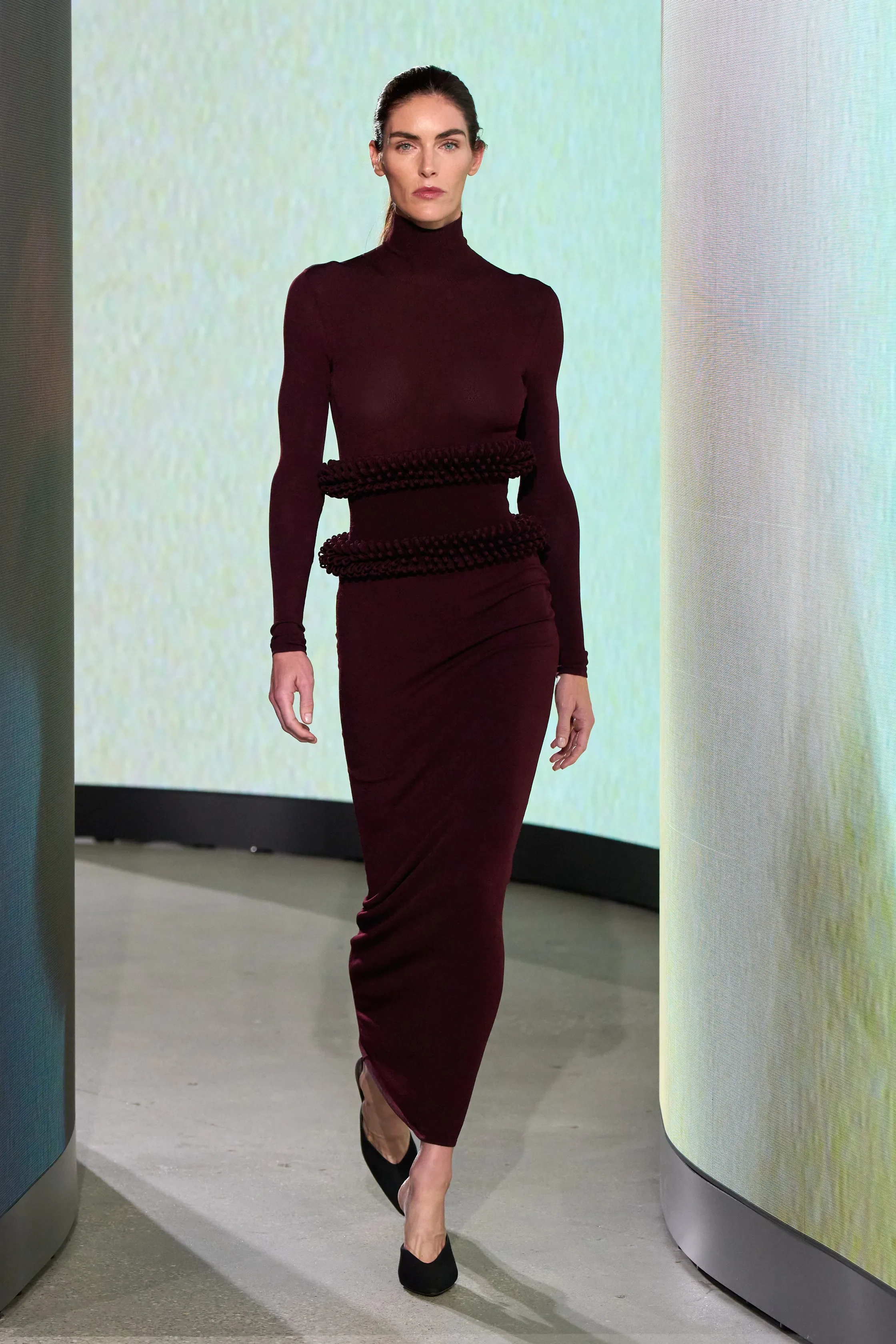
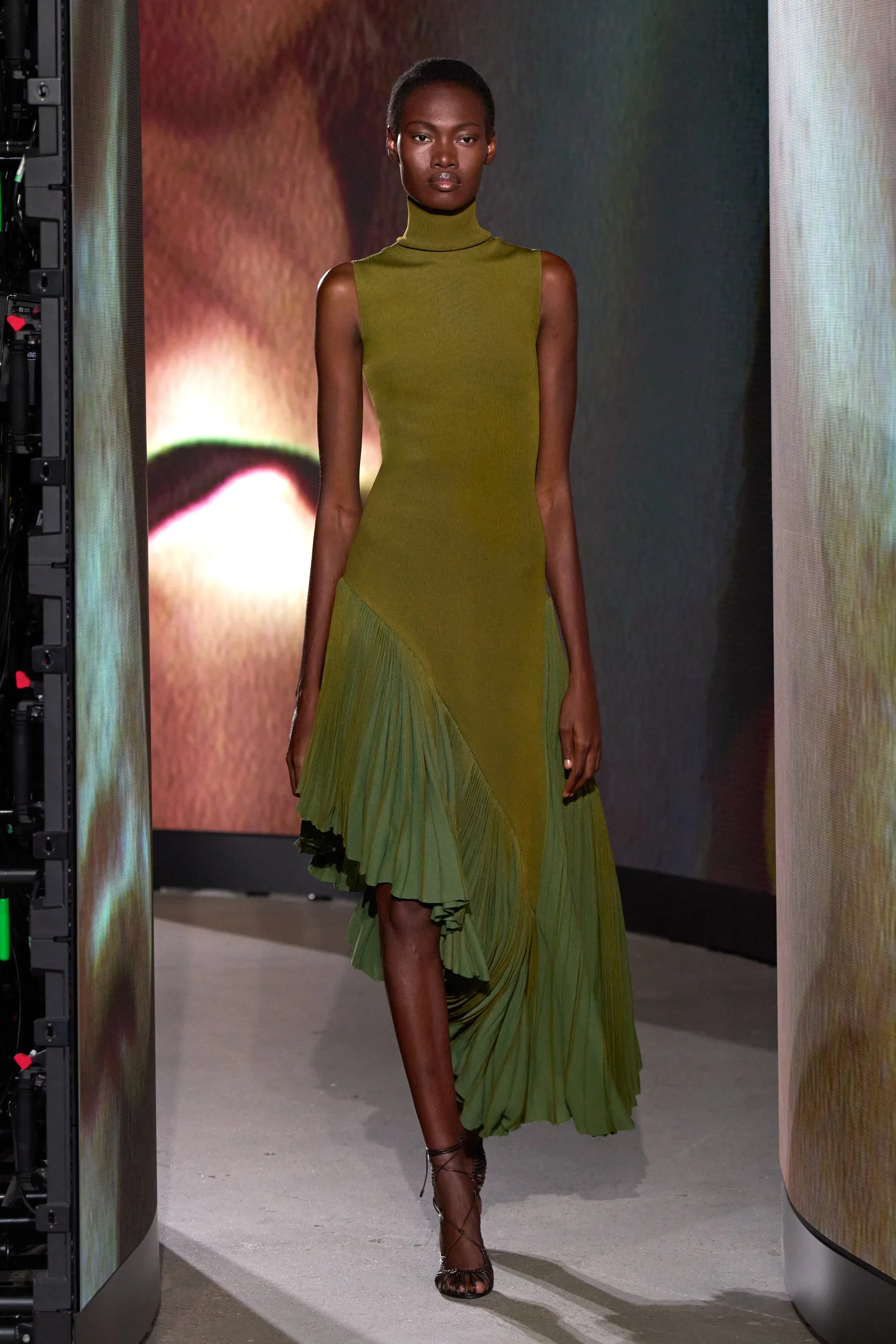
Alaïa signatures remained intact: bodysuits, sculpted tailoring, leather and an unwavering attention to the body. Appearing throughout was a pleated construction across dresses and skirts that added that sense of newness to the collection. First worked in leather, it was something between a pleat and a frill, before gradually becoming softer, lighter and increasingly asymmetrical. On skirts it cascaded from one hip; elsewhere, two sculptural bands wrapped around the waist. By look 32, fine two-tone pleating revealed flashes of another colour with every step, repeated beautifully in moss and khaki green and, finally, black and white.
Of course, there were other moments worth day dreaming about: the almost imperceptible sculpted gatherings around the hips, a sheer black gown tracing the body through asymmetrical seams, and a wonderfully tactile black-and-white coat.
This was a collection made in the in-between. It was respectful, beautifully executed and confident without making too much noise. Whoever eventually takes the helm will inherit a house that clearly knows how to stand on its own.
CHRISTIAN LOUBOUTIN
review by DEBORAH DRENOFCI


all images courtesy of CHRISTIAN LOUBOUTIN
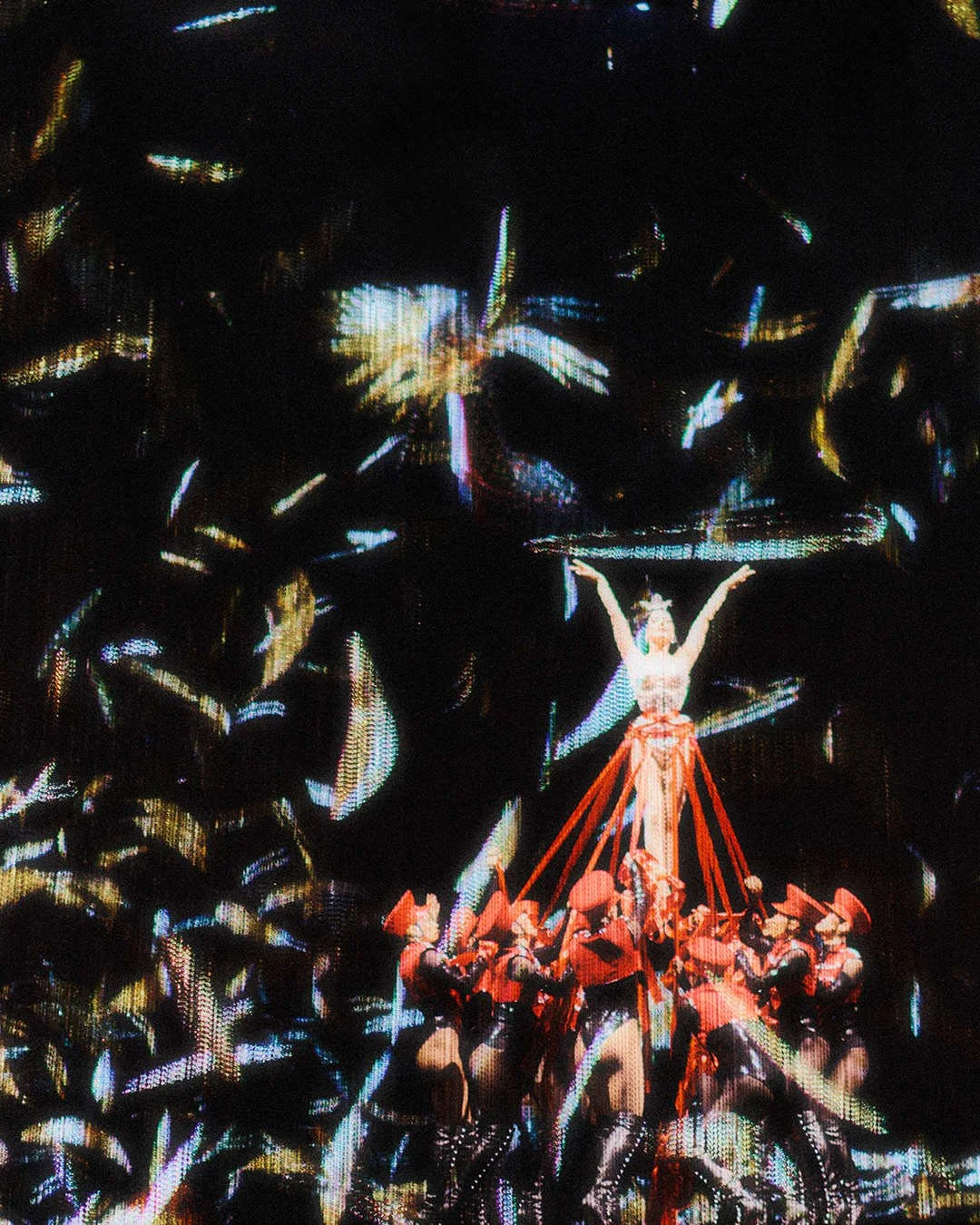
Christian Louboutin's SS27 show, Eternal Youth, traces glamour back to its original meaning. The word once described a magic spell, so glamour is less about external admiration and more about the whimsical enchantment it carries. Eternal Youth can be seen as a fairytale-like journey of transformation and self-expression.
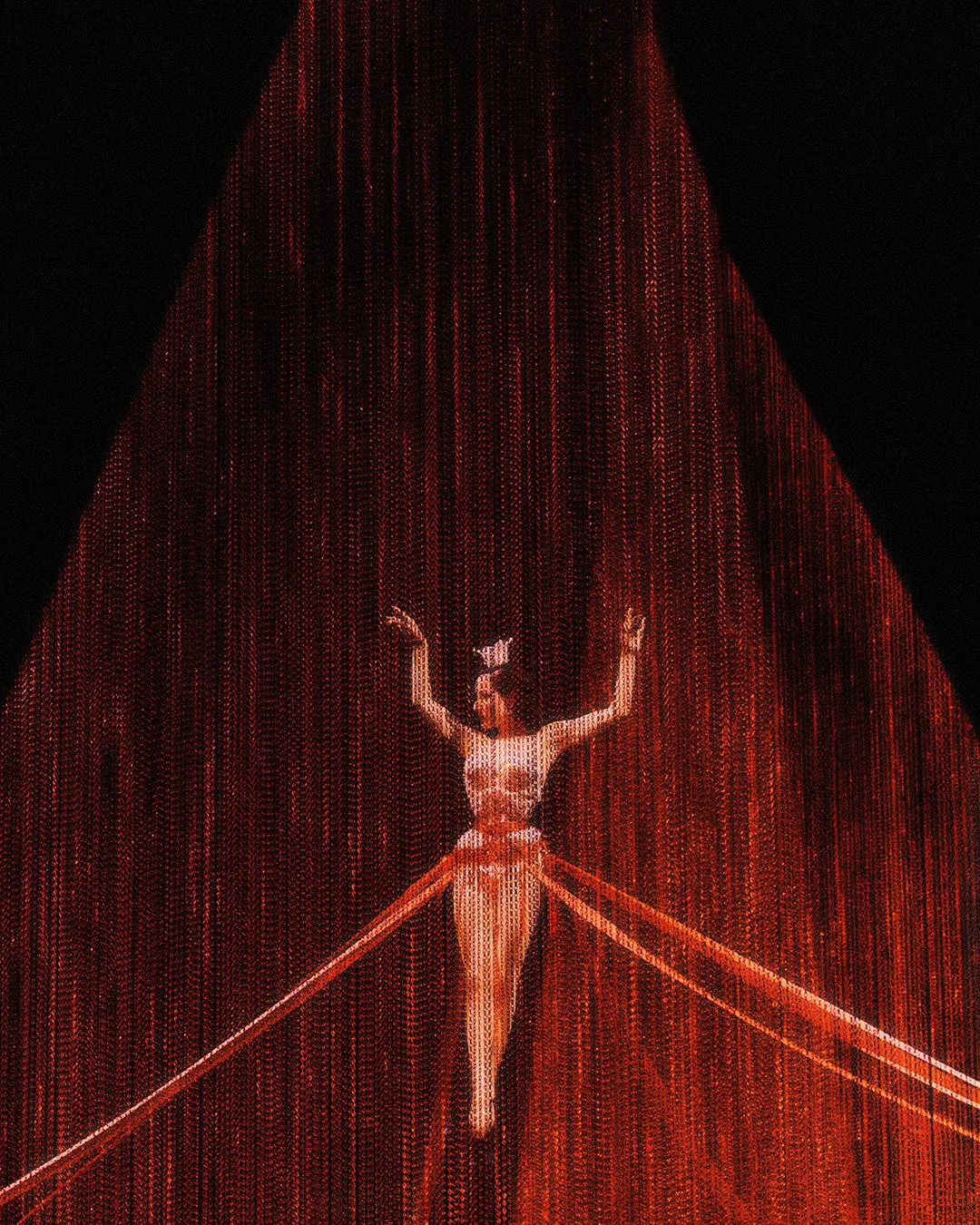
The show begins in melancholic silence. Then Dita Von Teese appears, with pale glowing skin, blood-red lips and black hair. She resembles Snow White, but not the part where the prince saves her. On the contrary, she writes her own destiny. She takes us through her transformation, embodied in beautiful costumes, among them a Mr. Pearl corset, a Stephen Jones headpiece and a Galliano cape.
Throughout, she encounters her own reflection, all the versions of herself and the contradictions within her. The woman she is supposed to be according to outside forces stands face to face with the free woman she wants to be. These women do not clash. Instead, they learn to dance together, accepting the many facets of the same being. At the centre stands La Pigalle. More than just a shoe, it embodies confidence and freedom, a companion on the journey of discovery.
Eternal Youth is a celebration of a woman and her journey through life. She is not a perfect princess but a woman more human than any fairytale ever allowed her to be. Youth here has nothing to do with age. It is the freedom to keep becoming.