
PARIS FASHION WEEK SPRING/SUMMER 2027: DAY 8
SACAI
review by DEBORAH DRENOFCI
all images courtesy of SACAI
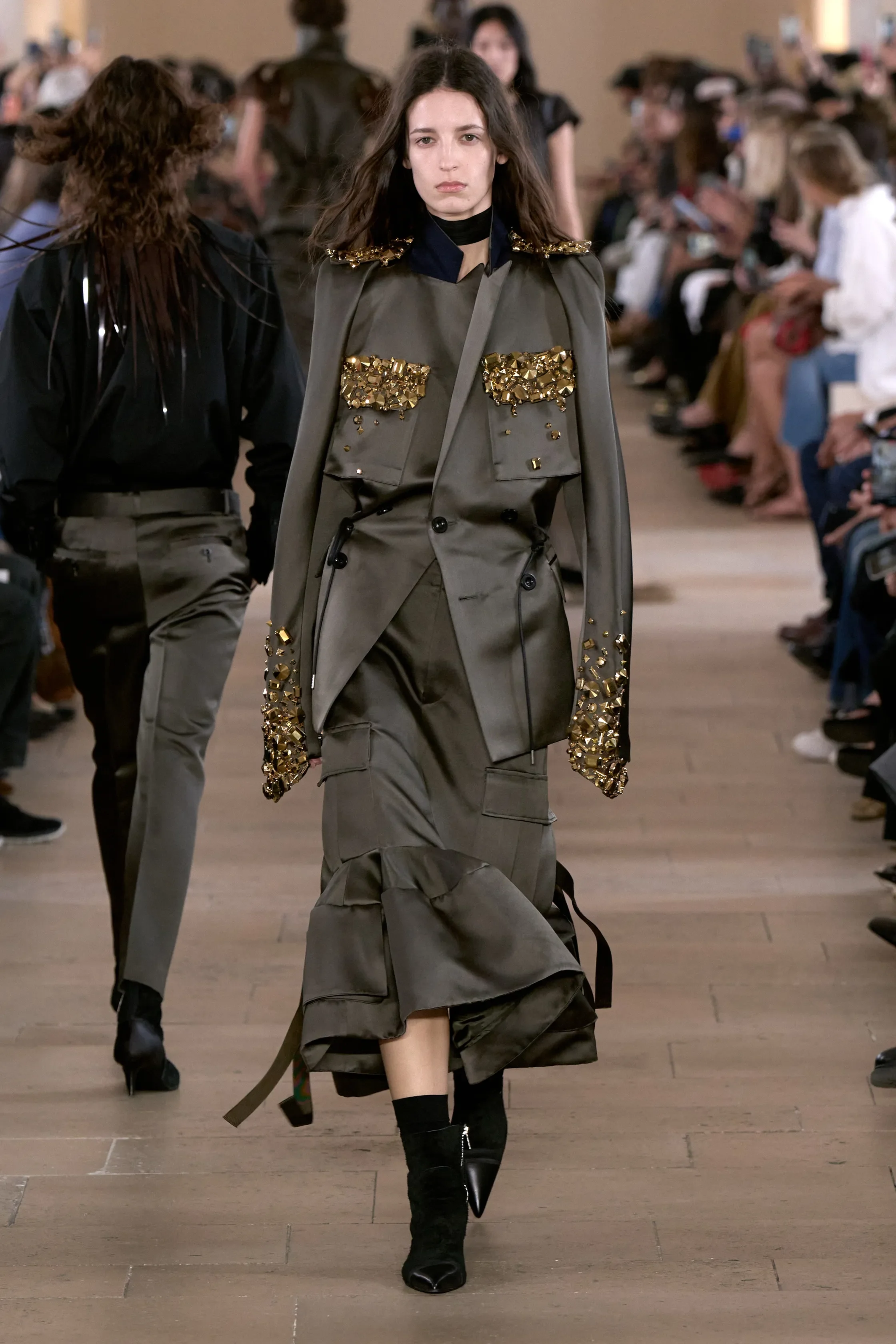
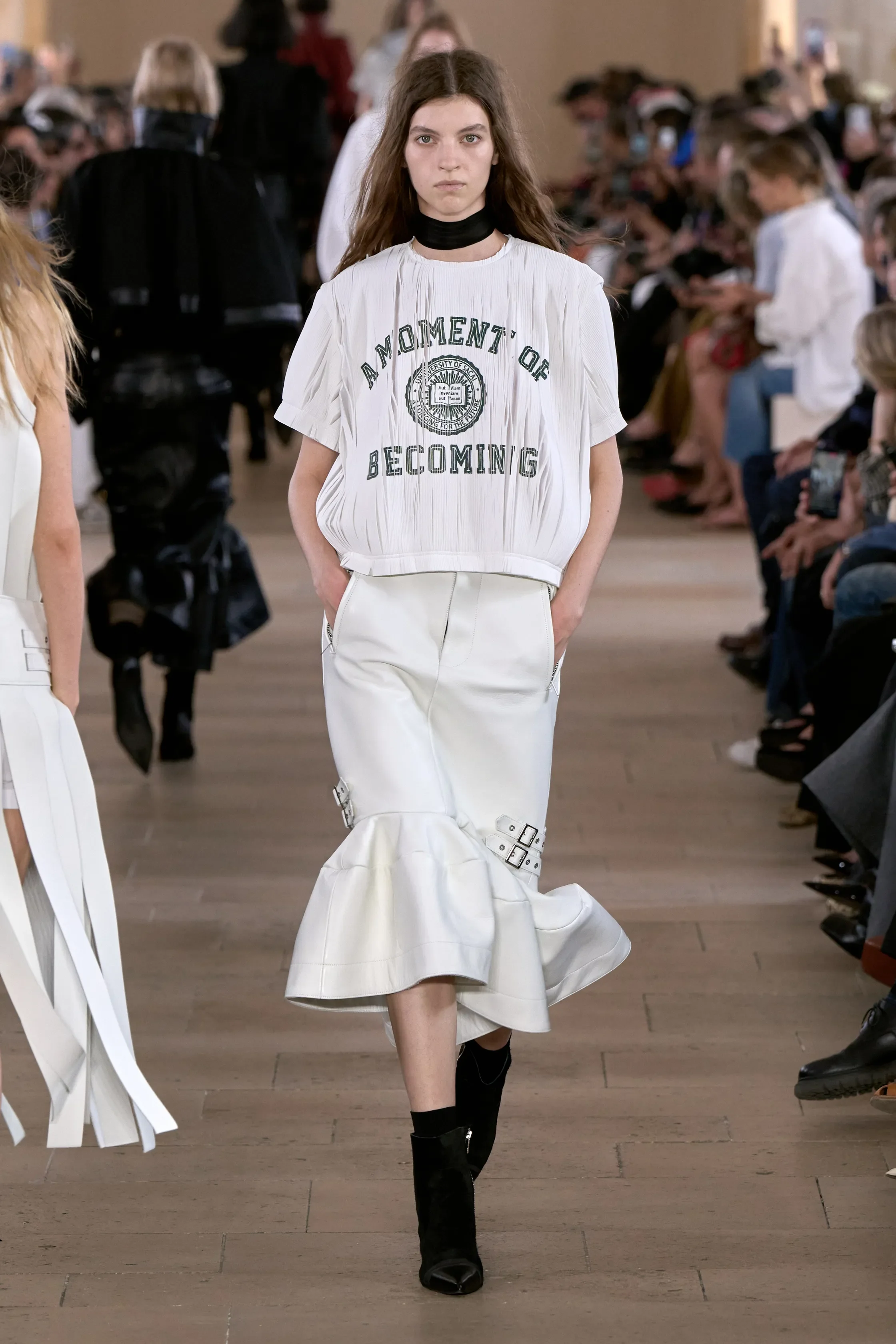
“A Moment of Becoming” reads across the tops in Sacai's SS27 collection. For Chitose Abe, becoming means making room for both the good and the bad, since only together they make us human. Look at the garments and you can see its stages, with all their ambivalence, vulnerability and resistance. In the darker, heavier looks lies the softness. In the lighter ones, the attitude.
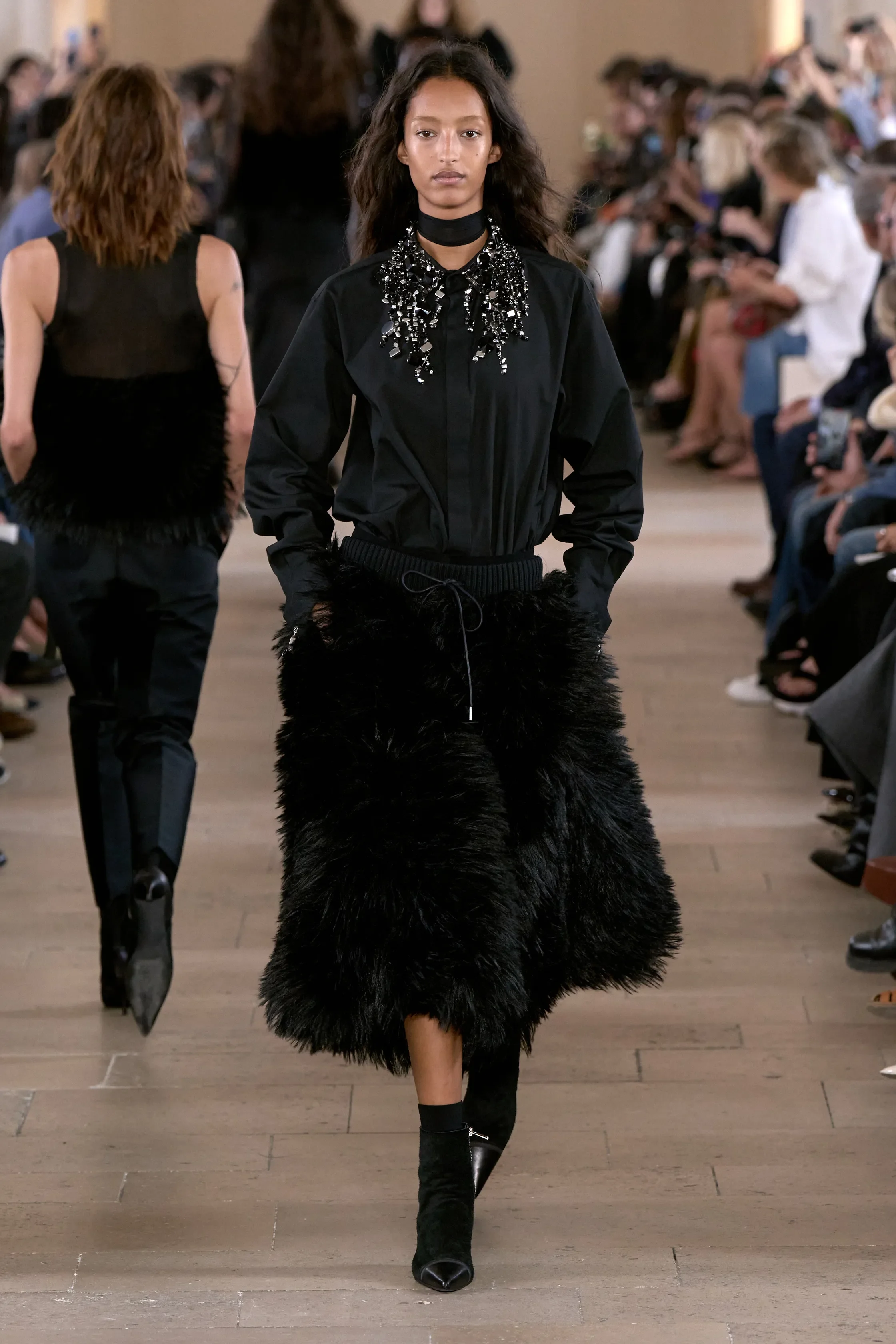
A military jacket with gilded studs sewn onto its pockets. A sheer slip dress printed with fur, finished with a fur-trimmed hem. Tassels at the shoulder, feathers, oversized utility pockets, leather cuts. Each piece accepts softness in the midst of flux. The military motif meets delicacy halfway. Even the knitwear plays both sides with a cable-knit pattern printed onto fluid fabric, finished with real cable-knit sleeves and hem.
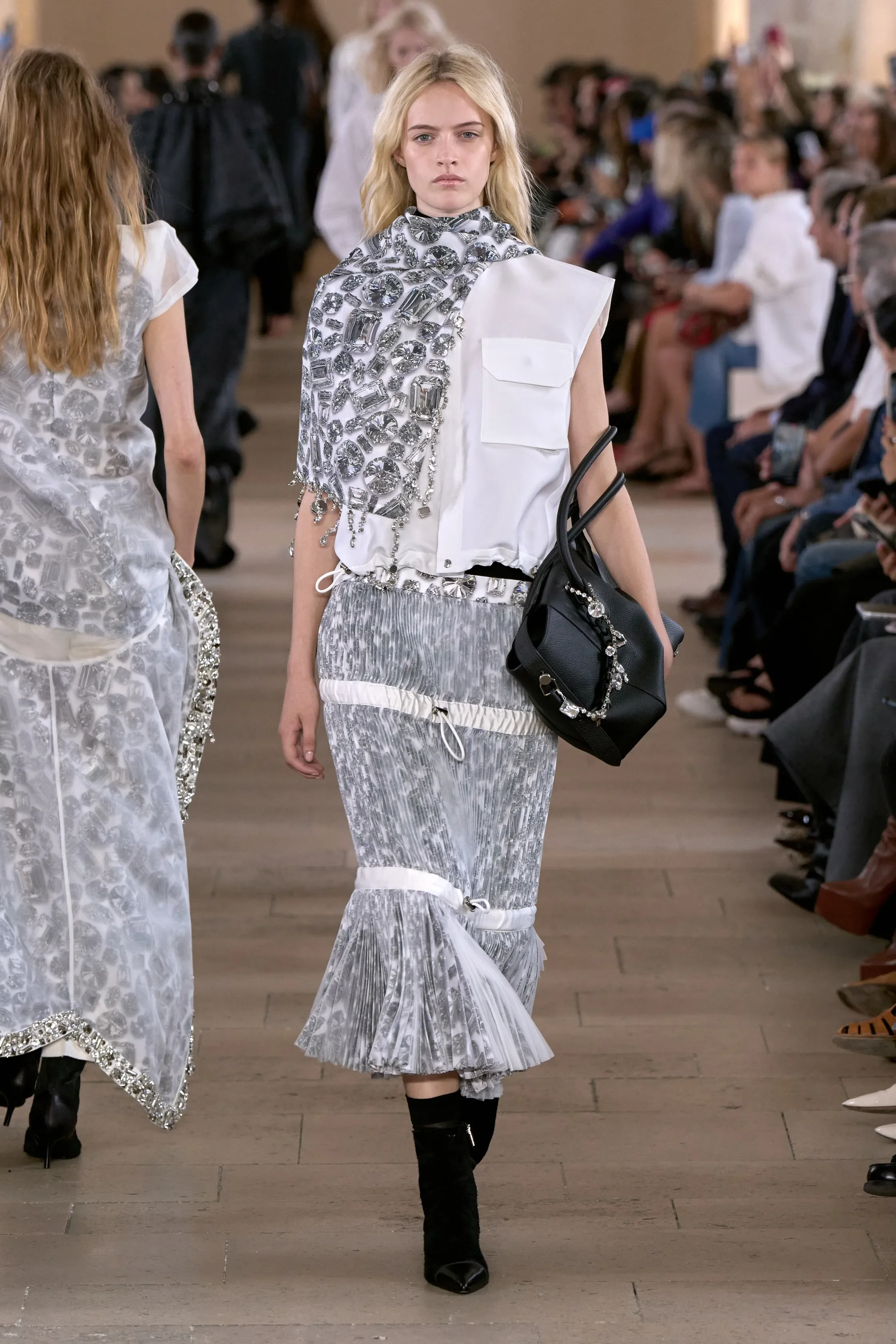
When the collection moves into whites and ivory, confidence arrives. The restless moment of becoming has passed. White leather slashed into stripes. A flounced skirt strapped with buckles. Crystals spilling from a denim collar. Ivory satin trousers under a sheer tunic edged in stones.
Abe's Paris show this season was a reminder that becoming isn't linear. It is more like a messy moodboard of colours, prints, patterns, and big pockets.
CHANEL
review by MARIA MOTA
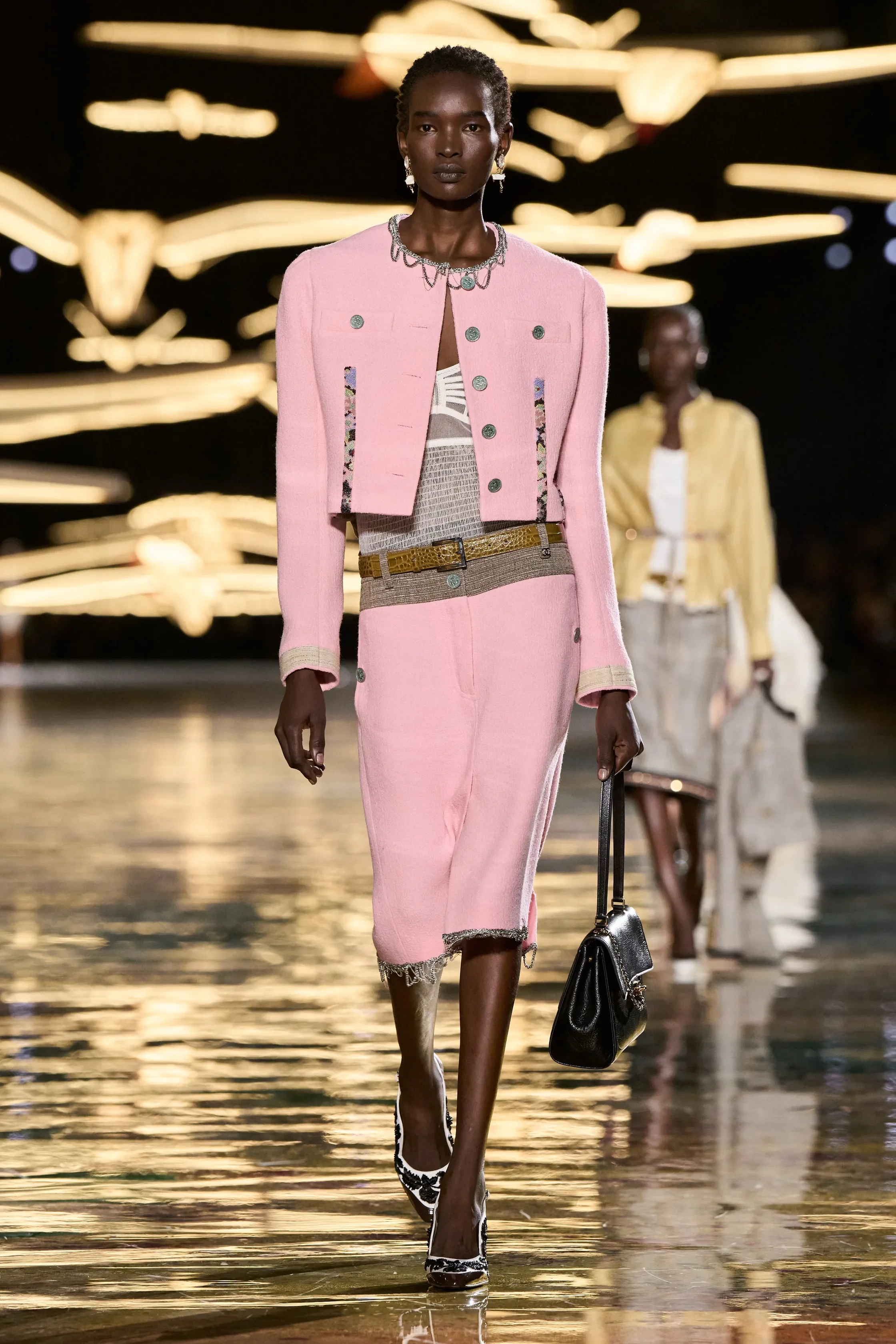
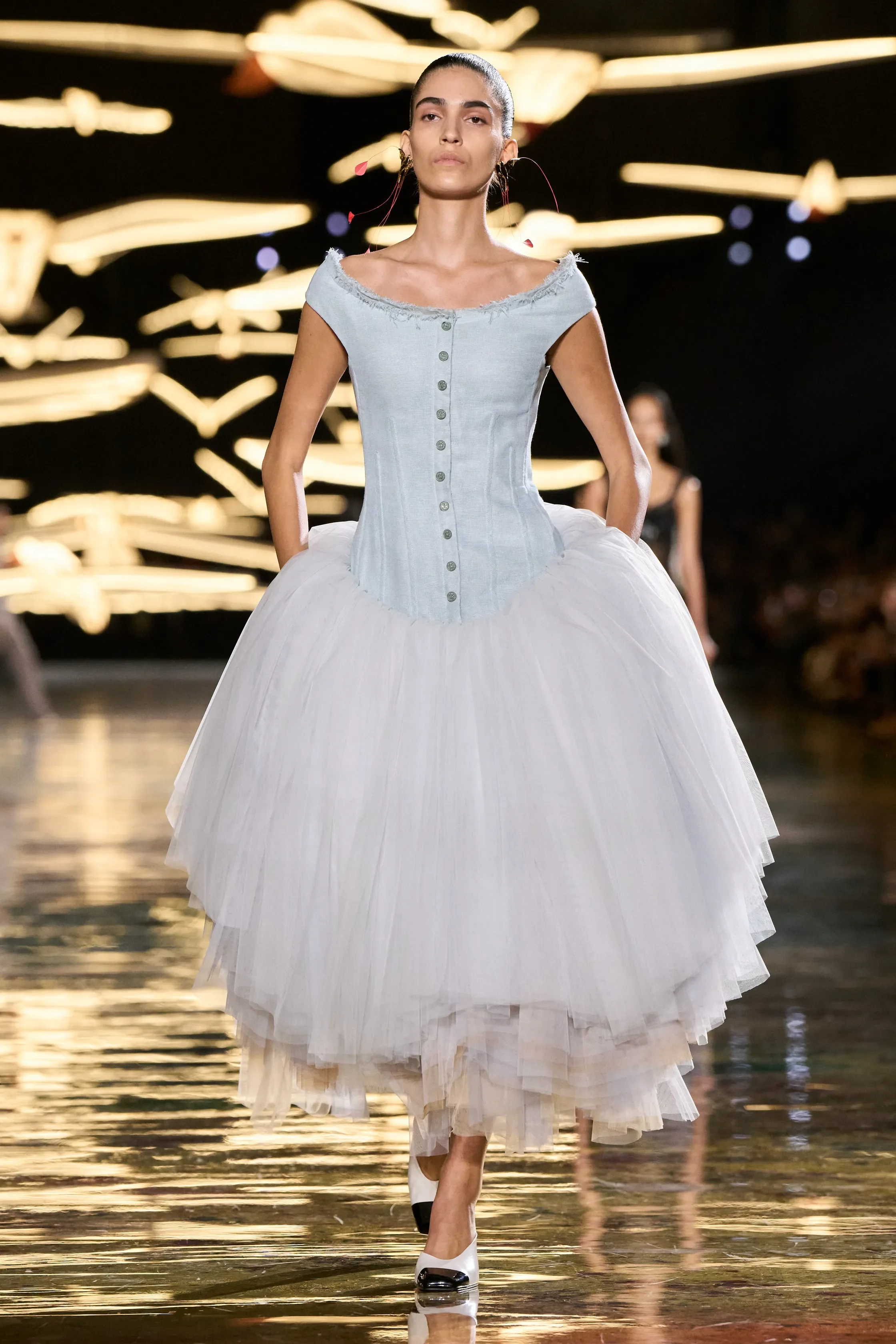
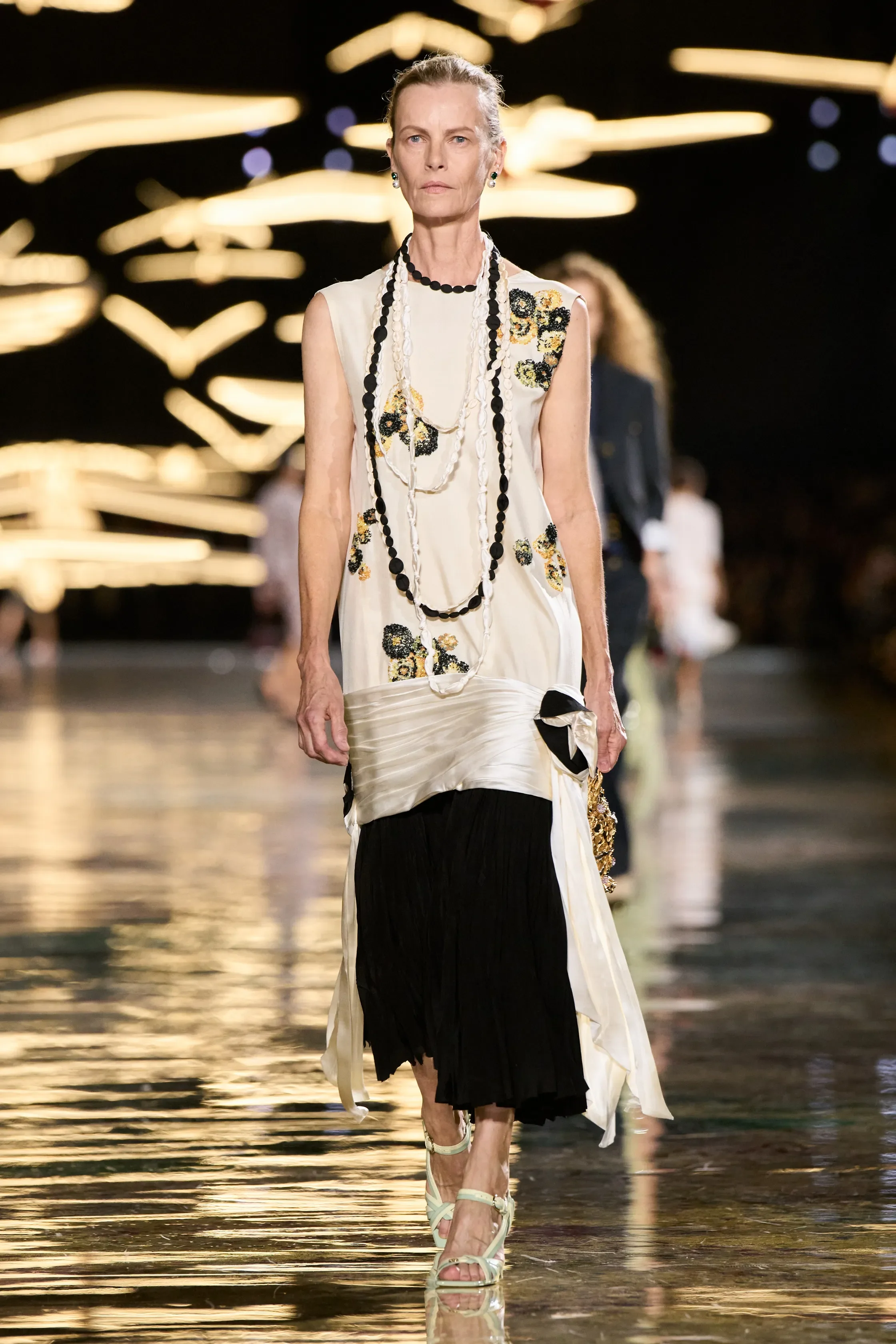
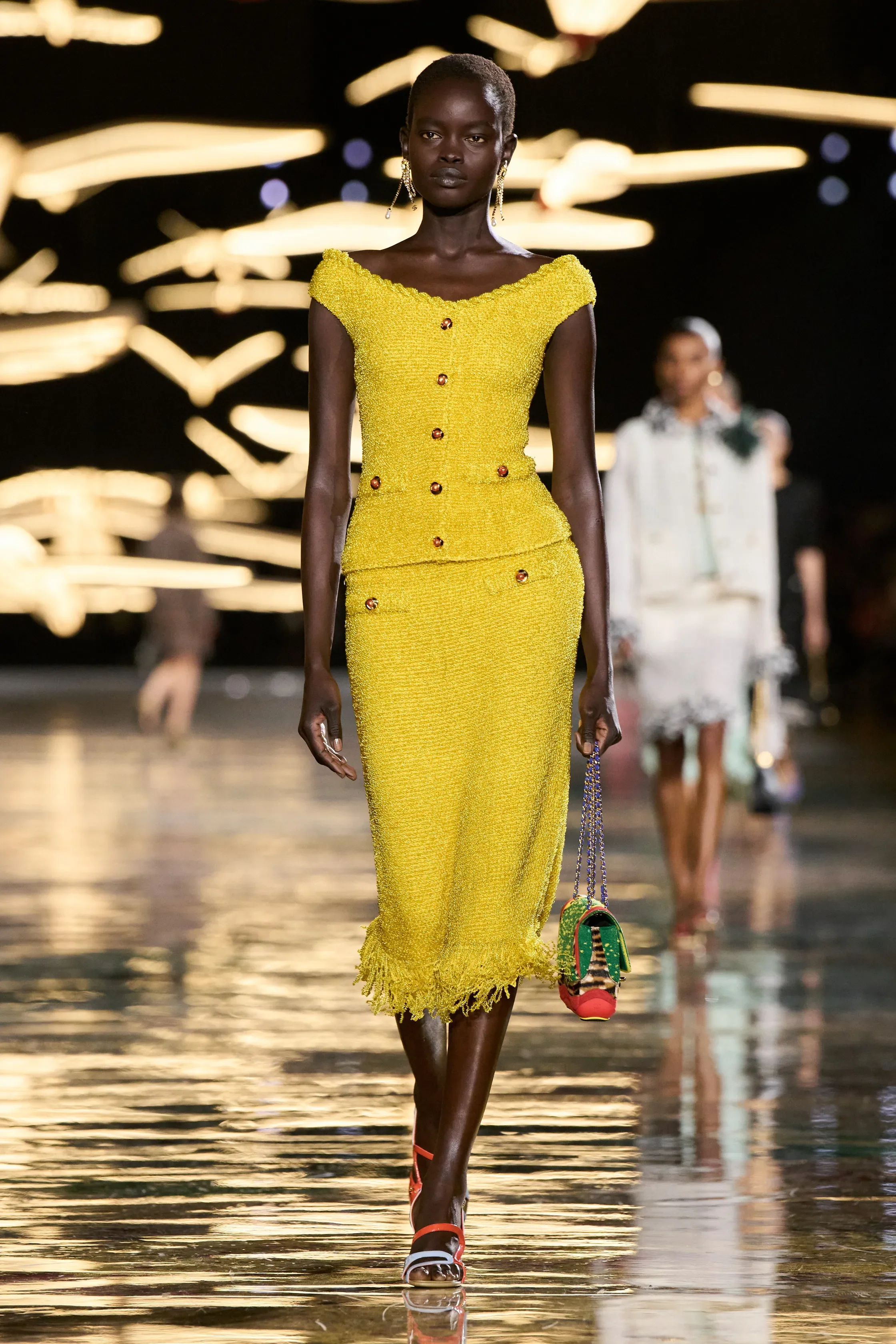
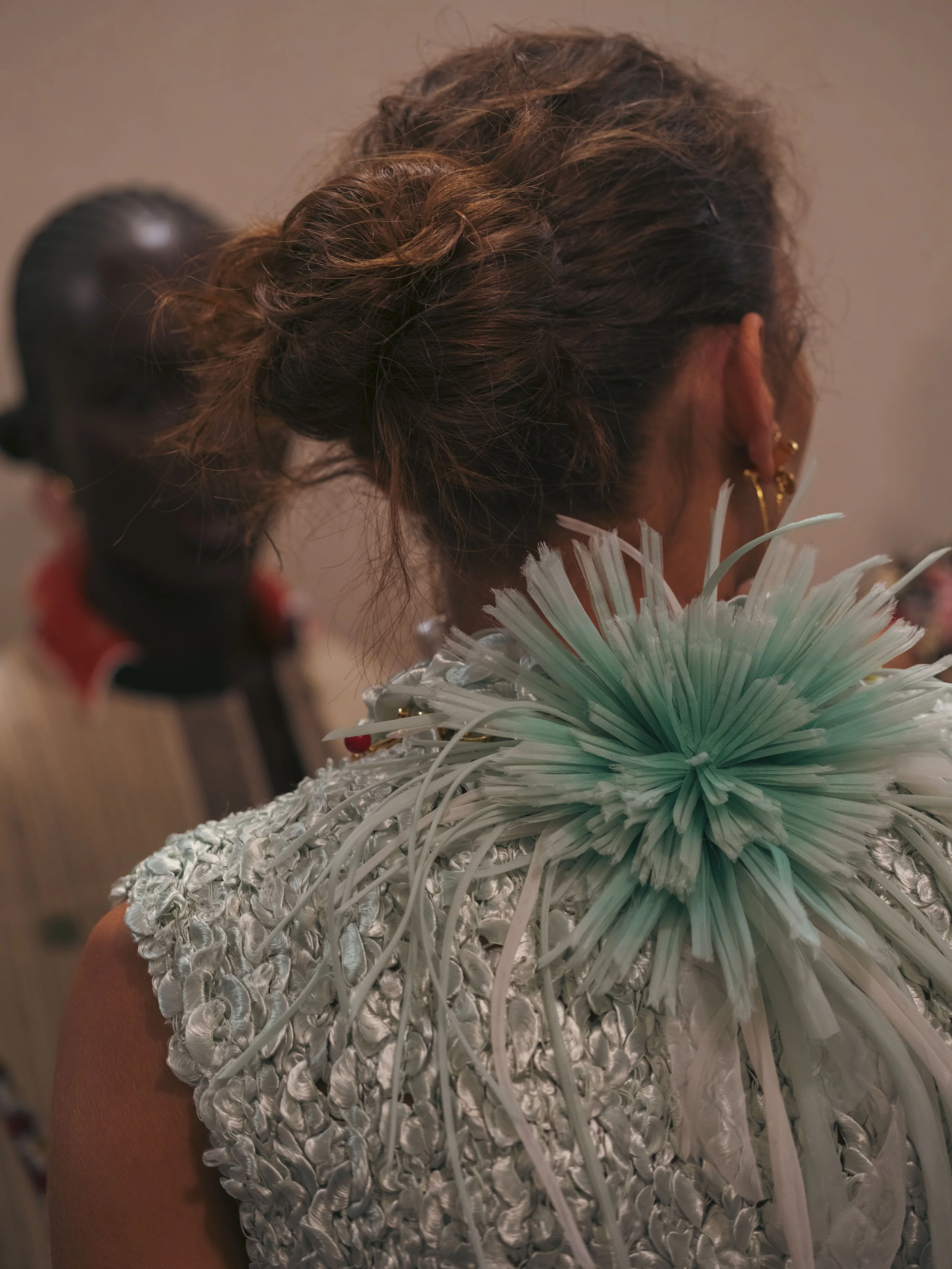
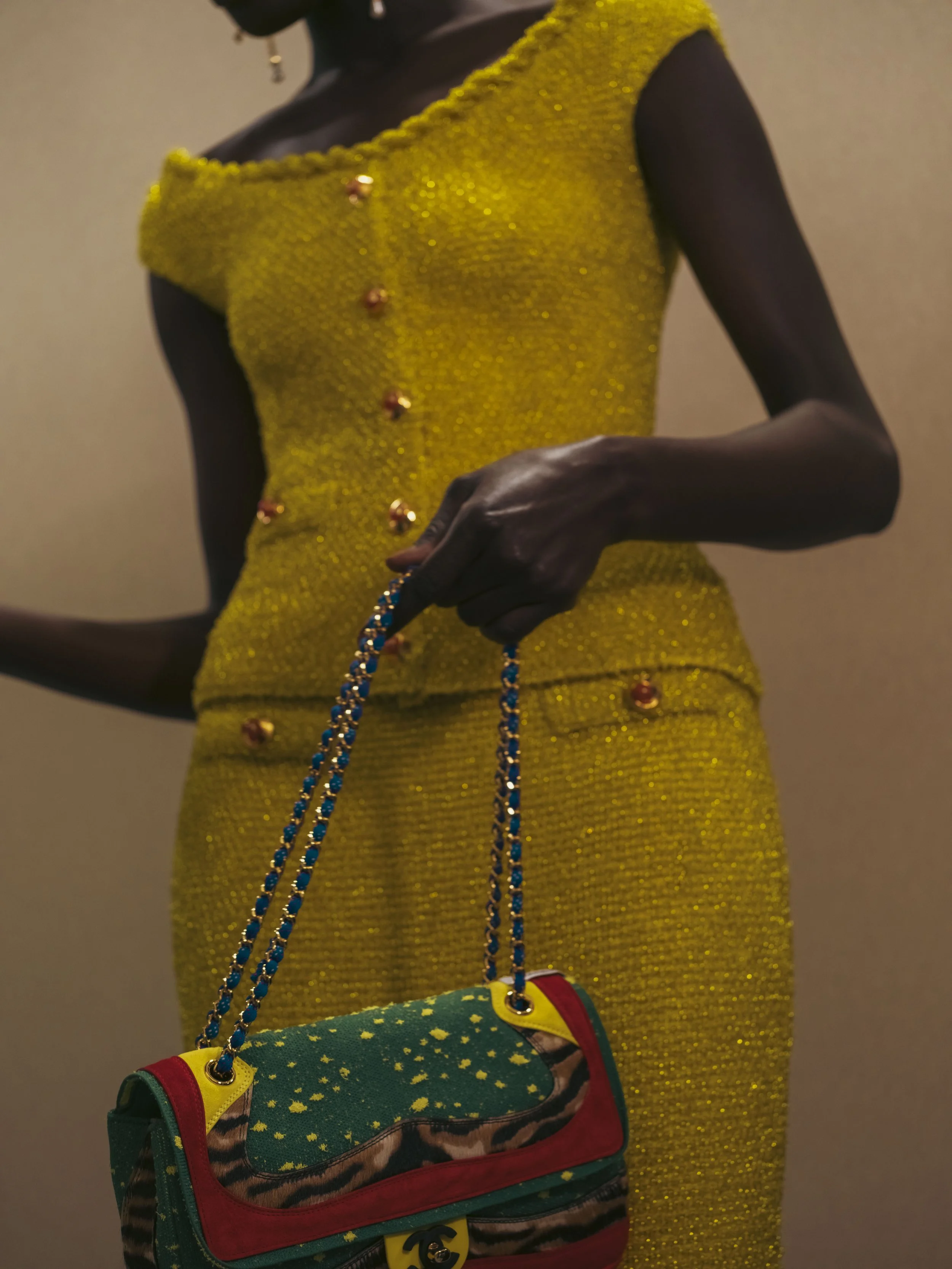
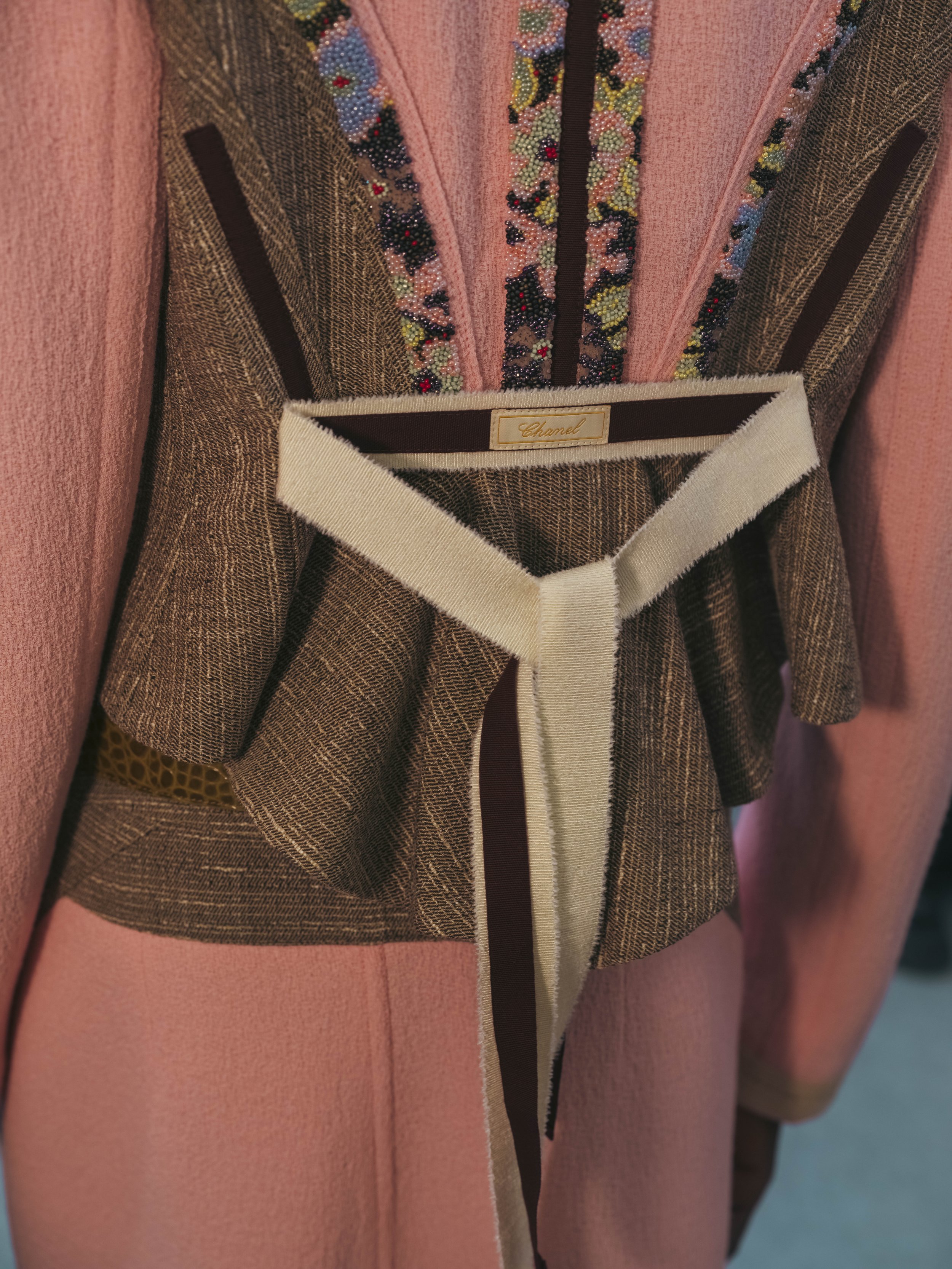
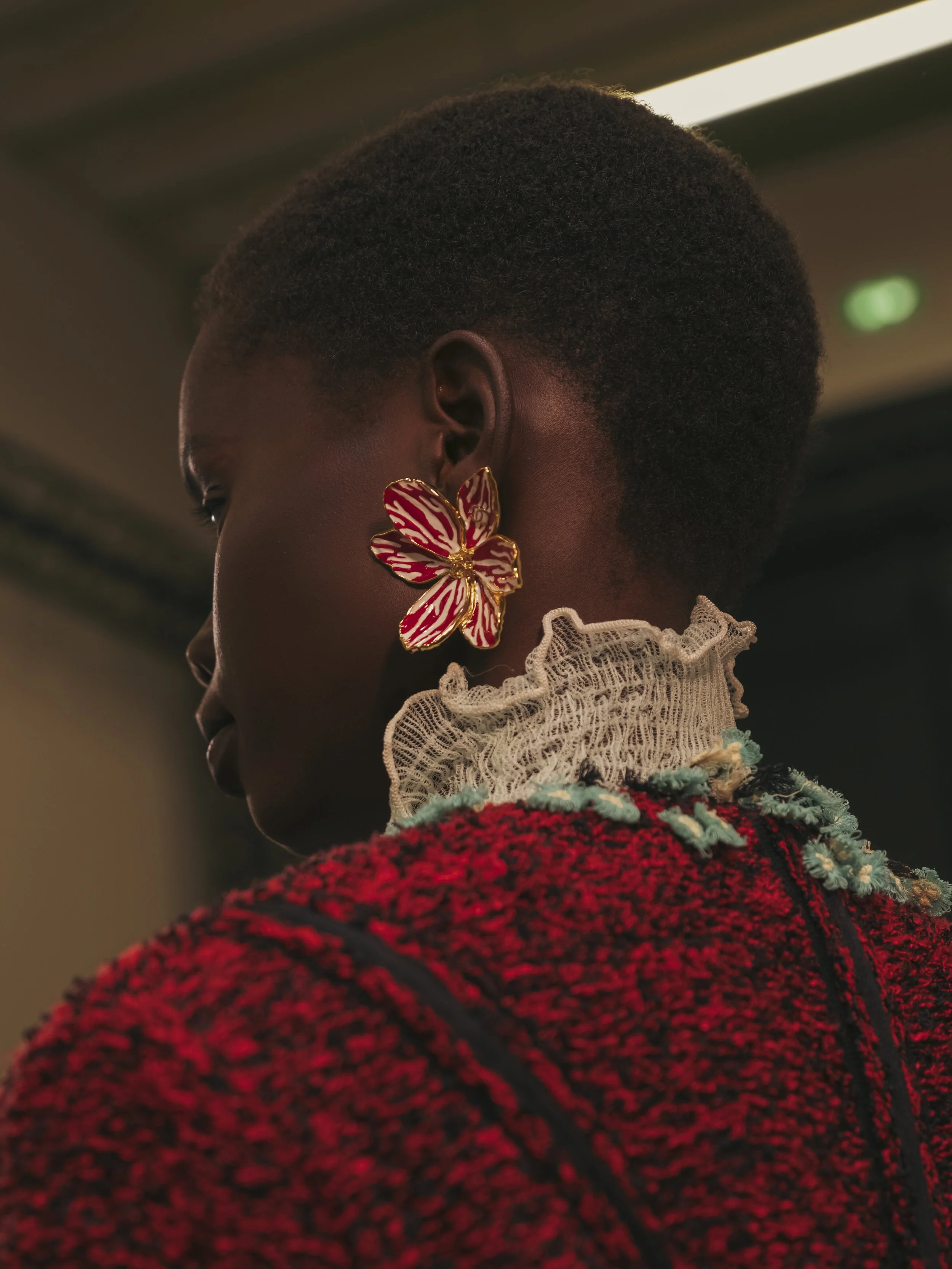
all images courtesy of CHANEL
For Spring/Summer 2027, Matthieu Blazy turns his attention to Gabrielle Chanel before she became Chanel, and the many identities she inhabited along the way.
“This is not a historical collection; it’s a collection about Gabrielle Chanel’s layered stories,” Blazy explained. And so, rather than simply mining the archives for familiar codes, he looks at the woman who created them. The result is a collection about transformation and, above all, freedom: the freedom to evolve, to borrow from the past without being confined by it, and to recognise that we are never just one fixed identity.
The show begins and ends with Gabrielle’s own 2.55 handbag, carried by model Dyanira Hurbuscher from the house’s Patrimoine archives. It is a deeply personal gesture, grounding the collection in something tangible before taking us on a journey through Gabrielle’s past, present and future. From Edwardian corsetry and nineteenth-century references to the revolutionary tailoring that would eventually become her signature, the clothes trace a woman in the process of becoming, and having fun with it.
There are echoes of Édouard Vuillard in the vintage-inflected silhouettes, alongside 1920s-inspired dropped-waist dresses, embroidered with necklaces and camellias that almost trick the eye into believing they are separate accessories. Yet nothing is quite as it seems. Dresses transform into capes, while looks that appear to comprise three separate pieces reveal themselves to be a single garment. There is a wonderful sense of dress-up-box playfulness, as if the clothes and accessories have been pulled from the back of a grandmother’s wardrobe and given a new life.
Gabrielle’s greatest innovation was never simply a particular jacket or bag, but the freedom she offered women through clothing. Blazy brings this idea to life through garments designed for movement. Slits running down the front and back of skirts encourage bigger steps, while billowing silks and ballooning dresses float around the body like clouds. There is a lightness to these silhouettes that have an almost ethereal quality, but there’s something wonderfully wearable about them too. The birds suspended above the runway feel like a natural extension of this idea: a nod to the freedom of movement that runs through the clothes.
The spirit of reinvention extends to the construction too. 3D printing finds its way into the accessories, bringing a contemporary approach to the house. Smocked stretch tweed reimagines one of Chanel’s most recognisable materials, making it more flexible and malleable and allowing the suit to move with greater ease. Sharp, raw-cut sleeves recall Gabrielle’s own habit of cutting into clothes and fabrics on models just seconds before they walked the runway, a reminder that her approach to design always had something quite punk about it.
The soundtrack deserves a mention of its own. Moving between Lesley Gore’s You Don’t Own Me, Arrival of the Birds by The Cinematic Orchestra and a-ha’s timeless Take On Me, it shiftes between defiance, poetry and pop nostalgia. Nicole Kidman’s recorded reading of Virginia Woolf’s Orlando adds another layer to the show’s exploration of identity and transformation, which closely mirrors Matthieu Blazy’s idea of Gabrielle Chanel becoming multiple versions of herself throughout her life. Ending on Britney Spears’s Gimme More, remixed by Le Motel and Arthur Brouns, felt like the cherry on top.
What makes this collection and Blazy’s work compelling is that he does not treat Gabrielle Chanel as an untouchable finished idea. She is allowed to remain contradictory, curious and forever evolving. An archive should not be a set of rules; it should be a conversation, a place to question, experiment and begin again. It is this very freedom to challenge, reinvent and move beyond what came before that sits at the heart of Blazy’s vision of Gabrielle. As Blazy puts it, each step Gabrielle took brought her closer to freedom, like a bird taking flight.