
REGENERATIVE FASHION: SEVEN INNOVATIVE MATERIALS AND TECHNIQUES WE NEED TO SEE MORE OF
words by FRANCESCO PIZZUTI
Happy Earth Day, everyone! Today, we celebrate the mother of all mothers — Mother Earth, of course.
When it comes to fashion and environmental consciousness, the conversation is endless, oscillating between “sustainable” solutions that rarely live up to their claims and a complete negation of the industry’s massive environmental footprint. But what’s beginning to feel more interesting is the shift toward regenerative fashion: an approach that moves beyond simply doing less harm and instead asks how fashion can actively repair what it has damaged; restoring soil health, supporting biodiversity, and re-engaging with natural systems on their own terms.
Within this shift, a new wave of materials and processes — often referred to as next-gen — is emerging. To mark Earth Day, we’re spotlighting seven we’d like to see more of across the industry.
Because in a moment of environmental uncertainty, where the largest powers continue to extract, pollute, and exhaust, fashion is one of the spaces where change can still be visible, material, and immediate.
INFINNA and CIRC
Circular fibres


images courtesy of NICCOLÒ PASQUALETTI
Transforming textile waste into tomorrow’s fashion, innovators like Infinited Fiber and Circ are redefining circularity. Infinited Fiber turns cotton-rich discarded textiles into Infinna, a virgin-quality, soft, cellulose-based fibre that can replace virgin materials in new garments. Circ tackles polycotton and other blended textile waste, separating it into raw materials such as dissolving pulp and polyester monomers for reuse in future production. Together, these technologies show how old clothes can become high-quality new fibres instead of ending up in landfill or incineration, helping fashion brands reduce reliance on virgin inputs, cut waste, and move closer to true textile-to-textile recycling at scale. Crucially, fashion houses are starting to incorporate these fabrics in their creative process, with brands like Niccolò Pasqualetti collaborating with Circ for his Spring 26 collection.
TREEKIND
Leather made from green waste


image via biophilica.co
Leather in fashion remains controversial, with obvious environmental and ethical issues surrounding real leather, and more ecological “vegan” leathers actually being made mainly from non-recyclable synthetic materials. Biophilica offers Treekind: a compostable, sustainable leather alternative made from green waste, which can be recycled and avoids petroleum-based polymers. It was tested based on manufacturability, consistency, and scaling production for commercial applications, and the results were very promising.
SPIBER
Biofabricated protein fibres


images via spiber.inc
Spiber, a Japanese bio-venture, is harnessing fermentation technology to create innovative fibres for next-generation textiles. Made from protein, a fundamental component of human skin, the fibres are fine, smooth, and gentle to the touch, helping enhance garment comfort. Notably, Spiber’s Brewed Protein fibres are the only ISO-defined protein fibres produced through precision fermentation at an industrial scale. During Paris Haute Couture Fall 25 fashion week, Spiber and Dutch designer Iris van Herpen unveiled their first collaboration: a bridal look that marks the start of a creative partnership between science and art, reflecting a shared ambition to redefine fashion’s future.
SPINNOVA
Low chemistry alternative to sustainable fabrics
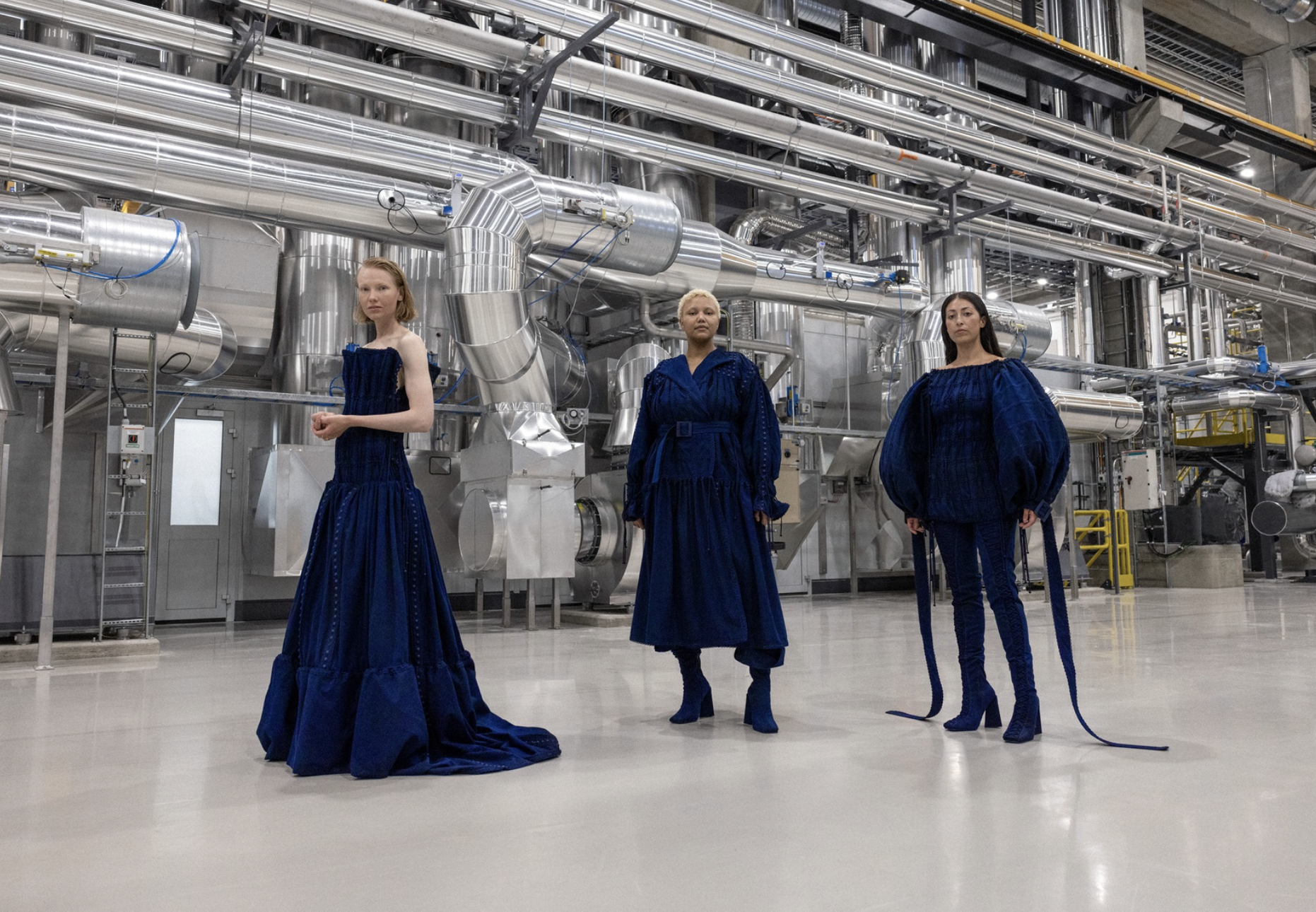
image courtesy of SOFIA ILMONEN
Sustainable fabrics — the so-called MMCFs — are often treated and developed with lots of unsustainable chemicals, which can end up undermining the initial ecological effort. Spinnova is moving exactly within this sphere of innovation, developing technology for making textile fibre from wood pulp or waste, without harmful chemicals or dissolving. Their fibre can be used in similar applications as cotton, such as trousers, denim, overshirts, jackets, T-shirts, and accessories. Spinnova has already released multiple products with global brands like Adidas, H&M Group, and Sofia Ilmonen.
BEYOND50 DENIM PROJECT
Cottonised hemp

image via fashionforgood.com
Regenerative fashion technologies go beyond just recycling, with innovations like cottonised hemp being one of the most brilliant. Hemp, in fact, can be grown in regenerative agriculture systems, it improves soil structure and biodiversity, requires less water and fewer inputs than cotton and, when cottonised, it becomes compatible with existing textile systems — doesn’t get much more regenerative than this. The Beyond50 Denim project specifically highlights cottonised hemp combined with greener chemistry to make denim, which, for a long time, has been forced to rely only on conventionally cultivated cotton, restricting hemp inclusion to only 20% due to technical and perceptual barriers. Beyond50 is now trying to facilitate denim’s transition to more sustainable alternatives.
KINTRA FIBERS
Bio-based polyester alternative


images via kintrafibers.com
Polyester is a really hard material to avoid these days, it is practical, warm and adaptable to different circumstances, yet its environmental impact is truly damaging. Kintra developed a bio-based polyester alternative designed to mimic the performance of conventional polyester without its end-of-life problems. It is made from bio-based monomers instead of fossil fuels, is designed for circularity, intentionally biodegrades in aerobic environments, and is fully compatible with existing textile machinery.
KELSUN
Seaweed-based fibres

images via stellamccartney.com
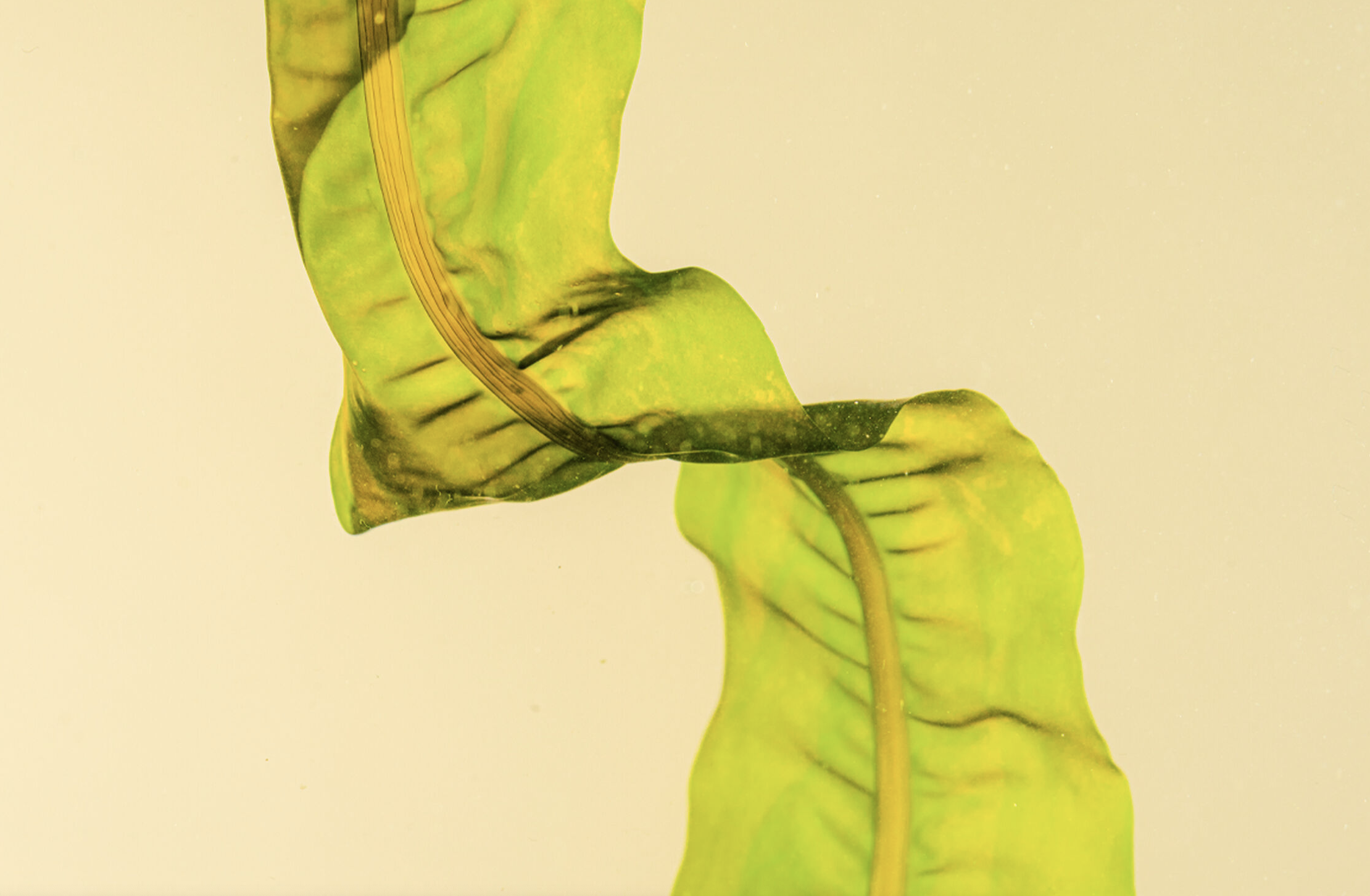
Seaweed is one of the planet’s most regenerative organisms, absorbing carbon in the ocean much like trees do on land. Harnessing this natural power, Kelsun is a bio-based fibre developed by Keel Labs by transforming fast-growing seaweed into a versatile material for nonwovens and textiles. Through extraction, formulation, and spinning, the seaweed is refined into fine filaments and yarn that require no fresh water or arable land and decompose naturally. Most recently, Kelsun debuted as a seaweed fabric at Stella McCartney’s Summer 2024 runway show, marking a striking step forward for next-generation materials.
