
SWEATERS, CRUISING, AND THE LORE OF MAGLIANO
words by VERONICA TLAPANCO SZABÓ
Luca Magliano is shaping up to be the poster boy for Italian fashion’s future — and for good reason. Over the past few seasons, collection after collection, we have watched him rework what “Made in Italy” can look and feel like. Bologna-native, he studied at the city’s Academy of Fine Arts before stepping away to cut his teeth under Alessandro Dell’Acqua. When he eventually returned home, Magliano was born. Soon crowned Vogue’s Who’s On Next award, it was a win that launched him straight onto the Pitti stage. And that, really, is where the story begins.

image courtesy of MAGLIANO
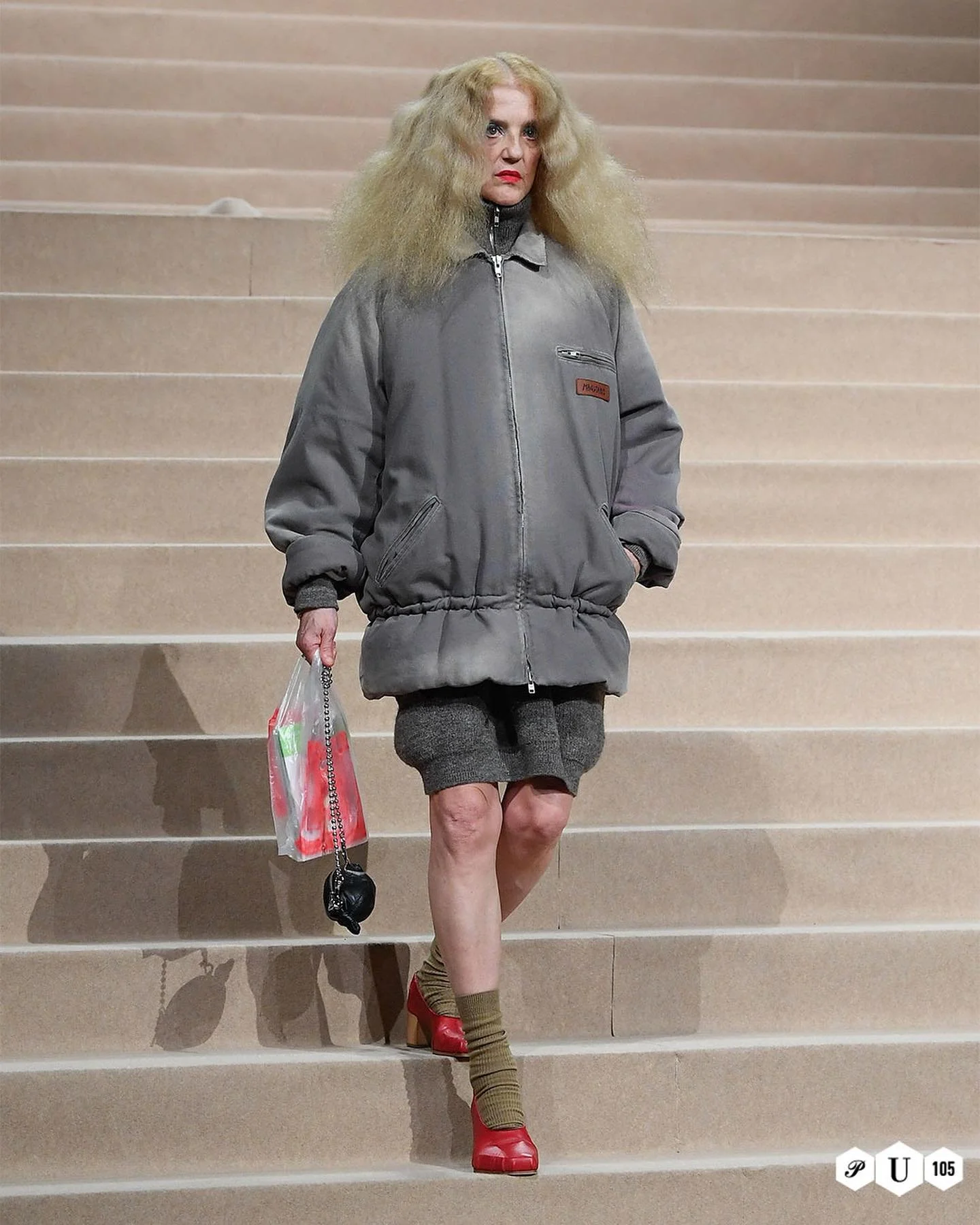
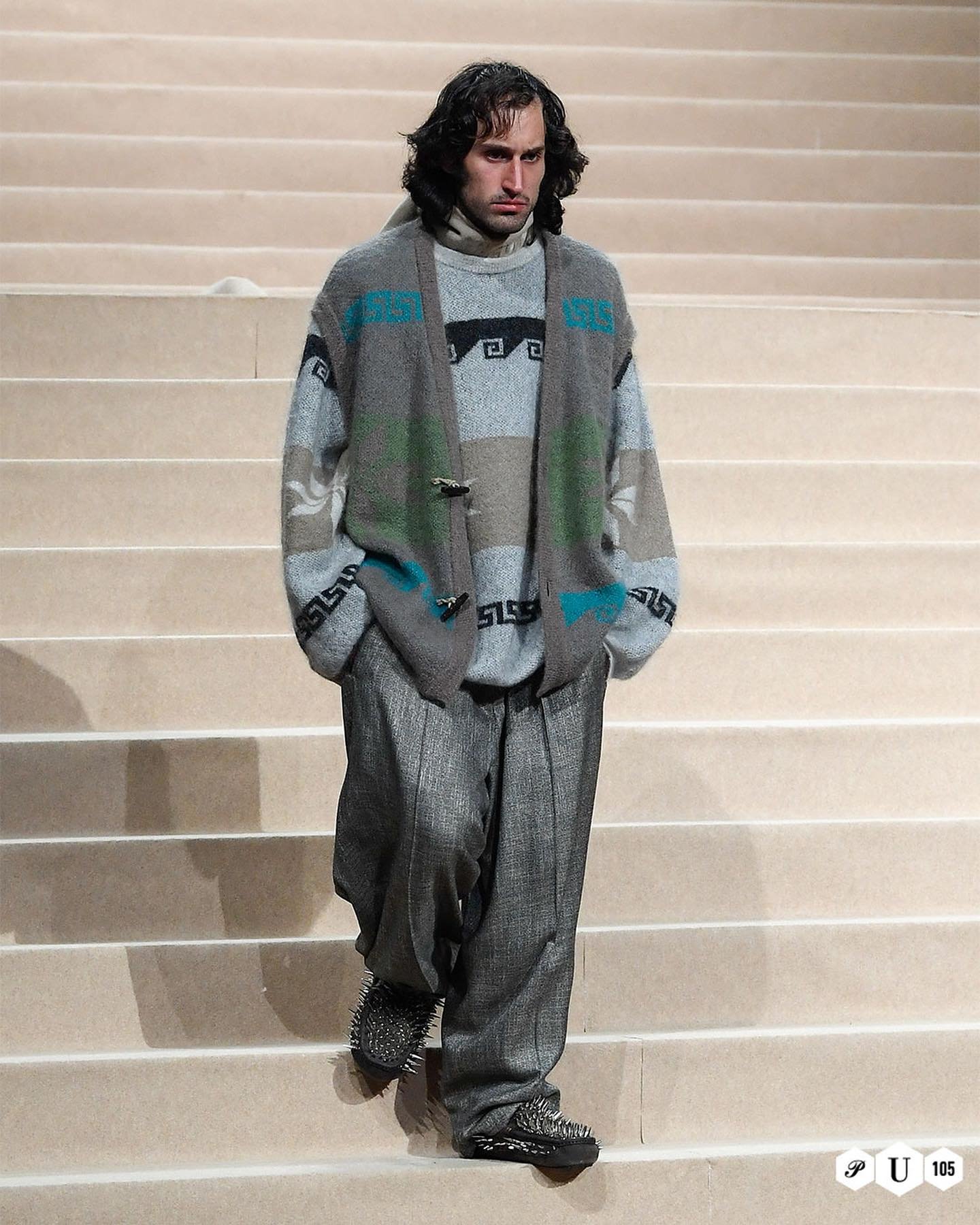
images via @pittiuomo_official
Invited to Pitti in 2024, as a guest designer, a rare honour previously granted to the likes of Raf Simons, Jonathan Anderson, and Grace Wales Bonner he set out on a mission to toy with the so-called “fundamental codes” of classic menswear. For the occasion, he swerved the grand Florentine palazzos typically reserved for the esteemed men’s trade show, opting instead for a sports arena on the city’s outskirts — a choice that signalled the first of many divisive gestures. The bleachers were stripped, replaced by a towering, cream-carpeted staircase from which models descended to an ear-splitting, industrial soundtrack. Much like Martine Rose in London, Magliano designs like an anthropologist, with his gaze set on Bologna, its streets, and the characters who have drifted through them, both in the past and the present. Magliano is interested in the exposure of the awkwardness, different bodies, and the tension of clothes that don’t quite behave like they are supposed to — this is where his queerness becomes legible as a methodology of making.
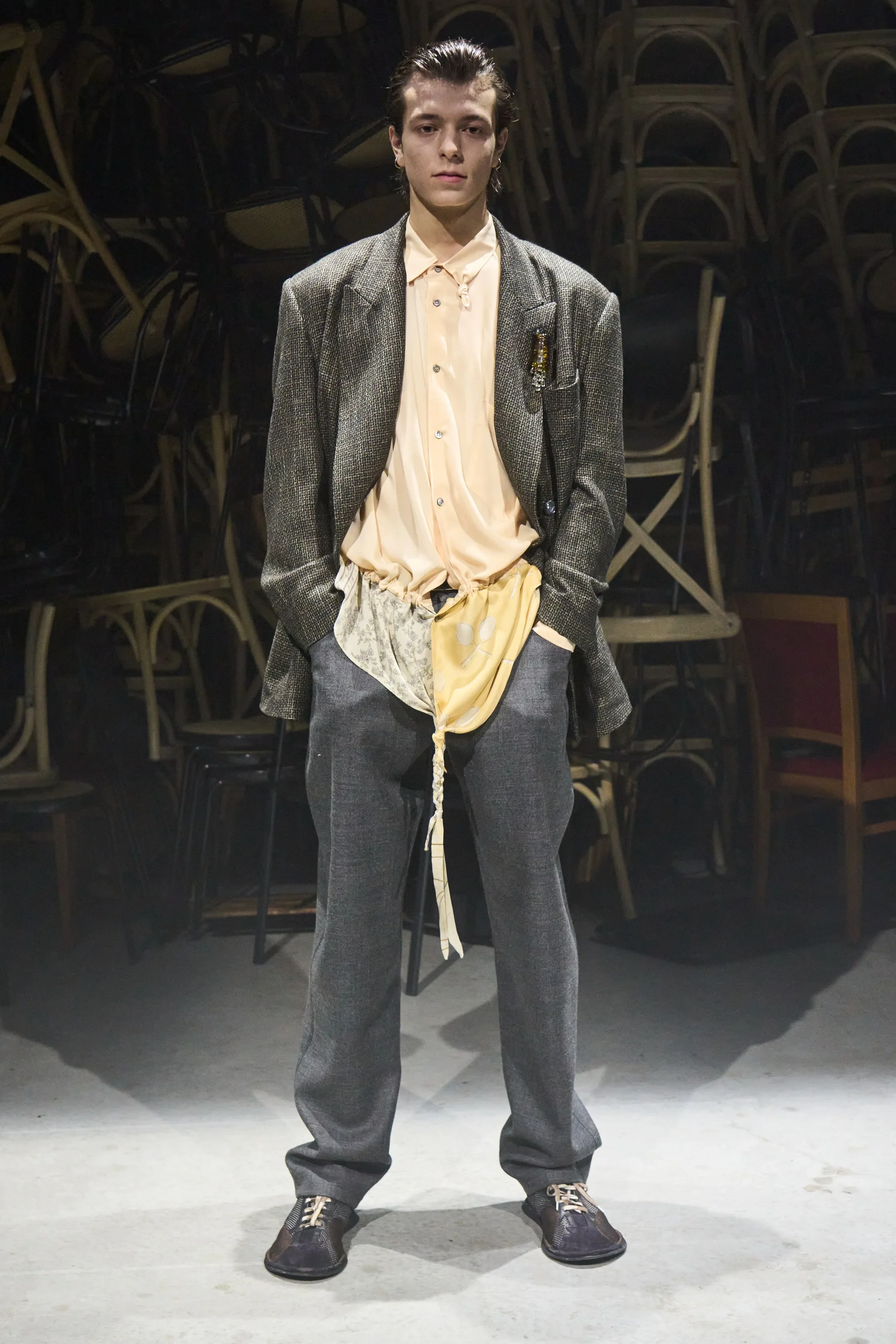
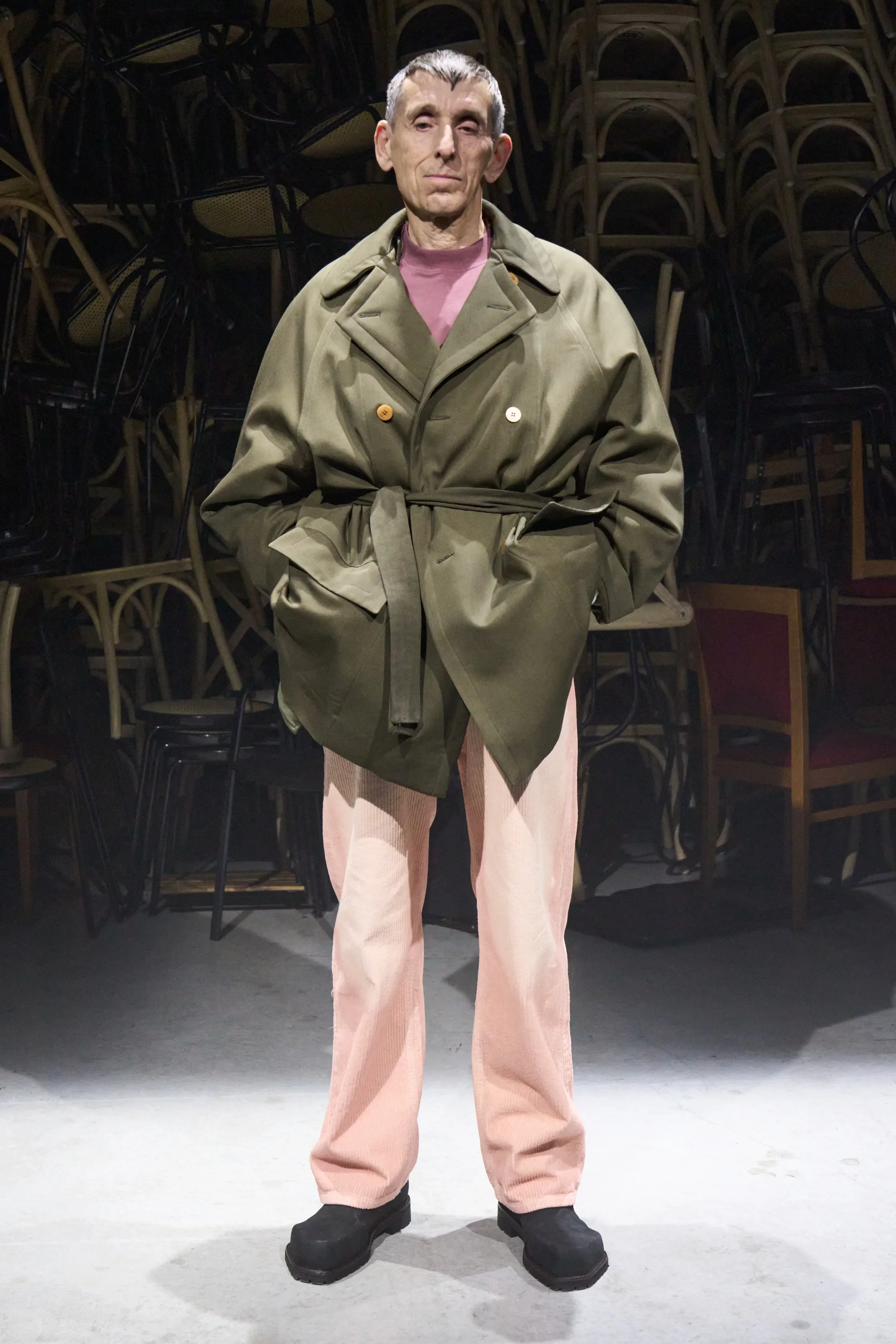
images courtesy of MAGLIANO
Italian fashion has, of course, long been shaped by gay men; Dolce&Gabbana built an empire on this hyper-virile fantasy, from the oiled Sicilian bodies in campaigns to the more recent gilded Catholic Alta Sartoria 2025 show. Queerness is thus sublimated into excess and control. Beyond this example, many other gay designers making Italian menswear remain committed to mastery of perfect tailoring, sharpened silhouettes — essentially creating a masculinity that borders on armour — while Magliano operates elsewhere entirely. His trousers pool at the ankle and jackets are reminiscent of his working class upbringing (they hang on the body like they’ve been inherited). In Magliano's approach rather than fortifying the body, he interrupts its authority and celebrates it by situating it in broader contemporary art forms.
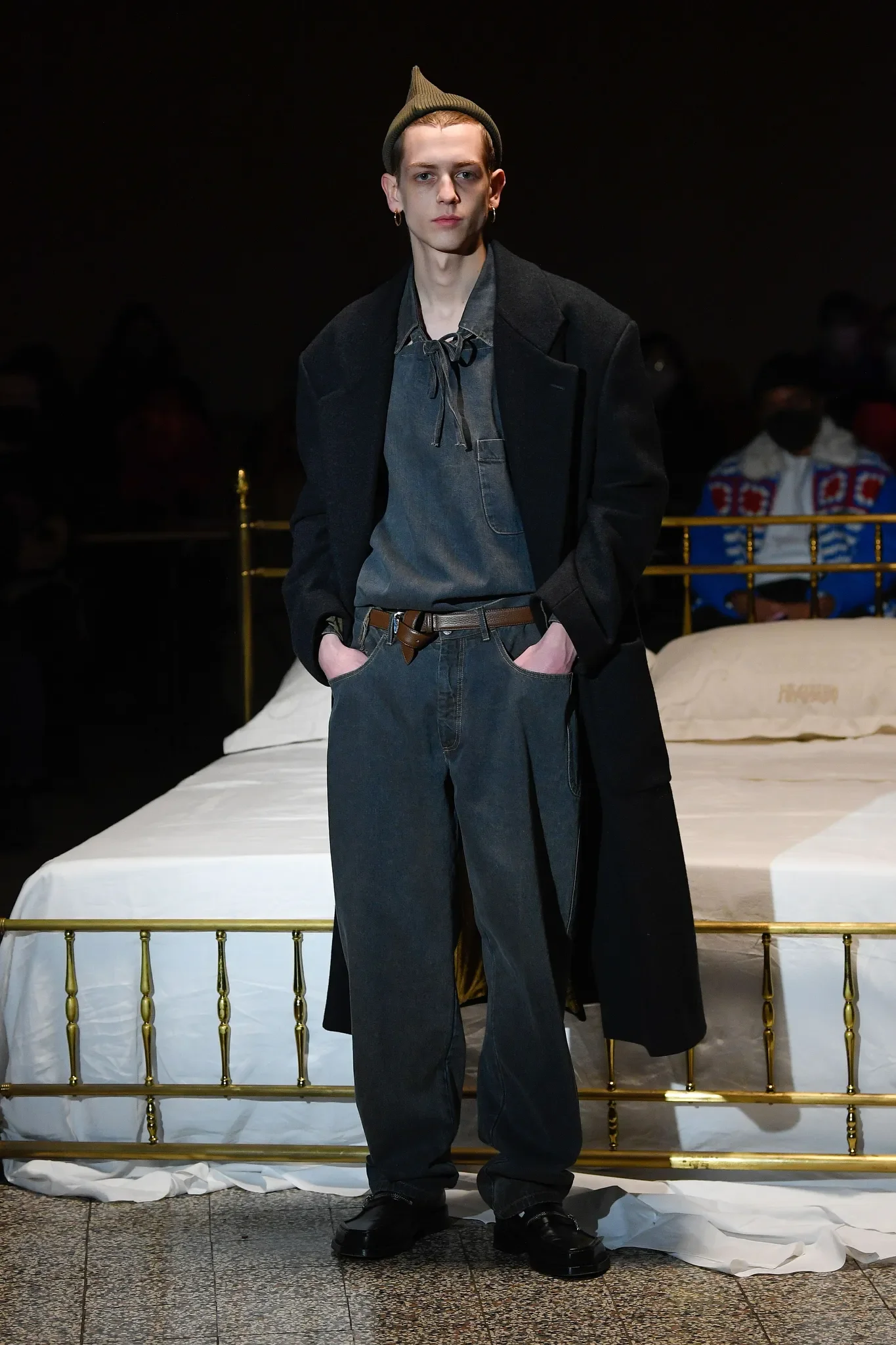
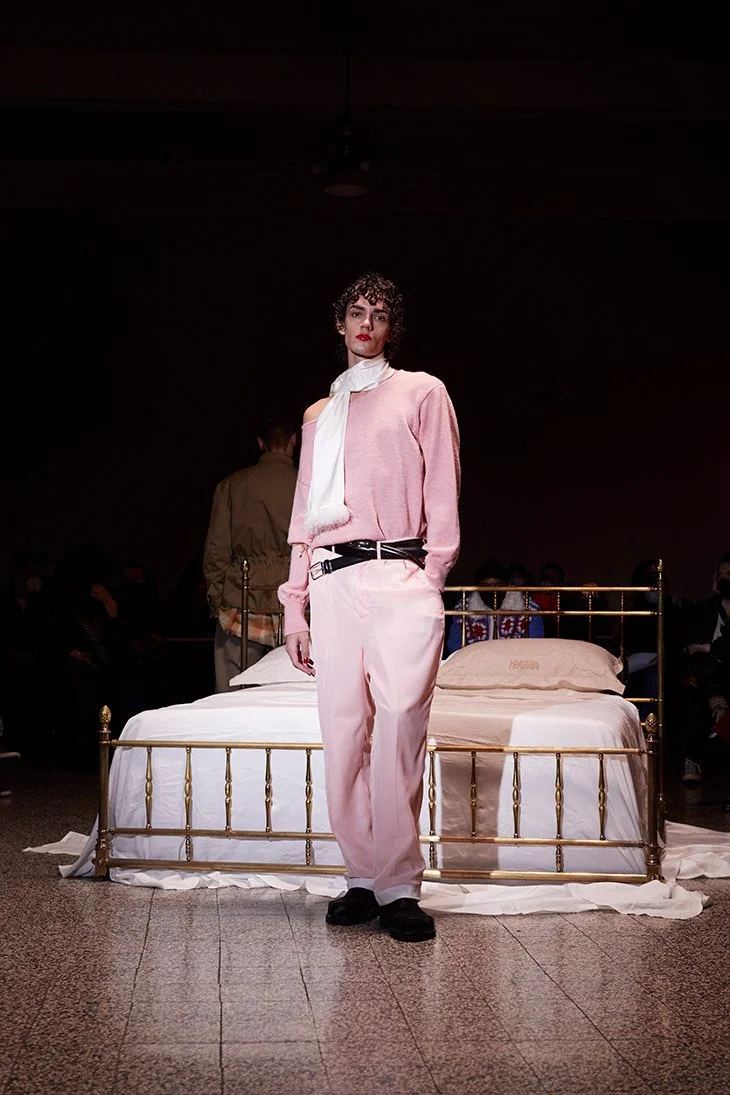
images courtesy of MAGLIANO
Since the very beginning, Magliano has turned to cinema — not for narrative but rather for the atmospheres. His earlier mentioned Pitti Uomo show drew from the final scene of Andrei Tarkovsky’s Nostalghia, framed by a monumental Roman staircase washed in that unmistakably cold, beige-tinged light. Even his first physical show, staged in 2022 at Circolo Arci Bellezza, unfolded in a cultural space beloved by Luchino Visconti himself, where scenes of Rocco and His Brothers were shot back in 1960 — elements that converge into what many have dubbed “magical realism”: a world of deconstructed garments and imagery steeped in Italy’s collective memory. It’s also “queer realism” in a way, as it understands the non-essentiality of flamboyance, finding its outlet instead in the slouchy softness of a pastel sweater in a dimly lit space.
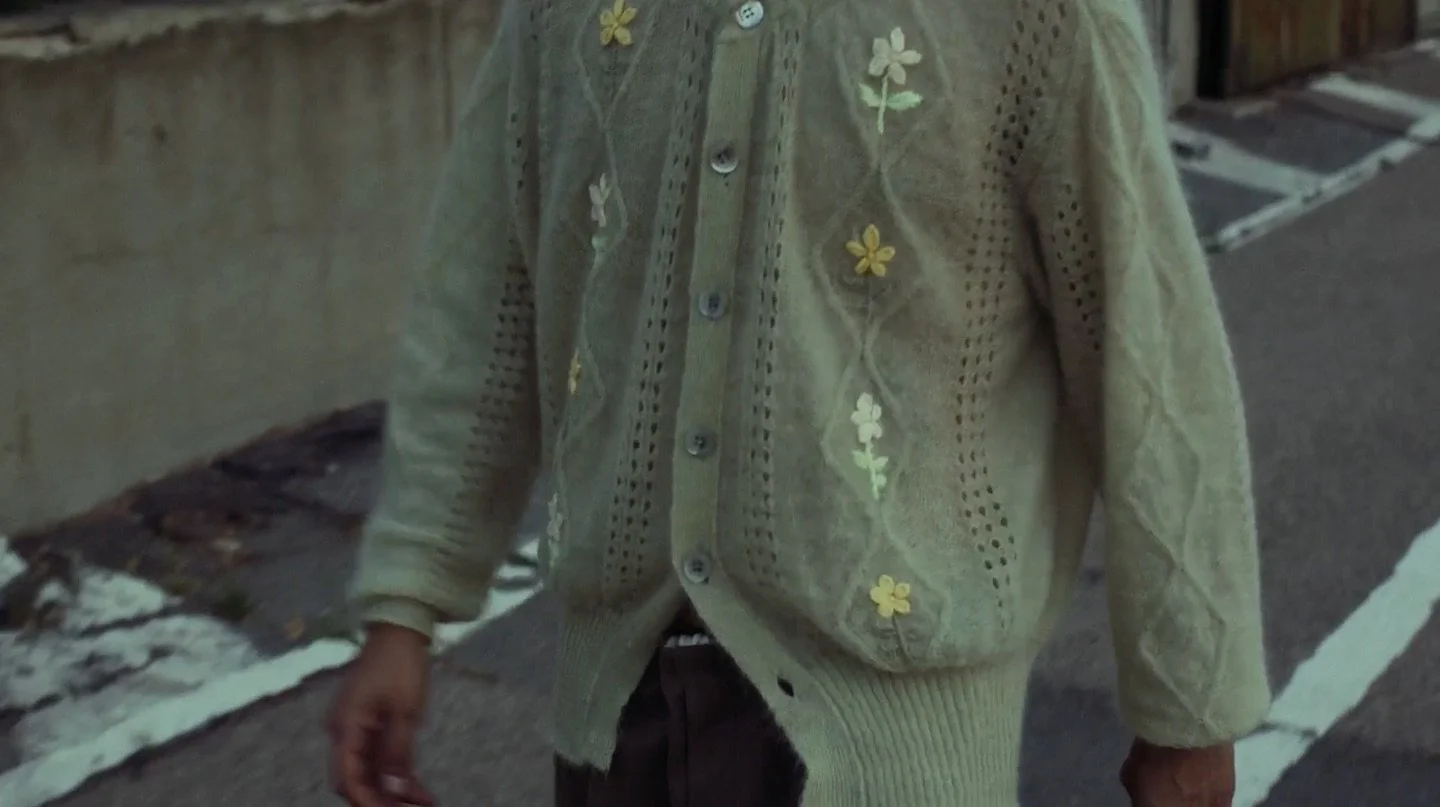
image courtesy of MAGLIANO
Which brings us neatly to the present day. Last season, Luca Magliano pressed pause on the runway, opting for what he calls a “sabbatical show”, or a short film. Decamping to a small cinema. he temporarily transformed it into CineMagliano. Directed by Roberto Ortu, VIVONO navigates fragility and sexuality within the liminal often unspoken spaces shaped by cruising. Starring is none other than Cormagliano, the knitwear collaboration between Cormio and Magliano, where embroidered flowers traditionally tied to innocence are reworked as subversive tools of redemption. In a decidedly Rammstein-esque twist (remember the 2009 Pussy music video?), VIVONO, can be viewed via xvideos.com, an Italian porn platform, accessed through a link on Magliano’s own website.

image courtesy of MAGLIANO
Here, the urge to make something explicit, almost forbidden by nature, becomes the project’s core language. VIVONO also forms part of Arte e affetti, the first institutional exhibition to retrace the overlooked histories of Italian artists affected by the HIV/AIDS crisis. And maybe that’s what makes Magliano’s world so affecting — he chooses to stay in places that don’t immediately soothe. We’re invited in, yes, but asked to meet him halfway, the way any real relationship demands commitment. Unsurprisingly, we follow.
