words by DEBORAH DRENOFCI
Would you rather have only five good pieces of clothing in your wardrobe, or go back to wearing your 14-year-old self's closet? Not an easy question, considering most of us cringe when we think back on our adolescent style. If you are wondering why that is, there is a growing discourse online about prefrontal cortex (PFC) finally developing at 25, shedding some light not only our questionable teenage style but also the experimenting that comes with it. Social media describes the moment of maturing as abrupt — one day, just like that, a clarity and nonchalance that once seemed so out of reach suddenly arrives. A ticket to finally rationalising the big emotions, the scary thoughts and the questionable fashion choices.
Neuroscience, however, has some bad news. Despite what self-proclaimed experts on social media say, most of us have to wait until our 30s (although, through the magic of neuroplasticity, our brains never really stop changing) to achieve a fully evolved PFC. Only then can we tell the difference between an email from our manager and a hungry bear chasing us through the forest, or between dressing for validation and dressing for pleasure. Let's hope so, at least.
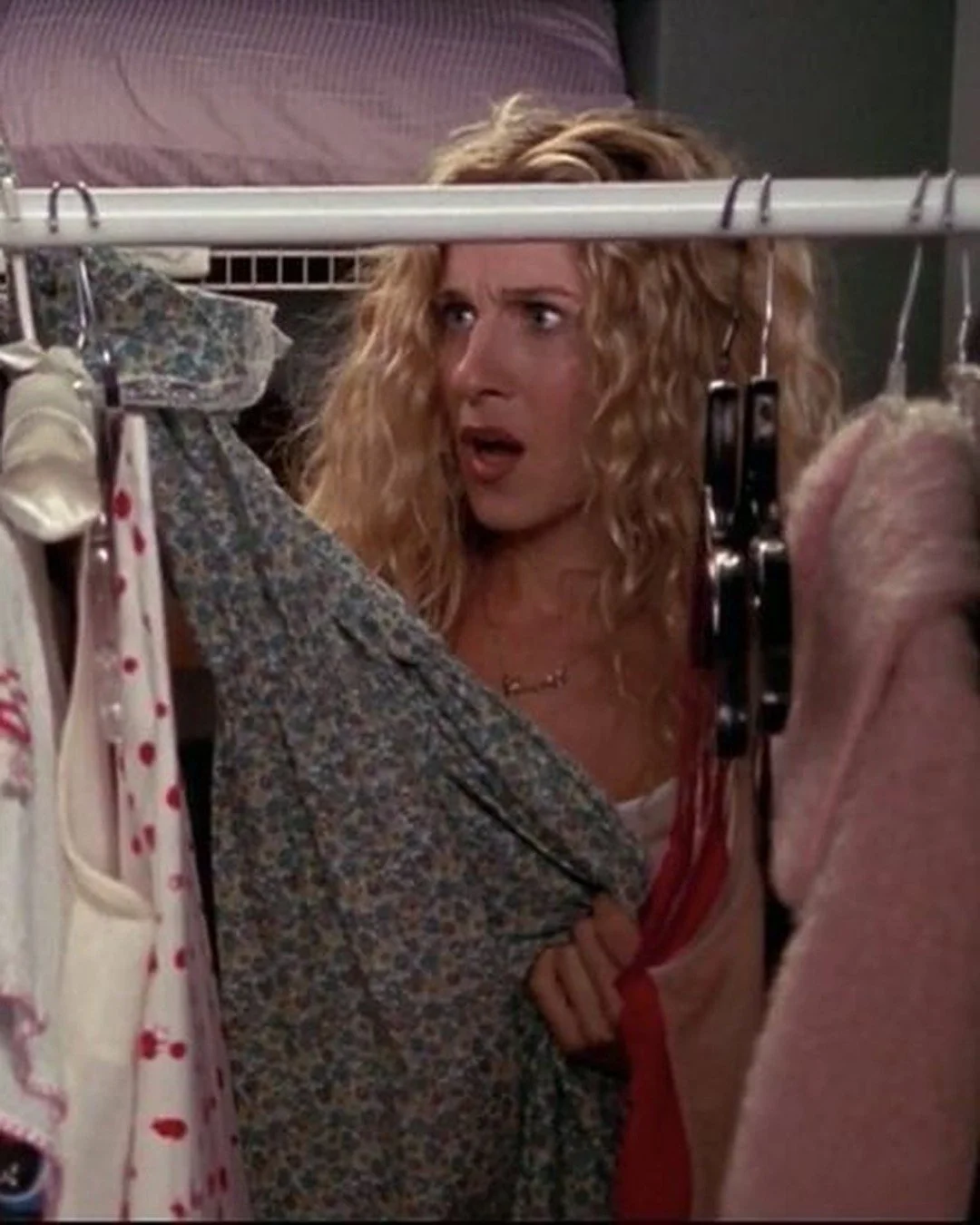
images via PINTEREST
Speaking of the ability to recognise crucial differences, this allegory bears an important question whether developing a tasteful personal style is what happens when the PFC finally gets a say. Consider this "girl math speculative research."
We cannot go on without first understanding the actual role of the PFC and her very anxious, very needy best friend, the amygdala. The PFC sits behind our foreheads and handles decisions, like not eating the whole red velvet cake in the fridge in one sitting or not jumping off the plane simply because you refuse to trust the pilot. Beyond the daily cake negotiations, the PFC helps us navigate our sense of self and regulate our emotions and thoughts.
Interestingly, the PFC is a relatively new part of our brain, nestled in the so-called neocortex. Our cave-dwelling ancestors were not waiting for their PFCs to catch up so they could make more fashionable choices. Instead their survival relied largely on what's often described as the older brain — the limbic system, our emotional centre. This is where the almond-shaped amygdalae live.
The amygdala is sometimes called the fear centre of the brain. She detects threats and sends out signals so we can protect ourselves, and she's also linked to emotional value and memory. The thing is, she freaks out pretty quickly — she really cannot tell the difference between the email and the bear. And the more anxious we get, the more hyperactive she becomes, and the loop goes on.
It is usually the PFC's job to tell the amygdala to chill and take a breather, a process called top-down control. But the PFC can go offline for all sorts of reasons, and in a brain that isn't fully wired yet, it can result in a very clown-talking-to-a-clown kind of conversation between the two. The amygdala says, “Let’s freak out, because everyone hates us,” and instead of stopping her, the PFC just gives her a pat on the back. But how exactly does this relate to our fashion choices?

During our teenage years the PFC is constantly remodelling, and so is our style. One reason is that adolescence is a fluid period of low self-esteem and some rather bad decisions. The key word here is conformity, whether that means fitting in, impressing our crush, looking slimmer or making our bum a little rounder. Paradoxically, it's also the age of going against the wave — dyeing our hair the colour our mothers hated, just to prove we're nothing like everyone else. Either way, during these years most of us are driven by an irrational cloud that no PFC could clear.
And to top it all off, add a reward system that comes online well before the PFC does. The teenage brain is extra sensitive to social reward — a compliment, a like, a nod from the cool table — and rejection genuinely stings harder at fifteen than at thirty.
For many of us, that meant going through at least one try-hard phase. Who could have resisted the Anastasia Beverly Hills eyebrow energy, the skinniest jeans, the most cropped crop tops and heels stuffed in our backpacks until we reached the staircase. Not saying it looked bad (it wasn’t good either, was it?), but today we would probably stop to rethink our choices before leaving the house like that.
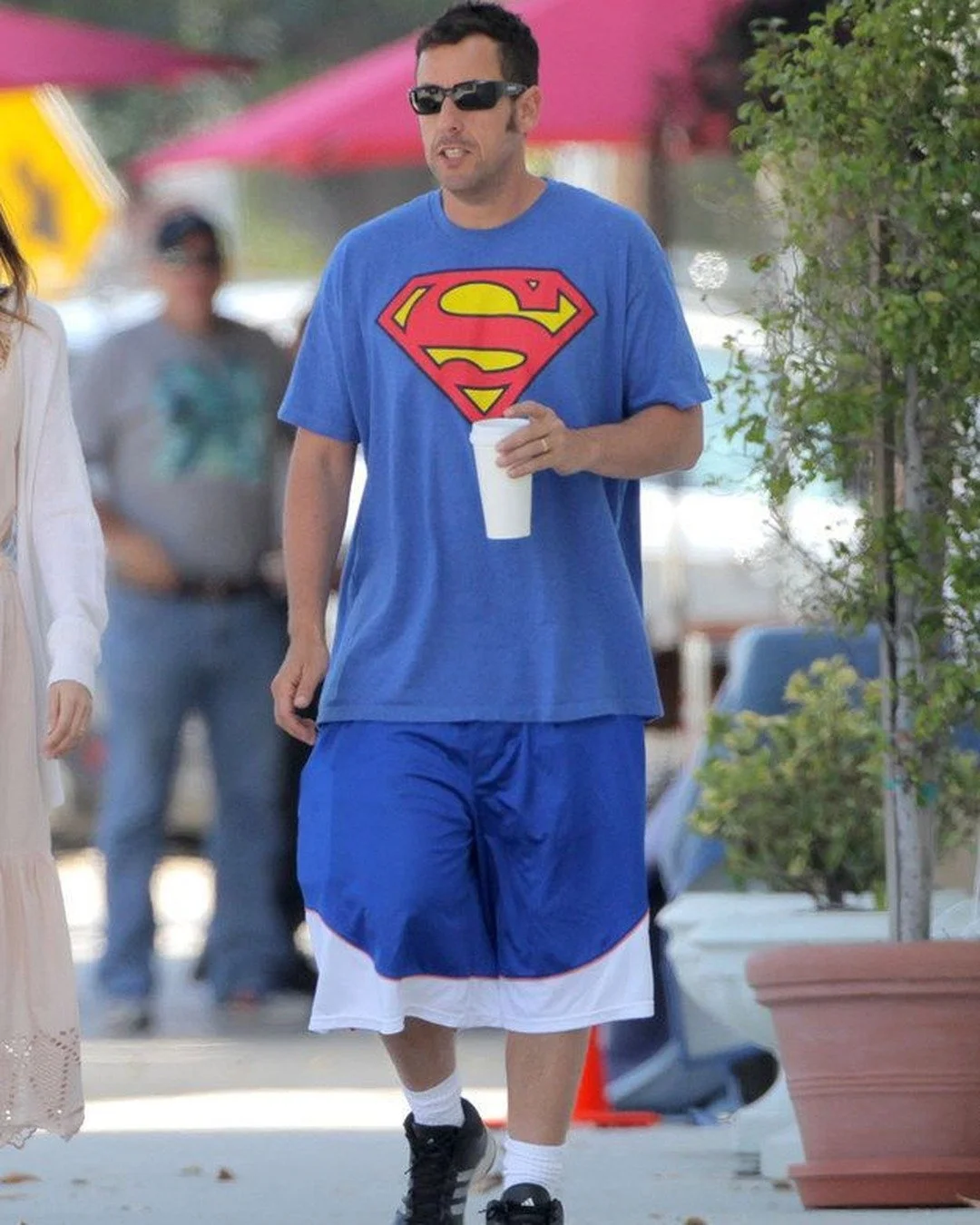
On the opposite side of the spectrum is the era not everyone goes through — the tomboy phase of boy shorts, oversized dad T-shirts, baseball caps and dirty sneakers, worn to hide whatever made us uncomfortable. So, how exactly does one go in a span of a single adolescence from try-hard to Adam Sandler, with some awkward tattoo appointments and questionable social circles in between?
It all boils down to irrationality — or more precisely, the amygdala. Teenage brain flags a lot of events as either thrilling or threatening, while the prefrontal cortex is still learning to talk it down. Thrilling gets us the try-hard phase, blindly excited to impress, and to see how much we can push the boundaries. Threatening gets us Adam Sandler attire, comfortable clothes to hide how uncomfortable we might feel in our own skin — all mixed with the fear of being judged.
Even if our neural control centre hasn’t quite crossed the finish line, synaptic pruning has already done plenty of heavy lifting by our mid-twenties, allowing our self-concept to settle into solid ground. Navigating emotionally turbulent waters helps us uncover core aspects of our identity (setting aside whether we have actually mastered emotional control). As our executive brain gradually reaches maturity, a genuine sense of individuality emerges. We realise that life — and by extension, our wardrobe — is an ongoing process of becoming rather than a fixed arrival point.
True signature style isn't confined to a specific aesthetic code, whether you lean toward minimalist tailoring or eclectic maximalism. It flourishes when rooted in self-acceptance, honouring past fashion missteps, and calmly anticipating the future. Reaching brain maturity offers the ultimate freedom from that persistent imaginary audience we once tried to impress, welcoming a far more effortless demeanour. As a delightful side effect, enhanced rational thinking guides us toward intentional curation, swapping dopamine-fuelled splurges for a cohesive, timeless wardrobe.
So, whether you've arrived at this milestone or are still waiting for your prefrontal cortex to gently remind your emotional brain that another shopping haul won't solve your problems, focus on feeling of being at ease with yourself — the aesthetic naturally follows. As for those five essential garments? You'll recognise them instantly.