
TITANIUM MEETS TITANIUM: SILHOUETTE PARTNERS WITH THE GUGGENHEIM MUSEUM BILBAO
editor MAREK BARTEK
There are moments when design stops being purely functional and starts behaving more like art — in the way lines move, how light interacts with a surface or simply its existence within a context. Standing in front of the Guggenheim Museum in Bilbao, it becomes almost impossible not to think about that. The building doesn’t just statically exist. Depending on the time of day, the titanium façade moves from cool, almost grey tones to something warmer, catching the sun in a way that feels almost fluid and alive.
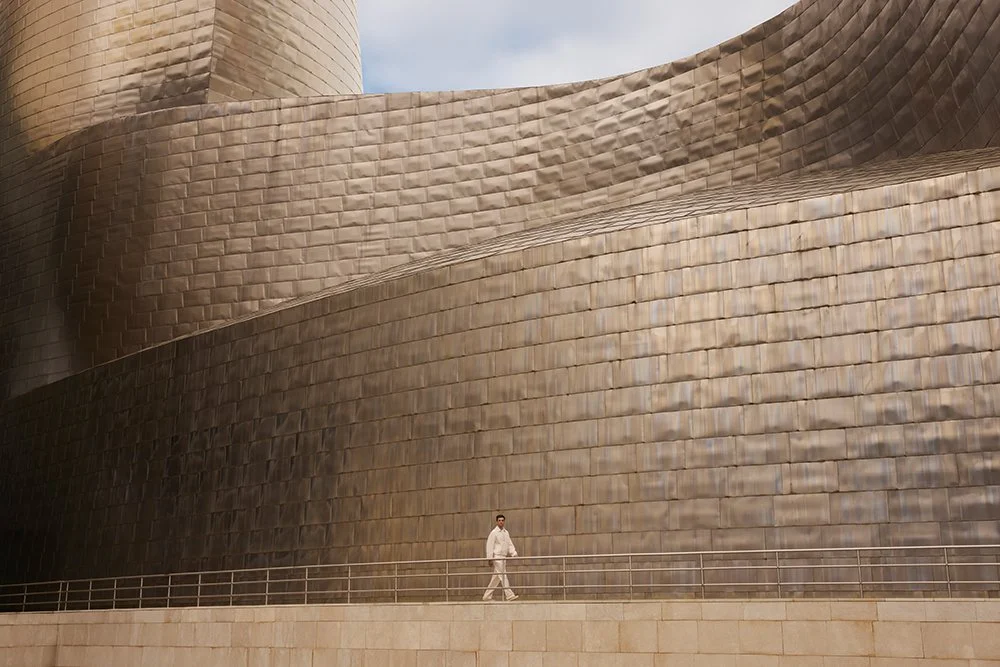
all images courtesy of SILHOUETTE
It’s not difficult to see why this became the backdrop — and, in many ways, the starting point — for Silhouette’s latest collections. The Austrian eyewear brand chose Bilbao to present Titanium Reframed and The Refined, two collections that, while technically distinct, are rooted in the same idea: what happens when material, technology, and design begin to inform each other more closely.
For Roland Keplinger, Head of Design, that conversation begins long before the final form takes shape. “We’ve been working with titanium for around 30 years,” he explains. “And over time, we’ve invested a lot into understanding the material itself — developing different alloys depending on what we want to achieve.”
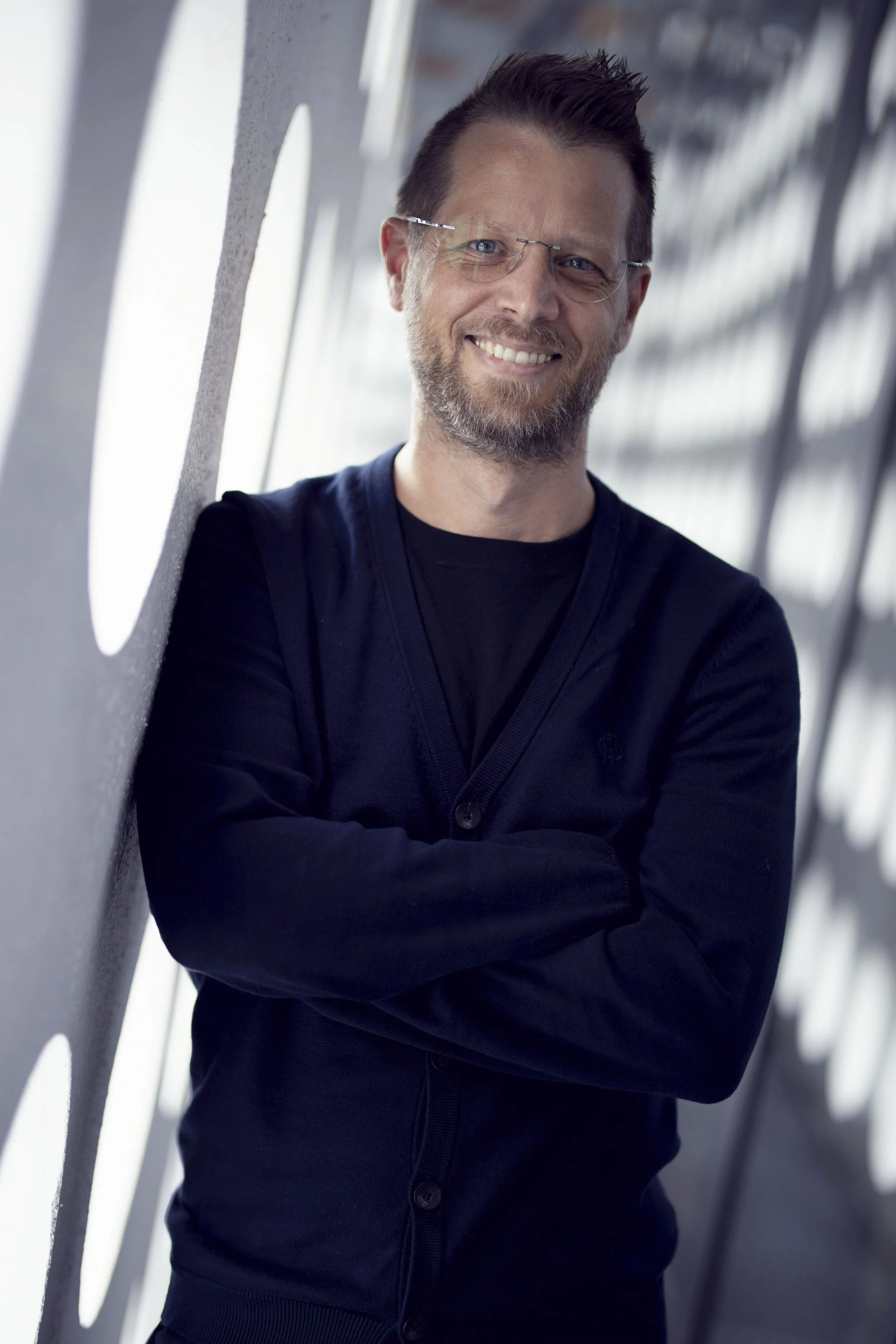
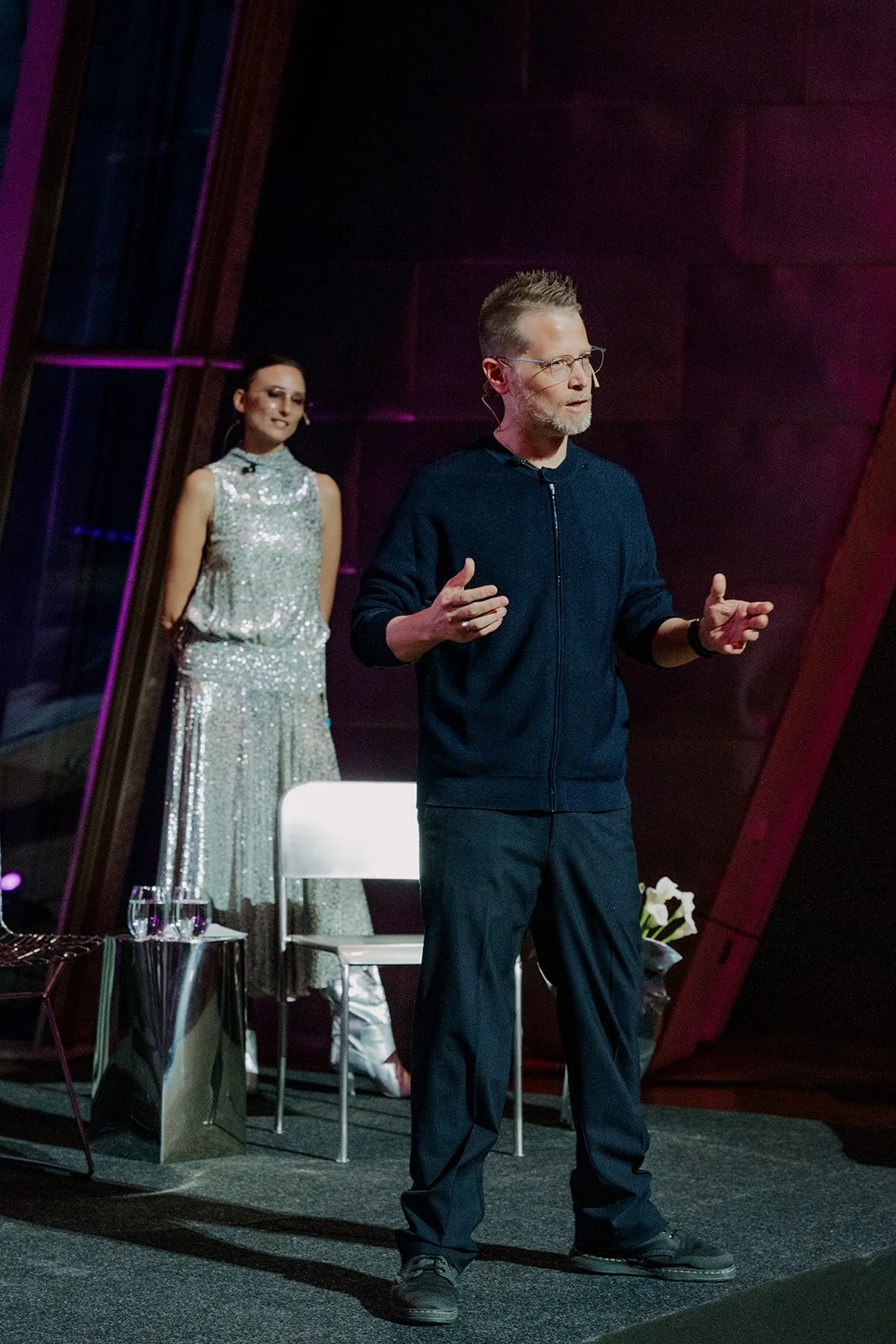
It’s a process that moves beyond surface-level design. Titanium, in this context, is not just a material choice, but a system of possibilities — one that requires constant recalibration depending on the desired outcome.
“At Silhouette, it always starts with questions: What is our starting point, and what do we want to achieve? What technology do we need to get there?”
That approach becomes particularly visible in Titanium Reframed, where frames are laser-cut from metal sheets rather than shaped from wire — a shift that immediately alters both the visual language and the structural possibilities of the design. Subtle but very deliberate, the reference clearly echoes the very material logic of the Guggenheim itself.
“You’re working with plates, cutting them out, bending them, and that gives you a completely different look compared to rimless frames.” But if the architecture offers a visual cue, it’s the experience of wearing the object that ultimately defines whether it works.
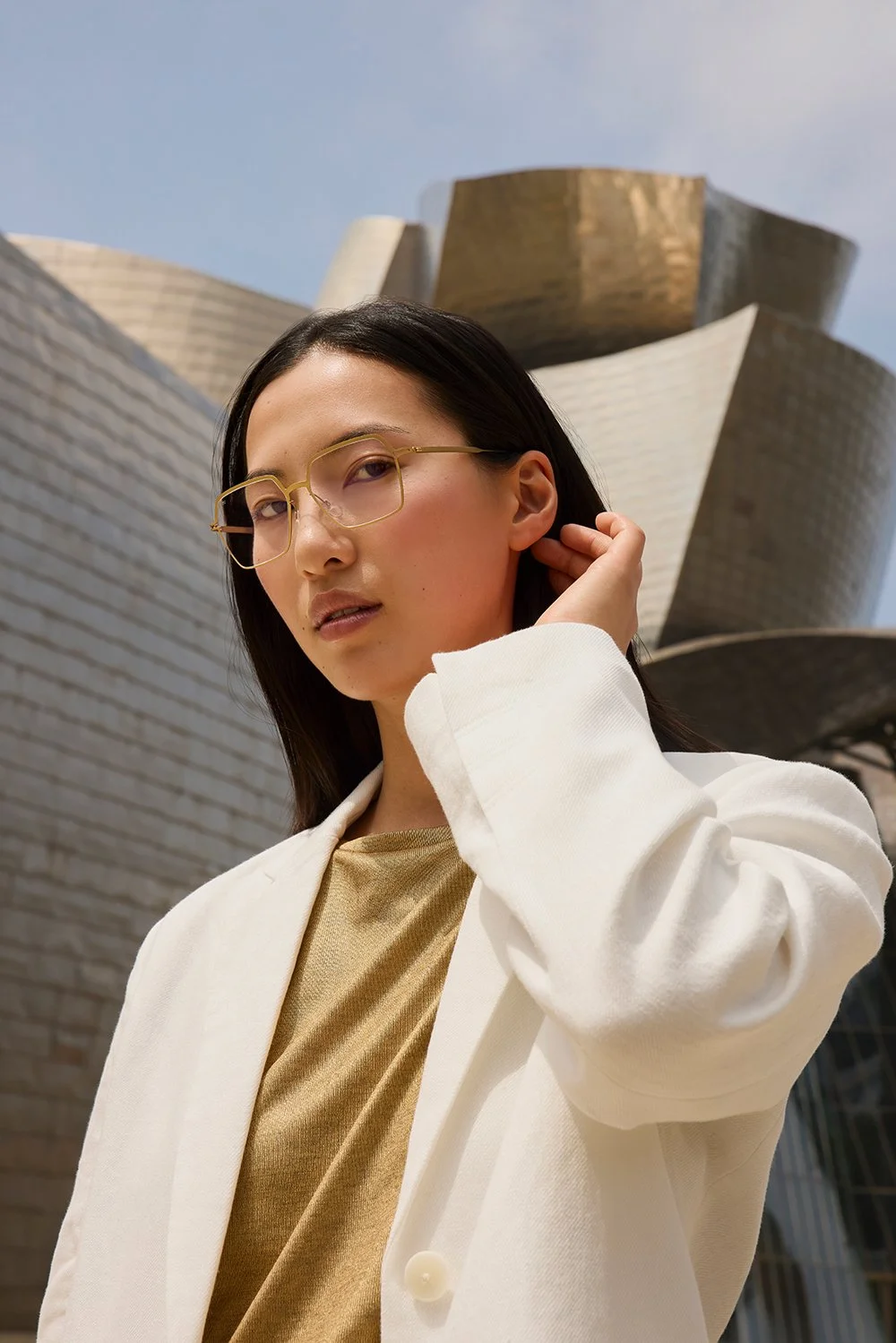

“It’s easy to design something that looks good on paper, or even as a prototype. The real test begins when someone puts it on. That’s where you see if it actually works.”
Eyewear truly occupies quite a specific position — somewhere between product and identity. It is, at once, deeply functional and highly visible, sitting directly on the face, shaping how someone is perceived, but also how they feel.
That duality is something Silhouette has long navigated, particularly through its use of titanium. Known for its lightness and flexibility, the material allows for a precision that doesn’t compromise comfort — something Keplinger repeatedly returns to when speaking about design. “When we talk about emotion, it’s not something abstract. It comes from how something feels. You can have a frame that looks great, but after five minutes it creates pressure, or leaves marks. That’s where emotion comes in — in the feeling of lightness, of comfort.”
It’s a definition of emotion that feels grounded, almost pragmatic. Not expressive in the traditional sense, but embedded in the physical experience of the object itself. This becomes particularly clear in The Refined, Silhouette’s continuation of its rimless approach, where the focus shifts away from surface and towards construction.
“It looks very simple,” Keplinger says, referring to the hinge mechanism. “But it took us quite a long time to refine it so that it works over time.” That simplicity is deceptive. Behind it lies a level of technical consideration that is not immediately visible, but essential to the longevity of the piece. Maintenance-free construction, the absence of screws, and the ability to replace individual elements are all part of a philosophy that prioritises durability over disposability.

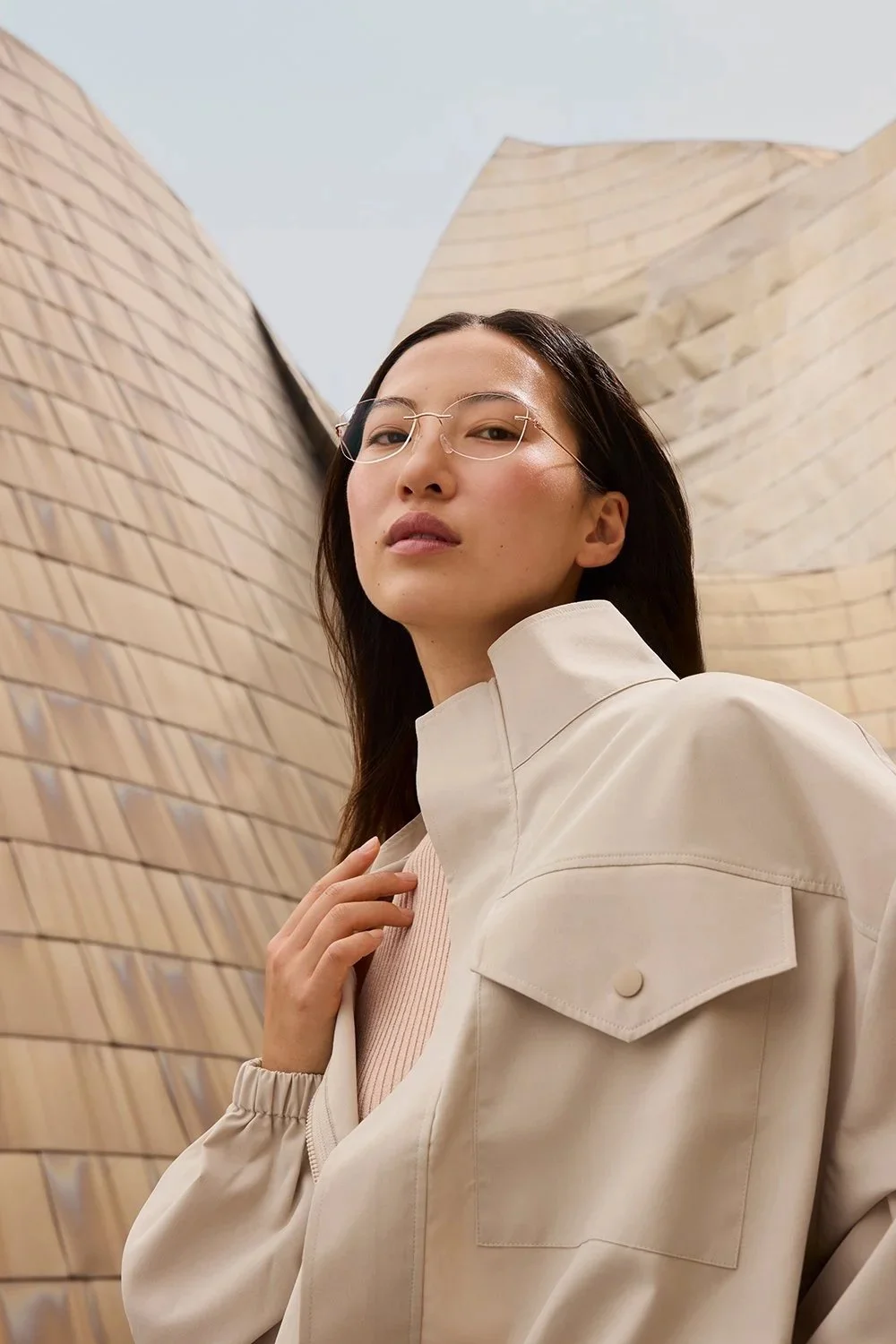
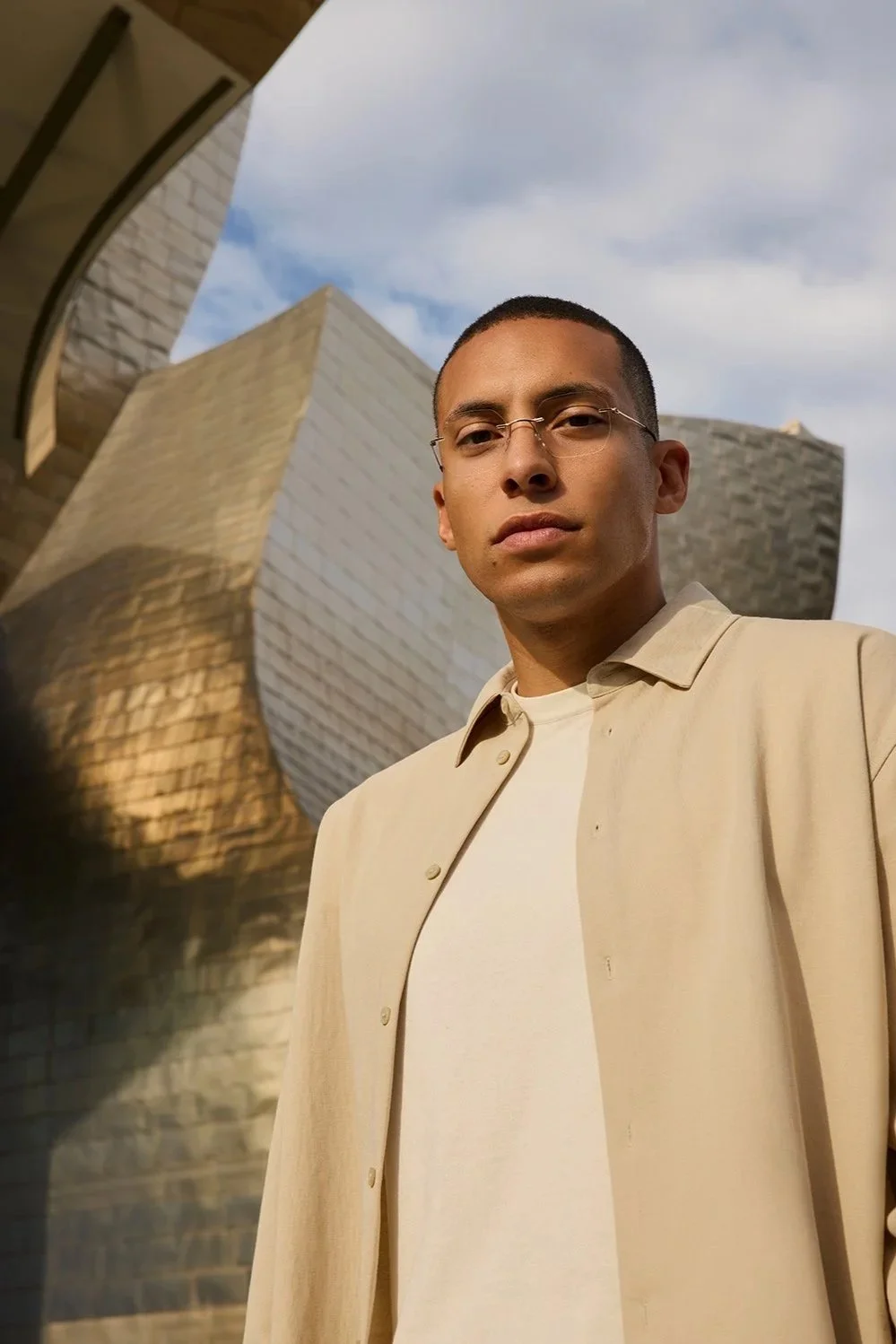
“For us, longevity is crucial. If something breaks, you should be able to repair it. You shouldn’t have to replace the entire frame.”
At the same time, Silhouette’s collections are not defined by minimalism alone. Across both Titanium Reframed and The Refined, there is a clear emphasis on variety — an attempt to balance timelessness with expression. “We always try to keep a certain ratio, around 80 percent is very wearable, and then maybe 20 percent is more daring.” Working out this balance reflects the broader role eyewear plays in personal identity. For some, it is something that should disappear — allowing the face to remain unobstructed. For others, it becomes a statement and an extension of character. “The great thing is that you have that choice,” he continues. “If you want something very minimal, you can go rimless. If you want more presence, you can go for a full rim.”
But even within the rimless category, the spectrum has expanded. What was once associated with a more conservative aesthetic has, in recent years, shifted towards something more versatile, even fashion-forwards. “You can make it almost invisible,” Keplinger notes. “Or you can introduce colour, subtle details, and suddenly it becomes something more expressive.” This idea of adaptability extends beyond aesthetics into the structure of the product itself. The possibility to adjust, replace, or reconfigure elements allows the wearer to engage with the object over time. It’s also something that becomes more apparent when design moves out of the studio and into real-life contexts.
“For me, the biggest reward is not design awards. It’s when you see someone wearing your frame — on a plane, on the street. That’s when you know it works.”
Making this ethos more tangible than ever, Silhouette has recently opened its first own retail space, where the design team can directly observe how people interact with the collections. “When you talk to customers, you learn a lot about how they choose a frame, what they respond to — whether they start with the shape, the colour, or the temple. These are things you don’t see when you’re just designing.”
Looking ahead, the future of eyewear remains open, shaped by both technological developments and shifting expectations. “I think we have a bright future. More and more people need glasses but at the same time, there is the rise of smart eyewear, which we are watching closely.”
Still, he remains cautious about how quickly that transition will take place. “Comfort is still the most important thing,” he adds. “People might be excited at first, but if something doesn’t feel right, they won’t wear it.”
It’s a reminder that, despite advancements in technology, the core of eyewear design remains relatively unchanged. It is still about how something sits on the face, and how it integrates into everyday life.
And perhaps that’s what Bilbao ultimately reflects back. Not just a collaboration, or a location choice, but a shared understanding of material — of how something as industrial as titanium can be shaped into something that feels almost weightless. Something that responds to light, to movement, to the person wearing it.
Because in the end, whether it’s a building or a pair of glasses, the principle remains the same. It’s not just about how it looks, but how it exists in a context and interacts with its surroundings — including us.