
interview by MARIA MOTA
An instinct for getting dressed, a somewhat unexpected soft spot for a good Excel spreadsheet and a new Amsterdam space that feels a little like home. We meet Sabrina Meijer, founder of REYÈM, to talk about trusting your gut, clothes you can actually live in, and creating a world that extends beyond the wardrobe.
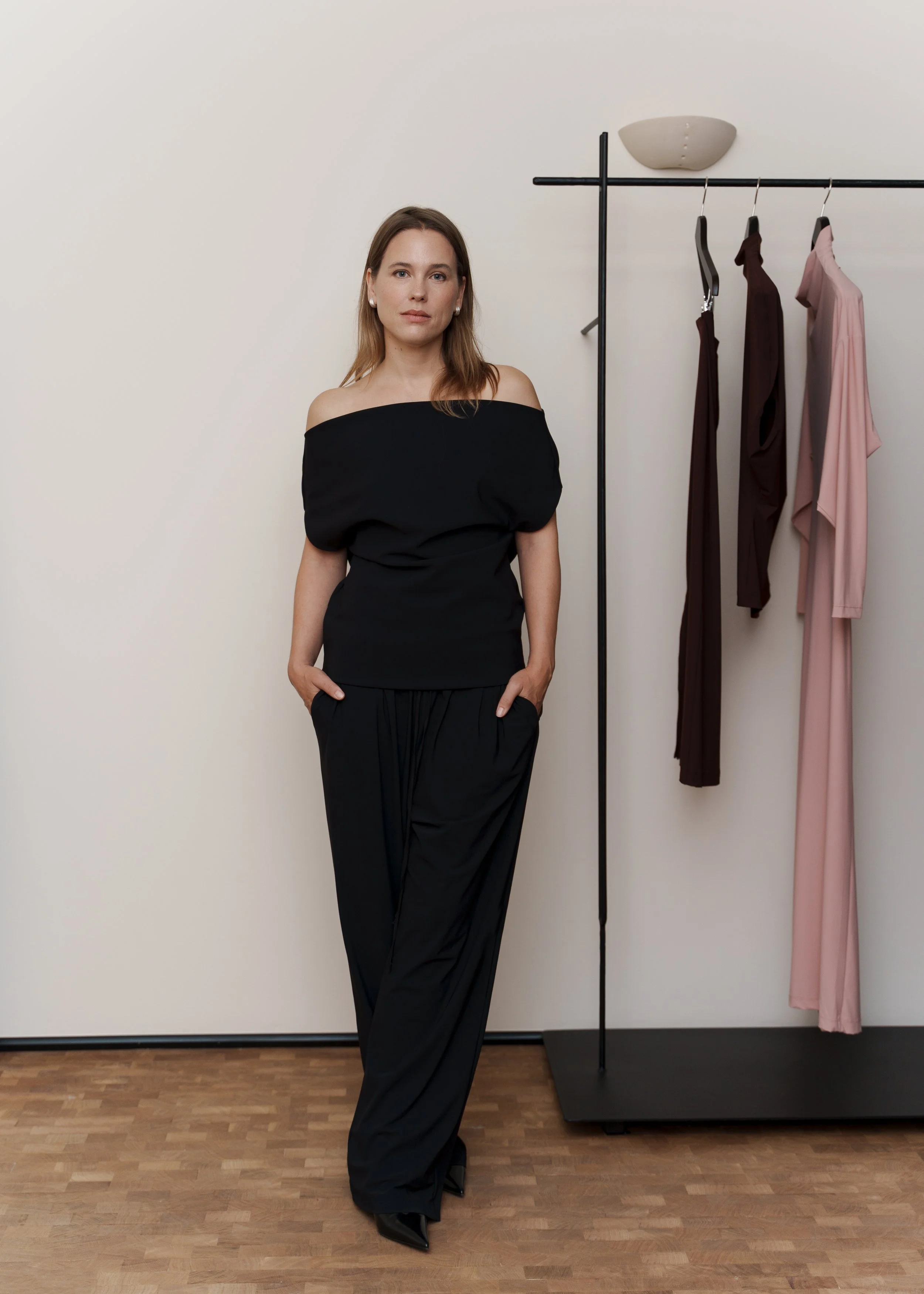
There is a certain kind of woman who makes getting dressed look easy. Not because she has a wardrobe full of things she has never worn, or because she has spent the morning contemplating what goes with what, but because she buys things to wear, not to look at. She wants to feel good, look put together, and not worry too much. Sabrina Meijer is designing for her.
Meijer's relationship with clothes began long before REYÈM. She studied graphic design rather than fashion, but grew up with a mother who took the business of getting dressed rather seriously. Fabric mattered. Quality mattered. Labels were checked, and if a detail didn’t look right, she took it upon herself to remove it. It was an early education in looking closely at what things are made of, something that would eventually become central to REYÈM's approach to design.
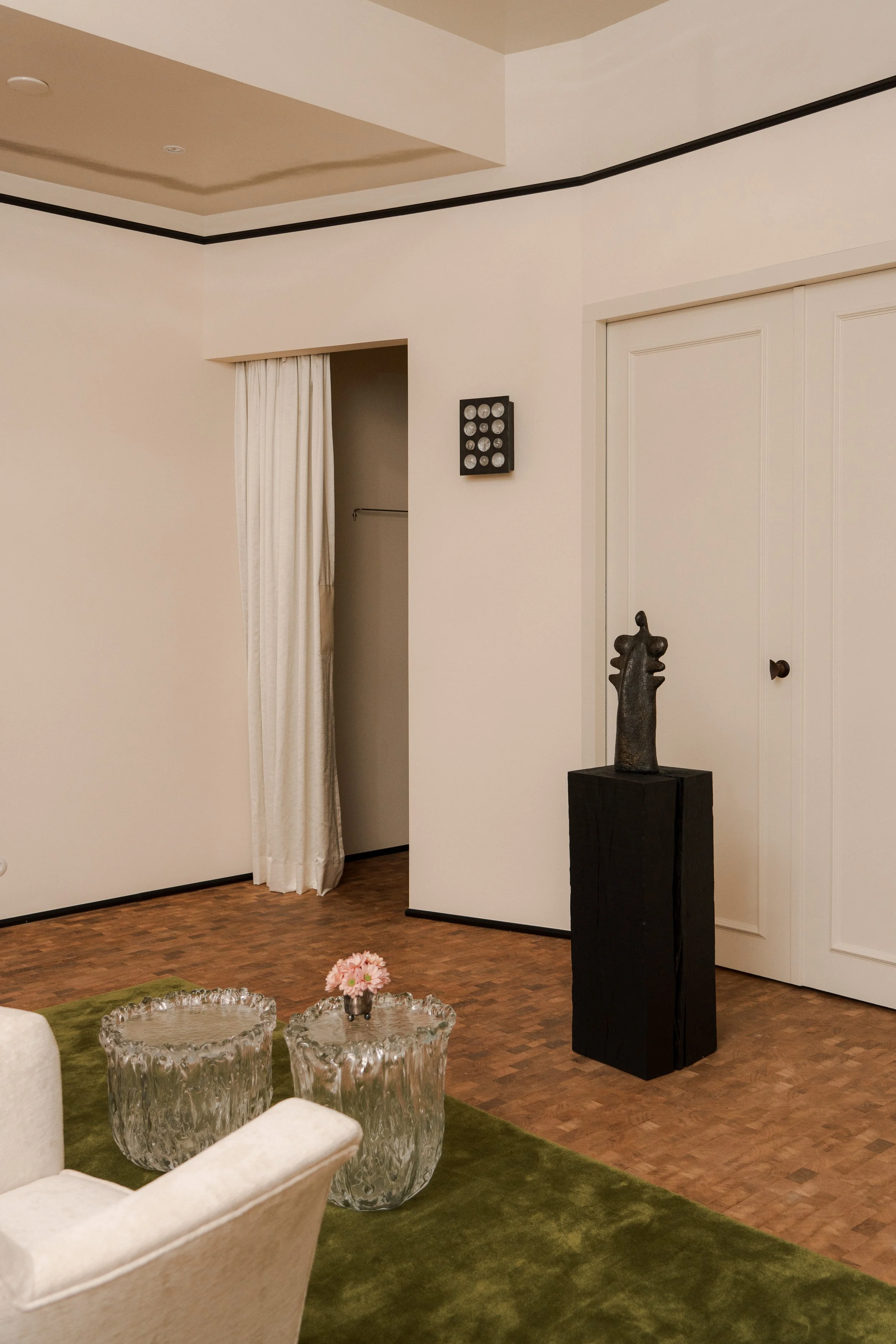
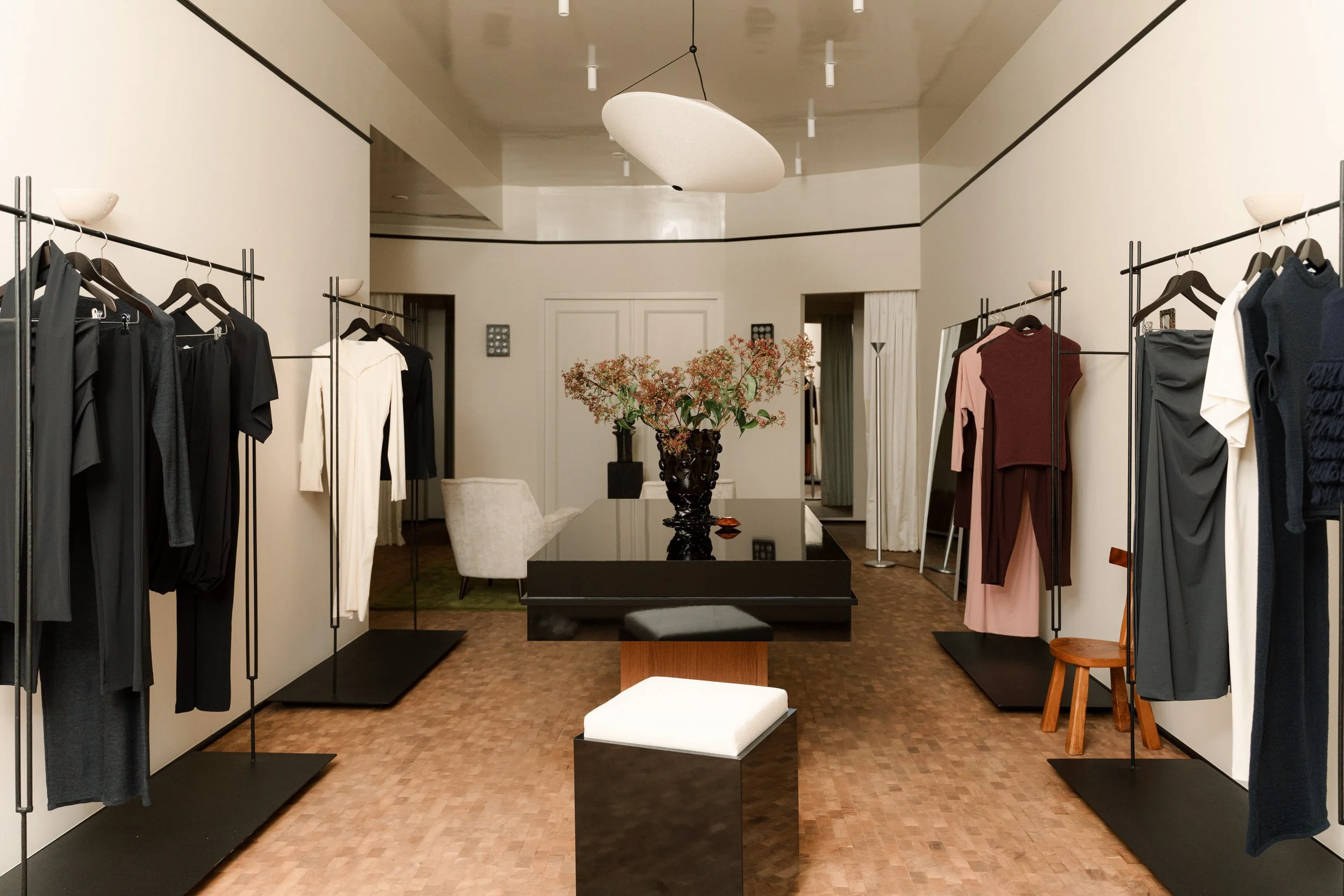
Now, REYÈM has a new home on Amsterdam’s Kerkstraat, and more than a shop, it is a step into Meijer’s world. Vintage furniture, photography, art, and locally made pieces sit alongside the clothes.
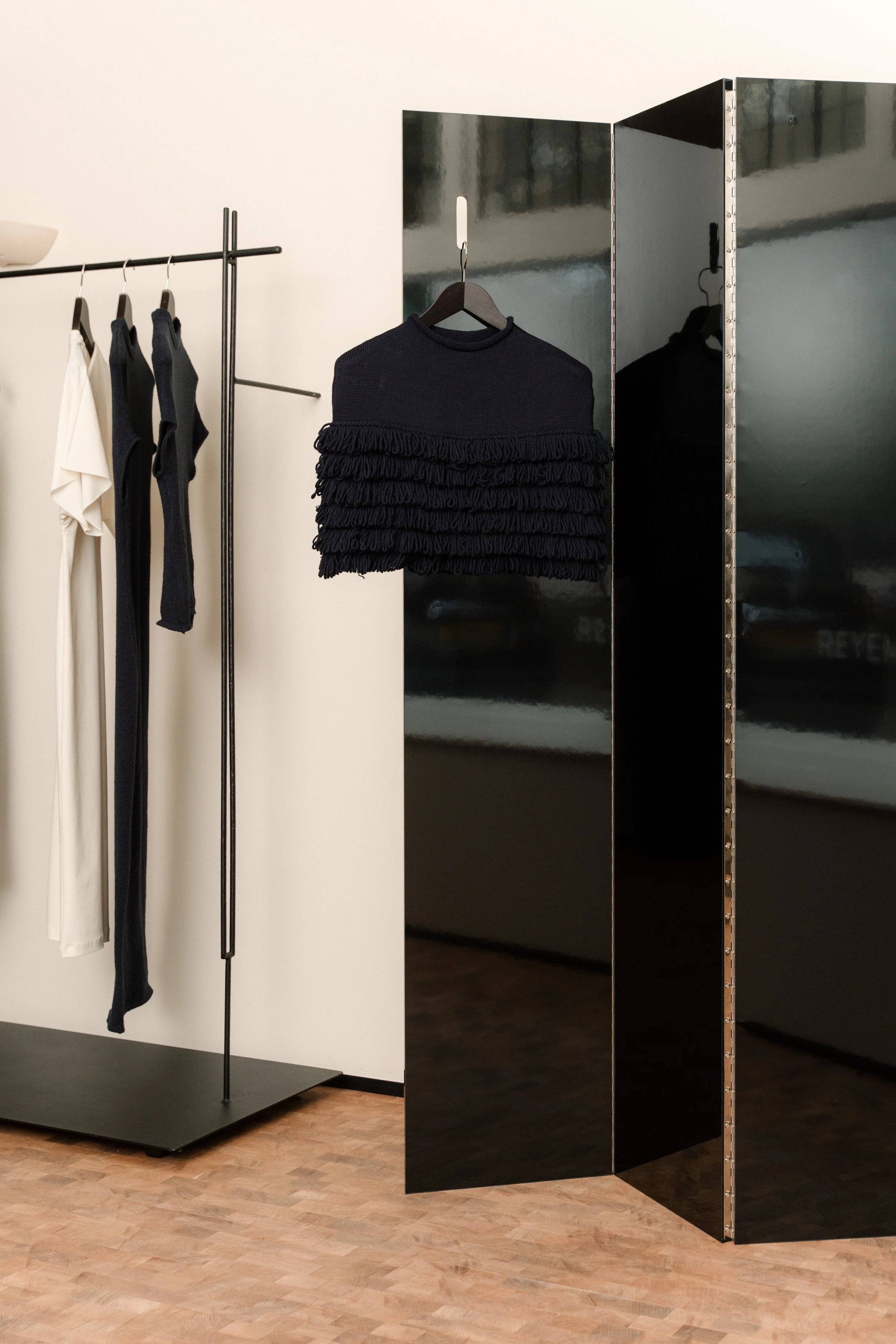
The counter, stools and room divider were designed by Liza Chloë van Duyn and crafted by Amsterdam-based studio Sobo Ōku. Warm and personal, it feels less like somewhere to pop in, pay and leave than a friend’s house you happen to have discovered. The clothes are there, of course, but so are the textures, objects and little discoveries that surround them — a reflection of the eye behind the label.
photography by KATERINA BEZEDE
Take us back to the beginning. What made you take the step to create this store and move from your previous space to Kerkstraat 365?
When I started in 2019 I didn't know I wanted a store at all. I rented an office with some friends, and over time it naturally grew into one. A few years later, things were getting harder to tuck away, storage was becoming cramped and the team was growing. So we decided to take the next step and build the store we have now. I could have reconstructed the old space, but I felt it was too small to create an entire universe around the brand which was important to me.
I think this store reflects much better where we are today and where we want to go. After six years in our previous space, some customers really got to know us. They would sometimes come in just for a chat, saying, “I'm not going to buy anything today; I just wanted to check in with you.” I love that, and I hope this new space makes everyone feel just as welcome.
The neighbourhood already feels special. Our neighbours welcomed us with bottles of wine and lent us tools when we needed them. It feels like a little village, very local and quite calm.
The interior was designed by Liza Chloë van Duyn, who is also a friend of yours. How did you know your visions would work together?
It's funny because, apart from knowing she worked on a few stores in the US for a watch brand, which is obviously quite different from what we did, and seeing her own house, I'd never actually seen much of her interior work. So it was really just a gut feeling.
She was also like, “Why are you asking me? You don’t really know what I do interiors-wise.” But obviously, I know her taste, and I know her. I think she knows me well, too, which is just as important. We had a few conversations at the beginning about how we wanted the store to feel, and I think she really understood the brand and what it stands for.
The store brings together vintage furniture, locally made pieces and art. Why was it important for you to create something beyond a traditional retail space?
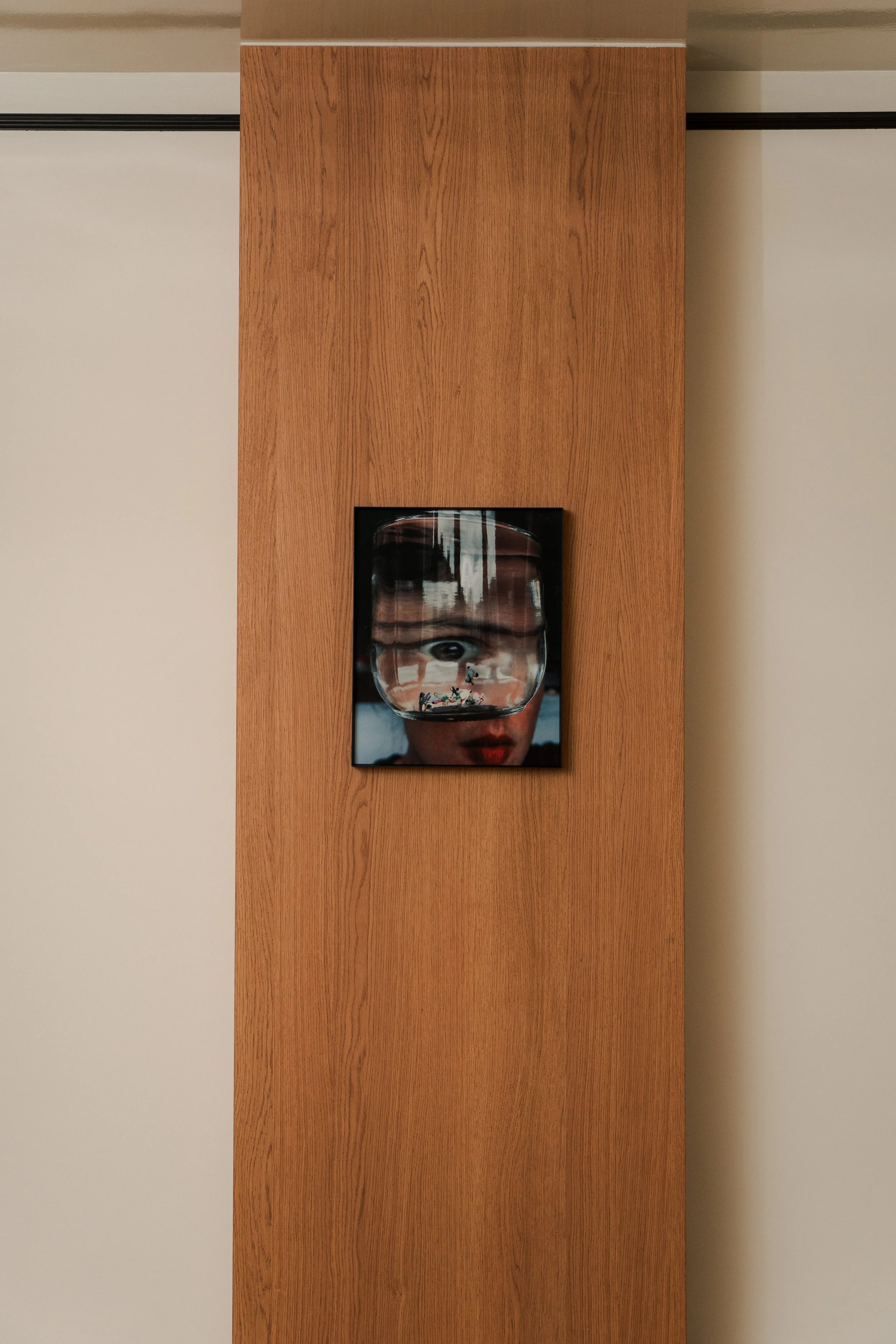
I wanted the store to be about more than just clothes, but also create space for art and different designers. We worked with The Pool, the sister gallery of Homecoming Gallery, and they presented us with a selection of different artworks, and we chose this one by Lydia Roberts because I just really love the eye, and I’ve always been drawn to photography.
You are creating more than simply a place where you shop for clothes, but ultimately a universe with all these different sides to it, including also your holiday gift shop. Was this always part of the REYÈM philosophy, and is it something you’d like to continue in the seasons to come?
Yes, definitely. With the gift shop I started really small but every year I want to do something like that. I think the holidays are a good time to explore something a little different. Last year, we hosted five brands that felt aligned with REYÈM, selling things like stockings, wine, and olive oil from the house I renovated in France.
This year, we might collaborate with just one brand, or move away from the holiday season and host pop-ups throughout the year. Or who knows maybe we will work with a brand that doesn't necessarily fit with us, but by bringing two different worlds together, we can create a really interesting story. I think that’s also what we want to do with the store, starting with art, but potentially bringing in ceramic artists, jewelery or a shoe brand.
And when it comes to the clothes themselves, what’s at the heart of REYÈM’s design philosophy?
Everything needs to be comfortable. Our recycled stretch fabric is our foundation, and that will always remain. Until this season, it was the only fabric we worked with. I experimented with a few others a couple of years ago, but then spent several seasons really focusing on establishing this fabric and helping people understand what they can find at REYÈM. Now that it's become our signature, I'm starting to introduce new textures and fabrics.
I want every woman to feel at ease in her own skin, but also in her clothes. You should feel like the best version of yourself without anything being too fussy or complicated. I always say that a dress should work with flip-flops during the day, but also for a night out or a wedding. I love versatile pieces that you can dress up or down, rather than something you only wear once. And our fabric is made to last.
Do you feel like the city shaped your vision for the brand?
Everyone gets around by bike, so there’s this mindset that what you wear needs to feel comfortable. But I also like pushing the boundaries of what comfort can look like. You don’t have to wear jeans or sweatpants and sneakers to feel comfortable. You can still look put together without it being complicated or uncomfortable, and that’s where REYÈM comes in.
I also feel like a lot of good things are happening in Amsterdam right now, with so many cool brands popping up. I love living here. It’s small enough that you can get from one side of the city to the other in half an hour, and I really like that. It’s not necessarily a fashion capital, and sometimes people don’t even realize REYÈM is based in Amsterdam. I’m still not sure whether I should take that as a compliment or not, haha, but yes, the city inspires me a lot.
Is there a particular woman that you find yourself thinking of when you are designing?
I think I keep a lot of my friends in mind, which might be a bit of a standard answer, but it’s true. Whenever I find something I’d love to wear, I’ll often check with them or Tara, our brand manager who’s been working with me for a long time and is a bit younger than me. So I do keep these women I know in mind, and also some women I see in Amsterdam in general.
Does every collection begin with a particular story or inspiration?
Not really. We have quite a lot of carryover pieces, so I don't always start with one specific story. This season is the first time we're adding knitwear, and we also went outside Amsterdam for a shoot for the first time. We went to Gisele Azad's wooden cabin in Drenthe. I love the idea that you can even wear dresses in the woods because they are so comfortable. That was a bit of an inspiration for this collection.
How do you know when something is ready to be released?
With our balloon pants last year, we originally planned to launch them for fall/winter, but I had a feeling we should release them sooner. Since we only have two drops a year, I decided to get everything ready and launch them separately in May. It was the first time I’d done a standalone launch, and it went really well. I just had a feeling.
A friend of mine felt the same way and told me, “You have to release them now, because I want to wear them now, and I think I’m not the only one.”
It was also the first piece that got picked up by the press and influencers so much, so I think those pants really put us on a different map.
Are there values you would never compromise on, regardless of how much REYÈM grows?
Obviously, our main fabric is plastic-based, but it's recycled. I also think there's something to be said for how long you can wear and use something. Our fabric doesn't really change, even after so many washes it will still look the same.
I wouldn't introduce fabrics that don't make sense for us or that don't have any consideration for sustainability. Of course, sustainability is a big word, but I want to be thoughtful about the materials we use. As we’re introducing wool, for example, I can’t just pick any wool. The same principles need to apply across the collection, whether that means using something organic or choosing materials carefully. So, I would say responsibility and longevity.
Has it become harder to stick to your own vision as the brand evolves?
It can be hard to find the balance, especially now that we're doing wholesale. There are so many opinions. A bigger store comes into the showroom and says they want flare pants, and then someone else wants more colour. Everyone has a different idea of what the collection should be, and sometimes something people don't like now is exactly what they'll want a few months later.
In the end, I also have to think about our customer, what I want and where I want to take the brand. But I think it's a combination of gut feeling and sticking to what my heart tells me to do. And also numbers, I’m obsessed with numbers. I analyze everything. I probably overanalyze everything.
Tell me more about your obsession with numbers, is it something you always knew about yourself?
No, I hated math. I think because I'm married to an accountant, I felt quite helpless when he started helping me with the numbers for the business. I wanted to understand everything myself and be able to come up with solutions, rather than having to rely on someone else.
So I took a finance course. And now I'm excited about Excel sheets. I love Excel sheets.
What else have you learned about building a brand that you didn't anticipate when you started?
That I can't do everything alone. It's harder than you think. I kind of knew that, but I also didn't want to believe it.
If REYÈM didn’t end up being a clothing brand, what do you think it would be?
Sometimes I think maybe I should have done something in food or I'd have some weird, tacky product. I don't know, maybe a chocolate bar.
But, ultimately, you've always known you wanted to build something of your own?
Yes. It was always my dream to build a brand, so I wanted to give it a try and see where it would end, or actually, not end ahaha. I was always obsessed with selling stuff. I don't know, that sounds weird, but I think you know what I mean. You have this feeling inside of you. You want to create something and put it out into the world.
