
IN CONVERSATION WITH MIGUEL BERNARDEAU
interview by JANA LETONJA and TIMI LETONJA
MIGUEL BERNARDEAU is entering one of the most significant chapters of his career with La Bola Negra (The Black Ball), the ambitious new film from JAVIER CALVO and JAVIER AMBROSSI. Following the film’s acclaimed CANNES premiere this year, Miguel’s restrained, emotionally charged performance has emerged as one of its talking points. For an actor first introduced to international audiences through Élite, La Bola Negra represents something deeper: an opportunity to engage with Spanish history, memory, love and identity while revealing a markedly different side of himself as a performer.

La Bola Negra feels like a particularly significant project within your career. What was your emotional response when JAVIER CALVO and JAVIER AMBROSSI first approached you about playing Rafael Rodríguez Rapún?
My initial response was excitement. I met them at the Goyas, the Academy Awards here in Spain, and they told me about this project and that they wanted me to audition. They wanted me to read a lot of material, some poems and a biography.
When I did the audition, I didn’t think I did a great job. I spent the following two weeks waking up every day praying. I don’t believe in God, but suddenly I was thinking, “Please, I think I’ve lost the opportunity of my life. Give me another opportunity. I won’t mess it up again.”
Two weeks later, my manager called and said they wanted to see me again. When I arrived, I saw ÁLVARO, who plays one of the main characters, so I felt like things were going well. We read some scenes, and then they offered me the movie.
I went from being very happy to getting nervous because now I actually had to do it. That’s when the work started. I knew it was a big movie and that it was going to be complicated.
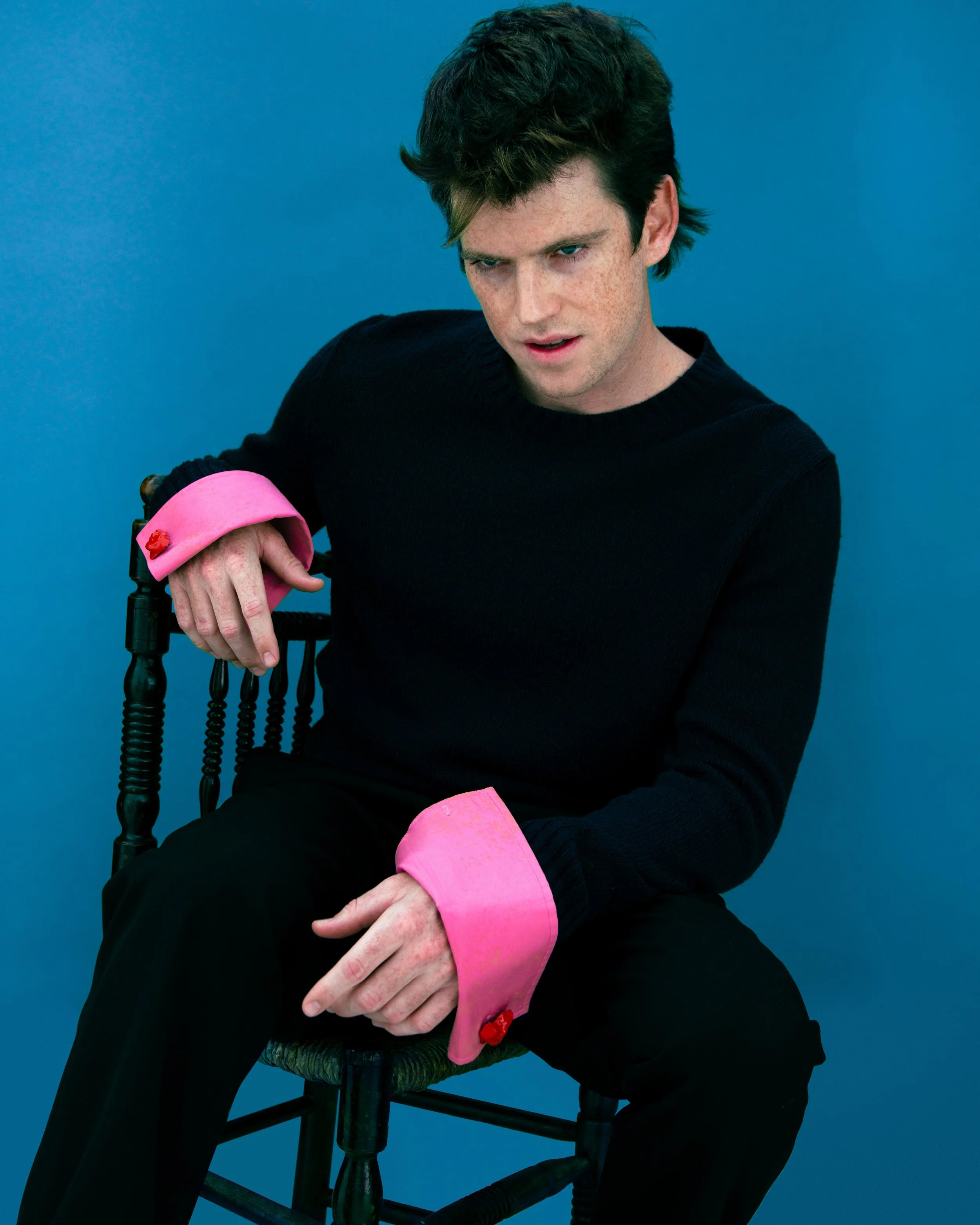
full look PRADA
Rafael was a real person whose life has inevitably been remembered through his relationship with FEDERICO GARCÍA LORCA. How did you begin separating the man himself from the mythology surrounding Lorca?
I began by studying Lorca’s work and what people had written about him. IAN GIBSON has written about his homosexuality at a moment when it was very dangerous to express yourself freely.
Before really getting into Rafael, I had to understand the historical context. They were on the brink of civil war. I needed to understand the Second Republic, how Rafael became part of Federico’s theatre company and how their relationship developed silently. Rafael didn’t allow himself to love Federico, or express that love, because he felt the pressure of the people around him and the danger of it.
Then I got into Rafael himself. He was very curious and conflicted about his feelings, emotions and sensitivity. At a time when men could not cry or express their emotions, Rafael felt the need to express himself. He came from football and mining engineering, worlds very different from art. I think Federico helped him discover another part of himself, something Rafael carried with him through the war.
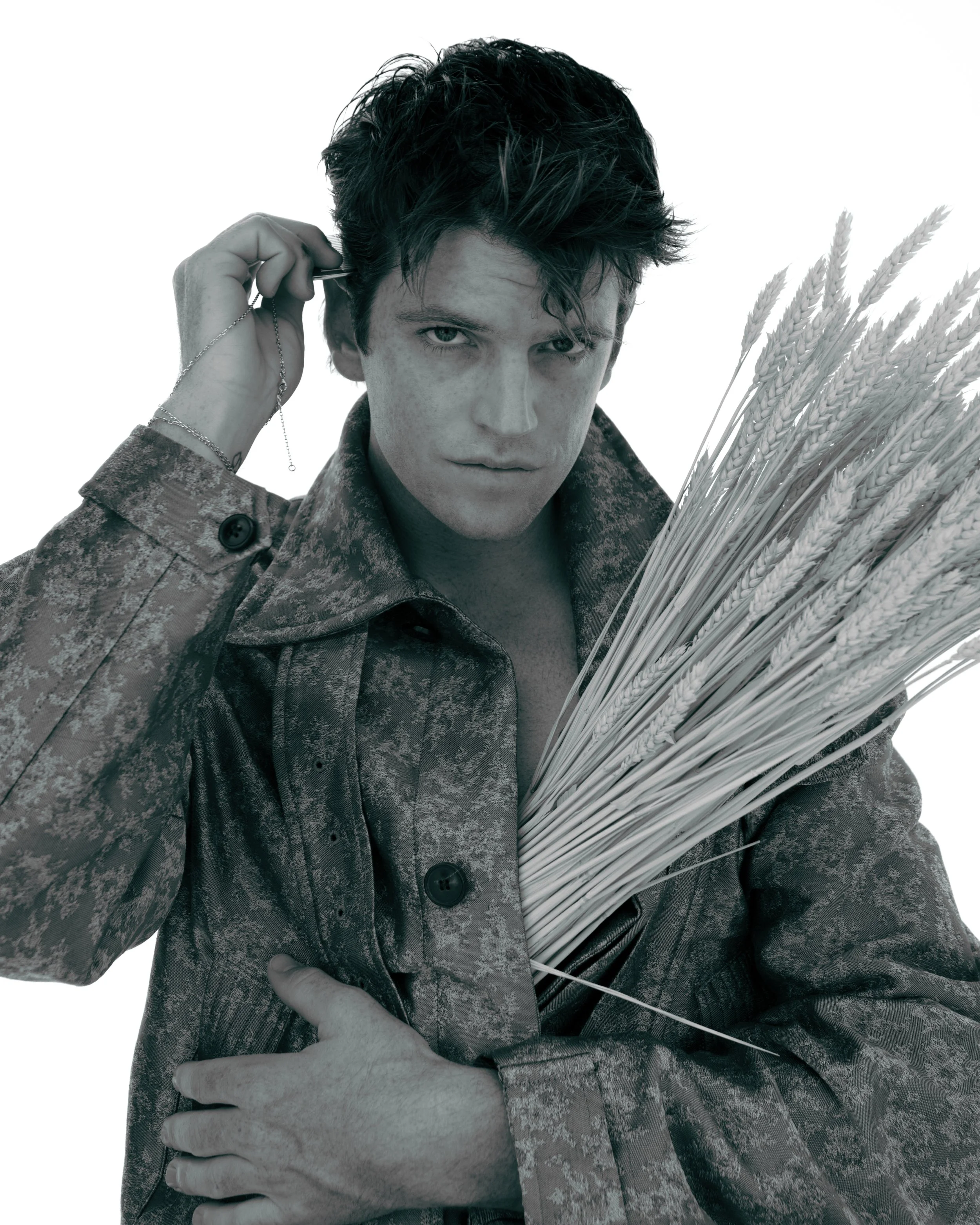
full look DRIES VAN NOTEN
necklace AMI PARIS
The film explores queer lives across different generations. What interested you about the dialogue it creates between Spain’s past and present?
I think this movie is interesting for new and older generations because it shows how much we have changed, but also how much we haven’t evolved in certain ways.
I felt connected to the story through memories of my grandmother telling me how she lived through that period. She is from a very small town in Albacete, called Vianos, and those small towns were deeply affected. They weren’t always informed about what was happening, they were getting glimpses of chaos as one side came in and then the other.
The movie also arrives at an interesting moment when the extreme right is rising in Spain and many other countries. Younger people are sometimes attracted by extreme messages without understanding what they mean or the history behind them.
Hopefully, the movie can push people to become more curious about Spanish history, how war affected us and how certain gestures or words can mean much more than you think.
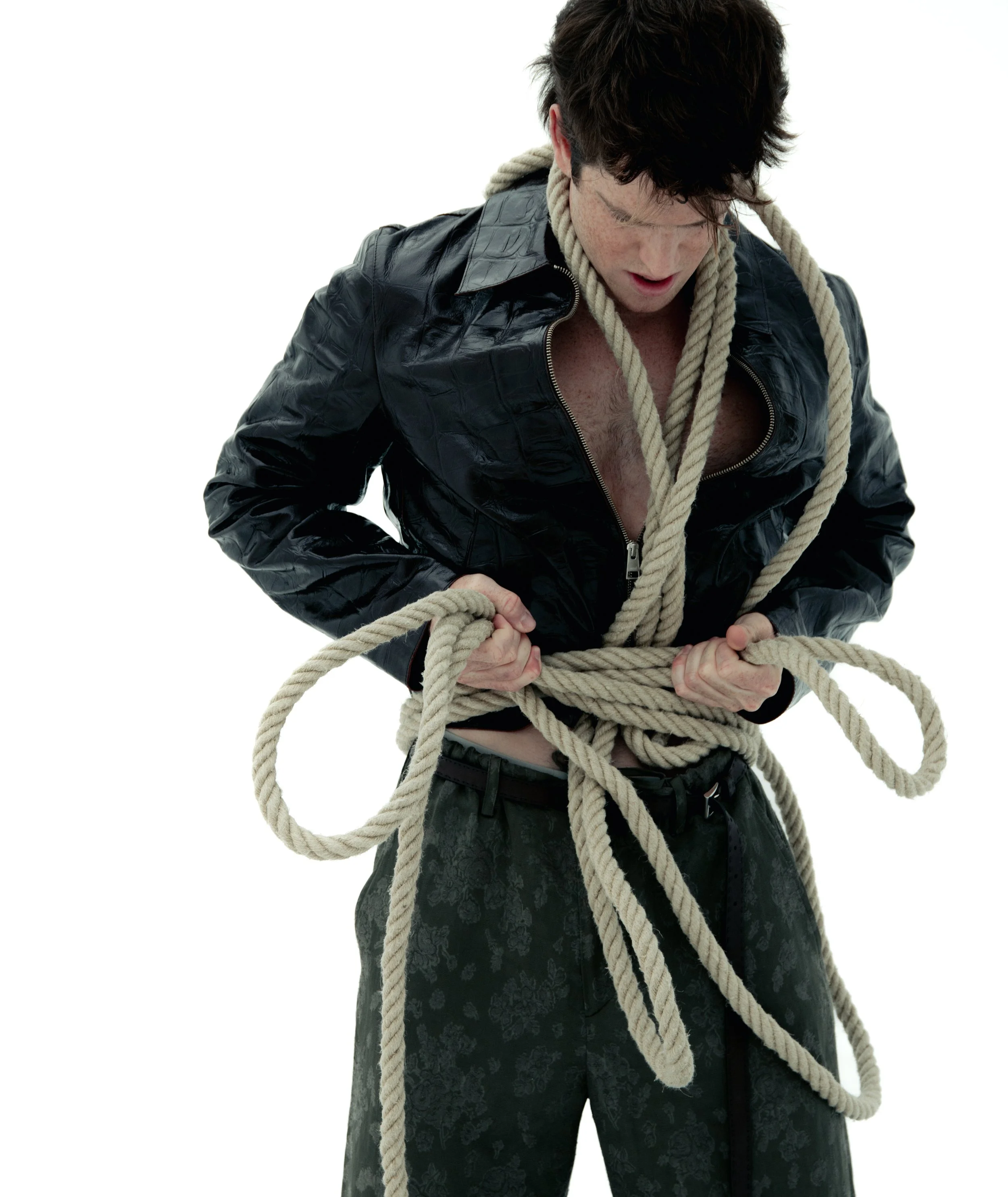
jacket AMI PARIS
trousers DRIES VAN NOTEN
belt PRADA
How do you communicate fear, resignation or love when your character may not have the freedom to articulate those feelings himself?
It becomes a collaboration with the directors and the whole team to create someone going through extreme circumstances without expressing everything directly.
Rafael has been captured by the Nationalist side during the war. It has been one year and one day since Federico’s death. I read a testimony from a soldier beside him who said, “I saw him walking through the bombs like nothing was happening, completely emotionless, like he was in shock.” I think Rafael was on the brink of collapsing.
What is interesting about his arc is that he deconstructed himself to discover who he really was. Being with Federico made him vulnerable. Imagine losing Federico and then having to go to war and kill people.
By the time Rafael is captured, he is realizing the end of his life could be coming, and he feels the need to share what he has never shared with anybody. The only person there is a soldier from the other side, but I think something about that soldier reminds Rafael of Federico, or perhaps of himself when he first met FedericoWhen you truly face death, part of you collapses. At the same time, you feel a need to express your final thoughts and leave something behind. What Rafael wanted to leave behind was what he had protected most, his memory of Federico.
It’s incredible how deeply Federico affected him and how much he loved him. It was more than romantic love. There was something spiritual about it. It was beautiful to work on.
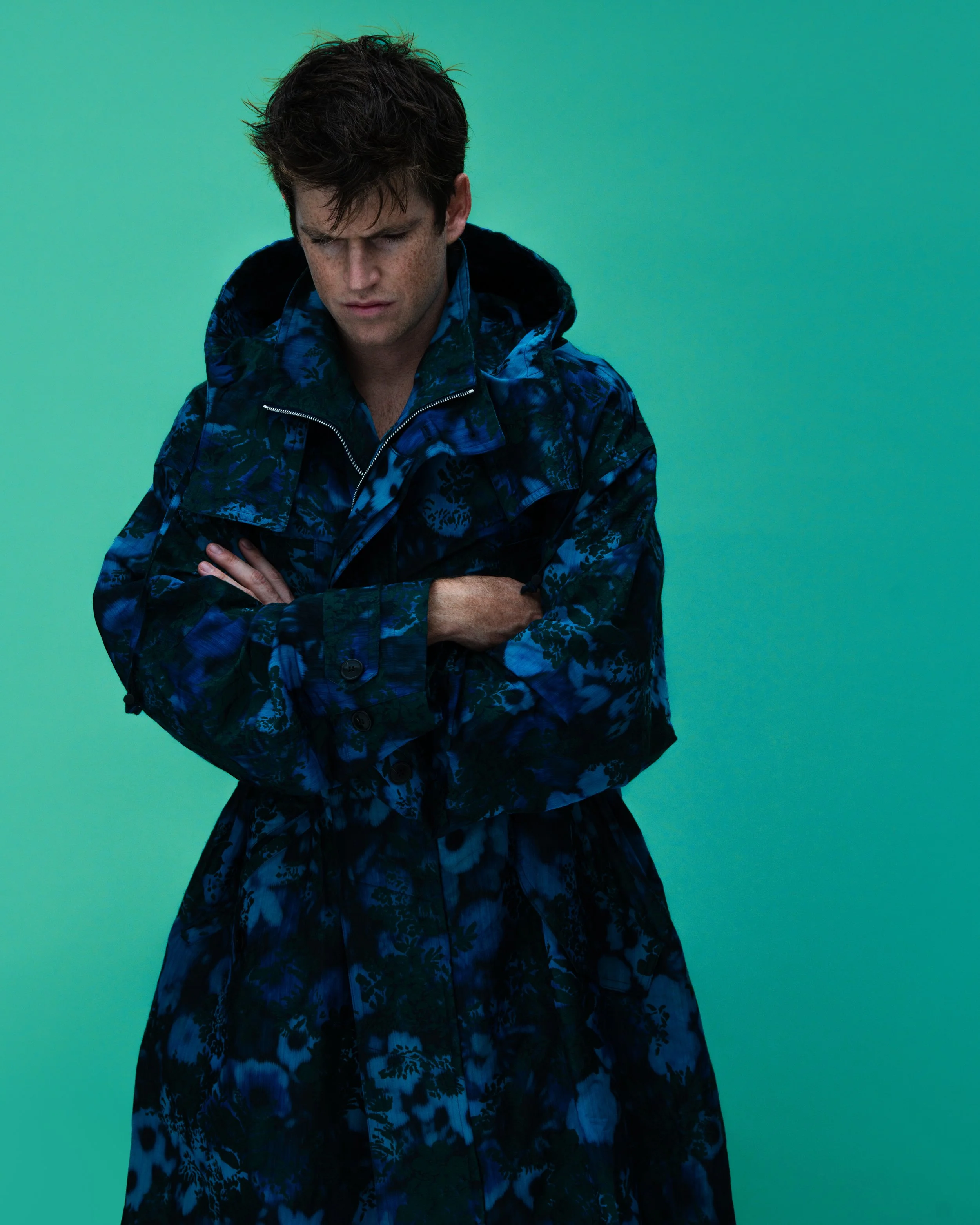
parka DRIES VAN NOTEN
The film received an extraordinary response at Cannes and has subsequently generated significant international attention. Does the possibility of La Bola Negra introducing you to an entirely new audience excite you?
I think it’s impossible not to think about it. I’m excited for people from different countries to watch it and hear their opinions. A lot of people around the world will connect to it deeply because, even though it sounds like a cliché, the more local and personal something is, the more universal it can become.
I often find that with Korean or Chinese movies, or cinema from anywhere else. A story may be very specific to that culture, but the more local and real it feels, the more I connect with it because somehow it reflects experiences that feel familiar.
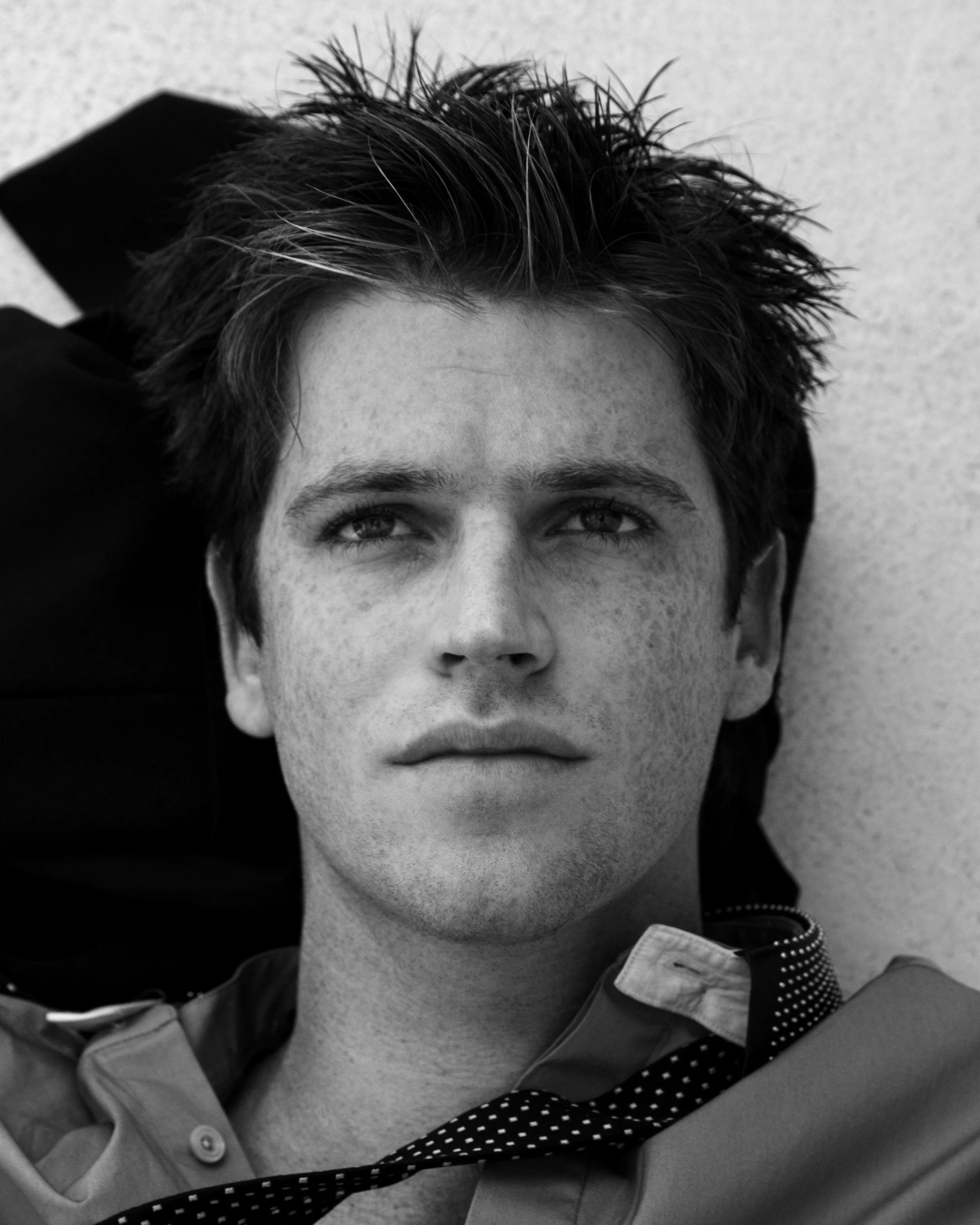

full look TOM FORD
watch CARTIER
This film also has an incredible cast. How was it working with PENÉLOPE CRUZ, GUITARRICADELAFUENTE and the rest of the crew?
I didn’t actually work with Penélope. I met her later. Working with Guitarricadelafuente, the Javis and the whole team was very special. It wasn’t a usual experience on set. It was full of energy and creativity, a very specific but also chaotic kind of creativity.
I learned a lot. I was inspired by the way the Javis work and combine creatively. One will suddenly have a more general view while the other goes into detail. They are perfectionists while still giving you so much freedom as an actor.
It’s the kind of movie where you finish your takes and still want to stay and watch. I’ve never seen a team work together so well. It was an incredibly respectful and creative environment that I felt very grateful to be part of.

top ZADIG&VOLTAIRE
pants DRIES VAN NOTEN
boots TOM FORD
bracelet CARTIER
This issue’s theme is nature. What deeper meaning does nature give you in your day-to-day life and work?
It represents a place where I can disconnect from work, but also from myself. Sometimes I get tired of my own thoughts. I go to nature, especially the ocean. I surf, freedive, foil and sail.
There is a small fisherman’s house by the ocean where I’ve sat many times over the years. I wondered why it made me feel nostalgic, peaceful but also emotional. Then I realized it isn’t really about the place. It’s about me.
I’ve gone there through many stages of my life. I’ve been many different versions of Miguel sitting there, but that place has always been the same. The waves have always broken in the same shape and the smell has always been the same. I appreciate that stillness, the unchangeable force of nature.
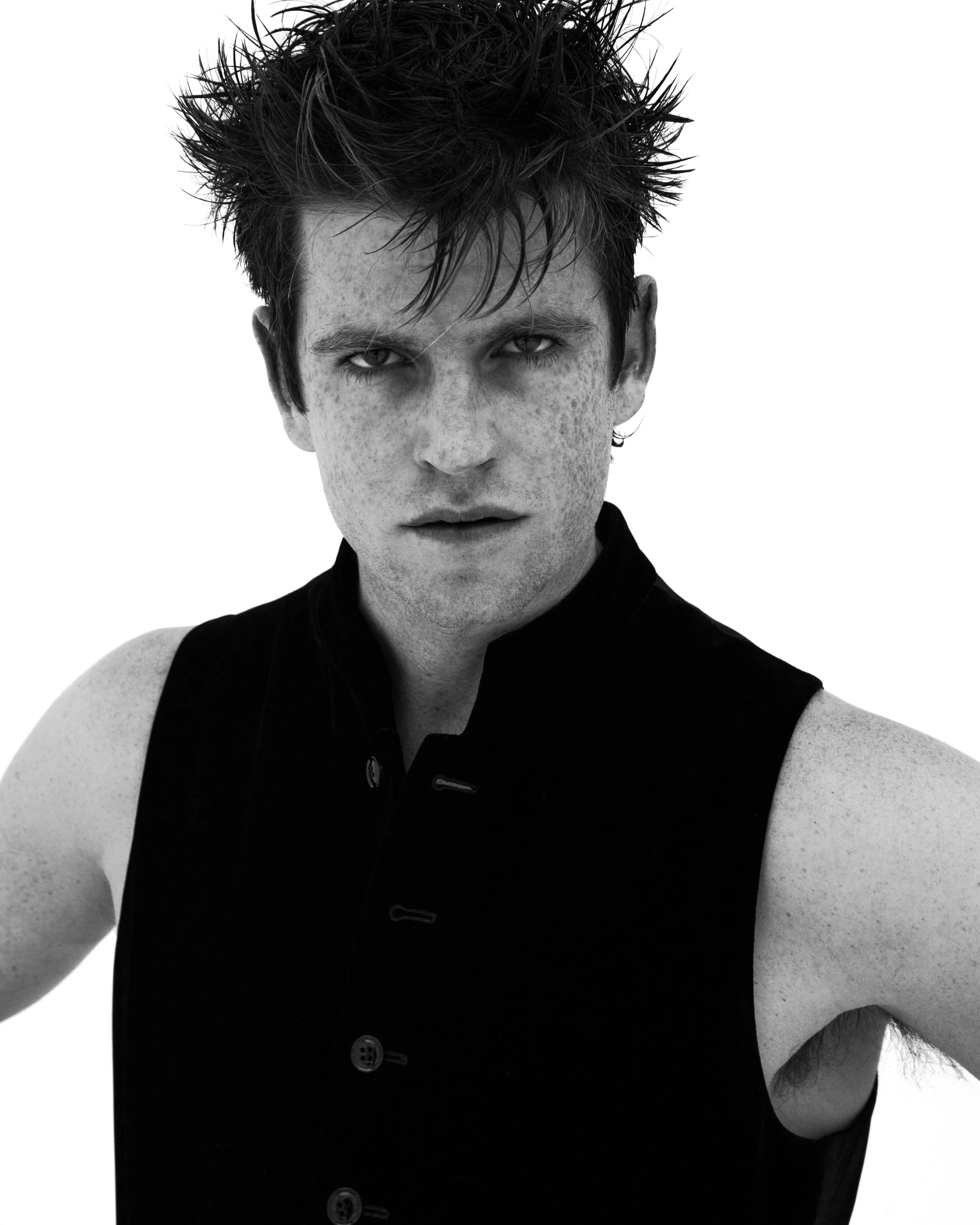
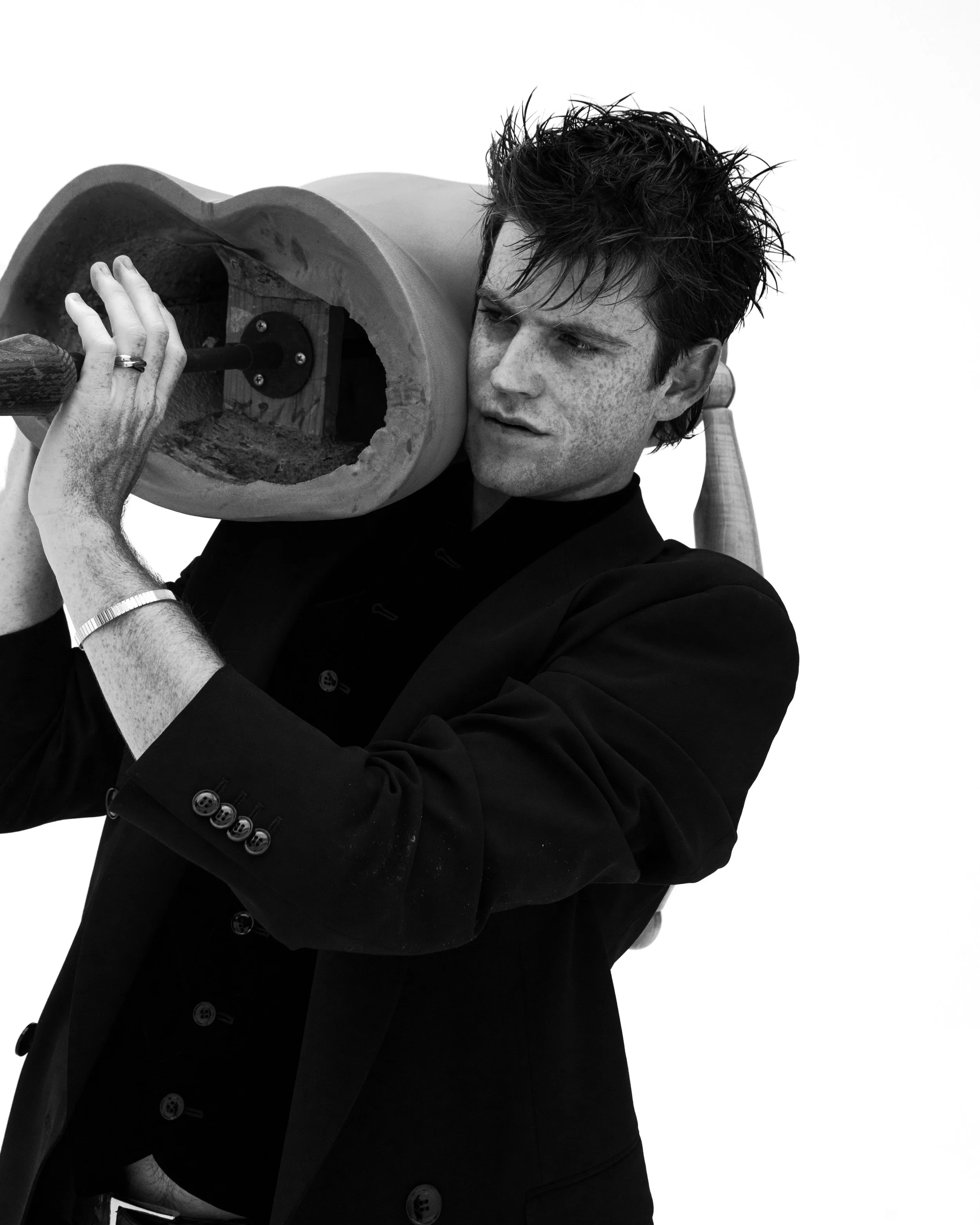

full look GIORGIO ARMANI
jewellery CARTIER
Fashion has also been an important part of your public image. How has your relationship with clothes and personal style evolved?
I think I’m only now finding my identity in the way I dress and look. Before, I was constrained to something more basic, probably because of my childhood and how judged I sometimes felt by the way I dressed. Now, I appreciate dressing the way I want. I feel more freedom and sometimes enjoy working creatively with brands and photographers.
But there’s a limit. As an actor, I don’t necessarily think it’s good to be overly exposed through brands. The older I get, the more I would rather people watch me on the big screen than constantly see me on billboards. I think that’s better for you as an actor.
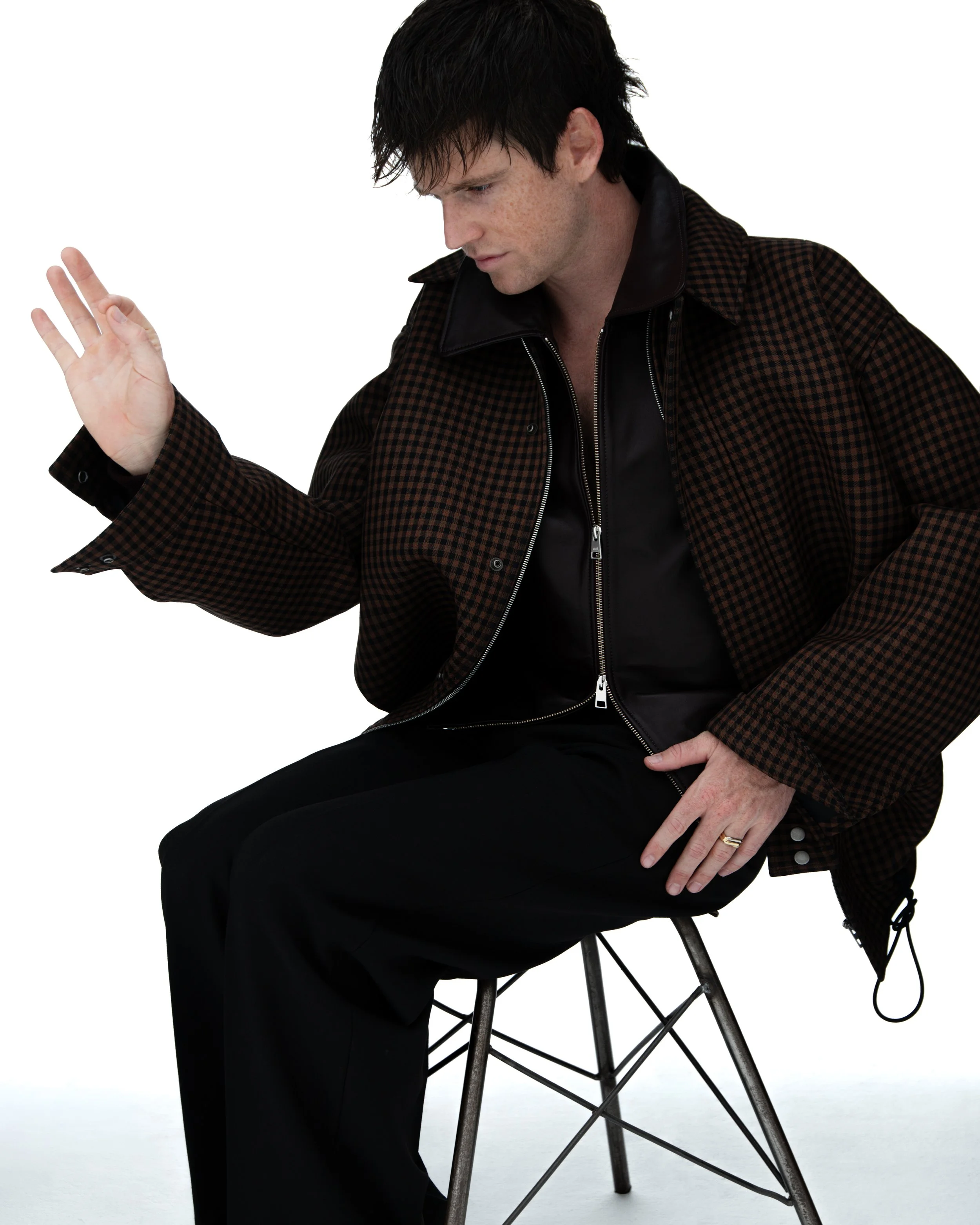
coat LOEWE
leather jacket AMI PARIS
trousers TOM FORD
bracelet CARTIER
If La Bola Negra marks the beginning of a new chapter for you, what do you hope this chapter allows you to explore?
I hope La Bola Negra brings opportunities to play different characters and work with new directors. The more scared I am when I see a character on the page, the more I feel the urge to play it.
I’m attracted to characters that are far away from me. It’s a matter of curiosity, wanting to experiment, be brave and try different things. I would really like to do theatre as well.
La Bola Negra has changed me deeply. This character has changed me in a way no other character has. Studying him, the historical context, shooting the film, working with the Javis and meeting all these people changed me forever, and in a better way. I know more about myself now. I have more opinions and a more critical view of my country and the way it managed the transition from dictatorship to democracy. I’ve changed, and I like that. I’ve evolved.
Hopefully, I can continue playing characters where studying them and the reality surrounding them makes me more knowledgeable and teaches me new things. It’s such a privilege to be an actor because you can constantly learn. If I play characters I’ve already played, in realities I already know, I don’t have to study or leave my comfort zone as much. And that’s what I want to do.
TEAM CREDITS:
talent MIGUEL BERNARDEAU
photography FILIP KOLUDROVIC
styling THORE DAMWERTH
grooming PAUL GOMEZ
production JUAN MARTÍ
styling assistant JAIME PERÁN
production assistants LETICIA GUAJARDO and NENA PETKOVSKA
casting and interview TIMI LETONJA and JANA LETONJA
editor TIMI LETONJA
cover design ARTHUR ROELOFFZEN
