
IN CONVERSATION WITH SEAN DAMPTE
interview by JANA LETONJA
Fast-rising afrofusion artist Sean Dampte enters 2026 with intention, elevation, and clarity. Rooted in Lagos and built for world stages, Sean opens the year with ‘Gbera’, a bold, melodic anthem that captures a mindset shift—where growth is spiritual, success is disciplined, and elevation speaks louder than excess. Blending afrobeats energy with philosophical depth, the record signals a new chapter for an artist whose sound is street-credible, globally fluent, and purpose-driven. As he prepares to release his forthcoming album ‘Awoodah: Sounds of Kalakuta’, Sean is not just introducing new music, but defining a worldview, one shaped by ancestry, movement, and the conviction that real progress is intentional.

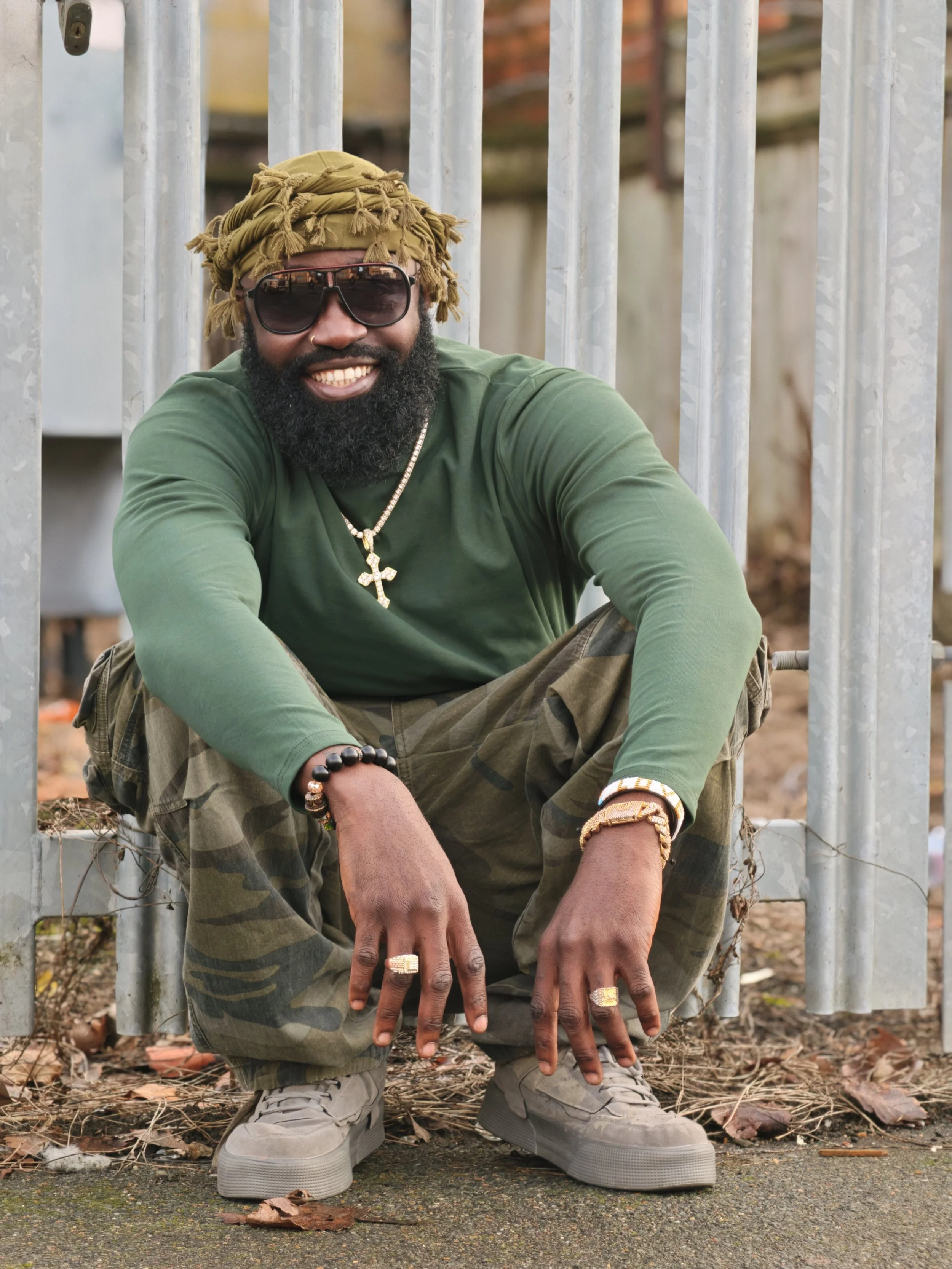
all images credit SAVAGE MUSIC NIGERIA
‘Gbera’ feels like a declaration rather than an explanation. What was the mindset shift that sparked this song?
The shift was internal. For me, I stopped trying to prove motion, chasing acceptance and started respecting alignment. ‘Gbera’ came from realising that elevation doesn’t need noise, it only needs discipline and direction. I wasn’t chasing validation anymore, I was responding to purpose. Once that clicked in my mind, I ensured my music stopped asking questions and started making statements.
You’ve described the record as sounding like elevation. How do you translate growth and clarity into melody and rhythm?
Clarity is space. Growth is control. I didn’t overcrowd the record. I let the melodies breathe, and allow the rhythm to move with intention, not urgency. Elevation isn’t rushed, it’s steady. You see the target and be ready to climb, challenging all obstructions. Everything you hear on ‘Gbera’ is deliberate, from the cadence to the silence between notes.
The song opens with an ancestral salute. What role does spirituality play in your creative process?
Spirituality is the foundation, not the decoration. Before the studio, before the beat, there’s acknowledgement. I don’t see creativity as something I own, it’s something I’m allowed to channel and to use. It does not belong to me and I do not seek to claim it. The ancestral salute is alignment. It’s me saying, I know where this comes from. I tend to always channel it.
Lagos has clearly shaped your sound and worldview. How do the energy and movement of the city show up in your music?
Lagos teaches you timing. It teaches you resilience without announcing it. The city is chaotic, but there’s rhythm in the chaos and that is where the sweet spot lies. That’s how my music moves, unpredictable but purposeful. Lagos doesn’t wait for permission, and neither does my sound.

Your lyrics move between English, Yoruba, Pidgin, and street language. How intentional is that balance when writing?
Very intentional. Language is access. Each one carries a different weight, a different emotion. Yoruba connects spirit. Pidgin connects truth. English connects the world. I don’t switch languages for style, I switch for accuracy. Sometimes only the language can share the meaning. “I have a big farm” when spoken in Yoruba would carry different weights in different languages.
You call your philosophy “Awoodah.” How would you define it for someone discovering your music for the first time?
Awoodah begins as a question, the presence of the unknown. It’s a phenomenon. An inexplicable feeling that grabs your attention and reminds you you’re alive. That moment when you don’t just exist, but you feel the hunger for life, money, happiness, purpose.
It’s also a greeting. A shared language among Awoodahites. A recognition of awareness. At its core, Awoodah is disciplined belief. It understands that blessings respond to structure, not noise. It’s faith with planning. Dreaming with execution. Spirituality without laziness, ambition without ego.
The philosophy rests on three principles. Life — live fully, consciously, without shrinking. Money — get money, because survival and freedom require structure. Happiness — always choose happiness, even when it’s inconvenient. Awoodah is elevation with intention. It’s not escape, it’s arrival.
Your music feels built for crowd energy but also personal reflection. How do you balance those two worlds?
If it’s honest, it will scale. I make music for myself first, for quiet moments, real thoughts, real life. It’s music for my lifestyle, and everyone has a lifestyle. It belongs to you first, before it belongs to everyone else. When it’s true, crowds recognise themselves in it. Reflection doesn’t cancel energy, it creates and amplifies it.
Afrobeats is more global than ever. How do you stay rooted while creating music for international audiences?
I don’t adjust the root, I improve the translation. The culture doesn’t need dilution, it needs clarity. When you stay authentic, the world adapts. I’m not exporting a sound, I’m exporting a truth.
They say Fela disrupted the system and built the altar for Afrobeats. Wizkid globalised the wave. Burna took it to the stadiums. Me? I’m writing the scriptures. I’m doing something else entirely. I’m structuring belief. Different eras, different assignments.
I’m not here to imitate ancestors or compete with contemporaries. I’m here to define the present. If that makes people uncomfortable, good. Culture doesn’t move forward by consensus, it moves when someone is brave enough to stand alone and speak clearly.
When you’re in the studio, what tells you a record is ready for the world?
When it stops asking for approval. When I don’t feel the need to explain it anymore. If the record can stand alone without context, it’s ready.
Your upcoming album ‘Awoodah: Sounds of Kalakuta’ is described as a defining statement. What chapter of your story does this album capture?
This is the chapter of alignment. Not survival, but direction. It’s the point where experience, ancestry, and vision finally meet structure. Not the beginning. Not the victory lap.
It’s that quiet moment when everything starts making sense. Like hearing your name called and knowing, without question, this is your time.
As 2026 begins, what do you hope listeners feel, or manifest, when they press play on ‘Gbera’?
Calm confidence. Not excitement, certainty. I want people to feel grounded, like they don’t need to rush or explain themselves anymore. To leave fear in the past and move with intention.
‘Gbera’ is permission to rise quietly and still arrive fully. It’s a reminder that this is the season for flight, but the kind that comes from balance, not panic.
