
IN CONVERSATION WITH RAPHAEL LUCE
interview by JANA LETONJA
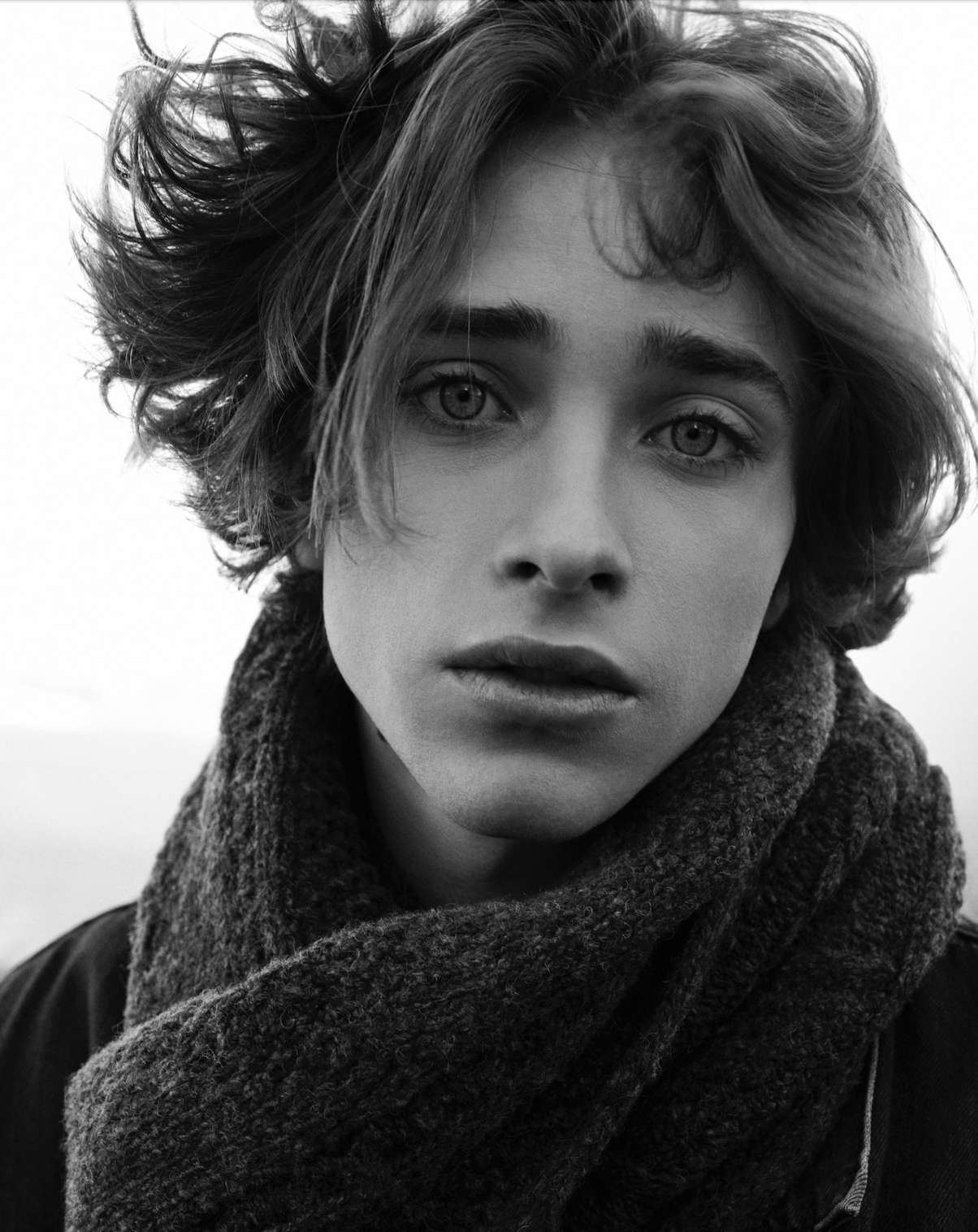
Raphael Luce first captivated global audiences as Young Henry Creel in Netflix’s ‘Stranger Things’, delivering a chilling, emotionally layered performance that quickly made him a fan favorite. Known for his ability to inhabit dark and complex characters, he has also appeared in ‘Dracula’ as Clerk Simon, further cementing his reputation as a young actor with striking intensity. Now Raphael is entering a new chapter, balancing acting with a growing presence in fashion after signing with Elite Model Management, and building a career shaped as much by creative ambition as cultural relevance.
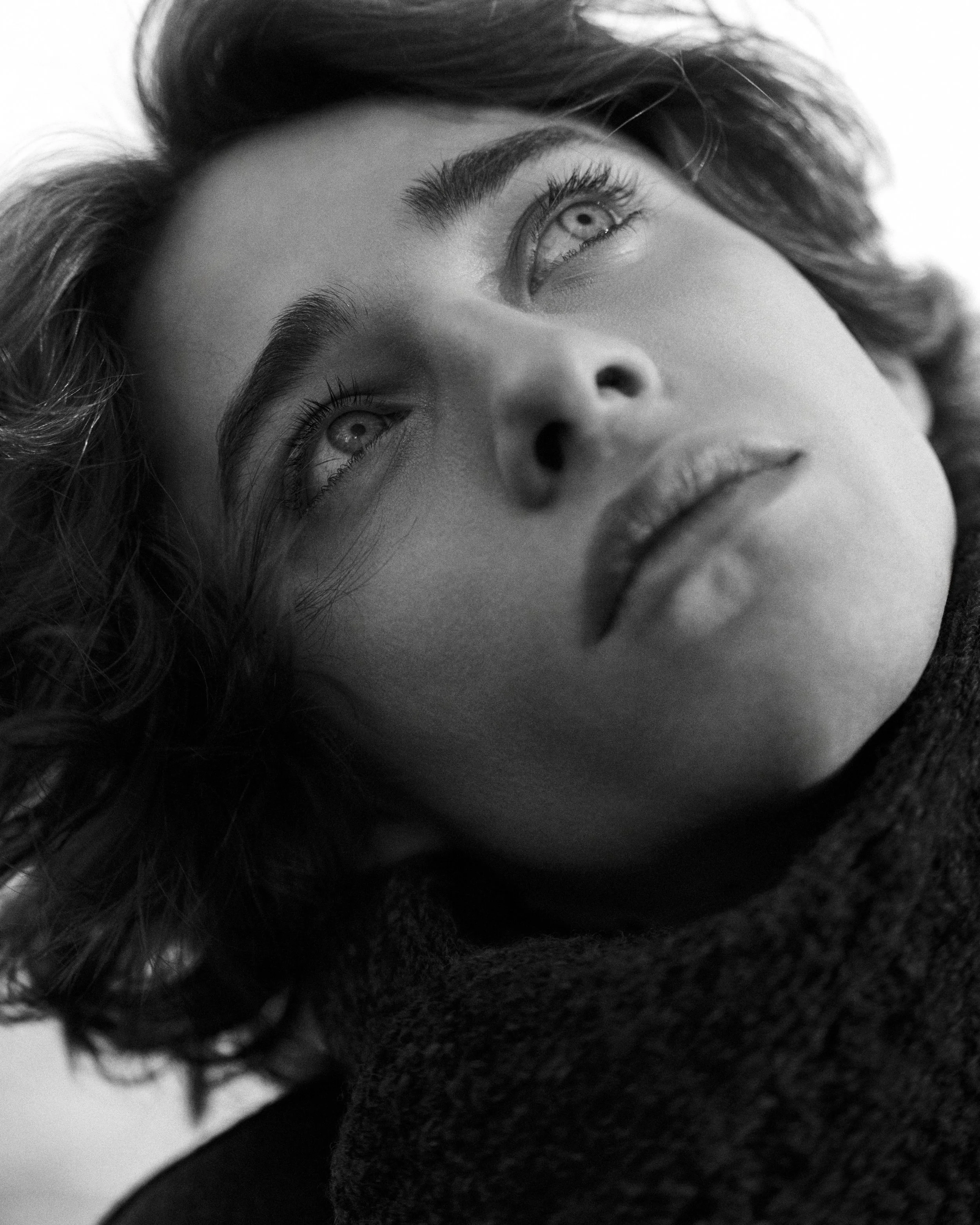
clothes BUCK MASON and ZADIG AND VOLTIARE
How did the’ Stranger Things’ experience begin for you?
I auditioned for ‘Stranger Things’ when I was 11. At the time, I knew of the show but hadn’t seen it yet. The audition scene was minimal. I remember reacting to the sound of a monster, which feels ironic now, considering who the character became. Nothing was explained to me. The story, the character, even the importance of the role were kept completely secret. The scene I auditioned with had no real connection to the actual storyline, so it felt abstract, almost insignificant.
When I found out I had booked it, I was excited, but my best friend was even more thrilled. He was a true fan. I had to keep the secret for over two years because of Covid delays. I understood it was a major show, so once I was cast, I started watching and slowly grasping the scale of what I had stepped into.
How did you approach Young Henry?
The entire experience felt like solving a puzzle without having all the pieces. I was given very little information and only a few script pages at a time. I had to observe, collect clues, and build the character from fragments.
Even the crew would ask what I knew about Henry, and the honest answer was almost nothing. They encouraged me to ask the directors questions, but the secrecy remained. I only knew I was playing a younger version of Jamie Campbell Bower’s character, who was also new to the series. Jamie and I didn’t meet until after the show aired. The fact that our emotional tone aligned as naturally as it did feels like chance, or maybe instinct. I relied heavily on the directors, the Duffer Brothers and Shawn Levy. They had a precise vision. My job was to trust it and remain open.
When did the character truly take shape for you?
The moment everything clicked was the day I arrived on set and the makeup artist applied the “001” tattoo on my wrist. Suddenly, everything made sense. Scenes that had felt ambiguous became weighted and deliberate.
Young Henry never speaks, which gives him a quiet menace. His silence carries something unsettling. Jamie’s voice narrates the character later, and it adds a hypnotic quality. That contrast fascinated me.
When the first trailer was released, Young Henry appeared first. That was when I was finally allowed to speak about my involvement. Overnight, my following grew dramatically. That was when I realized this role, even with limited screen time, would mark a turning point. The narrative twists surprised even me. I thought I understood the story while filming, but I didn’t fully grasp its scope until watching it unfold.
How did the series reshape your relationship with visibility and fame?
After the season aired, my social media presence grew quickly. But the most impactful shift was meeting the audience in person. My first fan convention was in Paris, where I spent part of my childhood. Stepping out of the car and hearing my name shouted by strangers was disorienting. Being escorted through the crowd made everything suddenly real.
That moment reframed my understanding of visibility. Numbers online are abstract. Faces are not. Since then, I’ve attended over forty conventions worldwide. The connection with fans has been one of the most unexpected and transformative outcomes of the show.
Professionally, the industry has been unstable post-Covid, but I’ve continued working. My most recent film, ‘Dracula: A Love Tale’ by Luc Besson, premieres this February in Hollywood. Working alongside Christoph Waltz and under Besson’s direction was deeply formative. I’ve often played characters who observe more than they speak, which has allowed me to learn quietly. Now I feel ready for something more demanding.
How intentional are you about choosing what comes next?
Since ‘Stranger Things’, my relationship with cinema has changed. I became genuinely curious about how films are built, not just how they feel. I started watching classic films, often obsessively, and trying to understand why certain performances or scenes stayed with me.
I study interviews, behind-the-scenes material, and the way actors speak about their process. I like tracing careers over time and seeing how choices accumulate. I often talk about films with friends, rate them, revisit them, and compare different eras of cinema. It’s become part of my daily life.
I’m drawn to actors who take risks and allow themselves to evolve. Timothée Chalamet is someone I admire for that reason. His work feels instinctive but deliberate, and I relate to his dual cultural background. At this point, I’m less interested in chasing momentum and more interested in finding roles that feel transformative. I want characters that leave a mark on me, not just the audience.
What excites you about entering the fashion world?
Fashion feels like an extension of how I already see the world. I’m signed with Elite in Paris and NEXT in Los Angeles and New York, and what drew me in wasn’t the industry itself, but the creative process behind it.
I’m deeply interested in photography. I shoot with a Fujifilm X100V, which I love for its softness and slightly nostalgic quality. Most of my social media is centered around art photography, travel, and visual storytelling. I’m constantly observing light, texture, and composition.
What I enjoy most about fashion is the collaboration. Stylists, designers, photographers, and models all contribute to a single image or moment. I love building a look, preparing for an event, or creating a shoot that feels cohesive and intentional. Fashion allows me to explore identity visually, without dialogue, and that’s something I find very compelling.
How does modeling differ from acting creatively?
Modeling and acting activate two very different instincts. Acting starts internally. It’s emotional, psychological, often invisible. Modeling and photography work in the opposite direction. They begin with form, composition, and presence.
I recently took part in a 14-hour photoshoot involving more than twenty looks. It was physically demanding and intense, but also strangely meditative. There’s a precision to it. I’m very detail-oriented, sometimes to an obsessive level. I can spend hours adjusting the crop of an image, refining colors, or deciding which frame feels right. Geometry matters to me. Negative space matters.
Photography has become a creative outlet where I feel a lot of freedom. I can pick up my camera and create immediately. Acting requires patience. You wait. You audition. You imagine possibilities that may never materialize. That distance can be frustrating.
I’m not sure yet whether I prefer being in front of the camera or behind it. I think I like the combination of both.
What roles or genres are you drawn to next?
I’m very interested in roles that involve physicality. Both of my parents are stunt performers, so movement has always been part of my education. I grew up learning high-wire work, fire stunts, high falls, stage combat, wire work, and stunt driving. I still enjoy training and learning new skills whenever I can. I’m drawn to characters who communicate through action as much as dialogue. Roles that allow silence, tension, or restraint. I would love to be part of a project that blends storytelling with physical expression.
Playing Link in ‘The Legend of Zelda’ would have been a dream role. It combines movement, silence, and mythology. But I try not to fixate on one idea. I’m open to what comes next, as long as it challenges me and allows for growth.
I collaborate often with friends on short films and visual projects. One of them, ‘Road to Healing’, directed by Maxwell Acee Donovan, will be released soon. What matters most to me is creating something that feels intentional.
How has your upbringing shaped your sense of grounding?
I grew up in a family where adventure was normal. My parents were Cirque du Soleil performers. My father walks high wires between buildings and over rivers, sometimes on cables that are literally on fire. My mother is a stuntwoman.
For the first ten years of my life, we lived in rural France in a 400-year-old stone monastery my parents turned into an artist retreat. I was homeschooled, surrounded by artists, animals, and nature. We traveled constantly. Later, when I decided I wanted to act, we moved back to the US and lived on a bus with my siblings, who are also actors. At one point, we lived on a boat in New Orleans.
All of that taught me adaptability and perspective. Instability never felt frightening. It felt normal. I think that’s what keeps me grounded now. Family and close friends are everything to me. Success doesn’t mean much if it isn’t shared with people you love.
What does success look like to you right now?
Success, right now, feels unfinished. And I’m comfortable with that. I’m eager to work more, to experience more, and to keep evolving. I feel like I have strong foundations, but I’m still building. I recently moved back to Los Angeles, and I’m focusing on collaboration, learning, and momentum.
I’m not in a rush to define myself too precisely. I want a career that allows curiosity, movement, and longevity. If the projects are meaningful and the process stays alive, that already feels like success to me.
TEAM CREDITS:
photography and styling WILL FOERSTER
digital tech and first assist JONAS SONDERGAARD
second assist and bts WES APPLEGATE
interview JANA LETONJA
