IN CONVERSATION WITH AIRON MARTIN
interview by TIMI LETONJA and LEANDRO DA SILVA
Airon Martin sees fashion as an act of image-making. Through MISCI, the designer has dedicated himself to constructing a contemporary vision of Brazil, one that exists beyond cliché, yet remains deeply connected to the country’s cultural memory. Rooted in the idea of miscigenação, the brand navigates the space between tradition and futurism, craftsmanship and innovation, local identity and global desire.
As one of the leading names of Brazil’s new luxury landscape, Airon draws inspiration from the country’s raw materials, social contrasts, artistic heritage, and collective imagination. Whether through collaborations with carnival creators, artisans, or global partners such as VEJA, MISCI continues to expand the possibilities of what Brazilian fashion can represent on the international stage.
“Our dream doesn’t end in February.”
— Airon Martin
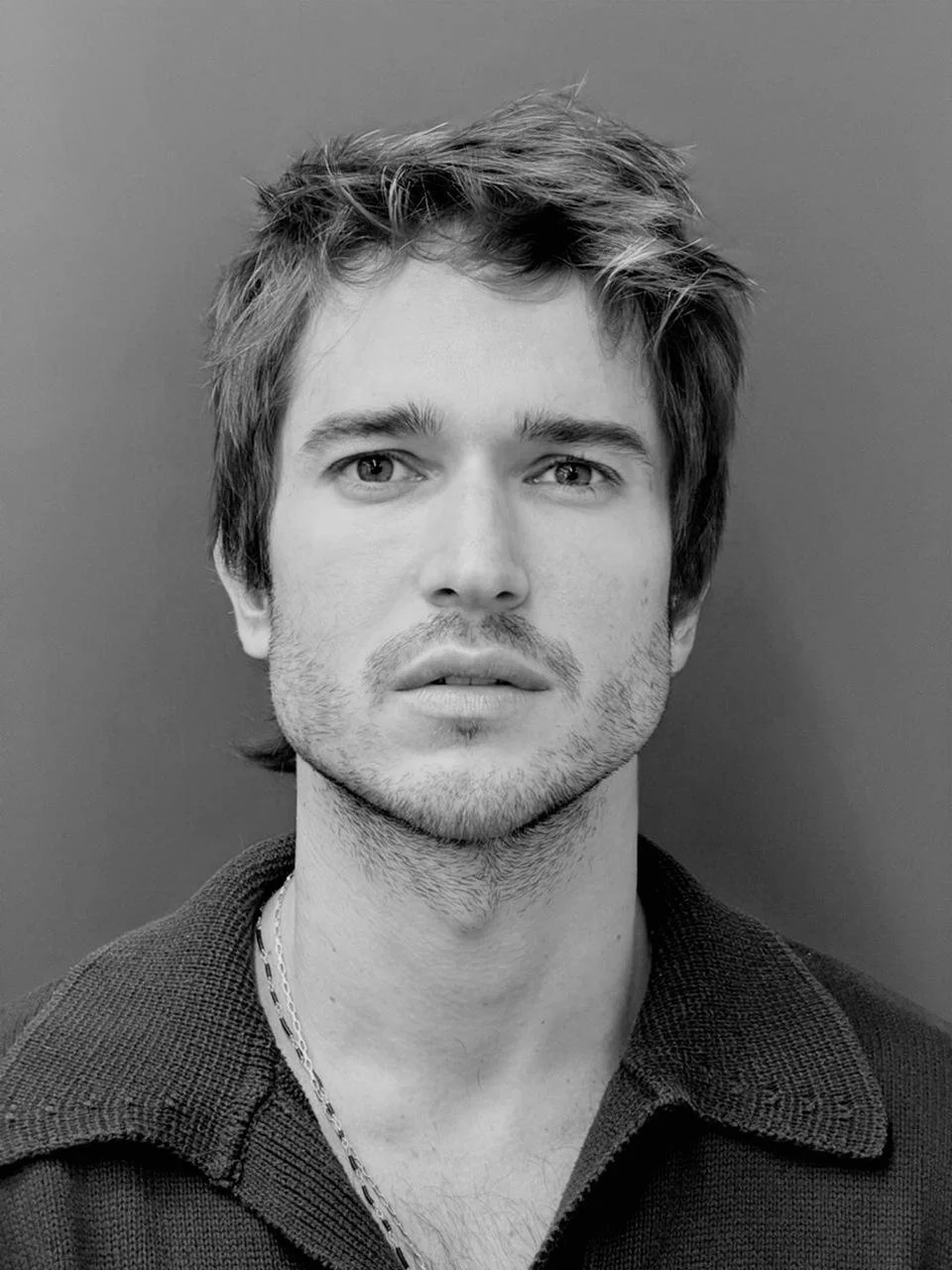
all images courtesy of VEJA and MISCI
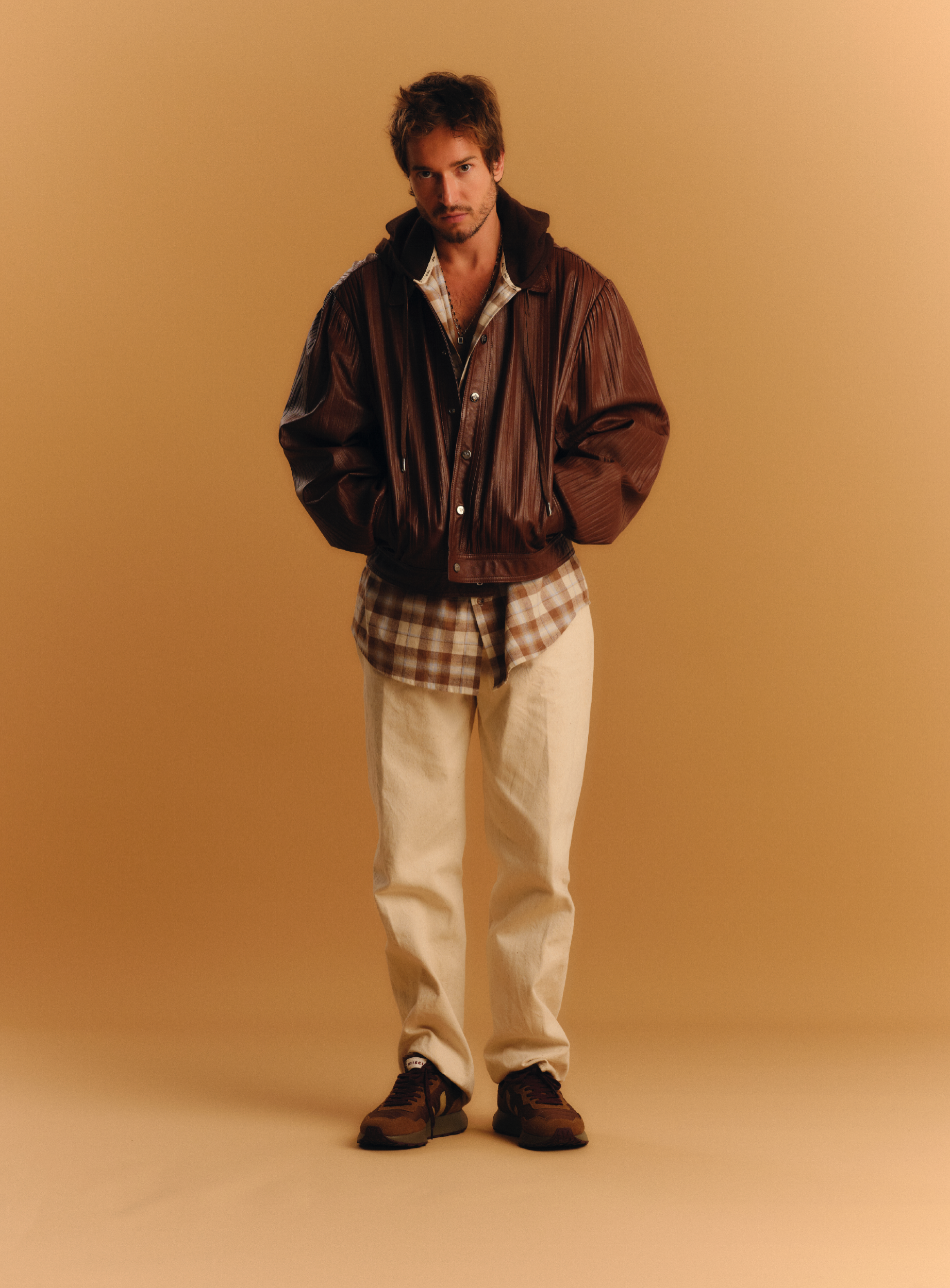
Timi: Let’s start with your new collaboration with VEJA. The collaboration reflects the close alignment between the two brands, VEJA and MISCI, bringing together VEJA’s commitment to transparency and responsible materials with MISCI’s strong Brazilian identity and experimental approach to leather. For this project, the two brands revisited the Paulistana, VEJA’s retro-running silhouette. Could you tell us a little more about this collaboration and about this silhouette?
Airon: This VEJA sneaker is a cool sneaker because it’s made in Paulistana, which is actually a town in Piauí, not “Paulistana” as in São Paulo, and it’s a town where they get organic cotton, directly from organic cotton producers. And this is very symbolic for us, because Brazil is a major producer of cotton, silk, and leather, and we are highly recognized for our raw materials. For me, it was great to take this sneaker model, which comes from a cotton-producing region, and transform it, bringing in luxury elements such as pirarucu, for example, which is an exotic leather, and launch it globally. It’s about shifting Brazil away from being just an exporter of raw materials and bringing out a finished product, which would be the most expensive product in VEJA’s history to date, inspired by a region that only produces cotton for exportation.
So, for me, this was very important, because my work is very much about this: taking the best of Brazil, of Brazilian raw materials, and generating the image of Brazil that we want to see. Fashion holds a lot of this responsibility, because fashion is this space that generates images of desire. And as a country highly recognized for its raw materials, we still lack the recognition of a contemporary image of Brazil. What the world knows of Brazil is still very caricatured and cliché. And my goal here isn’t even to discard the caricature, because I admire and like a lot of Brazil’s caricatured image. But it’s about generating an image of contemporary Brazil, not just as a raw material exporter. And that’s why VEJA was very important in this process. Besides producing in Brazil, where 99% of its production takes place, the company was very open to this project of exporting the best of Brazil alongside MISCI.
Leandro: Your latest collection, Tropical Escapism, challenges conventional ideas of lightness and escape. What inspired this concept?
Airon: Brazil is that place. Have you been to Brazil much? I think you might’ve sensed this a bit. Brazil is almost a world apart from the rest of the world. We know all the problems the world has been facing, wars, economic crises, and we keep putting on Carnival, which is the Brazilian’s own escape. We are part of the luxury market. We are one of the Brazilian brands with the highest average ticket, one of the most luxurious brands in Brazil, and we know that Brazil is a very unequal country.
So, it’s a brand that, while working in the luxury market, has this social conscience. I don’t come from a wealthy family. I come from a very simple family in the interior of Mato Grosso, in the Amazon territory, so I bring my roots with me. I have this social conscience that it’s very important to generate a desirable product, but one inspired by the real Brazil. Obviously, there are European fashion codes, because European fashion has undoubtedly influenced all fashions in the world, but we have very proprietary codes of our own.
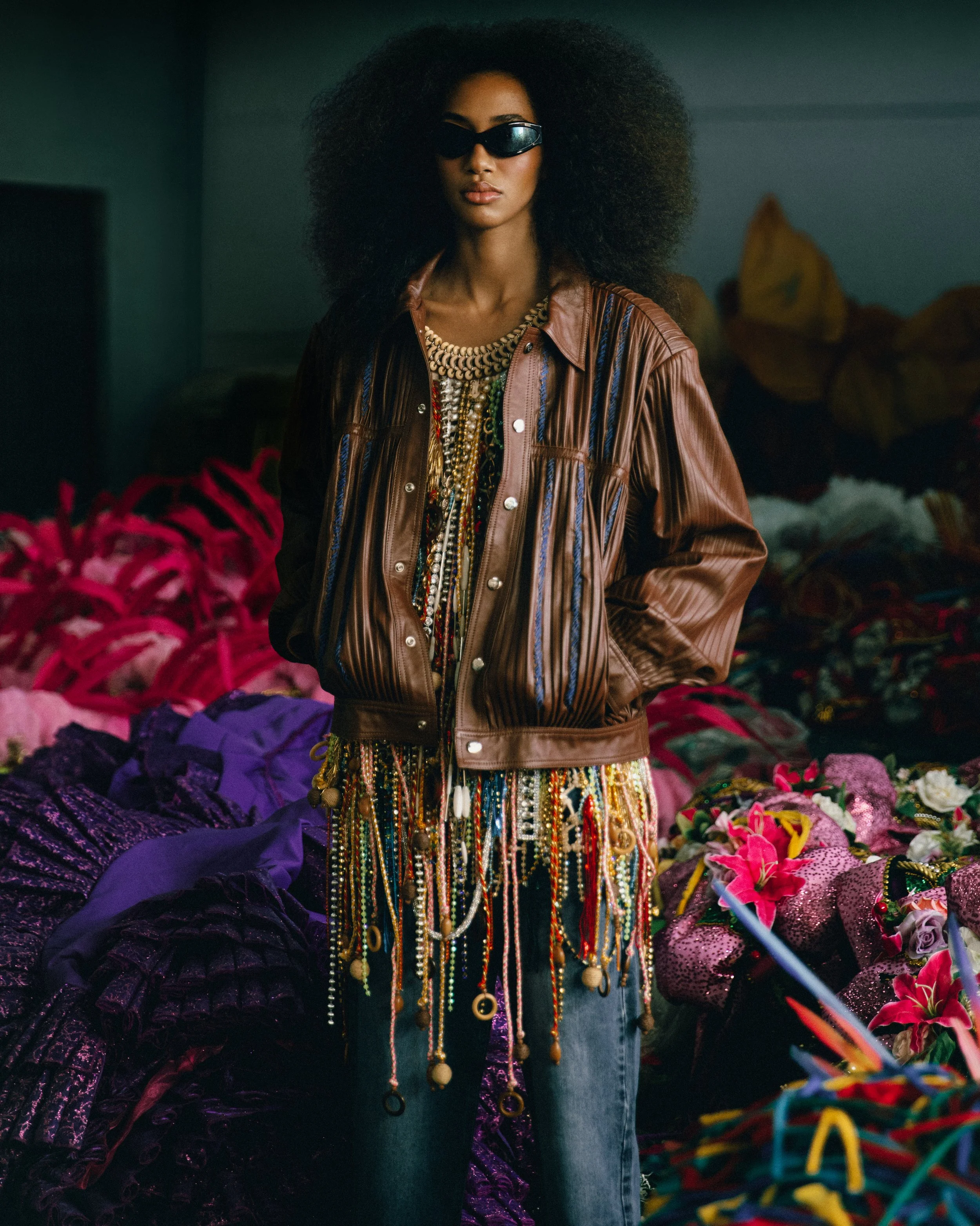
And speaking of this collection, Tropical Escapism, it was very much about this idea of Brazil being a place where people could come to escape. And we also have this escape. Carnival is that escape for us, while we work hard and suffer from a lot of social inequality. There are several issues with Brazil not really being a valued country, especially our fashion market, which is still very colonized. That’s what Carnival is for Brazilians. And Brazil, Rio de Janeiro, represents that for the world.
I joke that this collection is almost like an edition of White Lotus Brazil. Imagine a version of White Lotus in Brazil. I’m sure this collection would be the wardrobe. Regardless of anything else in Brazil, we samba, we have fun, and we have smiles on our faces.
Timi: For MISCI, which became the first fashion brand to present a runway show at the iconic Sambadrome, what did occupying that space represent for you culturally and emotionally?
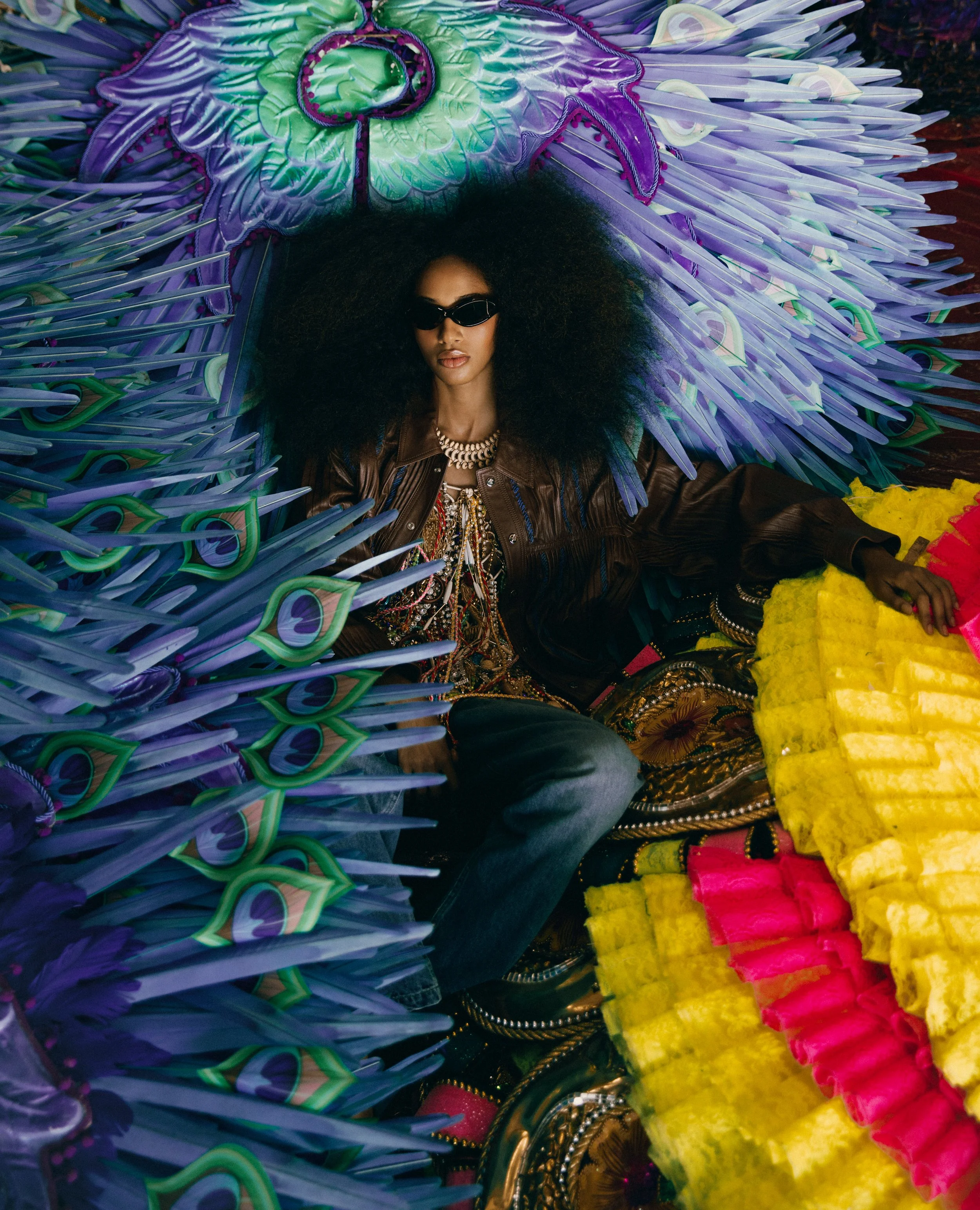
Airon: When you talk about a runway show in Brazil, a parade, you don’t think of fashion, you think of Carnival. When we decided to use this space, the Apoteose, Sambadrome, it’s almost like... not just a temple, but a portal. It’s a portal that transports you to another place.
For me, it was very important to bring the people who are relevant to that universe into the collection. That’s why it wasn’t just about using the space, which is a part of Brazil for export, a very famous spot of Brazil in the world. For us, there had to be this consciousness of bringing Carnival people to co-create with us. That’s why we brought the Beija-Flor drumline. We even made a manifesto, which I think is very important: “Our dream doesn’t end in February.” Because February is when much of the world looks at Brazil, but our dream doesn’t end in February, and our show there is like a continuation of that.
We heard from many people there, Neguinho Da Beija-Flor, who is an icon in Brazil, the Beija-Flor crew themselves, the drumline, and our collaborators like Bruno Oliveira, who is a carnival designer, and Annik Salmon, who is the only female carnival designer working today, how happy they were that we remembered them after February. Because, unfortunately, they are only recognized at that specific time.
February is the moment when the world looks at Brazil, and our goal was really to provide continuity, like, “Hold on, Brazil has more to give.” And that’s why we occupied this space together with these Carnival people. Our dream doesn’t end in February. It’s basically that.
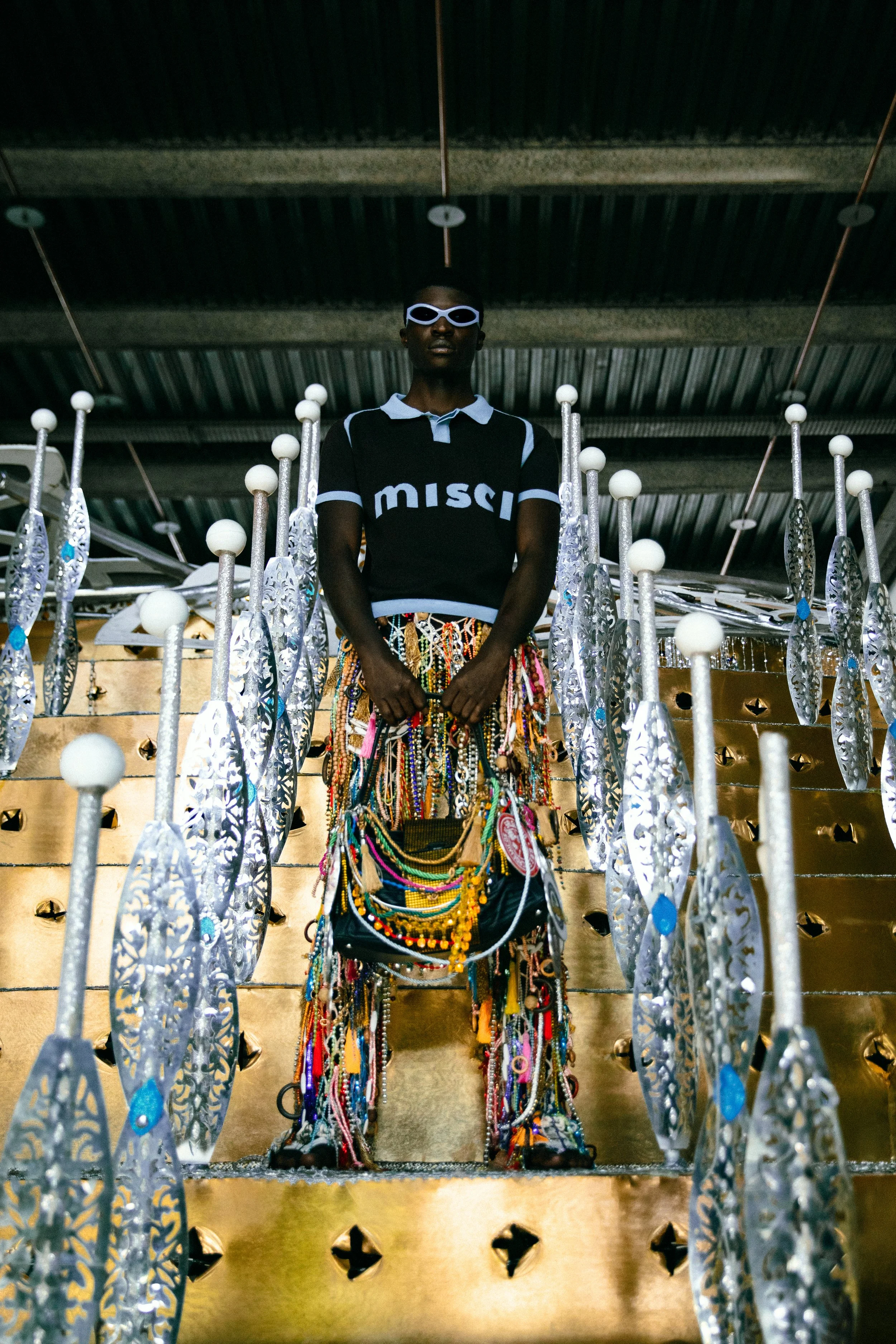
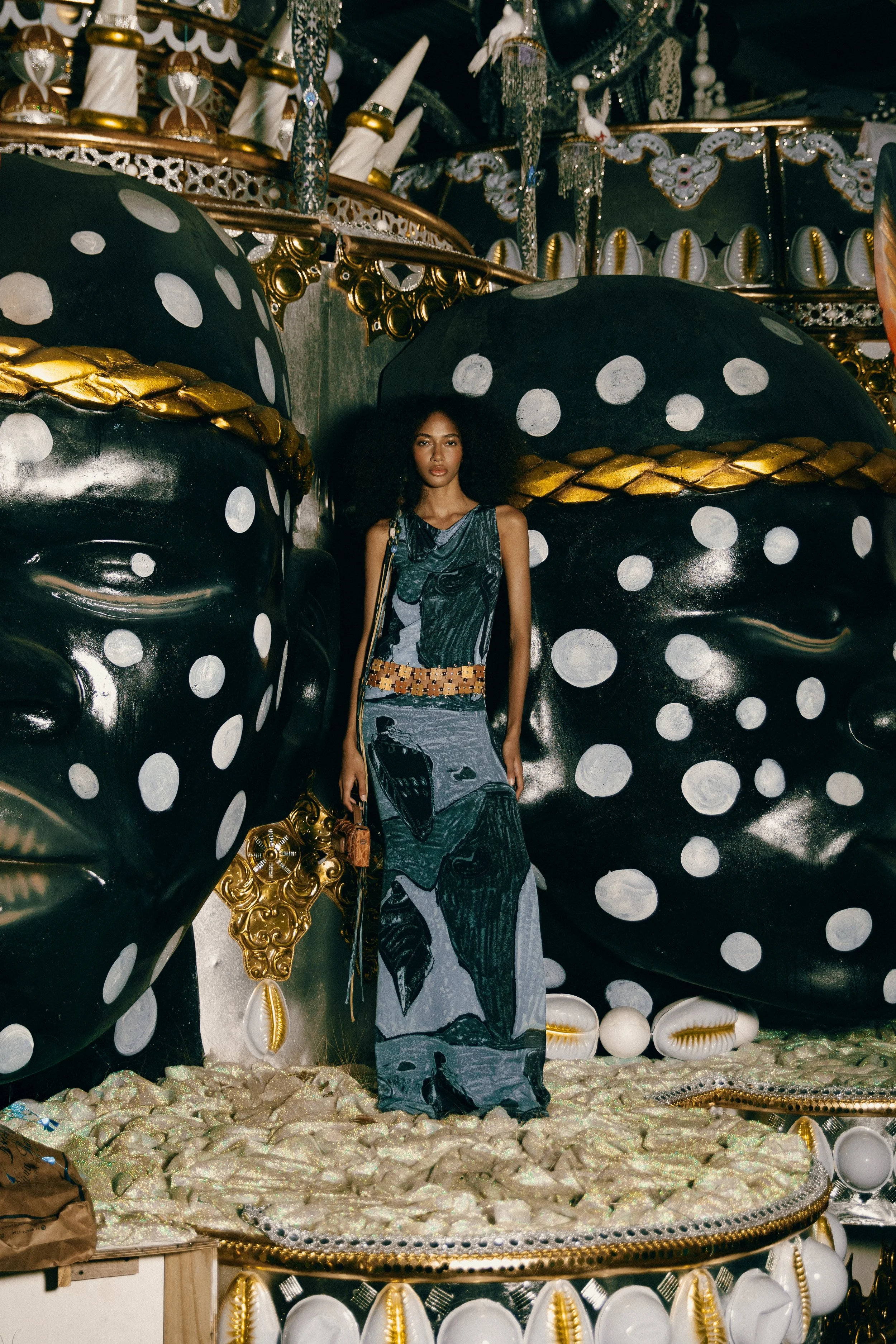
Leandro: Having grown up in the Amazon region of Brazil, how did your environment shape your visual language and sensitivity as a designer?
Airon: I think it’s the raw materials. I see how silhouettes have already been heavily explored, design has been heavily explored. I believe Brazil has the largest flora in the world. I think the world has a lot to learn from Brazil. Today, within our fashion show, we present not only a possibility for a new overall aesthetic, one that aims to introduce very Brazilian codes within highly luxurious fashion, but we also present many possibilities for new materials.
We worked with, for example, bio-leather made from grass, the type of grass that cattle eat. We work with leather, obviously. Leather is super important for our collection, but we also showcase a lot of sustainability through Brazilian natural fibers, many of them from the Amazon. So, undoubtedly, the world has a lot to learn from Brazil’s potential to export new materials: Amazonian latex, malva, which is a fiber from the Brazil nut tree. We have many possibilities for new materials that are still in testing, and what we lack, as a Brazilian brand and industry, are the financial resources to scale these tests up to an industrial level.
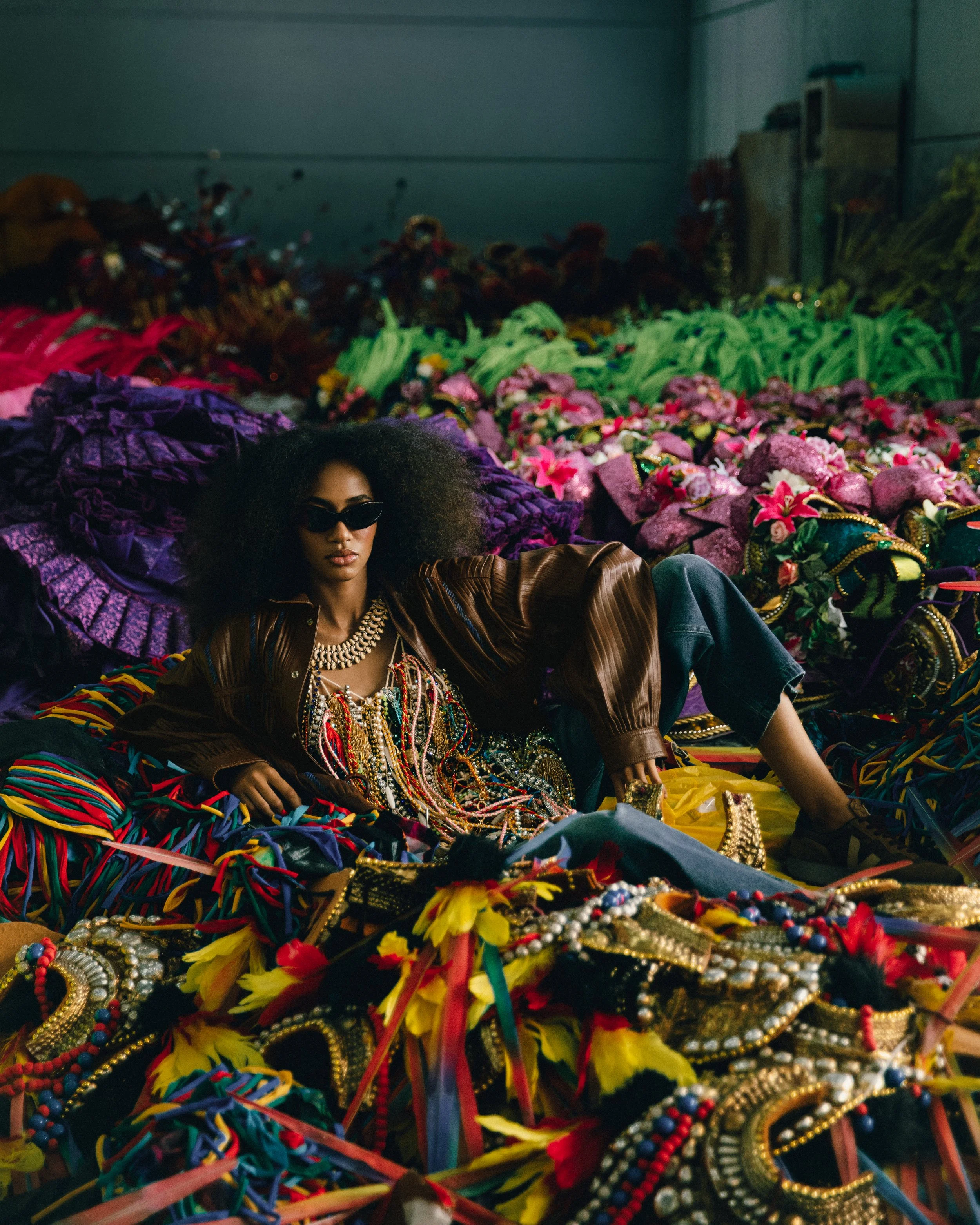
Timi: I wonder if Rio de Janeiro plays a central role in this collection. What fascinates you most about this city, beyond its visual imagery?
Airon: Rio de Janeiro is our cultural showcase of Brazil. It’s how the world sees Brazil. It truly reflects Brazil; inequality is very evident in Rio de Janeiro, but at the same time, it’s very interesting how people from different classes occupy the beach. Everyone is in the same place, unlike São Paulo. São Paulo is much more segmented. Lower-class people don’t frequent the main shopping malls, which act as the “beach” for a Paulistano. So, Rio de Janeiro is very inspiring in this sense of being a culmination of Brazil.
We were very inspired by a specific period in Rio, the 60s and 70s, which had Gal Costa as a muse on a part of the beach called Pier de Ipanema. During the dictatorship, it was a refuge for artists. That’s why there are so many colors and prints, very much inspired by the clothing of Gal Costa, a Brazilian singer who went down in history and passed away a few years ago.
Leandro: References to 1970s Rio, Tropicalism, Gal Costa, Maria Bethânia appear throughout the collection. Why do these cultural figures still resonate with contemporary Brazil?
Airon: I think they are not internet figures, they don’t “engage” in that way. It’s worrying to imagine how the internet has its positive side, but also its negative side regarding the loss of identity. But more recently, a study left me quite happy. Obviously, Brazil is very big, but we, for example, consume a lot of our own music. Only 3% of the Brazilian audience, less than 3%, listens to international pop. That’s very low. And MPB, Brazilian Popular Music, has grown; today 8% of the new generation listens to MPB, which was a surprise to everyone.
This generation is interested in Brazilian music, in these great icons. I see Marina Sena today occupying a super important space, and she has an image very close to Bethânia and Gal from that period. And because she is an authorial artist, she broke out of the bubble without making music for TikTok. So, I see, at the same time, a resistance from the consumers themselves, wanting to see this happen. I think MISCI’s success is a great thermometer for this, without a doubt. And Marina Sena’s too, breaking out of the bubble by doing something extremely authorial and highly inspired by our muses of the 60s and 70s.
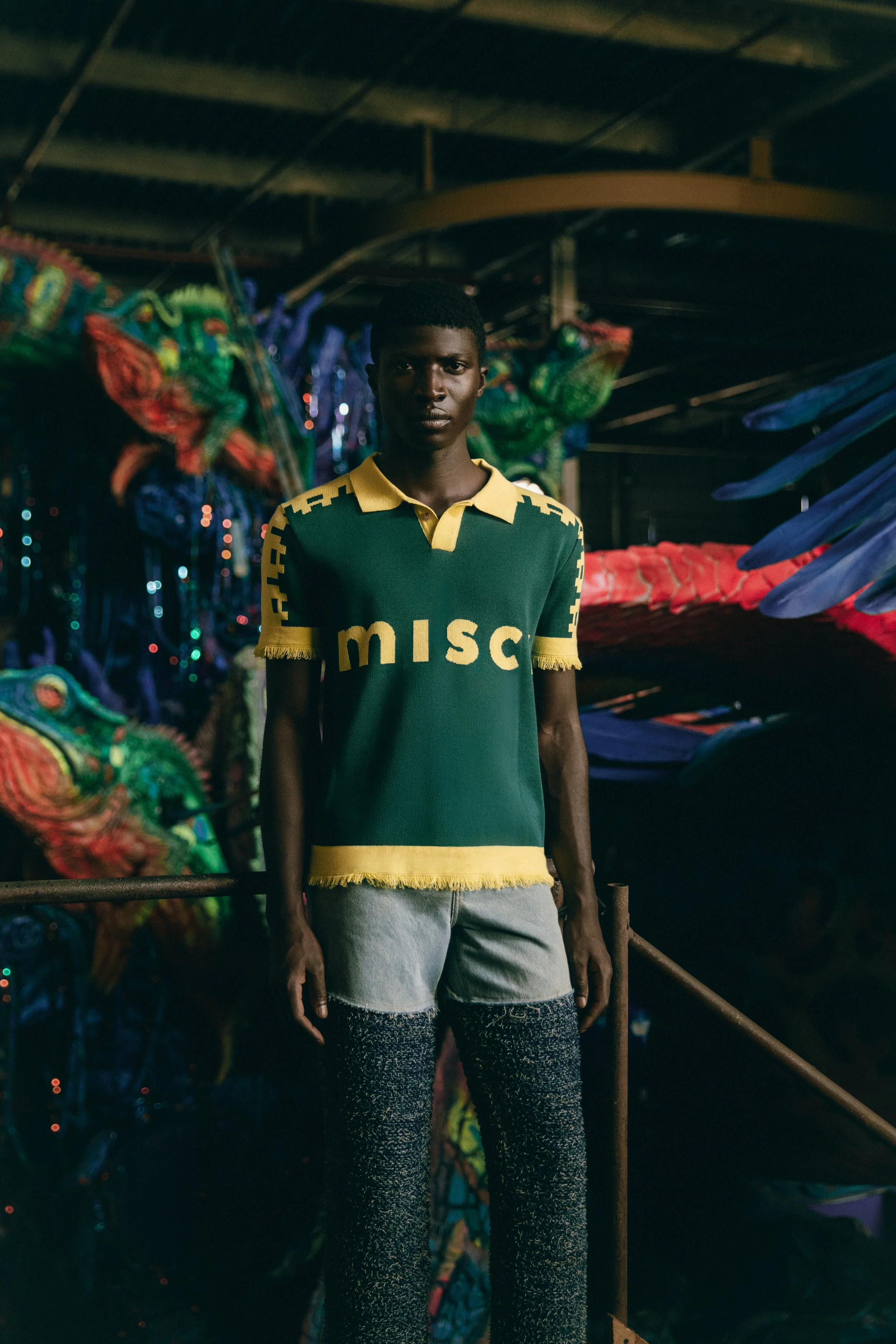
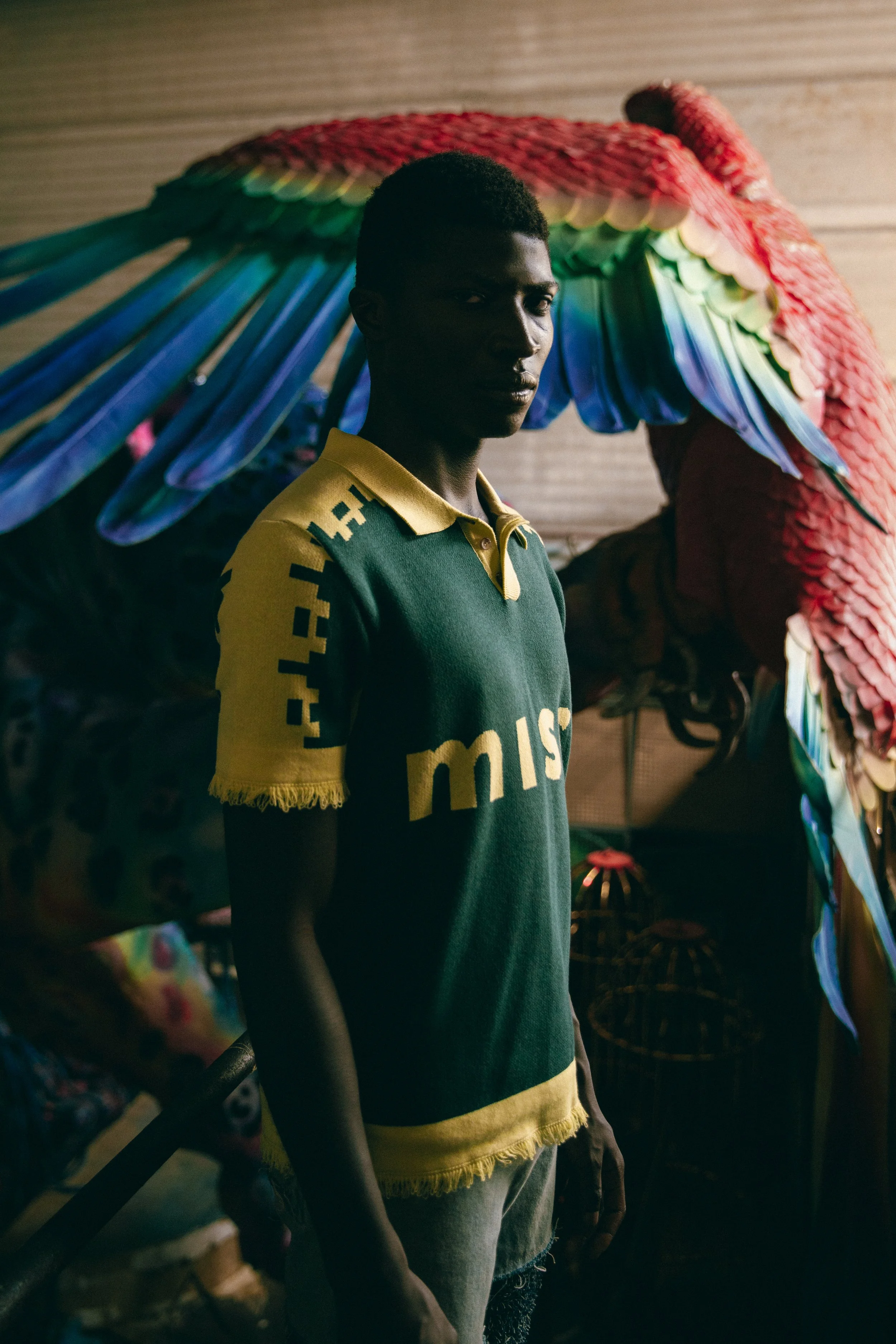
Timi: This collection, as you mentioned earlier, includes many collaborations with artisans, embroiderers, and carnival creators. Why is collective creation so important to MISCI?
Airon: I really like it, I think it’s different. I think the Brazilian market, the global market, has always looked at these people as suppliers. I like to give visibility to certain suppliers; I treat them as collaborators. A normal brand in Brazil has always brought in people to think about a collection, but I present them as collaborators. I think it’s very much due to my way of communicating things. Even the person who makes the pirarucu leather comes in as a collaborator.
So, I treat all my suppliers who also have a co-creation role as collaborators. I think that if I want to generate a powerful image of Brazil, I need to collaborate with many minds, Brazilian ones too. The cool thing is that in this collection, we worked with Brazilian minds scattered around the world. Alan Crocetti himself, who is a Brazilian living in Paris for many years, Wendy, who is the daughter of Brazilians... And we brought in many Brazilians around the world whom I consider brilliant minds, and I treat this as a collaboration, not just as suppliers.
Leandro: MISCI presents a very nuanced vision of Brazil. An emotional, intellectual, and contemporary vision all at once. How important is it for you to expand the global perception of Brazilian fashion?
Airon: It’s a challenge and an educational project, not only for the world but for Brazilians themselves. We are a colonized country, and the consumer still needs to rethink their consumption. Obviously, it’s about creating a globally desirable product, and we live in a global context. Brazil is a globalized country. So, there are many product codes that have already worked in Europe, but inserting very regional and proprietary codes of our own is a risk we take.
But I see it as an educational project, to present Brazil’s codes. Many people are interested, others not so much. I think fashion is becoming more niche every day. I don’t want to please everyone. I want to please those who actually understand and value what we value. But I really treat it as an educational project, to present Brazil not only to the world but to Brazilians themselves, something many still don’t see.
Timi: MISCI exists between tradition and futurism. How do you imagine the future of Brazilian luxury in the coming years?
Airon: MISCI comes from miscigenação, miscegenation, mixing of cultures and races. There is research showing that the United States will look like Brazil many years from now. So, we are the future. The world will be more mixed. The theme of the Venice Biennale itself, one of the past few editions, was “Foreigners Everywhere.” So, I think everything will mix, and Brazil is already that. We are the future when it comes to aesthetics, when it comes to mixing. MISCI, for me, is a long-term project that is already conversing with the world of the future.
Timi: I’d like to return to your collaboration with VEJA. Beyond the sneaker itself, what made this partnership feel right for MISCI?
Airon: I believe it’s much more than the product; it’s about their perspective on Brazil. The founders, Sébastien and François, are passionate about Brazil. I think I had proposals from many brands to do international sneaker collaborations. This was our first sneaker.
It’s the careful, respectful way they treat Brazil. Not only with our workforce that produces for them there, but also with our culture. They are two people in love with Brazil, and for me, that was the most important thing in building this collaboration.