
IN CONVERSATION WITH VENUS AVERY
interview by SARA BRAJKO
To us, emotion is never ornamental. We see it as a raw material — stretched across image, language, and identity until something real begins to emerge. For artist Venus Avery, painting becomes exactly that kind of confrontation: a space where masculinity dissolves into vulnerability, beauty collides with discomfort, and distorted figures speak louder than realism ever could. Avery transforms rejection, confusion, and emotional intensity into visual poetry. His paintings do not seek perfection; they seek recognition — of the parts of ourselves we hide, distort, or abandon in order to survive.
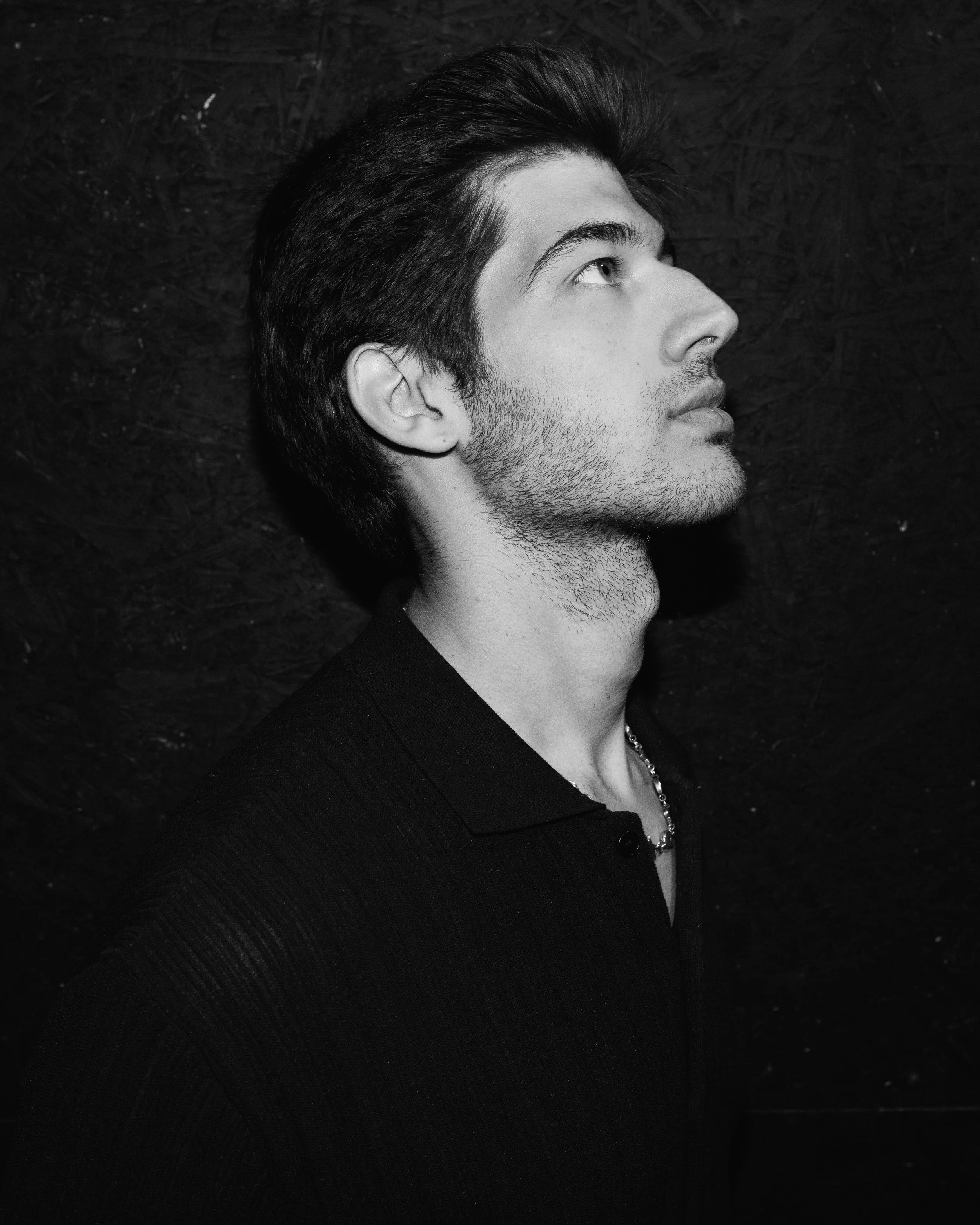
photography by DANIEL SARS
Your work redefines masculinity in a very emotional and vulnerable way. What made you question traditional ideas of masculinity in the first place?
We begin life as individuals, but over time we’re shaped into patterns that become the rules we live by and pass on, repeating across generations. We’re told strength looks like a fighter, but real strength is found in those who dare to reflect, create, and live without fear.
You suggest that feeling deeply is the truest form of masculinity. Do you think society is ready for that definition?
No, society often feels like an illusion designed to control and judge, especially when something as simple as a man drinking matcha gets his masculinity questioned. You see it in online trends like “men used to go to war, now they drink matcha,” where people romanticise violence instead of accepting that a man can simply exist and enjoy what he likes.
The figures in your work often appear distorted or artificial. Do you see this as a reflection of yourself, or of society at large?
Neither, I see this as a reflection of the distorted emotions and thoughts within me.
Your paintings exist between dream and reality. What are you trying to resolve or escape within these spaces?
Dreams are scary because they bring back what we’ve already lost. People we’ve moved on from appear again, like new beginnings that never happened. It feels real, yet it isn’t — and when you wake up, you’re left haunted by something beautiful that never existed. So I’m in a state where I’m escaping both dreams and reality.
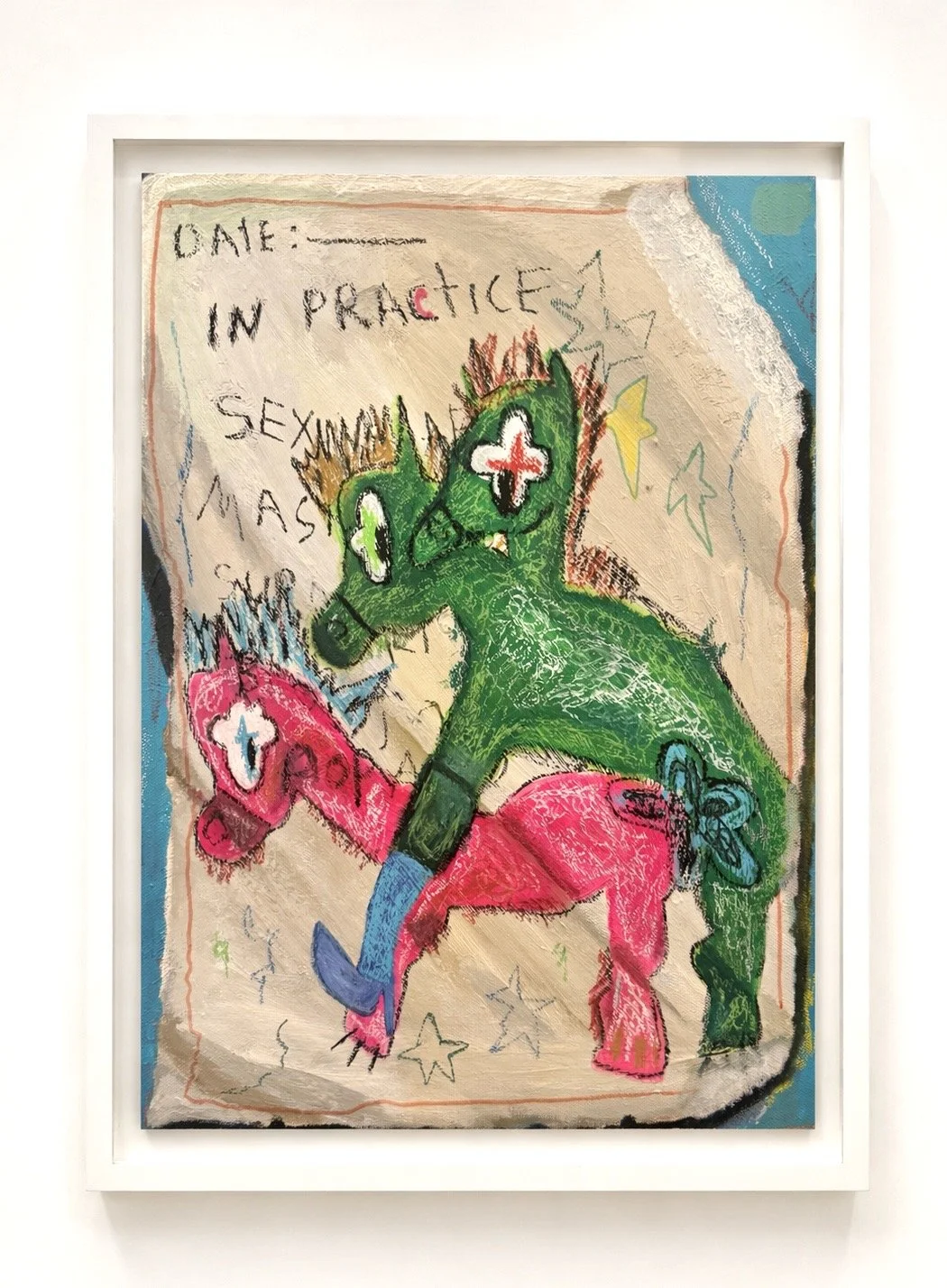
image courtesy of VENUS AVERY
There’s a strong contrast in your work: bold colours against emotional heaviness. Is that contrast intentional, or does it emerge naturally?
It’s intentional. The colours carry a kind of anger that lives inside me. I’ve always felt like it’s boring to see everything as just black or white, real emotion doesn’t work like that. There’s always something more complex underneath, and that contrast is what I try to show.
Your practice blends poetry and visual art. Which comes first — the image or the emotion behind it?
To understand the image, I need to feel something ,and to feel something, I need the image. Each one shapes and defines the tone of the other.
You work without pre-sketches, letting the painting unfold intuitively. Do you ever feel out of control during the process?
Always! Is it really called process if it wasn’t out of control?
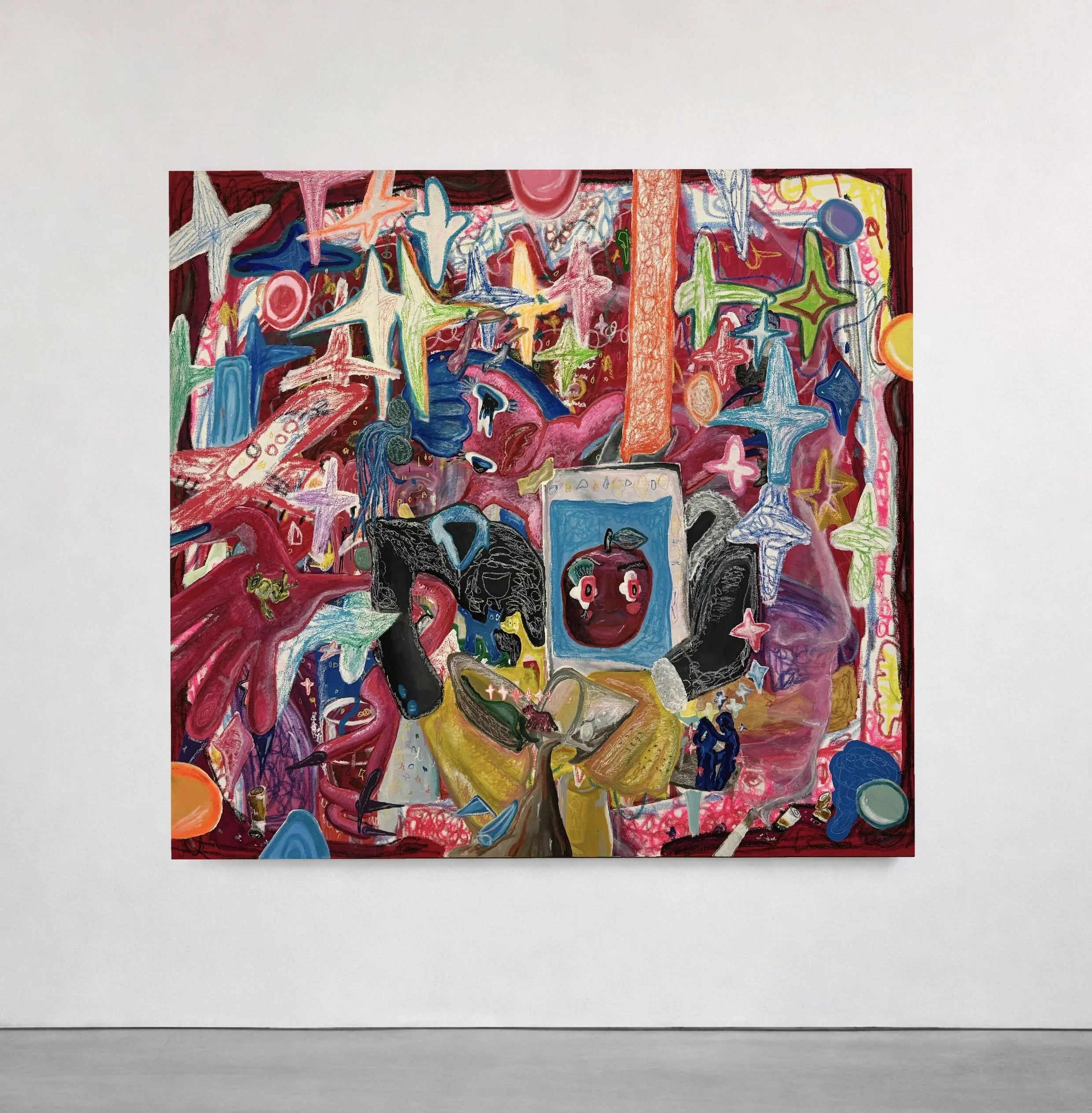
image courtesy of VENUS AVERY
You need complete solitude to create. What happens in those hours alone that can’t happen in the presence of others?
Loneliness has a way of bringing out both the darkest and the most beautiful parts of us. Most people run from that but I’ve learned to sit with it — alone in a quiet room, facing those thoughts and turning them into something real through my work.
The truth is, our minds crave comfort. When the silence gets too loud, we try to escape it, grabbing onto distractions, even if they don’t really mean anything.
You’ve said that criticism, rejection, even hate, fuel your work. Can you recall a moment where negativity directly transformed into something powerful?
In 7th grade, I spent my lunch breaks alone in the library because I felt like I didn’t belong anywhere. Instead of letting the fear of being weird consume me, I turned it into my ultra muse.
Your work speaks about disconnection from the “authentic self.” Do you feel people today are more disconnected than ever?
It’s part of human nature to drift away from our true selves. Just like some animals mimic others to avoid predators, we adapt in ways that help us survive. In certain situations, we all become a little inauthentic.
For example, when I’m in love, I reshape parts of myself just to fit into my partner’s world, or someone might dress like a completely different person just to gain entry into a fancy restaurant. It becomes a kind of survival tool. But do I like it? Not at all.
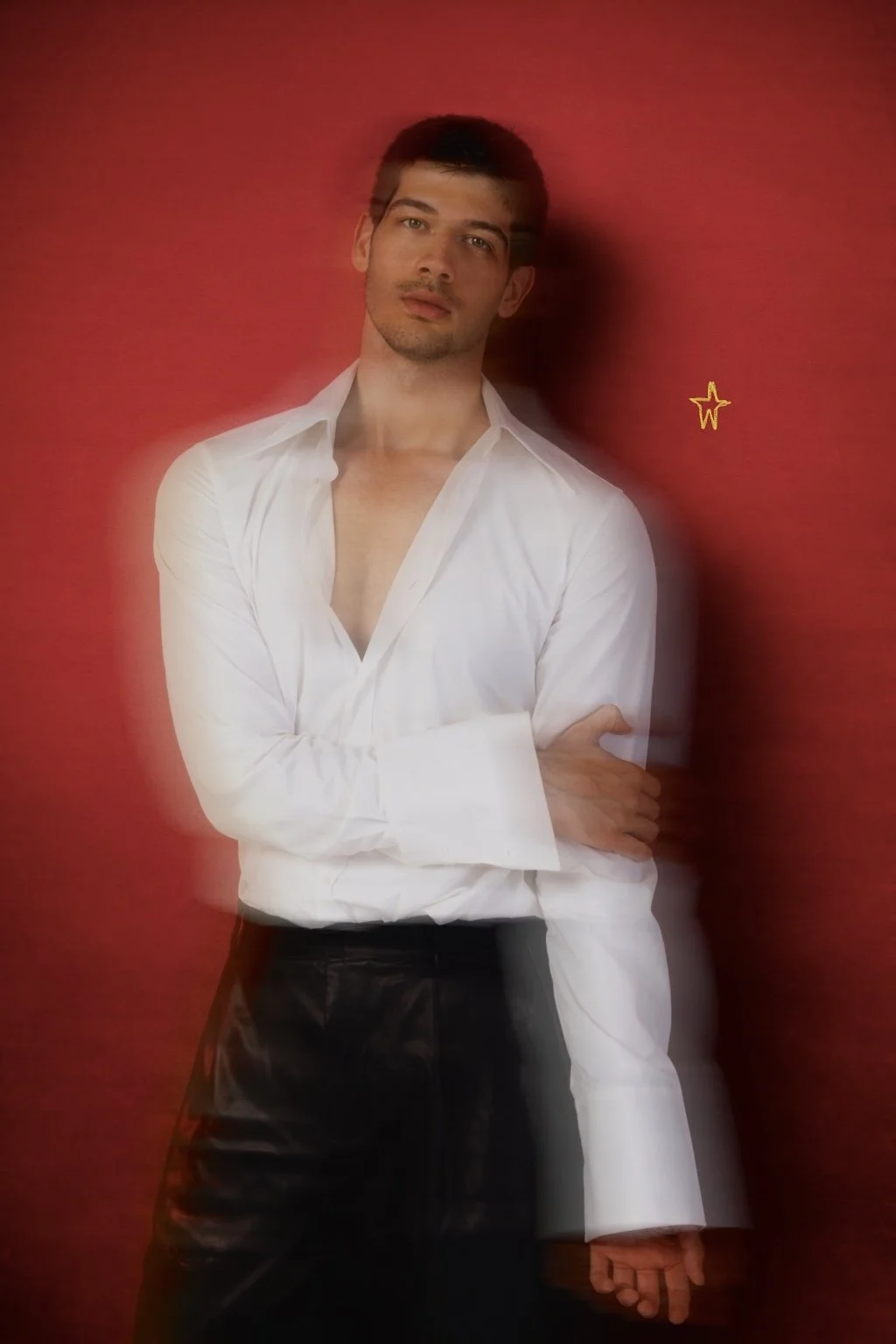
image courtesy of VENUS AVERY
Your first show at NOMAD sold out. Did that validation change how you see your work or yourself?
It did. Receiving so much love for pieces that were born from heartbreak felt incredibly beautiful. One moment that lives in my head rent-free was when a little boy came with his father — the boy was drawn to the artwork itself, while the father connected with the meaning behind it. In that moment, I felt like my art had bridged the gap.
Where do you see your work evolving next?
Honestly, I don’t know exactly where I’ll be mentally in the next few years, but no matter what changes, I want everything I do to come from being real with myself.
What is something you still don’t understand about yourself?
Everything, still. Aren’t we all? But creatives are just the ones brave enough to say it out loud.
If your work could say one thing without you explaining it, what would it be ?
The mind of a little freak seen not hidden.