
IN CONVERSATION WITH AISLING FRANCIOSI
interview by JANA LETONJA
photography by PHILL TAYLOR
Aisling Franciosi has carved out a reputation as one of the most compelling and fearless performers of her generation. Known for her hauntingly powerful turns in ‘The Nightingale’, ‘The Fall’, and ‘Black Narcissus’, the Irish-Italian actor now ventures into bold new territory with Netflix’s highly anticipated Western drama ‘The Abandons’, premiering on 4th December.
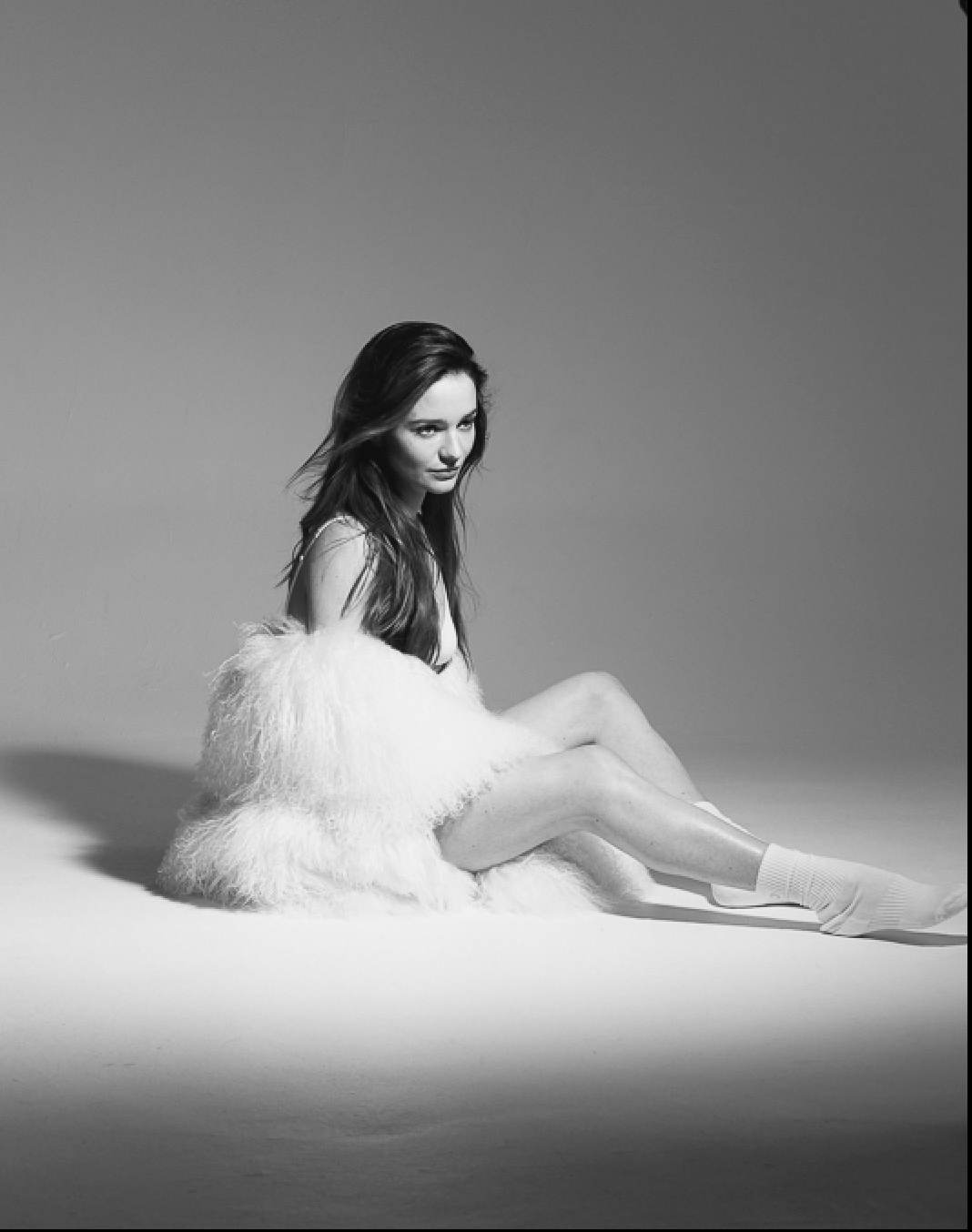
‘The Abandons’ marks your first Western. What drew you to this world and to Trisha Van Ness in particular?
It was a combination of things. I knew Lena and Gillian were attached so that was a big draw. And the genre appealed to me. Westerns have been having a bit of a resurgence and I think it is, in part, because they stir up feelings of nostalgia. New characters and stories, but in a world everyone knows so well. There is something comforting about that. And from an actor’s perspective, I find it quite satisfying to step into a world that is so clear. The atmosphere, the aesthetic, the sounds, the textures. It makes it so much easier to believe in the fictional world you’re entering. To be honest, I knew very little about Trisha when I signed up as I had only read the pilot, but I don’t usually get to play the “rich girl” in town, and I was intrigued by the prospect of moving outside my usual casting. And I was curious how a woman described as being “fierce and complicated”, while also being somewhat confined by expectations relating to her station and status would fare in the Wild West.
Trisha is described as both “fierce and complicated.” How did you approach finding that balance between her strength and vulnerability?
Trisha is a very passionate young woman looking for an outlet, looking for connection. But she is starved of affection, love and respect from her family. I think that in Trisha’s case, she doesn’t see her vulnerability as being separate from her strength because to her it is a way for her to feel. A way to feel she is living. She actually quite brazenly shows her vulnerability in her attempts to be with Elias. And then their relationship starts to satisfy her need for connection, love and excitement, and this emboldens her even more in the conviction of her feelings and her need to speak truth to her mother. So it was more about trying not to separate the two qualities too much.
The show explores themes of power, family, and survival. What do you think ‘The Abandons’ says about human ambition and morality?
I think ‘The Abandons’ shows that our morality can be led astray no matter what the ambition. Constance is clearly morally corrupt in many ways and she is driven by the ambition she has for her family, the town, her fortune. But Fiona also makes dubious moral decisions and I think we are prompted to ask if they are justifiable just because her reasons seem more reasonable, possibly more “pure”. If both sides partake in heinous crimes, what is it that marks out the good guys from the bad?


What was the most challenging or rewarding part of embodying a woman in 1850s Oregon, a time and place where the rules were so different for women?
Had I been playing a woman in 1850s England or New York, I think I would have found it more constraining, and maybe as a result more challenging, but that’s not a bad thing. But in the world of our series, there was more leeway so it felt nice to concentrate on the character’s personal motivations and desires rather than the rules that would ordinarily constrict her.
The Western genre traditionally centers male characters. How did it feel to step into a story that gives women such a powerful presence?
Having Lena and Gillian play two formidable matriarchs in the Western genre was so exciting. And they feel like very real characters despite what assumptions some people might make before seeing it, as a result of the genre often being so male centric.
Many of your performances are defined by quiet intensity. What’s your process for accessing that emotional depth on screen?
I’m not really sure I have a good or interesting answer for this. I guess I just try to focus as much as possible on finding moments of emotional truth even in worlds or situations that feel overly heightened or abstract. So, I like to imagine distilling it down to what I can make feel as real and natural as possible in any given world. And then deciding where to pitch that in terms of performance. And some characters or projects, or genres and even tones require different pitches of that “truth”.
You’ve built a career choosing complex, unconventional stories. What draws you to these kinds of roles?
I think in part it has been a self-fulfilling prophecy. I have been very lucky to play some very complex, dark, troubled characters, and if people like seeing what you do with those roles, they think of you for similar kinds of roles. I find playing troubled characters very cathartic and satisfying. And it is fascinating to get into the psychology of characters like that. I feel very lucky. But I am also keen to play different kinds of characters so that I get pushed out of my comfort zone.


‘The Nightingale’ remains one of your most acclaimed performances. How do you look back on that experience now, years later?
It is still the piece of work I am most proud to be a part of, in a way, for a few reasons. But I think I was a bit spoiled by getting that part as my first lead because it can be hard not to compare the scope of that role to others. There are very few roles of that kind out there. The kind that really require you to spill your blood, sweat and tears into. I found that experience so satisfying and I learned so much.
What keeps you grounded when you’re not on a set?
I am very lucky to have a great family and friends, both in the industry and outside, who make sure I don’t float away. I also love exercising. Movement is medicine.
Finally, what do you hope audiences take away from ‘The Abandons’, and from Trisha’s story in particular?
Honestly, I just hope they enjoy watching it over the holiday break. That they get a feeling of that comforting nostalgia I mentioned earlier of watching a Western.
