
IN CONVERSATION WITH ALICE CARVALHO
Interview by TIMOTEJ LETONJA and LEANDRO DA SILVA
Following her breakout moment in The Secret Agent — the Kleber Mendonça Filho–directed feature that premiered at the Cannes Film Festival and later earned a win at the Golden Globe Awards — Alice Carvalho steps into the global spotlight without softening her edges. Moving between cinema, music, and direction, the Brazilian artist carries a practice rooted in authorship, instinct, and political clarity. In conversation, she reflects on recognition, identity, and the discipline of remaining faithful to her own voice.
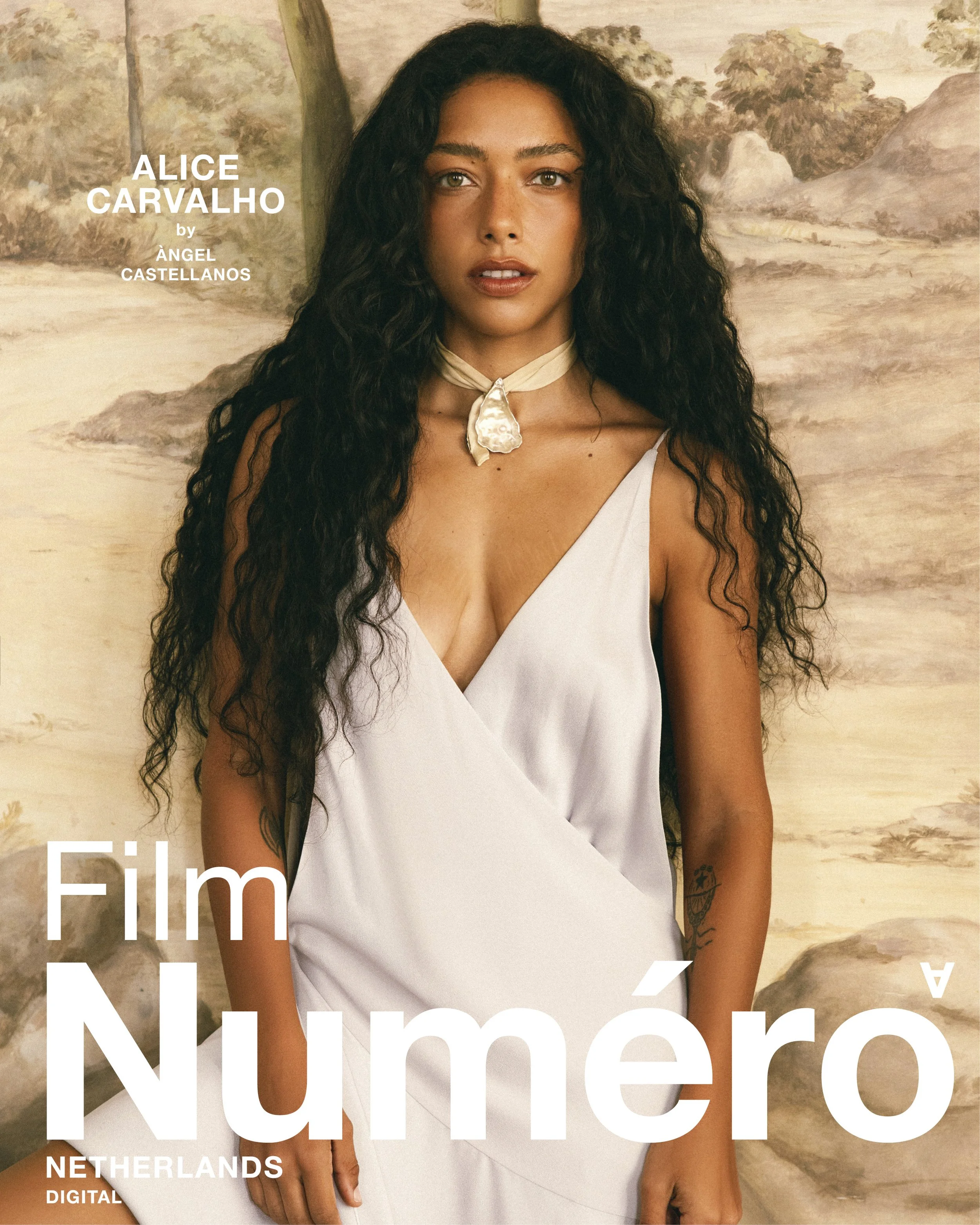
necklace PAOLA VILLAS
dress ANDREA BOGOSIAM
The film The Secret Agent marked your definitive entrance into the international circuit. How was it working with Wagner Moura in a film directed by Kleber Mendonça Filho, which went on to win the Golden Globes, and how does this kind of recognition change, or not change, the way you choose your projects?
I think the recognition has changed things a little. It made me realize the scale of the impact and influence we have as actors — especially because we are very vocal about our political opinions. That awareness pushes me to look for more dignity in my roles, to research more deeply, and to be more intentional and intense when choosing the projects I get involved in.
At the same time, I try to remain the same person and not let the buzz or trends affect me in a negative way. Of course, I filter the positive aspects of everything that has been happening since the award season, but I stay grounded and focused on working on projects I truly believe in.
Everything really started at Cannes Film Festival, which was a dream for me. I had grown up watching films from there and admiring the directors I later had the chance to meet — people who shaped me into who I am today. One of the most important parts of this journey was that we became like a family. We spent almost a year traveling together with the film, and that created a very strong bond.
Working with Wagner was incredibly meaningful. He has always been a hero to me — I grew up watching him on television, in soap operas and series. Today, he is not only a huge star but also a very active and vocal figure politically, which inspired me from a young age to express myself more freely as an actress.
As for Kleber, I’ve followed his work since his early short films. He is also a film critic, and it’s rare to see someone excel both as a critic and as a director — but he does. He’s extremely intelligent, thoughtful, and inspiring to work with. What touched me the most was how respected I felt by both of them. Despite being my idols, they genuinely wanted to hear my opinions — especially about my character, Fátima, who represents the final piece of the narrative puzzle. That level of openness and collaboration meant a lot to me.
I also had the chance to work with Kleber Mendonça’s wife, Emilie Lesclaux, the executive producer of the film, who is incredible. It was a very important moment in my career, and I try to hold on to that sense of familiarity and connection we built over the past years.
Even though I only had three days of shooting, the organic way Kleber works — despite being such a renowned director — was deeply inspiring to me, both as an actress and as a director.
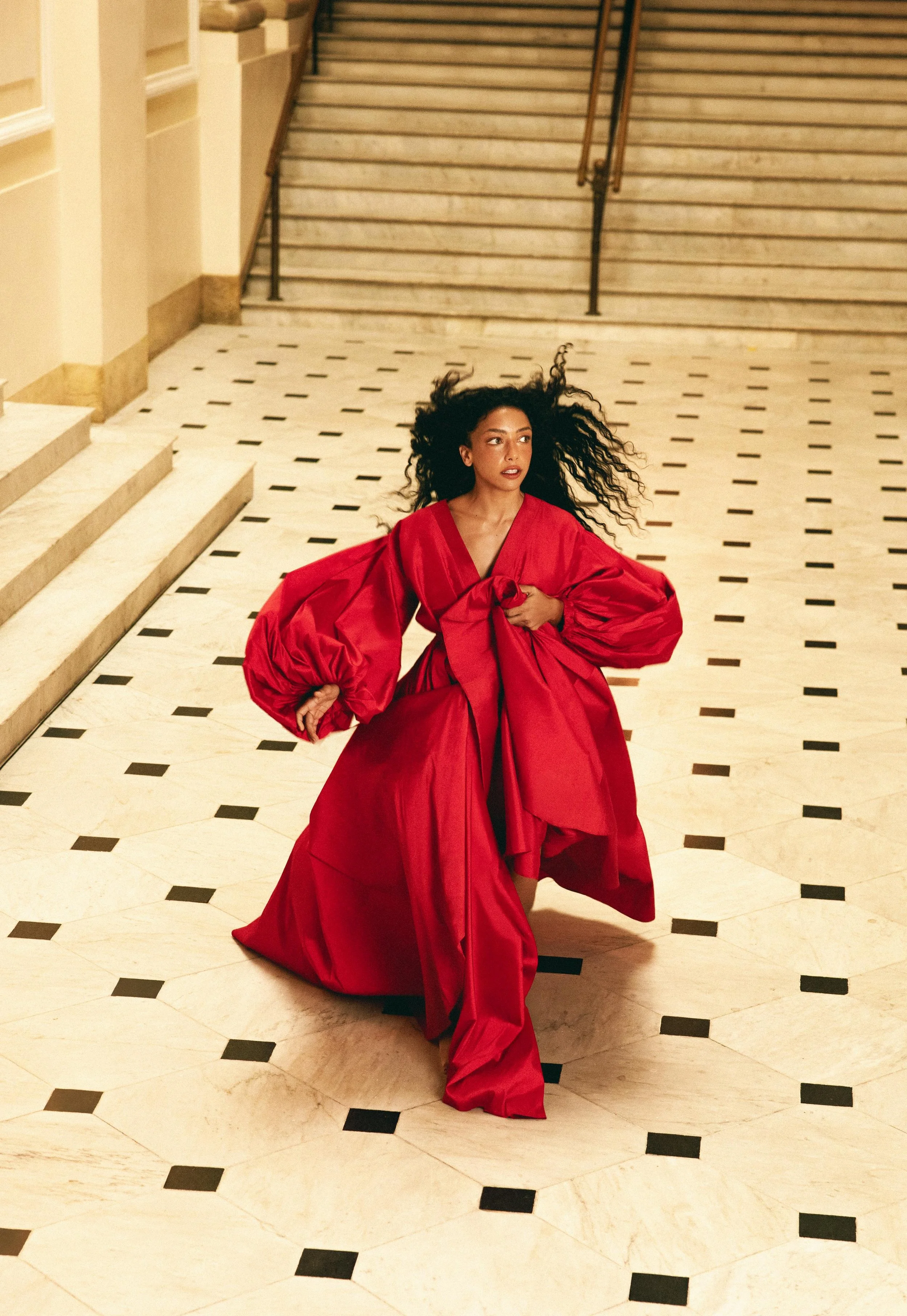
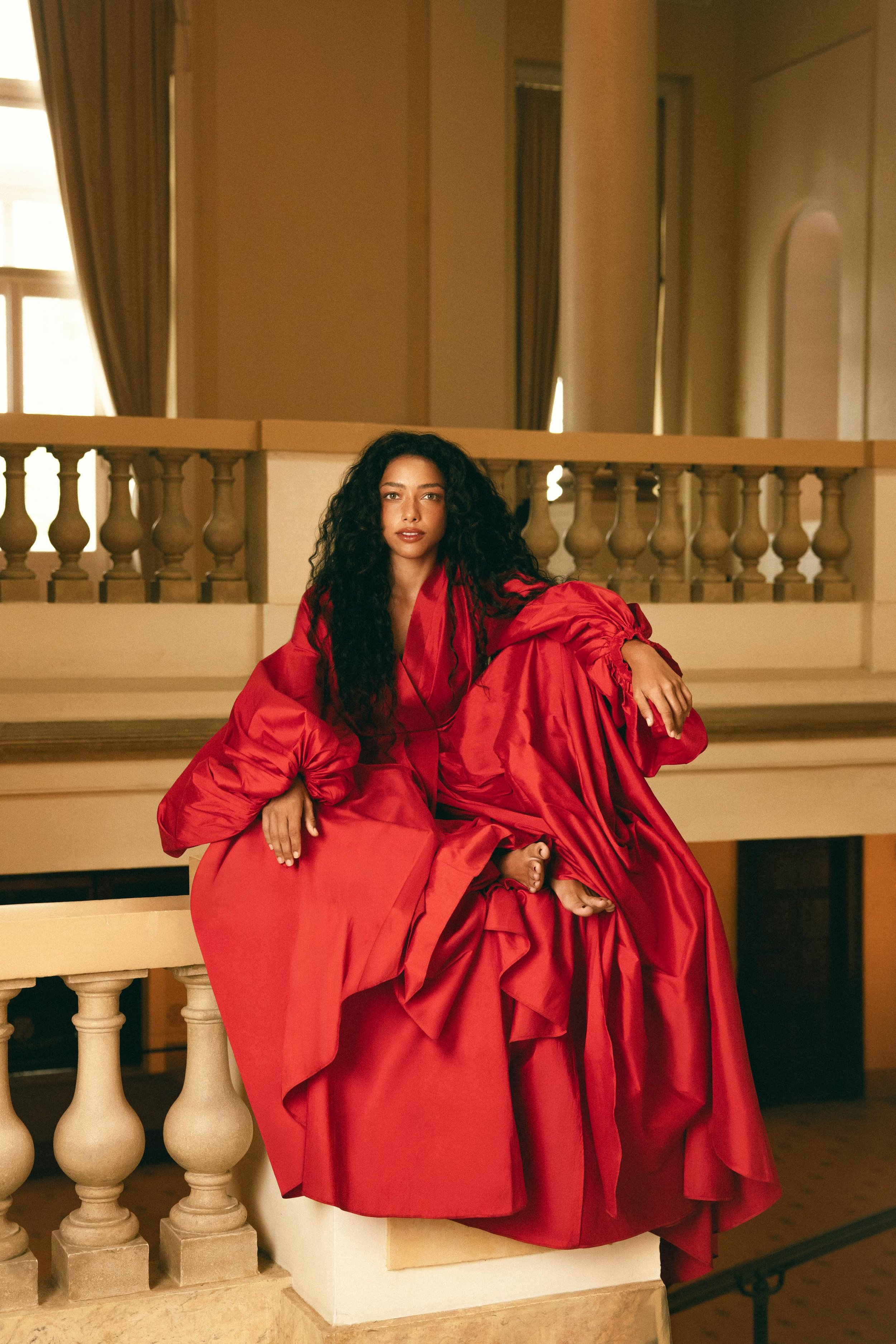
dress VITOR ZERBINATTO
After Cannes Film Festival and the Golden Globe Awards, did you feel any external pressure to fit into an international idea of what a Brazilian actress should be? Or did it reinforce your desire to continue creating your own path?
Of course it affects me — it would be impossible not to. I care deeply about the audience and how the work is received. But at the same time, I’m very conscious about not letting that pressure define me. I try to stay grounded in my own values, my opinions, and the kind of artist I want to be.
Naturally, I also want to keep working with great directors. Recently, I had the chance to meet Ryan Coogler, who is one of my heroes, and the fact that he noticed me meant a lot. Moments like that are important, but they don’t change my core.
What I’m very aware of is the risk of trying to fit into an expectation. Because the moment you start shaping yourself to belong somewhere, you risk losing exactly what made people connect with you in the first place.
There’s been so much buzz around the film and around me that, in a way, it’s helped me detach from external noise. I don’t try to follow everything people say — whether it’s praise or expectations. Instead, I focus on improving my craft, studying more, and protecting the essence that brought me here.
I truly believe that if someone from outside Brazil wants to work with me, it’s precisely because of who I am — because I’m Brazilian, because of my culture, my identity, my perspective. I’m not interested in trying too hard to fit into Hollywood and losing that along the way.
At the same time, I’m very open. I want to work in different languages — in English, in Spanish — and explore new spaces. But always as a Brazilian actress. Without losing where I come from, and without losing myself in the process.
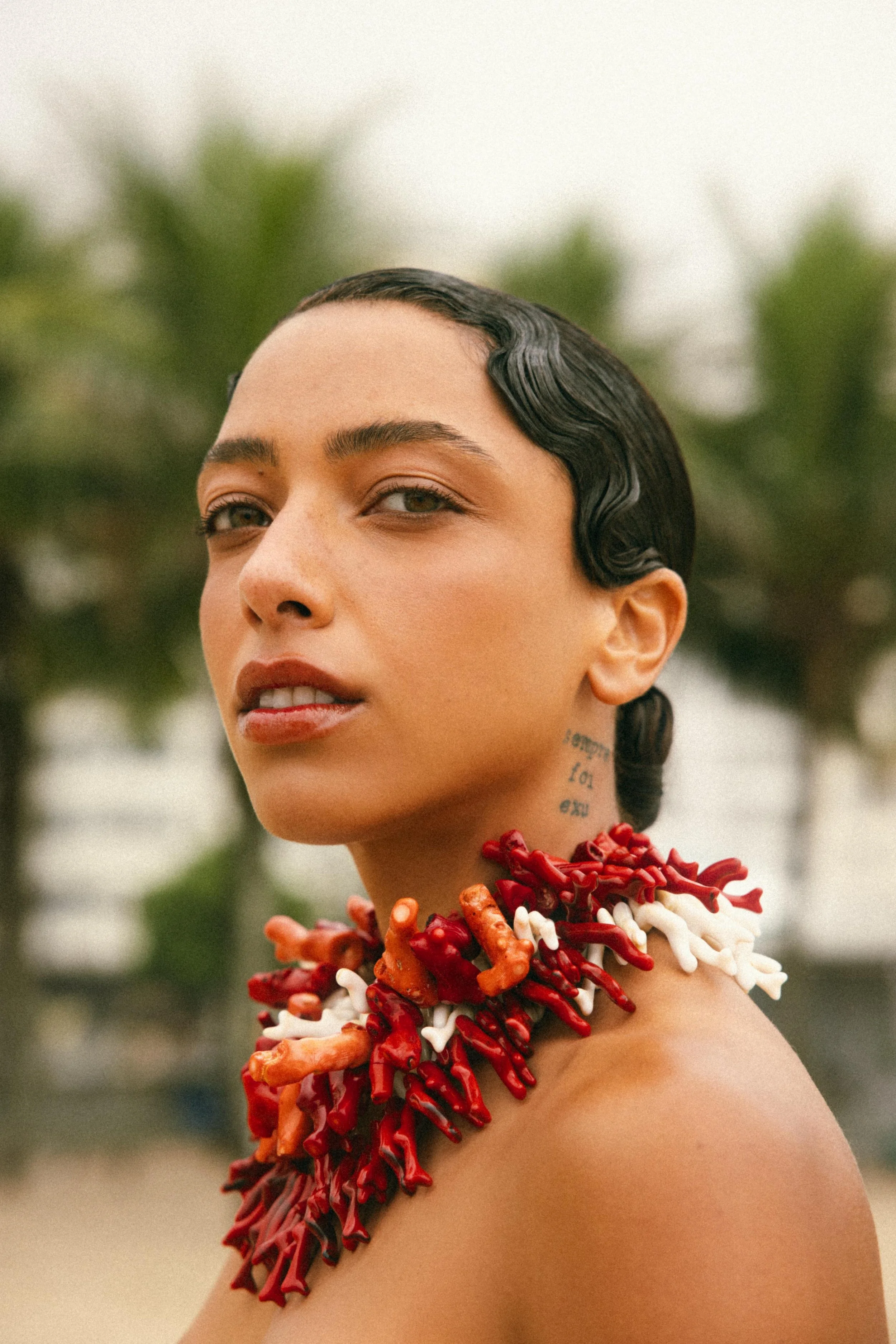
necklace CRU
You already mentioned Ryan Coogler, who publicly praised your on-screen presence. How do you define presence in cinema? Is it something that comes from technique, lived experience, or the body itself?
I think I don’t really believe in a way of acting that builds a character from the outside to the inside. I don’t know if I’m being clear, but in every character that I play, I like to put some of my vulnerabilities.
There is always some part of myself in the characters. I’m never trying to dissimulate things or completely separate myself. I’m always leaving something of me in every character. I love to be honest and to put a seed of myself into the role. And for me, it doesn’t depend on screen time. I don’t think about screen time — I think about great characters telling great stories. That’s how I choose my roles nowadays.
This way of acting makes me focus on the essence of my work: portraying great stories, great faces, and real profiles of my country. As an artist, it’s very important for me to represent that truthfully, with my whole heart. So I think what happened with Ryan is that I had maybe one minute and forty seconds of lines, and in total around four minutes of screen time in the film. But in that dinner scene, my lines were very short.
In the end, it doesn’t matter if you are the main character or if you have a small participation. If you are doing it truthfully — putting your vulnerabilities and honesty into the character — somebody will notice that. You will captivate someone in the audience. And if even just one person is moved by my eyes or by my lines — even if it’s just two, three, or four lines — I’m happy with that.
Ryan is a very important director, and I feel very grateful that he noticed me. We spoke a little during the award season, and he’s a great guy. I would love to collaborate with him. And I think great directors are the ones who understand that there are no small parts, only small ways of looking at them.
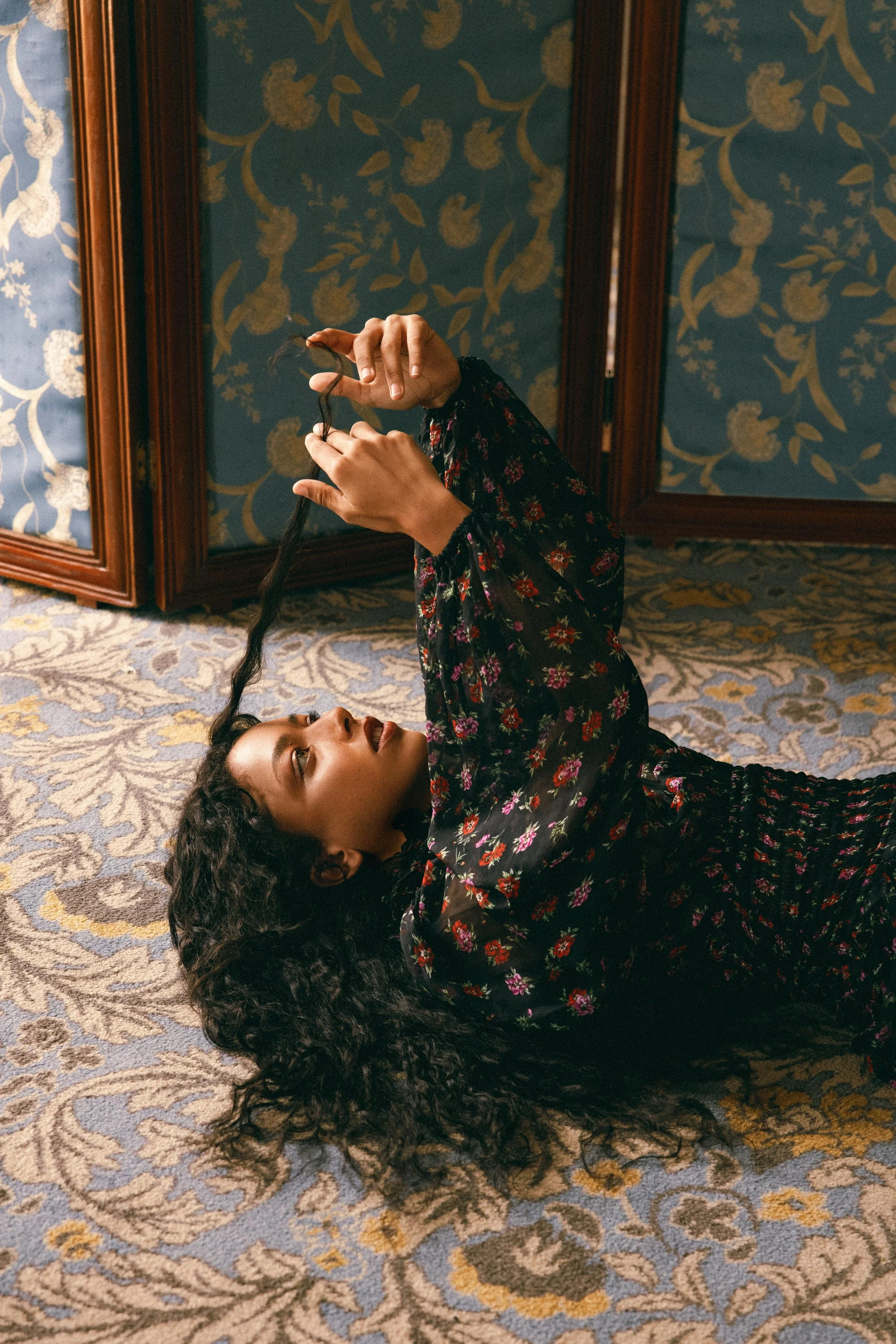
dress DOLCE&GABBANA
You began your career creating Septo independently, writing, directing, and starring in the project. Today, with global recognition, what remains the same from that early version of yourself, and what has radically changed?
I think I carry everything from Septo with me, because I started pursuing this when I was just dreaming of being an artist, of being an actress. I was 8 or 9 years old when I started drama classes, and a few years later, around 14 or 15 years old, I began working in theatre more seriously. My family always pushed me to create my own things — to write, to produce. My grandfather, who raised me, is a professor, and he always encouraged me, like, “go ahead, do your own work.” He was always that person for me.
So I was always producing my own things, and Septo came from facing hard moments and telling stories about struggles that my family and I went through. Back then, I learned how to use characters to express emotions that I couldn’t always express as myself.
I don’t know if it’s maturity — I don’t think I’m a mature person — but it gave me some kind of emotional understanding that I still carry today. And I try to hold on to that, especially when big things start happening. When I’m acting, I’m still very nervous. I’m always anxious, always overthinking — maybe because of my ADHD — but I try to focus that energy.
I always think about that girl back in 2016, writing her own stories. And even before that, that little girl of 8 or 9 years old who was just dreaming about being where I am today. So I’m constantly comparing who I am now with who I was back then. And honestly, it feels almost impossible. It’s crazy to think about where I came from and where I am now.
My first time in the United States was because of Septo. I had no money — I think I brought around $200 with me to Los Angeles for an independent festival. And coming back now, years later, and even bringing friends I met back in 2017 — it feels surreal. It really shows how the world keeps turning.
But I’m not trying to say that if you work hard, you’ll automatically make it. We live in a country with very complex social structures, and it’s not that simple. What I try to do is hold on to that girl — to the energy and the honesty that brought me here — so I don’t lose myself. So I can keep telling the stories I truly believe in, in the most honest way possible.
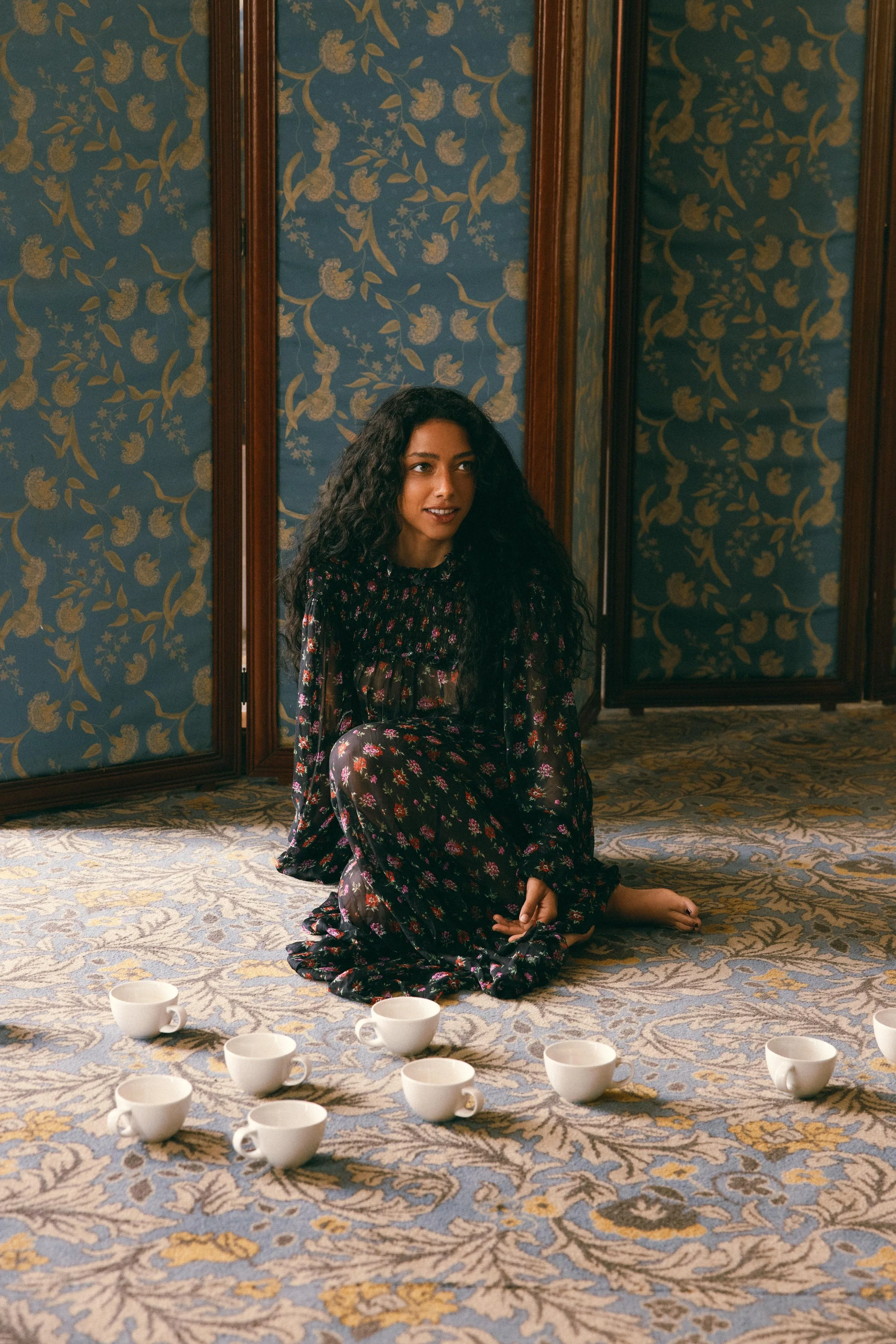
dress DOLCE&GABBANA
You mentioned social structures, and I wanted to follow up on that. Many of your characters challenge rigid social structures — do you choose roles that break rules, or do these stories tend to find you?
I think both. Because the stories you tell also build you, and at the same time, you build the stories you want to tell. I can’t avoid being vocal about the political and cultural aspects of Brazil. Even in my work with collectives, like BaianaSystem — which is a band, but also a collective — I’m always surrounded by this collaborative way of creating. It shaped me a lot.
It showed me an artistic model that challenges the idea of solo stardom, which is something I don’t really believe in. So whether I’m on stage with the band or on a film set, I always bring who I am with me — my background, my experiences, the vulnerabilities I carry.
I’m a Black woman from the Northeast of Brazil, and that comes with a lot. It’s a huge country, but there’s still a lot of xenophobia between regions, a lot of racism, prejudice, and hate. So I carry all of that with me in my work. But at the same time, I don’t want to only play characters who are defined by suffering within these structures. I’m also open to playing a villain, or a “bad” character — as long as it’s honest and it moves something.
Do you believe that intimate narratives can still function as powerful political acts?
Always, of course. I can’t separate who I am and where I come from from the stories I’m telling. What happened with The Secret Agent touched me very deeply, because we almost became like national heroes. And I think this also connects to what happened during the last award season with Fernanda Torres and I’m Still Here — this idea of artists and intellectuals being seen again as important, as positive representations of our country abroad.
That meant a lot to me.
And I think The Secret Agent is exactly about that — giving a voice to people who are somehow forgotten. It connects our past, especially the dictatorship era in the 1970s, with where we are now, on this global stage. And with everything that’s happening in the world today, these kinds of stories feel even more necessary.
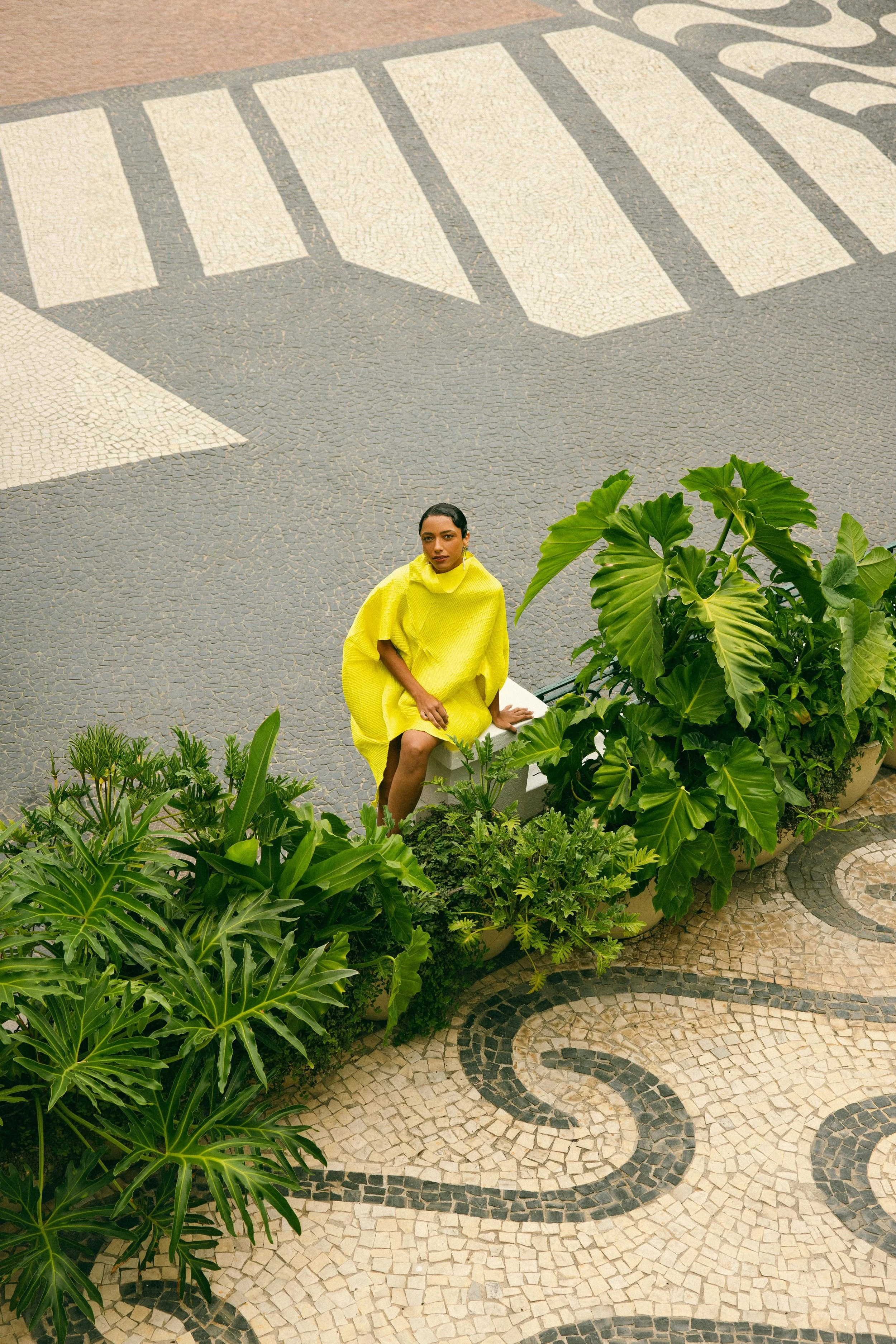
dress LINO VILLAVENTURA
Fashion often attempts to frame bodies within trends. How do you negotiate your public image between personal freedom and the expectations of the fashion industry?
I think fashion is a very important way for me to express myself to the world without saying a word. I love working with my personal stylist — she’s been my friend for a long time, and she’s also from the Northeast of Brazil, from the countryside. That connection is very meaningful to me.
During this award season, I wore several of her pieces, and it felt really special to showcase smaller brands and independent designers who have a strong identity and are truly committed to their work. This is something I’ve been enjoying more and more. I’m starting to build my self-esteem in that space — to wear pieces almost like artworks, to feel beautiful, to feel powerful.
And I think fashion can be very political too. That’s something I’m becoming more aware of right now.
I have friends and actresses who inspire me a lot in that sense. Fernanda Torres did this during the last award season, and Alice Braga as well — she’s a close friend and has always used fashion as a form of expression. And of course, Sônia Braga, who is such a fashion icon and a very political artist.
When I was younger, I think I had some prejudice against fashion. I saw it as something superficial, something that maybe didn’t belong to me. I was afraid of how I would be perceived if I wore more expressive or artistic pieces. But now I’m breaking that perception. I’m starting to understand fashion as something that can be deeply connected to who I am — something I can use to express myself, my identity, and my values.
BaianaSystem is one of the most influential music groups to emerge from Bahia in recent decades. What does contributing to this collective mean to you on a personal and artistic level?
I’ve been working with BaianaSystem since around 2018, and I think the most important thing it brought to me is this idea of thinking about art in a collective way.
With BaianaSystem, we don’t really have a face — and that’s very intentional. The vocalist is not “the face” of the group. We use masks, and it’s a bit like other collectives, like Gorillaz. We try to remove the idea of a central figure, because the face often comes before the idea — and for us, the idea is what matters most. Especially now that we are more recognized in Brazil, we try to take our individual personas away when we’re creating and performing together. And that teaches me a lot about what I want as an artist, and what I want to put into the world.
There’s also something very powerful that only music can do. During the last tour, in the Carnival season, we performed for around 100,000 people. That was crazy — 100,000 people, all moving together. And at the same time, I was also traveling with Wagner and Kleber during the award season. It felt like two different worlds that, somehow, were saying the same thing.
Russo is like a brother to me, and now we’re even working on an album together. We’re always trying to express ourselves through different languages — music, images, film. I even directed a short film for them. I started working with them when I was around 21, and now I’m almost 30. So I’ve learned a lot during a very important period of my life.
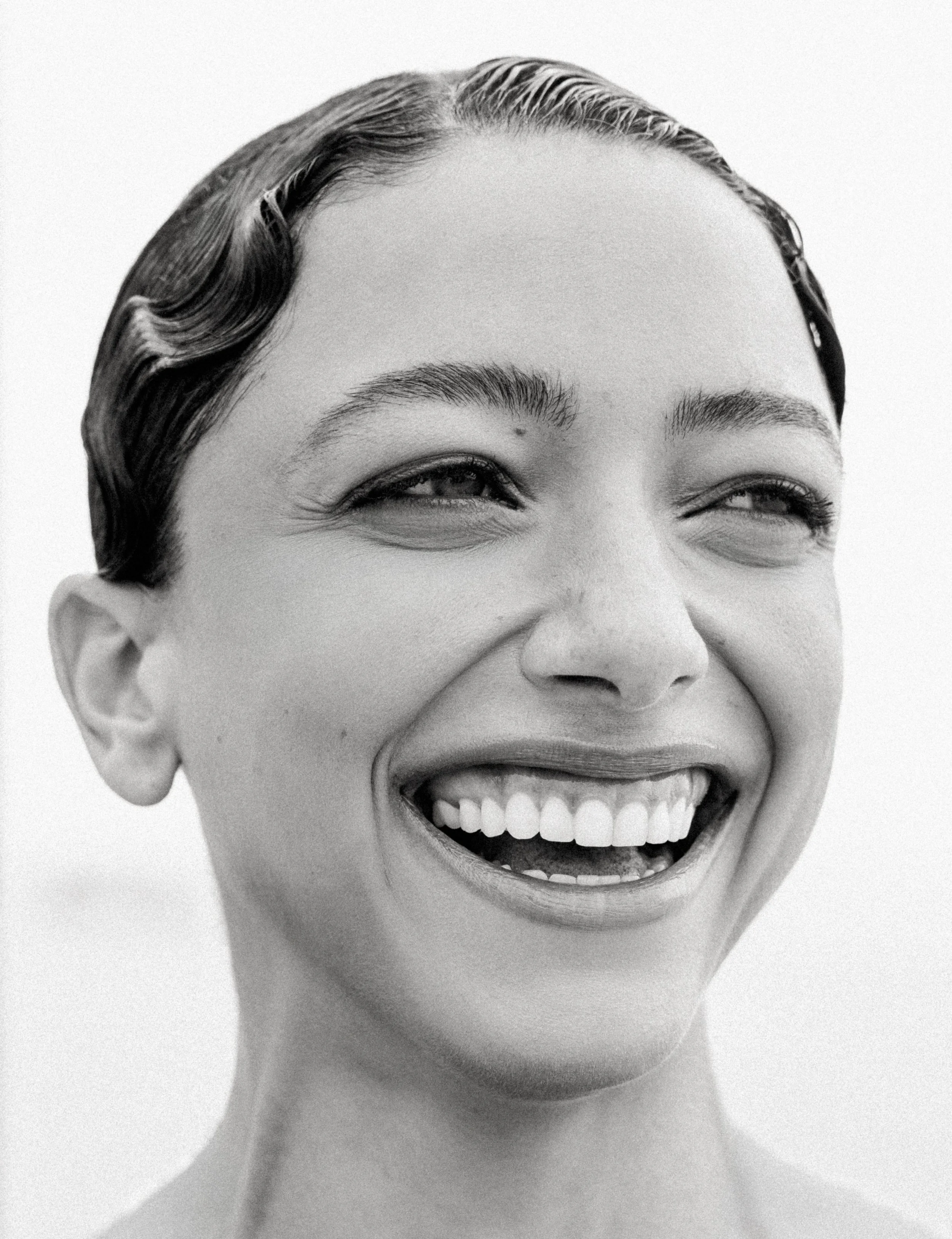
What does the stage awaken in you that the camera does not?
It relaxes me a lot, and it reminds me of the time when I was touring with theatre. There’s something very theatrical about it — almost like a circus, a group dynamic. It’s amazing. And it’s something I don’t really have on a film set. Cinema doesn’t give me that same feeling — the butterflies in my stomach, the anxiety, the nervousness.
But what BaianaSystem taught me is that there’s always another day. Every time I leave the stage, I look at Russo and say, “I didn’t like it today,” and he always says, “That’s okay — tomorrow we do it again.” And that’s something very special. The closest experience to that, for me, is working in Brazilian soap operas. Because we shoot a lot — sometimes 14 scenes a day — and there are many episodes, sometimes almost 200.
So it’s inevitable that some scenes won’t feel perfect. But the next day, you have another chance. You can revisit the same emotions, try again, do it differently. It’s this idea of repetition, of continuity, of always having another opportunity — and that’s very similar to what I feel on stage.
Looking ahead, are you more interested in expanding geographic boundaries, or in deepening stories that have yet to be fully told?
Right now, I’m preparing myself to portray Marta, who is the greatest female football player in Brazil. She’s a six-time FIFA World Player of the Year winner, and she’s an icon. She’s huge. I feel very honored to play her, especially because she’s also a woman from the Northeast, from the countryside — just like me — who started playing football very young, moved to Sweden, and became the best player in the world.
So in a way, this project might take me to a more global stage. But I’m trying to approach it calmly. I don’t want to think too much about the scale of things, especially after everything that just happened during the award season.
I just want to focus on the work and on what’s coming next. I feel like something is starting to take shape.
Did you have any personal connection to football growing up?
Yes, I used to play. In Brazil, there’s still a lot of sexism around women playing football — even more than in the US or Europe. But when I was a child, I loved it. I used to play futsal, which is like indoor football, on a smaller field. I played until I was around 12 or 13 years old, and I loved sports in general — maybe also because of my ADHD, I was a very active child.
But then, when I started taking acting more seriously, one of my directors told me I had to choose: sports or drama. He said he couldn’t work with me if I might show up with a broken arm or leg from playing. So I chose acting. But I really loved it. I was a very, very active child.
TEAM CREDITS:
talent ALICE CARVALHO
fashion editor ALEXANDRE DORNELLAS
photography ÀNGEL CASTELLANOS
beauty SORAYA ROCHA
videography GUSTAVO CRUZ
fashion production FERNANDA MANDUCA
photography assistant GUIDO DOWSLEY
beauty assistant WELINGTOM SOUZA
tailor TATIANA F ARIAS
production TIMI LETONJA
special thanks to COPACABANA PALACE
interview LEANDRO DA SILVA & TIMI LETONJA
cover design ARTHUR ROELOFFZEN
