
IN CONVERSATION WITH LAURA LINNEY
interview by MAREK BARTEK
From The Truman Show to Ozark, there is a reason why Laura Linney remains one of the most compelling actors of today’s film, TV and theatre. Linney first fell in love with acting while travelling with her father across the US theatres. Even with over three decades of acting career, she is as passionate about the craft as ever. Most recently, she revived her inner theatre kid as Kristen Bean in the TV series American Classic, now available on MGM+.
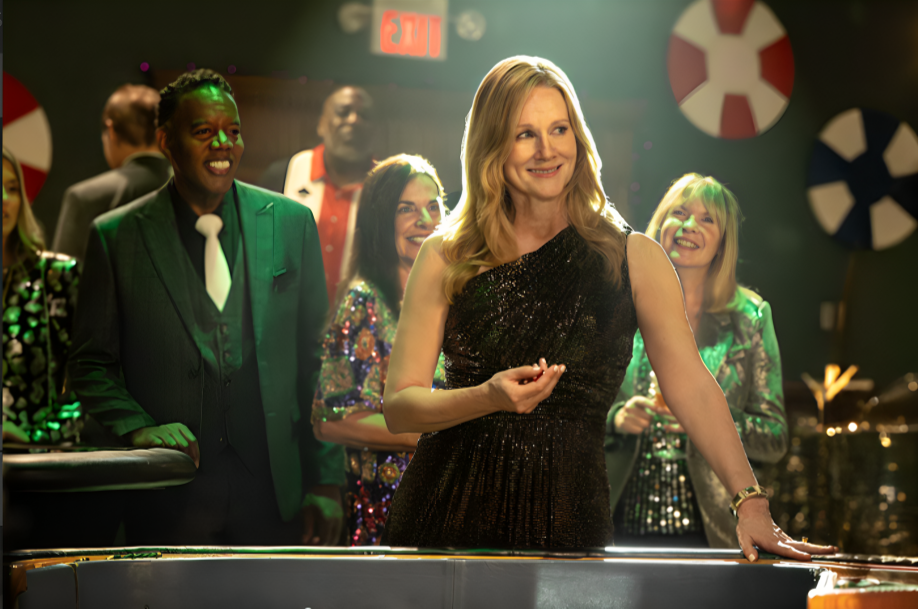
all images courtesy of MGM+
Tell me about the character of Kristen Bean. What drew you to her?
Kristen Bean lives in a small town in Pennsylvania. She grew up going to a theatre and being a part of a theatre group of the local theatre in Millersburg, Pennsylvania, which is run by the Bean family. Her at-the-time boyfriend, Richard Bean, is very popular and very good at what he does, and so they move to New York. He becomes very successful. Kristen doesn’t; she leaves him and returns home, where she marries Richard’s brother, and they take over the theatre together. Richard Bean then gets cancelled in New York and is shipped back home, only to realise the theatre's in bad shape and all sorts of hijinks begin there.
It's about the arts in a small town, and it's a delicious comedy that Kevin Kline leads us through — he's wonderful. All of us who are in the show have a real connection to the theatre; we're all from the theatre, and that’s what drew me to this project — it doesn’t happen very often.
I love this group of people, and I recognised how funny it was and how kind it was — it’s unusual for television these days. Shows often feel like they've got to be competitive, and so they've got to be a little more violent. Don’t get me wrong, I love those shows, but it is nice to see a show that's just kind, funny and cosy.
As you’ve already mentioned, you come from the theatre, and you are a theatre kid. What was it like coming back to where you once started?
Oh, it was fun! It was nostalgic, and I'm very grateful to do it now, when the arts are being forgotten in smaller towns and communities. I hope people will see it as a reminder of the power of the arts within the community and that it's not meant just for the wealthy people in cities — it's meant for everybody.
Arts should be a part of everyone's life. They should be in every school and in every town because it makes everything better, and I think people have forgotten that.
Your character works really hard to keep the theatre going. What is your hope for the future of the local, often amateur theatre?
I think that economically, everything is upside down right now, and small communities are really struggling. It's too expensive for most people to participate, to create it, or even to go see it. My hope is that the pendulum will swing back to reinvigoration of the arts in small towns.
The regional theatre system in the United States used to be thriving, and it was really wonderful. It's part of why I became an actress, and to see it suffering now breaks my heart — to go to smaller cities and towns and see these theatres with no original company or not used at all.
I hope that in time people will rediscover it for what it does for your mental health, what it does for the health of society, and how it teaches us about being better human beings. It's a great untapped resource that we all have.
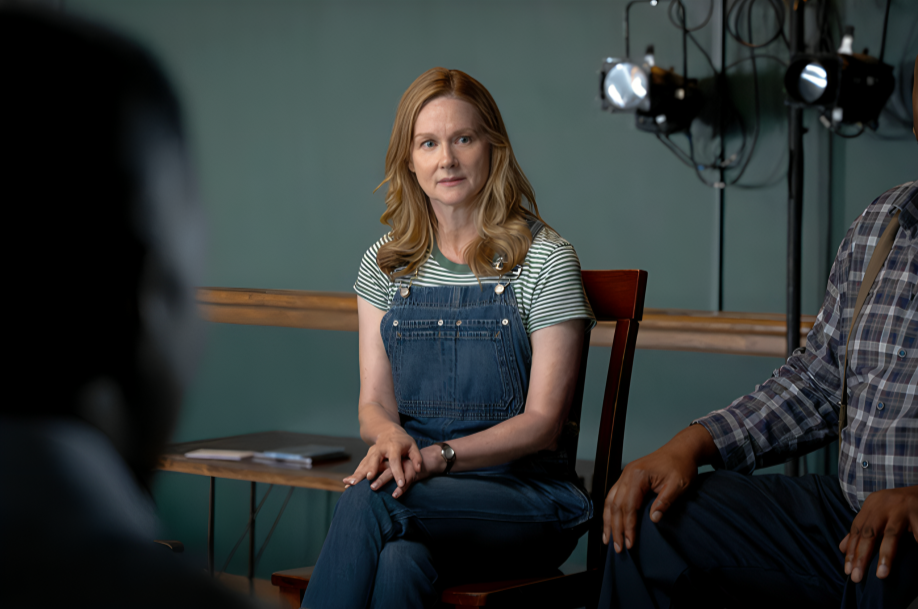
Would you ever go back to doing a production in the small theatre?
Oh, absolutely! I grew up going to the Actors Theatre of Louisville and to many other places all over the United States because my father was a playwright and had shows done there. I would go with him, and I loved it — and some of the best acting I've ever seen has been in those theatres.
There is a very specific scene in the first episode where Richard lashes out on the theatre critic because he said in the review that Richard had lost the spark that he used to have back in his local theatre in Millersburg — and you've just also said yourself that some of the best acting you've seen was in a local theatre.
Your work clearly resonates with audiences, so I'm curious what keeps you grounded and connected to the reality that you don't get lost in the bubble of the creative industry.
Thank you for thinking that, I hope that's true! What can I say — I just love it! I would love it even if I weren’t considered successful. I think that’s what keeps me connected — I really do love it, and I don't take it for granted.
I don't have to be famous or make a gazillion dollars; I just want to be involved, and that’s enough for me. It’s nice to make money, and it's nice to have all these other things, but I consider it an unexpected bonus.
Going back to the character — what was the preparation like? Were you inspired by any other characters or some people you know or have met?
I’ve thought a lot about the people that I know, who consider themselves failures for not becoming commercially successful. It breaks my heart because it's just not true. If you are a great actor working in a small town — that is an incredible success as far as I'm concerned, but there is a weird, corrupted idea of what success is. I’ve thought a lot about the people who made decisions where they felt they couldn't make it — and they didn't make it, they have been wounded by it, and they never really recovered.
It’s really unfortunate, and it’s something that I — for the sake of the mental health of society — believe that needs to be corrected. There are other ways to do it, but society and the message that we get is that the amount of someone's pay cheque is equivalent to their talent — it’s just not true. It's an equivalent to their commercial success, and that’s fantastic for them but that doesn't mean that someone who makes an eighth of someone else is not as good, because a lot of times they are.
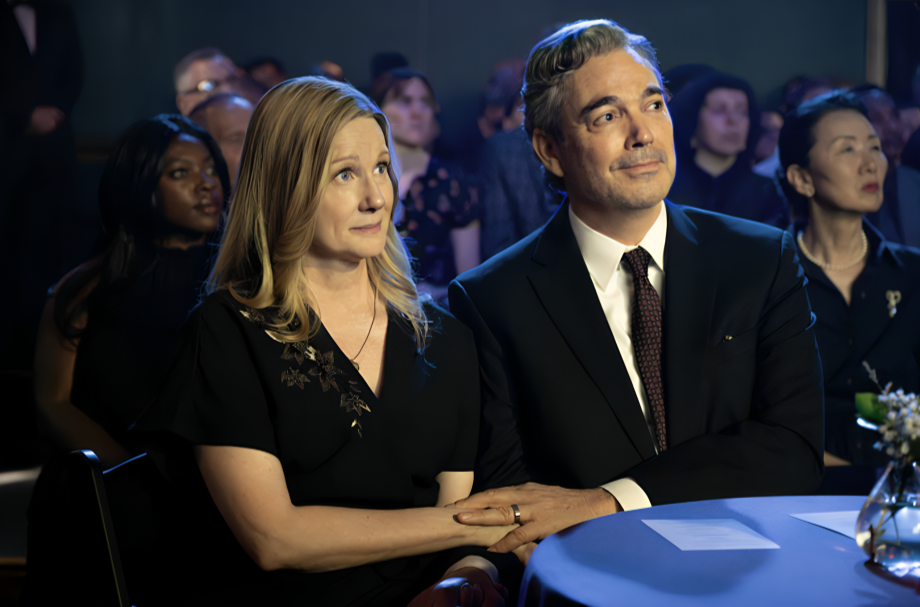
Something I've noticed about Kristen is that she is very flawed, but in a very interesting way that you don't really see on TV when it comes to women in power. We often view them either as villains or as perfect creatures on a pedestal. And I think it reflects these unrealistic expectations we have of female leaders. Why do you think it's important to view female leaders and women in power in such a human way?
Because they are human and they have something to offer. No one is one thing, so that approach of “either-or” is just unrealistic and shallow.
People don't look at each other — whether you're male or female — holistically, and try to figure out why those people are doing what they're doing, and what they want to achieve with it. If you're in service to something, I think that’s especially crucial.
For me, if I can see that someone is really in service to something, I will listen to them, but if I feel it is self-aggrandisement, I shut down immediately.
It's important to look at motivation and what compels someone to do something — particularly in politics, particularly in places of power — because that affects everybody else, and it is not something to be taken lightly. It's an example, especially for young people.
Kristen also struggles with a moral dilemma of really wanting to do something good, but ends up meddling in this slightly shady thing. Looking at the current state of affairs, how was it like for you to portray someone who really wants to do well, but is being pushed against the wall?
In Kristen’s mind, she’s thinking: “What compromises do I have to make in order to do good?” I think she means well, but I also think she's not a very good mayor. She is in service to a community — that I believe — but is she a great politician? I don't think so.
You know, I think she was meant to be an actress — that’s what she was meant to do. It didn't work for her; she got hurt, and so she poured her desire to connect with people and to help people into civic duty and became mayor. She does the best she can in a weird environment. But I don't think she's a great mayor — she’s a better actress than she is a mayor.
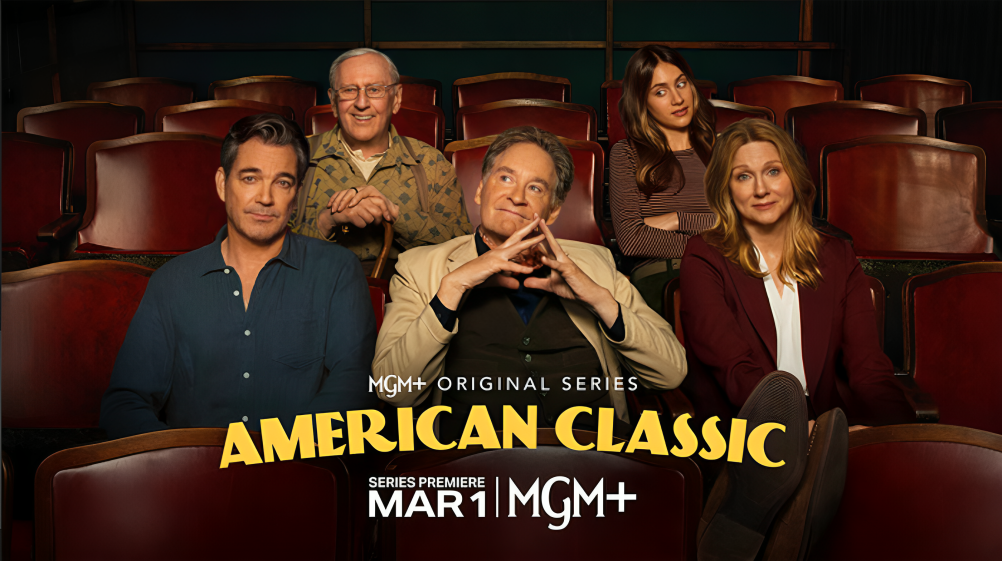
You mentioned in the beginning that it's a light and heartwarming comedy — and I truly believe that — but I think there is also a lot of dark undertone, capturing what's happening in the world right now. There were talks about COVID and the financial insecurity of people. Why do you believe it's important to share these messages, even if it's through a comedic lens?
Because it affects everyone. Everyone has been affected by the cultural shift in the past fifteen years, so I think it's important to weave it into the stories about our lives.
It is a fun, delicious comedy to watch. Kevin Kline is hilarious, and the whole cast is really witty and quick. But you're right — there is an undercurrent of social issues to this show, as there is in the theatre, as there is in the arts. The arts are — as far as I'm concerned — inherently political. You can't separate the two, and the show simply points out what a lot of people, especially Americans, are struggling with right now.
If you could change something about the arts, what would it be?
It should be affordable, more accessible, and required!
What do you hope people take away or like about themselves in their daily lives after watching the show?
I hope they enjoy it and that it makes them feel good in some way. I hope it makes them consider how they can fold in the arts into their own life a little bit — whether that's singing in a choir or going to an art class, writing something or going to a museum, if there's one near you. I hope people will feel inspired to create and bring people together if they’re isolated, and do something together.
Do you believe everyone is creative?
Absolutely! It's what makes us fascinating, it’s what makes people interesting. It's how everyone functions differently, and I want to know how other people see things. I find it exhilarating, like: What do you see? What do you think? And then getting that realisation of, “Oh, God, I never thought of that before!”
It expands your brain, in a way, when we share these ideas, when we witness the same thing and have different opinions about it. This kind of circulation — it’s just so good for us!
