
IN CONVERSATION WITH ANA ROŠ
interview by TIMOTEJ LETONJA
Ana Roš is a world-renowned chef, entrepreneur, author, and champion of hyperlocal cuisine. Entirely self-taught, Ana doesn't follow any culinary style, her cooking is a reflection of the environment that surrounds her, shaped by the Soča Valley, and inspired by memory, intuition, travel, and emotion. She has played a pivotal role in putting Slovenian gastronomy on the global map and is one of the most awarded chefs in the world. Beyond Hiša Franko, Ana leads several businesses that extend her philosophy: Pekarna Ana, an artisanal bakery in Ljubljana, Jaz, a contemporary casual restaurant franchise, and Ana Roš Drinks, a line of ready-to-serve beverages rooted in her signature style: Terroir Cocktails.
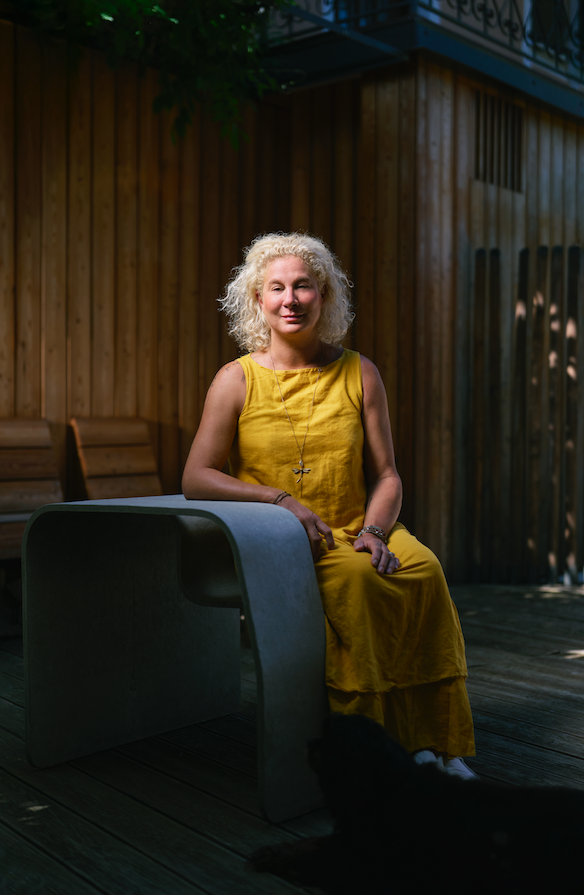
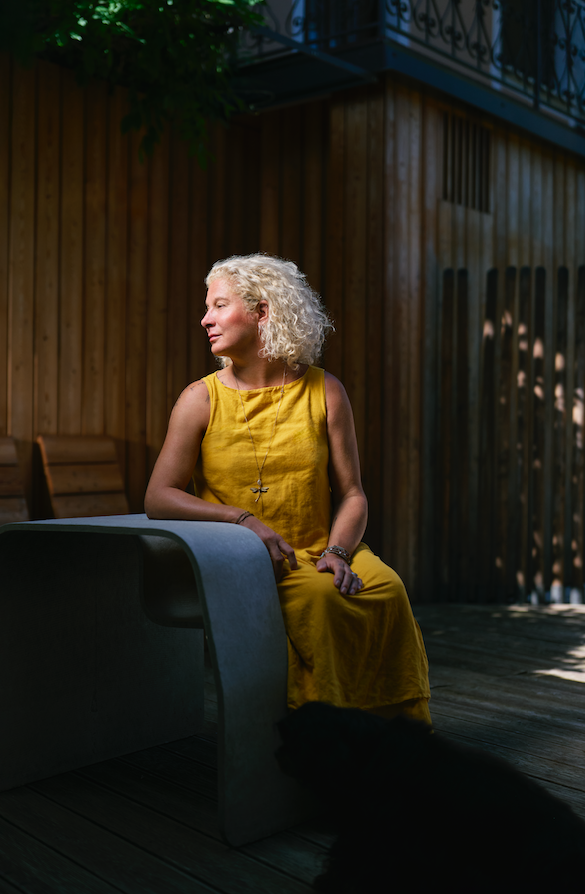
images by Ciril Jazbec
Hiša Franko is inseparable from the Soča Valley: the landscape seems almost like another author of the menu. After more than two decades cooking there, do you still feel surprised by this place, or do you now understand its language completely?
Our work is curiosity and looking for new challenges. When you want to be super seasonal and local in the same place where you have lived for two decades, discovering new patterns becomes a very big challenge. But this is the way we work. We don’t want to fall asleep, we are curious to discover what else we can find and what else we can create.
Your new menu, Euphorest, arrives at a moment when your relationship with nature has become increasingly central to the way Hiša Franko is understood. What does Euphorest represent in the evolution of your cooking, and what are you trying to express through it that you perhaps couldn't five or ten years ago?
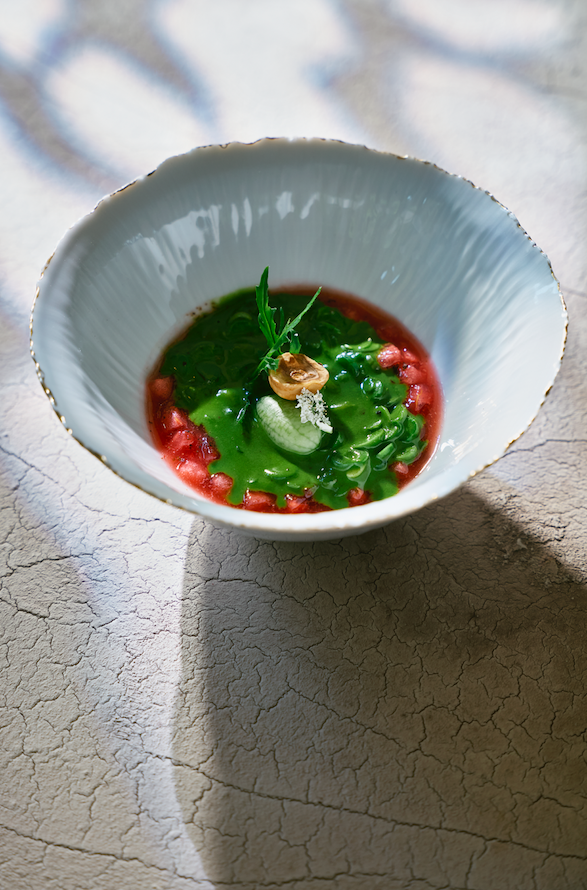
Especially the knowledge about the plants, about what the garden and the forest are giving us in different seasons. It’s not enough to have a great forager. The whole team needs to be aware of the changes in nature through the months, through the rain and the sun. Ten years ago, we had our kitchen garden and a forager. Today we have five or six different gardens, giving us different products from the valley up to the mountain. Together with the forager, we are learning more about plants that are unknown to the traditional way of picking.
For instance, meadowsweet grows all around us and can totally substitute bitter almond, with this beautiful amaretto aftertaste. Once you discover its beauty, you stop using the so-called global products, because you have something that is just around the corner. It’s also about how many knowledgeable, curious and technical people you have in the kitchen, able to express so-called poor ingredients in a luxurious way.
Nature is often romanticised in gastronomy, yet nature can also be violent, unpredictable and unforgiving. Has the contrast between beauty and brutality shaped the way you cook?
I’m in love with nature. Of course, it is romanticized, especially if you look at the English garden. I believe more in the imperfection of the beauty of nature. Not one flower is the same as another, and that is the way we try to express nature through our dishes and our storytelling. Look at the trees, the meadow, the plants, the flowers. They’re so beautiful in their imperfections.
But nature has its own rhythm. It punishes you sometimes and pushes you out of your comfort zone. This year, for instance, we are facing very dry weather, so there are no mushrooms. The moment the rain starts, we might suddenly have 60 different varieties, and then you have to be quick to make them shine. You never know what’s going to happen the next day. Nature is not a supermarket. I think nature itself is brutal and beautiful.
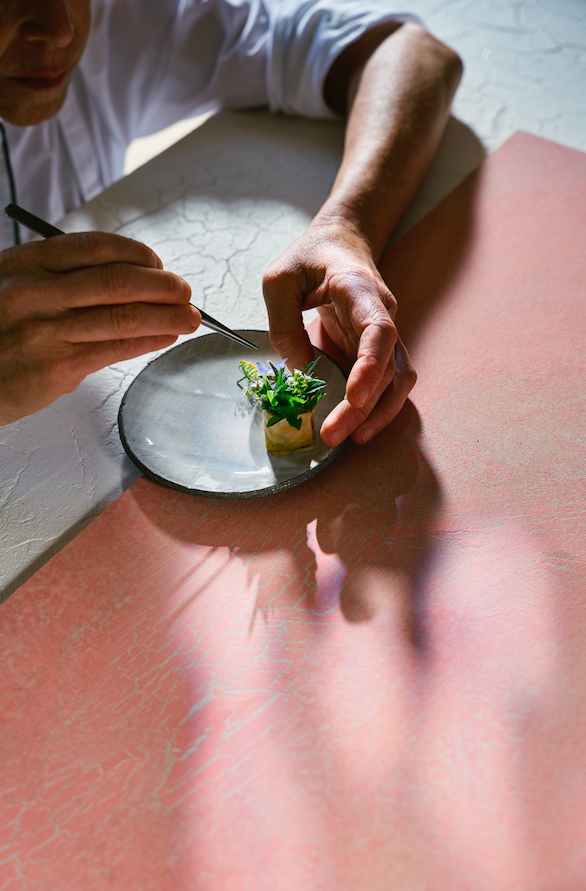
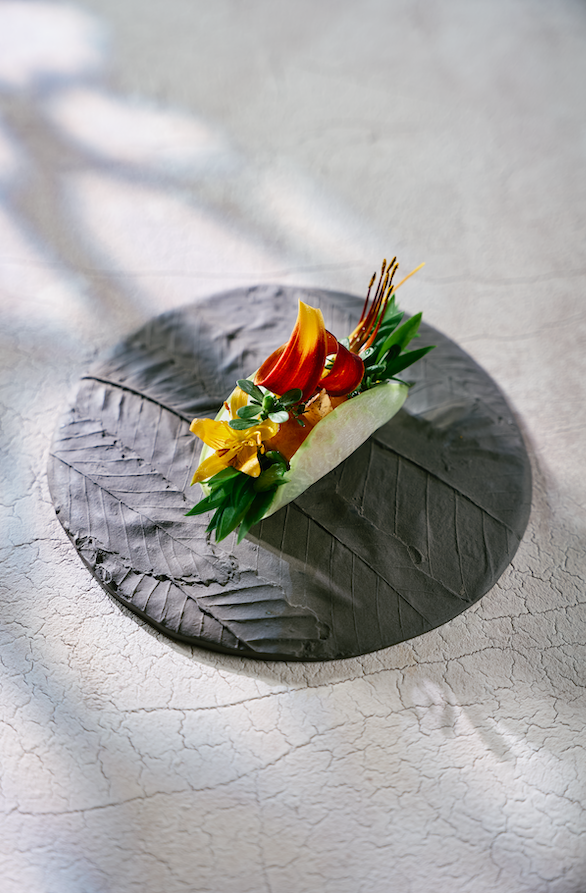
images by Ciril Jazbec
At Hiša Franko, you create one story for an entire year, while the individual dishes continually change according to seasons, temperature and availability. How do you balance having a strong creative vision with ultimately surrendering control to nature?
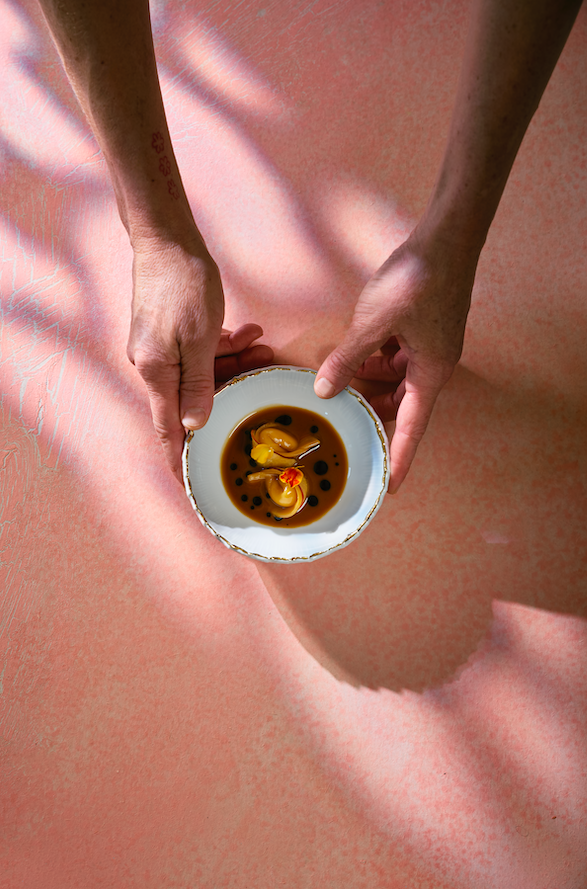
At the beginning of the season, we put the format on the menu. We decide when there are going to be appetizers, paired dinners, whether we keep the orzotto, and what type of pasta we’re going to make. But this changes completely through the year. Orzotto with wild asparagus might be a March, April or May dish, while in autumn you might have it with six different varieties of mushrooms. The flavor is completely different, and that’s the beauty of cooking. It’s fast creativity. You need to be fast to adapt. Some things last only two or three weeks, so you need to talk to the forager, understand what is coming, and start thinking about the recipe. The creative process is as strong as the process of working with hands.
This year you launched Forces of Nature, bringing together four three-Michelin-starred chefs. What interested me is the title: when you think about the greatest chefs working today, is being a “force of nature” partly about refusing to become too controlled, polished or predictable?
Well, it's the force of nature, force of culture, different natures, different philosophies of the chefs, different characters, expressions and creativity. All of this comes from what we are using, from different ingredients. The beauty of the project is that we welcome the chefs to bring what they need from their own territory, but for the rest, they visit our farmers and suppliers and source from them. It becomes a learning process for all of us; for the hosting chef, the hosted chef, and the farmers, because we see different approaches to the same ingredients.
Hiša Franko retained its three Michelin stars in 2026, received Slovenia's first five-toque distinction from Gault&Millau, and most recently scored 99 points in Falstaff. After reaching this level of recognition, where does the ambition go? Is there still a lot more to achieve, or does success create a different kind of pressure?
There is no pressure. First of all, it’s what we are doing. It’s curiosity that is fed all the time. I think the awards and rewards come because you’re doing something good and doing something well. I don’t believe in a very steep stairway of success. Every success should take a lot of time, so every step should be consolidated before stepping onto the next one. For us, it took 20 years to get there. It made us think: what can we do to improve, and what can we do to be better?
You entered gastronomy without formal culinary training and ultimately helped create an internationally recognised language for Slovenian cuisine. Looking at the generation of Slovenian chefs coming after you, what do you hope they preserve, and what do you hope they completely reinvent?
I think what I would suggest to them is: be yourself. Don’t look at what people are doing in Scandinavia, Côte d’Azur or South America. Look around yourself, look into yourself, cook from yourself, and don’t be scared to express yourself. I’ve been in all the best restaurants around the world many times, and we are mostly friends, but I’m sad when I see replication. That is what draws attention to Hiša Franko: it is a very genuine restaurant. And I think originality is also why people love traveling. If I can eat the same dish in Barcelona and in Hiša Franko, I will stay in Barcelona. Why would I travel that far?
We have so many interesting products, and Slovenia is one of the greenest countries in the world. Respect it, use it, go out, forage, plant your plants. That has been my learning and my self-education over the years in the kitchen. Slovenia is so rich in so many ways, and we should really use what we have.
images by Ciril Jazbec
Your universe now extends far beyond Hiša Franko: from JAZ and its new Poreč location to Pekarna Ana and Ana Roš Drinks. How do you translate your identity into projects that are more accessible without simply creating diluted versions of Hiša Franko?
I created JAZ by Ana Roš because I wanted to give people an idea of what I would eat on an everyday basis. It’s affordable, it’s a sharing concept, with a young atmosphere - louder music, lower light. JAZ in Ljubljana has been open for two and a half years. It took some time for Ljubljana to accept the concept, but today it’s running really well and people completely got the spirit. For lunch, the menu changes by around 70% every week. The chefs go to the market and observe what is there. Dinner is a little more sophisticated, but still very relaxed. We call it Ana’s urban space, Ana’s living room. JAZ in Poreč has a completely different position: you are practically sitting on the sea, with luxury boats in front of you. It’s the Mediterranean expression of JAZ in Ljubljana. Around 50% of the dishes are the same, and the rest changes and adapts to the sea and Green Istria.
We also have an incredible program of alcoholic and non-alcoholic drinks at Hiša Franko. We started many years ago, and with a strong team we created a line of drinks that is really unique. People would often say, “I would drink this at home,” and that’s how we started.
There is something interesting about building one of the world's most celebrated restaurants in a remote valley rather than a global capital. In an era when chefs and restaurants increasingly become international brands, how important is remaining geographically rooted to maintaining a genuine creative identity?
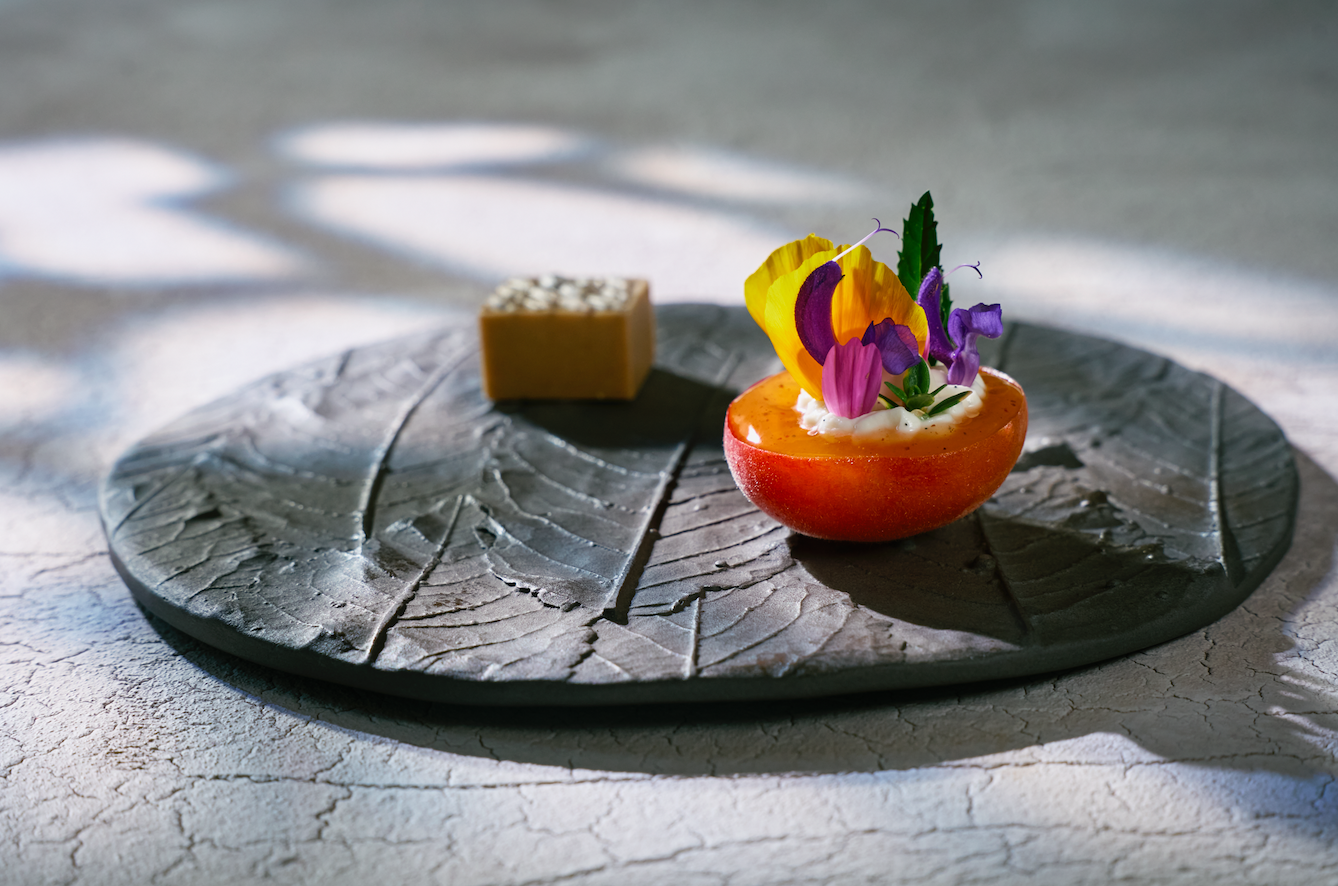
The product defines us. When it’s time for the fermented cottage cheese, which is produced by shepherds in the high mountains, you jump on it, use it, play with it, make it shine. It’s a unique product from Soča, you cannot find it anywhere else in the world. The lambs from this valley have a completely different flavor from New Zealand, Australian or Scottish lamb. Our mountains overlook the sea, so the minerality of the soil is different. The plants have different flavors, the lamb has different nutrition, and therefore the meat has a different flavor.
If nature has been your greatest teacher, what is it teaching you right now about cooking, but perhaps also about the way you want to live?
I’m in a learning process. I’m not vegetarian, just to avoid any mistakes. But the way we cook at Hiša Franko is the way I see perfect nutrition for this valley: what to eat, how to eat, when to eat, and sometimes where to eat. In this valley, people never had a lot of meat on the menu because the cows were dairy cows. They had long lives and fed families with milk, cheese, cottage cheese, yogurt and kefir. People were eating what nature was giving them at that moment. Meat was a festivity.
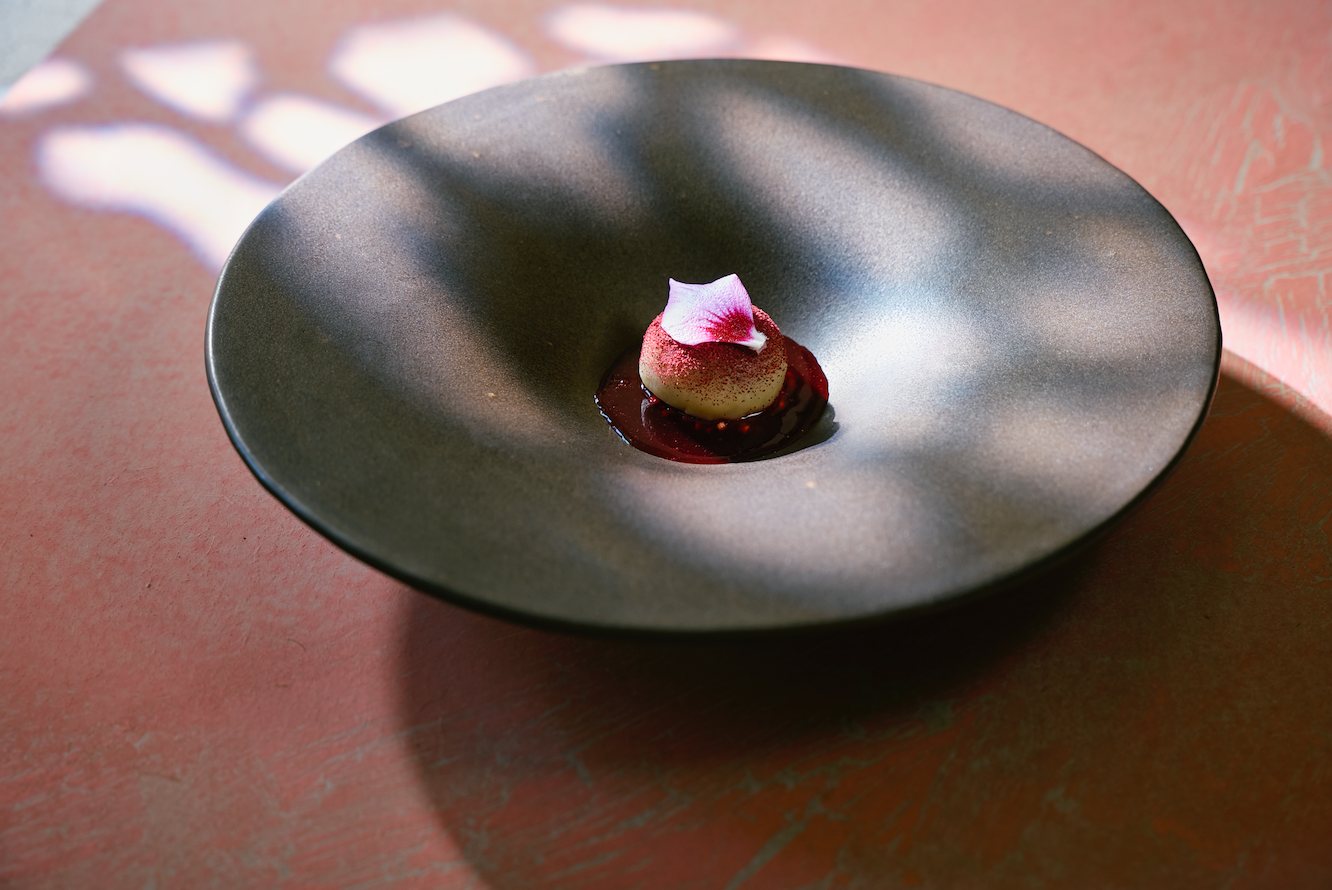
We have the beautiful Soča River close by, but local people are not fishermen. We are actually scared of the Soča River. This is reflected in how I eat and how Hiša Franko cooks: mostly plant-, vegetable- and fruit-based. Meat and fish are mostly condiments, with just two main courses where you have a very low percentage of protein. It’s also how I feed myself. And the interesting part is that people leave the restaurant very happy. They say, “Finally, we’ve been eating somewhere without needing to open our trousers. We feel well.” We never hear that anyone is hungry. I believe it comes from the knowledge of how people were eating here. This is the way I feed myself, and this is what I enjoy feeding our guests.
images by Ciril Jazbec
