
IN CONVERSATION WITH EMMY ROSSUM
interview by JANA LETONJA
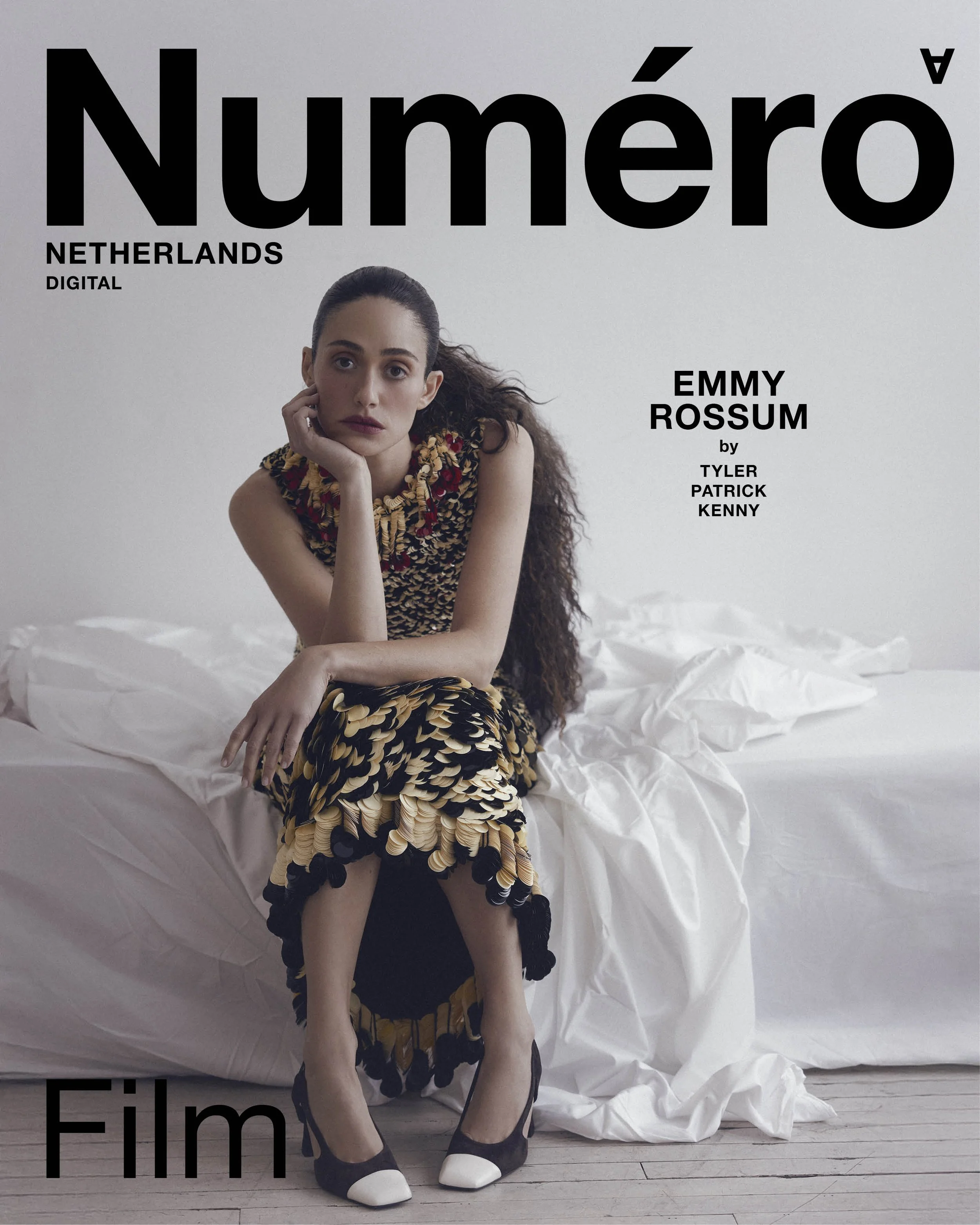
Emmy Rossum has built one of Hollywood’s most versatile careers, moving seamlessly between acting, directing, producing, and music. From her Golden Globe-nominated breakthrough in The Phantom of the Opera to her unforgettable nine-season run as Fiona Gallagher in Shameless, she’s consistently taken on bold, layered characters. Now, she’s starring in and executive producing Hulu’s new psychological thriller Furious, where she plays an FBI agent caught in a dangerous game with a female serial killer.
Furious explores the blurred line between justice and morality. What drew you to Alice Black and this story?
I really am drawn to people’s experiences and how they move through the world, and how they survive when the climate around them is challenging and they have to adapt to the environment around them. Sometimes the way that we adapt and survive is in that moral gray area.
I was really fascinated by a woman who didn’t believe she could pursue justice for herself, but was so dogged about believing in justice, and how the vendetta of this killer will stir up things in Alice that maybe she wishes it wouldn’t.
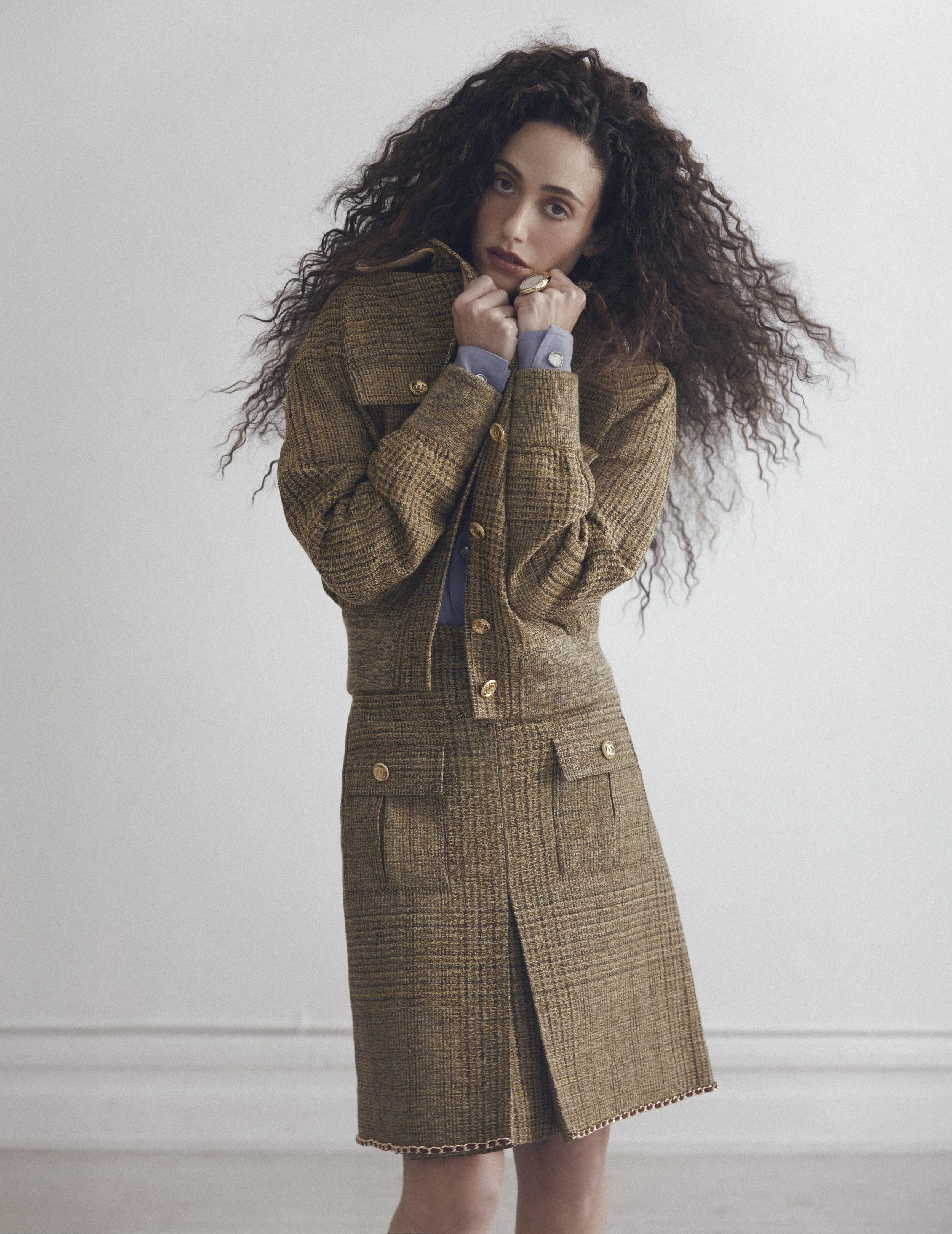
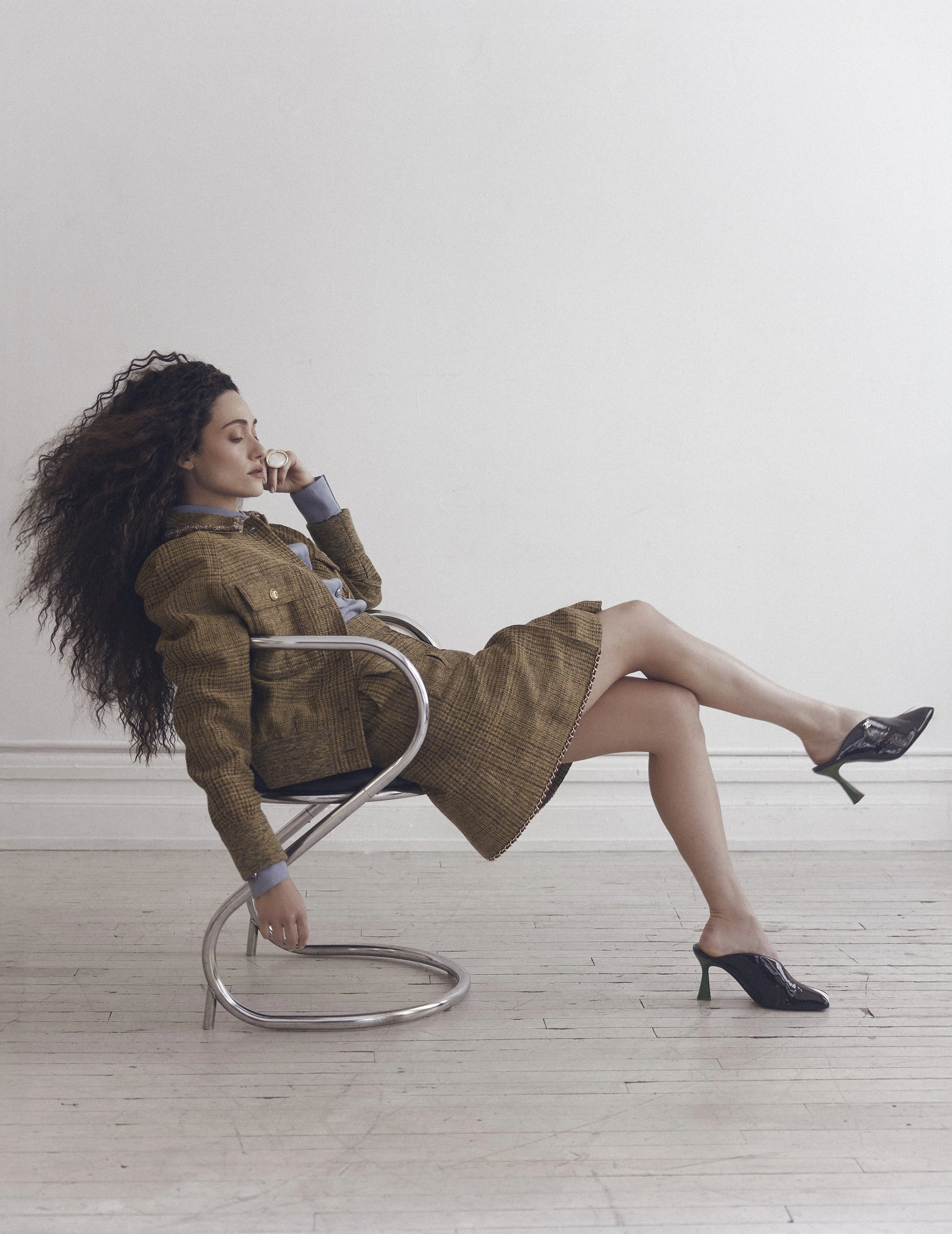
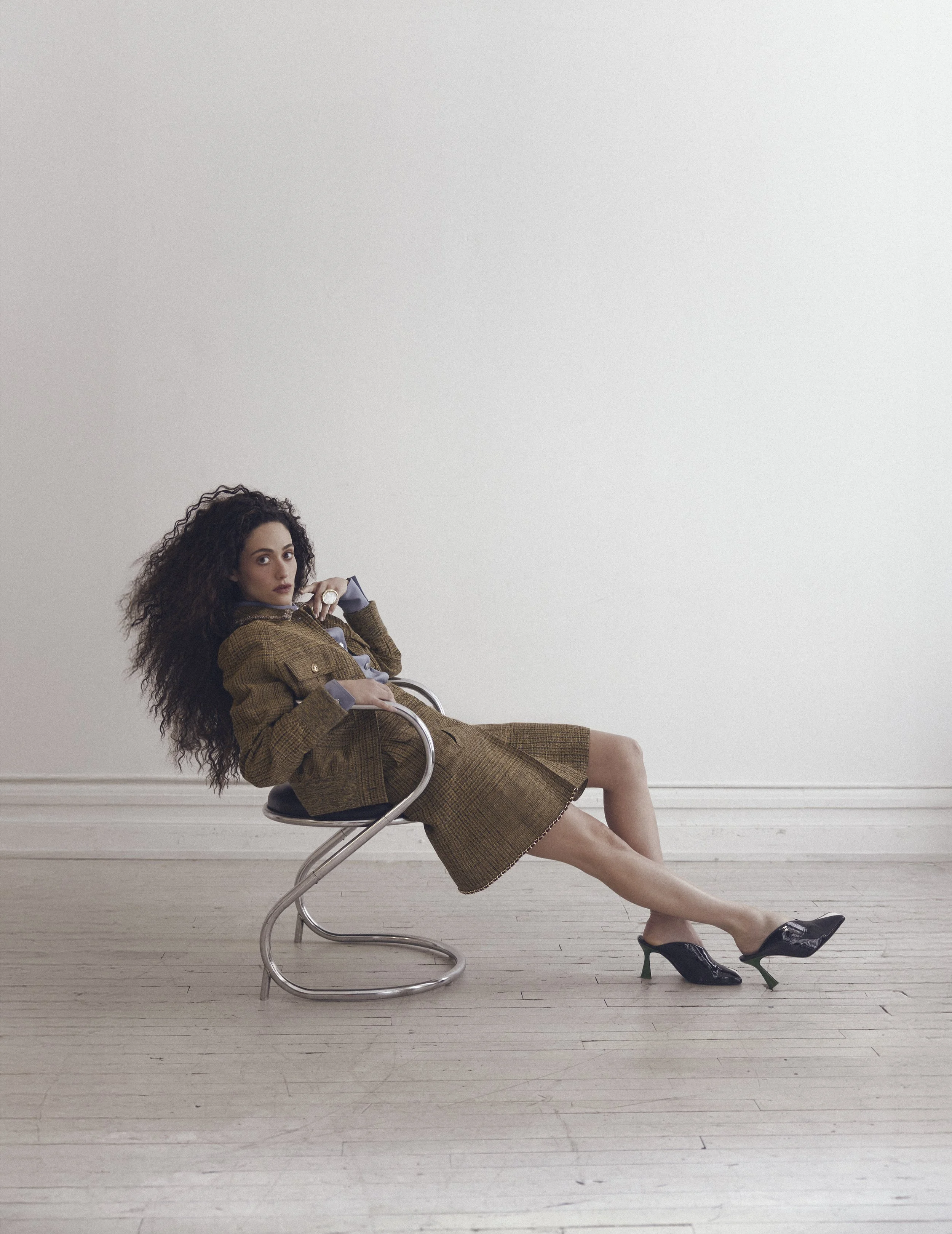
full look CHANEL
Alice is pursuing a female serial killer, a dynamic we don’t often see. How does that change the traditional cat-and-mouse thriller?
I think there’s something that feels very fresh about female violence. We’ve seen a lot of violence against women, and we certainly talk about violence against women. Both of these women are victims of violence, so that’s part of the story. But Liz, our writer, is very interested in exploring women’s rage—their need for vengeance when justice is denied to them—and the ways that rage can be distinctly female.
So we weaponize things like a curling iron and a chicken breast. We take things that feel inherently female or domestic and turn them into weapons, and our killer does exactly that. I think there’s something really interesting and unexpected about that.
I also think there’s this invisible thread connecting our FBI agent and the serial killer. There’s something inherently drawing them toward each other, and as the story unfolds, we see the ways in which they may be more similar than they are different.
There’s definitely a muscularity to the story and to the hunt, but at the same time, it feels like we’re investigating women, their rage, their psychology, their experiences, in a way we may not be accustomed to seeing in this genre.
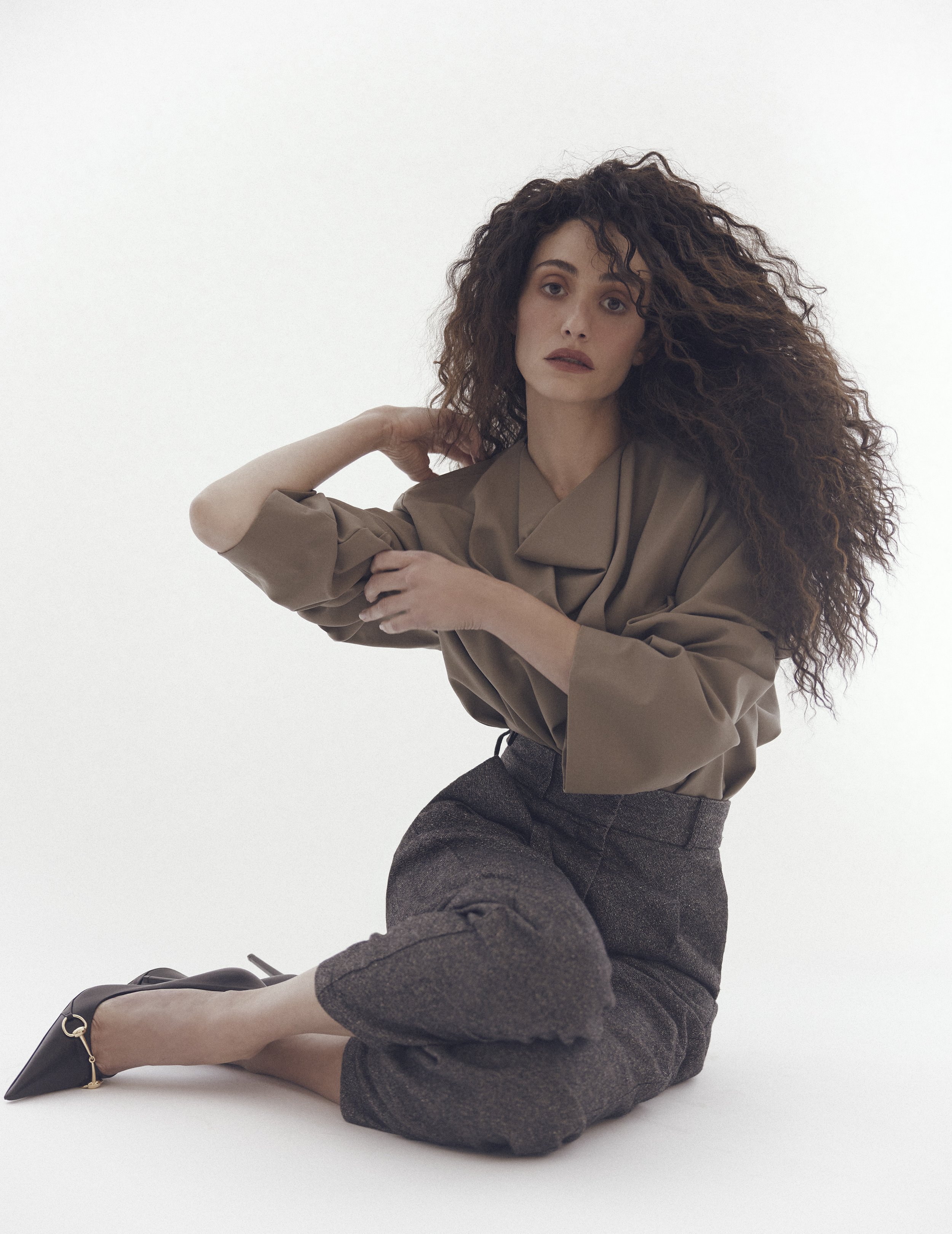
top ROHE
trousers VANESSA BRUNO
shoes GUCCI
You also executive produced Furious. How involved were you in shaping the series beyond your performance?
It’s always an opportunity with my company to find material that investigates contemporary womanhood, which I think is the through line in all the things that we make.
I had gone back and rewatched a movie called Black Widow from the 80s, with Debra Winger and Theresa Russell, as part of an assignment I gave us to look for material and ideas. That movie felt like an opportunity because it was a piece of niche pop culture that a lot of people weren’t looking at. No one was thinking of developing it.
I took it to Hulu, where I had originally developed Angelyne, so I knew them there. They thought it was a great idea and helped me get to Liz. Liz watched the movie, liked it, and was intrigued by it as well. From there, she started to write, and it was a fascinating process getting to spend a year and a half, two years with her on that journey.
The first part is just research. It’s understanding how the FBI and the NYPD really work so that you can write something that comes from a place of reality, and spending as much time with FBI agents and detectives as possible.
Then casting is something that I love. Hiring is something that I love. When you get to be in a position of power and you get to employ people you think are amazing, there’s no greater joy than getting to put together a team of like-minded, excited nerds like you, really, who want to dig into the material in the same way. As an actor, to be part of the casting process as well, to watch every single audition tape, because everything is digital now, and to get to connect with those actors’ performances and imagine them in the roles, is incredible. And if they don’t get the part, write their name down so we can come back to them for a different part later in the season or even next. Knock wood.
I think it’s a joy. It’s a total joy being able to be this deeply embedded. And then post-production is incredible because you get to shape and change and add music. Our incredible showrunner, Liz Meriwether, is just tireless in her editing process. And our amazing female composer, Ariel Marx, has done some of the most gorgeous, haunting music that she vocalizes.
It just feels like you’re cooking Thanksgiving dinner from start to finish. You’re conceiving the dish, you’re making it with your family. It takes four years to make it, but then at the end, you get to feed your audience. You get to share with them the thing that you made that you love so much. So it is really amazing to get to be a producer.
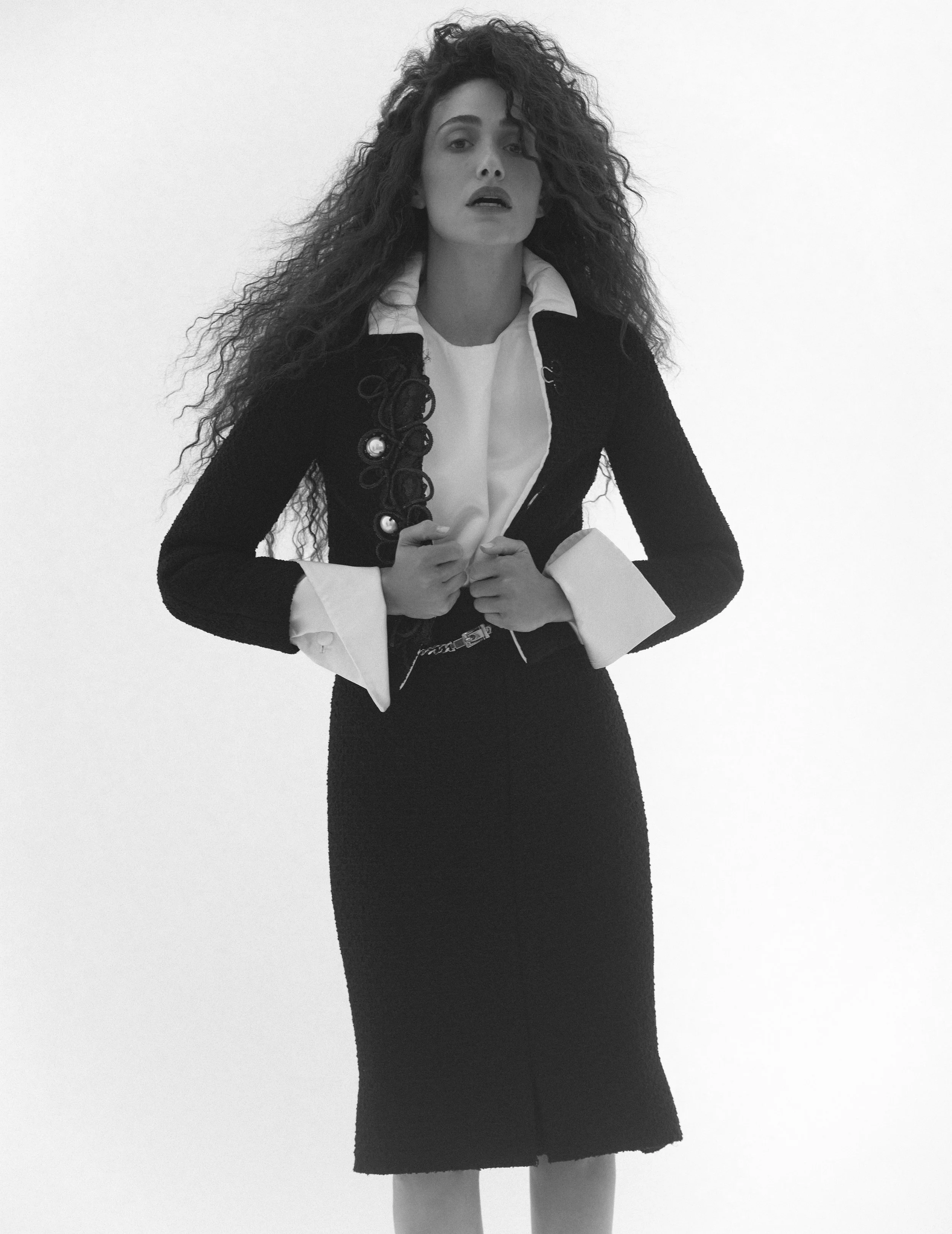
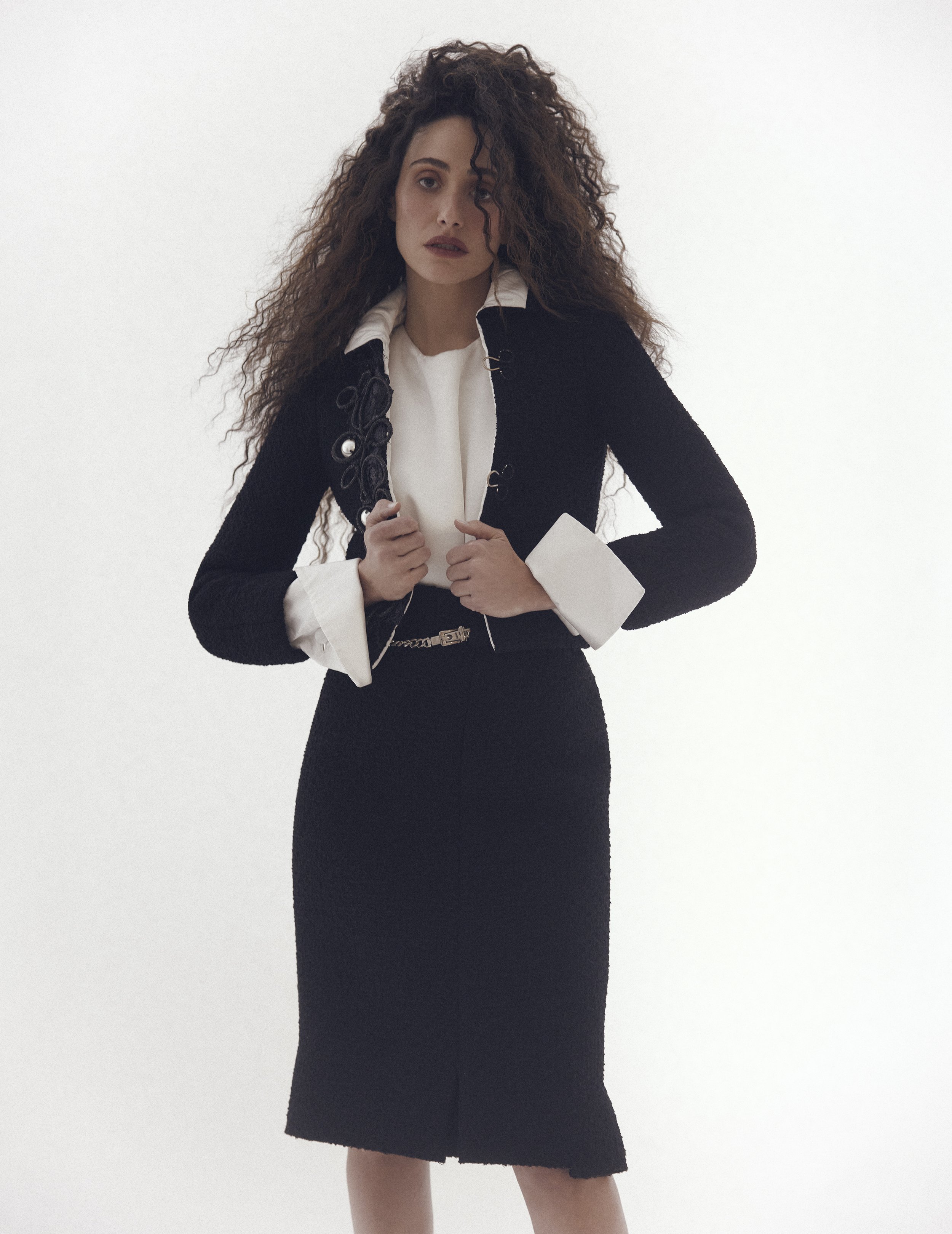
full look MARC JACOBS
The show asks audiences to question who the real villain is. What conversations do you hope it sparks?
I think this idea of a “perfect victim,” that a victim has to be a certain way in order to deserve justice, is something that we want to push really hard against because we don’t believe that.
I think one agent I spent time with really felt that the line between law enforcement and bad guys was closer than you might think, that if you could pull a trigger, you could pull a trigger. So I think it’s interesting to dig into things and see them differently than we might ordinarily.
Our FBI agents start off as the good guys and our killer starts off as the bad guy, but there’s this idea of an arc where maybe where they end up is closer than where they started.
Through your production company, Composition 8, you’ve been developing projects for several years. What kinds of stories are you most passionate about telling now?
I’m really passionate about stories that resonate with something that we’re experiencing socially or culturally. Something that’s unsaid. The parts that we’re scared to investigate about our shadow selves. Those, to me, are really interesting.
But in terms of genre, I’m agnostic. I like all genres. I love comedy. I love drama. I love thrillers. I’d love to make a musical. And I’m always caring about the journey of the character first because that’s where I come from and where I started.
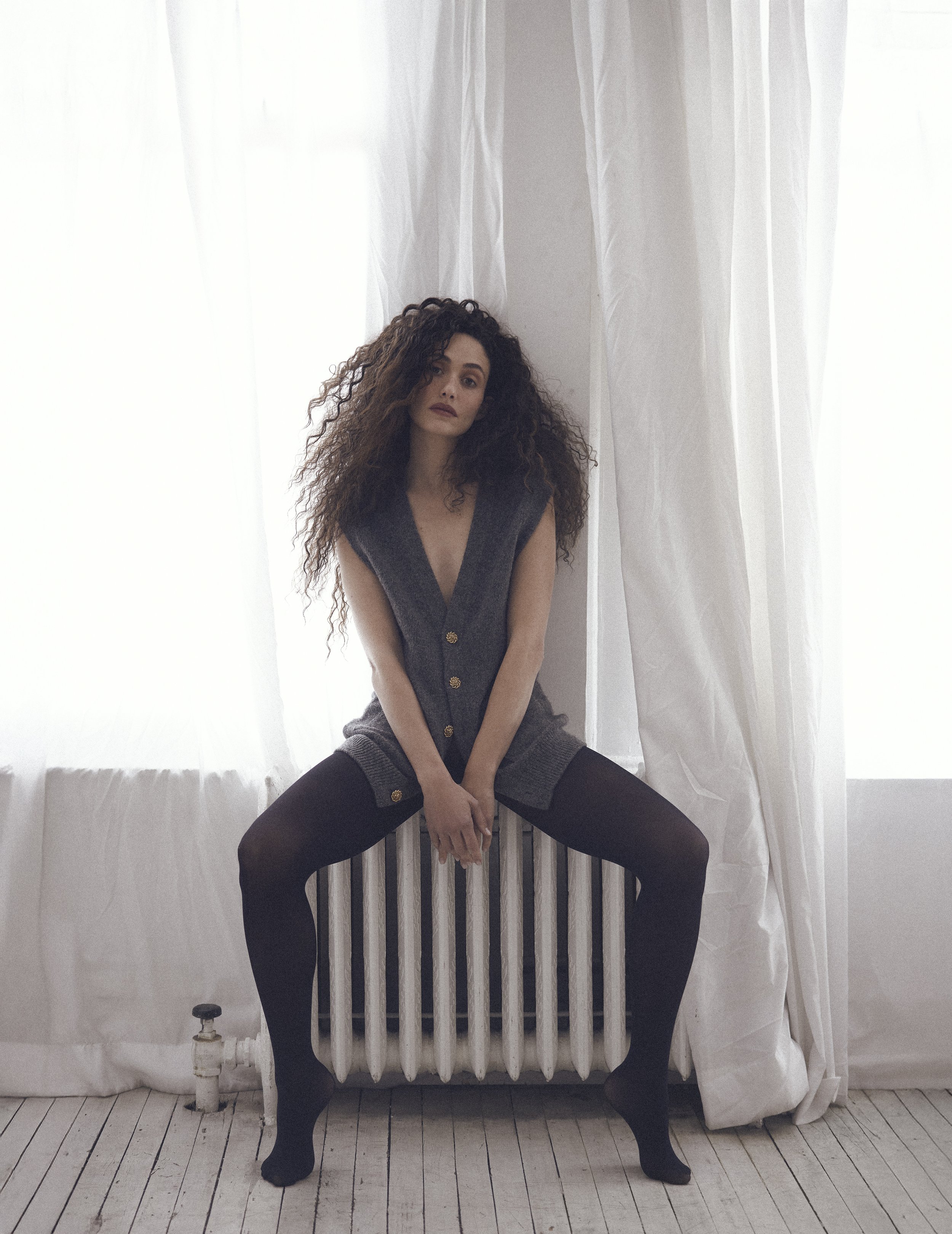
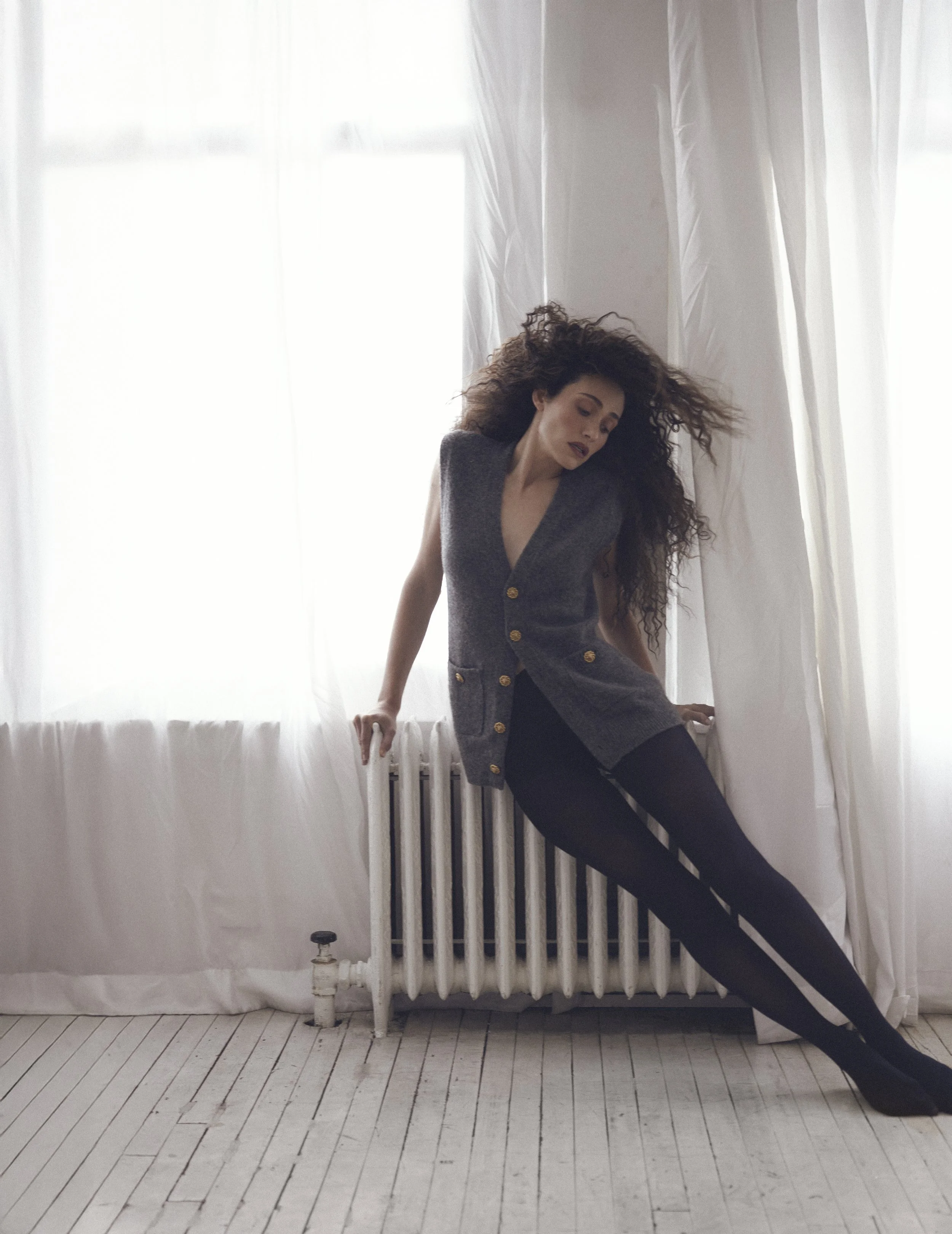
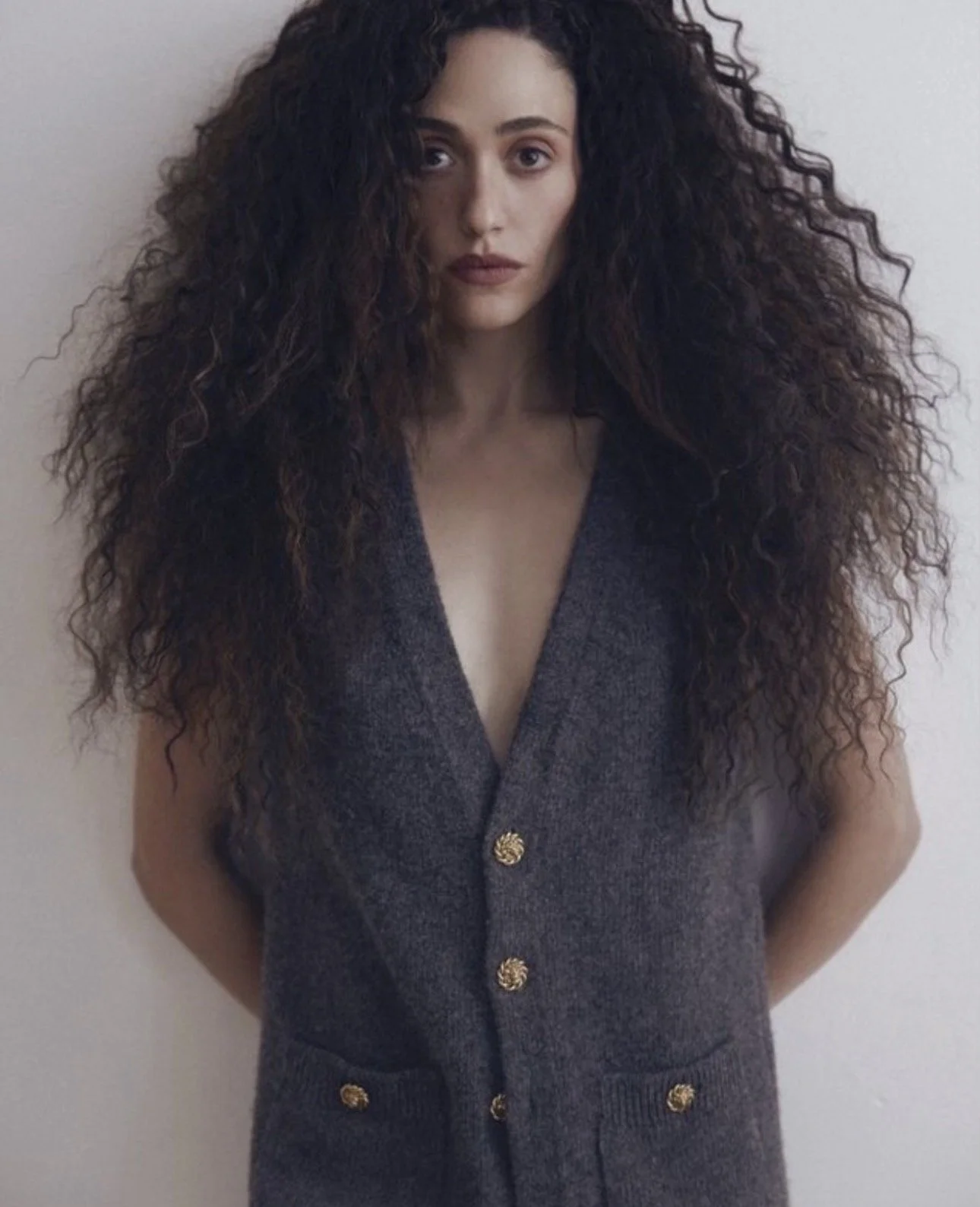
sweater CHANEL
tights WOLFORD
Looking back, Shameless became such a defining chapter of your career. What did Fiona Gallagher teach you that still influences your work today?
That there’s always more to uncover about a character, that there’s always more to investigate. I was able to play her for 110 episodes, so it really is about never getting lazy, always being curious, always wondering what could feel new or different about something.
That’s obviously easier when you are only making a film or a first season of something. But I think that idea that there could always be other ways in is something that doing a show for so long forced me to learn.
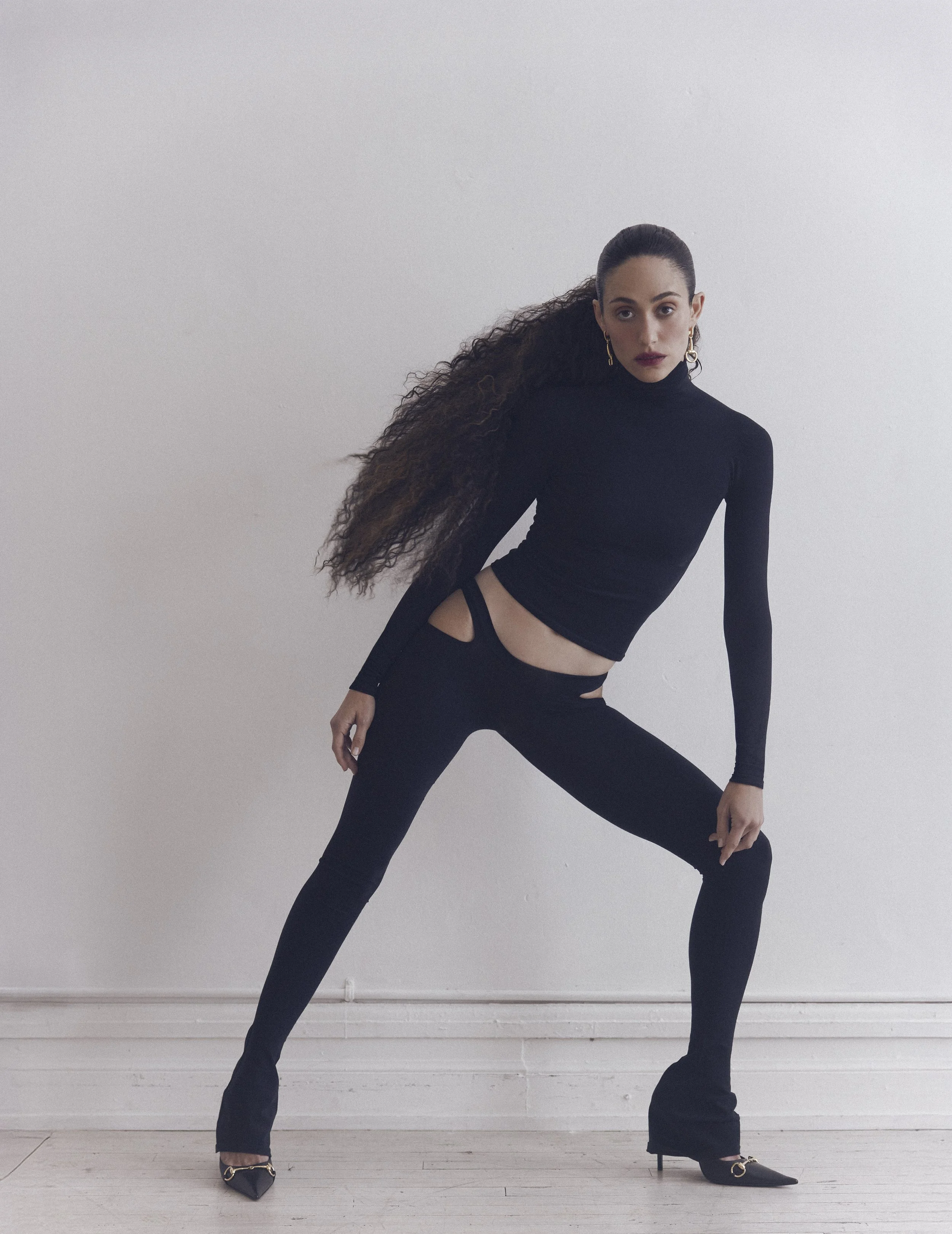
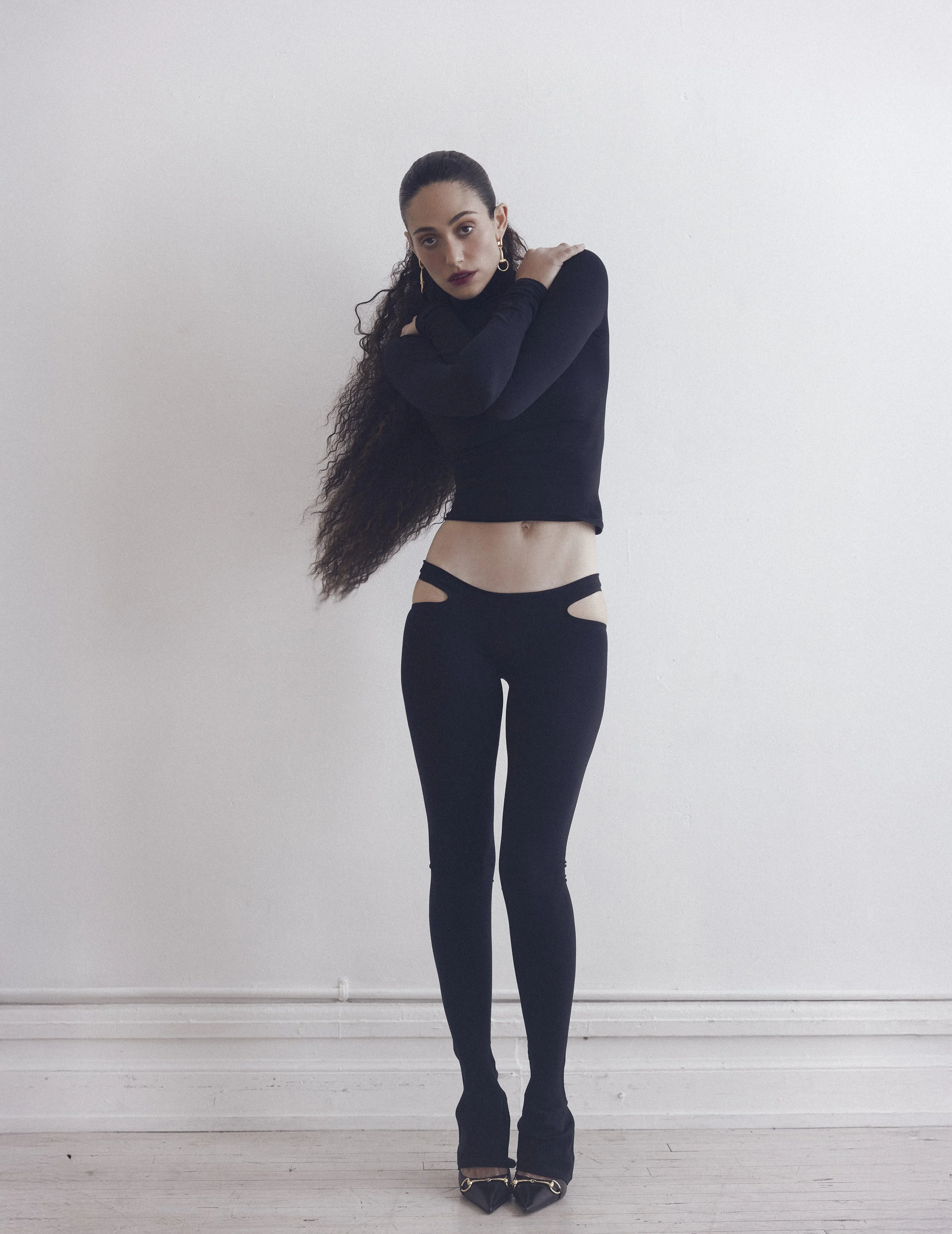
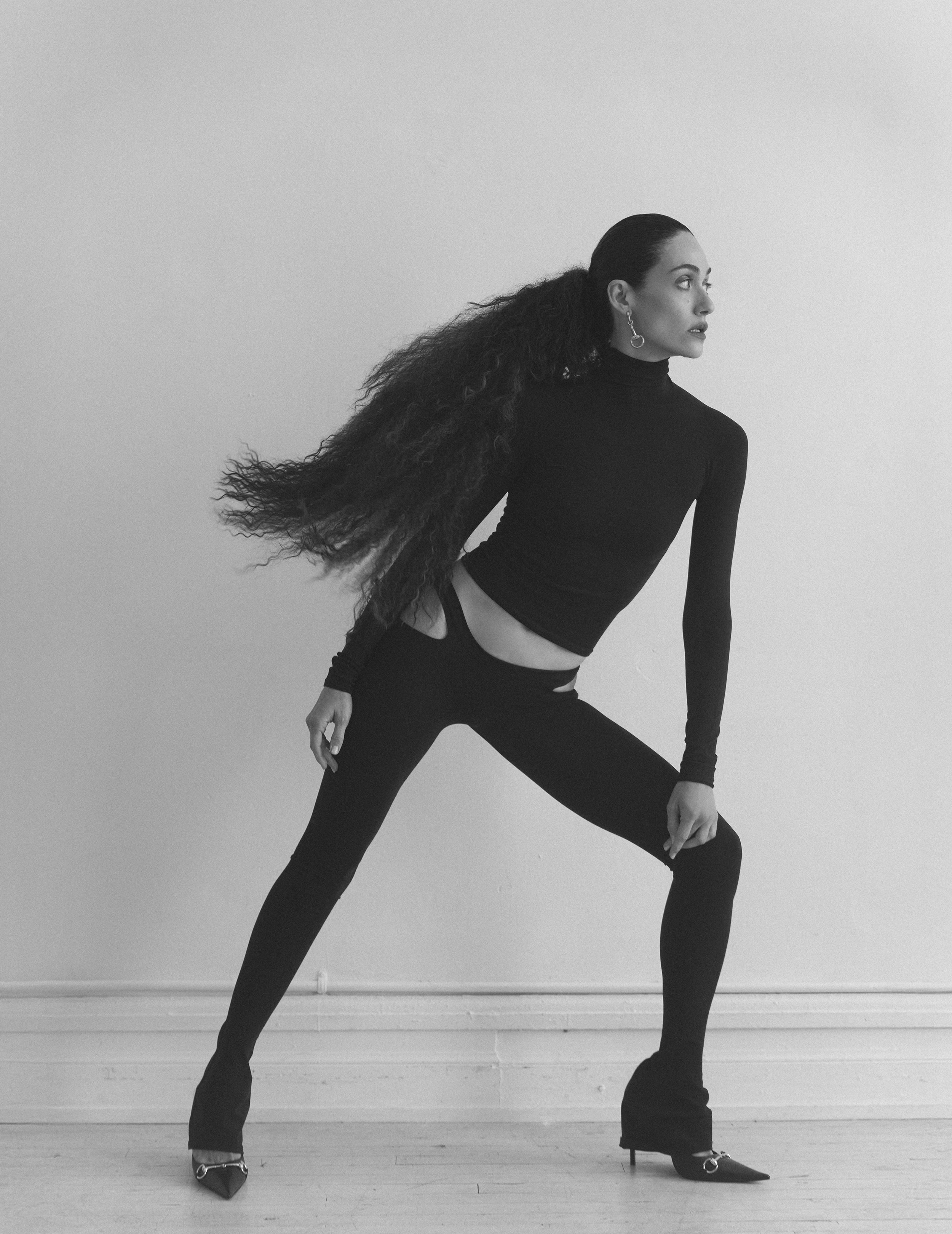
full look GUCCI
Directing became a natural extension of your career during Shameless. Has directing changed the way you approach acting?
It’s interesting because when you’re directing, your job is really communication. You’re not operating a camera or doing makeup or saying the lines yourself or even editing. I think the director’s job is to make thousands of little choices all day long and to communicate those things.
I think after directing, and certainly with the confidence that comes with growing up and being older, communication is everything. To communicate your needs, to communicate your thoughts, to want to hear other people communicate with you about what they think, and to make room and space for that communication back and forth. To be excited when someone has a better idea than yours, like, amazing, or a different idea that challenges yours and makes you rethink your perspective.
But I also love just acting and getting to trust my director implicitly and trust their instinct because they are the first audience, really.
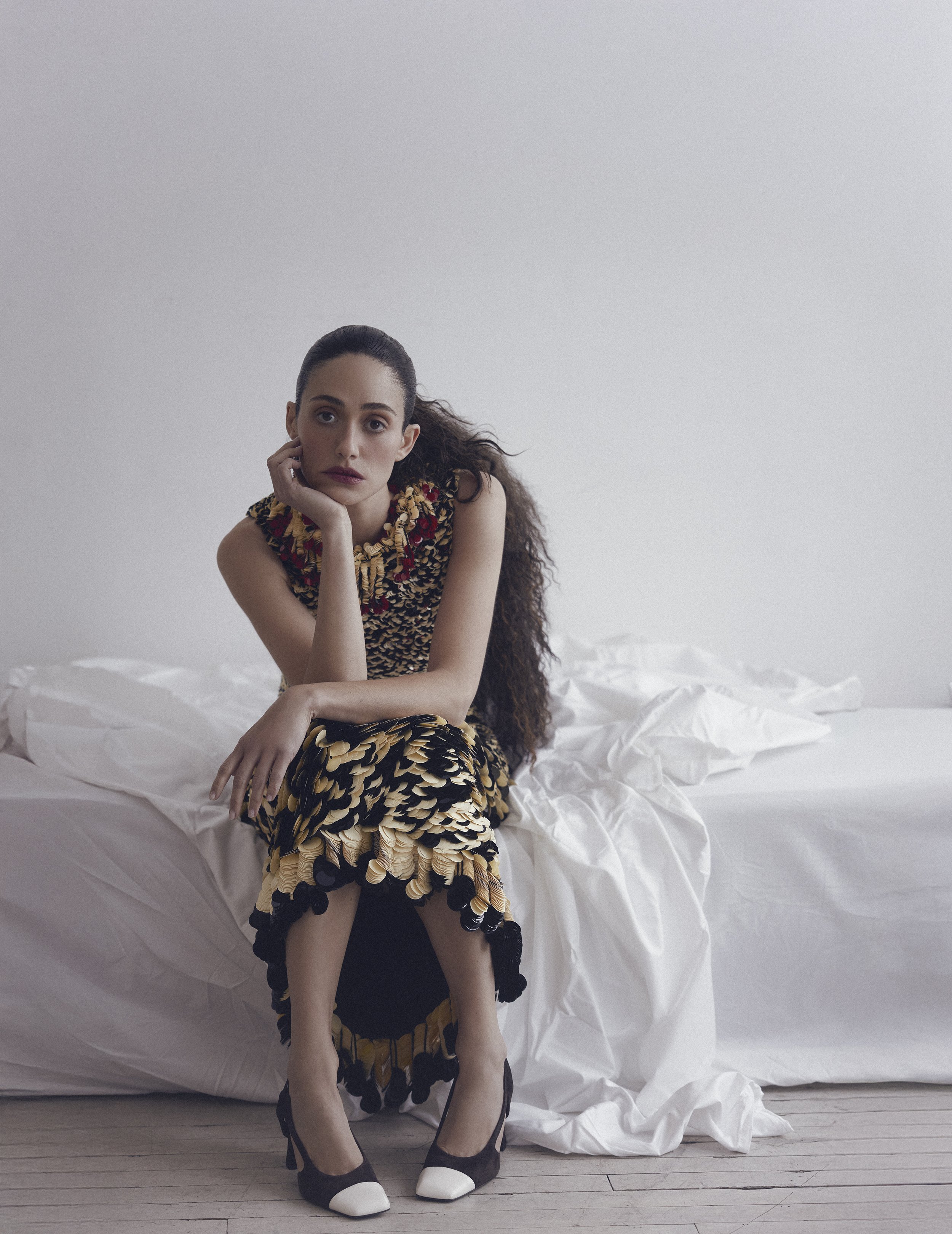
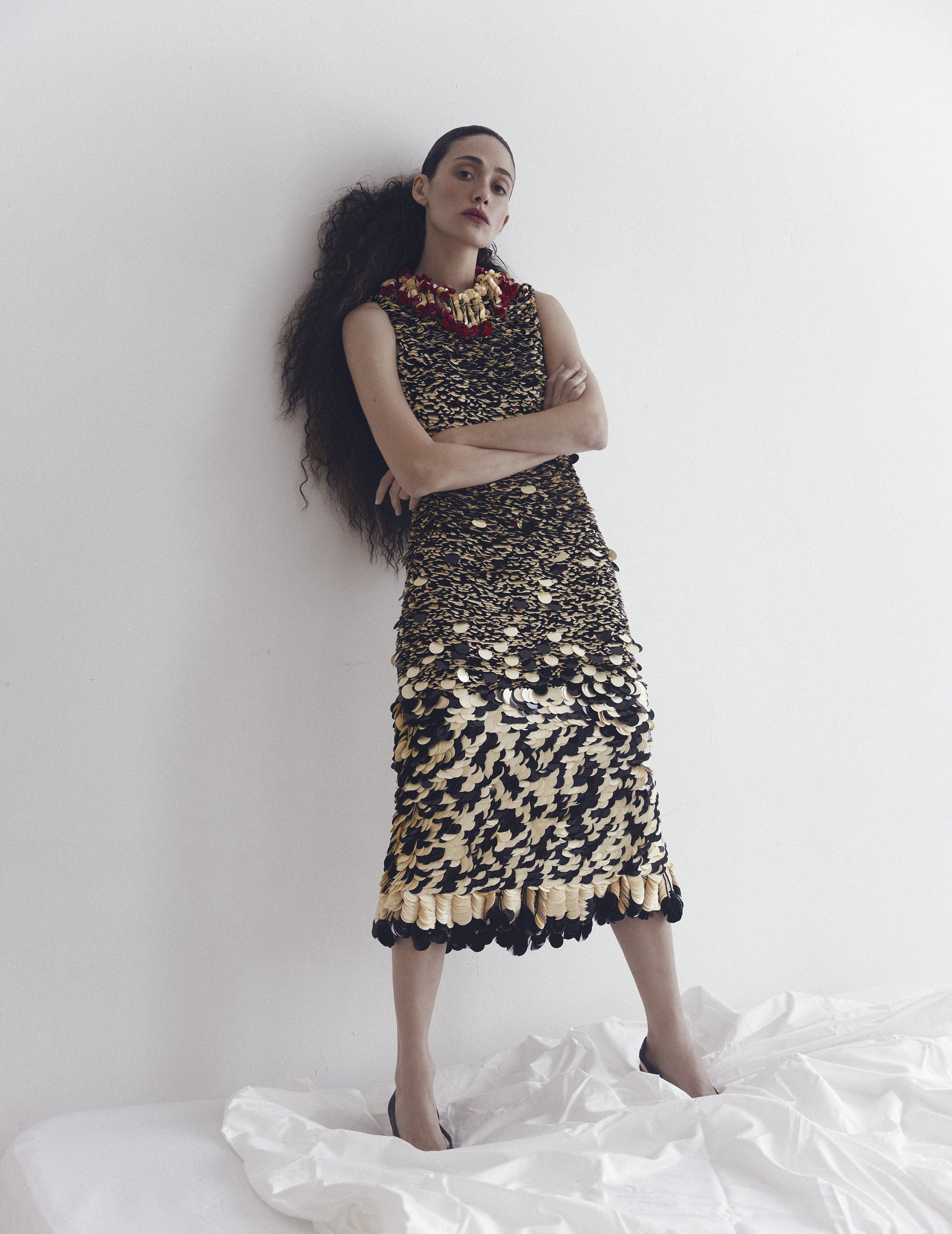
full look CHANEL
You started performing at the Metropolitan Opera when you were just seven years old. How much of that early training still shapes your work today?
Yeah, a lot. The rigor. Probably the fear of getting fired if I don’t show up ready. There was certainly a lot of drilling and getting things “perfect” before you would step onto the stage. But there was also a lot of fun and playfulness and mischievousness. We had giggles because we were kids. We would be really loud in the cafeteria with the more adult professional opera singers there, and we would get in trouble. Or we would try to open the elevator doors during a production, you know.
But we also learned to do things for ourselves. We learned how to pin our hair down and put our own wigs on. We learned how to be professional. So I think maybe the idea of the intensity of preparation and the importance of delivering for an audience, while also having a lot of fun and that bonding and a little bit of mischievousness, is probably what I still hold.
You’ve supported Best Friends Animal Society and serve on the board of Gorilla Doctors. Why have animal welfare and conservation become such important causes for you?
I just really love animals. Not that I don’t love people, I love people too, but I’ve rescued a dog and a cat. I visited Rwanda on my honeymoon and went to see the gorillas there.
It’s just a life-changing experience to get to see animals who are so familiar to you. The way that they interact with each other is so familiar. The teenagers were so mischievous. And even the adult male gorillas, like, bossing around the female gorillas. It felt very kind of familiar. It felt very patriarchal.
There was this adult male gorilla who was trying to get this female gorilla to come eat over by him. And she was like, “No, I’m eating over here.” And he’s like, “No, you will eat over here with me.” So you just watch these interactions that are so familiar. And to think that their safety and existence are threatened is heartbreaking. And so it feels important, when these things touch you, to get involved.
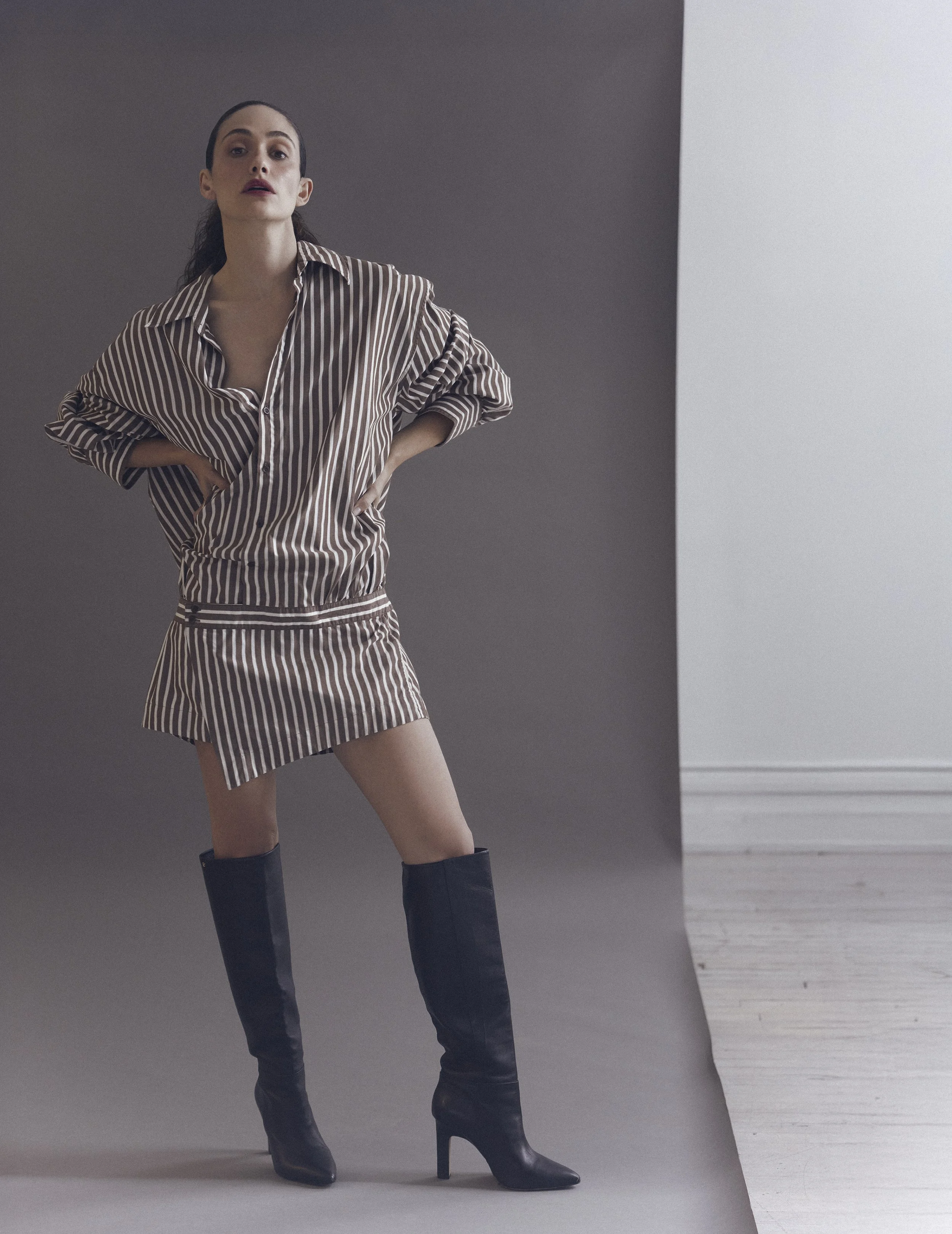
shirt PETER LETROV
boots LARROUDE
After Furious, what kinds of creative challenges are you hoping to tackle next, whether as an actor, director, or producer?
Oh, man. I’m so superstitious. I never like to say them out loud, but I’m getting more comfortable with the idea of manifesting, I guess, and sharing that.
I’m interested in writing. I wrote a short story. I’m interested in doing more of that. I have a number of other TV shows that I’m interested in making. And I’m always interested in doing things that are different. I just did a comedy where I played a manicurist, and so I got to learn the art of doing nails and everything that’s associated with running a nail salon, how to clean it, how to take care of it.
So, really, anything that’s different from what I’ve just done, and working with other people who I think are like-minded and passionate about telling stories.
Outside of acting and performing, what are the little things in life that give you the most joy?
Nature, certainly. I live in New York City, so I spend a lot of time in Central Park. And I love game night. Good food, good cheese.
And then being with my kids, getting to play games with them, to laugh with them, to watch them run in sprinklers, to watch them learn things that they didn’t know yesterday, and getting to watch them become the people that they are.
I was never a gymnast growing up, but my daughter, any bar that she can find, she completely flips on and backflips on, and it’s amazing. I don’t know where that comes from. It’s magic.
But yeah, I think the things in life that ground you. And then seeing other people’s work, that’s so exciting. I just saw this movie, La Bola Negra, and it blew my mind. I cried the whole last hour. To watch other people’s work that’s so exciting and bold.
TEAM CREDITS:
talent EMMY ROSSUM
photographer TYLER PATRICK KENNY at TMG LA
styling ANNA KATSANIS at WALTER SCHUPFER MANAGEMENT
makeup GITA BASS at THE WALL GROUP
hair VERNON FRANCOIS
photography assistant LUCA THALEMANN
studio host ANN LAWLOR and JULIE STAHL
studio BLONDE STUDIOS
editor TIMI LETONJA
interview JANA LETONJA
cover design ARTHUR ROELOFFZEN
