IN CONVERSATION WITH ARIELLA HILL
interview by MARIE GUI
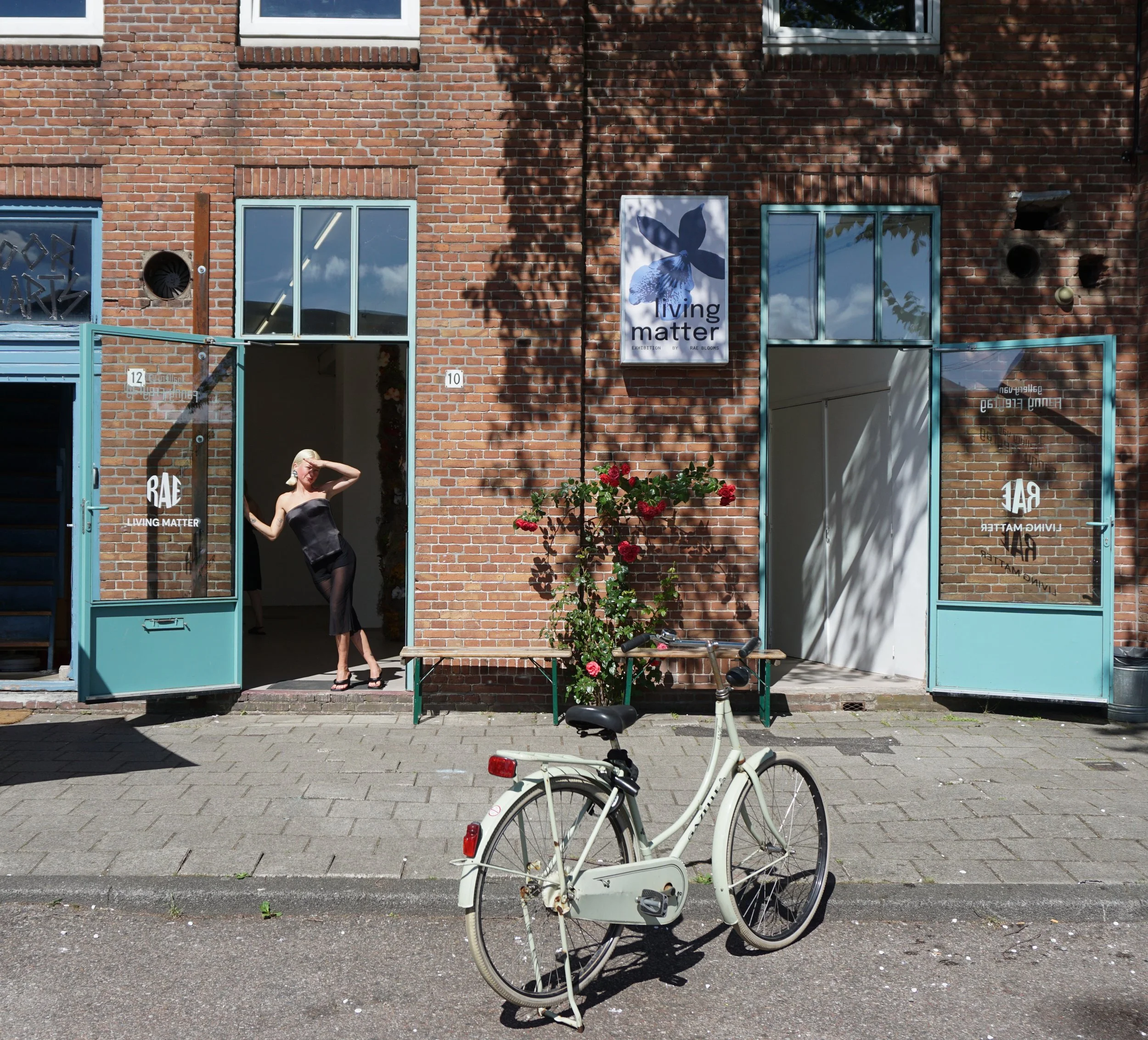
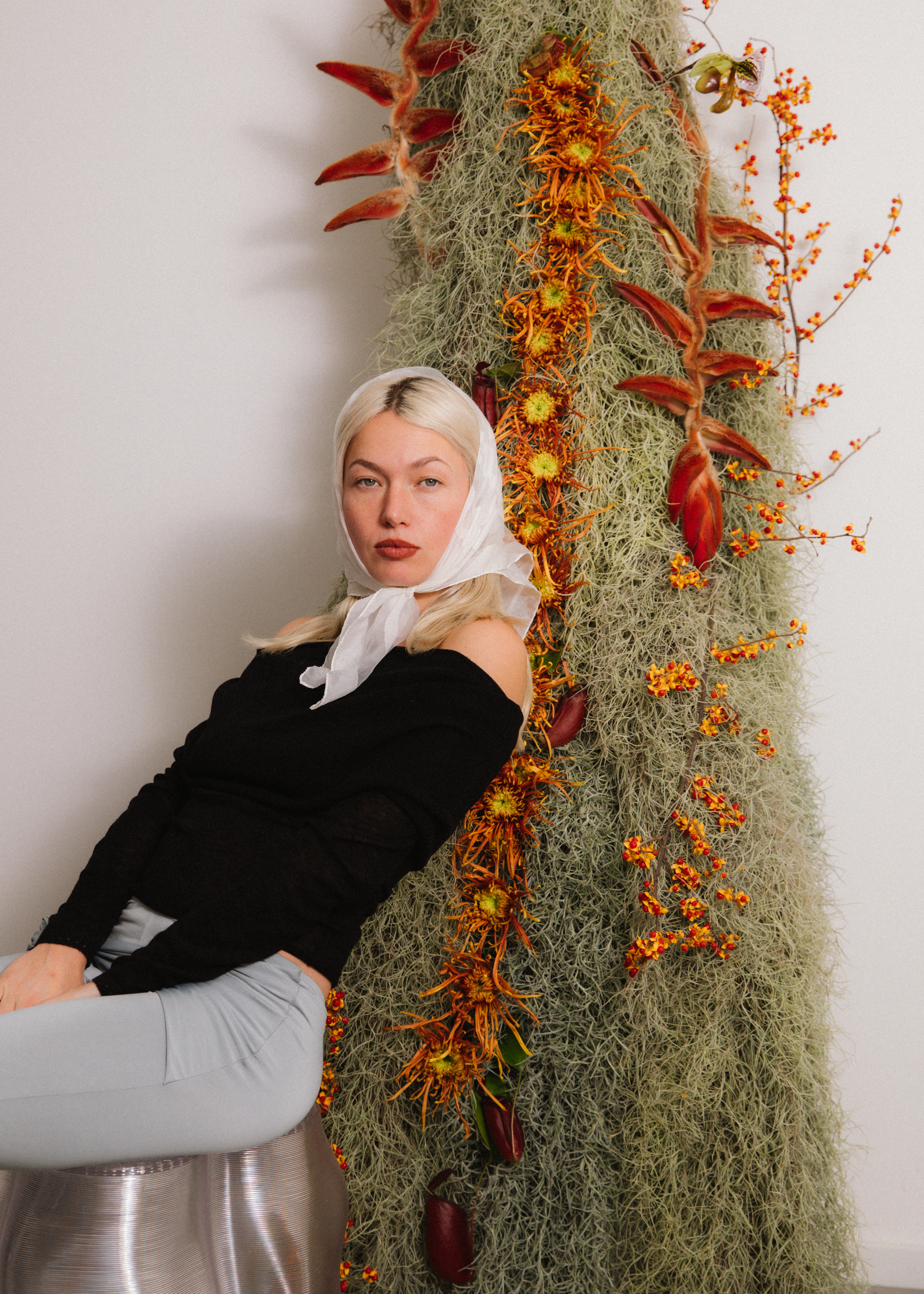
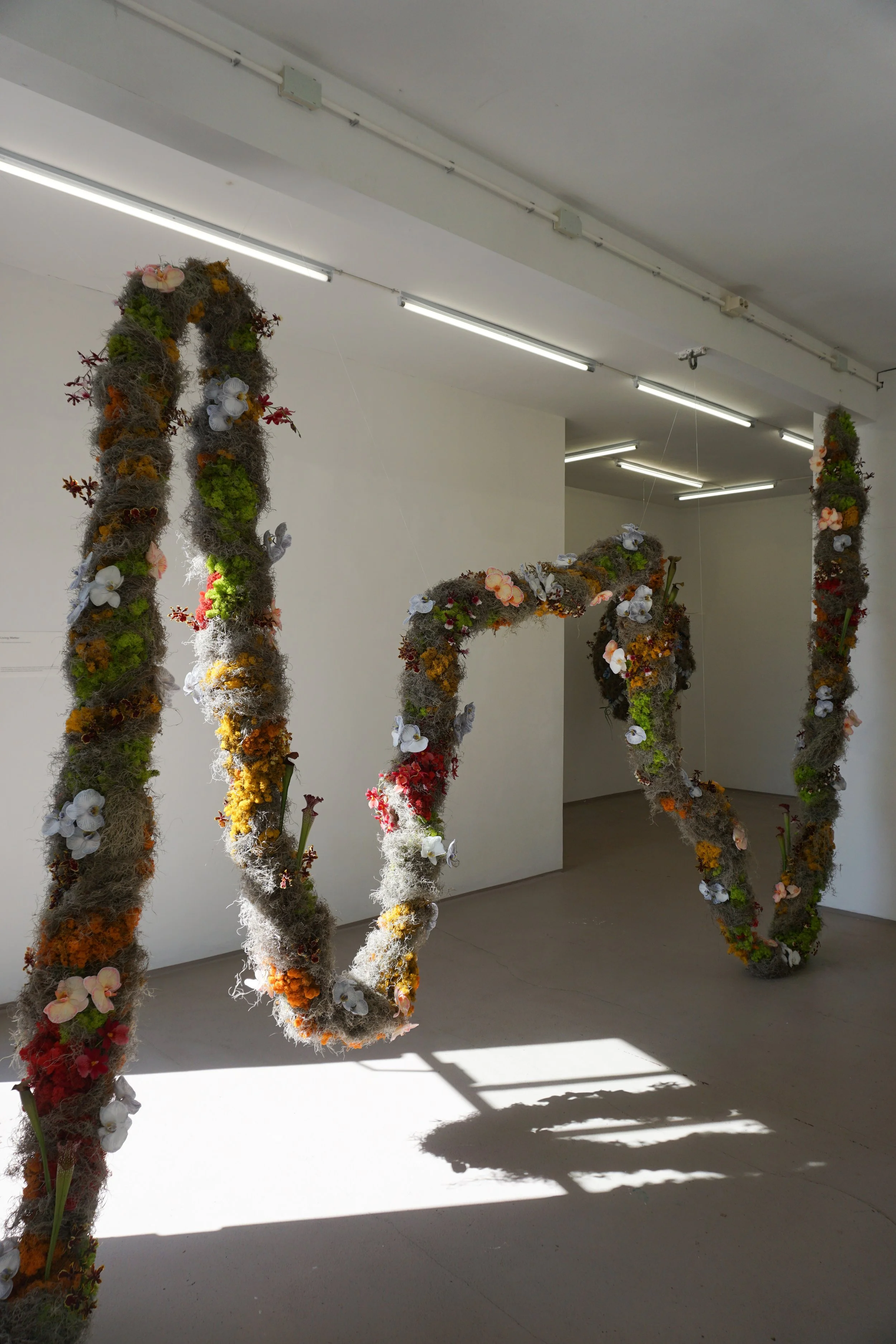
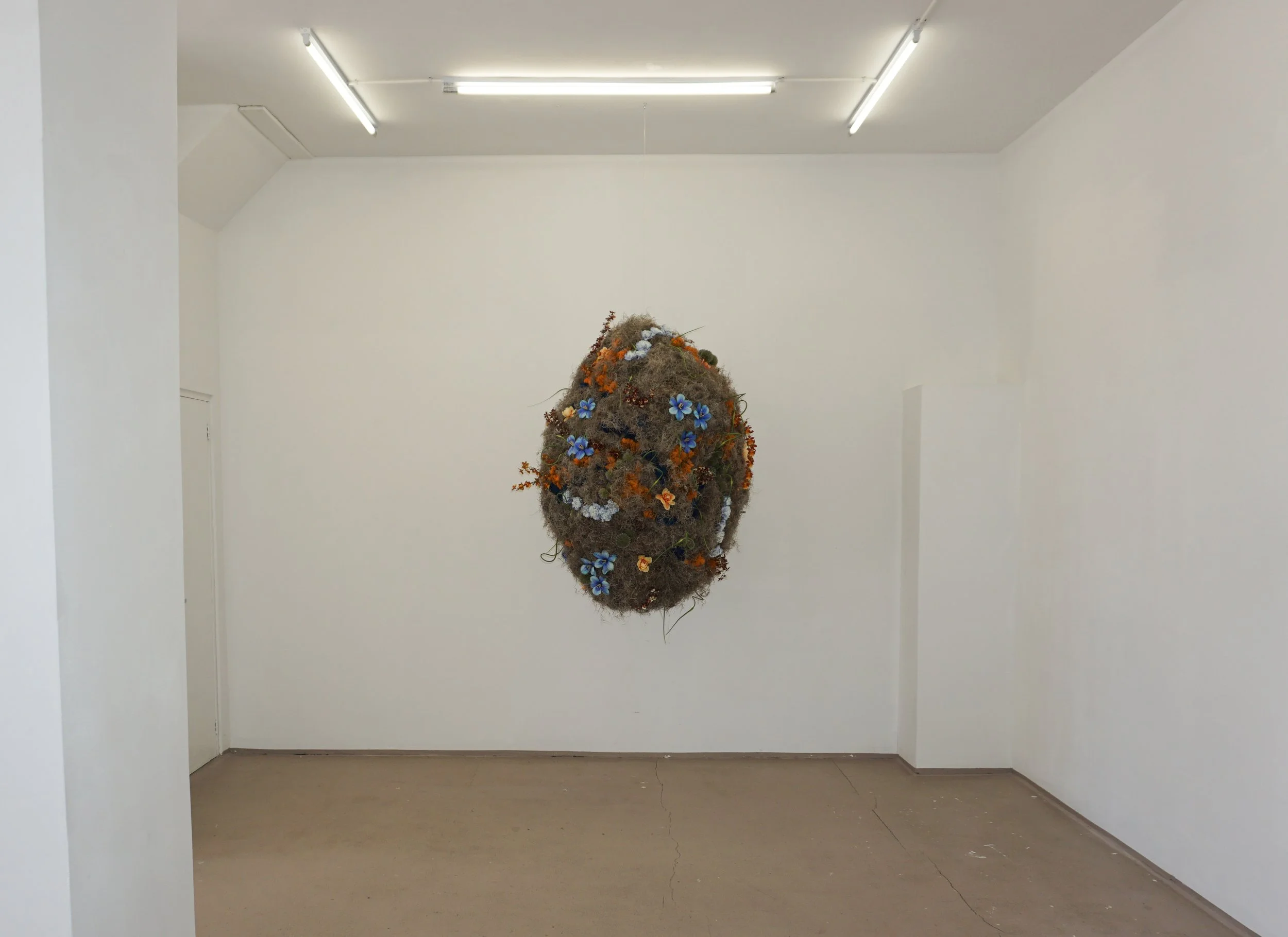
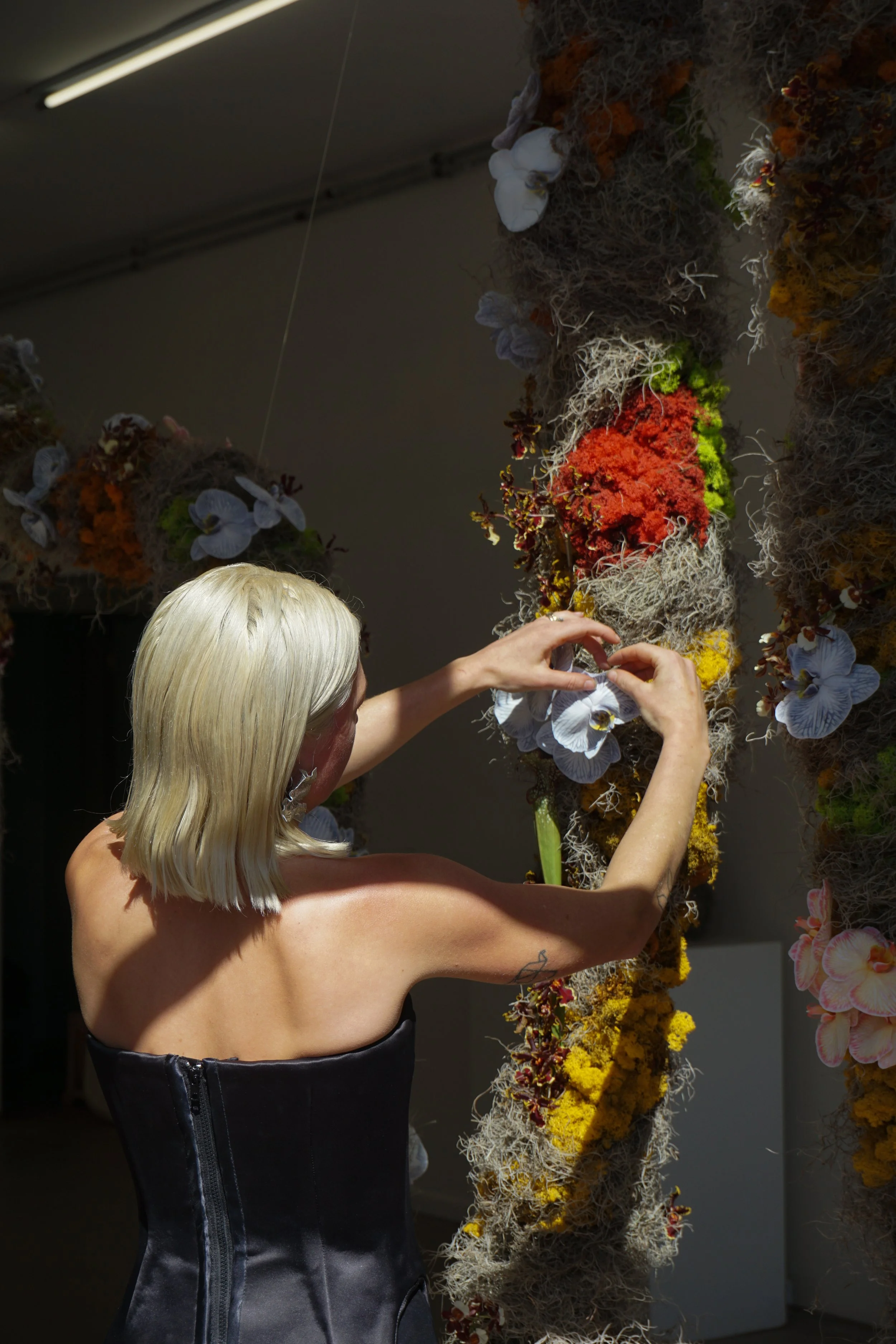
Some people love flowers, and then some people live flowers. Ariella Hill, the founder and artistic force behind the Rae Blooms floral studio, does both. Coming from a family of creatives in Australia, Ariella pushes flowers far beyond mere decoration with her raw, sculptural arrangements and immersive installations that transform what is an inherently ephemeral medium into lasting, emotional impact. Early this June, Ariella and her team at Rae Blooms unveiled Living Matter at Gallery van Fanny Freytag in Amsterdam, inviting visitors into a weird and wonderful world in which flowers aren’t always — or are perhaps more than — what they seem.
all images courtesy of RAE BLOOMS
photo credit: REBECA VALLS
How was Rae Blooms born, and what first drew you towards floristry as an artistic medium?
I think flowers have always been my thing. I was a florist when I was 18, but it was a very different industry then — very boring if I’m being honest. The style was a lot more like basic floristry; what you’d maybe see in your little corner store, which is still beautiful and lovely but just a little bit less creative.
And Rae has sort of been an ongoing project over the last 10 to 12 years of me just developing my own skill and my own expression. Working out what I can do and developing it in a way that feels more ‘me’ and more close to something that I can feel proud of and excited by. I guess now Rae’s been living for five years, which is kind of crazy. It feels like yesterday. It also had a mind of its own in the way that it changed since I first started it. It was also small bouquets in a little bit more of an arty way. And it’s sort of changed and developed into this other thing with larger scale installations, and I’m really grateful for where it’s going.
You move through the world as both Rae Blooms and Ariella Hill. How much do these personas overlap, and where do they differ?
I think they are one of the same, to be completely honest. They’re the same; it is me. I think the only time that it isn’t is sometimes when you have clients who are like, ‘This is what we want exactly.’ And they’ve got some amazing Pinterest board that they’re really excited about, and then they don’t give you the freedom. I think those moments can feel a little bit less personal and a bit more like you’re turning out… just work. Whereas I guess when there’s a bit more freedom, you’re able to really be yourself.
That’s when it feels more true, that’s when it feels better. And I guess that’s when it feels like they are the same thing. But I am not me without flowers and therefore I am not me without Rae. And I guess if I’m not there, Rae’s not there either. Although, the girls that work with me are truly amazing. I’m so grateful for them.
What does it mean to build a floral studio in the Netherlands, where flowers are deeply embedded in the local culture and heritage?
I love this question because when I got here, I felt like I came here for flowers. So I came here for the flower market, I moved here not knowing anyone. And I had this understanding that there would be more of an open idea around it being seen as an art form, not just a trade. And that was a really interesting thing for me to kind of realise; that it was more of a trade. It took a little bit of time, so there was a little shifting moment of like, ‘Okay, can it be seen as art here?’ But I feel like I’ve been very welcomed and accepted and feel so grateful for that, actually. So it’s been quite a seamless process in a way. I’ve been really lucky.
And now what I see is a lot of other florists popping up and doing the same thing — not the same thing, but doing similar work. And I think that that’s really exciting; that the view on floristry is shifting. It’s not just your little flower shop. It can be a lot more than that. I think that narrative is really changing worldwide, and that’s really exciting.
Floristry is so tied to seasonality and nature’s timing. How much does this shape the direction of your work?
I think a lot, drastically. But I think that’s also what makes it such an interesting industry, that it is continuously changing. And so you sort of have to work with your designs and think about it. You’re not like ‘this is everything.’ You can kind of move. And then a flower will come to season and that will excite you, and therefore you can build on that. It just allows this natural movement throughout the year where you can kind of create something fun.
Your clients range from houses like Loewe and Chanel to sports brands such as Nike and Asics. How do you balance your personal creative vision with a client’s visual identity?
Sometimes people are quite a bit more strict, and maybe you won’t see that online. But I do feel quite grateful for where I am now, because people will come for me also for my look and style. I don’t think that was the case at the beginning, but it’s definitely changed a bit now. People are like, ‘Okay, we see what you’re doing and we see that there is a bit of a strong look and feel.’ I hope that’s how it’s coming across anyway.
Yeah, I don't know if I struggle with it too much. I’ve been really lucky and haven’t really done a lot of marketing or trying to get myself out there. It’s all come quite organically. I guess that also plays a part in the people that reach out to you, even if they are these larger brands.
You’ve worked across intimate bouquets to large-scale installations and even workshops. Does your creative process change depending on scale, and if so, how do you adapt?
Yeah, I think so. You’ve got to also think: what’s possible? The bigger the installation gets, it’s like, ‘is that even possible?’ Sometimes you come up with an idea and then you realise that with an engineer mind, there’s no way it’s going to stand. There’s no way it’s going to actually be possible. I made a three metre installation the other day and the logistics of it were a total nightmare. And so it’s like, ‘how does it come to life?’ I think with a bouquet, it’s a little bit easier. You can kind of play around. If it’s big, you really want to know you’ve got it right. You’ll be doing tests, for sure.
Floristry is often associated with beauty, softness and romance, but your work can also feel quite raw and dramatic. What interests you about pushing flowers beyond their traditional associations?
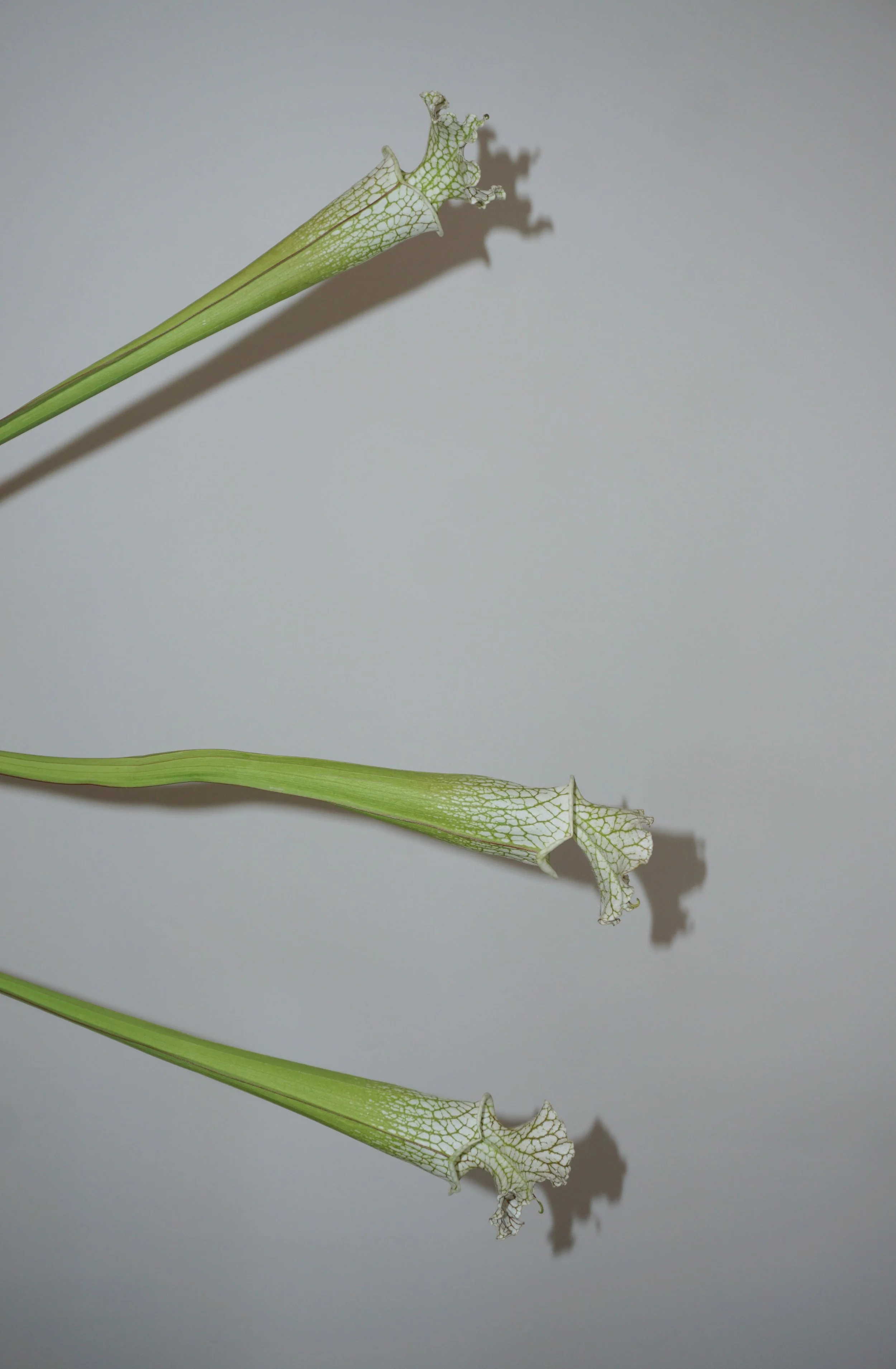
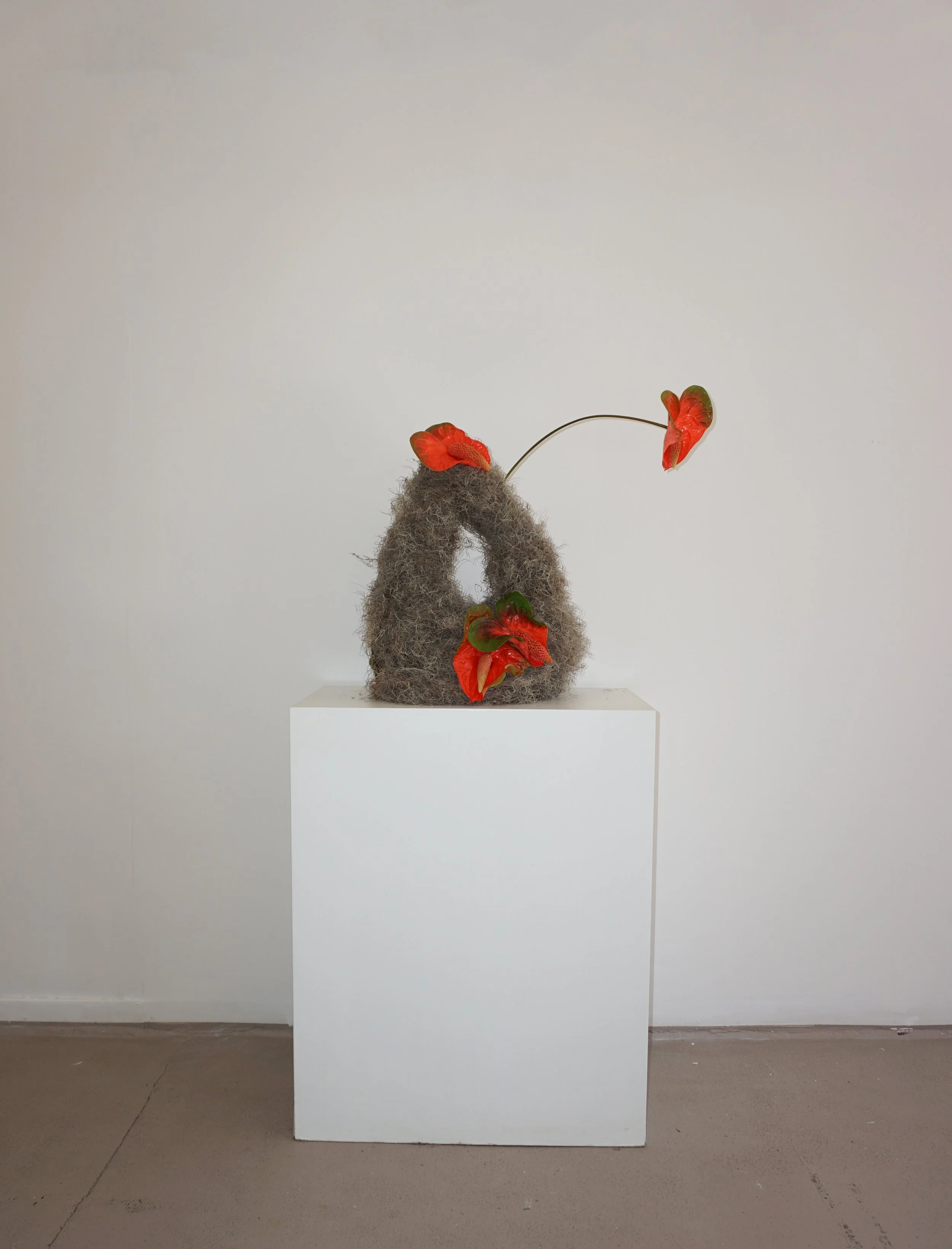
I guess sometimes when I look at flowers I don’t always feel they’re romantic. I think there are so many different varieties and types. They are definitely sexual — they are like the sexiest thing ever and they’re obviously mother nature’s sex organ, but I don’t know if it needs to always be soft and romantic. I kind of like the roughness. I think what I quite like about it is the juxtaposition of it as well; it is sort of this opposite. You can have this beautiful rose amongst all of this sort of chaos, and that’s what sparks the thought. It makes you think about it a little bit further.
I kind of like that it’s in contrast. I mean mother nature is the best artist in the world so I’m just lucky to work with her stuff. There are some flowers in there today that you see that are like, ‘What is that?’ You know? And I think they’re not necessarily beautiful. They can be quite obscure and weird-looking even, or we’ve got some plants in there that eat up bugs to stay alive. I think showing that side can also be really lovely.
What’s the strangest or most unexpected source of inspiration that has informed your work?
Good question. Oh my god, it comes from all kinds of places sometimes. I don’t know if it’s strange but for me it’s quite often a feeling. I notice that often my work changes depending on how I’m doing mentally. I will really notice that if I’m feeling a bit chaotic or a bit crazy, my work becomes a little bit more wild and a little bit more untamed, and when I’m feeling quite on top of things I will be a bit more structured. It’s less of an outside thing. I guess it’s quite internal, that seems to be the repetitive theme.
I mean often it does come from outside; often it’s a painting, often it’s a colour, often it’s again what you were saying with the change of season. Sometimes it can be as simple as, ‘Oh a new flower is in bloom,’ but I feel like those ones are quite straightforward. But I do notice that my own year is not straightforward, and I have bad days and sometimes that creates the best work. Maybe a really shitty day can be the best inspiration, to make something kind of wonderful, hopefully.
Floral arrangements are inherently temporary. Does the impermanence of your medium influence the way you perceive your works, particularly once they reach their finished state?
Definitely. Like, I grew up in a really artistic family; my mum was a musician, my dad is a drawer and a writer, and we went to a styling school so it was like art, art, art, art. And I think that quite often, we were taught to make something and then hang it up and be proud of it, and you have it there for years, and I think there’s something so beautiful about creating something and letting it go. And it really taught me a lot. Especially when I was a teenager, I would hold on to things. I felt that made it right, and that meant it was permanent. And I think watching the flowers die and watching this thing that you put all this energy into pass and fade away and disappear is such a healing process. It makes me feel a little bit less attached to my ego around it. I can just be like, I’m creating it, and feel happy with it. And once it’s done, even if it’s not perfect it’s still perfect, and I can kind of detach myself from it in a way, once it’s finished.
I think once you’ve had that personal experience with it, whatever it is, this is already the thing. And then outside of that what it does is sort of separate, and then you can let it go. I quite like that part about it.
Your work exists between art, fashion, design, and event-making. Do you ever feel pressure to define what Rae Blooms actually is?
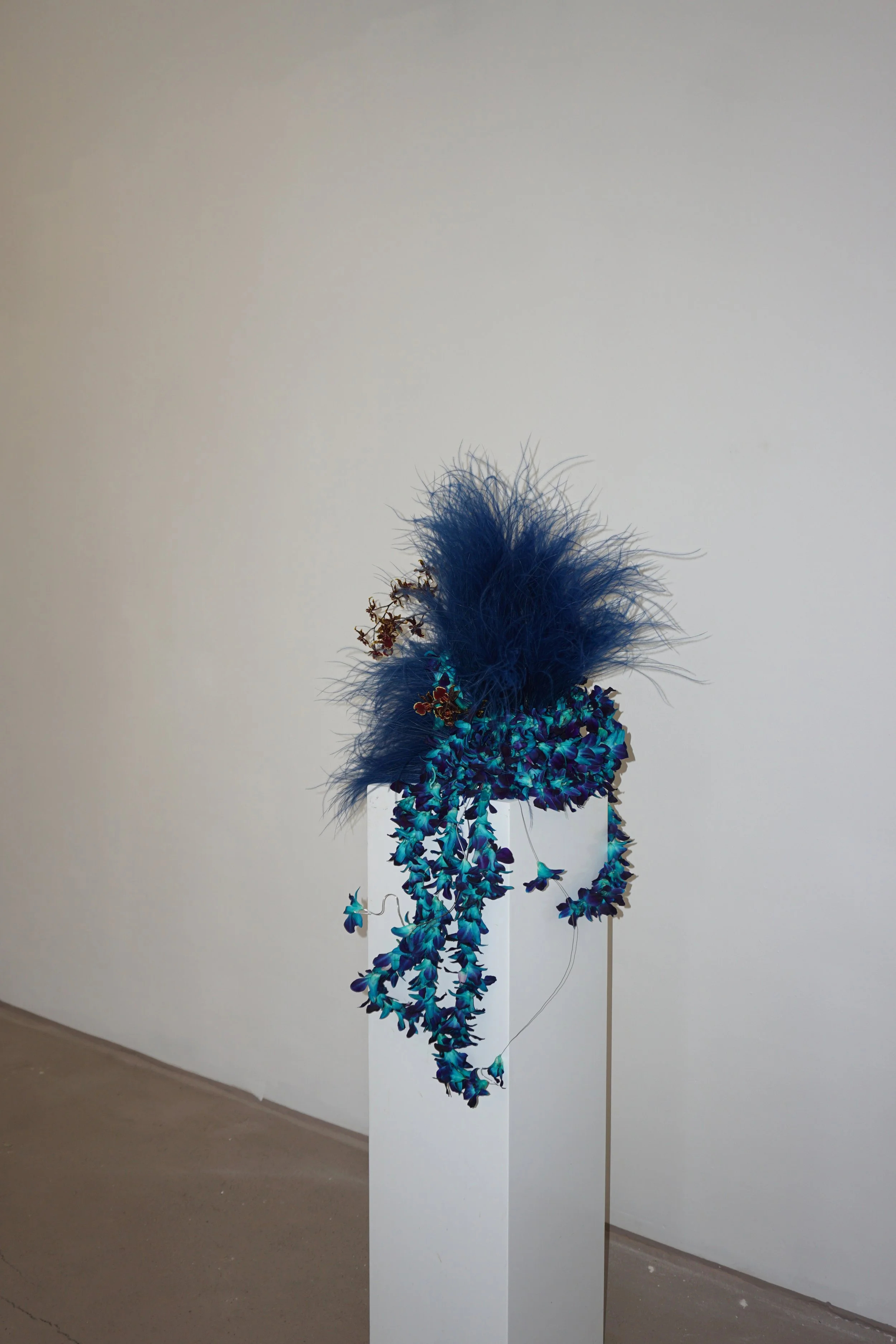
I think at the beginning I did. I was like, ‘It’s this, it’s that.’ I also had this really strong idea of like, ‘Flowers are art,’ you know, and people should know that flowers are art. They don't have to be this ‘thing.’ And now I’m like, ‘No, I mean they’re kind of everything.’
They’re the quick bunch of tulips you grab. They’re on the table when you’re having your family dinner. They’re also there for when your best friends pass away and your families do. They’re such a broad expression of things and they’re just beautiful. And I hope that Rae can be just beautiful, and just sort of a part of all of those moments in different ways. It’s also high fashion, and it’s just a really random mix of things. I hope to keep it that way because I think the differences in the day-to-day are the thing that makes it the most interesting job ever, and I’m so grateful for that.