
IN CONVERSATION WITH VAS SARANGA
interview by JANA LETONJA
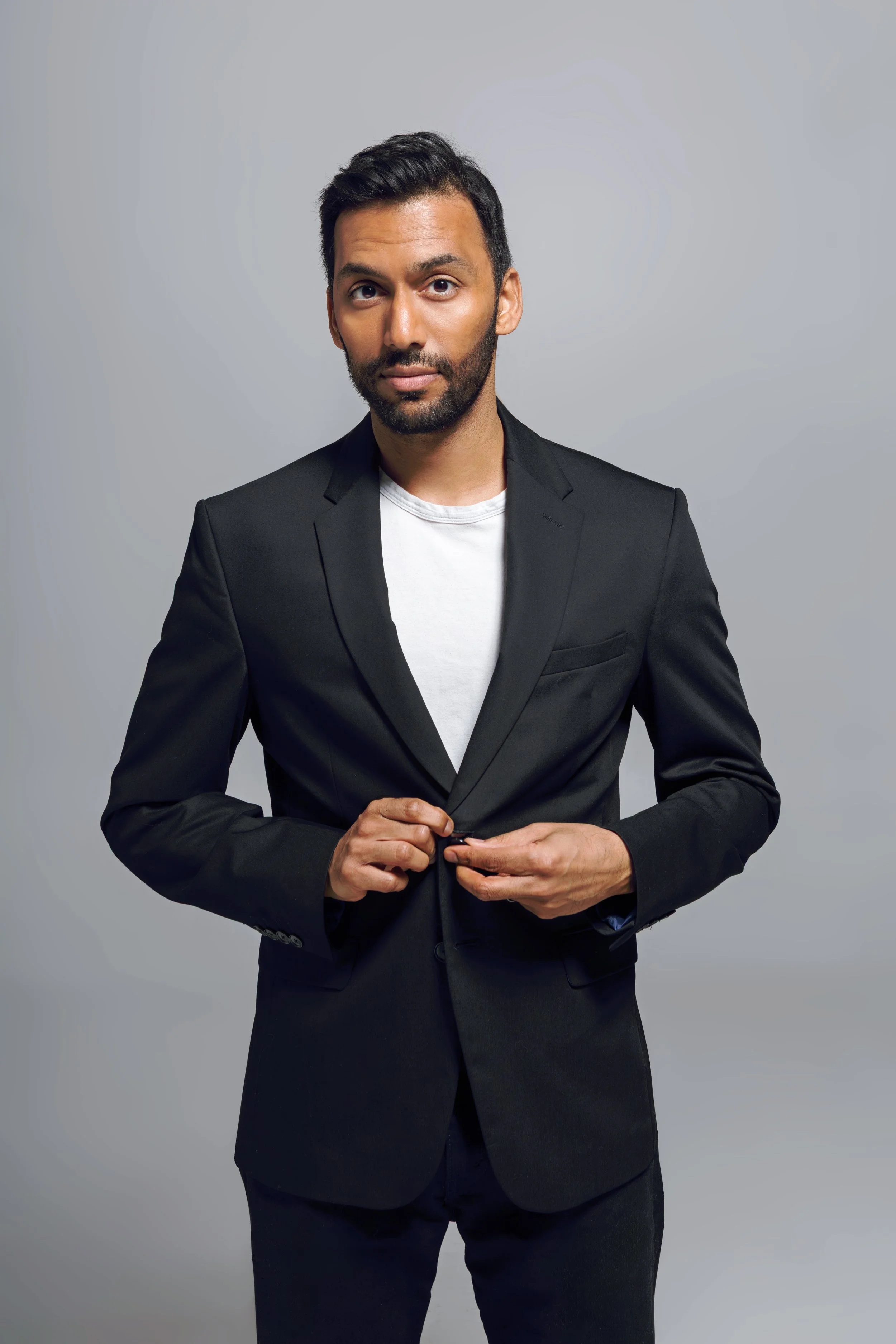
Vas Saranga is stepping into the global spotlight with a standout role in I Will Find You, the latest highly anticipated adaptation from bestselling thriller author Harlan Coben, premiering on 18th June on Netflix. As Agent Dev Chopra, he brings emotional depth and grounded intensity to the fast-paced thriller, continuing a career that has steadily expanded across acclaimed television and film projects, including The Handmaid’s Tale, Orphan Black, Transplant, and Firestarter. Of Tamil heritage, the Canadian actor and filmmaker has built a reputation for layered, character-driven performances while also pursuing directing, writing, and actor coaching through his platform The Online Actor.
What initially drew you to I Will Find You?
What grabbed me right away was the emotional tension underneath the thriller side of it all. Harlan Coben stories obviously have suspense and twists and constantly shifting perspectives, but what really hooked me was how human everything felt underneath that. Everybody in this world is operating from incomplete information while still believing they understand the truth, and that creates a lot of pressure emotionally. I’m always drawn to stories where people reveal unexpected sides of themselves once certainty and predictability start slipping away a little bit. Those are human needs that are hard to let go of.
I also flew through the scripts when I was reading them, which is usually a really good sign for me. I kept wanting to know what was around the next corner.
How would you describe Agent Dev Chopra as a character, and what did you want to bring emotionally and psychologically to the role?
Dev is a seasoned FBI agent on the Fugitive Task Force operating in a really high-pressure situation, so there’s relaxation mixed with tension that I liked a lot. I love opposing qualities. Things that are diametrically opposed. He’s clearly somebody who has spent years navigating emotionally charged situations and trying to stay clear-headed inside chaos.
I didn’t really want him to feel like a stock thriller FBI dude. Even in tense situations, people still joke around a little, observe things, deflect, maybe even reveal parts of themselves unexpectedly. One thing I naturally bring into my work is trying to add a little levity to heavier moments, or sometimes a little weight underneath lighter ones, because that feels very true to life to me. Human beings are rarely operating on one emotional frequency at all times. It’s rarely a throughline of emotion, it’s a vibrating resonance. Basically, a fancy way of saying there are emotional dynamics.
Harlan Coben adaptations are known for tension and twists. How do you maintain grounded performances within such high-stakes storytelling?
For me, it always comes back to thought, feeling, and behaviour. I call those the 3 dimensions of being. The audience might be experiencing huge twists and revelations, but the character is just living in the moment they’re in and trying to make sense of what’s happening around them. They are constantly balancing thoughts, feelings, and exhibiting behaviour. Sometimes they are conscious of 1 and not the other 2. That’s part of the human experience, that balance. I think things can start to seem artificial when actors try to “play the genre" too much instead of just focusing on the human experience underneath it.
What I like about this series is that the importance of the events, what some might call stakes, is huge, but the emotions still feel recognisable. Fear, guilt, fascination, vulnerability, judgment, curiosity, things like that are very realistic and human. If you stay connected to that, any moment can feel real when you’re acting.
What do you think makes thriller series resonate so strongly with global audiences right now?
I think people are constantly trying to figure out what’s true right now. There’s so much information and so many competing perspectives floating around all the time, so thrillers naturally tap into that feeling. The best ones make you try to figure people out over and over again. You think you understand somebody, then suddenly you don’t. They’re a walking contradiction, which is complex.
I really think that’s what Harlan Coben does best. His stories keep shifting your perception underneath you, and I think audiences enjoy being active in that process.
Your performances often feel very layered and internal. How do you approach character-building as an actor?
I’m very interested in what’s happening between the lines, but not by analyzing a script and trying to figure that out beforehand, but more like letting it come together organically in the performance. Find it in the performance is one way to put it. Peripheral thoughts, observations, internal conflict, sensory feelings, impulses, all the little things underneath dialogue that only a human actor can add. There are so many streams of inner monologue, as I call them, that can populate your imagination with character thoughts that you could never come up with before you set foot on set. So much can be revealed when you’re in the experience itself and taking it one moment at a time, in real time. That’s the good stuff. It’s sent by the universe.
I also try not to over-rehearse or lock things in beforehand. I like preparing enough that I can stop trying to control everything once we’re actually shooting, which is mostly memorisation, improvisation, and visualisation work, and then relying heavily on collaboration and intuition. The best moments happen when you’re responding instinctively and discovering things in real time.
How has your background as a filmmaker influenced your work in front of the camera?
So very much. I started making short films in high school, so I became obsessed pretty early on with how characters exist, and stories function visually and emotionally. Editing, music, production design, cinematography, blocking, all those things shaped the way I think about performance.
I think it also made me very aware that acting exists inside a much bigger ecosystem, and that tone is not created in a vacuum. A performance on its own doesn’t set the tone; the rest of the departments have a huge influence on that. Having a filmmaking background definitely helps me think that way, and stops me from trying to fit a performance in a tonal box. That’s helped me immensely with auditioning in particular, which is one of the hardest parts of the job.
As a South Asian actor of Tamil heritage, how important is representation and nuance in the roles you choose?
It’s very important to me that characters feel layered and human. Growing up, there were definitely fewer opportunities for South Asian actors to exist outside of pretty narrow archetypes, so it’s exciting seeing things open up more now.
I love seeing South Asian characters who are funny, flawed, emotional, complicated, messy, sometimes even contradictory. That’s when representation starts feeling more meaningful to me, when characters are allowed to exist with the same level of dimensionality as everyone else. It’s extra special when I get to play a character of Tamil descent, which doesn’t happen as often, but carries its own set of nuances that I’m starting to see pop up in more projects.
Have you noticed a shift in opportunities for South Asian actors within global streaming platforms?
Definitely. Streaming has opened the door to a much wider range of stories reaching global audiences, and I think that’s created more opportunities for South Asian actors to exist inside genres where we historically weren’t centred as much.
There’s still a long way to go, but I do think we’re moving toward more layered screen stories overall. You’re seeing South Asian actors show up in thrillers, sci-fi, action series, prestige dramas, RomComs, all kinds of spaces now, which is exciting.
What role has independent filmmaking played in shaping your artistic voice?
Honestly, a huge one. Independent filmmaking is where I learned how much creativity can come from limitations. When you’re making things independently, especially early on, everybody’s wearing multiple hats and solving problems in real time. There’s something very alive about that process.
It also taught me not to chase perfection. Sometimes energy, spontaneity, and exploration matter more than polish. A lot of my instincts creatively came from those environments. I’ve spent years developing and honing my intuition, and independent film is a great training ground for that.
You also coach actors through The Online Actor. How does teaching influence your own craft?
Coaching actors keeps me very curious. It helps me articulate thoughts that might otherwise stay subconscious. Working with actors from different backgrounds and different creative processes also reminds me there’s no single formula for great work. That’s why I focus so much of my coaching on developing intuition.
I think coaching has also made me more observant as an actor too. You start paying closer attention to authenticity, idiosyncratic human behaviour, emotional resonance, and all those little human details that make performances feel alive.
How do you balance acting, directing, writing, and coaching without losing creative focus?
To me, they all feel connected. They’re just different ways of exploring human behaviour on screen. Writing sharpens my understanding of dialogue and verbal communication. Directing sharpens rhythm and visual communication. Coaching sharpens observation and expression, and overall just inspires me the most. Acting sort of pulls everything together emotionally.
As long as I stay creatively curious, they tend to feed each other instead of competing with one another.
What kinds of stories are you hoping to tell more of in the future?
I’m always drawn to stories with layered people and contradictions. Characters who are difficult to fully categorise. I love projects that can balance tension, vulnerability, humour, and psychological complexity without losing focus on the human experience.
I’m also very interested in stories about perspective and perception, how different people can experience the exact same situation in completely different ways depending on their lens. That’s another term I like to use, lens. It’s so visual.
What excites you most about this next phase of your career?
Just continuing to evolve creatively and getting to collaborate with interesting people. Exploring different genres, telling bigger and smaller stories, discovering new things through the work itself. That’s the exciting part for me. The exploration and discovery. That’s what I think it’s all about.
I still feel very connected to the version of myself that fell in love with movies as a kid. That curiosity is still there. If anything, it’s probably stronger now than it used to be.
TEAM CREDITS:
photography VIPOOSITHA GNANENTHRA
