interview by DEBORAH DRENOFCI
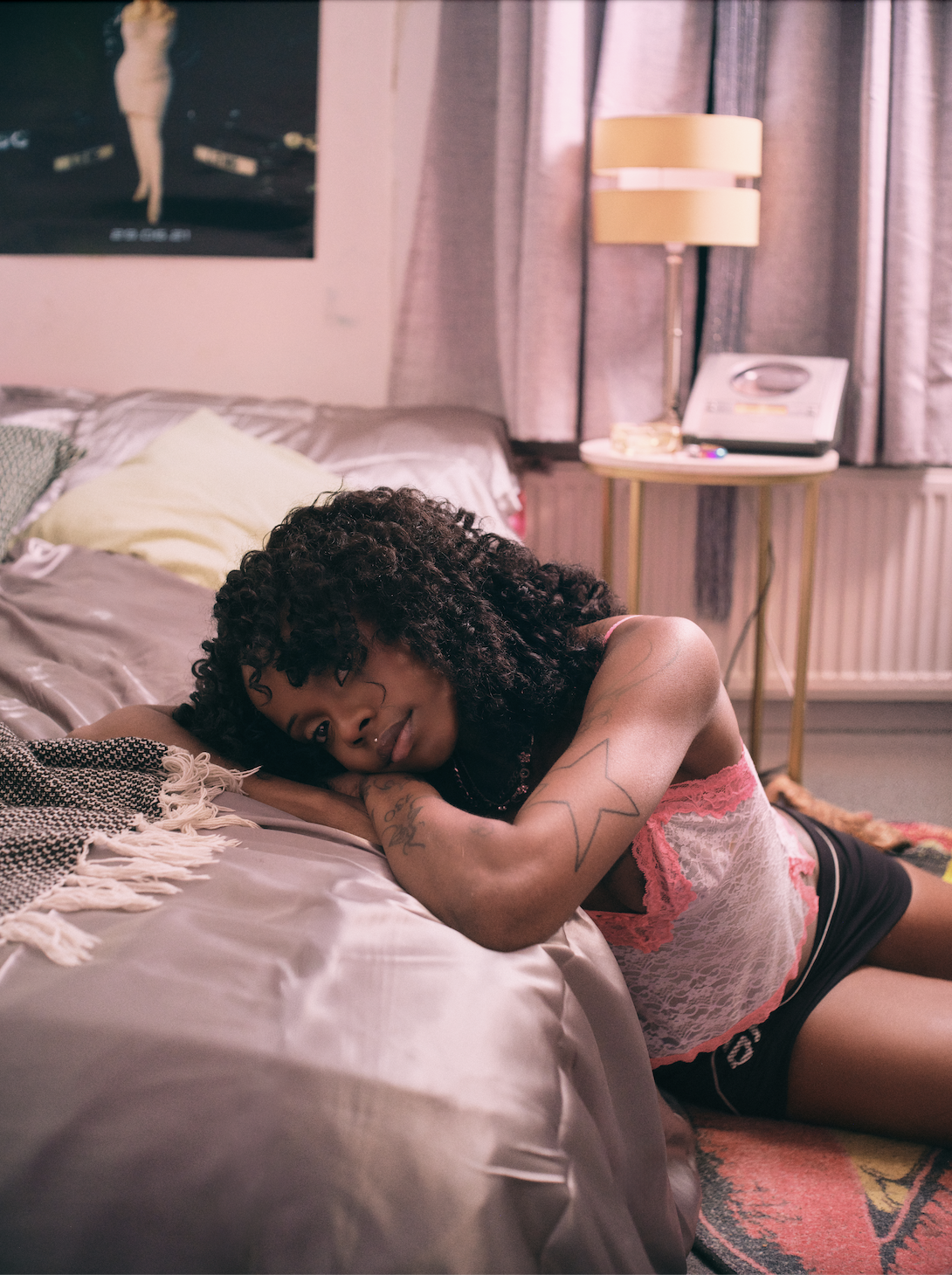
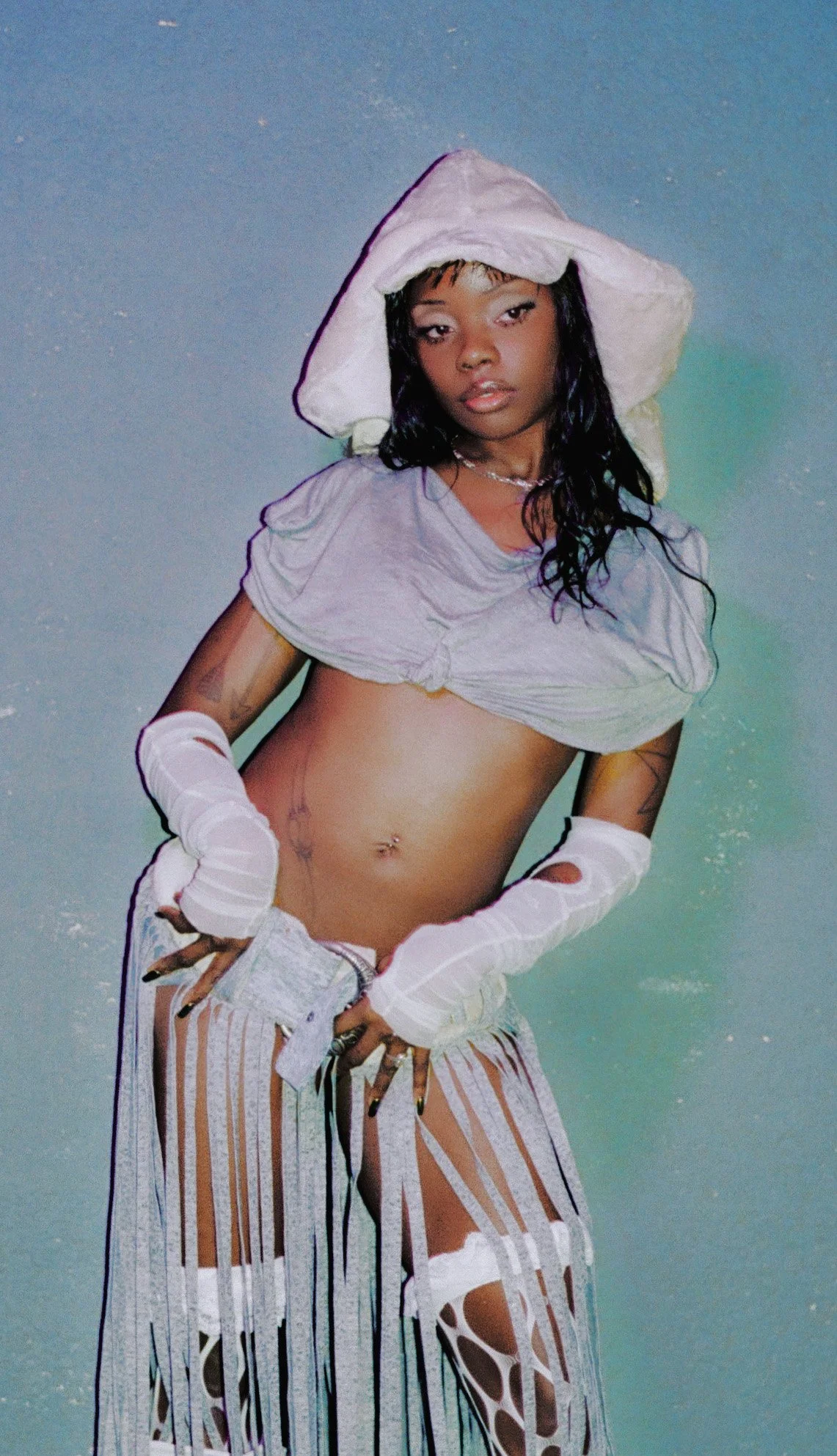
Toronto artist Kristen Azan, known professionally as BAMBII, is the type of person you can talk to for hours. A master of mixing genres - she finds inspiration in her Caribbean heritage and in the curiosity to keep evolving. In 2013, she created her own rave, JERK, with the intention of making everyone feel free, safe and welcome. Her debut EP, Infinity Club, won Electronic Album of the Year at the 2024 Juno Awards, and from Infinity Club to Infinity Club II, she has only grown as an artist. She continues to root her work in impact and stays true to her craft. With diva energy, sparkles of warmth and a bold voice, BAMBII is exactly who the dance floor needs right now.
photography by YONGSEOK HAM
You’ve said the music your mom played was your first influence. Beyond the music, what did she teach you that you still carry with you?
I was talking about this with her the other day. I feel like my mom is our family’s cultural pivot point. She was the first person to be an artist. When I was really young, she was a playwright. She did a lot of community organising. She’s a real self-starter. She has her own urban planning practice, and she really is such a self-generator. She does things on her own, and I feel like that ethos trickles down to me. I will just do things with what I have, even if there are constraints and it’s not perfect. I will find some kind of harebrained, crazy way to be like, “I’m gonna do my own party. I’m gonna host my own thing. I’m gonna do my own thing, whatever it is.” And I think that audacity comes from my mom. She’s a single mom, a Caribbean woman, and she had a lot of audacity, in the best way.
That’s such a good thing to pass on to your children. Who else around you growing up pushed you towards your creative self?
I went to an arts high school, but I honestly have to give a lot of credit to my mom. When I was young, I was in the theater space a lot, and she’d bring me to some places that were a bit inappropriate, a lot of strange performance art. People were naked on stage, and I’m seven years old. My mom was very much in her social justice, art hippie era, so I was in a lot of different spaces, with a lot of adults. I’m an only child, and she was very much a mom who took me places with her. I think that set the groundwork for me to be around people who were, I don’t want to say marginalized, I don’t think that’s the word, but living on the fringes. I wasn’t around doctors and lawyers. I spent a lot of time around artists when I was really young, so that became my normal.
Was there a moment, maybe as a teenager, when you started to rebel or go your own way? What were you pushing against?
It’s funny, because when I first went to my art school, I really loved it. It felt like such a good groove. But later, I got really disillusioned with high school, because it was a white, white high school posing as very liberal. There were probably only about 40 Black kids in a school of thousands of kids. So I think it pushed me to complexify my idea of what being alternative meant, and how it felt to be one of only a few Black kids in the school. It created this larger disillusion.
I’m kind of a late bloomer. I don’t think I knew what I liked until a bit later. I was insecure with my preferences and my tastes until I was a little older. I always felt like doing music was for other people, even DJing was for other people. You know when you feel shy to say what you like? You don’t feel cool enough to have the preferences you do. And people are also so gatekeepy and pretentious. So it took me a while to be like, “Oh, I actually have something to say about this.” And sometimes even your own friends, who love you so much, have a preconceived idea of what you’re capable of, or what you like or don’t like, and those friendships keep you locked in a certain character study. It took me a while to be like, actually, I’m doing this on my own, whether or not people believe I should be doing it.
That’s a good journey to go through. Some people are so sure and directional. Others not so much.
Directional, exactly. I didn’t feel that.
You created JERK so that people could feel safe and celebrated. More than ten years later, what has it taught you?
It taught me good and bad things. So many things have changed in the party space. People are chaotic. They’re insane. But it’s taught me good things. I grew up with JERK in a lot of ways, and it’s taught me that people really need spaces. Third spaces are shrinking, and people are isolated and alone. I think we underestimate how much music and nightlife can really tether people. In what we’re experiencing, where people are struggling for basic needs and struggling for community, it can really be such an anchor and a support system.
It’s also taught me that it needs to be protected, because a lot of really toxic politics can bleed into nightlife. People fight a lot. Luckily, that’s never happened at JERK, but I feel like people on can be so carceral with each other. It’s taught me that no space is completely idealized, and I still need to pay attention to how I’m doing it and who’s around me. Things can change so quickly. But I’ve been really lucky with it. It stayed really pure and true to itself.
And it’s taught me that it takes people. A lot of people who throw parties or make music think it’s just them. But JERK is only good because of the people. It’s not because of me. I’m glad I do the planning and a lot of the work, but if people didn’t come and give me the energy, it wouldn’t work. It feels like it belongs to me and everybody else. It wouldn’t be good without them. I need them to be there.
You’ve said you found home in the club. What makes a dance floor feel like home to you?
On the dance floor, I’m quite a loud and crazy persona. I just think I’m being myself. Real life is so scripted, and it can feel so theatrical. People are having to self-censor and edit themselves. I think the club is where you see a lot of true human expression. You see almost a type of pageantry. The club is performative, but almost in a true way. It’s what people wish they were. When you dress up as a woman, you’re actually being the true hot girl that you are, that society won’t let you be. Think about when you’re getting ready to go out. You’re wearing exactly what you want to wear, but you know there’s no other context you can wear it in. It’s a ritual. So I feel like it’s this type of true human performance, of people turning into the avatar they actually want to be.
Building JERK from scratch took so much enthusiasm and devotion. Production can be much more isolating. Do you now reach for discipline, or is it still that heated enthusiasm that keeps you going? And where does learning piano fit into that?
I’m gonna keep it real. You gotta be okay with not having fun. As much as I’m a fun addict, I wouldn’t say that all the time I’m making music I’m like, “Oh my God, oh my God!” I’m not at my desk again going, “Yes!” What keeps me going is that I deeply love it, but the love has changed. It’s serious. It’s my job. It’s something I want to get the best at. It’s something I’m challenging myself with every day. So I wouldn’t call it fun, the way we define fun. It’s a bit more complex than that. It’s something I revere. It’s deeply personal, and it’s really important to me.
As creatives, we often want to take on so many quests at once and learn so many new things. How do you organise all of that in your head: what to learn, what to make, what to leave for later?
Right now, I think we’re in a time where artists feel like they have to be so good at everything. They feel like they have to be good at social media, they have to be influencers, they have to be models, and do a bunch of other stuff. Obviously, I have to do some of that just because of capitalism, but for me, nothing moves without good music. So I’ve prioritized: how can I focus on my music? Everything comes after. I just have to make sure I’m the best artist I can be.
I don’t agree with what’s being asked of people in the arts. I think it’s hyper-capitalist, and it’s diluting what people should be focusing on. We’ve come to a really weird place where there’s a collapse of context. Influencers are pretending to be artists, and artists are having to be influencers. And the intersection of brands in the space has really complicated things. To simplify it for myself, I just go back to my practice. I need to be playing piano. Nothing else matters. I need to be making beats. That’s all I think about. I just need to make the very best thing I can make, because I can’t compete with what I don’t even know. At this point, it’s so hard to compete with a new picture every week.
And I think it’s really hard for women, and not just in music. Every kind of woman who does every kind of thing, has to be cool and stylish and hot on the internet. Journalists, dancers, anything now. It’s a crazy expectation, and it’s so unfair. So I don’t even know how to win against it, other than trying to be good at what I do, and hopefully that’s the thing that pierces through.
Your sound moves through so many genres, from Caribbean sounds and reggae to jungle, garage and EDM. How do you decide what belongs together?
That’s a good question. I feel like I’m bad at answering it, because I genuinely have no idea. I fully don’t understand it either. I just know that being Caribbean always seeps into my music. I’d definitely define myself as an electronic producer, but my heritage keeps coming through. It always keeps bubbling up, so I’m just leaning into that. I also think we’re in a time where a lot of white male producers are doing that and getting a lot of notoriety, so it feels important for me to own it, because it’s actually where I’m from, and it’s actually where I’ve spent time. I think sometimes people who aren’t Black make more money off Black music than Black people do themselves. So right now, the choices I make are creative, but they’re also political. I’m gonna make this music. I’m allowed. I’m making a statement by combining these genres and centering these kinds of people, whether it’s through features or the producers I work with.
As a woman, how have you experienced the music industry? What still frustrates you about who gets access, money and space?
I think this question gets asked so many times, and I think it’s still that men think women have no technical skills when it comes to music.
Are they intimidated as well?
Yeah, they’re intimidated. Music is so gendered. We accept women as singers, or as arbiters of more intuitive roles, but it’s hard for us to imagine them in technical spaces like engineering and production. It has changed a lot, even if we just look at the last five years. But I still think there’s a resistance to accepting women in leadership roles, in roles where they’re leading the idea in the room, whether it’s a session or a space, whatever it is. But I definitely think it’s changing. Where I’m from, in Toronto, there’s still a lot more work to do. When I’m in London, I feel more at home, because I think it’s more normalized on this side of the world.
But I still think there would be a lot more women producers if we were socialized a bit differently, because where it starts is hesitation. Men are raised to feel like they can do anything, and that music production sort of belongs to them. So many boys are making beats at 14. Not a lot of girls are making beats at 14, because no one is even presenting that option to them. They’re not seeing that example. So I think it’s a lot more subliminal. People look at it really literally, like, “Well, no one says they can’t do it.” And I’m like, yeah, but what are the examples we’re seeing? It’s just a lot more subliminal.
Tell me about the workshop you had today. Why does it matter to you?
It matters to me because I think my background is really relatable. I’m a late learner. I wasn’t making beats as a teen. I’m highly self-taught, and I still feel so much like a student. I think a lot of people want to make music and feel intimidated. We also think talent is one in a million, a phenomenon, but really, talent is just a combination of exposure and opportunity. There are so many people whose ideas we’re being denied, because they’re not being validated or uplifted with a chance. So it feels good to give a workshop from my perspective, because I feel more like a regular person. I don’t feel like I’m some master class speaking in a really inaccessible way. I feel like one of the people I’m teaching, if that makes sense.
That’s what makes you a great teacher, no?
Yeah, I think so. Being able to just meet people where they are.
How does ADE resonate with you? And what differences do you notice between club culture in Amsterdam and in Toronto?
I’m just gonna say: the fact that ADE exists, and we don’t even have anything like it. Toronto has a long way to go in terms of how it facilitates music programming in public space. I think it’s really cool that ADE is this massive takeover of the city, this sort of combination of public space and music space. In a city like Toronto, it’s very fraught when it comes to understanding why music should be intrinsic to cities. We don’t have enough music festivals that happen on the street, and when they do happen, everyone’s arguing the whole time. I think cities function best when art and music are prioritized.
Outside of music, which other art forms fuel you?
I really like music videos. Honestly, I’ve been directing my last few music videos, and I’m in no way a director, but it’s been fun to make music and then come up with the visual world that I think relates to it. So I’d say directing my own music videos has been very cool.
Does it come easy for you, the visualisation? Are you a daydreamer?
Yes, yes. Maladaptive daydreaming, I have a huge issue with that. But that’s hot.
Style is such a big part of club culture. What does fashion mean to you, on stage and on the dance floor?
This is gonna be a boring answer, because I don’t really love fashion. I like street style, women’s fashion. I like what people look like when they dress from their own perspective, without brands. That’s more important to me. Obviously, there are some current brands where I’m like, “Give me that, I need that.” But I’m more into personal style. How people dress from constraints is more interesting to me than someone who has every brand on.
If I may ask, what’s on your vision board for the next year, career-wise but also personally and emotionally?
I would love to not have to be on the internet my whole life. That’s on my vision board: I would love to do something so impactful that it would release me from having to interact with the internet for my entire life. I want my digital footprint to end.