interview by ELIANA CASA
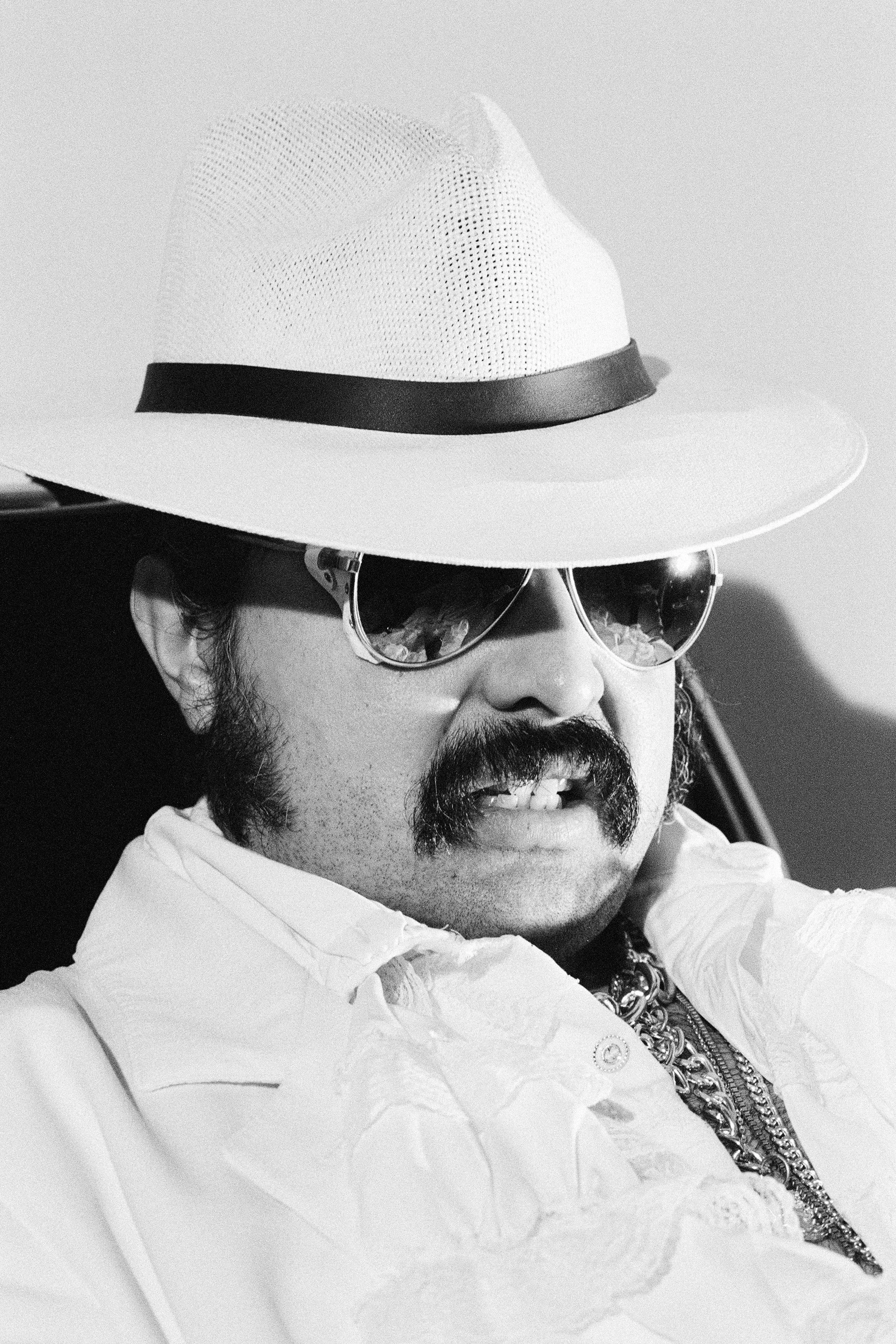
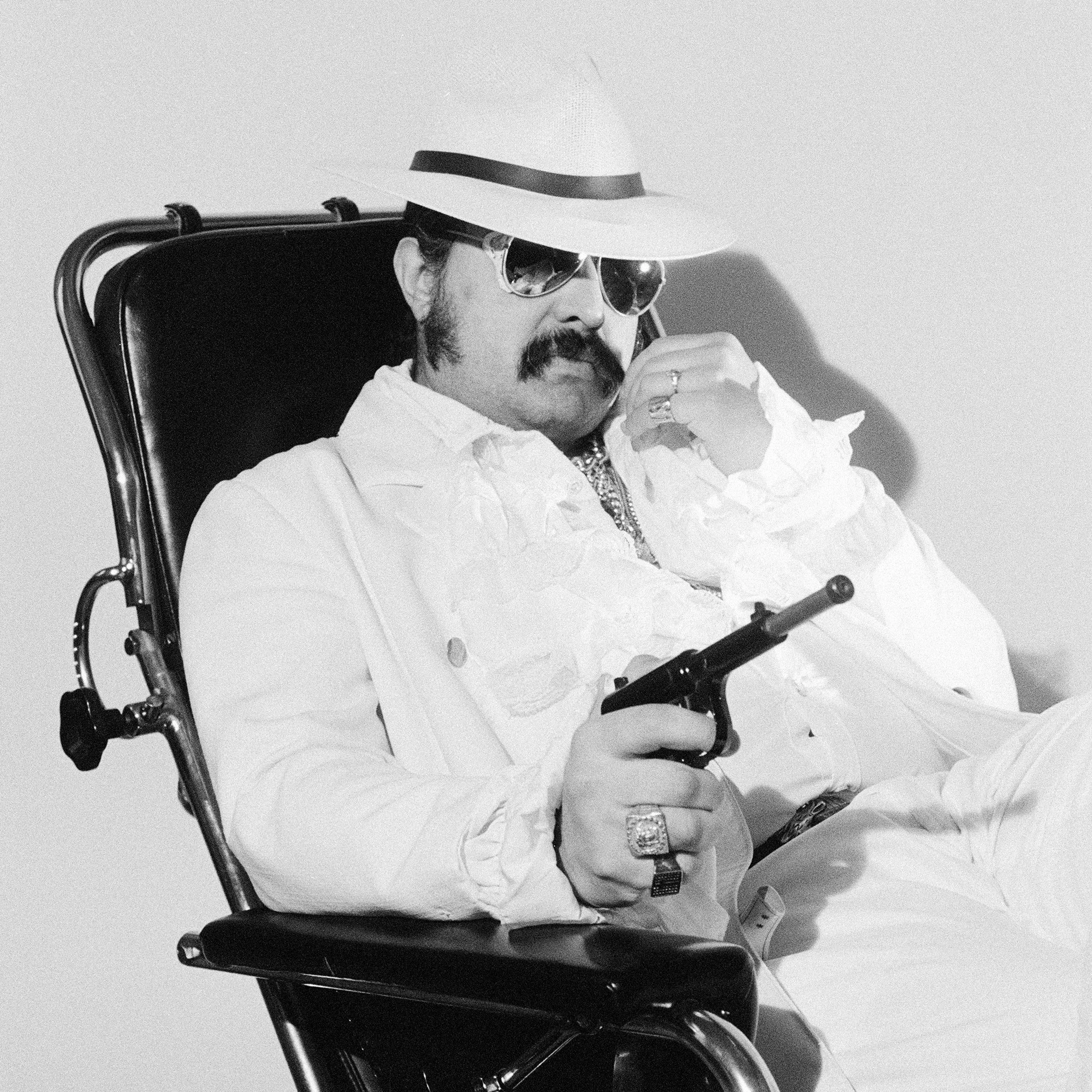
Picture this: you’re in a smoky Parisian bar-tabac, or watching one of those mysterious Italian thriller-horror films, the ‘gialli’. Either way, a song by Bernardino Femminielli is playing as the perfect soundtrack. Mystery, after all, is the true essence of this Montreal-based artist, whose surname would make every Neapolitan, myself included, turn their head. In Neapolitan pop culture, the ‘femminiello’ was, in fact, someone born male who embraced a more feminine social presence. Bernardino, however, tells me backstage at Margiela’s SS27 show, “I chose this name for anonymity reasons, and also because I wanted to push the drama further and confuse people.” And perhaps that is precisely the purpose of his music. In his latest release, ‘Mémoires d'un Auto-Sabotage’, Bernardino Femminielli’s hypersexual lyrics, delivered in both French and Spanish, collide with Italo-disco arrangements, managing to confuse and provoke all at once, without necessarily having to be explained or understood.
Drawing from a particular kind of raw darkness, Bernardino crafted the soundscape for the MM6 SS27 show. Sound, just like fabric, can tell us so much about a collection. But where does a specific sound come from? We sat down with the artist himself and went back to the very beginning.
photography by CAMILLE VIVIER
What first drew you to music?
My desire to express emotions. I think music was always the most immediate way for me to express something that I couldn’t quite explain with words.
What made you choose this name Femminielli?
Why should we keep living with the name we were given when life offers you other ways to disappear, to reinvent yourself, even not to exist for a moment? Femminielli became a kind of mask, but also another way of being myself, and connecting with something purely psychological.
You mix classical arrangements with Italian disco. What inspires you to bring these two worlds together? Do you think contradictions are where we truly find ourselves?
I like putting things together that don’t necessarily belong together. It creates a kind of vortex, a state of mind where you’re not entirely comfortable anymore.
Music can already put you into that state, but then lyrics can take you somewhere even more psychedelic. I like when something beautiful becomes slightly disturbing, or when something familiar suddenly feels strange.
I think contradictions are very fertile. They allow you to exist in several places at once.
You’ve often been described as an outcast, and now you’re part of a fashion show that stands for all the outcasts and the marginalised out there. How did it feel to design the sound for the MM6 show, and what was the main inspiration?
I think sometimes it’s about timing. I’ve always wanted to compose for runways somehow, or just compose something for a purpose that isn’t an album or a performance piece. This was my first time composing for a fashion show, so I was excited, ecstatic, nervous, but also serene at the same time. I didn’t really approach it as trying to represent an idea of the outsider. I was more interested in creating something that could exist within the world of MM6 without explaining itself too much. I also love the mystery and anonymity of the brand. There aren’t actually that many fashion brands that I follow, but MM6 has always been my favourite, so it was a nice coincidence to be chosen to do the music.
Alexander gave me carte blanche, which was incredibly important to me and quite uncommon. I tried to follow my instincts and let the music become its own character, and I’m so grateful for this opportunity.
The sound started very minimal and then expanded into an explosion of notes. What were you trying to express through this evolution?
I love contrast, and one of my favourite things is anachronism. I would describe the whole sound as like two temperatures coming from the same discothèque. One is trying to function within society while slowly breaking you from the inside. The other is pure decadence. And at some point, you just want to set yourself on fire.
Funny enough, I was inspired by my memories of Milan. I have a very close relationship with the city and lived there for a while. To me, Milan has always felt a little like a cyberpunk city with decadence hidden behind closed doors.
For the first part, I wanted to create something like an assembly line: repetition, movement, small variations. There was a Neu Deutsche Welle spirit to it, but also something sassy and playful, with little outbursts. I composed much of it through improvisation.
Then the second part became much more intentional, almost like a surprise. A phoenix burning from the ashes of the past. There is something slightly ridiculous about the grandeur of it, and I liked that. I wanted for the sound to be experienced as a mantra around ego and freedom.
Then, the voice starts telling a story by becoming slightly delirious and passionate. It returns to ideas of glory and vanity, but also disillusionment. This idea of success makes all the grandeur collapse into something almost shamefully intimate.
I like to think of the second part as a kind of disco western. There is a honky-tonk piano in there that gives it that feeling.
What was it like to see your sound interact with the clothes, the space, and the audience at the MM6 show?
I was backstage, which was actually perfect for me. I could finally let the music speak for itself without being there to explain it. I was very touched to see people become mesmerised by it, and by everyone working behind the scenes. There was a great vibration in the room that night.
How did your collaboration with Knekelhuis Records begin? And how did it feel to release Mémoires d’un auto-sabotage with the label?
Mark and I have known each other for almost fifteen years. We played shows together here and there over the years, and there was always a very natural and friendly connection. We were both fans of each other’s work. It’s actually funny that it took us so long to make an album together.
When I felt the album was ready, showing it to him felt like the right thing to do. He immediately loved it. His first instinct was excitement and trust in my vision, and for me that’s the most important thing. It felt very natural.
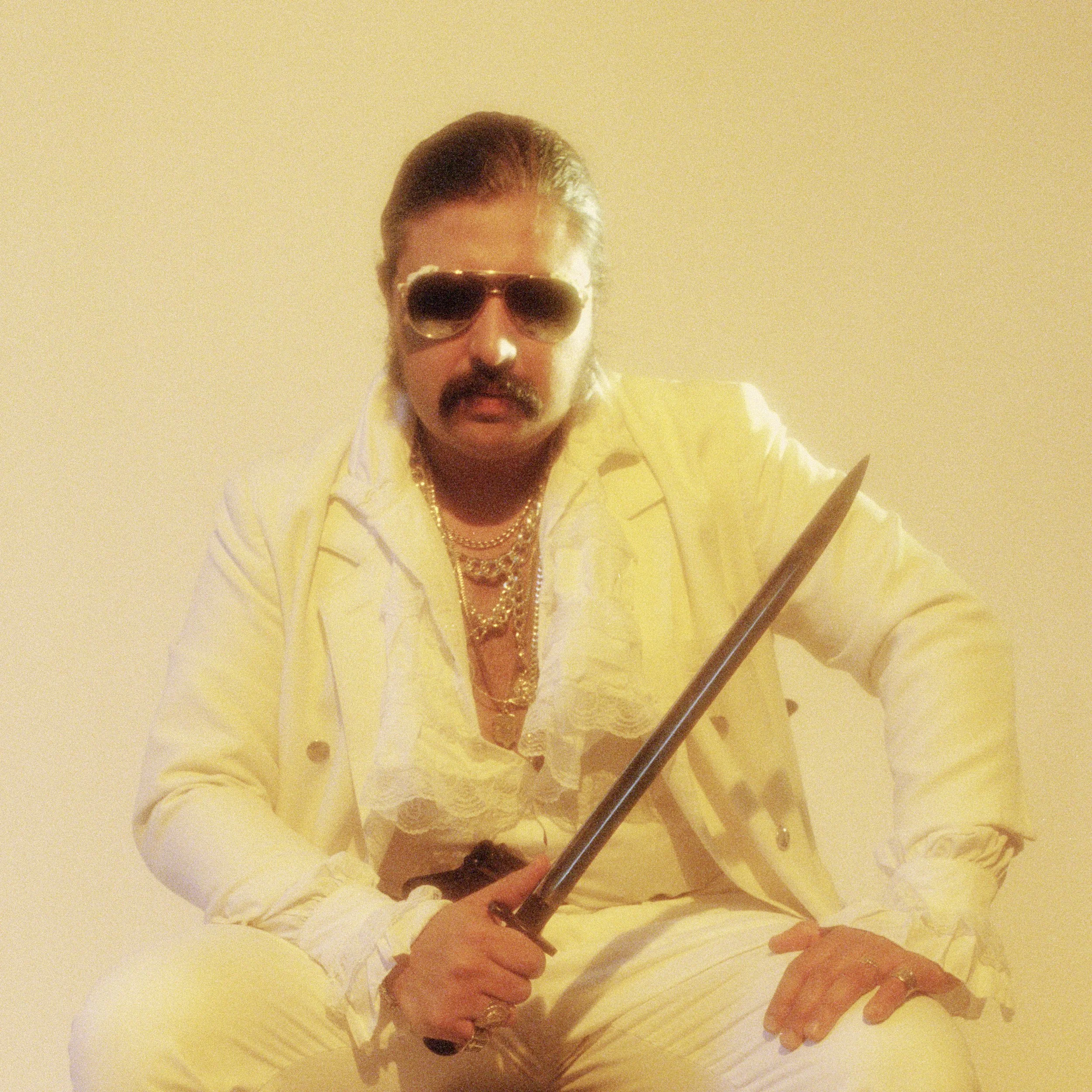
You’re known as a provocateur. What do you hope people reflect on through your poetry and music?
I don’t really want to tell people what to think. I like the idea of creating a little disturbance… making someone laugh, feel uncomfortable, recognise something in themselves, or suddenly question something they thought they understood. Maybe I’m interested in the moment when seduction turns into doubt.
People can be very systematic. I prefer to let things ferment inside of me and provoke the other later, disrupting those certainties. Sometimes there’s a little collateral damage.
Who are your different alter egos on stage, and what does each one allow you to express?
I don’t know if I would call them alter egos. They are more like different traits of the same person. Sometimes I’m the crooner, other times the showman, the idiot, the tragic hero. They allow me to exaggerate different parts of myself without having to explain which one is the “real” me. The stage is a place where I can be contradictory without resolving the contradiction.
Your work explores displacement and identity, rooted partly in your family’s experience of leaving El Salvador during the war. How has this shaped your understanding of loneliness and belonging, both within and outside your work?
I think displacement can become something that stays inside you, even when you are no longer physically displaced. It creates a strange relationship to belonging. You can feel at home somewhere and completely foreign at the same time.
I’m a volcanic, tectonic person, just like you, ahah! I like to think that being in volcanic places connects me with my roots. Maybe that also explains my rather abstract and unpredictable personality. For me, identity has never felt like something fixed. It can be inherited, invented, abandoned, performed and reinvented.
Maybe that’s also why disappearing and becoming someone else has always interested me. It’s not necessarily about escaping who you are, but about discovering how many versions of yourself can exist.
Is there something you can only express through music, rather than poetry or film?
Yes. Emotion without explanation.
Music with lyrics is trickier. It becomes a puzzle. I feel like people sometimes get confused, annoyed or obsessed with my lyrics, in a process loop. I like to say that you need to be available rather than open-minded to really enjoy my work. You have to let it happen to you a little bit. I’m very generous in that sense.
With music, I can leave something unresolved. A sound can contradict the words. A melody can say something completely different from what the singer is saying.
Film can show you something, poetry can name something. On the other hand, music can make you feel something before you even understand what it is. That mystery is probably what keeps me coming back to it.