
interview by TIMOTEJ LETONJA
In Youri, Joes Brauers explores the delicate territory between friendship, identity and freedom. Set in Amsterdam in the 1980s, the film follows the encounter between Jan and Youri, two men whose contrasting personalities lead to an unexpected connection that profoundly changes their lives. Based on Jan Brokken's autobiographical book, the story unfolds against a backdrop of artistic expression, personal struggles and the search for belonging, while reflecting on the courage it takes to live openly and remain true to oneself.
Having started acting at a young age, Brauers has developed a relationship with the profession that goes far beyond the desire to inhabit another character. Today, he sees storytelling as a means of communication, a way to explore personal questions and open conversations that might otherwise remain unspoken. In our conversation, he reflects on the preparation behind Youri, the responsibility of portraying a real person, the transformative power of friendship and the meaning of artistic freedom.
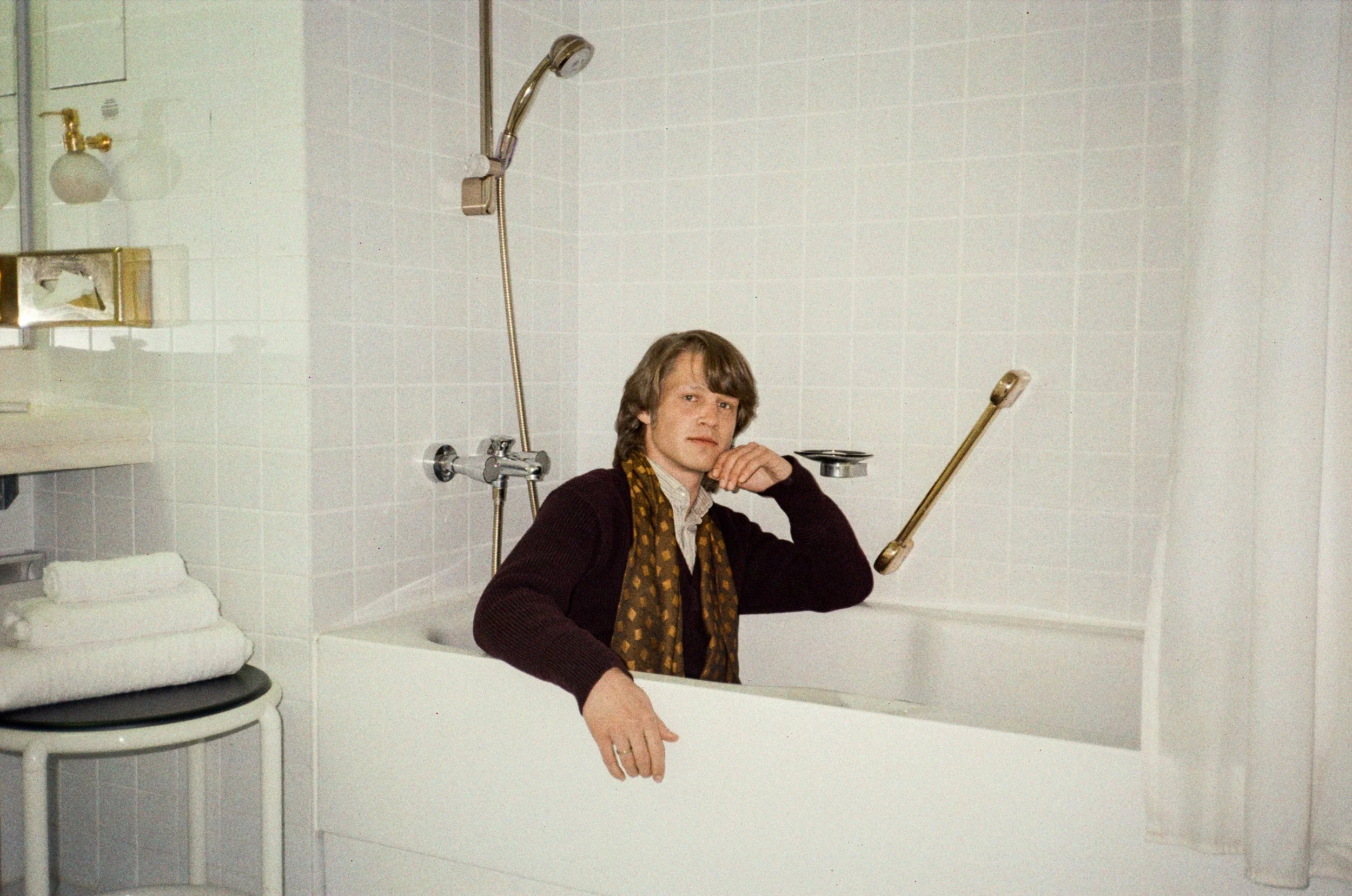
You began acting at a very young age, and your relationship with the profession has evolved over the years. Looking back, what has acting taught you about yourself, and how do you see yourself as an actor today compared to when you first started?
When I first started, it was very intuitive. I saw a film, fell in love with a character and wanted to be him. That was really the reason I started acting. There wasn't much thought behind it, no particular motivation or desire to tell a certain story. I simply wanted to be someone else. I didn't even realise it was a profession.
Over time, I've come to understand that storytelling can bring you closer to yourself. You discover things about who you are, share them with the world and open conversations, even with family members, that might never have happened otherwise. That's what has changed for me. I now see acting as a tool for communication.
At first, I wanted to express myself. Today, I hope to create communication and explore subjects that genuinely interest me.
Your filmography moves between very different worlds, from historical dramas to contemporary stories. What draws you to a project, and what makes a character worth exploring?
I think it's always something timeless that draws me to a character, something I recognise in myself.
For example, when I played a soldier in Do Not Hesitate, I was 20 years old. I had my own questions about masculinity and what happens when you transition from being a boy to becoming a man. Soldiers are forced to grow up very quickly, and there are particular questions about masculinity that arise within the army. Those themes resonated with the questions I was asking myself at that point in my life.
With Youri, the questions were different. They were about being an artist, expressing yourself through music and, above all, friendship. I think I'm always drawn to something timeless that connects with whatever I'm experiencing at a particular moment. With Youri, I was also exploring my own questions about friendship. I find it quite difficult to maintain friendships and take care of them. It requires a lot of effort, but it's worth it.
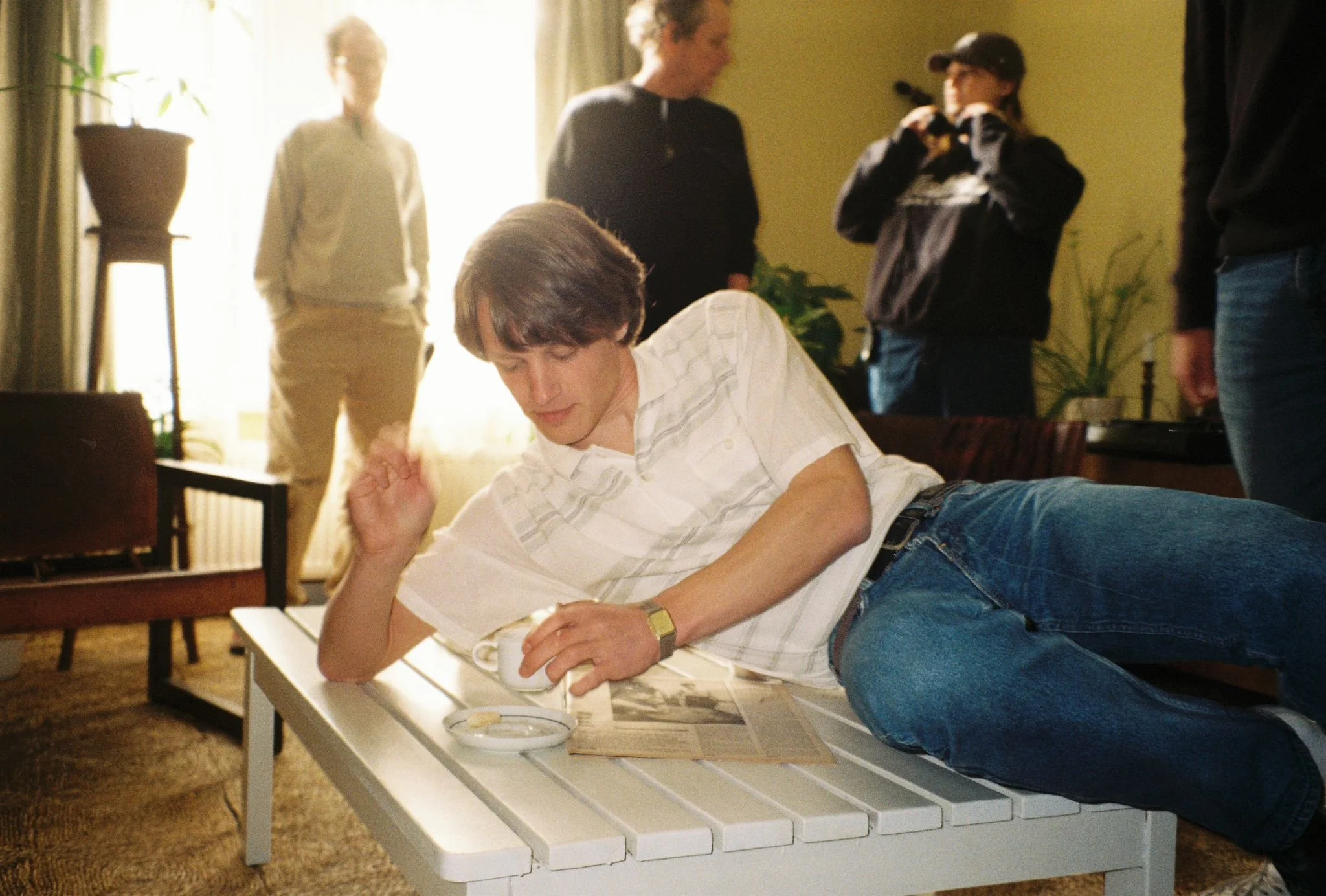
When you're preparing for a role, how do you find the balance between understanding a character's perspective and allowing yourself to be surprised by what you discover during the process?
I think it all starts with your first impressions when you read a script. You begin to form ideas about what the story is about, who this person is and what they're feeling.
But once you start playing the character, you always end up feeling as though you've played yourself once again. During the shoot, you discover the character through your own body, and it can actually be quite difficult to let go of that experience afterwards.
At the beginning, the story feels quite distant. But by the end, the character has usually become part of you. I think every role you play leaves something in your heart. I can still feel deeply moved when I read about events such as the Srebrenica massacre, portrayed in Quo Vadis, Aida? (2020), for example, because those memories have become very personal to me. They're things you genuinely come to care about.
What was the process of preparing for Youri like?
I got the part three years before we started shooting. During that time, I listened to music, read books written by Jan Brokken, and met both him and his wife several times. It was quite extraordinary to meet the person whose life you're portraying.
Also Levan Gelbakhiani (who plays Youri) and I met a couple of times, and I also visited him in New York. I think that was one of the most important parts of my preparation.
We knew we were going to portray this friendship and that we would eventually become very close, but the film was still being financed. So we knew it would happen, but we didn't know exactly when or how. In a way, we had three years to become friends before making the film.
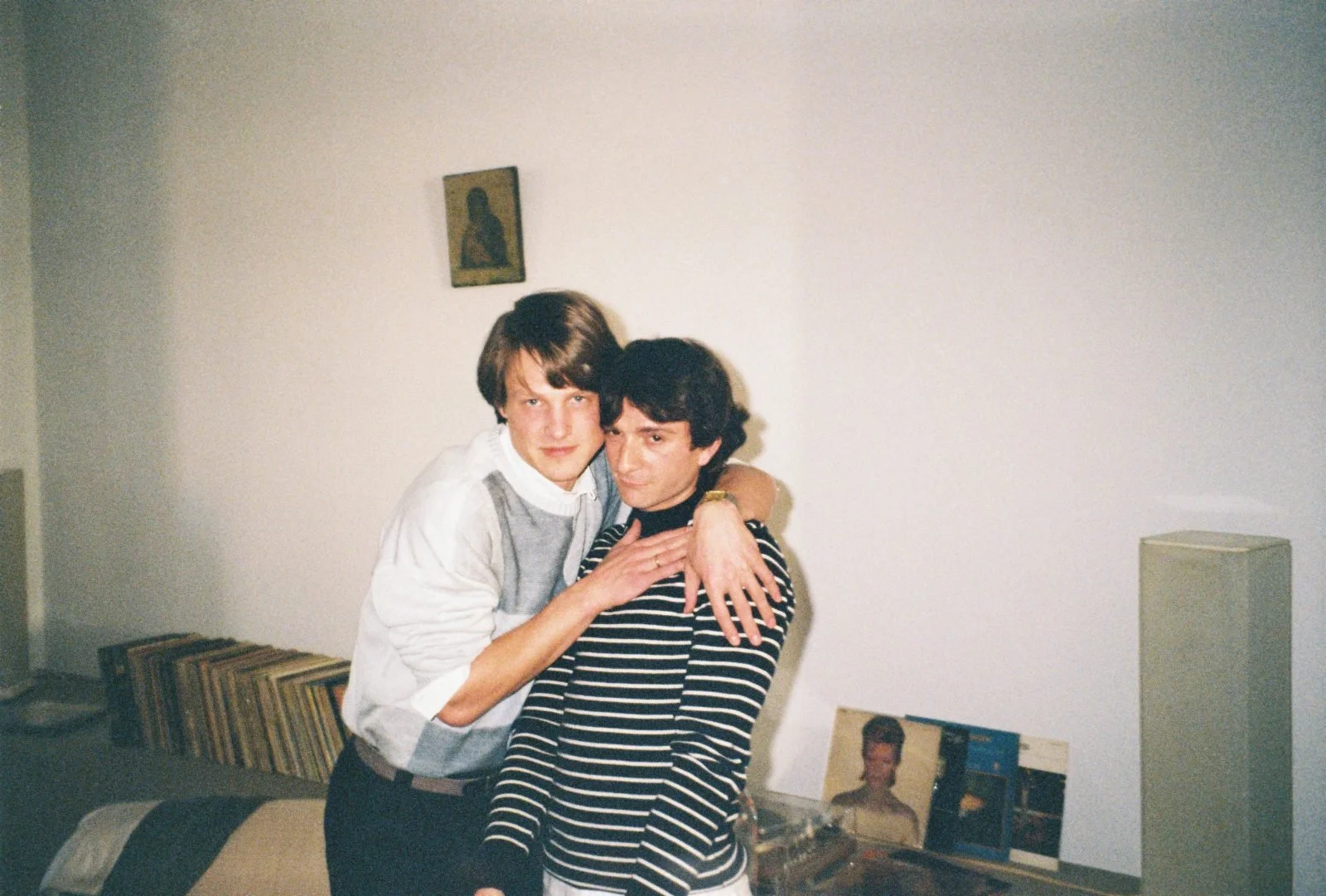
Set in Amsterdam in the 1980s, Youri explores a time when questions of identity, belonging and personal freedom carried particular significance. The film suggests that freedom is not simply about where you live, but also how openly you can exist in the world. How did this idea shape your understanding of Jan and the world he inhabits?
I think Youri himself was the person who inspired me most and changed my understanding of freedom. And I believe that's also what happens to Jan. He realises that he has the ability to confront his own traumas and the relationships he's been struggling with.
He comes to this realisation through Youri, who doesn't have that same freedom because he is an exile. He cannot openly be gay in the Soviet Union.
Before working on this project, I hadn't fully realised what that kind of restriction meant. Meeting Levan, who directed And Then We Danced in Georgia, also made a huge impression on me. The film faced an incredibly hostile reaction there. Cinemas were closed, and people gathered outside to prevent others from seeing it.
I think this experience really emphasised the privilege of being free to be who you are and to tell the stories you want to tell in the place where you live.
Youri's willingness to go so far for his freedom as an artist is incredibly inspiring. He hadn't seen his family since he was 22, and he never saw them again. It was a real sacrifice he made for his art and his freedom.
I think we rarely make sacrifices like that for freedom. I'm certainly not used to it. That's something I realised while making this film.
Jan and Youri have very different personalities, yet their encounter profoundly changes both of their lives. What do you think allows two people who seem so different to recognise something essential in one another?
I think it's honesty. What made their friendship so special was that they were completely honest with each other.
Youri could see a side of Jan that Jan wasn't able to recognise in himself. He challenged him, asking why he was writing about things he didn't really know, and encouraging him to be honest with himself. Why was he not seeing his family for nine years? Was that healthy? Shouldn't he at least try to reconnect with them?
I think that honesty was fundamental to their friendship. There was also Youri's honesty towards his music. You could really feel who he was through what he played.
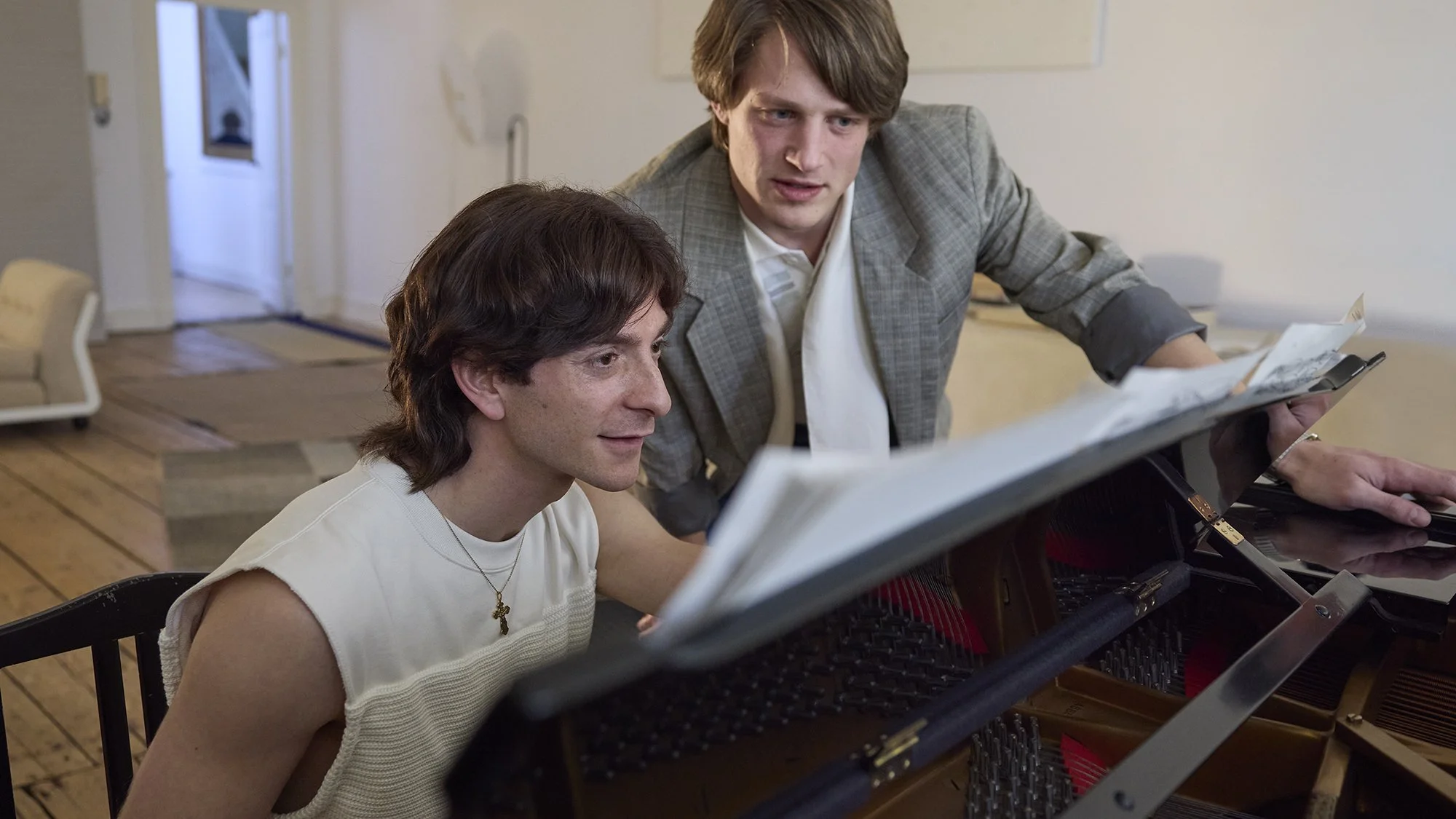
Based on Jan Brokken's autobiographical book, Youri brings a real-life story to the screen, with you portraying Jan himself. What was it like to take on the responsibility of representing someone whose life and experiences are real?
I was quite nervous because I knew I was going to portray someone who actually exists. I wanted to be true to his experience.
But Jan was incredibly generous from the beginning. He trusted me and explained that his books were his own interpretation of his life. He told me I was free to create my own interpretation, to connect with the material and find the things that resonated with me. He didn't want me to impersonate him. He wanted me to connect with the experiences that touched me personally.
He also gave the director a great deal of trust to shape the film and the screenplay. That made the process much easier.
I think people who are portrayed in films are often quite resistant to the process, so his openness was remarkable. It allowed me to understand the person behind the character much more deeply.
He had written extensively about his life, including the trauma surrounding his father and the history of the former Dutch East Indies, as well as his mother and brothers, who had been in Japanese internment camps. Being able to read three books written from his own perspective was an incredible privilege.
Was there a particular moment during filming that you felt especially connected to, or one that has stayed with you long after the experience ended?
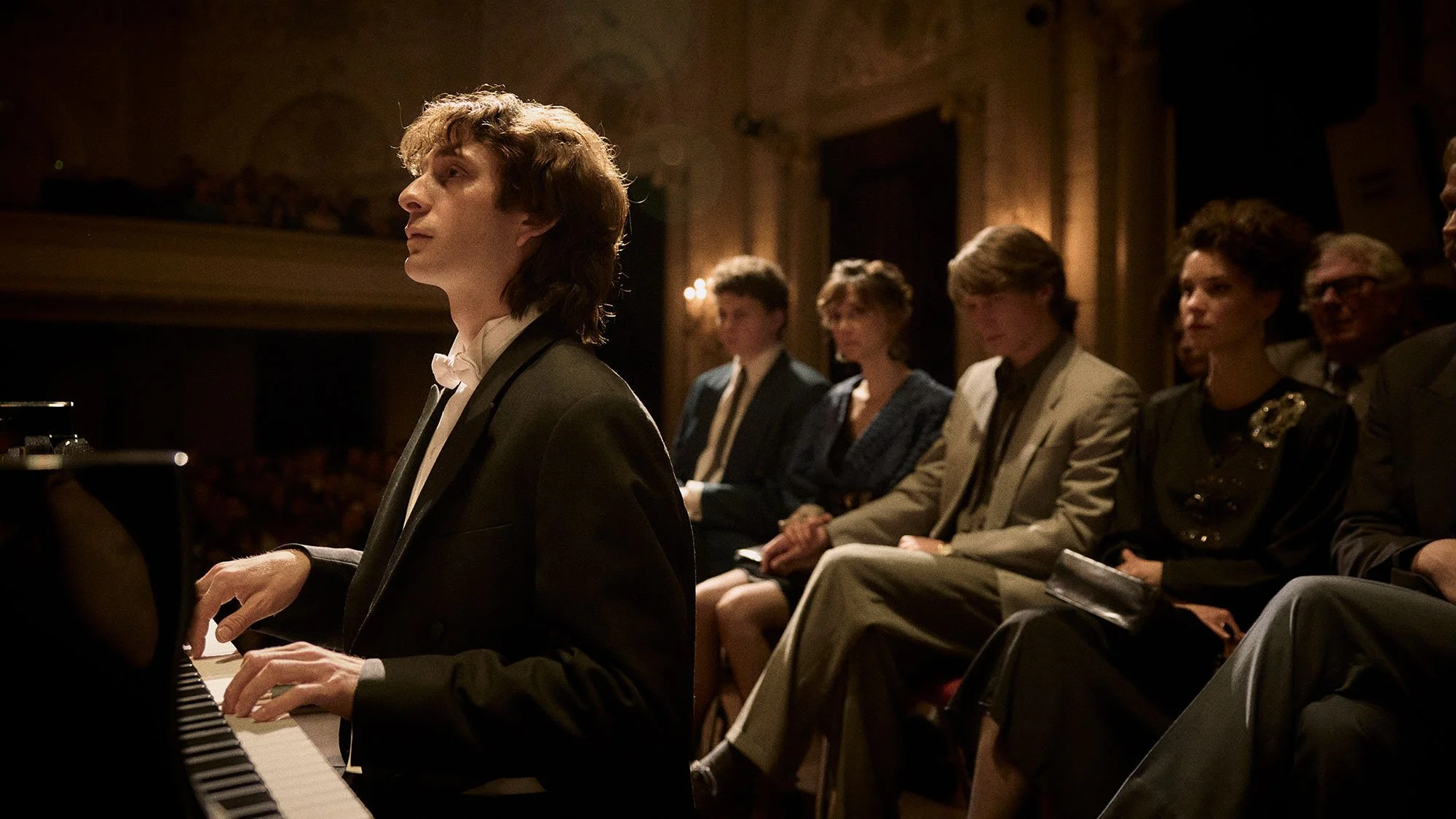
One moment that really stayed with me was when we filmed at the Concertgebouw in Amsterdam. We were recreating Youri's final performance, and the experience was quite extraordinary.
Jan and his wife were actually sitting in the audience watching us. We were sitting in exactly the same seats they had occupied when the original performance took place.
Even more remarkably, all the music we heard was taken from real recordings of Youri, including live recordings. So what we were listening to was the exact music from the moment we were recreating.
It was incredibly moving. It felt very close to the truth. I think, as actors, we're always searching for fragments of truth, and on that day, the music gave us one. We were listening to someone playing for the very last time in his life. He was only 33 years old. That's quite devastating.
Beyond acting, what keeps you curious and excited about life? What brings you back to yourself?
Watching films, actually. I love going to the cinema. It's something that continues to inspire me.
Is there a film you've encountered at a particular moment in your life that left a lasting impression on you, perhaps changing the way you see cinema, storytelling or even the world itself?
There are a couple. The first one I can remember is Manchester by the Sea. More recently, it was Sentimental Value.
I loved the performances, especially Renate Reinsve's, and I thought the story was beautiful. What really struck me was the way Joachim Trier explored identity and how much of who we are comes from our homes, where we live and the histories those places carry.
It's also about the stories we tell about ourselves, our family histories, the things we can discover in archives and the memories passed down by our parents.
I think a part of who we are also exists in the art we create and in the ways we express ourselves, whether as actors or directors.
All these elements come together so beautifully in the film. At its heart, it's about people trying to make one another feel seen, which can be incredibly difficult. Especially within a family, where things become so complicated. Sometimes we don't dare to ask the most difficult questions of the people closest to us.
That's what really stayed with me after watching it.
Are you already working on anything new? What's next for you after Youri?
I recently worked on a Dutch romantic period drama television series set in 1910. We actually built an entire hotel for it. It's a little like Downton Abbey. It's called Grand Hotel at the Sea and will be released in December.
I also filmed a movie called Campingflight to Paradise, which will be released in April. It's loosely inspired by Richard Linklater's Before trilogy. It's about two people who meet on a train and spontaneously decide to go to the Lowlands festival together. They fall in love over the course of three days.
It was a really fun project to work on.
