
IN CONVERSATION WITH BETHANY JOY LENZ
Bethany Joy Lenz has spent her career refusing to be defined by a single medium. An actress, director, producer, musician, composer, fine artist, podcast host and New York Times bestselling author, she has continually found new ways to tell stories. Following the success of her deeply personal memoir Dinner for Vampires, she turns to fiction with The Betrayal of Cora Wexford, a dark romantic psychological suspense novel set against Victorian-era London, releasing this October. Exploring desire, manipulation, violence against women and the systems that allow it to remain invisible, the novel reveals another dimension of Bethany’s creative world, right down to its cover, which she painted herself.

After the intensely personal experience of writing Dinner for Vampires, what made fiction feel like the right place to go next?
I’ve always imagined myself writing fiction, so the memoir actually felt like a detour from my original plan. But I think because I allowed myself to get so vulnerable with Dinner forVampires, I was primed to write something in fiction that hit much closer to home than I ever expected to write. The Betrayal of Cora Wexford developed out of a realization that, in the same way people often blame victims of cult leaders for ‘getting themselves into it’, communities around women in abusive relationships also frequently blame the woman, or worse, disbelieve her entirely. This has happened to me and to many women I know, and I knew I needed to say something about it. I needed to show people what it’s like inside one of these situations, but I also wanted to do it in a way that felt enjoyable to read and far-enough removed from modern day to make the point that these occurrences are timeless and, unfortunately, ordinary.
We meet someone who studies us to become exactly what we want and need, they masquerade as that person until we trust them, and their most powerful tool is usually the community of friends around us. A manipulator like this is an absolute psychological ninja and knows just how to make our closest friends and family believe they are truly the most incredible person, and that if things in the relationship are bad, it can’t be them.
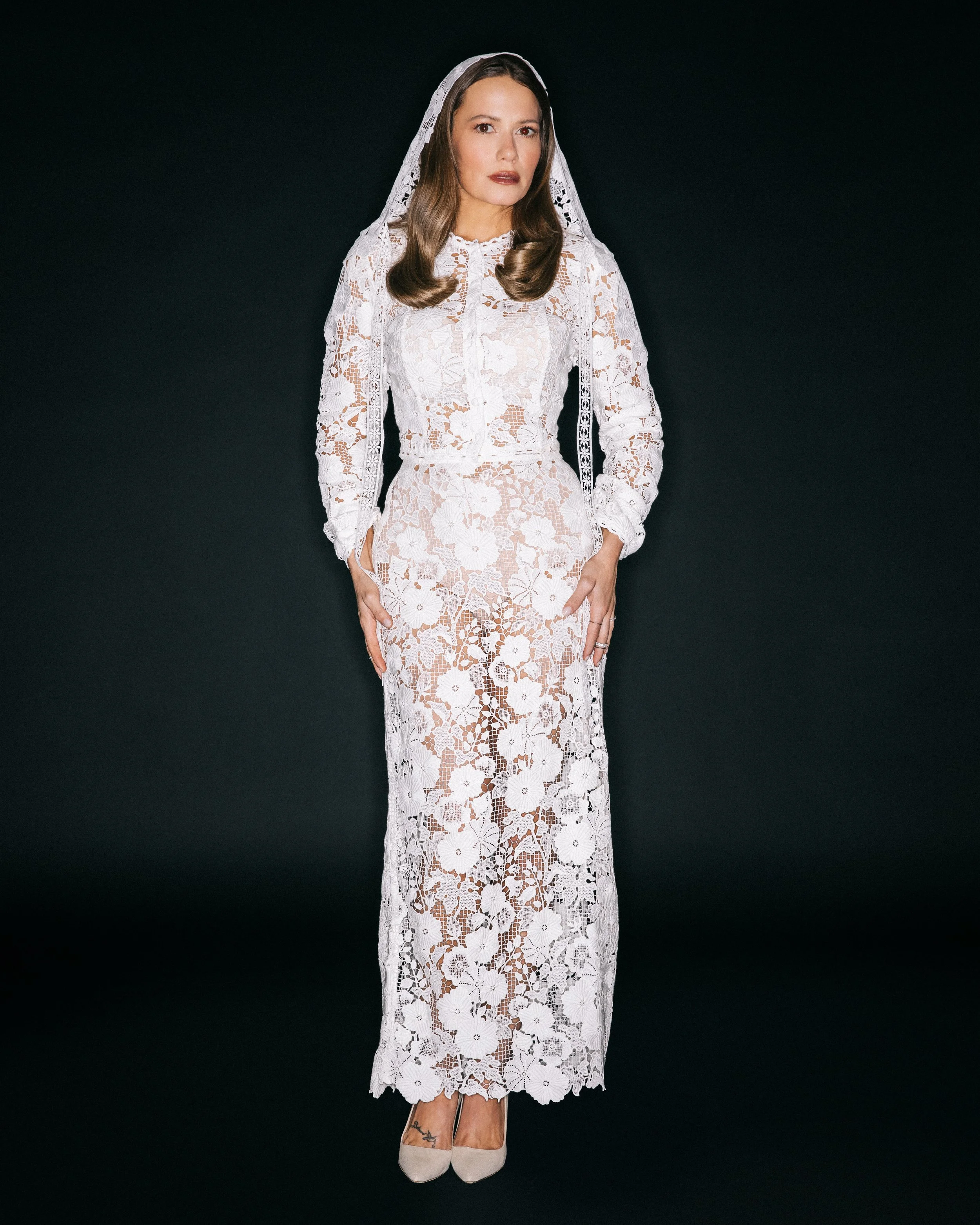
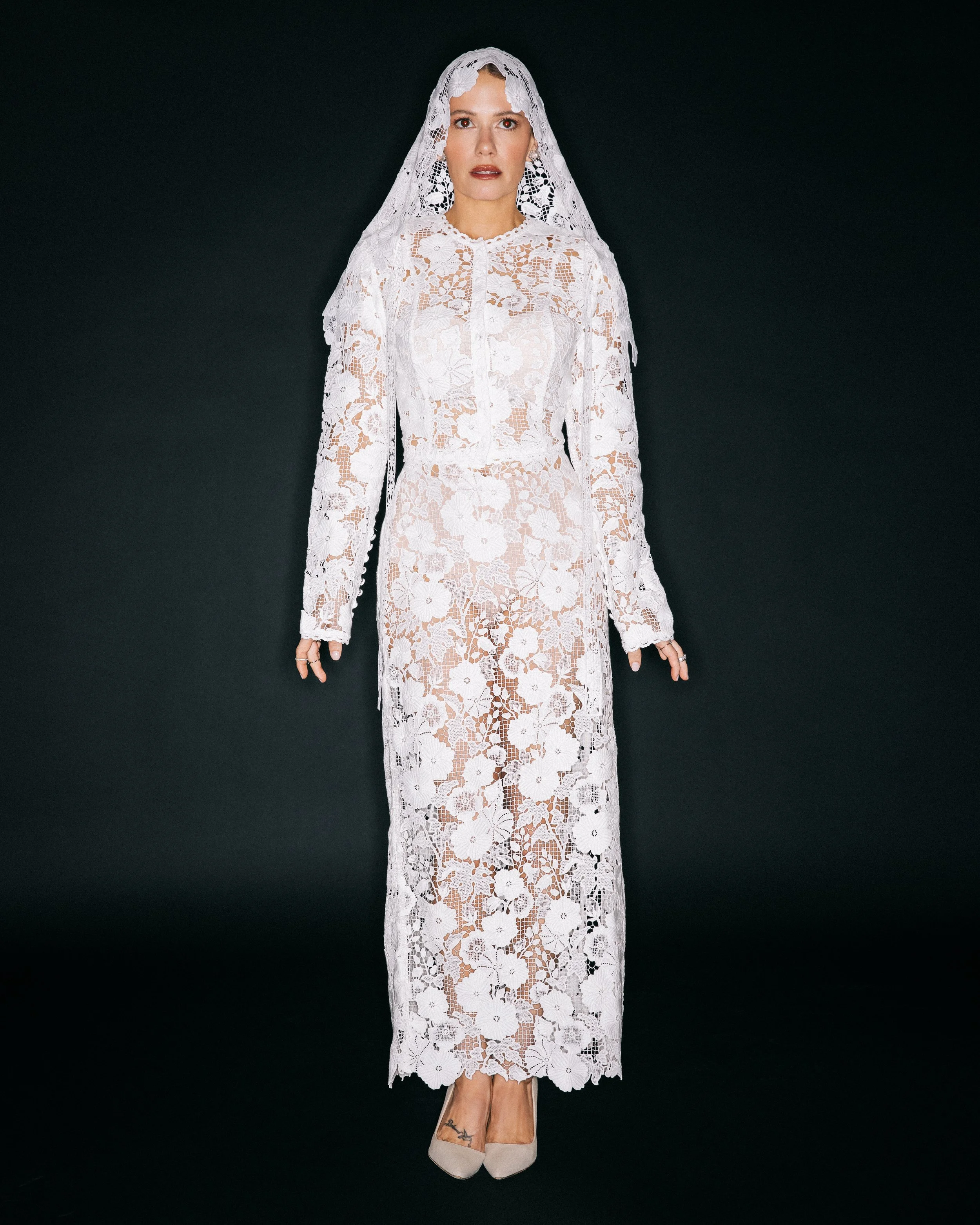
full look H&M STUDIO
shoes MANOLO BLAHNIK
The Betrayal of Cora Wexford takes readers to 1880s London, and Cora is thirty-eight, unmarried, childless and living independently at a time when all of those things challenged expectations of women. What interested you about creating her at this particular stage of life?
I needed Cora to be the last person you’d suspect would get manipulated and coerced. She had to be a woman who’s been through enough in life to be cynical, but young enough to have hope still in front of her. She needed to have lived long enough to have formulated her own opinions. To be physically attractive, but alone for long enough that her solitude was a choice. Eccentric, but still welcomed into wealthy circles. This is a discerning woman who has forged her way into the fringe where she is less bound by societal expectations than almost all of her contemporaries, yet still respected. It’s a very difficult feat she’s accomplished, so for a woman like this to get hoodwinked, the con has to hit her Achilles heel with surgical precision. And this is often where real-life manipulators thrive. They find exceptionally strong and smart women, and they get off on finding the one weakness that will take them down.
At its heart, the book asks a disturbing question about the difference between overt violence and the slower dismantling that can happen inside an intimate relationship. Why did you want to explore that particular form of psychological manipulation?
Because by the time physical violence has been introduced to a relationship, the coercion and psychological torment has already been going on for some time. It’s always the precursor. But no one in the community around the victim takes it seriously until there’s a bruise on skin, or worse, and by that point it’s often too late.
There are two big things here. I believe there needs to be more value placed on the existence of a life as more than flesh and blood. Sharon Horgan’s TV series Bad Sisters does a great job exploring this, and there is increasing legislature being passed in places like Australia, the UK, and recently Canada that support victims of coercive control.
And second, I really want people to consider what the word “friendship” means to them. If they’re not willing to invest in their relationships enough to be able to spot this manipulation and speak up about it, or at least ask probing questions, I would say that is not real friendship. Sometimes we need an upgrade in what we expect from our community, and what we are willing to give.
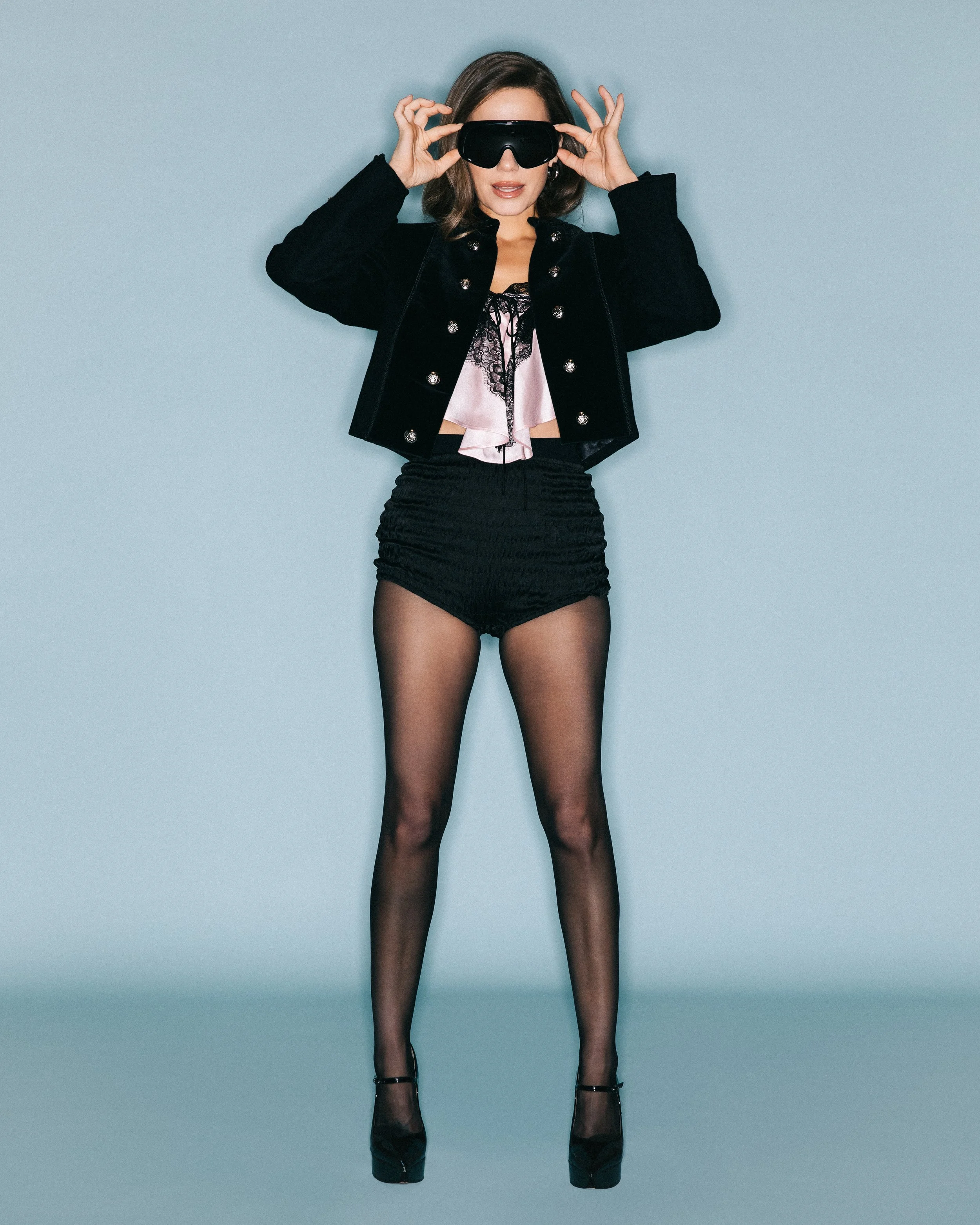
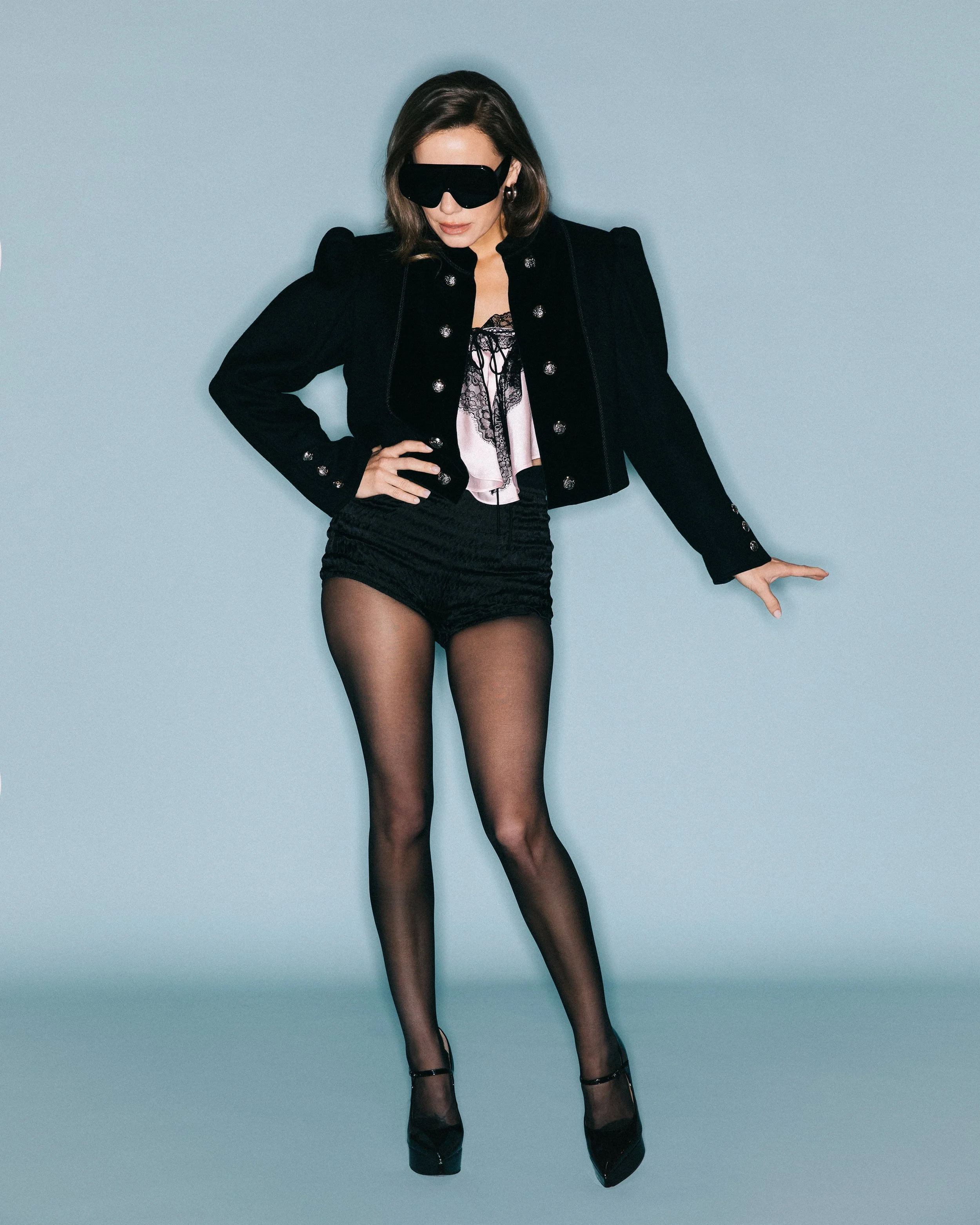
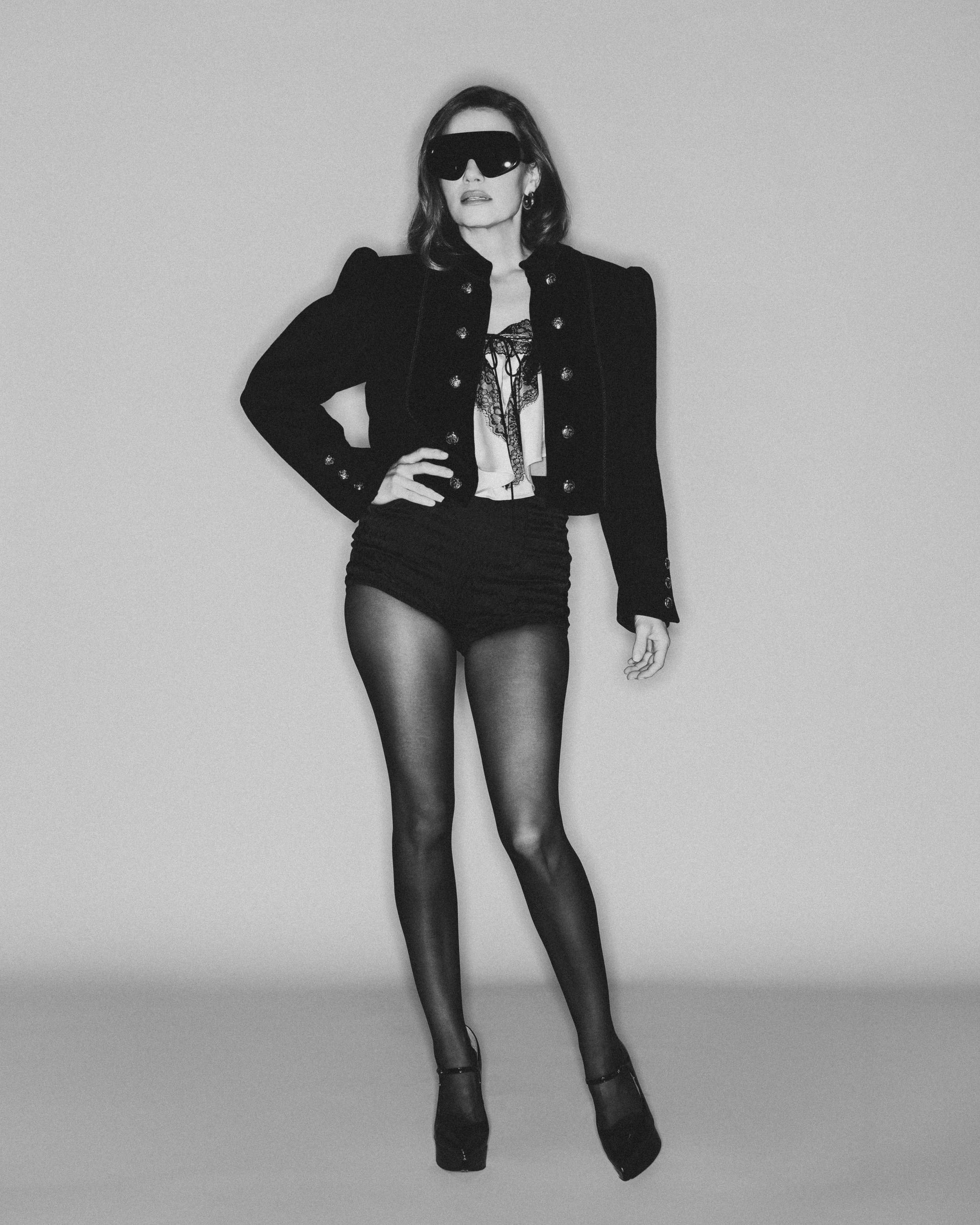
jacket, shorts and shoes SAINT LAURENT by ANTHONY VACCARELLO
top and sunglasses H&M STUDIO
Desire and danger become increasingly difficult for Cora to separate. What interested you about examining how love can distort our perception of what is happening to us?
Desire arrives with a need, danger arrives with a promise. Feeling sluggish and rote in life? You need dopamine. Take up racecar driving, and you’ll get the greatest rush you’ve ever felt and a new perspective on life. So, the first few times you crash the car, walk away with a broken limb maybe, but until that moment the rush was amazing. And the promise is that the more you race, the better you’ll get. Then you’ll master it, and all the pain will be worth it in the end. “It’ll all be worth it in the end” is the promise that every person holds onto when they are involved with a coercive manipulator. I think about my own weaknesses and what chasing my own dragons has cost me, and I know this is a universal experience. There’s a fine line between doing nothing wrong, only longing for connection which some abuser takes advantage of, and the moment where I am willing to sacrifice something of myself, my character or my ethics to have just a taste of what is being promised. I don’t always know where that line is, but I wanted to use this story as a way of dialoguing about it.
Was writing about manipulation through a fictional character liberating in a way memoir couldn’t be?
I don’t know if I’d call it liberating. The liberating part of this process came after I typed ‘The End.’ Knowing I could put to rest so many of these big scenarios I’d been wrestling with for several years as I assembled this story was the best feeling.
You personally painted the book’s cover. What did you want that image to communicate before readers encounter a single word?
I wanted the cover painting to feel intriguing, but upon closer inspection, I hope the viewer senses the hollowness. I’ve noticed that often this narcissistic personality appears distorted in photographs. There’s something off in or around the eyes. Your uncanny valley is alerted. It’s easy to dismiss as a bad photo, but there’s always an absence about these people.
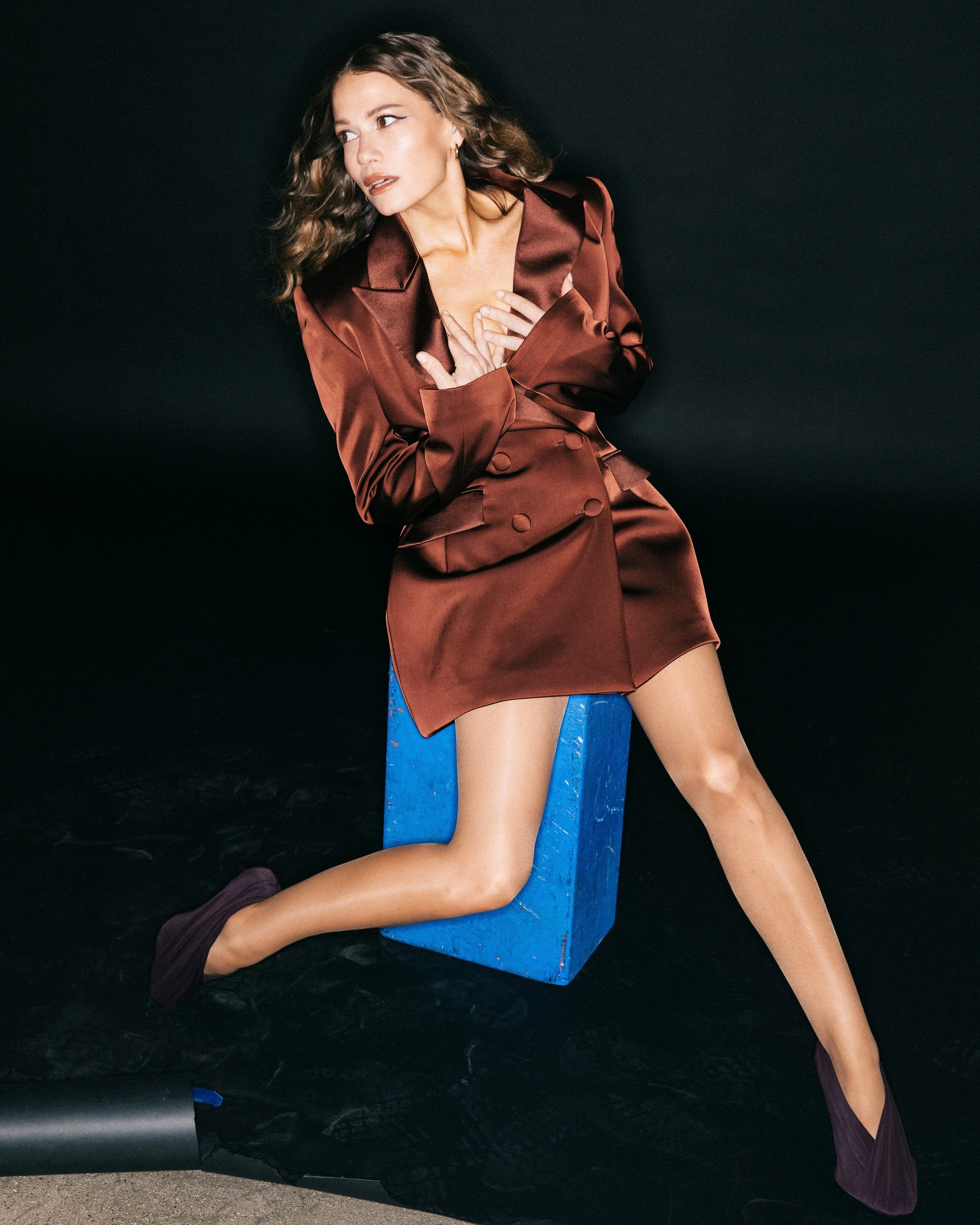
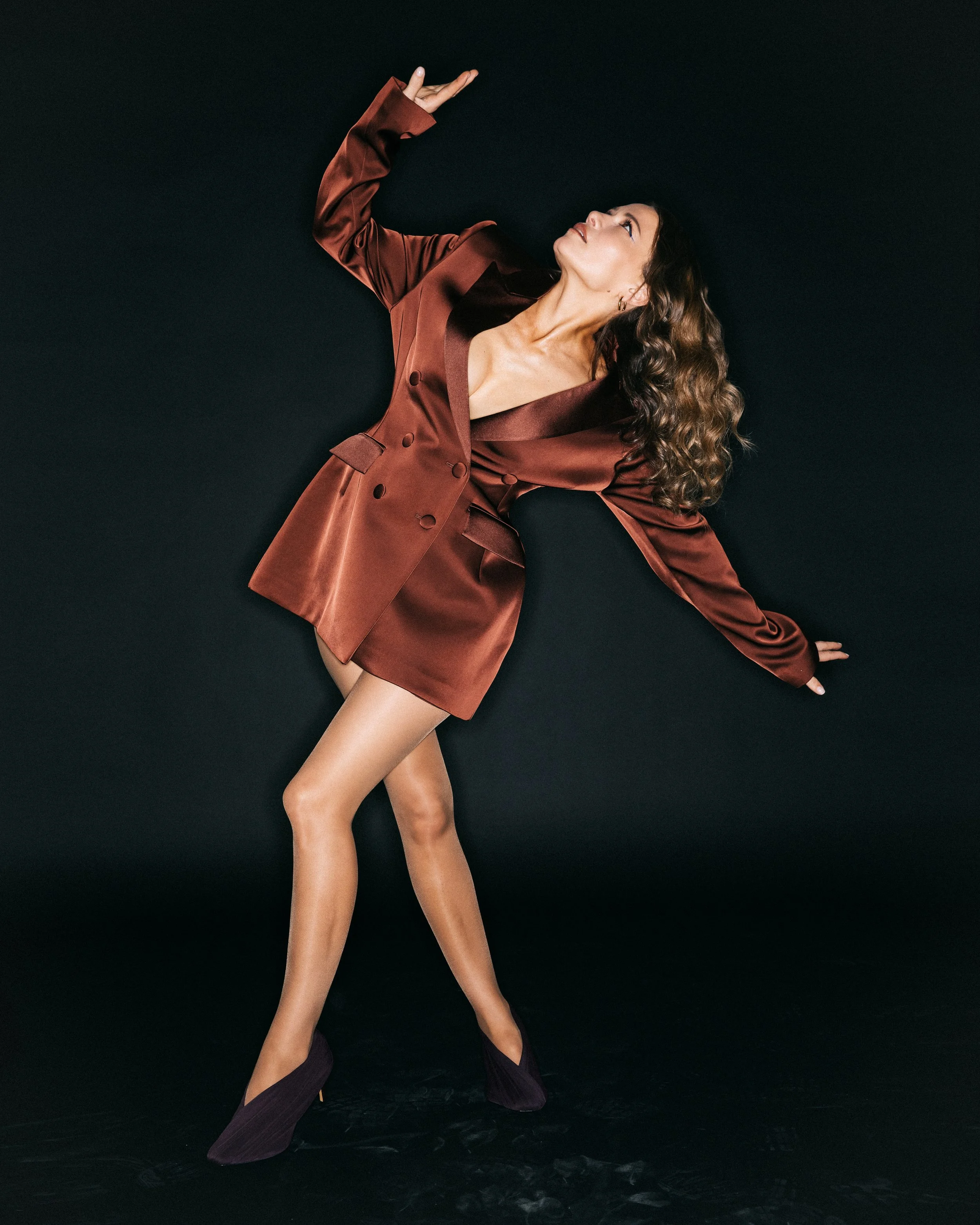

blazer NADINE MERABI
shoes H&M STUDIO
Painting, acting, music and writing all occupy different parts of your creative life. Do they come from the same emotional place for you?
They do. It’s a push and pull. I either want to press myself into something so my passion about whatever it is will be communicated, a desire to merge molecules almost, or I feel the pull of needing to receive. And sometimes I find art gives back to me as I’m engaging with it.
You’ve spent much of your career interpreting characters written by other people. What changes when you’re the person creating the character from the ground up?
I think I work characters from the same mechanism, really. They sort of introduce themselves to me in the moments I need them while I’m developing the story. For example, the character of John in The Betrayal of Cora Wexford was someone I knew needed to be young, smart and artistic, but he couldn’t be a bohemian. He needed a respectable career in the arts. Opera! The thought dropped into my mind and within an hour, the whole Don Giovanni storyline unfolded. After that, whenever I brought John into a scene, I would ask him, so to speak, “Why would you do that?” or “What is your ultimate goal here?” and then write from the answers I felt arrive. It’s the same thing I do when uncovering or, as you say interpreting, a character in a script handed to me. There are a hundred ways to play a scen, but once you puzzle together the answers to some of these foundational questions, you can significantly narrow it down the most effective route, most true to your characters needs and goals.
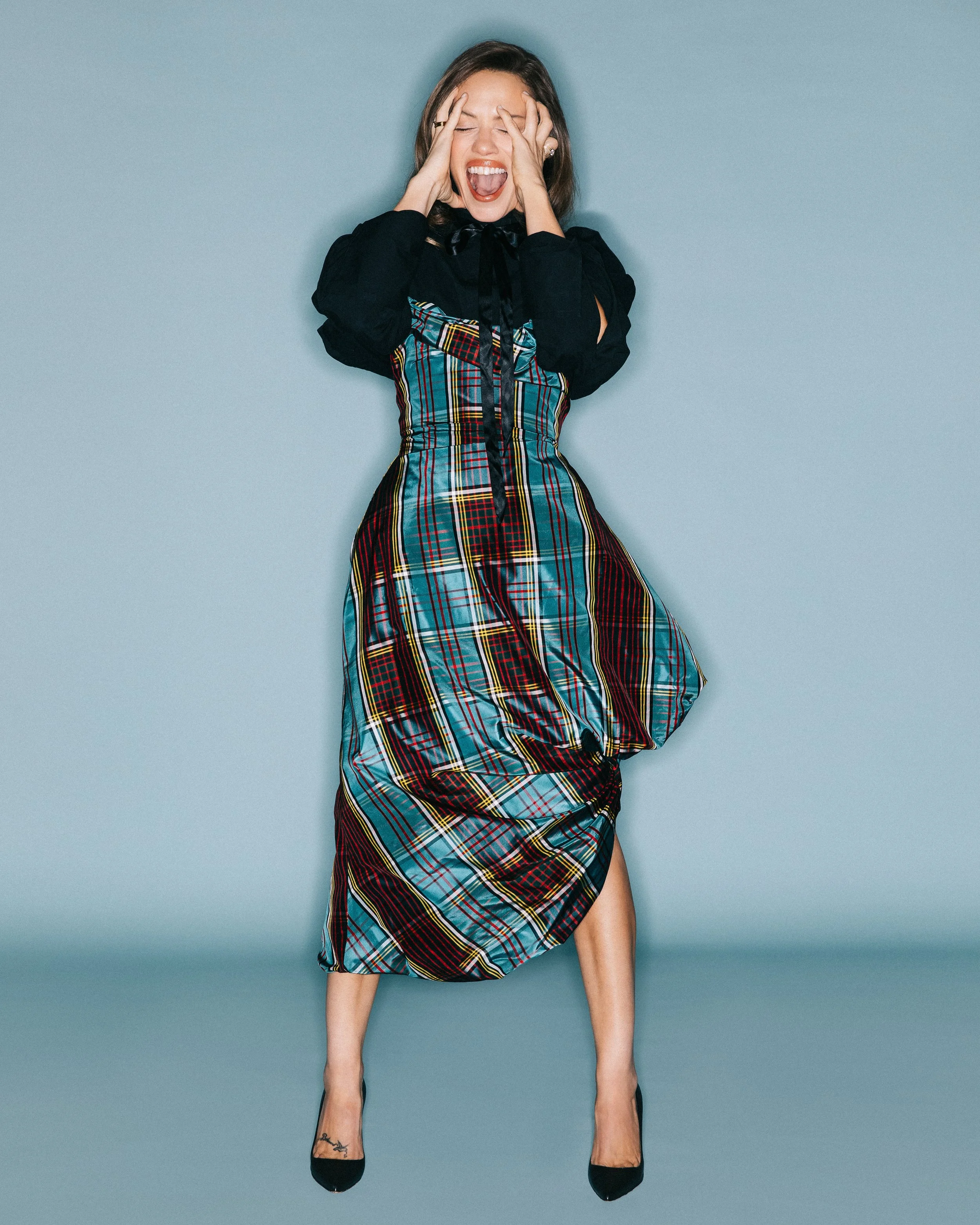
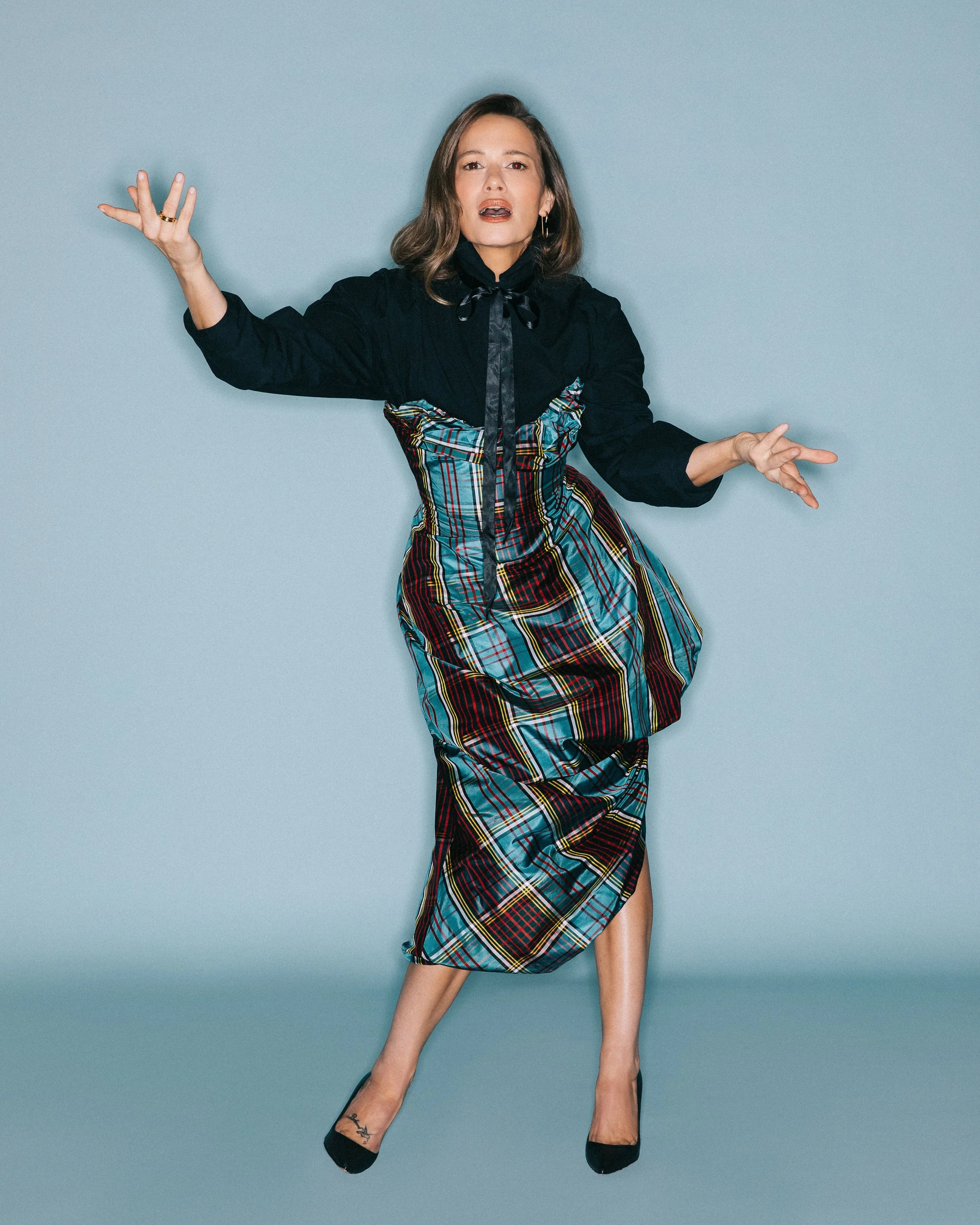
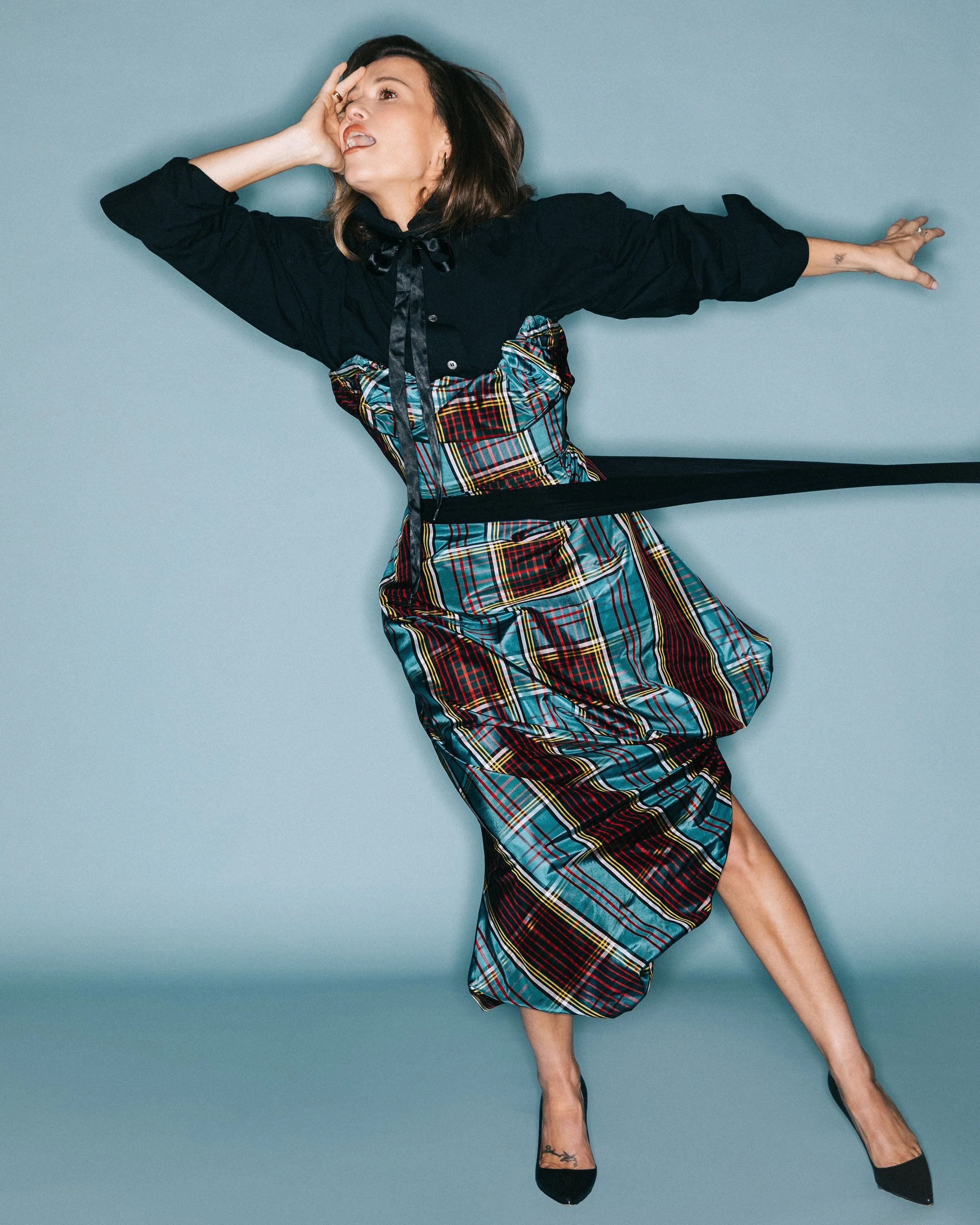
top and dress VIVIENNE WESTWOOD
shoes MANOLO BLAHNIK
One Tree Hill remains deeply meaningful to audiences more than two decades later. How has your relationship with that chapter of your life evolved as you’ve grown?
It’s the gift that keeps on giving. I never could have imagined this level of loyalty and longevity, but One Tree Hill has become a true joy in my life. I didn’t always understand it that way. I often took it for granted in the beginning, and even felt it held me back in my career for a chunk of time after it ended. But I look back on it now and see what providence was over me and I feel extremely lucky to be a part of a story that will live on long after I’m gone.
After sharing something as vulnerable as Dinner for Vampires, did you feel a new sense of freedom creatively, or did being so publicly exposed make you more protective of yourself?
Oh, I felt so much more freedom. I really am on a mission to eliminate shame in my life. Shame is the ugly stepsister of humility. Shame is thing that keeps us caged and humility is what sets us free. I struggle with my pride, I can make snap judgements, I can wallow in self-pity or entitlement, and Lord knows I’ve made some terrible decisions in my life. But I cannot express the great freedom and love I feel wash over me when I accept my own failings, apologize and receive love and forgiveness. It’s a miracle, it really is. While I am more protective of myself now, it’s not from a vulnerability hangover. I’m protective because every time I release shame and replace it with grace, I understand more of my value and what a disservice it is to myself and others to give away more of myself than is appropriate in the circumstance.
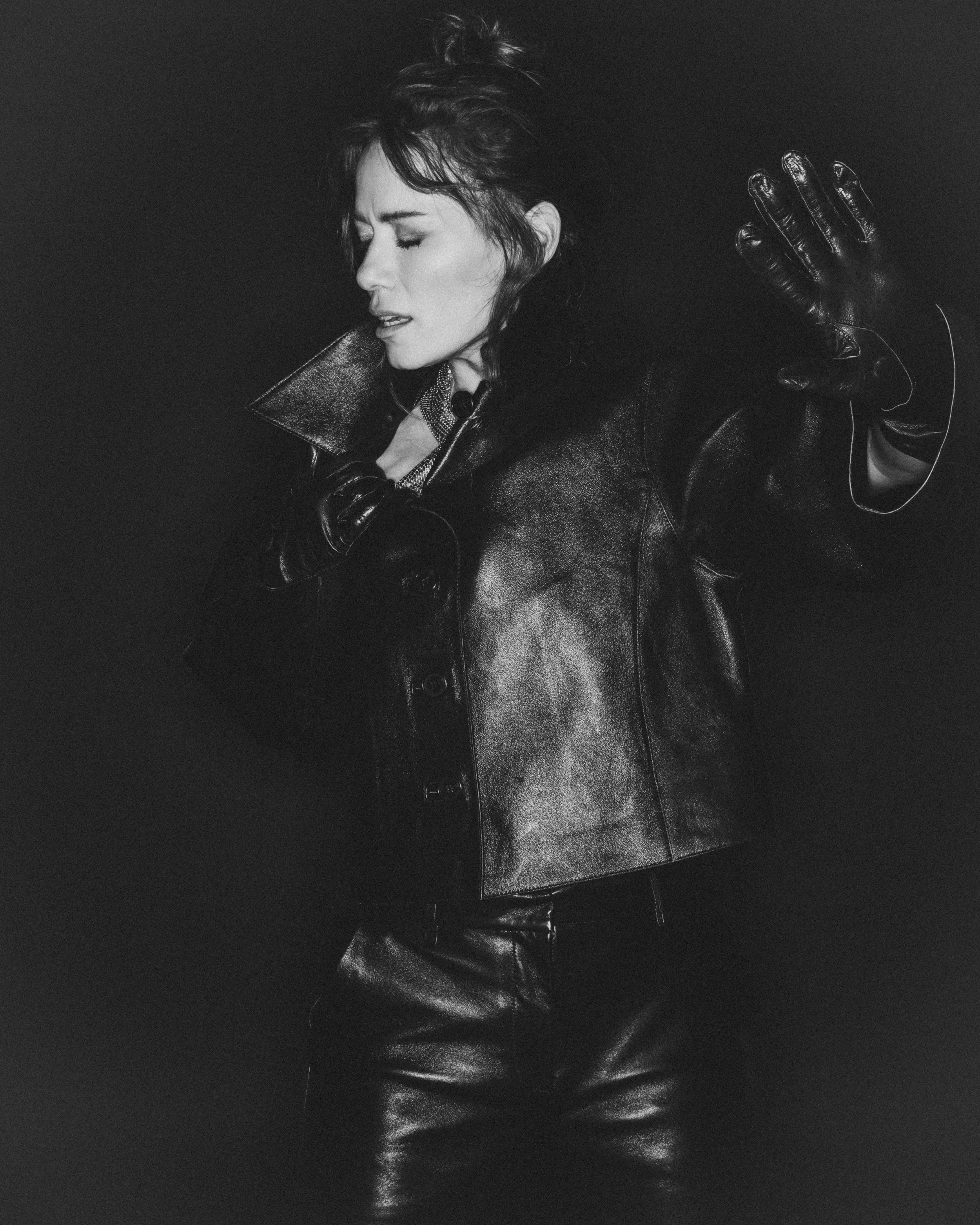
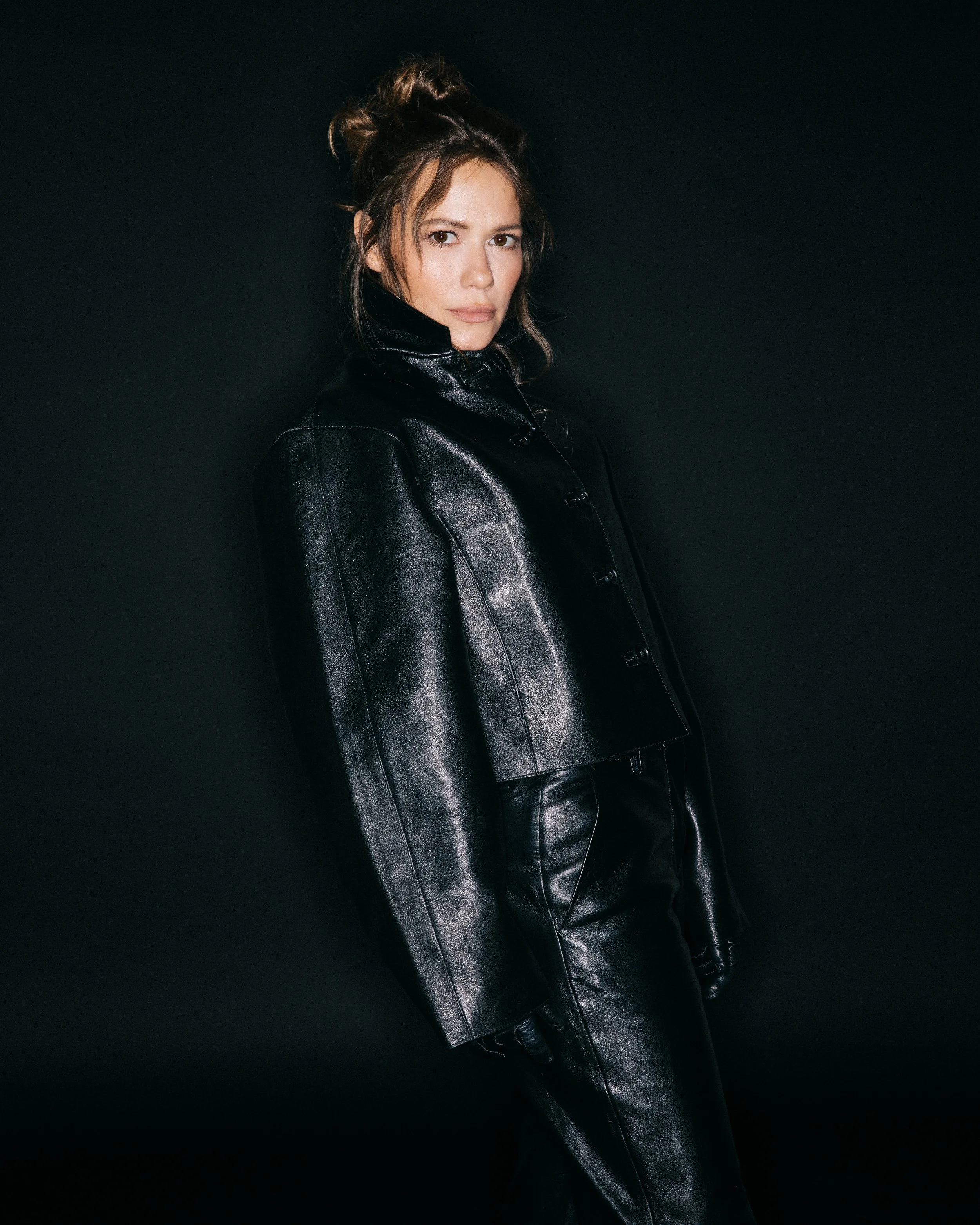
shoes and jackets H&M STUDIO
top PACCO RABANNE
gloves PRADA
shoes JIMMY CHOO
You’ve spoken about rebuilding trust in yourself after experiences that challenged it. What does trusting your own intuition look like for you today?
I just keep testing it. Probably my age has more to do with my ability to take those leaps, too. I care more about my sanity and preservation now than I do about hurting someone’s feelings by accidentally being wrong about them. It’s not an excuse to treat anyone unkindly, but when my Spidey-sense turns on, I don’t brush it away, I proceed with extreme caution. I think people who haven’t had to go through terrible encounters with narcissists can assume that people like me are jaded or suspicious of everyone. I’d say instead that I’ve become like an expert radiologist. Someone who has seen a few tumors on an ultrasound will make far fewer accurate diagnosis than someone whose been identifying them for 15 years. I think being able to spot untrustworthy people is like that. At some point after seeing enough cancer, you just know exactly what you’re looking at.
As far as trusting my gut with other kinds of decisions, I kind of just go with my first instinct, which is usually not the choice making the most noise in my head. Maybe I’m just learning to be drawn to peace.
Across acting, music, visual art and literature, what are you able to express now that you perhaps couldn’t have expressed ten or twenty years ago?
I think I feel that I have less to prove now. I’m just like a lot of others, trying to get through each day with a few tricks in my bag and an IV drip of grace keeping me alive. Whatever I’m expressing is hopefully authenticity and curiosity.
With The Betrayal of Cora Wexford opening an entirely new chapter for you as a fiction writer, where do you hope your creative curiosity takes you next?
I can’t imagine not writing. I always have done and always will do. But I hope people enjoy it. I still want to get on stage again. I have ideas for musicals. Oh, my brain never shuts off. Don’t worry, I’ll always be around somewhere, making something.
TEAM CREDITS:
talent BETHANY JOY LENZ
photographer DYLAN PERLOT at ANOMALOUS AGENCY
stylist VERONICA GRAYE at THE WALL GROUP
makeup CHRISTOPHER MILES at THE REX AGENCY
hair CLINT TORRES
studio HYPE STUDIOS LA
editor TIMI LETONJA
editorial director and interview JANA LETONJA
cover design ARTHUR ROELOFFZEN
