
IN CONVERSATION WITH CERA KHIN
Interview by Samo Šajn
Photography by Jose Martínez
Styling by David Reyes
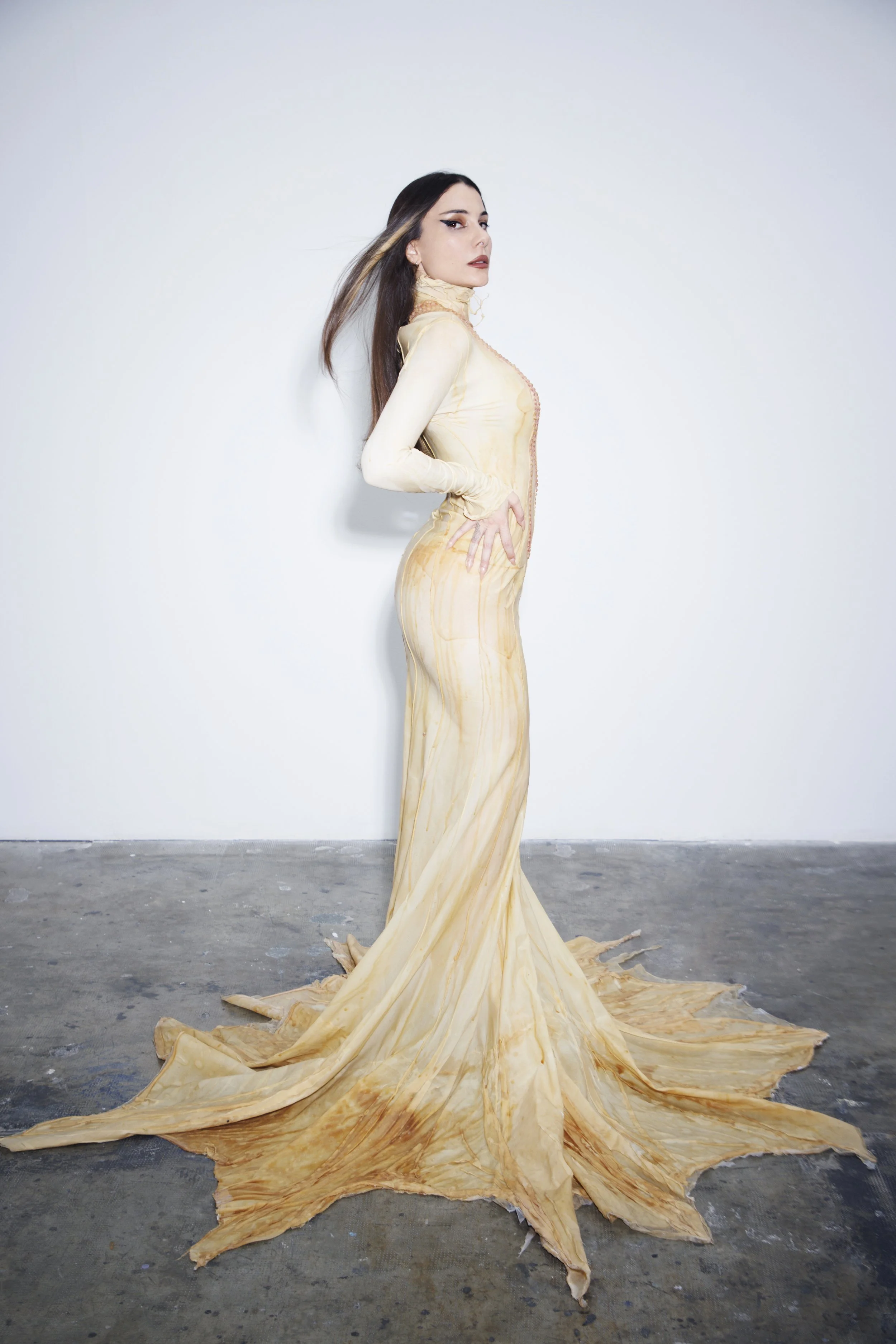
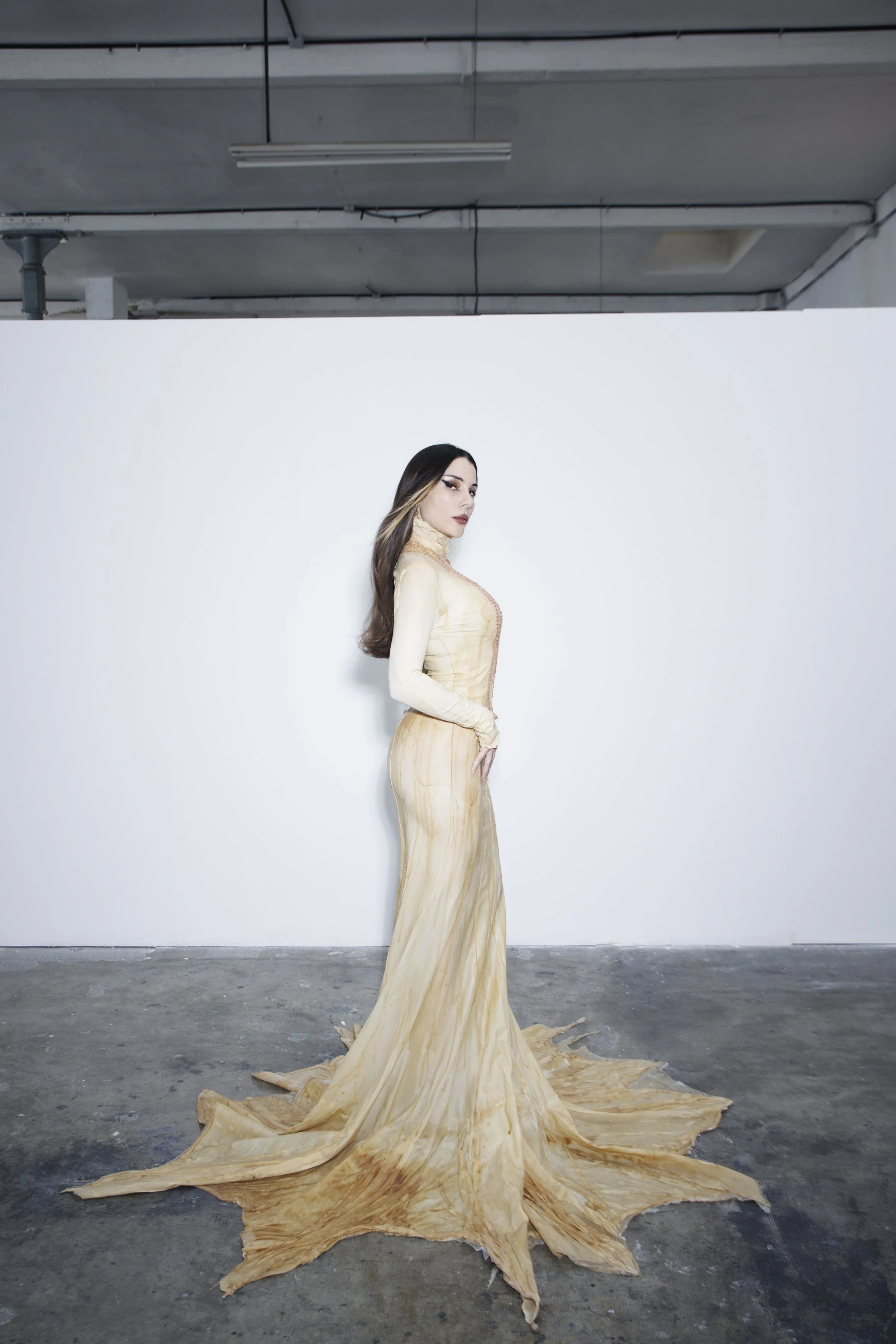
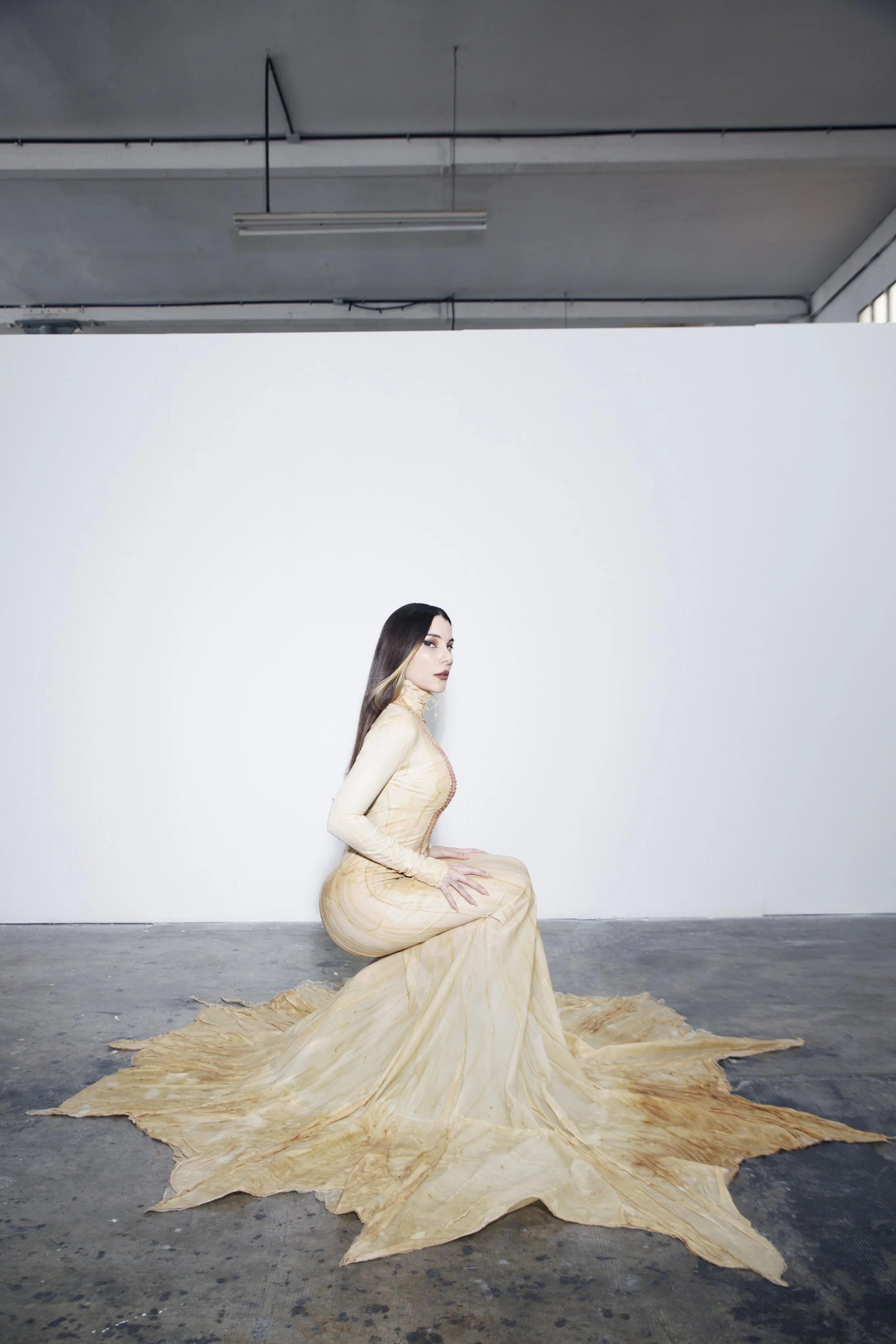
Cera Khin has built a distinct identity in electronic music, blending schranz, acid, hardbounce and psytechno with a fearless creative approach. Born in Tunisia , the DJ and producer continues to push boundaries both on and off the dancefloor. With her new EP Certified Vampire Slayer, she explores themes of personal growth, transformation and protecting your energy. We caught up with Cera to discuss her musical journey, the inspiration behind the project and her approach to mental health and wellbeing.
You came to DJing through a rather unconventional path, having studied marketing and psychology before teaching yourself to DJ. What made you decide to take the leap into music?
I don’t think there was one particular moment when I decided, “This is what I’m going to do.” It was more that music gradually became impossible to ignore. Studying marketing made me interested in how people respond to images, ideas and desire, while psychology made me curious about what sits underneath behaviour: why we react to certain things, what influences us, and how much of what we do is actually conscious.
Then I found DJing, and suddenly those interests had somewhere to exist together. I became fascinated by the fact that you can shift the emotional and physical state of an entire room without saying a word. Eventually, I stopped wanting to understand that from the outside. I wanted to experience it from within.
You were born in Tunisia, shaped by Berlin, and now live in Barcelona. How have these different places influenced the way you see yourself and your sound?
I move around a lot, so I don’t really think of myself as belonging to one particular place anymore. Tunisia gave me an early understanding of contradiction: tradition alongside modernity, warmth alongside darkness, chaos alongside beauty. I think that sensitivity to opposites has stayed with me. Berlin taught me something different. It gave me permission to experiment without constantly questioning whether something made sense or belonged to a particular category. That freedom was incredibly important in developing my identity as an artist.
Barcelona has brought another energy into my life. There’s something very Mediterranean about the relationship with light, movement, sensuality and being outdoors. The rhythm of life feels different. I think I carry all of those places with me. Maybe moving around has actually made me less interested in belonging somewhere and more interested in creating a world of my own.
Your new Vampire Slayer EP explores self-transformation, protecting your energy and becoming the best version of yourself. What was happening in your life when these ideas started taking shape?
I was becoming much more conscious of what I was letting into my life, not just people, but environments, habits and even the stories I was telling myself. I started paying closer attention to the difference between things that genuinely gave me energy and things that were quietly consuming it. That’s where the vampire became such an interesting metaphor for me. Something doesn’t necessarily have to hurt you directly to drain you.
But Certified Vampire Slayer isn’t really about trying to become some flawless or perfected version of yourself. It’s much more about awareness: recognising your patterns, understanding what no longer belongs in your life, and having the courage to release it. Sometimes transformation isn’t about becoming someone new. It’s about removing enough noise that you can finally see yourself clearly.
The “energy vampire” is such an interesting metaphor. What are some of the biggest energy vampires you’ve had to learn to recognise in your own life?
Anything that pulls me away from myself. Of course, there are people who constantly take without giving anything back, but I’ve become more interested in the less obvious forms of it: comparison, people-pleasing, overstimulation, always being available, or needing other people’s approval. Even ambition can become something that drains you if you never allow yourself to feel satisfied with what you’ve achieved.
I’ve learned to pay more attention to how something feels rather than immediately trying to explain it intellectually. Sometimes your body recognises a situation long before your mind has found the words for it.
You wrote all the lyrics for the EP, revealing a different side of yourself from what people might know through your DJ sets. What made you want to bring more of your own voice into the music?
For years, I’ve communicated through music selection, rhythm and physical energy. At some point, I wanted to add language to that vocabulary. Writing lyrics gives me a completely different kind of intimacy. When I’m DJing, I’m building a narrative through sound and through the interaction between different tracks. With lyrics, I can put an idea directly into the music and let people encounter it in a much more personal way.
It also opened a door into parts of myself that aren’t necessarily visible when I’m performing behind the decks. I didn’t want the lyrics to explain everything. I prefer when they leave some space for interpretation, so that people can attach their own experiences to them.
You’re also a trained hypnotherapist and created Technomentalhealth. How has your understanding of psychology changed the way you approach performing, touring and connecting with crowds?
It’s made me much more conscious of attention and how easily it can be shaped. When you’re DJing, you’re essentially working with people’s attention for hours. You decide when to give them something immediate, when to hold back, when repetition should become hypnotic and when to interrupt that expectation completely.
Psychology also taught me that what people consciously think they want isn’t always the same as what they respond to on a deeper level. That’s one of the reasons electronic music fascinates me. Rhythm and repetition can communicate without language. You can reach something physical and subconscious before the intellect has had a chance to analyse it. At its best, a dancefloor can almost become a collective altered state.
You’ve spoken openly about sobriety and wellbeing in a scene that has traditionally been closely associated with partying. How has choosing a different path changed your relationship with nightlife?
It taught me that intensity and excess are two completely different things. For a long time, I think there was an assumption that you had to push yourself to an extreme in order to experience something extraordinary. Now I find that being completely present can be much more intense.
Sobriety has also changed my relationship with memory and time. I remember more. I notice more. I’m actually experiencing nightlife rather than simply getting through it. And I don’t believe wellbeing has to make you less wild or less adventurous. For me, it’s about having enough clarity and energy to actually take the experience somewhere.
Films like The Hunger, The Matrix, Blade Runner and Dark City have influenced the EP. What is it about these darker, surreal worlds that speaks to you creatively?
I’m drawn to the possibility that reality has more than one layer. Those films play with questions around identity, consciousness, desire, technology and control. They create these worlds where you gradually start questioning whether the reality you’ve accepted is actually the whole story.
That feels very relevant to contemporary life. We’re surrounded by systems that influence us without always being visible: technology, advertising, algorithms, cultural expectations and other people’s ideas of who we’re supposed to be. The supernatural gives me a way of exploring those things without having to describe them literally. The vampire might be a monster, but it can also represent a relationship, an addiction, an ego, a habit, or even a part of yourself.
You’ve played some of the biggest festivals in the world, from Awakenings and Tomorrowland to EDC Las Vegas. What still makes you nervous or excited before you walk into the booth?
Probably the fact that I don’t know exactly what’s going to happen. You can prepare your music, your ideas and everything technically, but you can never completely predict the psychology of a room. Every audience has a different energy. I actually like that uncertainty. If I knew exactly how every set was going to unfold, I think I’d become bored.
There are always those few seconds before you start when everything is still open. Anything could happen. That’s one of my favourite moments. Then the first track comes in, and suddenly you’re having a conversation with the room.
You’ve built your own platforms through CK777 Recordings and CK Invites, alongside your music and Technomentalhealth. What kind of world are you ultimately trying to build around Cera Khin?
I’m less interested in building a traditional brand around myself than in creating an ecosystem where the different parts of my thinking can coexist. Music, psychology, nightlife, visual culture, community and wellbeing don’t feel like separate subjects to me. They’re all connected.
I want to create environments where people can experience intensity without feeling that destruction has to be part of it. Where darkness can exist alongside consciousness. Where you can go to an extreme place without losing yourself in the process. Ultimately, I’m interested in a deeper kind of freedom. Not simply the freedom to do whatever you want, but the freedom that comes from understanding yourself well enough to know what you actually want.
