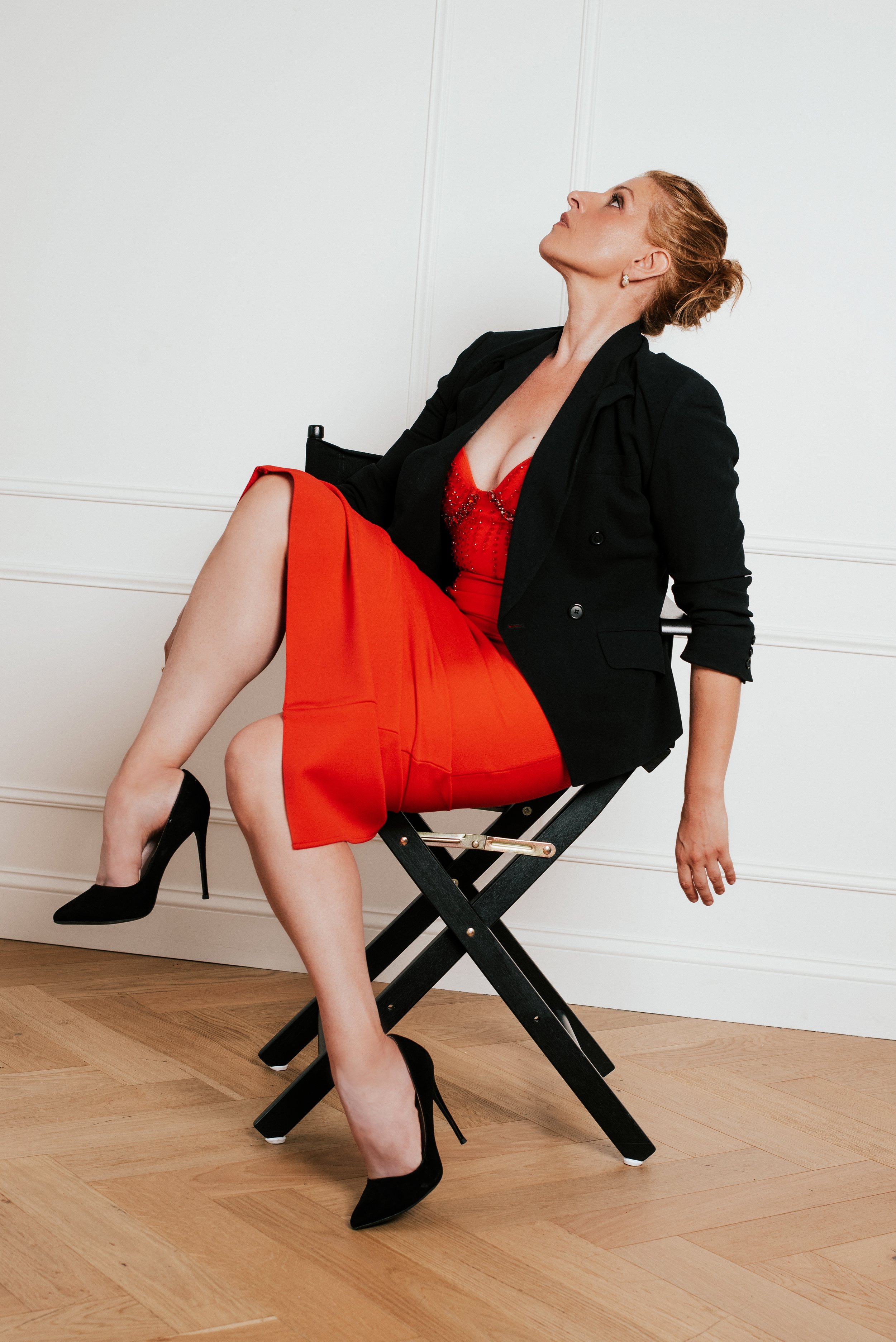
IN CONVERSATION WITH BRETON TYNER-BRYAN
interview by JANA LETONJA
At the intersection of cinema, dance, fashion, and music, Breton Tyner-Bryan is redefining what it means to be a multidisciplinary storyteller. The multi-award-winning writer, director, actor, and choreographer has built a distinctive creative universe where movement becomes emotion, music shapes narrative, and visual expression transcends traditional boundaries. Originally a professional ballet dancer, Breton has transformed her understanding of physical storytelling into a cinematic language that has earned her films more than 150 international awards. With her latest feature, Rhythm or Smooth, beginning its festival journey, and an ambitious collection of projects in development, including the metaphysical television series I Dream of Hazel, she continues to explore the fascinating connections between identity, memory, artistic expression, and the human experience.
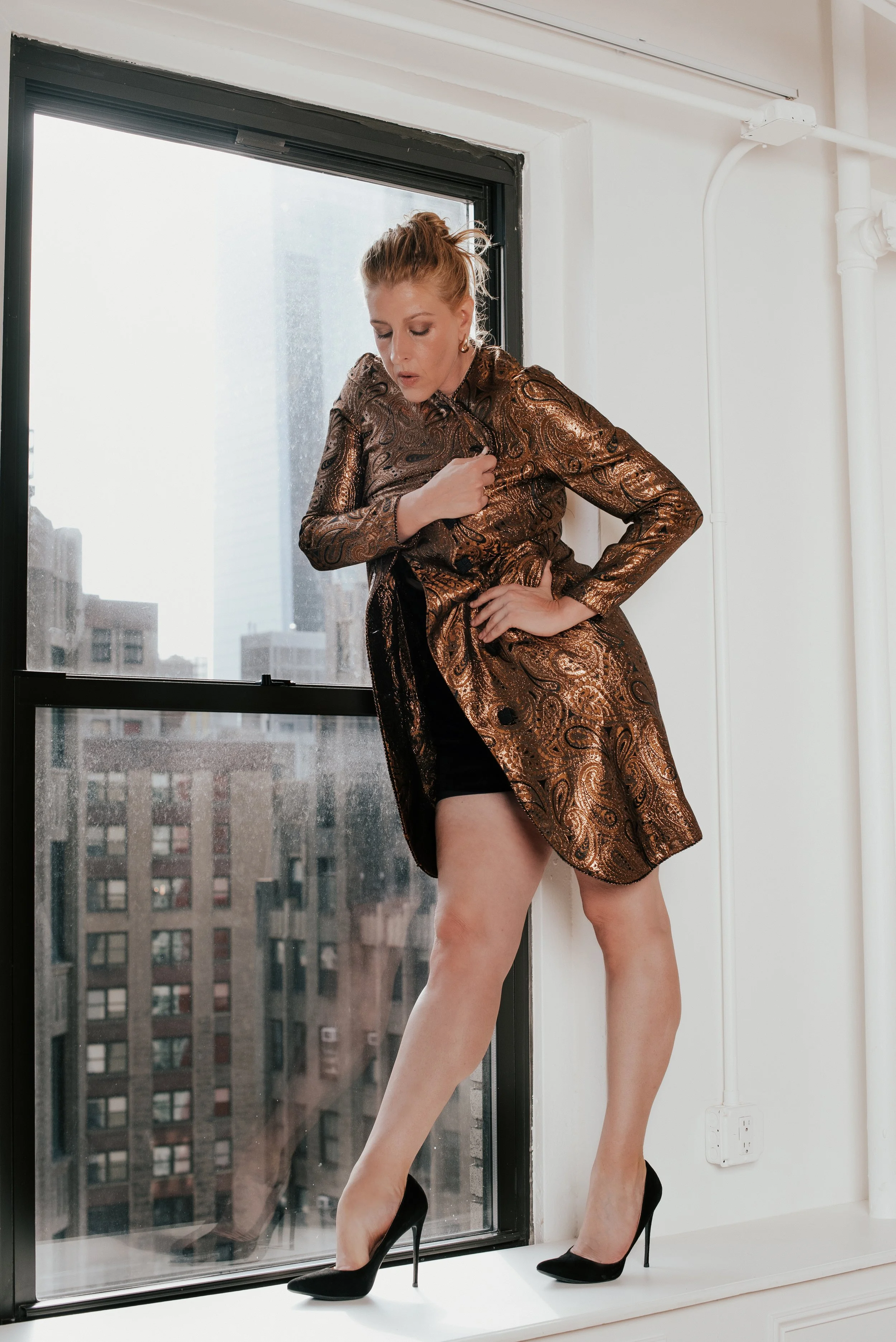
photography by ANKA GARBOWSKA
Your career spans ballet, cinema, choreography, acting, and writing. Looking back, how did your journey as a professional ballet dancer shape the artist and filmmaker you are today?
I’m a performer and a voyeur by nature and by trade. Ballet taught me to communicate without words, to understand the architecture of emotion through the body, and to recognize that the smallest gesture can tell an enormous story. The energy never lies, even when the humans do. From a very young age, ballet immersed me in the extraordinary possibilities of storytelling. A three-act ballet encompasses nearly every form of artistic collaboration: live music, set design, costume design, acting, movement, lighting design, and long-form narrative. Each discipline contributes to creating a world that transports an audience fantastically beyond their immediate reality. There was something magical about watching all these artisans collaborate to create an experience of pure escapism.
The theater became another universe, and I was completely taken and fascinated by that transformation. As a professional dancer, you’re constantly navigating space, time, rhythm, and human relationships. You’re learning to observe, listen, and respond instinctively. Those principles are fundamental to filmmaking. I think in movement, images, and music. Even when I’m writing, I’m imagining how a scene breathes and how characters inhabit a space. Dance also gave me an extraordinary relationship with discipline and resilience, a place to focus my intensity and desire for energetic exactitude. Ballet dancers have a remarkable work ethic that translates into almost every arena of life. I never really left ballet. I just found its application in an infinite reality.
Was there a defining moment when you realized that your passion for storytelling could extend beyond dance and into filmmaking?
I began creating promotional trailers for a cabaret production with my dance theater company, Breton Follies, on Houston Street in New York. I was responsible for everything from the visual imagery and costumes, musical set list, casting, to the digital media promoting the performances, and ticket sales. I discovered that a one or two-minute trailer could communicate the atmosphere of an entire show and inspire people to experience it. It was an incredibly immediate form of storytelling. I began making films by adapting choreographic works I’d originally created for the stage. Those early dance and fashion films incorporated elaborate environments and locations, and I found myself increasingly drawn to cinematic sets and narrative interiors.
That appetite began in childhood, growing up in the ballet world, where costume and set design were integral to the transformation of characters. As a dancer, you’re interpreting someone else’s vision, which can be extraordinary, but I increasingly wanted to create the entire world rather than inhabit only one part of it. Cinema offered the opportunity to bring together movement, music, literature, psychology, visual art, and performance without the physical limitations of a traveling theatrical production. With film, the possibilities are virtually limitless. Teaching and choreographing led naturally to directing, but I’d been writing, drawing, shooting film photography, sewing costumes, and writing poetry since childhood. Ultimately, it’s all about movement. Dance and cinema go hand in hand.
You’ve built a career that moves effortlessly between different artistic disciplines. Do you see yourself primarily as a filmmaker, a performer, or simply a storyteller without boundaries?
I’m a storyteller fascinated by escapism and its ability to reveal our shared humanity. Emotion has the extraordinary capacity to connect people across cultures, generations, and experiences, transcending the loneliness of our individual existence. Directing allows me to bring an entire world into existence, while acting offers the opportunity to experience that world from within. Writing is an exploration of human behavior, imagination, and the things we don’t yet understand. Movement and music are intrinsic to all three, often communicating what language cannot. Ultimately, the story determines the medium.
Your films have received more than 150 international awards. Beyond recognition, what does success mean to you as an independent filmmaker?
Freedom, first and foremost. I’m chasing excellence, and perhaps, in some ways, myself. The freedom to tell stories that are unusual, complicated, funny, uncomfortable, and deeply human. The freedom to work with extraordinary collaborators and continue challenging myself. Awards are wonderful because they give independent films visibility and allow the work to travel anywhere. I’m incredibly grateful for that recognition. Success is also about longevity, continuing to create, and building a body of work that feels authentic to your perspective. The compass is curiosity and obsession. You have to believe in the art and the work, long before anyone else can see it. Success is also finding the people who believe in that vision enough to help bring it into existence.
Your latest feature film, Rhythm or Smooth, is now beginning its festival journey. What inspired the story, and what makes this project particularly meaningful to you?
Rhythm or Smooth is a New York romantic comedy and dramedy about ambition, identity, relationships, and the often absurd pursuit of artistic fulfillment. I’m fascinated by the distance between who people believe themselves to be and how they actually behave. Particularly in New York, where everyone seems to be pursuing some extraordinary version of themselves while simultaneously trying to pay the rent. There’s something both heartbreaking and hilarious about that contradiction. It’s visceral, aspirational, ambitious, and ultimately a gamble everyone hopes will pay off. At its heart, the film is a romantic comedy, but it’s also a lighthearted exposé of New York’s social climbers and the extraordinary lengths people will go to survive, succeed, or be recognized. Whether they’re feeding their egos, putting food on the table, or hoping to make a spectacular entrance at a society ball, everyone is pursuing their mission.
The film brings together many things I love: comedy, dance, complicated relationships, and wonderfully imperfect characters. I wanted movement to exist organically within the cinematic language rather than function as a separate performance. There’s a moment when my character, Annie, dances with Tony Dovolani, which was particularly enjoyable. We assembled a large ensemble cast of wonderfully singular, hilarious, and talented actors. I feel incredibly fortunate to have worked with such an abundance of talent.It’s a very particular love letter to New York and the people who refuse to give up on their dreams.
You wrote, directed, and appeared in Rhythm or Smooth. How do you balance these different creative responsibilities, and does performing in your own film change your perspective as a director?
Preparation is everything, although you also have to be prepared to throw that preparation out the window. Filmmaking requires an extraordinary balance of efficiency, stamina, and creative flexibility. You have to move quickly, sustain your energy through take after take, and remain open to unexpected discoveries. Writing, directing, and acting require different kinds of attention. As a writer, I’m interested in the architecture of the story. As a director, I’m considering the entire cinematic experience. As an actor, I surrender to the immediate circumstances of the character.
Having written the dialogue, I understand the emotional architecture of each scene. As a performer, I can inhabit that language and allow it to blossom into a physical manifestation that honors the character’s journey. Performing in my own work also gives me an intimate understanding of what I’m asking actors to do. I know how vulnerable the process can be and how important it is to create an environment where people feel free to explore. I love collaboration. Some of my favorite moments happen when an actor offers something completely unexpected and suddenly the scene becomes more interesting than anything I’d imagined. You can’t control every moment of filmmaking, nor would I want to. Sometimes the magic is in the accident and being willing to see beyond your original vision.
Creating a distinctive cinematic world requires both imagination and precision. What does your creative process look like, from the first idea to the final frame?
When I’m writing, I hear and see the images, and then the words follow onto the page to support the energetic exchange between the characters. It’s a very instinctive, almost physical experience. The world is already moving, speaking, and breathing in my imagination before I begin translating it into language. My hands are often racing to keep up as the dialogue flows onto the page. It’s somewhere between procession, transcription, and transmutation, a generative flow that allows something greater to move through the mind and body. It’s just like dancing. Once you find the rhythm, it begins telling you where to go. You can always return and shape the material later, but the originality, the essential life of the work, often arrives in that first uninhibited expression.
Sometimes a story begins with music, an image, or a feeling that refuses to leave me alone. Other times, a character appears fully formed, and I spend months trying to understand why they’ve arrived. I’m constantly learning about myself through the creative process. The same was true when I’m choreographing. My responsibility is to allow the work to emerge without judgment before attempting to define its meaning. Once we’re filming, the process becomes a collaboration between imagination and reality. Actors, locations, light, movement, and all the unpredictable elements of production begin influencing the work. Editing is another extraordinary stage of discovery. It’s where the film reveals what it actually wants to be. And music is absolutely essential. Without music, my films don’t exist in quite the same way. I love precision, but I’m not particularly interested in perfection, more so specificity to honor the emotion we are delivering to our audience. Technique establishes the boundaries of a discipline. Understanding those boundaries allows you to choose whether to break them or celebrate the structure. Both are valid and integral to the creative process.
Your upcoming television series I Dream of Hazel explores memory, identity, and the possibility of moving through time. What drew you to these metaphysical themes, and what questions do you hope the series will raise?
I've always been fascinated by consciousness and the possibility that our understanding of time and reality is far more limited than we imagine. I Dream of Hazel follows a psychic detective who solves crimes by running through time in New York City, exploring dissociation not as a disorder, but as a manifestation of her extraordinary metaphysical sensitivities and strengths. What interests me is the relationship between our physical experiences and our understanding of reality. All our senses contribute to our perception of time, identity, and life's continuity. To experience or present that as entirely linear feels limiting. Memory doesn't enter our lives or exist within us in a linear fashion. We can be standing in one place and suddenly find ourselves transported somewhere else entirely through taste, touch, smell, imagery, or emotion.
Hazel experiences time in a much more expansive way. What appears fragmented to other people is entirely coherent within her own perception. The series explores grief, love, sexuality, mortality, and the extraordinary ways we construct our identities. I'm interested in questions rather than answers, particularly as a way of engaging with our collective human experience. What makes something real? How much of our identity is constructed through memory? What happens when the person you believe yourself to be is no longer sufficient to explain your experience? I've developed the story as a five-season television series and am writing the first of five novels. It's an enormous world, and I love that it continues to surprise me.
You’ve written lyrics for 26 original songs for I Dream of Hazel. How has developing this musical world influenced the emotional and narrative landscape of the series?
Music has always been fundamental to the way I experience storytelling. The soundtrack to my life has been extraordinarily rich, from childhood through folk, jazz, rock and roll, hip-hop, classical music, punk, shoe-gaze, and everything in between. Music is movement, and much of the way I experience life is through its rhythm. I’ve written the lyrics for 26 original songs inspired by the characters and emotional world of I Dream of Hazel, and I’m now working on developing the musical demos.
The songs exist somewhere between dark comedy, longing, grief, desire, and the absurdity of being alive. Some are irreverent and rather outrageous, while others are deeply romantic or melancholic. I love those extremes because I think that’s how we actually experience life. Coming from ballet, I understand music as something physical and spiritual. It changes the way we move, breathe, and perceive time. What’s exciting about developing these songs is discovering another short hand to access the dimension of the characters. Sometimes a song can reveal an emotional truth that would feel impossible or unnatural in dialogue, but arrives with such speed and intensity, its truth can’t be ignored. The musical world is still evolving, which is part of the excitement. I’m interested in allowing the material to find its own form rather than imposing one on it.
Your upcoming projects move between different genres, periods, and artistic forms. Is there a common theme or emotional thread connecting the stories you’re drawn to tell?
Identity, transformation, mortality, and the peculiar absurdity of being human. I think humor is one of our greatest connectors. It transcends age, gender, culture, and suffering, creating a sense of community and compassion through our shared experiences. I’m drawn to characters navigating some kind of displacement, whether emotional, psychological, physical, or metaphysical. People caught between who they were, who they are, and who they might become. I’m also fascinated by love and the extraordinary lengths people will go to find it, preserve it, or escape it. Love is an extraordinary currency, with profound consequences for loss, expectation, resilience, and joy.
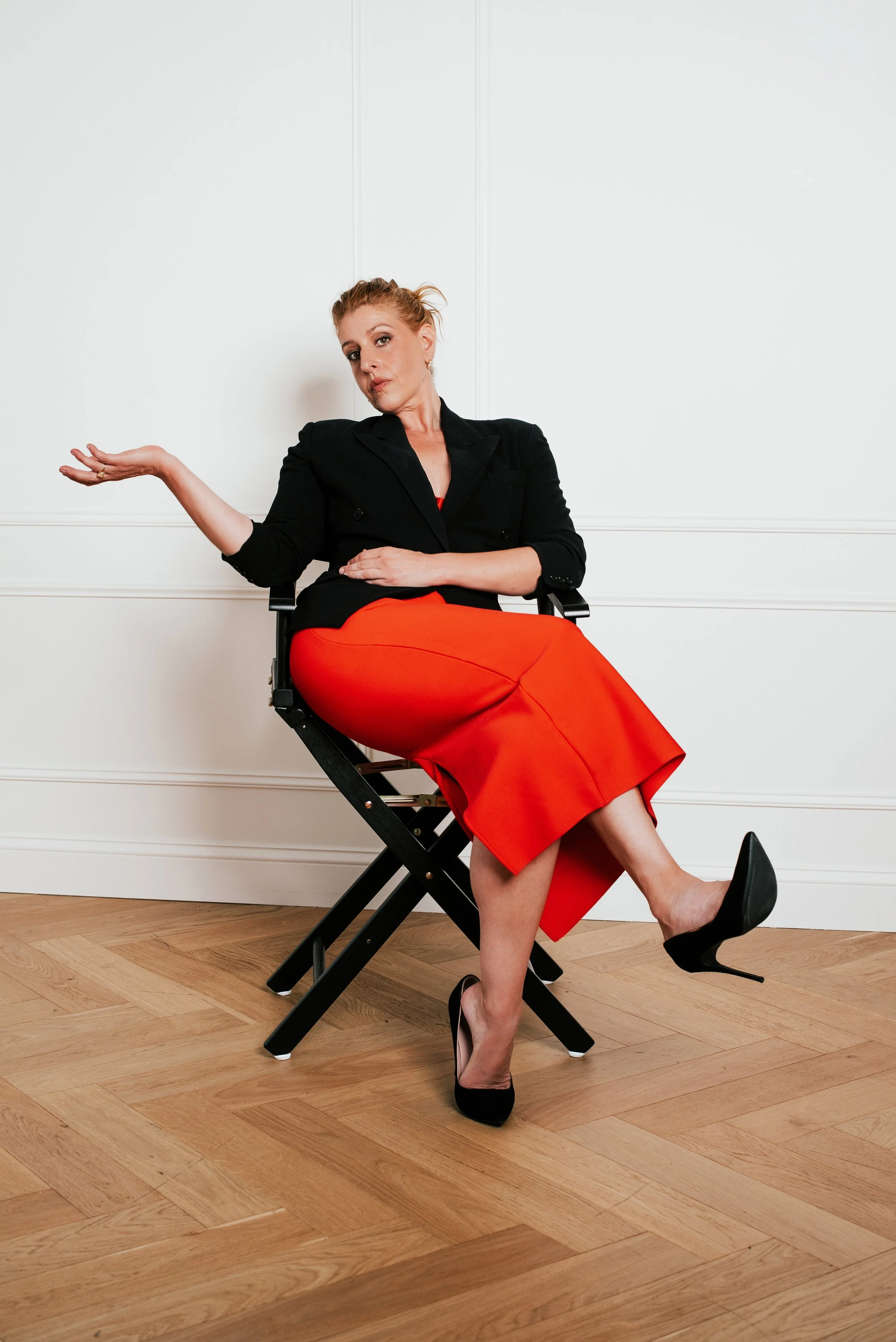
There’s often a dark comedic element to my work because humor is one of the most revealing aspects of human behavior. We do ridiculous things in pursuit of very serious desires. Whether I’m writing a metaphysical television series, a romantic comedy, or a story set in another historical period, I’m interested in the contradictions that make people human. And, of course, the wardrobe. Color is time, place, and emotion for me. It’s deeply woven into how I perceive the world, and I love sharing that visual language through narrative features and episodic television. Ultimately, I’m drawn to characters who refuse to accept the world exactly as it’s presented to them, who dream in beauty and possibility beyond the realm of their perceived circumstance.
Fashion, like dance and cinema, communicates through movement, texture, and visual identity. How does fashion influence your creative vision, and what role does personal style play in your own artistic expression?
I’ve always loved fashion because it’s such an immediate form of storytelling, escapism, and a declaration of identity.Before someone speaks, their clothing has already communicated something about who they are, who they want to be, or perhaps who they’re pretending to be. I’m fascinated by the relationship between clothing and movement. The way a garment changes someone’s posture, the way fabric moves through space, the architecture of a silhouette. Costume is profoundly transformative. Having worked across dance, film, and fashion, I see them as deeply connected visual languages. Costume can reveal character just as effectively as dialogue, sometimes more effectively. That immediacy is incredibly appealing to me, particularly the ability to signal identity and play with our perceptions of status, beauty, and value. Personally, I love the freedom of fashion. I don’t think style should be fixed or predictable. It’s an opportunity to explore different aspects of yourself. Some days you want to disappear. Other days you want to make an entrance.I think both impulses are equally interesting, and entertaining to watch the world around you respond with such immediacy to a visual presentation of identity.
As a multidisciplinary female artist working in an industry that often encourages specialization, what has been the greatest challenge, and the greatest freedom, of creating your own artistic path?
I don’t think I’ve ever been particularly interested in convincing people that I should be allowed to work across different disciplines. I’ve simply followed the work. The greatest challenge is often navigating my own expectations and assembling the right people to realize a vision. Creating something exceptional requires extraordinary collaboration. It’s about finding people whose talents complement one another, who are motivated, engaged, and capable of moving together at the speed the work demands. I don’t believe artists need to be confined to one medium anymore. Creativity is cumulative. Every experience informs the next, sometimes in ways you couldn’t possibly anticipate. The greatest freedom is trusting your own intuition. Where are you inspired? Where are you engaged? What feels stale? What have you outgrown? My experiences as a dancer, actor, choreographer, writer, and director aren’t competing identities. They inform one another. Perhaps creating your own artistic path is really about looking for home, finding the places, people, and forms of expression where you feel most alive. And that home can change throughout your life, or maybe what changes is the compass.
What inspires you outside the world of filmmaking? Are there particular artists, places, musical influences, or everyday experiences that continually find their way into your work?
Musicians, painters, architects, fashion designers, a streetscape in an unfamiliar city, or the wonderful humor of the very young and very old existing side by side. I’m particularly inspired by laughter. It’s a common language that connects us to other people almost instantaneously, often more effectively than anything else. Literature, music, painting, architecture, philosophy, psychology, fashion, and the extraordinary theater of everyday life all find their way into my work. I love New York because you can walk down the street and encounter a hundred different stories in the space of a few blocks.
I’m fascinated by the histories beneath the surface of places, the people who inhabited them before us, and the ways those histories continue to influence the present. Music is an enormous influence. I can hear something and immediately begin imagining an entire cinematic sequence. I also love unexpected conversations with strangers, the peculiar things people say when they think no one is listening, and the repetition of human behavior across generations. I find enormous inspiration in dance. There’s something extraordinary about the intelligence of the body and its ability to communicate beyond language, it never gets old. Ultimately, I’m inspired by curiosity.I love creating beauty and the possibility of transforming our experience of existence, from the most intimate personal moment to something that resonates on a global scale. I think the world is far stranger, funnier, and more beautiful than we give it credit for.