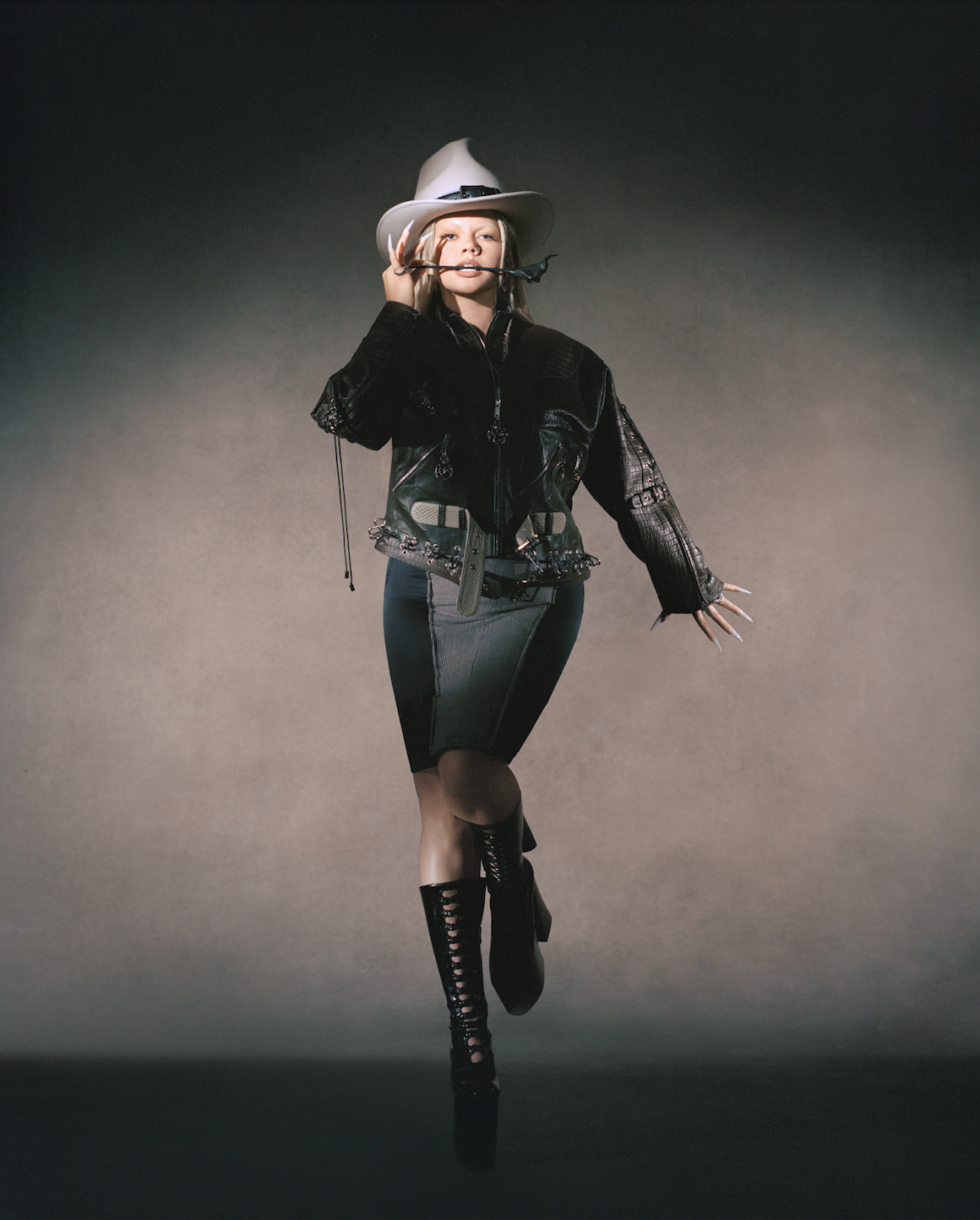
IN CONVERSATION WITH CHINCHILLA
interview by JANA LETONJA
British artist, songwriter and producer CHINCHILLA has built her career on doing things her own way. After breaking through globally in 2023 with Little Girl Gone, becoming the first female solo artist to top Billboard’s Emerging Artists chart, she’s now returning to where it all began: fiercely independent and fully in control. Following last month’s Dog Eat Dog, CHINCHILLA continues the road with her highly anticipated debut album with Viper, a dark, cinematic and explosive track born from betrayal, heartbreak and the kind of anger we’re usually told not to say out loud.
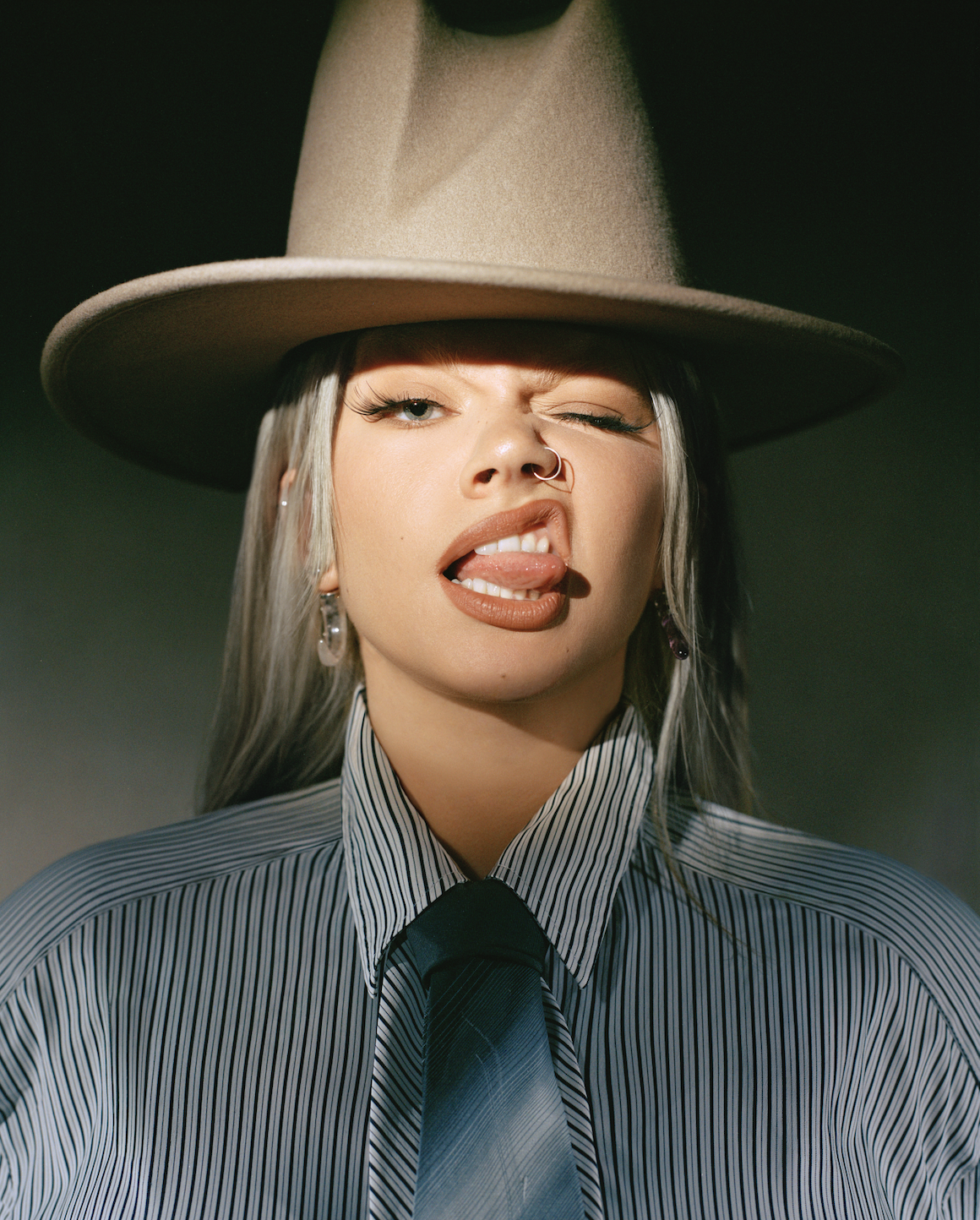
photography by HAN YANG
Viper feels huge, both emotionally and sonically. Where did this song begin for you?
I wrote this in a cabin in the wilderness in Sweden by this beautiful incredible lake, with my producer friend Hampus and writer Litens. I’d spent a lot of time the year before in one off sessions with new people every day and I had a proper craving for locking in somewhere in the middle of nowhere with some of my favourite collaborators and making something a bit deeper. I had a couple wines and I guess unlocked Viper. It’s angry and emotional, and I love writing songs that say the thing you shouldn’t.
Sonically, a lot of the track came later, when I was back in London. I just kept pushing the track and adding more and more, mainly because I just didn’t think it was good enough yet. I got a bunch of musicians on it, guitar, drums, strings, and I recorded loads of backing vocals, and we added the big key change at the end, and restructured it 100 times, and then one day I realised it was finished. I worked for so long on this song and it’s one of my favourite tracks on the album.
You’ve described it as coming from the “peak stage of angry heartbreak” and “pure betrayal rage.” How important is songwriting as a place where you can say the things you might never actually say to someone?
I mean, music is my safe space to process and reflect. As a genre, these songs are my favourite to write, the thing you thought to say too late, or the thing you truly feel but couldn’t ever bring yourself to say to someone, or the thing you know is totally irrational or hypocritical or unreasonable, but you still feel. I think honesty is important, but I do also believe in emphasising and dramatising sometimes. Then again, I guess the emotion had to exist somewhere within you, even if it was pulled up from the past.
You wrote the song in the Swedish wilderness with Hampus. Did being somewhere quite remote and removed from everyday life affect what came out of you creatively?
I think it’s really helpful to be outside of the every day in London and so when I was planning writing weeks, I wanted to make sure I was removed and just in a really different headspace. We didn’t pre-order any food and were accidentally stranded for a few days living off of potatoes that were in the cupboard. On reflection, maybe I was just hangry writing this one.
There’s a very cinematic, almost theatrical quality to the track. When you’re producing, do you tend to visualize a world or a scene around the song?
Definitely. Usually when I’m writing my favourite songs, I immediately start building a visual world while I’m writing them, imagining exactly what the visuals would be. It’s involuntary. I just love cinematic visuals. For this album, I’m planning to have a visualiser for each track, because of that. It felt really important for each song to live in its own world aesthetically, and to be honest, I just really want to create the thing I saw in the writing session. I find it hard to squash that idea once it’s in my head, annoyingly. It costs me a lot of money.
Your voice goes through so many different dynamics on Viper. How much do you experiment with your vocals in the studio before finding the performance that feels right?
Sometimes it’s the first take, sometimes it’s the 70th. It’s nice when it’s the first.
Viper follows Dog Eat Dog as you begin revealing your debut album. What do these two songs tell us about the world of the album?
I think they both feel cinematic in their own ways, which I feel like the album all does. There’s a lot of dreaminess to the album, a bit like the end section of Viper. Also, both the songs are big and textured and layered in their sound, which I think a lot of the songs are on the rest of the album. It’s all quite theatrical and very visual to me.
How much of the album is about who you are today, and how much of it reflects everything that has happened since Little Girl Gone changed your career?
I think the album is quite existential. I’m at a weird stage of my life where I can’t tell the difference between how I’m meant to feel and how I do feel, and everything in between. It is kind of tongue in cheek depressive. I guess everything in my life leads up to where I am, so yes, in that aspect a lot of it comes from where life changed for me when Little Girl Gone came out. I’m putting it on the album because of how monumental it was to my life. I want the album to feel like an honest account of where I’m at and maybe where other girls in their 20s are at, or who are just feeling a bit lost and in the middle of everything.
Little Girl Gone became a huge breakout moment and took you to the top of Billboard’s Emerging Artists chart. How did you process that level of attention when it happened?
I didn’t process anything, I was way too busy trying to run it all.
Independence and creative control have always been central to your career. What does being an independent artist allow you to do that you’re not willing to compromise on?
Being independent just works best for me. It’s really important for me to be able to experiment, to write a song, imagine a visual world and then just do it. It’s a lot easier to physically do that with a small close team that really understand you and can just make it happen, without rejecting an idea or telling you it’s not possible or is too expensive. I believe the price of something is very dependent on how you do it. You can create gold from nothing if you’re creative enough. I believe in investing in making something look amazing, but there’s definitely ways to do things smartly when you don’t have a huge budget. I’ve also never been a far-in-advance planner, I just think doing things in the moment is so magic, and I believe in that, and I also hate when a moment is missed because it took so long to do it that the magic died. I just really like moving with an idea, and being independent with a small team of close people really allows that. It’s a lot more freeing. I don’t like people who are telling me we can’t do it for some long reason that doesn’t make sense.
You’re an artist, songwriter and producer. Do those feel like three separate roles when you’re making music, or have they become completely intertwined?
They feel intertwined. I want to have fun writing the songs and make them the best they can be, and often that means working with and bouncing off other musicians to get there. Because it’s fun. I can get in my head too and hit a wall and overcomplicate things sometimes. Bouncing off people helps me a lot. I like writing with a producer because it allows me to focus on writing the songs without getting distracted or blocked by having to make the production. But then most of the time I take the stems and work on it all in my shed. I’ll always be involved in every part. All very intertwined.
Your music often takes emotions that can feel messy, uncomfortable or even ugly and makes them feel empowering. Is that something you consciously want listeners to take from your songs?
Yeah, I would say so. I mean, I just write songs honestly, I have to. I think maybe them feeling empowering is a byproduct of speaking freely and owning it and other people relating to that. I think in my music, I stop trying to feel “correctly” and start feeling honestly. Or maybe it’s the battle between that that I write about. I just love the messy and the uncomfortable and the ugly. I think that’s beautiful.
If Viper represents the rage stage of heartbreak, what other emotional territories are we going to encounter on the debut album?
Existentialism, cutting off feelings, rage, embarrassment of caring, falling in love, irritation. Kind of all of the emotions.