
IN CONVERSATION WITH HANNAH ONSLOW
interview by JANA LETONJA
Hannah Onslow is entering an exciting new chapter in a career already filled with striking performances across film, television and theatre. Following her acclaimed turn as Diana opposite James Nelson-Joyce in BBC crime drama This City Is Ours, she returns for the highly anticipated second series this autumn, continuing a role that helped establish her as one of Britain’s most compelling rising actors. At the same time, she heads to the National Theatre to star alongside Anne-Marie Duff in Some Woman, beginning October 7. With previous credits including Jay Kelly, This Is Going to Hurt, Unicorns and Empire of Light, Hannah is proving equally at home on screen and stage, and this autumn offers audiences an opportunity to see two very different sides of her work.
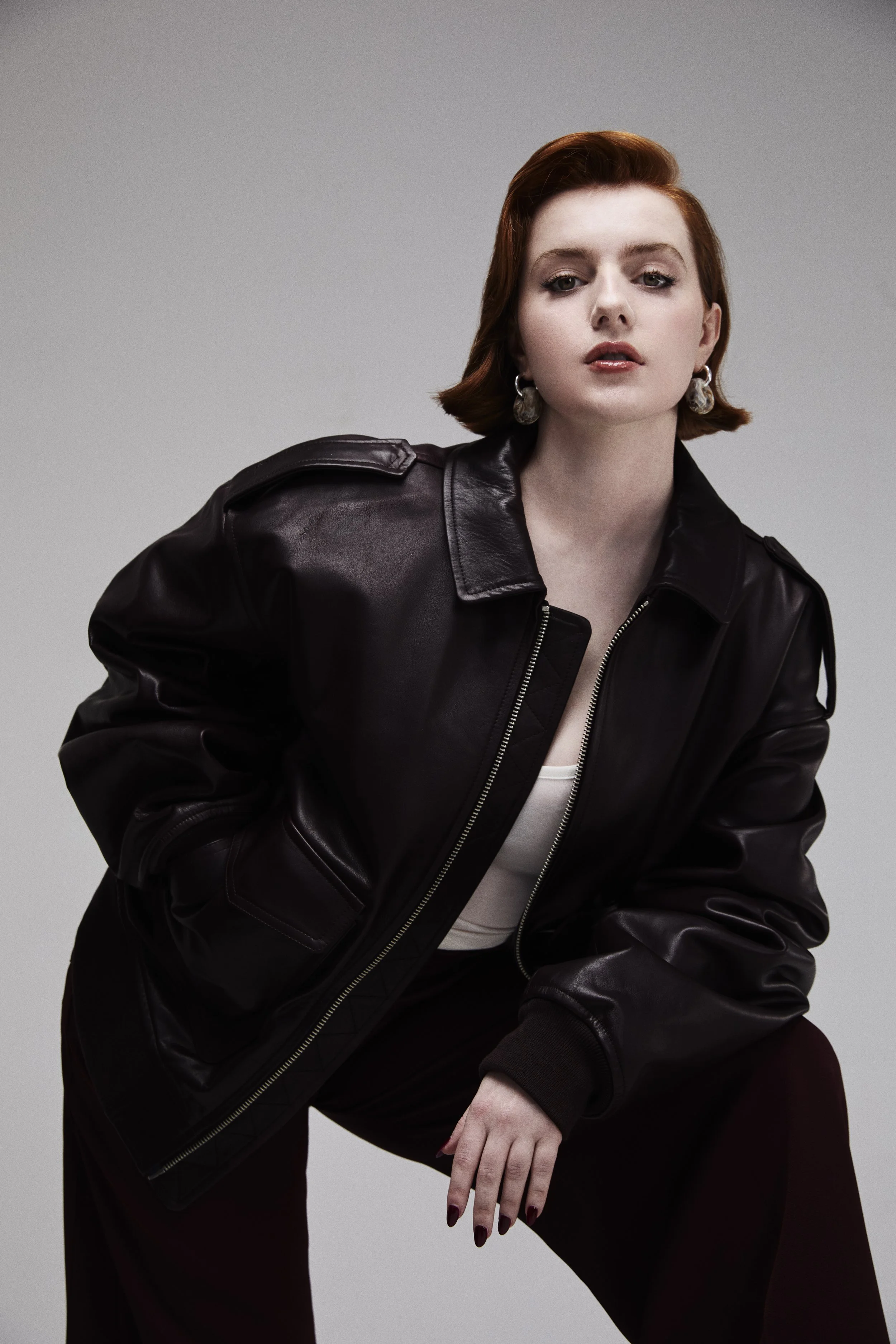
The first series of This City Is Ours connected with such a large audience. Did the scale of the response surprise you, and when did you first realise the show had really struck a chord?
The response was incredible. We have an extraordinarily talented, hard-working TCIO team behind and in front of the camera, so I think for the whole cast and crew, it was brilliant to have strangers coming up to us saying how much they love the show. A real woah moment. Felt special.
You’re returning to Diana after having some distance from the first series. What was it like stepping back into her shoes, and did you see her differently this time around?
As an actress, it was wonderful to stay true to who she was in the first series while exploring a whole new side of her. It’s all about the circumstances and she finds herself in some pretty dark situations in this second instalment, so exploring how she responds to that pressure was super exciting. What Stephen has created is fantastic and what I’ve learnt is that Diana has a wealth of unexplored emotions she’s never felt safe enough to express, but those can only stay buried for so long.
Without giving too much away, where do we find Diana emotionally when the second series begins, and what can you tease about the journey ahead for her?
Her and Michael have jetted off to Spain and she’s pregnant, which changes pretty much everything for her. I think and hope that we see her become more protective of her future and a little less contained this series.
Diana exists within a world dominated by crime, power and violence, but she has never felt like a conventional “gangster’s partner.” What was important to you about giving her an identity and agency that exist independently of Michael?
This was super important to me and was one of the main things that attracted me to Diana initially. She feels completely different to the gang and plays against the stereotype that might usually come with a girlfriend-to. I think it important to understand what Diana wants for herself, beyond what she wants for Michael. She has her own ideas about the life she wants and the kind of person she wants to be. She loves him deeply, but it doesn’t mean she accepts his choices or sees the world in the same way he does. There is a constant negotiation between that love and her own moral compass. Her agency is in those moments where she may question him, challenge him or makes a decision he might not want her to make.
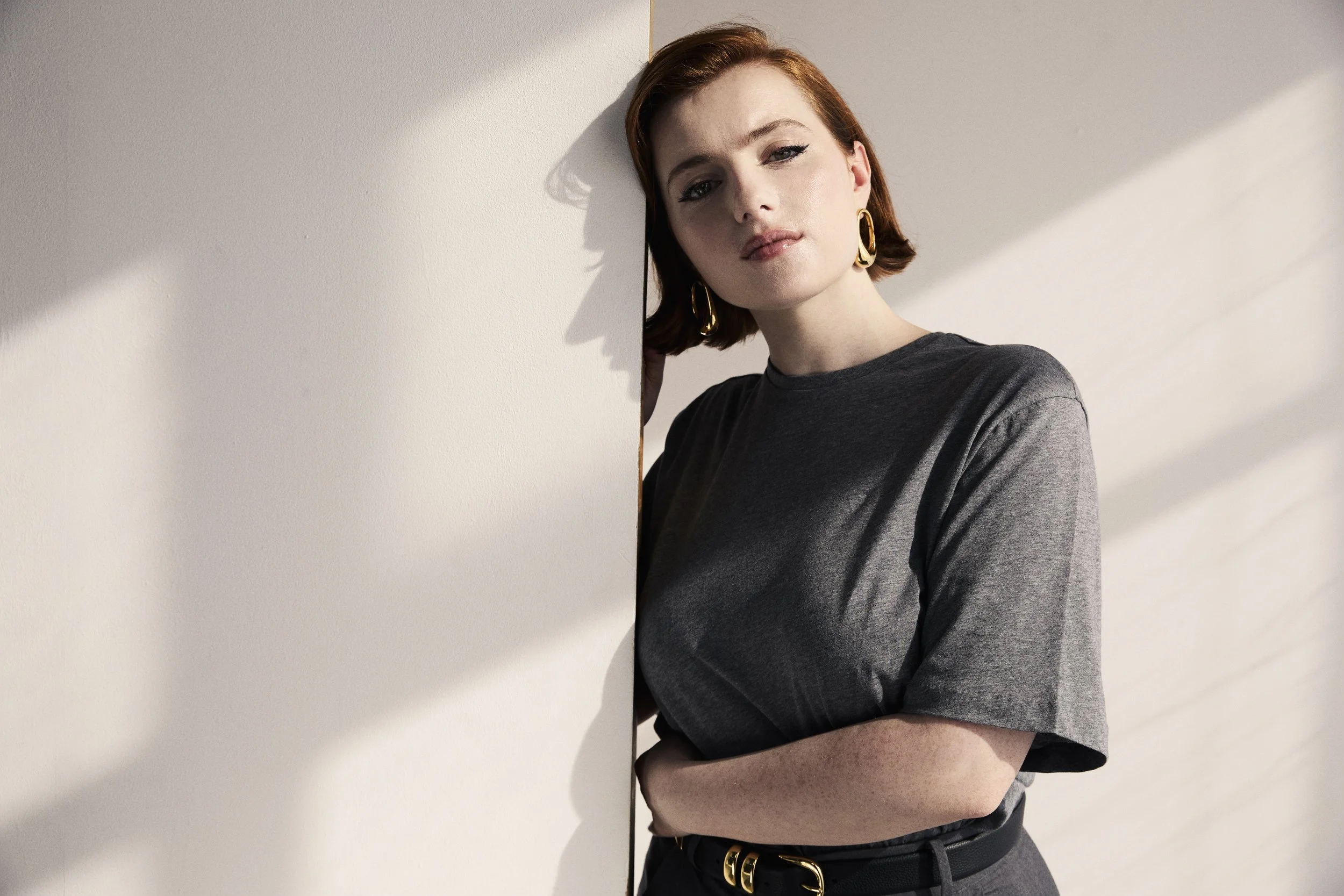
Crime dramas often focus on the people committing the violence, while This City Is Ours also explores the consequences for the people who love them. Has playing Diana changed the way you think about that side of the genre?
Absolutely. Playing Diana has made me consider just how much it could cost to love someone. She sees a tenderness and beauty in Michael, which makes it difficult for her to reconcile him with the things he’s capable of. Much of the drama for her lies in what she will accept versus where she draws the line.
After the success and BAFTA recognition of the first series, did returning for Series 2 bring a different kind of pressure, or did knowing the character and the world actually give you greater freedom?
A bit of both. I felt more freedom personally and felt like there was so much further for Diana to go, so the fact we got to have another crack at the characters was absolutely thrilling. A rarity that couldn't be taken for granted.
At almost the same time audiences are seeing you return as Diana, you’ll be onstage at the National Theatre in Some Woman. What drew you to that project and to the opportunity to make that transition from television to the stage?
I have wanted to do a play since I first saw one when I was 15/16 years old. I used to travel after school to the National Theatre bookshop to sift through plays. It used to have a little seat in the corner and I'd sit there reading until I got kicked out. To be working at the NT for my first play is a bit of a dream come true and full circle moment.
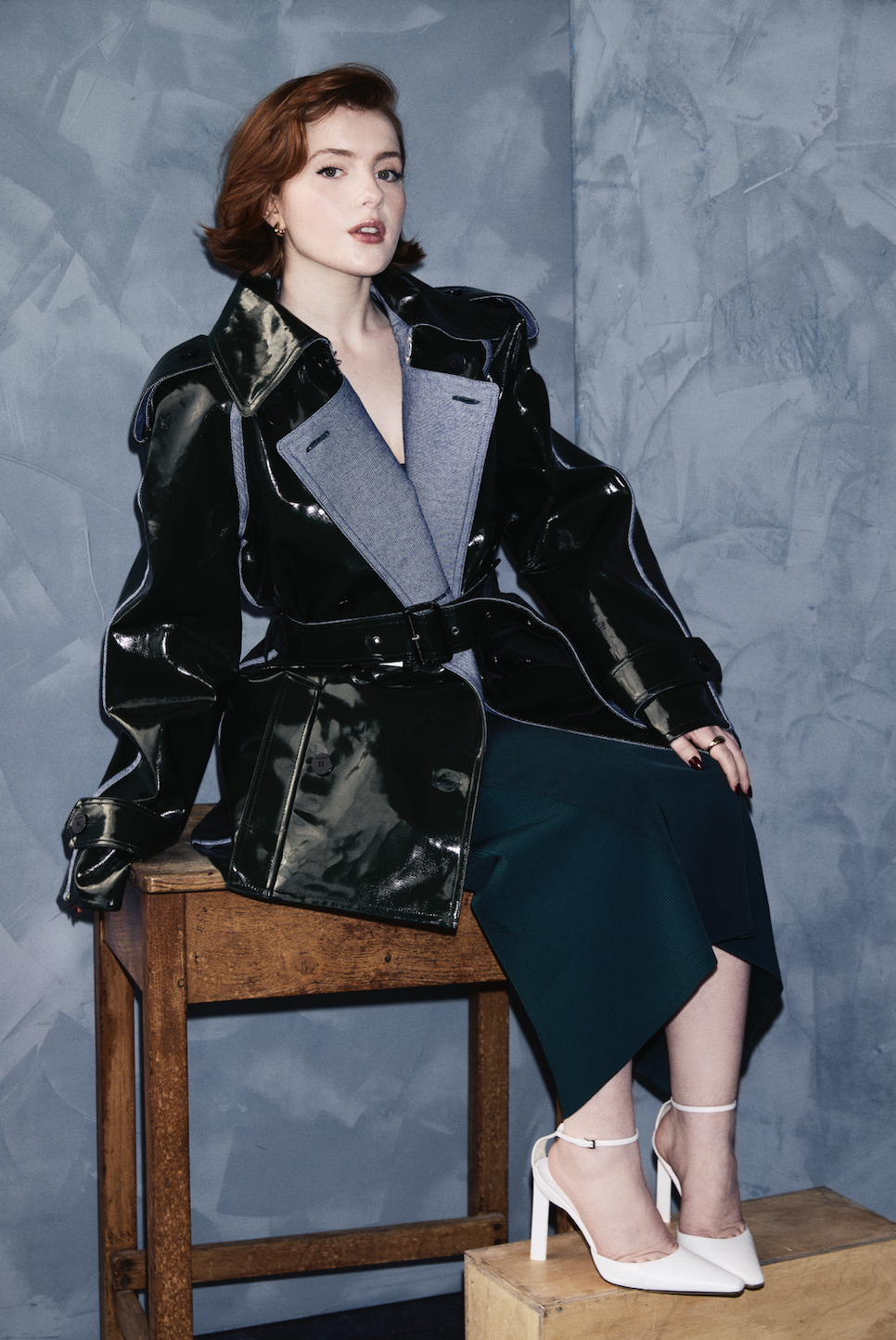
On television, you can create a performance through multiple takes and very intimate camera work, whereas theatre asks you to sustain a character in real time. Which aspect of performing live are you most excited, or nervous, about?
It’s the collaboration with the other actors every night that I am most excited about. Trying to keep it fresh and alive and rediscovering it every night. It’s an incredible play and it will be etched into my heart forever I think. The bravery within the rehearsal room and every night on stage has been so inspiring and to get to do this as a job is still a concept I am wrapping my head around. I feel very lucky in the least annoying way possible.
There’s something fascinating about audiences being able to see you in two very different roles almost simultaneously. Do you consciously look for characters who allow you to reveal a side of yourself audiences haven’t seen before?
So far in my career, I haven’t really played anyone that has been from where I’m from, or who has really been anything like me, which I love. But whilst the characters have been very different to me, and every role has felt very different from the last, there’s always been something in them that I’ve connected to personally. It’s not necessarily a conscious thing when first reading, but it’s definitely turned out that way on reflection and is something I appreciate and continue to hope for.
When a performance like Diana suddenly brings you to the attention of a much wider audience, does that change the way you think about your career, or are you able to separate the attention from the actual work?
The work and the response are two very different things entirely. You have no control over how people feel about it and I think it can interrupt your process if you get too wrapped up in any of that. It also completely sucks the joy out of it and it’s so important to enjoy and remain present in this job. This industry will always surprise you, absolutely disappoint you, sometimes and hopefully reward you, but you can never ever predict how anything is going to turn out. A teacher at RADA told me the safest warmest place will always be the work so just stay there and you will be fine. And I have definitely found it to be true.
Is there a type of character or genre you’re particularly hungry to explore next?
I would love to do more theatre as I am having the most rewarding time on Some Women and it’s been great for my soul, but whatever medium I work in, I want to continue to be challenged by the variety of the work and continue to collaborate with and inspired by talented, creative people.
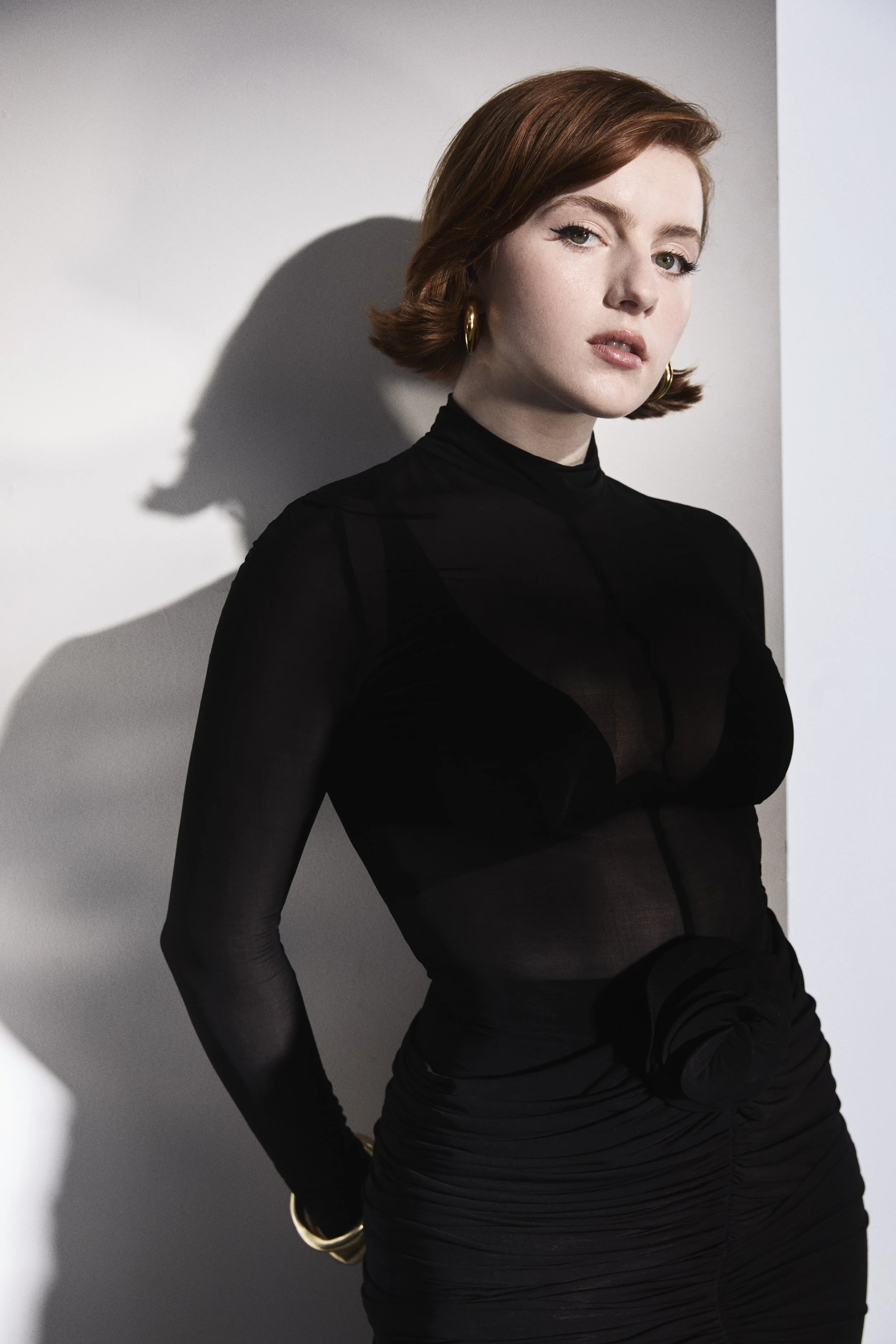
TEAM CREDITS:
photography DAVID REISS
styling ANNA HUGHES-CHAMBERLAIN
hair NOHELIA REYES
makeup SARA HILL
