IN CONVERSATION WITH DANDARA FERREIRA
interview by LEANDRO DA SILVA
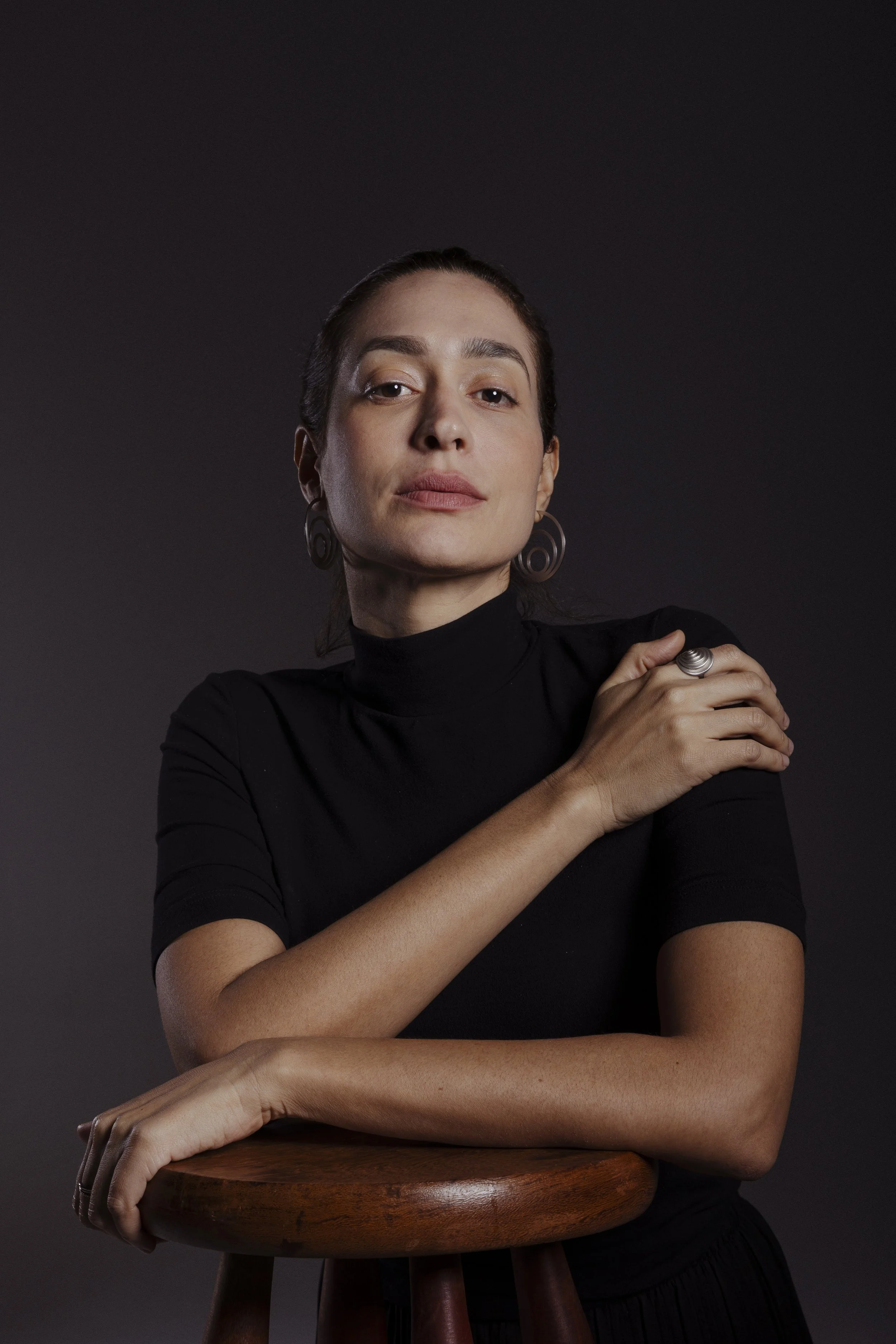
DANDARA FERREIRA has built her career in cinema around the intersection of memory, culture and Brazilian history. A director and screenwriter, her work moves between documentary and fiction, often bringing together cinema, music and Brazilian cultural memory. Her filmmaking has taken her from the documentary O Nome Dela é Gal, about Gal Costa, one of the defining voices of Brazil’s Tropicália movement and one of the country’s most influential singers, to her first feature, Meu Nome é Gal, co-directed with Lô Politi, and more recently to Vou Tirar Você Desse Lugar, a film that explores the life and artistic legacy of singer Odair José.
Her filmmaking also engages with more recent chapters of Brazilian history. In Anatomia do Caos, Dandara draws on images and events surrounding Brazil’s COVID-19 parliamentary inquiry to reflect on a period that remains close to the country’s collective memory. Across her work, she continues to explore the ways personal stories, cultural figures and historical events can be revisited and transformed through cinema.
You grew up in an environment closely connected to culture and politics. What first sparked your interest in cinema and led you to pursue it as a career?
My family was always surrounded by culture, especially music. I’m from Bahia, where music is everywhere, and politics was also a strong presence in my life because of my father. I started doing theatre when I was very young, around the time my parents separated. I asked to do it myself, and I later understood how therapeutic it could be: through the body and performance, we can work through feelings and things we struggle to express.
I didn’t know whether I wanted to be an actor. For a while, I even imagined becoming a diplomat. When it was time to apply to university, I was torn between International Relations and Cinema. My interest in directing grew through a theatre course with Fátima Toledo. I applied to both courses, but by the following year I was sure I wanted to study cinema. It was at university, as I watched more films and discovered different directors, that I began to understand the kind of filmmaker I wanted to become.
An important part of your work has been dedicated to two of the most iconic figures in Brazilian music, Gal Costa and Odair José. What draws you to telling the stories of artists with such complex and distinctive lives?
With Gal, I was a fan, and I realised there wasn’t a film about her. The period I chose to explore was also deeply political. During the dictatorship, artists such as Gilberto Gil and Caetano Veloso expressed their political positions through their words. Gal’s expression was different: she used her body and her voice. Through this, she became a political figure and opened a path for women at a time when it was extremely difficult for a woman to be a singer and take a public stand.
With Odair José, I felt it was important to tell the story of an artist we hadn’t fully recognised. When we talk about artists who played an important role in resisting the dictatorship, we tend to focus on certain figures, often overlooking Odair. I think this also reflects a prejudice against brega music, a label that carries a value judgement. Odair was hugely popular and spoke to working-class audiences, including domestic workers and sex workers. He was one of the best-selling singers of his time, even outselling Roberto Carlos. He was signed to the same record label as Caetano Veloso, and his commercial success helped the label invest in more experimental, conceptual artists. Over time, his reputation has changed, and today he is widely celebrated, particularly by younger generations, who have embraced him as a cult artist.
I chose to tell their stories because I’m interested in these artists, but also because telling their stories means telling the story of Brazil. We have such a rich musical culture, and through these artists and the periods in which they lived, we can revisit and understand important moments in the country’s history.
Gal Costa was closely involved in Meu Nome é Gal after you had directed O Nome Dela é Gal, a documentary miniseries about her life and career. What was it like to tell the story of someone you already had such a close relationship with? And how did that proximity influence the choices you made in bringing her story to the screen?
I knew Gal, but we weren’t close at first. We built a relationship through the documentary, and she gradually came to trust me. She was very reserved, so our connection was largely through work. I had idealised her because I was such a fan, and making the documentary allowed me to discover who she really was. Later, she invited me to make the biographical film Meu Nome é Gal.
Making a biographical film came with a great responsibility. You cannot simply present an idealised version of someone, as that would undermine the film’s credibility. At the same time, I wanted to respect Gal’s privacy. Her sexuality was a sensitive subject for her, but it was part of her story, and ignoring it would have meant portraying someone who didn’t reflect reality. I had to find a balance between being faithful to her life and treating her with care. Every film needs conflict, and finding that balance was one of the challenges.
Meu Nome é Gal was made as a tribute to her, and I was very sad that she passed away a few months before its release. I had hoped she would get to see it in a cinema, as a gift. During the release, a few coincidences made me feel that, somehow, she had seen it. On the day of the film’s premiere in Rio, I was getting ready in my hotel room with a friend when a song in Gal’s voice suddenly started playing on Spotify, even though I hadn’t been listening to music. I looked at my friend and asked, “Are you seeing this?” She was just as moved as I was. It was such an extraordinary moment, especially as I was getting ready to attend the premiere.
I hope the film did justice to her story and to the place she holds in Brazilian culture.
In Vou Tirar Você Desse Lugar, you chose not to follow a linear biographical structure, instead bringing together archival footage, performances and testimonies from Odair José himself. What led you to approach his story through this particular cinematic language?
Odair is a wonderful storyteller. He calls himself a “musical chronicler”, and I really wanted him to tell his own story. At first, he was reluctant because he told me, “My story is still being written. I’m not dead yet.” I told him that I understood his story was still being told, but that we could make several films about him. For this film, I had a very specific focus. I wasn’t trying to tell the story of his entire life or career, but to explore a particular part of it, one he could look back on with some distance.
I really wanted him to tell the story himself because he is such a good storyteller. I had wanted to do something similar with Gal in the documentary, but she was very reserved, and I wasn’t able to. With Odair, I was able to realise that idea and let him tell his own story. He was also happy because, as he told me, people had said and invented many things about his life. This was his opportunity to explain how things had happened from his own point of view.
It was moving to see how much he connected with the film. When we screened it at the São Paulo International Film Festival, the 500-seat cinema was full, with many young people in the audience who wanted to learn more about him.
Anatomia do Caos began with footage you recorded inside Brazil’s Senate during the COVID-19 parliamentary inquiry in 2021. You started filming without knowing what the material might become. How did your perspective evolve as you witnessed the investigation from within?
I’m a director, but I don’t usually operate a camera. At that moment, I had no crew. I was there with a small camera, following an intuition that something important needed to be recorded. I also felt a lot of anger about what was happening in Brazil, and I realised that filming was one way I could express that anger. A camera can also be a kind of weapon; it can make people uncomfortable and hold them to account.
I started filming without knowing what the inquiry would lead to or whether the material would eventually become a film. I spent almost seven months at the Senate, often keeping a low profile because of the pandemic, although I had permission to be there. The story was unfolding as I filmed, so I had no historical distance from the events. I was documenting them as they happened.
I initially thought the film would be ready for the 2022 election, but it wasn’t. In retrospect, that gave me more time to develop my understanding of the material. A lot happened in Brazil during that period, including the events of 8 January 2023, which added further context to what I had been documenting. I’m proud that the film preserves a record of that moment in the country’s history.
I think we have a very short memory in Brazil. People tend to forget what happened, even when it was so recent. I understand that forgetting can sometimes be a form of self-protection, because the pandemic was a collective grief that we are still living with. Sometimes it feels easier to pretend it never happened and carry on with our lives, because otherwise life becomes too heavy. But I believe it is important to remember.
I hope the film can serve as a historical record that people will be able to look back on in the future to understand what happened in Brazil. I also tried to be as faithful to the facts as possible. I’m not the narrator of the film; the story is told through the press coverage, which helped me keep the film as factual as possible.
What is your creative process like when you begin developing a project, and what usually guides your choices as a director?
Every film is a different process, but I’m very drawn to images. I have folders on my computer filled with images that don’t necessarily seem connected, but that are important to me as references and for the associations they create. I collect images from different decades, places and contexts, and they don’t necessarily have to be related to one another.
Meu Nome é Gal, for example, grew out of many visual references from the 1960s, 1970s and 1980s, as well as other periods. These images gradually come together like a mural, allowing me to make connections and discover relationships between things that might not seem related at first. Often, a particular image gives me the initial impulse to explore a story and figure out what I want to tell.
This connection with images is also reflected in my academic work, as my doctoral research focuses on image analysis. Images are what feed my imagination. I’m constantly collecting references, even on social media, saving pictures that catch my attention. Over time, they begin to form a kind of labyrinth in my mind, opening up new associations and possibilities for a story.
Your films explore different periods in Brazilian history, yet politics is a recurring thread. Do you recognise a connection between these projects, even when their stories are very different?
Yes, especially in their political dimension. Each film approaches it differently, but I think all of them deal with politics in some way. People sometimes see politics as something distant from everyday life or as something negative, but we live and breathe it. Our decisions and choices are political.
Perhaps cinema has become a way for me to explore the political interests and ambitions I didn’t pursue directly. Whenever I take on a project, I ask myself why I’m telling this story and what impact it might have. With Anatomia do Caos, I felt I could do more than tell a story: the film created space for conversations with people who had lost family members during the pandemic. I travelled to places including Manaus, where the death toll was particularly high, and those exchanges were deeply cathartic. For me, cinema can preserve memory and create a space for people to share their experiences.
What films have stayed with you over the years, and what is it about them that continues to resonate with you?
Agnès Varda is a major reference for me, not only as a filmmaker but also as a woman and an artist. When it comes to films that have shaped my perspective, François Truffaut’s The 400 Blows stands out. I discovered it at university, and it remains one of the films that has moved me most deeply.