
IN CONVERSATION WITH CHAMELEO
interview by LEANDRO DA SILVA
CHAMELEO has built his career around transformation. Moving between music, performance, fashion and image, he has never treated pop as a fixed language, but as a space where different versions of himself can coexist. His new EP, Versão dos Fatos, turns inward, revisiting love, heartbreak, insecurity, vulnerability, and the experiences that leave their mark long after they happen.
On Versão dos Fatos, Chameleo embraces a more vulnerable and emotional side of his work, reflecting on the relationships, experiences and questions of identity that have shaped him. The result is an intimate portrait of an artist who continues to evolve without choosing just one version of himself.
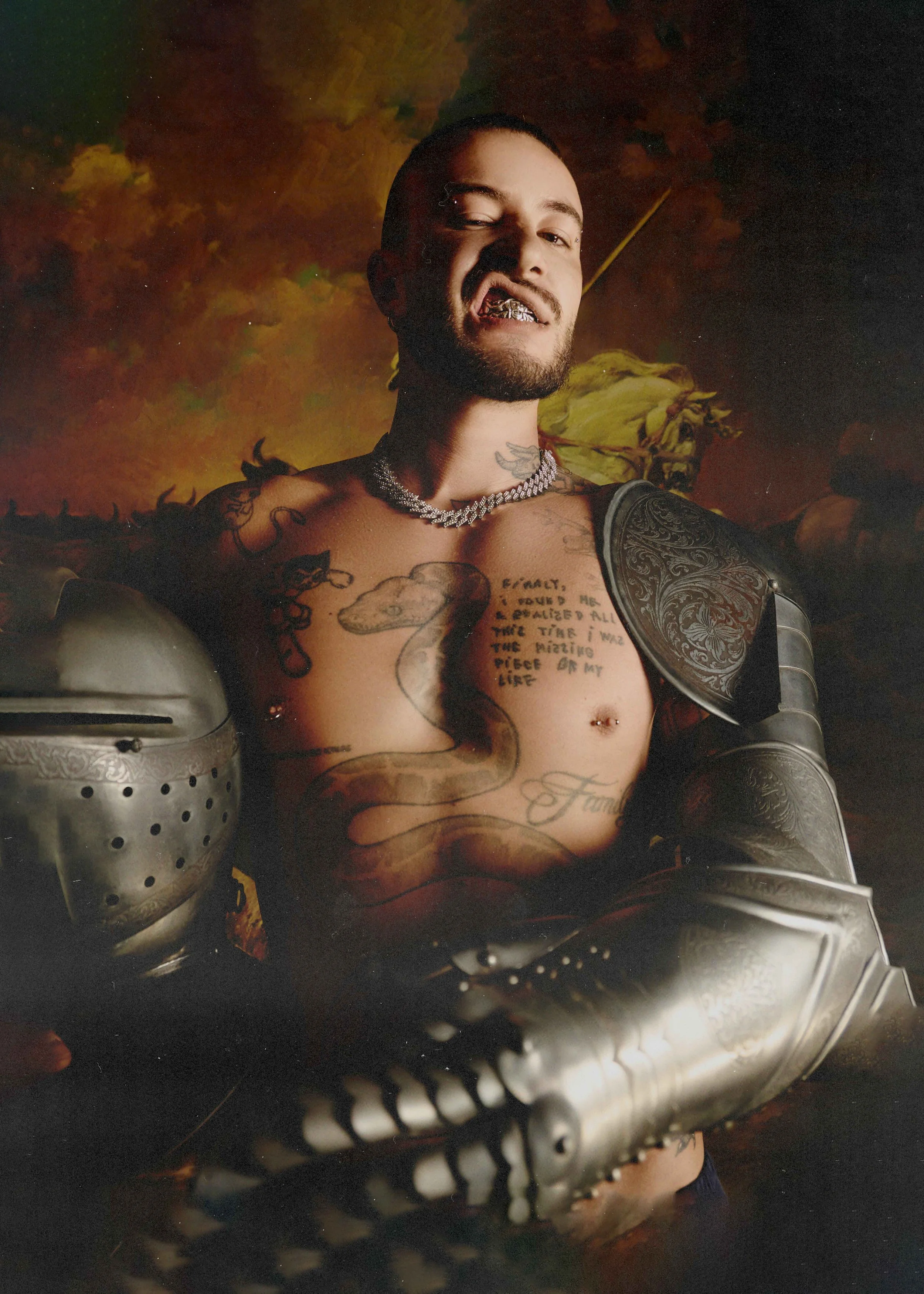
Versão dos Fatos was born from the realisation that the facts may remain the same, while the way we understand them changes with time. When you look back at the experiences that inspired this EP today, what do you understand about yourself that you couldn’t see while you were living through them?
I think this EP talks about a side of me that I had explored before, but never in such a cohesive way. It is very much about love and the way I relate romantically. I am very much an eight or eighty kind of person, so when I am in love, when I write about being in love, everything is very inflamed and intense.
I am extremely emotional. I can say hello to someone and fall in love. It has only happened twice in my life, but when it happens, it is very intense.
The facts themselves do not change because I wrote about them while I was genuinely feeling them. What changes is the way I look at them. Time softens love and heartbreak. The feeling dissolves, but it never disappears completely, especially because I rarely fall in love. It may not remain love forever, but there is always a different kind of affection left behind.
After ten years, I can still write about these experiences because they continue to inspire me. The way I see them changes, but the intensity with which I lived them was real.
There is a strong sense of intimacy throughout this EP, particularly in the way you explore love, insecurity, belonging, and vulnerability. What made this the right moment in your life to turn these experiences into music?
I think it comes from a very personal moment and from the perspective I have now, especially after turning thirty. It was also a moment in my career when I wanted to explore vulnerability again, insecurity, trauma, love, and mostly heartbreak.
My last album was much more about nightlife, partying, sex and something more carnal. That was also a reflection of what I was living at the time. Now I feel the need to connect with people through emotion because I am an extremely emotional person.
This year has also been a very important period of personal discovery for me. I feel like this EP opens a new path, and I want to go deeper into uncomfortable subjects that are part of my history, both as an artist and as a person.
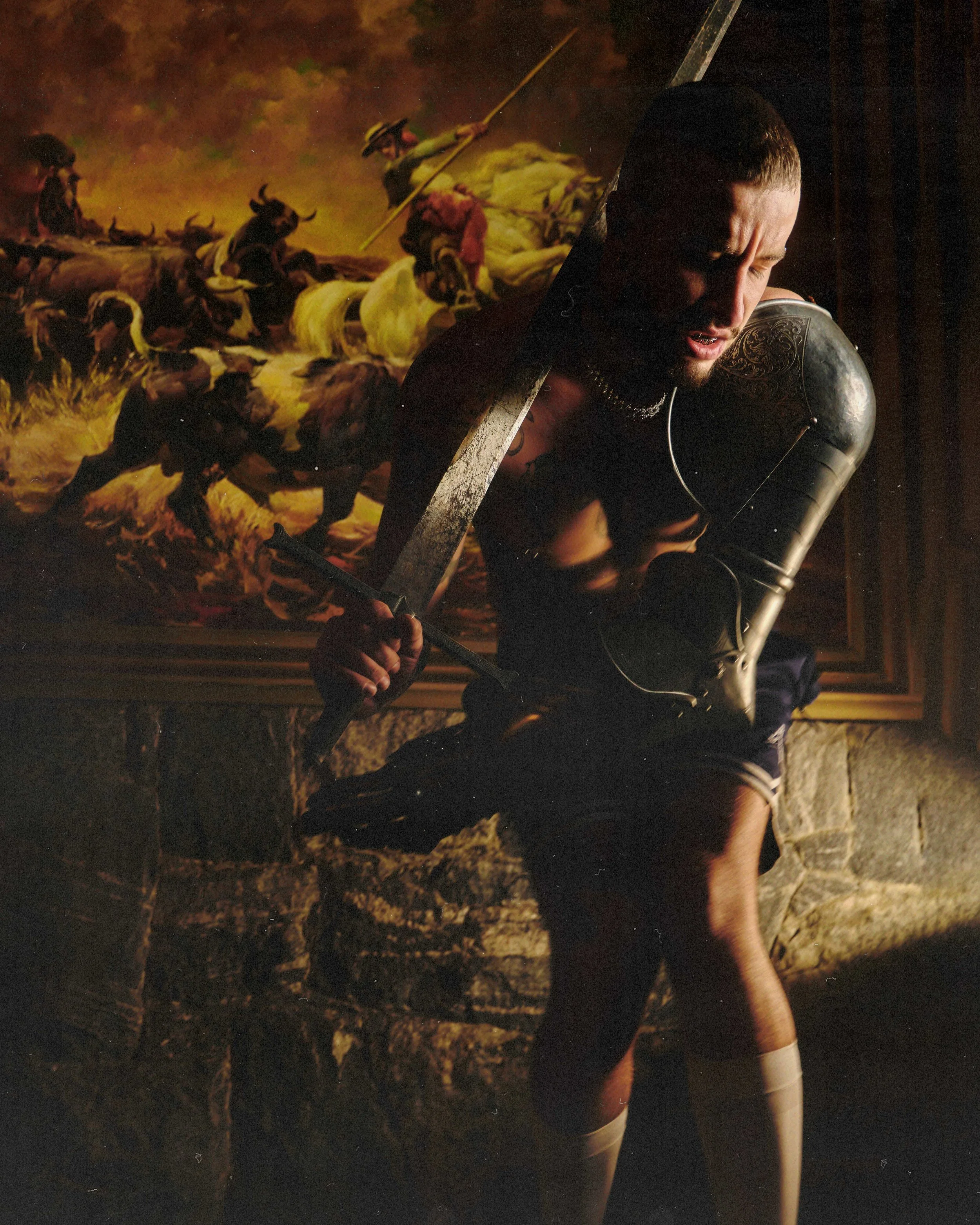
You have built your career by exploring music, performance, image, and different forms of expression. Looking back at your journey so far, what do you feel has always been at the core of CHAMELEO, even as everything else has evolved?
I think my way of communicating is very characteristic of me. The way I write and speak in my lyrics is not extremely poetic, but it is also not simply conversational. I like mixing everyday language, slang and natural speech with poetry.
That is something that remains and will probably always remain. I am a pop artist. I can explore many different genres, but the way I communicate is pop.
I also really like the idea of the different eras of pop, with the visuals and everything that comes with them. My name comes from the word chameleon, and transformation has always been part of me. Since I was a child, I have constantly changed my hair, my clothes and my appearance. The same thing happens with my music.
The thread connecting all these changes is being true to what I am feeling and to the way I want to express it.
Your collaborations with Pabllo Vittar, “frequente(mente)” and “TOKYO,” became important moments in your career. How do you feel those collaborations contributed to your journey as an artist?
Pabllo is my fairy godmother in music, but not only in music. She helped me see something in myself that I could not see and opened doors for me in the music industry.
I met her when I was working with her, doing fashion production for her stylist, around seven years ago, when she was beginning to reach the level she is at today. We immediately connected. We have a very similar and unique sense of humour, and she became a real friend, not just someone I knew through the industry.
After our collaborations, the industry, brands, festivals and people started seeing me as an artist. It gave me a kind of public validation that helped me understand myself in that way too.
She is also someone who constantly supports independent artists, especially artists from our community. She really changed my career and the way I saw myself.
At that time, I was insecure and did not fully see myself as an artist. She was the one who initiated the idea of making a song together. Her validation helped me accept myself as an artist and as a person, and also helped me embrace being gay.
That was also a period when I started exploring my feminine side, androgyny, fashion, nails, skirts and different forms of gender expression. There was always this little gay boy inside me who wanted to wear a skirt and nail polish, and I finally understood that I could.
I will always be incredibly grateful to her. She is a genuinely incredible person.
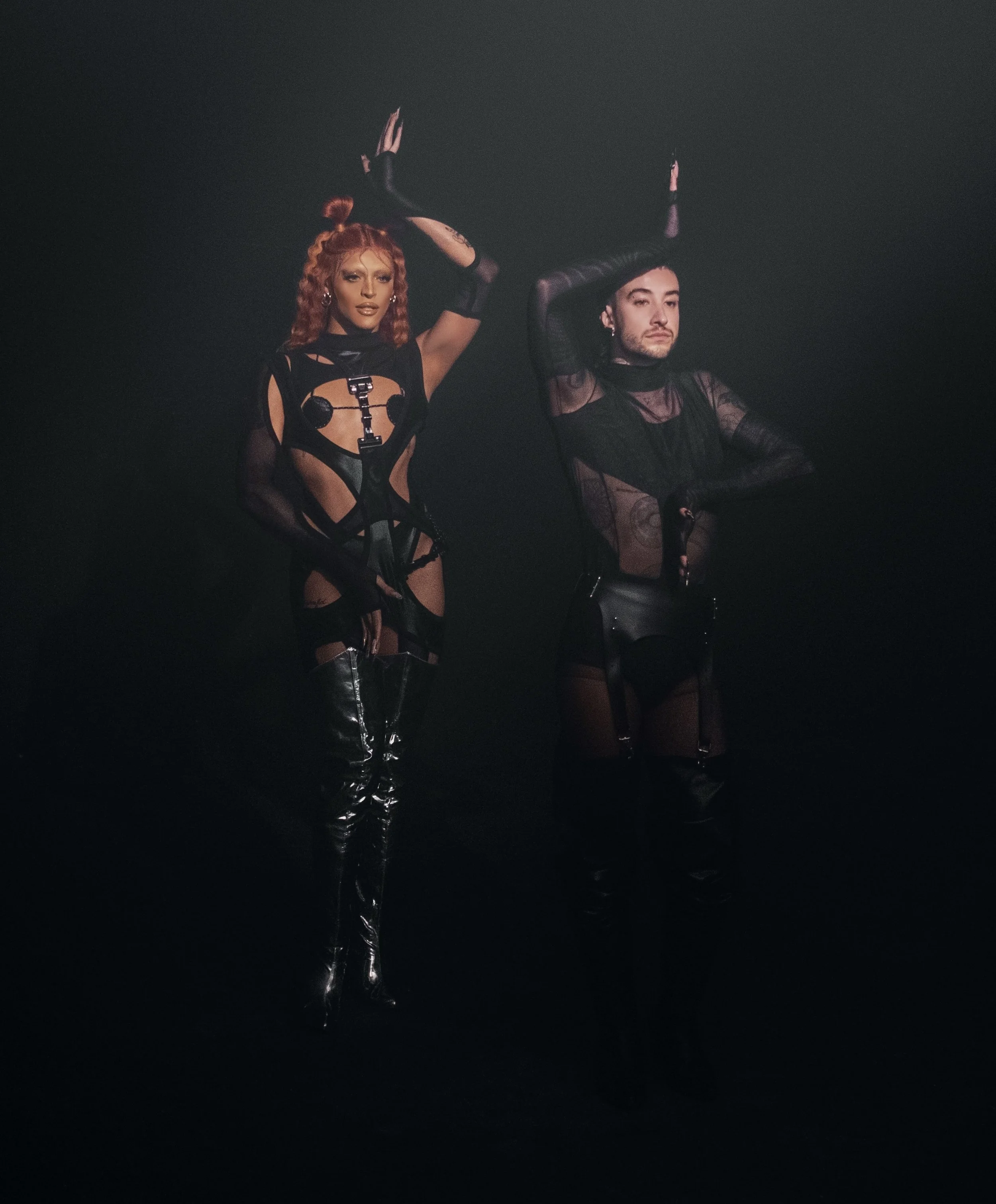
Vulnerability occupies an important place in Versão dos Fatos, alongside questions of identity, masculinity, femininity, strength, and fragility. Do you feel more free today to embrace and reveal these different sides of yourself?
Absolutely. Making my first song with Pabllo and then my first album gave me the freedom to explore my desires and different identities.
My name means chameleon, and that idea of constantly changing skin has always been part of me. Each album is connected to a moment in my life, both through the lyrics and the aesthetics.
Today, I no longer feel that I have to choose one thing. Why choose one thing when you can choose all of them?
That applies to aesthetics, to the way people see me and to music. Just because I make a dance, remix or party album does not mean I cannot make something romantic or rock-influenced next.
My language will always be pop, but I do not want to limit myself to one genre, one way of dressing or one way of expressing myself.
Life constantly tries to put people into boxes. As an artist, I feel almost an obligation to go against that. I can choose everything, as long as it is true, honest and natural to me.
You have described songwriting as a way of understanding what you feel, rather than following formulas or external expectations. When you begin writing a song, are you usually trying to understand something you already feel, or do you discover what you feel through the process of writing?
It is difficult for me to sit in a studio and say, “Let’s write a song,” because then there is pressure. It usually happens when I have no other way to vomit out what I am feeling.
I use the Notes app on my phone or a piece of paper. I do not think too much about the format. I just write. Later, I take those texts into the studio and transform them into songs.
Ideas can come when I am about to sleep, in the shower, at a party, anywhere. Sometimes I have to write or record them immediately because otherwise I will forget them.
Sometimes I read something the next day and do not even remember writing it. It is almost like psychography, or automatic writing.
I also find it difficult to write if something is not emotionally inflamed inside me. I need to be feeling something strongly.
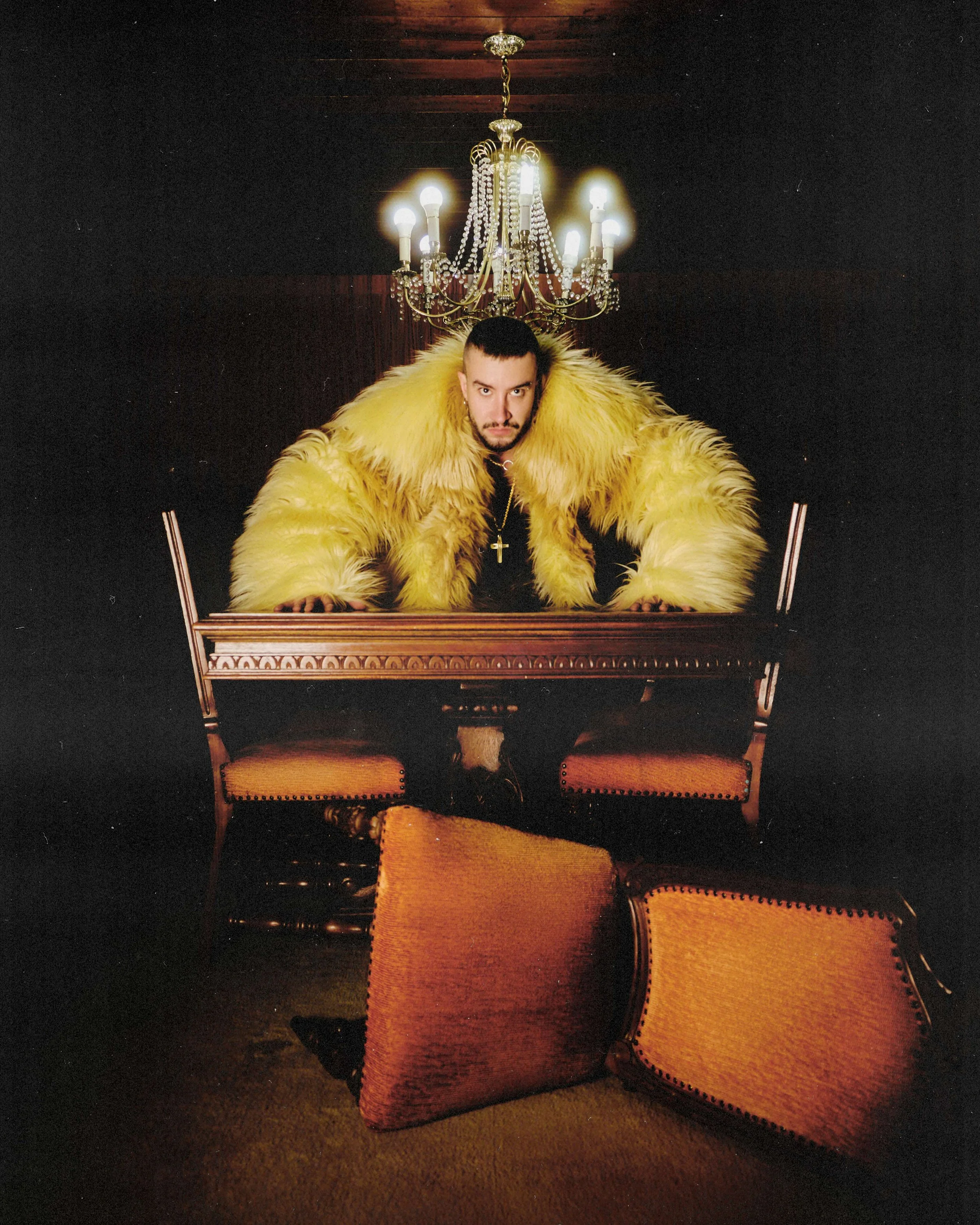
The EP brings together pop with Brazilian influences, jazz, piseiro, pagodão baiano, post-punk, and electronic music. How do you decide which sounds belong in the world you are creating, and how much of that process is instinct versus intention?
I think it is very instinctive. I do not necessarily have a fixed formula for deciding what belongs in a project. It comes from what I am listening to, what I am feeling and what makes sense for that moment in my life.
Music, image, and performance have always been deeply connected in your work. When you are developing a new project, which usually comes first for you: the sound, the visual world, or the story you want to tell?
It depends. There is no fixed order.
Sometimes I am writing a song and suddenly I can already see a visual scene. I can imagine the clothes, the location, everything. I am a very visual person.
Other times, the ideas come later, after the song is finished. During the creative process, I have these flashes of a location, a model, an outfit or a scene.
Fashion is also a passion of mine, and I have worked with it for a long time. I have an archive of clothes, so there is a lot to draw from. Then I sit down with the creative director and we start structuring those ideas.
You are entering a new stage of your career while also revisiting some of the experiences and emotions that shaped you. What feels different about creating and being an artist at this point in your life?
I think it is maturity. Today, I am more interested in doing what I believe in and less concerned with what people expect from me or what is generating hype.
Of course, music is an industry, so I cannot completely ignore the market. There has to be a balance. But today, what I believe matters more to me than how people will see it, how many streams it will get or how many people will come to a show.
I am more interested in what excites me and feeds me artistically than in simply feeding audience or market expectations.
At the same time, I am an independent artist, so I need to understand the market and the public because my career depends on it. I am trying to find that balance without losing what I want to do or what I feel I should do.
And still talking about the market and the audience, things are happening very quickly today. The way younger generations, and even other generations, consume things continues to affect everyone. Do you think this relationship with the audience has also changed the way people connect with artists, making it somewhat more complex?
I am not sure if it has become more complex or simply shallower because everything happens so quickly. There was a time when you could work on an album for almost two years. Today, unless you are already an established artist, that is very difficult.
The way people consume music is connected to the way they consume content in general. Everything is faster. That also affects music videos. They used to be such an important part of an artist's work, but now many people do not even sit through three minutes. They are constantly scrolling through clips on Instagram.
For someone as anxious and accelerated as I am, that makes the whole process even faster. It is not entirely bad, because I am naturally very accelerated. I released this EP, but the next album is already almost structured. I like having new material because it keeps me from getting bored, and I genuinely love creating.
But the pressure is also very high, especially as an independent artist. There is a financial burden too. It is easy to compare yourself to major artists who have an entire label structure behind them.
You have to find some mental balance and understand that you will not always be able to match that pace. Sometimes the problem is not you. It is structural.
What more can you tell us about your next album? What can we expect from this next phase?
I want to explore even more vulnerability and uncomfortable subjects, going back into my history. I have lyrics from 2013 that I am now transforming into songs. At the time, I was living in the United States and writing in English. So I am doing almost the opposite journey now. I started in English and then moved into Portuguese.
I am going back to those old lyrics, which were often just me and a guitar, and bringing their essence into Portuguese. I do not want to leave anything behind because if I wrote something, it meant something to me at that moment.
This album is looking backwards rather than forwards. I am bringing back old stories, old lyrics and some of my earliest musical references. When I moved into Portuguese and embraced pop, I left some of those indie references behind. Now I want to bring them back. The sound will be more organic and instrumental, with that early-2010s feeling.
I am thinking about references like The Kooks, The Killers, The MGMT and My Chemical Romance, but also contemporary artists such as Lola Young and Sombr. I think it will be the most different album of my career, but the way I tell stories and communicate will still be very much me.
The market has become increasingly electronic, with a lot of K-pop influence and, in a way, machines making hits. I think people may start looking for something more organic, nostalgic and tangible again, with guitars and drums. That is probably my biggest spoiler about the sound.
There is CHAMELEO, the artist, performer, and persona, and then there is the person behind the name. When you are completely alone, away from the stage, the cameras, and the expectations that come with being an artist, how much of CHAMELEO remains?
Chameleo is my unfiltered, confident side. Leo is almost the opposite. Chameleo is fire, Sagittarius. Leo is water, Cancer. I am very much an eight or eighty kind of person. I am actually extremely introverted and a complete homebody. I watch cartoons, read, write, and listen to traditional Chinese music and lo-fi.
My mind is very active, so I am always looking for things that help calm it down. This year, I was diagnosed as autistic and with ADHD, and that explained a lot about the way I see things and how my mind works.
Chameleo is extravagant. He is the stage, the performance, the empowered and confident side of me. Leo is emotional and fragile. He needs his own corner, his own space, and he genuinely likes being alone. I do not think Chameleo is a character. It is my fire side.
People probably do not imagine that I like staying at home, playing Pokémon or reading. Chameleo is also the party side of me, although I have become much more professional about that side of my life. I have kind of retired from nightlife and partying because I realised that, for a long time, I was using it to fill a hole or because I felt like I needed to be there.
Now I respect myself more. I am completely okay with staying home and being alone. But if someone invites me to a show, I will still be there, breaking it down.
