
IN CONVERSATION WITH COREY HAWKINS
words LEANDRO DA SILVA
interview TIMOTEJ LETONJA and LEANDRO DA SILVA
For COREY HAWKINS, acting begins with a question. It always has. Long before a character finds their voice, their rhythm or their place in a story, there is curiosity, the desire to understand what drives them, what haunts them and what they are searching for. It is an approach that has shaped a career spanning theatre, television and film, establishing Hawkins as one of the most versatile and compelling actors of his generation.
What emerges through our conversation is not simply a portrait of an actor but that of a craftsman. Hawkins speaks with equal passion about listening, discipline, collaboration and the increasingly radical act of being present. In an industry often defined by speed and spectacle, he remains devoted to something quieter: the belief that great work comes from paying attention. The result is a reflection on artistry, growth and the lifelong pursuit of deeper understanding.
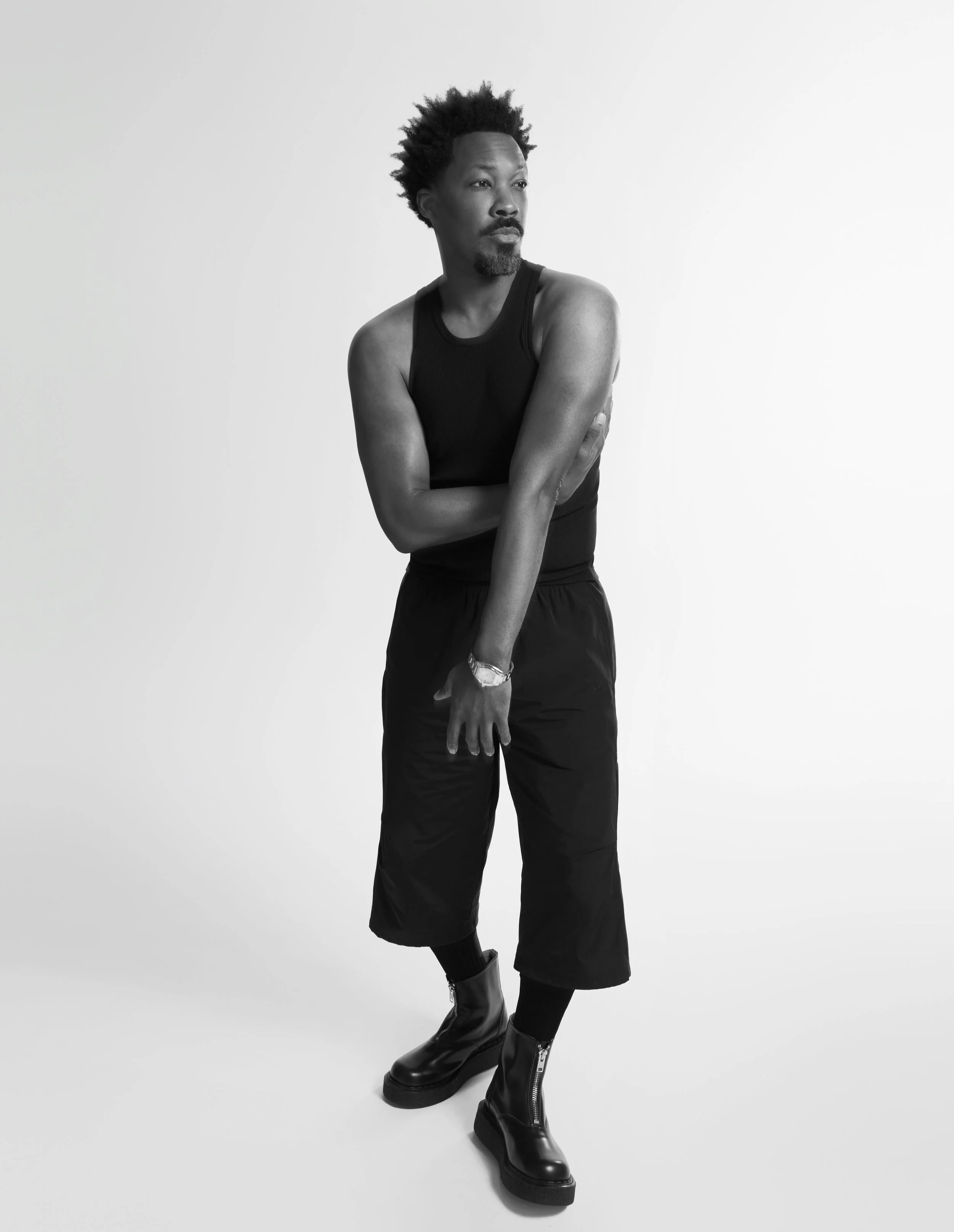
top and shorts GUCCI
watch CARTIER
Before a character becomes physical or visible on screen, where does it begin for you?
The work always begins with questions. Not necessarily a question about who they are, but about peeling back the layers of a character. For me, it starts with craft. I ask what they hunger for, what wounds them and what they desire more than anything else.
I become a bit of a nerd when I jump into character work because, as a kid, I wanted to do everything. I wanted to be a lawyer, a veterinarian, go to space, drive buses, fly planes. I never felt limited in how I saw myself, and acting allows me to explore all of those worlds. Every time you step into a new character, you’re stepping into a new world that you get to learn about.
When we were doing Topdog/Underdog (2022) on Broadway, I started thinking about character work like wearing glasses. At first, the character is out there, but he’s blurry. Throughout rehearsals and previews, the image slowly comes into focus. If you’re lucky, by the final performance or final take, you meet somewhere in the middle. Then you just hope for more time to keep exploring. The walk, the voice and all of those external things come later. You have to start with curiosity and questions.
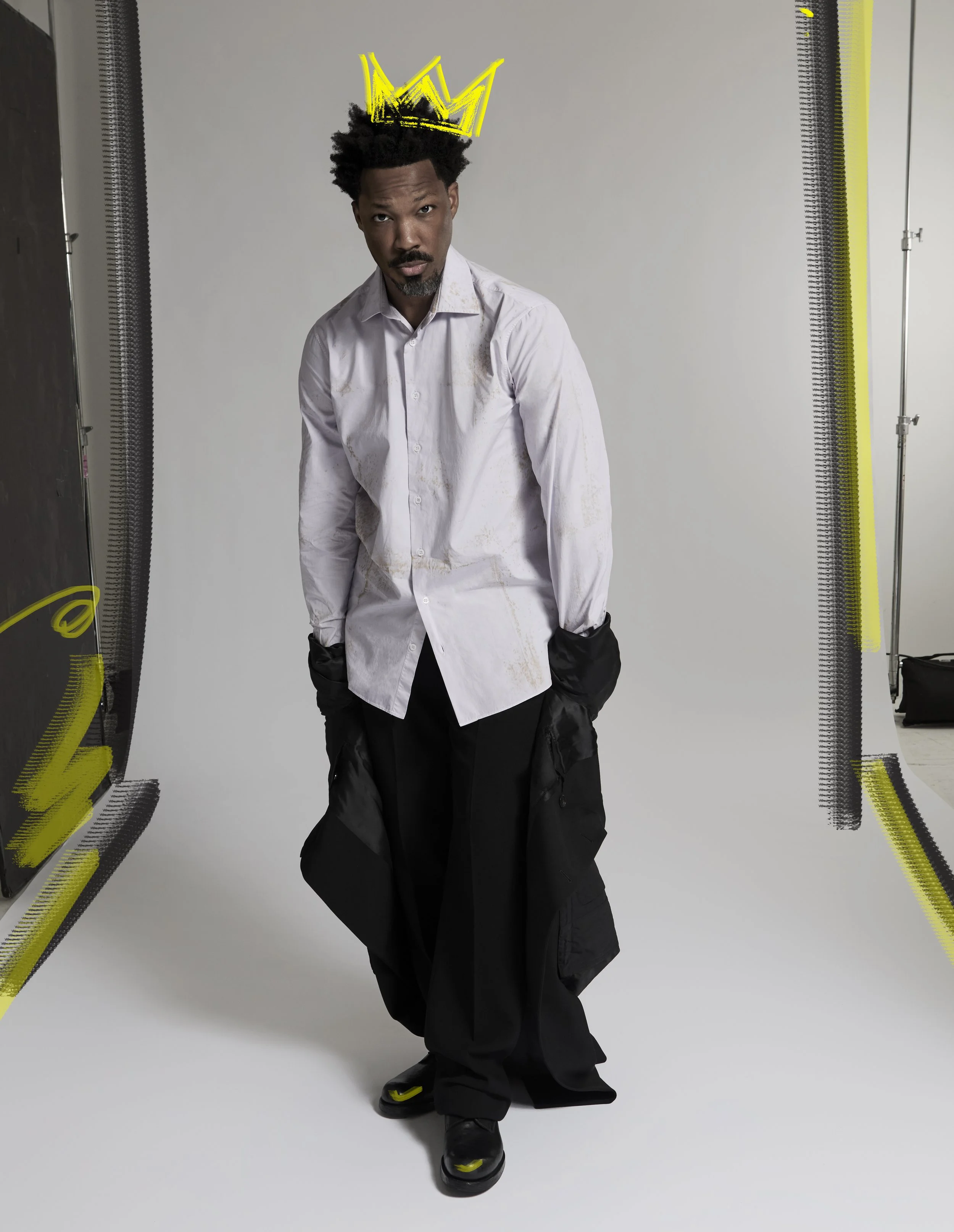
full look PRADA
What feels different about the way you approach your work today compared to a few years ago?
I think now I’m a bit less concerned with having all the answers and more concerned with the journey itself and whether I’m actually enjoying the process. Early in your career, there’s a tendency to play it safe because you’re trying to get everything right. That’s just not who I am anymore. I’m much more comfortable with uncertainty. I’m comfortable being curious, sitting in the silence and spending time with a character. For me, the real work is getting behind the eyes of a character.
Years ago, before Straight Outta Compton (2015), I ran into CHADWICK BOSEMAN. We’d known each other from New York but hadn’t seen one another in a while. At the time, he was portraying so many iconic figures in Black American history, and I was terrified about playing DR. DRE, a living legend.
I remember sitting with Chad at the back of a bar on Sunset Boulevard. We talked about acting, and one thing he said stayed with me: it is all about getting behind the eyes of the character and truly living there. That conversation completely changed the way I approach roles.
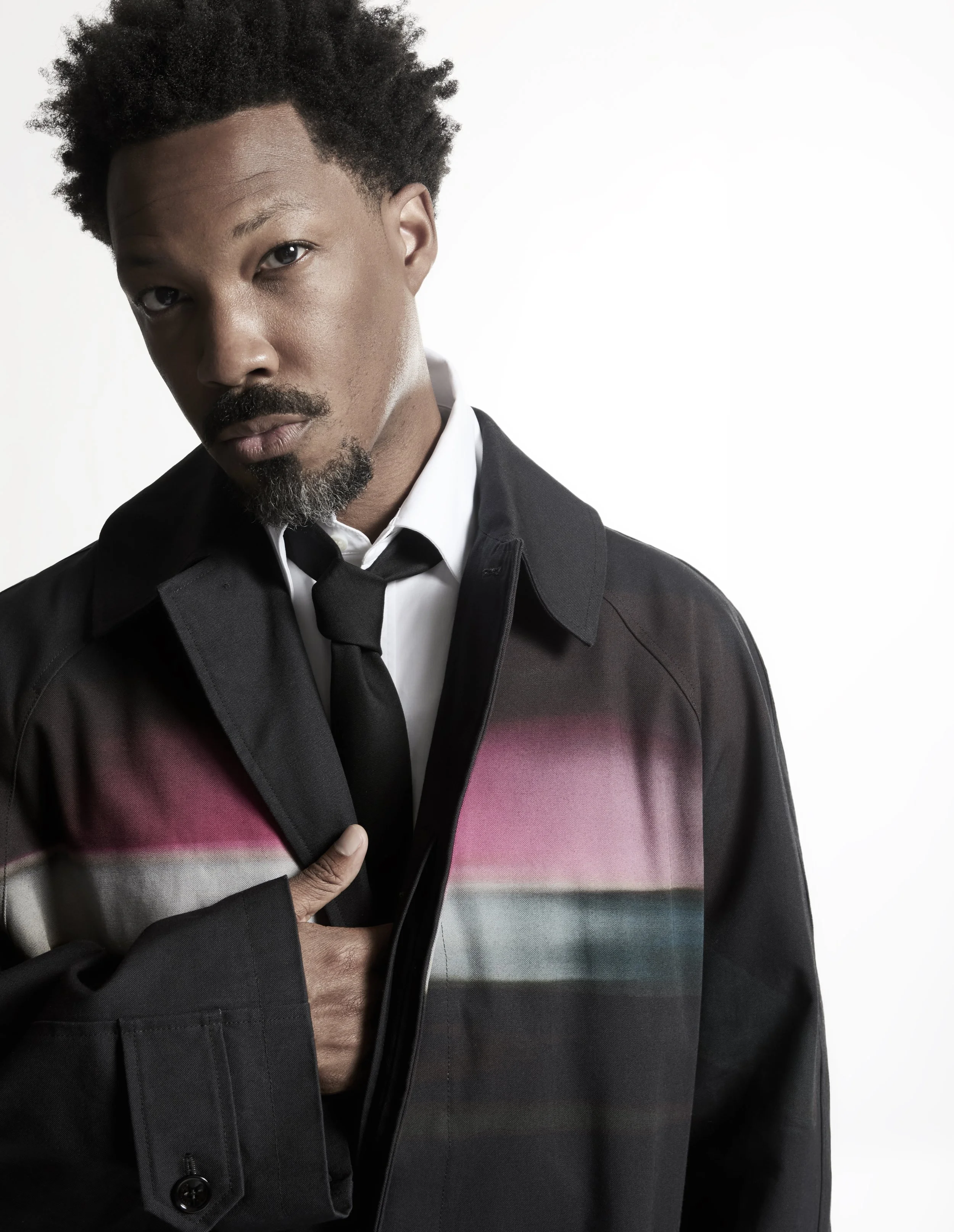
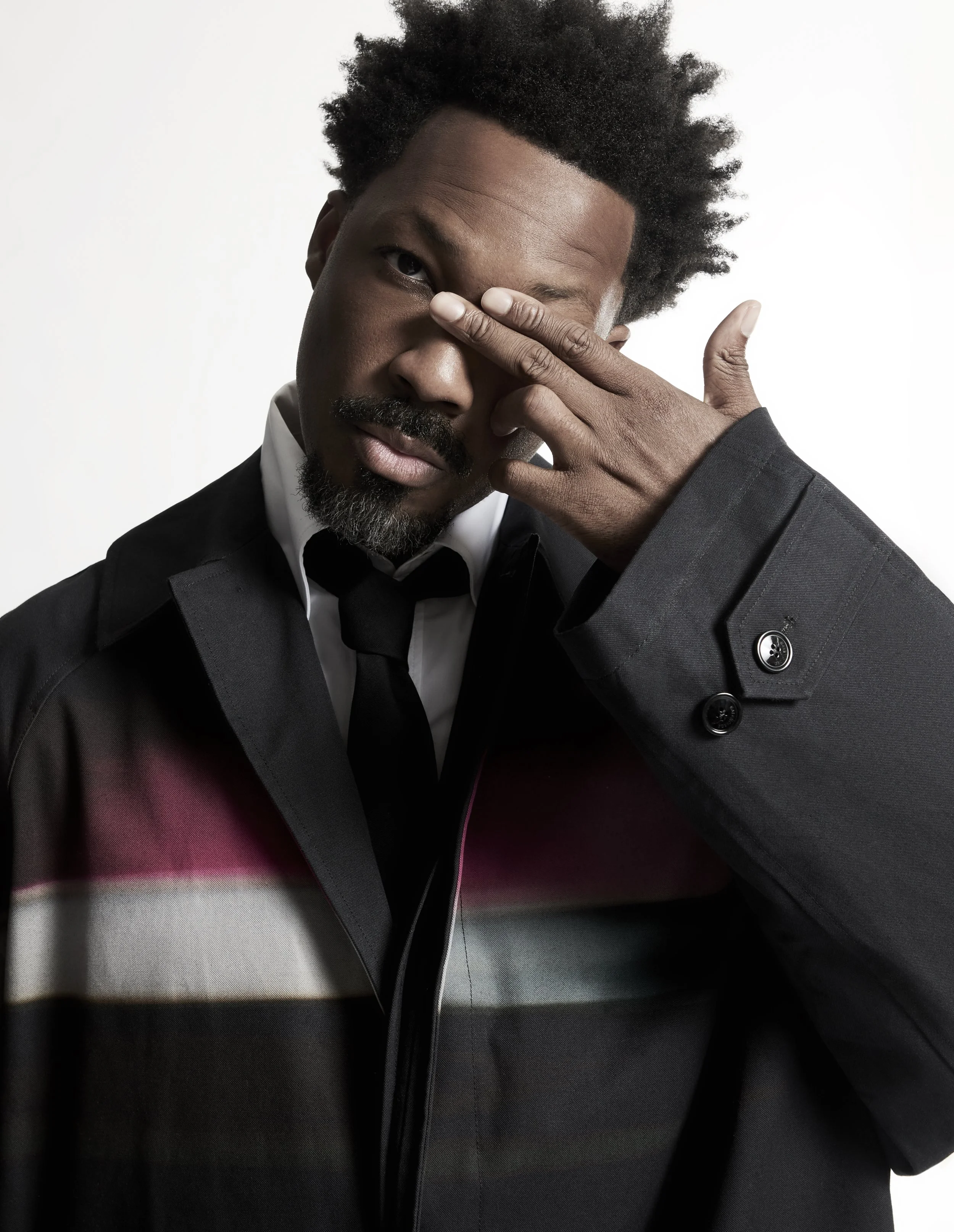
full look BALENCIAGA
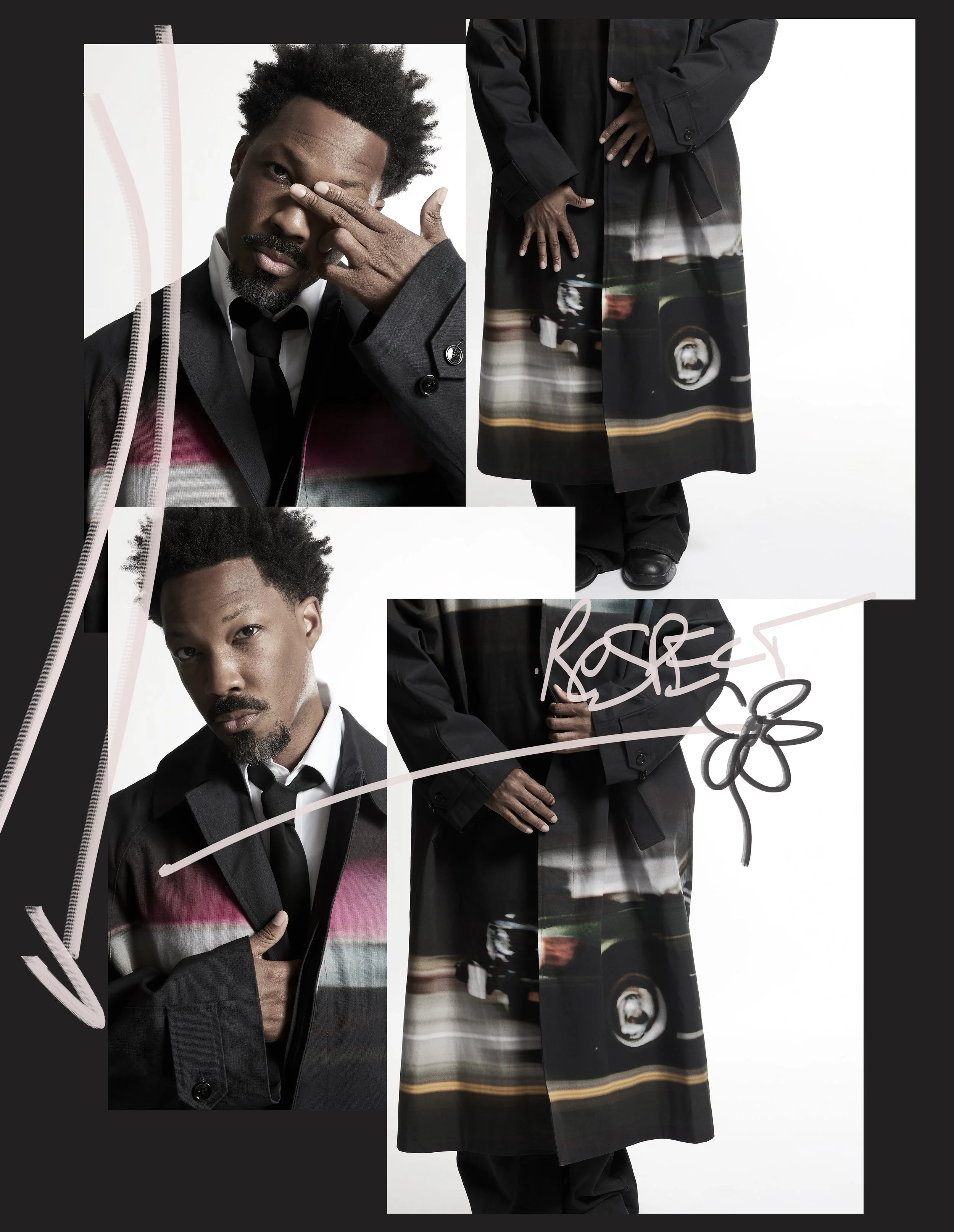
What was your first response when CHRISTOPHER NOLAN’s The Odyssey (2026) came your way?
Curiosity. I wanted to read it. I wanted to know who I was playing, how much I would be in the film and what Christopher Nolan’s process looked like.
The funny thing is that many actors sign onto projects without knowing exactly what role they’re playing. Unless you’re MATT DAMON playing Odysseus in The Odyssey, you’re often stepping into the unknown. But the opportunity to sit in a room with Christopher Nolan and work on a scene was incredible. That happened before I even read the script.
After that, I was simply grateful. In this industry, you hear “no” so often that any opportunity to enter a room and create alongside great artists is something you embrace completely. So my first reaction was curiosity. I kept thinking, “What are we about to embark upon?”
How was the process of making the film?
Chris has a way of making films that feels both familiar and completely new. The Odyssey is a story about a journey and about how that journey changes Odysseus. Classical mythology is often about how the journey transforms the traveller. We’re all moving toward some destination, even when we don’t fully understand what it is. Working with Chris and producer EMMA THOMAS allowed me to reflect on my own journey as an artist and as an actor.
What struck me most was the discipline. On most sets, when crew call happens, people are still arriving, grabbing coffee, checking their phones. On this film, everyone was there, focused and ready to work from the moment the day began. Everyone wanted to be their absolute best because everyone wanted to be around Christopher Nolan.
There were no phones on set. Chris doesn’t use one himself, and he doesn’t allow them during filming. There was something incredibly refreshing about spending 12 hours completely immersed in the work. Your phone stayed at base camp. You weren’t scrolling, checking emails or distracting yourself. You were present. The conversations that came out of that environment were extraordinary, whether with Matt, TOM HOLLAND, ANNE HATHAWAY, the crew or anyone else involved in the production.
We were making a film on an enormous scale. We were shooting entirely on IMAX, something that’s never been done before for a feature film of this size. Every day felt like we were witnessing cinema being pushed forward. Even someone like Matt Damon, who has accomplished so much, would still marvel at what the cinematography team was able to achieve. It felt like an ode to cinema itself, proof that even in 2026 artists are still taking risks and pushing boundaries.
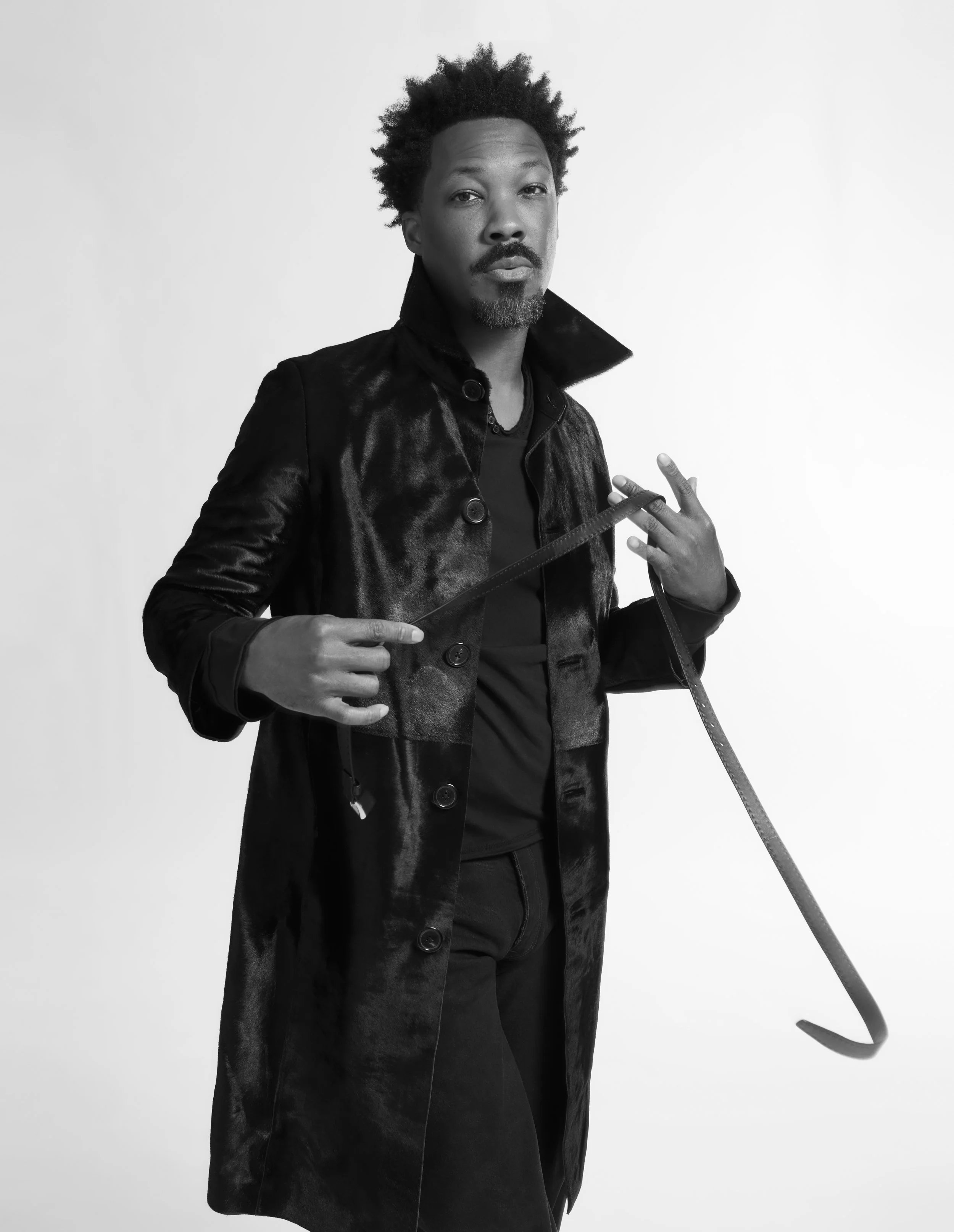
full look ZADIG & VOLTAIRE
There is something timeless about The Odyssey, but also something deeply human. As an actor, where did you find your way into that world?
It goes back to this idea of journey and of trying to return home. I’m always trying to figure out what home means for me, as an artist, as a man, as a family member, as a friend. Sometimes it’s the external things that keep us from returning to what we know, but often it’s the internal struggles. Do we even want to go back home? And what does home look like once we get there?
After filming, Chris gave a few of us beautiful old copies of The Odyssey, each very unique, sourced from private collections.I remember going back and reading it again. What struck me was how universal this epic is and why these stories have lasted for thousands of years. They’re not enduring because of plot alone. They endure because we all see ourselves in the journey.
I’ve always loved ancient history and mythology, and how interconnected those worlds were. Through that lens, I was able to see myself in The Odyssey. Chris was able to see me in his version of The Odyssey. It became a journey where you simply buckle your seatbelt and step into the unknown. That’s what Odysseus does. He ventures into uncertainty, and that’s what makes the experience so rewarding.
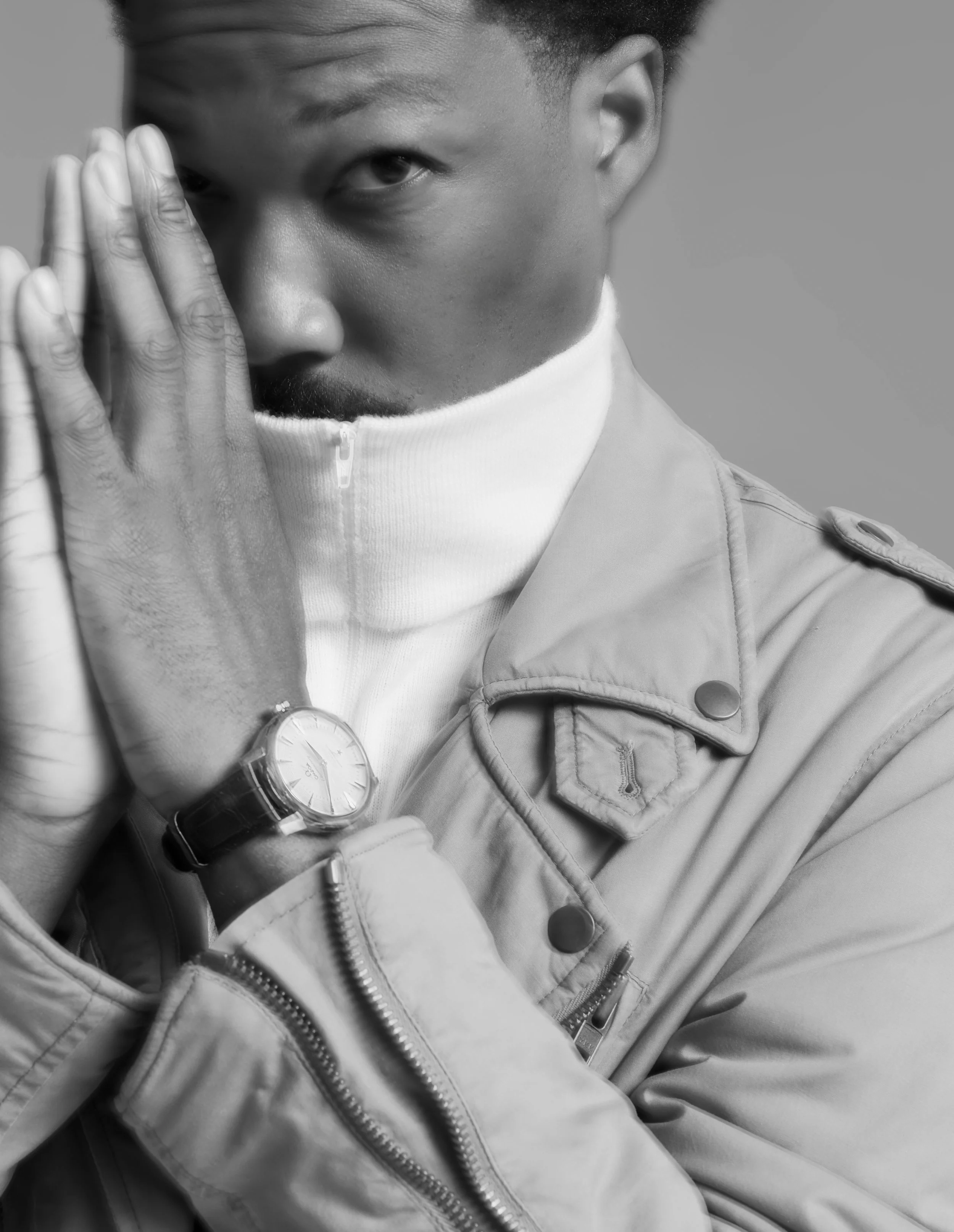
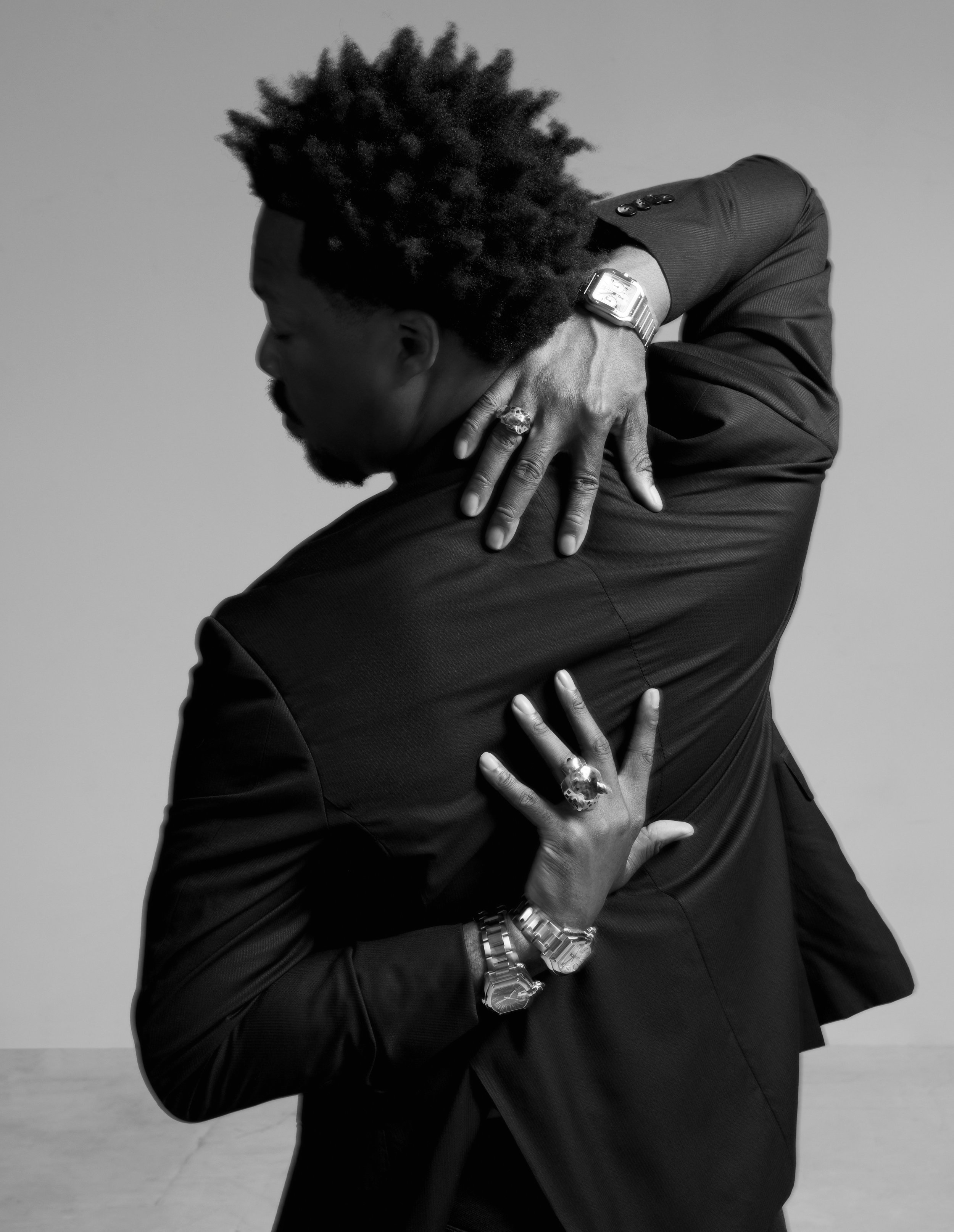
left to right:
full look MM6 MAISON MARGIELA
watch OMEGA
suit ARMANI
watches and rings CARTIER
The film deals with myth, journey and fate. What felt unexpectedly intimate during the making of it?
On a practical level, there was something incredibly intimate about the technology itself. The IMAX camera is enormous, and for this production they developed a new device that helped reduce the camera’s noise so dialogue could be captured more effectively. As a result, you could have this massive IMAX camera just inches from your face.
But beyond that, what stayed with me was the physical and emotional endurance the film demanded. It made me think about where we are as a society, especially in relation to technology. I’ve been trying to be more intentional about living in the world instead of letting technology take over every moment.
One of the most refreshing aspects of the production was that when you arrived at work, you put your phone away. You’d travel from country to country, shoot on location and spend entire days focused only on the work. The relationship that mattered was the one between you and the person standing across from you in the scene. The only thing that mattered was what happened between “action” and “cut.”
All the extras fall away. You realise how little you actually need. Sometimes it’s as simple as putting your phone down and talking to another human being. I think we’re slowly moving away from that kind of connection, and that’s part of why cinema remains so important. You sit in a dark room with strangers, suspend disbelief together and agree to go on a journey for a couple of hours. You’re not scrolling or swiping. You’re present. There’s something incredibly refreshing about that.
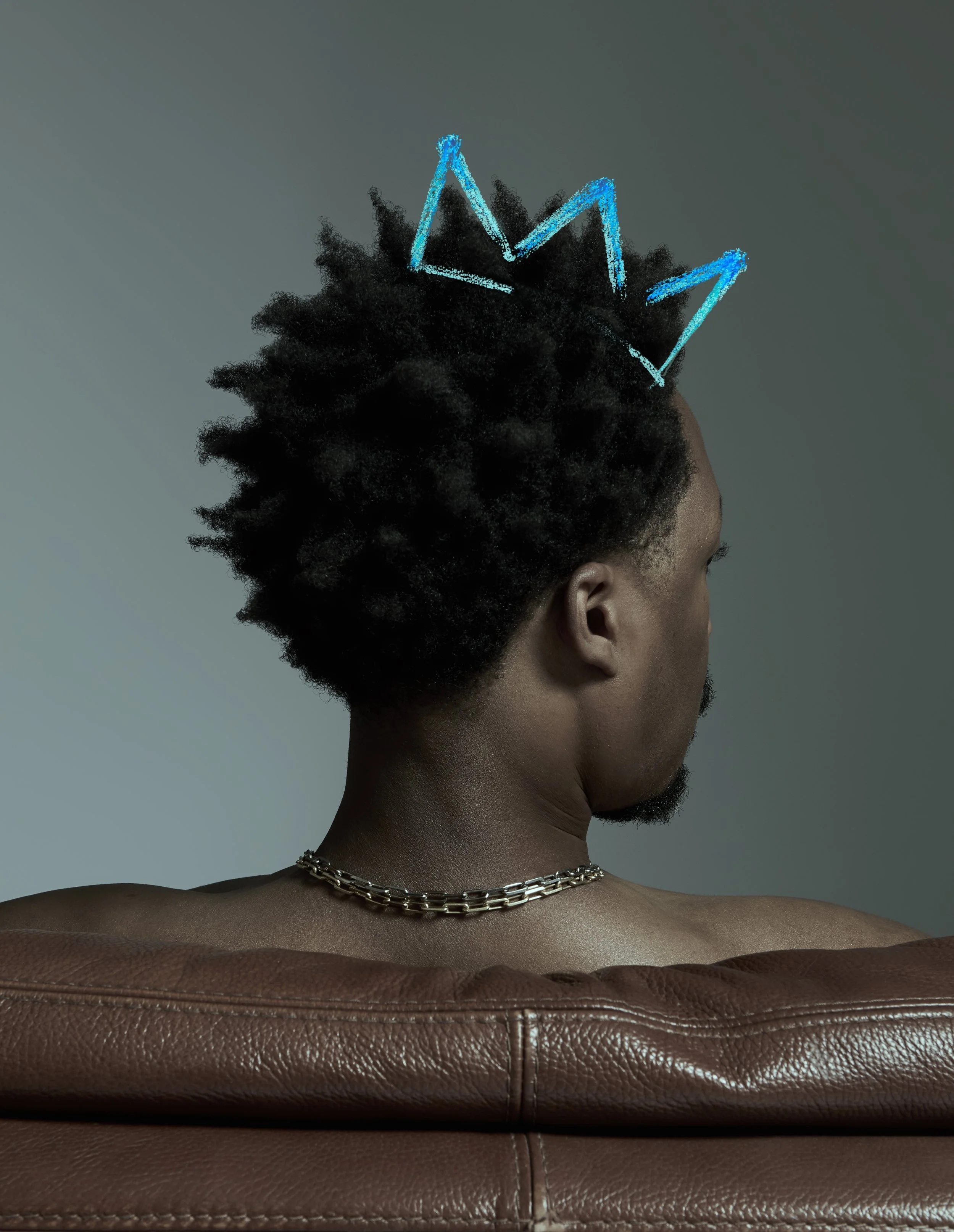
necklaces CARTIER
Long after filming wraps, certain stories stay with us. Did The Odyssey leave anything behind that still lingers with you?
I think it reinforced the idea of being comfortable with the journey and comfortable with where you are. I’ve never been asked to do the kind of work I did on this film, nor in the way we were asked to do it.
When audiences see these islands and landscapes in the movie, they’re seeing real places. It’s far from CGI. It’s far from AI. We were actually out there in the elements. Chris wanted to capture the true scope of these environments, and I found that incredibly inspiring. I’ve worked with some remarkable directors throughout my career, but watching Christopher Nolan work is filmmaking on another level. That’s what has stayed with me. I don’t know if it has spoiled me for future projects. I honestly don’t know where you go after Nolan.
But what it inspired in me is a desire to keep telling stories with the same spirit, with filmmakers who are driven by passion, curiosity and a willingness to take risks. Chris has the spirit of an independent filmmaker. Despite the scale of what he does, that spirit is still there, and that’s something I deeply admire.
What’s something about acting that people assume is effortless, but never really is?
Listening. It sounds simple, but it’s one of the hardest things an actor can do. People often focus on performance from the outside: how it looks, how it sounds, how it feels. Actors sometimes become focused on the result rather than on what’s actually happening in front of them. But if you’re not truly listening to the person across from you, where is the honesty? You can do all the research. You can learn all the history. You can prepare endlessly. I love all of that work. But if you can’t sit across from someone and genuinely listen, you’re missing the heart of acting.
I think, in some ways, we’ve forgotten how to listen to one another as a society. Actors reflect that too. We start chasing what we think a performance should look like. We wonder what MARLON BRANDO would do, what DENZEL WASHINGTON would sound like, how someone else might approach it. Instead, the real challenge is learning how to be fully present as yourself.
The best actors make listening look effortless, but it takes courage. It requires vulnerability. It requires being willing to make a fool of yourself. I remember watching Denzel and FRANCES MCDORMAND during rehearsals for Macbeth (2021). I watched how they worked. I watched how they responded to notes and how new possibilities would suddenly open up in a scene. The same thing happened watching Matt Damon work with Chris on The Odyssey. A single adjustment would unlock something entirely new. You have to be open to that. That’s where the real work begins.
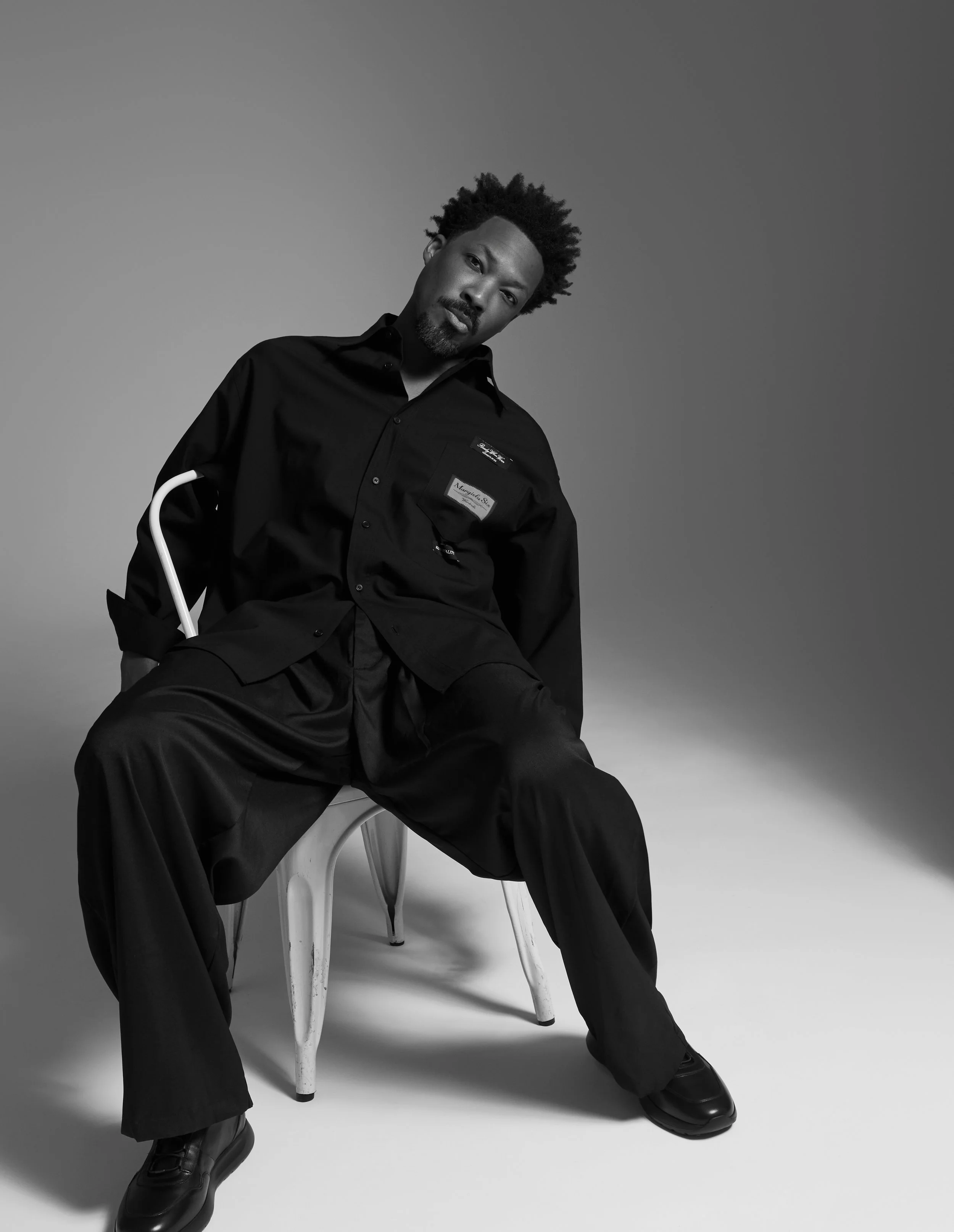
shirt and pants MM6 MAISON MARGIELA
shoes TOD’S
Has there ever been a scene that completely changed once the camera started rolling?
All the time. You arrive with ideas about who a character is and where a scene is going. That’s important. Preparation matters. But you also have to remember that you’re stepping into a world created by someone else. Collaboration becomes more important than your individual vision.
There were moments on The Odyssey when I had very specific ideas about my character and where I thought certain scenes might go. Those ideas were useful, but they were only part of the process. What I love about Chris is that he’s incredibly collaborative. He’ll give you space to explore, to experiment, and to bring your instincts into the work. But he also knows exactly what film he’s making.
It’s a balance. Actors often rehearse in a vacuum. Then they arrive on set and discover the director has a completely different perspective. Sometimes you’ll hear: “Nope. That’s not the movie.” And suddenly you have to adapt. Honestly, that’s one of the joys of the job.
I’ve been fortunate to work with directors who trust my instincts, and I love when filmmakers give actors room to play. That’s where the unexpected moments happen. And they happen all the time.
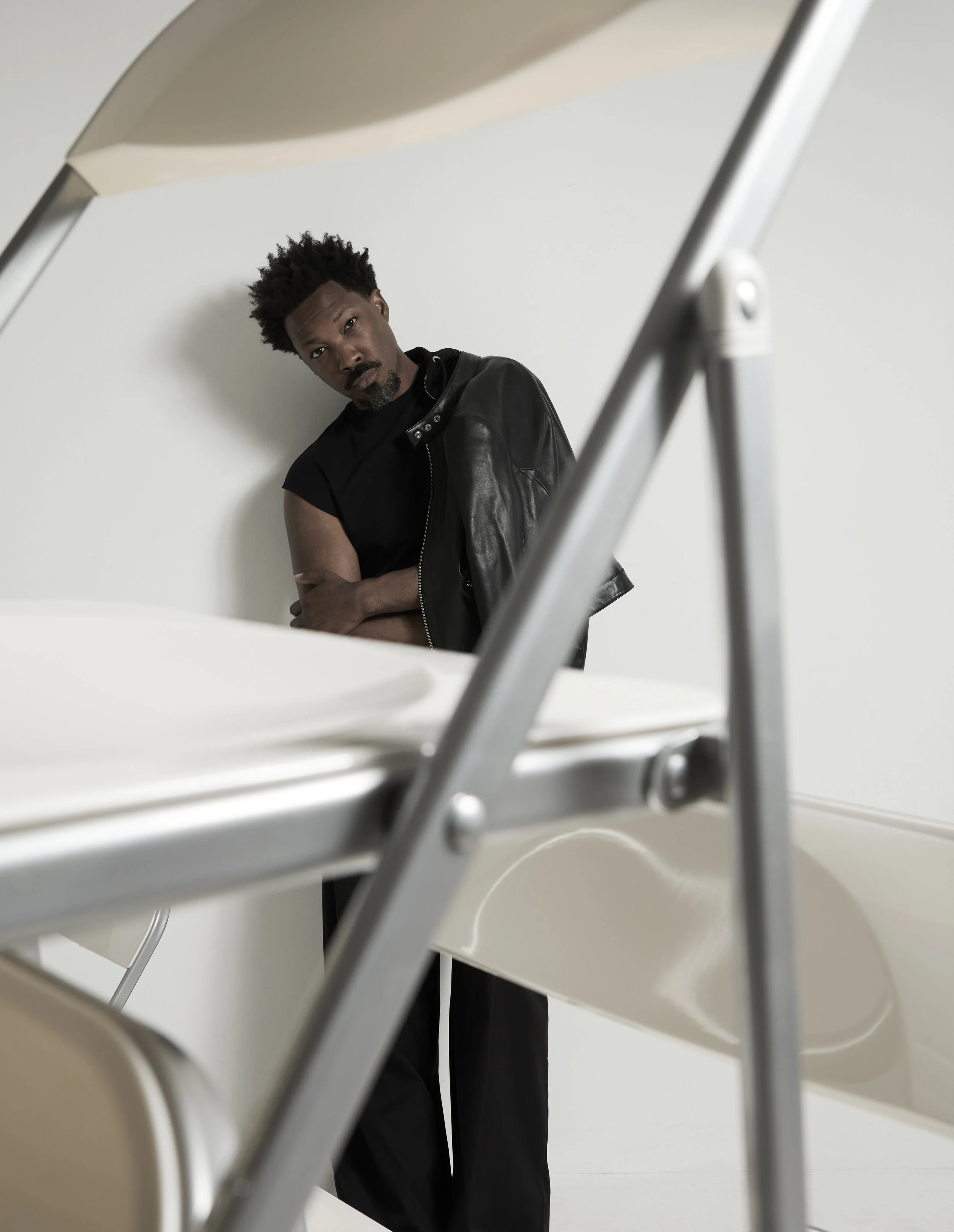
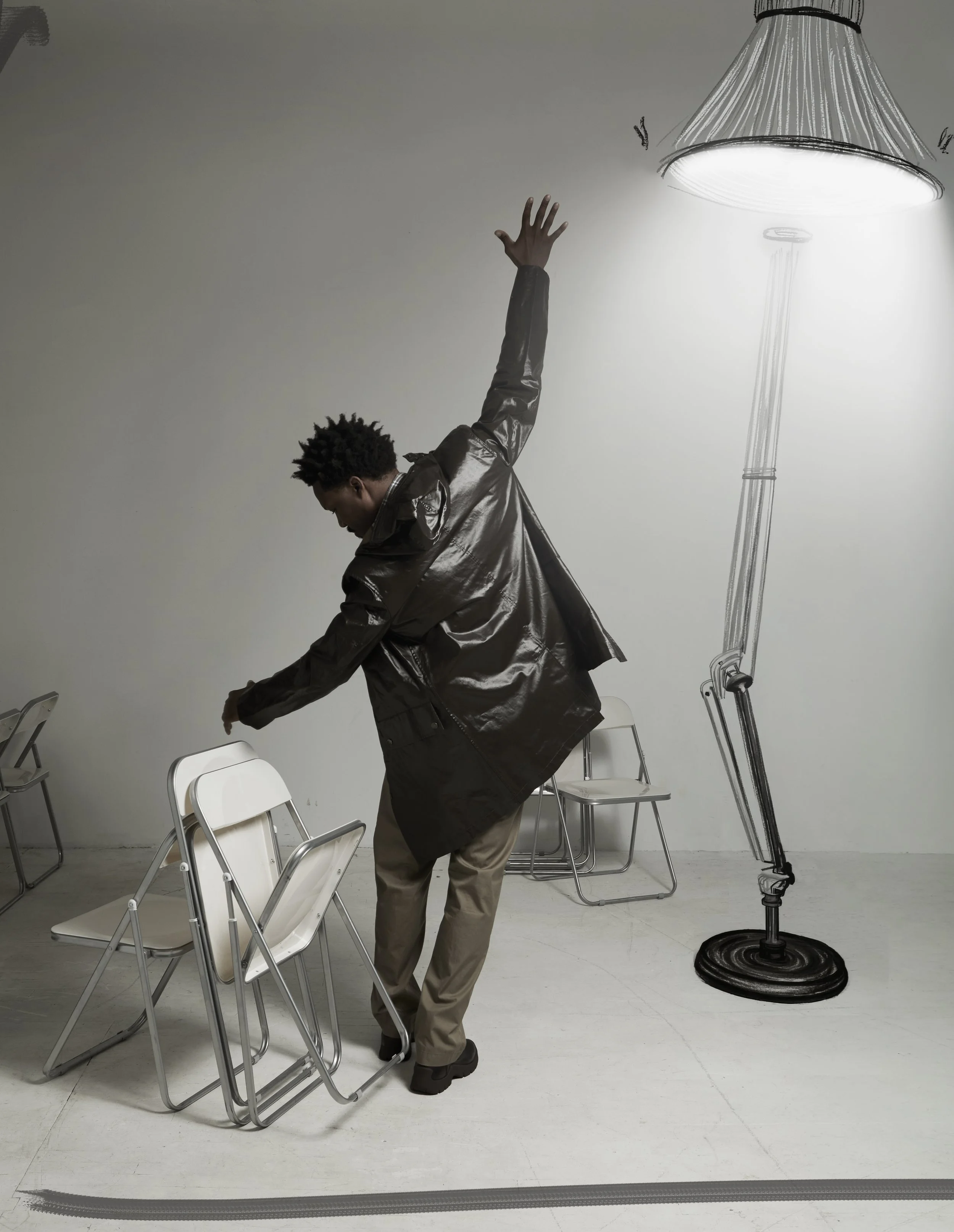
left to right:
full look ZADIG & VOLTAIRE
full look BURBERRY
Your career has moved between theatre, film and television with remarkable fluidity. Do those different spaces awaken different parts of you creatively?
Absolutely. Each medium demands something different from you. Theatre requires stamina and surrender. Film rewards patience, precision and intimacy. Television is about endurance, about telling a story over time and having the space to watch a character evolve. They all exercise different creative muscles.
I’ve been fortunate enough to work on Broadway three times, as well as off-Broadway and regional theatre, and I have to say that theatre remains my favourite medium. There’s something magical about gathering in a room with hundreds, or thousands, of people and taking them on a journey every night. The level of skill it requires — the command of language, the ability to hold an audience’s attention and shift the energy of a room eight times a week — is extraordinary.
People often see a Broadway show as a night out, but what they’re witnessing is discipline, craftsmanship and years of dedication. At Juilliard, one of my teachers used to call Broadway “the Olympics for actors.” In many ways, I think that’s true. It’s one of the highest tests of the craft because of everything it demands from you.
Film, on the other hand, requires patience and precision. Television offers something entirely different: the chance to live with a character for years. You’re entering people’s homes every week, and that creates a unique intimacy. It can also be a little scary because audiences begin to see you as that person.
What I value most is being able to move between all of these worlds. I can do a musical with JON M. CHU and dance on the side of a building. Then I can go do Shakespeare with JOEL COEN. Then I can run up a mountain with Christopher Nolan, come down the other side with SPIKE LEE, make an action film with MICHAEL BAY, or work on an intimate project with a first-time director. That’s a dream.
Not everyone gets the opportunity to do that, so I feel incredibly fortunate. At the same time, it can make it difficult for people to categorise me. Sometimes that’s a challenge when it comes to casting, because people like to know exactly where to place you. But I enjoy it. I’m going to keep moving between mediums. In fact, I’m already looking at the possibility of getting back on stage again.
What’s been inspiring you lately, through your work, through cinema or simply through everyday life?
Right now, it’s craft. It’s innovators. It’s people who are willing to take risks.
When I look at where film is today, I’m most inspired by artists who are pushing boundaries rather than playing it safe. I get bored very quickly by that. What excites me are people who understand tradition, discipline and craftsmanship but still find ways to move the medium forward. That’s exactly what Christopher Nolan does. He has this mythology around him now, but at his core he’s someone deeply devoted to detail and craftsmanship. Yet he continues to push cinema forward. That’s a difficult balance to achieve.
At the same time, inspiration doesn’t only come from filmmakers. There’s a framer who lives across the street from me. She’s been framing artwork since the BASQUIAT era. She lives above her little shop, and every morning I stop in to talk with her. Watching the passion she still has for her craft inspires me. The florist down the street also inspires me. Journalists inspire me. Anyone who remains devoted to mastery while continuing to experiment, evolve and take risks inspires me. I think people should lean into that more.
I’m drawn to individuals who dedicate themselves to their craft while still being willing to make mistakes and explore new possibilities. That’s what has been inspiring me lately.
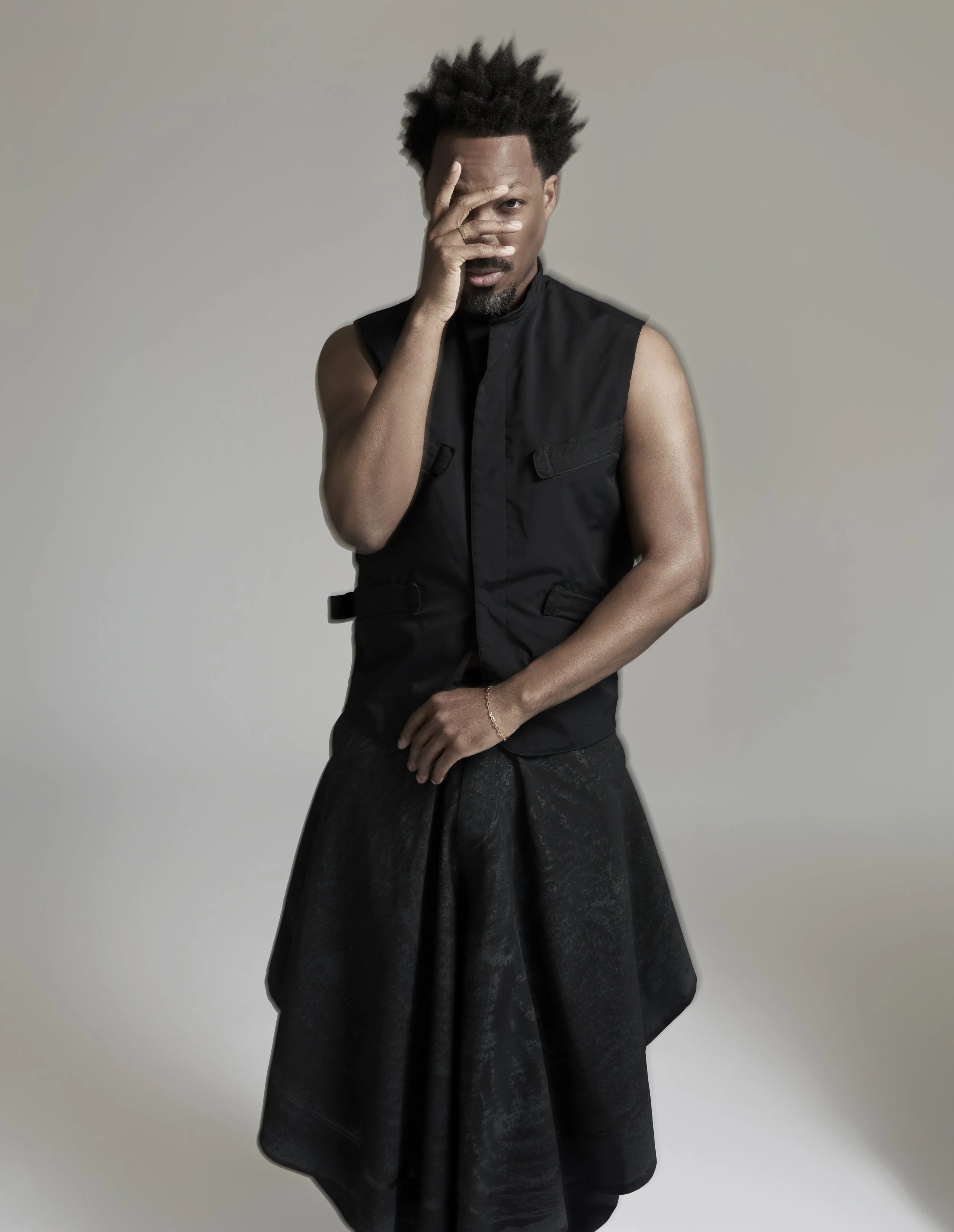
full look IM MEN ISSEY MIYAKE
bracelet CARTIER
We’re celebrating cinema in this issue, so I wanted to ask, is there a film that changed the way you think, made you ask new questions or somehow changed you as a person?
I’m going to give you an answer that might surprise some cinephiles. For me, it’s Coming to America (1988). I first saw it when I was very young, and I genuinely think it’s one of the great films of all time. Of course, I could talk about AKIRA KUROSAWA’s Dreams (1990) or any number of films that have influenced me over the years. But Coming to America was different.
For the first time, I saw someone who looked like me taking creative risks that felt completely unprecedented. EDDIE MURPHY was playing multiple characters in the same film, sometimes multiple characters in the same scene. Think about the barbershop sequence. He’s playing the old Jewish man, several barbers and a customer. At the time, that felt revolutionary.
Sometimes comedians don’t receive the recognition they deserve as actors, but Eddie Murphy is extraordinary. When I watched that film, I saw imagination. I saw someone expanding the boundaries of what seemed possible. The film is a fairy tale, but it’s also New York. It felt familiar, yet it invited me to dream. That’s why it stayed with me.
When people talk about great cinema, I don’t think Coming to America often gets mentioned in those conversations, but it should. It’s a masterclass, not just in acting but in possibility. And I think that’s because Eddie Murphy has lived a full life and brings all of that experience into his work. Your work can only be as rich as the life you live behind it. That’s one of my favourite films of all time, and I’d encourage anyone to revisit it.
On the subject of cinema, are there films that simply have to be seen on the big screen?
Absolutely. There are films that work beautifully at home, and I love that we now live in a world where film, television and even theatre can be more accessible than ever. Art should be shared.
But there are certain films that are built specifically for the cinema experience. Avatar is one example. And The Odyssey is definitely one of them. It’s a film that was conceived, designed and made for the big screen. I never thought I would become the person saying that, because I’ve always believed that if someone can only experience a film at home, that’s still a wonderful thing. But a film like this demands the cinema.
That’s why I admire people like Christopher Nolan and Emma Thomas so much. They’re committed to preserving that experience and pushing it forward. They’re standing firmly behind the idea that cinema still matters. And I love that.
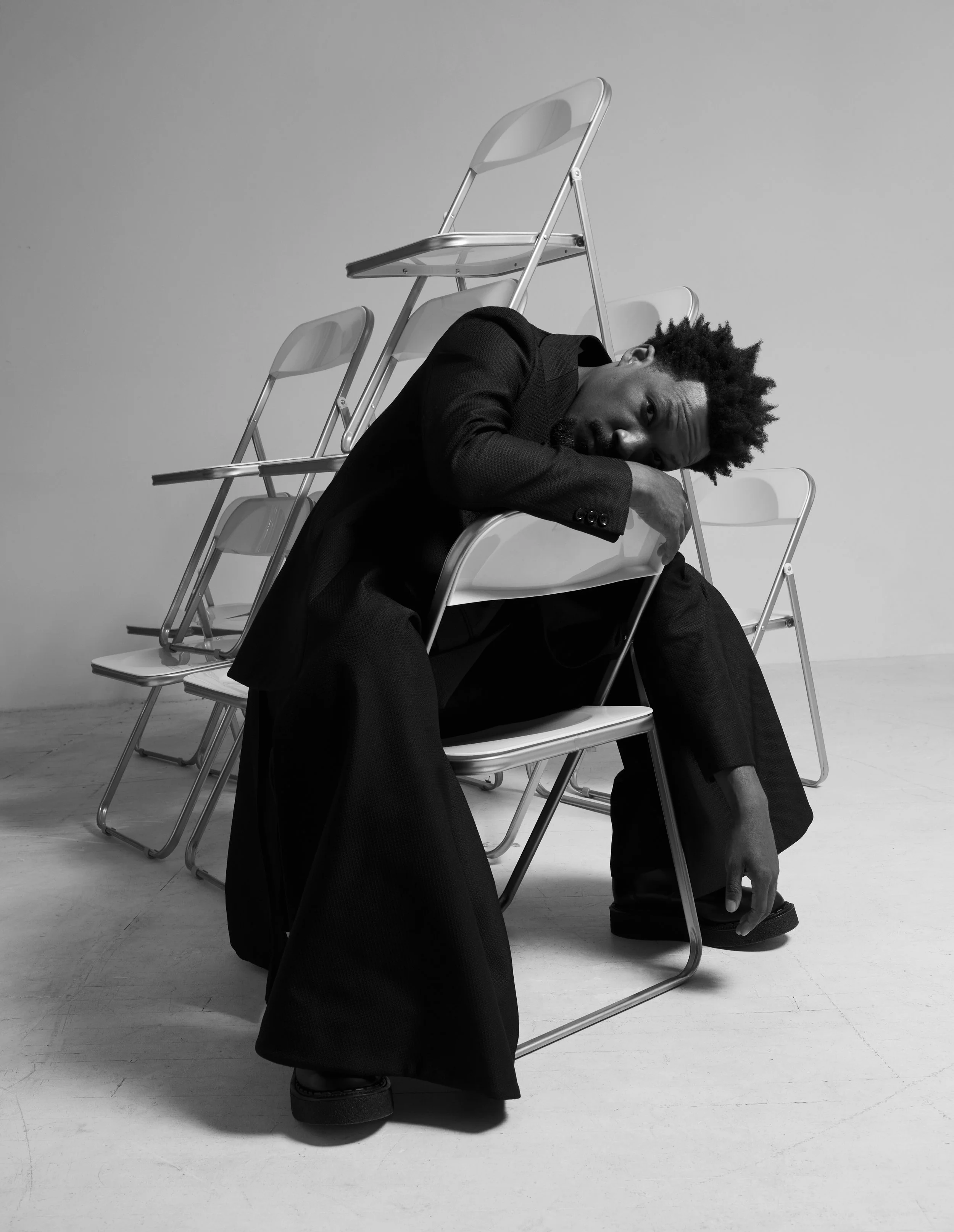
full look COMME DES GARÇONS HOMME PLUS
TEAM CREDITS:
talent COREY HAWKINS
photography WILLIAM FERCHICHI at IMAJ ARTISTS
styling ELANUR ERDOĞAN at FORWARD ARTISTS
hair CHAZ HAZLITT at ART DEPARTMENT
grooming LAILA HAYANI at FORWARD ARTISTS
set design CHELSEA MARUSKIN
photography assistant ZANDER WHALEN
styling assistant AZRA SOMAY
editor TIMI LETONJA
interview LEANDRO DA SILVA and TIMI LETONJA
