
interview by TIMOTEJ LETONJA
Food creator and entrepreneur Daan van der Lecq’s work is driven by a focus on craft, quality, and character, whether in the kitchen or in fine design. From launching product ventures and a knife brand to releasing his 2025 cookbook F*cking Lecqer, his projects prioritise quality over speed. In conversation, Daan speaks on evolving beyond status, preserving authenticity, and why true taste can never be bought.
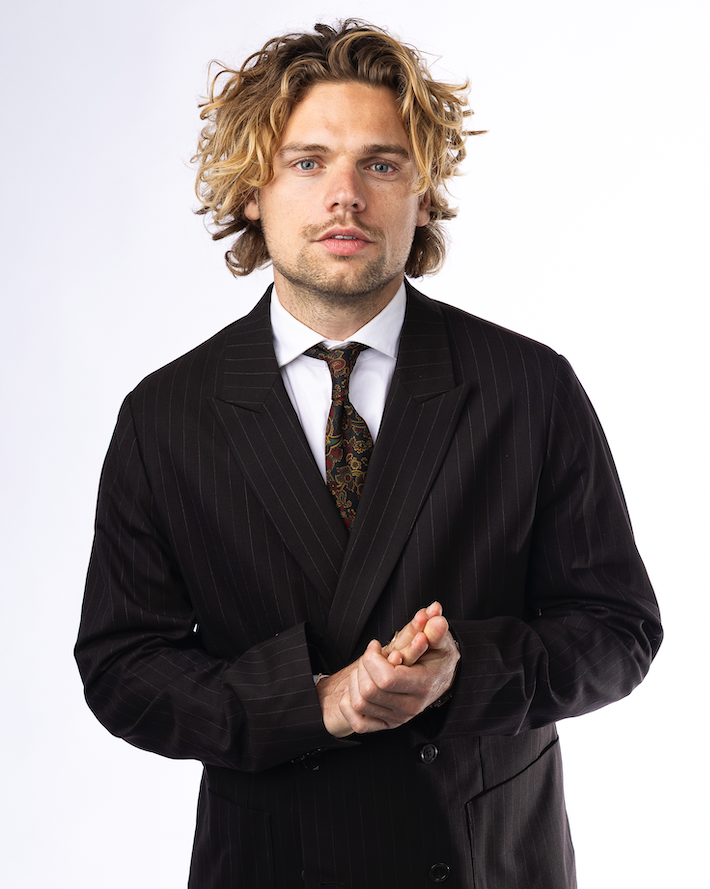
image by Dick van der Lecq
You started your first business at just fifteen. Looking back, where do you think that entrepreneurial instinct came from, and has your definition of success changed since then?
Looking back, I think that drive didn't just come from a need to prove myself. Especially at that age, it was driven just as much by curiosity and a desire to explore. I wanted to build something bigger than myself. At the same time, I’ve always had this endless drive to learn, experience, and create new things – and I really enjoy turning that creativity into something tangible.
When I started out, everything was mainly about making money and, unconsciously, status. That has completely changed. Now, it’s much more about doing something that brings me joy every day. Because only when something genuinely makes you happy can you fuel it with endless energy.
Your career has moved through very different worlds from hospitality and entrepreneurship to design, knives, and food. What is the common thread connecting everything you choose to pursue?
Creative entrepreneurship, really. It’s not necessarily about making a painting, and it’s not simply about building a business. It’s about distinguishing myself through originality. That’s what I feel most strongly about.
You often speak about quality, whether in food, clothing, cars, or objects. What makes something genuinely “good” to you and how quickly can you recognize it?
When it’s something tangible, I notice it in the materials and in the timelessness. I’m drawn to classics and retro things because I feel that more timeless objects were made in the past – things that can last a lifetime. In a world obsessed with speed, we often forget that true quality is born from time and intention.
Food content today can become incredibly polished and algorithm-driven. How do you preserve a sense of authenticity and curiosity when food is also your profession and your content?
I’d be lying if I said I enjoy eating in front of the camera as much as I do eating without one. The most authentic version of myself would simply want to experience everything as I experience it naturally.
Fortunately, I work with a great team, which allows me to focus on the moment. I can actually be present and enjoy what I’m doing rather than constantly thinking about the filming. I can really lean into whatever I’m curious about at that particular moment, what I feel like doing, and what I enjoy.
Through Makkelijke Maandag, Lecqtest, and Sunday Special, you make cooking feel approachable without stripping away its sophistication. Do you think people sometimes confuse good food with complicated food?
Definitely. A complex meal doesn’t automatically mean it’s good or healthy. You could simply throw a bunch of fresh tomatoes into a pan with a spoonful of tomato paste and end up with a delicious, nourishing meal using just a couple of ingredients.
I think we should look more at what we want to put into our bodies first, and then build a dish around that.
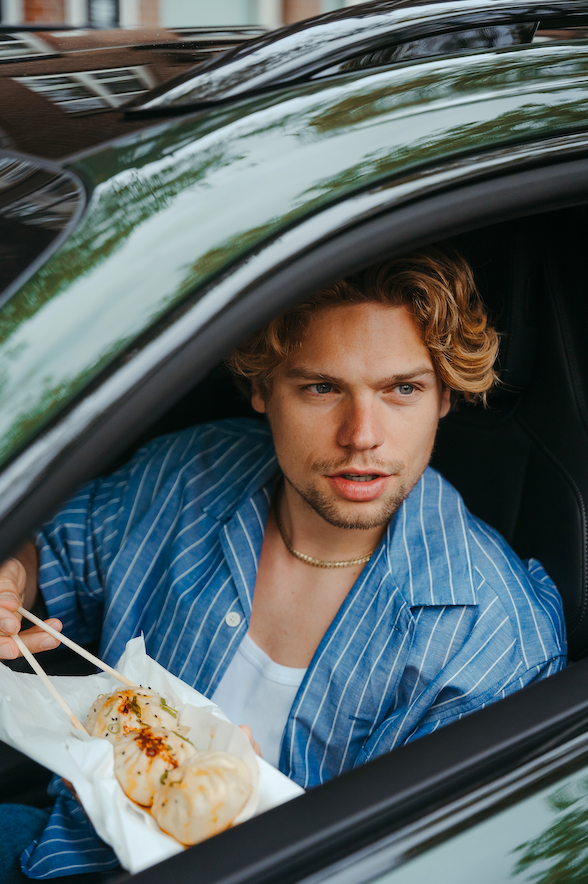
image by Nina Slagmolen
You’re particularly interested in local producers, seasonality, and farm-to-table cooking. Has learning more about where ingredients come from fundamentally changed the way you cook and eat?
In many places, people spend a larger share of their income on quality food. Here, we're used to spending a relatively small percentage. It’s easy to prioritize other expenses over what we eat, but I've personally become much more conscious of that balance. Of course, everyone's budget is different, but there are often small everyday choices where choosing higher quality doesn't have to cost a fortune. That’s something I hope to subtly share through my content.
When you visit a restaurant, you seem as interested in the people and philosophy behind it as you are in what arrives on the plate. What makes a restaurant memorable beyond the food itself?
I can usually tell quite quickly where the focus of a restaurant lies. It can be on the food, the interior, the hospitality, but it can also be on marketing or making money.
The more it feels like the focus is on passion, and that things are happening out of passion rather than simply out of entrepreneurship, the more attracted I am to a place. For me, that’s really what authenticity in a restaurant comes down to.
Your cookbook, F*cking Lecqer, is built around making impressive cooking accessible. What did creating a physical book allow you to express that social media couldn’t?
It’s really about bringing together a lot of recipes that are otherwise scattered across social media and difficult to find. But it’s also about giving people some peace when they cook. I want people to be able to simply focus on cooking with a page open in front of them, rather than streaming my recipe for the fifteen-hundredth time. Otherwise you’re constantly caught in that loop.
With so much culinary knowledge now condensed into 30-second videos, do you think social media is making us better cooks or simply more impatient ones?
Social media has made cooking so much more accessible. It sparks curiosity and lets people learn at their own pace without needing culinary school. Our shrinking attention spans are a broader social media problem, not a cooking problem – I barely watch movies anymore myself, just series! But when it comes to food, online content actually lowers the bar. From there, a physical cookbook offers the perfect excuse to slow down, put your phone away, and take your time in the kitchen.
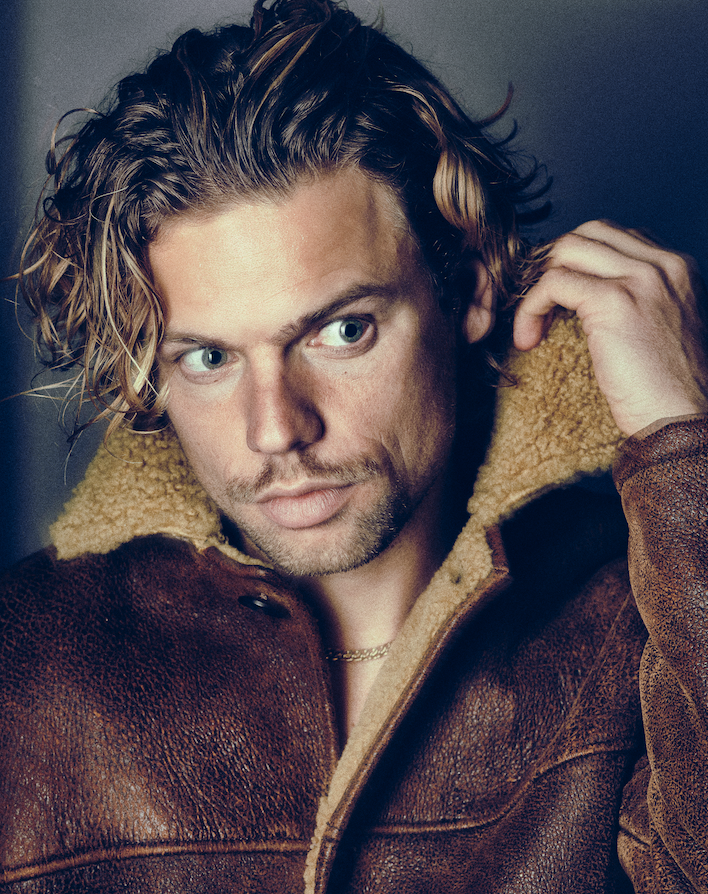
image by Dick van der Lecq
There’s a strong appreciation for craftsmanship throughout your world, from knives and cooking to clothing and cars. Why do you think objects made with care still matter in an increasingly disposable culture?
Craftsmanship and culture literally make a city feel alive. They make the city. They’re the color on the painting. We all work incredibly hard to build a good life, but without craftsmanship, what are we actually working for? There’s no beautiful place to visit, no architecture to admire, no soul in the food we eat – everything just blends into the same background noise. If we don’t actively protect the things that bring life its beauty, all that hard work loses its point.
Your Porsche 944 has become something of a signature, even appearing in Type 7. What is it about that particular car—and analogue cars more broadly that resonates with you?
It’s purple. Everything about the car is aubergine-coloured. It smells good, it sounds good and it’s sporty. I’m just obsessed with Porsche. If I ever switch cars, I’ll probably save up for another Porsche.
And why not a new car? New cars don’t have the kind of character that I see in an old car.
Whether discovering a tiny local restaurant or driving an old Porsche through Amsterdam, you seem drawn to things with character rather than simply status. What, for you, is the difference between luxury and taste?
Luxury is something external. It’s about things outside of yourself, whereas taste comes from within – from your heart, your mind and your identity. I think taste says something about who you are: your preferences, how you see the world and what you value. Luxury is ultimately a level of wealth, comfort and access – something you can acquire. Luxury can be bought. Taste is not for sale.
