
IN CONVERSATION WITH DAVID ŽEFRAN
interview by TIMOTEJ LETONJA
At the helm of Milka, nestled in Slovenia’s Julian Alps, chef David Žefran approaches fine dining with a deep respect for nature, simplicity, and the people around him. After training at Frantzén, he returned to Slovenia to build a restaurant rooted in its landscape and guided by a more personal vision of hospitality. We sat down with him to talk about creativity, sustainability, finding balance, and what it means to cook with a sense of place.
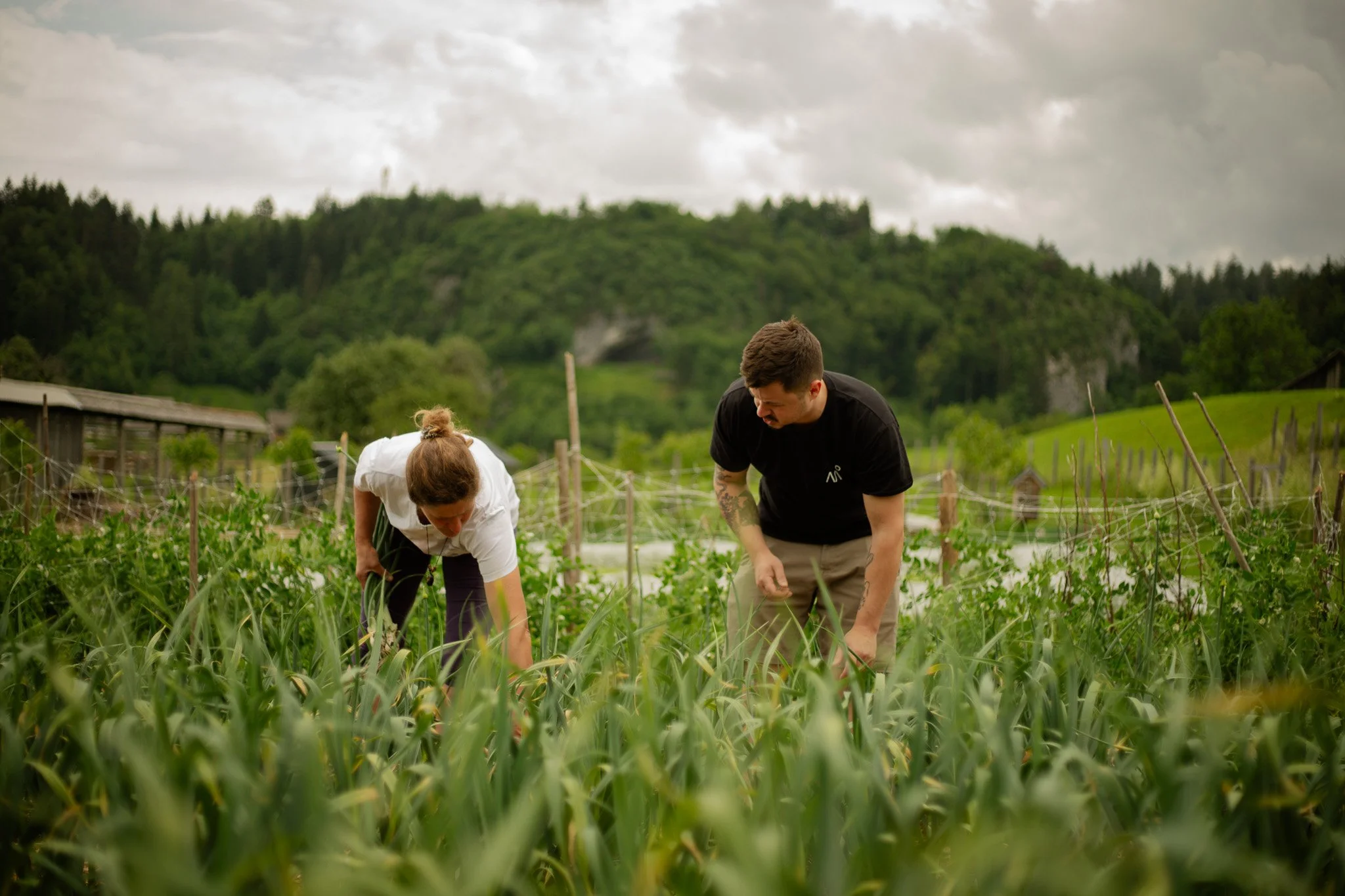
Milka is located in Kranjska Gora, close to the breathtaking Lake Jasna. How do the surrounding landscape and local ingredients influence the dishes and the overall culinary experience?
Our restaurant is located in Kranjska Gora, in the heart of the Julian Alps. From our windows we look out over an alpine lake and a stunning range of mountain peaks. Every time I see that view, I am reminded that anything we create feels small in comparison to the beauty and majesty of nature. It keeps me grounded and humble, and it naturally makes me want to preserve it. That sense of responsibility shapes the way we work, from sorting waste and sourcing from the region to making choices that honour the place and environment we are part of. The Alpine seasons shape our menu. We work with one tasting menu that evolves with the seasons and with the availability of ingredients. Because the seasons here are so short, the menu often changes quickly as we follow nature in real time.
For most of the year (spring, summer and early autumn) we work closely with our garden and local suppliers, which gives us an abundance of fresh produce. Winter is completely different. The flavours become deeper and more comforting, and we rely more on animal protein and on the preserves we make throughout the warmer months. We preserve a large share of the vegetables, herbs and flowers that grow in our garden during summer, since fresh vegetables are limited in winter apart from root vegetables.
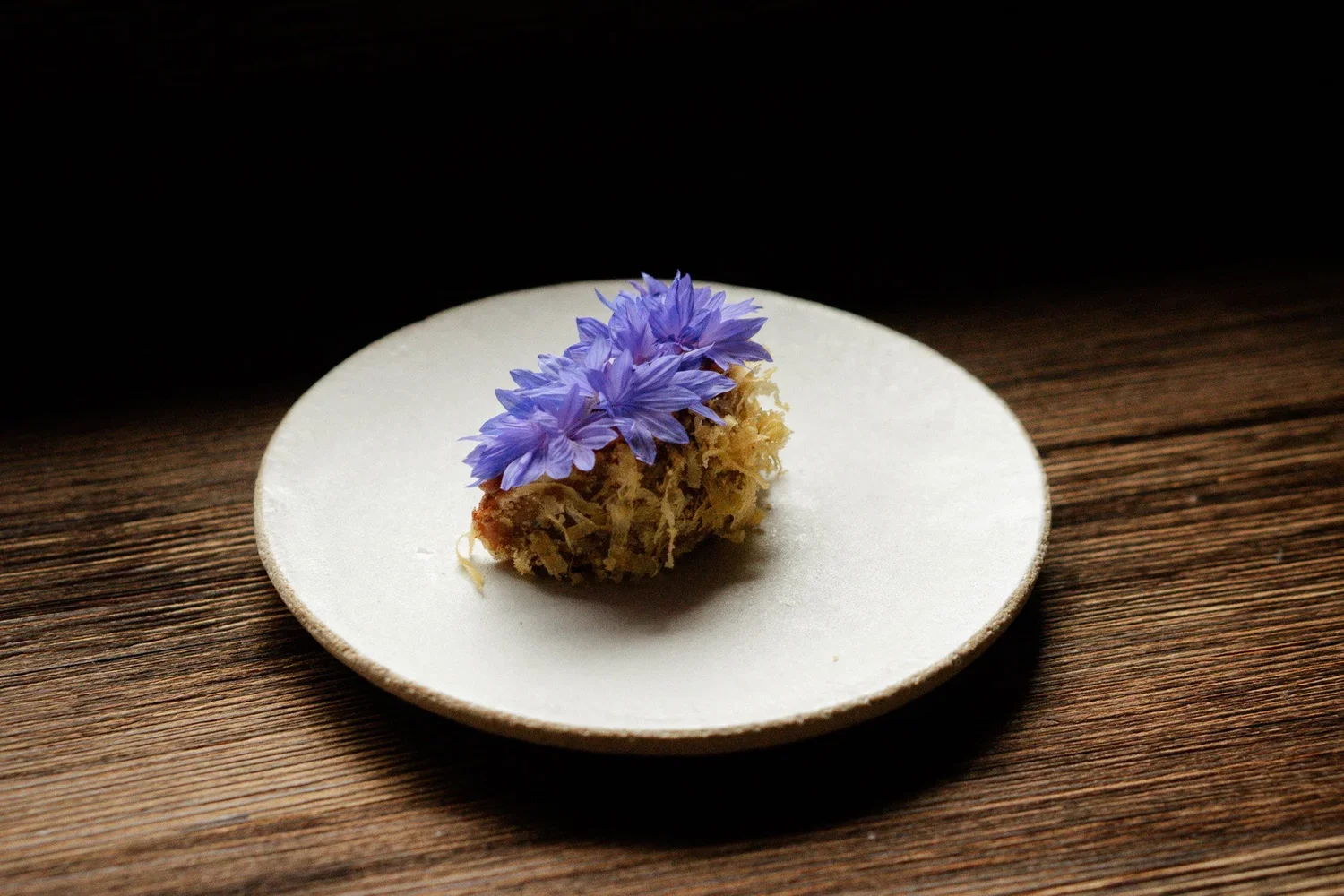
You’ve mentioned that you want guests to question their relationship with food after eating at Milka. Has a guest ever told you something that made you rethink one of your own ideas?
I wouldn’t point to one specific comment, but I take what our guests tell us seriously. You keep learning throughout the years by listening to the people who experience what you do. When you spend so much time working on something, it is very easy to become too entangled in it. A guest experiences it without all the context, decisions and assumptions behind it, and sometimes that outside perspective is exactly what you need.
A lot of small changes at Milka have come from guest feedback. We sometimes offer lunch for people who don’t like eating late, we have shortened the tasting menu slightly, and we changed when we bring the cheese course to the table.These are just a few examples that came from listening and being willing to question whether the way we were doing something was actually the best way for our guests.
But there were also conversations that made me think about my life and choices outside of Milka.
What does Slovenia have in its pantry that the rest of the world still hasn’t really discovered?
Pumpkin seed oil, buckwheat, and bear. Pumpkin seed oil is very commonly used around Slovenia but I haven’t seen it used elsewhere as much. Buckwheat has been dismissed for decades as peasant food, which is exactly why it's interesting: anything undervalued for that long is usually hiding depth. And bear as it says something about where we are and it rarely ends on the plate.
You trained at Frantzén, one of the world’s most influential restaurants, and then returned to Slovenia. What are the learnings you brought with you, and what did you intentionally leave behind?
I brought back the importance of small details and everything that contributes to the guest experience: hospitality, well-being and keeping the guest at the centre of the experience.
What I intentionally left behind was the more egocentric view of the chef as an artist, and the idea that guests come to a restaurant for you. I am much more interested in making the experience great for each individual guest instead.
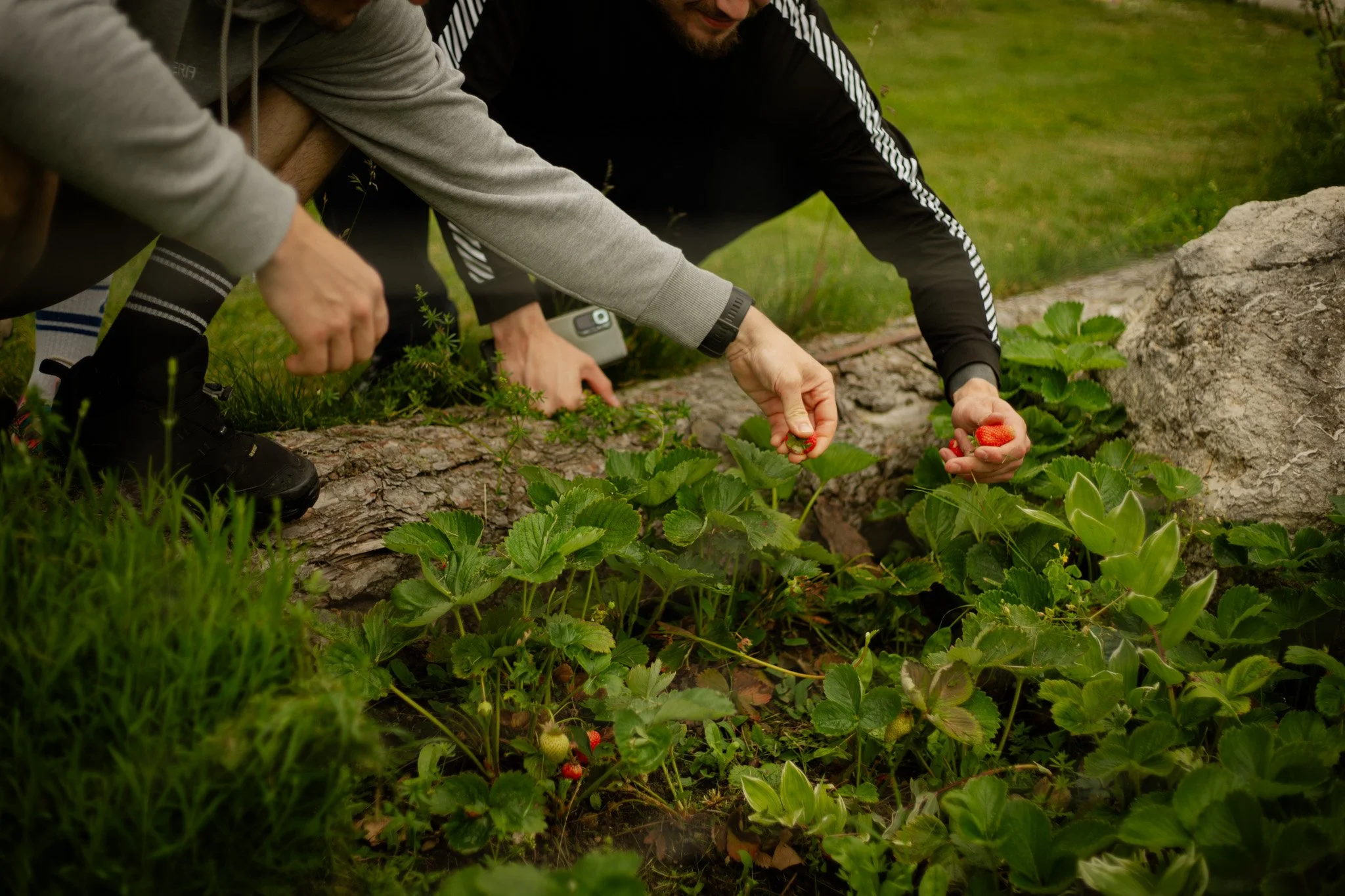
Is there a misconception people have when they hear the words “sustainable fine dining”, and what do you think that is?
That it means compromising the quality of the experience.The word sustainability has been so overused that people can almost brace themselves for disappointment before they even sit down, expecting a lecture or assuming that sustainability means less flavourful food and that the experience might fall short.
For us, responsible sourcing isn't the ceiling on the experience, but where we start to build. While I hope a meal at our restaurant leads to contemplation and consideration of choices we make daily when buying food, I primarily want guests to leave feeling happy and thinking about the food and experience around it.
There is an interesting contradiction in fine dining: we talk about simplicity and nature, while sometimes using incredibly complex techniques. Where do you personally find the right balance?
I don't think they are actually opposites. If the product is exceptional, your technique should exist to showcase it, not compete with it. But showcasing something perfectly is never simple. Even seemingly simple techniques have a level of complexity to them. Grilling a cut of meat perfectly might look like the easiest thing until you try to do it exactly right, consistently. That takes years.
That's why I believe well-executed simple food comes after complexity, not before it. The more you have done and learned, the more you can take away. It takes a lot more confidence, knowledge and technique to put two sauces on a plate and call it a dish than to put ten ingredients and several components on it, with plenty to fall back on. Simple isn't the absence of technique. It is a technique you've stopped having to think about.
Is there something you would like to be brave enough to do at Milka that you haven’t done yet?
Put on an all-hip-hop playlist and go on a one- or two-week vacation where I don't think about Milka at all.
Do you think chefs can sometimes become too obsessed with originality? At what point does trying to create something nobody has seen before become less interesting than simply making something delicious?
At the point when you are doing something for the sake of impressing others rather than channeling something that truly comes from you. For me, food always has to serve a purpose. It should nourish the body, the mind or the soul. Once it stops doing any of those things, it loses its point.
If people come to a restaurant and cannot understand what the food stands for, and it isn't tasty enough to nourish the body or interesting enough to challenge the mind, then I think you have pushed it too far. Creativity needs to give you something. The act of dining and creativity in food have come a long way, but at some point you have to ask yourself what it is actually serving.
For me, food always needs to be tasty. Of course, taste is subjective. Someone might genuinely enjoy a bowl of blue fish, while it is not something I particularly like or would crave myself. But I can separate my personal preference from whether a dish is well executed and whether it tastes good. Once nobody can understand your food, find pleasure in it or take anything meaningful from it, I think creativity has lost its purpose.
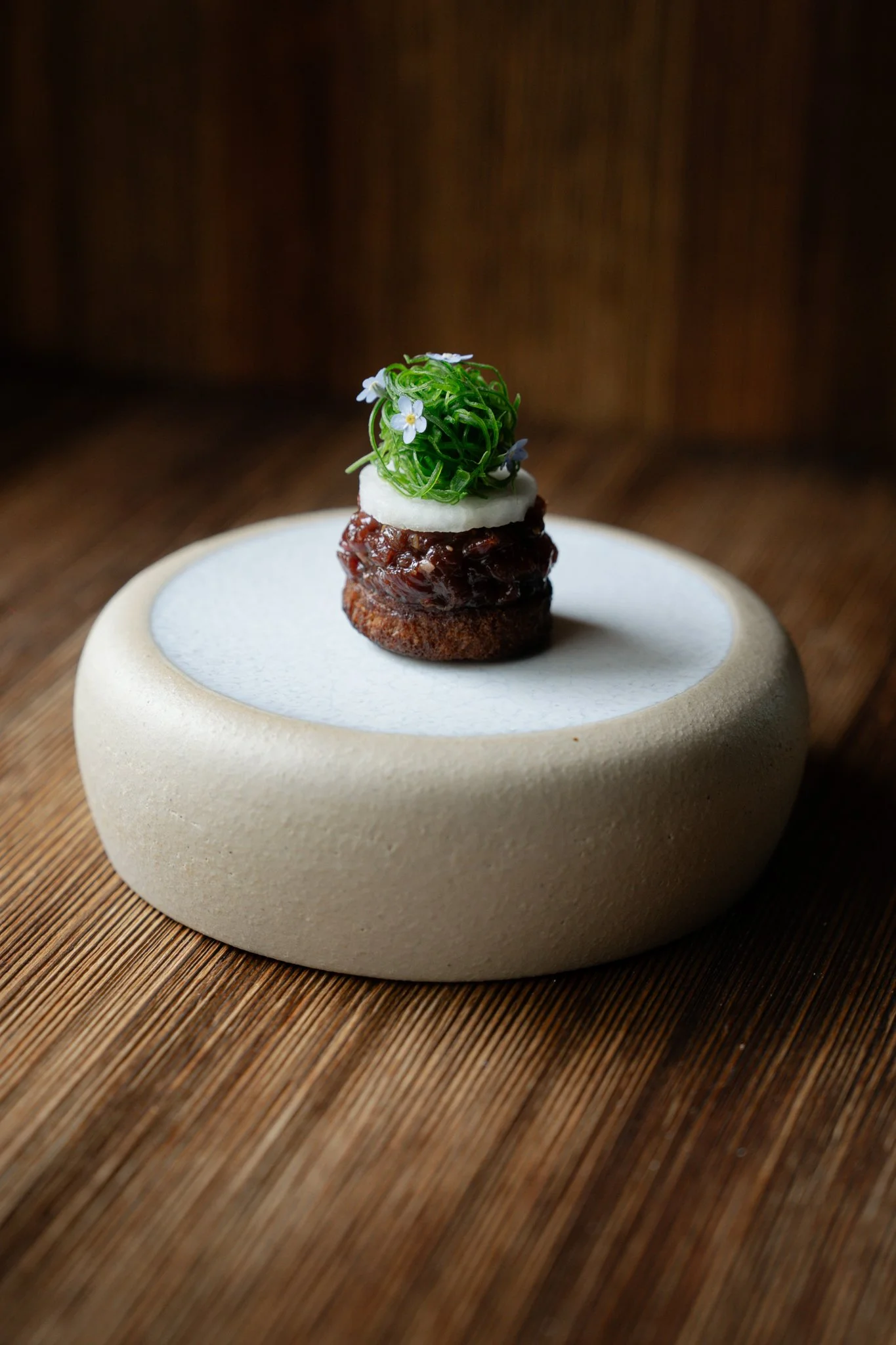
You pay a lot of attention to things guests might never consciously notice: from ceramics to music to the way the restaurant operates. What is one detail at Milka that you care about the most and that you wouldn’t change?
The music, and the youthful, relaxed energy of our team.
Are there many things that you’re still trying to figure out as a chef? What are they?
How to let go of control. How to work with different types of people without losing myself or compromising my standards. How to empower people and help them become the best at what they do. And how to take a proper break for myself and find a better balance between my personal and professional life.
Has becoming a two-Michelin-star chef changed the way you approach cooking, and if so - can you give an example?
Definitely. Everything became more precise, more detailed and more technically driven, and it still is. But over the past few years, I have also gained more confidence in what I feel is right. I listen to myself more and do things that I genuinely like and that feel true to me. I am also more conscious about deciding where to complicate more and where to complicate less.
How do you know when a dish is finished and ready to go?
I don't. Usually there comes a time when we just have to put it on the menu and accept that it needs to be good enough.
When you think about Milka ten years from now, what do you hope has changed?
For Milka I would hope we improve the staffing situation and have a stable team. It would be great to have a completely full restaurant even in the off-season, and better financial prospects. And, of course, we are also aiming for that third star.
And what do you hope has stayed exactly the same?
The view, the youthful energy and happy guests.
If you could invite three people (dead or alive) to dinner at Milka, who would they be?
It’s difficult to name three people, and the more I think about it, the more I realise I wouldn’t want to use the opportunity to cook for any big names or historical figures. I would rather cook for my partner, friends and family, who I don’t get enough time to cook for as it is. But three names are too few to list them.
What would you cook for them if there were no rules, no menu and no Michelin inspectors?
Leberkäse katsu sando.
