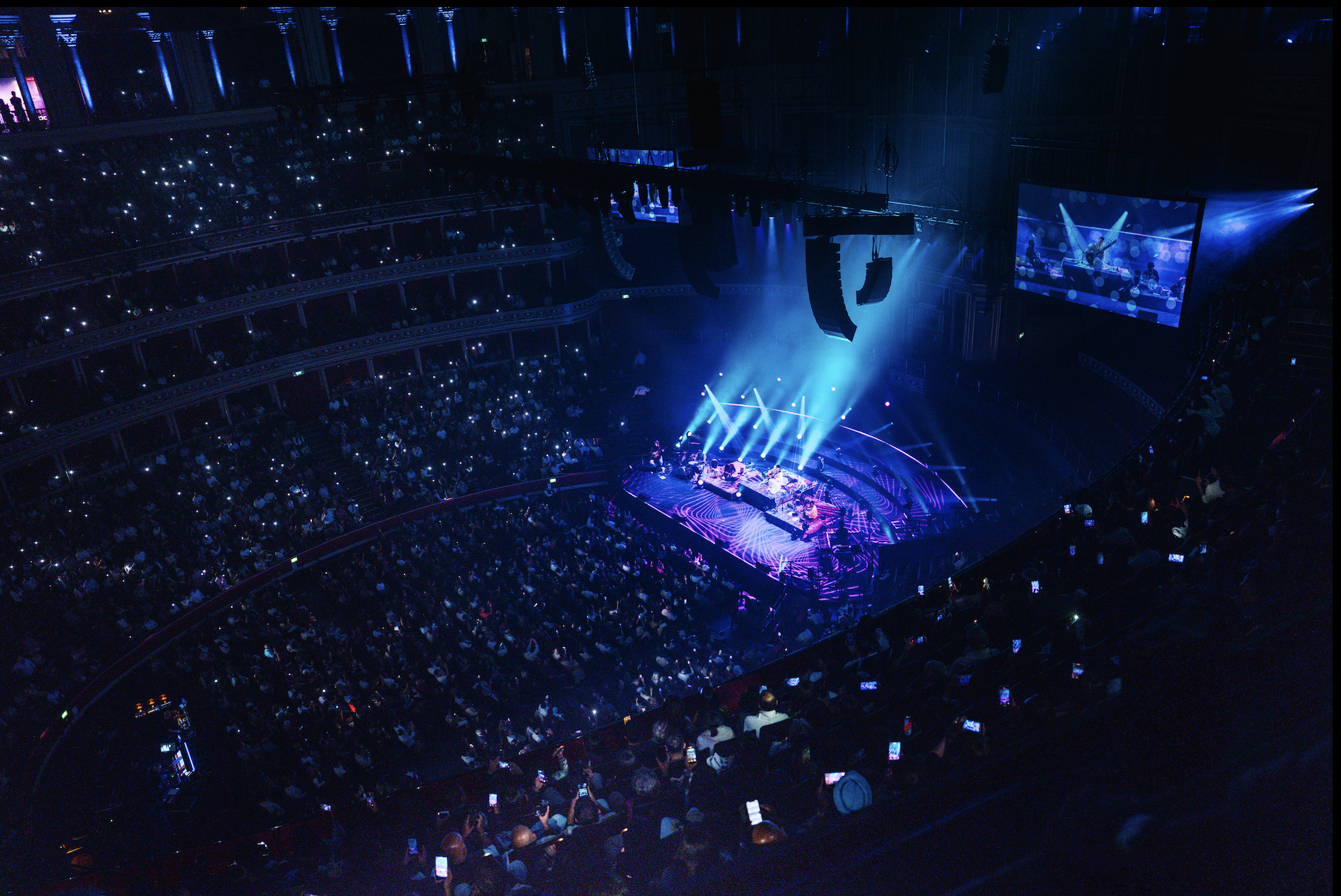
IN CONVERSATION WITH RISHAB RIKHIRAM SHARMA
interview by JANA LETONJA
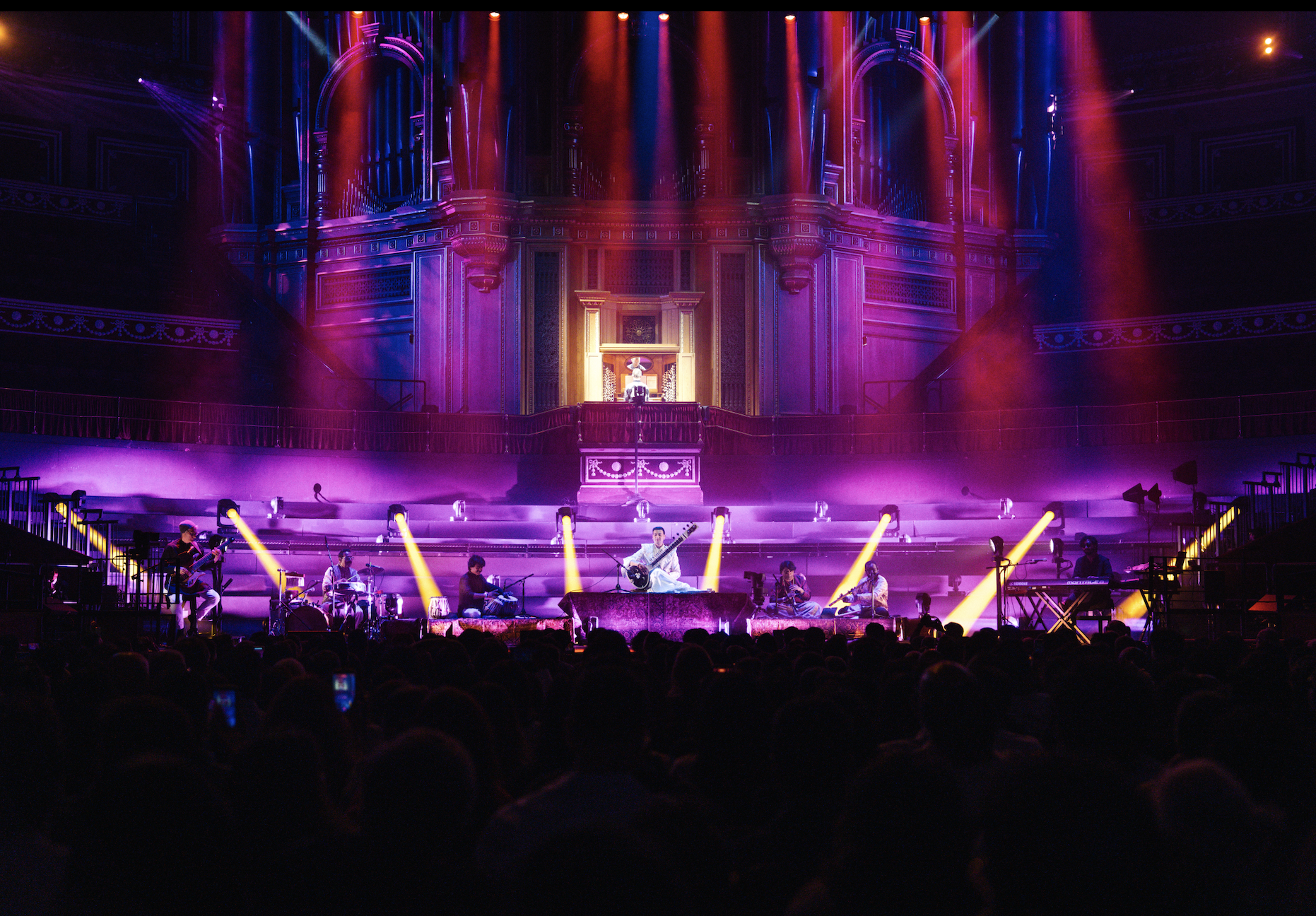
Rishab Rikhiram Sharma is part of a new generation of Indian musicians taking the sitar, and the emotional vocabulary of South Asian music, onto a global stage. His rise accelerated during lockdown, when he began speaking openly about anxiety, depression and mental wellbeing, using the sitar as both a creative outlet and a form of connection. Now, with performances everywhere from the White House to the Commonwealth Games behind him, he returns to London for Sitar for Mental Health at the Royal Albert Hall on October 1, a venue he once sat outside busking and dreaming of playing. As he prepares for an increasingly global chapter, including work with Hans Zimmer on the forthcoming Ramayan, Rishab represents a fascinating intersection of heritage, contemporary culture and music’s ability to transform how we feel.
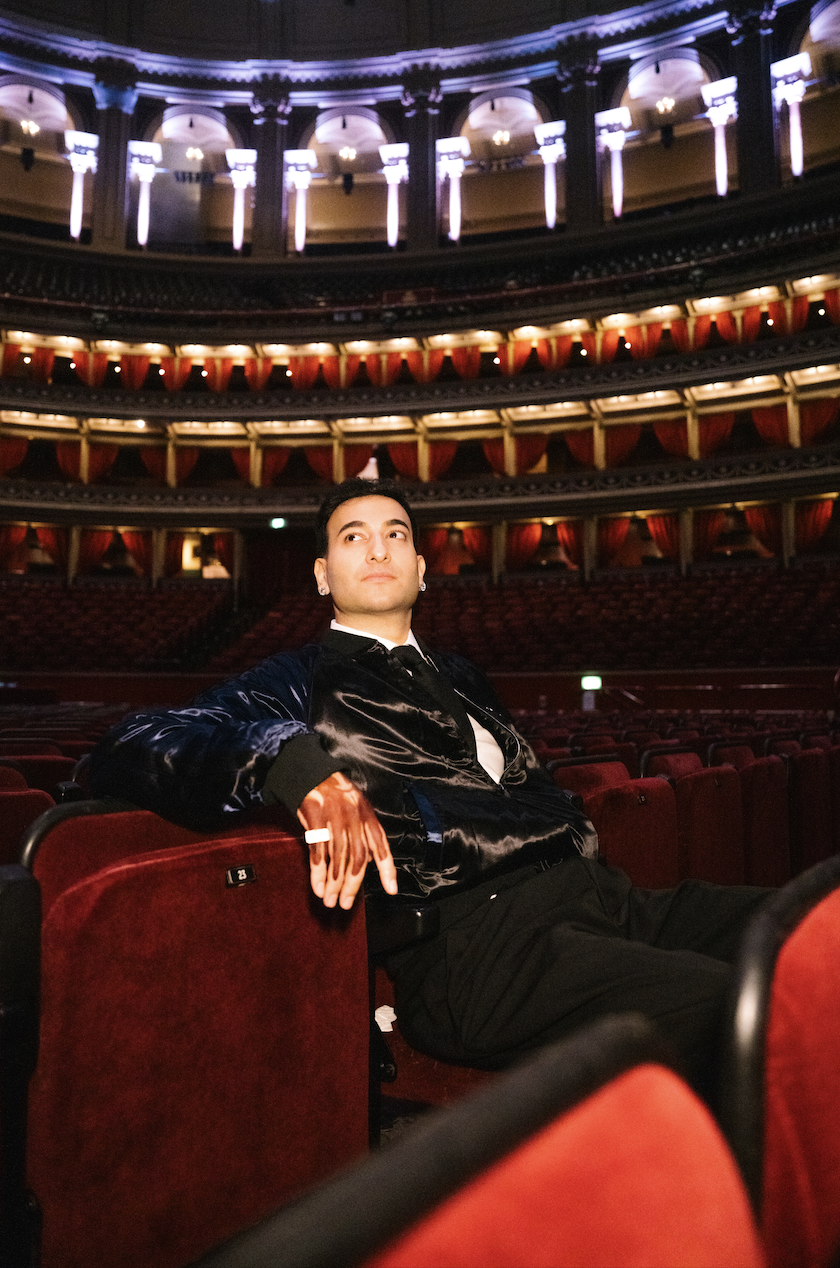
all photography by RORY BARNES
You once sat outside the Royal Albert Hall, busking and thought, “One day I’ll be in there.” What goes through your mind now that you’re about to perform your own show inside it?
It actually feels surreal, and I cannot stop thinking about it. I keep pinching myself, making myself believe that this is true and that this is actually happening. I think once I set foot inside that beautiful theatre, I’ll finally be able to realise it and take it all in.
London has become almost a second home to you, with much of your family here. What does performing at the Royal Albert Hall mean to you personally?
London has indeed become a second home for me. I’ve been touring here since 2022. I remember we used to do concerts at the Bhavan, which is one of the biggest Indian cultural centres outside of India, and with extended family and lots of friends here, London has always been such a fun experience every single time I visit.
The Royal Albert Hall has always been a place of prestige and honour, and it’s highly revered in the classical space. I’ve seen videos and recordings of great maestros performing here, from my guru, Pandit Ravi Shankar, to my friends like Yusuf. I’ve always fantasised about playing in this beautiful room that all these artists rave about.
So, it’s a matter of enormous honour and prestige for me to be contributing and simply performing inside that beautiful room.
You come from four generations of sitarists, and your grandfather sold sitars to The Beatles. How conscious are you of carrying that history with you when you perform?
I actually come from a family of four generations of musical instrument makers, particularly Indian classical instruments, not just sitars, although sitars have been the main part of our business.
It’s been one hell of a journey because, growing up, I was exposed to so many maestros and artists who would visit our doorstep. Just spending time with them, sitting with them and learning a thing or two was such a wonderful experience.
I often feel that I’m carrying two legacies. One of playing the sitar and one of making the sitar. One is my guru’s legacy and the other is my family legacy. That is a constant reminder that I have to put my best foot forward everywhere I go and every place I perform. So I’m going to give my 110% at the Royal Albert Hall as well.
You studied under Ravi Shankar and have spoken about practising for as much as six hours a day. What did that discipline teach you about yourself beyond music?
I feel like music, when you’re playing for such prolonged hours, becomes meditation. You completely lose your sense of self and achieve a higher consciousness when you’re in that state.
Obviously, with the constant touring, I haven’t been able to sit down for six hours a day, but I’ve really been practising and consciously working hard for this wonderful event.
Even today, I remember my guru’s words, “Practice is the most important thing in performing arts. You have to sit and just do it. There’s no other way of achieving greatness.” You have to sit, practise and do your sadhana, as we call it.
Your musical references range from Ravi Shankar to Fred again.. What happens creatively when traditional Indian classical music meets contemporary electronic culture?
I’ve always been the kid who listens to all kinds of music. I’ve never restricted my musical taste. I’ve actually been very bipolar in my taste in music. I come from a background of EDM and making hip-hop beats, and today I’ve sort of figured out a sweet spot where I can make these two worlds meet in some fashion.
Obviously, there’s so much work yet to be done. I don’t even have an album out yet. Hopefully, the next time I speak to you, I’ll have an album ready, with more exploration of these two spaces and something fresh for the world to enjoy.
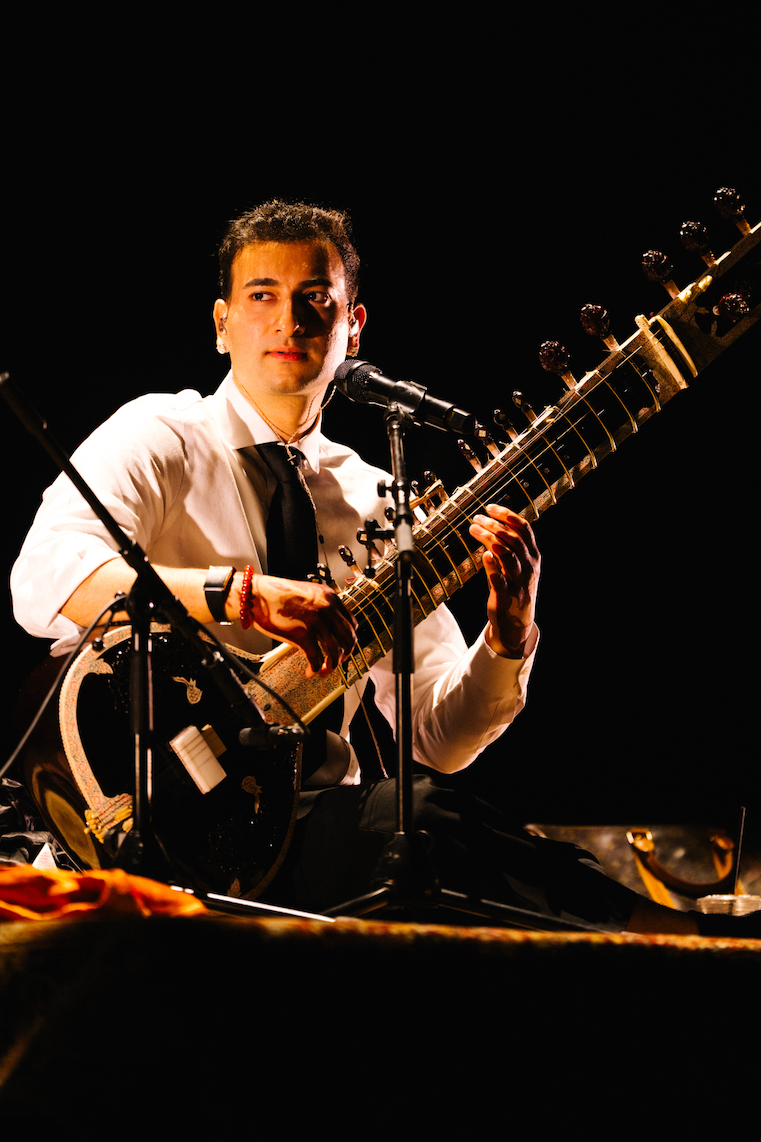
Your rise on YouTube happened during lockdown, at a time when you were experiencing anxiety and depression. Was sharing that vulnerability difficult, particularly in a culture where conversations around mental health could be more taboo?
Absolutely. It was really awkward. It was really not pleasant to share what I was going through and to share that grief. In South Asian culture, mental health is still, to this day, not talked about enough. Even at home, I was really shy and embarrassed to talk about my anxiety and depression.
When I started Sitar for Mental Health, it was actually a fight at home, because just the word “mental” has so much negative connotation attached to it. There was so much stigma that I was being convinced not to use the term “mental” at all.
I had numerous conversations with my parents, trying to convince them, “Hey, let me do this.” There was even a point where I changed the name of my movement to Sitar for Mindfulness, because it sounded softer to the ear. But after a point I thought, “No, this is not what I want to stand for. I want to stand for mental health. I think we should talk about the elephant in the room and not beat around the bush.”
So it is a fight. It’s a long fight, but I am ready to fight.
What made you decide that your experience with mental health should become part of your artistic identity rather than remain something private?
It all started with talking about mental health and advocating for it, but eventually it moved towards something much larger, which was healing through music.
As I was doing more research into why the sitar was making me feel better, I started researching raga chikitsa, which means raga therapy. In our ancient Indian tradition, there have been cases and traditions around music being used for healing, not just for treating anxiety or depression.
For me, it became about using sound as medicine. Advocating for mental health is great, but actually exploring how sound can be used as medicine was the breakthrough.
Today, we’ve crafted a wonderful set that makes people happy, and that’s the kind of zone we’re in. It has now become this phenomenon where people around the world want to experience it.
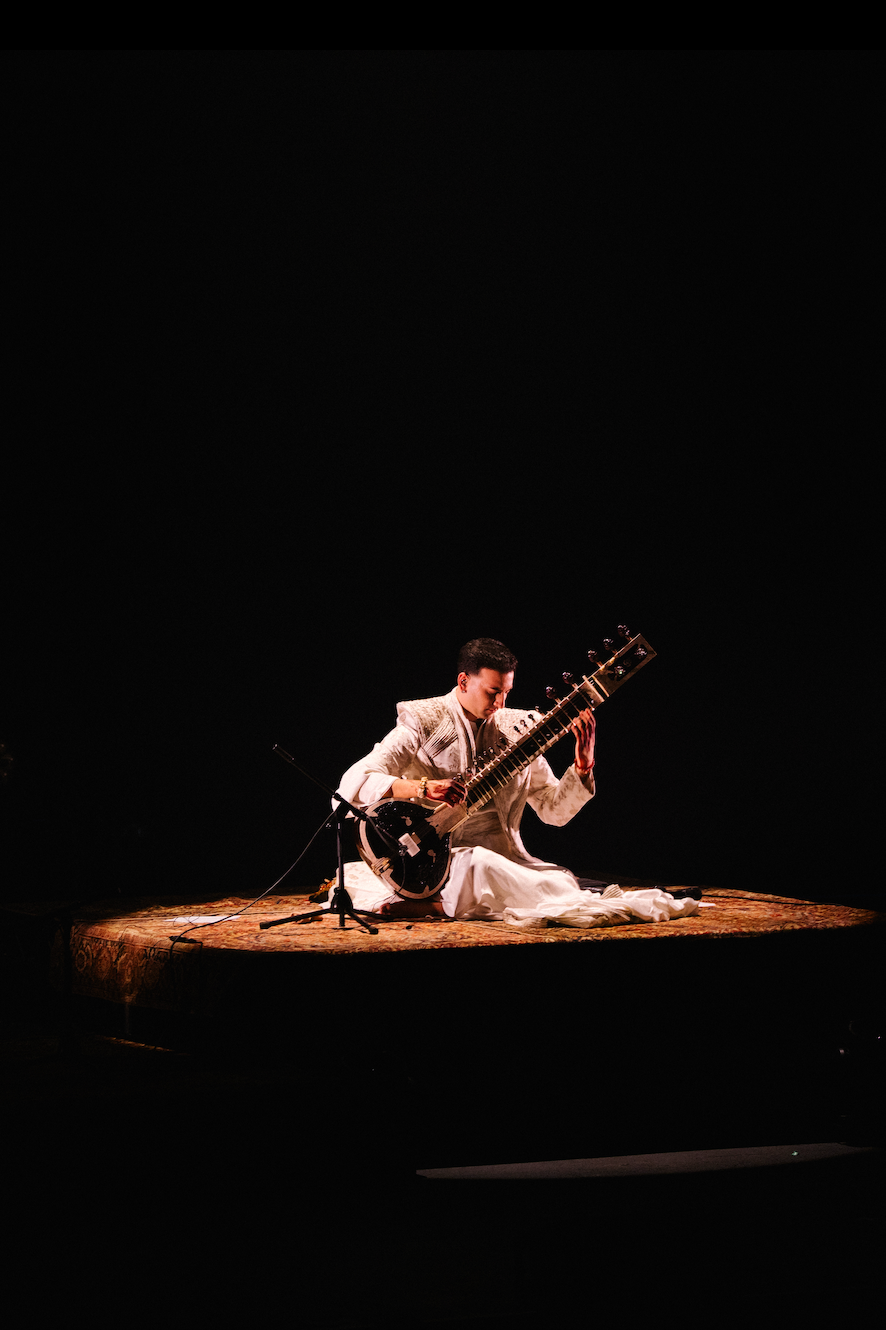
You describe Sitar for Mental Health as an experience rather than simply a concert. What do you want audiences to physically or emotionally feel as they move through the performance?
Indeed, Sitar for Mental Health is not just a mere recital. It’s an experience where people come together and celebrate music and mental health under one roof. We celebrate advocacy, acceptance and wellness around mental health in the same evening.
I want audiences to feel safe enough to let their emotions flow. We begin by bringing everyone into the room and into themselves through a breathing exercise, pranayama, followed by a guided meditation, where their breath becomes aligned with the sitar. That’s followed by a jugalbandi, which means a call and response with the tabla, almost like a conversation between me, the rhythm and the other musicians on stage.
We also create moments for people to connect with one another. During the break, I give them prompts to ask each other, preferably a stranger, although doing the exercise with family can also strengthen bonds. So it’s not about sitting passively and watching a performer. I want people to participate, to connect, to feel something and, hopefully, leave feeling lighter than when they walked in. That’s why I wouldn’t call it a mere recital. It’s an emotional and spiritual journey that we all collectively experience.
The show moves through all nine emotions, beginning in a very intimate, almost meditative space before becoming something much bigger. How did you design that emotional journey?
For me, the show is really about creating a crescendo of energy. We deliberately start in a very intimate space, because I want people to first connect with themselves before connecting with everyone else. From that very quiet, meditative beginning, we gradually open the experience up. The classical improvisations allow the music itself to take over, and then we introduce more interaction, community and eventually my original songs and familiar Bollywood and Hollywood pieces.
By the end, the energy has completely transformed. We want people to be on their feet, celebrating together, and we arrive at Tandavam, which is my prayer to the Almighty for us to be protected and blessed.
The idea was to take people through all nine emotions, not by simply explaining them, but by allowing them to experience them through sound, movement, memory and collective energy. So there’s a very deliberate emotional architecture to the show. We start within, we gradually open up, and ultimately we arrive at a place where the entire room is connected and celebrating together.
You’ve amassed more than seven million followers. What have you learned about the relationship between music and social media that perhaps a traditional musician might not have experienced?
I think social media is a great tool if you use it right. I use it to find my audience, my niche, my community — people who enjoy this type of music, who care about mental health and who have an open mind about things in general in life.
I mean, it’s easier than ever today. If you put out your intentions and communicate what you stand for, naturally people gather online and cheer for you.
You’re also working with Hans Zimmer on the score for The Ramayana. What is it like taking an instrument and musical tradition with such deep cultural history into a major global cinematic project?
I haven’t had the chance to directly work with Mr Zimmer, but we’ve been communicating through the teams and collaborating by sending one another different musical pieces.
I’m so happy to be part of this amazing project, The Ramayana, which is the greatest epic coming from India. It’s our history, and the makers of the film are giving this epic the production that it deserves. We’re so happy to be a part of it and simply contribute in our own ways. It’s been such an experience, diving into different zones and different emotions of everything that The Ramayana makes you feel. Composing for it has been a wonderful experience.
After the Royal Albert Hall, you’re heading to Mumbai and then touring the US. What does this next phase of your career look like from where you’re standing now?
I’m super excited to see all of these shows and meet all of these wonderful people in these different cities, starting from London. We’re also off to Australia in the next few weeks, then Singapore and Dubai, and we’re planning a much larger global tour in 2027 and 2028.
In the interim, I’m also working on my debut album. Believe it or not, I don’t have a single album out yet. I’ve just been releasing singles, and the focus was to grow Sitar for Mental Health and grow this movement.
But the time has come where I’m ready to put out a body of work that people can listen to from top to bottom, a complete listening experience. The working title of the album is Weapons of Mass Peace, meaning that I use my sitar as a weapon for spreading peace. It’s very ironic, the title, because the sitar is probably the sweetest instrument anyone has ever heard.
I’m super excited about that, and I’m so happy that all of these fun things are starting from London. I’m super hyped to kick things off from here.