
IN CONVERSATION WITH DEDEE KOŽELJ
interview by JANA LETONJA
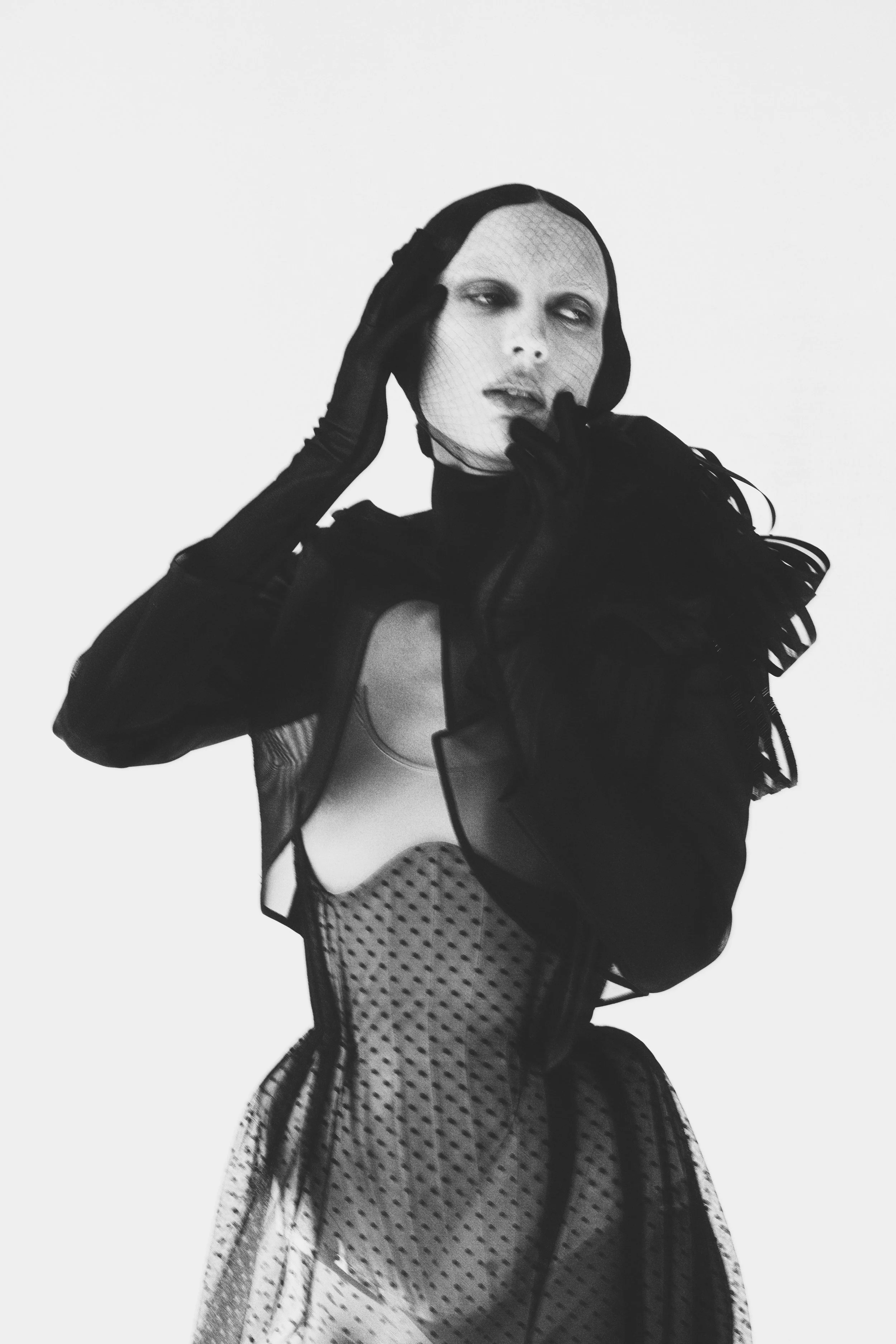
Dedee Koželj is a Slovenian fashion designer and a recent graduate of ESMOD Paris, where she specialized in Haute Couture. Drawing on a childhood immersed in craftsmanship, art, and storytelling, she creates fashion that goes beyond clothing to build complete fictional worlds. Her graduate collection, Morning Always Comes to Kill the Dream, explores transformation through exceptional craftsmanship, symbolism, and narrative, reflecting her vision of fashion as an artistic language.
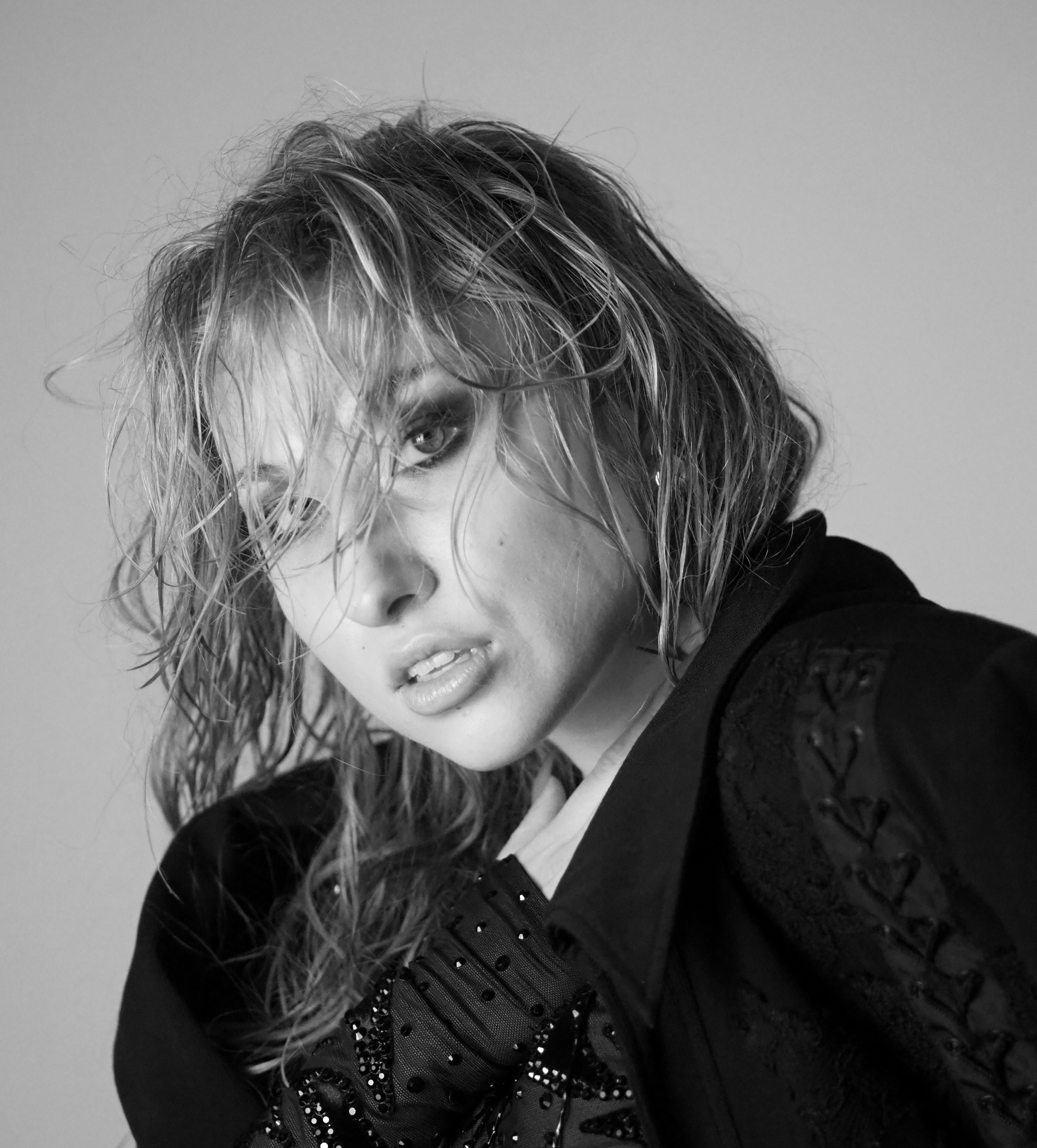
Your journey into fashion seems deeply personal. When did you first realize this was the path you wanted to follow?
I think the first seeds were planted in my childhood, although I didn't realize it at the time. My grandmother was a wonderful seamstress, and I spent countless hours in her tiny sewing room, completely fascinated by the pins, ribbons, fabrics, and the quiet magic of watching a garment come to life. At home, I was constantly dressing up in my mother's dresses and high heels. I think every seven-year-old version of me believed she was already living in a fashion show.
The moment I truly understood that I wanted to create clothes rather than simply wear them came later, through dance. I spent many years competing in Ballroom and Latin dance, and I was fortunate enough to have my competition dresses designed by the Slovenian dancewear designer Saša Pust. I loved every fitting in her atelier. Watching an idea evolve from an initial sketch into a finished garment made me realize that fashion was much more than aesthetics, it was a dialogue between imagination, craftsmanship, and the body in motion.
Those experiences made my next step feel almost inevitable. I enrolled in the Secondary School of Design and Photography in Ljubljana to study Fashion Design, where I finally found a place to channel my creativity. Looking back, it feels less like I discovered fashion and more like I gradually recognized something that had always been part of me.
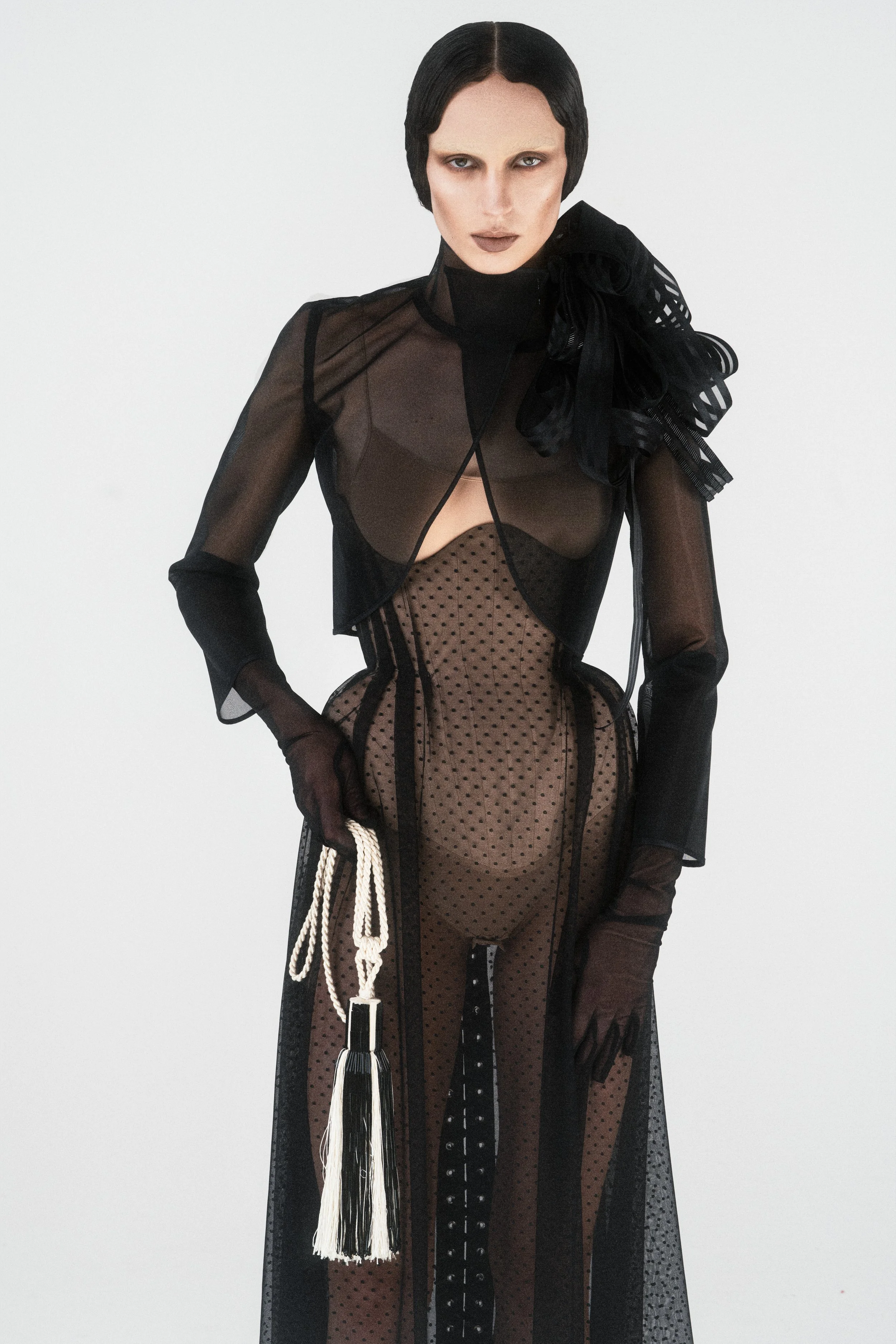
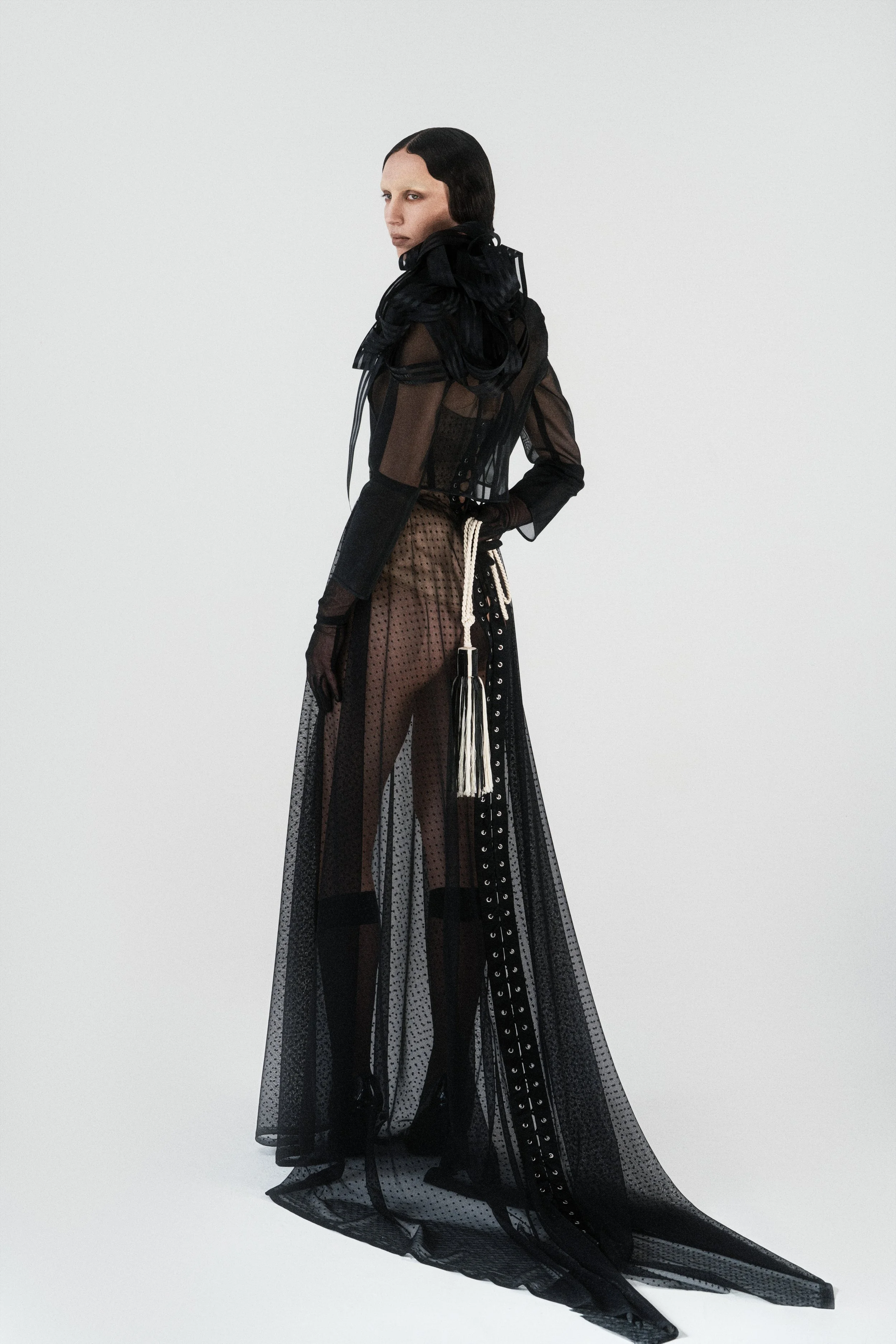
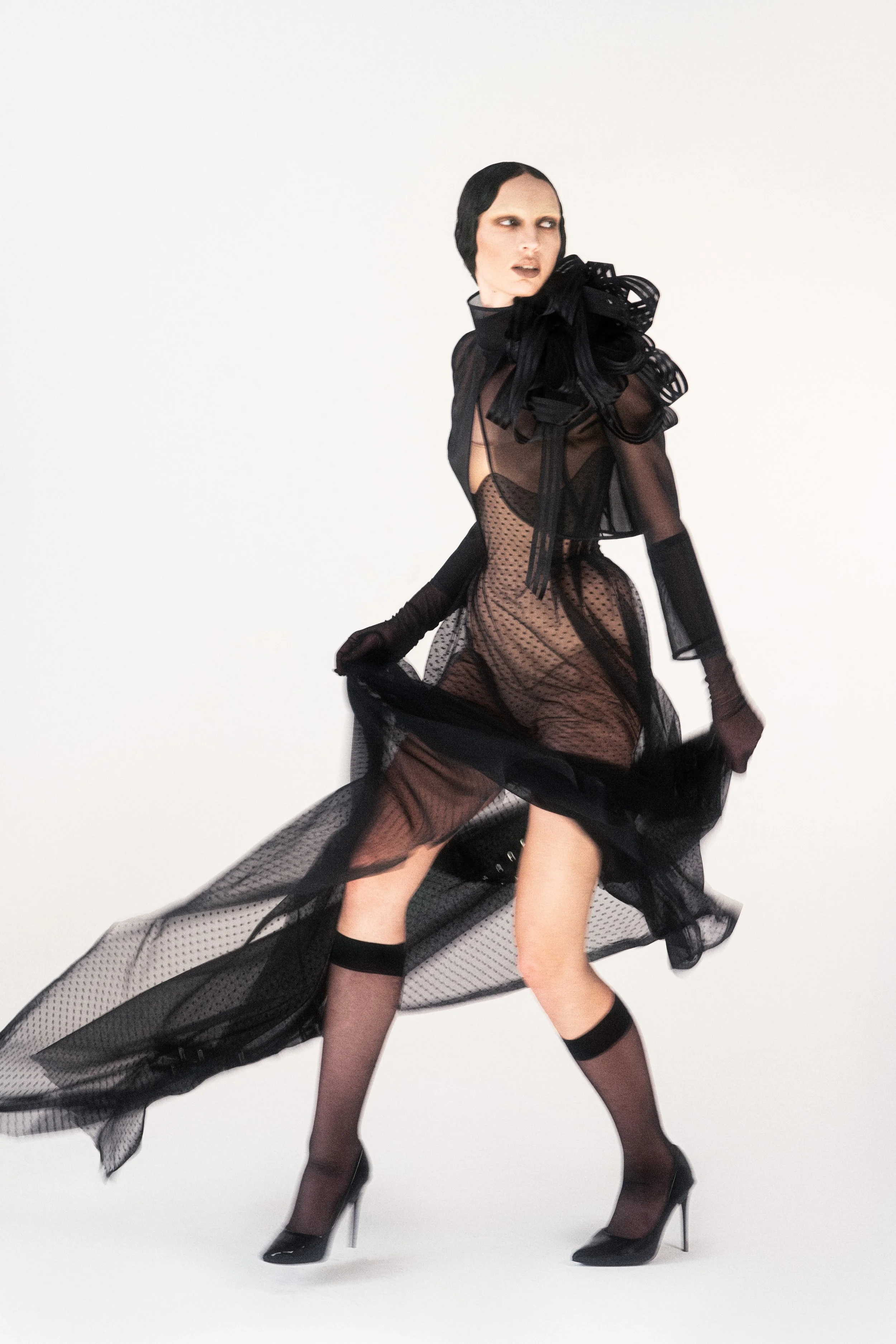
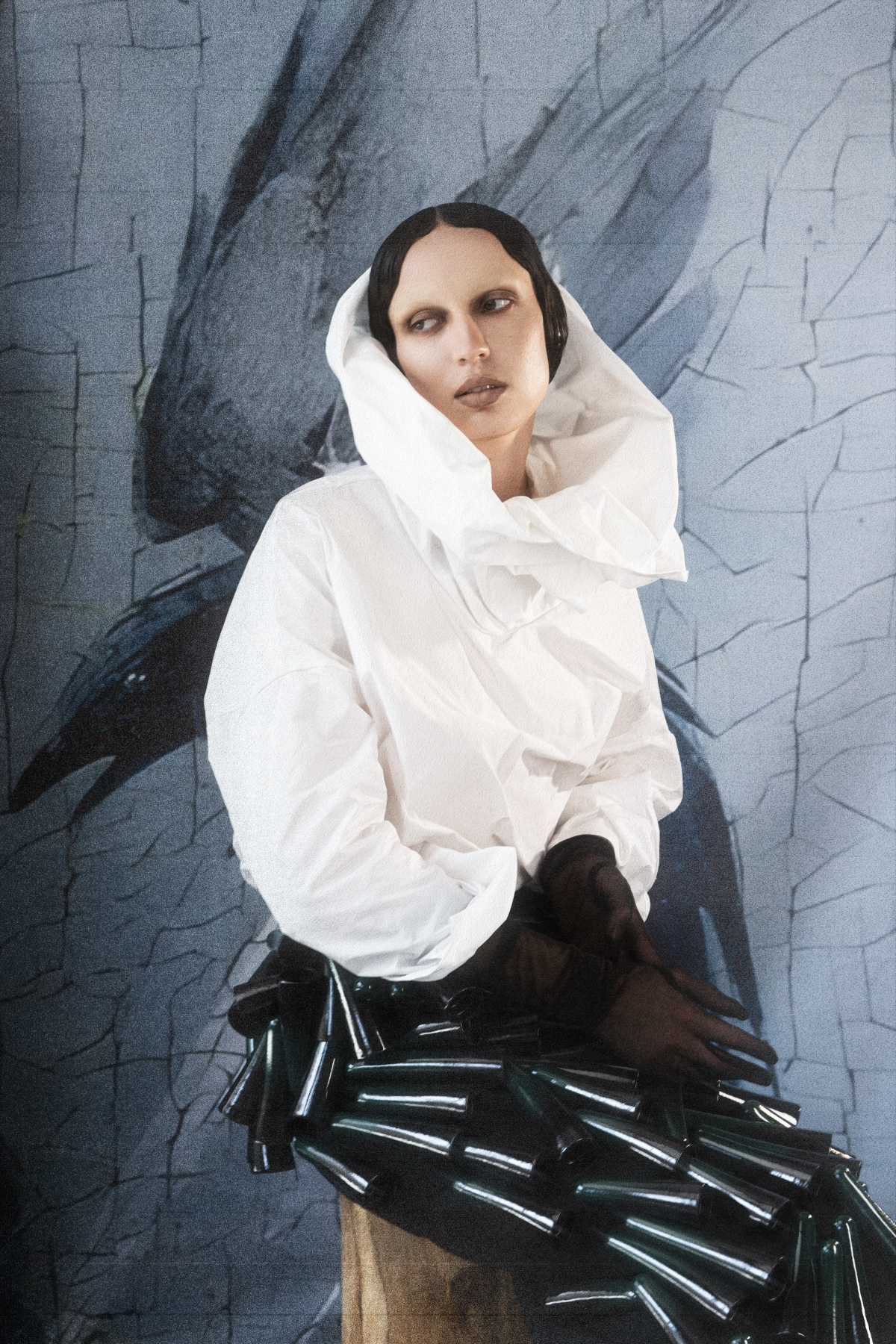
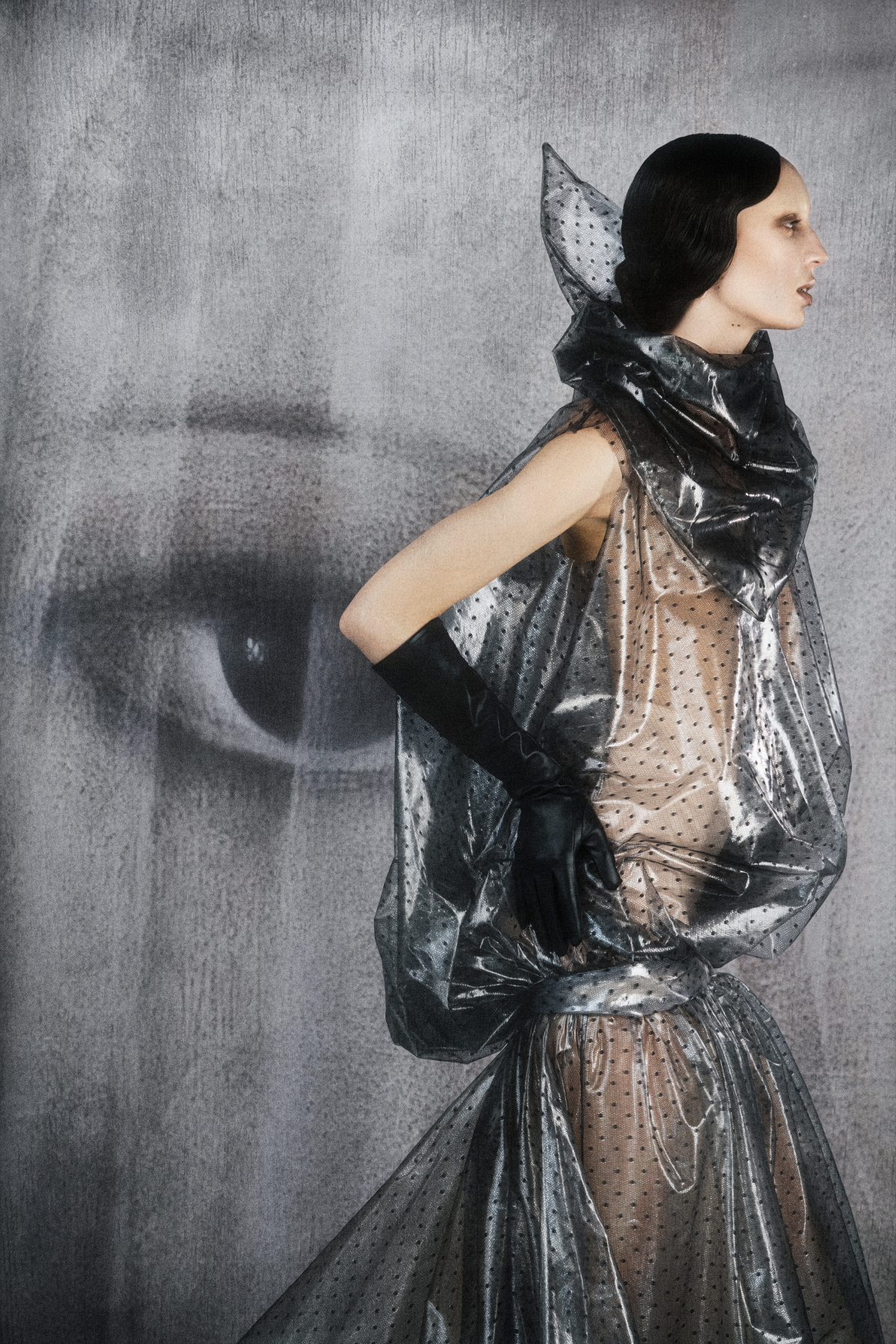
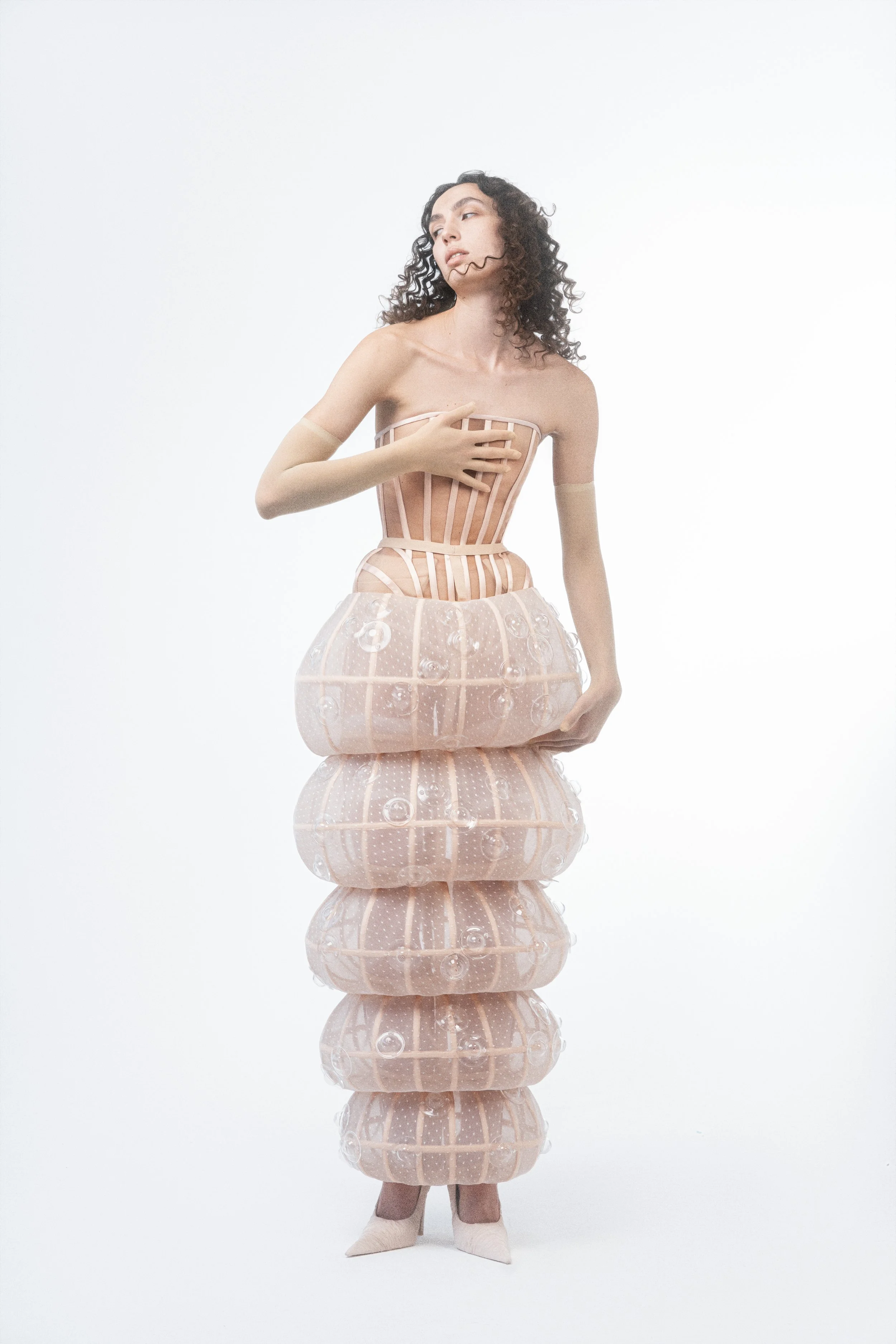
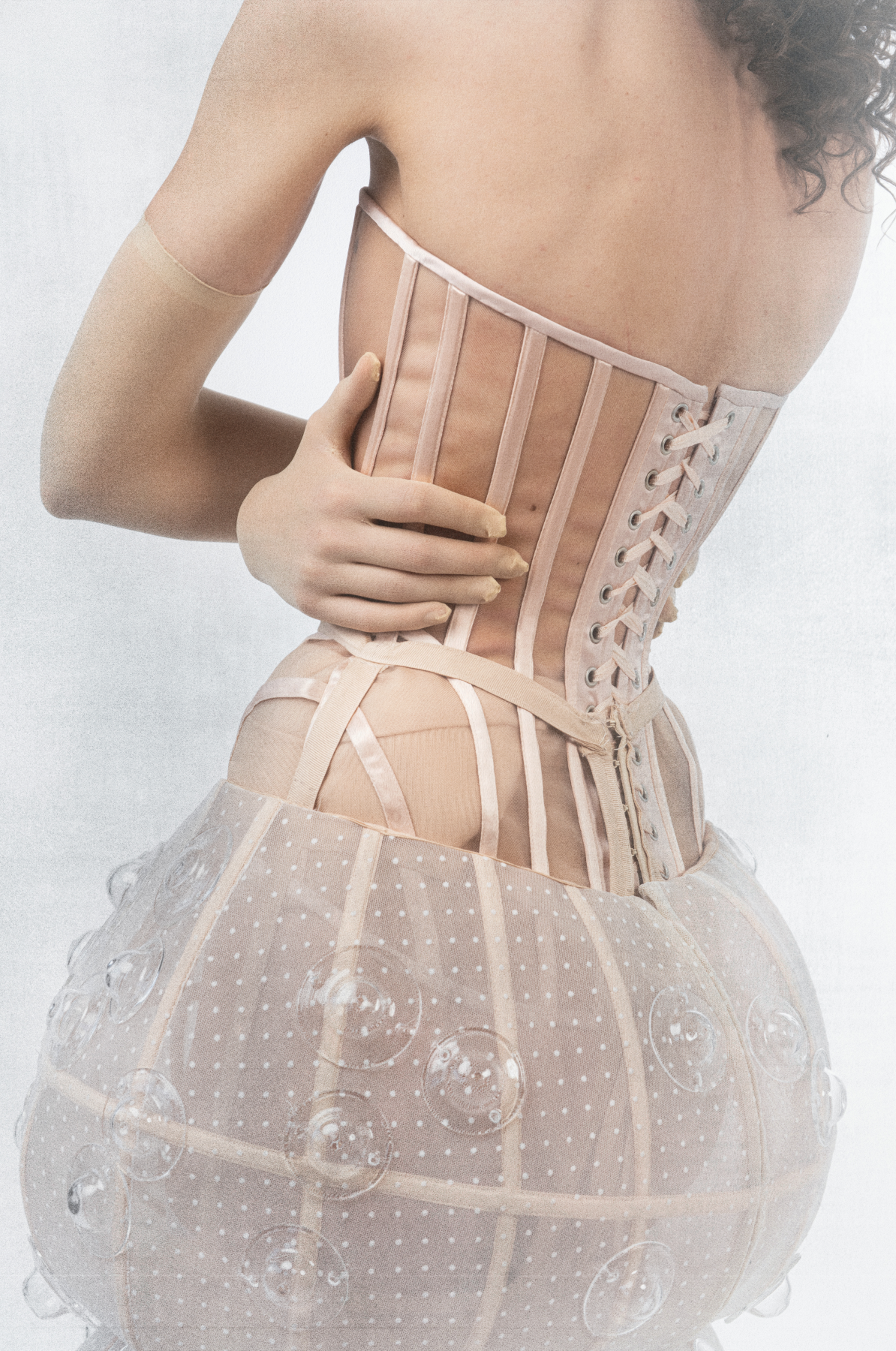
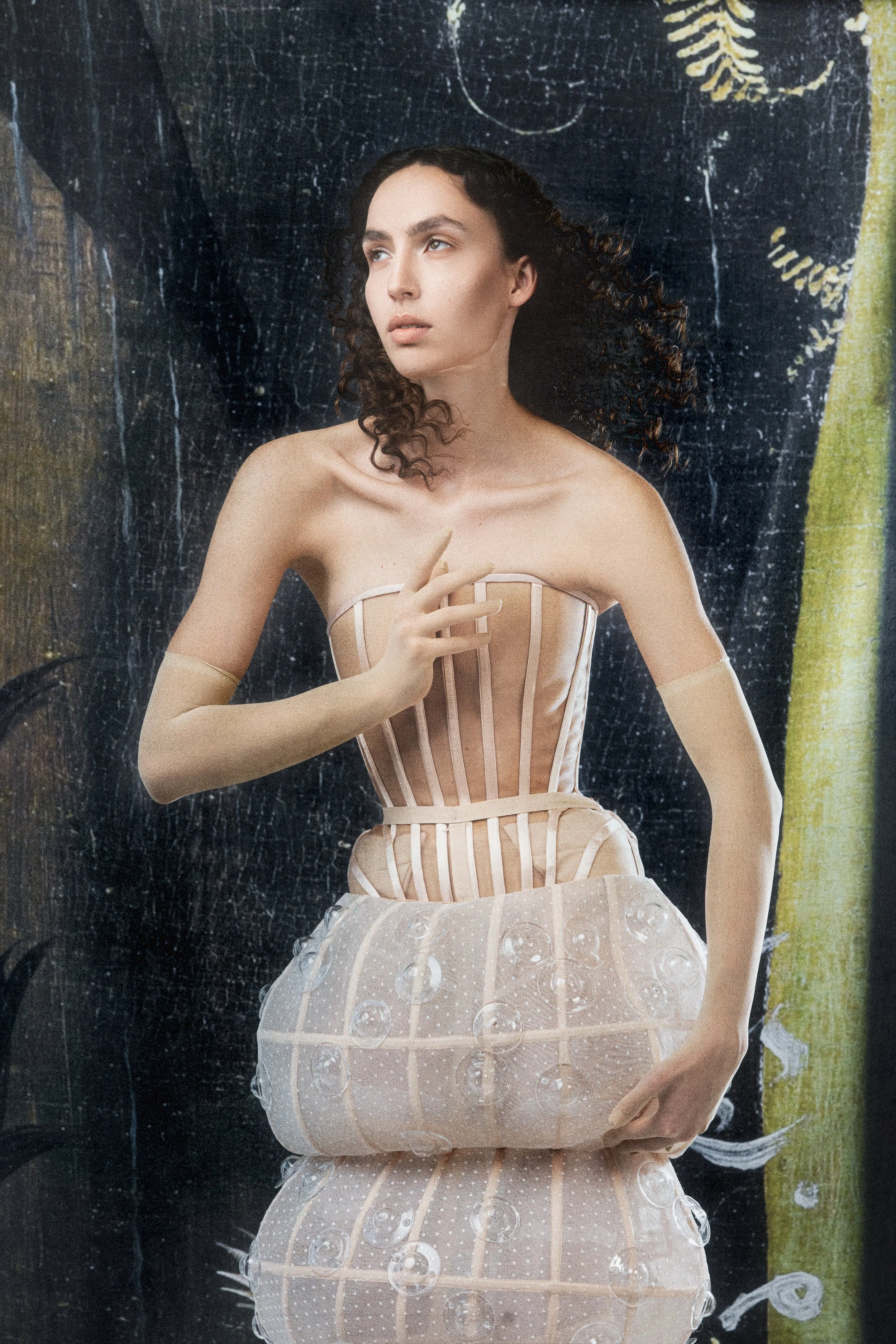
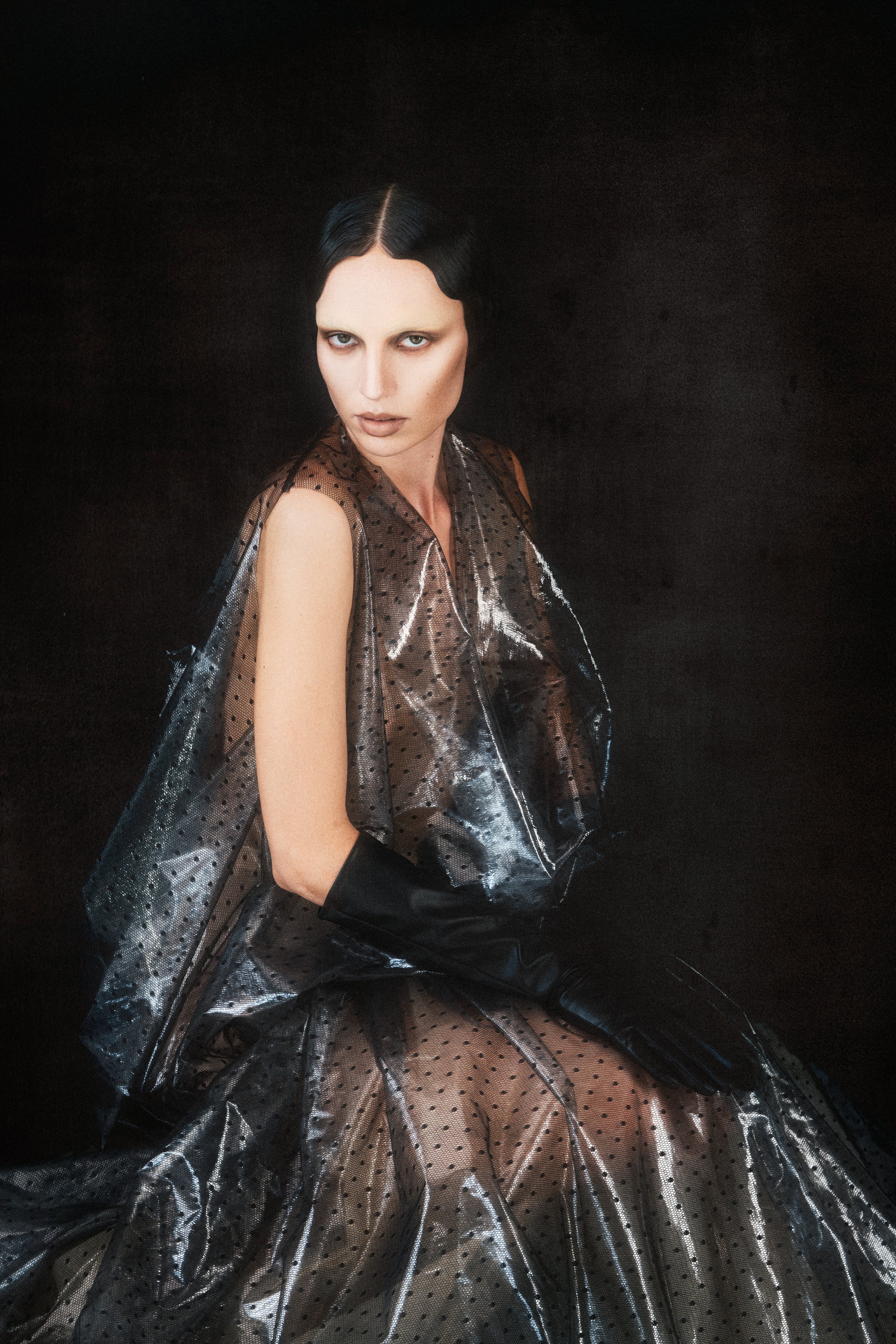
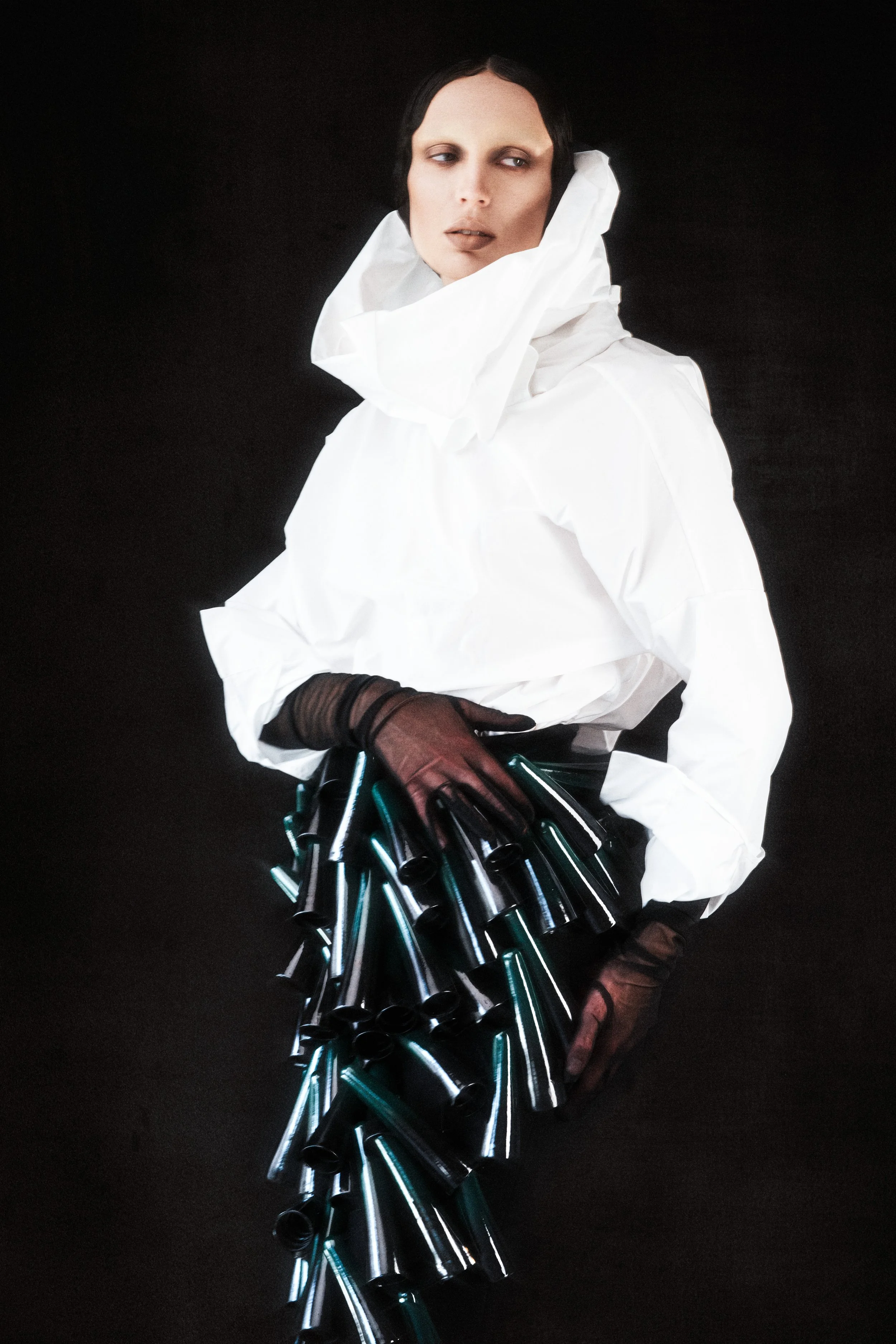
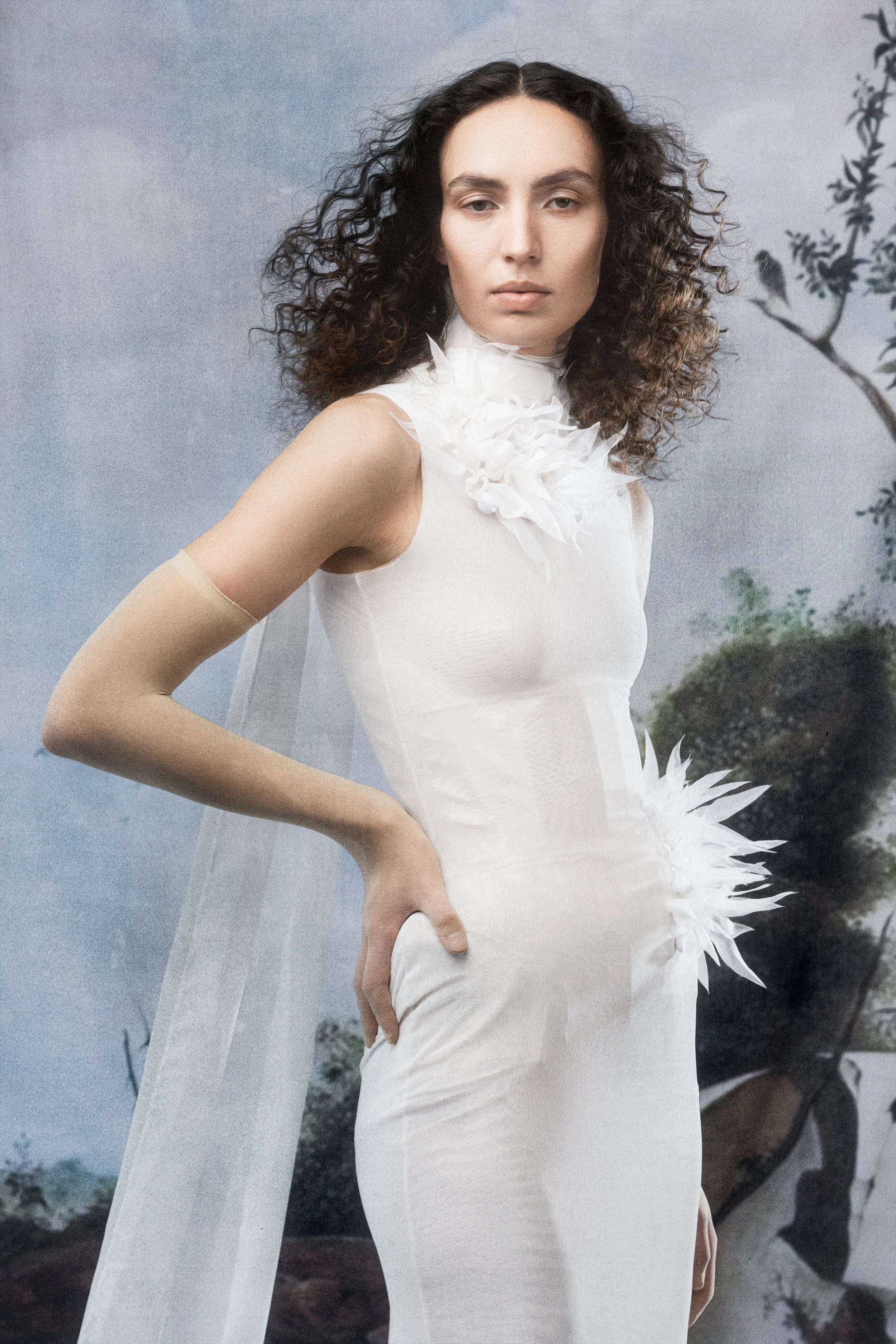
all clothing DEDEE KOŽELJ - MORNING ALWAYS COMES TO KILL THE DREAM COLLECTION
How did growing up in Slovenia shape your creative identity?
I think growing up in Slovenia shaped me in two fundamental ways.
The first is my work ethic. Slovenia is a relatively small country, and if you choose to pursue a very specific path, especially one that isn't deeply rooted in the local industry, you quickly realize that nothing is handed to you. If you dream of working internationally, you have to be disciplined, persistent, and willing to work incredibly hard while staying humble. Those values have stayed with me throughout my journey, especially after moving to Paris, where I found myself surrounded by some of the most talented young designers from around the world.
The second is my cultural identity. Although Slovenia is small, it has an incredibly rich artistic and cultural heritage. Our literature, poetry, painting, folk traditions, costumes, embroidery, and craftsmanship have always fascinated me. I often revisit the Slovenian Ethnographic Museum and the National Gallery in Ljubljana, and I still find inspiration there. Even when my collections don't directly reference Slovenian culture, I think its visual language and appreciation for craftsmanship have quietly become part of the way I think and create.
Moving to Paris didn't replace that identity, it expanded it. I learned the language of haute couture in France, but I still carry a Slovenian perspective with me. I like to think my work exists somewhere between those two worlds.
You often describe your home as a “cabinet of curiosities.” How does that influence your work today?
It's funny because growing up, I thought every home looked like ours. It was only later that I realized how unusual it actually was. My mother has an incredible eye for beauty and an instinctive talent for creating spaces. Without consciously trying to, she turned our home into what I now call a cabinet of curiosities. Even today, I'm sitting across from a bookshelf where a set of babushkas, a Tibetan singing bowl, a pine cone, and stacks of books co-exist as if they've always belonged together.
Living in that environment taught me to be endlessly curious. Our home was full of objects collected over the years, books from old exhibitions, antiques, paintings, and little discoveries waiting to be rediscovered. It still happens that I come home, pull an old exhibition catalogue or a forgotten book from the shelf, and suddenly find the starting point for a new project.
I think that's how I design as well. I collect references, stories, symbols, and objects without forcing them to make sense immediately. Then, over time, they begin to connect, and a new world slowly emerges. In many ways, my collections become cabinets of curiosities themselves.
Your grandmother was a seamstress. What are the most valuable lessons you learned from watching her?
My grandmother taught me that craftsmanship begins long before you make the first stitch. She always reminded me to be patient and never rush the process, because according to her, "Šivarija ni norija." Before picking up the scissors, she would encourage me to stop, think, and approach every garment rationally. I still try to follow that advice, although I have to admit that the "being realistic" part sometimes gets lost when my imagination takes over.
She also believed that a tidy workspace was part of good craftsmanship. Her sewing room was always impeccably organized because, as she used to say, you'll never have time to clean up afterwards.
You also competed in Ballroom and Latin dance. How does movement influence the way you design garments?
Dance has definitely shaped the way I perceive the body, even if not in the most obvious way. I don't necessarily design garments thinking, "Could someone dance in this?" Instead, my years in Ballroom and Latin dance made me deeply aware of posture, line, and the body's ability to communicate through movement, even in complete stillness.
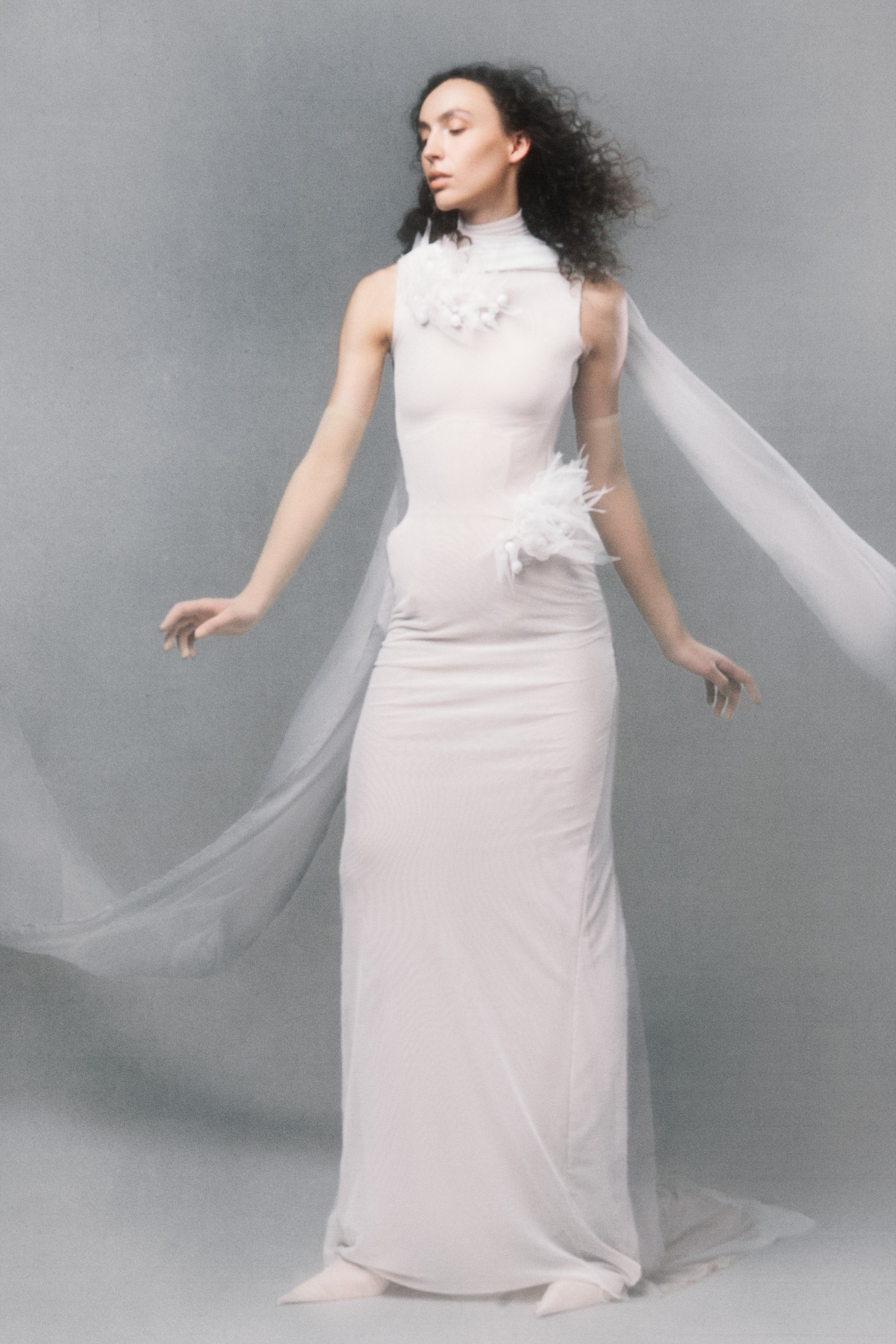
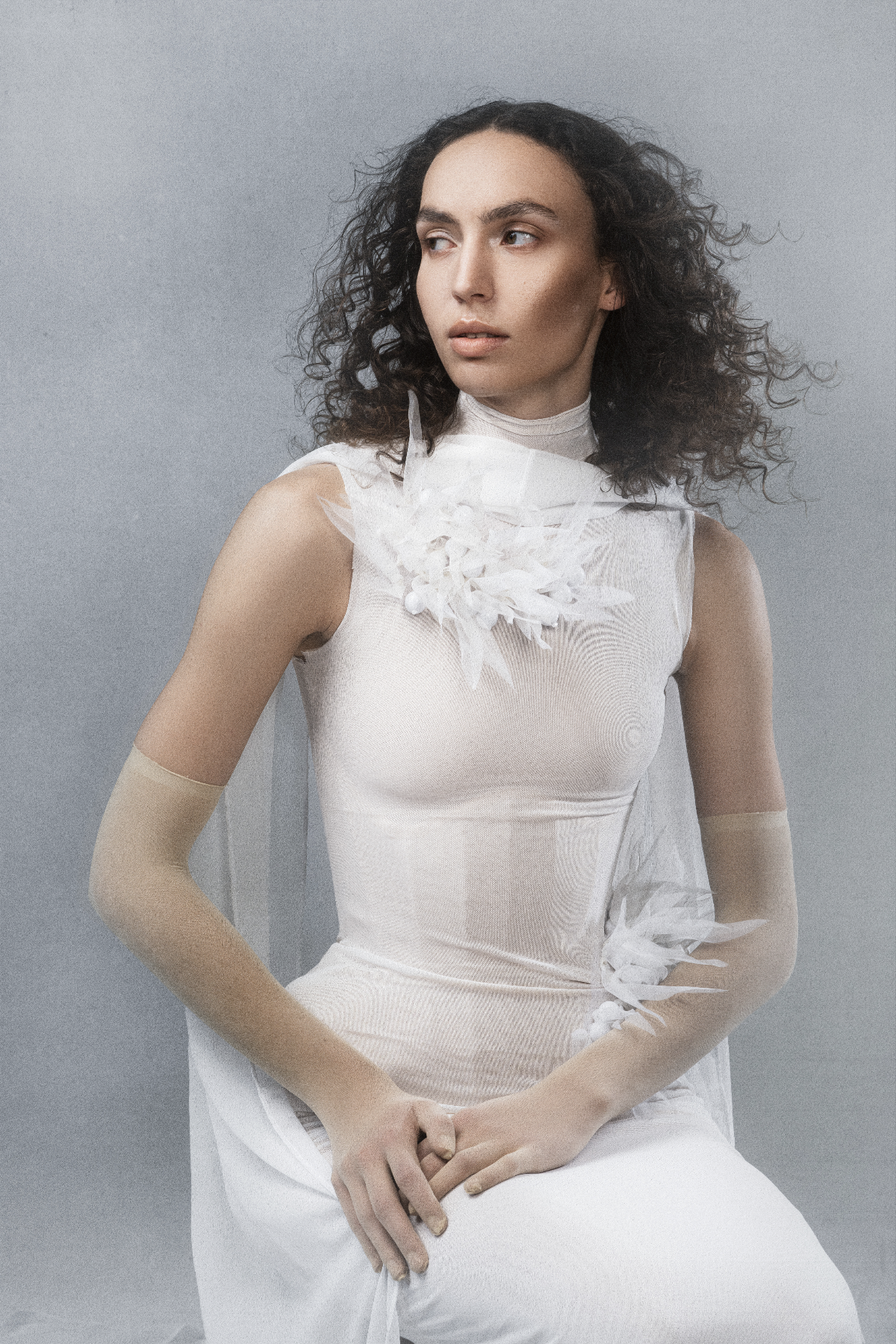
That perspective continues to influence my work today. I'm interested in how a garment can reveal, frame, or transform the silhouette rather than simply dress it. Recently, I've found myself returning to materials traditionally associated with dancewear, such as stretch mesh, because I'm fascinated by the way they simultaneously conceal and reveal, accentuating the body's natural architecture.
That sensitivity also carries into my fittings and editorial shoots. I often encourage my models to fully inhabit the garment, to elongate a line, twist the torso, emphasize a shoulder or a hip, and really take a form. I want them to acknowledge their presence rather than simply pose. To me, a garment only truly comes alive when it enters into a dialogue with the body wearing it.
Why did you choose to study at ESMOD Paris, and what was the biggest challenge of moving there?
Paris always felt like the natural destination for me. Not only because it is one of the world's great cultural capitals, but because it is a place where fashion history, craftsmanship, and artistic expression have been developed and preserved for centuries.
Choosing ESMOD Paris was a very conscious decision. What attracted me most was its strong technical foundation and its respect for the craft of garment-making. I have always believed that creativity and technicality should not be separated. In fact, I think true creative freedom begins when you master the technical language of your craft.
Sometimes technical education is perceived as something that limits creativity, but I see it completely differently. The more knowledge and precision you have, the more ambitious your imagination can become because you have the ability to transform complex ideas into reality. For me, a garment should not only be beautiful from the outside, it should reveal the same level of thought and refinement from the inside. The finishing, the construction, and every hidden detail are part of the story of the garment. At the end of the day, that is what creates a piece that feels truly valuable, both for the person who creates it and for the person who wears it.
The biggest challenge of moving to Paris was not necessarily the city itself, but the suddenness and uncertainty of the beginning. I moved there with only two suitcases in the middle of September, after the academic year had already started. Originally, I had planned to begin my studies the following year, but after successfully passing the entrance exams, I received a call on September 13th informing me that a place had become available due to another student's visa situation.
At that moment, I was already prepared to wait another year, but something in me felt that this was an opportunity I shouldn't postpone. I packed my bags and moved to Paris without an apartment. Anyone who has lived in Paris knows how challenging finding accommodation can be, so for the first two weeks I stayed in a hostel near the school while searching for a place to live.
Looking back, that beginning was challenging, but it was also a very important lesson. It taught me to trust my intuition, adapt quickly, and embrace uncertainty. In many ways, it reflected the creative process itself. You rarely have every answer from the beginning, but you learn by moving forward.
What does haute couture mean to you beyond luxury fashion?
To me, it represents a place where time, patience, and human hands still have value.
Because of this, a couture garment can become something deeply personal. The appreciation goes beyond the finished piece itself. You can almost feel a connection to the person who created it, to the hours, thoughts, and emotions invested into making it. I believe that human presence is what gives a garment its soul.
You enjoy the most technically demanding parts of the design process. What draws you to that level of craftsmanship?
I think, at its core, it comes from curiosity and a certain level of perfectionism. I am rarely completely satisfied with the first result. I always look at a garment and wonder how it could be refined further, whether through construction, finishing, or the smallest details. I also understand that this mindset can be demanding. Sometimes it means sacrificing things like a normal amount of sleep, which I am still learning to balance. But I think anyone who chooses a path like this has to be a little bit obsessed. Couture requires an unusual amount of patience, dedication, and belief in something that may take hundreds of hours to complete.
And then there is that moment when the garment finally comes to life, when something that existed only in your mind and through countless hours of work can finally be seen, touched, and experienced. That feeling makes every difficult moment worth it.
Rather than starting with clothing, you begin by creating an entire world. Can you describe your creative process?
I rarely begin with clothing itself. I usually begin with something much more intangible - a feeling, a memory, an emotion, or a question that stays with me. Every project starts from something very personal, even if the final outcome eventually transforms into something completely different. I am a very contemplative and sentimental person, and fashion became the way I could translate those inner experiences into something material. Once I understand the emotion or atmosphere I want to explore, the visual references slowly begin to appear - archetypes, symbols, a certain historical period, a piece of literature, or an image that resonates with that feeling.
From there, I start creating digital collages, collecting all these fragments and allowing them to communicate with each other. This is where the exploration truly begins. I ask myself what attitude the collection carries, what I want to emphasize, whether the focus should be on silhouette, textile development, or another element of the garment.
I always return to hand sketching with pencil and paper. I sketch quickly, almost instinctively, because by that stage the world of the collection already exists in my mind. The drawings are not where the idea begins, they are where I start translating something I can already feel.
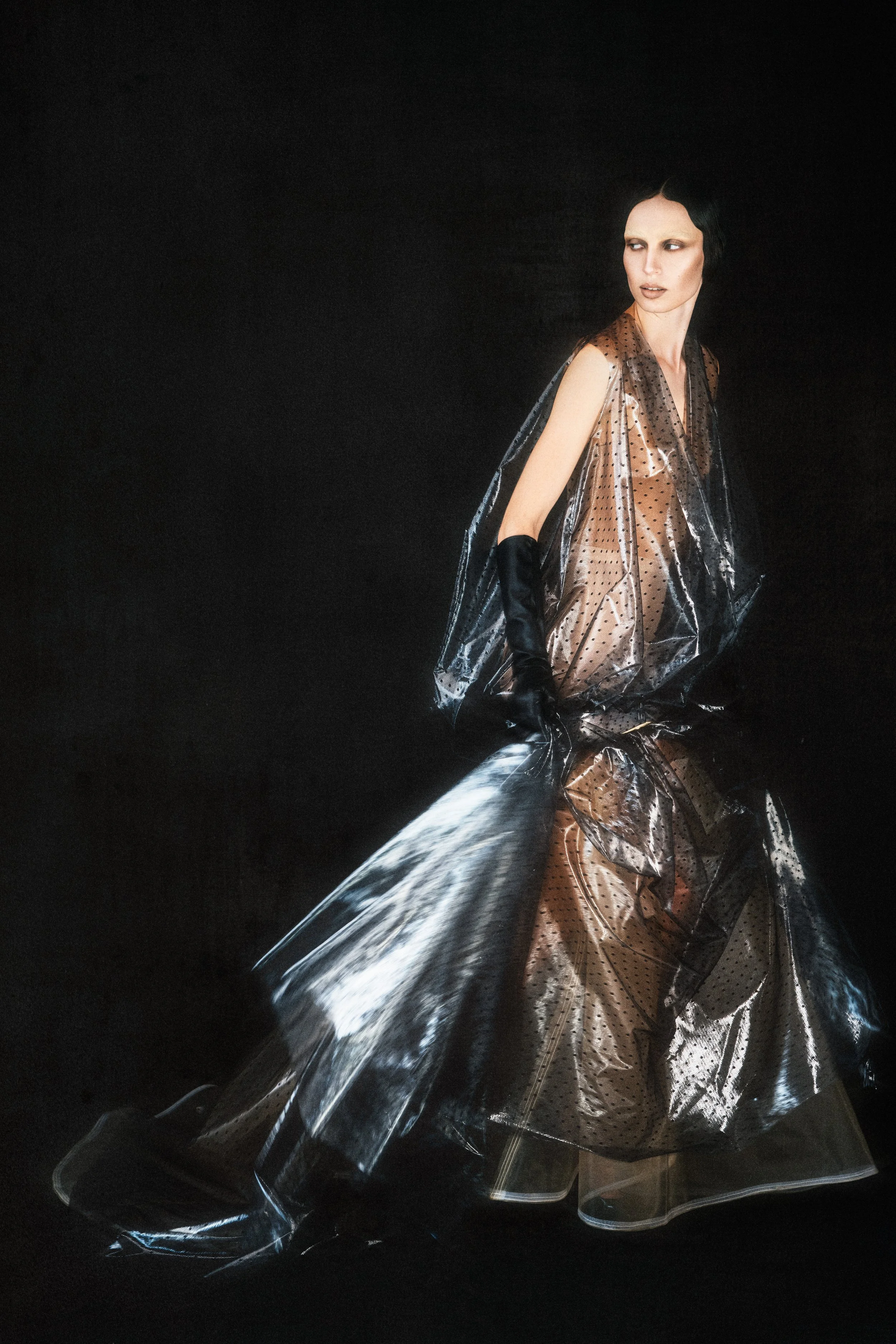
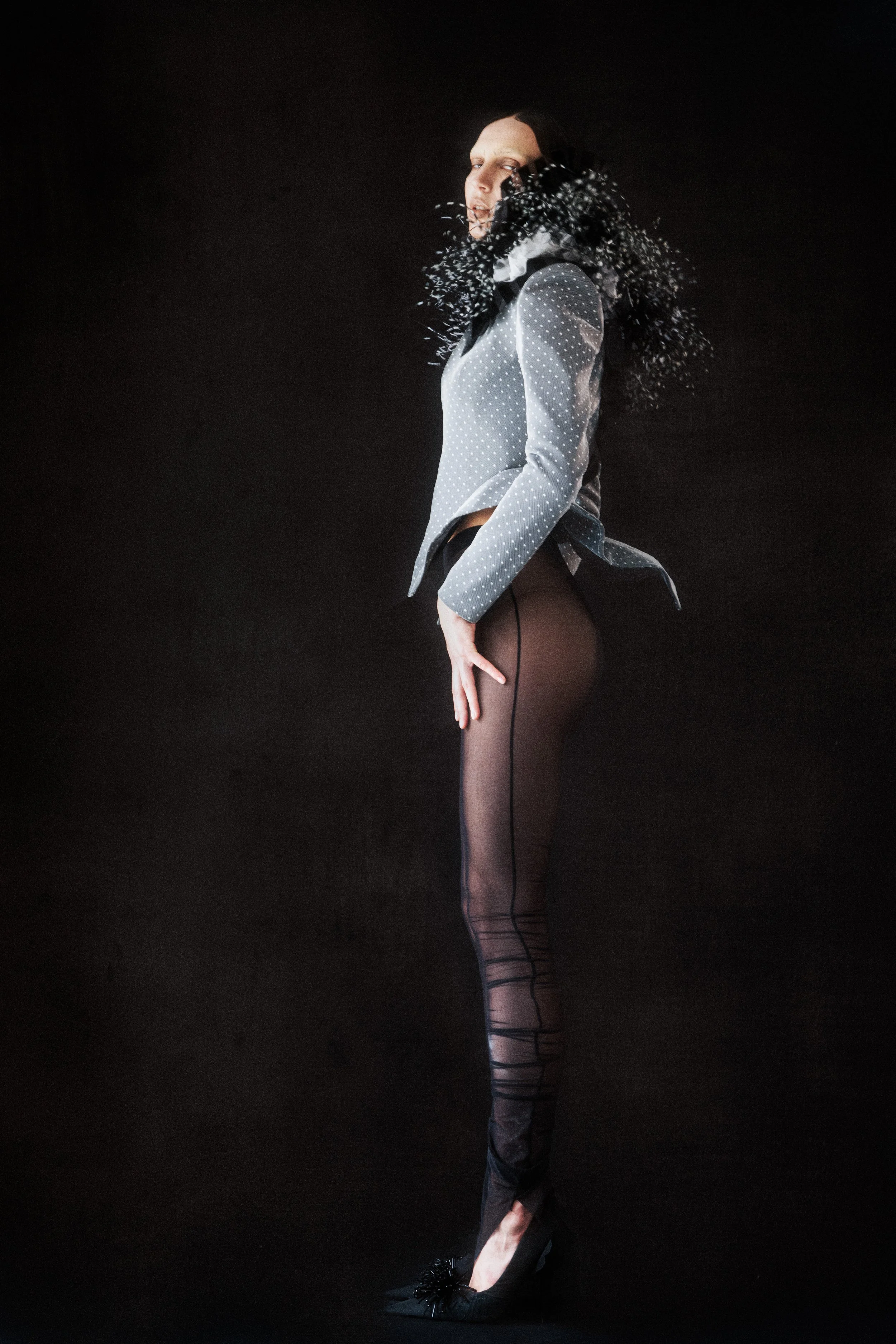
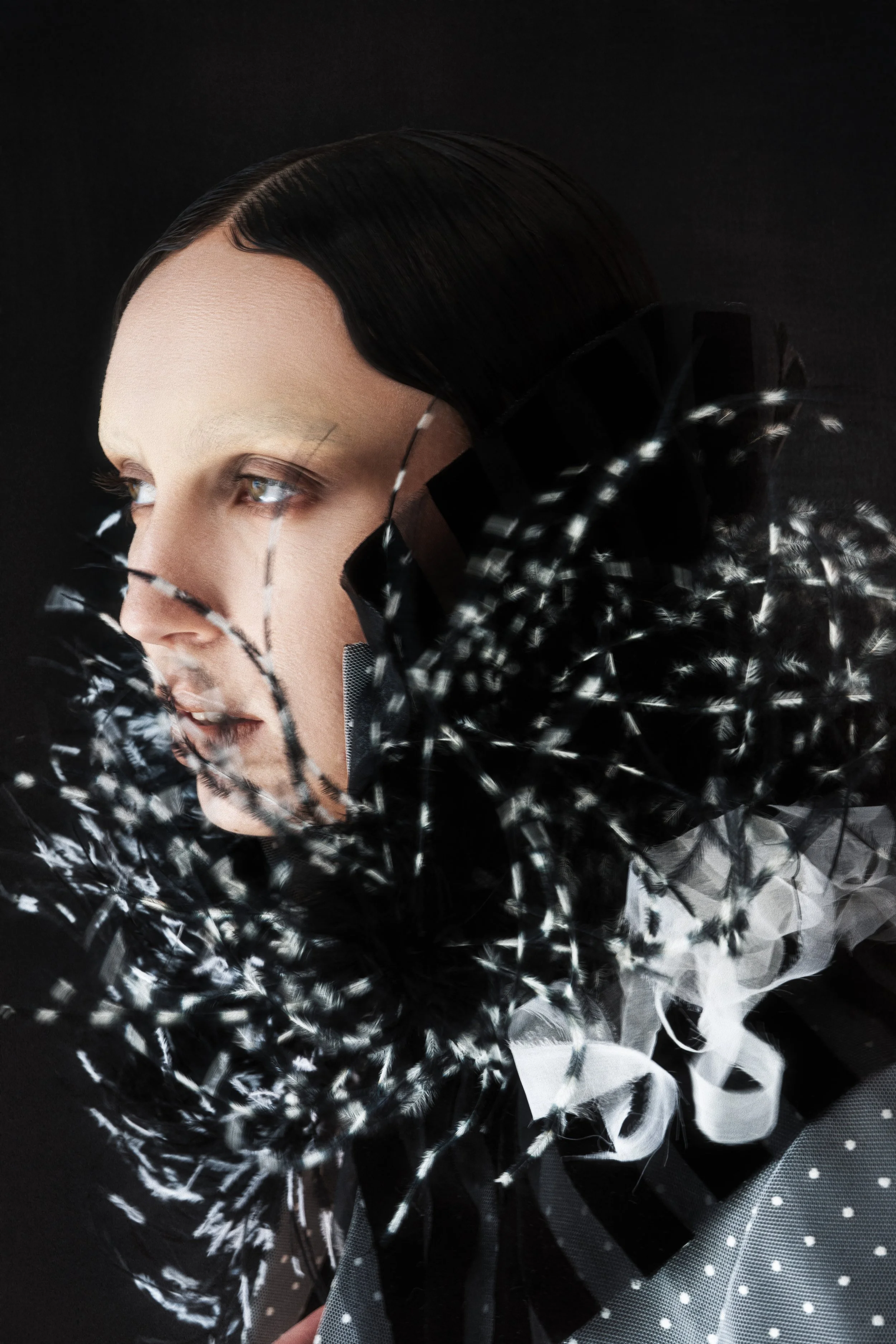
Your graduate collection, Morning Always Comes to Kill the Dream, is inspired by The Divine Comedy. What attracted you to that story?
For me, Morning Always Comes to Kill the Dream was born from a very transformative period in my life. It was a time when I experienced a wide range of emotions - from shame and sadness to gratitude, hope, and a renewed sense of softness. Looking back, it felt like a personal journey of transformation, which is what naturally led me to Dante’s Divine Comedy. I have read it several times, and I still carry a copy with me wherever I go. What fascinates me most about Dante’s work is its ability to hold contradictions: darkness and light, human vulnerability and the desire to transcend, spirituality and curiosity about the wider universe. It is a journey through uncertainty, suffering, and ultimately transformation, which is something I deeply connected with.
How do literature, mythology, and symbolism shape your collections?
Literature, mythology, and symbolism are at the heart of the way I think. They give my collections a deeper emotional foundation and help me express ideas that would be difficult to communicate through clothing alone.
I don't use references to literally illustrate a story. Instead, they allow me to conceal and reveal different layers of meaning. Sometimes that meaning exists within the garment itself, but just as often it appears through the way a model inhabits it - a gesture of the hand, the direction of a gaze, or the atmosphere created around the piece. For me, every element contributes to the narrative.
I think we sometimes forget that not everything meaningful can be explained rationally. Literature and mythology remind us that we are emotional, symbolic, and deeply interconnected beings. That's why I return to them again and again.
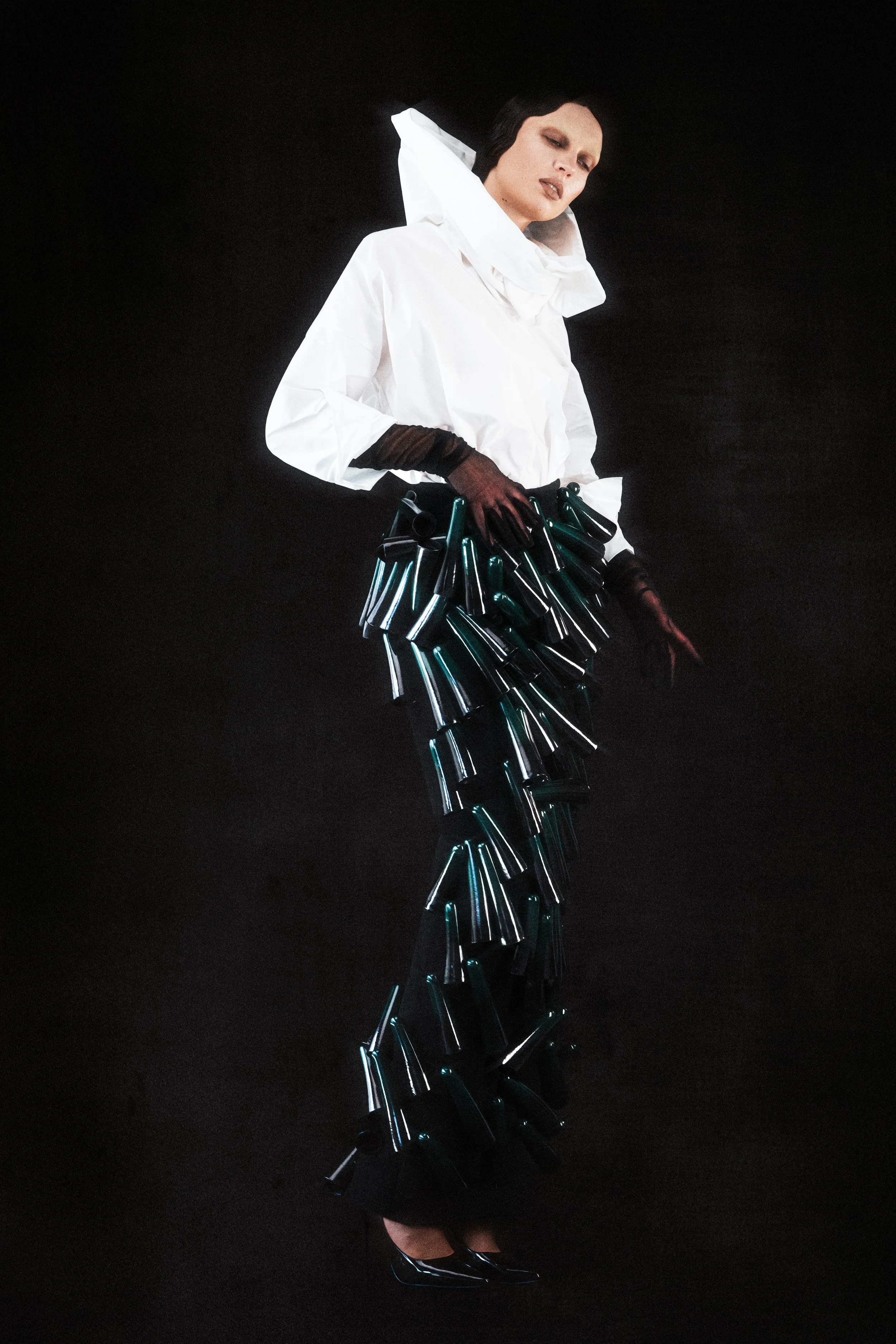
You collaborated with Slovenian artisans on your graduate collection. Why was that collaboration important, and how do you see the future of haute couture in Slovenia?
Collaborating with Slovenian artisans was one of the most meaningful parts of my graduate collection because I believe craftsmanship only survives if we continue to value the people behind it. So many traditional crafts that were once deeply respected are slowly disappearing, and with them, the extraordinary knowledge of the artisans who have dedicated their lives to preserving them.
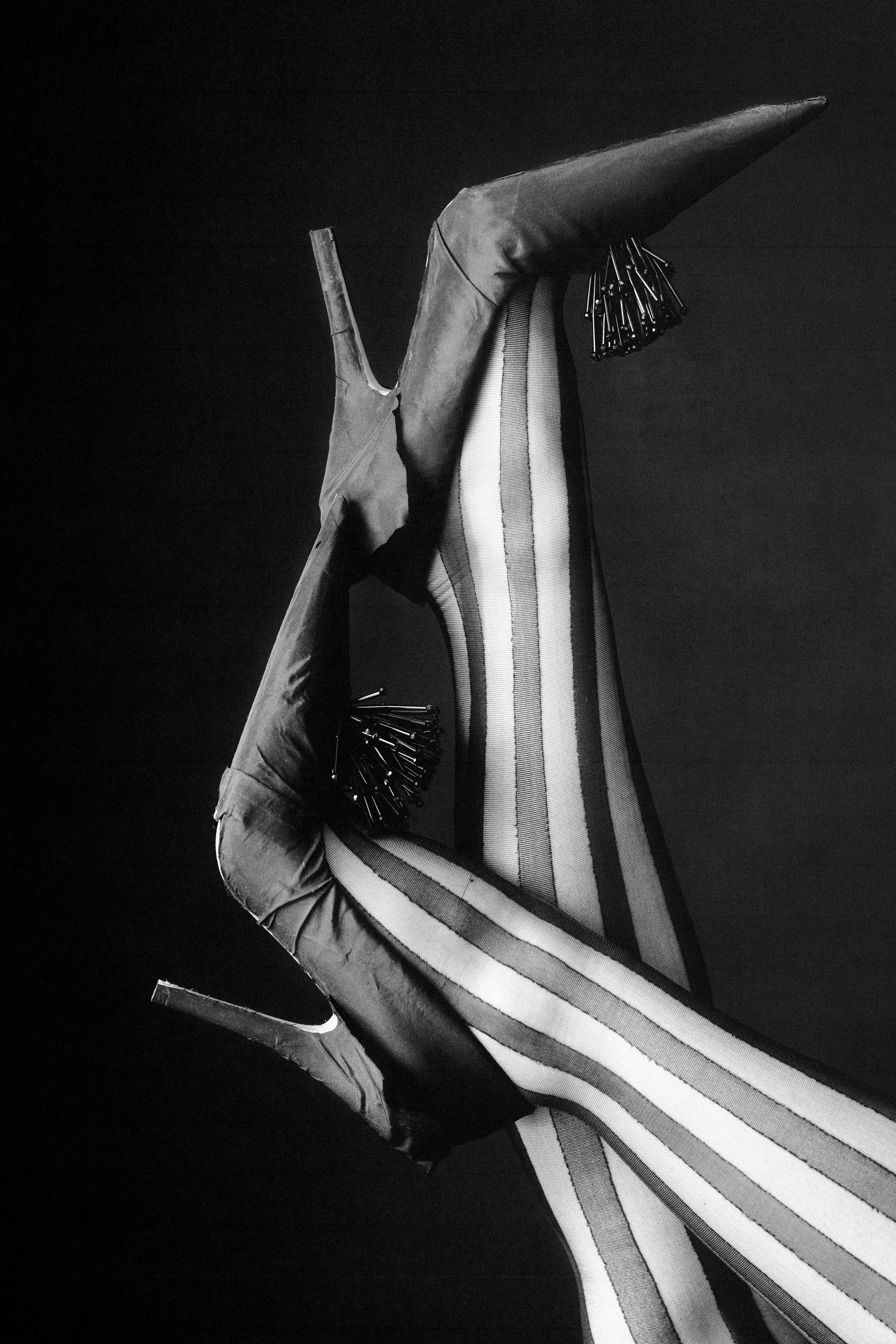
For this collection, I had the privilege of working with two remarkable craftsmen, the woodcarver Dušan Vesel, who hand-carved and glazed 120 cherry wood shells, and the glassblower Zvonko Drobnič, one of the last remaining glassblowers in Slovenia, who designed and created 160 glass discs for one of the garments. Both welcomed me into their small workshops with incredible generosity, and seeing their enthusiasm for the project was just as rewarding as the final pieces themselves.
One of my favourite moments is when people look at those heavily embellished garments and immediately assume the details are made of plastic. I always smile because it gives me the opportunity to tell them the real story, that every single element was carved, blown, and finished by hand. Suddenly, they begin looking at the garment differently.
As for the future of haute couture in Slovenia, I don't think Slovenia needs to imitate Paris. What it can do is build its own couture culture, one that draws on its extraordinary artisans, heritage, and craftsmanship. I think there is enormous potential. What I'd love to see is a stronger dialogue between those traditional skills and contemporary fashion. If my work can contribute, even in a small way, to bringing those crafts back into the conversation, I would consider that one of my greatest achievements.
What are your career ambitions over the next five to ten years?
At the moment, I'm looking forward to beginning an exciting internship in Paris with the couture house Matières Fécales. I see it as an incredible opportunity to keep learning and to experience a different way of thinking about fashion and craftsmanship.
Over the next few years, my goal is to absorb as much knowledge as I can by working in the ateliers of couture houses whose work I genuinely admire. I think this stage is incredibly important. There is still so much to learn, and I want to remain curious, open, and humble throughout that process.
Eventually, I hope to embark on my own journey alongside my close friend and creative partner, Zofia Lipińska. We share a very similar creative DNA, work ethic, and way of seeing the world. Alongside developing collections, I would also love to create custom-made pieces and deeply personal commissions. There is something incredibly special about creating a garment that exists only once, not because it is exclusive, but because it belongs completely to the person it was made for. To me, that kind of individuality is becoming one of the greatest luxuries today. More than wearing a particular brand or a runway look, it is the experience of wearing something that was created uniquely for you.
Of course, I dream of presenting collections during the major fashion weeks and, one day, building a fashion house of my own. But I try not to become too attached to a single vision of success. Some of the most meaningful opportunities in my life have arrived unexpectedly, and I have learned to trust those moments.
More than anything, I hope I never lose the curiosity that brought me here in the first place. Every collection transforms me as much as I transform it. If that continues to be true, I believe I'll always be moving in the right direction.
TEAM CREDITS:
designs and styling DEDEE KOŽELJ
talent BARBARA FRITSCH at APPARENCE AGENCY
photography and post production YANA LAUMONIER
light & set assistant ZOFIA LIPINSKA
makeup YIN LIU
hair FABIEN DUFIL
location STUDIO TWENTYFAUVE
backdrop prints TISK ŽBOGAR
