
interview by JANA LETONJA
Blending the nostalgic allure of 90s and early-2000s R&B with a fresh, contemporary perspective, Denise Julia has emerged as one of the most exciting voices in the new generation of Filipino music. With millions of listeners worldwide and a growing catalogue of releases, including 2GOOD4U, CHANGES, and LOVE AGAIN, Denise continues to shape her distinctive musical identity while introducing Filipino R&B to an increasingly international audience. Beyond her sound, her striking visual universe, inspired by Y2K aesthetics, nostalgic glamour, and contemporary luxury, has made her an equally compelling presence in fashion and popular culture. As she enters a new creative chapter following the release of her latest EP, she opens up about artistic independence, musical influences, personal style, and what it means to represent a new wave of Filipino talent on the global stage. This November, from 9 to 19, she is also embarking on the LOVE AGAIN tour.
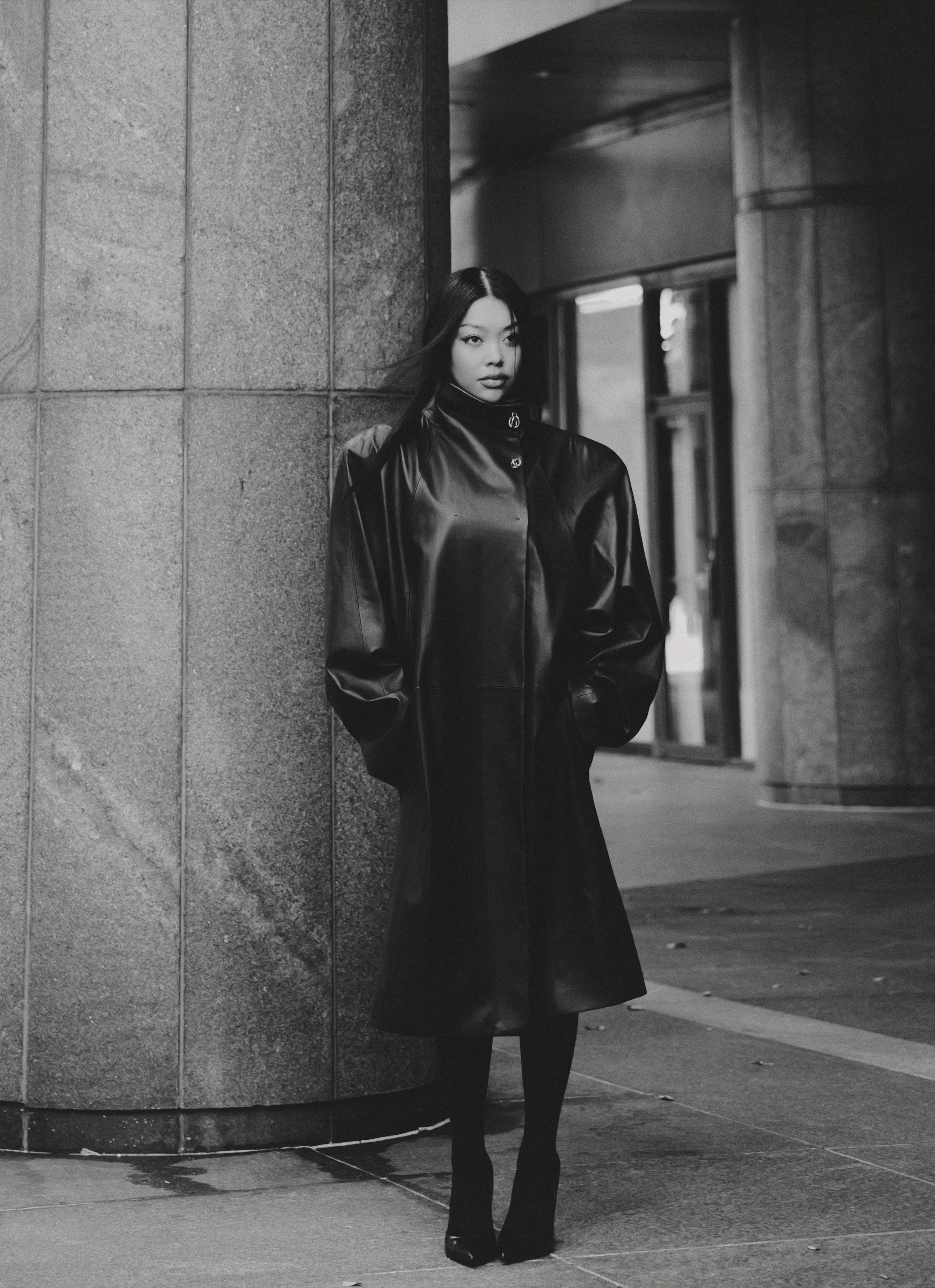
Your music brings together the nostalgia of 90s and early-2000s R&B with a distinctly contemporary sound. What initially drew you to this era of music, and how has it influenced the artist you’ve become?
I grew up in a very musical environment. I remember spending hours watching MTV and being completely fascinated by artists like Beyoncé, Mariah Carey, Aaliyah, and Tamia. I loved everything about that era, from the vocal arrangements and production to the music videos and the way these women carried themselves. There was so much personality and beauty in the music.
I think what really stayed with me was how much emotion they could communicate through their voices alone. As i started writing and producing my own music, I naturally gravitated toward those same elements. I love harmonies, lots and lots of layering, and melodies that stay in your head even after just one listen. But also, I've never wanted to simply just recreate that era. I want to take everything I loved about it and reinterpret it through my own experiences, how I myself experience love and life and the way my generation understands music today.
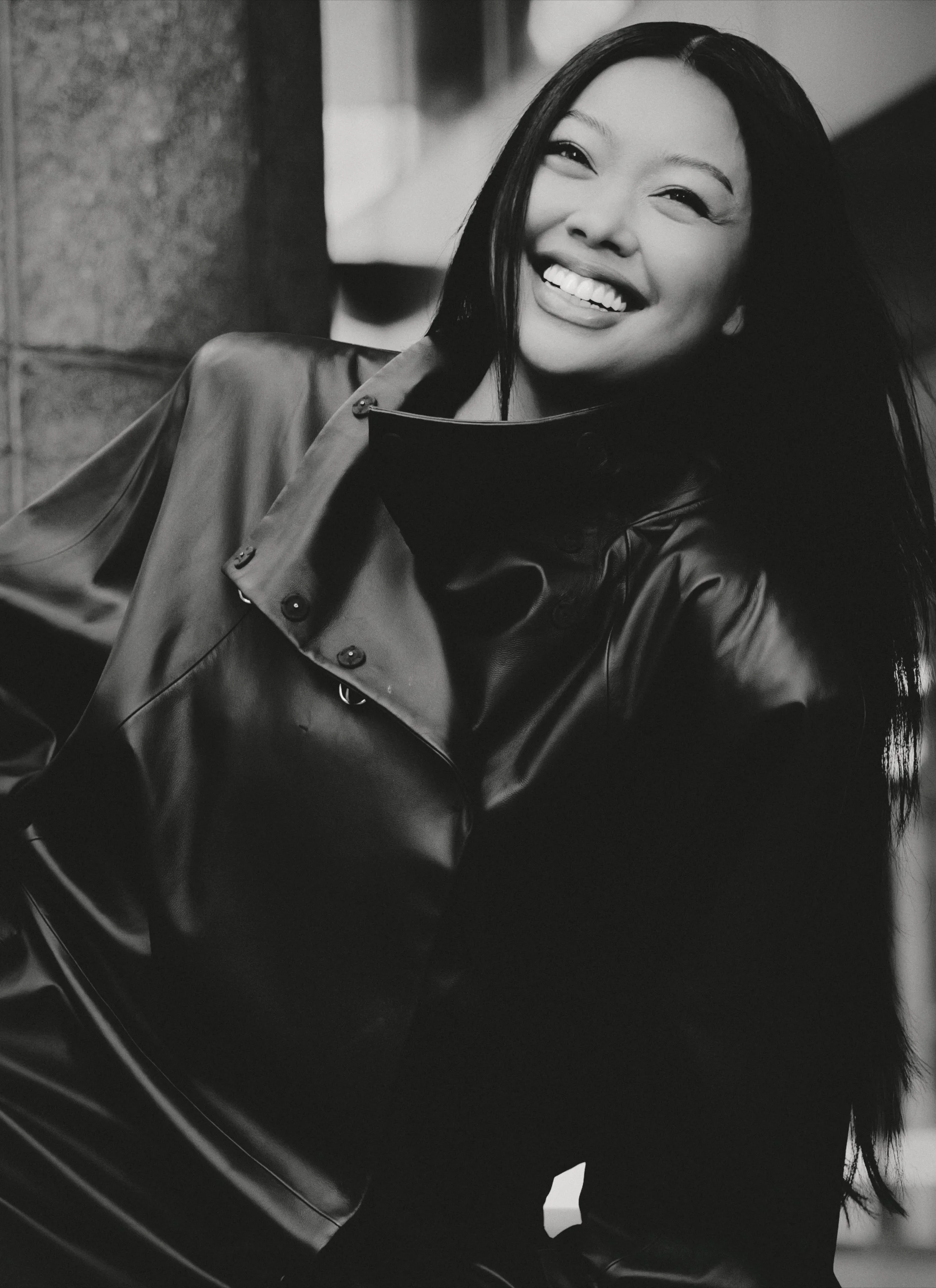
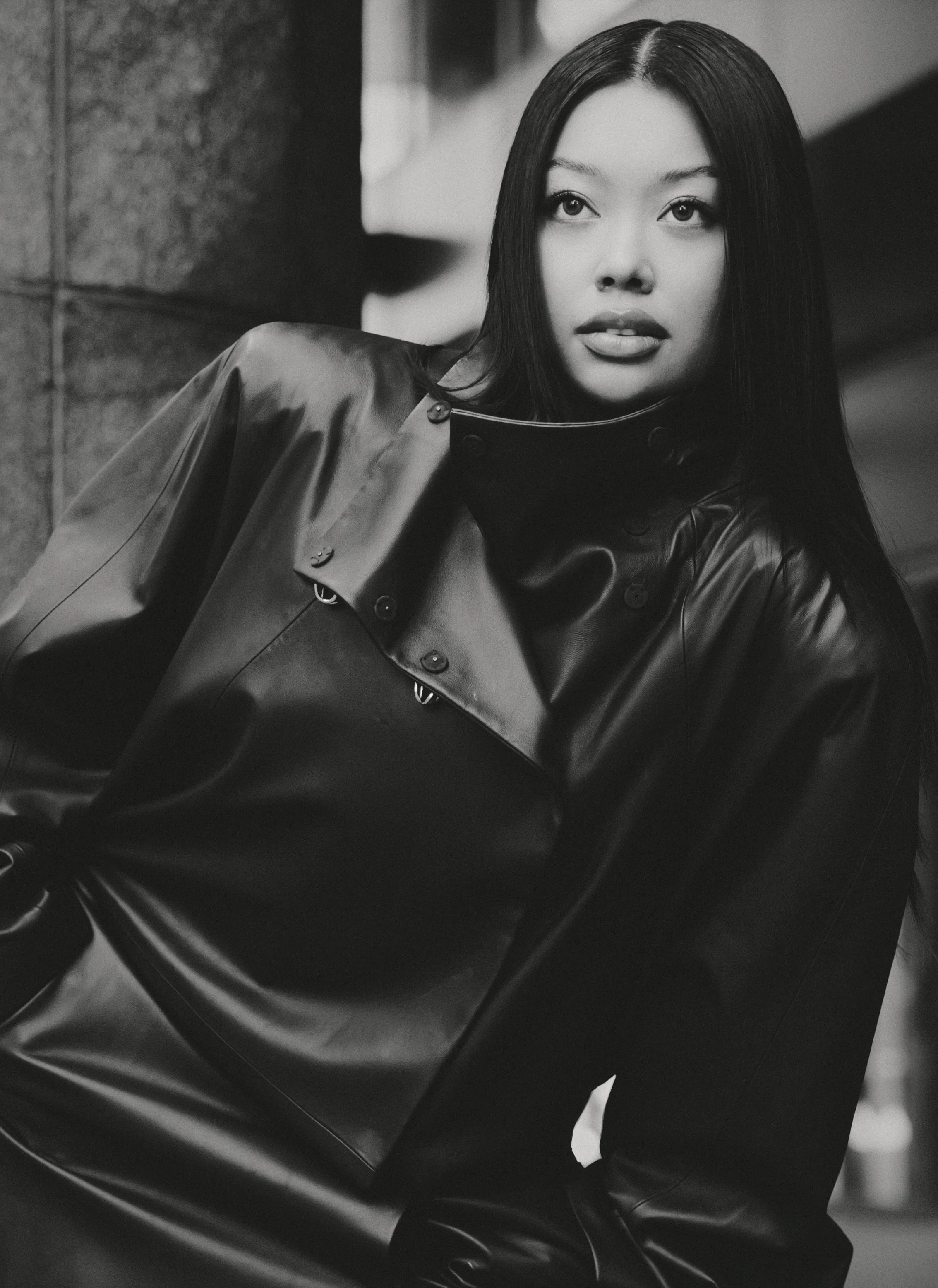
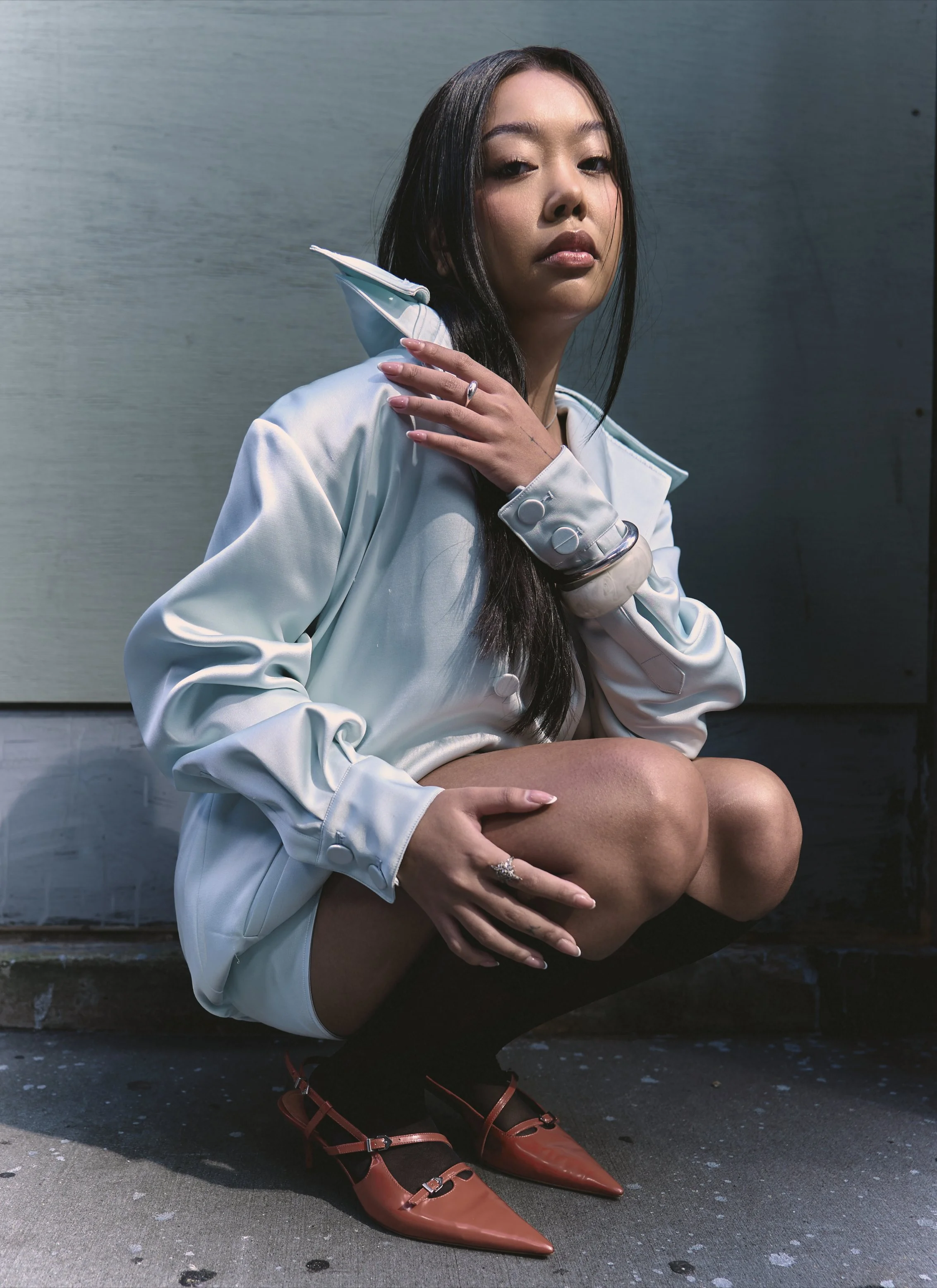
jacket GIADA
tights FALKE
shoes SCHULTZ
rings HSTERN, DINOSAUR DESIGNS and JOHN HARDY
Your breakthrough single NVMD reached more than 200 million streams on Spotify and introduced your music to an international audience. Looking back, how did that moment change your life, and what did it teach you about navigating success at a young age?
I was around twenty when NVMD started taking off, and at that point I was still very much an independent artist figuring everything out as I went. I didn't have some elaborate strategy behind the record because I was just making music that I liked, with the resources I had. It was crazy to see how suddenly people from different parts of the world were listening, and to have a song travel so fast in such a short amount of time.
It completely changed the trajectory of my life. Opportunities that once felt almost impossible became real possibilities. But I also had to grow up quite quickly. There's a lot that comes with success that people don't necessarily see, especially when you're young and still learning how the industry works. I had to learn how to make decisions for myself and trust my instincts.
I'm incredibly grateful for what that song did for me, but I think the biggest lesson was realizing that one successful record doesn't define an entire career. It opens a door. What you choose to build afterward is what really matters.
You've developed a recognisable musical identity in a relatively short time. How would you describe your evolution as a singer-songwriter, and what aspects of your artistry have changed most since your earliest releases?
I think the biggest difference is that I'm much more intentional now. When I started, I was so focused on figuring out how to make the music I heard in my head. I taught myself so much through trial and error, from recording and vocal production to songwriting and arranging. A lot of my earliest work came from instinct and my musical influences.
Over time, I've developed a stronger understanding of what makes a record feel like me. I'm also a lot more comfortable experimenting. When people discover you through a particular sound, there's naturally an expectation for you to keep making that same music. But I'd hate to become an artist who's afraid to evolve because something worked before.
I'm still very proud of my earlier projects, but I can hear how much I've grown, both technically and emotionally. I think I'm becoming less concerned with proving that I can make a good song and more interested in what I actually have to say through it.
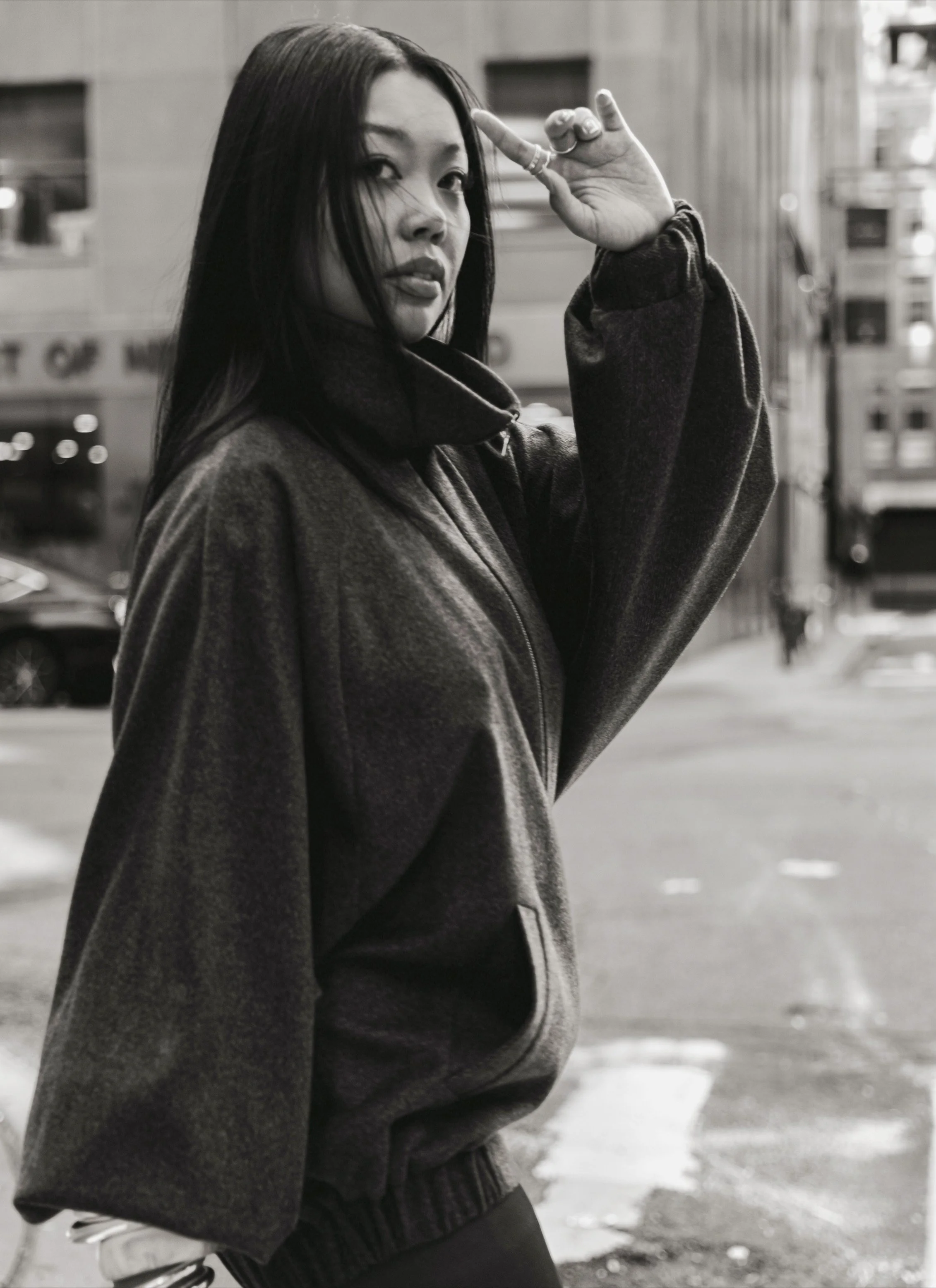
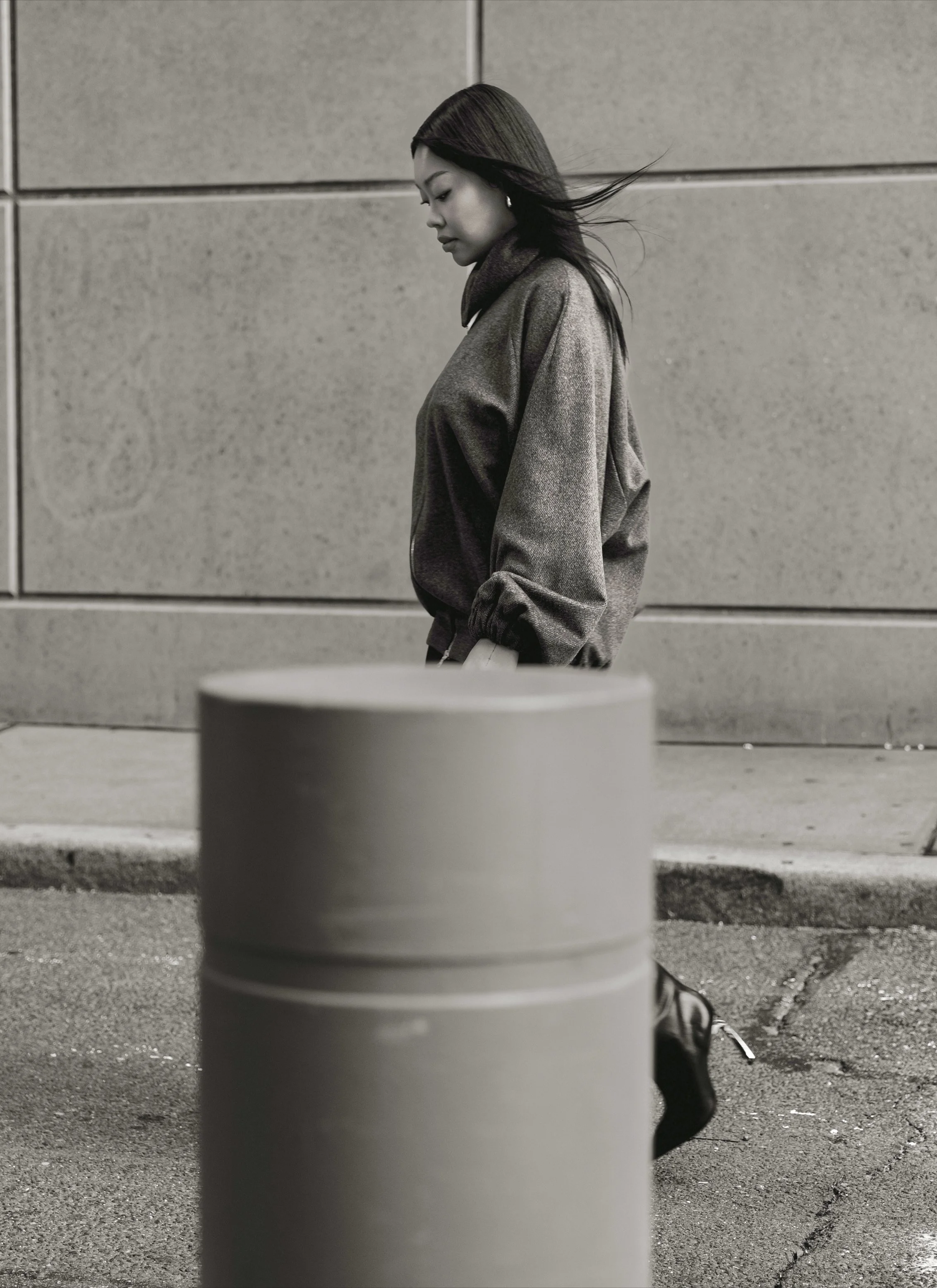
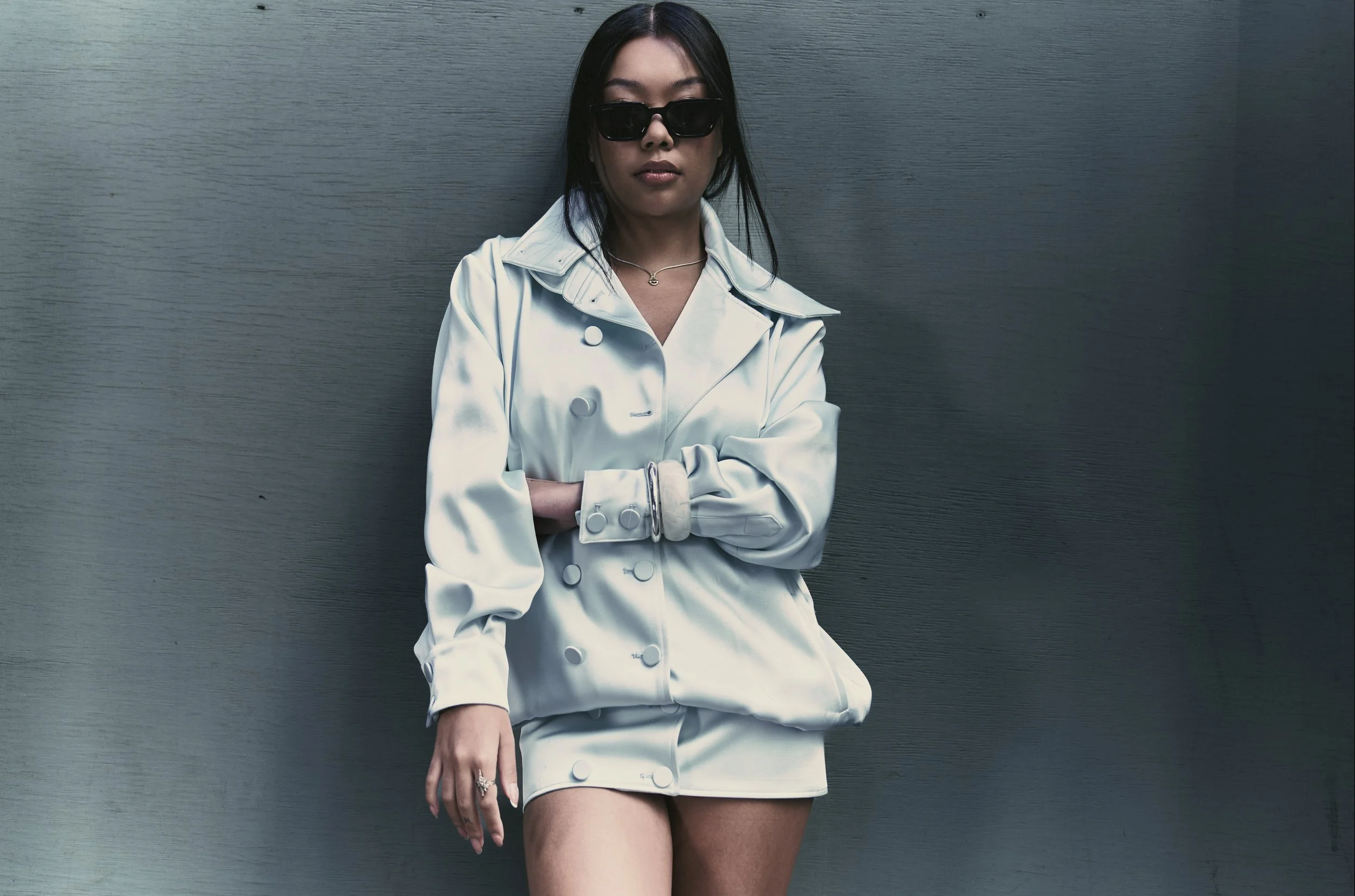
jacket ADAM LIPPES
rings JOHN HARDY
bracelets DINOSAUR DESIGNS
tights FALKE
shoes SCHUTZ
Your songs often explore love, vulnerability, relationships, and self-worth. How much of your songwriting comes from personal experiences, and how do you decide which emotions or stories you're ready to share with the world?
Almost all of it starts from something personal. I've been writing about my feelings since I was thirteen. Songwriting has always been the easiest way for me to process things that I sometimes struggle to articulate in conversation, almost like my own kind of journal. That being said, I don't necessarily think a song needs to be a literal retelling of something that happened. Sometimes I'll take one feeling or one particular moment and build an entire story around it.
I'm also learning that there's a difference between being honest and giving people unlimited access to your personal life. I like to think that I can be completely vulnerable in a record while still keeping certain experiences to myself. That's been a healthy distinction to make, especially when your music reaches so many people. But i always strive to get the emotion across.
As your international audience continues to grow, how do you balance staying true to your artistic instincts with the expectations that come with increasing visibility and commercial success?
I try to remind myself that the reason people connected with my music in the first place was because I was making something that felt authentic to me. I wasn't necessarily thinking about charts, algorithms, or whether a particular song would perform commercially.
Of course, I'm ambitious. I want my music to reach as many people as possible, and I take the business side of my career very seriously. But I also understand that commercial success can be unpredictable. If I start making every creative decision based on what I think people want to hear, I risk losing the very thing that made my music resonate with them.
I think it's important to listen, learn, and remain open to growth without allowing outside expectations to dictate your identity. I'd much rather build a career that evolves naturally than spend it trying to replicate my last successful record.
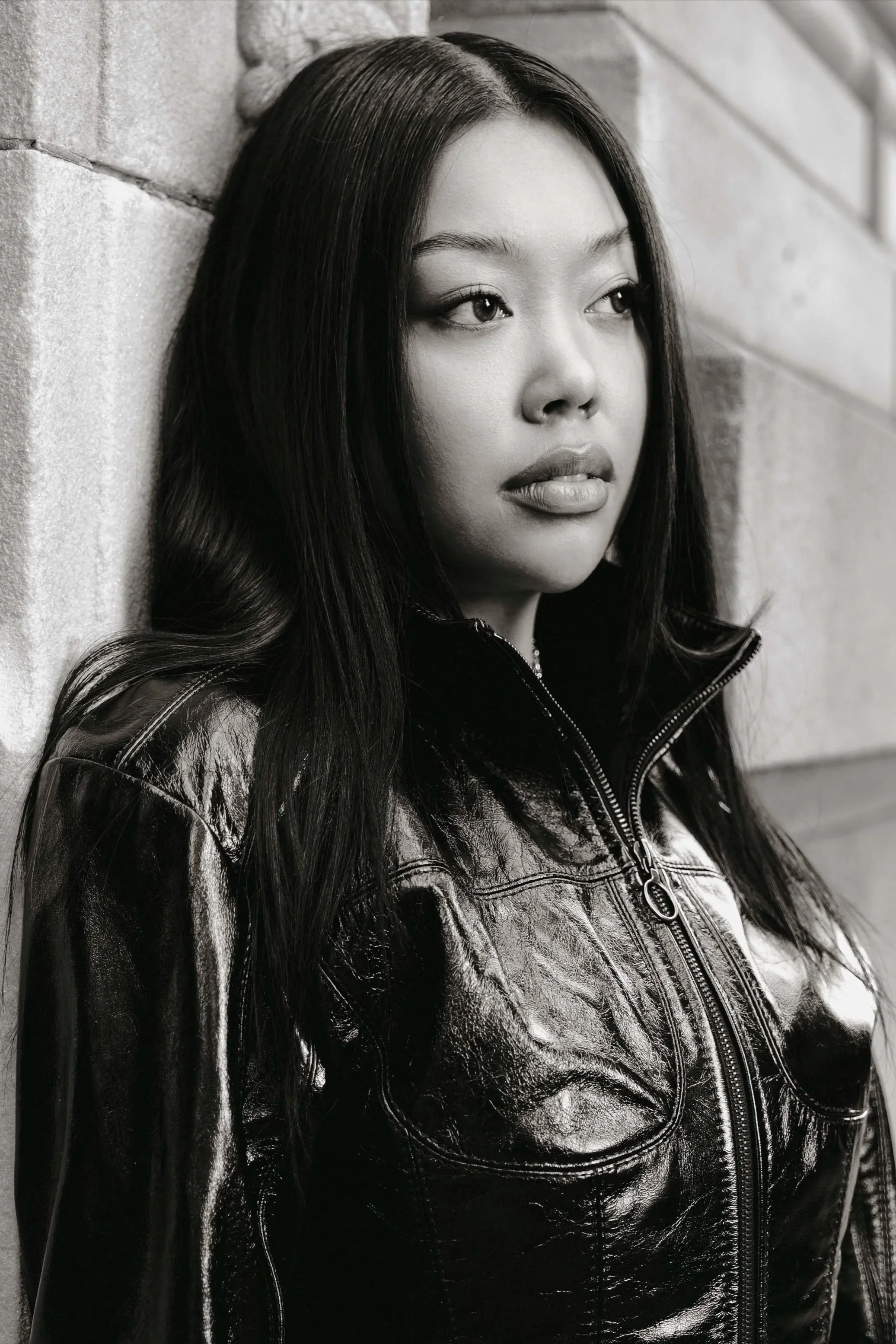
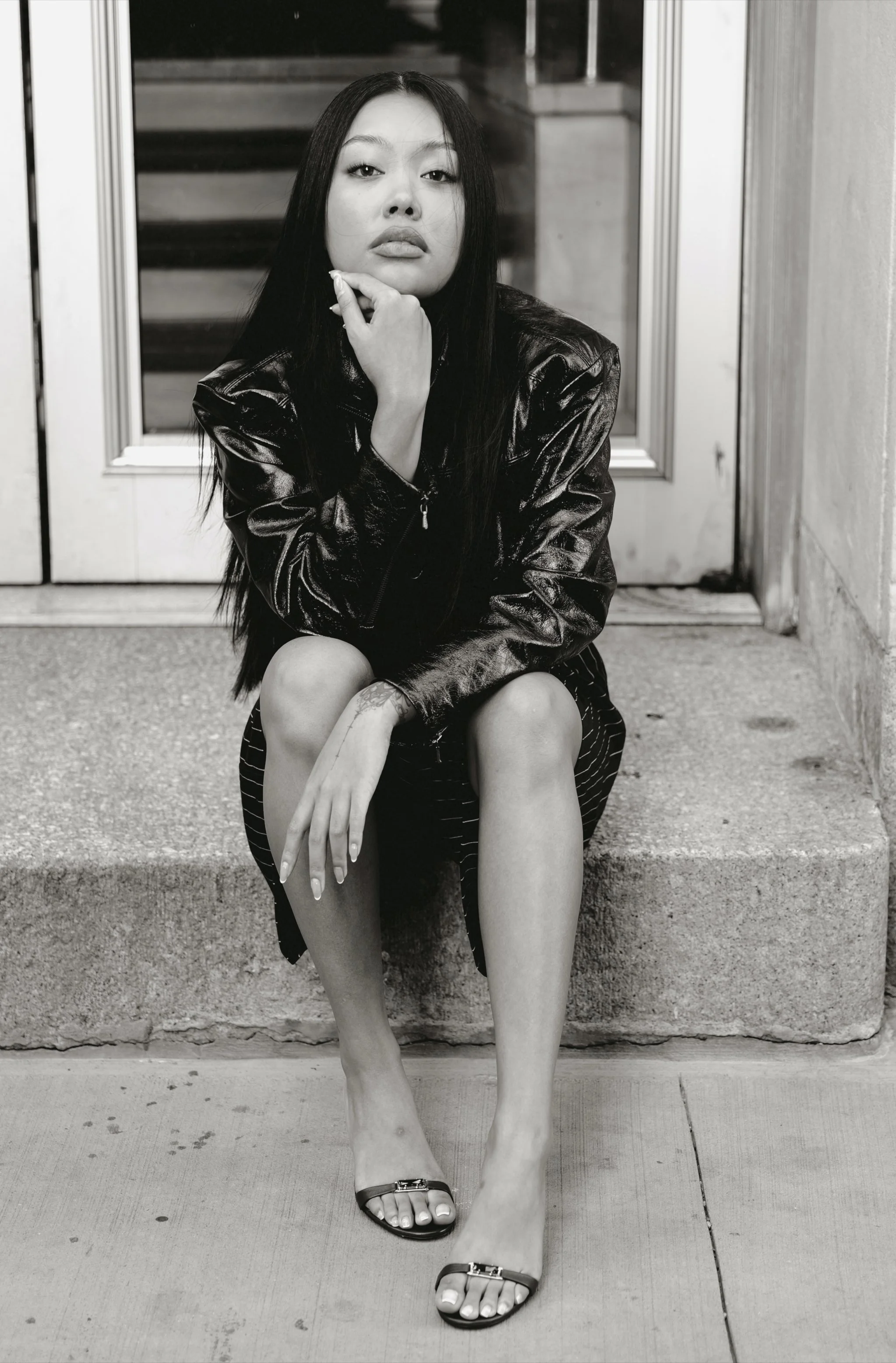
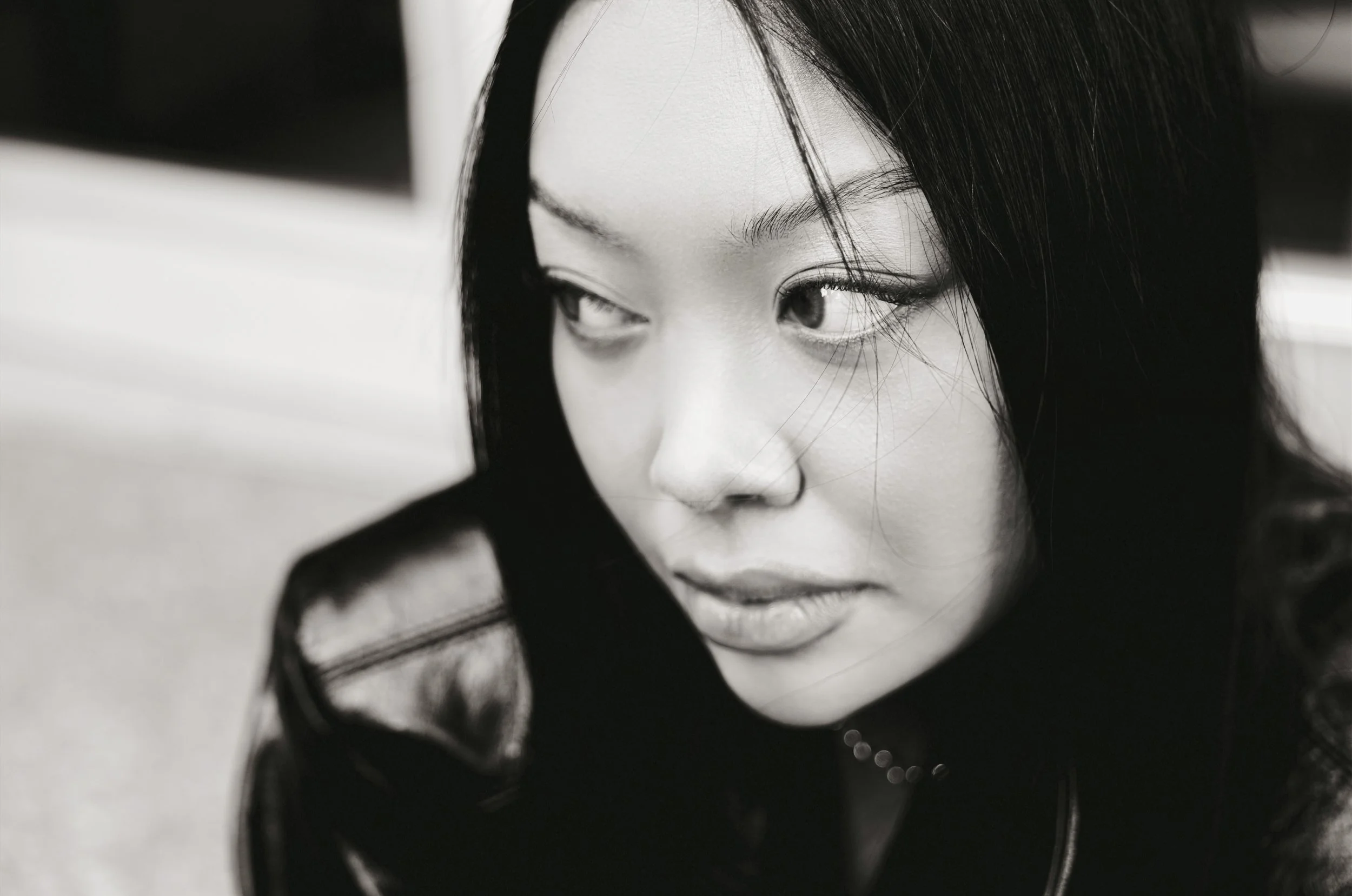
jacket OCCHII
shorts ANONIE
shoes LUCASHEVA
Your latest EP marks another important step in your musical journey. What was the central inspiration behind the project, and what did you want listeners to discover about you through this collection of songs?
LOVE AGAIN came from one of the most transformative periods of my life. I had just moved to the United States, something I'd dreamed about since I was a child, and ironically, I found myself going through a really difficult time emotionally. I was dealing with heartbreak and adjusting to an entirely different environment. I was questioning my relationship with music or whether I even wanted to continue on this path. It was just so hard.
I think people naturally associate the idea of loving again with finding another romantic partner, but I wanted to explore something beyond that. What does it mean to fall back in love with your own life? With creating? With the person you're becoming? With what the future holds after such a dark period in life?
The project explores the different sides of that experience. I wanted to be honest about how complicated love can be, especially when you're trying to rediscover yourself in the process.
More than anything, I wanted people to hear an artist who was growing up and becoming more comfortable with every side of herself.
dress FANCI CLUB
shoes SCHUTZ
bracelets DINOSAUR DESIGNS
rings HSTERN and DINOSAUR DESIGNS
R&B has always been a genre associated with emotional honesty and intimacy. How do you approach vulnerability in your music, especially when you're sharing deeply personal feelings with millions of listeners?
One of the things I've always loved about R&B is that it gives you permission to feel everything, even the emotions you might be embarrassed to admit. You can know your worth and still miss somebody who wasn't right for you. These things make us human.
When I'm writing, I try not to censor myself based on how I think people might perceive me. I want to capture how I genuinely felt in that particular moment, even if I've already changed my mind about it by the time the song comes out. Knowing that an experience that once felt so personal can eventually become something thousands of people relate to, that's one of my favorite things about making music.
You're part of a generation of Filipino artists bringing local music to a much wider international audience. How do you see the evolution of Filipino R&B, and what makes the scene particularly exciting right now?
I've always believed that the Philippines has an extraordinary amount of musical talent. It's something you experience growing up there. You could pick any random neighborhood, like where I used to live, in Tondo, Manila, and hear somebody singing karaoke at 6 in the morning. These people would effortlessly be belting Whitney Houston hits while sitting on a plastic chair and you’ll wonder why that person isn't performing on a much bigger stage.
I also grew up listening to Filipino artists like Nina, southborder, and MYMP, alongside the international R&B artists who shaped my sound. So I guess there's always been such a strong appreciation for soulful vocals, live instrumentation, and emotional storytelling in our culture.
What excites me now is seeing more Filipino artists develop their own identities and find audiences beyond our country because I don't think we've ever lacked the talent. What we've needed is greater access to resources, a better infrastructure, and more opportunities that will allow that talent to reach its full potential.
Although I also don't think international recognition should be the sole measurement of our success, Filipino music has always had value on its own. So seeing more artists gain the freedom to share it with the rest of the world is something I'm incredibly proud of.
As one of the most-streamed Filipina artists internationally, do you feel a sense of responsibility to represent Filipino culture, or do you prefer to let your music speak for itself without expectations or labels?
Being Filipino is such an important part of who I am, and it's something I'll always carry with pride.
I don't believe any one artist should be expected to represent an entire country's identity or experiences. The Philippines is incredibly diverse, and there are so many different stories worth telling.
For me, representation is also about challenging people's assumptions of what a Filipina artist can look like, sound like, or achieve. If my journey can help expand people's understanding of Filipino artistry and encourage other young musicians to pursue their own paths, that's something I'd consider a great privilege.
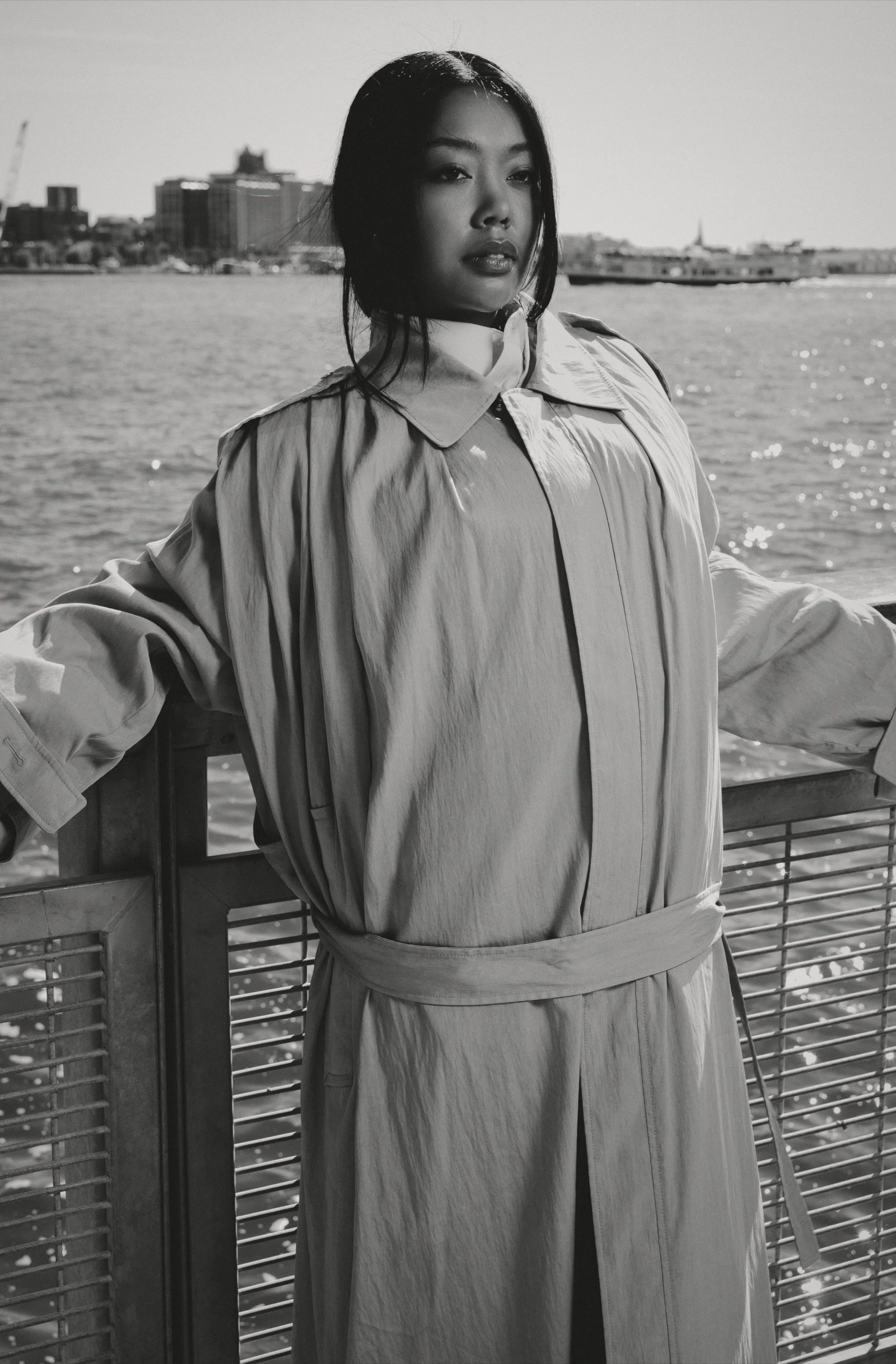
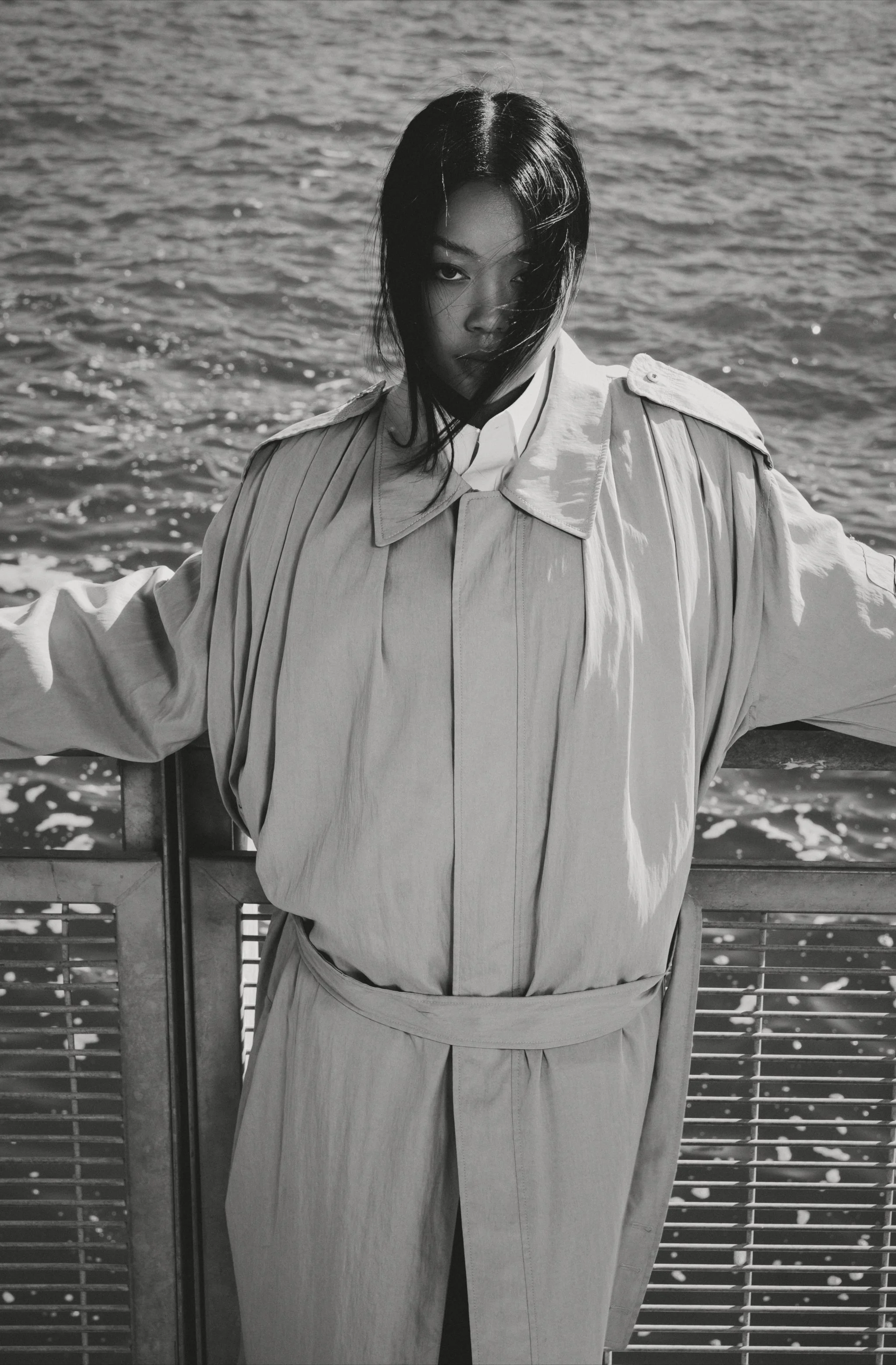
shirt ANONIE
jacket OPEN YY
Your visual identity is just as distinctive as your sound, combining Y2K nostalgia, femininity, and contemporary luxury. How did you develop this aesthetic, and what does it communicate about who you are as an artist?
My visual identity developed quite naturally alongside my musical influences. i grew up admiring the women of 90s and 2000s R&B, and their artistry went so far beyond the records themselves. Everything from their styling and music videos to their performances felt like an extension of their personalities. I've always loved femininity and the freedom that comes with expressing it.
I think people sometimes associate luxury with a particular lifestyle or background, but for me, it's more about how you carry yourself. I'm a girl who grew up in Tondo and developed a very particular taste and imagination long before I could afford some of the things I admired. Naturally, I want my visuals to feel like an extension of the music. Both are nostalgic in certain ways, but still very much rooted in who I am today.
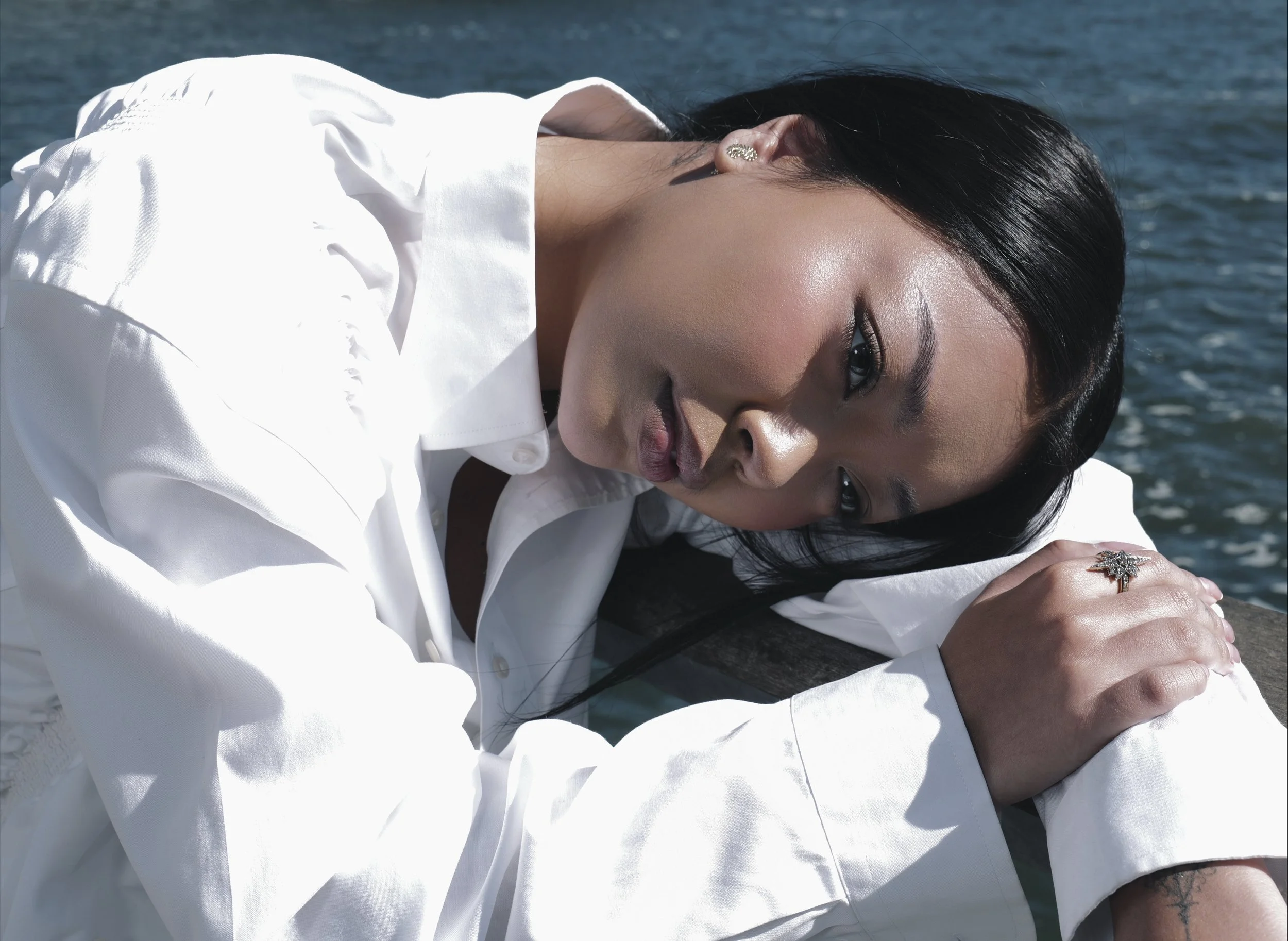
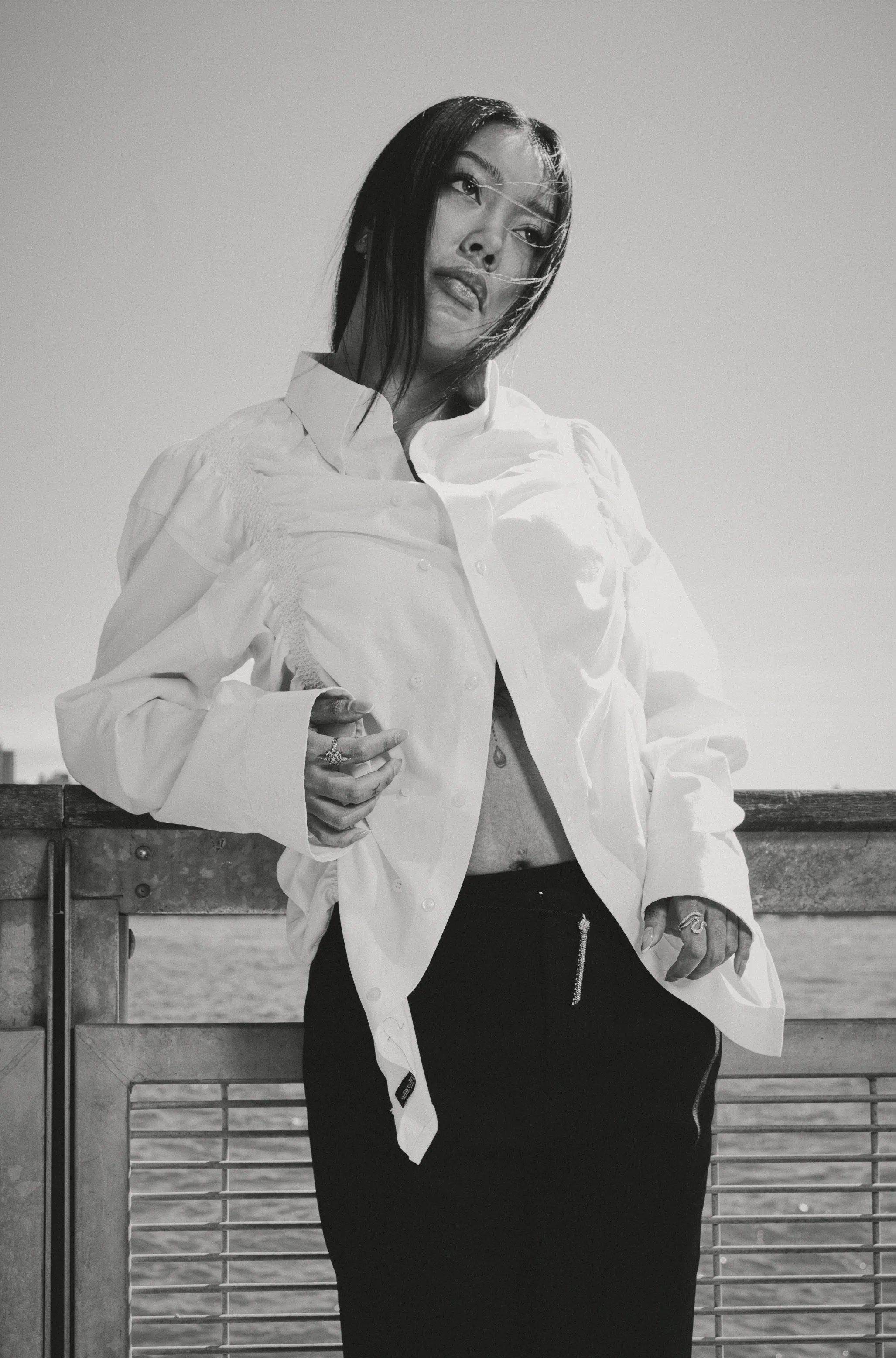
shirt MORTICA STUDIO
pants KATE BARTON
belt KARA YOO
rings HSTERN
Social media has become an essential part of building a music career, but it also creates pressure to maintain a certain image. How do you protect your authenticity and personal boundaries while living so much of your creative life in the public eye?Social media has played an enormous role in my career, so I'll always recognize how powerful it can be. I was able to reach audiences internationally through these platforms even before I had access to the traditional opportunities that come with being an established artist. But I think it's equally important to remember that social media is only a fraction of somebody's life. People can sometimes develop a sense of familiarity with you that makes them feel entitled to know everything happening behind the scenes.
I've learned that I can be genuine with my audience without making every personal experience public. I never want to feel like I'm performing a version of myself twenty-four hours a day. I think protecting that separation is actually what allows me to remain authentic as an artist.
Beyond music and fashion, what inspires you most in everyday life? Are there particular places, people, films, or experiences that help you reconnect with yourself and spark new creative ideas?
I'm very observant, and I think a lot of my inspiration comes from ordinary experiences. I love sitting in cafés and writing, walking around a city without necessarily having a destination, or having long conversations with people about their lives.
Since moving to New York, I've also found a lot of inspiration in being somewhere completely different from where I grew up. I guess something about being surrounded by so many different people, cultures, and stories constantly makes me look at my own life from another perspective and has opened my eyes and heart to a much bigger world.
I also love revisiting old records and listening to entire albums. I think my best ideas tend to come when I'm simply allowing myself to live, rather than actively searching for something to write about. The moment I feel like I have to do something is when I struggle the most to actually do it.
As you continue to build your career internationally, what does success mean to you today, and what kind of artistic legacy would you like to create for yourself and the next generation of Filipino musicians?
My definition of success has definitely changed over the years. When I was younger, I associated it with reaching certain milestones, and simply being recognized internationally. Those goals still mean a lot to me, and I'm proud of everything I've accomplished so far. But as I've gotten older, I've realized that success also means having the freedom to create the music I believe in, to make decisions on my own terms, so I can build a life that i'm genuinely happy to wake up to.
I come from a place where opportunities can feel incredibly distant, and I know how much determination it takes to pursue something when you don't necessarily have the resources or connections to make it happen. I want to build a career with longevity, one that continues to challenge me creatively and hopefully opens more doors for the artists who come after me. I'd love for young Filipino musicians to see that they don't have to compromise where they come from or who they are to belong on an international stage. Our talent deserves to exist in those spaces on equal footing, and I hope my career can contribute to making that possibility feel a little more attainable.
TEAM CREDITS:
talent DENISE JULIA
photographer MYNXII WHITE
stylist ANI HOVHANNISYAN
makeup JESSICA BRICE
hair JAYLINNE URENA
producer JAMES KRISTOFIK
styling assistant KILALA VINCENT
editor TIMI LETONJA
editorial director and interview JANA LETONJA
