
interview by JANA LETONJA
Dimitri Abold is poised for a major breakthrough with his leading role in Blade Runner 2099, the highly anticipated Amazon MGM series premiering November 25. Starring opposite Academy Award winner Michelle Yeoh and Euphoria star Hunter Schafer, he steps into the iconic science-fiction universe in a pivotal role that promises to introduce him to a global audience. Having previously appeared alongside Schafer in The Hunger Games: The Ballad of Songbirds & Snakes, the rising actor is now taking center stage in one of television’s most eagerly awaited productions. With his star on the rise and the fashion world already taking notice, Dimitri represents an exciting new generation of international talent.
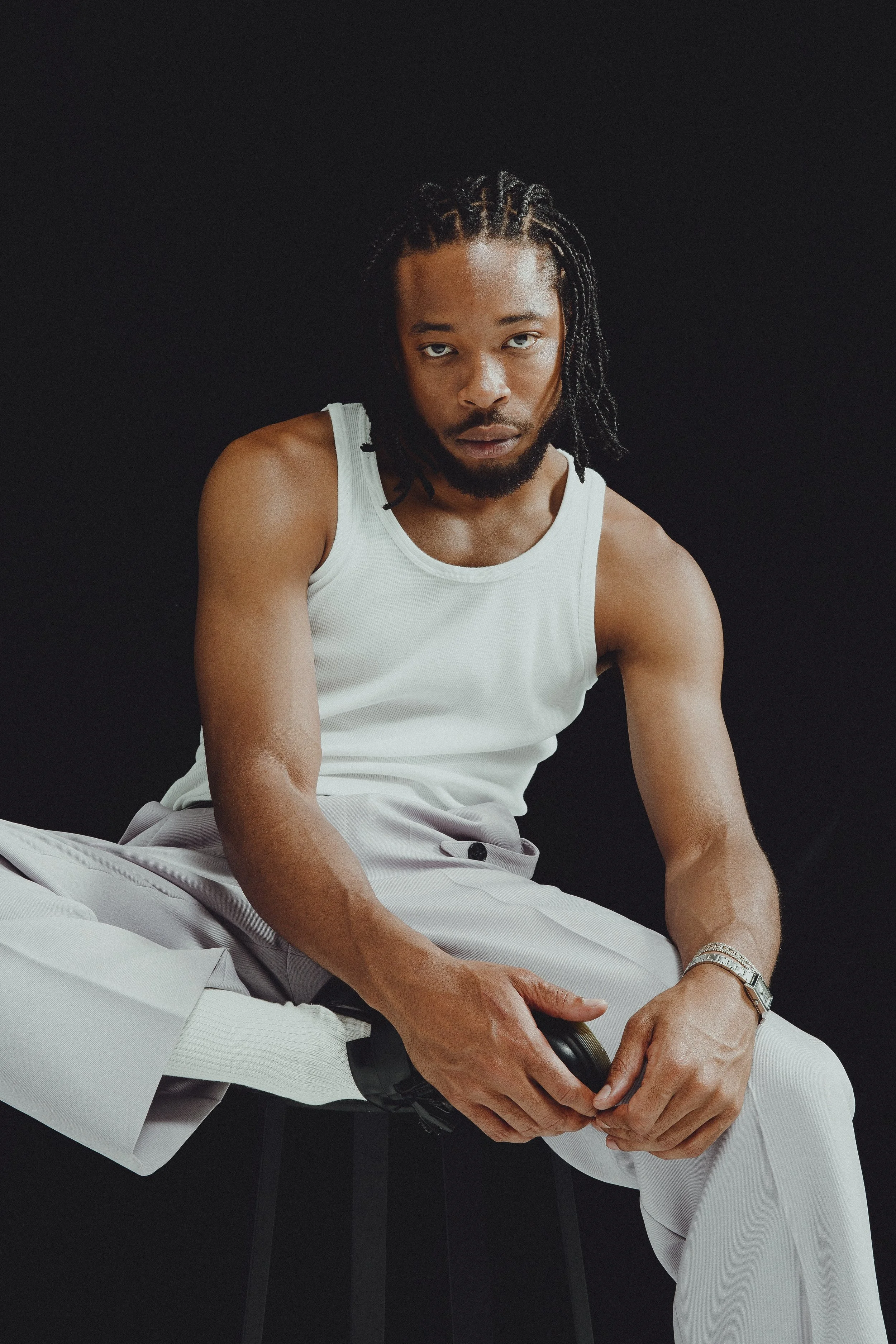
shirt UNIQLO
pants JAN SOCIETÉ
shoes DR. MARTENS
Blade Runner is one of the most influential science-fiction franchises in cinema history. What was your first introduction to this universe, and how did it feel to discover you’d be playing a leading role in its next chapter?
My first exposure to the Blade Runner universe was the original film that I watched when I was 19 and my cinephile era had just begun. But what really cemented me being a fan of Blade Runner IP was the anime adaptation Blade Runner: Black Lotus, directed by Shinji Aramaki and Kenji Kamiyama back in 2022. Particularly Mr. Kamiyama’s body of work that strongly leaned towards sci-fi and cyberpunk gave me the confidence that the adaptation would be strong. It’s around then that the notion of being in some kind of Blade Runner adaptation crept into my mind. To think that a few years later, I would be in the position that I’m in now, and with that in a leading role alongside such talented cast, was unimaginable to me. But it was a beautiful challenge, and one that I was eager to throw myself at fully.
Without giving away any spoilers, what can you tell us about your character in Blade Runner 2099? What drew you to him, and what aspects of his personality did you find most fascinating to explore?
Bebeto is a war veteran that fought in the battle between humans and replicants, which the humans lost. He never quite recovered from having lost that battle. We now find him working as a civil servant by day and a black market dealer by night, with the ambition of returning LA to what it used to be. But in order to do this, he needs Cora’s help and asks her to infiltrate the police force, disguising herself as a Blade Runner to recover an artifact that could feasibly change LA’s fate.
I found it interesting diving into a character that was so tethered to the idea of home and nostalgia, and was willing to risk anything to re-experience what he had always known. I myself always felt that my home was embodied by the friends and family that I had around me. My people are spread out across the globe, so in a way the entire globe is my home. Getting to play someone that operates on the opposite end of the spectrum is fascinating. It makes me want to learn and understand him, and who knows, maybe adopt some of what makes Bebeto Bebeto into my own spirit.
At its heart, Blade Runner has always explored questions about identity, humanity, memory, and what it means to be alive. Which of these themes resonated most strongly with you personally?
All of them. But humanity and identity in particular. As a black man born in Jamaica, raised in Germany, that has also spent a significant amount of time in the US, finding my place in the world has sometimes proven difficult, culturally and socially. Where do I belong and where do I find my tribe? I’ve been grappling with these questions for the vast majority of my adult life, and I’m still looking for clearer answers. Funny enough, Blade Runner 2099 served as a kind of microcosm of my life, to allow me to engage with these questions and wrap my head around how some people or characters might attempt to deal with them. I got some answers, but I’m still searching.
With such an established cinematic legacy, did you feel any pressure to live up to audience expectations, or did you approach the series as an opportunity to create something entirely new?
Of course. People love this IP so much and for many it’s been a passionate companion for years. This isn’t lost on me, and ultimately it’s my job as a storyteller to do justice to the people that love the IP so fervently. They deserve to continue to enjoy the world that they so ardently love. And with that comes a lot of responsibility and as a consequence pressure. But at the same time, we’re meeting a completely new character in Bebeto, and I’m engaging with him through my own lens that I’ve developed in life. That’s inevitably going to bring a certain novelty with it. But the merging of that novelty with the respect for what has already come, is the sweet spot. That’s what I’ve tried to achieve. I hope that’s visible.
Before Blade Runner 2099, you appeared in another major franchise, The Hunger Games. What did that experience teach you about working on large-scale productions, and how did it prepare you for taking on a leading role?
You know, when projects have a scale like The Hunger Games or Blade Runner, you become hyper aware of how many people are investing time, energy, and money into putting this monster of a production on its feet. People have been locked into trying to bring it to life for so long and poured the best of the skillset into contributing in the best way they individually can. I have to do the same. It’s only fair. For me that means more prep, more research, more specificity in my work. Being brave enough to be wrong and open enough to adjust. The Hunger Games made this very clear to me, and I had great examples in Rachel Zegler and Tom Blyth on how to navigate that. I’m lucky enough to have it again in Hunter and Michelle, so I got to pull my own weight and follow suit.
What initially inspired you to pursue acting, and was there a particular film, performance, or moment that made you realize this was what you wanted to do?
I was lucky. My drama teachers back in school really served as the catalyst, challenging me by putting me on stage. Reassuring me and telling me that they see a sparkle in my eye while I’m performing. Giving me the confidence to give it a shot. They really started it off for me and encouraged me to try my hand at acting school. I ended up at NYU where I really began watching my acting heroes. The late Philip Seymour Hoffmann in The Master was one of the many performances that blew me away and had me saying “I want to be that good”. The Master as a whole really shaped my career as a whole.
As an emerging actor, how important is it for you to avoid being defined by one particular genre or type of character? Are there unexpected roles you’d love to explore next?
It’s really important to me. I really try and stay away from playing the same kind of part over and over again. That being said, there’s nothing wrong with that. Peers have built wonderful and rich careers doing that. I just want something different for myself, and that to me means giving people a chance to see me embody all different kinds of roles with different essences. Doctors, lawyers, characters of the underworld, benevolent characters. Right now, I’m really interested in playing something very grounded in real life and engaging with something as “everyday” as a relationship. Something along the lines of what Oscar Isaac and Jessica Chastain did in Scene from a Marriage. My creative heart is really yearning for something like that!
The Blade Runner universe has had an enormous influence on fashion, from futuristictailoring to dystopian streetwear. Did working on the series change the way you thinkabout clothing, design, or personal aesthetics?
Oh, for sure. It broadened my idea of what it is I could pull off and what I couldn’t. I’ve been a pretty big fashion fan for a while, and in the last few years I’ve been really open to experimenting and trying new things out. Slimmer and wider silhouettes, materials, rougher and edgier aesthetics as whole. But my knowledge only goes so far. Our costume team for Blade Runner 2099 drew such incredible inspiration and made such bold choices. I had no choice but to “steal and adopt,” if you will. Dries, Magliano, the list goes on and on. Nothing was off limits. I made their fashion playground my own.
As your international profile grows, how do you hope to use your platform beyond acting? Are there creative interests or passions outside film and television that you’d like to explore?
I’m currently working on a couple scripts that my heart’s been invested in and I’m eager to produce in the near future. That’ll take some time though. But I’ve always been interested in using theatre practices as a means to empower and support people. Augusto Boal had devised this theatrical practice called Theatre of the Oppressed, that in part served as tool for rehabilitating and supporting emotional expression in inmates at correctional facilities. That’s always intrigued me. While I wouldn’t directly adopt this practice into my own endeavors, I want to use theatre as an active tool to support young people in the realm of self expression and exploration. Theatre is an incredible strong vehicle for growth and change. History has proven that time and time again.
Finally, with Blade Runner 2099 potentially introducing you to millions of new viewers, what do you hope audiences will discover about you as an actor? And when you imagine your career five or ten years from now, what would you most like to have achieved?
I think ultimately it’s to see my range, and my commitment to doing the best I can on any project. I would love for them to enjoy the thought of watching me in a project and maybe even let it be a determining factor in why they decide to watch a show or movie.
Ooof, 5-10 years. I’ll be honest, beyond working with some of the directors I admire, like Hirokazu Koreeda, Paul Thomas Anderson and Bong Joon Ho, for example, there’s nothing specific I’m eyeing. I know I’d love to continue working with consistency. That’s my greatest goal, and I hope to do so until my time is up. I love this work too much to take breaks from it. Unless it’s a break to go to Japan. I love Japan.
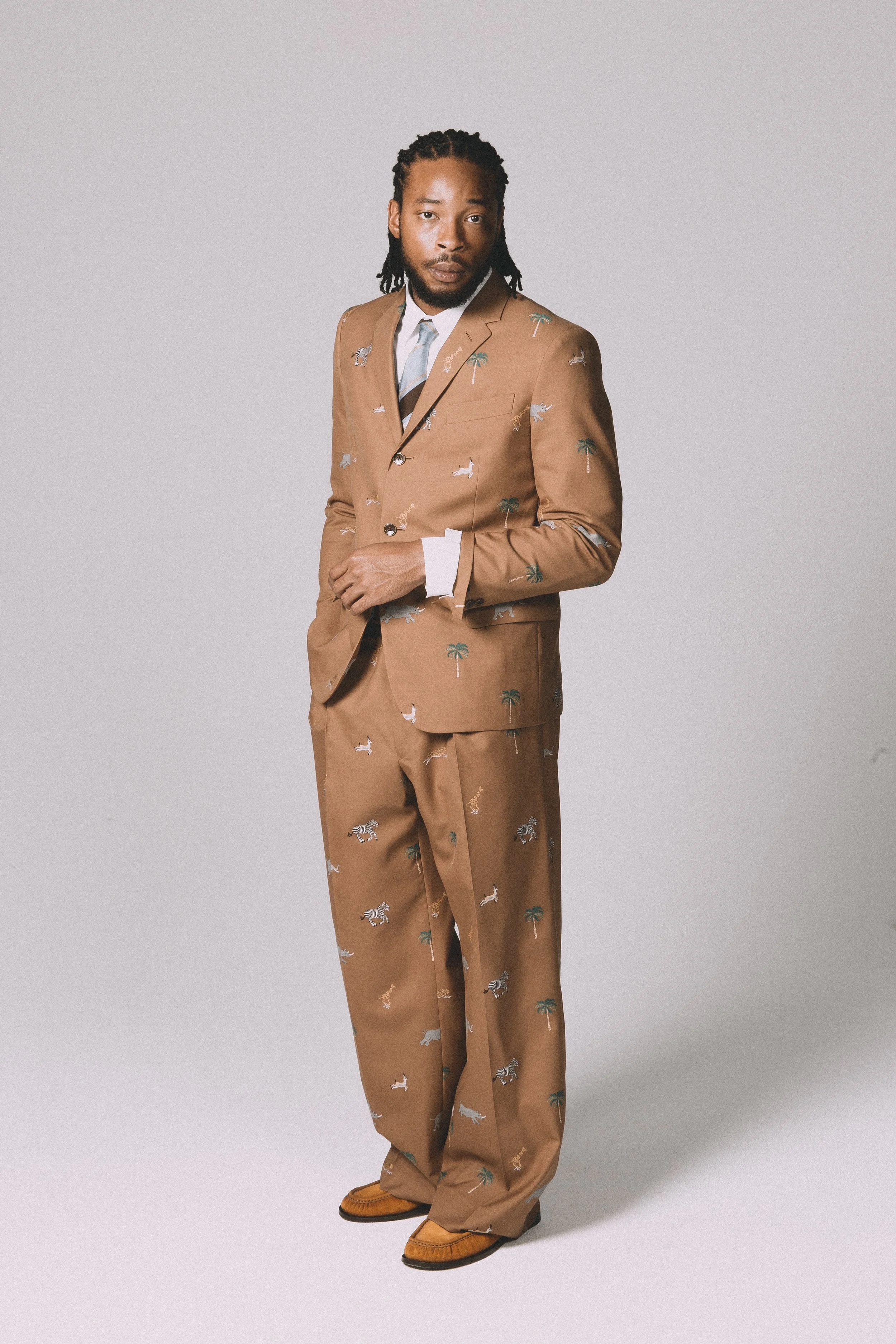
full look LOUIS VUITTON
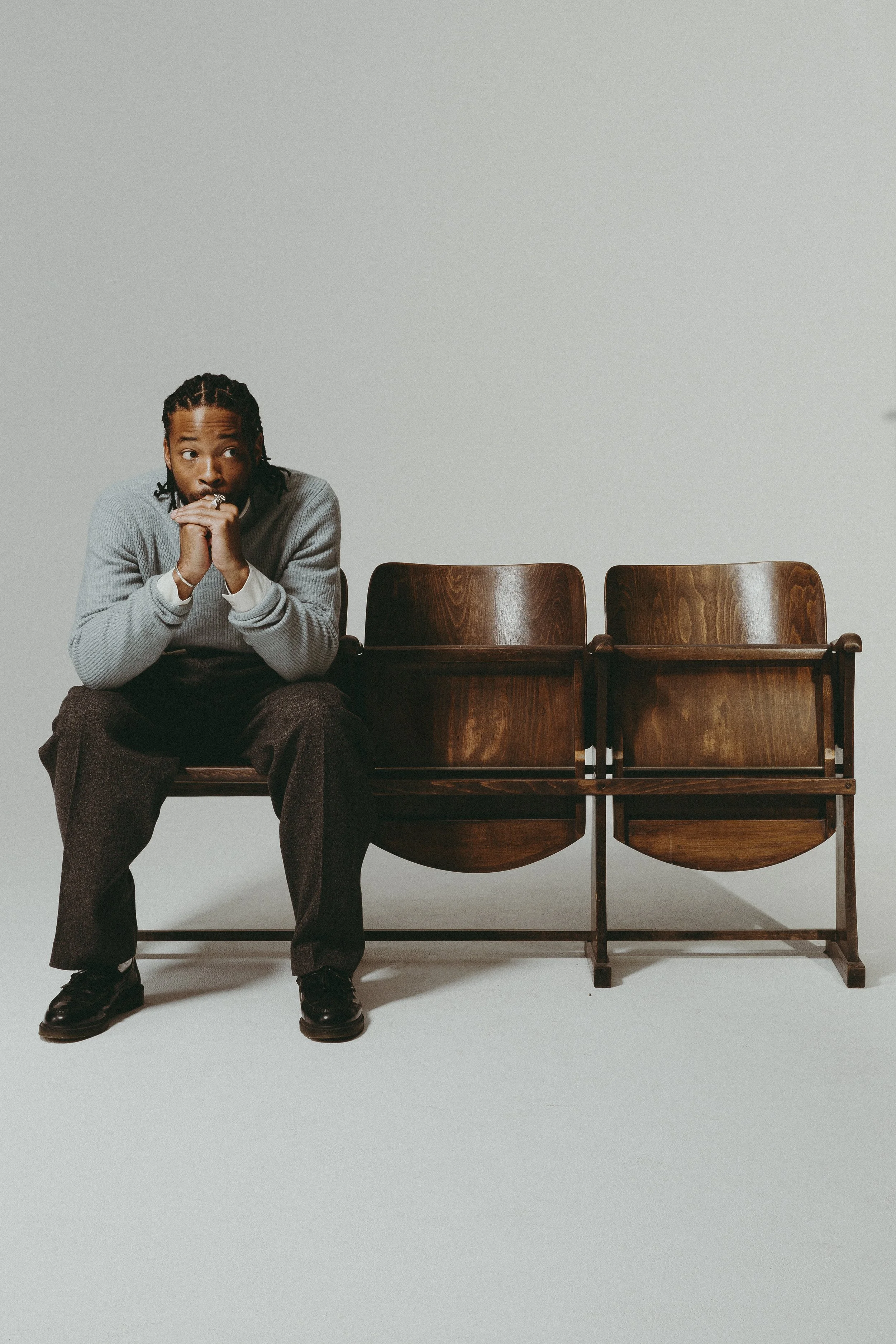
shirt LOUIS VUITTON
sweater MARKS & SPENCER
pants JACQUEMUS
shoes DR. MARTENS
TEAM CREDITS:
photography FILIP HLAD
styling JOSEFINA JOSTOVA
