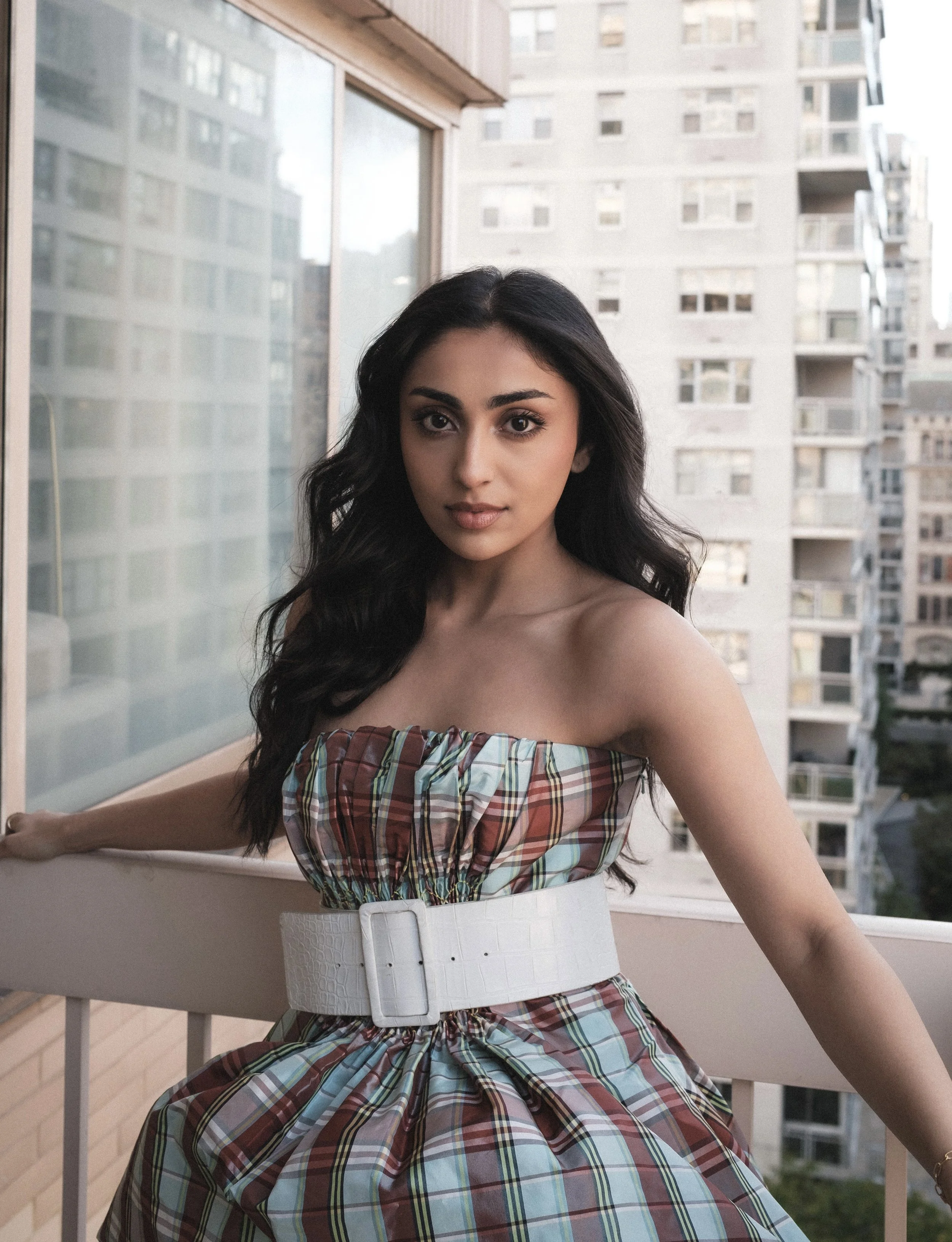
interview by JANA LETONJA
At just the beginning of what promises to be an extraordinary career, Saara Chaudry has already established herself as one of Canada’s most exciting young talents. A four-time Canadian Screen Award winner, Saara has grown up in the entertainment industry, building an impressive résumé across television, film, and voice acting. Now, she’s stepping into one of her biggest roles yet, portraying fan-favorite Zoë Nightshade in the third season of Disney+‘s Percy Jackson and the Olympians, while also showcasing her comedic and dancing talents in Netflix’s Bollywood-inspired comedy Best of the Best. But Saara’s ambitions extend far beyond the screen. As a UNICEF Canada Ambassador, Chair of the Gen Z Council at the Geena Davis Institute on Gender in Media, and an undergraduate at Harvard University, she’s using her platform to advocate for children’s rights, gender equality, and more authentic representation in entertainment.
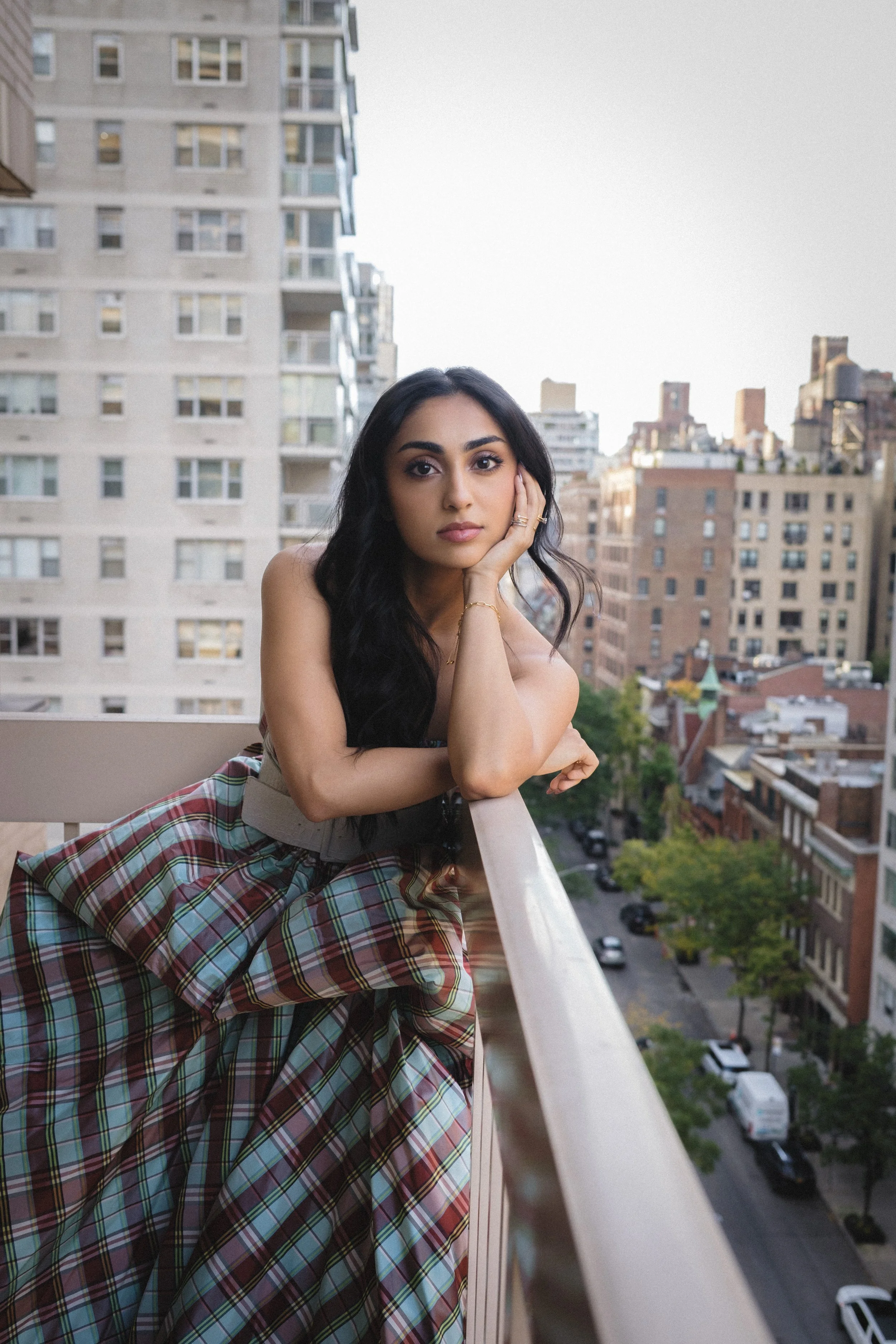
photography by JASON SANDERS
You're joining the Percy Jackson and the Olympians universe as Zoë Nightshade, a character who already has such a passionate fan following. What was your initial reaction when you found out you'd landed the role, and how familiar were you with the books before joining the cast?
Honestly, it felt like a dream come true, and a little surreal. It's an honour and a privilege to bring to life a character who means so much to millions of readers, and I understand the responsibility that comes with that. I didn't grow up reading the books, but I was familiar with the characters because my cousin is a total super fan. Once I was cast, I dove in completely, and I became an instant fan myself. I understood right away why Zoë is so beloved by so many people. From day one, I felt the weight of that responsibility, and I was determined that we do her justice.
Zoë is a fascinating character. She's fiercely independent, incredibly loyal to Artemis, and has a complicated relationship with trust and vulnerability. What aspects of her personality do you connect with most, and what has been the biggest challenge in bringing her to life?
I connect most with her loyalty. Once Zoë lets you into her circle, she will protect you fiercely, and that's a trait I hold close in my own life. The biggest challenge was balancing her stoic, guarded, and sometimes jaded exterior with the deeply sensitive, vulnerable girl underneath. She has spent centuries building that armour because she was so deeply betrayed in her past. She's 2.000 years old, and she carries an incredible amount of history and experience, both good and bad, with her in every step she takes. The work was finding the quiet moments where that armour cracks just enough for the audience to see how much she's hurting, and how much she's still capable of caring.
Zoë leads the Hunters of Artemis, a group of powerful young women who reject traditional expectations placed on them. Given your own advocacy for gender equality, does portraying a character with such strong feminist themes carry a deeper personal significance for you?
It carries a lot of personal significance for me. Through my work with the Geena Davis Institute, I've seen how often female characters are defined by their relationships to men, and the Hunters of Artemis flip that completely. Their stories are their own. But I don't see the Hunters as only an empowering, badass army of women and girls. They're also a place of refuge. Many of these girls, Zoë included, were found by Artemis or led to the Hunters at the moment they needed saving most, and they were given the chance to find a higher purpose. They're not just an army, they're a sisterhood and a safe space of female mentorship.
I think Zoë and Artemis's relationship is the story of so many women. Without giving too much away, we learn more about Zoë's past as the season goes on, and Artemis found her when she needed it most and essentially gave her a second chance at life. A lot of women can relate to going through a hardship and having a woman in their life, an older sister or a mentor, take them under her wing and offer them safety. The Hunters also represent the power of female friendship and of leaning on other women. Being Artemis's right hand and leading this group feels like a true alignment of my acting career, my advocacy for gender equality, and my double major in film production and women's studies at Harvard.
Percy Jackson has become such an important franchise for a new generation of viewers. What can you tease about the upcoming season, and what are you most excited for audiences to discover about Zoë?
It's so special to join a franchise and a world that is already so well established, and to get to take a character on such a beautiful journey. Zoë travels a long way emotionally, through everything she gets to explore and become. This season is epic, emotionally rich, and visually breathtaking, and the stakes are higher than ever. What I'm most excited for audiences to see is how she comes into this season and changes the course of these kids' lives forever. She can seem harsh at first, but as the journey unfolds, you see exactly why she is the way she is, and I think viewers will love watching her dynamic with Percy, Thalia, and Grover move from tension to real respect.
You're also starring in Netflix's Best of the Best, a Bollywood-dance comedy. What drew you to this project, and how different was the experience compared with working on a fantasy series like Percy Jackson?
What drew me in first was the people. Many friends and people I deeply respect were involved in the project, so I just wanted to be able to collaborate with them. But most importantly, I was drawn to the script itself, because it's a true diaspora story. It shines a light on South Asians who grew up in the West, are in college and on a competitive Bollywood dance team, and that's just a story that hasn't really been told before. It felt super fun and on brand for me, since I was on the Harvard College Bhangra team and that was something that undoubtedly shaped who I am today. I wanted to be part of it, even in a small way, because I was filming Percy Jackson at the time.
Best of the Best was all comedic timing and joy, while season three of Percy Jackson is much darker and carries the weight of the mythology and the responsibility of bringing Zoë to life, both emotionally and physically. I was shooting both at once, and at one point I flew overnight from a night shoot in Vancouver straight to set in New Jersey on no sleep. It was slightly exhausting and a whirlwind, but I wouldn't have traded it for the world. It definitely helped that Hasan had Red Bull delivered to set for me, because he's thoughtful and just the best.
Bollywood dance is such a vibrant form of storytelling, combining music, movement, emotion, and cultural tradition. What was your relationship with Bollywood growing up, and did working on this film deepen your connection to that part of your cultural heritage?
I'm just a girl from Toronto, and I think that's a very diaspora experience. You're close to your culture through family, food, and big desi weddings, which is mostly where Bollywood music shows up. You're not always a die-hard Bollywood fan, because you're simply not exposed to it that much. I really reconnected with that side of myself in college through the Bhangra team at Harvard, and I've appreciated Bollywood so much more since. Being part of Best of the Best felt like a love letter to my own dance team and the community it gave me. Shoutout to the Bhamily.
You've been acting since childhood and have already won four Canadian Screen Awards. Looking back at your earliest experiences on set, how do you think growing up in the entertainment industry shaped the person you are today?
Growing up on sets shaped my work ethic, my empathy, and my understanding of the world. Winning awards at a young age can be validating and a real source of motivation, especially when your peers are the ones voting. But I try not to put too much weight on them. The work is what keeps me going, and looking back, the real prize was the education of being in those rooms. I was surrounded by adults who were passionate about storytelling, which pushed me to mature quickly and learn to communicate well. It also gave me an early front-row seat to the power of media. I saw firsthand how the stories we tell shape how people think, and that's what sparked my interest in using the power of storytelling for good.
You've achieved so much at a relatively young age, but success can also come with expectations and pressure. How has your personal definition of success changed over the years, and what keeps you grounded?
My definition of success has always remained pretty grounded, but now more than ever, it has moved away from milestones and accolades and toward the impact and longevity of my choices. When you start young, it's easy to get caught up in the next role or the next achievement, especially when the people around you set high expectations because they've seen what you're capable of from such a young age.
Today, success means balance and intentionality, telling meaningful stories, showing up fully for my education, and using my voice to make a tangible difference. What has always kept me grounded is my family, my faith, and my best friends. The people closest to me are proud of what I do, but also couldn't care less about what I achieve on paper. They care far more about who I am as a sister, a daughter, a friend, and a human being, and that's the best reality check I could ask for.
Alongside acting, you're a UNICEF Canada Ambassador, advocating for children's rights. Was there a particular experience or moment that inspired you to become involved in activism, and what issues feel most urgent to you right now?
My activism began when I voiced Parvana in The Breadwinner, a story about a girl growing up under the Taliban in 2001 Afghanistan. To prepare, I had to truly understand the lives of girls who are denied an education and a childhood, and it shattered my bubble and showed me how privileged I was. That moment connected to the stories I grew up hearing about my mother escaping apartheid South Africa, and it became my turning point. Right now, the issues that feel most urgent to me are the global education crisis and the protection of children in conflict zones. Every child, wherever they're born, deserves safety, peace, and the chance to learn.
As Chair of the Gen Z Council at the Geena Davis Institute on Gender in Media, you're helping shape conversations around representation in entertainment. What do you believe the industry still gets wrong when it comes to portraying young women, and what changes would you most like to see?
The industry still tends to flatten young women into one-dimensional tropes. Real young women are messy, brilliant, flawed, and multifaceted. We can be all over the place and complicated and figuring it out, sometimes all in the same day. I'd love to see more young diverse women get to be the center of their own stories, with real flaws and real agency, in stories that aren't just about their trauma or their relationships to other people. Honestly, I think the answer is just more of us telling our own stories.
You're part of a generation that's increasingly vocal about equality, identity, and social change. Do you think Gen Z is genuinely transforming Hollywood, or are there still significant barriers preventing young voices from influencing decisions behind the scenes?
I absolutely think we're shifting things, mostly by holding the industry accountable and asking for authenticity. We're vocal, and our viewership and engagement with media are making studios pay more attention to the stories we respond to. But the real decisions still get made in rooms where we're rarely present. Young people are often brought in to act or to consult, but not usually to greenlight projects or oversee budgets. That's not about handing anyone a title. It's about building real pathways, through mentorship, internships, and assistant roles, so that people who understand how my generation tells and consumes stories can earn their way into those chairs over time.
As if acting and activism weren't enough, you're also pursuing your undergraduate studies at Harvard. How do you manage the demands of university life alongside filming schedules and your advocacy work? And do your classmates treat you differently when they discover what you do outside the classroom?
It takes a great deal of time management, sacrifice, and attempts at colour-coding my Google Calendar, but most importantly, an incredibly supportive village of family and close friends to lean on, and to help me touch grass when things get too busy or chaotic.
When it comes to balancing school, I've learned to do readings in the makeup chair and write essays on flights. When The Muppets Mayhem premiered at the end of my freshman spring semester, I left campus early for the press tour. After our premiere in LA, I remember I went back to my hotel, took off my gown, put on sweatpants, and pulled an all-nighter to write a 20-page paper because it was finals season. For Percy Jackson, I actually had to take my senior year off to shoot.
As for my classmates, Harvard is a funny place because everyone there is doing something extraordinary. I'm honestly in awe of and endlessly inspired by my friends. Some are Olympic athletes, and others are building companies or founding nonprofits, etc. They're incredibly supportive, and when people find out I'm an actor, they don't really treat me any differently.