
IN CONVERSATION WITH DÓNAL FINN
interview by MAREK BARTEK
Irish actor Dónal Finn is quickly becoming one of the most compelling new faces on screen. With a growing list of projects — from period dramas to literary adaptations — he brings a masterful intensity to every role he takes on. We caught up with Finn to talk about stepping into the world of Young Sherlock – a new TV series that premiered on 4th March – where he takes on the formidable task of reimagining James Moriarty at the very beginning of his story.
You’re stepping into the role of James Moriarty at a point where audiences are meeting him before he becomes the Moriarty we know. How did you approach building a version of him that still feels recognisable, but also surprising?
I think it’s Matthew Parkhill’s vision and the scripts that bring out enough surprises – but yes, it was really important to me to honour an image of Moriarty we might have from past Sherlock Holmes adaptations, and also bring something new. My job was made a lot easier given we meet him as a university student, and not the big bad Napoleon of Crime he’s known to be later in life. As a fan of Sherlock Holmes myself, I imagined the audience would be hyper aware of any flickers of darkness in the character, so it’s great craic subverting that expectation. I don’t think anyone is born evil. Like, what if he really cared about Sherlock? What if he really wanted them to be great friends but something got in the way of their deep connection down the road? It felt like Moriarty would have had the greatest journey with his morality, so that’s what I wanted to explore.
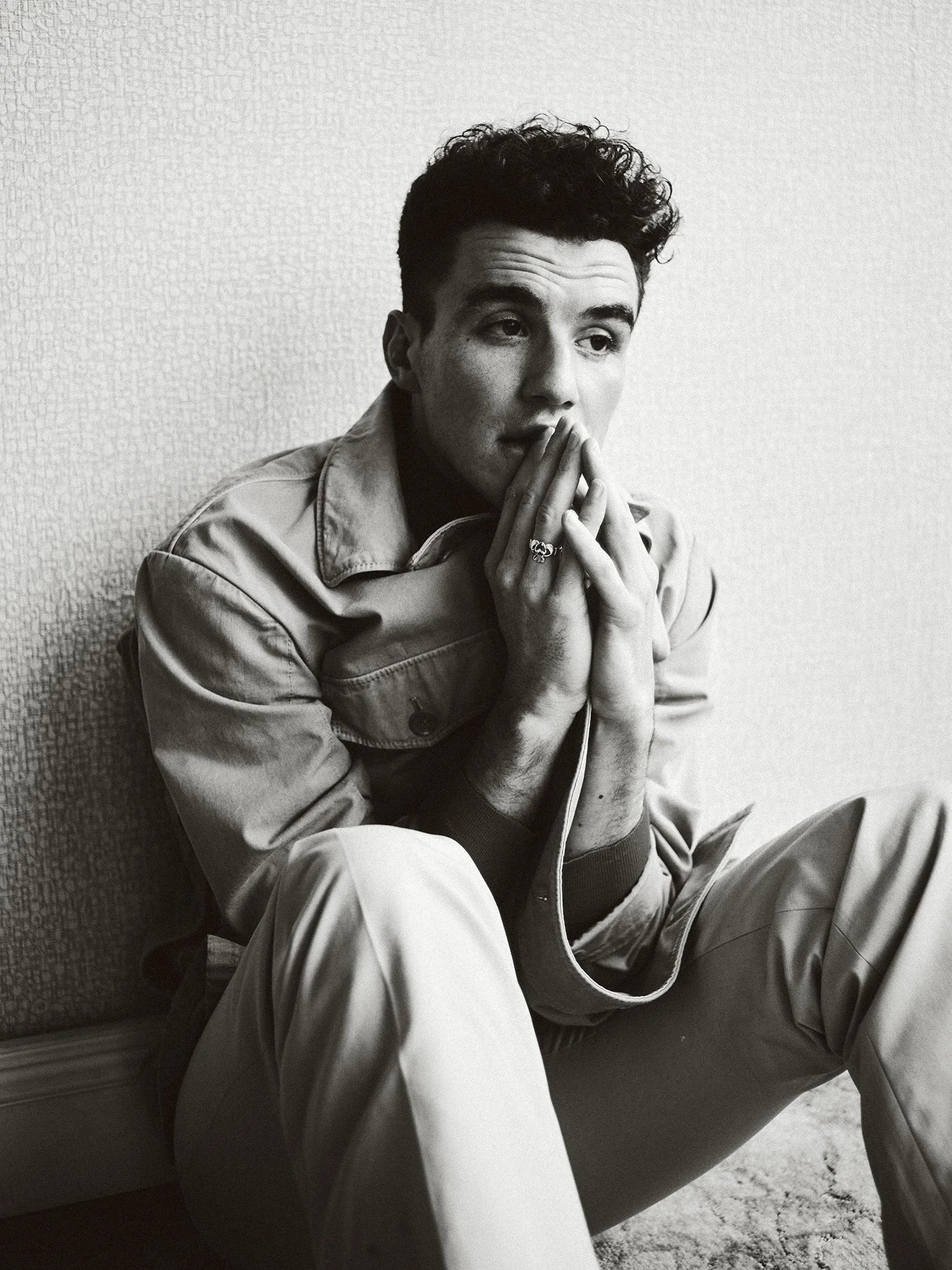
full look PRADA
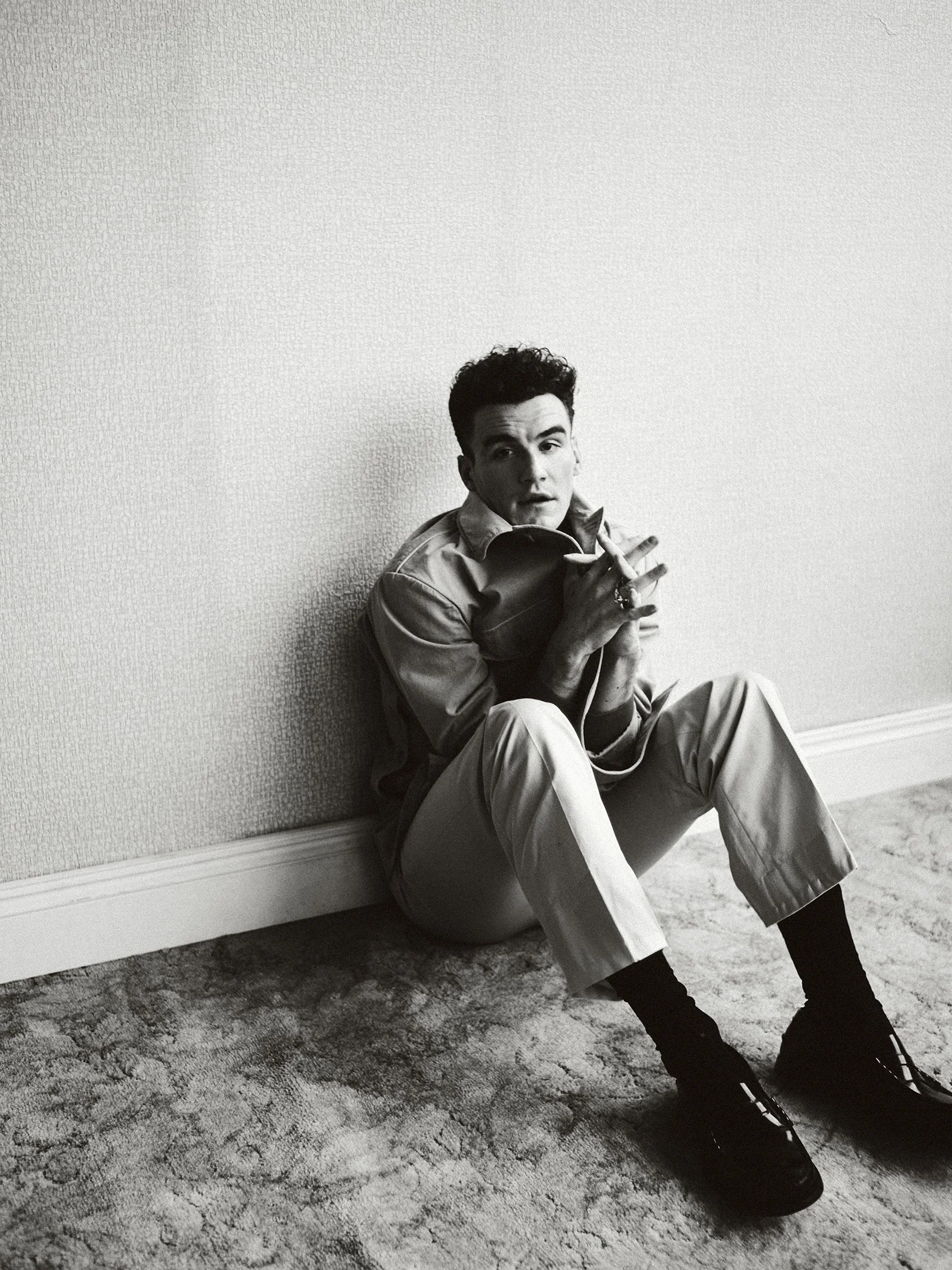
We’ve seen countless versions of Sherlock across film and television, but Young Sherlock is specifically about the years before he becomes emotionally armoured. When you read the scripts, what did you immediately understand about Moriarty’s role in Sherlock’s development?
In one of the episodes, Moriarty compares himself and Sherlock to the sun and moon respectively. “The moon so often takes the credit for the light that is shone upon it.” Now, even though it’s a put down, it speaks to how they see each other. They are counterparts – yin and yang. I think once Moriarty recognises how brilliant Sherlock’s mind is, and vice versa, they become fixated on one another, on the potential of what this partnership could be. Moriarty is fairly integral for the journey of this Sherlock to becoming the world’s best detective, and – if you’re an Arthur Conan Doyle fan – there’s a few Easter eggs as to the lessons Moriarty gives Sherlock that form his skills for detecting later in life. A couple of very famous quotes might have come from the mind of James, and not Sherlock. That’s all I’m saying. Sherlock claims them as his own brilliance in years to come but I’m not bitter about it. Honestly, it’s water under the bridge.
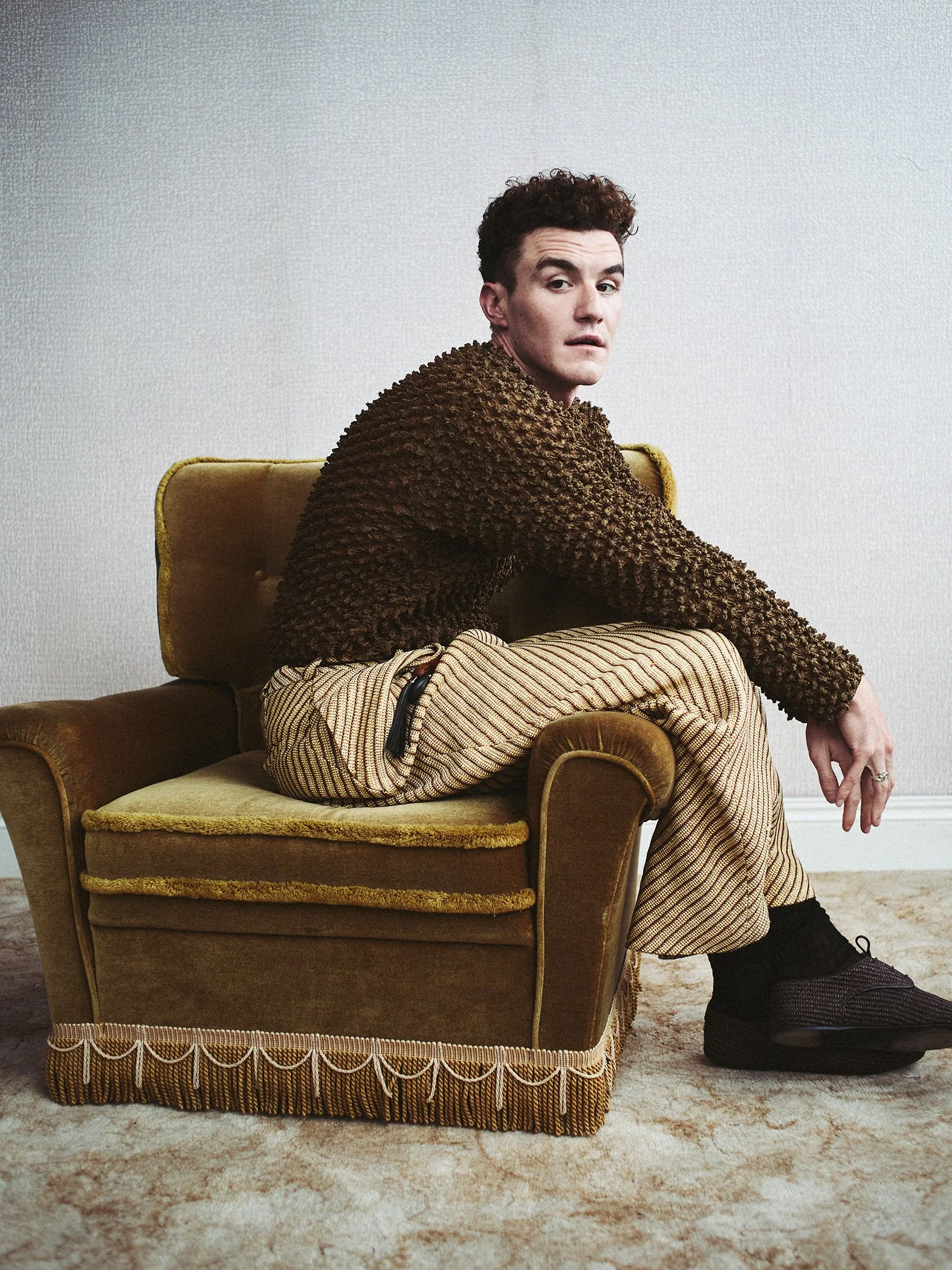
full look ARMANI
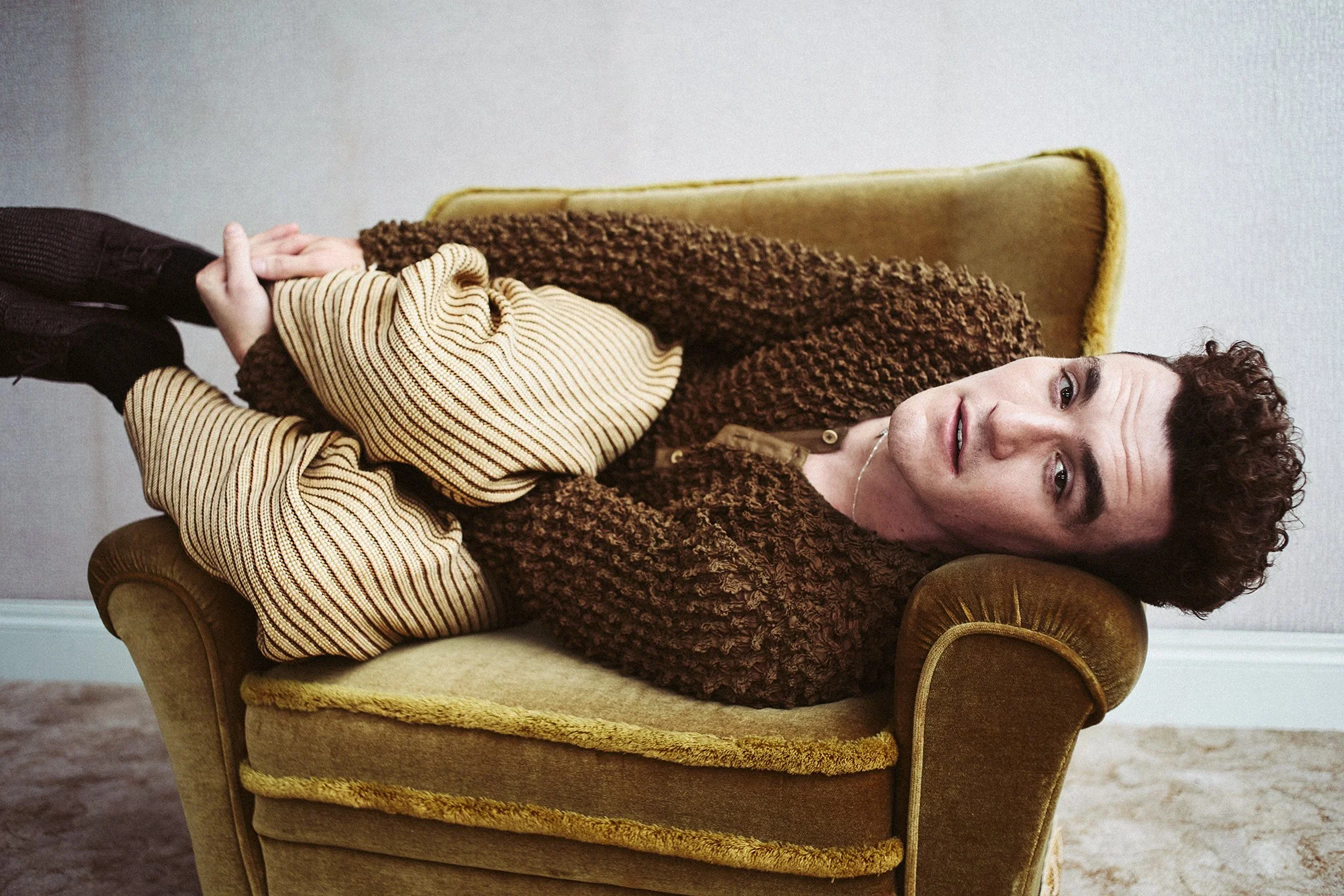
There’s a specific thrill in watching two brilliant minds collide before they even fully understand themselves. How would you describe the relationship dynamic between Moriarty and Hero Fiennes Tiffin’s Sherlock in this series?
One great big intellectual pissing contest – all happening in one moment of the show, quite literally. I’d never heard the term one-upmanship until Guy used it, and it’s so right for these two lads. Sherlock is as brilliant as Moriarty (I promised Hero I’d say that), so in the scenes it feels like they are playing mental table tennis all day long. And it’s entertaining; they enjoy each other's company, which I think is a rare thing for both of them. Even when the stakes are life-and-death, they are still invested in who wins, who has the last word. And if out of two people both must have the last word, what happens then? A perfect Guy Ritchie stalemate. But hey, they love each other really. They’re friends, I swear.
Moriarty has always been written as a figure who represents chaos, but also intellect and control. Did you and the writers talk about who Moriarty is in this version, and what drives him to disrupt everything around him?
In the Arthur Conan Doyle books, the man loves chaos. Some people just want to watch the world burn – as they say. But this felt like a great chance to see how he arrives at that mentality, so I don’t believe he’s quite there yet. I think he’s got a different way of seeing the world to Sherlock because of his set of circumstances, and right now, it’s not good or bad – it’s just different. He’s had to fight to get to where he is: an Irishman, in England, in one of the greatest universities in the world, in 1871. It’s a time of great hardship in the country, and little opportunity. He’s an underdog in this world, for sure. Because of these things, he’s had to develop his own set of rules to survive. And at this time in their lives, those rules are not better or worse than Sherlock’s, they’re just different. (Again I promised Hero I’d say that.) But in this version of him – if there’s chaos – I think it’s channelled into a positive energy. Carpe diem and all that.
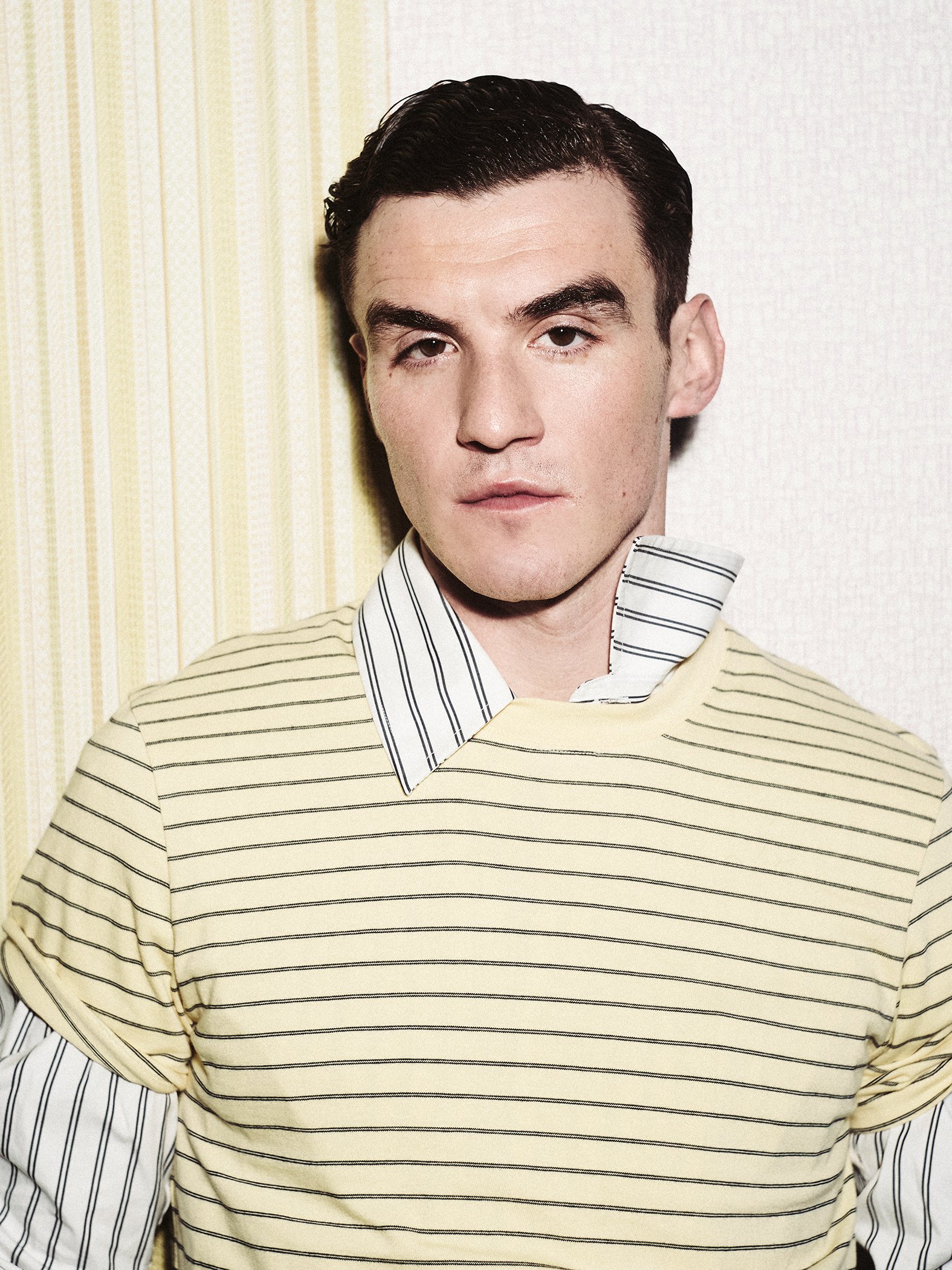
shirts SANDRO
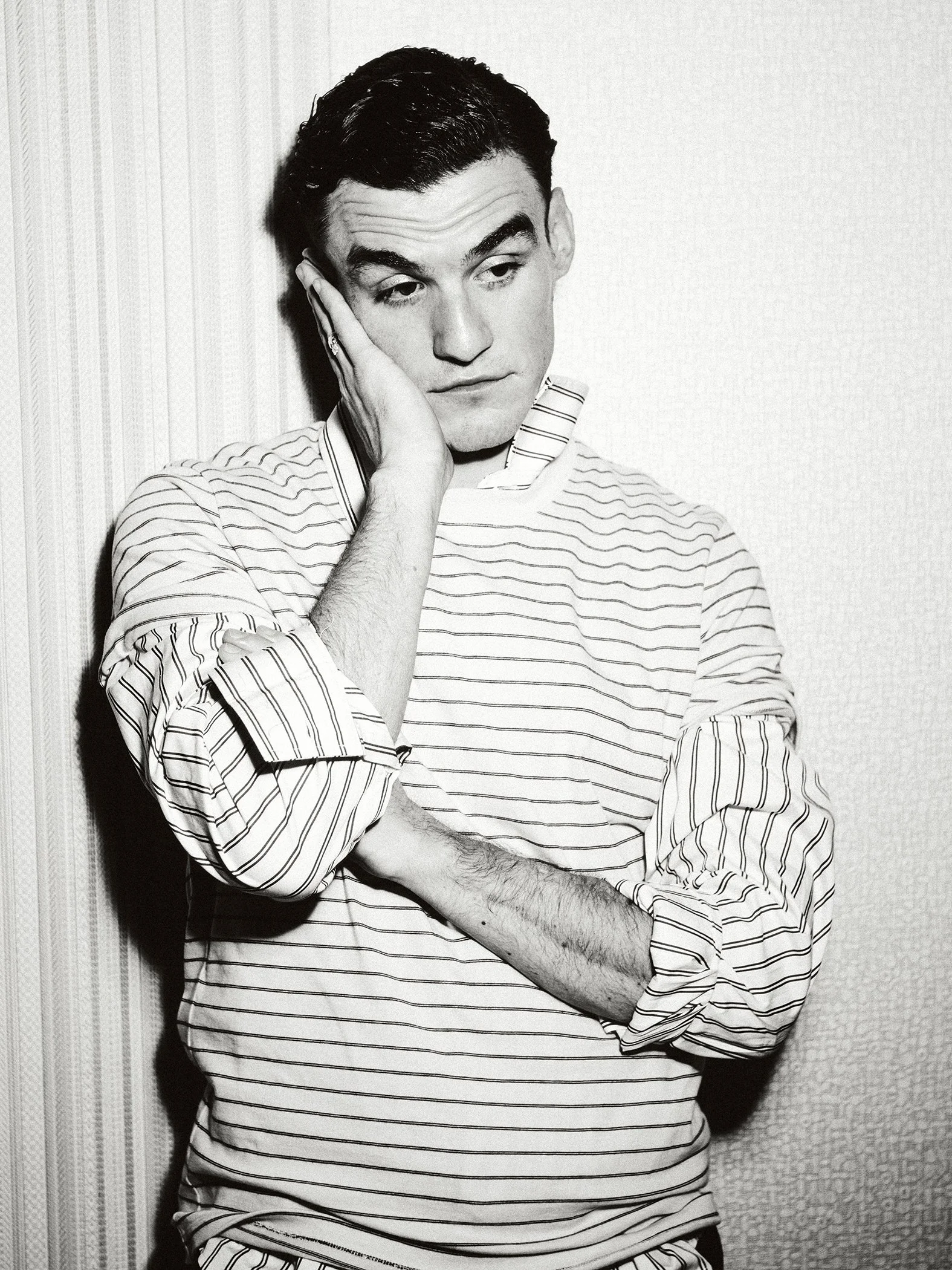
Guy Ritchie has such a signature style — fast-paced, stylish, and character-driven. How did his approach shape the way you played Moriarty?
It kept us all on our toes, which I think was just right for this job. Alongside Matthew, they’re the right folk for the job. Often you’d come into Guy’s trailer to discuss the scene and you’d be walking into a spirited discussion on the plotholes in the Bible, or why Marcus Aurelius didn’t meditate enough. So with those topics circulating around in their heads, they were in good shape to write dialogue for Moriarty and Sherlock. Guy’s got a great appreciation for rhythm, which I hadn’t noticed before, but I now see it throughout all his work. It’s really musical, and for these two characters to constantly fall into a patter only shows how intellectually similar they are. They’re on exactly the same wavelength. Two sides of the same coin.
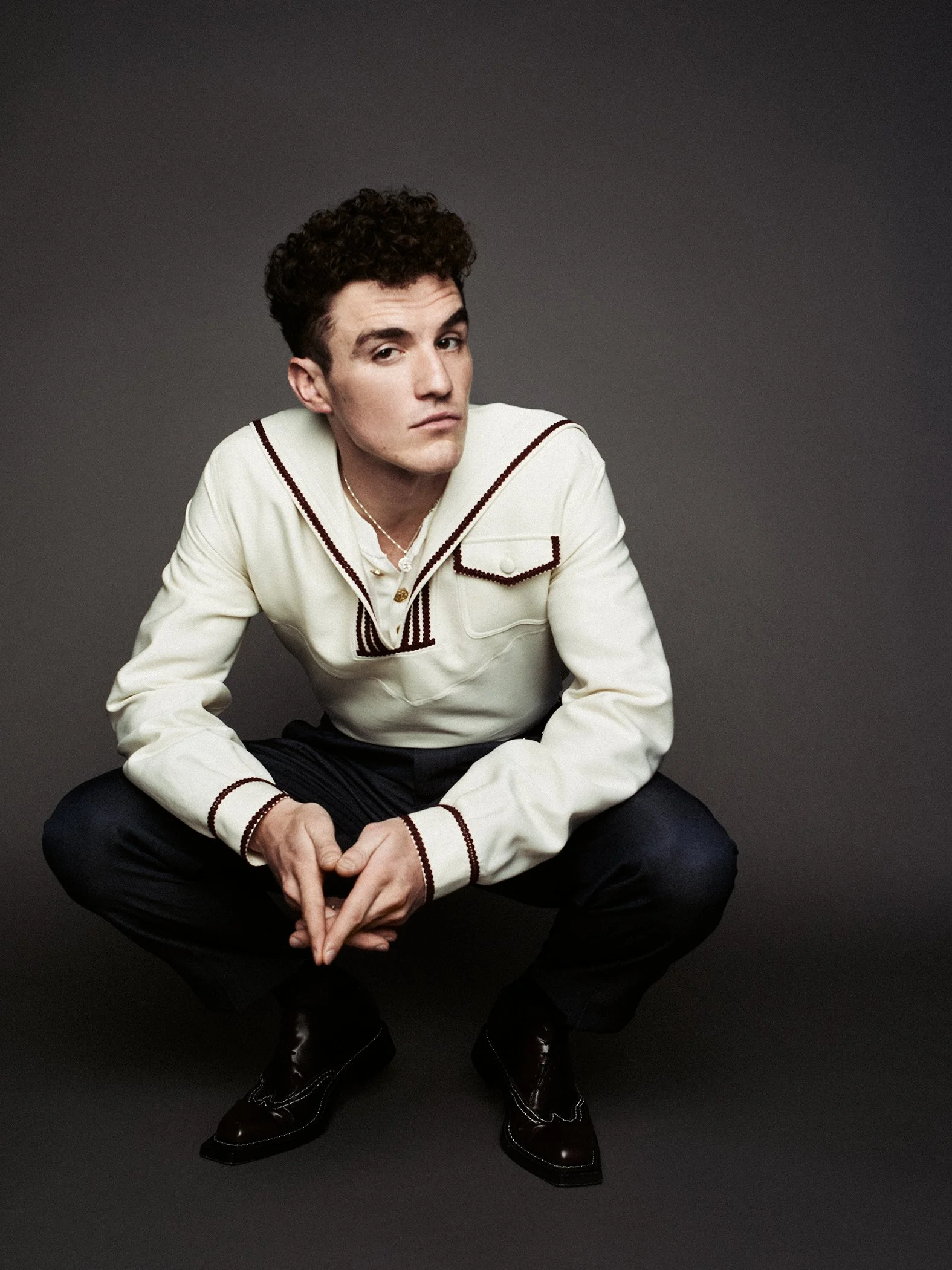
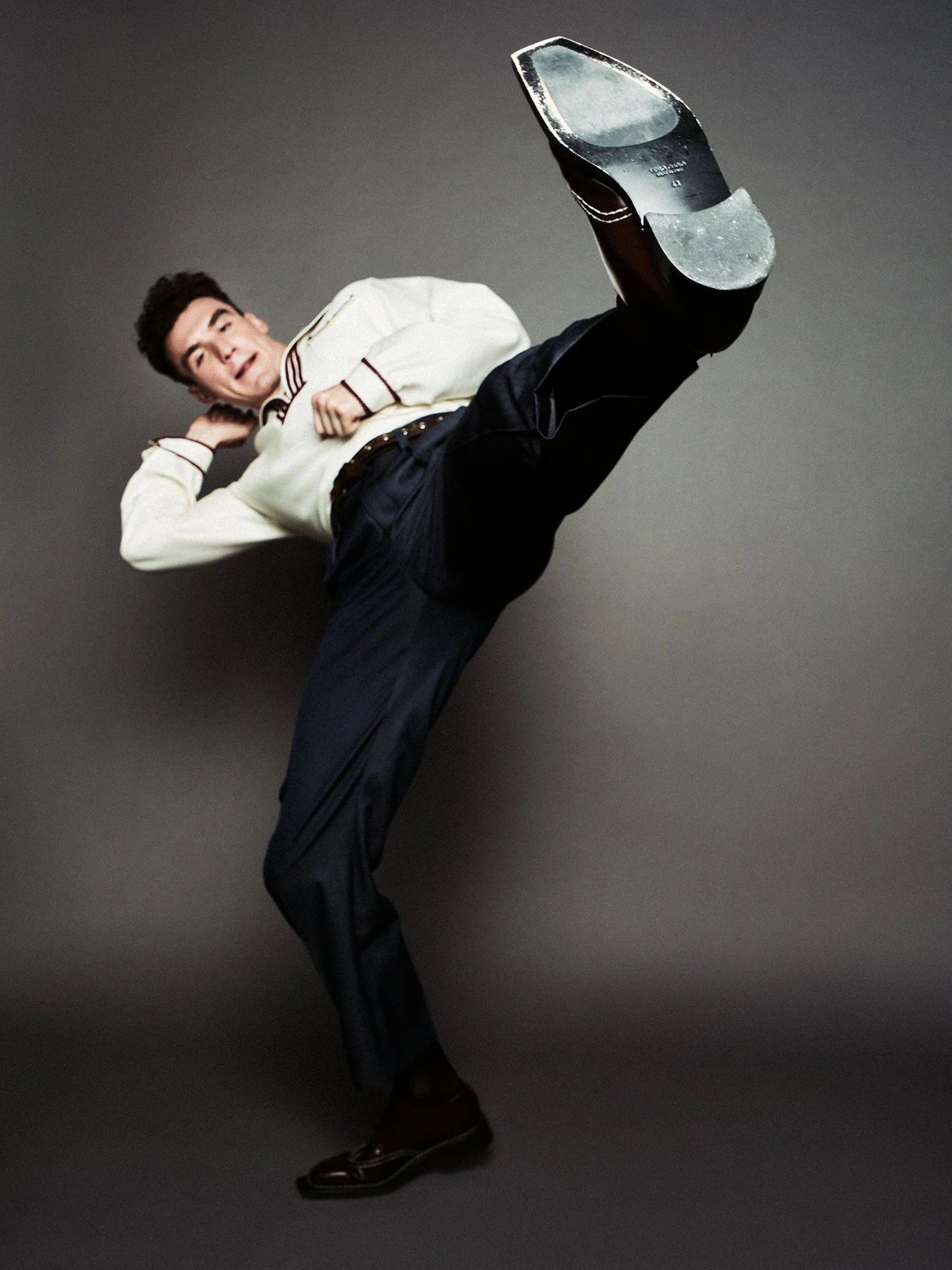
coat, shirt and shoes MITHRIDATE
trousers SANDRO

Did you feel any pressure taking on a character with such an iconic legacy, and what was your mindset in making Moriarty feel like a protagonist in his own right?
God yeah. Honestly a lot of the pressure I was feeling came from myself because I was such a fan of all the Moriarty’s that had come before. I mean Jared Harris, Ralph Fiennes, Laurence Olivier, and last but not least, Andrew Scott. I think he’s one of the best. I had his picture on my wall at drama school, from when he was rehearsing Hamlet at the Almeida. He’ll always be a huge inspiration for how vulnerable and fearless you can be in your work, and how brave you can be in your choices. His Moriarty wasn’t a direct influence on my Moriarty, because if I’d watched it again as prep I’d surely would have either just completely copied him, or sacked myself – but he’s been an influence in all my work, more generally. Regarding being a protagonist, I think Moriarty certainly is the main character in his own story, but aren’t we all? And if we’re not, to quote Come Dine with Me, “what a sad little life, Jane.”
The cast includes Colin Firth, Natascha McElhone, and Hero Fiennes Tiffin. What did working within that ensemble bring out in your performance, and were there any scenes where the dynamic shifted the way you understood your character?
The list goes on. Zine, Joe, Max, Holly – all legends. I think it’s fair to say they all love being actors, so it meant they all were great craic at work. I know that might sound basic or reductive, but it’s true and I think it’s a really important thing, because then we could have fun with the scenes, and encourage each other to take risks. And you’re more likely to do that if you don’t feel afraid to get things wrong. I am so grateful for that because, Christ, did I get things wrong. But given the boldness of the characters, I think we believed, “go big or go home.” I learned from all of them. I think Colin taught me how to trust my instincts for the character – what he does is so understated and nuanced, and it takes great confidence to trust that those choices will translate into what you want the audience to see. He was an amazing person to have on set, particularly in the early stages of filming. He couldn’t have been more encouraging.
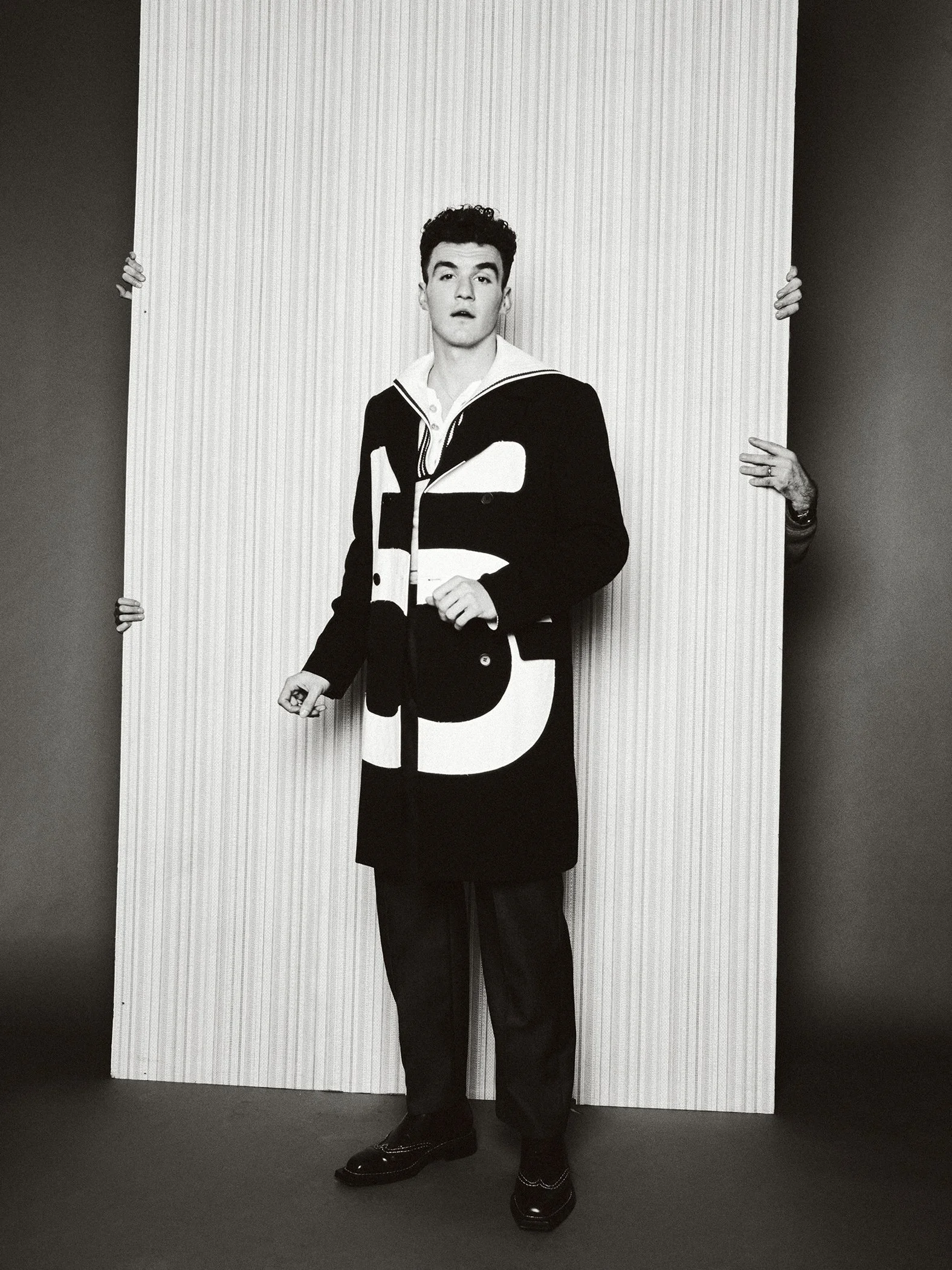
coat, shirt and shoes MITHRIDATE
trousers SANDRO
What do you hope audiences will understand about you as an actor after seeing your Moriarty?
Probably that I don’t mind swearing, or doing silly voices and accents, or running around in nice suits, playing with guns or punching guards. Guys, I really don’t mind doing that! To be honest, Moriarty is a great chance to play with danger as well as humour – and the fact that they’re not mutually exclusive. Or to be both big and be invisible. Or to have an internal world that is totally different to how the world sees you. There is a chameleon-like quality to James as a person and exploring that was probably my favourite part of the job. And as an actor, being a chameleon is the ultimate goal, and I try to bring even a hint of that to every role.
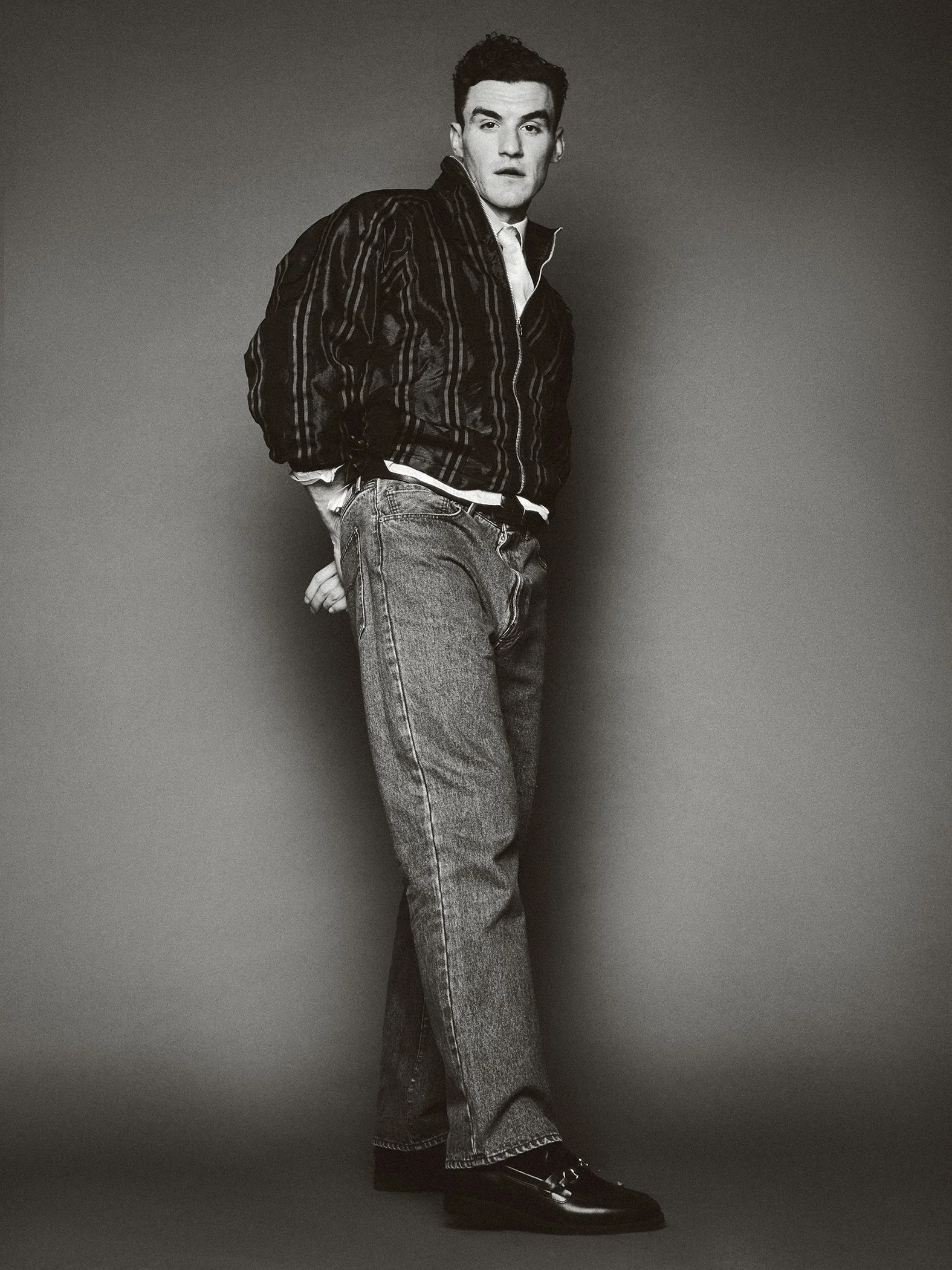
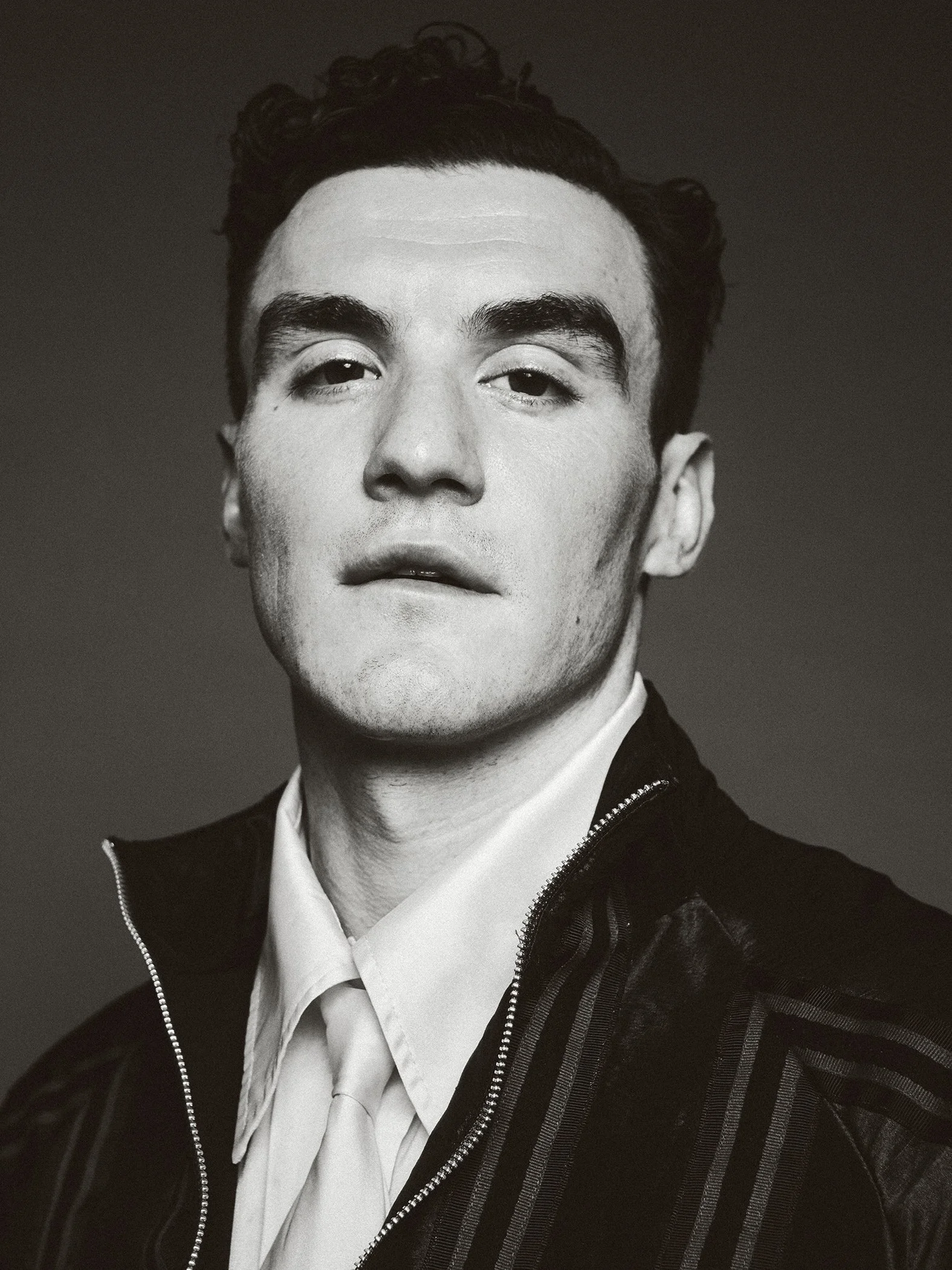
jacket, shirt and tie AGRO
jeans BARACUTA
shoes DUKE+DEXTER
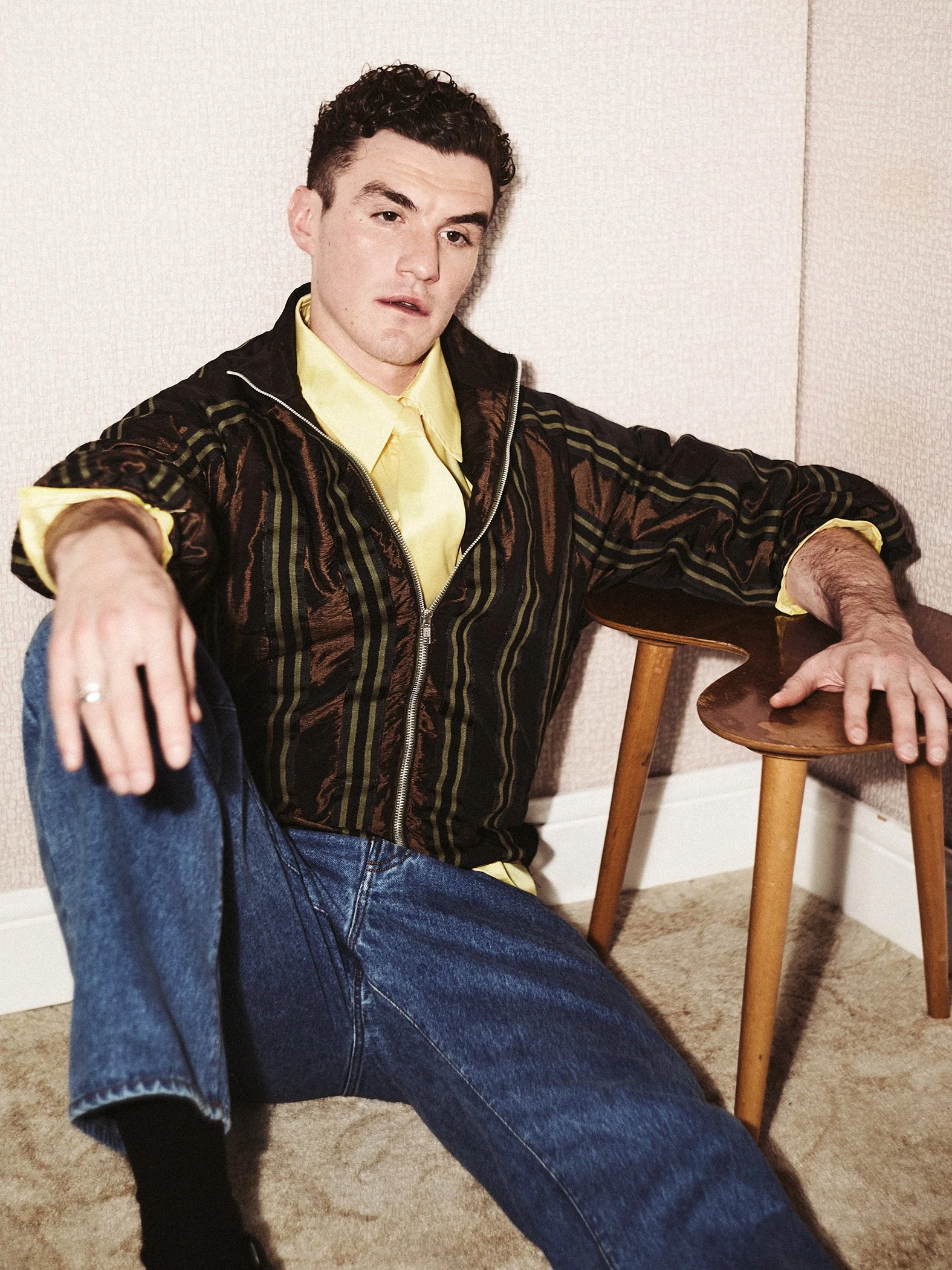
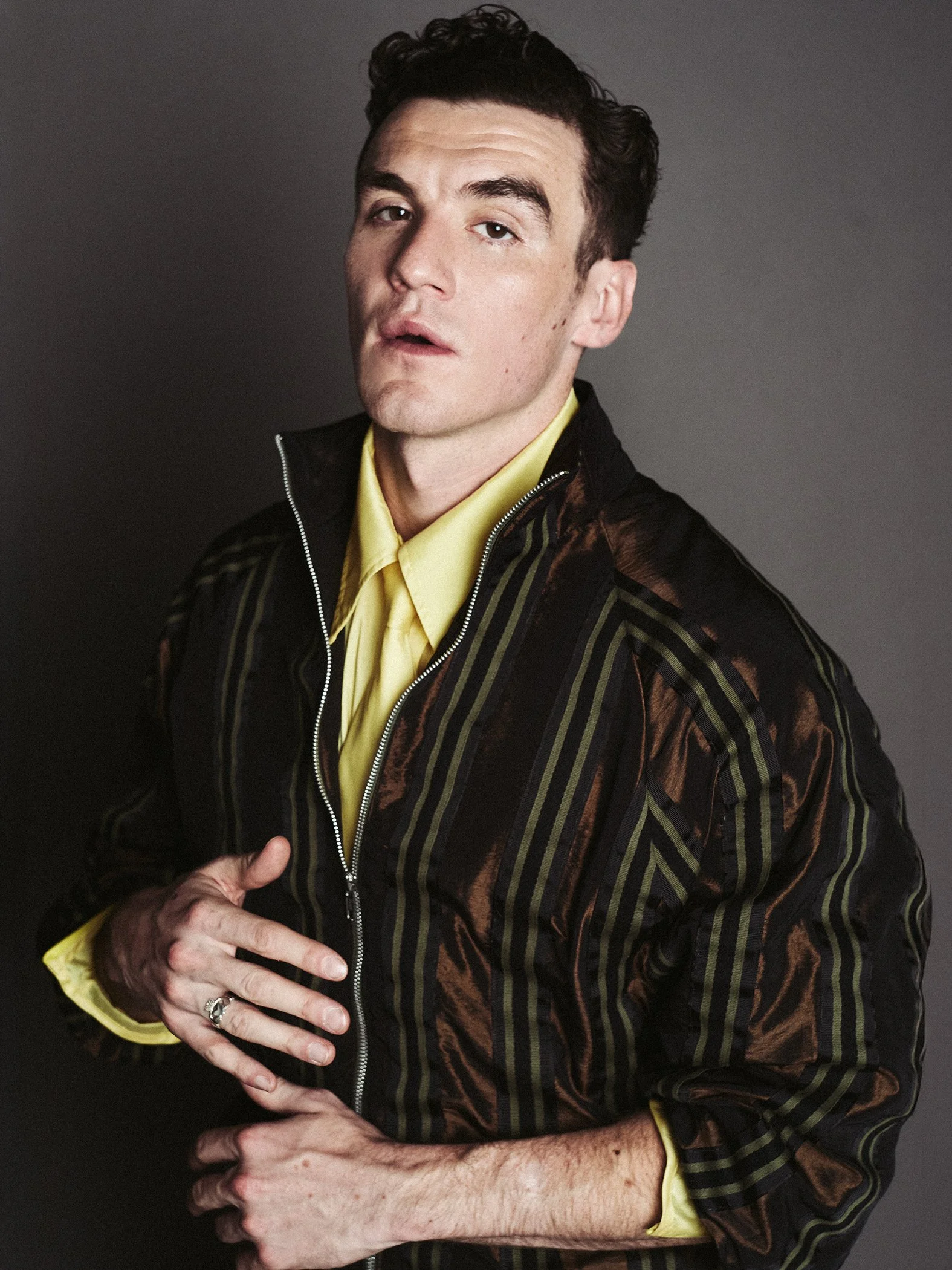
Outside of Young Sherlock you also appear in the BBC drama The Other Bennet Sister, which taps into a very beloved period-drama universe. What appealed to you about playing Mr Hayward, and how do you find something fresh and human in a genre audiences feel they already know so well?
Mr. Hayward was a very easy character to love when I read the scripts. I think he’d describe himself as an unlikely love interest; a shy and soft-spoken junior barrister from Yorkshire, fond of poetry, not well off, finding his feet in London, in a love triangle with Mary Bennet and the most eligible bachelor in the city, Mr. Ryder. He’s a bit of an underdog with a big heart, and so that’s why I loved him. And when he meets Mary, he sees a part of himself reflected back, as does she. I have four sisters, and when we watch Pride and Prejudice, it’s hard to identify with the confidence of Jane, or the bravery of Elizabeth. So I think many of us might identify with Mary, and it made me so happy to see her as the main character of her own life, the captain of her own ship. It’s more about self-discovery than love, and I thought that’s why this message is important. Ella Bruccoleri who plays Mary is phenomenal, and when I started acting with her, that’s what made it feel fresh and human for me – her ability to play with no fear. It encouraged me to do the same. They are so comfortable with each other, they can allow themselves to be their fullest, weirdest self. To paraphrase Nasty by Tinashe, “they match each other's freak.”
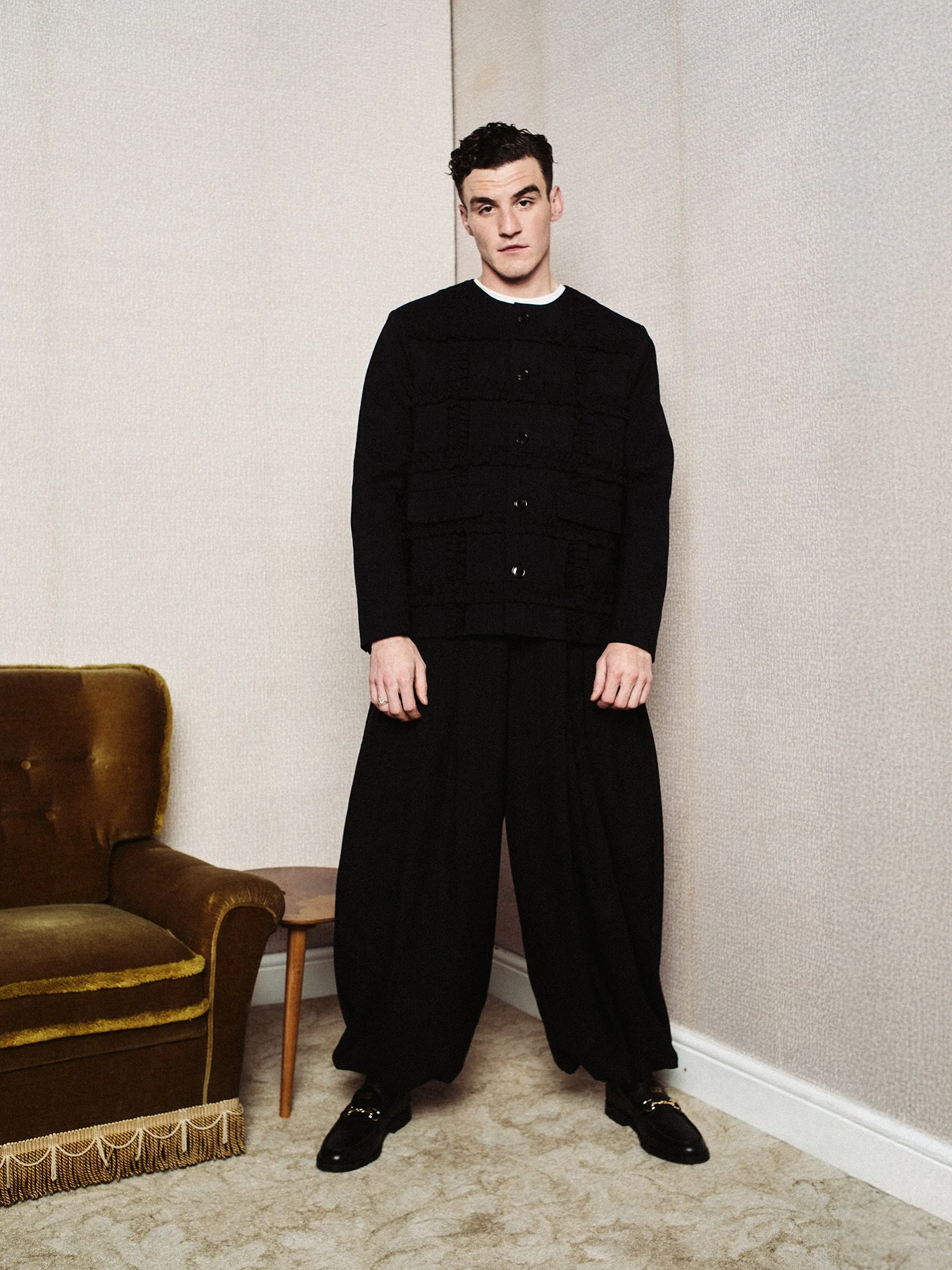
blazer and trousers VIVIANO
vest BOSS
shoes DUKE+DEXTER
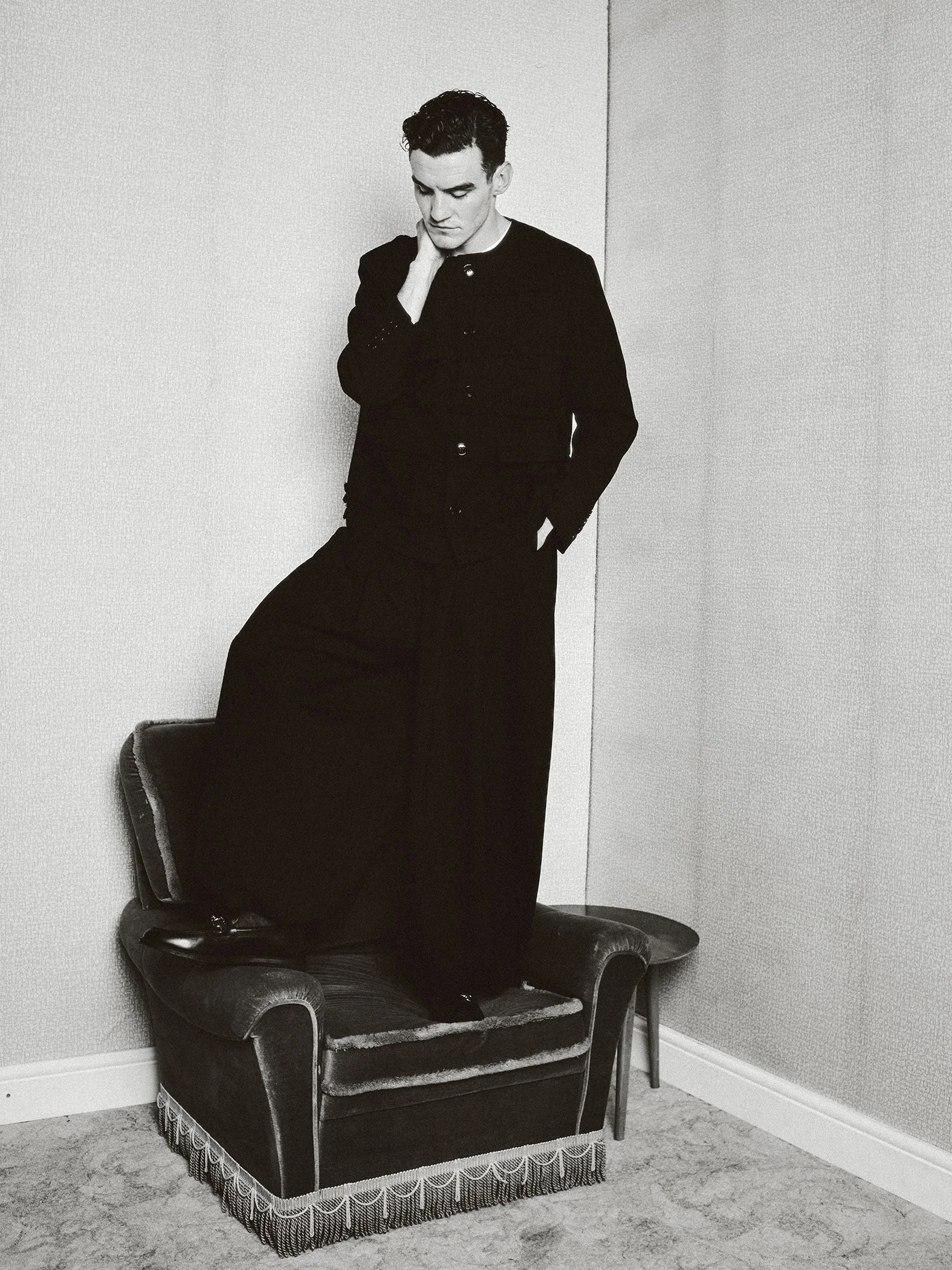
Are there any other interesting projects you’ll be taking on in 2026 you can already tell us about?
I’m in the middle of rehearsals right now for a play at the Royal Court Theatre – John Proctor is the Villain. And yes – the play is as good as its title. What Kimberly Belflower has written is a truly perfect play, treating the relationships and friendships of high schoolers with real respect and importance, because that time in life can really shape who we are. It follows these teenagers in a small town in Georgia as they study about The Crucible, just as the MeToo movement was taking off in America, and it helps them challenge the ideas of the play and its protagonist, John Proctor. I know people say this about the theatre all the time, but it’s a really important and timely play, and I’m so grateful to be a part of its life in London. The team on it, Danya, Kimberly, and the cast are truly amazing and I’m buzzing to get started at the Royal Court – one of my favourite theatres in London–- on the 70th anniversary of The Crucible being staged for the first time in England, on the very same stage. Some kind of witchcraft, surely.
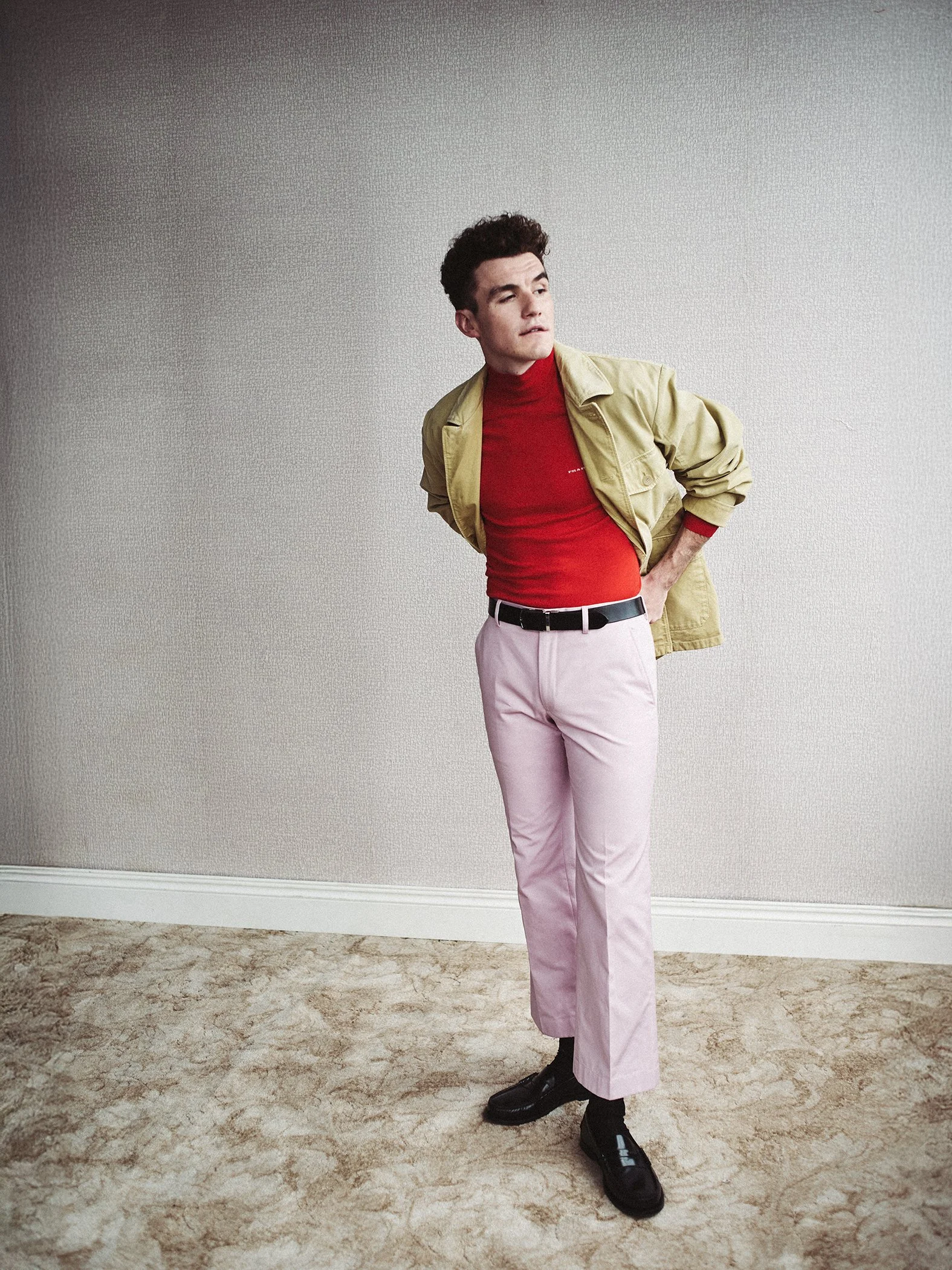
full look PRADA

TEAM CREDITS
talent DÓNAL FINN
photography DAVID REISS
styling FRANCESCA RUSSO
hair and makeup JOE MILLS at Joe Mills Agency
photography assistant STEFANIA CARLI
styling assistant VIOLA MISSO
editor TIMI LETONJA
editorial director JANA LETONJA
interview MAREK BARTEK
