
IN CONVERSATION WITH GABRIEL AUBRY
interview by JANA LETONJA
Gabriel Aubry has spent more than two decades in the public eye as one of fashion’s most recognizable faces, working with many of the industry’s most influential brands. Named one of People Magazine’s “Sexiest Men Alive,” the Canadian-born model built a career defined by elegance, longevity, and global reach. Yet beyond the lens, he has quietly cultivated another identity — that of a visual artist. Drawing and painting since childhood, he has spent the past decade developing a dedicated artistic practice that explores themes of beauty, memory, and concealment through layered materials including paint, wax, and sculptural techniques. With exhibitions in cities such as Milan and Beverly Hills and collectors around the world, Gabriel now prepares to unveil a new body of work in Hong Kong — marking an exciting new chapter where fashion, photography, and fine art converge.

briefs DIM
When did painting become more than a personal outlet?
I’ve been drawing and painting for as long as I can remember. Growing up in foster care, art became a quiet place for me, somewhere I could retreat and process things when I didn’t always feel comfortable expressing myself. I often say that nothing affects creativity like trauma. For many years it remained very personal. Over the past decade I began dedicating more time and focus to it, and gradually it evolved into a more serious practice.
How does it feel to create the image rather than embody it?
It’s very different but also very natural for me. Modeling is about interpreting someone else’s vision. Painting allows me to build the image myself, to decide what appears and what remains hidden. That independence is something I value deeply.
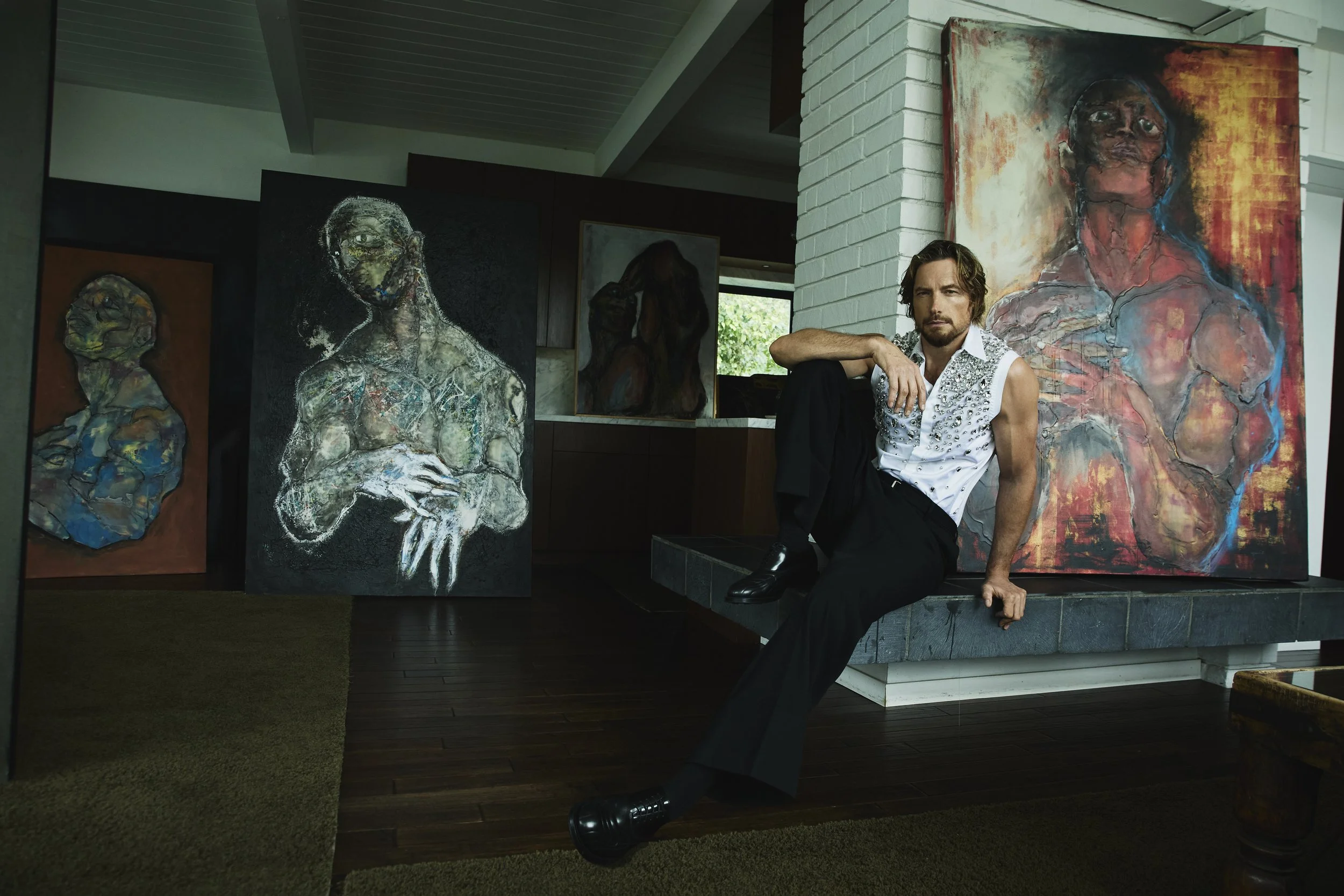
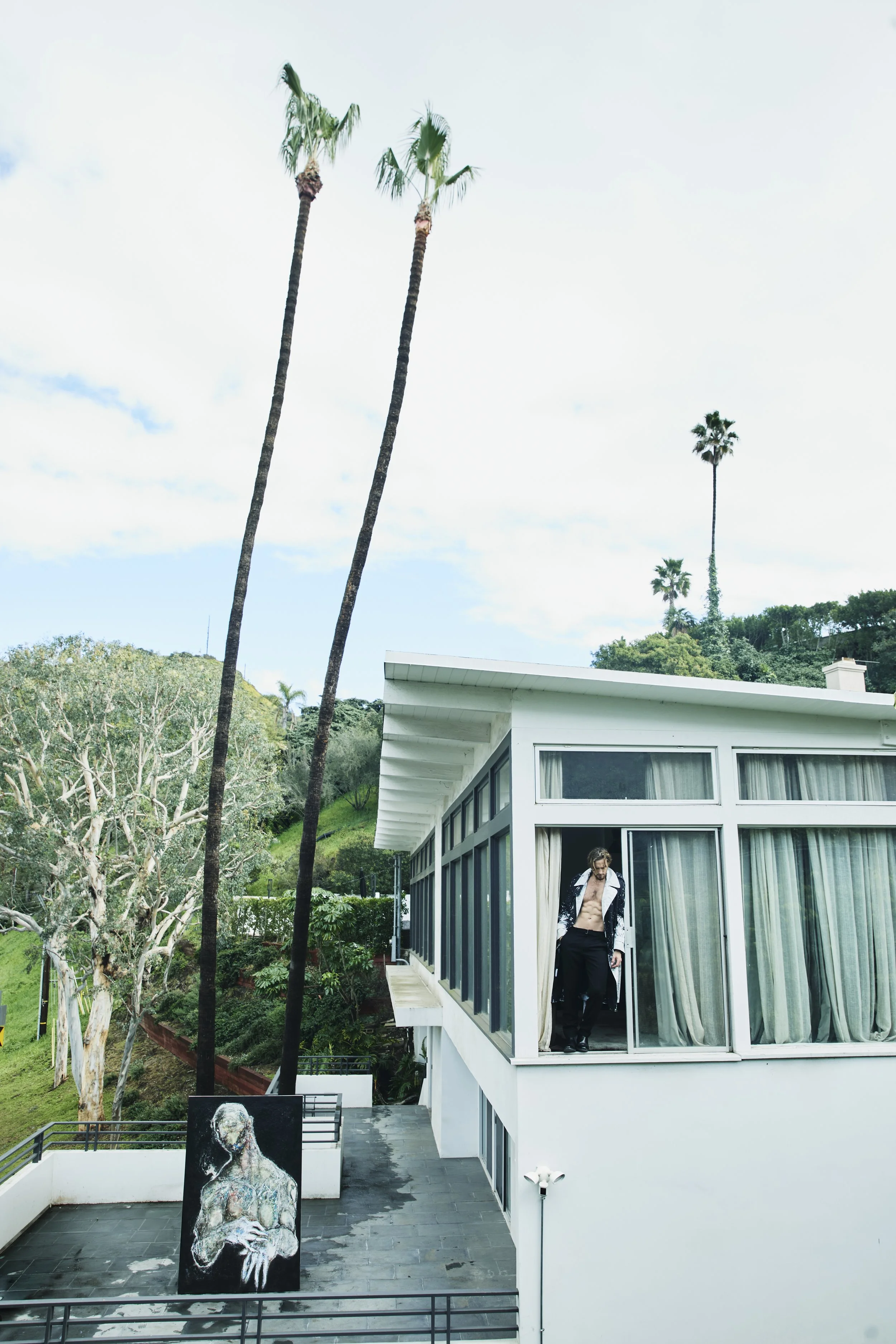
artworks from left to right: Fear of Acrophobia, Le Vénérable, Introverted, Fugue in D Minor
shirt MAISON MARGIELA
trousers SAINT LAURENT BY ANTHONY VACCARELLO
shoes LANVIN
What draws you to themes of beauty, memory, and concealment?
I usually begin by drawing an image and developing it with paint. At some point, I start covering it with layers — wax, more paint, and sometimes materials that partially obscure the image. In the beginning that was completely instinctive. I wasn’t thinking about meaning. Over time, I realized the process probably reflects something about me. I’ve always been a fairly private person, even though much of my life has been very public. In a way the work does something similar. The image is there, but it isn’t fully revealed.
How has fashion influenced your visual language?
Spending so many years around fashion and photography definitely shaped how I see images and the human figure. But what interests me in painting is almost the opposite of fashion. Fashion often celebrates clarity and visibility, while in my work I’m drawn to doing the opposite, obscuring the image rather than fully revealing it.
What attracts you to layered materials like wax?
I’m actually quite a perfectionist, so I naturally try to control the outcome when I paint. Wax changes that dynamic completely. Once it’s poured, I can’t fully control what it does. It moves, spreads, and settles in its own way. That loss of control is strangely freeing for me. It forces me to accept the result and sometimes it creates something I never could have planned.
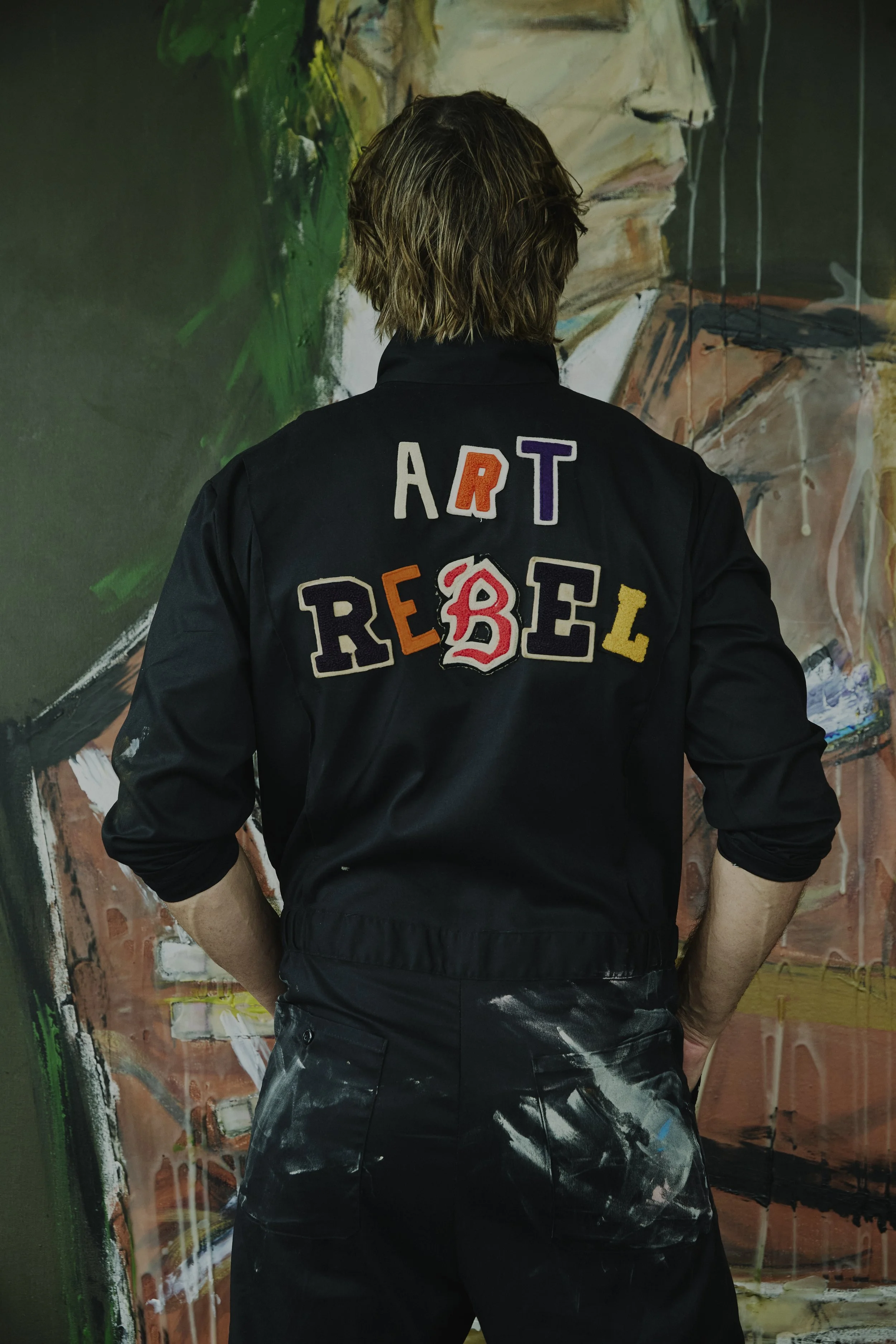
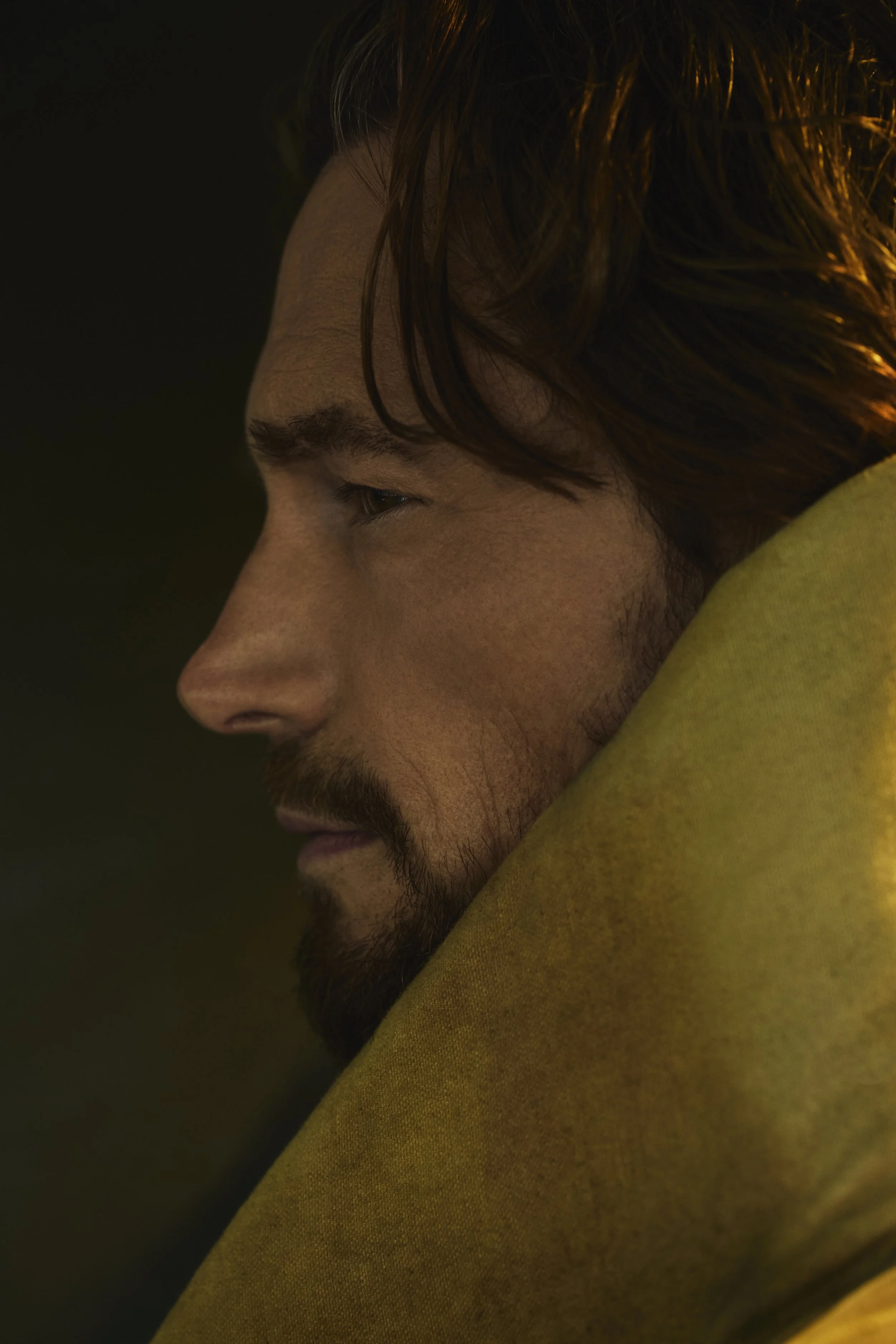
left:
custom piece GABRIEL AUBRY
right:
jumpsuit RRL
Is there a connection between modeling discipline and painting patience?
Definitely. Modeling teaches patience and observation. Painting requires a different kind of patience, especially when working with layers that take time to build and sometimes even to hide what you’ve created.
Does your artwork capture something more psychological than fashion photography?
Photography freezes a moment. Painting allows that moment to evolve. Through layers and texture the image becomes less literal and more emotional.
What was it like exhibiting in Milan with Bally?
It was a special experience because the work started from photographs I took during the campaign. Transforming those images into paintings allowed them to move beyond fashion and become something more personal.
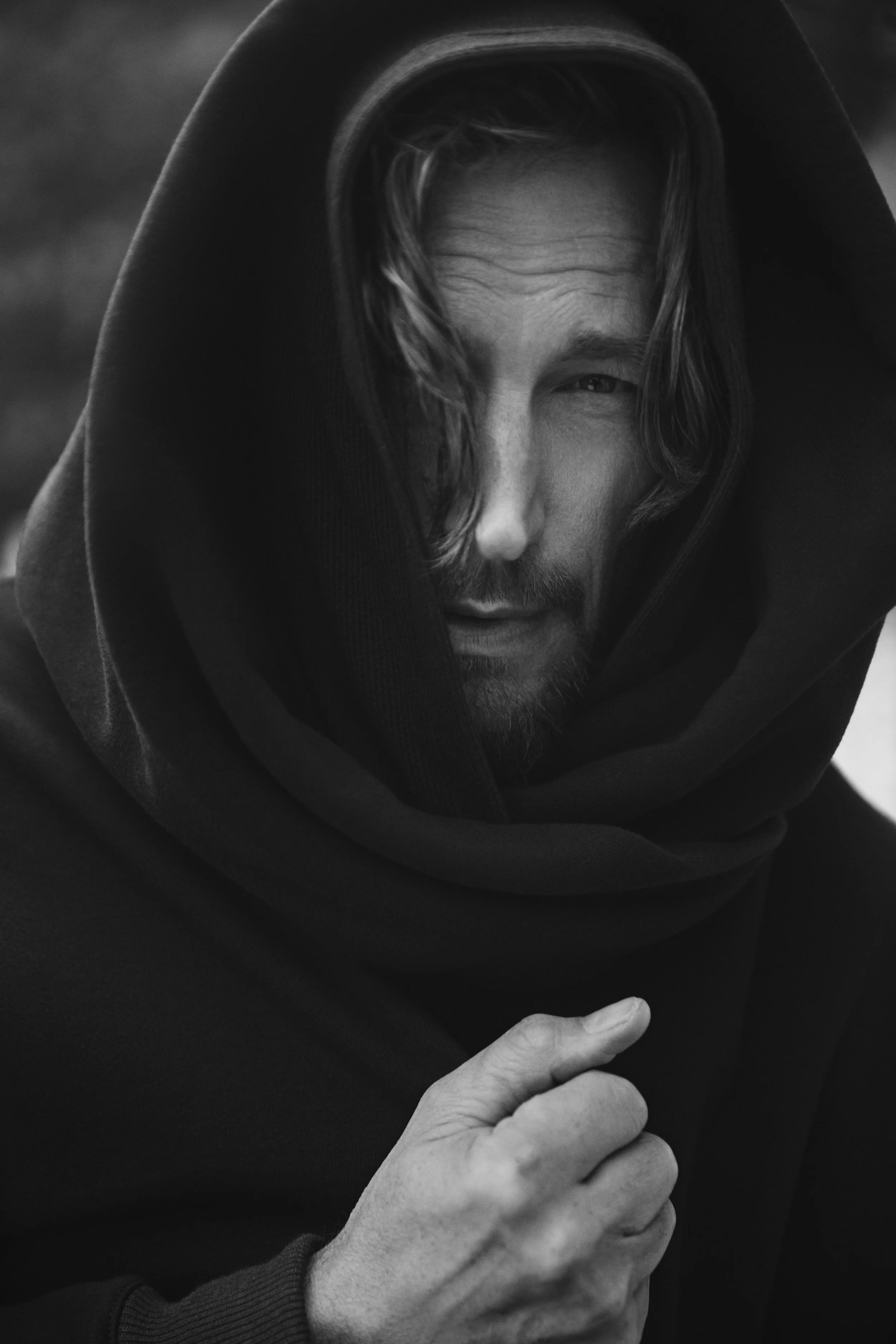
hoodie DAWSON AMSTRONG
How does it feel knowing your work lives in private collections?
It’s very meaningful because my work is quite intimate. Knowing that it lives in someone’s personal space feels very natural to me. I often say that I can’t fully appreciate my work until I see it on someone else’s wall. That’s when it begins to take on a life beyond the studio.
How has your process evolved over the last decade?
In the beginning, I was simply exploring. Over time, the process became clearer — drawing, painting, layering wax, sometimes enclosing the work. The language of the work revealed itself gradually.
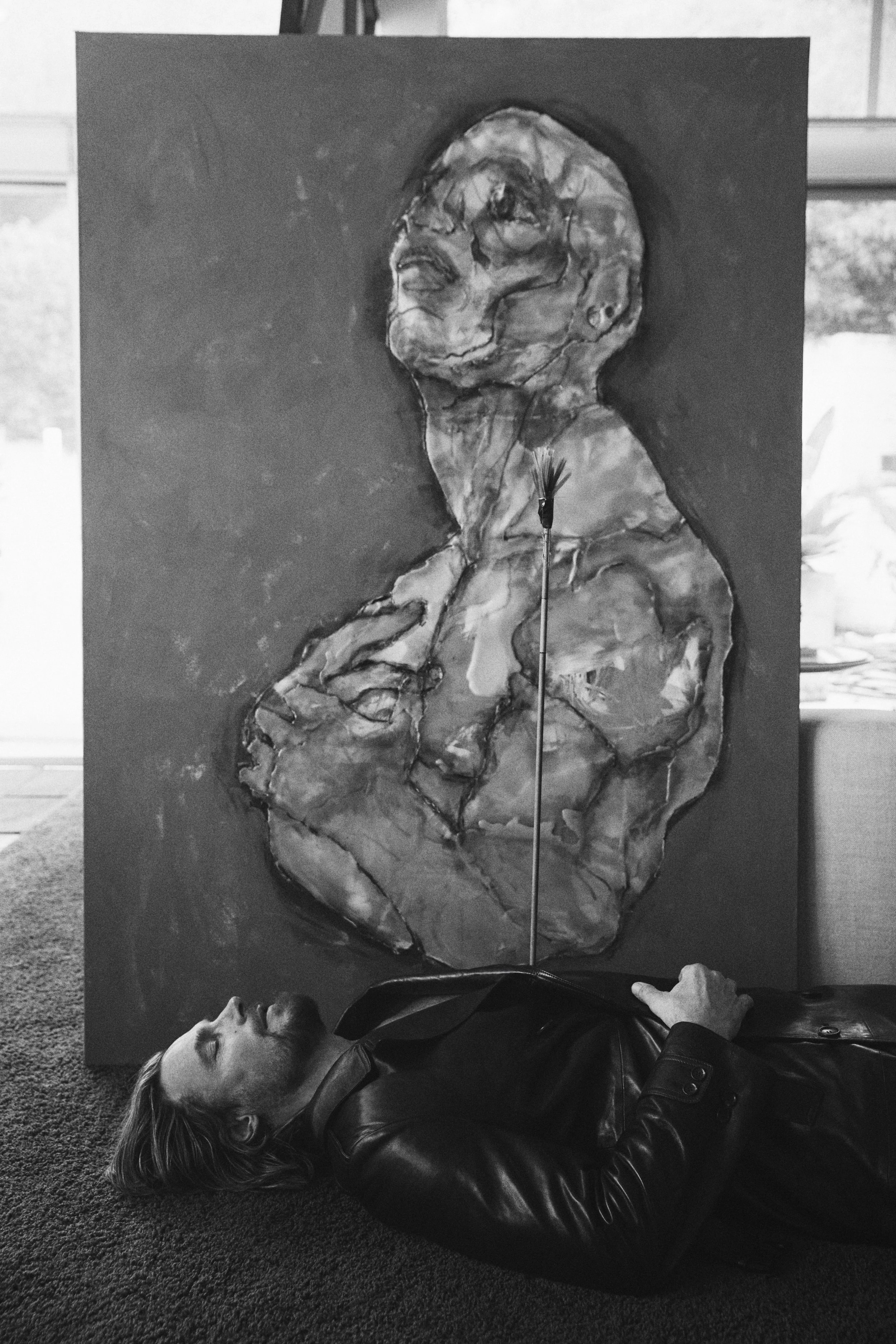
left: artwork Introverted
coat WRETCH’S
trousers BRUNELLO CUCINELLI
shoes LANVIN
right: artwork Fughe in D Minor
coat BALLY
What can audiences expect from the Hong Kong exhibition?
The work I’m currently preparing continues exploring the tension between what is visible and what remains hidden. The pieces develop through drawing, painting, and layers that partially obscure the image. I’m interested in how the viewer experiences something that isn’t immediately revealed.
Does art feel like reinvention or a return?
It feels more like a return. Art was always part of my life, long before modeling. I just didn’t share it publicly. Over time, I realized it was something I wanted to give more attention and space to. In many ways it feels like coming back to something that was always there.
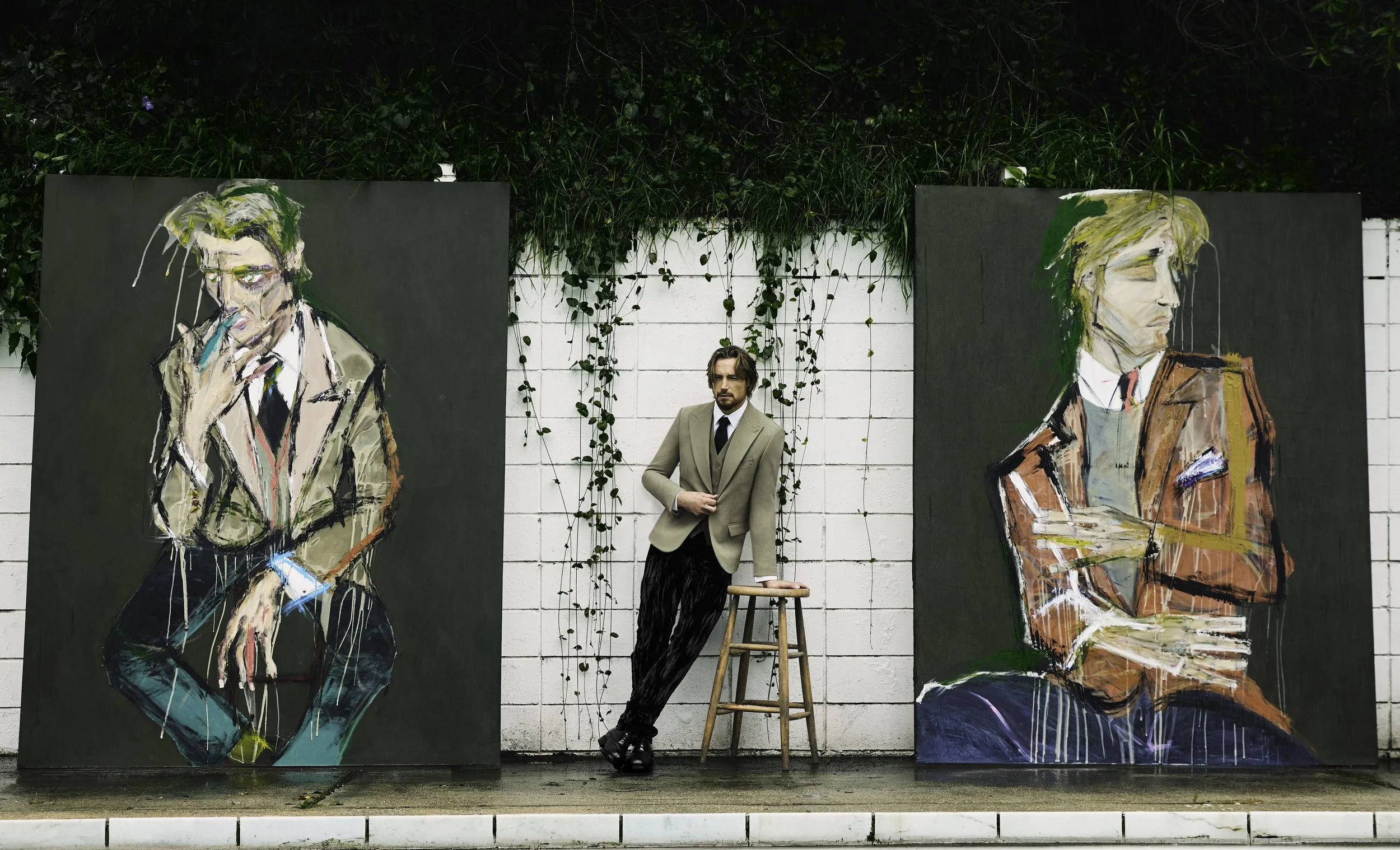
artworks from left to right: Noblesse Oblige, Le Boss
blazer and vest GIORGIO ARMANI
shirt and tie DOLCE & GABBANA
trousers SAINT LAURENT BY ANTHONY VACCARELLO
shoes BALLY
How do you balance solitude and public visibility?
Painting is very quiet and solitary. After many years of living in the public eye, that solitude feels very grounding. Growing up in foster care, I spent a lot of time alone, and eventually I learned to appreciate that space. In many ways the studio feels like a return to that silence.
TEAM CREDITS:
talent GABRIEL AUBRY
photography FERNANDO SIPPEL
creative direction and styling PARIS LIBBY
editor TIMI LETONJA
interview JANA LETONJA
cover design ARTHUR ROELOFFZEN
