
IN CONVERSATION WITH ENNIO
interview by MAGDALENA ROE
An essential voice in Berlin’s underground and one to watch, DJ and producer ENNIO exists in the spaces between. As co-founder of BUTO BAYANG, he fosters Asian diasporic solidarity while rethinking the club experience as part of the TILT collective. His work is rooted in reshaping the dancefloor from the ground up. Berlin moves fast, but beneath the surface, other frequencies build more quietly. With his upcoming EP Gairah Manis, the DJ and producer opens a more intimate chapter. Drawing on his Indonesian and Eastern European roots, he leans into a release that thrives on contrast: seduction and release, control and play. We dive into the personal and emotional, as we discuss the concept behind his new 5-track release, Gairah Manis, and the instinct at the core of his sound.
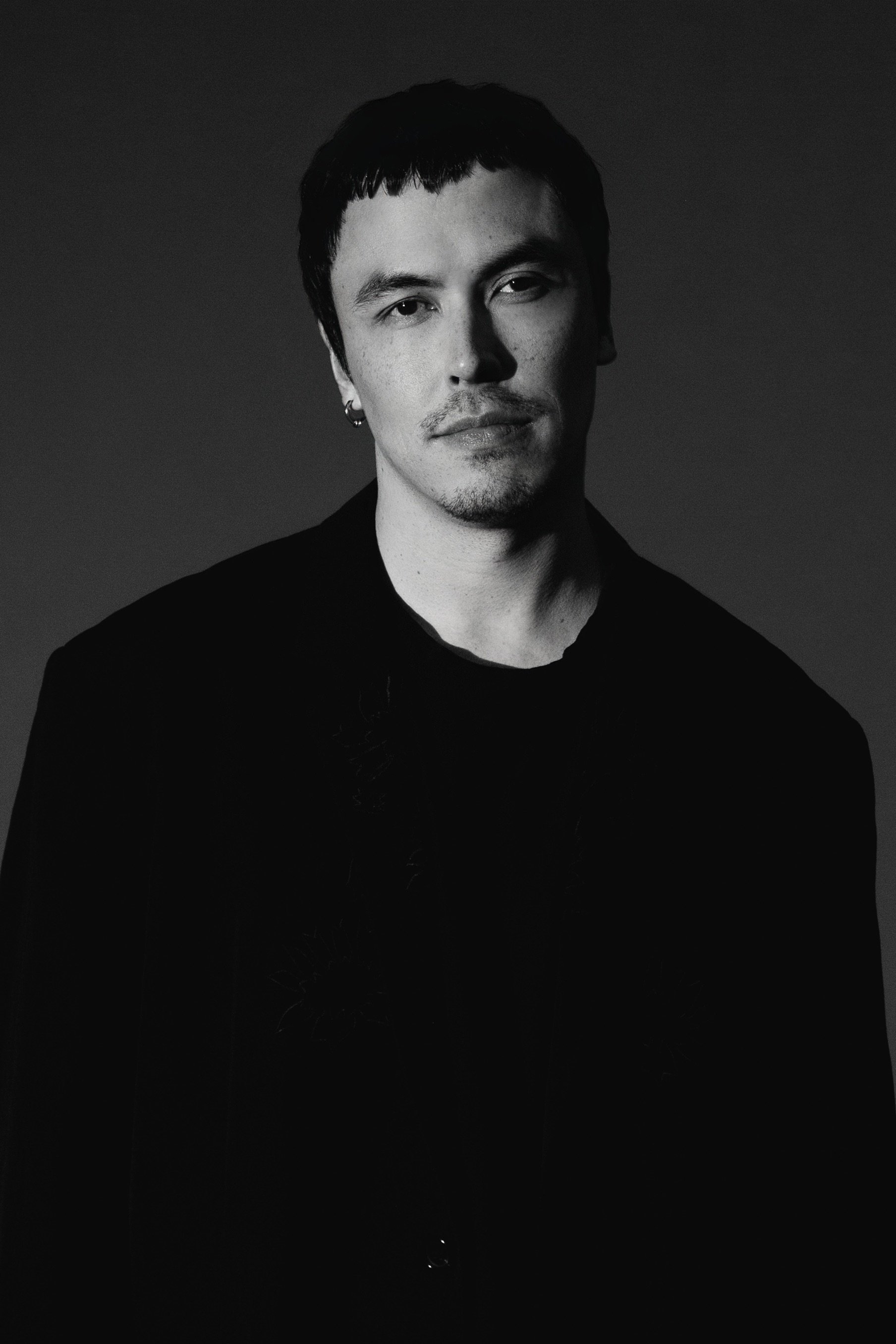
all clothing YOHJI YAMAMOTO provided by HAPPY VICTIMS
Your DJ sets move across genres. Do you think that fluidity reflects your own relationship to identity and culture?
It definitely does. Growing up between different cultures and never fully belonging to one world or the other, socially or culturally, I never really fit into one box to begin with. Over time, that taught me to stop trying so hard to belong and care more about finding my own way. For a long time, that felt difficult identity-wise, but now I see it as something beautiful and powerful. It gives me freedom and helps me stay true to whatever I feel like. So mixing genres feels normal to me, and in the end, I just want to play good music without borders or limits that don’t make sense to me. For me, the club is about fun and connection, above all.
They also move through emotional states. Do you think of a set as a story, something architectural, or something more instinctive?
I go by instinct and play in the moment. The best sets happen when I stop thinking too much and respond to the room and vibe. I love when DJs are telling a story, but for me personally, I love shaping the energy fully in symbiosis with the crowd, surprising both myself and them.
If one colour could describe your current sound, what would it be?
A sensual, dark and beautiful pink.
What’s a sound you love that isn’t music?
A school or playground in the distance. Or even just one or two children playing, completely in their own world and zone. Even if they are loud, they always send out an energy that just calms me. It's incredibly pure.
You’re half Indonesian, half Eastern European, and were born in Germany, growing up between cultures. How has that shaped your approach to music and creative expression?
I mean, culturally, I mostly grew up in a German context, but being mixed without a clear blueprint of who I was supposed to be was really difficult at times. Eventually, that turned into something positive, though. It taught me to stop looking for external benchmarks and instead trust my own perspective. It’s not about trying to be different, but more that I’ve never really believed in fixed rules or this idea that there is a “right way” to do things.
What fragments from your background keep resurfacing in your work?
The smell of food, certain colours, art, language, people, or just the atmosphere of Indonesia and other places in Asia can trigger something very emotional in me. It can be something really small, a smell, a sound, a visual detail, and suddenly it brings up a mood or memory. I also love the feelings, thoughts, and ideas that come up in solitude, as well as symbolism, ancient cultures, the occult and forgotten histories of our ancestors. All of that stays with me and keeps coming back as my fuel and flows into my music and projects like BUTO BAYANG.
With BUTO BAYANG, it feels like you're not just creating events but reshaping a narrative around Asian presence in electronic music. What was the project born from?
We wanted to create a platform for real exchange, connecting not only the Asian diaspora but Asian artists globally. It definitely came from a very personal place. Growing up, both HAMY and I struggled with questions of identity, but we eventually started meeting others who could relate and shared our perspective and desire to change things. That sense of recognition is an amazing feeling, yet it’s still rare to find spaces where it can actually thrive. We wanted to build something where those connections aren't just these one-off moments, but something solid that allows us to grow and support each other in a sustainable way.
What kind of space do you hope BUTO BAYANG creates for artists?
Our goal is to create an environment where asian artists can be themselves and claim their space. Bridging Asia and the diaspora so we can support each other and build our own structures instead of waiting for them to be given to us. BUTO BAYANG Vol. 1 partly brought this to life by showcasing artists from all over the world. We hope to take that further, not just through music, but also art, food, and culture.
Does Gairah Manis feel like a continuation of your existing language, or something new?
Both. There’s a reason I use my real name as my artist name. It’s me, and I never wanted to split different sides of myself into different aliases or fixed genres. I don’t want to turn my music into some concept or stick to one sound just because of some unspoken “rules”. I just make whatever feels right to me. This EP leans more into my house side, but still sounds like me. There are also small nods to some of my early influences. A little homage for those who catch it. Releasing it via BUTO BAYANG felt right, because the EP links Asia and Europe. It was partly produced there, features NDA on a track, and the artwork comes from the Vietnamese artist Võ Huỳnh Phú.
What's the story behind?
Gairah Manis can be roughly translated as sweet obsession. To me, it holds both intensity and softness at the same time. The EP plays with that contrast in some way. It’s about desire and seduction, but still playful and not too heavy. There’s a feminine energy running through it, which is also reflected in the artwork. I didn’t want to overthink it too much. In the end, it’s more about the feeling than one fixed meaning.
It brought me back to what feels most honest to me musically. I also loved connecting people and places that matter to me, like on Black Pepper Knees with Bryan Kessler and NDA from Indonesia. Nanda turning a broken knee into a hook and a mood in that iconic way captures exactly the energy I love. It adds more fun and attitude to the EP, and I never want to take myself too seriously.
When everything around you feels hectic, what ritual brings you back to yourself?
Walking without a destination.
What object always travels with you when you're on tour?
My headphones & Aquaphor balm. Gotta keep 'em juicy.
What’s next for you in the coming months?
My EP Gairah Manis is coming out on May 8th, and I'll be focusing on building BUTO BAYANG further. With TILT, we’re curating a collaboration event with several collectives on May 1st. Later this year, I’ll have another EP on TILT, along with a few more releases and collaborations I’m working on.
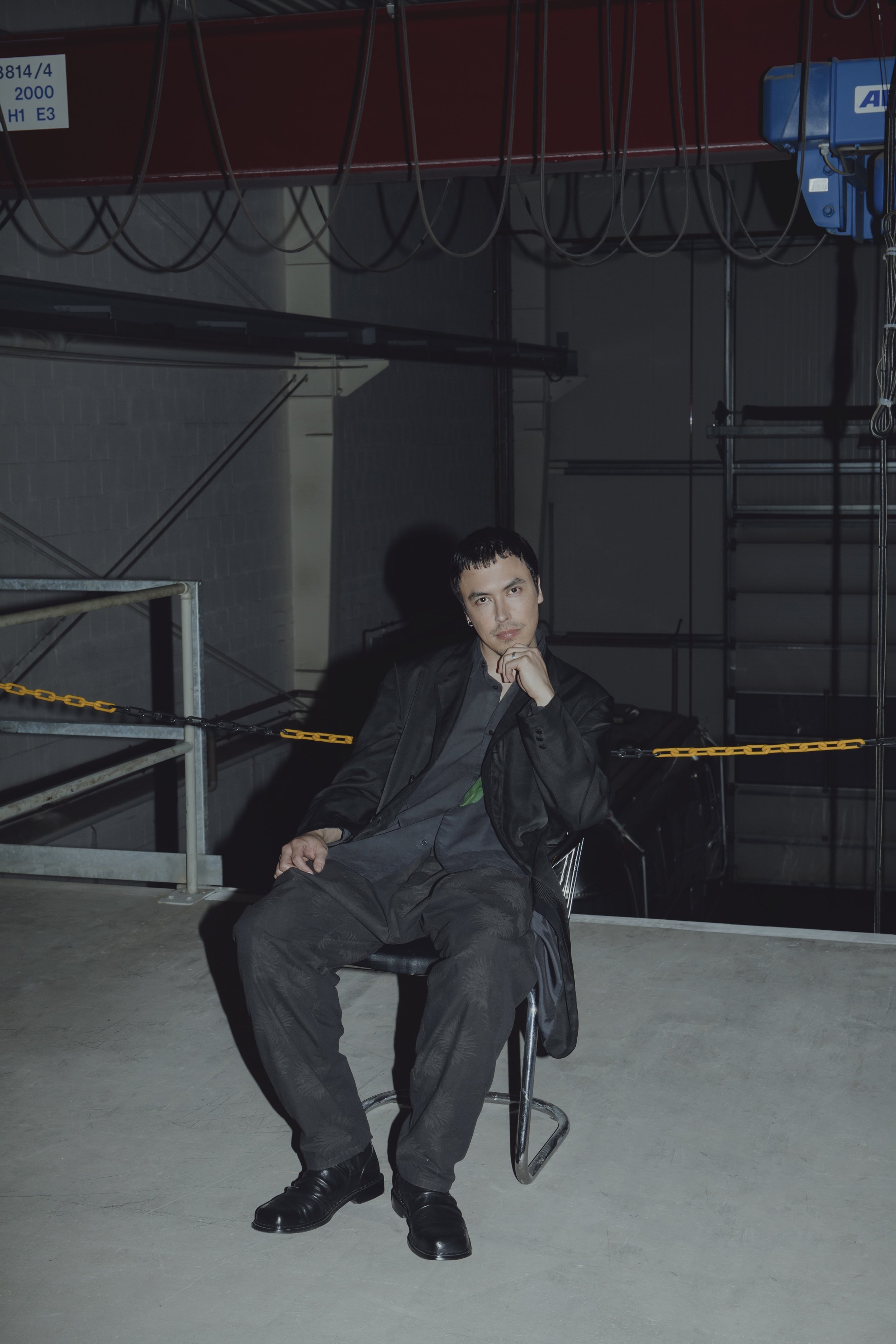
TEAM CREDITS:
talent ENNIO
photography TESSA BOZEK
styling FRANZ GILLMANN
hair TONA INOUE
make-up JASMIN OLIVEIRA
production PERI RANA HUECK
production assistant LONG THIEN VU
styling assistant LORENA SELLIN
