
IN CONVERSATION WITH GATEN MATARAZZO
interview by JANA LETONJA
Gaten Matarazzo has already carved out a legacy most actors only dream of. Best known for his unforgettable, SAG Award-winning portrayal of Dustin Henderson in Netflix’s global phenomenon ‘Stranger Things’, he grew up before our eyes. As the world prepares to bid farewell to ‘Stranger Things’ with its final season, Gaten stands at a pivotal crossroads in his career, reflecting on the end of an era while stepping boldly into new creative chapters. Beyond the screen, he’s proven himself a multifaceted talent, from acclaimed performances on Broadway to his impactful advocacy for cleidocranial dysplasia through his foundation, CCD Smiles. The fifth and final season of ‘Stranger Things’ is set to be released in three parts, with two parts, with first part premiering on 26th November and second on 25th December.
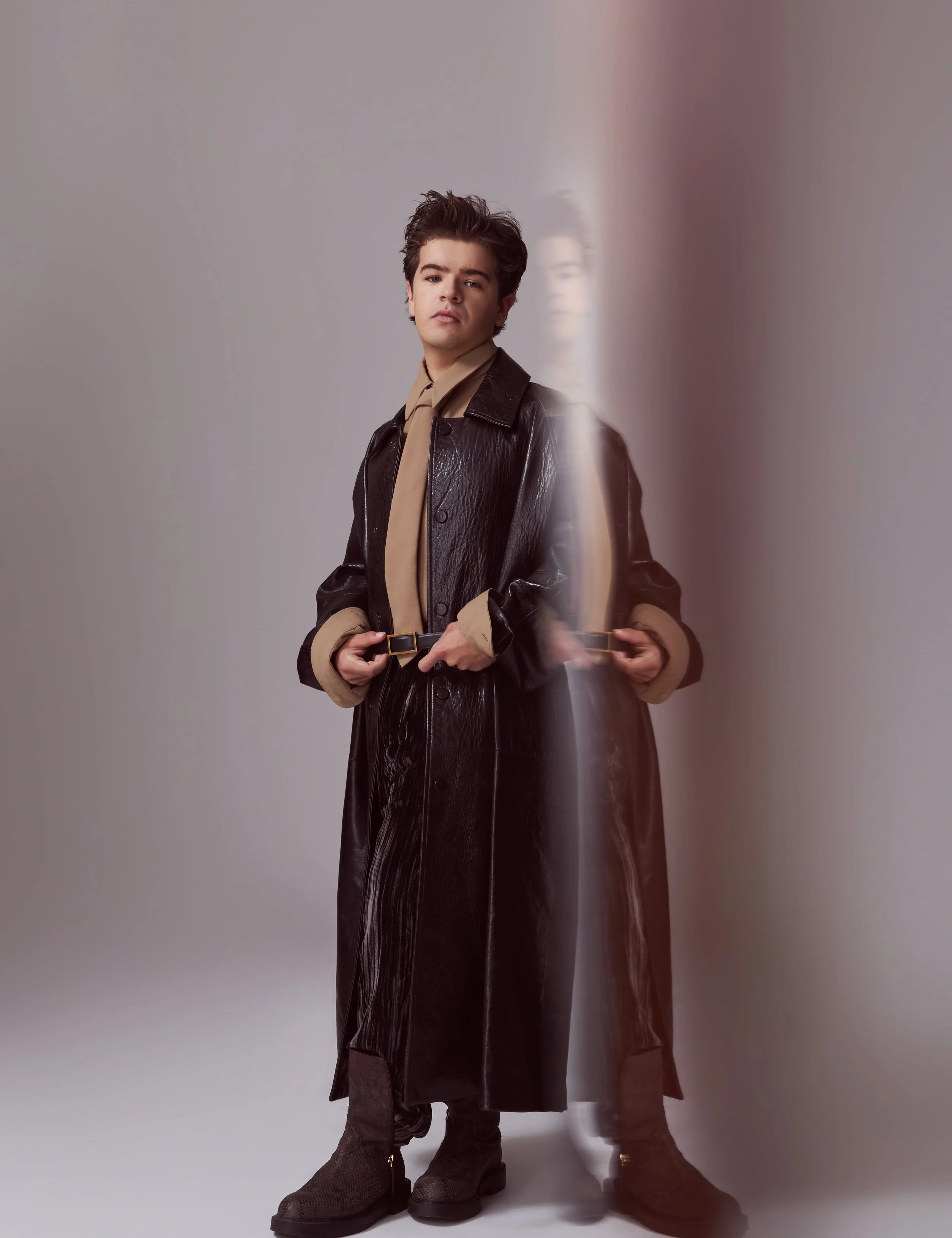
full look EMPORIO ARMANI
‘Stranger Things’ has been such a defining part of your life. How does it feel knowing this final season will bring that journey to a close?
It’s a mixed bag of emotions. Anytime you work on something for a decade, especially something as incredible as this show, it’s always going to be tough to let go of. And that makes it very sad a lot of the times, but it feels necessary to end it when there’s momentum and investment from the team making it and people who watch it. So, I’m very proud of us and of the show. I just try to look at it as an opportunity to grow and learn. I’m also looking forward to the next few years as I figure out what my day to day will look like and what projects come my way. You never really know what’s next and that can be a good thing.
What can you tease about the final season? What can the fans expect?
It’s certainly the most ambitious season of the bunch. We knew going in that it was going to be a long process with a lot of bells and whistles. The episodes are long and intense. I can’t go into plot specifics and I’d rather let people discover it all as the show releases. It really is special and I think they wrap it up in a great way.

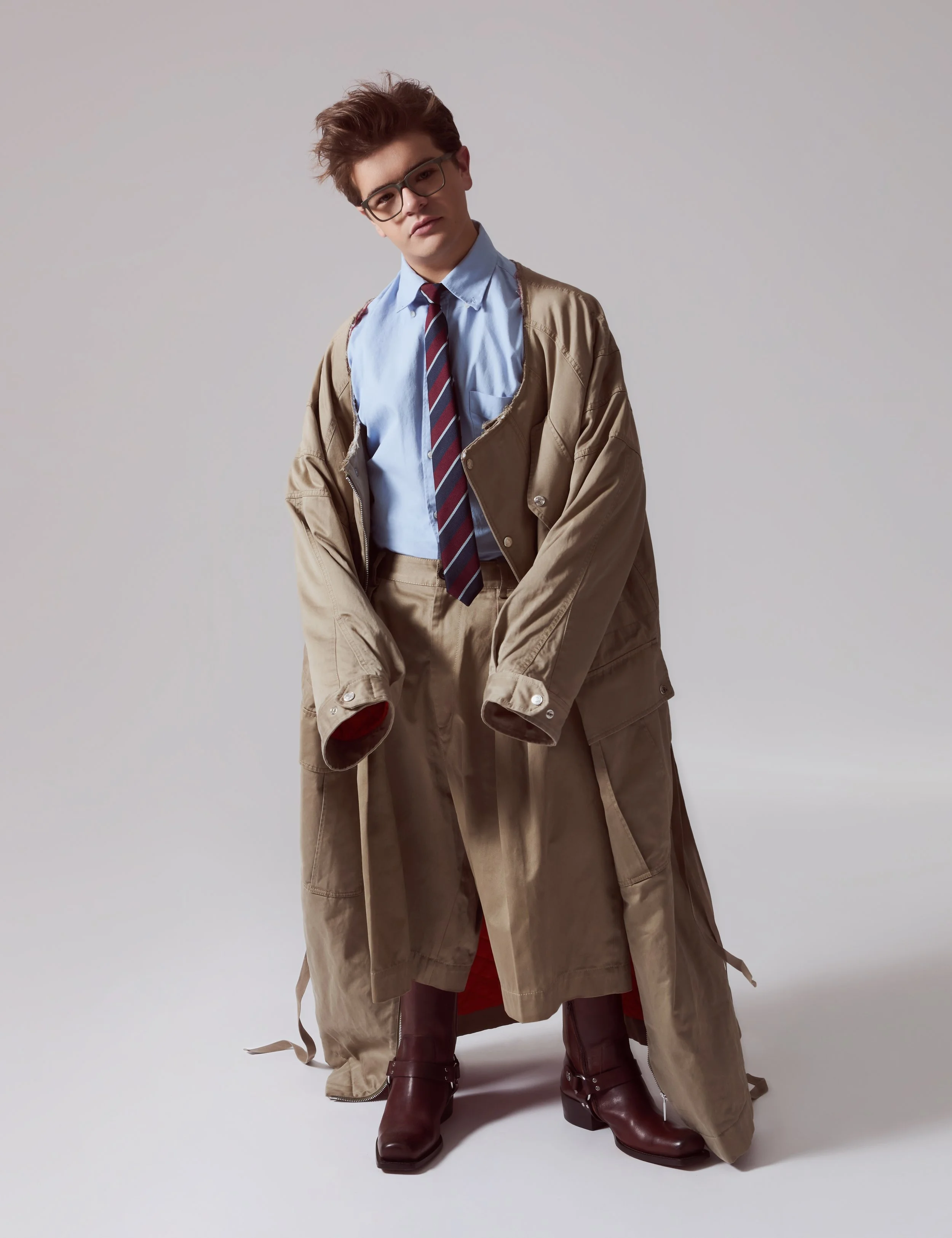
trench, shorts, and boots DSQUARED2
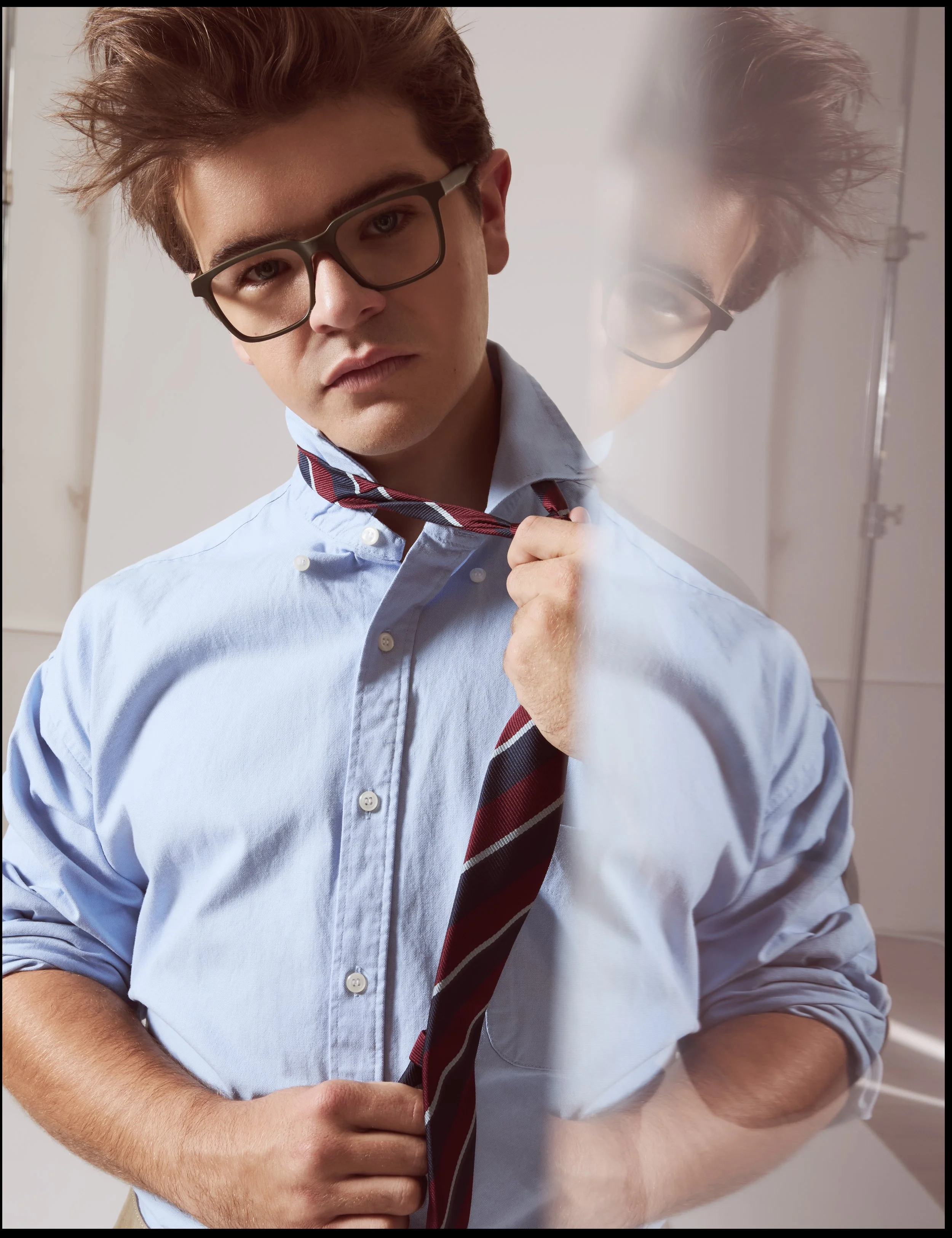
shirt and tie THE FRANKIE SHOP
What was the most emotional day on set as you filmed the final chapter in Hawkins?
I’d like to sound less predictable, but I’d be lying if I didn’t say it was the wrap day. We’d been anticipating it the whole year and everybody who worked on the show that year and many people from past seasons came back to celebrate. Even the cast members who weren’t shooting that day came along to spend the day together. Lots of tears, but lots of giggles as well. Speeches and champagne and balloons and such. It was a good day. All of our parents were invited back to be with us on set the same way they were for the earlier seasons. Kind of surreal seeing them all together again, because they had all become friends throughout the process so it was a well earned catch up for them.
Fans have grown up alongside you and your castmates. How has being part of ‘Stranger Things’ shaped you personally and professionally?
It’s a pretty unorthodox way to grow up. When people ask about specific ways it’s shaped me, I usually say that’s it’s harder for me to find ways in which it hasn’t. It was a big shift once the show released. I’m so grateful, not only for the opportunity to work on it for this long, but for the opportunities it’s provided elsewhere. The best film school you could ever have is a set like this one. It’s taught me the vast majority of what I know. To have a literacy of this business at 23 is rare and I don’t take it for granted. How it’s changed me personally is harder to pinpoint, simply because it happened at the most formative time of my life. We were already in the process of going through the most sudden and rapid changes of ours lives up to that point as everyone goes through at 13. All of that internal and external change coincided. I’m sure it’d be easier to tell what changed about us if we started the show in our twenties.
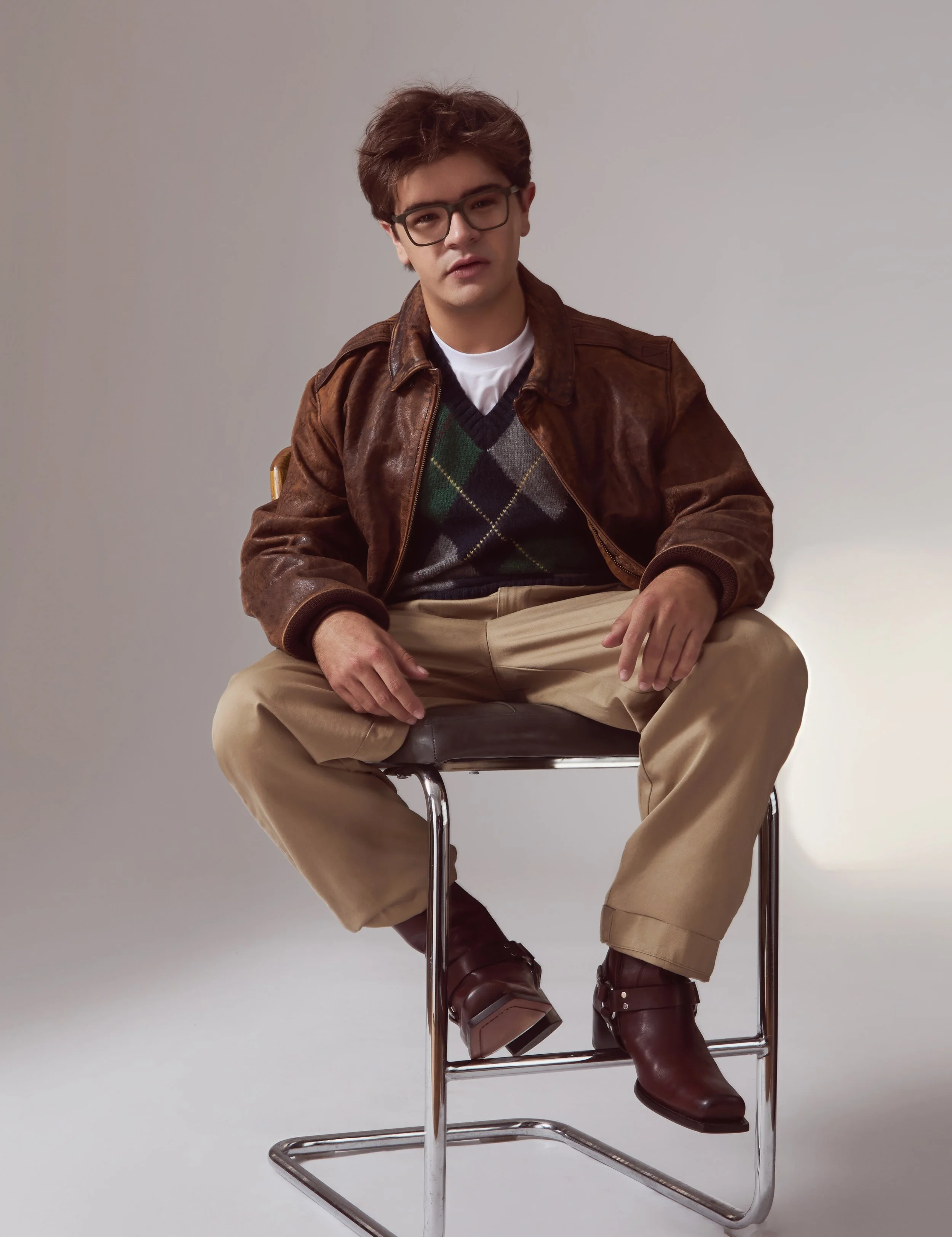

left:
full look RALPH LAUREN
boots DSQUARED2
right:
full look THE FRANKIE SHOP
You’ve built such an incredible career beyond the show, from ‘Dear Evan Hansen’ to ‘Sweeney Todd‘ and ‘Parade’. What draws you most to live theater?
I’ve always been pulled to it. I assume because it’s what I know and how I grew. It’s weirdly where I feel the safest. I tend to overthink less on stage. When you’re called upon to keep a machine moving in real time as a big unit, it puts a pressure on you personally, and collectively that’s pretty exhilarating. The more boring aspect that I love is the schedule. I live in New York City, so going home to my own bed when the day is done helps me unwind a lot easier. Knowing what my week looks like consistently gives me peace of mind. Same days off, same start time. Though there isn’t a lot of free time, knowing when it’s going to be just works for my brain and body.
You started your career in theater at such a young age. How does it feel to return to Broadway as an adult with more life and experience behind you?
Jumping back in was a lot harder than starting when I was 9. I’ve become very aware and invested in how I’m perceived as I’ve gotten older and ‘Stranger Things’ has become more popular. I know that there’s an audacity to going into a Broadway run pretty cold. I’m well aware that my work in ‘Stranger Things’ has given me a boost in opportunities on the stage. Though, that didn’t relax me. If anything, it lit a fire under my ass to prove to myself and people coming that my place in the community had a foundation. I understand when there’s a sense of skepticism in audiences when they see a name they recognize from television in a playbill. I’ve been blessed with a lot of kindness and flexibility from people who’ve seen my recent work on stage. They’re not known for being the most forgiving, so I’m incredibly grateful for the warmth.


left:
full look VALENTINO
right:
full look TOD’S
As ‘Stranger Things’ ends, what kinds of roles or projects are you most excited to explore next?
I’m okay with not having much of a fixed idea of what I want. It’s not like there’s a checklist I’d like to get through. I more or less know it when I see it and it’s pretty hard to put into words what I want to prioritize, which I know becomes an eye roll for my agents when they ask me what I want. I’ve always enjoyed a challenge and look at everything that comes my way through a lens of what I’ll learn and how I’ll grow. If I see something I’ve done before, I’m usually turned off to it, at least for the time being. I’m very lucky to be in a position in which I can choose what I want to prioritize when the consistent mentality for working actors is “take what you can get, because you never know when things will come”. I recognize that daily.
You’ve been a vocal advocate for people with cleidocranial dysplasia through your foundation, CCD Smiles. What does that mission mean to you personally?
It’s one of the great honors of my life, being able to take command of this part of myself and use it as a strength when most conversations around physical differences center around the setbacks. It’s the first time a community has been built amongst people with CCD. The initial push has been providing a base of communication. People who have the condition now know where they can go to finally know people who are like them. It’s an incredibly rare condition and most who have it have spent the vast majority of their lives never knowing or even meeting anybody else who has it. Now that we’ve built a community, we can focus our efforts on working with medical professionals and researchers to develop a consensus of care. It’s been slow, but sure.

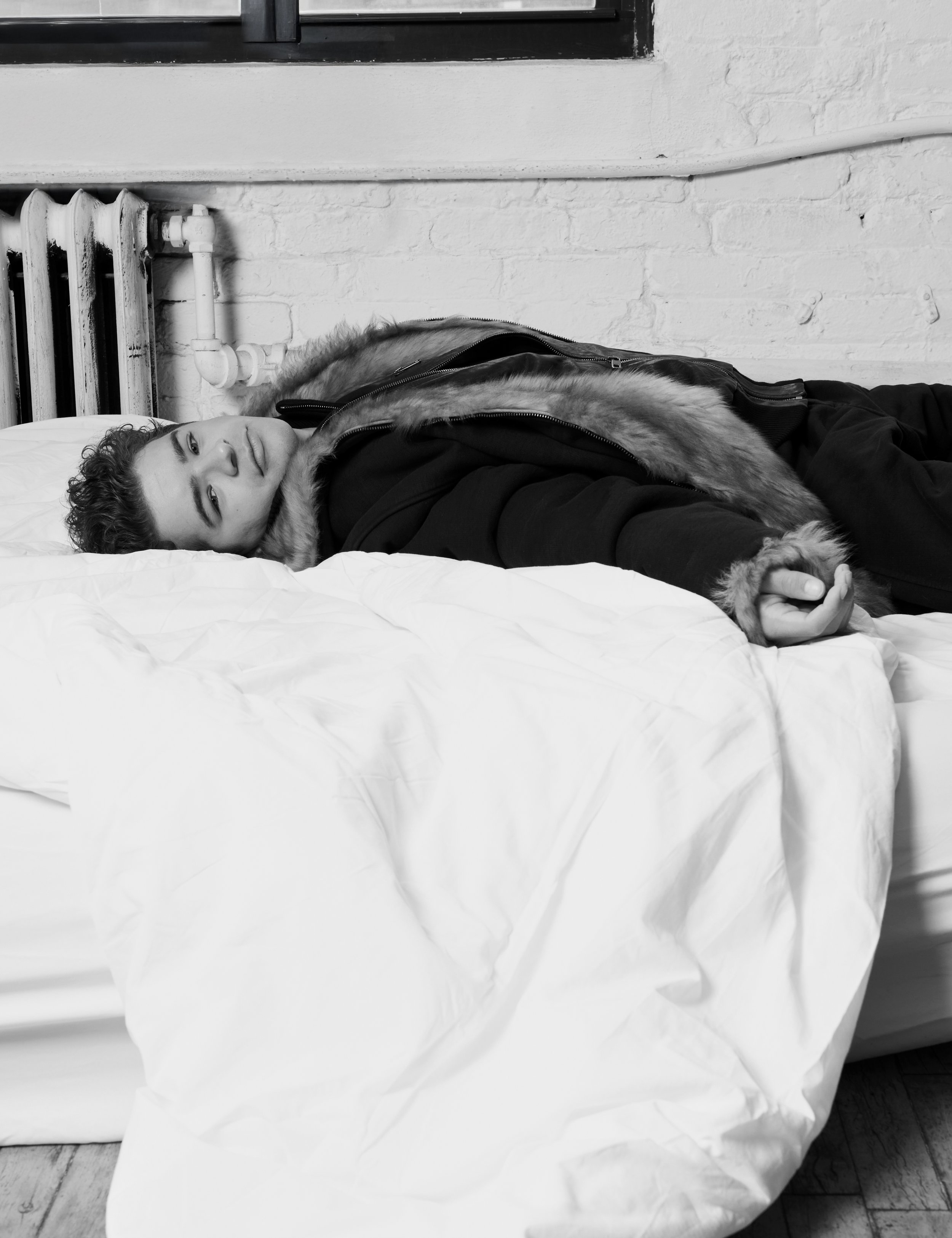
left:
full look EMPORIO ARMANI
right:
full look DOLCE & GABBANA
How did it feel to bring your real-life condition into your character’s story in ‘Stranger Things’, and to see how much it resonated with fans?
It didn’t stick out to me as anything out of the ordinary. I go about every part I play as though they have it, unless specified otherwise. Especially when building a character from scratch. So, it coming up in conversation seemed very obvious to me when Matt and Ross wrote it into the script. I don’t think they knew that doing so would lead the charge for the biggest moment of growth for people with it. I don’t quite know if they recognize just how vital they were in that process. But without them, without this show, it would still be some unexplained phenomenon for the many individuals who have it. It’s a huge example of why consistent dialogue and normalization is so important for rare disease communities. I’ve never felt alone. And I don’t think that kids who are born with this condition will ever have to again. It’s the thing I’m most proud of.
What has advocacy taught you about resilience and using your platform for good?
I don’t know if that’s necessarily how I view it. I’ve just been very vocal about having CCD because it’s all I know to be. My parents harbored an environment where self love was the standard. Not to say it wasn’t hard at times, but I learned to approach this part of myself with curiosity and optimism. People have viewed this as advocacy, but that feels like a loaded term when coming from an actor. Sometimes people lock on to a cause that they’re passionate about and make the active decision to use a platform as a launchpad. I find that admirable, but I don’t view what I do as the same thing. I’ve really just answered questions when asked and spoken about it the way I always have. It just so happens that me doing so has lead to where we are now. Conversing about it is just my default. Others involved in the organization have done so much of the heavy lifting with advancing the community. Without them there is no CCDSmiles.
How would you define your artistic identity today, as you transition into this next era of your career?
I’m in a bit of a phase of saying “I don’t know”. I’m looking forward to figuring that out. I like to use what I do as an opportunity to learn as much about myself as I can. I don’t think that there’s a cap to that. I tend to consistently surprise myself the more I work and that’s a bit addictive. Even when I learn about parts of myself that I find to be disappointing or maybe just waiting to be unpacked, I find value in it. It’s not a job where there’s a finish line or a promotion system. It just changes as you age and grow. For now, I’m happy to take my time and go with the flow, even if that means that it slows down a bit.
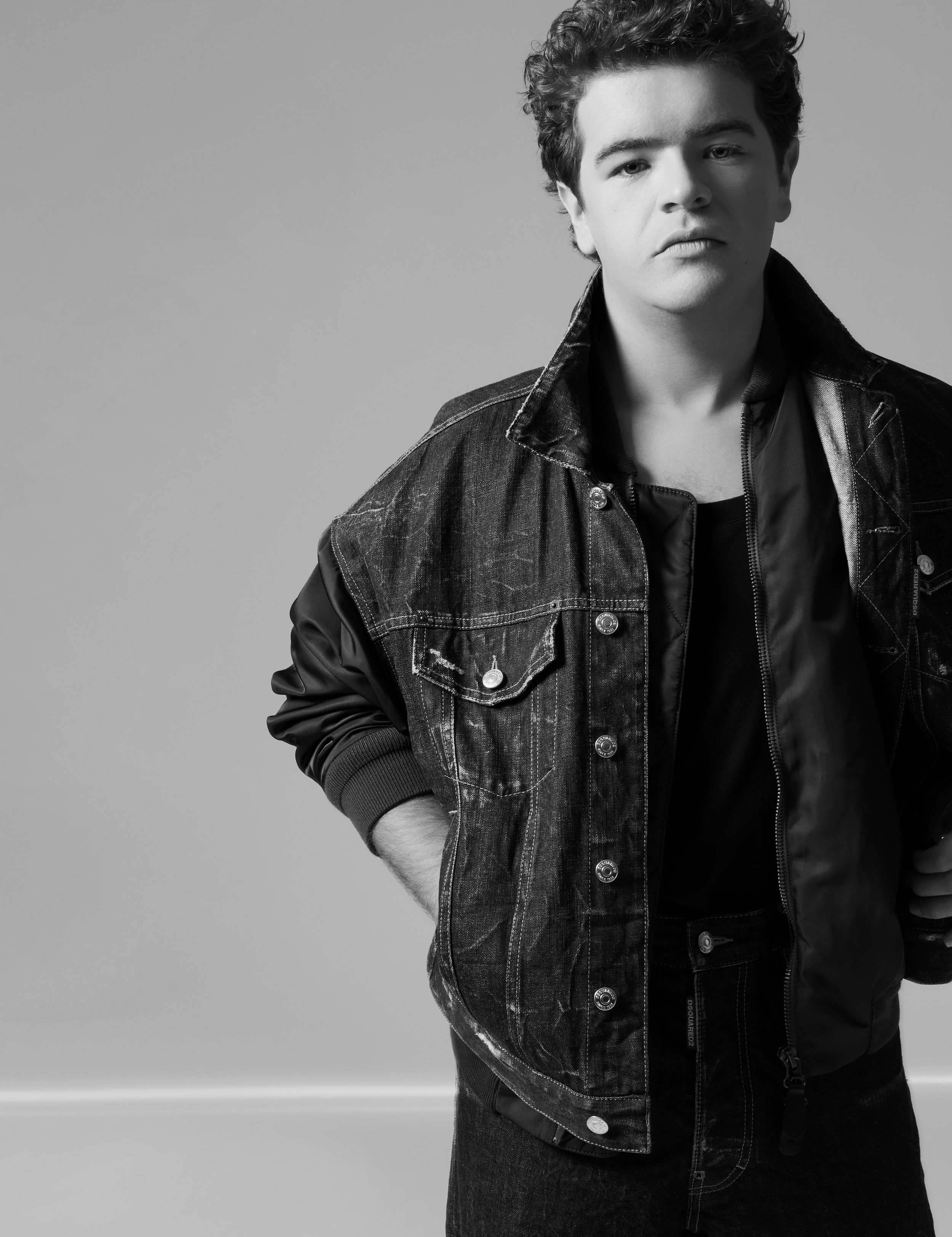
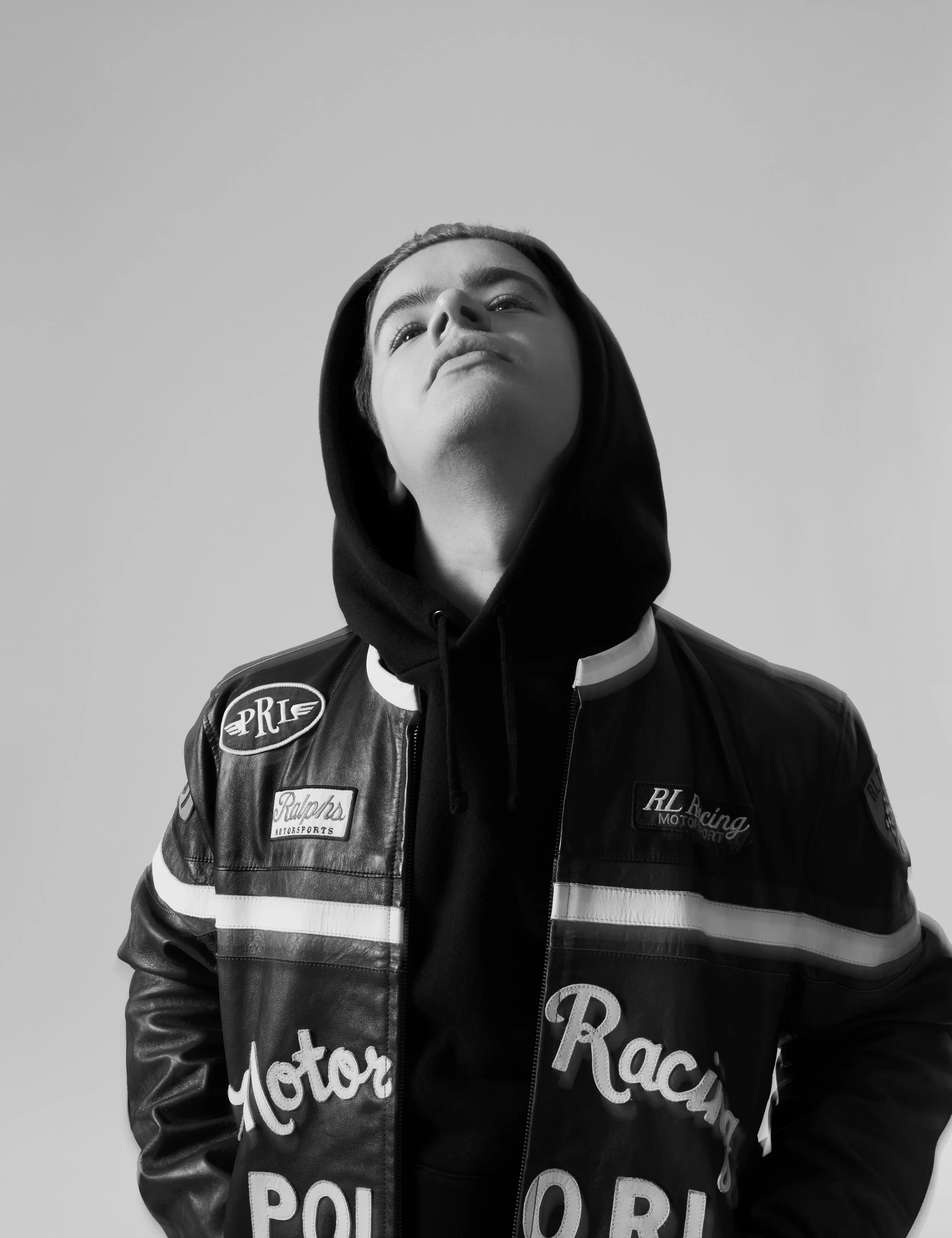
left:
full look DSQUARED2
right:
full look POLO RALPH LAUREN

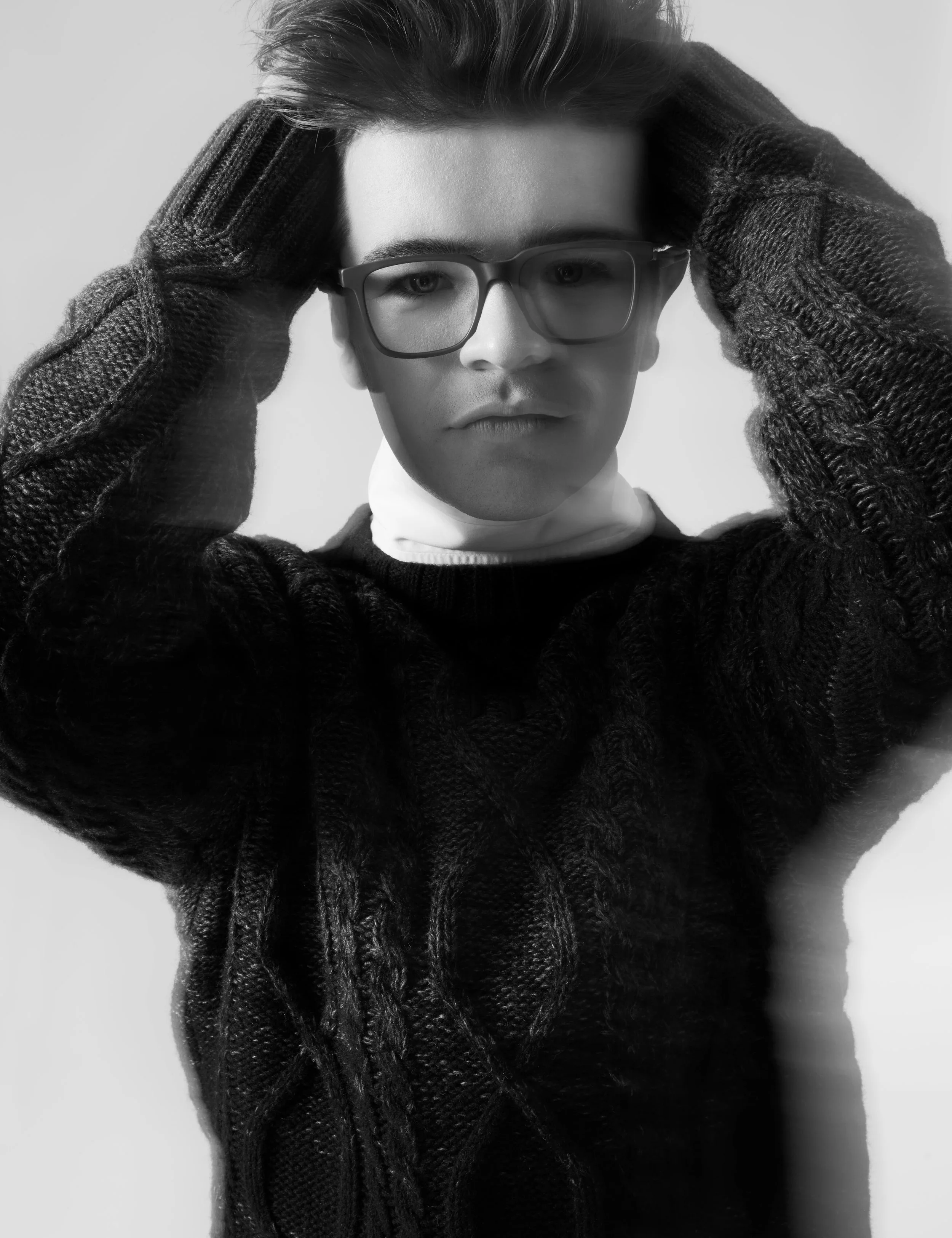
left:
full look MISSONI
right:
full look KARL LAGERFELD

TEAM CREDITS:
talent GATEN MATARAZZO
photography WILLIAM FERCHICHI at Imaj Artists
styling GIANLUCA COCOCCIA
grooming LISA RAQUEL at See Management
styling assistant MARY BACE
photography assistant BEKA MAGLAKELIDZE
editor TIMOTEJ LETONJA
editorial director and interview JANA LETONJA
cover design ARTHUR ROELOFFZEN
