
IN CONVERSATION WITH GIA FORD
interview by JANA LETONJA
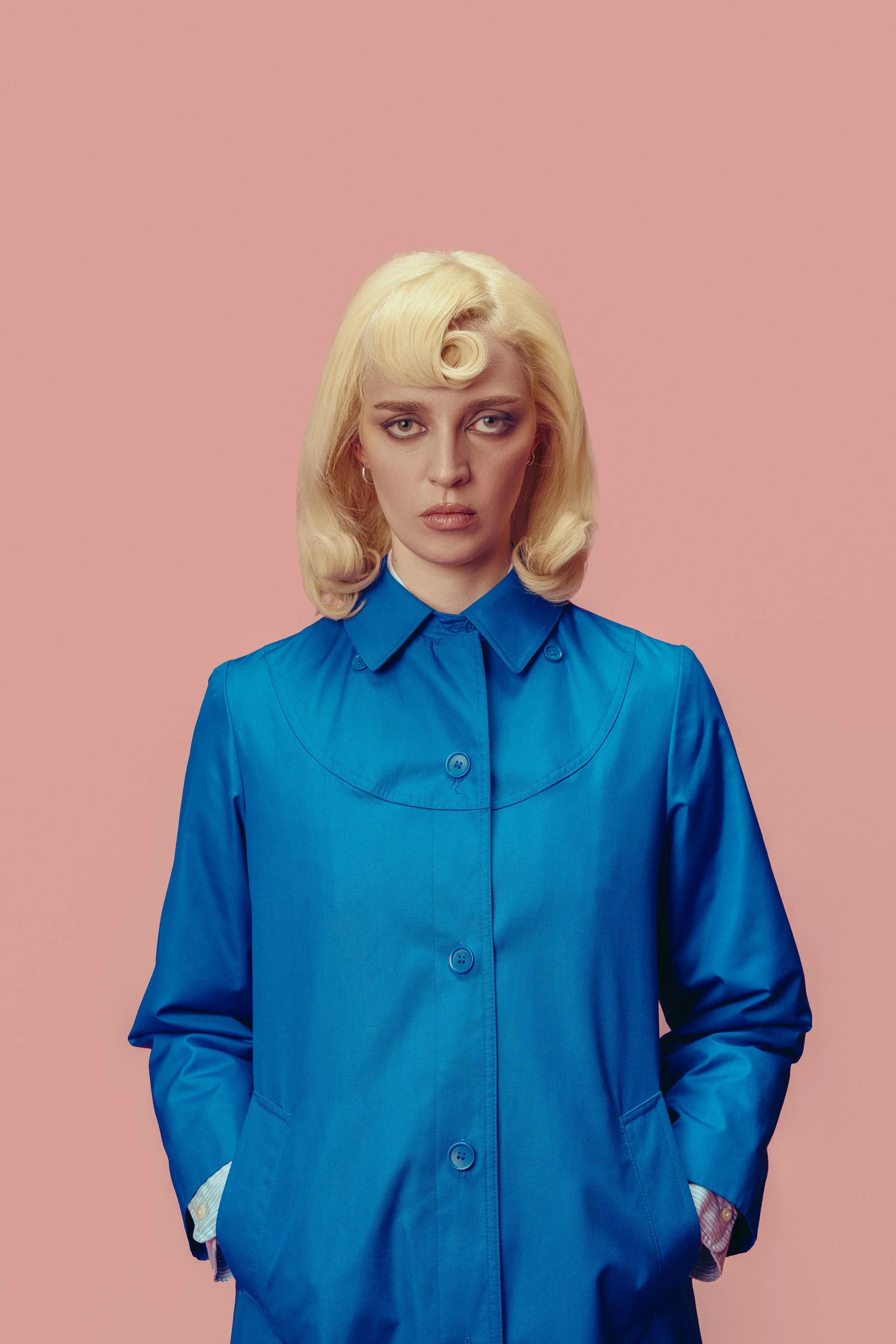
This month, Gia Ford returns with her sophomore album, A Room Within A Room, a record that finds her looking closely at what it means to remain human in an increasingly mediated world. Across songs that move between alternative pop, soul and more experimental textures, she explores connection, identity, imperfection and the uneasy relationship between our inner lives and the digital spaces surrounding them. Ahead of the album’s release on 18th September, we spoke to Gia about building the world of A Room Within A Room, the evolution of her songwriting, the influence of Sheffield and why imperfection has become something worth protecting.
A Room Within A Room is such an evocative title. Where did it come from, and what does the
idea of a “room within a room” represent to you?
It came from the idea of a single consciousness within a collective one. Each of the songs comes from an internal dialogue - sometimes involving a struggle to feel involved or moved by life, sometimes a knot of unsolved emotion. It’s sort of a metaphor for the internal room we each have, private to ourselves, within the “reality” of our shared world.
This is your second album. What did you know about yourself as an artist going into this record that you didn’t know when making your debut?
Probably more than I can recall. Two years is a long time in your twenties. I think the main thing would be just knowing what I was getting into, and with who. The first time was vastly different from this. I was in a whirlwind of statements and nods to future success. I was flown out to America, I worked with a known producer, the songs on the album were mostly products of writing sessions. As much as I love that album, it is representative of a time where I felt a lot less confident in my abilities as a musician and storyteller, and I was letting the industry guide me. Now, I feel it’s my life and my work and every decision is mine, which is empowering, but might’ve sent me spinning two years ago in a twister of anxiety. I think I know what to expect now and it can be enough. It is enough.
The album explores what it means to remain human in an increasingly digital world. Was there a particular experience or realisation that made you want to examine that tension?
No, just that massive constant permeation of mindless shit that intrudes on your days unless you make a concerted effort to ignore it. It’s so weird at the moment and we all know it. It’s almost boring talking about it, but so many of us, especially in the creative industries, are addicted to our phones because our industry is in them, the whole world is in them. And then years have gone by and you can’t remember any beautiful details that have passed you each day, each morning. It’s spiritually violent and an unprecedented thing to be facing as a species. It has almost become a thing of privilege to disconnect from the internet. I’ve never wanted to rid myself of it and install a home phone more. As an artist, it’s really intrusive. I’m used to being present, perhaps more than a lot of people, in order to farm information from moments, atmospheres. It’s hard to ignore.

There’s an emphasis on imperfection and authenticity throughout the record. What does imperfection give to music that technical perfection can sometimes take away?
Evidence of life and emotion, Especially with music. It’s such an instant medium because it’s invisible. Sound and emotion almost requires no pondering. It’s been heard and cannot be stared at and decided upon. It’s like it interacts directly with the nervous system. So it has these indescribable nuances, textures within the sounds that might feel nostalgic maybe, for instance, and I think we have underestimated the ability listeners have to acknowledge these details. I wonder if it’s more about personalities these days than it is about the actual music. I know we buy into the person and their universe perhaps, so if someone makes a super clean recording, if what they’re saying is relatable, that’ll sell. I’m personally not too interested in that as a listener.
You’ve spoken about wanting to capture the feeling of real people making music together. In an era when music can be endlessly edited and manipulated, was that almost an act of resistance for you?
I’d not describe it that way. It was more just fulfilling our personal desires, my producer Conor Houston’s and mine, and hoping other people felt the same, which of course they do. Not everyone of course, but sometimes you come across a comment on some YouTube video that vindicates your point of view, and you realise you’re never alone in your desires.
You grew up listening to music from very different artists, eras and styles. Which influences from your upbringing do you hear most clearly in yourself now?
Not across all the songs, but the Burt Bacharach-nature of A Spy In The House Of Love made me cry, especially when we recorded the horns. I think that style of songwriting is more present in this work too, partially due to new discoveries that bolster my original love for The Mamas & The Papas or Carpenters, etc.


How much does Sheffield shape the music you make, whether through its musical history, its atmosphere or simply your experience of living there?
Not at all to be honest. I didn’t have much knowledge of the music scene in Sheffield apart from The Arctic Monkeys and Pulp, neither of whom did I ever have much of a love affair with. I only recently discovered the Last Shadow Puppets, who I do now love, but only within the past two years. They kind of influenced a few decisions on one or two songs on this album, but no, nothing beyond that I don’t think. The countryside near Sheffield had a big effect on me and my writing when I was growing up, the stillness of it and the magnificence of it. The valley is evocative and still my favourite place in the world.
The singles released so far, Shell, At Least For Now, I Guess My Time Has Come, How Do I Reply? and God, all have titles that feel like fragments of conversations or private thoughts. Are you drawn to songs that begin with a question, confession or unresolved feeling?
Apparently so. I’d never thought about it. It might be yet another buried thing that comes through in the process.
Across the album, how do you balance writing from your own life with creating characters, situations or perspectives that aren’t necessarily autobiographical?
I don’t think about that at all. I write whatever the song needs to be, but they’re all autobiographical, some are just hiding behind characters.
There’s a strong visual and atmospheric quality to your work. When you’re making an album, do you see its visual world alongside the music from the beginning, or does that emerge once the songs are finished?
It’s something that develops as the song is being written. Often there’s the vague shape or feeling of a place that acts as the initial idea or spark, and then it fleshes out as more sentiments come to light. It’s slightly different every time, process wise.
If your debut established who Gia Ford was, what part of you does A Room Within A Room reveal that listeners haven’t encountered before?
Someone who’s more reflective and emotional about life, I think. I felt like I hid behind the characters on the first album, but these ones feel more translucent. The characters aren’t really there for me like they were before. They’re just a way to tap into a world beyond my own. I’m still transferring my feelings or experiences over to that place, almost to give myself a different perspective.
What did making this album force you to confront or reconsider — either about yourself, your relationships or the kind of artist you want to be?
Although I had funding and a team around me, it was quite self sufficient in terms of the actual work. It made me realise how important my creative relationships are to me, beyond any industry goals. If the next album is made in a dead-enough box room on a laptop and old microphones and a small interface, so be it. As long as I can keep expressing what I need to with and for the people I love, l’ll be alright.
TEAM CREDITS:
talent GIA FORD
photographer MELAINE LEHMANN
editor TIMI LETONJA
editorial director & interview JANA LETONJA
