
IN CONVERSATION WITH HEATHER AGYEPONG
interview by JANA LETONJA
Heather Agyepong is a multidisciplinary artist whose work exists at the intersection of performance, storytelling, identity, and mental health advocacy. Following a critically acclaimed London run of Shifters, which earned her an Olivier Award nomination for Best Actress, she is set to reprise her role as Des when the celebrated two-hander transfers to New York’s historic Cherry Lane Theatre this summer. Written by Benedict Lombe, Shifters is a moving exploration of love, memory, grief, and identity, tracing the relationship between two former schoolmates who reconnect decades later. Beyond her acting career, Heather has developed a distinctive artistic practice that examines Black womanhood, mental health, and representation through photography, performance, and visual storytelling, establishing herself as one of the most compelling creative voices working across disciplines today.
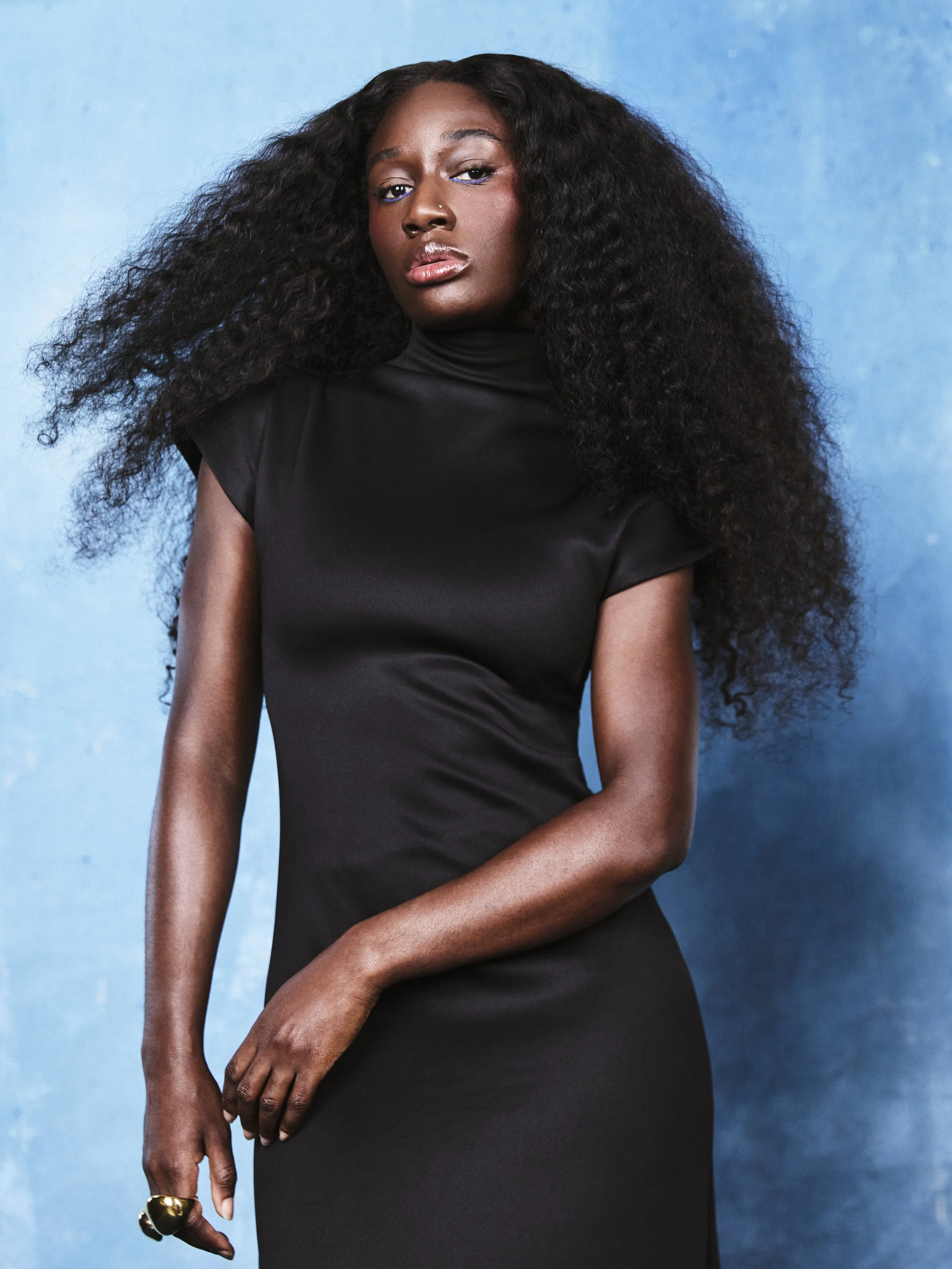
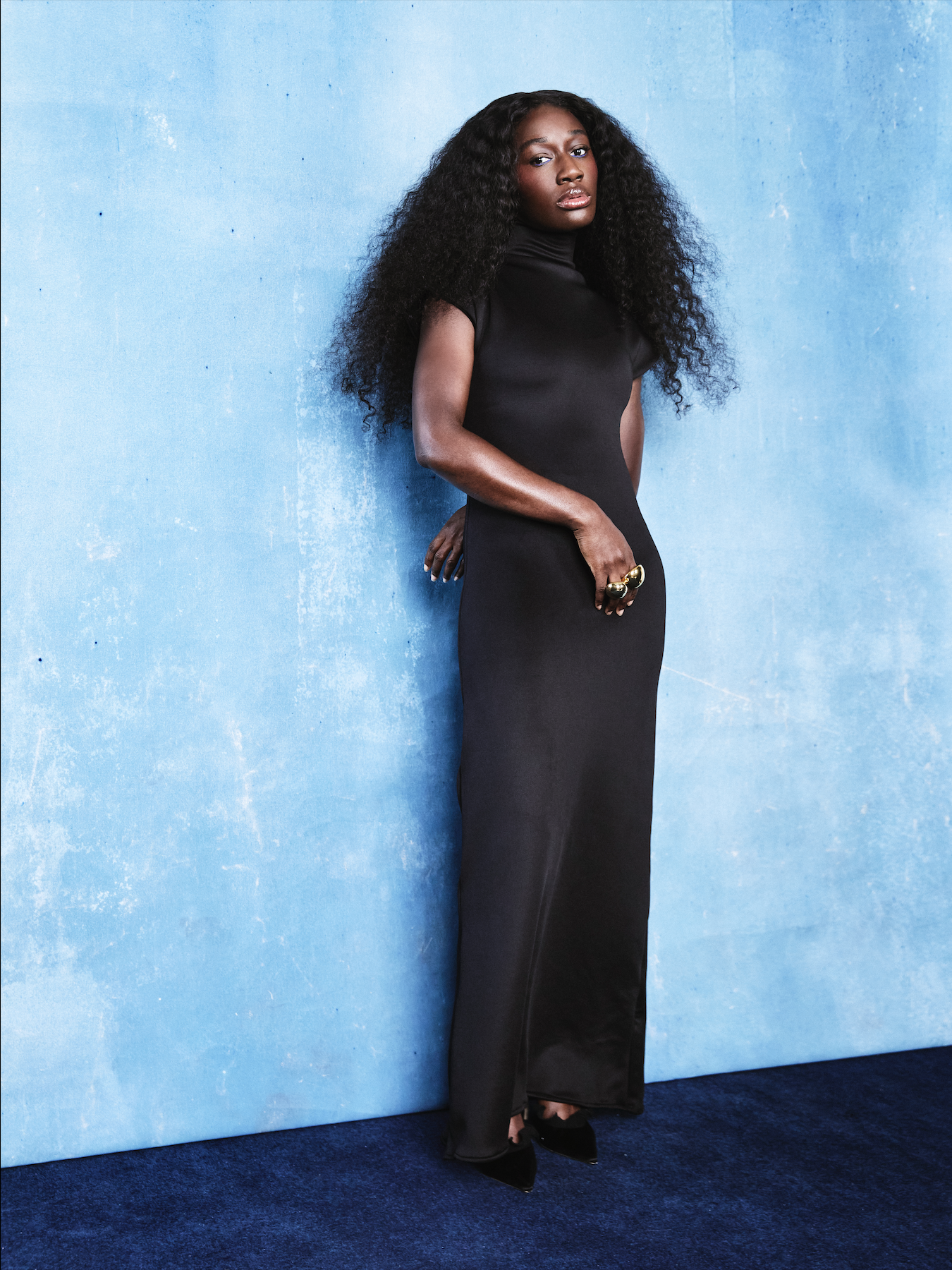
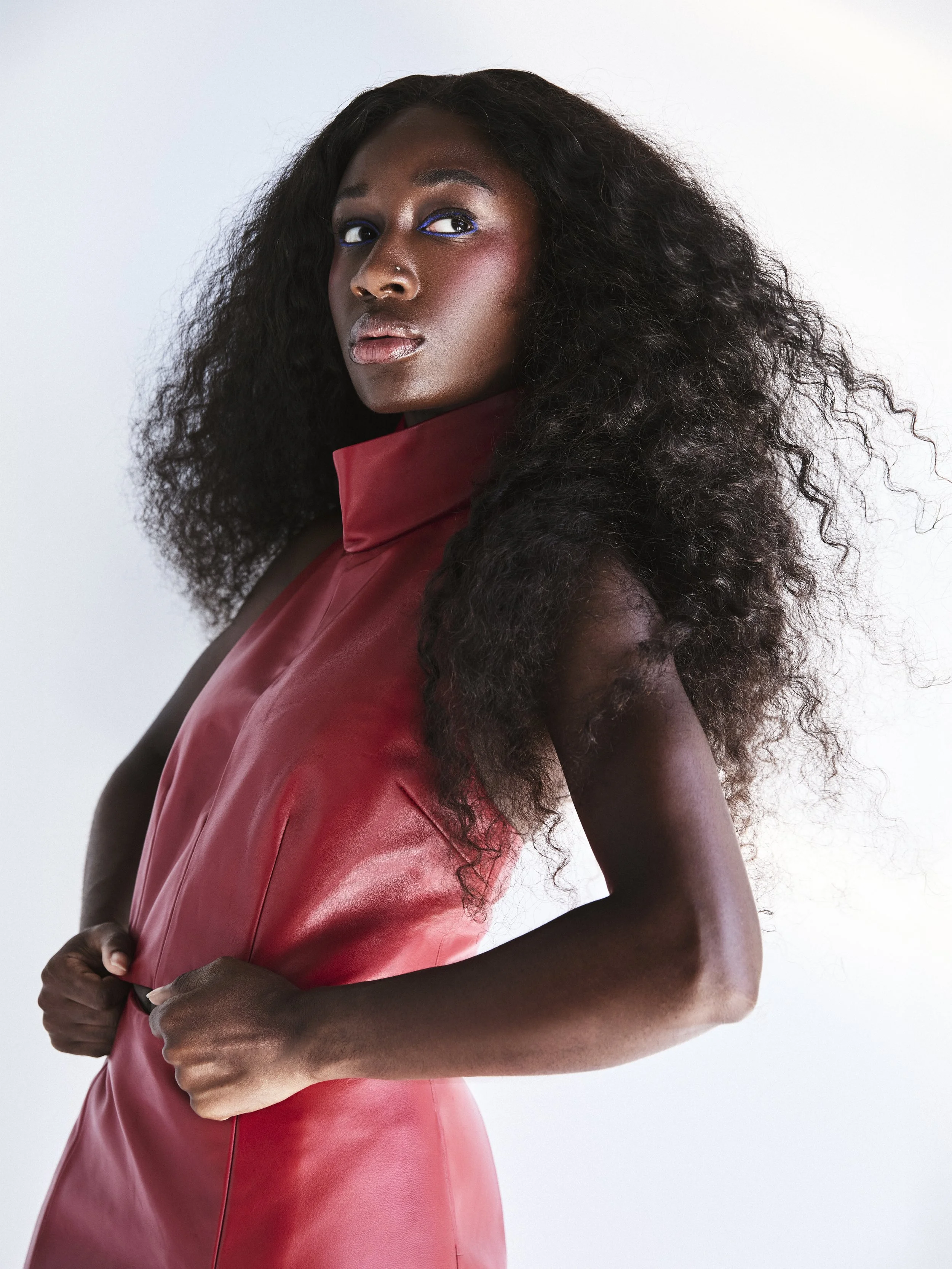
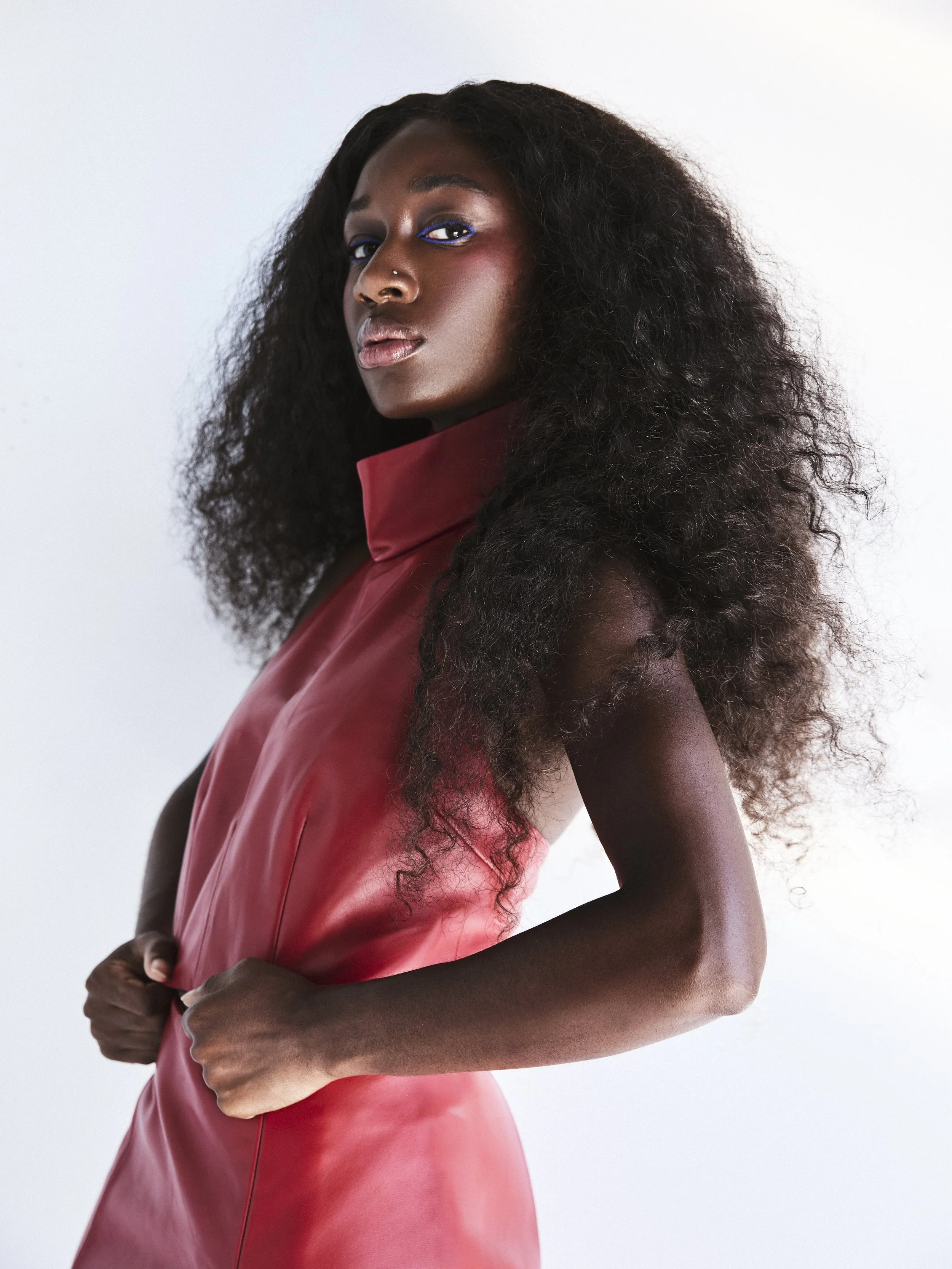
dress KADE
jewellery MAM
shoes MALONE SOULIERS
Shifters resonated deeply with audiences during its London run. What do you think makes this story so universally relatable despite its specificity?
I think Benedict wrote something that is a true portrait of love's complexity. So often, love on stage or screen arrives in a way that is aspirational and not the reality. She refuses that. She goes into the mess, the beauty, the contradiction, that inexpressible thing that is specifically human. All I can speak to is what my scene partner and I are giving each night, which is everything, and I think audiences feel that. The play shows how love doesn't just touch two people, it ripples into every corner of a life. It asks you to be vulnerable and to face what you'd rather not. It's a mirror, one you want to run from and embrace in the same breath. I think that's why it lands so well, it reflects what love actually looks like now, in the twenty-first century, straight back at you.
Returning to Des for the New York production, how has your understanding of the character evolved since first performing the role?
This is Des in a multiverse. I'm two years older and I'm opposite a new actor. Daniel has brought out different facets of Des, which feels genuinely fresh, not just for me but hopefully for an audience meeting her for the first time. There's more of a knowing now, a richness that comes from returning to her a third time, but new things keep surfacing. Honestly, that's exactly why I said yes to doing this again. There was still more to sink my teeth into and the adventure of bringing it to NYC. A new audience, a new culture of folks dealing with the same whirlwind of love that we all experience. I hope this transfer shows how beautifully black British stories translate and connect.
The play explores memory, first love, grief, and identity. Which of these themes speaks most strongly to you personally?
Memory, without question. I'm also a visual artist and I work with archive a great deal, looking at history as a way of understanding the present. I'm drawn to therapeutic frameworks that ask you to return to the past to make sense of where you are now. It's a rollercoaster, watching how the mind jumps between memories. That whiplash is simply the truth of how remembering works. So much of what we do now is shaped by what happened before, and not only in our own lives, but in our families' lives, in histories we didn't choose. And memory is never neutral. It's shaped by perspective. Des and Dre can live through the same moment and carry away entirely different understandings of it, which is both the beauty and the trouble of relationships.
What was it about Des that immediately drew you to the role?
Reading her described as a beautiful Black woman, not a subplot, not a lesson, just wanted, was delicious to read. She's quirky, fast-talking, unbothered by most people's gaze. There's an assuredness in her, an inner knowing she's eager to express even as life has clearly built her some armour along the way. I hadn't seen many women occupy that space in a British story and that's what excited me the moment I read it.
Shifters captures how people can carry versions of one another across decades. What do you think the play says about the relationship between memory and reality?
I think it's really asking a question about communication. Perspectives shift across time and space, memory bends, and in any relationship, if the communication isn't clear, forget it. The play is full of near misses, of things that could have happened and didn't, of crossroads and choices. Not understanding someone else's experience is what generates so many of the stories we tell ourselves. Relationships are just competing stories, really, and the question is whether we're listening closely enough to each other's version to get nearer to the truth. So much of what becomes "true" for us is shaped by our past, our pain, our fears. Our sense of reality is deeply subjective. You have to take a beat to understand where the other person is standing before you can see the full picture.
You'll now be sharing the stage with Daniel Ezra. How has that collaboration shaped this new iteration of the production?
Daniel is such a joy. His Dre is different, but he brings such depth of vulnerability and openness to play. He's a willing participant on this journey with me and such a supportive, kind gentleman. It feels like the ball never drops with him. He is such a brilliant scene partner.
You received an Olivier Award nomination for your performance. What did that recognition mean to you at this stage of your career?
Overwhelming. I was watching the nominations at the Bush Theatre, where the show originated, and everyone around me was screaming, and I just thought, “Wait, what?” I'd been rooting for the play, the writing, the direction. I hadn't really let myself think about my own name being in there because the whole thing felt like such a true collaboration from the stage manager to the dialect coach. Everyone was essential to it. It didn't really land until I was at the ceremony itself. But it was an honour to be one of only a handful of Black women ever nominated for that award. I gave everything to that performance so to be recognised for it meant a great deal.
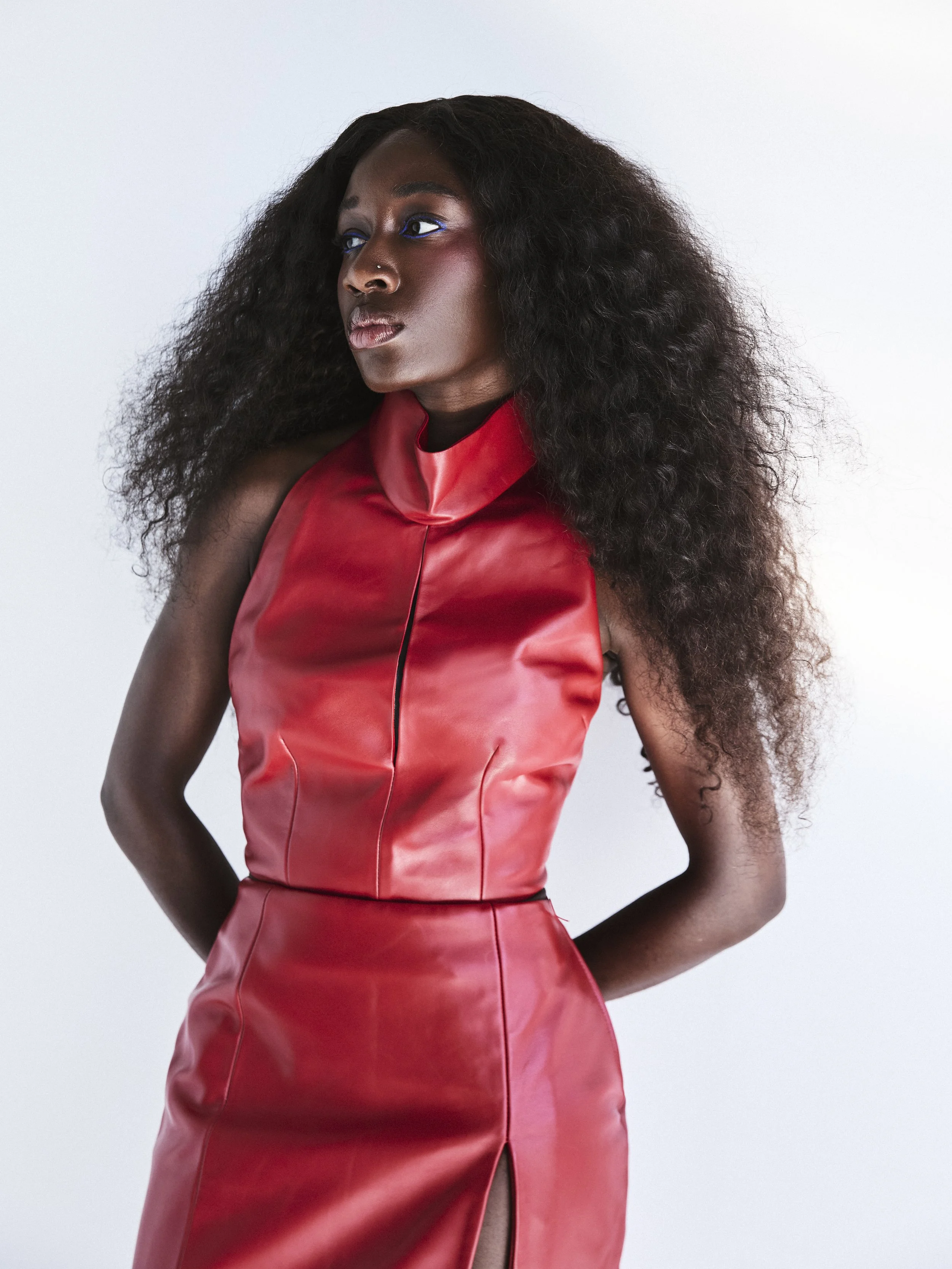
top and skirt KULAKOVSKY
shoes ROGER VIVIER
Theatre requires a unique level of emotional vulnerability night after night. How do you protect yourself while inhabiting emotionally demanding material?
It's an emotional rollercoaster, genuinely. We're lucky to have Wabriya King, our drama therapist, who gives us real tools for separating ourselves from the characters. I have a disrobing process where I take long walks, exercise, an essential oil-based shower, a way of stripping the day off. Des lives in a kind of container and part of the work is learning to set that container down. On days off, I try to pour joy back in, through galleries, films and time with my church community, who've been an anchor especially through this New York transfer. You give so much to an audience each night that by the end you're depleted so replenishing yourself isn't optional. It's soul work to sustain the run in a healthy way.
Alongside acting, you've built a respected career as a visual artist. How do those two creative practices inform one another?
My visual work operates at a different register of vulnerability. It's where I get closest to the truest version of myself, digging for discoveries or challenges within my own life. It's personal excavation, essentially. I think that habit of vulnerability feeds how much I'm willing to show up in the acting work, trying to be porous, a mirror so that what's on stage becomes a theatrical reality rather than a presentation of one. I hope the openness in my art practice keeps unlocking my acting and other artistic avenues.
Much of your artistic work explores mental health and the experiences of Black women. What first inspired you to engage with those themes?
It really started with me, not with any ambition to "become an artist" through photography or painting, but as a way to process my own thoughts, understand my mental health and slow myself down. I was inspired by women and people of colour who'd used photography therapeutically before me. Rosy Martin and Jo Spence were instrumental in showing me how photography and psychology could intertwine, how the practice itself could be cathartic. Autograph ABP, a Black-led photographic space, gave me my first exhibition and pulled me properly into the art world. Having that support system around self-expression laid the foundation for everything, for being allowed to be an actor and an artist and a performance maker all at once, without shrinking any part of it.
Do you approach storytelling differently when working through photography and visual art compared to acting?
Definitely differently. In acting, there's a deep empathy directed toward the character. In my artwork, that empathy turns inward, toward myself. My art practice is more research-driven, built from internal questioning, cultural theory, reading, therapeutic frameworks. I'm generating a world largely on my own. Acting, by contrast, is collaboration at its core. Director, writer, company, building a world together. Both are rooted in empathy, but the direction it travels is completely different.
As both an artist and performer, what kinds of stories do you feel most compelled to tell?
Stories that have something to say. Outspoken, but open enough to be challenged, corrected, argued with and lead to personal discussion. After performances of Shifters in London, people lingered outside the theatre and I would hear bits of conversation about love, loss, relationships, the dilemmas of their own lives. That's what I want any piece of work, photographic, visual, or acted, to leave behind. I believe art can shift and change people.
“This is precisely the time when artists go to work. There is no time for despair, no place for self-pity, no need for silence, no room for fear. We speak, we write, we do language. That is how civilisations heal.” - Toni Morrison
That idea, of art as generative, as transformational, is one I hold onto. At this point in my life, I'm less interested in pure entertainment. I'm interested in work that galvanises the soul.
What role do you believe art can play in opening conversations around mental health and emotional wellbeing?
When I make work, I want it to feel cathartic. I want an audience to be able to project themselves onto it, to feel it's doing something rather than simply looking nice. I'm not chasing beauty or mere interest. I want the audience to feel like witnesses, participants, so that whatever they receive can flow back into their own lives. That radical vulnerability I sometimes put on show is deeply personal to me. The process always matters more to me than the outcome, but I hope it gives other people permission to do the same in their own lives and work. I think about the first time I watched Moonlight. I was undone, that question of which version of yourself is true, what you hide. It led me to make a project called Ego Death. Barry Jenkins ended up seeing that work after I spoke about it in an interview at the V&A, and he came to see the show. That cycle, pouring out, pouring in, receiving, putting back out, is, I think, exactly what art is for.
TEAM CREDITS:
photography DAVID REISS
styling PRUE FISHER
makeup MIN SANDHU
hair SHANICE NOEL
