interview by JANA LETONJA
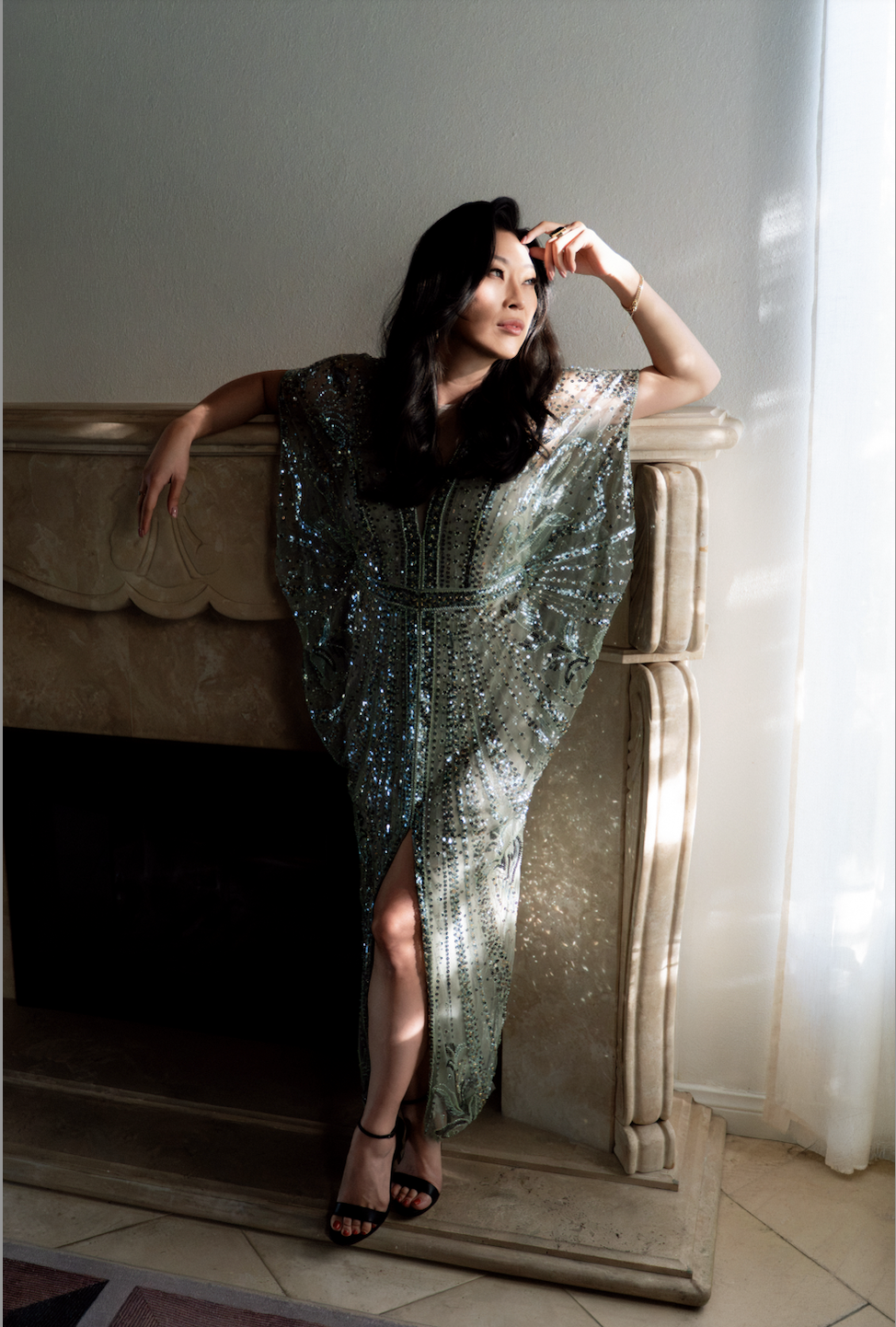
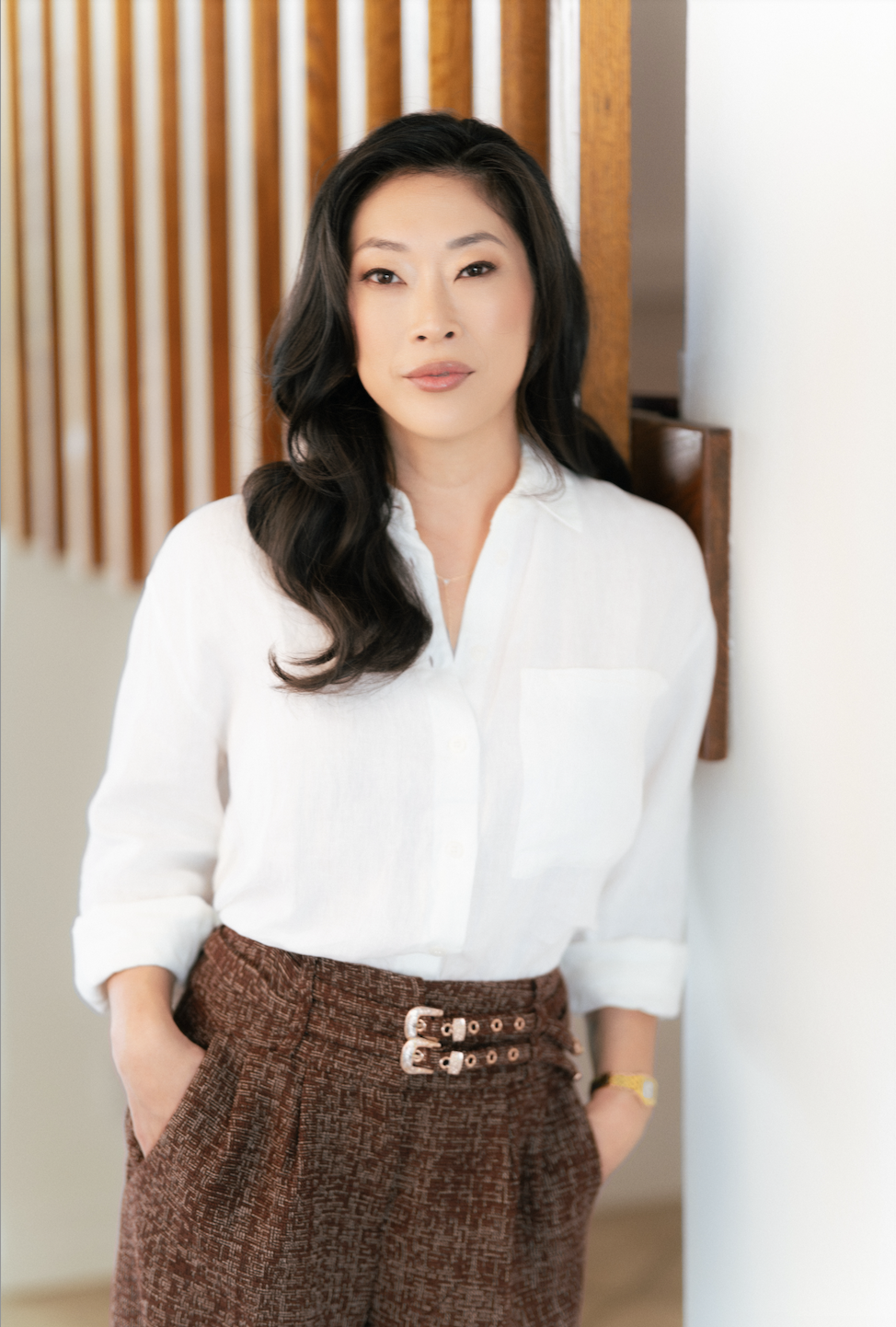
From the operating room to the bright lights of Hollywood, Korean-American actress Jackie Dallas has followed a remarkable path defined by courage, reinvention, and an unwavering passion for storytelling. Jackie initially pursued medicine, studying microbiology at the University of Florida before training in surgery and pathology at prestigious medical institutions, including New York’s Mount Sinai Hospital, yet a childhood performance as a dancing forest nymph in The Chronicles of Narnia had sparked a love of acting that never faded. After leaving medicine behind to pursue her creative dreams, she landed her breakout role in Netflix’s Stranger Things and went on to appear in popular series including Magnum P.I., Criminal Minds, The Resident, 13 Reasons Why, and NCIS: Hawai’i. Now, she returns as political strategist Jia-Yi in the highly anticipated second season of Netflix’s hit drama The Hunting Wives, premiering November 26. Beyond acting, Jackie is equally passionate about empowering women through health education and advocacy, developing her platform, HerHealth101.com, to help women better understand their bodies and navigate the healthcare system with confidence.
photography by TREVOR PAUL
You're returning as Jia-Yi in the second season of Netflix’s The Hunting Wives. What initially attracted you to this character, and how does her role evolve as the story moves into the high-stakes world of political campaigning?
I loved the character of Jia-Yi from her very first scene I read in the script, and the idea of playing a character that starts off in the periphery of this story and has to figure out how to get in the middle of it. At the end of Season 1, we see how her ambition has positioned her not only in the Banks’ political campaign, but also in his house, and in Season 2 we get to see her get a little too comfortable in that environment. Her story evolves when we see how she reacts when things don’t go according to her plan.
Jia-Yi is a political strategist operating in a world where public perception, ambition, and hidden agendas can determine everything. What do you find most fascinating about her personality, and how much of yourself, if any, do you see in her?
She is so bitchy and I just thought it was so fun to get to play a character that is unapologetically out for herself. And it’s so interesting to find the beats of when she reveals her true intentions, because as the campaign manager, her job is literally to create a positive public image, and keep hidden the scandals that are brewing just under the surface. I understand her ambition and the drive to want to be the best, especially when you are in a competitive and cut throat industry surrounded by powerful people who could make or break your career. But I would like to think that I’m a bit nicer and play by a more ethical set of morals than Jia-Yi.
Without revealing spoilers, what can audiences expect from this season, and is there a particular scene or moment you’re especially excited for them to see?
Well, of course in this show, everyone’s got a secret or two, and I think that it’s going to be shocking when Jia-Yi finds out that that she’s not as clever as she thinks she is. She’s got some fun scenes this season and I can’t wait for the reactions from fans.
Your journey to Hollywood is anything but conventional. Growing up in a family of doctors, you studied microbiology and pursued a medical career, including training in general surgery and pathology. What originally drew you to medicine, and when did you realize that acting was the path you truly wanted to follow?Medicine was always the unspoken plan growing up. I think it’s natural to follow a familiar path, and medicine is always a smart and stable career choice. But acting was always a dream growing up that I just didn’t know how to achieve as a Korean girl growing up in a small town in Florida. After graduating medical school, I did a year of clinical research, thought I wanted to be a surgeon, and after my intern year, pivoted to pathology for residency. During that time, I realized a few things. First, a career in medicine would always be a “job” for me, and second, I rediscovered my passion for acting when I started dabbling back into the film industry on my evenings and weekends as a hobby. When I met enough actors that were pursuing it as a career, it made me wonder if I could do the same, and after life gave me the opportunity to move to California, I decided to take it and give it a try.
Leaving behind years of medical education and training to pursue acting full-time was an incredibly bold decision. What was the most difficult part of making that transition, and how did your family and loved ones react when you decided to follow your creative ambitions?
The hardest part of that decision was admitting that I would be starting over from scratch in an industry where I had no idea what I was doing. In medicine, I had years and years of experience and training, as well as a network of friends and colleagues. Plus, as a doctor, you’re conditioned to be pragmatic and risk adverse, and I was about to do the most opposite thing by leaving a stable profession for one that has no guaranteed outcome of success. I remember most, if not all, of my peers tried to talk me out of it at one point or another, and there were definitely some judgement at my expense early on, but at the end of the day, I felt the calling and I couldn’t not follow it. To be absolutely fair though, my family and my husband were always incredibly supportive from day 1. They also had no idea what I meant by “I want to be an actor”, but they had enough faith in me that I would figure it out, and for that I am forever grateful.
After relocating to Northern California, you immersed yourself in the San Francisco independent film scene before landing your role as Jen in the first season of Stranger Things. How did that opportunity come about, and what did being part of such a cultural phenomenon mean to you at that stage of your career?
I feel like it was an unknown blessing that I started my acting career in San Francisco first, rather than moving directly to LA. SF has an amazing indie film scene, as well as tons of commercial opportunities. And the acting community is relatively small and supportive, so it is significantly easier to gain experience and confidence there, especially if you are just starting out. After working in that market for a couple years, I tried to break out into the LA market, but as a non-union actress with no recognizable credits, it was incredibly difficult to get auditions, agent meetings or any traction to my professional career. At the time, there was a lot of buzz about the Southeast, particularly Atlanta, growing as the next Hollywood. I figured that if I wasn’t getting opportunities in Hollywood, I would try the new Hollywood of the East coast. I went for a month, immersed myself in the new industry there, managed to get signed with an agency based out of New Orleans, and when I got back to LA a few weeks later, I was already getting auditions and Stranger Things was one of them. It was the first mainstream project that I ever booked, which was exciting enough for me. But then when it became a cultural phenomenon, it really was the biggest boost to my career that I could have asked for as an actress trying to get my foot in the door. I recognize how lucky I was to be a part of it and to be able to continue to grow from there.
Medicine and acting might seem like completely different worlds, but both require empathy, observation, and a deep understanding of people. How has your medical background influenced your approach to building characters, interpreting emotions, and telling stories?
I like to say that medicine is the study of the human body, and acting is the study of the human condition. When I was a clinician, one of the skills that prepared me for acting was the ability to recognize and understand human emotions and reactions. As a surgeon, you interact with patients from all walks of life on some of their best days and worst days of their lives, and you have to learn to navigate difficult conversations with consideration to how they are receiving that information. As a result, I’ve gotten to see how two different people can react to the same situation in completely different ways, some with sadness, others with anger, some blunted and in denial, while others are able to face it head on. So now, when I am approaching a new role, I explore what kind of person they are, where they come from, and how their experiences will shape how they behave in every scene. It’s the little nuances of human reactions that I think really bring characters to life.
Your credits span everything from Criminal Minds and Fear the Walking Dead to Magnum P.I., The Resident, and NCIS: Hawai’i. Which role has challenged you the most emotionally or creatively, and what did you discover about yourself through that experience?
I love roles that will challenge me. Criminal Minds was a cool one for me in that my character on the show had a surprise reveal, that her face was actually mutilated by a bad guy, so the majority of my acting in that episode was body and voice acting, while having to keep my face scars strategically hidden. It was a challenge in both acting technique, but also on the technical side of acting, with having to hit very tight marks and very choreographed movements to not turn my face too much, or move too into camera, but also not obviously appearing to be hiding my face because the character doesn’t realize what has happened to her until she sees her reflection in a glass.
Although you ultimately chose acting, your passion for medicine has clearly remained an important part of your life. What inspired you to create HerHealth101.com, and what do you hope women will gain from the information and resources you share through the platform?
When I was in medicine, I was really involved in clinical research, and one of the things that really bugged me was learning about the disparities in healthcare. Not only in treatment outcomes, but also in length of time to get a diagnosis, how many second opinions are needed, and also how unacceptably little training is given to doctors on how to approach women’s health concerns. I always envisioned that I would become a doctor who specialized in women’s health, but once I left medicine, that obviously didn’t happen. However, it’s become so frustrating to see women’s health resources dismantled and defunded. Now that I have a public voice and platform, as well as a wonderful circle of women’s health specialists including my husband who is a female pelvic surgeon, I felt compelled to reenter this space.
I’ve created HerHealth101.com, which is a women’s health website filled with educational articles, news updates, and health resources, all written and curated by medical doctors and women’s health specialists. There is so much misinformation out there on social media, being spread by predatory holistic companies or disingenuous wellness influencers, I think it is important to make sure that you get your information from a trusted resource that is vetted by medical sources. My goal is to help women, and the supporters of their health and wellbeing, better understand their own bodies, life phases, health conditions and treatment options that may be available to them.
You’re particularly passionate about encouraging women to understand their bodies and advocate for themselves within the healthcare system. From your perspective as someone with medical training, what are some of the biggest challenges women face when seeking healthcare, and what practical advice would you give them about making their voices heard?
As a female patient myself, I also have experienced the dismissals and delays in getting my concerns addressed, and I’ve been forced to play the “I’m a doctor, and I know what I need” card before I am given the referral I need. It appalls me that on many occasions, the only reason that I was able to get a swift workup or treatment was because I had the knowledge and insight to properly advocate for myself.
Our current healthcare system is extremely difficult to navigate, and finally sitting down with a doctor at an appointment months later is only half of it. From there, you have 15 minutes or less to present your concerns and unfortunately, much of that time is spent inefficiently going over a generic questionnaire about your overall health. If you’re healthy and without any complaints, then that’s fine. But many of these questionnaires do not open the door to nuanced conversations about things like menopause, sexual health and pelvic health. And because of outdated social taboos, many women do not feel comfortable asking about these topics or may feel embarrassed about them. But your doctor does not know you have a symptom, unless you tell them. My biggest piece of advice is to not be afraid of starting that conversation, and if you feel that your doctor is not taking you seriously, to get a second opinion, preferably from a specialist in that field of women’s health.
True change needs to come from the top, yes, but rather than waiting for that to happen and trickle down, I am on a mission to educate, empower and teach women how to be their own best advocate for their health and wellbeing.
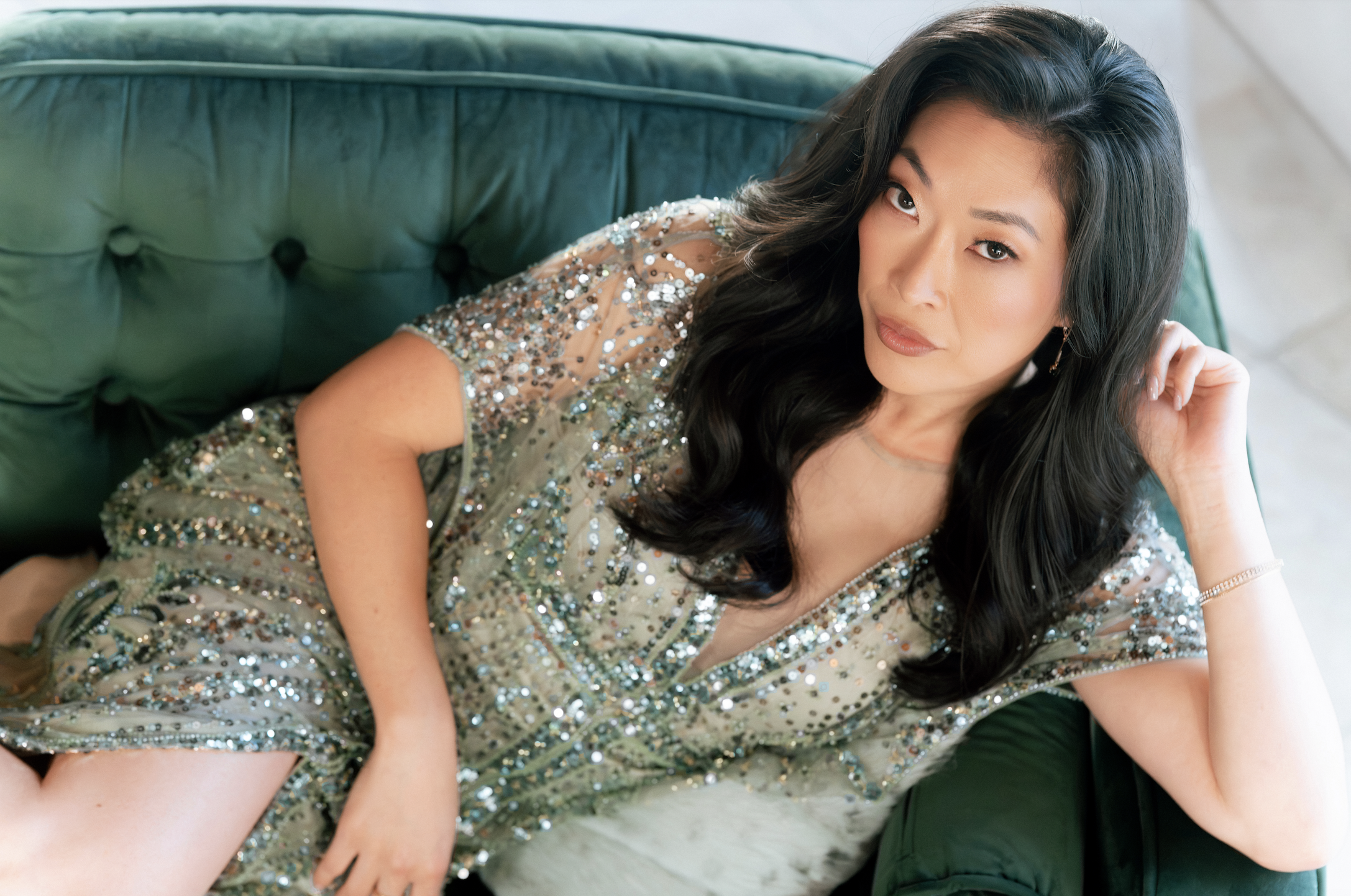
Outside of acting and advocacy, you enjoy art, fashion, hiking, swimming, and cycling. What does your ideal day away from the cameras look like, and how do you find balance between your professional ambitions and personal life?
The life of an actor can feel like feast or famine, so finding balance is a personal challenge that I am still figuring out. However, I think that no matter how crazy life gets, you always need to prioritize the personal things that keep you grounded and not overwhelmed, whether that is spending time with the people you love, or spending time outdoors with nature, or even just taking a nap. The one rule that has helped me wind down the most is the “close the laptop and put down the phone” rule when my husband gets home from his work. I can get lost in my work and being able to step away from that to be present in the moment has been the best thing for my sanity.
But more often than not, there is a lot of downtime spent auditioning between jobs and when those lulls happen, it’s important to find creative outlets outside of work that allow you to feel purposeful and fulfilled. My favorite kind of day starts by waking up leisurely and having a cup of coffee in the backyard as my dogs run around. Then doing something creative for a few hours, whether it be auditioning, reading or writing, or working on any of my side passion projects such as my healthcare website, to get a sense of accomplishment in for the day. When I feel my attention starting to wane, stepping away to do something fun and ending it with a nice dinner and a glass of wine or vodka martini with my husband or a few friends.
Looking toward the future, what excites you most about this next chapter of your life and career? Are there dream roles, creative projects, or personal goals you’d still love to accomplish, and what do you hope audiences take away from seeing you return as Jia-Yi in The Hunting Wives Season 2?
I am most excited to see how people react to Jia-Yi in Season 2 and enjoy the crazy fun momentum that is The Hunting Wives when it comes out. And with a little luck, I’m hopeful that my acting career continues to climb with larger expanded roles. I am also learning more about producing and super excited about the prospects of creating my own projects.